postR196

AMT Top Ten Miscellaneous Interpretations on the 13th of Oct

AMT Top Ten Miscellaneous Interpretations on the 13th of Oct

10. Language: The French word histoirie includes both history and story via its English interpretation. The French usage conveys the acknowledgement that history is often subjective and a story written with an opinion which may or may not be the correct narrative.

9. Subway Series: New York baseball fans will be in an uproar this coming week as the Mets play the Los Angeles Dodgers, and the Yankees face the Cleveland Guardians. The potential of a crosstown World Series will have NYC holding its collective breath. New York fans shouldn’t celebrate too soon, because the Dodgers are dangerous and the Guardians will be competitive.

8. Free Press: CBS News in the U.S has been widely condemned this past week. Video released shows ’60 Minutes’ explicitly edited an interview with Kamala Harris. Also, a recorded and ‘leaked’ staff meeting from CBS management has come to light in which Tony Dokoupil, a news anchor, is reprimanded for asking critical questions to writer Ta-Nehisi Coates.

7. Barometers: Gold went into this weekend near 2,656.00, WTI Crude Oil closed around 75.45 on Friday, and U.S Treasury yields increased this week and are now challenging values last seen in the third week of August. Intriguingly, the major U.S equity indices continue to flirt with highs. Broad market results appear to be walking a tightrope as financial institutions seem to be waiting for November and U.S election outcomes. However, long-term investors who are diversified maybe cynical of this thought, and believe buy and hold remains the best policy.

6. Buy or Sell: Negativity surrounding Boeing via workers who are on strike, layoffs, a potential corporate bonds downgrade, production delays, and court decisions are still shadowing. In December of 2023, Boeing was near 265.00 USD per share value. Prices were near 158.00 this time last year, and as of this weekend Boeing is close to 151.00. The bad news surrounding Boeing has been a thorn in the side of investors. Boeing is a major corporation in the U.S and relied upon militarily and for global public aviation. What is the downside potential for Boeing the next year compared to upside capabilities long-term?

5. Crypto: The SEC has filed charges against Cumberland DRW LLC, claiming the crypto exchange has been acting as an unregistered dealer. https://www.sec.gov/enforcement-litigation/litigation-releases/lr-26151 It appears the SEC is growing more aggressive via confrontations with U.S based cryptocurrency exchanges. The U.S election result will play a role in the future leadership and direction of the SEC, and could have an affect on cryptocurrency values. BTC/USD is near 62,700.00, ETH/USD around 2,465.00, BNB/USD about 575.00 at the time of this writing.

4. Tranquility: Stronger USD centric price action continues to create some downwards motion for other major currencies, but price velocity was not as violent last week compared to previous days since the end of September. Fragile sentiment in financial institutions is still stirring. The ECB rate decision this week will come Thursday and a 0.25 basis point cut is expected. Traders need to remember that a change to the European Central Bank’s Main Refinancing Rate has likely been priced into the EUR/USD. What needs to be heard now is ECB rhetoric and that is likely to remain guarded. Price velocity in Forex remains a danger for retail traders this coming week.

3. U.S Election: There are only three weeks left until the U.S vote. Day traders need to understand financial institutions will grow more cautious as the election approaches. Speculators may want to try and wager on the outcome of the election, but unless a definitive result is predictable beforehand, it will be hard to take advantage of political winds which are swirling. It will be nearly impossible for day traders to hold onto a position over the next few weeks unless they have deep pockets, use no leverage, and have the patience of a saint.

2. Make or Break: China will release important economic data this week. Trade Balance and Foreign Direct Investment numbers are tentatively scheduled to be released on Monday, along with New Loans reporting. This coming Friday New Homes Sales, GDP, and Retail Sales figures will be released. China is trying to stimulate the economy with billions of cash, but critics suggests this will not work. The Shanghai Composite Index is near the 3,217 mark, on the 30th of September the SSE was near 3,675. Before the China stimulus was released the Shanghai Composite was near 2,755. Bullish SSE momentum has run into headwinds since the beginning of October, China may be pressured to try and create more stimulus, but will it produce a lasting positive result? Traders caught up in the buying frenzy in late September are likely getting more nervous about declines. The USD/CNY is near 7.066. Chinese economic data should be monitored this week.

1. Interest Rates: The Federal Reserve via the CPI and PPI inflation reports still appears able to cut another 0.25 basis point from the Federal Funds Rate on the 7th of November. While the Consumer Price Index data showed a slight tick up in a few categories, Friday’s Producer Price Index met expectations via the core monthly report and the broad monthly outcome came in less than anticipated. The November interest rate decision is important regarding consistency per the Fed’s messaging the past two months, and mid-term behavioral sentiment outlook among financial institutions. U.S Retail Sales and Housing numbers will be published this week.
postR196

AMT Top Ten Miscellaneous Salvos for the 29th of September

AMT Top Ten Miscellaneous Salvos for the 29th of September

10. Profit: OpenAI has announced plans to become a money making corporation. Founded in 2015 the artificial intelligence company had the stated goal of creating ‘safe and beneficial’ technologies via its foundation, and now will face the slings and arrows of investors and potential critics. The AI boom the past two years has produced many new competitors. Can Sam Altman, the CEO of OpenAI, sustain the momentum generated or will negative organizational impetus turn the company into an also-ran?

9. Softs: Cocoa, Coffee and Sugar all remain volatile and playgrounds for day traders who like casino experiences via CFDs. Cocoa is again over 9,000 USD, Sugar touched February highs this past week as it shows signs of extreme speculation, and Coffee Arabica surged to record prices on Thursday and Friday. Over exuberance however is not being created by day traders, it is the work of large institutional traders who are in control. While the ‘softs’ may look overbought it would be unwise to bet against trends while big players pursue bullish notions. Massive money is being made in these commodities, but losses are also being felt by those who wager incorrectly.

8. Escalation: Risks in the Middle East have become a focal point, this as the region appears to have generated more must watch television. The noise which the media seemingly craves is hard to escape. Market participants cannot be blamed for maintaining vigilance as sabers rattle, especially after Friday’s events in Beirut when Hassan Nasrallah, the Hezbollah leader, was eliminated by Israel. However, experienced traders who are also strategic analysts have seen this show before and may turn the channel knowing there will be reruns in the future.

7. WTI Crude Oil: Prices closed within the lower elements of the commodity’s long-term depths. Traders did have a chance to react to Friday’s developing news from Beirut, but the energy sector remained calm. The price of WTI was around 68.57 going into this weekend, after trading at highs earlier in the week. For all the talk about fear of escalation from the Middle East, the price of Crude Oil remains within a remarkable bearish stance as large traders appear to be more concerned about lackluster economic growth globally.

6. Apex Gold: The price of the precious metal flirted with 2,685.00 momentarily on Thursday. The price of gold going into this weekend finished near 2,658.00 USD. Sustained highs have certainly continued to catch the attention of short-term speculators, but they need to be aware the commodity does remain susceptible to sudden spikes. While alluring, gold remains dangerous for day traders.

5. Countdown: The U.S Presidential vote is slightly more than 5 weeks away. Interestingly, the Fed will announce their Federal Funds Rate decision only two days after the election results. Will the outcome of the vote change the Fed’s perspective on interest rates? Financial institutions will definitely brace for the outcome of the U.S vote. Cautious winds will start to prevail as the 5th of November draws closer.

4. China: A huge stimulus package from the Chinese government has been initiated, but talk regarding potential effects and outcomes are being debated. The notion that the Chinese economy is be driven too much with a top to down centralized approach is being vocalized by some worried ‘outside’ observers. The USD/CNY is trading near 7.0105. The Shanghai Composite is near 3,087, this after massive gains via a reversal upwards which was sparked from lows around 2,691 which were seen on the 18th of September.

3. Risk Appetite: U.S equity indices continue to challenge record values in the Dow 30 and S&P 500. Yes, the Nasdaq remains beneath its highs, but is still within sight of all-time heights. Trading this week will work under the shadow of the jobs numbers coming this Friday. Financial institutions have produced rather positive behavioral sentiment and do not seem like they are ready to back away from this stance. Are some large market participants starting to quietly bet on the possibility of a Trump victory which they believe would be good for U.S stocks?

2. Forex: USD centric notions remain the impetus in foreign exchange. The USD Cash Index is within the lower boundaries of its long-term values as it trades near July 2023 realms. If the USD Cash Index moves lower it would then start to technically be within price calculations not seen since the spring of 2022. Action in the USD/JPY and GBP/USD, and other major currency pairs have been volatile, choppy conditions should be expected this week for traders leading into Friday’s key data.

1. Jobs Numbers: Last week’s GDP statistics met expectations, while inflation numbers via the Core PCE Price Index came in slightly below estimates. The growth and inflation outcomes set the table for the Non-Farm Employment Change and Average Hourly Earnings which will be reported on the 4th of October. If the employment numbers continue to trend lower and there are additional negative revisions this coming Friday, this could propel USD selling. Financial institutions are trying to figure out if the Fed will cut by 0.25% or 0.50% in November. The Fed was aggressively dovish when they cut the Federal Funds Rate by 0.50% on the 18th of September, but the U.S central bank might want to be cautious in November following the election and wait for all the dust to settle and cut by only 0.25%. Thus allowing for another interest rate cut in early 2025 if needed. The broad markets are in a reflexive mode for the time being, this Friday’s data will be important and cause an immediate reaction that day traders will notice.

postN103.1

Friday’s Forex Violence and Coming Attractions for Traders

Friday's Forex Violence and Coming Attractions for Traders

While the past month has continued to produce positive trends upwards for traders speculating on equities via U.S indices with record breaking values, Forex has been rather brutal for many day traders if they have remained stubborn.

Short-term trading conditions in Forex again proved violent this past Friday, as the Non-Farm Employment Change and Average Hourly Earnings reports came in stronger than anticipated and set off fireworks in the major currency pairs.

Fed Chairman Jerome Powell offered a clue to speculators paying attention last Wednesday, during the Fed’s Press Conference in which he spoke about the tight labor market. It seems likely the Federal Reserve knew the jobs data was going to be rather robust and hinted.

The Federal Reserve did continue to speak about interest rate cuts, but they certainly have not given an exact timetable when more dovish policy will begin. This has left many speculators, corporations and financial institutions nervous and the results via choppy trading conditions the past handful of weeks are proof.

USD strength the past month has caused headaches for many Forex speculators, but it needs to be said that many major currency pairs are lingering near values post-December 13th 2023, this was when the Federal Reserve made it ‘official’ that a more dovish monetary policy would develop in 2024.

Early wagers by financial institutions in December indicated they believed a March Federal Funds Rate cut would be seen, but after last Wednesday’s Fed’s FOMC Statement and Friday’s jobs numbers it seems more likely for the moment a May interest rate cut could be a legitimate target.

WTI Crude Oil Three Month Chart as of 5th February 2024

Risks do Abound and Speculators Should Remain Cautious Near-Term

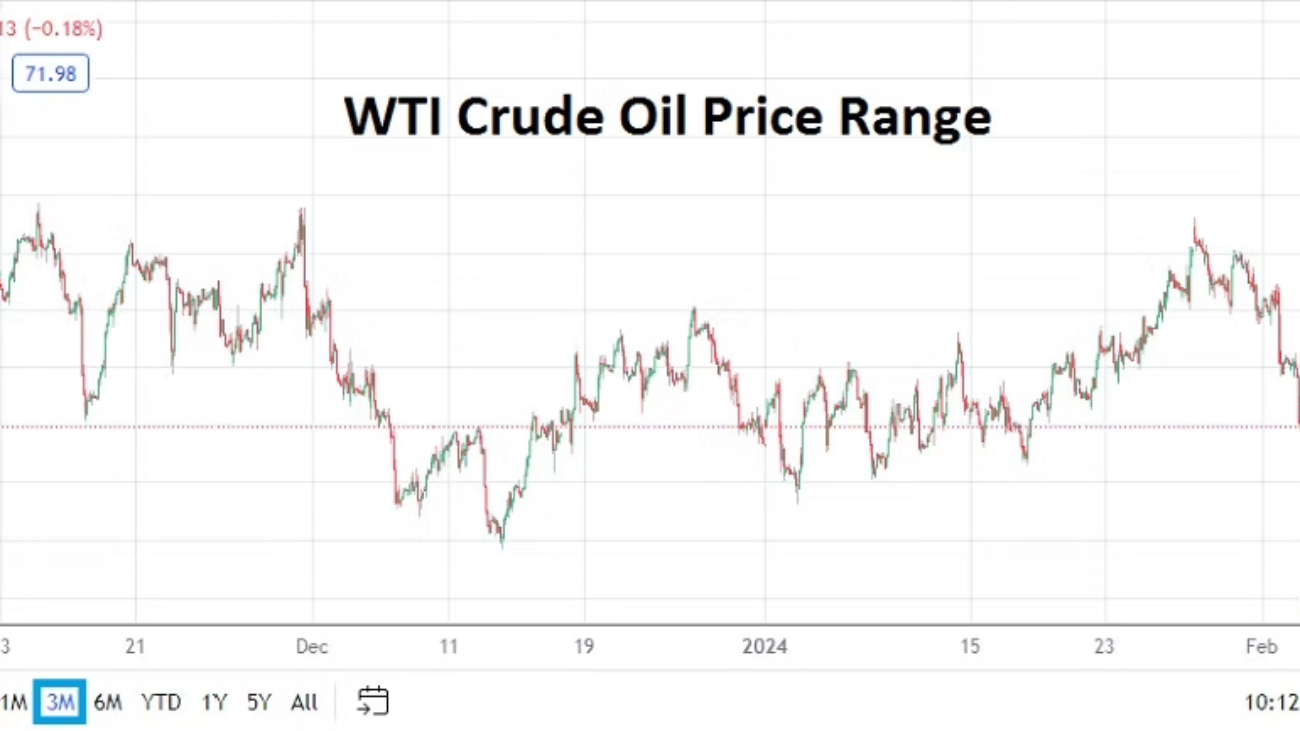
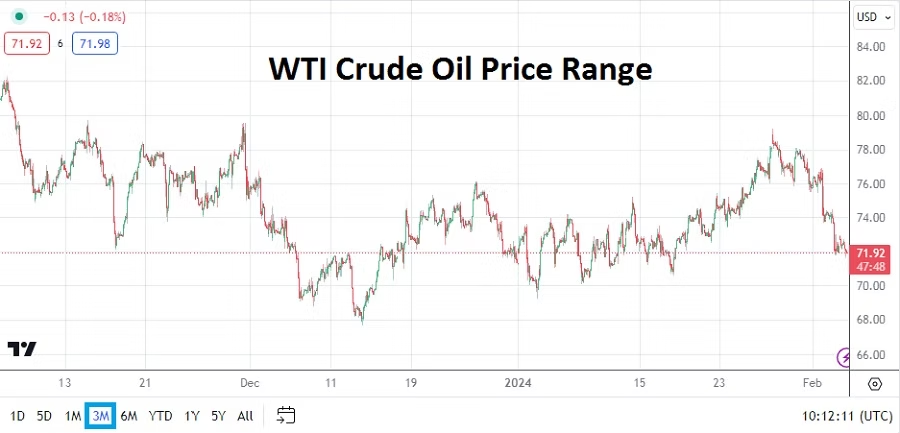
Inflation concerns via knock-on affects from logistical complications via Red Sea chaos which disrupts the Suez Canal shipping is a legitimate threat and needs to be monitored. However, the price of WTI Crude Oil traded in a remarkably stable manner last week as noise was heard from the Middle East. In early price action this morning the commodity has been polite and remains within sight of 72.00 USD per barrel. The lack of a nervous reaction in Crude Oil thus far could keep global investors calm.

This week will be limited regarding important economic data. However, there will be plenty of rhetoric offered by U.S Federal Reserve members in the coming days via conferences and interviews. Forex traders have needed to combat an array of reversals as price equilibrium has created rather tenacious price realms and this may continue near-term.

There are time periods when traders should be willing to accept that methods regarding short-term trading tactics need to be adjusted. January has shown that financial institutions were of the mindset the USD had gotten too strong. And although it appears financial institutions continue to lean towards a weaker USD outlook in the mid-term (as proven by lower moves in the USD leading up to the jobs report on Friday), the surprisingly good jobs data certainly caused the USD to bounce upwards.

Technical considerations of the USD at this moment are important, fundamental data is still coming in rather mixed, this as financial houses wait on central banks to start reacting with interest rate cuts due to lackluster economic data. It is important to note that some analysts have started to murmur the ECB and BoE may have to move first regarding interest rate cuts – if they have the courage to take this action sooner rather than later. The U.S economy has remained rather strong regarding consumer sentiment and this is causing angst among Fed observers. The U.S jobs numbers on Friday highlighted this nervousness.

Monday, 5th of February, U.S Services PMI via ISM – an outcome of 52.0 is the expected reading, which would be higher than the previous result of 50.6. If the Services number meets its estimate and doesn’t exceed the expectation, this would calm nervous financial institutions which may believe the U.S economy may be too strong for the Federal Reserve’s liking, and cause some hawkisk sentiment regarding monetary policy to linger. A weaker number from the Services PMI could help the USD selloff slightly, a stronger outcome could result in more USD buying short-term.

Tuesday, 6th of February, Australia Cash Rate and Monetary Policy Statement via RBA – no major changes are expected from the Reserve Bank of Australia. Global central banks have taken a wait and see approach as they likely remain nervous regarding the potential of inflation to remain stubborn in the mid-term. The RBA is probably going to follow the ECB, BoE and Fed’s stances from last week and remain conservative.

EUR/USD Six Month Chart as of 5th February 2024

Wednesday, 7th of February, Germany Industrial Production – though this report is not viewed as a major economic event for traders the results should be watched. The EUR/USD has been hit by rather volatile conditions as financial institutions try to anticipate central bank moves. If the German data comes in weaker than expected (a minus -0.4% result is anticipated) this could make the EUR/USD slightly more bearish.

Shanghai Composite Index One Year Chart as of 5th February 2024

Thursday, 8th of February, China CPI and PPI – economic data from China has not improved and foreign investors are not showing an appetite for risk. Deflation remains a concern in China, and although the official government rhetoric promised sunnier days ahead, fundamentals in real estate, manufacturing and consumer driven data offers troubled prospects. The Consumer Price Index from China is anticipated to be worse than the previous month’s outcome. The downturn in the SSE (Shanghai Composite Index) is now challenging the 2,700.00 vicinity.

Friday, 9th of February, Canada Employment Change – Canadian economic data has been lackluster and analysts have been quite critical of government policy. Having said this the USD/CAD is largely going to stay in a USD centric mode going into the weekend.

postN87

AMT Top Ten Miscellaneous Raindrops for the 2nd of February

AMT Top Ten Miscellaneous Raindrops for the 2nd of February

10. Risk Appetite: WTI Crude Oil almost serene around 74.00 USD, as bombastic rhetoric remains loud involving the Middle East.

9. South Africa: President Cyril Ramaphosa expected to announce the country’s election date when delivering the State of the Nation Address on 8th of February.

8. Tesla: Negative media coverage and an always defiant Elon Musk gravitate towards each other, share price is around 188.88 USD.

7. China: Shanghai Composite Index (SSE) hovering near 2,730 as of this moment.

6. Gold: After near-term lows a challenge of highs as USD has gotten slightly weaker.

5. Central Banks: All bark and no bite yet, as financial institutions desire interest rate cuts from Federal Reserve, European Central Bank and Bank of England.

4. India: Nifty 50 Index near 21,865 as of this writing, it has gained more than 101% over the last five years – yes, plus one-hundred and one percent.

3. Forex Reactions: Recent short-term volatility and reversals seen as expected, patience still needed as USD mid-term outlook remains weaker.

2. U.S Equities: S&P 500, Nasdaq 100 and Dow Jones 30 have produced nervous results but still near record highs, as U.S Treasury yields have edged lower this week.

1. Data: U.S Non Farm Employment Change and Average Hourly Earnings today, this as some major corporations shed employees but labor market remains rather tight. Broad markets will react to the outcomes.

postN100.1

Forex Volatility as Central Banks, GDP, U.S Equities Shadow

Forex Volatility as Central Banks, GDP, U.S Equities Shadow

Perhaps it is good that today will see a lack of important economic data which will affect the markets. It might give a chance for day traders to relax and to gauge the thinking of financial institutions and investors before Central Banks, and important growth and inflation numbers shift behavioral sentiment later this week. While Forex has remained a minefield, U.S equity indices have soared to record heights. More volatility will come.

Shanghai Composite Index Five Year Chart as of 22nd January 2024

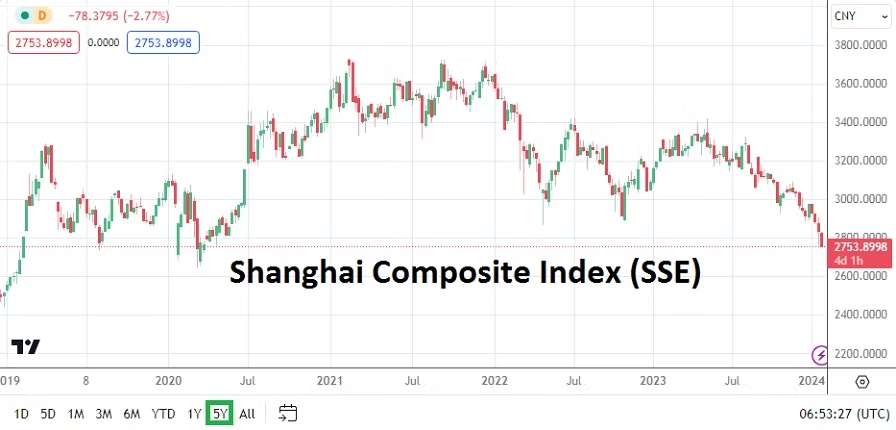
Risk assessment is always critical, it needs to be mentioned the Shanghai Composite Index is again facing severe selling pressure. This is a direct result of foreign investors losing faith in China’s economic policy and political maneuverings. The slump in Chinese equities is also hitting the Hang Seng Index in Hong Kong badly. Deflation is a legitimate fear in China. The dual consequences of a failing housing sector and crumbling equity values is harming Chinese citizens.

While the strong selloff in Chinese equities would have caused a massive amount of reaction in the global markets a few years ago, the ability to shift assets elsewhere by foreign investors who were active in China has likely reduced potential knock on effects in other global equity markets. It must also be pointed out that China continues to sit on a massive amount of USD holdings. China is a large investor in Africa and their attempt to steer influence there remains abundantly clear.

Nifty 50 Index Five Year Chart as of 22nd January 2024

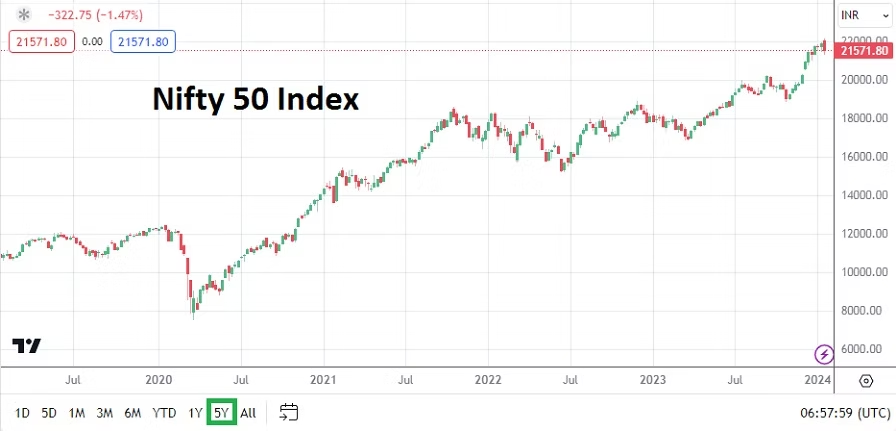
India has directly benefited from the outflow of investments from China. A look at the Nifty 50 Index shows the upwards momentum India’s equity market has enjoyed as it has started to attract more direct foreign investment. The ability of the India stock market to go up while China struggles is a barometer worth studying. Outflow vs. inflow.

Monday, 22nd of January, U.S Conference Board’s Leading Index – the reading is not at the forefront of consideration for investors, they will be watching the results of U.S Treasury yields and stock indices more closely than this report.

Tuesday, 23rd of January, Bank of Japan Monetary Policy Statement and Outlook Report – no major change is expected from the BoJ quite yet. The USD/JPY has been volatile and provided a solid trend upwards since the start of January. Day traders looking for a reversal lower to develop should be extremely cautious. Data from Japan has been mixed and the BoJ is likely to remain conservative. The weaker JPY helps exports from Japan it must be remembered, but it also may factor into inflation creeping into the Japanese economy.

NZD/USD One Month Chart as of 22nd January 2024

Tuesday, 23rd of January, New Zealand Consumer Price Index – the inflation report is expecting a result of 0.5%, which would be below the previous result of 1.8%. The NZD/USD has taken a bearish dive since late December. Like all major currencies the New Zealand Dollar remains USD centric. Volatility in the NZD/USD may occur via the inflation numbers from New Zealand, but like the USD/JPY it may find its biggest impetus coming from afar – U.S data and the Federal Reserve outlook.

Wednesday, 24th of January, E.U and U.K Flash Manufacturing and Services PMI reports – Germany and France are anticipating slightly better Manufacturing Purchasing Managers’ Index numbers. Services numbers are expected to be slightly weaker from Germany. Solid results from these combined publications could help the EUR/USD create a bit of bullish momentum.

The U.K numbers via their Manufacturing PMI is expected to be slightly better than the previous outcome, but the Services number a bit worse. Economic data from Britain remains mixed to lackluster. Higher inflation numbers last week did the Bank of England no favors. The GBP/USD will be affected briefly by the results, but trading in the Forex pair is likely to remain geared towards thoughts about U.S data coming this Thursday and Friday.

Wednesday, 24th of January, Bank of Canada Rate Statement and Monetary Policy Report – the key lending rate from the BoC is expected to remain unchanged. However, Canadian economic numbers have been problematic, and while the BoC may want to wait for the U.S Federal Reserve to move first regarding interest rates, critics of the BoC are becoming louder. The USD/CAD will react to the Bank of Canada’s rhetoric, but unless there is a major surprise the currency pair will remain heavily USD centric.

Thursday, 25th of January, European Central Bank Main Refinancing Rate and Monetary Policy Statement – the ECB is expected to provide no major changes. The 4.50% interest rate is anticipated to stay in place. The ECB will likely ‘sound’ a calm tone and say while improvements are being seen in the E.U, that areas of difficulty remain but are understood and being managed.

Thursday, 25th of January, U.S Advance Gross Domestic Product – the key growth number from the U.S is anticipated to show a gain of 2.0%. This number will get a reaction in Forex, equities and bonds. The Federal Reserve’s FOMC meeting is next week and this GDP result will factor into their monetary policy rhetoric. Because it is an election year in the U.S, this number will also get an additional ‘sounding board’. Day traders should be careful before and after the noise caused by this growth report.

Friday, 26th of January, U.S Core Personal Consumption Expenditures – the vital inflation number carries an estimated gain of 0.2% before its release. As much as the Fed watches the GDP number, the inflation result via the Core PCE is a huge component of the U.S central bank’s thinking. The USD will react to this report and Forex traders should brace for a reaction from financial institutions. If the number is weaker than expected the USD could find selling momentum, if the number is stronger more USD strength could be seen. Folks looking at the GDP and Core PCE reports should also look for potential revisions to previous months results, which could cause another wave of volatility in the markets if they are significant.

postN98.1

Choppy Forex Conditions and the Trading Week Ahead

Choppy Forex Conditions and the Trading Week Ahead

Forex traders may be feeling a bit perplexed if they have blindly been looking for a weaker USD the past two weeks. While outlook for a bearish USD over the mid-term remains a theme from many analysts, day traders need to accept that intra-day results often create price fluctuations which make wagering on short and near-term perspectives dangerous. Trading conditions have been turbulent the past week and early this morning.

While analysis of monetary policies and economic data are vital, it is also important to remember there is a significant difference between the desires and needs of businesses functioning in global commerce, and the trading perspectives of speculators who are hoping to ride on the back of ‘insights’ provided by experts. It should also be considered that coming out of the holiday season many global corporations are now repositioning for 2024, and the financial institutions that work for these companies are also trying to get these outlooks aligned.

The USD has become stronger over the past day against many major currencies, but looking for a 100% reason to explain why this happened is likely misguided. Most U.S financial institutions were closed yesterday for the MLK holiday observance. While inflation data from the U.S Producer Price Index was weaker than anticipated last Friday and caused a brief spurt of USD bearishness, the greenback is lingering within the stronger realms of its near-term values against many currencies.

The idea that recent USD bullishness may simply be a sign that financial institutions believed the greenback had been oversold over the past couple of months may be correct, but this also opens the door for the potential of a reversal to develop and more USD selling as sentiment and economic data try to dance in a unified manner.

The week ahead may still prove to be choppy, but there are interesting bits of evidence that risk appetite lingers within the stomachs of many large investors. The slight rise in U.S Treasury yields recently may be worrying to some, but it should be acknowledged that the climb higher has been achieved while yields remain near mid-term lows. The same can be said for U.S equity indices which provided choppy conditions last week but certainly remain in highly valued realms.

Patience is a needed tool when trading, speculators looking for instantaneous results often lose money because they are being too aggressive. Risk taking tactics always have to be given importance.

Gold Three Month Chart as of 16th January 2024

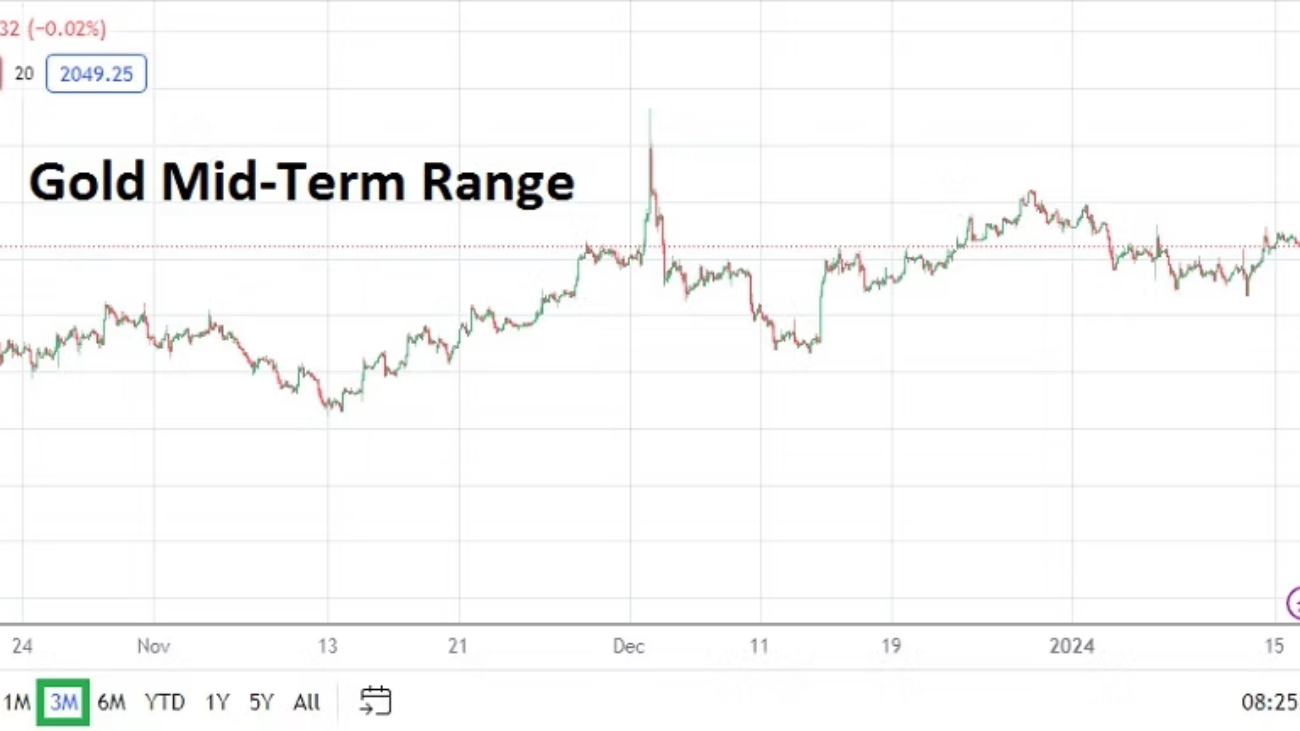
Gold remains rather comfortable above the 2000.00 USD level. As of this writing the spot price for the precious metal is near 2050.00 USD. This is fascinating because it underscores the notion that long-term gold buyers appear to believe the USD will remain within weaker territory. But again, short-term and mid-term outlooks for speculative wagers are two very different things.

Tuesday, 16th of January, Canada Consumer Price Index – the inflation numbers from the ‘North’ are expected to be lower than last month’s results.

Shanghai Composite Index Five Year Chart as of 16th January 2024

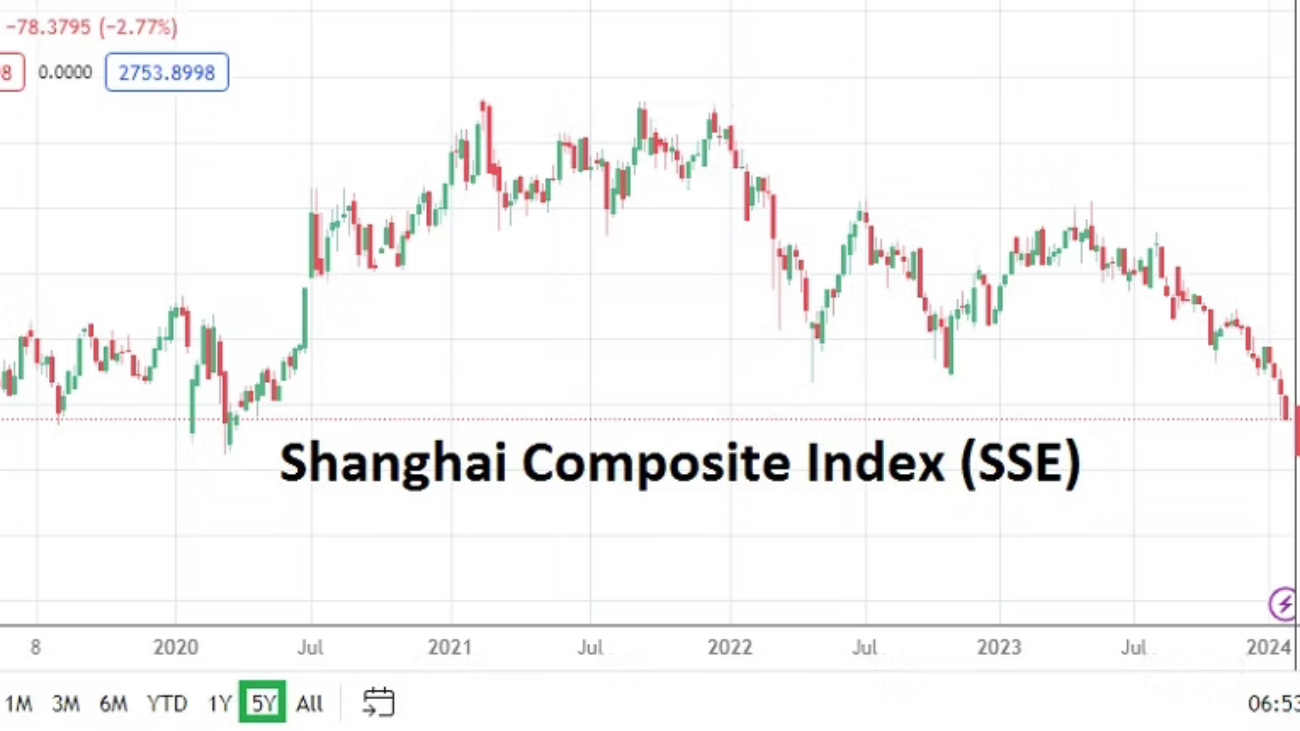
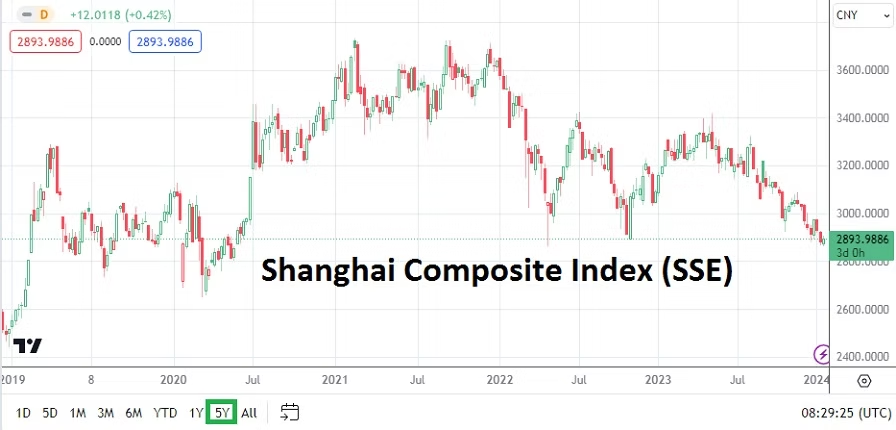
Wednesday, 17th of January, China Industrial Production and GDP – recent economic reports regarding the deflationary troubles the nation is facing have been loud. The industrial and growth numbers should be monitored. The Shanghai Composite Index (SSE) is trading near values last seen in May of 2020, this is not a good signal.

Wednesday, 17th of January, U.S Retail Sales – the consumer data will have an affect on sentiment in the broad markets. The results are anticipated to match the Core Retail Sales gains from last month, and the broad number is expected to be slightly higher. Traders should be alert in case a surprise outcome occurs. If the statistics are close to the estimates, this could create some calm in Forex and perhaps set the table for USD weakness to be seen for a moment.

USD/JPY Three Month Chart as of 16th January 2024

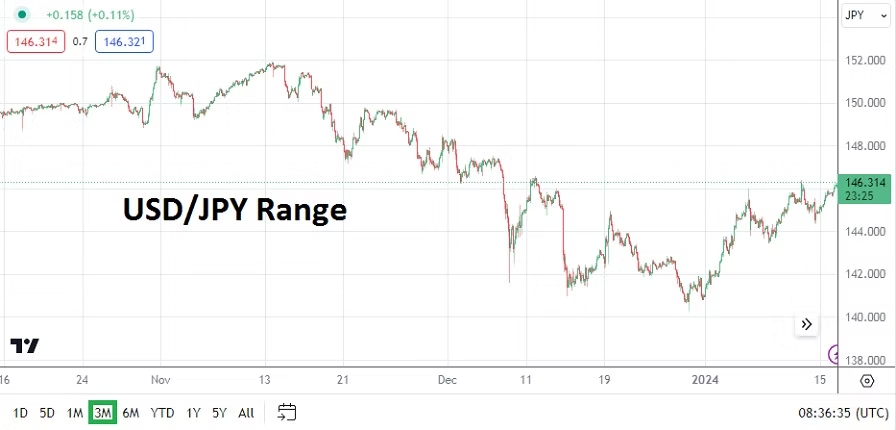
Thursday, 18th of January, Japan Revised Industrial Production – while the report is not viewed as a major piece of financial impetus in the speculative world, the USD/JPY has been rather dangerous for short-term traders caught on the wrong side of recent bullishness. If the number comes in at minus -0.9% as expected, it will then likely take USD centric bearish sentiment to cause a reversal lower. The past two weeks in the USD/JPY have been difficult for traders looking for downside momentum. A stronger than expected industrial number from Japan would likely help USD/JPY bearish outlooks.

Friday, 19th of January, U.K Retail Sales – the British consumer spending numbers are expected to come in weaker. The GBP/USD is currently trading near early January values as choppy short-term conditions persists.

postN87

AMT Top Ten Miscellaneous Pre-Xmas Thoughts for 22nd of Dec.

AMT Top Ten Miscellaneous Pre-Xmas Thoughts for 22nd of Dec.

10. Music: The Nutcracker by Pyotr Ilyich Tchaikovsky via Simon Rattle and the Berliner Philharmoniker.

9. Book: Zhou Enlai: The Last Perfect Revolutionary by Gao Wenqian.

8. Mobile Gaming: Revenues from ‘gaming on the go’ in 2023, via an Electronics Weekly article, is estimated to be 92.6 billion USD worldwide. Honor of Kings via Tencent leads the pack.

7. Data: U.S Final GDP quarterly numbers came in at 4.9%, missing its estimate of 5.2%. Final GDP Price Index quarterly results were 3.3%, below the anticipated mark of 3.6%. Canada will release its GDP numbers today for those paying attention.

6. USD: The greenback continues to produce incremental declines. Yesterday’s ‘weaker’ U.S GDP numbers helped solidify a bearish USD outlook mid-term.

5. Trading Volumes: Speculators who insist on wagering today need to understand many financial institutions are closing early. ‘Thin’ holiday markets can be extremely quiet and then become volatile without warning.

4. Global Risk: As traders relax during their holiday break, they should monitor news about the Red Sea for potential problems caused by the Houthis rebels from Yemen.

3. China: Economic concerns are mounting for the nation. The Shanghai Composite is approaching lows last seen in October of 2022.

2. Holiday Markets: U.S equity indices continue to show solid risk appetite. S&P 500 is now approaching all-time highs seen in 2022. Dow Jones 30 is at a record level. Nasdaq Composite trend still bullish.

1. Thank you: We wish all readers who are celebrating Christmas a fantastic holiday.