postN76.1

India Insider: Strategic Memory and Why Unilateral Power is Resisted

India Insider: Strategic Memory and Why Unilateral Power is Resisted

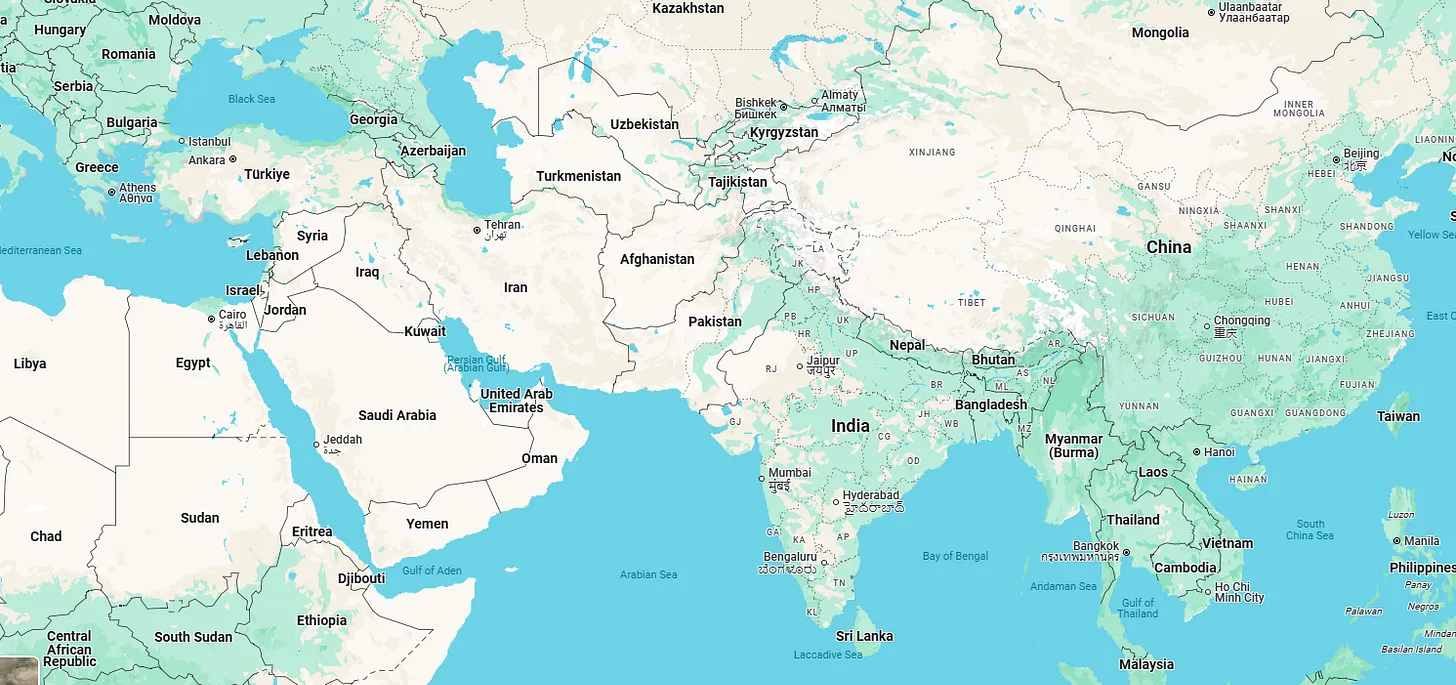
After Independence, India was often described as “tilting” toward the Soviet Union. In reality, this was the outcome of India’s pursuit of Non-Alignment at a time when the United States was actively backing perceived rogue actors in South Asia, most notably Pakistan. What appeared as ideological preference was, in fact, strategic necessity born of hard experience.
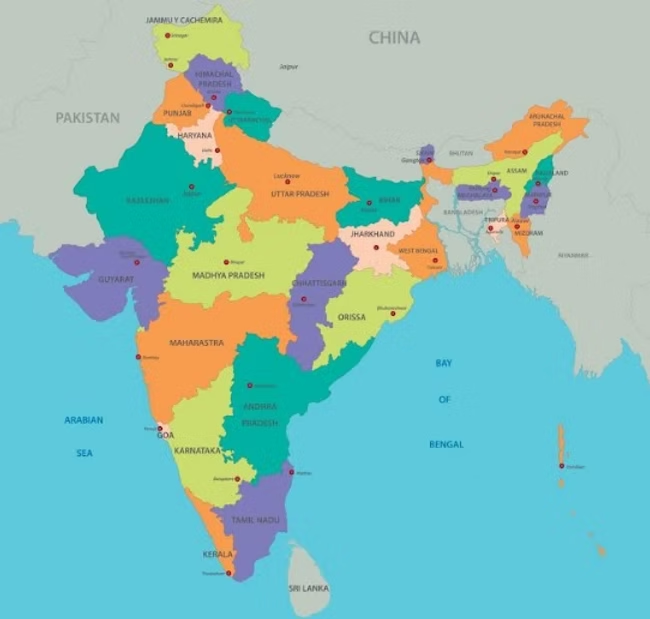
The Soviet Union supported India on core security concerns when few others would. The first major Soviet defense deal was not merely a weapons sale. It included licensed production in India through Hindustan Aeronautics Limited, full technology transfer, and made India the first non-Communist country to receive the MiG-21. This distinction mattered. India was treated as a sovereign partner capable of absorbing technology, not as a dependent client expected to align unquestioningly.

By contrast, Washington’s alignment with Pakistan was driven by Cold War geopolitics rather than South Asian stability. Despite repeated military coups, wars with India, and regional destabilization, the United States armed Pakistan, provided diplomatic cover during conflicts, and sustained the relationship through military rule and nuclear proliferation. These experiences deeply shaped India’s strategic culture and explain its enduring emphasis on autonomy, redundancy, and diversified partnerships rather than alliance dependency.

This history is one of the central reasons India resists Washington dictating regional dynamics. South Asia, in New Delhi’s view, is not a chessboard for external powers to reorder at will.

Democratic Republic of the Congo Example

The same pattern is visible beyond Asia. Take the Democratic Republic of Congo. After decades of horrific colonial exploitation, the Belgians realized by the mid-20th century that they could not hold on indefinitely and exited abruptly, having never prepared the country for self-rule. What they left behind was not independence, but a political vacuum. The United States and the United Nations intervened, but their actions were shaped less by concern for Congolese society than by geopolitical rivalry, ideological competition, and racial hierarchy.

The assassination of Patrice Lumumba destroyed the Republic of the Congo’s (as it was known then) only credible attempt at building a unified nationalist state at independence. The dictatorship of Mobutu Sese Seko that followed did not merely fail to develop institutions; it actively hollowed them out. Corruption became a governing principle, loyalty replaced competence, and the state turned into a vehicle for extraction. Today’s instability in the Democratic Republic of the Congo is not a governance failure in isolation—it is the predictable outcome of a political system designed to rule without building state capacity. For countries like India, this is not ancient history, it is a warning.

Washington’s unilateralism reinforces this mistrust:

The recent military operation to remove Venezuelan President Nicolás Maduro without U.S Congress authorization, international legal justification, or an imminent threat would have been unthinkable as recently as the first Trump administration. It became possible in 2026 only because of congressional capitulation, judicial immunity, and the transformation of an apolitical defense establishment into a politicized instrument of executive power. To much of the world, this signals that restraint is no longer embedded in American decision making.

Europe exposes another contradiction. The post war order was built on liberal democracy and collective security through NATO. When that order is weakened by unilateral action, trust erodes, even among allies expected to align automatically.

Even before Trump, the U.S – India relationship remained cordial rather than fully strategic. Before 9/11, India was the most natural regional ally against Al-Qaeda, yet Washington lacked patience and local understanding to navigate India’s complex democracy and nationalism. That failure was not tactical, it was conceptual.

India’s neutrality today is deliberate:

It prioritizes diplomacy over military actions that violate international law. India sees a multipolar world emerging, not as disorder, but as the end of unchecked unilateral supremacy. This is not ambiguity. It is a strategic memory.
post278

Behavioral Sentiment: False Narratives and Noisy Realities

Behavioral Sentiment: False Narratives and Noisy Realities

The past handful of months in Forex have provided day traders problems if they have been trying to pursue steady trends. Constant flashes of rhetoric and news pervading tariff implications, U.S Federal Reserve interpretations from various media and analytical corners, and mixed economic data has caused a rather mired reality for speculators trying to operate.

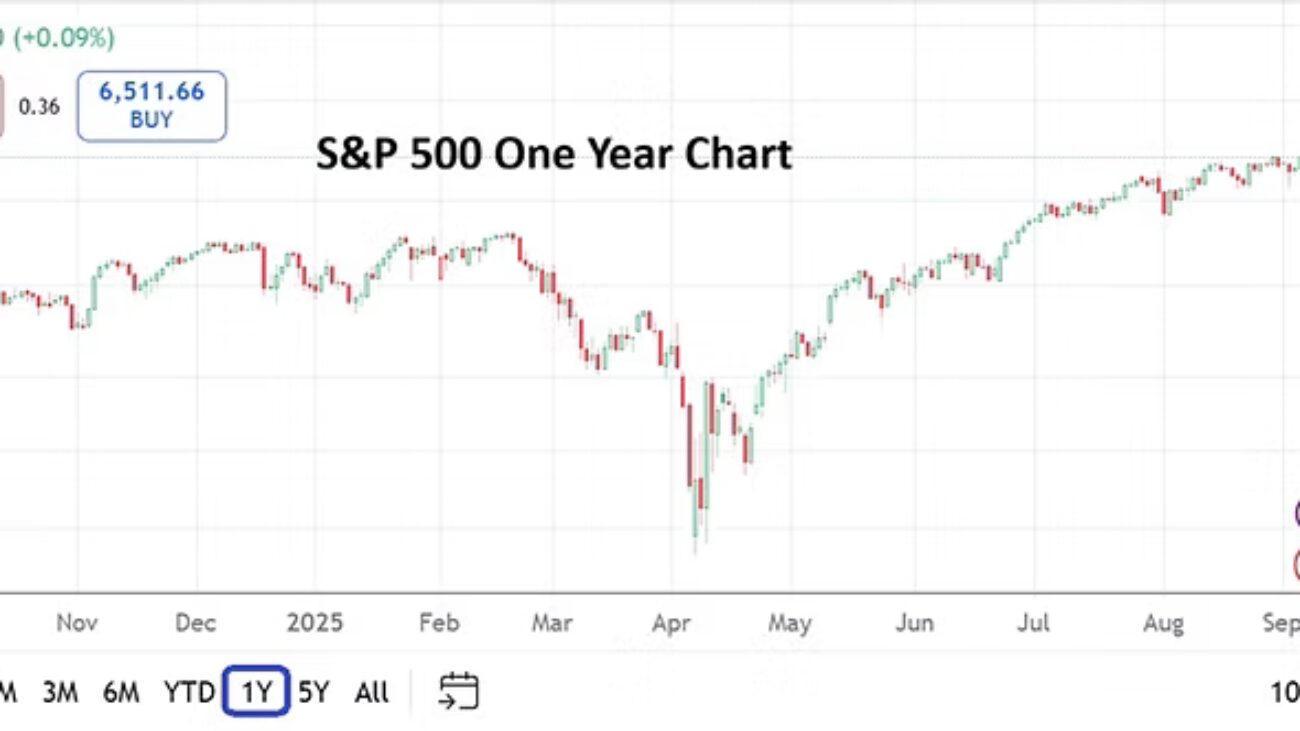
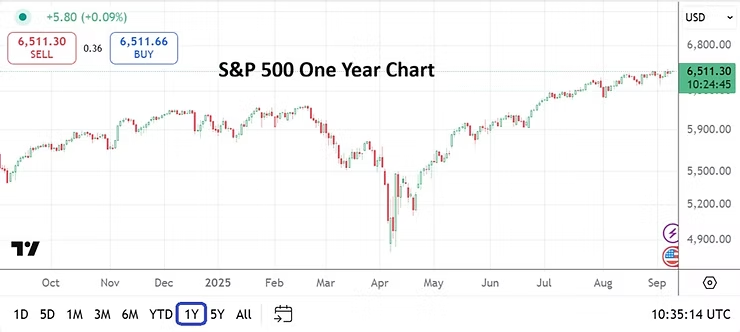
S&P 500 One Year Chart via Futures CFD Trading on the 9th of September 2025

However, if the noise is turned down by day traders and sometimes given less importance regarding potential influences, signals become visible and some perceptions can be looked upon as roadmaps. While many want to to throw their hands up and proclaim some sort of developing economic meltdown and a coming apocalypse, the major U.S indices are actually performing quite well as a barometer. The S&P 500 is continuing to challenge all-time values. Yes, the Nasdaq 100 and Dow Jones 30 are not marching in lockstep with the S&P 500 to new highs, but they are not far behind. The stock market has never guaranteed people an ability to constantly move upwards, but it does offer the potential to judge outlook and mid-term sentiment.

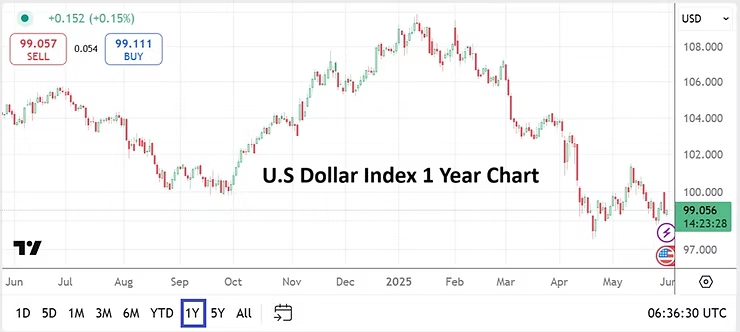
The USD has been extremely choppy since the start of this year, this as the Trump administration has taken over, but its trend towards weakness has been rather clear. The EUR/USD and GBP/USD have done reasonably well regarding mid-term strength. Yes, the USD/JPY has produced whipsaw movements and the Japanese Yen remains awkward, but this is a direct reflection of mitigating Japanese government policy (some may call it incompetence) regarding its ability to manage fiscal concerns, interest rates, and fight deflation and now inflation (which has been going on for a few decades).

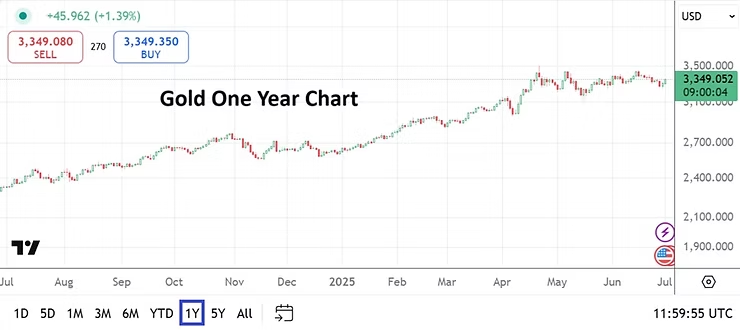
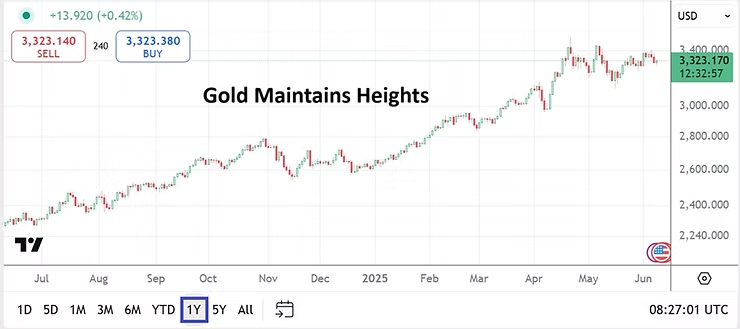
Gold is traversing record heights and is showing signs of sustaining values above 3,600.00 as of yesterday. After languishing (albeit within elevated realms) near 3,350.00 the past handful of months with prevalent volatility, the precious metal has bolted out of its consolidation. And the likely reason for this is the anticipated Federal Reserve policy changes regarding interest rates. 10 Year U.S Treasury yields have also been pushed lower recently – this as financial institutions await a definite cut in interest rates by the Fed on the 17th of September. But folks who believe a 50 point basis reduction is coming late next week are likely wrong.

The Federal Reserve under Chairman Jerome Powell has been quite conservative, this will probably not change next Wednesday. It is more likely a cut of 25 basis points will take place on the 17th, and the FOMC Statement will offer the potential of another interest rate cut in October. Tomorrow’s PPI numbers and Thursday’s CPI results will influence the Fed’s coming meeting and mid-term outlook.

What we are left with is a broad market that is having a lot of noise applied to it by people with a variety of biases. Political bantering has reached a threshold in which it might be best to simply not pay attention to anything – but that is dangerous too. Yes, some people do talk sense, and some people do show signs of actually trying to engage in adult decision making regarding their insights, but it often feels like wanting to sound correct is more important than outcomes. Technical traders may be enjoying a quiet laugh at the expense of fundamental players right now.

However, economic data remains important. While rhetoric from the U.S White House and its opponents remains within a state of hyperbole, day traders should try to turn down the noise and pay attention to signals that long term investors continue to produce and take advantage of their sentiment. Stocks continue to be pursued and indices have done well, but volatility should be expected particularly into next week.
post261

Unpredictability of President Trump and the Markets

Unpredictability of President Trump and the Markets

Everyone wants to know what will happen in the future in the financial world. Most everyone also knows that this is impossible. However, clarity about the mid-term is a legitimate focal point that financial institutions strive. Risk managers define their considerations on assorted perspectives depending on their backgrounds.

While some may like him and others clearly are are not fans, President Trump has a reputation for wanting to get things done. His calling card for a long time has been an ability to make business deals. President Trump however has put himself in a rather difficult position and the next two weeks may prove to be an important milestone. One in which those who like the President and those who don’t will be given more credence to debate.

The Federal Reserve will announce their FOMC decision on the 30th of July. Tariff deadlines will supposedly come on the 1st of August. President Trump has made it clear he does not like the lack of aggressiveness which Fed Chairman Jerome Powell is displaying. Trump has called for the Federal Funds Rate to be cut and Powell has not acquiesced.

President Trump has openly spoken about trying to replace the Fed Chairman, but at this juncture the Trump White House knows this will be difficult unless they can prove Jerome Powell has done something maliciously. Not lowering the Federal Funds Rate because of a fear inflation will develop because of potential effects due to tariff fallout is a legitimate reason not to act. Even if the Fed Chairman is wrong, he appears to still be working on a basis which is based on an economic interpretation.

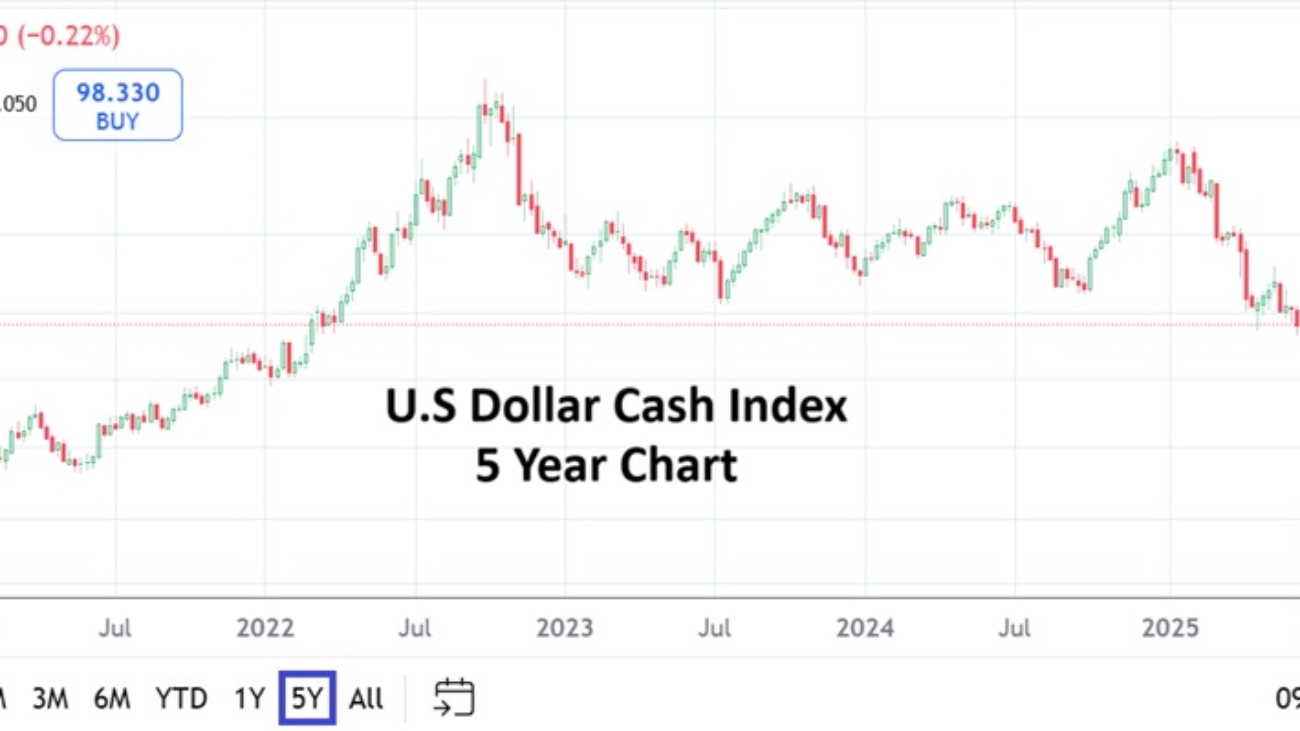
For the next two weeks the broad markets will hear about the Trump and Powell disagreement. It has been argued the Federal Reserve should have lowered the Federal Funds Rate a few months ago, clearly this was not done. However, the USD did trade with weaker sentiment in Forex from early April until the beginning of July. In the past few weeks the USD has garnered some strength, but remains within the lower part of its long-term realms via the U.S Dollar Cash Index. The weakness in the USD was likely due to financial institutions betting on rate cuts to come over the mid and long-term, and which they still believe will happen.

The upwards momentum generated recently by the USD has put the greenback in a position that seems to indicate financial institutions are transacting their cash forward orders cautiously for the moment, while waiting on the next round of impetus. And that is where Federal Reserve clarity and tariff threats now shadow mid-term outlooks.

U.S Dollar Cash Index Five Year Chart as of 21st July 2025

We have entered an unpredictable window and President Trump apparently doesn’t mind allowing a little danger into the mindsets of the financial markets. It is one thing to proclaim tremendous results and great, magnificent prospects, but how long will investors tolerate a lack of clarity regarding tariff agreements? President Trump has postponed the tariff deadlines several times and what should be considered is the potential that at some point he will have to take action to prove he means business. If the August 1st deadline is extended again this may not cause much of a shock, but it will not be met with optimism.

Instead, the main interpretation from financial institutions may be that Trump is struggling to get agreements done as he had promised. While that might lead to the idea that global commerce will continue on as is, this will certainly not help create the positive impetus which President Trump desired. At some juncture President Trump may begin to be perceived as the little boy that cried wolf. No one will pay attention and the markets will proceed without him. But President Trump will not likely let that happen, he does like attention.

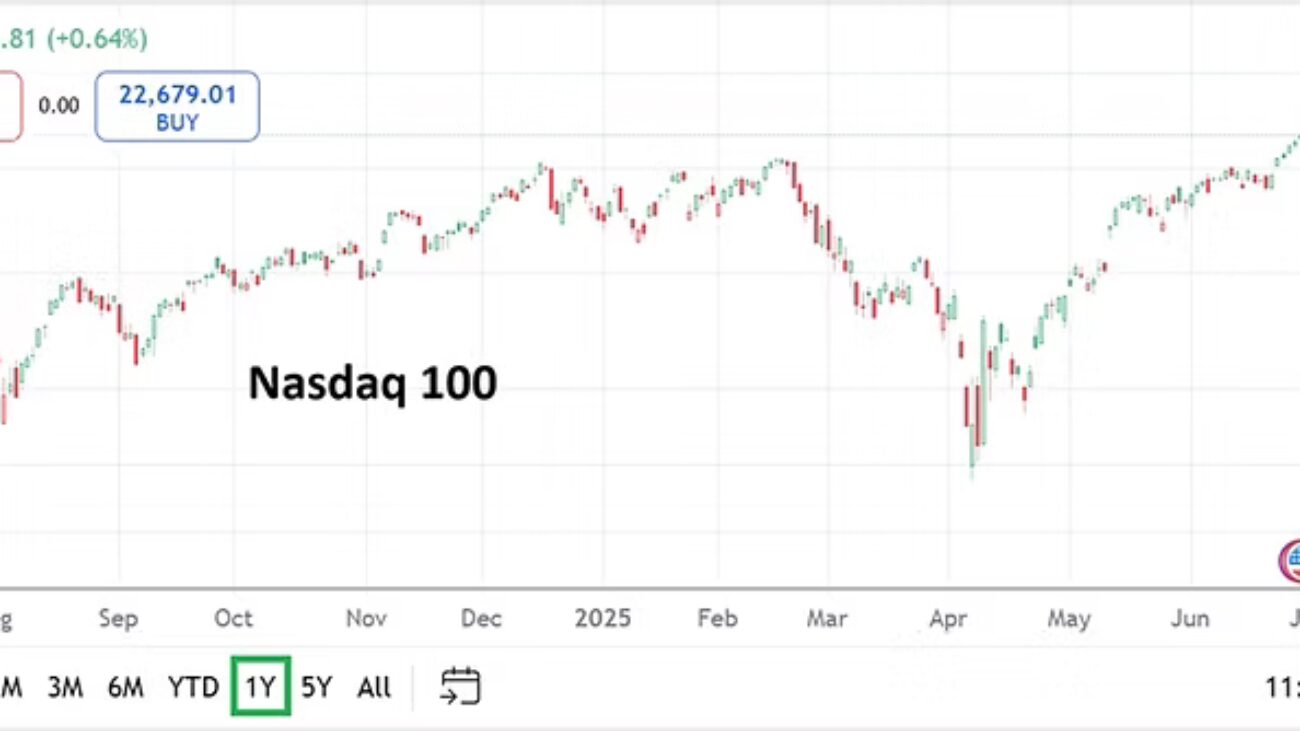
The Nasdaq 100 and the S&P 500 are near record highs, so there isn’t a lot to complain about by index investors. The U.S economy has shown signs of green shoots regarding better retail sales and the recent Philly Fed Manufacturing Index. The grey area for many remains inflation, which has been coming in rather well behaved although the most recent report showed a slightly higher outcome with the yearly CPI reading. However, the Federal Reserve actually has evidence that inflation has been tame. Yes, there are questions regarding the coming influence of tariffs on the U.S economy, but for the moment inflation has not risen.

The lack of clarity and not having a mid-term comfort level which is unperturbed may be problematic for small U.S business owners that face tariff concerns on their imported goods. And the bigger picture remains unclear for large U.S corporations – but they certainly continue to try being optimistic. And this is where it gets more dangerous, plenty of perspectives are being driven (inspired) by analysts who have confirmation bias. For instance the downturn in the USD from April until early July was amplified by many who saw this as a sign the USD was being punished by foreign governments opposed to President Trump. This in fact was highly unlikely, traders need to remain alert to false narratives.

The next two weeks need to be treated carefully. There will be a running monologue among many analysts that changes daily as behavioral sentiment moves depending on what is being spoken about the Federal Reserve and tariffs. However, until there are actual answers the financial markets are likely to remain rather choppy. Self awareness will be crucial for speculators. Also, a large factor in the financial markets will be played by the U.S White House regarding how incoming results are presented. Until then day traders may want to watch technical charts and try to figure out where programmed trading lurks regarding support and resistance levels. Price velocity in Forex, bond yields and gold should be monitored.

post260

Risk Events Horizon, Fireworks and a Tranquil Marketplace

Risk Events Horizon, Fireworks and a Tranquil Marketplace

Financial narrative as always remains important and depends on who is sharing their viewpoints. As of today the U.S Senate is still discussing spending legislation which President Trump is selling as the Big Beautiful Bill. Even some Republicans don’t quite agree and it has caused political turmoil already, North Carolina Senator Thom Tillis has announced he will not seek reelection in 2026, but the markets remain stable. An agreement on the budget bill looks like it will take longer than hoped. However, day traders should remain calm.

Nasdaq 100 One Year Chart as of 1st July 2025

The words scramble and race are being used by some in the media as the Senate tries to pass the legislation. If the Senate is able to approve a budget it will still have to be voted on by the House of Representatives. The deadline of July 4th is political theatre orchestrated by President Trump largely because of Independence Day symbolism. Early fireworks are ready to be sounded by some market analysts in Washington D.C if there is a legislative failure. There is a risk of irritating the White House and a danger of political backlash for certain politicians if hurdles are not jumped.

Elon Musk apparently hasn’t bought into the White House threats and has once again started to express criticism of the bill. But Musk’s condemnation seems to be falling on deaf ears the past couple of days as the work of market participants have achieved rather serene outcomes. Musk remains an important voice globally, but he has been sidelined rather effectively by President Trump in the past month. The media seemingly doesn’t have a taste for another round of Musk versus Trump recriminations and the public appears bored.

The coming Independence Day holiday means the Non Farm Employment Change numbers will be published this Thursday. The employment data may not get much fanfare if the U.S Senate is still dancing with the Big Beautiful Bill. The long holiday weekend could be made rather volatile if the legislation deadline is not met. If there is no conclusion to the Big Beautiful Bill going into the July 4th celebrations, financial institutions may preposition for the long weekend in a cautious manner, but panic doesn’t appear anticipated.

Gold One Year Chart as of 1st July 2025

Adding to the risk events horizon with dynamic ingredients are the 9th of July tariff negotiations and results which will be announced by the White House. Countries such as India are hoping for a positive outcome or at least a pronouncement of optimism that progress has been made. And this is possibly the most important role for the Big Beautiful Bill and the Tariff deadline, it is all self imposed dramatics by President Trump. The double feature for investors may be rather dull because many have seen this film before.

There is pressure on the U.S Senate to pass the spending bill, and on nations trying to negotiate new trading terms. However, many have the likely notion, that as long as the promise of solid developments are predictably claimed by the White House that global markets will stay calm.

Experienced traders in financial institutions have proven tranquil the past week, excluding the recently seen Middle East conflict – which also became a buying opportunity. The solid results seen recently might be evidence that players in equities, commodities, bonds and Forex may be viewing the anticipated fireworks with a lack of fear. While President Trump has a substantial amount of power, he also has shown the ability to take a step backwards and allow for extensions of dialogue.

The broad markets have learned to practice patience with President Trump over the past handful of months, and perhaps aren’t focused on short-term volatility, while continuing to be optimistic about mid-term harmony. The strong selling in U.S equity indices this past winter and into April has turned into bullish dreams and record values being challenged.

Yes, there will be bursts of noise from various corners that beg for attention, but financial institutions may simply go into the weekend unperturbed and feel as if they know the coming political and economic script. Day traders as always need to remain alert to risks, but keeping undisturbed if an uproar begins to reach fever pitch over the coming days may provide the best results. Market bedlam may stay rather muted much to the dismay of headlines proclaiming coming catastrophe.

post258

The Fed: Beating a Dead Horse as the Bulls want to Run

The Fed: Beating a Dead Horse as the Bulls want to Run

Yesterday’s lackluster and underperforming GDP results from the U.S highlights our often discussed doubts surrounding the Federal Reserve. While Jerome Powell definitely has a right to be ‘uncertain’ and express his concerns regarding sudden inflation emerging, he has also proven to be wrong. The Fed should have begun cutting the Federal Funds Rate three months ago.

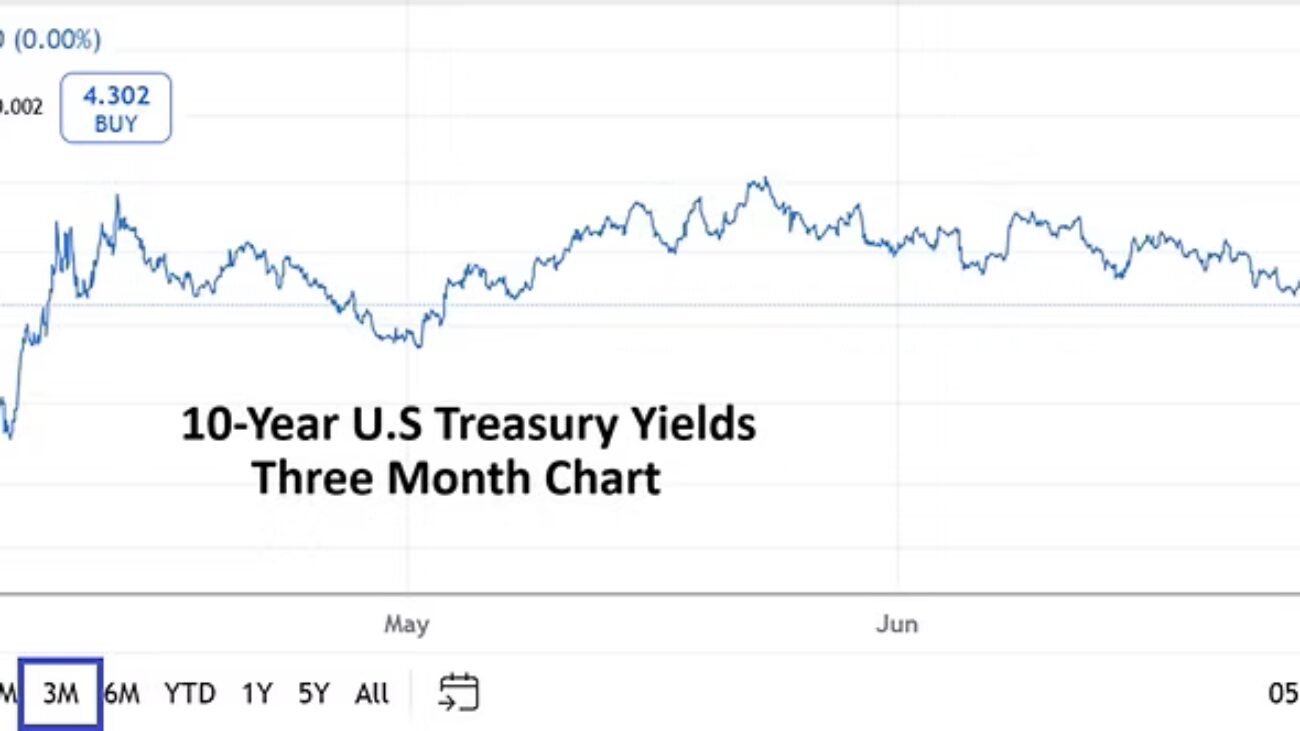
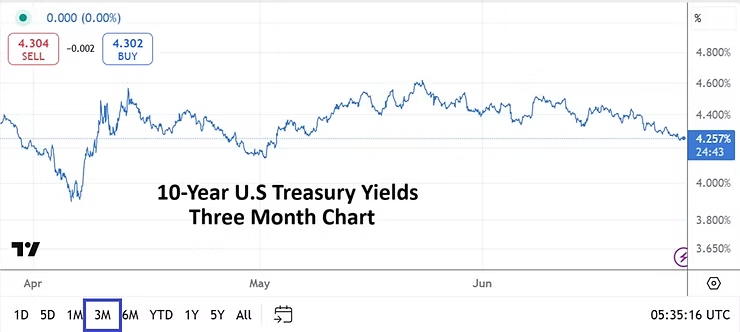
10-Year U.S Treasury Yields Three Month Chart as of 27th June 2025

Although Powell may not be a fan of President Trump, the Fed Chairman and the FOMC has the ability to be more nimble in this era. Instead of being passive about interest rates, the Fed could have lowered borrowing costs and helped spur on the U.S economy months ago instead of watching GDP numbers falter.

For all of the consternation regarding potential tariff pratfalls, the effect from President Trump’s policies have not caused massive inflation. The Fed can begin cutting rates even before the next FOMC meeting in late July, but they will not. In fact, the Fed should now cut the Federal Funds Rate by 0.50% in late July, but again they won’t. We will be lucky to get a 25 point basis cut.

The Federal Reserve remains too passive and acts as if it doesn’t have data technology which can be more proactive. Instead, Fed Chairman Powell chooses to act as if cutting the Fed Funds Rate is an academic exercise and can be done via a polite semester like manner akin to a report card. Dangerously, the U.S is paying an exorbitant amount of interest on long-term Treasuries and short-term Notes. Lower borrowing costs would also help U.S consumers. Jerome Powell doesn’t seem to care about these factors, which raises the consideration regarding his loyalties.

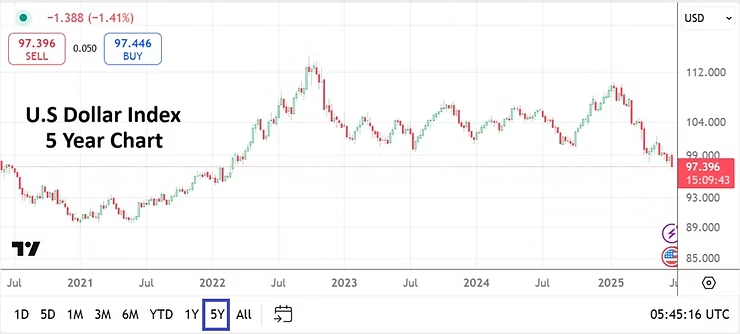
U.S Dollar Index Five Year Chart as of 27th June 2025

In recent weeks there have been at least two FOMC members who have suggested that interest rates need to be cut sooner rather than later. And there are some financial institutions who are clamoring for aggressive interest rate cuts throughout the calendar year and into 2026 in order to jumpstart the U.S economy, this includes Goldman Sachs and UBS. Signs of evidence that interest rate cuts will develop can be seen in the 10-Year Treasury yields which have been eroding recently. Some may claim this is a false narrative and that it is merely risk premium starting to be discounted. Nevertheless yields have lowered in the past month.

Yes, President Trump speaks loudly and delivers brawling negotiations. July 9th is another deadline for tariff agreements. However, financial institutions and many governments have learned to cope with President Trump’s backstreet tactics, which academics like Jerome Powell are not fond of particularly. U.S stock markets are hovering near highs, but still cautious because they are waiting on impetus from the Federal Reserve.

If the Fed fails to deliver an impactful FOMC Statement in late July this will not be greeted well by investors. Many believe the Fed needs to react, and it is quite apparent the S&P 500, Nasdaq 100 and even the Dow 30 are positioning for gates to be opened allowing for a bullish stampede. The USD has been weaker too the past few months as large commercial players anticipate lower U.S borrowing costs. The time for the Fed and Chairman Powell to act is now, making it clear that cuts to the Federal Funds Rate are coming.

post255

Quick Hits: Inflation, USD, China and U.S Trade and WTI

Quick Hits: Inflation, USD, China and U.S Trade and WTI

Yesterday’s weaker than anticipated CPI data from the U.S cements the realization that inflation is eroding in the States statistically in a rather consistent fashion. Today’s PPI numbers will be watched, but yesterday’s results clearly show the Federal Reserve has been far too cautious.

Media reported yesterday’s inflation results differently showing bias as some pointed out that inflation rose, compared to some outlets that showed it came in less than expected. Bottom line – inflation has been below expectations consistently and tariff concerns as of yet have not killed the U.S economy with higher prices. The Fed’s insistence on being cautious are comparable to the instincts of an overly protective parent. Day traders need to understand their perceptions are in danger of being affected by folks with confirmation bias.

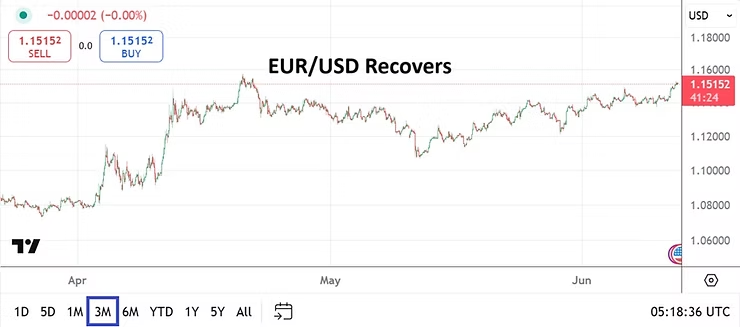
EUR/USD Three Month Chart as of 12th June 2025

The EUR/USD climbed above the 1.15000 level again yesterday confirming mid-term outlook for a weaker USD based on the notion the Federal Reserve will have to lower the Federal Funds Rate exists. While perhaps kicking and screaming against their desires to remain hawkish, the Fed will start feeling the heat to act. Next week’s FOMC meeting is unlikely to be the actual date. However, financial institutions have certainly been leaning into a weaker USD since April, and the upwards trajectory in values by major currencies against the USD may prove to be a solid baseline via support prices moving forward.

Certainly, day traders should consider the notion that larger traders have bet against the USD already, thus leaving the door open to the potential of reversals. Yet, mid-term price levels are what financial institutions are gearing their outlooks towards via cash forward transactions for commercial companies. If financial institutions believe the Fed will have to indicate the potential of a rate cut not only in July, but another one in September this could spur on additional USD weakness. Folks should also consider the notion that the White House won’t be against a somewhat weaker USD in order to help U.S manufacturers and producers export.

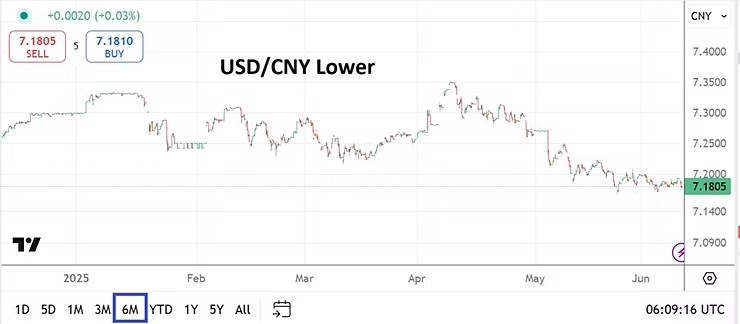
USD/CNY Six Month Chart as of 12th June 2025

U.S stock indices didn’t climb on the results of the China tariff news proclaiming a working agreement has been attained over the past two days. Perhaps markets are inclined to believe there will be more fireworks regarding rhetoric from the U.S and China over the coming months – which appears logical given the circumstances between the two nations.

While rare earth metals got the headlines, there appears to be plenty of line items in the tariff negotiations that still must be worked on. The announcement that the deadline has been pushed back again, this time until the 9th of August shows that talks are making progress – but slowly. Red lines keep getting erased.

Financial markets reacted rather passively to the U.S and China news, seemingly indicating larger players are now focused on other matters, and funds have played most of their cards regarding the China and U.S saga via their existing trading positions. Noteworthy, is the fact, the USD/CNY has reacted in a rather correlated fashion with the broad Forex market the past six months. For all the talk about a catastrophe for China and U.S trade, the USD/CYN has behaved quite well, showing the Chinese government is playing a long game against President Trump and doesn’t want to create a huge firefight via currency manipulation accusations.

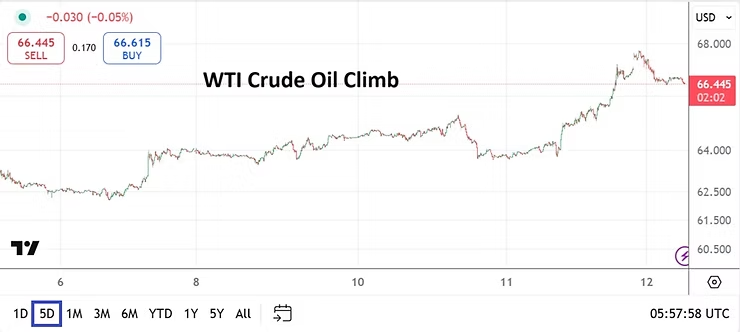
WTI Crude Oil Five Day Chart as of 12 June 2025

Middle East Escalation: WTI Crude Oil jumped late yesterday as news quickly filtered through social circles of embassy evacuations in various proximities within reach of Iran. The loud whispers certainly caused the price of the commodity to surge to almost $67.75 last night, but this morning’s values suggest some deep breaths have been taken as WTI trades near $66.45.

For options traders who want to buy cheap calls on WTI, they will likely have to look several months out and speculate on military escalation under rather speculative circumstances. If traders want an idea of what larger players are doing in options they can use CME (Chicago Mercantile Exchange) info to get some thoughts on positioning pattens in WTI Crude Oil calls and puts. The call options did get more expensive last night – meaning that some large traders are hedging against the threat of higher WTI Crude Oil prices because they are likely leaning into cheaper oil for the time being, or they are betting on the price of the commodity to rise if chaos breaks out in the Middle East.

post252

No Chance of a Nimble U.S Fed as Entitled Investors Served

No Chance of a Nimble U.S Fed as Entitled Investors Served

On Wednesday of this week Consumer Price Index numbers will be published, followed by Producer Price Index data on Thursday. Inflation statistics from the U.S for several months have been coming in rather tame and sometimes below forecasted results. Fed Chairman Powell and his team of FOMC members continue to plead uncertainty as the main reason for a lack of Federal Fund Rate cuts because of tariff concerns. The next meeting by the Fed finishes on Wednesday the 18th of June.

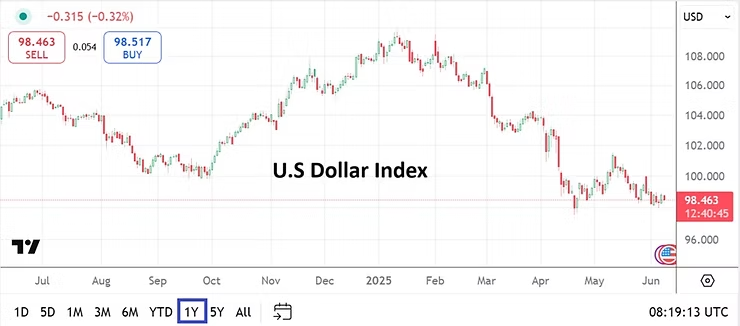
U.S Dollar Index One Year Chart as of 9th June 2025

Even if the inflation numbers come in as anticipated in the next few days, the Federal Reserve is unlikely to cut interest rates next week. President Trump and some in his cabinet have spoken about the need for rate cuts. Not only would it help consumers via mortgage rates, borrowing costs to buy autos and other high ticket items, but it would help the U.S government pay less on interest rate expenditures generated by inflamed Treasury yields.

The Fed continues to stay passive about its outlook, but if inflation data via the CPI and PPI are near forecasts this week, why would the U.S central bank continue to take such a stubborn stance? Interest rate decisions are not supposed to be political. The Fed has pointed to the potential of sudden inflation occurring due to tariff implications. This is a genuine concern. However, why can’t the Federal Reserve be more nimble? Inflation has not shown signs of immediate upwards pressure.

Perhaps it is because the Fed serves large U.S and foreign financial institutions, and has gotten into the habit of telling important folks not only what it anticipates, but handing out its interest rate plans on a silver platter so large players can position themselves beforehand like entitled elites. The Fed is very unlikely to cut interest rates the middle of next week, but it is probable they will open the door to a 25 basis point cut in July. However, July’s meeting is scheduled for the end of that month, in essence this is the middle of the summer, which is a long time to wait for action.

Day traders hoping to ride the trends that flow through the marketplace as they pursue speculative wagers remain in a difficult spot. Intraday volatility remains dangerous. Mid-term outlooks are certainly taking hold in Forex and equity indices, but sudden reversals for those using too much leverage continues to cause harm. Short-term speculators need to remain patient and vigilant, it is important to remember day traders are seen as second class citizens in the big scheme of the financial world, and this is not going to change for the moment.

Gold One Year Chart as of 9th June 2025

A lack of clarity has spooked large players in the financial markets the past handful of months, but it does appear many institutions are becoming more comfortable. Though not at all-time highs, the major stock indices are within sight of important values. Behavioral sentiment seems to be leaning into a more positive outlook. Large investors appear to have concluded that while President Trump talks a tough game and often presents a strong stance, that ultimately he allows for tactical maneuvering to achieve deals. Trump is not big on being polite and this occasionally inflames markets. Bullish sentiment is growing on the hope President Trump’s characteristics are understood.

The Fed and the White House are likely to continue locking horns for the next few weeks. Perhaps if Jerome Powell tries to placate Donald Trump with a solid hint of an interest rate cut in July this will smooth things over. However, waiting for an interest rate cut in late July seems like a road too far, particularly when inflation levels the past couple of months avail the U.S economy to proactive actions from a Federal Reserve now.

Let’s remember, there is no law that says the Fed cannot cut or raise interest rates only during the conclusion of FOMC meetings. The U.S central bank has the ability to make changes to the Federal Funds Rate whenever it deems needed. Yet, the Fed refuses to be nimble in an age when technology allows data to be attained faster, this is a detriment.

The inability of the Fed to show it can be agile is another reason why investors are nervous about U.S policy regarding fiscal matters. The U.S government’s bureaucracy is too slow and bloated. The U.S is still a golden place to invest, but it is becoming problematic and this is leading to changes which effect long-term financial decisions.

post250

AMT Top Ten Miscellaneous Ruminations for the 31st of May

AMT Top Ten Miscellaneous Ruminations for the 31st of May

Western Cape, South Africa

10. Absence: Apologies for the truancy of AMT’s Top 10 the past handful of months. The staff has offered a myriad of poor excuses, but it accepts responsibility and has promised to try and meet the standards of our readers with timely publication once more. More coffee has been promised to the staff as a negotiation tactic by management, even though the price of the beverage is obscene.

9. Dim the Lights: President Cyril Ramaphosa, his staff and well known South African golfers attended a highly publicized meeting in the White House with President Trump. After surprisingly dimming the lights, a video mainly consisting of EFF radical Julius Malema’s threatening escapades was shown while Trump voiced concern about attacks on farmers. Not a lot is known about the outcome of talks which went on behind closed doors afterwards, but speculation abounds. The USD/ZAR is near 17.97000.

8. Anduril Industries: An aviation company, cofounded by Palmer Luckey who at a young age created Oculus VR, is receiving important attention. Anduril is a privately held company intent on building pilotless jet fighters, among other innovative technologies. Palmer Luckey is now 32 years old and appears ready to become a transformative tech entrepreneur perhaps in the vein of Elon Musk.

7. Bitcoin: Value of BTC/USD is near $103,600.00 at this moment. GameStop has announced it has purchased Bitcoin as a form of corporate treasury, apparently following the path of MicroStrategy’s foray as a Bitcoin proxy to the dismay of some and delight of others. The price of the world’s biggest digital asset was nearly $75,000 on the 7th of April 2025.

6. TACO: An acronym meaning ‘Trump always chickens out’, created by Robert Armstrong of the Financial Times, has caught the attention of many, including President Trump. While an amusing and pointed term, the context should be considered as a way to monitor the thinking of behavioral sentiment of anxious investors. Trump’s tough rhetoric and tendency to then issue a softer toned stance has been noted before by his backers as well as critics. As a means of accumulation while seeking value in assets perceived to be oversold, TACO may be a useful tool for those who agree with Armstrong’s thinking.

5. Values: Gold went into this weekend near $3,288.00. After achieving an apex around the vicinity of $3,500.00 on the 22nd of April, speculative fever has subsided a bit, but the commodity remains stubbornly in demand. Inflation in the U.S appears to be under control. Yesterday’s Core PCE Price Index met expectations with a monthly outcome of 0.1%. WTI Crude Oil’s spot price finished near $61.05 on Friday showing large traders remain convinced supply is strong.

4. Paralysis: The Fed remains steadfast and scared. While using the word ‘uncertainty’ repetitively – as if part of a rave song, Federal Reserve Chairman Jerome Powell must contend with official U.S inflation data which is starkly lower and a discontent Donald Trump, this while trying to explain the comatose behavior of the U.S central bank. The Fed should cut the Federal Funds Rate asap. And a 50 basis point cut by the end of this summer should be the discussed target.

3. Leviathan: The White House’s goal of reducing the deficit is running into tough political realities as budget cutting hopes clash with entrenched bureaucracy that swallows money like a hungry sea monster. U.S Treasuries yields remain elevated. The U.S has been cautioned again via rating services – highlighted by Moody’s recent downgrade of U.S bonds. To the chagrin of many fiscal conservatives, U.S government spending remains problematic.

2. Intimidation: Apocalyptic economic headlines attract viewers. Proclaiming global catastrophe creates attention and reactions in global financial markets. However, after the fierce selling seen in equities over the past few months, there has also been plenty of resilience and indices are now showing signs of coalescing as outlooks improve. Value and yields remain a prime motivator for experienced investors.

1. Pundits: Day traders have been battling volatile market storms since the election of Donald Trump, this as financial institutions have shown a tendency to shift outlooks as they react to pandemonium and cause whipsaw price action. Many speculators have experienced costly losses. Listening to self-anointed experts has not helped. Be wary of anyone who claims to be a market guru, and remember some call themselves gurus simply because spelling charlatan takes too long.

post249

Taco Trade Consideration: All about Accumulation Not Ego

Taco Trade Consideration: All about Accumulation Not Ego

Taco Friday is upon us. Fair or not the newly coined expression TACO – Trump always chickens out – is a rather savvy way of looking at current market perspectives. Day traders have run into a buzzsaw trying to speculate on daily gyrations, but investors who have the ability to accumulate based on valuations in equities, Forex and perhaps even commodities such as gold and WTI Crude Oil have likely enjoyed the choppy ride the past handful of months.

Nvidia One Year Chart as of 30th May 2025

Day traders who are betting on the daily whims of Forex or the stock markets have been participating in assets being stirred by a constant storm via behavioral sentiment shifts caused by White House rhetoric. President Trump has said the expression is mean. And in fact the Taco statement may be wrong all together, because what has gone down and back up, has also gone down again followed by additional reversals. But let’s put ego and wrong notions to the side for a moment. Because the important point about the Taco expression is actually about finding value.

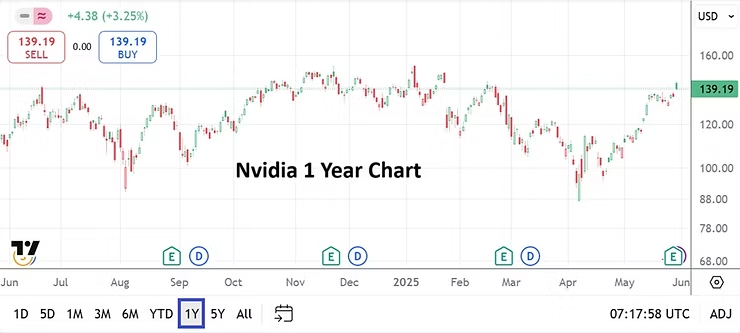
Let’s consider that financial institutions have experience and skin in the game. The ability to buy stocks on lows and accumulate them based on a long-term mindset is likely going to prove correct. Consider Nvidia, it has suffered pratfalls, but continues to recover and pick itself off the floor and is now challenging highs again. Yes, the SP500, Nasdaq and Dow30 have all seen what can be described as whipsaw results. However, the optimistic notion that common sense rules and quality will prevail is a feature of investing. Blood on the streets as Warren Buffet has often said, is not a bad thing, it is an opportunity.

Nasdaq 100 One Year Chart as of 30th May 2025

Day traders attempting to time the markets have always experienced a great deal of pain when speculating on notions that ‘now is the time’. Patience often proves to be worthwhile in trading and investing. Anyone who claims they are constantly buying exactly on lows and selling on apex values should be treated suspiciously. Attempting to time highs and lows is a bit like gambling on sports without any inside knowledge, sometimes you win and sometimes you lose.

U.S Dollar Index as of 30th May 2025

In Forex the USD has been battered but continues to produce sudden violent price action. Today’s Core PCE Price Index from the U.S is expected to produce a 0.1% increase – which would be considered negligible by the markets. Fed Chairman Jerome Powell recently met with the President for the first time since Trump took control of the White House this term. The President is on the record as saying the Fed should cut interest rates now, this while Powell repeats the word ‘uncertainty’ repetitively.

Today’s inflation report is a vital statistical report for the Federal Reserve and will stir Forex. Perhaps, Jerome Powell should consider the Taco expression and understand that while talking tough Trump often is only expressing a strong stance to achieve a middle ground. If inflation numbers are near the forecasted outlook, the Fed should certainly cut interest rates sooner rather than later.

In the meantime, investors who have been accumulating stock on lower values and are playing a long game, may also be counting on ignition fuel being poured upon the markets to create a dynamic bullish run via positive impetus. Yet, even if profits are not achieved in the short-term, investors also understand they are being given an opportunity via the occasional outbursts from President Trump to take advantage of a rather delicious tactic.

post246

An Expanding Axis – Will Egypt and Pakistan Become Members?

An Expanding Axis - Will Egypt and Pakistan Become Members?

Opinion: The following article is commentary and its views are solely those of the author. This article was first published the 26th of May via The Angry Demagogue.

China seems to be taking advantage of the transition from the Obama-Biden appeasement based foreign policy to the Trump commercial based system. Whereas Obama-Biden had no problem punishing allies that dared to oppose the US-EU appeasement and woke revolution, Trump is looking to create alliances based on commerce – and threatens allies that don’t go along. While the Obama-Biden policy failed utterly and arguably caused the wars in Ukraine and the Middle East, the Trump administration seems to be playing for time as it restructures the global security order.

China however does not seem to care to wait and are stretching their sway not only in the South China Sea but westward towards the Middle East. The four member Axis – Russia, China, Iran and North Korea seems to be expanding to other countries with strong military dictatorships. Egypt and Pakistan will be the next members of the Axis. While much of China’s belt and road policy deals with bankrupting poor, weak countries, they seem now to concentrate on strong military dictatorships. Egypt and Pakistan are being pried from the western camp as we speak.

Pakistan has, for awhile not been firmly in the western camp. It was a cold war U.S ally as India, while democratic, sided with the Soviets on most international issues. While the US was busy in Afghanistan, the Pakistanis played double agent. Now that the U.S is not in the region and the U.S and India have become closer, Pakistan is now firmly in the Chinese camp.

In addition to Pakistan, Egypt becoming the next major member of the Axis.

Let’s take a few steps back and examine the burgeoning relationship between Egypt – a military dictatorship and Communist China. As we have written China and Egypt had joint military maneuvers that included deliberate violations of the Egyptian-Israeli peace treaty guaranteed by the United States. Egypt, in thumbing its nose not only at Israel but at the United States, allowed Chinese planes to approach the Israeli border in order to test Israeli reaction to a possible invasion. Multiple Chinese military cargo jets flew in undisclosed hardware in the days leading up to the maneuvers.

Three more Chinese Y-20 cargo planes landed in Egypt last week again, carrying unknown hardware. At least one of these planes came from Pakistan. Egypt also seems to be signing major arms deals with France as Macron reeks of desperation in his attempt to remain relevant – but a de Gaulle he is not, and he will not be able to create a force or policy independent of the U.S. Egypt will be glad to take advanced French weaponry while it creates a stronger alliance with China.

Back to Pakistan one has to wonder if the Pakistan-Indian flareup a prelude to what can happen in other theatres – or worse, a purposeful conflagration to test Chinese weapons systems in actual combat and keep the West on its back feet? According to most reports they were able to shoot down between 3 and 5 of France’s most advanced Rafal fighters without even entering Indian territory. The confrontation started with a heinous terrorist attack against Indians in Kashmir by a terror group associated with the Pakistani armed forces. India claims that Pakistan is directly involved in the attack. If so, this would not have been the first one.

The downing of the Indian French built Rafal fighters by Pakistan’s Chinese produced 10-C was, according to expert reports, not just or even mainly superior piloting but with a Chinese strategy and technology that includes all aspects of air power – including recognition of the target, locking on and attack from distances in what an American air expert called a perfect air based killing machine. This would seem to be the first real test of Chinese advanced air-power and it something that needed to be done before any invasion of Taiwan. This may not test their own pilots but it does test the strategy and the technology.

China has a main medium term goal here and it is not a secret. They are planning to take Taiwan by force and need to make sure their soldiers, sailors and hardware are up to the job. They have seen how poorly the Russian army has performed and have seen how Israel has dismantled Iran’s defenses and swatted away Iran’s offensive attacks. China has not fought a major war for decades and for all the advances they say they have made – all have been untested. Until now.

China will not risk a war with India itself but would be more than happy to have its proxy involved. Chinese fighters and their new “over the horizon” missiles are key in their plans to deter the U.S from defending Taiwan – or in defeating U.S naval airpower if the U.S does get actively involved. However, as close as French technology is to America’s it is not the same and the one country that seems to have taken U.S technology to the next level is Israel. How would Chinese weaponry due against American arms in the hands of an air force equivalent in skill and bravery to the American air forces? That has yet to be tested but that brings us back to Egypt. Is it in China’s interests for Egypt to make a major break with the U.S at China’s urging much as they made a break with the Soviet Union at America’s urging? Of course. Would that mean that China might help Egypt provoke a military confrontation with Israel in order to test Chinese arms and relieve pressure on Iran? Maybe.

On to Iran then, where it does not seem that the Americans or Israelis understand the nature of the Iranian-Chinese relationship. Not only does China get the bulk of its oil (subsidized) from Iran but they have just completed a rail link from Xinjiang, China to Teheran, Iran – running through four countries. This rail line can ship oil as well as other cargo, cutting into the American (and Indian) naval superiority around the Persian Gulf and Indian Ocean. The assumption by military planners has always been that the U.S can cut off Chinese access to oil, if necessary. That is no longer the case.

China is not standing still – they are expanding their axis of dictatorships to countries in which the army is in control. Pakistan and Egypt qualify. Iran, while a theocracy is controlled by the Iranian Revolutionary Guards. No matter the “deal” that the Trump administration negotiates with Iran they will not be pried away from Iran. China has more to offer an ideological dictatorship then commercial deals with the United States. What the alleged realists in foreign policy refuse to understand is that dictatorships have no interest in commercial success if it weakens their grip on power. They are interested in deals that enrich their regimes since that also strengthens their grip on their people.

The trillion of so dollars in deals that the U.S has now made with the Persian Gulf states ensures that America remains a player in the middle east. Those who think that the Mideast is a tertiary region at best – after Asia and South America – need to rethink their strategies. As China closes in on control of the world from the Pacific to the Mediterranean the U.S is left with just two military powers it can depend on – Israel and India – to help defend its old/new commercial interests. It is not only oil – it is not Boeing jets, Nvidia chips and many other products that are moving from the US to the Gulf as opposed from the Gulf to the U.S. The U.S is no longer a commercial client of the Gulf states but the country who needs to protect its clients. The relationship has changed but the security relationship has only gotten more important.

The addition of Egypt and Pakistan to the Axis means that the Chinese threat has expanded. They are not giving up on Taiwan, nor are they giving up on South America and the Pacific Ocean but rather, China is using its experience as a dictatorship to strengthen ties with other freedom hating countries. We can all pretend that values and culture don’t matter, but that doesn’t mean that they don’t. This Axis is one where the interest of each member is to stay in power, force its will on its people and enrich itself at the expense of its people. This is an Axis, not only of the unfree, but of those who need to eradicate freedom to “thrive”.

Disclaimer: the views expressed in this opinion article are solely those of the author, and not necessarily the opinions reflected by angrymetatraders.com or its associated parties.

You can follow Ira Slomowitz via The Angry Demagogue on Substack https://iraslomowitz.substack.com/ 

post244

High Level Antics as Trump Battles Institutions over Economy

High Level Antics as Trump Battles Institutions over Economy

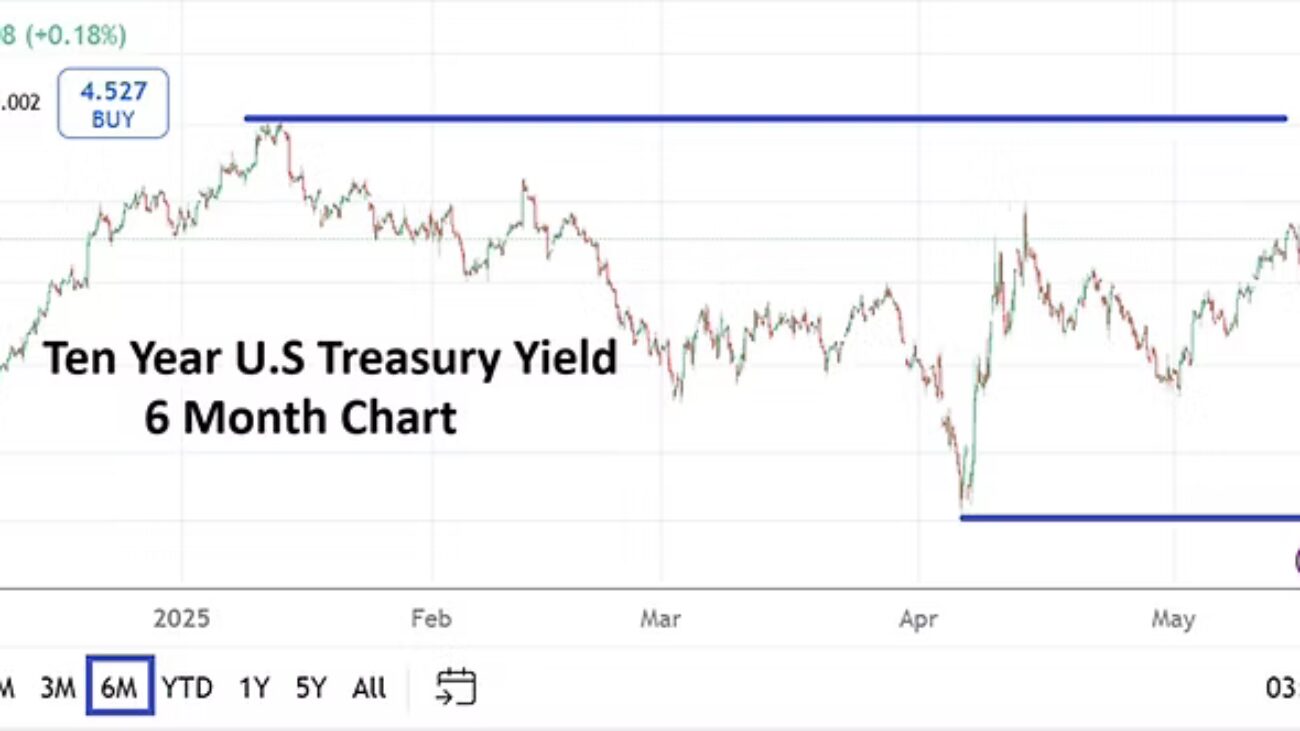
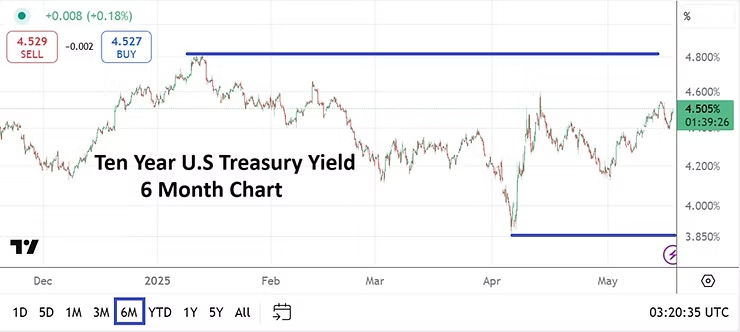
Late last week Moody’s downgraded U.S debt, and the 10 Year Treasury yields as of this morning are near 4.50%. Yet, the Chicago Volatility Index is around the 17.25 level which is actually a small victory and shows that sentiment has improved quite a bit the past month. Let’s remember the VIX was near 60.50 in early April.

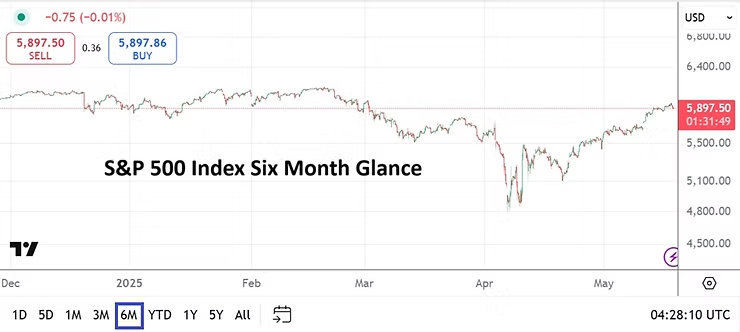
Wall Street had a handful of rather positive trading days too last week. Complexity remains a fixture for investors as they navigate their sentiment which is being generated by a rather stormy mix of perceptions. Day traders continue to face a tough betting environment via trends. The S&P 500 and other stock indices are showing signs of life, but how will they react to the Moody’s downgrade with a full weekend of consideration?

10 Year U.S Treasury Yields Six Month Chart as of 19 May 2025

Last week’s U.S inflation numbers via CPI and PPI were weaker than expected, which raises the curious and obvious question as to why the Federal Reserve remains overtly cautious and refuses to cut the Federal Funds Rate by 0.25% basis points? Short-term traders still have difficult days ahead and those anticipating a fast and powerful bullish run in equities among the bigger indices need to remain vigilant. Sustained higher price action has likely not arrived quite yet for overly optimistic endeavors.

S&P 500 Six Month Chart as of 19 May 2025

Let there be no doubt that there is a coming collision between the U.S White House and the Federal Reserve. The high level of yields the U.S Treasuries are accountable for are unsustainable and costly for the economy. President Trump will be in no mood for polite conversation with Fed Chairman Jerome Powell. Now that Trump is back from his Middle East trip he will likely turn his attention to the U.S debt downgrade and blame not only his predecessor in the White House but Powell too. Treasury Secretary Scott Bessent will likely address monetary policy too in the coming days.

The lower costs of WTI Crude Oil seen the past few months is helping fight inflation. As of this morning $61.70 is the vicinity for early trading. The price of energy appears to be within a solid lower range and likely has little ability to raise significantly. If the price of WTI remains under 70.00 USD this will help global inflation remain rather polite.

But this doesn’t take away from the threat of tariff pressures which do remain unknown. However, it can be argued the Federal Reserve is being far too cautious in the interim. Yes, the U.S central bank faces uncertain economic forecasts because of the potential of U.S tariffs hitting manufacturing and consumer prices, but there is a chance also the Trump administration will actually achieve better than anticipated trade agreements.

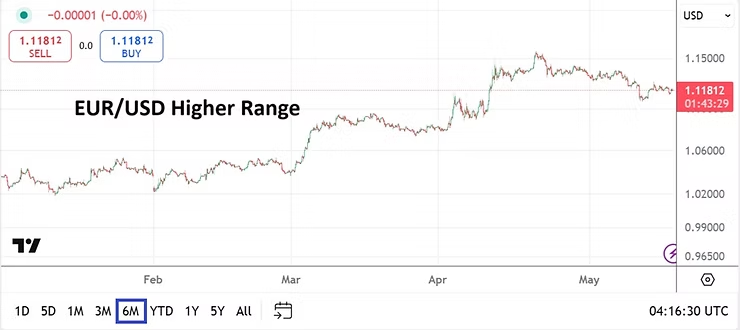
EUR/USD Six Month Chart as of 19 May 2025

Gold as of this morning is slightly above $3,200.00 per ounce, which shows that speculators and investors have backed away from the buying power the precious metal created in the third week of April when the $3,500.00 price was challenged. The USD remains in a dog fight against major currencies in Forex as financial institutions look for equilibrium and try to decide if they should gamble on the Fed cutting interest rates in July. The USD has lost value since early April and remains in weaker mid-term territory. However, the EUR/USD has given back a lot of its gains made throughout April, but financial institutions may now look at current levels as viable support and become buyers again.

Day traders remain in a difficult spot. Wagering on daily market gyrations via interpretations of behavioral sentiment is sensible, but the problem is the quickly shifting winds that still remain a danger. Folks participating in the markets should use the 10 Year U.S Treasury yields as a barometer. Having fallen to lows below 4.00% in the first week of April, investors are again demanding more incentives to buy U.S debt, highlighting murky mid-term outlooks.

U.S Manufacturing PMI numbers will be released this week on Thursday, but this will not influence the markets too much. Instead investors will keep their eyes on the White House as media focus turns from Middle East politics to U.S economic policy. While there have been ‘green shoots’ emerging in the SP500, Nasdaq100 and Dow30, traders should keep their leverage at conservative levels if they merely intend on making short-term wagers.

post240

Market Volatility Shelf Life Doesn’t Have an Expiration Date

Market Volatility Shelf Life Doesn't Have an Expiration Date

Updated: Apr 11

An associate in the financial world just wrote to me that “all bets are off”. Perhaps that is a solid way to think about the present speculative and investment situation. The tumultuous wave of hysteria in equity indices, Forex, commodities and U.S Treasuries are evident to everyone. President Trump’s tariff policies released last week lacked precision via perspectives for many investment institutions who suddenly had their mirage of calm destroyed. The realization that President Trump was undertaking what he had promised caught many by surprise who thought he was bluffing. Trump’s ‘Art of the Deal’ tactics are now being confronted by middlegame chess strategies from opponents.

While the broad markets have boiled and folks look for calm to return, the prospect that current volatility has the potential to carry a long shelf life with no expiration date has to be considered. Yes, the financial world will become serene again. The return of semi-tranquil trading has been seen in the Nasdaq, S&P 500 and Dow 30 the past couple of days – only because the losses and gains depending on the index have been moderate compared to last Thursday’s and Friday’s results.

Yet the shadow of more violent trading remains crystal clear. China and the U.S are now exchanging loud threats which include higher tariffs and retaliatory measures. The USD/CNY is under scrutiny as devaluation by China appears an evident threat. And U.S Treasuries are being watched as some contemplate that China is undertaking a selloff of U.S bonds. Higher U.S yields on long-term Treasuries will create pressure via the amount of debt the U.S will be obligated to pay.

Vice President J.D Vance’s peasant comments about China were not helpful on Tuesday. Why must a hornets nest must be stirred up? China has now been hit with a 104% tariff from the U.S, this while China has vowed to ‘fight till the end’ in its media. Asian markets are selling off cautiously this morning as tensions reignite. Forex pairs such as the USD/SGD, USD/ZAR and USD/BRL should be watched as a barometer not only by currency traders, but by those who want metrics regarding how global economic sentiment and credibility of policies are being contemplated. Risk adverse trading in emerging markets will cause harm and has the earmarks of looking like a stiff penalty for nations trying to develop and raise their standards of living.

While the start of this week has been smoother in relative terms compared to last week, the lack of a comprehensive end game is still missing. There is merit to treat current circumstances with cautious respect. The mid-term outlook remains highly questionable as President Trump and his negotiation gambits are tested publicly.

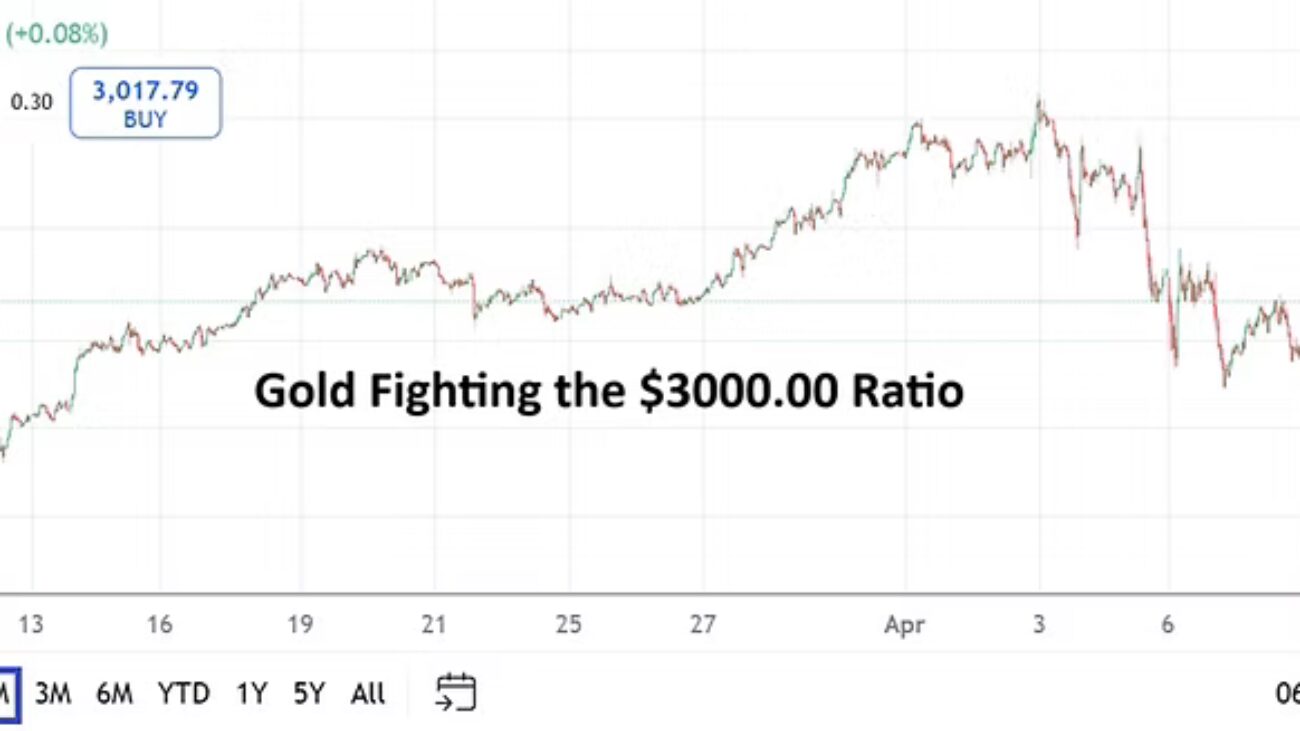
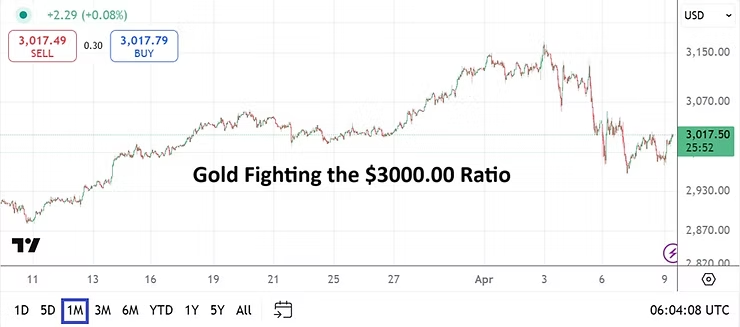
Gold One Month Chart as of 9th April 2025

Gold has stumbled back to the 3000.00 USD level, WTI Crude Oil is down and these two commodities are intriguing as a looking glass into the hearts of large players. Are people selling gold short-term because they believe inflation will lessen because of a recession which some are forecasting, or is it merely a speculative move? Gold certainly carries an important risk adverse power and its lower move showed be looked upon skeptically.

WTI Crude Oil One Month Chart as of 9th April 2025

Is WTI Crude Oil selling off because there is a belief there will be less demand due to fear tariff policies will influence a stumbling global economy? This viewpoint is plausible, the price of the commodity falling below 60.00 USD is a warning that large players are not comfortable with their outlooks and view downside risks as legitimate. The energy selloff in the past couple of hours is a negative barometer for what potentially is in store the remainder of the day in the broad markets.

The lack of finesse exhibited during these tariff negotiations is not palatable, the taste in the mouths of financial institutions has them worried. And outlooks via talking heads and analysts must be treated carefully by traders, this as they try to digest the onslaught of information and complex economic scenarios. Importantly, day traders should avoid getting caught up in the deleveraging talks surrounding the notion that large financial institutions will now pull money out of their U.S based investments in companies via stocks and Treasuries. Traders need to consider the bias of the people they are listening to and reading, and consider the scope and might of the U.S economy mid and long-term. There will be value found after the massive selloffs.

As a side note Warren Buffett has let it be known for a while he is sitting on a large amount of cash via Berkshire Hathaway. And folks should note that the annual meeting for Berkshire Hathaway is on Saturday the 3rd of May, which means people should get ready for insights from Buffett and his legions of admirers in the coming weeks. Certainly, Buffett’s comments and potential actions will be watched carefully.

The U.S Federal Reserve has taken a wait and see approach to the Trump tariff implications. Calls for an immediate cut of the Federal Funds Rate have not caused Fed Chairman Jerome Powell to shift his cautious stance yet. The coming days could bring a different attitude from the Fed if equity markets and U.S Treasuries perform badly. In the meantime some central banks have said they might become more proactive – the Reserve Bank of New Zealand cut its interest rate by 25 basis points this morning to 3.50% and said it will continue to cut their Official Cash Rate if tariff policies create more negativity.

The consideration by financial institutions regarding the beginning of a paradigm shift of the global economy is justified. However, the ramifications of the Trump tariff policies have a long way to go before these present days will be able to be pointed to as the moment the world decided that it no longer wants to participate in the U.S marketplace. That notion seems farfetched. The USD remains the world’s reserve currency, its corporations remain extraordinarily large and valuable, and U.S Treasuries as they absorb current volatility and see yields moving higher in the 30 Year bonds cannot be viewed as an economic apocalypse – yet. Yes, the warning signs are meaningful and the Trump White House will need to respond diligently.

Again, the past week of trading has seen vast disarray, but we have been here before. It is important to recognize that current circumstances however do remain dangerous, this because we are still in the midst of the crisis. At some point, egos will have to be put to the side. The Trump White House will have to negotiate with China. China may be vulnerable, but so is the U.S. Why be belligerent and show no respect to each other? The remainder of this week’s trading will produce more whipsaw results. Selling looks to be in vogue once again this morning. Behavioral sentiment and understanding its power need to be contemplated as folks await sunnier days.