post234

New Alternatives for Regional Alliances & Global Effects?

New Alternatives for Regional Alliances & Global Effects?

Opinion: The following article is commentary and its views are solely those of the author. This article was first published the 14th of March, 2025 via The Angry Demagogue.

There is so much going on that it really is difficult to keep up. Israel is at the center of many of the regional developments, as would be expected. But it is not just Israel as Israel, but Israel as an ally of the United States that is interesting. The Syria problem we have written about and it is still not clear what the Trump administration’s policy is there as they look skeptically but hopefully at Al-Julani’s Syria. In our opinion that decision will be made for them, since the chances that Al-Julani has changed his stripes to a Western democrat is small and even if we are wrong there – the armed Jihadist groups that he needs to control seem more interested in ridding Syria of ‘heretics’ than stabilizing the country.

Lebanon has changed enough for the United States and Israel to take chances. While it is too bad that Israel did not do more in ridding the country of Hezbollah, the fact that Syria is no longer part of the Shiite crescent means that they are isolated and not able to get funding and arms from Iran with the same ease. What is important about the current Lebanese government is that Hezbollah is not a part of it. That does not leave them powerless, but it allows the government to act more independently. The Lebanese Shiites, under Hezbollah and the less but still militant Amal, will have to rethink their loyalty to these two organizations. At the least, it should move Amal away from their stronger partner.

Iran now has no land route to Hezbollah and will have a harder time arming the Houthis, too. But it is in Iraq that they are facing problems which could cause as much damage to their projection of power as did the loss of Syria. Due to US pressure, Iraq has stopped buying Iranian electricity although they can still buy gas. It seems that the US is giving Iraq some time to find alternatives to Iranian gas and the Iraqi government is moving away from Iran on other issues too and are trying to get rid of Iran’s Shiite militias.

But the most interesting thing to happen is Israel’s attempt to strengthen America’s relationship with Azerbaijan, a country that Israel is in close contact with regarding Iran. Israel has always been rumored to plan to use Azeri air force bases in a possible attack on Iran. The Azeri official responsible for regional development was in Israel last month and is trying to bridge differences between Israel and Turkey. The Azeri’s next stop after Israel was to Turkey. Steve Witkoff is reported to have stopped in Baku after his visit to Moscow.

An Azeri company has also bought rights to Israel’s Tamar gas field. Israel currently gets oil from Azerbaijan via a pipeline that goes through Turkey so the energy relationship is strong and longstanding between Israel and Azerbaijan. It seems that Turkey’s relationship with Azerbaijan is more important to them than their animosity towards Israel – probably because the Azeris and Armenians are enemies. It seems that sometimes not only friendships have to be ranked but enemies, too.

Trump’s game with Ukraine is not necessarily to my taste but it could be that there is something much bigger going on here and that is connecting Israel, Russia, Central Asia and Turkey to a grand alliance with the United States. I don’t think that Trump will succeed in pulling Russia away from Iran and China and that Erdogan’s Turkey will not give up their dream of destroying Israel. But what if the Iranian regime falls after a combination of harsh sanctions, economic collapse and Israeli military attacks? What if Iran is pulled away from the alliance leaving Russia with just China? What if a Russian base in Syria is dependent upon their moving away from China?

Last year the Axis held a near continuous land bridge from the Pacific to the Mediterranean. China was moving into Russia’s “sphere of influence” in the “Stans” of Central Asia with their economic bear hugs. This was something that the Biden administration ignored, but could be a bigger headache for Putin than a well armed but non-NATO Ukraine with American businessmen instead of soldiers as a tripwire.

Are we giving too much credit to Trump and his foreign policy team and to Israel’s influence in the expanded region that reaches beyond Syria? Is there more going on than we know or less?

On October 7 and the days that followed, the Biden Administration was sure that Israel was in such a panic that it would agree to anything, and they could force the Obama Middle East of a hegemonic Iran and a Palestinian state down Israel’s throats – and overthrow Netanyahu as an extra. None of those things happened.

Only a fool would predict what will be in a year, but what we have discussed above is one scenario no one would have considered even six months ago. The post WWII world looked nothing like the world of 1937, and the post WWIII world (the one we wrote about a year ago and may or may not have happened!) will look nothing like September 2023 – no matter how hard the UN yells and screams.

Could Israel and Azerbaijan be the keys to a realigned world?

It is against my nature to be optimistic, especially since Israel is still not done with Gaza, the hostages are not yet home and the internal politics are reaching levels that border on a soft coup.

However, while we don’t know where the aces are, we know that the Obama-Biden jokers are no longer in the deck.

Disclaimer: the views expressed in this opinion article are solely those of the author, and not necessarily the opinions reflected by angrymetatraders.com or its associated parties.

You can follow Ira Slomowitz via The Angry Demagogue on Substack https://iraslomowitz.substack.com/ 

post233

Stock Market Narrative and Looking for a Trump Silver Lining

Stock Market Narrative and Looking for a Trump Silver Lining

S&P 500 One Year Chart as of 14th March 2025

U.S stock markets have been hit on the nose in recent weeks, the major indices have put in rather consistent declines since the 19th of February, and the selling frenzy and particularly noise have grown worse since the start of March. Narrative regarding tariffs and a lack of clarity have certainly had a negative effect. The notion that there is a part of the media that wants to see a downturn in the markets and blame President Trump could also be factoring into concerns and fragile sentiment among indices participants. I am not blaming the media for the downturn, just pointing out that there are some entities which are not unhappy about the recent selling in the stock markets, this because it fits comfortably into their narratives.

While the bearish decline on the S&P 500, Nasdaq 100, and Dow 30 have all been easy to see, defining the dynamics of the downturn, and reactions from day traders and investors are complicated. The stock markets are not guaranteed to always go higher. This may sound naive, but people have gotten so used to the notion that U.S indices always go up that they forget about the potential for downturns. Yes, the stock markets have turned negative, but a one month decline is not uncommon historically. And some of the folks rooting against Donald Trump may want to take that into consideration.

Risk premium has certainly been factored into the markets which has influenced equities, but has created forceful moves in Forex too. Risk adverse tension because of persistent rhetoric about tariffs and their impact on behavioral sentiment cannot be discounted. However, the stock markets are still higher over the past year.

The Trump Effect is certainly being pointed at by many as the cause for the sudden downturn, but it should be remembered that all-time highs occurred after Trump won the election. Yes, the selloff has definitely happened too, and stock markets are now traversing values seen before the election. And support levels are being looked at with caution and more selling could lead to a test of psychological ratios which pressure market confidence further. Yet, it should also be remembered the S&P 500 at this time last year was around the 5,150 ratio compared to its current mark near 5,565.

Day traders have been hard pressed to find momentum with solid wagering opportunities, particularly if they have been in search of a bullish trend in recent weeks. The belief that U.S indices always go up eventually is a solid reference, but in the short-term can cause expensive losses for stubborn betters. Investors certainly have an easier time with stock indices if they practice the long-game and do not worry about the daily and monthly gyrations when their money is parked in indices. The use of leverage when betting on the daily results of stock markets can become ultra expensive for speculators, particularly when upside bias is being counted upon.

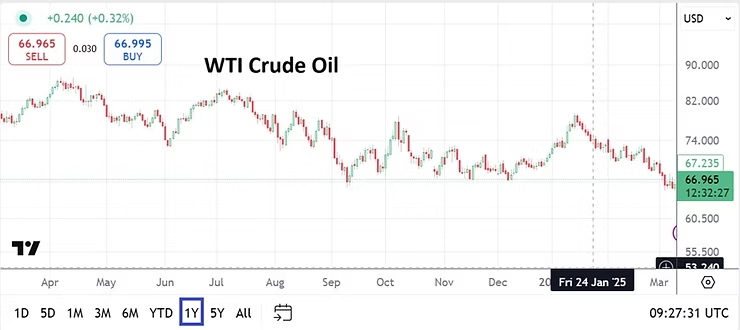
WTI Crude Oil One Year Chart as of 14th March 2015

Data this week from the U.S has actually been positive regarding lower inflation, both the CPI and PPI reports released the past two days has shown a slow down in costs. Yet, these results have little to do with President Trump, since he has only been in power less than two months. However, the lower WTI Crude Oil prices being achieved at this moment will start to factor into weaker inflation and will benefit the U.S economy.

The U.S Federal Reserve will have to be watched, because Fed officials seemingly continue to be among the crowd worried about tariff knock-on repercussions. But it should be remembered during Trump’s first term in office, there were tariff concerns too and inflation was tame. It will take a few months to still see results via inflation under this Trump administration, but if energy prices remain stable and low, this can mitigate circumstances while the tariff winds blow and their effects are waited upon. Interest rates from the Federal Reserve, U.S taxes on the public will continue to come under scrutiny. The likelihood of Trump and the Federal Reserve locking horns regarding interest rates seems to be a certainty in the coming months.

U.S stock markets have proven dangerous for bullish perspectives the past handful of weeks, but the viewpoint that markets have been too discounted will certainly start getting the attention of large players. U.S Treasury yields remain a barometer, but short-term results do not always correlate. Speculators without deep pockets may want to continue to watch from the sidelines.

Traders should also remember there is the ability to short U.S indices, but this brings up the healthy question about when will price support start to become a factor. It is nearly impossible to pick the precise moment financial assets will stage a turnaround for day traders, but history does indicate that bullish sentiment will start to be seen. Betting on a continued downturn could prove more expensive in the end, compared to speculating on upside.

Trading is not easy. It takes a lot of stamina to endure price movements that do not go according to plans. The financial markets are proving difficult for many. We are likely not out of the woods yet because clarity remains problematic, investors who have longer timeframes are likely anxious too. Price velocity needs to be given attention, markets can certainly go lower. However, at some juncture equities will start to look cheap to important long-term players. Behavioral sentiment among investors will likely also start to acclimate to the Trump Effect.

post231

Bitcoin Lower after White House Crypto Summit Led by Trump

Bitcoin Lower after White House Crypto Summit Led by Trump

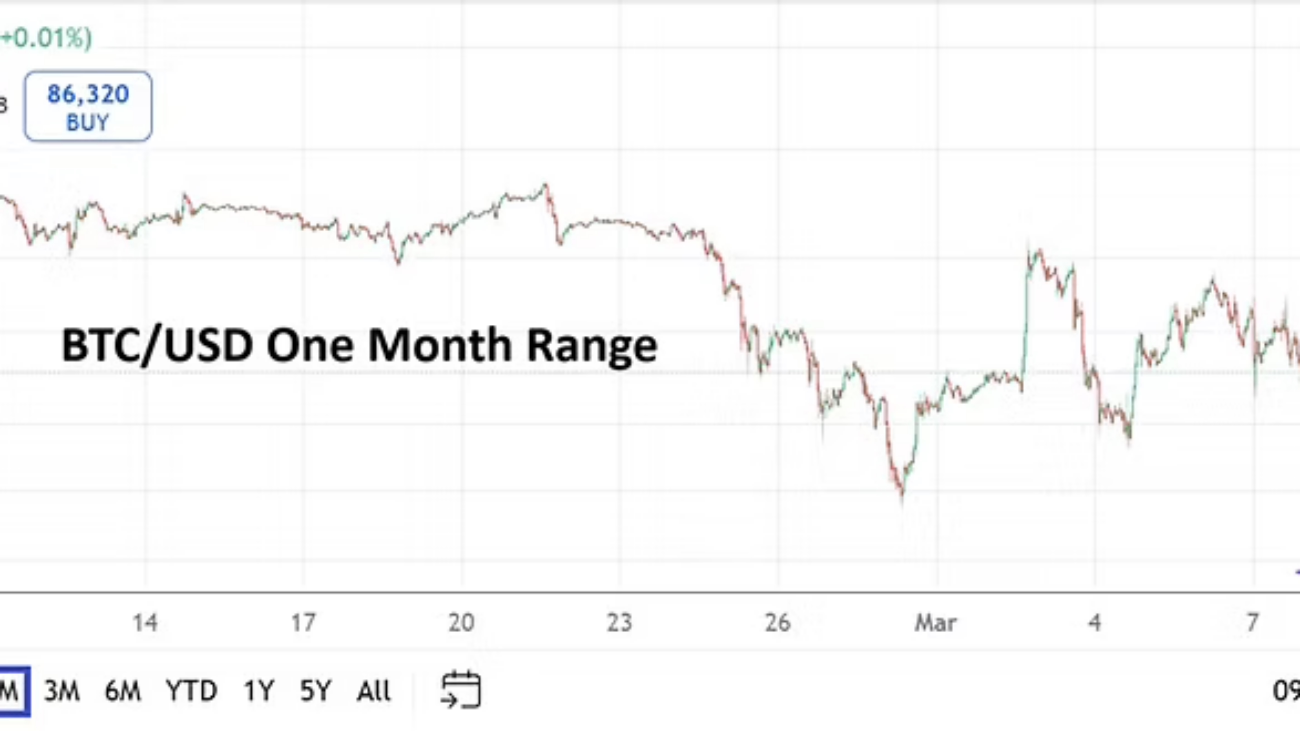
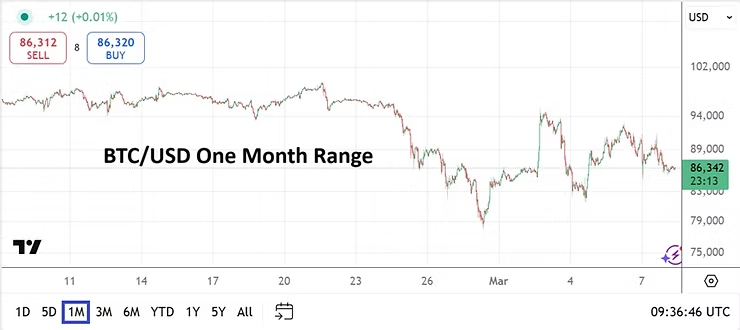
BTC/USD One Month Chart as of 8th March

Yesterday’s Crypto Summit at the White House didn’t meet the hopes of those who desire the U.S to be a proactive Bitcoin buyer. Baby steps accomplished for exchanges perhaps, but not a gamechanger for influencers looking to spark another rally higher.

Bitcoin is lower in early trading this Saturday, after the White House cryptocurrency summit essentially said it would hold onto Bitcoin that has been seized by the government, but did not express other impetus which would have driven the price of BTC/USD upwards.

While President Trump did sign an Executive Order creating a Strategic Bitcoin Reserve, it is important to note the holdings of Bitcoin and other cryptocurrency will consists of digital assets seized by the U.S, it doesn’t guarantee purchases of Bitcoin by the government.

Cryptocurrency backers may be unhappy with the White House’s lack of desire to engage in proactive cryptocurrency buying, including Bitcoin, which may have sparked the downturn being seen for the moment. One important statement in the Executive Order states:

“The Executive Order begins to resolve the current disjointed handling of cryptocurrencies seized through forfeiture by, and scattered across, various Federal agencies.”

A careful reading of the above and other declarations in the Executive Order, makes it clear that the Trump administration wants better oversight of previously seized Bitcoin and cryptocurrencies. The Executive Order while suggesting the government sold some of its Bitcoin in the past and other cryptocurrencies too early, can also be viewed as political statement proclaiming poor management – but this is an assertion which uses hindsight – which is always easier.

If the U.S government is holding substantial Bitcoin now, perhaps this may be the time to cash out considering the BTC/USD market is still rather highly valued. In other words, if the U.S government decides to hold onto Bitcoin too long it could simply prove to be just another speculator.

The Executive Order signed yesterday may create less restrictions and greater freedom for legally established U.S cryptocurrency exchanges that already exists. However, more flexibility for new enterprises trying to enter the sphere need opportunities they can pursue in what is already a competitive landscape. Bitcoin did trade above 91,300 yesterday, but after the Crypto Summit outcome began to see a selloff and as of this writing is hovering near 86,000 USD.

post229

EUR/USD: Volatility is Visiting Again upon the Trump Effect

EUR/USD: Volatility is Visiting Again upon the Trump Effect

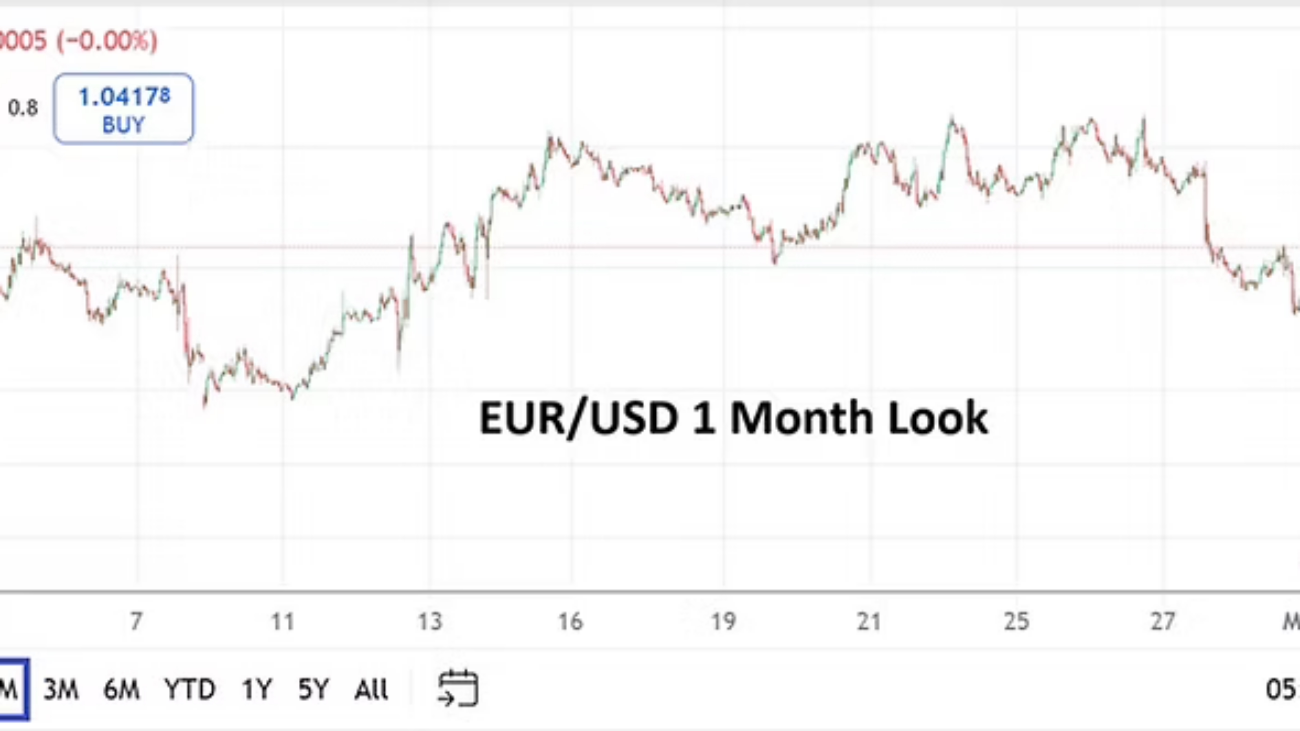
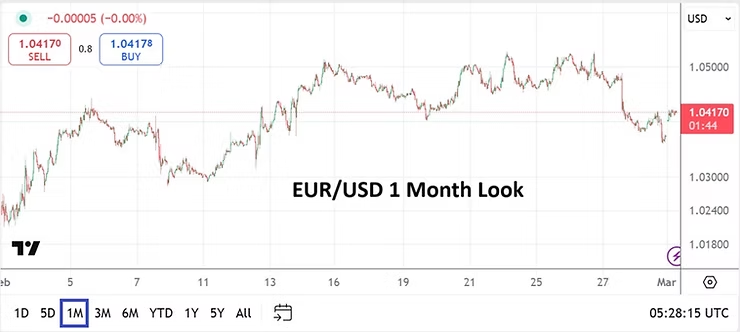
EUR/USD One Month Chart as of 3rd of March 2025

The EUR/USD bounced slightly higher in early trading this morning, this after Friday’s burst lower when nervousness was ignited by the loud outcome (and lack of a resolution) via the Zelensky and Trump meeting. However, after achieving some buying impetus to start today, the EUR/USD is running into nervous headwinds as concerns remain evident.

This Thursday the ECB is expected to cut another 0.25 from its Main Refinancing Rate. The difference between borrowing rates from the ECB and Fed will be significant if the ECB does lower costs. E.U economic data warrants the dovish policy, while concerns about stubborn U.S inflation persists. And President Trump will have something to say about the Federal Reserve’s policy too. Trump wants the Fed to lower the Federal Funds Rate.

The U.S will issue its Non-Farm Employment Change numbers this Friday. And many Fed members will be speaking at various engagements this coming Thursday and Friday which is certain to get attention. Financial institutions will certainly be listening for clues regarding the potential of shifting viewpoints regarding the Fed’s current stance which is cautious from FOMC officials.

Which brings us back to the current value of the EUR/USD and behavioral sentiment which is being generated by a deep sea which is not clear. The EUR/USD into early last week was showing signs of bullishness, this as folks piled into the notion the currency pair was in oversold territory. The ability of the EUR/USD to remain above 1.04000 today should be watched. While there has been upside early this morning, European traders and full market action will begin to kick off in about one hour.

Day traders need to know the potential rate cut cut from the ECB this coming Thursday has been anticipated and factored into the EUR/USD already. Leaving the currency pair ready to be influenced by USD centric perspectives, and Ukraine concerns which are unresolved. The U.S equity indices should be watched too via their less than inspiring results the past week. While many financial institutions believe the EUR/USD should be valued higher, this may be based on instinctive bias instead of fundamental reasons.

Economists are great for insights, but it is skittish sentiment which is driving the markets. Volatility is likely and the price range of the EUR/USD could prove tactically challenging and wide. If cautious attitudes in financial institutions create calm, the EUR/USD could produce durable support levels, which could be used for upside wagers. Speculators will have opportunities in the currency pair this week, but risk management will be essential to protect against sudden gusts caused by swirling Trump rhetoric.

post226

EUR/USD and German Elections: Saying Quiet Thoughts Out Loud

EUR/USD and German Elections: Saying Quiet Thoughts Out Loud

EUR/USD One Week Chart as of 23rd February 2025

The German Federal Election is taking place today and an expected shift to the right is being anticipated via the German voting public. The EUR/USD will react to the trading results tomorrow on Monday, and speculators who do not have deep pockets may want to remain on the side and simply watch the volatility as it develops.

After touching highs late last week which brought the 1.05000 vicinity into focus, also challenging the highs seen in the previous week, traders started to sell the EUR/USD going into this weekend. Financial institutions will react to the results from the German vote and if the Christian Democratic Union wins with strong results, and the AfD (Alternative for Deutschland) takes more seats than some anticipate this will cause an immediate reaction in the EUR/USD.

Voting publics in the U.S and elsewhere are showing signs of voting for more conservative leadership. Germany has seen lackluster economic results manifest for a long time and their public is certainly yearning for more GDP growth and less inflation. It is no secret that in nations such as Canada, Australia and countries in Europe that conservative voices are becoming louder when unbiased polling is conducted. Prime Minister Trudeau of Canada has already admitted his defeat via his decision to step aside.

The United States saw a very strong election result for Donald Trump and Republicans in November, and it would not be a surprise to see a similarly strong outcome for conservative candidates in Germany as results are announced late tonight and tomorrow. Voters seem to be expressing frustrations they feel they are not allowed to say out loud in polite circles. The results from Germany will likely mirror this consideration.

So what will the EUR/USD do if the voters in Germany elect a vastly more conservative government? Early results will be choppy, but a logical wager is to believe financial institutions will begin to look at the EUR/USD with a more bullish attitude, this if they believe a government is going to take power that is business friendly. Day traders should not bet blindly on EUR/USD upside. But looking for the 1.05000 level and higher to become a focal point for buyers is a legitimate outlook near-term.

The selloff in the EUR/USD this past Friday may have had a bit to do with financial institutions believing the upside had been overdone before the results of the German election were known. But that is likely a false narrative.

There is a better chance the sudden selloff in the EUR/USD on Friday which developed and saw fast velocity downwards, happened because Wall Street equities produced declines on its open and the selling continued going into the weekend. Forex is never easy, many complexities exists for speculators to consider.

The results from the German Federal Election today will influence major currency pairs this coming week and the EUR/USD will be centerstage. If Wall Street begins to show signs of stability this will also help the EUR/USD. Day traders should be extremely careful early tomorrow as financial institutions start participating and react to the results from Germany.

post223

USD/CAD Risk Premium Shifts from Ultra to Prudent Nervousness

USD/CAD Risk Premium Shifts from Ultra to Prudent Nervousness

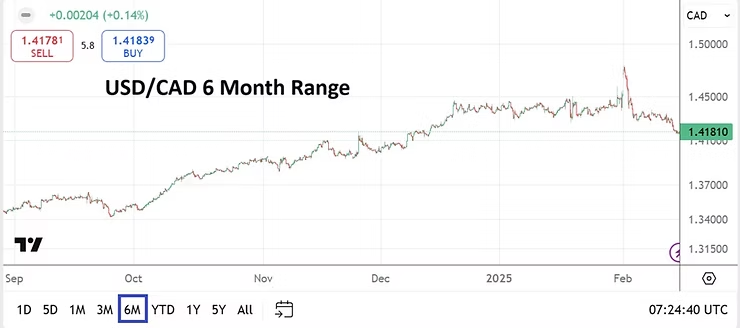
USD/CAD Six Month Chart as of 16th February 2025

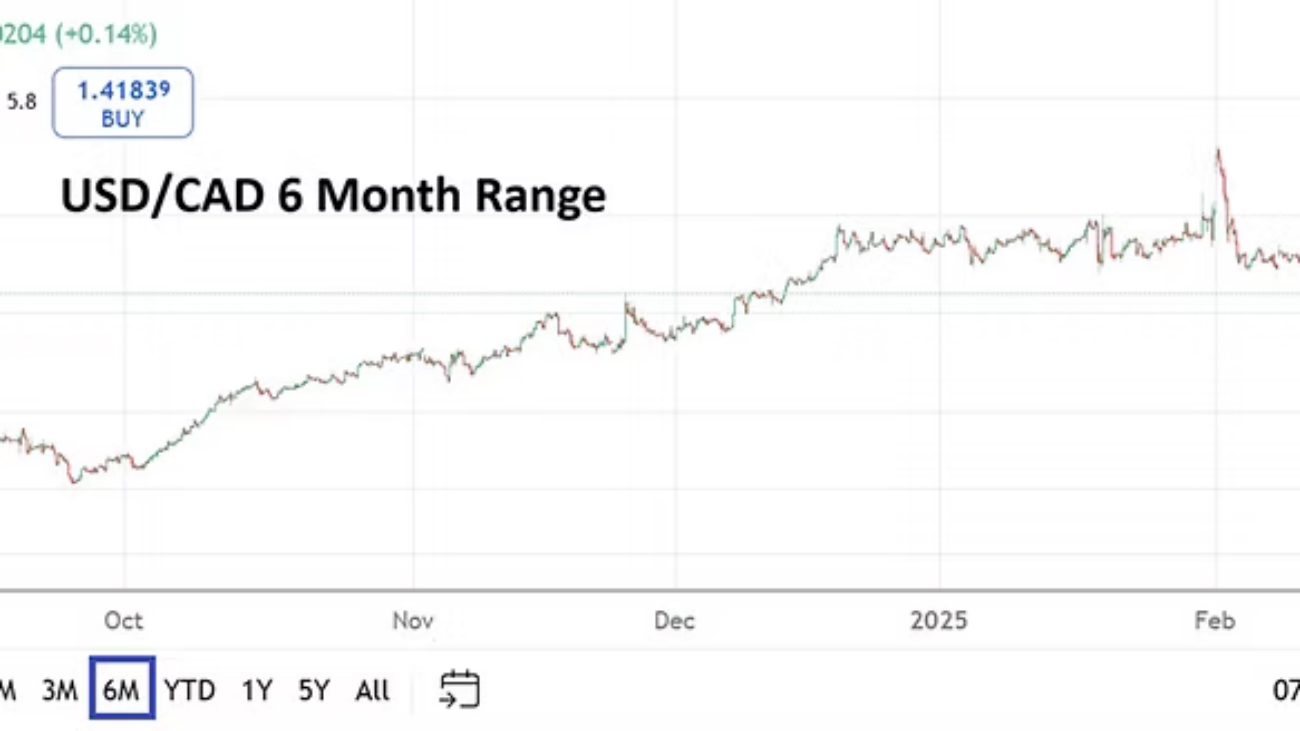
The USD/CAD has experienced a bullish trend the past six months which has seen risk premium factor into the highs seen on the 3rd of February when the 1.48000 vicinity briefly witnessed a flirtation. The currency pair will enter this week near the 1.41800 area. It appears financial institutions are shifting from being ultra nervous about the rhetoric between the U.S and Canada to merely prudent.

On the 5th of November the USD/CAD was around 1.39000. The currency pair is now traversing values seen on the 10th of December. Economic data certainly factors into the USD/CAD value, but the move higher has definitely been a product of the rather raucous relationship between President Trump and Prime Minister Trudeau. The drama is not completely over and Forex traders who are looking for a sustained downturn in the USD/CAD should remain cautious regarding their wagers.

Consumer Price Index data will come from Canada this Tuesday. U.S inflation data released last week showed prices remain stubbornly above the target the Federal Reserve uses as a benchmark. Canadian inflation will likely demonstrate the same type of price pressures upward. However, these forecasted results from the Canadian CPI have likely been priced into the USD/CAD already by large players.

Which leaves us with the Trump/ Trudeau saga. And while Canada may feel like it is being unfairly pointed to as a villain by the White House, the problem for financial institutions is that Trump is firmly in power and Trudeau is about to vacate his office. The Canada Federal Election will be held on or before the 20th of October, and it is worthwhile to take into consideration the Liberal party is probably going to lose its leadership role to the Conservatives and Pierre Poilievre will be at the helm. Rest assured that financial institutions are taking this into consideration as they consider their mid-term outlooks.

The USD has shown some signs of less strength in recent trading across Forex. Financial institutions are perhaps factoring less risk premium into currencies as they anticipate tariff negotiations to provide answers and somewhat calmer conditions. Somewhat being the keyword. USD/CAD traders looking to target support levels in the near-term may try to anticipate the 1.41100 ratio as a goal. Looking for the USD/CAD to go below the 1.41000 level may be too much wishful thinking for the moment. Reversals higher in the currency pair will still be seen.

The USD/CAD will likely start to show a downturn, the question is when. Timing a sustained bearish trend in the USD/CAD for the moment remains gambling. The notion that the USD/CAD will see lower values in the mid-term however may be the right conviction, but deep pockets and patience will be needed.

post222

Apolitical Doesn’t Mean Blind to the Trump Forex Reality

Apolitical Doesn’t Mean Blind to the Trump Forex Reality

Has everyone stopped panicking in global Forex? It appears financial institutions are showing signs of stability and perhaps even optimism, this as USD centric strength appears to actually have begun giving back the outlandish gains made on Monday when spikes higher were seen across Forex.

The nervous buying of the USD early on Monday morning erupted after President Trump’s ultimatums were not taken seriously by financial institutions late last week. Outwardly it appears that the targets consisting of Mexico and Canada going into the past weekend also wanted to make believe all would be fine. The only nation to say that it would negotiate with Trump prior to Friday was China. And now Mexico and Canada have largely fallen into line.

Speculators may want to be apolitical. They may want to believe Forex has nothing to do with politics. And some traders may not like President Trump and what he represents. However, Forex participants need to make sure they put their biases to the side and understand that economic rhetoric and actions from the U.S do effect the Forex reality.

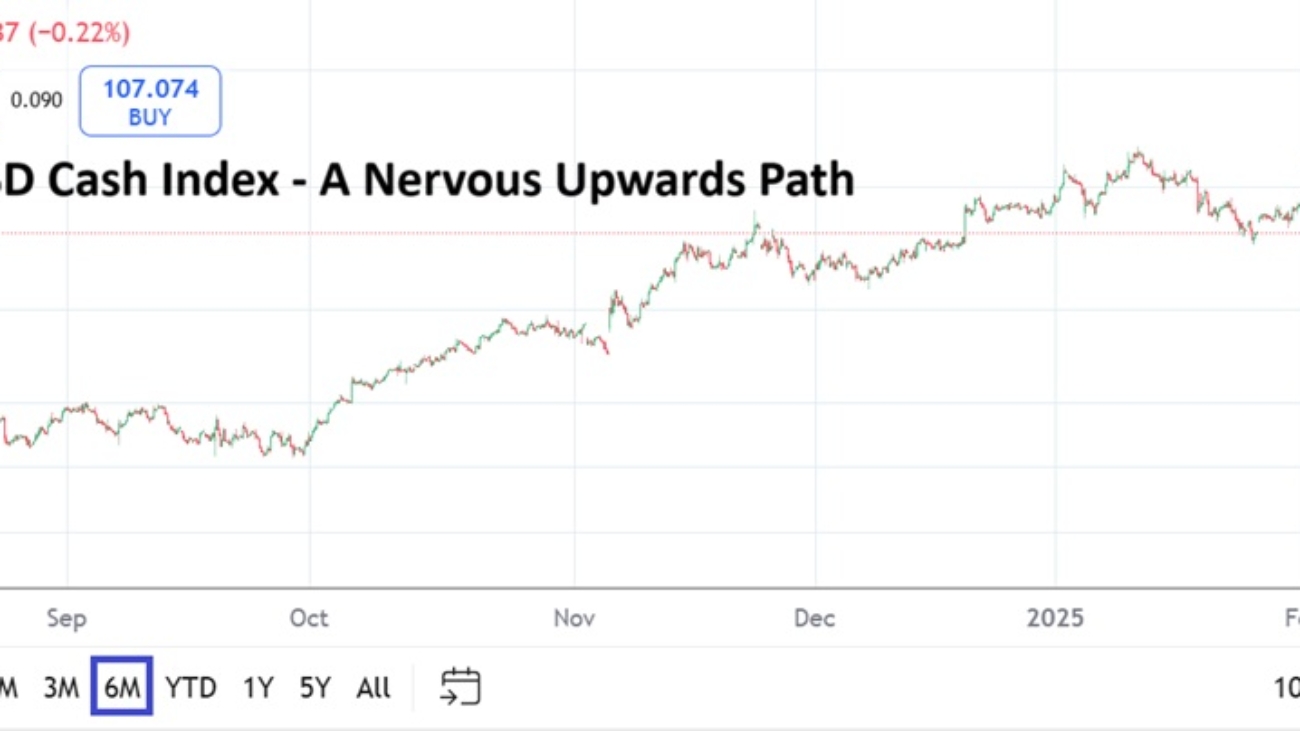
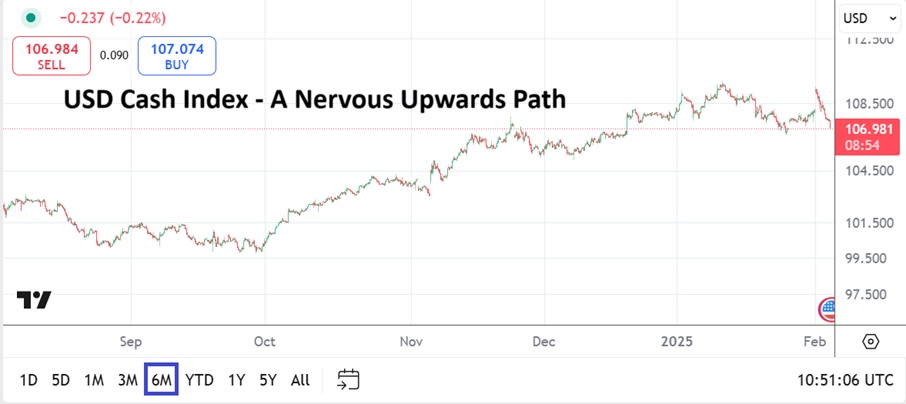
USD Cash Index Six Month Chart as of 5th February 2025

We have seen a vast example of this the past couple of weeks, in fact the past few months. Financial institutions have braced for and wagered on their outlooks since early November when the results of the U.S election became known. A strong USD centric element has been demonstrated as they prepared for President Trump to take executive power in the U.S again.

This past week has seen vivid Forex results and demonstrated why it is important to pay attention to international news flow, even when some may want to disregard what they are hearing. The price action in Forex particularly the USD/CAD and USD/MXN this week highlight the significance of not turning a blind eye. The highs seen on Monday followed by the reversals lower have brought support into view. Near-term and mid-term considerations will be fought over by financial institutions and retail traders may find technical opportunities to take advantage of nervous behavioral sentiment.

China which has dealt with President Trump before, appears to have handled the tariff bluster and negotiations better than Mexico and Canada. China has also been laying the groundwork to deal with the new White House administration based on having dealt with President Trump before. The USD/CNY has remained stable and China has set the table to deal with developing economic discussions in a calm manner.

It is not a question of liking or disliking Trump, it is a matter of understanding the reality and being ready to trade the circumstances that are seen across Forex. Bias when trading Forex can lead to bad decisions, it is not about betting on who you like, it is about wagering correctly on the results you believe will happen and managing your risks.

post221

A More Aggressive Sounding ECB Could be Wishful Thinking

A More Aggressive Sounding ECB Could be Wishful Thinking

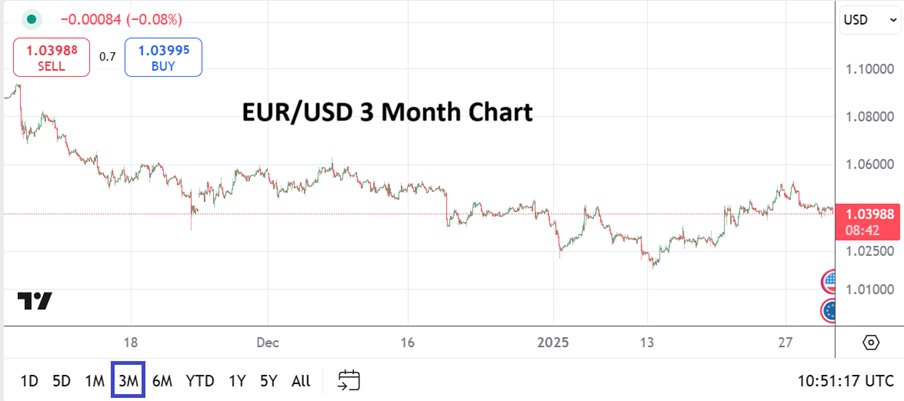
EUR/USD Three Month Chart as of 30th January 2025

Will an interest rate cut by the ECB spark near-term buying in EUR/USD today? Financial institutions want news they have anticipated, day traders need to understand this dynamic.

The Federal Reserve stood in place yesterday almost acting as if it is afraid of its own shadow. No one was surprised the Fed did not cut the Federal Funds Rate. The Fed insisted inflation remains slightly elevated, it also said it thinks most of the worst employment data has been seen. What it did not say was that it remains in a quandary regarding the potential affects of President Trump’s policy on the U.S economy. The Fed wants to stay away from this debate. They also likely understand Donald Trump will bring up the subject himself. Trump wants the Fed to cut U.S interest rates more.

On the other side of the coin today stands the European Central Bank, which is anticipated to cut their Main Refinancing Rate by another 0.25, this to the 2.90% level. Financial institutions have certainly factored an interest rate cut from the ECB into the EUR/USD already. If there is no cut, this would cause an immediate reaction and likely a bad one against the EUR.

However, if the ECB acts as expected and cuts their rate this might actually spur on some near-term positive thoughts about the EUR and create some buying momentum. But for the move to be sustained and stronger, as outlandish as it might seem, what financial institutions will want to hear is that the ECB understands the E.U faces ongoing tough economic conditions and will remain dovish.

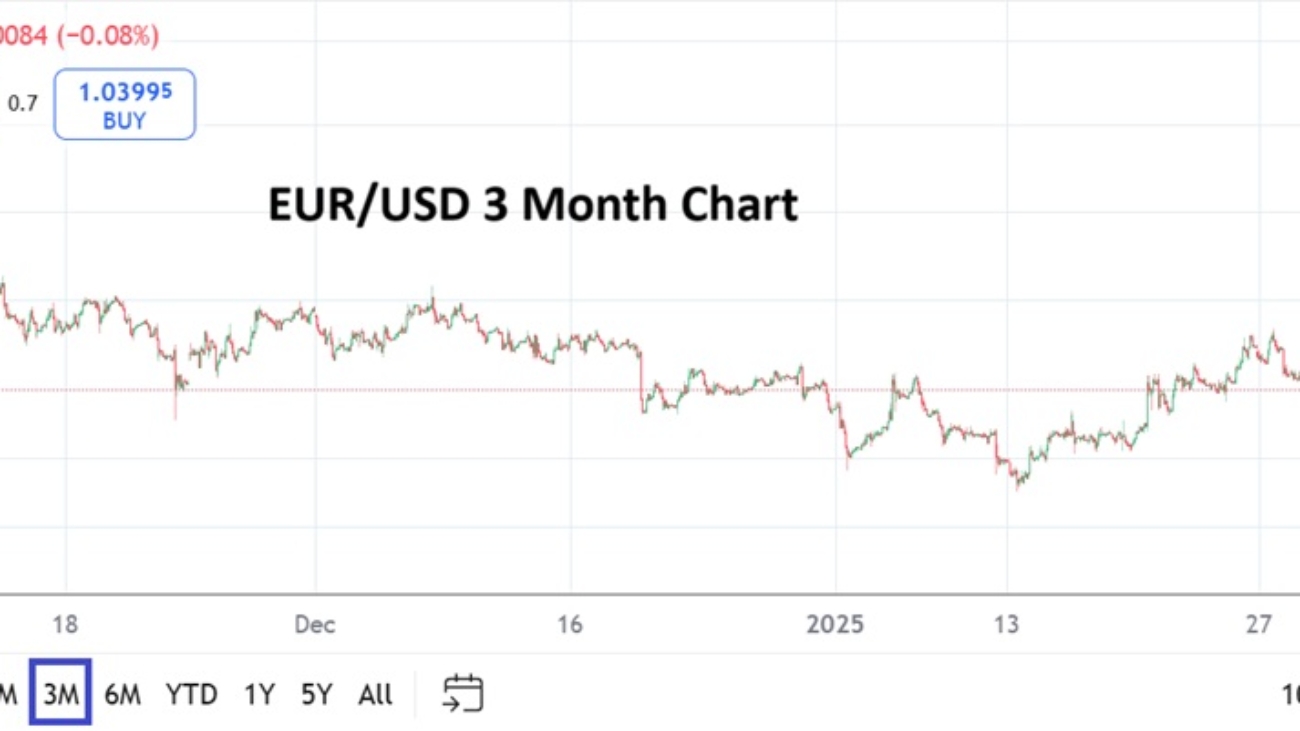
The problem with an overly aggressive attitude by the ECB today is that this is not anticipated. Yes, the rate cut of 0.25 is being counted upon, but the ECB and Fed are not exactly bastions of pro-active policy change. The ability of the EUR/USD climbing above the 1.05000 ratio last Friday and into Monday of this week was a signal financial institutions believe the EUR/USD is oversold, but they want to see more concrete steps taken. Doubts about what the ECB will say today has likely led to the 1.04000 level again being tested.

It may seem counterintuitive to believe that interest rate cuts from the ECB and a overly cautious Fed will help the EUR/USD achieve a bullish footing, but behavioral sentiment regarding mid-term outlook is crucial. Carry trade folks may say that if the ECB were to promise another cut today after their actions taken now, that this would create too large a difference between the ECB and Fed borrowing rates. This may be correct, but pro-active policy is something financial institutions would like to see. Day traders should be very careful today.

The EUR/USD hovering near 1.04000 is a signal that financial institutions will certainly react, there will be volatility in the coming hours. A rate cut from the ECB today will be the first ray of hope regarding a stronger EUR. However, unless the European Central Bank sounds like they will remain vigilant and are considering another potential cut sooner rather than later, the EUR/USD could quickly start to become choppy again.

The EUR/USD is essentially occupying a price range right now that it traded one month ago. Sentiment remains jittery. And President Trump will be watching and his comments which could come at anytime regarding the Fed, interest rates, potential tariffs and sanctions will create vulnerabilities for Forex and financial institutions in the days ahead.

post219

MicroStrategy and Bitcoin: Will They Turn into Smithereens?

MicroStrategy and Bitcoin: Will They Turn into Smithereens?

MicroStrategy One Year Chart as of 25th January 2025

MicroStrategy near 353.67 per yesterday’s close. Bitcoin around $104,625 this morning. Will the balloons keep inflating or become smithereens? The combo of MSTR and BTC/USD are combustible.

MarketWatch has published an excellent article on the borrowing via bonds that MicroStrategy is undertaking with investors. https://www.marketwatch.com/story/why-investors-are-lending-microstrategy-billions-of-dollars-at-0-interest-so-it-can-buy-bitcoin-03f7cacf The article highlights the red hot glow that some investors are pursuing via bets on MicroStrategy and Bitcoin.

MSTR has turned from a data driven company that produces revenue into a proxy bet on Bitcoin. Not everyone is a fan. As of late November 2024 Citron Capital has been reported to be ‘shorting’ MicroStrategy.

Students intrigued by the art of speculation, finance and business outlook have an active case study via MicroStrategy. This is a saga which will continue to grow in stature as investors and speculators seek profits. While the potential for disaster remains high, Michael Saylor of MicroStrategy and his cult like leadership capabilities has led his flock of believers into a golden land for now, but what storms await?

BTC/USD One Year Chart as of 25th January 2025

Naysayers of MicroStrategy’s foray into Bitcoin have thus far been proven wrong. Michael Saylor and his legions will continue singing praises about Bitcoin and its ability to turn into the modern version of gold, but perhaps it will turn into a digital asset nightmare. However, there is no denying the strength of the trend which has manifested the past year in both MSTR and BTC/USD. With the advent of President Trump and his seemingly pro digital asset stance being taken; and the growing desire by some crowds to turn fiat currencies which have been paper based into Central Bank Digital Currencies (CBDC) there are likely years left in this saga to unfold.

There has been a growing clamor for central banks to start holding some of their reserves in Bitcoin instead of gold, but for the moment this seems like too wild a thought and a purely speculative notion. Wagering on the confidence generated by digital hype with little intrinsic value, except the ability to create hot air via rhetoric and lofty visions of grandeur still appears to a step too far for most central bankers. Speculating on MicroStrategy and Bitcoin is one of the ultimate bets looking to take advantage of behavioral sentiment in the digital asset realm. MSTR and BTC/USD are highly volatile and have certainly created profits, but the combination could also turn into a horror if things go wrong.

post217

USD/JPY: Bank of Japan Actually Does its Job: Raises Rate

USD/JPY: Bank of Japan Actually Does its Job: Raises Rate

USD/JPY Five Day Chart as of 24th January 2025

The Bank of Japan actually raised its Policy Rate by 0.25 to 0.50% this morning. The move was done while the central bank stated the Japan economy is improving. The Bank of Japan also noted that the implications of U.S tariff policy are not completely known, thus it is acting on existing facts. The action by the BoJ created selling in the USD/JPY and is a healthy sign.

While the U.S Federal Reserve has taken on a cautious tone, President Trump has started to signal via rhetoric that he would like to see U.S interest rates lowered. The Fed and President Trump may find that they are in disagreement regarding mid-term policy and Forex traders shouldn’t be surprised if the debate escalates. The USD/JPY is trading near the 155.500 vicinity with fast price action at this moment. The ability to sustain values below the 156.000 level will be important technically if maintained. A fall below the 155.000 ratio may indicate more selling should be expected.

While financial institutions globally remain nervous about U.S economic policy regarding trade negotiations, Japan for the moment is out of the spotlight regarding tariff implications. The USD/JPY was trading near the 153.000 area on the 17th of December and it will be intriguing to see if large players use this level as a target in the coming days.

Retail traders should practice solid risk taking tactics and conservative leverage. The ability of the Bank of Japan to increase its interest rate, while the U.S Fed is in the midst of considering no changes to the Federal Funds Rate is a potentially solid sign for USD/JPY bearish attitudes.

Global Forex conditions remain choppy, but there has been some buying of the EUR/USD and GBP/USD produced recently. Next week talk of tariffs against China, Canada and Mexico will heighten, but traders need to understand the tough sounding talk from Trump is part of his negotiation tactics. While he certainly seems intent on carrying out his mandate, he will also be open to finding a way to create agreements.

Behavioral sentiment is in charge of Forex for the moment. Outlooks remain unclear, but USD centric strength may be traversing within the apex of its highs in many cases.

post216

Trump Bounce Potentially Coming This Week in Equity Indices

Trump Bounce Potentially Coming This Week in Equity Indices

S&P 500 Three Month Chart as of 19th January 2025

Trump: U.S equity markets will be closed Monday for MLK Day. Upwards momentum developing this week as Trump White House takes power would not be surprising.

Retail traders need to know that U.S equity markets will be shuttered on the 20th of January because of the Martin Luther King Jr. holiday. Importantly tomorrow is also the United States Presidential Inauguration. Donald Trump will retake power of the Executive Branch of the U.S government at noon in Washington D.C as he is sworn in as the 47th President. U.S stock markets have produced choppy results the past few months but still remain in sight of highs. It would not be a shock to see optimistic momentum develop on Tuesday in the U.S stock markets near-term.

Yes, financial institutions have known Trump will be taking the White House for two and a half months and have had plenty of time to already react regarding their outlooks. However, from a behavioral sentiment standpoint it is easy to deduce that Trump’s coming inauguration speech tomorrow will deliver a confirmation of his economic policy intentions. Financial institutions near-term may produce optimistic upwards trajectory and they may have psychological targets which take into account late November and early December 2024 highs in the S&P 500.

The coming week will also be light on U.S economic data, except for the weekly Unemployment Claims on Thursday, Flash Manufacturing PMI and Existing Home Sales on Friday. Meaning the week will be driven largely on sentiment generated via President’s Trump’s actions in the coming days. Trump is expected to deliver a series of Executive Orders which will affect outlooks and likely be reflective of his campaign rhetoric spoken the past year.

Retail traders should not bet blindly on upside via CFDs for the S&P 500, Nasdaq and Dow 30. Near-term prices are not guaranteed to move higher, but there is reason to suspect buying might prove positive. An interesting barometer for price action will certainly be seen via future contracts early on Tuesday morning as financial institutions return to full volume and get set to return after a long holiday weekend. Risk taking tactics should include price targets that are realistic and not be leveraged wildly.

Forex conditions may prove volatile this week, and traders need to remain cautious about betting against the strength of the USD which has been ferocious the past three months. U.S Federal Reserve outlook remains murky and cautious, and nervousness regarding Trump’s intended foreign policy changes including trade negotiations still have to be fully demonstrated. USD centric risk bullishness likely still has ammunition which will be displayed in the coming days.

post213

Federal Reserve Expected to Sound Guardedly Cautious Tmrw

Federal Reserve Expected to Sound Guardedly Cautious Tmrw

EUR/USD Five Day Chart as of 17th December 2024

Large traders are clearly bracing for the Fed tmrw as Forex produces volatile tight ranges. A rate cut is expected, but cautious Fed rhetoric will likely follow.

Forex has been a dangerous wagering ground for retail traders since the end of September. Financial institutions which clearly were betting on a more dovish Federal Reserve starting in early summer becoming a central theme into 2025 have been proven half right, this as the Fed has cut interest rates and is expected to do so tomorrow. However, being half right leaves the door open to also being half wrong, and financial institutions have reacted to this by becoming aggressive buyers of the USD since late September as perspectives have changed. The strong USD trend the past two months plus has hit some speculators hard.

The election of Donald Trump added a strong dose of impetus for USD buyers, this as the President-elect’s tough rhetoric regarding tariffs caused reactions and fear of unknown consequences. In the past couple of weeks more tranquil Forex trading has emerged and the USD finally started to give back some of its gains, yet the USD versus most major currencies, like the EUR/USD, remains within the the stronger elements of it range. While the Fed is expected to lower its Federal Funds Rate tomorrow by 0.25 to 4.50% tomorrow, traders need to remember this has been priced into Forex already. Tranquil trading the past two weeks indicates financial institutions have readjusted their outlooks to the incoming White House administration.

Now it is time to see if the U.S Federal Reserve has started to adjust their outlooks to what a Trump Presidency means. And financial institutions are keen to better understand the outlook of the U.S central bank. Inflation numbers while traversing lower are still rather stubborn and this may will not help the Fed’s mid-term mindset regarding interest rate cuts. GDP in the U.S has remained steady, and there is the potential the economy in the States will improve under Trump. Unemployment numbers while showing signs of weakness have not been terrible either. So while the Fed’s current Federal Funds Rate is higher than normal taking into consideration the historic average the past ten years, they still may not feel they have enough ability to cut interest rates too much more without sparking inflation.

A January rate cut seems unlikely at this time. If the Fed does sound guardedly cautious tomorrow, retail traders may see the USD get initially weaker due to the Fed rate cut, but then see a storm emerge and USD centric strength reappear all in the same day – perhaps in the span of minutes. Speculators need to understand that financial institutions have already baked tomorrow’s interest rate cut into the cake. So it isn’t the rate cut tomorrow that is important if it happens (if it doesn’t then that’s another story); it is what the Fed says and traders should expect them to be very cautious – because per the recent trading of the USD and a barometer it appears financial institutions are bracing for a more vigilant Fed.

Just like he has with many folks he views as uncompromising before, Donald Trump may begin to feel Federal Reserve Chairman Jerome Powell is not on his side regarding interest rate policy. If the Federal Reserve chooses to sound hesitant to cut interest rates in early 2025, it will be rather intriguing to see President-elect Trump’s response. Could a confrontation between the White House and Federal Reserve be in the cards over the next six months?