postN23

Fed Spits into the Wind as Day Traders React to Volatility

Fed Spits into the Wind as Day Traders React to Volatility

Broad market analysts continue to spit up an eternal fountain of opinions and data to show why yesterdays moves happened and why tomorrows are going to have bright sunshine and positive outcomes. However, day traders know this is not the reality for them and understand the gyrations and volatility of the marketplace is actually quite dangerous in the short-term.

Day traders may even know market correlations looking backwards are also tales of fiction sometimes. Random results from various fronts are often viewed and assembled by analysts and data providers to give credence as to why ‘John Doe’ lost all of his money, because he was not paying attention to the storm that was ‘obviously’ developing in front of his face. Thus, wiping away any stains of responsibility the analysts and data providers may have for their clients loss of money.

Gold Five Year Chart as of 28th June 2023

Traders seemingly want to know what the U.S Federal Reserve is going to do every minute. If they could, short-term speculators would probably buy information on the amount of coffee breaks FOMC members take, and monitor what Fed officials daily meals are to understand their moods.

However, we should also understand that a lot of the day to day mechanics in the financial markets are tasks that have been done thousands of times before, in other words we know the history and results of many financial institutions. The U.S Federal Reserve is doing nothing new and their actions in July, August and onward really do not amount to much. The monthly decisions and annual manifestations of governments that spend too much cash and their officials trying to balance the value of their national currencies are well documented historically.

Markets in reality think long-term and this is where nearly all of the large money is invested. Day traders need to understand what they are doing is almost considered a ‘hobby’ by investment professionals who do not take the ‘hobby’ of the small speculators very seriously. This because the amount of money most day traders are using doesn’t affect market price very much, unless they form a ‘team’ like the Wall Street Bets ‘crew’ or act in unison via other social media groups influenced by people they mostly do not know personally, and should be wary of regarding motives. Let’s point out for a moment though, that long-term investors can lose money too based on faulty outlooks.

Long-term money is invested with perspectives that stretch often for periods of two to three years and beyond. Outcomes are projected not on data that cause daily momentary values to change, but rather on sophisticated insights which take a perspective the value of equities and certain indices, and other assorted assets tend to rise. Long-term investors mix their outlooks on economic road signs which will be affected by the investing landscape over a period of years. Meaning knowledge of geopolitics, interest rates, social stability and economic transparency are vital. History is a guide post for established financial institutions as they work. But sometimes these factors do not work, and employees at long-term thinking financial institutions find they need new jobs.

U.S Federal Reserve officials, after yesterday’s Core Durable Goods Orders and the CB Consumer Confidence reports which showed strength were published, might have raised their eyebrows. FOMC members likely acknowledged the long-term exuberance and nature of the U.S economy and thought ‘we need to raise interest rates again in July’ because growth data is too resilient. However, they have already said this via their FOMC Statement in June which warned about inflation and why it continues to be a concern, but the ‘words’ thus far have not been taken too seriously.

Yesterday’s reaction in the broad markets was not overly volatile because of the U.S data outcomes. Yes, short-term Forex traders were likely hurt or rewarded depending on the what lucky side of the coin they were betting. However, for the most part many long-term investors have already placed their positions and continue to do so, which they may not alter for the next two to three years depending on the amount of cash reserves they have in their arsenal. This ammunition of large capital, allows long-term players to remain in the game until a result can be quantified – good or bad.

Day traders and long-term investors are playing a different game. Their mode of operations work in different manners. Again, it must be stressed long-term investors do not take into consideration the outcome of most short-term traders, nor for that matter do global central banks. In fact most global central banks and the governments behind them, would rather see day traders simply give their money to investment ‘experts’ who put the ‘little peoples’ money into long-term savings and investment programs.

Speculative cash in the markets does exists, but the amounts of money being used by day traders and large ‘players’s looking for short-term results are quite different. It should also be pointed out that many day traders are using CFD’s – which largely means their positions are being wagered virtually – and are not really being deposited into the ‘cash markets’. In other words day traders can go broke much faster than their long-term counterparts who are investing in positions that have the power of time duration on their side. The virtual positions of CFD wagers are not going into the real cash market, thus not causing a reaction in the actual assets being traded.

Many day traders participating in the daily results of Forex, and equities and indices are merely trading on casino like platforms built for wagering on the results of what is happening elsewhere in the real cash markets of assets. It in a sense, it quite a bit like sports gamblers betting on the outcome of game they are not participating.

Tomorrow the GDP numbers will come from the U.S and the growth numbers will certainly be watched. The results will be consumed differently by day traders compared to long-term speculators. The Final Gross Domestic Product numbers from the States on Thursday are expected to show a slight rise. An outcome of 1.3% was seen last month, tomorrow’s anticipated number is a 1.4% gain.

If the growth number is stronger than expected, this would put the U.S Federal Reserve in a position in which it would almost certainly have to acknowledge another hike to the Federal Funds Rate is ‘needed’ in July. The Fed has learned the hard way that incremental rises in the costs of borrowing (Federal Funds Rate) are not curtailing the spending of U.S consumers. If the U.S doesn’t start to show recessionary like economic signs in the mid-term, the Fed may feel like it has been spitting into the wind. Day traders will find tomorrow’s GDP report causes volatility, but long-term investors will likely view this as just another day with a momentary price reaction.


postN22

The Intended Goal is to Make Money, but in an Honest Manner

The Intended Goal is to Make Money, but in an Honest Manner

Book Corner: I’ll Make You An Offer You Can’t Refuse, written by Michael Franzese

Who says gangsters have marketable skills? Michael Franzese says so. Brooklyn-born Franzese, a former caporegime (which is a mobster who is second in line under a Mafia capo) and made-man in New York’s Colombo crime family, went legit following a religious awakening during an early ‘90s prison stretch. Franzese left behind a life of crime and became a motivational speaker, Mafia analyst for the media, writer, commentator, and even actor.

In this book – one out of seven that he’s written – Franzese argues that despite the criminality that he now abhors, gangsters have skills in running businesses that if copied, can put the average business or corporation ahead of the pack. I’ll Make You an Offer You Can’t Refuse is divided into eleven standalone sections, or rather lessons. In contrast to his former life, Franzese discusses running your business with honesty, transparency, and integrity.

He stresses the importance of choosing a good crew and surrounding yourself with capable people, starting your day as early as possible, proper planning, eliminating clutter, seeking counsel only from the wise, customer service, listening more than talking, learning from failures, etc. For example, one interesting section deals with the importance of effective negotiations – the famed “sit-down” as known to anyone who has seen The Sopranos and most other gangster portrayals in TV shows and movies.

Franzese informs us that unlike the sensationalist portrayal of crowded rooms, and long meetings with tempers flaring, sit-downs are short, sober, curt meetings attended by very few where the intended goal is to reach a mutually-acceptable compromise as soon as possible. After all, time wasted in long meetings is time better served making money, right?

At 160 pages, this book is relatively compact, nor does the author re-invent the wheel. Franzese’s skill is not only taking material that might be part of stuffy business textbooks and delivering it to the readers as filtered by his experience, but peppering the book with illustrative examples that keep them within a known cultural framework. As a result, the book comes out easy to digest.

Overall, we may not agree with how Franzese gained his business knowledge, but the lessons in I’ll Make You an Offer You Can’t Refuse are valid. His former crew would probably agree.

postN21

Risk Events and Questioning the Hyperbole of ‘Bad Actors’

Risk Events and Questioning the Hyperbole of 'Bad Actors'

The week in a way has already started for financial institutions and traders because of the developing news from Russia. Due to yesterday’s events surrounding the ‘noise’ caused by the Wagner Group’s leader Yevgeny Prigozhin, let there be no doubt that energy sector traders became nervous and fragile behavioral sentiment was being anticipated for Monday’s openings. However, like a well staged drama (perhaps this is giving too much credit to the actors) the Russian saga seems to have come to an odd conclusion. Leaving the possibility for a Part Two to develop. Stay tuned ladies and gentlemen.

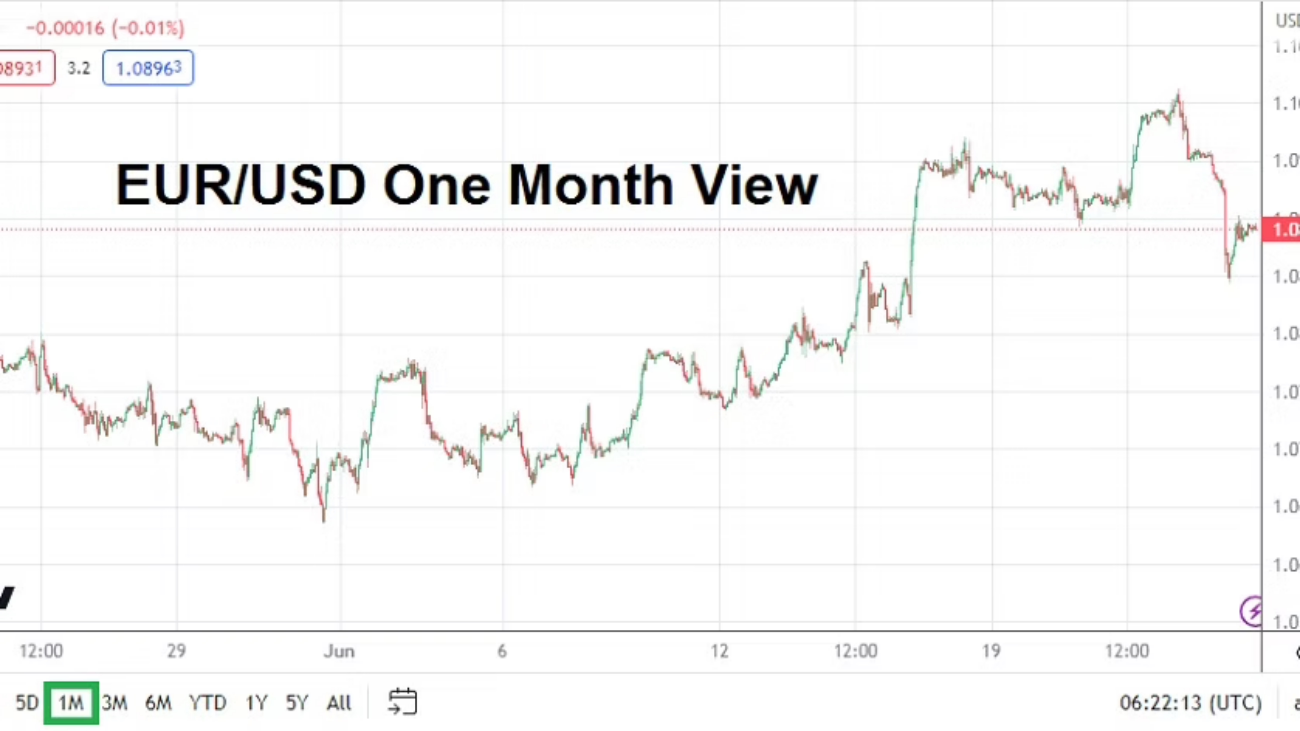
EUR/USD One Month Chart as of 25th June 2023

Monday, the 26th of June, Germany ifo Business Climate – the reading is forecast to come in worse than the previous month. Germany has turned in rather troubling economic data and the E.U as a whole is struggling under the weight of inflation and lackluster growth. The EUR/USD could be affected from the business climate survey.

Monday, the 26th of June, E.U ECB Forum on Central Banking – the annual event which is a bit like the Fed’s Jackson Hole Symposium will be attended by the leading central bank officials from around the globe. This year’s event in Sintra, Portugal will focus on inflation. ECB President Christine Legarde will kick off the event, which will end on Wednesday the 28th of June with speeches from Fed Chairman Jerome Powell, BoE Governor Andrew Bailey and others.

Tuesday, the 27th of June, Canada Consumer Price Index – a slew of inflation reports will be delivered. The forecast anticipates a slight drop in price pressure, but will that actually be the result? The USD/CAD could move based on the outcomes.

Tuesday, the 27th of June, U.S Consumer Confidence via the Conference Board – this survey is expected to show a slight improvement in the outlook of American consumers.

Wednesday, the 28th of June, E.U ECB Forum on Central Banking – the event will conclude with speeches from the heads of the ECB, Bank of Japan, Bank of England and Federal Reserve. The event is not supposed to stir up the dust, but Forex traders should monitor the rhetoric generated.

Thursday, the 28th of June, Germany Preliminary Consumer Price Index – the data is expected to show an increase in prices and underscore the ECB’s aggressive rhetoric regarding inflation.

Thursday, the 28th of June, U.S Final Gross Domestic Product – the growth numbers are projected to show a gain of 1.4% compared to last month’s 1.3%. The results will move the financial markets if they are surprising. Traders should be on the lookout for revisions to the previous month’s numbers.

Friday, the 29th of June, U.K Final Gross Domestic Product – an expected ‘growth’ number of 0.1% is anticipated, which would match last month’s lackluster outcome. The U.K is hovering under recessionary pressures and this GDP result will be watched by GBP/USD day traders.

postN20.1

Friday Barometer Regarding the BoE Decision and Gold Prices

Friday Barometer Regarding the BoE Decision and Gold Prices

The Bank of England’s rate hike of 0.50% cements the notion that global central banks remain steadfastly locked on inflation, and understand politically the implications on the public regarding higher consumer prices which are being experienced. The Bank of England ‘met’ before its Official Bank Rate announcement with corporate bank executives it was whispered, to discuss their concerns regarding the knock on affects of higher mortgage rates to come. However, this did not stop the BoE from being aggressive.

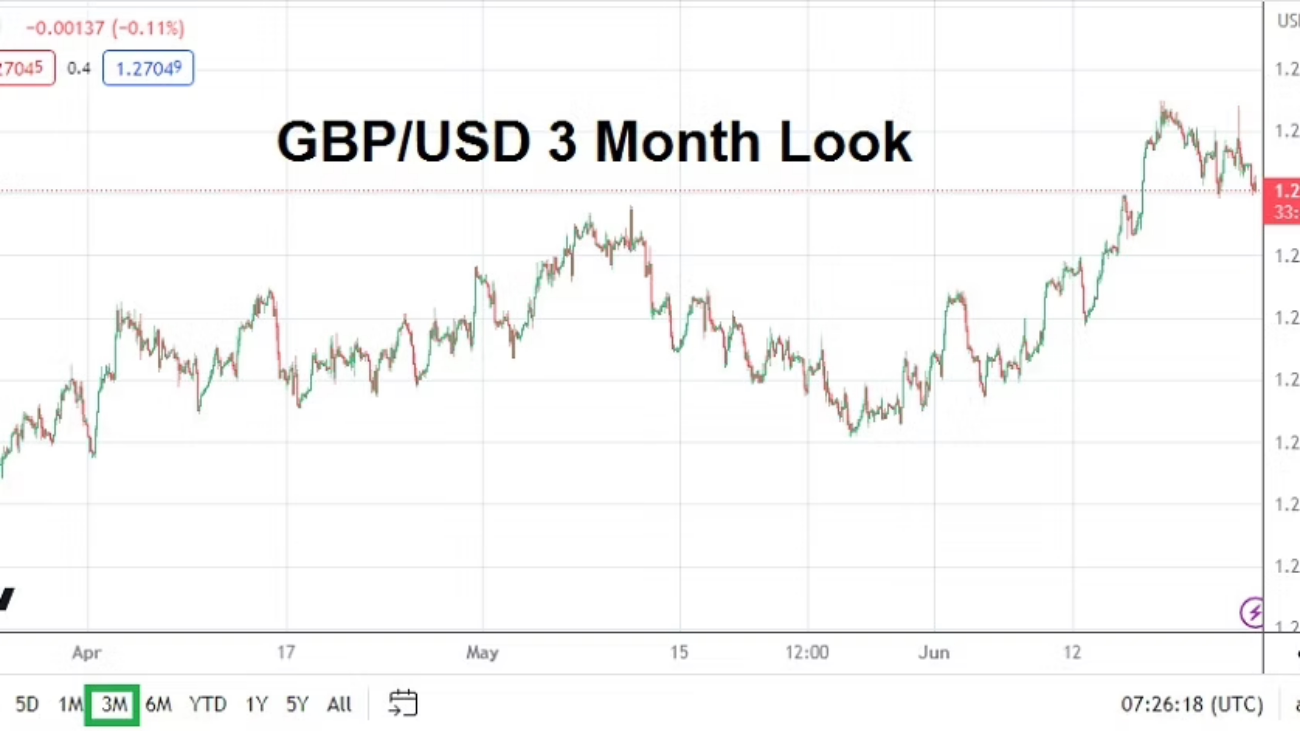
GBP/USD Three Month Chart as of 23rd June 2023

Is the BoE Move a Sign Regarding the Fed’s Next Decision?

The move by the BoE also is intriguing because the larger than expected hike puts into play the notion the U.S Fed may be raising the Federal Funds Rate in July. The reasoning is based on the idea the Bank of England wants to protect the British Pound from another interest rate hike from the Fed, thus ‘securing’ the value of GBP/USD Forex mechanics.

The U.S Federal Reserve, the BoE and ECB finally seem to have a grasp on import inflation implications. Although higher costs and dynamic pressures on exporting countries like China, India and others that face the gauntlet of these challenges remains critical, because these nations need to raise the costs of manufactured goods internationally when they sell.

Smart Money and the Value of Gold

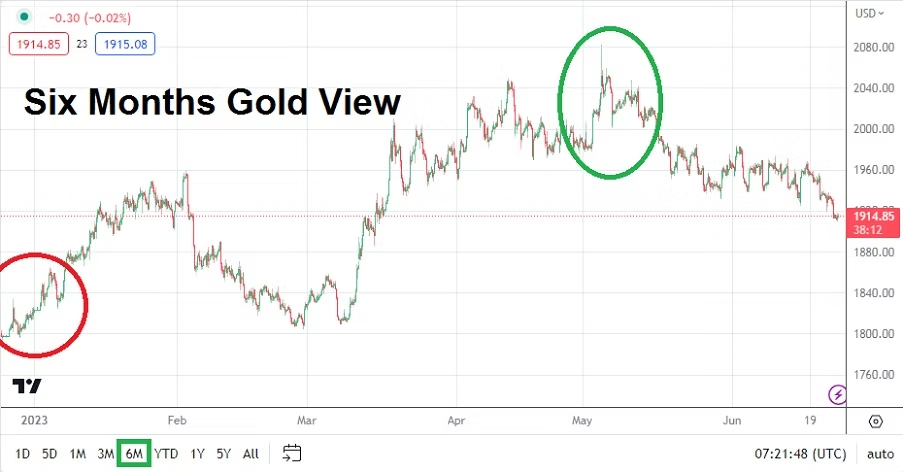
Let’s talk about ‘smart money’ for a moment surrounding Gold – and please try to hold down your laughter – but the price of the precious metal is interesting and should be monitored even by folks who do not trade the commodity. Gold as of this morning is near the 1915.00 USD ratio.

Gold Six Month Chart as of 23rd June 2022

On the 4th of May the price of the precious metal momentarily challenged the 2080.00 level. On the 1st of June the price of the commodity was near 1985.00. Do you see a trend here? Please note, Gold isn’t going to zero.

The point to be made is that the build up in the price of the precious metal from the 22nd of November 2022 when Gold was around the 1625.00 USD per ounce level, until early May anticipated the U.S Federal Reserve was going to become more dovish regarding their interest rate polkicy. For consideration look at the price of the USD during this time too, against many major currencies – the value of the USD also started to come down.

‘Smart money’ is showing signs of nervousness certainly since the start of June that more hikes are feared from the Federal Reserve. However, the price of Gold and the USD are not correlating well at this moment. This is a potential sign that Gold and the USD are both within speculative trading zones in which financial institutions are seeking ‘true’ equilibrium and are not comfortable. Fragility in the financial marketplace is likely to be seen until the Federal Reserve Federal Funds Rate announcement late in July. Expect financial institutions to price in their outlooks respectively depending on their outlooks.

Gold and U.S Treasuries: Inverted Interest Rate Implications

Gold definitely fluctuates within daily trading conditions, it is a speculative commodity, but it is also a solid barometer of risk management among the elite. If financial institutions are in favor of buying items like U.S bonds because of their guaranteed short term interest payments (look at the fact U.S Treasuries are mostly inverted – meaning shorter term bond interest rates are paying higher returns compared to longer term bonds) instead of buying Gold as an investment tool.

The Gold and USD Forex dynamics tells us that investment institutions are still very nervous about the Fed potentially raising interest rates a couple of more times this year. July and late this year appear to be reasonable bets. This Fed consideration and concern remains legitimate while looking forward as long as inflation remains elevated in the U.S. However, the Federal Reserve must also feel comfortable they will not kill mid and small sized banks, which by now should have shifted their business practices allowing for slightly higher interest rates to be delivered.

postN19

Broader Alliances: Sustaining Economic and Political Power

Broader Alliances: Sustaining Economic and Political Power

The following article is commentary and its views are solely those of the author.

If the United States decides to abandon its role as the premier global superpower and shall only be a Pacific and Atlantic power, withdrawing as defender of free seas, free trade and freedom in general, its democratic allies will have to start looking elsewhere for broader military alliances. This large group of nations would have to defend their interests against a revanchist China tied to Iran, Russia, North Korea and many of the Latin American countries – possibly including Brazil, and South Africa who have questionable politics and outlooks.

Eastern Mediterranean Alliance: A Strong Sea Power

Here is a speculative, yet reasonable look at the future of the free world. Let’s start with the Eastern Mediterranean where the two major powers are Israel and Turkey. One cannot deny that both these countries outclass all others regarding military might in the region. Israel’s air force is second to none and its navy is becoming a strategic necessity as it needs to defend its natural gas fields miles offshore. It now has six submarines that are capable of projecting power anywhere in the Mediterranean and even into the Indian Ocean and Persian Gulf. Turkey is currently a NATO member, but it is not clear that this will outlast the first half of the 21st century.

There is currently an informal alliance among Israel, Greece and Cyprus (both NATO countries) via joint military exercises and intelligence sharing. The Israeli navy and air force train regularly with Greece and its special forces train in the Cyprian mountains with its army. It would be in all three countries interests to formalize a treaty – if not of mutual defense, at least of mutual aid during times of war. All three of these countries are democracies and all three have mutual economic interests.

A formalization of this alliance makes sense now and if there is a NATO collapse it turns into a necessity for Greece and Cyprus. Adding Egypt (although it would be the only non-democracy) to this group would only strengthen the alliance and keep Turkey at bay. A post-Erdogan Turkey that is comfortable with its Islamic character and its modern society could even join this grouping with Israel as a potential peacemaker between the historic Greek-Turkish rivalry.

This alliance without Turkey is a powerful force in the eastern Mediterranean, and this alliance with Turkey could neutralize a nuclear Iran. A Post-Hezbollah Lebanon which is in the interests of all of these alliance members (including Turkey and Egypt), could become a reality and another member.

A New Alignment: The United Border Nations

What about Eastern and Central Europe? Poland is rapidly becoming the major non-nuclear European military power. Within the next few years it will outshine Germany and the U.K and rival France. It is quite clear, nuclear weapons aside, Poland would probably defeat Russia in a number of weeks, if not days if a conflict were to ignite.

Whether the Russian-Ukrainian war ends in a Russian defeat or in some sort of face saving armistice, Russia will not lose its aggressive nature or nuclear capabilities and it will inevitably become aligned more closely with China and Iran because of its current political nature.

The important new alignment will be categorization of ‘countries bordering Russia’. A new alliance of Poland, Finland, Sweden, Norway and the Baltic states – Lithuania, Estonia and Latvia together would have the land, sea and air power necessary to deter and defeat, if necessary, any Russian imperialist expansion. Even with closer ties to China it would be difficult to imagine that, over the next 50 years, Russia would be a threat to this alliance. Adding Ukraine to this grouping would make a powerful force. Its joint population of over 100 million people, while not quite Russia’s 150 million – would be a formidable adversary, especially as the technological skills of these countries is first world and continuing to improve. Adding the other former Warsaw Pact countries like Czech, Slovakia, Romania, Moldova and Bulgaria can only increase its potency.

Unlike the Eastern Mediterranean alliance mentioned above, this would have to be based on a mutual defense treaty in order to properly deter any Russian-Chinese-Iranian attack. Linking up, informally with the ‘new’ Eastern Mediterranean Alliance would create a powerful grouping of free countries against any attempt by authoritarian adversaries. Adding an economic aspect to these border nations and an alliance with the Eastern Med group with free trade zones would create a strong challenge to any attempted Chinese hegemony.

Asian Border Nations Group: Potential Look Ahead at Potential

If we were to unite the Eastern Mediterranean and Border Alliances to an admittedly non-democratic Asian ‘stans nations, including Kazakhstan, Kyrgyzstan, Tajikistan, Turkmenistan and Uzbekistan with a joint population of around 80 million, we are beginning to see the creation of a multi-cultural alliance that extends from the Arctic Ocean through Central Europe, Northern Africa and into Asia.

The Crucial Partner in Order to Balance Power: India

Which leads us to the Indian Ocean; a dominant India can help control the sea lanes from the Persian Gulf to the Bay of Bengal and down to Australia. An Indian-Australian alliance, along with Israel would create a democratic economic and military force that would keep China and Iran from dominating the region. This would require an Indian navy that is not only large, but effective also because it would hold a main responsibility for patrolling the seas from the Persian Gulf up to Australia strongholds.

As India also reaches its potential as a global manufacturing giant, it will be a force to be reckoned with. Including into this potent mix of nations, is the possibility of adding authoritarian countries like Saudi Arabia and the other Gulf states; along with Thailand, Myanmar, Malaysia and Indonesia who have strong ‘western’ economic interests and would create a formidable bulwark against China’s imperialist Belt and Road project.

Without the need to project naval power worldwide the Unites States could use it massive naval, air and ground forces to take better control of the Pacific Ocean along with Japan, South Korea and Australia.

If we add countries like the Philippines and Vietnam, then China would be deterred from further aggression. The only other region that would fall under American responsibility would be the Atlantic Ocean – the shipping lanes to Europe, West Africa and the Mediterranean. Along with the UK and France there would be no challenger to the control of the Atlantic. This could also lead to a revival of the old Monroe Doctrine and maybe free South America from the destructive influences of Iran, China and Russia.

The Global Economy and Free Trade Zones with a Stable USD as Reserve Currency

What does all this mean for the global economy? The free world along with its less than free allies who fear China, Russia and Iran could still maintain a U.S dollar based world. Free trade zones amongst and between the various alliances along with a revival of manufacturing led by a technology revolution using AI, quantum computing, renewable energy and space exploration could lead to a global resurgence of free countries that could stop the authoritarian appetites of Russia, China and Iran in its tracks. This can only happen with a stable reserve currency the ‘West’ can rely upon which is the USD.

Potentially a U.S freed from being the sole defender of freedom in the world, would help get America’s fiscal house in order and allow it to focus on being a dominant economic power. Is there a future for the ‘free world’ without a United States that projects power globally? Currently, a U.S withdrawal from global military assertion would certainly cause the end of freedom (economic and political) in the world for many nations. However, with the new alliances described above and a fiscally responsible United States, freedom could yet make a comeback.

Disclaimer: the views expressed in this article are solely those of the author, and not necessarily the opinions reflected by angrymetatraders.com or its associated parties.

postN18

USD/INR: Correlation to Broad Forex Market Intriguing Signal

USD/INR: Correlation to Broad Forex Market Intriguing Signal

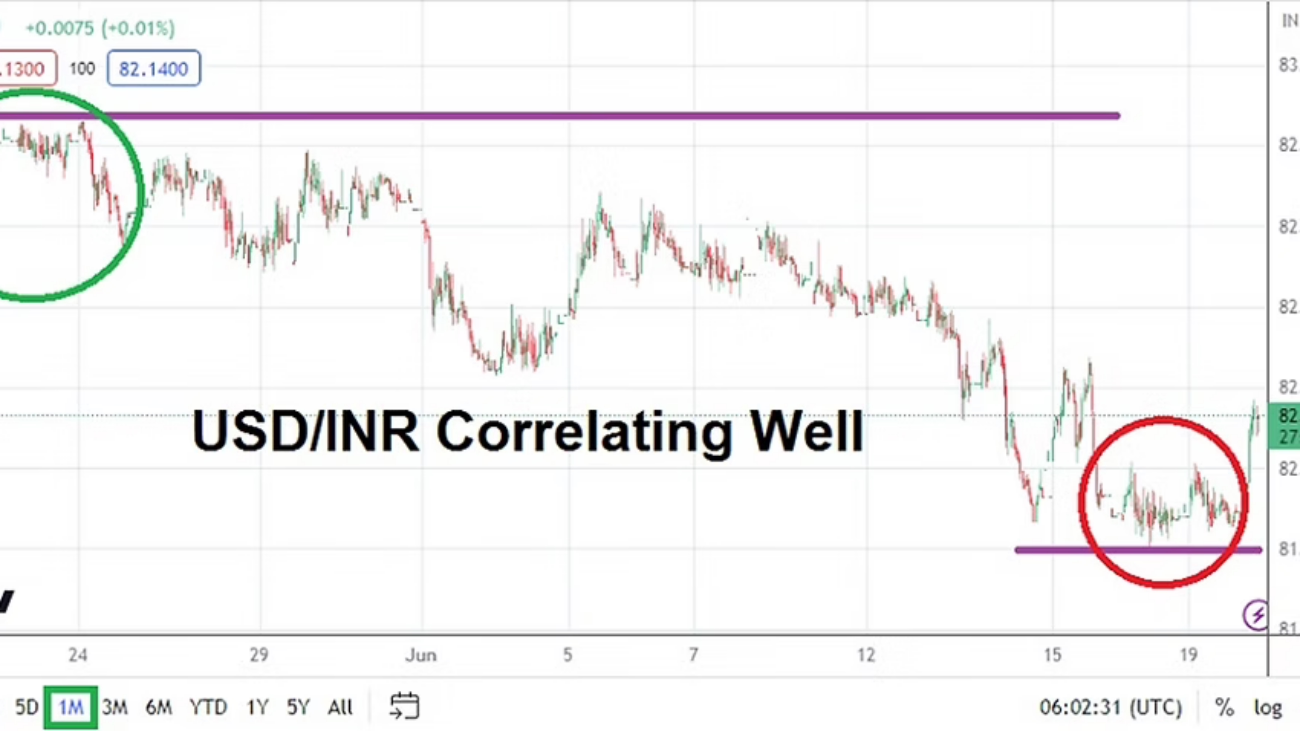
The USD/INR is near the 82.1200 price as of this writing. On Friday the USD/INR hit a low near the 81.8000 ratio. The ability to touch depths in the USD/INR before going into the weekend correlated well with the broad Forex markets, as the USD was showing signs of weakness globally. Yesterday’s trading volumes were weak because of a U.S banking holiday being observed and only in the next handful of hours will U.S financial institutions return from their long weekend, meaning an increase in volatility could arise.

The lows seen in the USD/INR on Friday challenged values not seen since the 10th and 11th of May. Interestingly support seems to have held technically, and the USD/INR was not able to test lower values seen in the middle of April and the first week of May. However, the trading conditions in the USD/INR appear to be healthy and performing in a manner that can be compared to the broad currency markets, and that is important because it may be a sign that interventions have not been necessary from the Reserve Bank of India the past few weeks.

USD/INR One Month Chart as of 20th of June

Was the Federal Reserve Decision a Pause or a Skip Regarding Interest Rates?

While the U.S Federal Reserve behaved as anticipated last Wednesday and did not raise its Federal Funds Rate, the central bank is still rattling its ‘inflation’ sword and has let it be known it can raise interest rates in July. The decision to not hike borrowing rates in June has been described widely as a pause by U.S Federal Reserve watchers, but if the Fed were to raise interest rates in July the pause would then have to be described as mere ‘skip’.

However, if broad Forex market price action is being interpreted correctly, it does appear many financial institutions are seemingly betting on a less aggressive Federal Reserve over the long-term. The question is if this is the correct outlook. Inflation remains problematic and until consistently solid drops in the costs of goods takes place, the Federal Reserve will remain rather unclear regarding its rhetoric and will likely bang on its higher interest rates ‘drum’ as a warning.

Here Comes More U.S Federal Reserve Rhetoric: Today and Tomorrow

Something USD/INR traders should pay attention to later today and tomorrow are the spoken words and gestures from Federal Reserve officials. New York Fed President John William will be speaking later today and he will certainly be asked about his outlook regarding interest rates. Because he is in charge of the New York Federal Reserve Bank, Williams remarks are watched carefully by the financial markets and his comments will certainly affect Forex and equity indices.

And then leaning into the microphone tomorrow will be Federal Reserve Chairman Jerome Powell. He will present his viewpoints and be asked questions regarding monetary policy in the House of Representatives by the Financial Services Committee on Wednesday. On Thursday, Powell will remain in Washington and perform the same show for the Senate Banking Committee. The Fed Chairman is a trained D.C insider and he will try not to inflame the financial markets with any surprises.

Outlook for the USD/INR is Choppy in the Near-Term

A reversal higher in the USD/INR early this morning has also correlated to the broad Forex market. It is likely the USD has been viewed as potentially oversold in the short-term. However, the slight moves higher might also be a natural cautious reaction to the coming rhetoric from John Williams and Jerome Powell. Because of this USD/INR traders should expect rather choppy conditions to flourish near-term.

Friday’s trading for the USD/INR will get important U.S economic data via the Flash Manufacturing and Services PMI reports. If the USD/INR remains below resistance levels of 82.1500 and 82.2000 consistently over the next few days leading into Friday’s trading, this could mean the broad Forex market remains bearish regarding its outlook for the USD. Speculators should be careful over the next 24 hours. It should also be mentioned that if Jerome Powell doesn’t surprise the marketplace tomorrow, he will not be likely to offer any new information the following day in Washington, meaning tomorrow’s comments from the Fed Chairman are the words likely to cause volatility if this happens.

postN17

Returning to the Roots of Commerce and Positive Contribution

Returning to the Roots of Commerce and Positive Contribution

This article was originally written in September of 2009 when the U.S national debt was 3 trillion , as of June 2023 it is above 32 trillion USD. Mr. Jeremy Blatch suggests current economic conditions warrant further reflection.

As the bloodletting continues in an attempt to cure the banking disease, we are no closer to resolving the root cause of the problem of the financial crisis. Unlike the proletariat in France before the revolution, the masses have not been offered cake to chew on, but a diet of more indebtedness. The chosen elite have distributed billions of other people’s money leaving the silent majority to choke in anger and incredulity.

The Chairman of the U.S Federal Reserve, when challenged by Congress as to the authority which allowed him to give away billions of tax payer’s dollars, nervously sighted the Federal Reserve Act of 1913. The total capitalization of the USA at that time was perhaps USD 500b. The current Public Account Deficit of the USA is around 3 trillion USD (3,000,000,000,000). Where is the money coming from to repay this?

The Dominance of Central Bank Policy and Government Mismanagement

For the first time in history, we have witnessed central banks and governments acting in unison to give away huge sums, seemingly daily to banks and the capital markets. In the press and media, figures in billions and even trillions have become common place. Governments are not companies. They cannot manufacture anything except perhaps lies. Or misspeak if you prefer to be politically correct. What they can do is print money, as they own and control the printing presses. They can then distribute the paper. In this case swallowed up by a banking system, drowning in its own sea of corruption, deception, mismanagement and greed.

We are told that the banking system is now stable again. But for how long and at what cost? The Damocles sword for failure in times of plenty, has yet to fall and will do so as a crippling tax burden on future generations. This at a time when Western governments are unable to guarantee their own elderly a life of dignity in their final years. The great champion of freedom and equality – the USA, cannot even guarantee its people a basic level of free health care at point of need.

The last decade has ended on a sad but predictable note, proving that we have sown the wind of increasing wealth at any cost, and have reaped the whirlwind. In the process we have singularly failed to distribute that wealth and resources equitably to where it’s needed.

Ironically one if the trends to emerge over the past decade of plenty are the development of socially responsible funds. The concept is to allow investors to direct their money into companies whose activities and ‘modus operandi’ are contributing positively to society. This is of course is selective, but at least the investor knows what their money is buying.

The Rise of Sovereign Wealth Funds as a ‘Caretaker’

Governments, especially with oil revenues have joined the band wagon creating Sovereign Wealth Funds. Norway the third largest oil producer, has formed a fund aimed at being socially responsible. In a global economy, ownership of companies is the most important way to have influence claims the Norwegian Foreign Minister. More humanitarian than an oil baron, the Norwegian government was key in gaining the International Land Mines Treaty, and also hosted the historic meeting in Oslo between Israel and Palestine. With the wisdom of Joseph they established a Petroleum Fund, in 1996, now renamed the Pension Fund to take care of the future generations. What a comparison to the arrogant ineptness of the USA, UK and Europe, who have burdened their future generations. The Norwegian government pension fund excludes companies that it believes are failing ethically. Interestingly, there are as many companies who are blacklisted abusing their employees as there are failings in other areas.

Whilst Norway has unambiguously laid out its outline addressing the needs of its own people before the needs of society at large, not the same can be said of Sovereign Wealth Funds which in general are about gaining political and strategic power by buying into the economy and owning strategic assets in the western industrialised nations. As we witness a shift in the balance of world economic power, ownership of strategic assets and the ability to guard and maintain trade routes will dominate the next decade’s macro economic strategy.

The concept of allowing investors choices consistent with their ethical beliefs is nothing new. But is it possible to combine successful business practices while looking after the disadvantaged.

The Impact of the Quakers in the Business World

The first funds to allow investors to direct their money into companies whose activities they approved of were pioneered by the Life Assurance Group Friends Provident in the 1980’s. This pioneering move was typical of the Quakers who were the founders of the Life Assurance Company. The Religious Society of Friends was a Christian movement founded in England in the 17th Century by George Fox. Puritans and non-conformist, they were given the name Quakers’ a term of derision, as they would often quake in the presence of God. They gained a reputation for social activism and were instrumental in the campaign against the transatlantic slave trade of the 18th and 19th centuries. Many were imprisoned for their faith and beliefs.

The Quakers flourished in business and due to both their success and religious beliefs made more enemies than friends. Persecuted and unable to gain insurance, they formed their own company. One of the overriding concerns of the Friendly Society, was to care for the poor and disadvantaged in their own communities.

Many captains of commerce and industry, in the 1800’s were Quakers, who founded and managed their businesses on biblical principals. Joseph Fry who started the famous Fry’s chocolates built a small town for his employees of his factories, with all amenities, schools, hospitals and recreation facilities. Work was scare, and many had to leave their home towns to find employment. Fry’s were bought by the Cadbury company. John Cadbury, himself, also being a Quaker. Edward Pease, owner and pioneer of the first railway in England from Stockton to Darlington housed his own employees, and Joseph Rowntree founder of the famous Rowntree Chocolates was the first person to develop low cost housing for the poor.

Barclays Bank had its roots in the Quaker movement. Unable to obtain loans the Quakers decided to form their own bank. True to their faith and beliefs employees were well housed and looked after.

In spite of being persecuted for their beliefs, through their success in business they were able to alleviate much poverty in serve the wider community. They didn’t need to wait for governments to bankrupt their future generations, they used what they had wisely, and gave something back. The bottom line in any business must be to make money. But as we have seen with the banking and financial crisis of today at what cost?

Originally published in www.ehh.gi in September 2009. Jeremy Blatch is the Founder and Consultant of Ein Harod Family Office.

postN16.1

Week Ahead: Summer Begins with Questions Lurking for Traders

Week Ahead: Summer Begins with Questions Lurking for Traders

Monday, the 19th of June, China Foreign Direct Investment – data from China has been lackluster and last week’s announcement of a stimulus program from the government underscores economic concerns regarding growth.

Monday, the 19th of June, U.S banking holiday – for commemoration of Juneteenth.

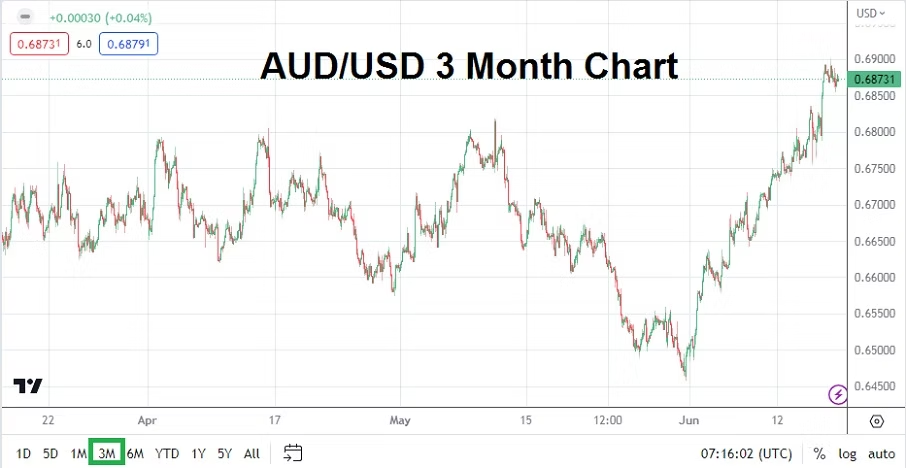
AUD/USD Three Month Chart as of 18th June 2023

Tuesday, the 20th of June, Australia Monetary Policy Meeting Minutes – report from the Reserve Bank of Australia will interest AUD traders and those with an interest in Asian Pacific economics.

Tuesday, the 20th of June, U.S FOMC member John Willliams – as the President of the New York Federal Reserve, Williams, is a key member regarding policy. Taking into consideration last week’s pause, traders may want to pay attention to the New York Fed Presidents’s remarks to see if the pause in Federal Funds Rates seen last week is looked upon as a halt or a ‘skip’ by Williams. The difference between a pause and a skip may appear to be semantics, but a skip would mean an interest rate hike is coming in July. Williams is not going to say what is going to happen at the next Federal Reserve meeting, but he may give a hint regarding his opinion on what should be done.

GBP/USD Three Month Chart as of 18th June 2023

Wednesday, the 21st of June, U.K Consumer Price Index – the data will be important regarding inflation insights for Britain. The Bank of England is expected to raise their Official Bank Rate on Thursday by 0.25%. Another report showing stubborn inflation could set the table for a rather hawkish Monetary Policy Statement from the BoE.

Wednesday, the 21st of June, U.S Federal Reserve Chairman Powell testimony – the Fed Chairman will begin two days of speaking and taking questions. The first day will be before the House of Representatives and the second day in front of the Senate. Because a major election is coming in the U.S in 2024, this will be an opportunity for politicians from both sides of the aisle to get airtime and take a ‘stance’ while bludgeoning Jerome Powell. The Fed Chairman’s remarks could stir the markets slightly, but Powell will be as careful as possible not to put a scare into the financial sector.

Thursday, the 22nd of June, U.K Bank of England – the Official Bank Rate, Monetary Policy Summary and vote count from the Monetary Policy Committee will be released. A hike has been widely expected by GBP traders and has been factored into the British Pound already.

Thursday, the 22nd of June, U.S Existing Home Sales – the housing report will cause a few murmurs in the marketplace because it is seen as an extension of consumer health and interest rate policy in the U.S regarding behavioral sentiment. Existing home sales numbers have been dropping as people with homes have decided to stay put in their current residences. ‘Locked in’ interest rates are more attractive, instead of taking on a higher rate via a new purchase due to costlier mortgages because of more expensive borrowing fees.

Friday, the 23rd of June, E.U Manufacturing and Services PMI – the flash reports from the likes of Germany, France and the U.K should be watched. Manufacturing readings have been producing recessionary readings while Services data is expected to show incremental decreases too.

Friday, the 23rd of June, U.S Manufacturing and Services PMI – the flash reports via the Purchasing Managers Index data need to be monitored too from the States. The readings give a rather good insight regarding outlook of U.S business sentiment.

postN15.1

Tether’s Wobbling Should Set off Alarms for Crypto Traders

Tether's Wobbling Should Set off Alarms for Crypto Traders

Tether is wobbling and this should not come as a surprise to cryptocurrency traders. While many speculators likely do not carry USDT in wallets or day trade the cryptocurrency, it does serve as a barometer in the digital asset world regarding behavioral sentiment. A sustained drop below the 1.00000 USD price tag should raise eyebrows and increase nervousness.

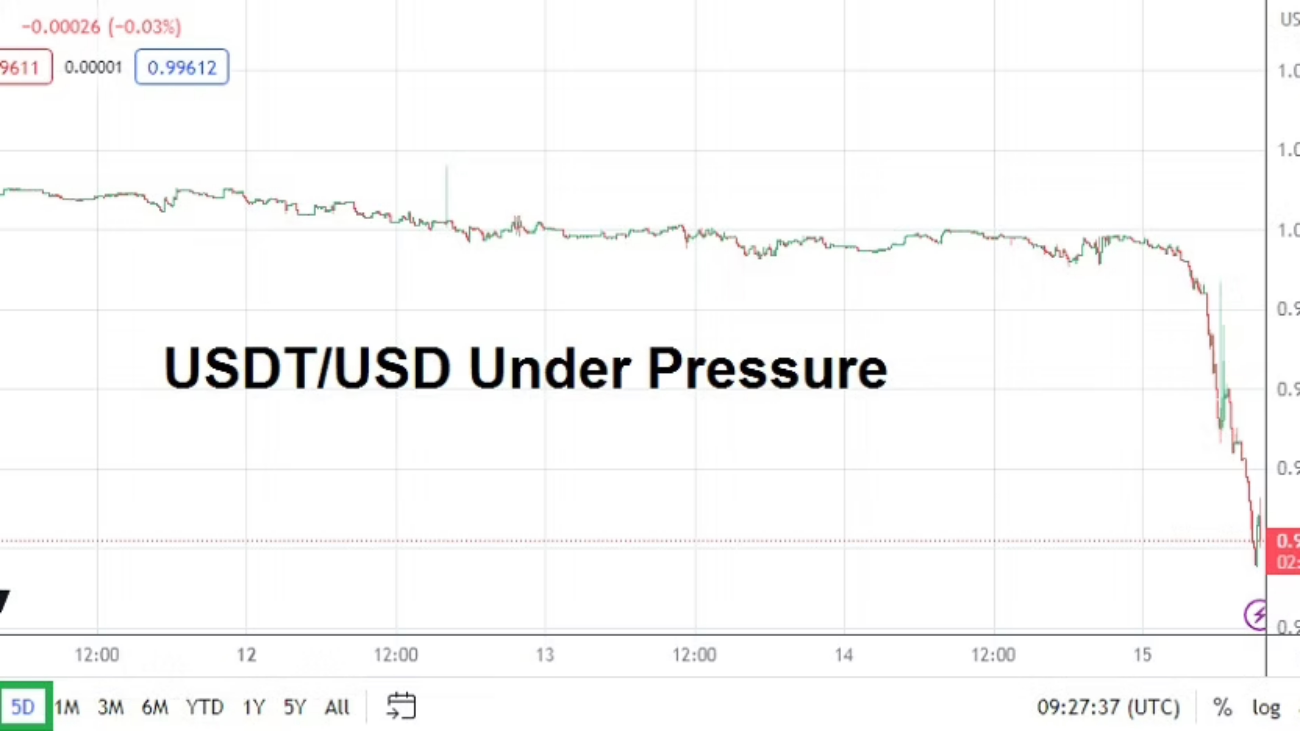
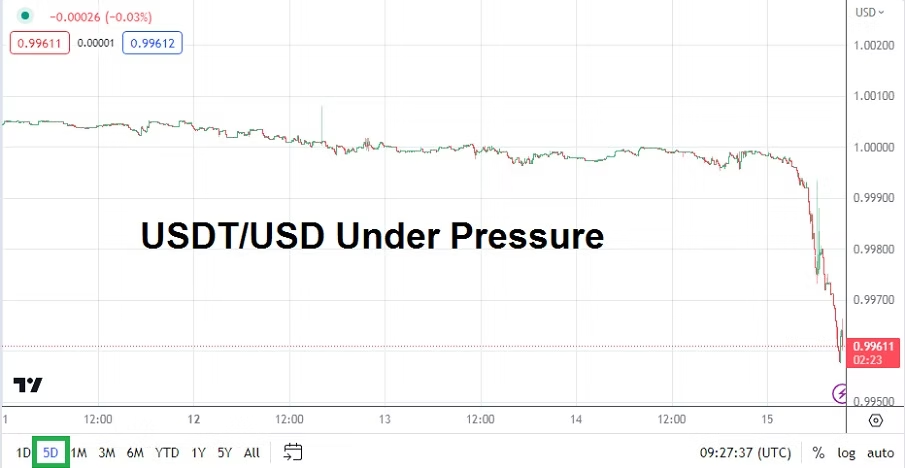
Tether (USDT/USD) 5 Day Price Chart as of 15th June 2022

This morning’s drop in value in USDT/USD comes on the heels of trouble with Binanace and Coinbase via civil suits brought forth by U.S government agencies that accuse both exchanges of wrongdoing.

Tether’s accounting practices have been under suspicion for a long time and transparency has been lacking. While influencers within the crypto world can came claim all they want the Tether ‘stablecoin’ has nothing to hide – just like Binance and Coinbase – plenty of suspicion remains. And in fact a lawsuit brought against Tether’s parent company which was settled with a payment of nearly 41 million USD in 2021 to the U.S government via CFTC charges should serve as a caution sign.

A simple look at a five day chart of USDT/USD above shows the ‘stablecoin’ has incrementally suffered selling the past handful of days (this before today’s storm lower). Yes, folks may claim this has happened before and recoveries invariably have always developed higher, and they may be proven correct again. Perhaps today’s selling has been a mere reaction to the ‘public’ finding out about recent Binance transactions which are being reported, but maybe it is something more important – like a lose of confidence.

Until now the cryptocurrency world hasn’t really seen a strong reaction to the allegations brought forth from the U.S against Binance and Coinbase yet, and the question that should be asked is when is confidence going to crack again in the cryptocurrency world. Because as sure as the sun comes up and sets, the cryptocurrency world is going to suffer another major crisis, perhaps not today, but one will occur.

If the price of Tether starts to stumble badly and shows signs of not recovering that would spark a major downturn in the value of cryptocurrencies across the board. The darling of the ‘stablecoin’ world certainly has its detractors and there are certainly folks lurking who have been making long-term bets against Tether.

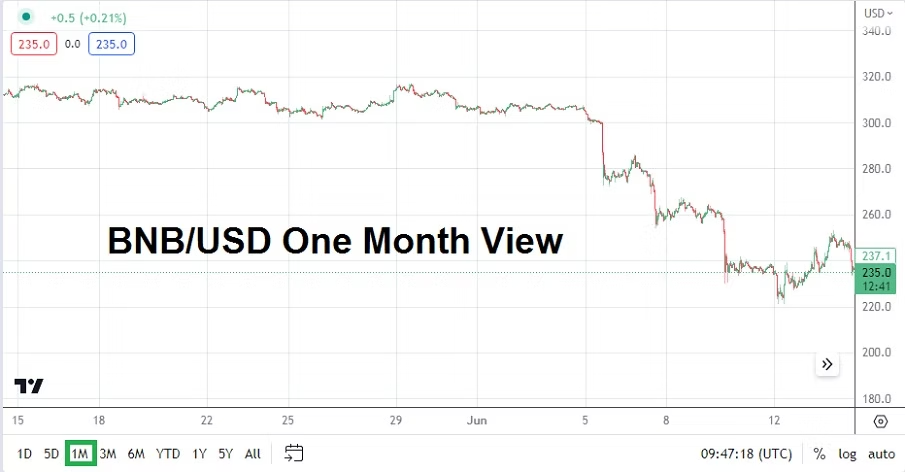
Binance Coin (BNB/USD) One Month Chart as of 15th June 2023

Speculators in the digital asset world will be watching Bitcoin and Tether values closely. It has been reported that by many crypto media sources that Binance has recently made large trades involving USDT in an effort to boost their liquidity. What should concern traders in the cryptocurrency space is the ability of noise in the sector to turn into actual thunder which causes dramatic reactions to cryptocurrency prices.

Because while some people try to claim there are reasonable ways to value cryptocurrencies, in fact behavioral sentiment rules the jungle and a loss of confidence in the sector remains an extinction level threat for nearly every digital asset at anytime. The entire cryptocurrency space is vulnerable to fragility.

postN14.1

Anticipated Federal Reserve Shop Talk to be Delivered Today

Anticipated Federal Reserve Shop Talk to be Delivered Today

For what it’s worth, here is my prediction regarding what the Federal Reserve will do today. The Federal Funds Rate will remain unchanged in my opinion. The FOMC Statement may show that the vote actually was debated and not unanimous. The statement is likely to warn that inflation remains stubborn and potentially problematic, meaning the Federal Reserve continues to believe it may have to raise the Federal Funds Rate over the mid-term and again before the end of 2023.

The Forex market has seen the USD get weaker against many major currencies since late May. While financial institutions have seemingly positioned for no increase from the Federal Reserve today, this move has also likely been priced into Forex. Day traders need to understand institutional traders will not be betting on what took place the last three weeks, but are trying to anticipate what will happen into early July and beyond regarding their Forex positions.

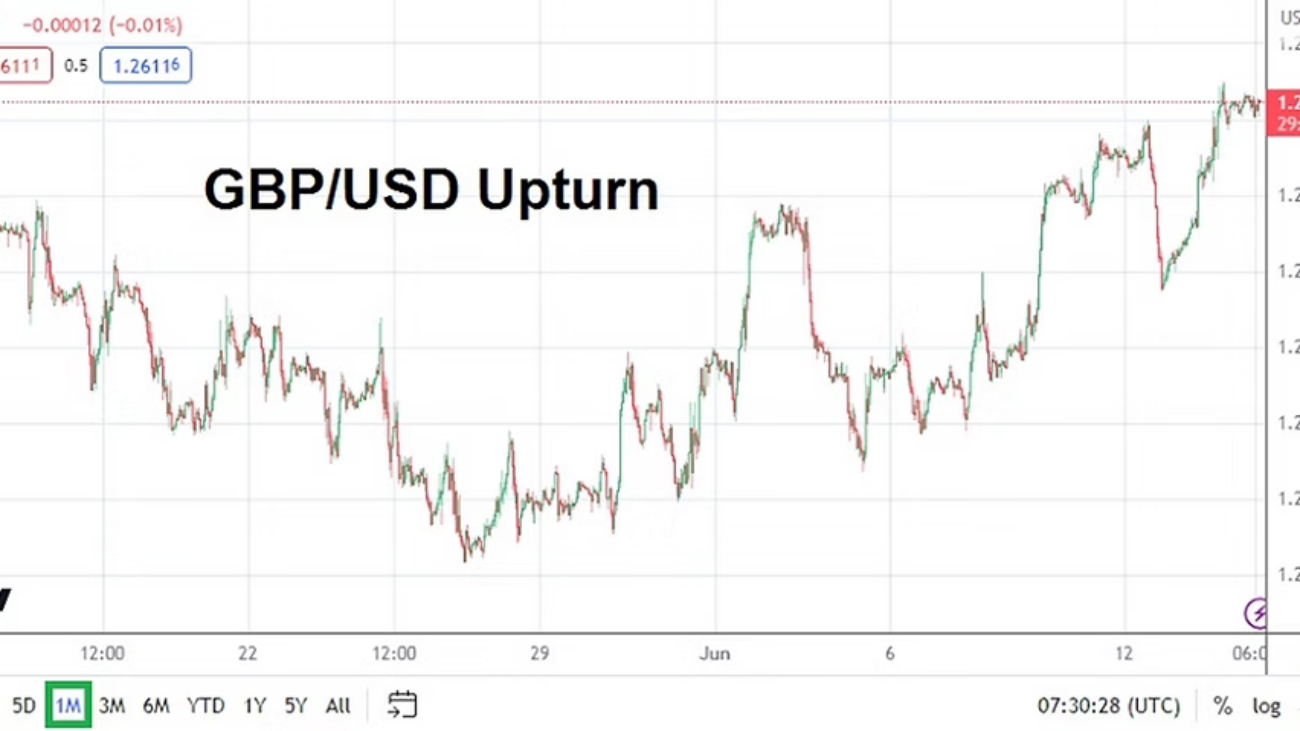
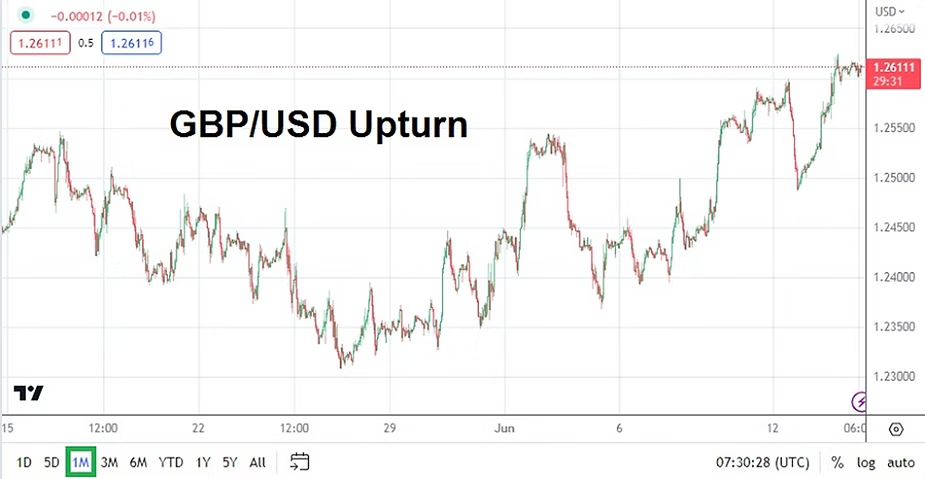
GBP/USD One Month Chart as of the 14th June 2023

Many financial institutions may still be betting the Fed will remain more dovish than the U.S central bank wants to admit, but this is a dangerous perception and could prove costly. Financial institutions are concerned about the Fed because they know the central bank has painted itself into a corner it may not be able to maneuver freely within. The battle to conquer inflation while trying to fuel economic growth is not an easy one. Mixed sentiment abounds regarding the U.S economy depending on who is asked.

Talk of a soft landing and a small recession continues to be heard, this while some analysts warn about a hard drop and darker days ahead. Folks, it is all about timelines and their interpretations, experts warning about brighter or darker days ahead have a tendency to be vague regarding exact moments in time. Everyone has an opinion, and people often have more than one.

In my opinion – my one opinion, the Fed is likely to say that it is not going to raise rates today, but may have to do so in the mid-term. If these were normal times and economic conditions were not suffering from huge spending running amok in Washington and the corporate banking sector wasn’t fragile, the Fed may actually have raised the Federal Funds Rate today to continue to battle inflation deliberately. However, a pause for the moment seems like the logical choice, this while ‘hoping’ inflation continues to diminish. And hope is a key word here. Everyone seems to be hoping. The question financial houses and traders need to decide after the FOMC Statement takes place today is how seriously do they consider the Fed’s remarks.

If they believe the Fed will have to continue to remain neutral regarding its mid and long-term interest rate policy, the USD may soften and incremental selling might be demonstrated. Human instinct tends to be optimistic, which means financial institutions and maybe even the Fed wants to believe inflation will ebb lower. If this happens the USD would weaken further. However, the Fed may have to sound more aggressive than people want, but that would damper the mood of financial institutions – so look for optimistic interpretations to abound with rose colored glasses, even if they are wrong in the long-term.

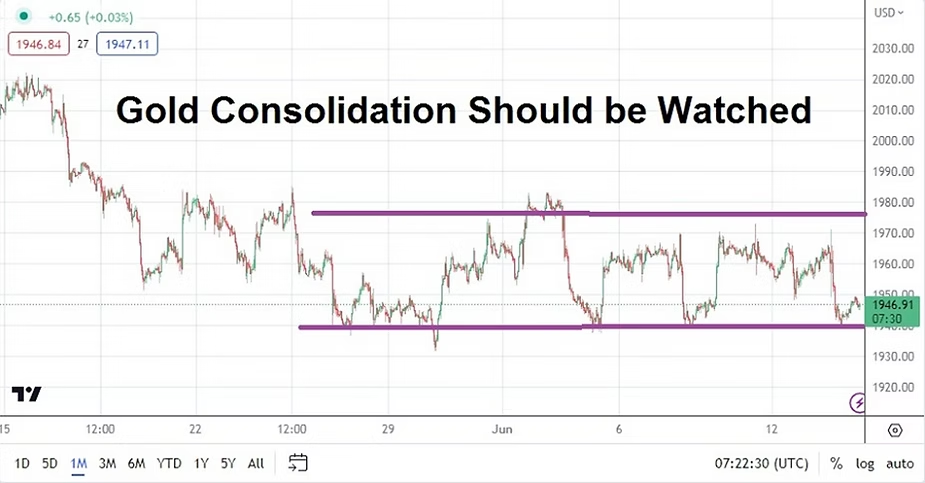
Gold One Month Chart as of the 14th June 2023

For evidence of outside barometers, traders may want to look at Gold which has essentially traded between 1940.00 and 1975.00 with a few outliers since the last week in May. The price of Gold has seemingly situated within a consolidated framework the past few weeks. The precious metal may produce a strong move if the Fed shows more dovish behavior today, particularly if financial institutions show more optimism via behavioral sentiment in Forex – meaning if a weaker USD trend continues momentarily Gold could traverse higher.

My prediction and $1.00 USD may get you on a bus. As always caution will be needed if you are trading immediately before and after the U.S Federal Reserve’s rate decision. I advise using a seat belt today consisting of entry price, stop loss and take profit orders via solid risk management, but then again these cautious attitudes should always be practiced by day traders.

postN13.1

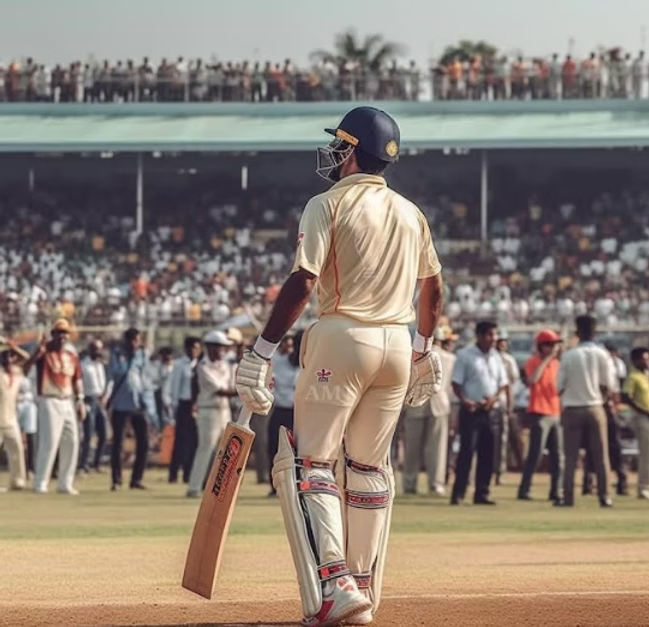
Cricket Destined to be a Fountain of Joy & Money in India

Cricket Destined to be a Fountain of Joy & Money in India

Ask any person in India who is young or old, man or woman, city resident or village dweller and you will struggle to find someone who does not understand cricket. Why does the sport have a such a huge following in India? And more importantly, why is the “business of cricket” so lucrative? To put it simply, it was destiny. And to understand this you need to know 4 key events that lined the stars up and destined cricket in India for success.

First the Victory: June 25th, 1983

The sport of cricket was a remnant from the British rule in India which lasted until 1947. Cricket was considered an upper-class pastime, and probably not expected to survive in an independent India which was mostly poor. Yet cricket managed to endure at first, thanks to private clubs which played the sport for the prestige the British attached to it; and secondly with an even bigger thanks to the famous day of June 25th 1983, when India won the Cricket World Cup against all odds by defeating the mighty West Indies team. The icing on the cake was that the finals were held in London. It was at this point that India put the world on notice, that Indians could and would compete at something their colonial rulers of the past adored. The sense of pride created in India was uninhibited, and the first batch of Indian cricket stars were born out of this event. Naturally the interest and following of the game increased.

Second the Economy: Cricket Rules and the Power of Advertising

In the 1990’s the Prime Minister of India, P.V. Narsimha Rao, opened the economy to allow foreign companies to facilitate their business enterprises in India. Lowering the barriers for entry meant a liberal economy, which brought the likes of Honda, Leyland, Suzuki, Sony, and other well-known corporations to come in and partner with local Indian firms. Foreign capital brought jobs and fresh market competition which meant that India waded out of economic lethargy. International media companies were allowed to broadcast news, shows and sports on prime time television. The business impetus helped kick start the growth of television ads, which would be instrumental in pushing cricket popularity to new heights. How? It so happens that the rules of cricket are structured perfectly well to allow TV broadcasters to show ads every 4-6 minutes. No other sport in India (or probably the world) can boast of this unique set of advertising advantages. This meant there was plenty of advertising revenues to be made, which the broadcasters of course loved. The television broadcasters and BCCI realized these powers quickly and turned the sport into the business of cricket. Wait, who is BCCI?

Third the BCCI: Power to Organize and Create Fame

The Board of Cricket Control in India (BCCI) is a private body that manages cricket activities in India. In the mid 1990’s as the economy opened, the BCCI sold the TV rights to broadcast Indian matches to Transworld International (TWI). This broke the monopoly of Doordarshan (a state backed broadcaster which did not pay fees to BCCI). After a bitter legal battle, the Supreme Court of India decided that matches were a commodity the BCCI owned, and broadcasters must pay the BCCI if they wanted to air the matches. From the late 1990s to 2000s the BCCI went from strength to strength and hosted several international cricket events, which were a commercial success leading to high profits for the BCCI itself and the International Cricket Council (ICC), a governing body of cricket. These circumstances turned the BCCI into a very profitable entity, and it helped that the BCCI was organized in a focused manner and run like a free business not harmed by government bureaucracy that other sports in India faced.

As the popularity of cricket and its talented players increased, so did the value of its teams and its players sponsorship deals. During the early 2000’s Indian cricket players began to be featured in adverts for shaving creams, sodas, motorcycles, shoes, credit cards and anything else they could pose with on camera. Indian cricketers were now household names and the business of cricket gained critical velocity regarding valuation. The BCCI had become very influential on the world stage and with their ample funds in the coffers, and ready for use the organization took the step to launch the Indian Premier League (IPL) in 2007.

Fourth the IPL: The World of Cricket Takes Notice

The Indian Premier League is a high-intensity short-format (T20) cricket league, which is held annually and is contested by franchise teams. The league uses the shorter format of cricket to maximize viewer entertainment (including cheerleaders, fireworks and DJs) as opposed to showcasing traditional elements of the game like technique, proper form, and mental resilience.

The strength and stature of the BCCI is such that it negotiated with other international cricket boards to block out an exclusive window where fewer international cricket games happened during the IPL season. This meant that cricketers from all over the world (except Pakistan, for political reasons) were available to participate in the IPL. The Indian Premier League is huge.

Here are some important facts and monetary insights to consider:

· The Indian Premier League is the most influential cricket league in the world and attracts a huge audience because of the size and scope of its Indian fans.

· By the year 2014, the IPL was ranked sixth in average attendance via its games compared to all global sports.

· The Indian Premier League broadcast a game live on YouTube in 2010, becoming the first sports event to be officially shown live on the site.

· The IPL brand was valued at nearly 90,038 ‘crore’ (11 billion USD) already in 2022

· It was estimated in 2015 by the BCCI that the Indian Premier League had added 1,150 ‘crore’ (140 million USD) to the economy of India in Gross Domestic Product.

· The IPL achieved the status as a ‘decacorn’ valued at 10.9 billion USD in December of 2022.

· Thus producing a large statistical growth in USD compared to 2020, when the Indian Premier League had an accepted value of approximately 6.2 billion USD, this according to a report compiled by D & P Advisory, a consultant firm which inspected the IPL’s business.

· Recently the IPL championship final for 2023, became the most streamed live event ever on the internet with an estimated 3.2 ‘crore’ (32 million) viewers.

· The Indian Premier League sold its media rights early this year for the 2023–2027 seasons for a price of 6.4 billion USD to the Viacom18 and Star Sports companies.

· Creating a value for every match in the IPL of nearly 13.4 million USD, proving again the might of the gigantic Indian audience which appears to still be growing in stature.

With growing popularity and its ability to expand its audience, naturally corporations have lined up to advertise during the games. Celebrities have vied to own IPL teams and players have been traded at auctions for ridiculous amounts of money. The need for constant fresh talent has brought players from the small nooks and crannies of India to play alongside the international stars, allowing them to gain experience. This element of new players has added to the excitement of IPL for its viewers, while creating a framework to uncover new faces that could go on to play long-term for the Indian national team.

The synergy of the world’s best players along with the development of new talent from India and beyond is a win-win for the BCCI, and it continues to enjoy the growing fruits of success. No one knows when this high will end for cricket in India, but for the moment and foreseeable future expect cricket in India to generate revenues that other international cricket boards can only dream of, while the nation also contends as a top power in the sport globally.

postN12

The Despair of Ice and Ability to Lead People through Storms.

The Despair of Ice and Ability to Lead People through Storms.

Book Corner: Shackleton’s Way: Leadership Lessons from the Great Antarctic Explorer, written by Margot Morrell and Stephanie Capparel

There is a vast library on offer for readers who want to study leadership books from historical figures. Shackleton’s Way adds to the fray and our knowledge by analyzing the famous 1915 Antarctic Endurance expedition of legendary explorer Sir Ernest Shackleton (1874-1922) for his leadership skills.

A word about Shackleton. Born in Ireland and raised in London, he cut his teeth on the Discovery expedition with Captain Robert Falcon Scott that explored the Antarctic regions in 1901 – 1904, one of the most brutal and inhospitable places on the planet. Later while leading on his own, he garnered international fame for a further series of Antarctic expeditions where he set distance records. Although in his lifetime he was considered a key figure in what is today known as the Heroic Age of Antarctic Exploration, he died in debt and fell out of the public eye for many years.

In the late 1950s, a series of books began to appear around Shackleton’s exploits, and his achievements began to be celebrated by a whole new generation of enthusiasts, leading to documentaries plus biographical TV miniseries (1983 and again in 2002, the latter featuring Kenneth Branagh). He has been acknowledged by the US Navy, and major universities have given management courses where his unique leadership style has been analyzed and promoted.

Shackleton’s Way tells the story of the Endurance expedition with an odd, but interesting, spin. For some background, the ship got stuck in ice and Shackleton was forced to abort and then lead his men to safety, with dwindling supplies, in the frigid wilderness. Morrell and Capparel analyze the expedition not as a success – which it wasn’t – but how Shackleton’s excellent leadership abilities saved his men and brought them all back alive and relatively unharmed (one man, however, lost his foot).

The Endurance story is told chronologically through eight sections, each highlighting a different leadership skill and how Shackleton embodied it, such as Creating a Spirit of Camaraderie and Leading Effectively in a Crisis. Each section concludes by focusing on a modern leader – from such diverse fields as business, education, and government – and how they in turn have been influenced by Shackleton and embody his style in their respective fields.

Shackleton was calm under pressure, led from the front, broke down the rigid hierarchies that were the norm on these expeditions, created cohesive and bonded teams, and was a master motivator. His crew respected and worked hard for him, and had full faith in his abilities. He had uncanny interviewing skills, creating a tight, professional team out of thousands of applicants with seemingly unconventional questions.

Shackleton was a fascinating man, and the lessons contained within this book are pure wisdom. The story itself is really an exciting adventure and you’ll get hooked after a few pages.