postN11.1

Week Ahead: Inflation Followed by the U.S Federal Reserve

Week Ahead: Inflation Followed by the U.S Federal Reserve

Monday, 12th of June, U.S Federal Budget Balance – hold down the laughter and snickers please as you wonder why you should care, this as the report shows monthly income versus spending from the month before. Yes, the U.S ‘Debt Ceiling’ bill was passed recently. Very few people are going to pay attention to Budget Balance report, except economists and traders who have ‘skin in the game’ via hedge funds as an example – that make long-term bets, and U.S politicians who want to hoot and holler…….while nothing really gets done to limit wasteful spending in Washington D.C.

Tuesday, 13th of June, U.S Consumer Price Index reports – yes, this inflation data will be important per the monthly numbers showing what consumers are spending. A slight uptick is expected with an outcome of plus 0.2% via the broad statistics – last month’s number showed a gain of 0.4%. The outcome of the broad and core CPI statistics will give the Federal Reserve a sounding board for what will take place on Wednesday via the Federal Funds Rate announcement. Stronger than expected inflation numbers could cause a rupture and nervousness. A weaker result would calm Forex and perhaps make the USD slightly weaker.

EUR/USD One Month Chart as of 11th June 2023

Wednesday, 14th of June, U.S Producer Price Index – these numbers will be released early in the day and will be followed by the Federal Reserve five and half hours later. The inflation outcome via the PPI if stronger than anticipated would cause some caution before the Federal Reserve takes the stage.

Wednesday, 14th of June, U.S Federal Funds Rate, FOMC Statement and FOMC Press Conference – while many analysts seem convinced the Fed will not hike the interest rate this week, there are obviously no guarantees. The FOMC Statement will indicate the U.S central bank’s outlook. Traders who are intent on trading before the official interest rate announcement and statement are playing with fire. Speculators should keep in mind that other central banks have surprised folks with increases recently including Canada and Australia. A hike from the U.S Federal Reserve would surprise a lot of people and financial institutions, but stranger things have happened.

Thursday, 15th of June, New Zealand Gross Domestic Product – the growth numbers which will come out a handful of hours after the U.S Fed leaves the stage will be intriguing and provide NZD/USD traders more impetus into what will likely already be a volatile trading session taking place.

Thursday, 15th of June, China Industrial Production and Retail Sales – these two reports from the economic giant will be watched closely. China’s economy is struggling a bit, and weakness in the housing sector via values are starting to cause a reaction in domestic spending. Industrial Production numbers will give some insights regarding global demand. Economic problems in Europe and North America are certainly not helping matters in China because demand for goods are restrained and hurting the manufacturing sector.

Thursday, 15th of June, U.S Retail Sales – consumers in the U.S have been expected to start producing negative numbers via these statistics, will they begin to do it? A stronger number would be of interest to some, but after Wednesdays’ FOMC Statement and news that will be generated, it is questionable who will give full attention to this report and what affect it could have.

Thursday, 15th of June, E.U ECB Press Conference – this question and answer session could prove to be interesting depending on what the U.S Fed does the day before. Certainly the European Central Bank will give their opinions on monetary policy and economic circumstances in the European Union and abroad. The EUR/USD could be affected.

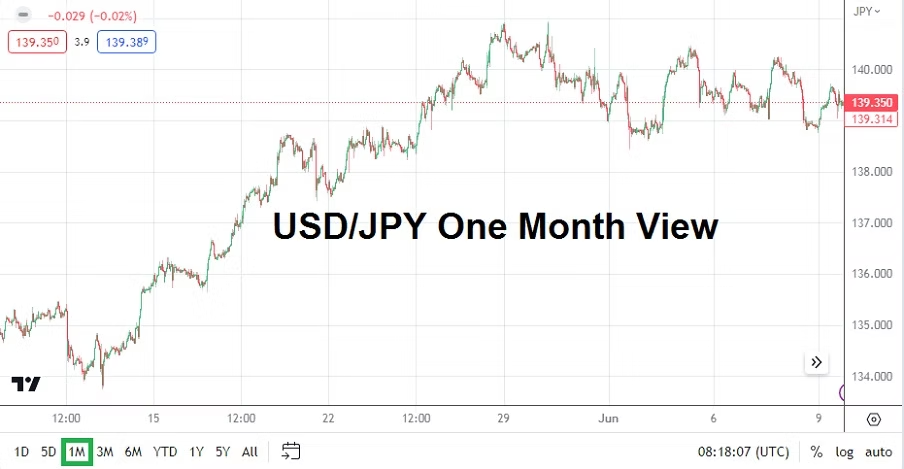
USD/JPY One Month Chart as of 11th June 2023

Friday, 16th of June, Japan BoJ Policy Rate and Monetary Policy Statement – no major changes are expected from the Bank of Japan. This is the one central bank unwilling to change its attitude regarding monetary policy because of the whims of others. Perhaps if the U.S Federal Reserve surprised everyone on Wednesday with a hike, this could change the quiet rhetoric from the BoJ – but even that is doubtful. USD/JPY traders should pay attention to the BoJ Press Conference just in case.

postN10.1

USD/INR: Elevated Range as Questions about Values Persists

USD/INR: Elevated Range as Questions about Values Persists

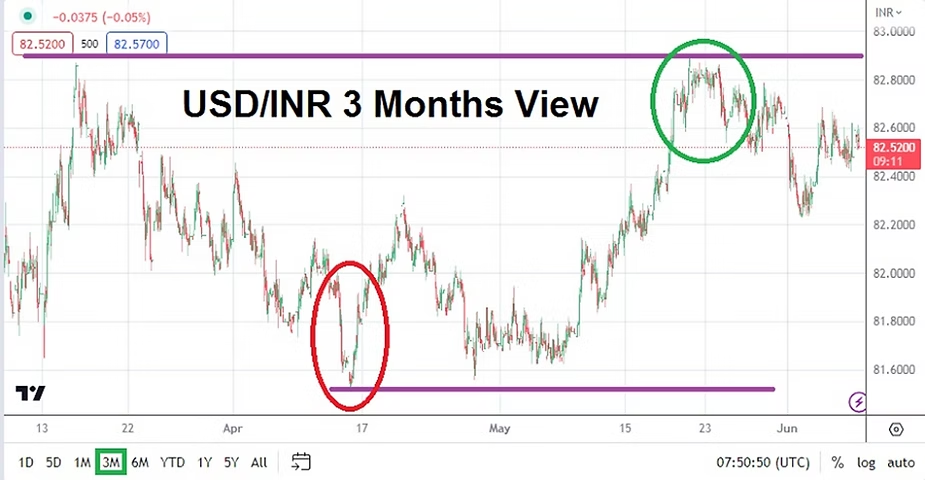
The USD/INR has traded the past week approximately between the 82.2200 and 82.7000 ratios. Plenty of discussion regarding what the Reserve Bank of India has been doing as they battle the strong USD has been whispered openly, and is being questioned from financial institutions and speculators. Day traders who have been trying to wager on the value of the Indian Rupee have likely found the waters difficult to swim. As of this writing the USD/INR is near 82.5200.

USD/INR Three Month Chart as of 8th June 2023

Last Wednesday’s sudden rhetoric, from two U.S Federal Reserve officials caused mayhem briefly within the USD/INR. The currency pair got hit after India’s official trading hours closed, and essentially moved in overseas accounts based on the spoken words from the two Fed members stating the U.S central bank should not raise the Federal Funds Rate on the 14th of June. These sudden Forex moves hurt many USD/INR speculators. After this rhetoric from the two well-regarded FOMC members, like clockwork U.S economic data provided a counter punch last Friday with better than anticipated Non-Farm Employment Change numbers, this while inflation results also remained persistent.

Three Month View of the USD/INR offers Sentiment Insights and perhaps Clues

The past three months of trading in the USD/INR have produced a rather rocky price trend. A low of nearly 81.5200 was seen on the 14th of April, which turned into a high of approximately 82.9000 on the 19th of May. Intriguingly while many USD/INR speculators may be looking at the U.S Federal Reserve and casting blame, questioning the potential interventions by the Reserve Bank of India remains relevant. The Reserve Bank of India has actually been rather tranquil regarding its use of interest rate hikes; it has not raised the key lending rate aggressively in India like many of its major global counterparts. Why is this?

Is there a potential the Reserve Bank of India and the government has wanted the Indian Rupee to get weaker? Deflating the Indian Rupee’s value in order to potentially create an unseen tax is considered an old trick by economists. This because some believe inflation is a way to tax people without actually raising interest rates, the deflated value of a currency makes it easier for governments to sometimes repay debt, based on the notion the money they are now using is cheaper compared to when the Indian Rupee’s value was better.

Where is the USD/INR Going to Go Next?

I am no economist; my specialty tends to be risk analysis. There is an old joke, ‘why did god create economists? To make weathermen look good.’ The point is that economists often get their outlooks wrong, but we cannot blame only economists for getting their outlooks wrong, many of us do. The USD/INR has a tough few days ahead, it must deal with nervous market sentiment generated from a lack of clarity via the U.S Federal Reserve. Looking for correlations in the Forex market is proving difficult for the moment for all short-term speculators. Choppy trading in the USD/INR has been noticeable the past few days, this Monday’s upwards trend has turned into near-term consolidated day trading. Other major currency pairs are turning in rather turbulent results also without a firm technical stance.

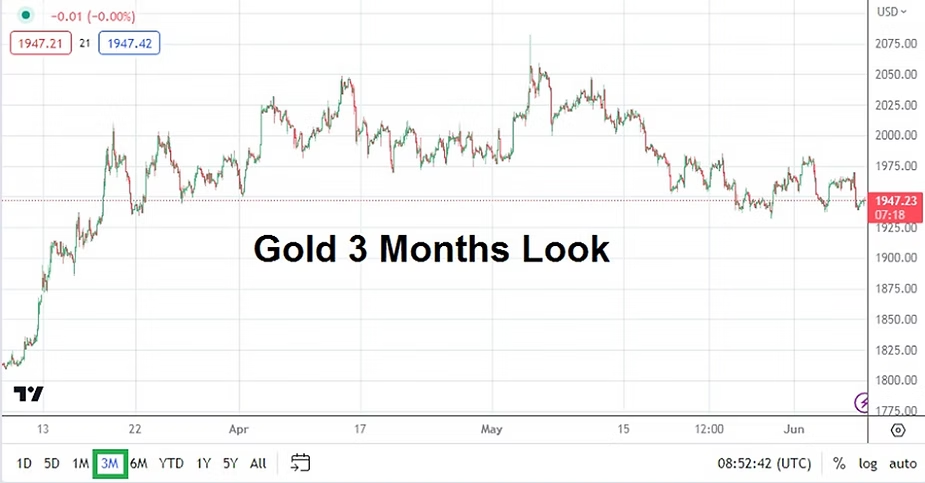
Gold Three Month Chart as of 8th of June 2023

After speaking with many associates in the financial sector the past week, it appears many people believe the Fed should stop raising interest rates for the time being. Some financial institutions seem to be leaning in this direction, but there are caution signs all over that warn about potential surprises from the U.S Federal Reserve.

Yesterday the Bank of Canada raised its Overnight Rate by another 0.25%, when most analysts believed they would pause. Another interesting sign is the current price of Gold near 1950.00. The recent lower price could indicate some financial houses believe the Federal Reserve may actually remain active regarding further interest rate hikes, this because the price of Gold has tended to rise when the perception existed the Federal Reserve is going to be dovish. Gold’s downward price action should raise suspicious eyebrows.

But then again, I am not an economist; I am merely a risk analyst. So my words to you are, be careful if you are wagering on the USD/INR before the U.S Federal Reserve’s pronouncements next Wednesday on the 14th of June.

postN9

India’s Speculative Real Estate Bubble and Values: Part One

India’s Speculative Real Estate Bubble and Values: Part One

India’s Real Estate Sector is a Well Known Affair to its own Citizens and to Global Asset Management Companies

India’s major cities like Mumbai, the financial capital of India, Gurgaon, Delhi, Bengaluru and Hyderabad, the tech hub of the nation, serve as major attractions for local players and international corporate giants who want to participate in the real estate sector. While transparency still remains a challenge that needs to be addressed in Tier 2 and Tier 3 cities of India, underlying demand continues to expand throughout the nation. The Real Estate Regulatory Authority, passed a bill known as the RERA Act, by the serving government in March of 2016, to create transparency and fairness between buyers and sellers in the residential real estate market, however these measures do not always help circumstances as hoped.

Well known companies like Blackstone which is based in New York, and Brookfield Asset Management of Toronto have vast operations in the commercial real estate sector of India. Their estimated investments are significant. Amounts spent are believed respectively to be nearly 50 billion USD by Blackstone, and the Brookfield figure is likely around 22 billion USD. The companies concentrate money for real estate, and infrastructure like telecommunications, roads and other spheres crucial to create value.

The reason why private equity giants allocate massive investments into India commercial real estate is due to the remarkable advantages of the locations available for property, and the capability to turn a profit. The land purchased and developed is usually situated close to burgeoning information technology companies. It is easily understood these IT companies have expansive needs to function properly which include plenty of area for employees to work. This is relevant in the north of India where Brookfield has invested in places like Mumbai and Gurgaon. Apart from the commercial demand for property, the employees who work in these type of companies also drive residential apartment sales in these cities.

The real estate market in Gurgaon has seen remarkable growth in the recent years where prices have experienced double digit appreciation. Readers need to understand that Gurgaon, is a city near India’s capital of New Delhi in northern

India. It’s known as a financial and technology hub. The rise of e-commerce players like Amazon and the Walmart owned Flipkart are important. Walmart spent around 16 USD billion to buy about 77% of Flipkart in 2018 and their vast operations also have sparked demand for huge amounts of property, including warehouses. This activity has certainly attracted the attention and desire of global players to invest in commercial real estate operations.

The residential real estate market has grown fast, and continues to achieve huge growth even after the coronavirus pandemic. An extremely rapid pace is fueled because low interest rates have appealed to new home buyers to initiate purchases of apartments and condominiums in metropolitan cities like Chennai, Mumbai, Hyderabad, and Bengaluru. Many affluent families in India from these major cities continue to own and rent residential homes in the areas, taking advantage of demand. According to a survey conducted by the global property consultancy firm Savills, now 70% of families in the metropolitan cities mentioned previously from the north and south of India have answered positively when asked if they would like to buy a second home in the next couple of years.

Residential real estate sales have been rising after the pandemic, especially for double bedroom apartments averaging 1200 square feet of housing, usually within a category that is priced in a range above 5,000,000 Rupees (around 60,000 USD). India’s benchmark mortgage rate is in the 8.7% to 9.7% range as of this writing, this is higher than it was one year ago. But Indian home buyers haven’t yet stepped back from buying, this because interest rates in India have not increased too much in percentage terms. The average time to pay a loan for residential mortgages ranges from 10 to 20 years in India. This allowable time frame makes it affordable for employees to pay via Monthly EMI, Equated Monthly Installments. The mortgages come with a floating rate meaning the buyers can reset their rates when the local interest rate falls. Yes, floating rates certainly do contain dangers if interest rates climb too high.

A Speculative Roulette Game: The Least Known and Unequal Affair

But there is another reality and a very different story in certain areas of India where data misses critical elements of the real estate business. Speculative participation in property is done by the most affluent who are the dominant buyers and sellers; speculative buying and selling is too expensive for most citizens. Real estate has frequently been used as a tool to hide wealth and avoid taxes by many within certain segments of India. The real estate speculative bubble creates vast distortions in the costs of rents, and affects employment opportunities for the masses. Government offices may sometimes turn a blind eye to these circumstances, because as long as cities and regions can collect money from the speculative frenzy there is little reason to turn off the revenue streams.

Frequently there is someone who is capable of bidding higher for lands in most of the Tier 2 and Tier 3 cities discussed, compared to those who actually need the property to live there and function properly. It is important to mention Tier 2 and Tier 3 cities and what is taking place in these areas, because these locations frequently lack substantial income generation opportunities for people and don’t have massive infrastructure or enough office space to employ people where wages have stagnated for many years. Take for example the Tamil Nadu, a state in southern India where I live, the average price of a double bedroom 1200 sq’ft residential apartment in the capital city of Chennai is around 6,000,000 Rupees (around $73,000 USD).

Readers need to note that the Indian ‘middle class’ prefers to have 2 bedroom 1200 sq’ft residential houses and apartments on average, thus builders construct houses and units based on land availability. Market prices for the property equals the costs of building materials and labor along with the speculative factors worked into the total value.

A look at the town of Madurai where the same apartment is available at a comparable price tag like Chennai is important to critique. Because wages in Madurai are a quarter, and sometimes less than half of what one could earn in Chennai, the disparities in the income distribution and the property prices in India become evident and need to be recognized.

In some rural towns where wages have not grown more than 5% per year,

India has seen real estate prices doubling every 4 years. For example, the rural town called Ponnamaravathy near to Madurai, which is my hometown, speculation in the real estate sector has seen frenzied pricing in an unprecedented manner for land and newly built houses. There is a great divergence between real per capita income versus the escalating real estate prices and rents in the interiors of India in towns such as Ponnamaravathy.

According to real estate analysts, most land parcels and their inventory of projects within metropolitan cities that are under construction has been bought by speculators. When units in new projects are sold to speculators, these generally change hands multiple times during the construction period, which generally lasts three to four years. Such heavy ‘churning’ means fast price increases. Also, the builders who market their own projects as investments raise list prices frequently to keep existing investors happy with notional gains, so they can point to the ‘attractiveness’ of potential speculation.

While it may not matter to some citizens in the larger cities, the problem of speculative influences do matter in the small towns where community wages have not grown properly. Inflation and speculative investments in these towns do not create sufficient job growth either. Surplus cash profits earned by many businesses, and foreign remittances, which were close to 108 billion USD in 2022, goes back into real estate speculation causing higher rents and forcing lower income households to struggle.

Rural Wages Haven’t Grown but Prices are Increasing for Homes

According to economists data, Average Nominal Wages in rural India is approximately 15,000 Rupees per month for men and 8,000 Rupees per month for women.There is an ample real estate supply in the rural market, but speculative demand has created steep pricing, typically initiated by large ‘investors’ willing to pay top money for any asset irrespective of its location, affordability or current market price based on the assumption values will continue to increase.

The difference between rural wages and costs for homes creates heavy disparities and inequalities for households living within the lower thresholds of society. For example, a double bedroom 1200 sq’ft residential apartment in Ponnamaravathy can be selling at a whopping 7,000,000 Rupees (approximately 85,365 USD). This is 20% more than what we have seen before on average in Chennai, and Madurai, a Tier 2 city, in Tamil Nadu state. The wages in the rural town of Ponnamaravathy are just 10% compared to what one could earn in Chennai annually, making the purchase of a residence priced at these higher values difficult for most residents and making many people renters for life.

postN8

Determination and Success: Integrity of the Catcher’s Mitt

Determination and Success: Integrity of the Catcher's Mitt

In the Long Run’ mused Maynard Keynes ‘we are all dead’ or as someone else once said, ‘Don’t go through life with a catcher’s mitt on both hands, throw something back’. The author of that line is unknown but we can assume that he knew something about baseball and the cut and thrust of business and life. It seems to me that the two are inseparable… In the consumer society of the developed world in which we live, the lifestyle we enjoy is largely shaped by the extent to which we buy and sell.

A market without anything to sell will be just as ineffective as a market full of merchandise with no one to buy. When we have real financial wealth, we are able to indulge many of our fantasies or dreams. That’s one of the reasons for aspiring to wealth and the independence it brings. For example once you have travelled around the globe staying in the world’s most luxurious hotels it’s not necessary to have the 5 star penthouse suite, something more modest will do. Once you’ve tasted the grape it’s not necessary to taste it with every meal.

Success in anything comes at a price and business is no exception. The ability to be disciplined and to persevere no matter what, is possibly the single greatest attribute to be successful in business. As Calvin Coolidge put it ‘Nothing in the world can take the place of persistence. Talent will not. Nothing is more common than unsuccessful men and women with talent. Genius will not. Unrewarded genius is almost a proverb. Education will not. The world is full of educated derelicts. Persistence and determination alone are omnipotent’.

But perhaps there is another price to which, in a sense, it is not obvious until it hurts and that is the price of integrity. The lack of ability for individual companies and institutions to police themselves, has led to a plethora of regulatory bodies for professions and businesses. We have created a “blame and shame” culture in which so often we prefer to abrogate responsibility and seek litigation, rather than facing up to the challenge ourselves. Integrity perhaps is best summed up as acting in a responsible, honest and fair way no matter what the cost to the individual or company.

We have been given a shocking example by many in authority on how to be economical with the truth, once a civil offence now a well-­honed practice is to ‘spin’ the facts to suit a particular agenda of self interest.

Philanthropy, no longer the preserve of the rich and famous, often anonymous, through centuries has made a contribution to the good of many of the underprivileged, as well as aiding education research and science, from which we all have benefited in some way. Many of the wealthy have historically helped the poor and those needier than themselves. Two of the world’s current incurable illnesses are AIDS and cancer, the major problem facing the developing nations is AIDS. Hardest hit are the children with an increasing numbers of orphans born with AIDS. In contrast, the problem facing the developed nations, is one of cancer, and in particular breast cancer. Drug addiction and alcoholism, particularly amongst the young is increasing at an alarming rate in both the most affluent areas of society and amongst the desperately poor, like the street children on Seventh Avenue in Guatemala City.

Huge wealth has been created over the past two decades, not least amongst City of London financiers, many of whom became millionaires on the strength of their bonus payments alone. That we should try and help those less fortunate than ourselves is a desire common to most people. We also know that charity begins at home. The stock market is the barometer of the economy, and the economy is driven by business, and business is the powerhouse that can make a real difference by making a positive contribution to the society in which we all find ourselves. Working with integrity is perhaps not just about the way we treat our employees, colleagues and competitors but also about how we use the wealth that we create. Whilst financial wealth will mean different things to different people, having more than we need gives us an opportunity to make a difference for others, however small we may think the contribution is, and speaks more about us than the what we are able to give.

Taking off the catcher’s mitt and throwing something back is at the heart of charitable giving and philanthropy and in doing so helping the weakest and most vulnerable in society. ‘ For it is more blessed to give than to receive’. After all, in the long run, we are dead.

postN7

Risks Ahead: Tranquil Data Mixed with Loud Nervous Chatter

Risks Ahead: Tranquil Data Mixed with Loud Nervous Chatter

Last Friday finished with stronger than expected Non-Farm Employment Change numbers, which essentially collided with dovish rhetoric via two U.S Federal Reserve FOMC members from the middle of the week; this while inflation clearly remains stubborn in the U.S.

All of which sets up this coming week for nervous trading results and until the 14th of June, when the Federal Reserve’s Federal Funds Rate pronouncements will be brought forth. Plenty of talk about interest rates will be heard in the days ahead and traders should expect to hear debates as the chatter grows louder.

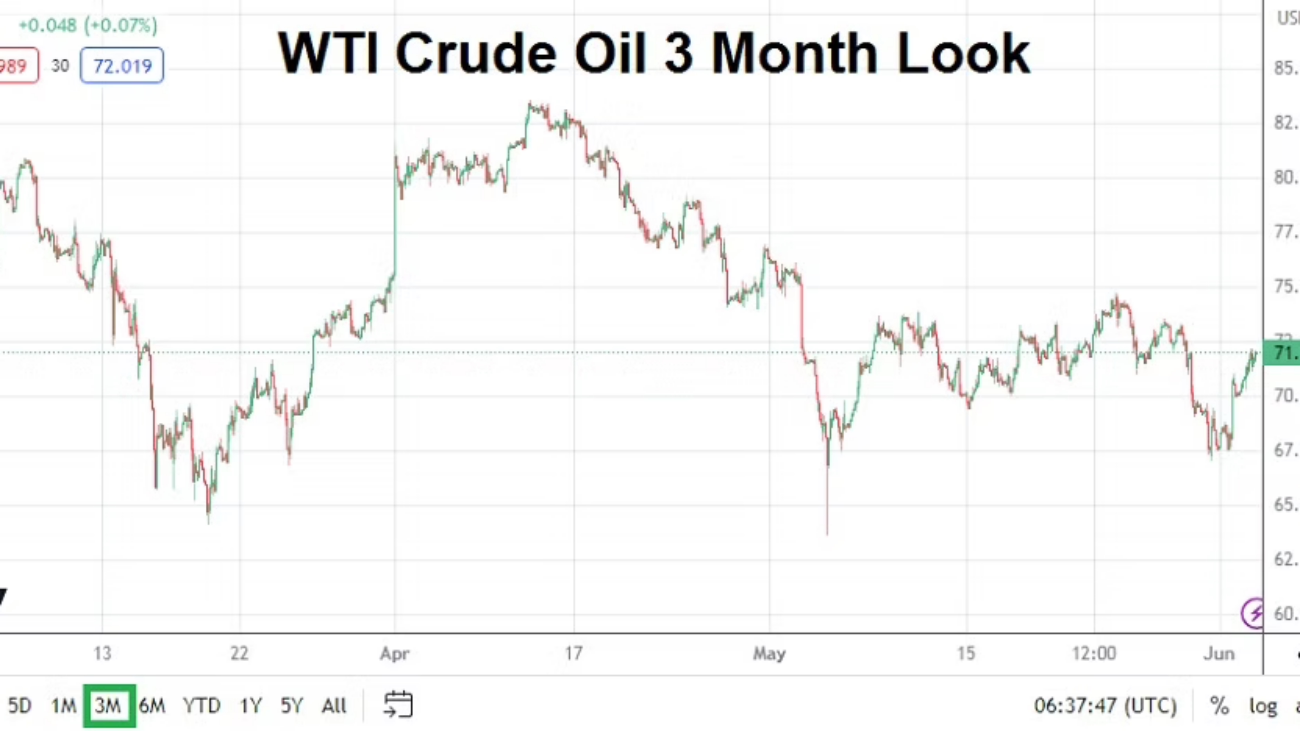
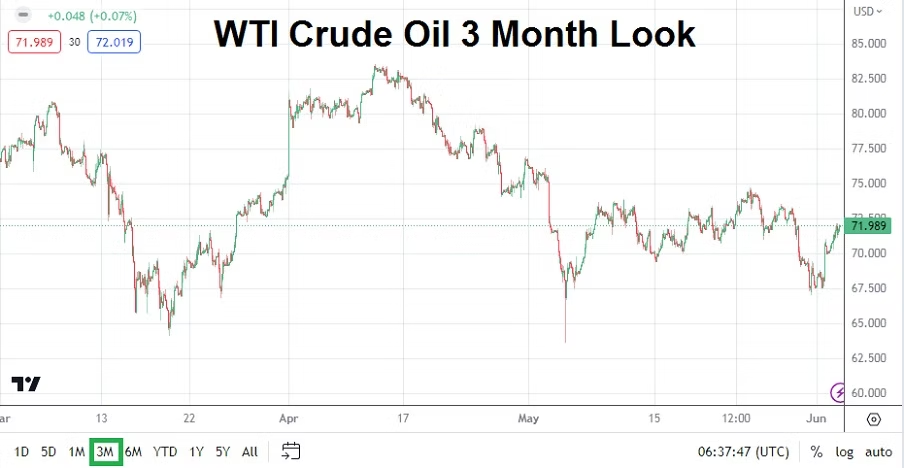
Commodity traders may be interested in the outcome of the OPEC+ meetings taking place this weekend. The cartel’s decisions regarding oil production will affect not only prices of Crude Oil futures, but is a direct reflection regarding global demand, which also tells us about the organization’s viewpoints regarding global economic conditions.

WTI Crude Oil Three Month Chart as of 4th of June 2023

Monday, the 5th of June, European Services PMI – Germany, France and Italy and will release their Purchasing Managers Index readings. The German outcome could prove interesting because the nation is suffering from recessionary pressures. The PMI results could affect the EUR/USD a bit. The U.K will also release their data too.

Monday, the 5th of June, U.S ISM Services PMI – this report will be of interest because some are expecting a better outcome compared to May’s results. A potentially strong reading could prove problematic and put more pressure on the Federal Reserve to raise interest rates next week.

Tuesday, the 6th of June, Australia RBA Rate Statement – the Reserve Bank of Australia surprised people with an increase of their Cash Rate last month. No increase is expected now, but the RBA’s rhetoric should be listened to as they comment about domestic and global economic conditions.

Wednesday, the 7th of June, Canada BoC Overnight Rate – Bank of Canada is expected to hold its borrowing costs in place, but inflation is still creeping into prices and the BoC’s Rate Statement may prove intriguing.

Thursday, the 8th of June, U.S Weekly Unemployment Claims – following in the footsteps of the stronger than expected jobs numbers last week, this report could get some media fanfare. However, it also may prove to be a lot of noise and have little real affect on market direction.

Friday, the 9th of June, China CPI and PPI – the inflation reports from China could prove interesting in wake of recent lackluster economic data from the nation. Last Thursday’s Caixin Manufacturing PMI results came in slightly better than expected, but data from China the week before was negative. The data from China gives investors and traders insights because of its importance as a global supplier of consumer products.

postN6

Federal Reserve Noise as Short and Long-Term Clarity Fades

Federal Reserve Noise as Short and Long-Term Clarity Fades

There is a storm in the Forex markets currently and it will persist tomorrow. Today is a good day to talk about the difference between short-term trading and long-term investing. Short-term outlooks typically are top heavy with technical interpretation, and behavioral sentiment mixed with fundamentals when speculators are pursuing the marketplace looking for quick profits. Loud short term thunderbolts coming from various components that affect trading are significant. Yesterday’s noise had an impact.

Long-term investment is done with a focus on patience, conservative outlooks regarding fundamentals and potential behavioral sentiment that could develop and encapsulate attitudes within a chosen asset. Day traders are often ready to bet on what is going to happen in a matter of minutes, hours and perhaps a day. If a so called day trader has to be in a position longer than a couple of days, they often find that they are not emotionally prepared to wait for outcomes.

There is also the problem regarding a lack of enough cash in many trading accounts. Short term traders often do not have enough money to carry positions for a significant duration, sometimes overnight transaction fees charged by their brokerage platforms are too expensive. The availability of limited money is a liability and creates unprofitable propositions, unless an extreme amount of leverage is being used. Most short term traders lose their money when trying to apply excessive leverage. Dangers abound for day traders.

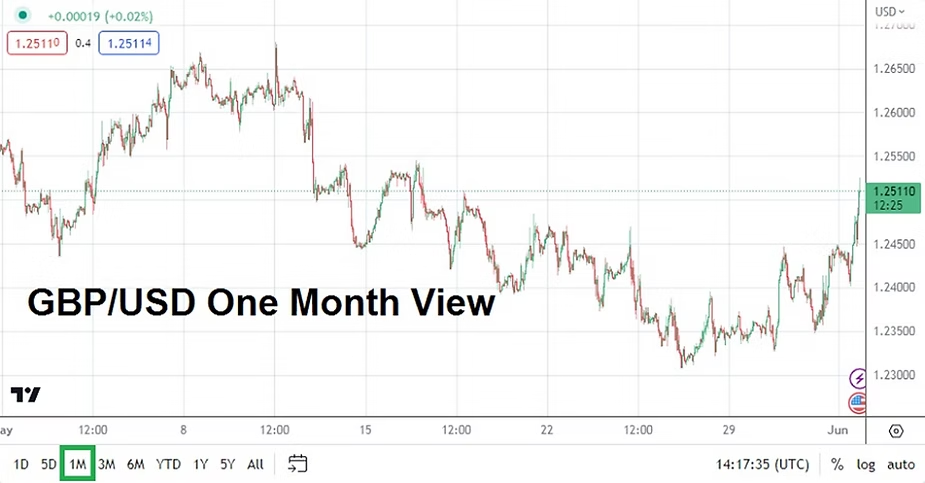
GBP/USD One Month Chart as of 1st of June 2023

Important U.S Data is on the Schedule Tomorrow which may not be mere Noise

Tomorrow the Non-Farm Employment Change number will be published, but the Average Hourly Earnings report will be a crucial part of the data brought forth too. Short-term traders like wagering on the jobs outcome and trying to ride its impetus, hoping a prosperous wave delivers them to the shore with profits. If the Average Hourly Earnings report comes in stronger than anticipated tomorrow, this could send Forex markets into a volatile and dangerous session as it mixes with yesterday’s Federal Reserve ‘dust’ which is still in the air causing problems.

Federal Reserve Dust Storm Caused by Jefferson and Harker Yesterday

Two members of the Federal Reserve’s FOMC committee, Philip Jefferson a Federal Reserve Board of Governors member and Patrick Harker the President of the Federal Reserve Bank of Philadelphia, suggested on Wednesday that keeping the Federal Funds Rate in place on the 14th of June would be a good idea.

Philip Jefferson has been nominated by President Biden to take the powerful seat of Vice-Chair of the Federal Reserve, but he has not been appointed to the position yet officially. The position of Vice-Chair is a key job within the Fed which creates a rather strong voice regarding policy historically. Jefferson’s voice could make a difference in the next two weeks. However, even with Patrick Harker joining Jefferson’s rhetoric yesterday, among them are a handful of other FOMC voting members who have expressed loud concerns about inflation and made it clear in their opinions, that staying aggressive regarding interest rate policy is important.

Clarity remains difficult to visualize regarding what the U.S Federal Reserve will do near and mid-term. However, the Federal Reserve has been exceptionally good at creating choppy Forex conditions much to the detriment of short-term traders, which is supposedly not part of the Fed’s mandates.

Forex Markets have been Stirred and Tomorrow’s Data could Shake Conditions More

Wednesday’s comments from the two Federal Reserve members briefly stirred global Forex and the broad marketplace. Short term traders likely got caught in the momentary flashes of hysteria caused by the comments of the two gentlemen.

Arriving closely behind the comments by the Fed officials yesterday was the U.S JOLTS Job Openings report, which is viewed suspiciously by many professionals in the investment world because its numbers are sometimes suspected of being inflated by ‘headhunters’. However yesterday’s JOLTS results showed a huge increase in available employment options and caused another temporary reaction in Forex – in many ways counteracting the Fed voices.

Meaning tomorrow’s Non-Farm Employment Change numbers, and the inflation report via the Average Hourly Earnings will cause a loud buzz before and after their publication. This as the rhetoric from Fed members Jefferson and Harker mixes into the statistical outcomes.

The USD has been strong in the broad markets the past few weeks against many major currencies. This as evidence has grown the Federal Reserve may feel pressured into increasing the Federal Funds Rate in June in order to fight inflation. Tomorrow’s job reports will be essentially a week and half before the interest rate decision on the 14th of this month.

Short-term traders will likely bet on what will happen tomorrow and will continue to speculate in the coming two weeks regarding what the Federal Reserve will do. This while long-term players position their portfolios based on outlooks that can deal with the ‘dust’ in the air momentarily, knowing they should remain patient. Long-term investors do not always make money, but yesterday’s brief fireworks caused by the Federal Reserve officials weren’t quite as troubling for investors with a broader horizon who don’t flinch with fear from short-term murmurs.