post291

India Insider: Why is Gold Frequently Accumulated by Indians?

India Insider: Why is Gold Frequently Accumulated by Indians?

In a society like India in which I live gold hoarding is a fact of life. According to a recent report by the World Gold Council, Indian households are believed to hold around 25,000 tonnes of gold with a combined value of around $3 trillion USD.
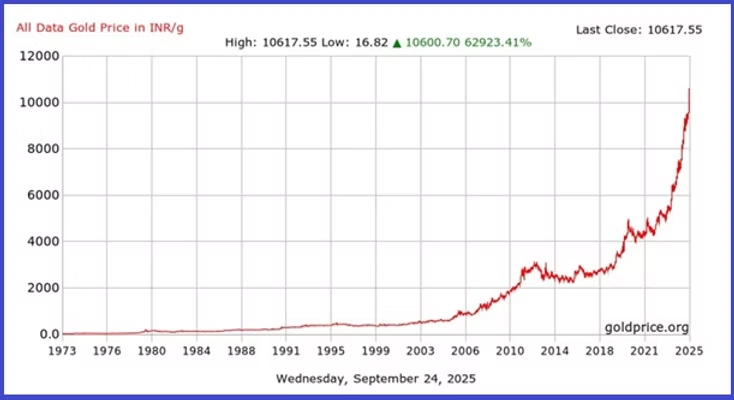
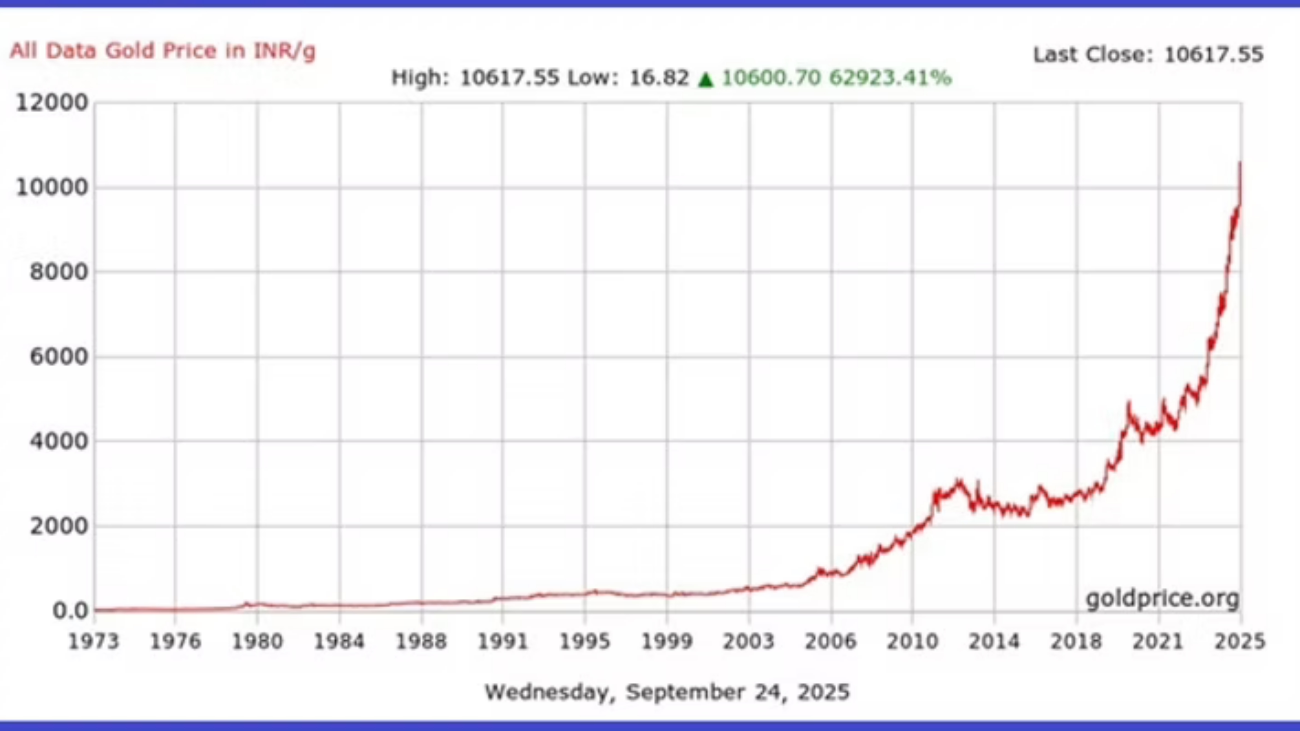
Billionaire banker Uday Kotak applauded Indian women when he said they are ”the smartest fund managers in the world”. The precious metal has gained 42% in 2025 alone, and returned 700% in the last 20 years in Indian Rupee terms. In India consumers have a habit of monitoring daily gold prices. There is a gold festival in India called Aksayatritiyai, when gold is bought frequently in small grams but often also includes large purchases for religious sentiments. In Northern India, gold is bought during festival times like Dhanteras and believed to bring prosperity and good fortune.

It’s almost unthinkable for marriages to occur in India without gold. Many marriages have been postponed and even stopped if the requisite dowry is not given by a girl’s family. And there was a time in India when some families didn’t want to have a baby girl due to the excessive gold dowry they would be responsible for and have to give a boy’s family at the time of marriage. 

Adam Smith’s Case Against Gold:

Smith lashed out at gold for its lack of productiveness. He wrote in the The Wealth of Nations, “labour was the first price, the original purchase-money that was paid for all things. It was not by gold or by silver, but by labour, that all the wealth of the world was originally purchased; and its value, to those who possess it, and who want to exchange it for some few productions, is precisely equal to the quantity of labour which it can enable them to purchase or command.”

The act of hoarding, whether it is money or gold, depresses economic activity, as demonstrated by John Maynard Keynes in his ‘paradox of thrift’. Indeed, it was the Europeans by spending all the precious metals taken from the Americas which boosted economic activity, and ultimately sparked the rise of modern capitalism whereas Asians by hoarding ended up falling behind.

Ancient China Example:

In the past, China’s reliance on silver gave short-term stability but stunted long term growth. With no domestic silver, it depended on inflows from Spain and Japan, making its money supply hostage to global trade. Wars or disruptions cut silver inflows, draining liquidity while crippling tax collection. Unlike Europe, China clung to silver as ‘real’ money, while neglecting credit, banking and bonds. This rigid system weakened the nation’s fiscal capacity, leaving China unable to mobilize resources or industrialize effectively. In the end, silver ensured stability, but strangled flexibility and growth. Indian growth has been strangled too often because of an over-obsession towards gold.

Why Gold Prices are Moving Up?

The price of gold was relatively stable until the 2008 financial crisis and it’s been rising steadily ever since, doubling in 3 years from 2009 to 2012. After some broad consolidation, gold has been in a higher value band if you scrupulously study charts. Arguably, it is an influence due to lower interest rates that have helped gold prices move up for 15 years as inflation has been attempted to be camouflaged by Central Banks.
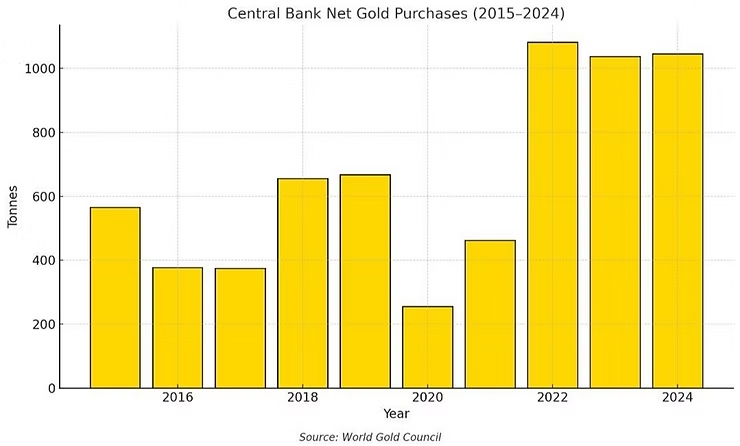
Accumulation of Central Bank Holding of Gold into 2024

Central Banks also accumulate gold for many reasons. One reason for this are rising bond yields that make existing fiscal obligations underperform for governments. Central Banks buy gold to diversify and hedge against risk. As the Official Monetary and Financial Institutions Forum – an independent body – noted recently, many European national bank systems endure massive losses because of quantitative easing. When the institutions try to undertake quantitative tightening, they are forced to sell at market prices, which deepen their balance sheets losses. Thus, Central Banks diversify into gold as a sacrosanct hedge against losses incurred and allows them to offset many liabilities. Gold has a long historical track record of working as a safeguard against inflation.

It’s also true that gold is often accumulated by Central Banks when hedging against geopolitical uncertainty. The Russia and Ukraine war offers intrigue regarding the nation of Kyrgyzstan, which China uses as a route for its exports to Russia, this due to Kyrgyzstan’s inherent ability to conduct trade via accessible routes. There is high plausibility that Kyrgyzstan might be converting Russian Ruble surpluses into gold.

Monetary Policy Matters for Gold:

Gold will remain vital for many years to come as a store of value and a safe haven. Buying the precious metal delivers investors and businesses a needed hedge against inflation. Protections against the lose of purchasing power within their own fiat currencies remains important for all people.

The Indian public and other societies need to remember, the value of gold within their own currencies often lies within the interest rate valuations sparked by Central Banks mechanisms which sometimes amount to magic shows and influence demand. While public buying of gold is important, it sometimes equates into mere speculation and does not always help economic activity.
postN38.1

Reactions and Risks as Trading Clarity Remains Hard to Grasp

Reactions and Risks as Trading Clarity Remains Hard to Grasp

While many U.S government officials try to shrug off the downgrade of U.S Treasuries by Fitch Ratings last week, a warning shot has been fired regarding U.S spending and the nation’s growing deficit. Janet Yellen and others may believe the downgrade should not have happened, but the prospect that the U.S golden goose is going to stop eventually producing enough eggs is a realistic viewpoint from Fitch. Risk adverse trading on the news was seemingly sparked from the U.S Treasuries downgrade, while many prominent figures including Warren Buffet have claimed they are not worried. However, one thing that the downgrade did was certainly create more clouds for financial institutions which have already been suffering from a lack of clarity the past three weeks.

U.S economic policy remains troubling regarding its spending, and while the government believes its bonds will remain the best in the world for the foreseeable future, it would certainly help matters if responsible ‘adults’ would be allowed a voice regarding stimulus, expenditures and debt ceiling concerns. The U.S has been warned, but with a major presidential campaign approaching on the horizon, more promises to the U.S public will likely carry greater long-term costs.

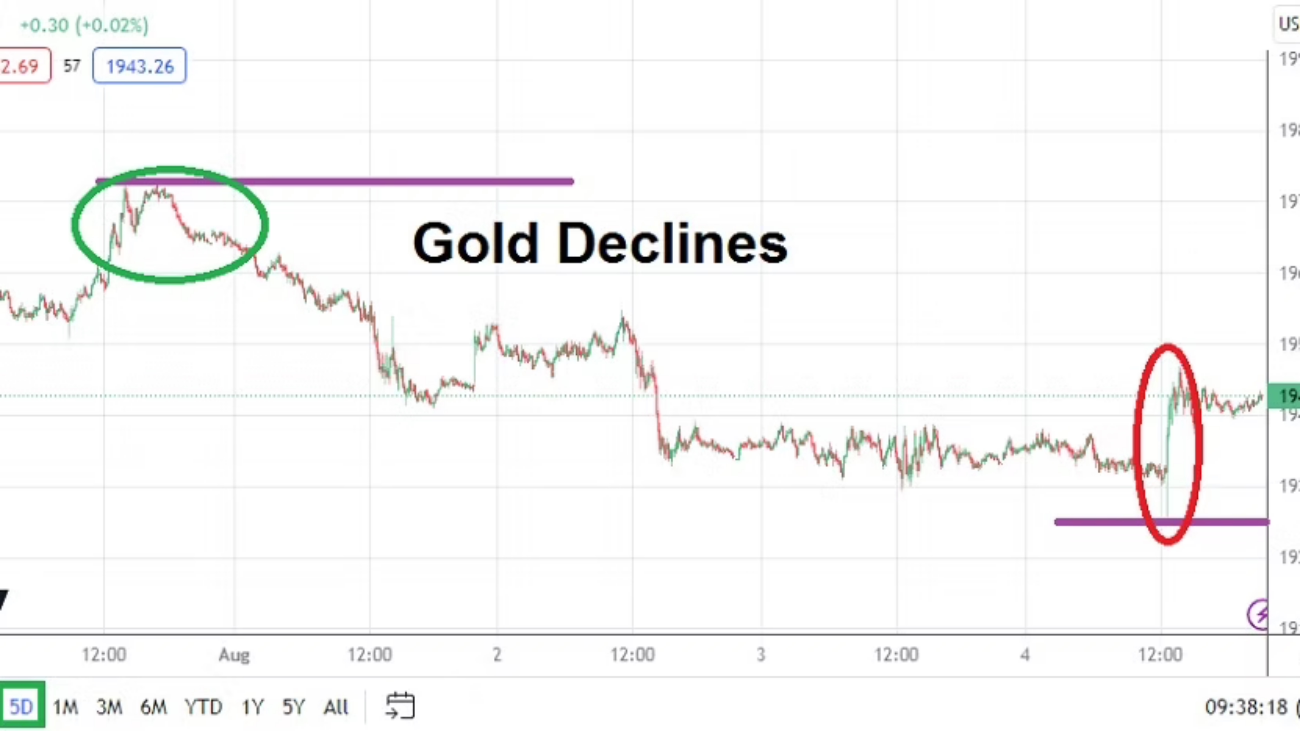
Gold One Week Chart as of 8th August 2023

While the USD did get stronger across Forex and gold finished last week near lows, some major currencies finished Friday with slight reversals higher against the USD before going into the weekend, based on the weaker than anticipated Non-Farm Employment Change outcome. However, Average Hourly Earnings came in slightly higher. The rise in wages for employees wasn’t expected, but the gains via the inflation number may not have been considered significant enough to cause a panic.

Day traders trying to navigate through the news of the ratings downgrade and the mixed jobs numbers from the U.S may have gotten ripped apart from the volatility late last week. Forex brokers likely had a good week if the majority of their speculators were ‘B’ book – virtual – traders. Survivors of last week’s dynamic price action should be aware that financial institutions do not have the best of outlooks for global central banks. This week’s coming data may help a bit, but trading could also remain rather dangerous and churn volatility.

Global Outside Influence to Give Attention:

Although Niger may seem like a world far away for most day traders, they should keep an eye on the developments of the African nation. A military coup has gotten the attention of global powers and there are threats of military intervention rattling. France, the U.S and Nigeria and other ‘Western’ leaning nations have a stake in the Niger drama, on the other side is Russia and its Wagner affiliated mercenaries. The potential for a war to to start in this landlocked northern African nation appears to be growing. A conflict in Niger could include a wide range of competing sides and create loud rhetoric and hyperbole. It could also cause uncomfortable feelings at the BRICS summit scheduled to begin on the 22nd of August in Johannesburg, South Africa.

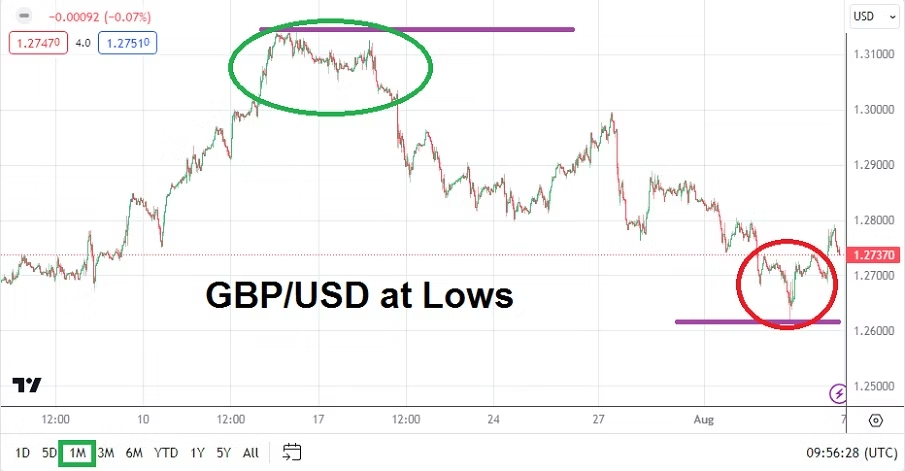
GBP/USD One Month Chart as of 8th August 2023

Monday, 7th of July, U.K Halifax Home Price Index – this data is expected to remain rather stable, but the past three results have been negative. Mortgages are getting expensive in the U.K and the pressure added from higher interest rates is not helping. The GBP/USD could react briefly to this outcome.

Monday, 7th of July, E.U Sentix Investor Confidence – the reading is anticipated to be worse than last month’s outcome regarding investor outlook. The past three months have been negative. The E.U is certainly facing recessionary pressure. Oddly enough, a poor outcome could spur on the belief the ECB may have to become less aggressive regarding their higher interest rates. The EUR/USD may see a flurry of reactions from this report.

Tuesday, 8th of July, China Trade Balance – the results will get plenty of attention because recent economic data from the nation has been troubling. Export demand is important for China’s economy.

Tuesday, 8th of July, Germany Final Consumer Price Index – the result is expected to match the forecast of a 0.3% gain. This inflation report will be watched by EUR/USD, but if expectations are met this could create rather consolidated trading until Thursday for the currency pair.

Wednesday, 9th of July, China CPI – the inflation data from the nation will be watched by global investors. Recent statistics from China have signaled concerns about ‘deflation’. An outcome of minus -0.5% is expected. Economic issues are shadowing China, this as it remains active in global affairs.

Last week Argentina announced China helped facilitate a ‘bridge loan’ for the South American nation so it could make a repayment to the IMF. Rising economic concerns in China could start to squeeze its ‘cash power’ as it tries to gain influence globally by pumping Yuan (CNY) into international finance. China has certainly been bold and is playing a ‘long game’, because its choice of Argentina as a nation to help can certainly not expect to produce short-term financial gains.

Thursday, 10th of July, U.S CPI – Consumer Price Index results from the States will cause potentially dynamic broad market movement. Inflation is expected to match last month’s rise of 0.2% via the broad and core numbers. However, traders should note that some analysts have voiced concerns rising energy prices the past month will hit the inflation numbers, if this occurs it could spark a volatile USD. Higher Crude Oil prices combined with a streak of U.S hot weather may create an intriguing outcome. Risk management should be used by day traders who are wagering in the markets as the CPI readings are released.

Friday, 11th of July, U.K GDP – the Gross Domestic Product numbers will be important immediately for the GBP/USD. Although last month’s outcome was slightly stronger than anticipated it was still negative with a minus -0.1% reading. The growth number this time around is expected to gain 0.2% per the monthly report.

Friday, 11th of July, U.S Producer Price Index – economic numbers from the States have been mixed recently. These inflation numbers are expected to show a slight rise, if the outcome meets expectations – the broad markets may remain calm. However, if inflation is stronger than expected, the result could set off fireworks if the outcome sets off fears about the U.S Fed maintaining it hawkish rhetoric.

postN51

AMT Top Ten Miscellaneous Notions for the 8th of March 2024

AMT Top Ten Miscellaneous Notions for the 8th of March 2024

10. Social Credit Score: George Orwell in our Age of the All Knowing State via public cameras using facial and body language recognition, along with listening devices that can gather voices and other sounds would chill him to the bone.

9. French Revolution: It was ‘wrong’ to say madame and monsieur after the ‘ancien regime‘ was replaced, instead the expression ‘citizen’ (citoyen) was invoked. Not using the proper words could bring the guillotine into your future.

8. Japan: Nikkei 225 has come off the top, but remains highly valued. GDP numbers will come from the nation next Monday, and the BoJ is on the calendar the 19th of March.

7. Tech Espionage: Linwei Ding, a Chinese national, who worked for Google as a software engineer has been accused of stealing information regarding supercomputing and artificial intelligence. The U.S government has filed criminal charges against Ding in San Francisco, California.

6. Central Banks: Federal Reserve Chairman Powell per his testimony in Washington D.C remained cautious, saying he wants data to confirm inflation is eroding. The ECB yesterday also voiced care while trying to sound optimistic about economic conditions which remain lackluster.

5. FOMO: ‘Fear of missing out’ is being seen in many asset classes including cryptos and equities. Day traders while speculating should remain realistic and practice solid risk management.

4. U.S Indices: Apex heights persist as the S&P 500, Nasdaq 100 and Dow Jones 30 receive massive inflows of capital.

3. Gold: Record prices have been attained in the precious metal as speculative elements have pushed value above 2160.00 USD as of this writing.

2. Forex: The USD has seen weakness re-emerge the past handful of days as the ‘masses’ have seemingly energized again upon the notion of a change to the Federal Funds Rate.

1. U.S Data: Non-Farm Employment Change and Hourly Average Earnings statistics will be published today, either helping confirm or confront financial institutions behavioral sentiment. Weaker hiring and a diminishing of wage inflation is anticipated. Will it happen? Forex, U.S Treasury yields and equities will react.

postN51

AMT Top Ten Miscellaneous Spiders for the 1st of March 2024

AMT Top Ten Miscellaneous Spiders for the 1st of March 2024

10. Palystes: Huntsman spiders known in South Africa as ‘rain spiders’ are nocturnal and visit indoors, sometimes causing horror for those stumbling through hallways in the middle of the night. But it is better than a baboon entering the house.

9. Victor Wembanyama: Last night’s stat line included 28 points, 13 rebounds, 5 blocks, 5 3pts made, 7 assists, 2 steals in less than 33 minutes played. The rookie is already one of the best NBA players. Btw, the Spurs beat the Thunder also.

8. Tech: Chinese cars are now in the crosshairs of U.S politicians who are worried the ‘smart’ vehicles can collect sensitive data from Americans.

7. Crypto: Bitcoin above 61,000.00 USD, Ethereum over 3,300.00, and Binance Coin testing 400.00 even as the company remains under U.S legal shadows. How much air can the balloons withstand?

6. Putin’s Nuclear Threats: In a world with escalating geo-political tension, the Russian leader remains determined and energetic while playing ‘war poker’ against Europe.

5. U.S Data: Core PCE Index numbers yesterday met expectations, but the previous month’s outcome was revised downwards. Today a Consumer Sentiment reading comes from the University of Michigan. This week’s U.S data has mostly been pleasantly ‘weaker’.

4. Central Banks: Fed ‘watchers’ are likely feeling more comfortable this morning regarding the possibility of a late spring ‘thaw’ in U.S interest rates. Jerome Powell will testify in front of the Senate next Thursday. The ECB will release their Monetary Policy Statement on the 7th of March also. Next FOMC pronouncements will be on the 20th of March.

3. Gold: The precious metal is near 2050.00 USD, this after yesterday’s U.S inflation report, gold could remain volatile today. Some speculators may be looking for additional value to develop.

2. Forex: FX has been a constant battle the past two months, but patient traders with mid-term perspectives may be anticipating their weaker USD targets to trend more steadily.

1. Equities: Many global stock indices are achieving record levels as bullish behavioral sentiment creates upwards momentum. S&P 500, Nasdaq 100 and the Composite, Dow 30, Nikkei 225 and the DAX Index are flirting with higher values.

postN87

AMT Top Ten Miscellaneous Insights for the 9th of February

AMT Top Ten Miscellaneous Insights for the 9th of February

10. Super Bowl AMT Prediction: Kansas City Chiefs 27 – San Francisco 49ers 24. After winning the MVP Travis Kelce will hug Taylor Swift and announce his retirement.

9. Jazz Fusion: Please listen to the song School Days played by Stanley Clarke while delivering a supreme bass guitar riff.

8. Tech: Google has announced its Bard A.I will now be known as Gemini in a rebranding. ‘Bard’ was a rather poor name, but is Gemini much better? Let’s ask Gemini what it thinks about the Google marketing team.

7. Banking Animal Kingdom: Central Banks parroting the same rhetoric globally as they choose to be ‘prey’ instead of ‘predators’, driving financial institutions and traders batty in Forex.

6. Crypto: The NBA is being sued by investors in a Class Action Complaint in conjunction with 4.2 billion USD in losses, because of alleged fraudulent actions by Voyager Digital Holdings, claiming the NBA bears responsibility for negligent marketing via the Dallas Mavericks. https://storage.courtlistener.com/recap/gov.uscourts.flsd.661881/gov.uscourts.flsd.661881.1.0.pdf

5. Deutsche Pfandbriefbank AG: A large slump in bond values for the German bank has sparked additional fears of exposure for banks involved with the commercial real estate sector. CRE appraisals remain unrealistically high in many European and North American cities as lending risks climb.

4. Cocoa: The price for the commodity was 4055.00 USD per metric ton on the 8th of January, as of yesterday it was 5666.00, a rise in cost of 39.72% in a month. Our sweet tooth just got more expensive.

3. Data: Yesterday’s Weekly Unemployment Claims showed negative revisions upwards from the previous two weeks; another ‘hidden’ piece of data not being fully considered by traders, perhaps like the Non Farm Employment Change data last week reporting declining workweek hours.
https://www.angrymetatraders.com/post/usd-hidden-jobs-data-shows-potentially-intriguing-weakness

2. China Economy: Deflation continues to be reported via the CPI and PPI statistics. Also, value of properties for housing and commercial real estate face significant headwinds. The real estate sector including ancillary infrastructure is at least 21% of China’s total GDP.

1. Risk Appetite: U.S equity indices finished Thursday’s trading achieving apex highs. The S&P 500 is challenging the 5000.00 level. Gold is near 2033.00 USD and WTI Crude Oil is above 76.00 USD as of this writing.

postN87

AMT Top Ten Miscellaneous Flakes for 19th of January 2024

AMT Top Ten Miscellaneous Flakes for 19th of January 2024

10. Music: Come On, Come Over performed by Jaco Pastorius. The bass playing on this song is magnificent.

9. Cybersecurity: Prospect of quantum computing is making Central Banks nervous, quantum development will impact blockchain and make current payment systems vulnerable and perhaps obsolete. Post-quantum cryptography development is vital.

8. Frigid Weather: Tesla owners have dealt with battery power failures as winter temperatures have plummeted in Chicagoland and elsewhere. EV energy solutions need to improve.

7. China: Over the past 11 months FDI (foreign direct investment) has dropped more than 10% in the nation, an estimated short fall of 145.51 billion USD. China’s Foreign Direct Investment release has seemingly been pushed off to next week. Shanghai Composite (SSE) near 2832.28.

6. Energy Sector: WTI Crude Oil still priced politely as ‘interactions’ with Houthis flare. Natural Gas values remain near lows while North America suffers from a deep freeze.

5. Risk Assessment: Iran and Pakistan, although expressing ‘brotherly love’ for each other, have exchanged missiles across their respective border aimed at extremists.

4. U.S Treasuries: Inversion has almost ended completely, 5-Year Notes up to 30-Year Bonds yields have returned to ‘norms’.

3. Gold: Price of the precious metal near 2027.00 USD having bounced higher after challenging the 2000.00 vicinity on Wednesday.

2. Data: Consumer Sentiment reading via University of Michigan on the schedule today, this could provide impetus to markets that appear to be waiting for the next big push.

1. FX Volatility: USD strength has pushed the greenback towards important mid-term resistance in Forex as many day traders are likely still fighting the trend.

postN17

Fed Caught Again in Reactive Stance waiting for ‘Good’ News

Fed Caught Again in Reactive Stance waiting for 'Good' News

Let’s recall that about two and a half years ago the U.S Federal Reserve was still calling inflation transitory and claiming that price pressures would subside quickly as the onslaught of coronavirus decreased. Nearly all financial institutions could see the Fed was merely being stubborn, and that is a polite way of putting it, instead of being realistic.

It would be nice to give the Fed the benefit of the doubt now, and say the Fed have better information and know how to quantify the outlook of the U.S economy in a more dynamic fashion. However, being skeptical of the U.S Federal Reserve and its ability to miss signs plainly in front of them is a full time job for many analysts and it pays well.

As said by many before, many members of the U.S Federal Reserve have the profound disadvantage of not having the experience of ‘skin in the game’. Many Fed officials have worked as paid bureaucrats their entire lives and have literally ‘studied’ their way to the top of the central banking world, without having firsthand knowledge regarding the daily chore of running businesses. Most Fed officials have no dirt under their fingernails.

The Fed is clamoring now to return the U.S inflation level to 2.0%, and there is a large amount of disagreement about how this number is interpreted via different economic gauges. The Federal Reserve has a poor track record as stated above for being able to know what is actually ahead. They have been very aggressive regarding raising interest rates the past year and a half, and now they are finding it difficult to say they are done. This tough talk could be an attempt by the Fed to create headwinds for those considering proclaiming the U.S central bank should become ‘dovish’ by speaking tough about potential pitfalls to come, this even though the Fed plainly missed dangerous road signs a few years ago which helped agitate the problems being dealt with at this moment.

What could go wrong you ask? A credit crunch for banks and consumers.

However, business people know all about potential crisis if they have enough experience. Paying employees wages, finding additional good employees, landing a space that charges a reasonable amount for rent, hoping taxes remain sane, and hoping your shop is not shoplifted into poverty are some obstacles business owners face nowadays in the U.S. The rising costs of wholesale prices has not completely disappeared, but things may be getting better via economic data. Maybe this will be proven wishful thinking, but outlook is important and should be considered.

The rising costs of doing business is then passed along to consumers. The Federal Reserve seemingly doesn’t understand that it has made it more expensive to accomplish positive business results for small owners of enterprise in the U.S, and the Fed seems to forget that over 44% of the American economy is powered by what can be called family owned companies. The Fed certainly doesn’t mention that it is hard enough for small U.S business to survive over the long haul, with a number of nearly 65% becoming failures after ten years statistically.

So while the Federal Reserve talks a great game about managing interest rates via their monetary policy and the Federal Funds Rate, they often forget about the problem small business owners face. Having said that, the higher interest rates the Fed has sparked because of its slow reaction to what they perceived as transitory inflation two years ago – is having a bad effect on bigger businesses too. This because big corporations no longer enjoy ‘free money’ from their banks. Money has become harder to attain.

Once again it has been proven that everyone looks like a genius when the U.S economy is sailing smoothly, but when obstacles develop and people have to quantify solutions to real problems, suddenly it is harder to produce profitable results. The U.S government has created massive deficits by using huge amounts of cash stimulus to protect economic growth in the U.S over the past five years. In fact because of the quantitative easing after the financial crisis of 2007, it can be argued the U.S has used stimulus for more than 15 years to make sure the U.S economy is ‘stable’. Politicians like to keep their jobs because there is little else they can do in the real world.

The Federal Reserve by increasing the Federal Funds Rate has made U.S Treasuries a feeding frenzy and yields have increased substantially. The higher rates of interest the U.S government will have to pay down the road on existing U.S Treasuries is not a small problem mathematically. However, for the time being the Federal Reserve and U.S government seem to be less concerned about what they are potentially putting on the shoulders of future generations of U.S citizens, and trying to keep the U.S population tranquil. Luckily for many American homeowners, U.S mortgages are still mostly being paid out via the lower interest rate amounts agreed upon a couple of years ago and beyond. New home sales and existing home sales are sputtering in the U.S, because many people do not want to pay the higher interest rates that now need to be signed upon for mortgages and paid.

What the U.S Federal Reserve needs to do is to state publicly that it is not going to raise interest rates over the mid-term, and that it is going to allow the free market to work itself out via enterprise with supply and demand ratios taking center stage and being allowed to work. And lastly, that if inflation conditions as expected continue to improve by decreasing, that the Federal Reserve will consider lowering interest rates in the first part of 2024.

However, the Federal Reserve is worried that if it does sound too positive, businesses will start to gamble on a better outlook and this will raise existing inflation which has been stubborn. But again, the Federal Reserve often doesn’t understand how smaller U.S businesses work. To get out of the current economic mess the U.S Federal Reserve needs to be pro-active and not reactive. Also, the ‘ruling’ U.S government has to cut back on stimulus programs with promises of a ‘free lunch’ for all and return to looking at numbers realistically. Fiscal responsibility is an idea that can actually be practiced.

postN42.1

Day and Institutional Traders Suffering Nervous Conditions

Day and Institutional Traders Suffering Nervous Conditions

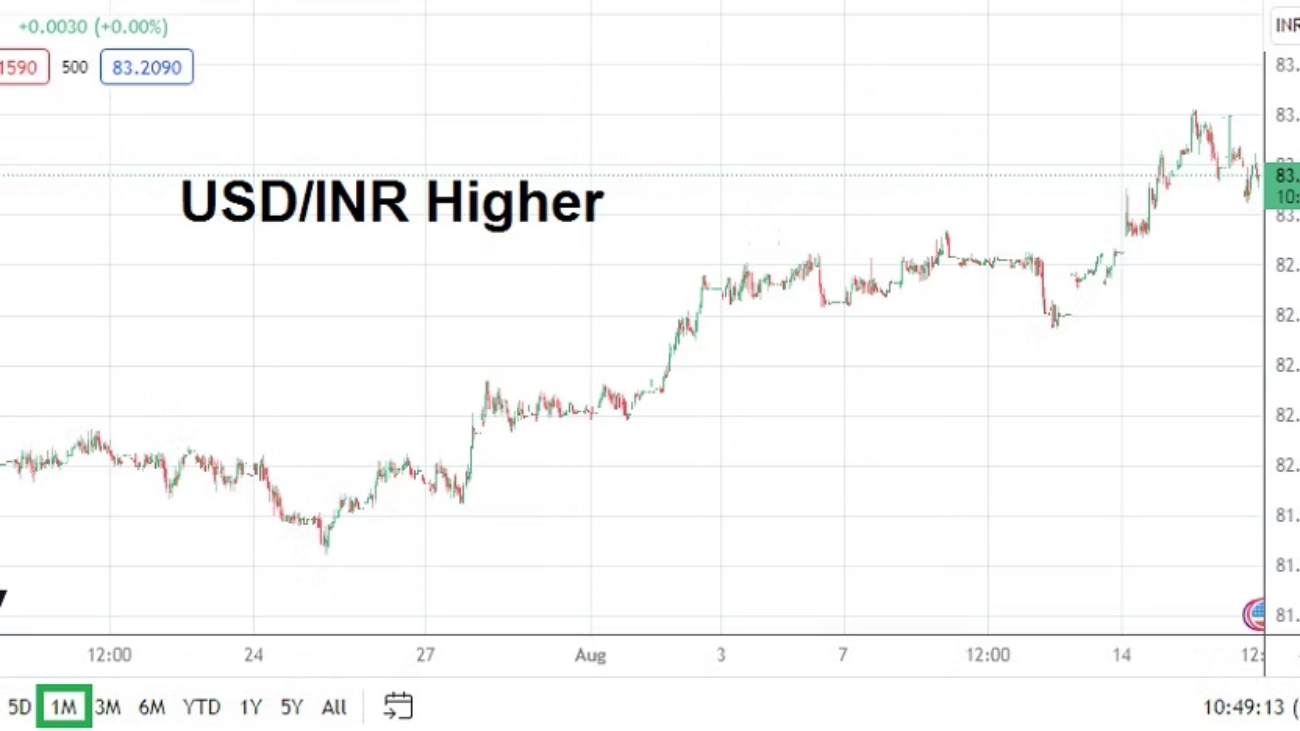
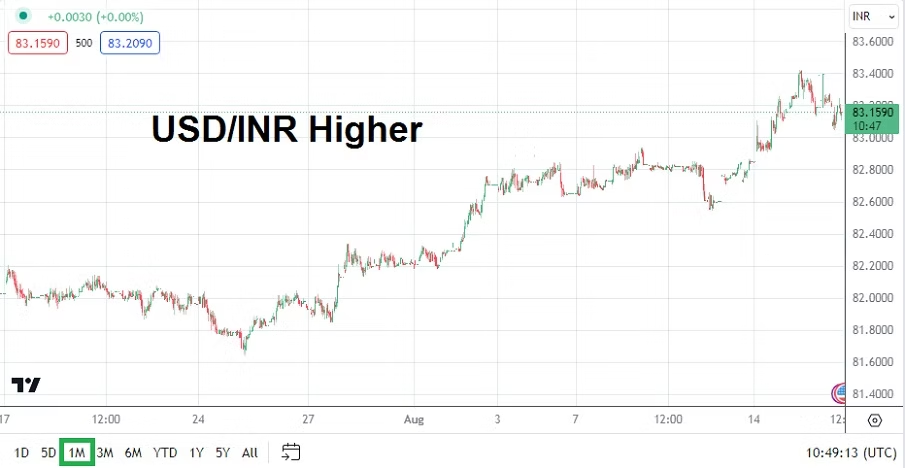
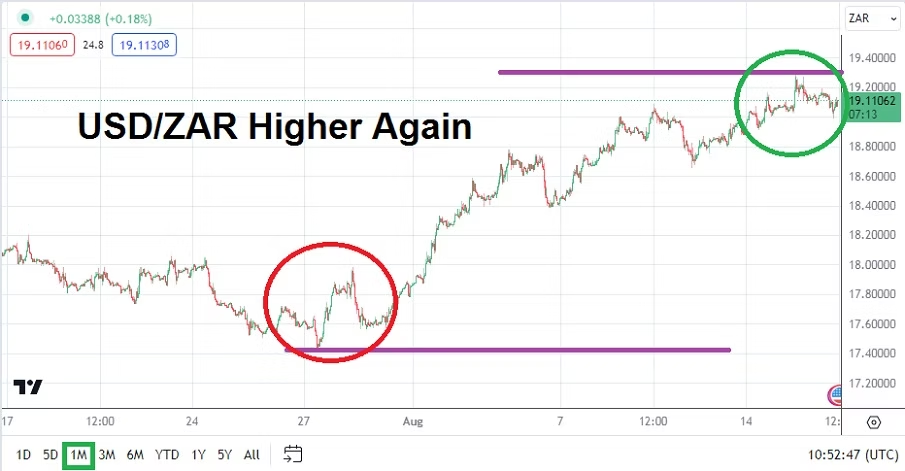
Market price action has caused quite a few interesting interpretations of the prices being demonstrated in Forex, gold and equity markets recently. The USD/INR is now at record heights, the USD/ZAR is back above 19.00000 and the USD/BRL is again near the 5.0000 ratio.

USD/INR One Month Chart as of 16th August 2023

While Forex traders around the world look for clues as to why their local currencies are suffering and are likely blaming domestic policy from their own governments and central banks, they should remember the larger global financial markets tend to move in a unified sphere. Domestic concerns are a real cause for market action often, but when global sentiment becomes nervous the larger force of institutional financial houses shake the ground.

Correlations exists worldwide because of behavioral sentiment ruling outlooks over the near, mid and long-term in the marketplace. While we like to put our faith in the financial markets as an all knowing entity, this is far from the truth. Humans who react to nervous conditions and also have bias are the ones still making decisions in financial houses, they are the ones giving orders to their programmers via their trading software which is largely geared to follow perceived trends these institutions deem important.

USD/ZAR One Month Chart as of 16th August 2023

Most financial institutions are not speculative in nature, day and even longer term retail traders should remember this point. Most institutions are trying very hard not to ‘speculate’, they are simply positioning per their outlooks based on their understanding of the trading landscape. Whispers of potential downgrades from U.S rating agencies on larger corporate banks yesterday sent a shudder through the broad markets, economic data and rumors swirling about China are not helping either. The current volatility in the broad markets is not welcomed warmly by financial institutions.

When price velocity accelerates and volatility flourishes in highly charged trading situations, this suggests financial institutions are nervous and not able to find comfortable positions. Conflicting ‘opposite’ positions from other larger players are causing market chaos in Forex, equities and other financial assets. There is a herd mentality in trading and when the herd doesn’t march in an unified direction chaos happens.

Most institutional players want calm, they want tranquil trading conditions so they can manage their clients’ money quietly. Bonds, equities and indices, real estate holdings via REITs, and gold make up a large part of their holdings.

Most U.S pension funds for instance have mandates to be positioned into a large amount of quiet investment vehicles which do not trade with wild price ranges. They seek steady returns from their institutional investors that can be counted on in a quantitative manner to demonstrate to their clients.

Large financial institutions are allowed sometimes to trade 2 to 4% of their holdings in different categories of speculative investments – such as start-ups, allocate cash to hedge funds they trust, small cap stocks they might know about, etc., depending on the exact mandates agreed upon.

Yes, hedge fund managers like Bill Ackman and investor Michael Burry get a lot of attention when they bet against the markets, but believe it or not they are small fish in a large ocean a lot of the time. They are good at what they do, but their speculative positions cannot be mirrored by most financial institutions or small day traders.

Ackman and Burry may be trading billions, but remember institutional financial companies including pension funds when combined total approximately 80% of market cap. Institutional trading decisions can cause massive waves in the financial world, but they actually seek calm seas.

When markets become volatile this often means institutional traders are not comfortable and their behavioral sentiment is fragile. Forex for example is often affected by financial institutions moving money as they handle export and import transactions for companies, but transactions are often done to buy and sell equities too. The Bank of International Settlements estimated an average around 7.5 trillion USD in value was traded in Forex everyday in 2022.

Day traders should not take it personally when the markets move against them, instead they should look to try and mirror the sentiment of larger financial movers. However, knowing and timing financial institution decisions is elusive because short term compared to long term considerations are often different.

Most traders are merely betting on the price action the large institutional funds are undertaking via the direction of the marketplace. Day trading for most retail speculators remains dangerous. A solid fundamental understanding of market ‘forces’ can allow smaller traders to feel more comfortable.

postN36.1

Anxiety and Surprising U.S Data for Day Traders to Consider

Anxiety and Surprising U.S Data for Day Traders to Consider

Global central banks stayed in their anticipated lanes last week as the Fed and ECB raised their key lending rates. The BoJ has admitted it is allowing its yield curve to increase, meaning the Japan government is cutting back on purchases of Japanese bonds. Forex produced anxiety and choppy results for day traders.

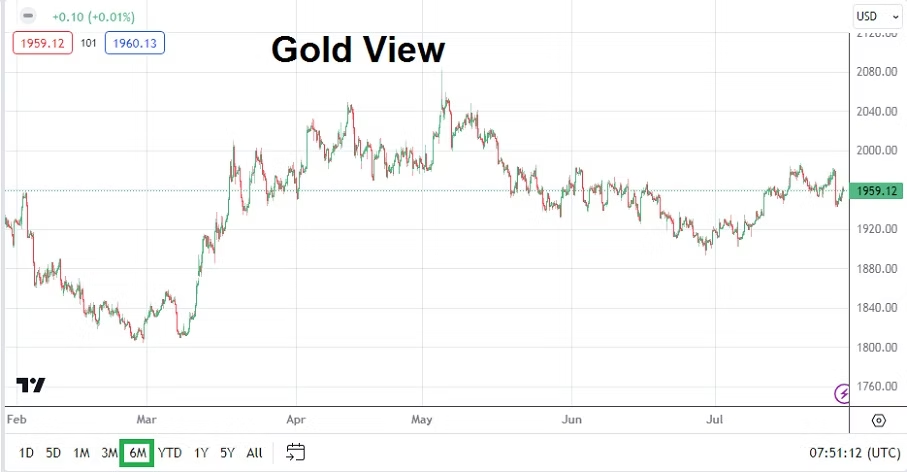
Gold 6 Months Chart as of 30 July 2023

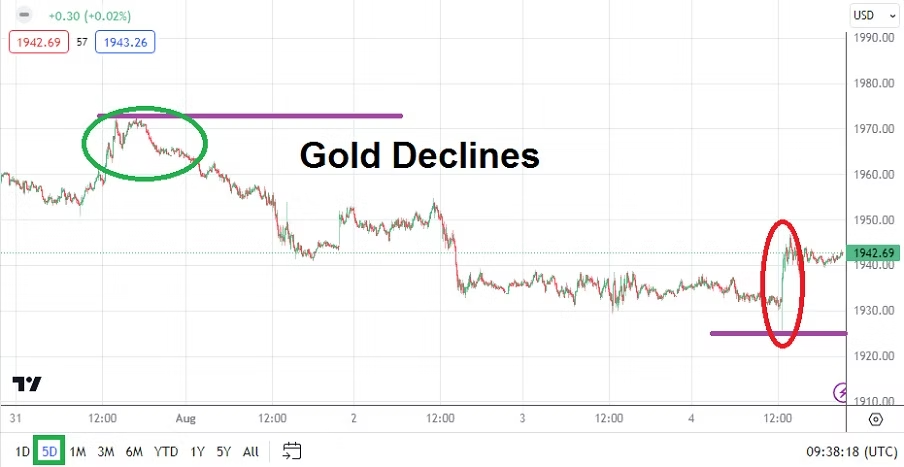
Economic data from the U.S last week provided a strong Gross Domestic Product result on Thursday, and followed with weaker than expected Personal Consumption Expenditures and Personal Income statistics before going into the weekend. Meaning the U.S economy appears to be surprisingly solid, while inflation pressures do indicate they are in decline. The Forex market turned volatile on Thursday and Friday, gold which traded at nearly 1980.00 USD on Thursday went into the weekend near 1959.00.

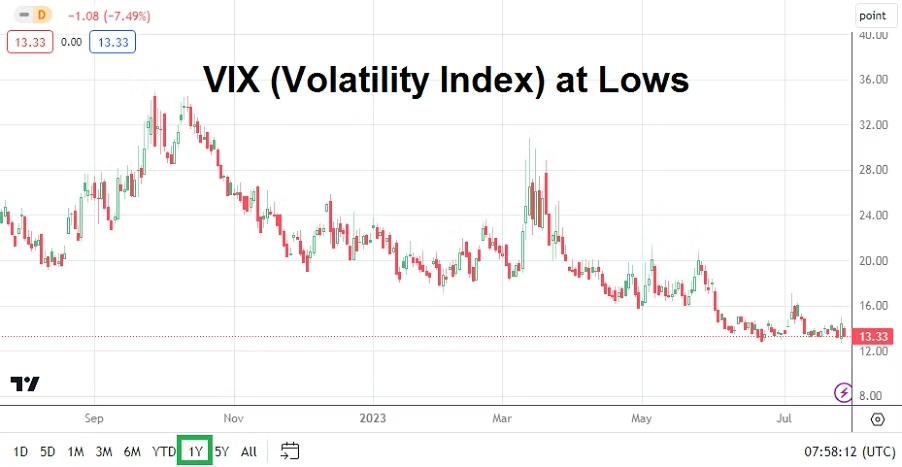
VIX Index 1 Year Chart as of 30 July 2023

Stock markets in the U.S via the major indices continue to incrementally rise and folks waiting for a big sustained selloff are having their patience tested. Perceived volatility in U.S markets is very low and the VIX (Volatility Index) indicates many investors are not taking the time to hedge with options because their confidence is remarkably high. A cautious reminder for traders, one bad day could change all of the optimistic sentiment.

In the cryptocurrency world, folks should continue to keep their eyes on the Binance exchange and its Binance coin. Many digital assets seem to be suspiciously close to important support levels as this week begins and appear vulnerable.

Monday, 31st of July, China Manufacturing PMI – while U.S data surprisingly improves, China has not begun to show signs of a positive turnaround quite yet, and this reading is expected to be below last month’s outcome. China data is a solid barometer of global economic health and traders should give these results proper attention.

Monday, 31st of July, E.U Consumer Price Index Flash Estimates – the European CPI numbers are expected to come in slightly below the previous month’s reading. If for some reason these inflation numbers are higher than expected, this could cause some chaos briefly for the EUR/USD. A weaker number however offers no sound wagering basis for short-term day traders either. Behavioral sentiment appears to be ruling the EUR/USD landscape for the time being, and technical levels should be watched.

Tuesday, 1st of August, Australia Reserve Bank Cash Rate – the RBA is expected to follow in the footsteps of the Fed and ECB and raise its lending rate by 0.25%.

Tuesday, 1st of August, E.U Manufacturing PMI – Germany and France are anticipated to produce similar results to last month’s outcomes. Recessionary pressures are a concern in the E.U and better than expected numbers would be welcomed, but this may prove difficult to demonstrate as economic conditions remain challenging.

Tuesday, 1st of August, U.S ISM Manufacturing PMI – the results from the manufacturing sector in the States should be watched. A slight improvement is expected, but the reading is not expected to produce a wildly optimistic result. An outcome which slightly beats expectations, but is not too strong might make the USD slightly weaker. Global investment institutions are likely hoping for any signs that the Federal Reserve will have to become less aggressive. A lackluster to ‘fair’ ISM Manufacturing PMI result could be evidence larger Forex traders want to see if they are aiming for bearish momentum in the USD.

NZD/USD 3 Months Chart as of 30 July 2023

Wednesday, 2nd of August, New Zealand Employment Change – the jobs statistics are expected to show slightly weaker results from the nation. The NZD/USD remains within the lower elements of its long-term price range. There are many NZD/USD bullish traders waiting for a sustained reversal higher, but it is unlikely to be produced from these New Zealand jobs numbers.

Thursday, 3rd of August, U.K BoE Monetary Policy Summary and Official Bank Rate – the Bank of England remains in a difficult spot and it will likely raise interest rates by another 0.25%. Criticism of the Bank of England has been loud in Britain, but the BoE likely feels it has to remain in line with the Fed and ECB. Recessionary pressures continue in the U.K and inflation remains problematic. Concerns will be heard regarding property mortgages for home owners if the BoE hikes. The GBP/USD will certainly move depending on the rhetoric from the Monetary Policy Summary and talking points delivered by BoE Governor Andrew Bailey.

Friday, 4th of August, U.S Non-Farm Employment Change and Average Hourly Earnings – the jobs data parade will climax at the end of the week, this after starting on Wednesday via the ADP jobs numbers. Investors will watch the Non-Farm Employment Change data carefully and correlate them to the better than expected GDP results from the 27th of July. The wages data from the Average Hourly Earnings is expected to come in with a slight decrease. A weaker inflation result from the wages statistics could cause additional softness in the USD. However, recent data from the U.S has been hard to predict correctly, and day traders may want to sit on the sidelines until all the jobs numbers are digested.

post10

Central Bank Capitulation led by Federal Reserve

Central Bank Capitulation led by Federal Reserve

The 21st and 22nd of September were potentially important signals for traders as the Federal Reserve admitted they remain reactive to inflationary pressures, and other global central banks countered with acts of their own.

While it is difficult and often foolish to believe the markets can be timed, this past Wednesday may have been an important moment for speculators in Forex. Many traders may have veered off into cryptocurrencies or into equities as day traders the past few years, but FX still remains a place that offers volatility and where wagers on price direction can be made.

The Federal Reserve raised their interest rate 0.75% again, and importantly issued a loud admission that the U.S central bank is caught in a reactionary mode. Other global central banks have begun to protect their own currencies too. Jerome Powell, the U.S Federal Reserve Chairman, said he believes the current interest rate is likely at the low end of the spectrum regarding where it has to be to have an affect on current inflationary pressures.

The USD has been strong against many major currencies with a rather unforgiving bullish trend. Raising the Federal Funds rate from 0.25% to 3.25% the past year in the U.S has made short term purchases of U.S debt attractive to many financial institutions. On Wednesday, Jerome Powell made it clear other hikes will be delivered and it is not farfetched to believe the U.S is looking at a potential rate of 4.50% and higher in the spring of 2023. This doesn’t mean the Fed’s policy is correct, it is simply an outlook for the potential Federal Funds Rate based on rhetoric.

  • A Federal Funds Rate in the U.S of 4.00% is likely by early this winter, per the Federal Reserve’s interest rate outlook.

  • Global central banks have reacted to the U.S Fed’s recent interest rate hike, by enacting methods to try and safeguard the value of their own domestic currencies.

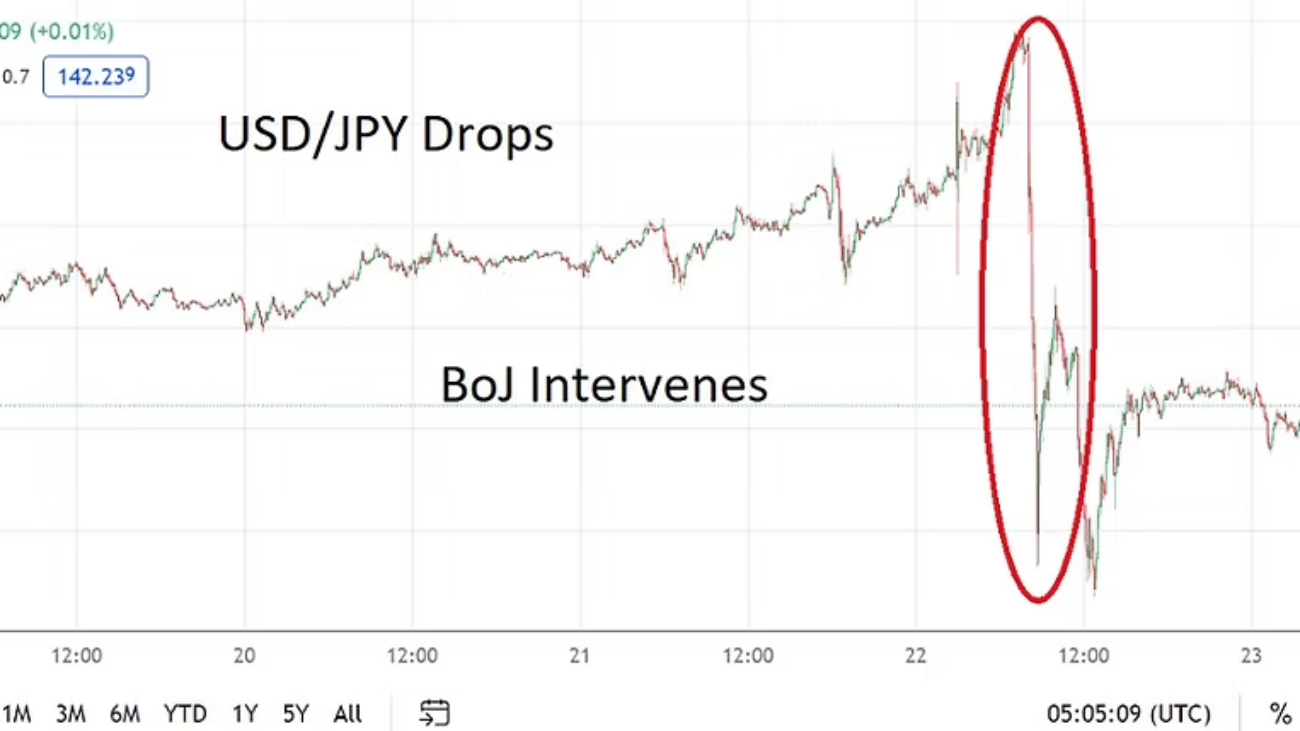
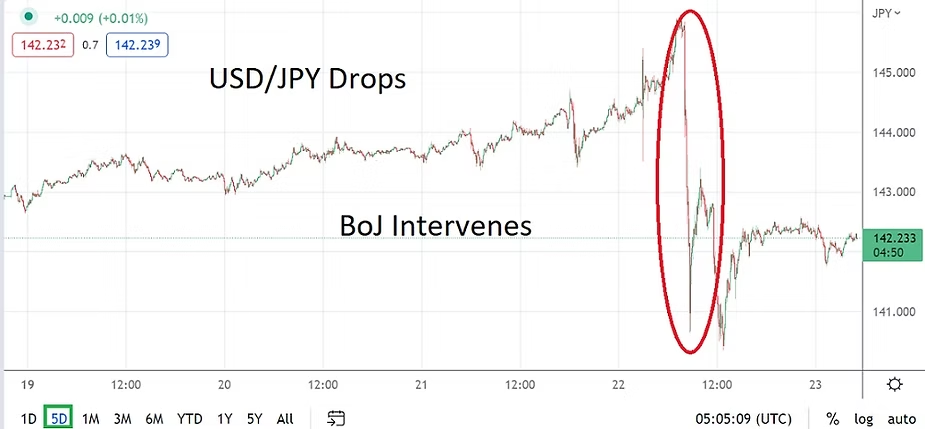
The USD surged ahead slightly before the rate announcement from the Fed, while many other currencies lost value. However, on Thursday the Bank of Japan intervened by starting to buy Japanese Yen against the USD. The Bank of Japan said it will not raise interest rates yet, but its action showed it clearly does not want the JPY to lose additional value to the USD, via the USD/JPY Forex pair. Whether the BoJ’s actions work mid-term remain to be seen.

Global Central Banks feel they must counter the U.S Federal Reserve’s Actions

Other central banks started to act too. The Bank of England and Swiss central bank both raised interest rates yesterday. Speculators who have been watching the USD dominate Forex the past year, may now have to consider that the last two day’s of action via global central banks is a signal an attitude change has taken place, which may begin to affect Forex long term. Traders need to understand opportunity also means there are risks.

Inflation remains high and governments have reached a point where they have had to admit they will have to risk slowing their economies and potentially suffer recessionary pressures to curb price increases. Many central banks likely feel they have to match the hike increases by the U.S Federal Reserve within their own systems to protect the value of their currencies.

BoJ Intervention on the 22nd of September

End of the Dominant USD Bullish Cycle in Forex?

While Japan for the moment refuses to raise borrowing rates, the BoJ’s buying of JPY effectively signals the USD has become too strong and is starting to hurt the Japanese economy. The the Bank of Japan will be interesting to study long term, to quantify if Japan’s lack of raising rates proves to actually be correct in the current environment.

Philosophical differences and central bank maneuvering is complex and has a long history of debate. Having said that the Bank of Japan has been largely scorned by many other central banks the past three decades for its methods, but while Japan has never recaptured the growth numbers it attained in the 1970’s and 1980’s, the nation remains one of the world’s richest.

The action of the BoJ and other global central banks means that speculators may want begin to look at Forex and tinker with the notion that the bullish trend of a dominant USD may start coming to an end. The cycle has been strong and again, it is difficult to say today is the day. Timing the market is often proven wrong, but the messaging from global central banks that they will start to shadow and react to the U.S Federal Reserve’s actions may mean that they will try to curtail the decreasing values of their own domestic currencies with more robust methods.

Day Traders need to understand a Complex Puzzle is Ahead

Forex markets can produce dramatic changes of value abruptly and cause costly losses to traders who bet wildly. The use of too much leverage and a lack of efficient risk management frequently destroys value quickly. However, now may be the time to contemplate testing Forex with the notion the USD may start to incrementally loss value. A lot has to happen. There are plenty of risk events ahead which could lead to wildly unforeseen results. In other words there are no guarantees.

Global equities led by the U.S indices appear very fragile and if the major stocks loss more value, this could also cause a stronger USD. Why? Because the USD would have to be purchased to buy U.S stocks by foreign investors who want a safe heaven. While it may seem contradictory to think U.S equities would be bought in downturns, this is what has historically happened when global financial institutions seek safe havens and believe other places are too dangerous to invest.

Remember financial institutions are not supposed to be day traders, they are supposed to be long term investment vehicles. Meaning if global equities suffer, even if U.S indices suffer too, the U.S is likely to remain the choice of investment houses as the place to seek shelter if they have to purchase equities as part of their mandates.

Yes, Forex will always be a complex puzzle for short term traders seeking to take advantage of the daily gyrations in the global markets. If a speculator insists on participating with wagers in the market place, they must consider that financial storms are always brewing because trading is seldom easy.