postN72

U.S National Security: USD Reserve Currency Importance

U.S National Security: USD Reserve Currency Importance

Opinion: The following article is commentary and its views are solely those of the author. This article was first published the 23rd of December via The Angry Demagogue.

We would like to start going through the U.S administration’s National Security Strategy released last month. There is a lot in there – much of it the same as in past administrations and much of it different. The tone of course is full Trump and while the introductory parts try to make it into a revolutionary document it does in fact build upon much of what has been American foreign policy for decades. One thing it most certainly gets right is that American foreign policy since the end of the Cold War has not found its compass. From a unitary world to one dependent upon global organizations, from a sharing of goals with western Europe to a pivot to Asia, from the war on terror and the middle east to Russia-Ukraine, the United States has struggled to find its way in the post-Cold War world.

We however will concentrate today on one aspect of the strategy, the third bullet in part III – “What Are America’s Available Means to Get What We Want?”. The third bullet point speaks of America having “The world’s leading financial system and capital markets, including the Dollar’s global reserve currency status” – a point that no one with any knowledge of global capital markets can not accept. The end of the bullet point – the Dollar’s global reserve currency status – is the most important because it underscores America’s leadership and essentially allows the United States of America to finance its military and its welfare state. The U.S Dollar as the “reserve currency” means that nearly all the world’s goods are quoted and therefore sold in Dollars.

Why is that important to the United States? Because the U.S government depends on its ability to issue Treasury bonds and bills at will – something no other government can do. It can do this because for another country to buy oil or copper or titanium or corn or soybeans from a country that is not their own– they need access to Dollars. Saudi Arabia and the other gulf states quote the price of oil in U.S Dollars and demand payment in U.S Dollars. The Saudis can deposit those Dollars in American banks or in what is called Eurodollar deposits in foreign banks (there are some 13 trillion Dollars in Eurodollar accounts globally). The Eurodollar accounts are essentially promises by the bank to give U.S Dollars to the holder when he makes a withdrawal. This strengthens the U.S capital markets and allows investors to have better and more investment choices. It is not only America’s often superior companies that bring profits to 401k’s and pension funds but the liquidity and vastness of America’s capital markets that can list domestic and foreign corporations. The reserve currency leading to the advanced capital markets allows the world – and America – to do this.

The U.S Treasury market is so liquid because every country needs Dollars in order to trade. They need to have enough dollar reserves since no one actually wants their own currency. In Israel, for example, local gas companies cannot buy oil with Israeli Shekels, since what will Azerbaijan, for example, do with them? There are only so many products that Israel can sell them. They need Dollars so that they are free to buy other commodities or other products.

The U.S Dollar as a reserve currency also is a break on inflation since the price of oil and other commodities is always in U.S Dollars. A weak or strong U.S Dollar influences the inflation rate in non-USD countries. A weak Israeli Shekel, South African Rand or Chinese Yuan does not influence the price of gasoline in the United States.

In short – as the Trump Administration understands well, the dollar as a reserve currency is a luxury the U.S cannot give up. The lack of the USD as a reserve currency could cause the Dollar to collapse and along with it the price of U.S Treasuries. As UST prices drop, their yields will rise and the cost of financing the U.S government will make interest payments on debt to rise well beyond its already absurd figure of over 4% of GDP – while debt itself is 120% of GDP. The U.S government currently pays over $1 trillion in debt service (interest payments on its bonds and bills). By contrast, the U.S defense budget for 2024 was $836 billion (about 3.3% of GDP).

We need to ask ourselves what can challenge the USD as the reserve currency and what could happen that would encourage the world to change? While the E.U had dreams of making the Euro an alternative reserve currency, the lack of growth in the E.U’s economy and population have put that dream to rest. The only other country that could theoretically replace the United States as the global economic go to country could be China. While in the long run, China’s lack of openness would probably mean that the Yuan would not last long as the reserve currency, that does not mean that they couldn’t jolt the global economy just enough to force it to use the Yuan to buy oil and other commodities.

China is already cornering the market on rare earth minerals and it making inroads in Africa where it mines all sorts of commodities from gold to copper to platinum and so many others (Africa has about 30% of global mineral reserves). That in itself is not enough to rock the global markets and cause a change in how the world does business.

Oil though, is that one thing that could allow China to challenge the USD as the reserve currency, even if it just presents the Yuan as an alternative.

How could that happen?

A Chinese takeover of Taiwan, by whatever means it uses would give the Chinese Communist Party control not only of the South China Sea but also allow its noisier and inferior (to America’s) submarine fleet to enter the Pacific and patrol it freely. The Chinese Navy, with a base on the “other” side of Taiwan would give it control of the north-south sea lanes that Japan and South Korea are dependent upon. Essentially, Chinese control of Taiwan would put Japan, South Korea, Vietnam and the Philippines at the mercy of the Chinese Navy. China could blockade these countries but that would be an act of war and then involve the navies of those countries and possibly the United States. It would affect the global economy negatively but it would not cause a change in world’s reserve currency. But, what if China works out a deal with Saudi Arabia to quote and sell their oil in Yuan (or the Chinese Petro-Yuan it wants to create) and then tells these countries, especially industrial powerhouses and energy poor Japan and South Korea that it will allow the passage of oil as long as they purchase the oil in Yuan?

Russia is already trying to get India to pay it for its oil in Yuan, to some success. Adding economies the size of Japan and South Korea would mean that any country that wants to buy oil could buy it in Yuan instead of Dollars. Once in Yuan, these countries would need to use the Yuan to buy Chinese products, deposit cash there and buy Chinese treasury bills. If China were to combine that with demands that all chips made in Taiwan also be sold in Yuan, the U.S Dollar would suddenly and forcefully no longer be the only reserve currency in the world.

Obviously, the way to stop this from happening is by stating outright that the United States will not tolerate a Chinese takeover of Taiwan. It is true, that the Strategy claims that the US “will also maintain our longstanding declaratory policy on Taiwan, meaning that the United States does not support any unilateral change to the status quo in the Taiwan Strait” but in practice the administration has criticized Japan’s tough talk on China instead of leaving it be. A strong silence on Prime Minister Takaichi’s remarks on China would have served the purpose of keeping the status quo more than telling her to tone down her rhetoric. There is a strong “no intervention ever” strain in the country and the President must make the case that that is not an option if the United States wants to maintain its leadership position, way of life and general prosperity.

In short, the threat to the Dollar as the reserve currency heads right through Taiwan. For those who think that the investment the U.S makes in keeping the Dollar where it is, is too expensive, just think of going on vacation and having the change to Yuan before you leave the country, wondering how much to change because of currency fluctuation and how much fun it is to return with hundreds of dollars in banknotes that you can’t use. Imagine your credit card bill on such travels and wondering how you went 15% over budget but didn’t get anything extra for it. Now imagine the national economy working that way.

Disclaimer: the views expressed in this opinion article are solely those of the author, and not necessarily the opinions reflected by angrymetatraders.com or its associated parties.

You can follow Ira Slomowitz via The Angry Demagogue on Substack https://iraslomowitz.substack.com/ 

post241

Quick Trading Lesson and Mantra to Practice Patience

Quick Trading Lesson and Mantra to Practice Patience

Current speculative conditions are difficult for day traders. In most cases the market environments are likely very costly too. The amount of recent volatility over the past few months has made brokers very happy and traders very poor in many cases. Traders seeking to profit with limited resources who are using too much leverage have certainly lost money in many cases. No one talks about losses at dinner parties, folks like to brag only about their winning bets.

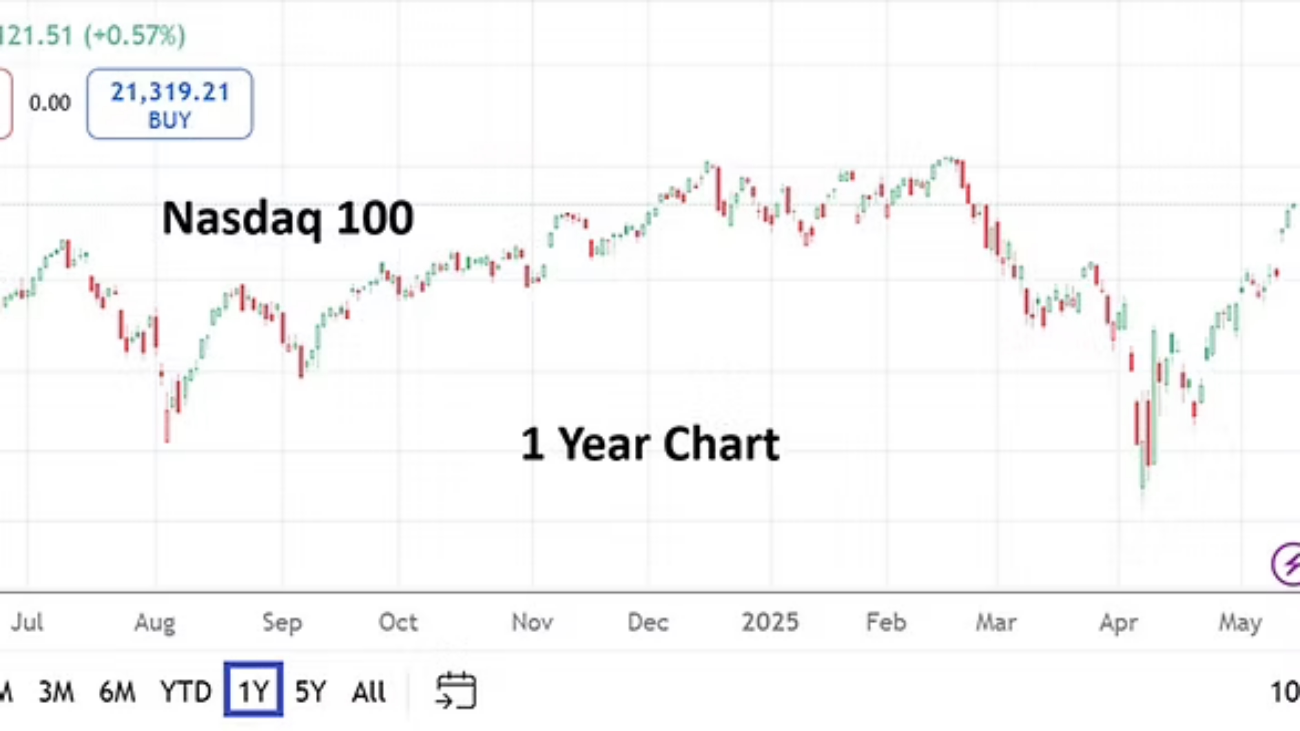
Nasdaq 100 One Year Chart as of 15th May 2025

To trade effectively in current circumstances a speculator needs patience, very limited leverage, and even the ability to carry trades overnight. The markets via Forex, equity indices and commodities due to the Trump Effect are fast and volatile. Having too much leverage on one single trade can create devastating losses. An other item to practice under present market chaos is to limit your trading. Do NOT have more than a couple of trades on at one time. Do not divert your attention if you are not able to handle the speed of the markets with too many wagers at one time.

In order to get an effective outcome, you need to not only be focused and use conservative amounts of money to wager on a position, but you also need to be able to handle the volatility of a trade while it losses money. And under the present markets – for instance CFD trading of stock indices like the Nasdaq100 or SP500 – results are dynamic via their reversals. Thus, you need to be able to handle the intraday volatility and perhaps consider carrying a trade overnight which creates other expenses from brokers who charge for the pleasure of near-term trading compared to quick short-term bets. Stop losses are important, but if you use conservative leverage this allows you the ability to let an asset trade via a wider range.

The markets are likely to stay chaotic for a while. Conditions do seem to be improving, but a broad spectrum of assets are still seeing daily moves that suggest nervousness has not disappeared fully yet. Optimism is showing slivers of light for bullish perspectives, but short-term players will watch their visions turn into mirages if they are over leveraged and over confident. Speculators need to remain wary of their perspectives because sentiment will continue to shift rapidly. Clarity may be on the horizon, but in order to profit from more optimistic outcomes patience is needed. The markets as they stand today are a fine example of the tortoise and hare race – a slow steady approach is safer than a helter-skelter rocket ride for traders.

postR192

Impolite Opinion: BRICS Long-Term Plans & Implications Part 1

Impolite Opinion: BRICS Long-Term Plans & Implications Part 1

The global Forex market is spastic and many major currencies are traversing within weaker whipsaw value ranges against the USD. The currency pairs are trading in price bands seen before the Fed cut its Federal Funds Rate by 0.50 basis points on the 18th of September. And there is still one and a half weeks of assured volatility that will be demonstrated. Crucial U.S data is on the schedule in the coming days via the Advance GDP and Non-Farm Employment Change statistics, and the U.S Presidential election is edging closer. Israel and Iran continue to play a game of cat and mouse in the Middle East, which thus far has led to a controlled chaos and not worldwide bedlam. Financial institutions have plenty of reasons to be apprehensive.

Expansion of BRICS Feels Inevitable

Now let’s turn our attention to a tectonic foundational shift building in global trade and geopolitics. Attention on short-term behavioral sentiment which is fragile and has a less than clear mid-term perspective, needs long-term considerations too. Investors are required to contemplate possible dangers that are hiding in open sight and will pose a problem in the future.

The BRICS 2024 Summit was conducted this week in Kazan, Russia. This included the new member nations of Egypt, Ethiopia, Iran and the United Arab Emirates. I am not here to give you a major recap on what took place behind closed doors. I wasn’t invited. But we should look at some of the results and statements made and what they imply strategically.

The BRICS attendees to this year’s conference included powerful dignitaries from approximately 36 nations. One major result of this BRICS conference was to award Partner State status to 13 countries including Algeria, Turkey, Malaysia, Indonesia, Vietnam, Thailand, Nigeria, Uganda, Kazakhstan, Uzbekistan, Belarus, Cuba and Bolivia. Saudi Arabia was invited last year and has not made their full participation official yet, but they attended this year’s conference as an invited guest. The trend appears clear, we are entering a new paradigm in which long-term thinking by the BRICS nations could out maneuver the short-term nonchalance of the West and this has implications for the USD long-term.

There were high level meetings between leaders of BRICS countries including China, India and Russia. Perhaps, more importantly was Vladimir Putin’s bold statement about BRICS desire to start its own grain exchange. Putin also advocated for the creation of a BRICS cartel in other commodities such as metals, including gold. Gemstones such as diamonds and emeralds could develop into a sizeable entity too. This needs to be taken seriously by the West.

Credence must be given because the BRICS nations already are among the largest producers of grains, legumes and oilseeds. The scope of commodity production and supply capabilities by BRICS could certainly turn into a painful thorn in the side of existing large trading companies. And a potentially coordinated energy sector via Iran, Saudi Arabia, Nigeria, Russia and others must be taken into account.

Russia and China as Friends of the Underdogs

Historical entanglements put Western nations like France and others in a vulnerable spot diplomatically as they try to maintain alliances with many BRICS nations. France serves as a good example of diminishing Western influence. France remains on the ground overtly in Africa while dealing with vestiges of a colonial past. But France’s influence in Africa is under stress and their ability to use the continent as a source of power and financial gain is being confronted. France still maintains the Presidential Council for Africa, but France is likely perceived by many of the participants as a wolf dressed in sheep’s clothing. Coups in French influenced African nations have a bloody and present history when political diplomacy does not go well.

Exploiters of the past in many African nations are looked upon with derision and scorn. Russia and China are often viewed as friendly countries who helped fight along the side of certain African nations who sought and achieved independence. The ability to create ascendancy in Africa by Russia and China needs to be looked at within a prism that suggests additional spheres of power will develop in BRICS. Many nations that dealt with colonial statuses in the past are rightfully intent on shaking off the notion of being considered laggards.

The West certainly knows in no uncertain terms it cannot return to colonialism. However, African governments should make sure they are not replacing old masters for new. While some might say it is wishful thinking – and I am still on the fence contemplating the notion – on the part of Russia and China to create powerful commodity cartels, if achieved this actually could prove to be an emphatic first step in attempting to secure a new and powerful currency by backing it with a foundation of intrinsic value. Brazil and South Africa would be a big part of this underpinning too. Russia and China’s foray into Africa via their military and money lending excursions, and the already created organizational and trade structures which exists within BRICS opens the door for the perceived underdogs to battle together against the power of Western riches.

A competition is certainly underway between the West and BRICS. What exactly is the U.S doing in Angola? The planed visit of Joe Biden in the first week of December, which was supposed to take place in mid-October was postponed due to the recent hurricanes. Will the U.S presidential visit be anything more than a sideshow, particularly if the Democrats do not win the election on November the 5th? Angola has a massive amount of Crude Oil and is an OPEC member. American energy companies and other Western corporations are active commercial participants in the African nation. However, China has a firm financial stake in Angola via infrastructure projects too. The political and financial implications between BRICS and the West is a growing dynamic, one that will be further discussed in Part 2.

postR183.1

Nervous? Central Banks Cautious, FX and Asset Equilibrium

Nervous? Central Banks Cautious, FX and Asset Equilibrium

Sometimes when looking for ideas regarding a risk analysis article it is difficult to find a timely subject. Exaggeration is often used to grab attention. This week and next will not be one of those times. Equities, Forex and commodities have produced nervous results since last Monday. The broad markets appear to be in search of equilibrium, but price velocity while higher than normal hasn’t produced a volcanic surge of pain. Financial institutions were presented less than inspiring jobs data this past Friday and day traders hopefully had their risk management working. Everyone will need to be paying attention this week too.

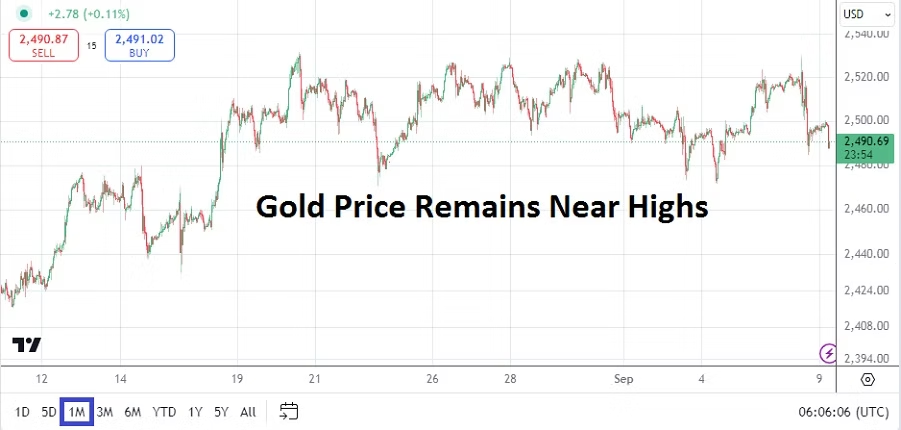
Gold One Month Chart as of 9th Sept. 2024

Gold has hovered around the 2,500.00 level and while it certainly is a short-term speculative asset for day traders, the precious metal also serves as distinct barometer of behavioral sentiment and long-term guidance regarding inflation. Recent economic data has created concerns in financial institutions about the potential for a stronger than anticipated U.S downturn. The volatility and sell off in equity indices last week is a clear sign investors would like the Federal Reserve to be more aggressively dovish.

This coming week is packed with a variety of risk events which will keep all market participants engaged. Long-term investors may feel calm as they rely on their outlooks which extend over a handful of years, but anyone who needs a firm grasp on short and mid-term viewpoints might not be comfortable. It is important not to cry wolf too often, but based on the trading results seen the past week it is worthwhile to point to the turbulent outcomes and issue a warning that more volatility could develop.

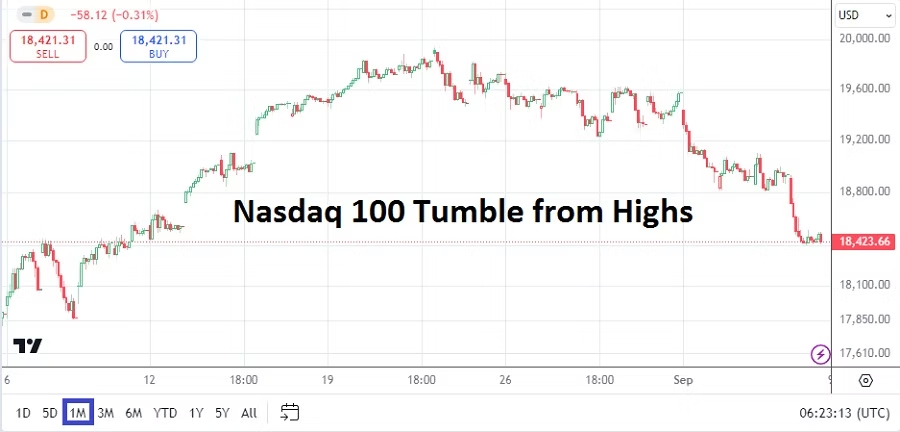
Nasdaq 100 One Month Chart as of 9th of Sept. 2024

Some analysts may apply the thought that what we have seen was profit taking, and this can certainly be debated. The coming two weeks have plenty of noteworthy events on the calendar. Besides the listed risk highlights noted below, the Fed will release its FOMC Statement on Wednesday the 18th, the BoE will follow on the 19th and not to be outdone the Bank of Japan will step onto center stage on Friday the 20th of September.

While long-term investors likely believe all variables will return to known price realms and that central banks sooner or later will fall into their proper places regarding monetary policy, day traders who are gambling on short-term momentum must try to figure out where behavioral sentiment is leaning. One of the ways speculators without deep pockets can put the odds in their favor concerning potential profits, is to make sure they are practicing rock solid risk management and not stepping into Forex trades, equity indices via CFDs wagers, and commodities bets when they are displaying rough conditions without being prepared.

Monday, 9th of Sept., China Consumer and Producer Price Index – the inflation reports from China both came in below their estimates earlier today. While some may believe that less inflation than predicted is a good thing, it isn’t when the economy is suffering from deflationary pressures. Lackluster spending from consumers in China continues to highlight negative sentiment about prospects for growth. The USD/CNY is near the 7.1125 ratio as of this writing.

Tuesday, 10th of Sept., U.S Presidential Debate – while not an economic data event, investors might want to pay attention to the answers given by Vice President Kamala Harris and former President Donald Trump. The race for the White House appears to be close according to various polling. It could prove interesting for financial institutions if Harris is questioned about her ideas regarding taxing unrealized capital gains.

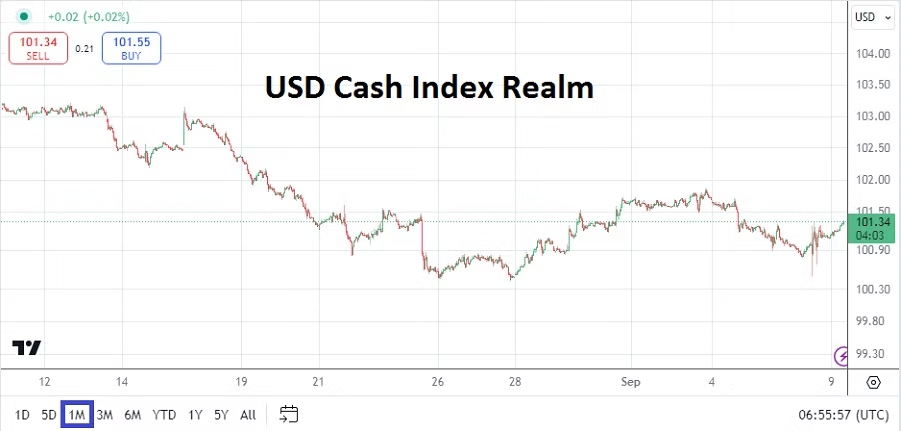
USD Cash Index One Month Chart as of 9th Sept. 2024

Wednesday, 11th of Sept., U.S Consumer Price Index data – the inflation reports will certainly get the attention of financial institutions. If the annual CPI report comes in weaker than the previous outcome, this could spark more USD centric weakness in Forex. All asset classes will react to the inflation numbers because they are likely to play a major part in the Fed’s FOMC decision in one week’s time. The USD Cash Index is still lingering near lows, but for it too resume a more bearish trajectory, financial institutions will need to believe the Federal Reserve is going to become increasingly dovish.

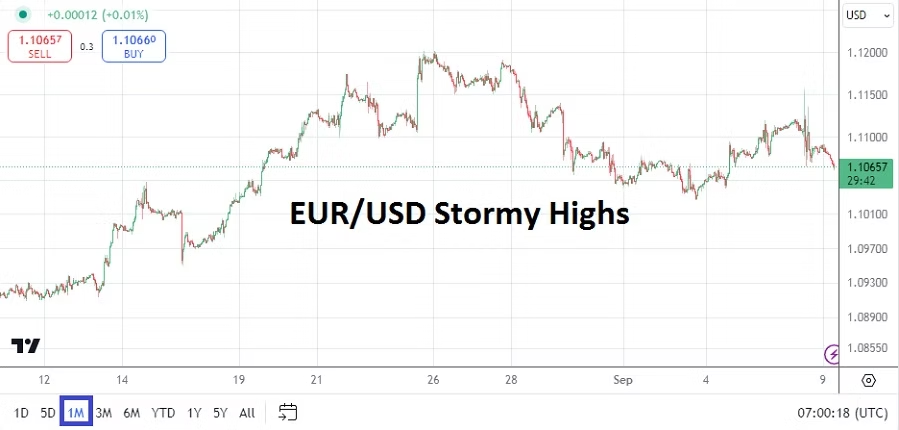
EUR/USD One Month Chart as of 9th Sept. 2024

Thursday, 12th of Sept., European Central Bank Main Refinancing Rate – The ECB is definitely going to cut its prime borrowing interest rate, the question is how much of a haircut they are going to provide. A 0.25% cut has certainly been traded into the EUR/USD, but many financial institutions believe there is a possibility to see a 0.50% basis cut. Can the ECB and Christine Legarde be aggressive? The European Union remains under recessionary pressures and inflation data is starting to show signs of erosion. The amount of the interest rate cut from the ECB will also be a telltale sign regarding what will happen via the Federal Reserve on the 18th of September. The EUR/USD will react to the European Central Bank’s decision, and global assets in far off places may react too because behavioral sentiment among investors may shift according to the rhetoric provided. Prediction: The ECB will stay cautious and cut by 0.25%, while saying a November rate cut is likely if economic data remains under pressure. Having said the above, the ECB should cut by 0.50% this Thursday, if they do not – financial institutions will not be pleased unless ECB President Legarde sounds very dovish during her Press Conference.

Thursday, 12th of Sept., U.S Producer Price Index – more inflation data from the U.S will provide investors an other opportunity to glance into the Fed’s looking glass. But if these PPI numbers meet or are near the anticipated results, financial institutions may be reacting to the ECB’s rate decision more because they might believe it is a better clue regarding the Fed’s Federal Funds Rate decision which will come in a handful of days.

USD/JPY One Month Chart as of 9th Sept. 2024

Friday, 13th of Sept., Japan Revised Industrial Production – this number may not get much attention, but because the Bank of Japan will release its Policy Rate on the 20th, the outcome could impact existing sentiment in the USD/JPY. The Japanese Yen has continued its bearish trajectory and traders who are wagering on more downside should not bet blindly on selling positions because intraday trading remains very choppy. The USD/JPY is now touching values last seen in a sustained manner in early January of 2024, lower values were seen in December 2023, and lower ratios that traversed the 138.000 realm and proved choppy occurred in the spring of 2023.

Saturday, 14th of Sept., China New Home Prices, Retail Sales, Industrial Production – this parade of data from the nation will be important. Foreign investors remain concerned about China’s economic prospects. The deflationary winds that have been blowing in the Asian giant have been well documented. The results from these three reports are expected to be lackluster.

postR192

Telling Someone to Not Trade Works Like Reverse Psychology

Telling Someone to Not Trade Works Like Reverse Psychology

From the strange but true file, comes the realization after working within risk analysis for a long time that telling a speculator to avoid a particular market because I believe it is going to be volatile often has the opposite effect. Perhaps the best thing to do is to remain silent and allow inexperienced day traders to lose their money, convincing them to walk away from speculative endeavors forever. But I prefer to constantly teach and warn, while providing help for those who have made the firm decision they want to pursue the financial markets.

It is rather well documented that 90% of retail traders lose their money. And as pointed out within AMT since our inception most brokerage institutions are counting on you to lose money. This because many platforms are letting you trade via CFD assets and virtual Forex wagering, meaning the brokers take the risks that you may actually make money and are willing to pay out your winning bet, because they know most of the time you are going to lose. If not today then tomorrow, because casinos always believe the gamblers will lose.

People ask why I refer to wagers and bets when I write about Forex, commodities and equity CFDs. The answer is because I feel the need to remind speculators constantly they are entering a domain that is akin to gambling. I have come to learn that I cannot stop inexperienced day traders from making costly mistakes by telling them not to trade. New retail speculators can be helped by providing them risk management via basic knowledge and expanding upon the theme. Angry Meta Traders intends to always make risk management and analysis of the markets its core foundation.

Yes, we also provide our insights about potential directions in particular assets constantly, and try to contribute our thoughts on the thinking of the large players within the marketplace. We would like AMT to become a membership pass into the temple for retail traders and the occasional institutional participant that reads our material. Temples are usually the domain for philosophies which have been gained through years of experience and contemplation about the human condition.

While it may sound absurd to discuss temples, experienced traders unless they have been merely lucky their entire careers, know the psychology of financial institutions is always important. Understanding the behavioral sentiment of large players and the quantitative engineering they use to make decisions is crucial. The keys to the inner workings of the financial temples is a metaphor, hopefully allowing day traders to feel like they have been given the ability to look inside and understand the decision making process of large institutions that can move the markets.

Angry Meta Traders is not always right, our analysis and predicted movements about assets are sometimes wrong. Yet, by stressing risk management via limited leverage, stop losses when appropriate (they almost always are), and telling traders to not be overly ambitious, we hope AMT delivers constant reinforcement and needed learning.

The noise of the market can be quite intense, false narratives, and misguided analysis are dangers all traders face, even the most experienced large players and financial institutions understand they will not always be correct. And this takes us back to the notion that trading for inexperienced people is not easy. But I know telling you not to trade works in the wrong way. So what I tell you now is to be patient, learn, gather wisdom as you trade and hopefully you will attain some of the tools needed to make your speculative life easier. Knowing that 90% of traders lose money, we hope that via our efforts to inform that we can put you within the small percentage of people who actually profit.

postR165.1

Forex Noise: Influences from Suspicious Data and Rhetoric

Forex Noise: Influences from Suspicious Data and Rhetoric

Yesterday’s GDP numbers from Japan served as evidence regarding things to be considered this week regarding the rather complex web central banks and governments have created for financial institutions and day traders. There are plenty of risk events ahead that should be given attention this week.

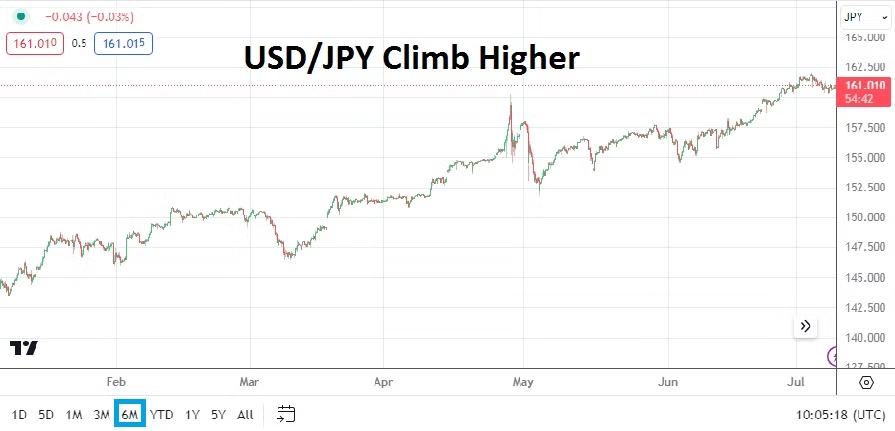
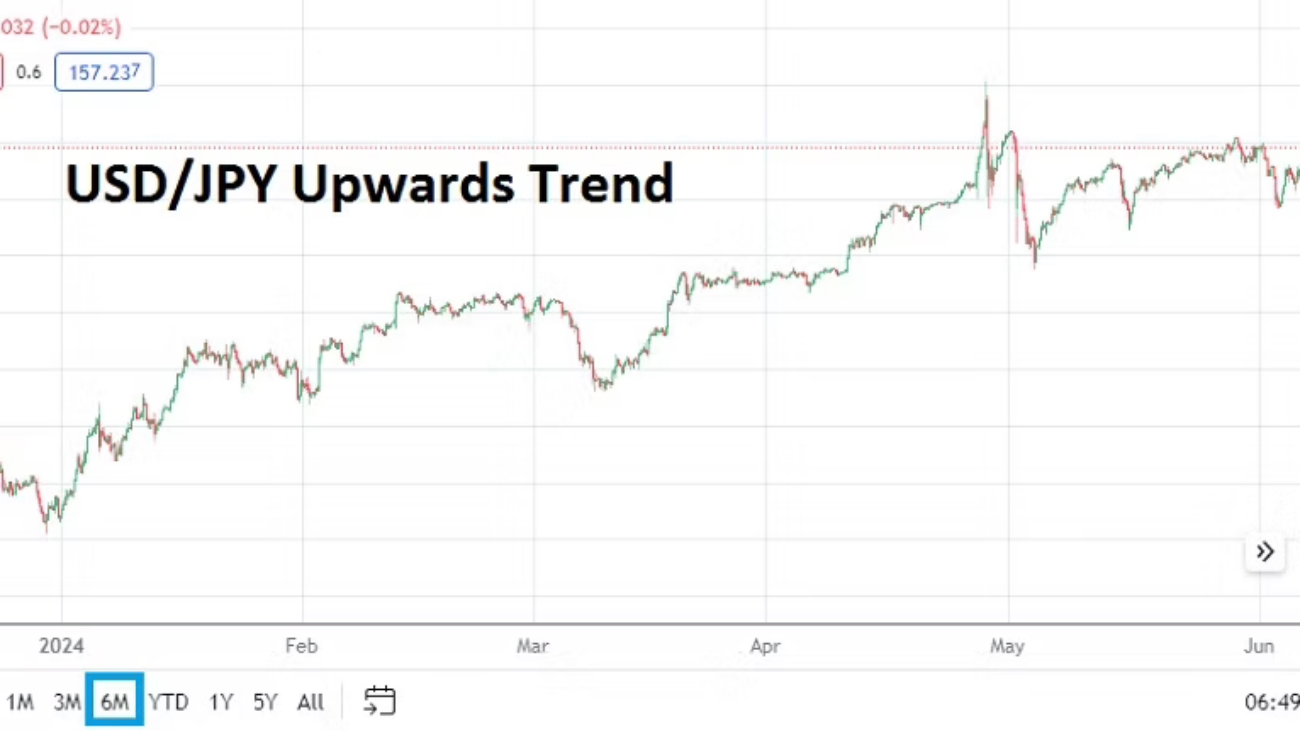
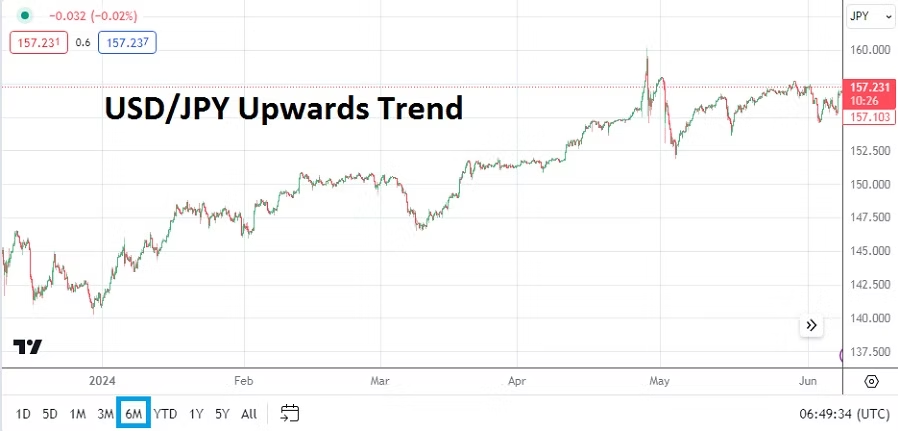
USD/JPY Six Month Chart on the 11th of June 2024

The USDJPY is now again in a dangerous value range near-term as it battles within a higher trend. The BoJ did intervene twice – in late April and early May – to try and damper speculative buying zeal of the USD/JPY and stop overly exuberant selling of the JPY. But they have been acting duplicitous as they have also wanted to no doubt allow a weaker Yen – while keeping its value within control. The BoJ has likely been hoping the Fed is going to sound more dovish this week, but if the Fed sounds more cautious than had been anticipated it could set the table for remarkably dynamic price action in the USD/JPY this week and next. If the currency pair moves too high, the BoJ could intervene again, particularly after the Fed’s FOMC pronouncements. So traders need to be careful.

Traders likely know that tomorrow CPI data and the Fed are on the schedule and these will be key events, but the noise generated around the inflation statistics and FOMC rhetoric should be viewed through the eyes of not only potential reactions from financial institution behavioral sentiment, but the possibility many of the ‘big houses’ have already positioned for the outcomes they believe will play out. In other words day traders should be ready for whipsaw trading results in the immediate aftermath of the Fed’s FOMC Statement and Press Conference.

Last week’s Non-Farm Employment Change numbers provided intriguing forensic data which will stir the suspicions of large players in Forex, equity indices and Treasuries. The jobs numbers via the headline stats looked strong. However, it must be said U.S government hiring continues to pick up, which can be looked at as an expensive way to fuel a sugar high for Americans as the States go into an election season.

Also full time workers continue to add part-time work to their tasks, this to battle rising inflation no doubt which is making their paychecks actually less effective, even if they are getting raises and receiving extra money from the added work loads they are taking on. The costs of products in the U.S are outpacing rising income. Also there is a fact that while part-term hiring is on the rise, full-time hiring is declining along with the average amount of hours employees are working per week.

The Gross Domestic Product numbers from the U.S are in decline. If folks push aside their political ideologies and look at real job numbers on the back pages of Friday’s report, and then ask why people are working less hours it is easy to conclude many businesses are actually cutting back expenses in order to try and remain profitable.

All three major stock indices from the U.S remain in sight of record highs, while there is caution surrounding the mid-term, investors still seem to be banking (wagering) on the U.S Fed to become more dovish over the long-term. Part of this analysis includes the belief that weaker GDP will eventually start to impact inflation and that this conclusion will affect the decision making of the U.S Federal Reserve at some juncture.

The Fed finds itself in a precarious position right now. They need to sound cautiously optimistic. It is an election year and they know this too. The Fed cannot publicly say they want growth to slow down because that would irritate most Americans and the White House, but they know full well that slowing GDP eventually should lower demand for products and thus erode inflation pressures.

Yet turning this full circle, the hiring being done by the U.S government, and the as of yet unmentioned fact the U.S  Treasury has increased its sales of Two Year Notes since around November; and the record amount of money the U.S is spending via a slew of suspicious costs like the ‘student loan forgiveness’, creates a muddled and over-heated fiscal policy which could be interpreted as trying to buy votes from those receiving the gifts. In other words, while the Fed is trying to stress it is battling inflation with higher interest rates and anticipates lowering them eventually, other facets of the U.S government are making this difficult because of the record amount of spending and interest rate payments they are making on short term Treasury notes. Jobs and money in the short-term are candy for voters, but the government has problems ahead regarding conflicting policies because it can lead to more economic problems.

So what do financial institutions think, well they are focused on returns for their clients. They are also looking ahead and trying to swim waters that are murky but offer the ability to profit for themselves too. They might believe they know the landscape just as well as the Fed does, and financial institutions also understand what will be said and can be done may be two different things. What to expect moving forward therefore remains confusing over the mid-term for everyone.

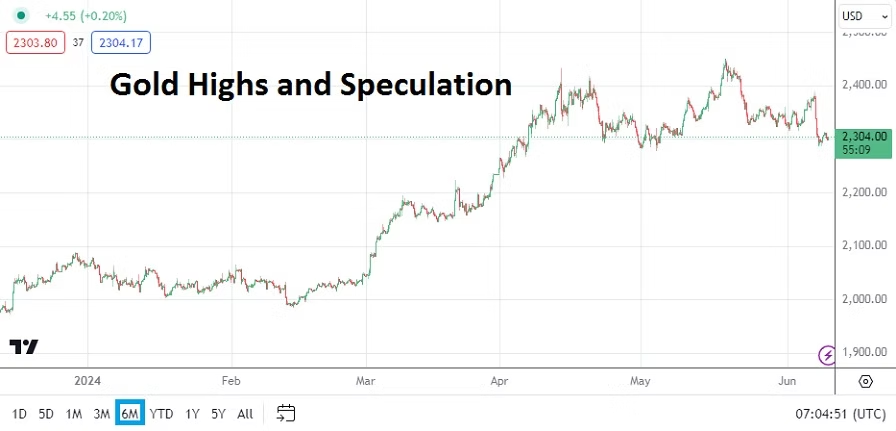
Gold Six Month Chart on the 11th of June 2024

Gold remains highly valued and traders should continue to use it as a barometer. Speculative players are also betting on gold as the USD and its ultimate mid and long-term direction remains complex. The recent downside price action after making record highs in May for the precious metal could reflect the belief the USD is going to become weaker over the mid-term.

Also it should be noted that a handful of commodities are being influenced by an abundance of speculative forces in Copper, Coffee and Cocoa. There has been a lot of talk surrounding the meme stock GameStop the past month. Experienced commodity traders understand the dynamics of speculative influences, pump and dump schemes better than most. Traders tempted to wager in these commodities should ask the same questions speculators in GameStop need to, what is the real value and when will the pin pop the balloon?

Monday, 10th of June, Japan Final GDP Price Index – the result in yesterday’s inflation data came in negative with a climb of 3.4% compared to the expected outcome of 3.6%. This is noteworthy might create more cautious rhetoric from the Bank of Japan later this week.

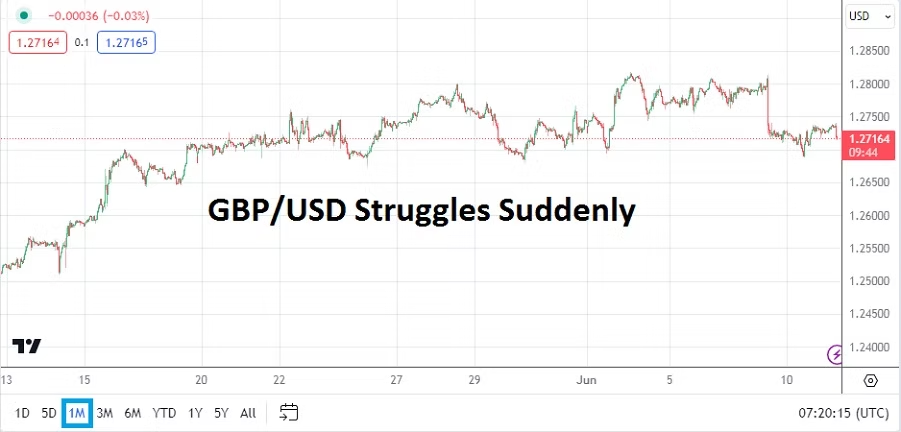
GPB/USD One Month Chart on the 11th of June 2024
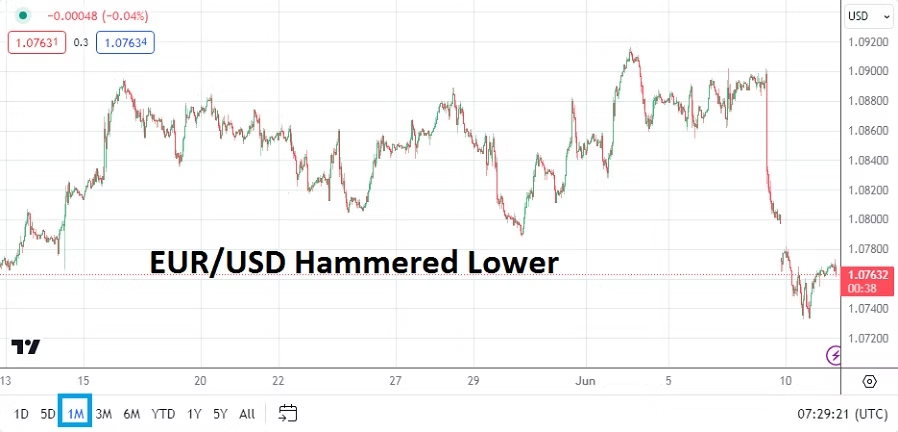
EUR/USD Six Month Chart on the 11th of June 2024

Wednesday – 12th of June, U.S Consumer Price Index – the inflation reports will be watched by all market participants in the financial world. The broad monthly CPI result is expected to come in at 0.1%, which would be below the previous months’s outcome, but the Core monthly statistic is anticipated to match the previous result of 0.3%. The CPI numbers will certainly set the tone for the price action to come in Treasuries, equity indices and Forex. Weaker numbers could spark a selloff of the USD. Stronger numbers could create more bullish ability in the USD. No matter the outcome of these CPI numbers, the U.S Federal Reserve will be standing in the shadows and ready to take center stage a handful of hours later.

Wednesday – 12th of June – U.S Federal Reserve’s FOMC Statement and Federal Funds Rate – unless there is a massive surprise tomorrow, there will be no interest rate cut from the Fed. Anyone who was holding onto the idea of a cut, had these wrong thoughts killed off this past Friday because of the ‘better’ jobs numbers report. The Fed’s monetary policy statement is likely to try and sound cautiously optimistic and will certainly include the residuals of the CPI reports filed earlier in the day. However, financial institutions will want to hear if the Fed is leaning into the notion of cutting the Fed Funds Rate late in the summer as a possibility, or if the Fed sounds so cautious that they suggest a rate cut will not happen until later this year. Let’s remember this is an election year. Yes, the Fed is supposed to be an independent body, but like the Treasury there have been signs developing that the ironclad independence of Fed rhetoric can be influenced by U.S government influences from higher up the ladder. Or perhaps it is just all a happy coincidence and the White House, Treasury and Fed all simply agree on policies which remains rather questionable in the eyes of financial institutions and analysts.

EUR/USD Consideration into Wednesday

On this note, price action in the EUR/USD is a good representative of behavioral sentiment and the different ways it can be interpreted. EUR/USD will need attention during and after the U.S Federal Reserves’s policy rhetoric. The ECB cut its interest rate last week. However the ECB refused to say it will cut rates more – leaving the EUR/USD in a neutral position. The EUR/USD sold off on Monday, this after selling off strongly this past Friday after the U.S jobs numbers.

The Fed was looked on as having to become more dovish this Wednesday, but that is now in question because of the suspiciously strong U.S jobs numbers this past Friday. And then there is the outcome of the European Parliament voting this past weekend and a turn towards the right which many in the media seem to believe is the end of the democracy, but may simply represent that some citizens of Europe want a return to law and order, solid economic practices, and respect for their historical and cultural heritage.

Meaning that financial institutions aren’t likely to be too scared about the voting outcomes regarding the European Parliament and are likely more focused on the coming U.S inflation report and FOMC meeting results. However, as much as Forex traders are considered to be sophisticated and financially astute, they still reacted to the stronger selling which was sparked yesterday. Perhaps the EUR/USD results the past couple of days will prove to be like the reaction in the India markets, this when the Nifty 50 selloff occurred early last week upon election results being in question, only to experience a reversal later.

Thursday, 13th of June, U.S Producer Price Index – these inflation reports will be watched, but the reaction to the outcome is likely to be muted because of Wednesday’s dynamics from the U.S and behavioral sentiment which will have already been stirred.

Friday, 14th of June, Bank of Japan – the BoJ is expected to keep its Policy Rate at 0.10%. The BoJ will certainly have been paying attention to the USD/JPY this week, this before they make their public announcements. The Bank of Japan like the Fed is in a difficult spot. The BoJ is trying to fuel a stronger Japanese economy with a weaker Japanese Yen, while trying to sound vigilant in order to stop speculative buyers of the USD/JPY who are trying to take advantage of the trend higher. The threat of intervention should be a concern for day traders, even though the BoJ likely doesn’t want to take this avenue because it is costly and they know the only real way to make the Japanese Yen stronger is by increasing the BoJ Policy Rate which they seemingly do not want to do for the moment.

postR168

AMT Top Ten Miscellaneous Intrigues for the 17th of May 2024

AMT Top Ten Miscellaneous Intrigues for the 17th of May 2024

10. Georgia and Slovakia: It would we wise to pay attention to Tbilisi demonstrations, and also cast an eye on Bratislava after the assassination attempt of Prime Minister Fico. Russia is certainly paying attention.

9. Superconductivity: Origin Quantum Computing Technology of China is making solid advancements and has announced they are ready to domestically produce a 72 qubit capable microwave module known as ‘Origin Wukong’. The battle to create efficient quantum components and operating systems between China, the U.S and others is real.

8. Secretary of Music: Anthony Blinken’s naive decision to play guitar in a Kiev nightclub this week is comparable to Nero playing music while Rome burned. U.S foreign policy continues to raise concerned eyebrows from friends and foes alike.

7. South African Election: The coming vote on the 29th of May is less than two weeks away. USD/ZAR as of this writing is near 18.22000, where will it be on the 30th of May?

6. Biden and Trump: The potential for debates between the two presidential candidates is growing. One question observers may be wondering is if there is adequate supply of caffeine to keep Joe energetic and ample enough hairspray for Donald to look under control?

5. GameStop: Yet another market manipulation of GME is causing massive losses for day traders. The price for the stock finished near $27.67 yesterday, this after touching a high above $56.00 on the 14th of May. GME was close to $10.00 on the 15th of April. Buyers that get in too late to these betting schemes created by frenzied crowds tend to go bust as the early manipulators cash out their profits.

4. Commodities: Cocoa is near 7560.0 USD per metric ton, and Coffee Arabica is traversing slightly below 200.00 USD. Speculative forces remain powerful in both and while they are likely still overpriced, risk management is imperative for those pursuing lower values.

3. Federal Reserve: After the weaker than anticipated CPI numbers printed this Wednesday, and last week’s eroding GDP growth statistics, financial institutions are increasing their risk appetite as they watch U.S Treasury yields decline and consider a mid-term outlook which is allowing for the contemplation of actual Federal Funds Rate cuts.

2. Forex: The EUR/USD is back above the 1.08000 level comfortably, and the GBP/USD has found sustainable trading beyond the 1.26000 ratio. While the major currencies versus the USD have pulled back slightly from near-term highs, large commercial traders are exhibiting risk appetite. A weaker USD centric notion is coming into vogue again.

1. Apex Equities: The three major U.S indices are all near record territories as solid earnings reports from corporations, amidst hopes the Federal Reserve will be able to cut rates a couple of times this year has combined to allow optimism to grow in the S&P 500, Dow 30 and Nasdaq 100. While the U.S public is starting to show they are losing confidence because of escalating consumer prices, financial institutions are wagering on solid returns via economic outlooks. Day traders looking to join the indices parade should make sure they limit their exposure, particularly if they are using CFDs and relying on short-term climbs which can suffer from sudden reversals lower.

postR161.1

Market Trading Risks: Speculative, Anxious Impatient Results

Market Trading Risks: Speculative, Anxious Impatient Results

Monday’s trading provided a solid oversight for day traders to observe market conditions in commodities, Forex and equities. Financial institutions appear to be leaning towards a belief the U.S Federal Reserve will have to become more dovish, but financial institutions and other large players are worried about shadows being caused by inflation concerns and timeframes which are likely sparking nervous wagers.

Via the commodities, results saw Gold come down from highs on Friday which approached the 2,380.00 USD perch, and drop to lows around 2333.00 yesterday. The precious metal remains within sight of record values, this as questions persist about USD direction, and speculative forces bet. WTI Crude Oil meanwhile climbed from a selloff late Friday and into yesterday’s opening while challenging the 77.75 USD vicinity, and as of early Tuesday is now over the 79.00 mark again.

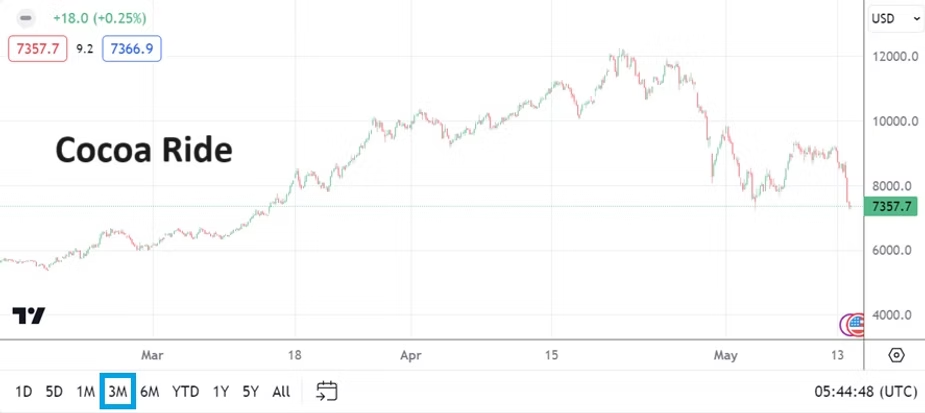
Also within the volatile world of commodities it needs to be mentioned that Cocoa which regained a portion of its higher price values last week and finished Friday above 9,000.0 USD per metric ton, fell swiftly in yesterday’s trading session and is now traversing 7,357.0 USD. Cocoa has enjoyed a spectacularly wide ride of maneuvering via market forces. The commodity is still valued within loftier heights when compared to its historical averages, and demonstrates the speed and danger (and opportunity) of price velocity.

Cocoa Three Month Chart on the 14th of May 2024

Further signs of risk appetite and fragile notions are being exhibited via U.S equity indices, which produced sideways price action yesterday as important economic data awaits and will certainly churn short-term and mid-term perspectives. The S&P 500 is again within sight of record levels, while investors of it and the Dow Jones 30 and Nasdaq 100 all brace for this week’s data which will affect their risk outlooks.

S&P 500 Index Three Month Chart on the 14th of May 2024

Monday, 13th of May, New Zealand Inflation Expectations – yesterday’s quarterly result came in slightly below the previous report. The decrease of inflation concerns likely helped the NZD/USD spark Monday’s climb above 0.60300 briefly. This morning’s early trading is seeing sideways action as U.S inflation reports are anticipated and the currency pair ebbs around 0.60180.

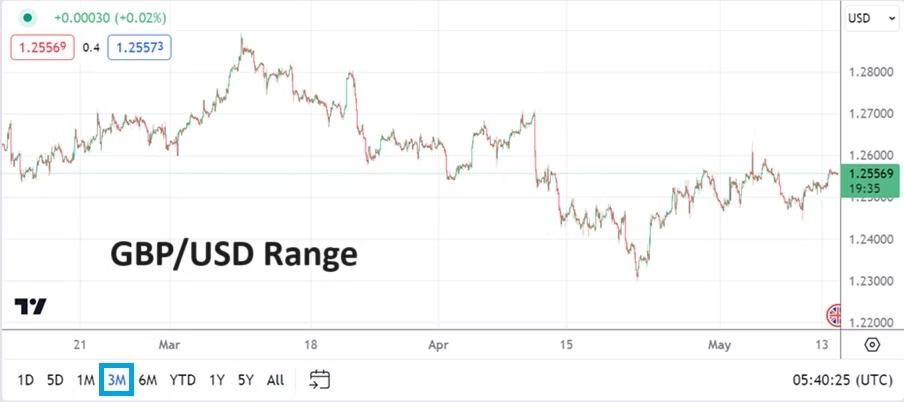
GBP/USD Three Month Chart on the 14th of May 2024

Tuesday, 14th of May, U.K Average Earnings Index, a gain of 5.7% has just been posted. This result will make GBP/USD traders nervous because it highlights that inflation remains sticky in Britain. While last week’s GDP numbers from the U.K showed an improvement, the growth certainly was not spectacular. The range of the GBP/USD remains choppy and bullish day traders targeting higher ratios on the belief the currency pair remains in oversold territory need to consider their timeframes and bias. While the 1.26000 may look like a logical target, it will take weaker U.S inflation and USD centric price action to get there.

Tuesday, 14th of May, U.S Core Producer Price Index – last month’s core report matched expectations. However, the PPI numbers occasionally spell trouble in Forex. Higher inflation results from the U.S would certainly kickstart volatility for all major currency pairs today.

Wednesday, 15th of May, U.S Consumer Price Index – this reading could prove to be the prime mover for financial assets this week because of its potential affect on behavioral sentiment. The Federal Reserve watches this number because of the influence it has on the American public. Forex will react to this report and if it is weaker than anticipated this would create weaker USD centric price action. The U.S will also report Retail Sales and the Empire State Manufacturing Index statistics on Wednesday.

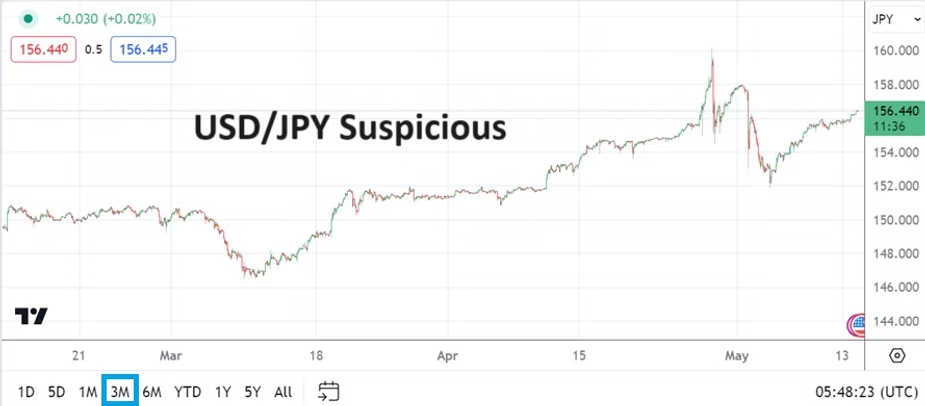
USD/JPY Three Month Chart on the 14th of May 2024

Thursday, 16th of May, Japan Preliminary Gross Domestic Product – last month’s report came in with a gain of 0.1%. This GDP data carries an expectation of minus -0.4%. Traders who like fundamentals should pay attention to revisions within the statistical pages. The Bank of Japan remains in a curious and suspicious predicament. After two interventions, the USD/JPY has climbed incrementally once again. The BoJ is certainly keeping their eyes on the USD/JPY and know financial institutions are still wagering against the Japanese Yen.

Day traders should be extremely cautious with the USD/JPY because the BoJ has the ability to strike with a massive blow when not expected. Risk management is essential for speculators wagering on this currency pair. Evidence of speculative interest in the USD/JPY correlates to the notion that while the USD has been weaker against many major currencies recently, the Japanese Yen remains within a weaker and elevated price range.

Friday, 17th of May, China Industrial Production and Retail Sales – economic dark clouds continue to cascade on Asia’s largest economy. The industrial numbers will be watched by investors certainly, but the overall health of Chinese consumers will likely be the focal point. The USD/CNY remains within bullish terrain, but the Shanghai Stock Exchange’s SSE Index has done well since its lows in the first week of February.
postN87

AMT Top Ten Miscellaneous Viewpoints for the 29th of Dec.

AMT Top Ten Miscellaneous Viewpoints for the 29th of Dec.

10. Book: Cargill: Trading the World’s Grain by Wayne G. Broehl, Jr., a book that folks interested in physical commodities may find interesting.

9. Music: A Night in Tunisia played by Charlie Parker and Miles Davis on The Complete Savoy & Dial Master Takes.

8. NBA: Detroit Pistons have now lost 28 straight basketball games. Will the team get a participation trophy at the end of this season?

7. Post-Quantum: While ‘Artificial Intelligence’ grabs headlines, ‘post-quantum cryptography’ is a phrase and reality that corporations will need to learn increasingly.

6. Behavioral Sentiment: Risk appetite has remained firm during this holiday week, which may spark additional optimistic trading banter in January as trends are wagered upon.

5. U.S Treasuries: Yields have continued to move lower, and dovish outlooks regarding the U.S Federal Reserve inside many financial institutions may increase speculative zeal.

4. Gold: The precious metal remains near highs and the price of 2100.00 USD is hovering above, will this level start to be challenged and penetrated?

3. JPY and NZD: Both currencies remain bullish as they recover from long-term USD strength, this while mid-term price realms are being firmly challenged. Technical traders with long-term outlooks may want to start examining one year charts.

2. U.S Equities: S&P 500 on the cusp of record highs, the Nasdaq 100 is at apex values – while the Nasdaq Composite remains bullish, and the Dow Jones 30 continues to create new heights.

1. 2024: A prosperous and peaceful New Year is wished for all.

postN83.1

FOMO Potential Could Fuel FX and Equities with Calm Winds

FOMO Potential Could Fuel FX and Equities with Calm Winds

Traders should not run towards their trading screens as the week begins, steady attitudes and risk taking tactics will be needed. Yet, there may be reasons to get excited. The return of full market volume as U.S financial institutions open and employees get back in their offices after the long holiday weekend needs to be monitored. The term ‘FOMO’ – fear of missing out – may be heard this week if U.S equity indices continue to shine, Forex demonstrates additional USD weakness and U.S Treasury yields decline further. There will be a whirlwind of economic data and opportunities for ‘official’ rhetoric in the days ahead.

Day traders should ask questions about the results which were seen technically via their charts last week, assets all struggled to find momentum last Thursday and Friday. And earlier in the week many Forex pairs produced choppy results. But here’s the thing, behavioral sentiment was rather muted as large speculators and financial institutions understood that trading volumes would be light – this caused strong bursts and sudden reversals early – but by the end of the week rather calm waters.

Many trading houses could increase their speculative positions this week based on their outlooks. Financial institutions clearly have believed the USD had been overbought and the ability of the GBP, EUR and JPY to gain in the past two weeks are possible signs large ‘players’ remain positioned for further USD weakness.

Equity markets have done well in November, but the major indices including the Dow 30, S&P 500 and the NASDAQ Composite all started to garner strength in the last week of October. Mid-term highs are being achieved in U.S indices. The parade of buyers may not be done quite yet.

Economic data results are vital for day traders to understand because they provide insights into the thinking of financial institutions regarding their outlooks. It is not the trading of small speculators that moves markets, it is the power of large cash positions which drives results. Questions regarding where the cash is going and the allotments financial institutions are pursuing is a key to understanding how the markets are going to react. This information is not readily available for day traders, instead smaller speculators need to try to comprehend outlooks regarding positioning and timeframes of larger players.

Part of the FOMO factor could develop as financial institutions begin to question how much money they will hold in money market accounts for their clients. While the practices of large investors are always comforted by the notion they are making guaranteed returns, the pursuit of better results and the desire for risk appetite does drive behavioral sentiment when bullish markets are being exhibited.

This week will be intriguing as full volumes return to the marketplace today and tomorrow. From today until the 13th of December FOMC Statement from the U.S Federal Reserve, results in the financial markets could be speculative. Financial markets are starting to signal that optimism is creeping back into the mindsets of large investors who may believe mid-term economic scenarios have improved.

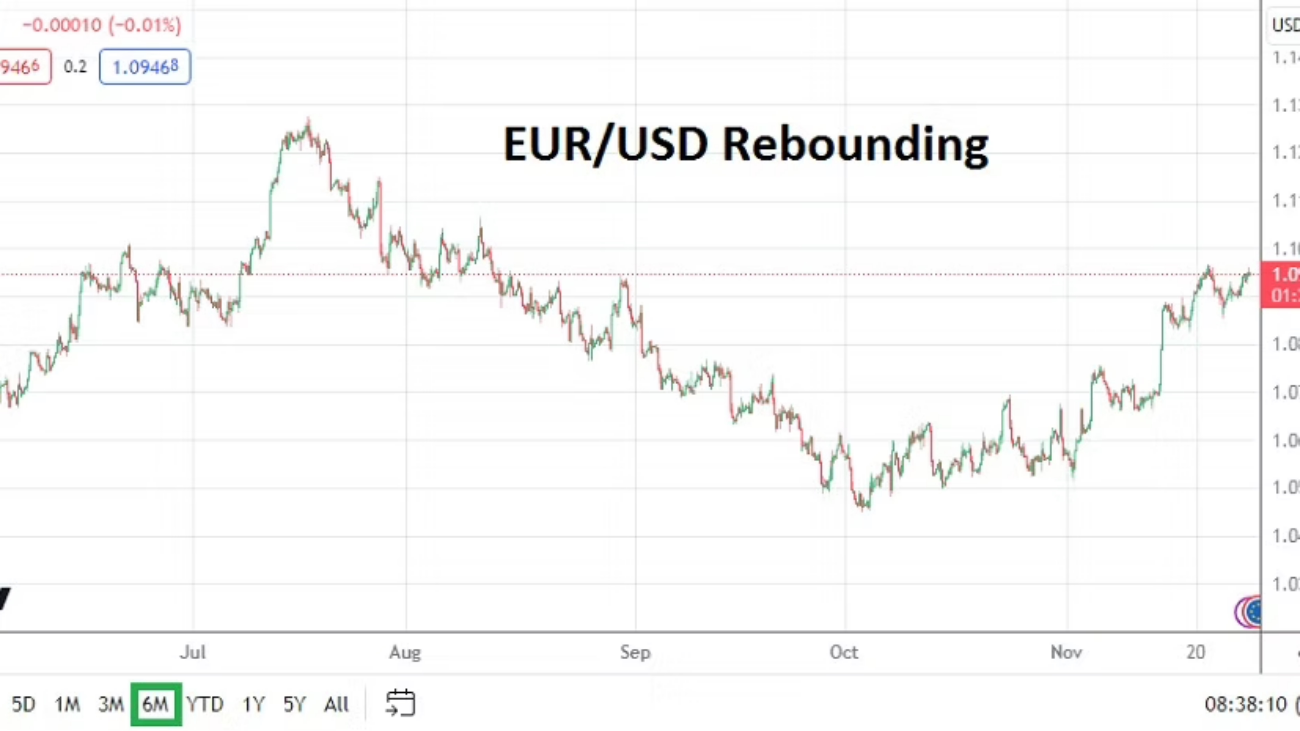
EUR/USD Six Month Chart as of 27th November 2023

Monday, 27th of November, E.U. ECB President Lagarde – the European Central Bank leader will deliver thoughts regarding monetary policy to the European Parliament. While the E.U still is sufferning from recessionary numbers, economic data last week came in slightly better than estimated. However, the EUR/USD remains in a USD centric mode and this will continue this week.

Tuesday, 28th of November, U.S Consumer Confidence via the Conference Board, the numbers are expected to be slightly weaker than last month’s outcome. U.S economic data has been showing signs of being weaker than expected, last week’s Core Durable Goods Orders report followed this trend.

While this may be read as bad news by some people, day traders should note – particularly Forex speculators – that slightly weaker U.S economic data currently is music to the ears of many financial institutions because they believe the Federal Reserve will have to shift their rhetoric from aggressive to neutral.

Tuesday, U.S Federal Reserve Officials – a slew of FOMC members will be speaking at various events during the day. The Fed likes to give clues to the financial markets regarding their outlooks and perceptions regarding interest rates. The Federal Reserve has certainly paused their interest rate hikes.

The question now is if the U.S central bank will start to say while they remain diligent regarding inflation, that they now see signs of a ‘soft landing’ emerging within the U.S economy. If the Fed speakers begin to sound not only neutral, but offer hints of becoming potentially dovish by the spring of 2024 regarding monetary policy, this could spur USD selling.

Wednesday, 29th of November, Germany Preliminary Consumer Price Index – the inflation results are expected to be slightly weaker than last month’s outcome. German economic data has been recessionary, financial institutions know this, what large traders would like to see is stable results that are not wildly surprising.

Wednesday, 29th of November, U.S Preliminary Gross Domestic Product – the growth numbers are expected to show a slight increase. Equity markets, Forex and commodity markets will react to these results. The U.S economy has been surprisingly strong regarding growth. A slight slowdown regarding the GDP numbers would not be the worse thing, if growth numbers did come in below the estimate this could fuel additional USD weakness.

But traders should not get overly ambitious and bet against the GDP numbers. If the expected outcome of 5.0% is delivered, equity markets could use this as additional fuel. The number is sure to be a talking point, but unless their is a massive divergence it may simply be a way to create noise for ‘talking heads’, when in fact behavioral sentiment regarding risk appetite remains optimistic.

Thursday, 30th of November, China Manufacturing PMI – the result is forecast to show a slight improvement. China economic numbers remain a concern, particularly from the real estate sector which is suffering and is causing cascading troubles on other sectors within the nation. Global demand for products, as an example from European countries, that are suffering recessionay pressures also is slowing China’s manufacturing. A slight improvement would be welcomed by global investors participating in China financial assets.

WTI Crude Oil Six Month Chart as of 27th November 2023

Thursday, 30th of November, OPEC and JMMC Conference – the oil producers will certainly make their policies known and energy markets will react to the news and rumors. Commodity traders should note that WTI Crude Oil, Brent, Natural Gas and Unleaded Gasoline markets have been under price pressure and important mid-term cash support levels are in sight.

Thursday, 30th of November, U.S Core Personal Consumption Expenditures Index – this inflation reading is important and should be watched. The result is expected to be weaker than the previous month. If the outcome matches the anticipated reading of 0.2% or less, this could spur additional USD weakness. The Core PCE Index is an important reading for the U.S Federal Reserve regarding its inflation insights.

Friday, 1st of December, U.S Fed Chairman Jerome Powell – the Fed leader will be speaking at a college event in Atlanta. Traders should remember that about ten days before the Fed’s pause in November regarding its FOMC Statement, Powell delivered a large hint regarding monetary policy. The Fed Chairman’s comments will come late on Friday and could cause a reaction early next week if Powell’s remarks fuel more Forex speculation.

Additional note – the U.S jobs numbers will not be released this Friday, the Non-Farm Employment Change and Average Hourly Earnings results will be published on the 8th of December.

postN64

Optimism in Challenging Conditions and Time Considerations

Optimism in Challenging Conditions and Time Considerations

Traders by nature are optimists, after all they are wagering on outcomes they believe are valid with targets regarding future results. Global market conditions for the moment have created expensive price action unfortunately, this as plenty of day traders wagering on their perceptions have found out while whipsaw movements and fast velocity have taken place and caused losses.

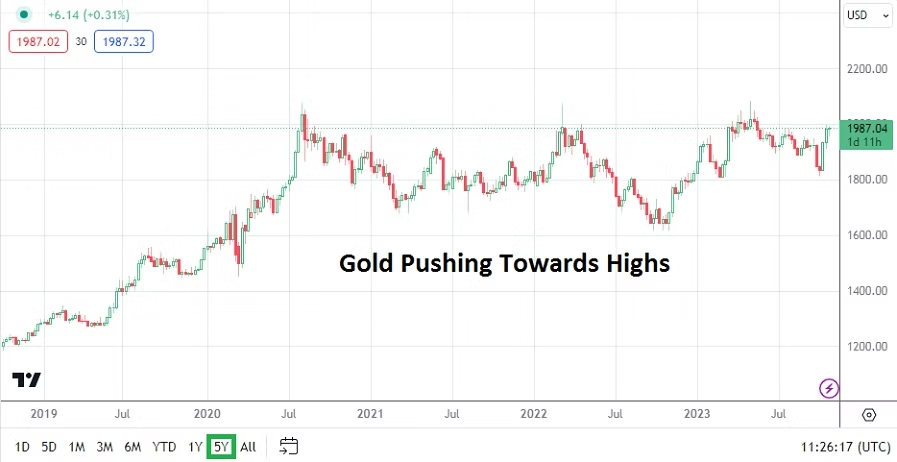
The USD continues to create turbulent higher values among many major currencies it is teamed against as financial institutions exhibit risk adverse tendencies. U.S Treasury yields may be going up because the U.S Federal Reserve continues to sound alarms regarding inflation, but the last two weeks of trading globally have seen an influx into U.S Treasuries as a safe haven move. Another signal that risk appetite is poor among global investors is because while the USD has gotten stronger, gold has also risen in value.

Gold Five Year Chart as of 26th Oct. 2023

And importantly, global markets are trading in conditions which are not considered normal. Many inexperienced people within financial institutions have not dealt with markets like the ones being battled now. High interest rates combined with risk adverse conditions because of concerns regarding an escalation of war conditions in the Middle-East are causing a storm of volatility. U.S stock indices are trading at mid-term lows, and this may continue to be a theme over the next few weeks and beyond, but certainly there are those among us who look towards sunnier days.

So what does an optimist do if they are a day-trader? Perspective needs to be questioned at all times by speculators, and bias regarding all insights by individuals need to be given consideration. A trader must make sure they are not trading based on noise which is coming from the media and tainted with hyperbole. A trader must also question their personal instincts making sure they are free of preconceived notions. Behavioral sentiment gets affected from many angles when market noise becomes loud. Looking for a quiet place to think about market direction is vital for everyone.

Speculators need to remain calm and stick to risk management tactics that prove effective even during chaotic trading conditions. A variety of ways to be involved with the markets directly exists for all, Forex, equities and indices, commodities, bonds are only some of the avenues. Traders can go long or short on their chosen positions, they can participate in the ‘cash’ markets, but can also participate in futures and options trading via time related duration.

Famous investors are known for taking advantage of lower values when fear is high. They look for value via fundamentals within assets with long-term track records. It is not an accident the USD is strong, U.S Treasuries are being sought, gold is being bought currently.

Trends are there to be found and can be taken advantage of by day traders who are looking for quick hitting outcomes, but they must proceed carefully. Because it is also important to acknowledge that no matter how bad circumstances sometimes look in the short-term, that a positive quality among we as humans is to seek optimism. There are reasons to participate in trades with a perspective knowing more tranquil days will come and the markets will grow calm again, markets can reverse and suddenly display risk appetite.

postN21

Risk Events and Questioning the Hyperbole of ‘Bad Actors’

Risk Events and Questioning the Hyperbole of 'Bad Actors'

The week in a way has already started for financial institutions and traders because of the developing news from Russia. Due to yesterday’s events surrounding the ‘noise’ caused by the Wagner Group’s leader Yevgeny Prigozhin, let there be no doubt that energy sector traders became nervous and fragile behavioral sentiment was being anticipated for Monday’s openings. However, like a well staged drama (perhaps this is giving too much credit to the actors) the Russian saga seems to have come to an odd conclusion. Leaving the possibility for a Part Two to develop. Stay tuned ladies and gentlemen.

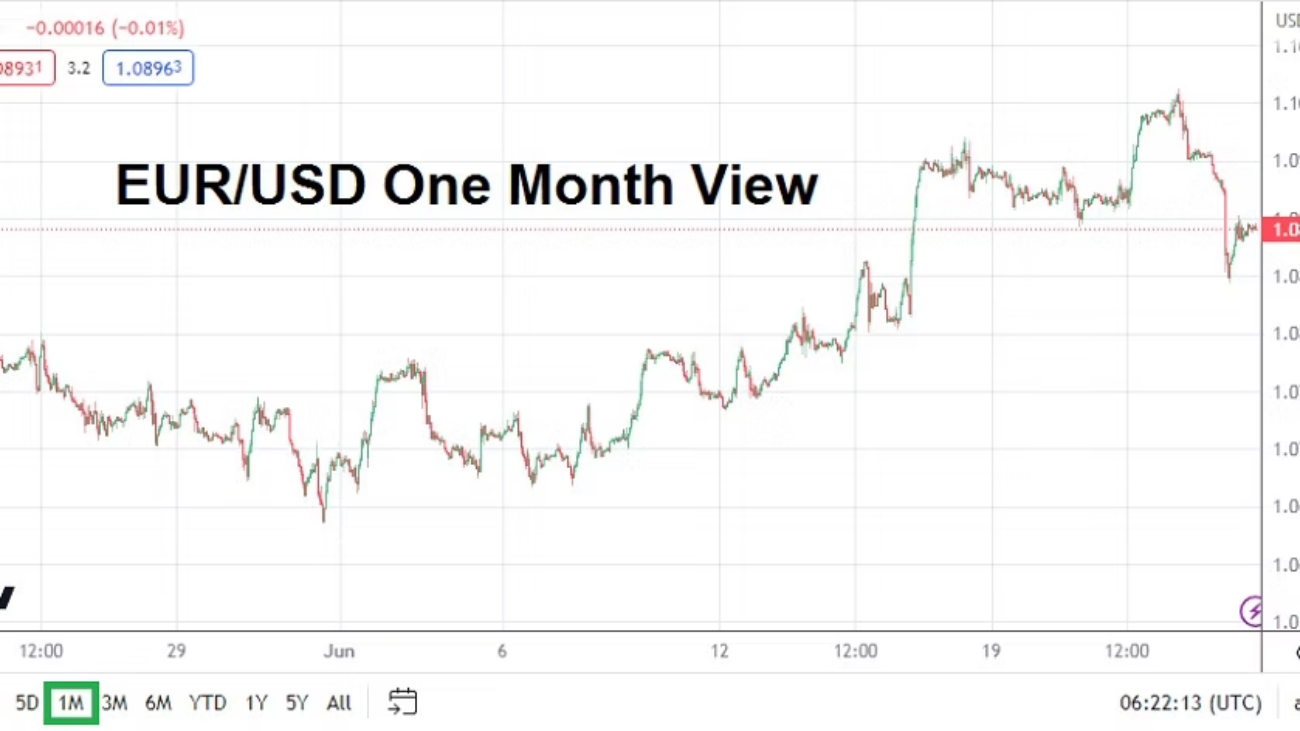
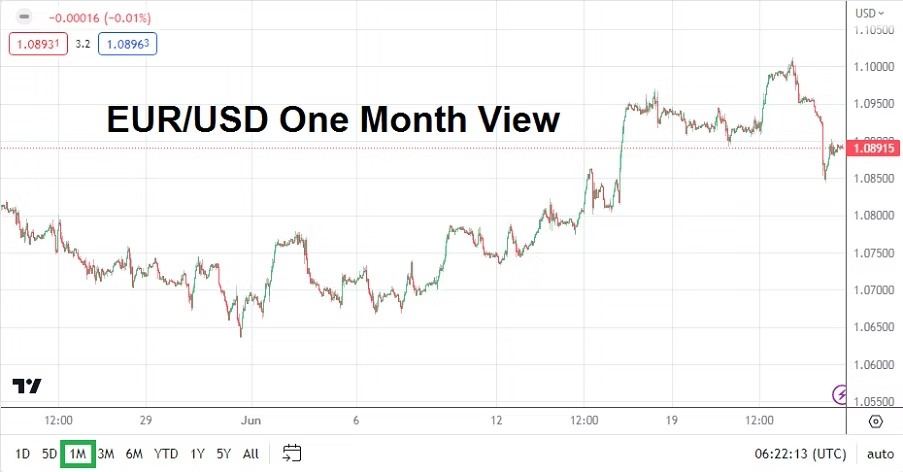
EUR/USD One Month Chart as of 25th June 2023

Monday, the 26th of June, Germany ifo Business Climate – the reading is forecast to come in worse than the previous month. Germany has turned in rather troubling economic data and the E.U as a whole is struggling under the weight of inflation and lackluster growth. The EUR/USD could be affected from the business climate survey.

Monday, the 26th of June, E.U ECB Forum on Central Banking – the annual event which is a bit like the Fed’s Jackson Hole Symposium will be attended by the leading central bank officials from around the globe. This year’s event in Sintra, Portugal will focus on inflation. ECB President Christine Legarde will kick off the event, which will end on Wednesday the 28th of June with speeches from Fed Chairman Jerome Powell, BoE Governor Andrew Bailey and others.

Tuesday, the 27th of June, Canada Consumer Price Index – a slew of inflation reports will be delivered. The forecast anticipates a slight drop in price pressure, but will that actually be the result? The USD/CAD could move based on the outcomes.

Tuesday, the 27th of June, U.S Consumer Confidence via the Conference Board – this survey is expected to show a slight improvement in the outlook of American consumers.

Wednesday, the 28th of June, E.U ECB Forum on Central Banking – the event will conclude with speeches from the heads of the ECB, Bank of Japan, Bank of England and Federal Reserve. The event is not supposed to stir up the dust, but Forex traders should monitor the rhetoric generated.

Thursday, the 28th of June, Germany Preliminary Consumer Price Index – the data is expected to show an increase in prices and underscore the ECB’s aggressive rhetoric regarding inflation.

Thursday, the 28th of June, U.S Final Gross Domestic Product – the growth numbers are projected to show a gain of 1.4% compared to last month’s 1.3%. The results will move the financial markets if they are surprising. Traders should be on the lookout for revisions to the previous month’s numbers.

Friday, the 29th of June, U.K Final Gross Domestic Product – an expected ‘growth’ number of 0.1% is anticipated, which would match last month’s lackluster outcome. The U.K is hovering under recessionary pressures and this GDP result will be watched by GBP/USD day traders.