post42

Calendar this Week includes Debt Ceiling, Earnings and Jobs

Calendar this Week includes Debt Ceiling, Earnings and Jobs

Monday the 29th of May, Many banking holidays including in the U.S and U.K – traders choosing to participate in the markets should be aware that low transaction volumes can cause volatility due to imbalances. Be careful if you choose to trade on Monday.

Tuesday the 30th of May, U.S Debt Ceiling – talks and vote will be in focus. It appears an agreement may be in place, but financial institutions will certainly monitor the shenanigans from Washington, D.C. this week to see if a compromise can avert a crisis. Equity and Forex markets will respond to all developing news.

Tuesday the 30th of May, U.S CB Consumer Confidence – this survey of households in the States should be monitored. Spending remains strong in the U.S while manufacturing outlook appears nervous. The results may imply forward looking sentiment for U.S economy regarding consumption and could stir the markets slightly.
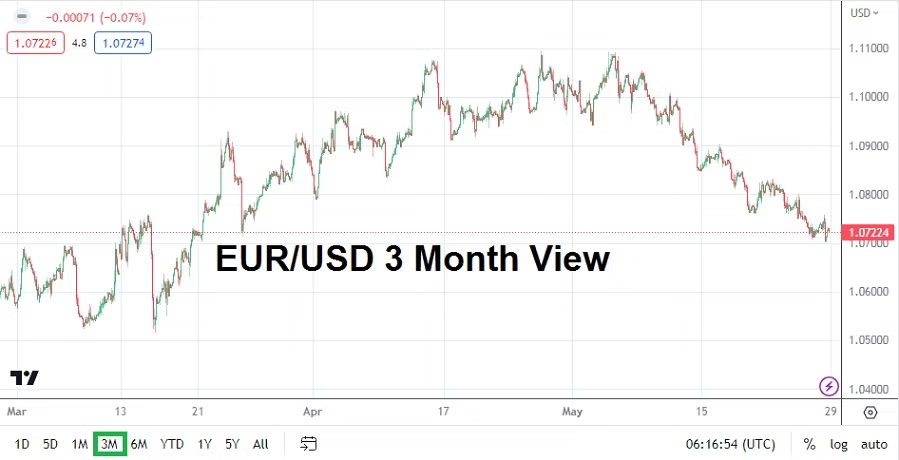
EUR/USD Three Month Chart as of 28 May 2023

Wednesday the 31st of May, Germany Preliminary CPI – inflation remains troubling in Europe and the German economy is seen as the linchpin. The result from the Consumer Price Index could rattle the EUR/USD a bit.

Thursday the 1st of June, China Caixin Manufacturing PMI – this Purchasing Managers Index from China will give some insight regarding the nation’s economic sentiment and its results will offer some clues regarding global demand for goods. Last month’s number was viewed as slightly negative.

Thursday the 1st of June, U.S ISM Manufacturing PMI – last week’s manufacturing and Core Durable Goods Orders numbers from the U.S were negative. While growth via the Prelim GDP came in slightly better this past Thursday, economic outlook remains skittish. Last month’s ISM data result was negative and this month’s forecast is not optimistic either.

Friday the 2nd of June, U.S Average Hourly Earnings and Non-Farm Employment Change – the results will shake the broad marketplace. Inflation via wages in the U.S remains a concern for the U.S Federal Reserve and the job market has appeared on the surface to remain rather strong statistically. A strong number from the Average Hourly Earnings could keep the Fed nervous and another hike on the 14th of June within their mindset.
post41.1

Risk Friday: To Freeze or Reduce is not the Correct Question

Risk Friday: To Freeze or Reduce is not the Correct Question

The U.S debt ceiling debate in actuality, is a vote to legally increase the amount of debt the U.S government can spend. Approval of the debt ceiling vote will give a green light to the government to be a larger debtor without consequence. Other than eventually not being able to pay its bills in the future, what’s the problem some might ask. And let’s not consider potential downgrades from S&P, Fitch Ratings and others for the moment.

Here are the Problems Ahead for the U.S

U.S debt dominoes have grown heavy and are getting harder to stand back up, but those with the ability to spend simply do not care because they will never be held responsible. The U.S government seems to have forsaken capitalism and have entered the plundering stage, where the government believes it can ‘find’ enough revenues from higher taxes and the selling of long-term Treasury bonds while remaining the big man on campus.

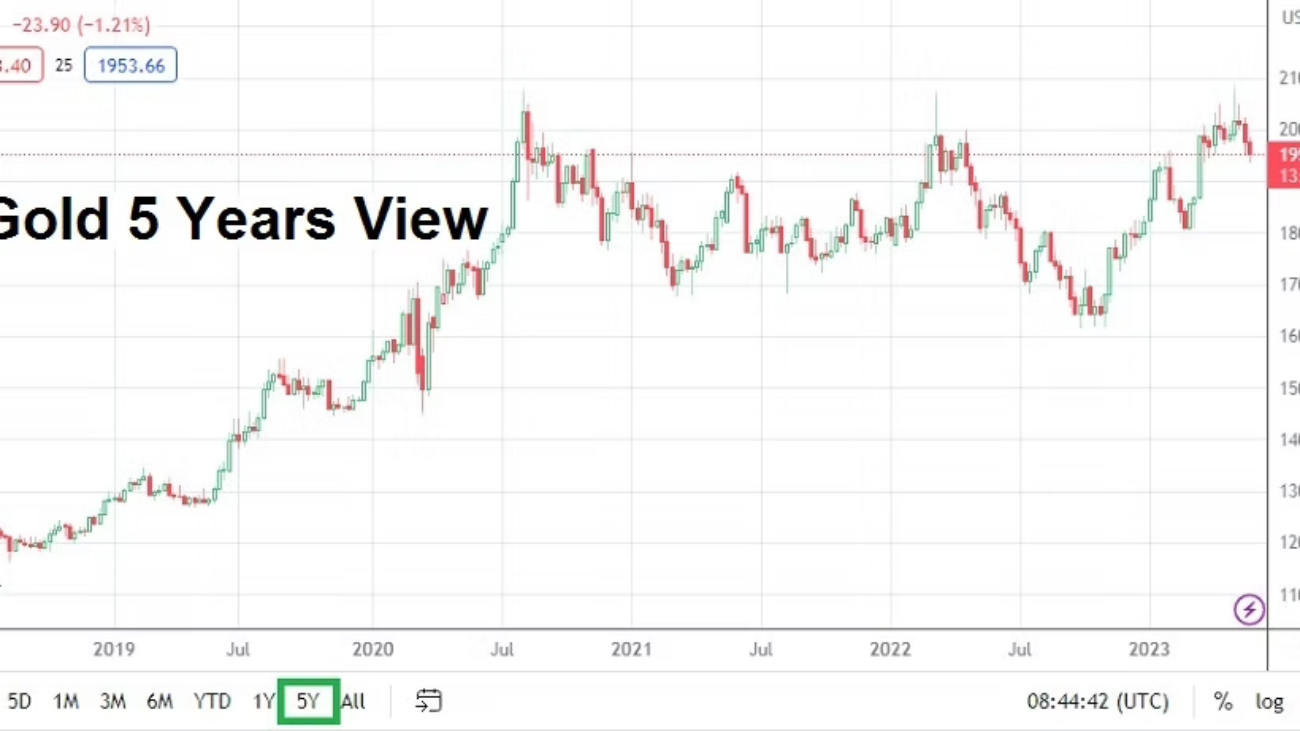
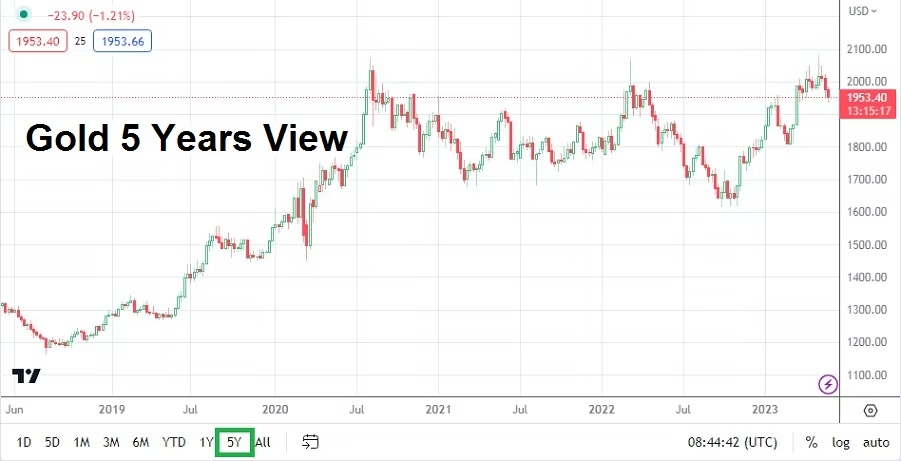
Gold Five Years Chart as of 26 May 2023

Higher taxes frequently stymie businesses and make it harder to hire employees because the expenses become too big. As an example for what the future could look like in the States turn your eyes to Chicago, where elected city leadership is considering implementing a ‘head tax’ in which businesses would need to pay a fee on each person it employs. The tax situation is getting so ridiculous in Chicago, that long time economic juggernauts like the Chicago Mercantile Exchange are grumbling and threatening to leave because of “ill-conceived” policies.

Likewise, the U.S government seemingly doesn’t understand that spending cannot be replenished by tax collection alone. Actual cuts to spending need to take place. It is called reducing the deficit. The naive will eventually be made to see the light painfully.

The Ramifications for the U.S could be Economically Untenable

U.S interest rates which have been raised the past year and a half, have affected mid and small sized banks and the amount of money the U.S government has to pay on maturing bonds because of higher borrowing costs. Fitch Ratings has recently whispered publicly they may be forced to downgrade U.S debt offerings, this if the U.S government doesn’t increase the amount of money it is legally allowed to owe. Pause for a second here, do you see the absurdity in this clown show? In other words a rating service company is OK with the debtor being allowed to ‘borrow’ more money from itself that it does not have – in order for that same debtor to be allowed to ‘promise’ it can repay its debt at a later time.

The U.S government keeps allowing debts to grow and creating entitlements as if this has no effect on inflation. Quantitative easing and stimulus packages initiated by the U.S government artificially kept the Gross Domestic Product figures looking positive and the equity markets happy for more than a handful of years. However, the proverbial ‘can’ has been kicked down the road so many times it is ready to disintegrate. The debt problem is simply being passed down to the children and grandchildren of the U.S, or so the current leadership seems to hope. But what if the debt problem explodes now? This generational problem is systematic globally, other governments practice equally bad or worse fiscal policy. Politicians do not like to walk around with empty hands.

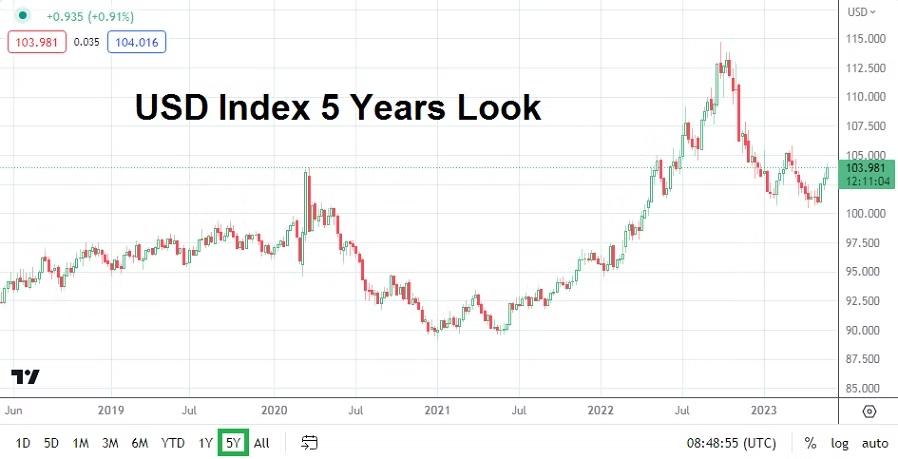
USD Index Five Years Chart as of 26 May 2023

The Clock is Ticking Loudly and Some Investors are Paying Attention

The clock is ticking in the U.S and unless they can prove expenses can be managed better, they are on a perilous road to becoming a regular nation among others, that is looked upon with scorn and derision because they cannot pay their debts. The dominance of the USD will be punished and shattered if they do not stop the nonsense. The dollar’s status as the reserve currency of the world has been slipping incrementally for a couple of decades and this will continue if the U.S government does not seize the problem and find solutions. A failure to show budgetary sanity and decrease expenditures will eventually cause something many U.S citizens do not want, relegation to the status of a ‘regular’ nation. The attitude of, “I remember when” could become a refrain heard in the U.S sooner rather than later.

The U.S is in a precarious place and sunshine in many respects is not on the horizon. Financial institutions supposedly believe the U.S debt ceiling will be taken care of in the coming days or weeks. However, a debt ceiling agreement is not the correct bandage for a broken leg, the problem is much larger. Debt should not be allowed to continuously grow. If the situation gets worse, some nations sitting on the geopolitical fence may shift their alliances depending on the ability of mutual relationships to help deliver economic stability.

post40

USD/INR: Narrow Price Range as Nervous Sentiment Exhibited

USD/INR: Narrow Price Range as Nervous Sentiment Exhibited

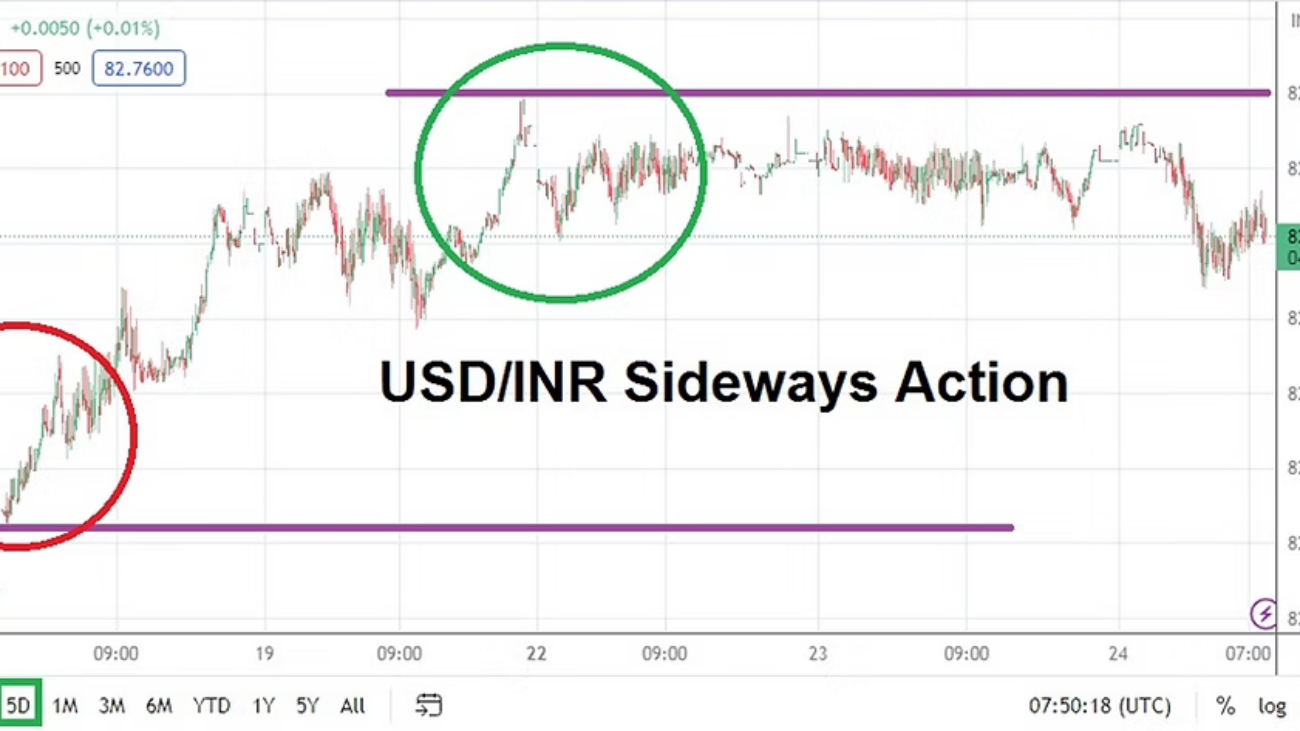
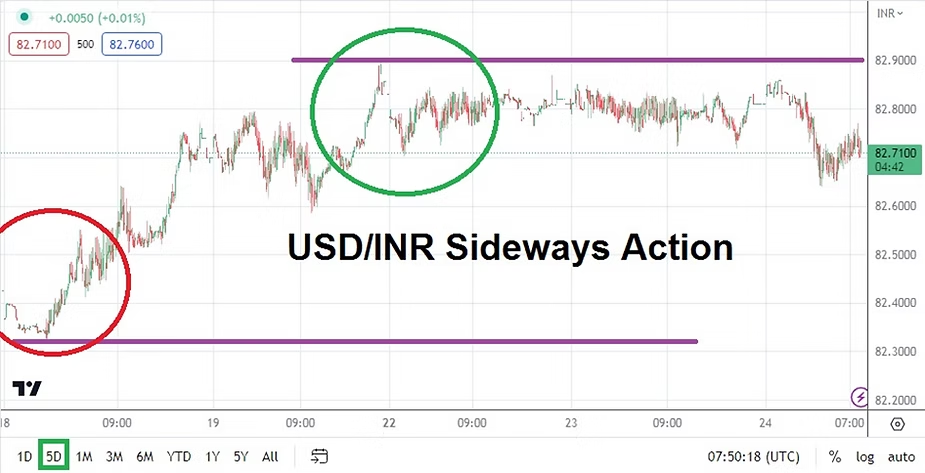
The USD/INR has delivered a rather narrow price range the past four days of trading as the currency pair awaits impetus from crucial U.S risk events.

The USD/INR is trading near the 82.7000 ratio as of this writing. While the currency pair over the past month has seen a rather incremental climb higher, the past handful of days has seen rather sideways price range emerge. Talk about Reserve Bank of India intervention has been discussed widely and this has caused speculative caution too. However, risk events from the U.S which will be delivered soon are also a catalyst for conservative trading in the USD/INR and broad Forex markets globally.

Trading Tip Regarding Bias that Forex Speculators should try to Avoid

A very important aspect for USD/INR traders to consider is that they should remove any bias they may feel personally regarding the Indian Rupee. Traders closely connected to the currency they are trading, particularly if they are citizens of the nation; tend to believe their national currency should always be stronger no matter the circumstances. This notion of bias does not always work out well for traders with a nationalist leaning.

The Indian Rupee is no different regarding its ability to maneuver against the USD like many other major currencies. While the Indian Rupee certainly has its own financial capabilities, the USD remains the dominant currency on the block and affects most outcomes. If a trader can remove their bias and love of their nation from their trading sentiment, this often makes it easier to have a more realistic viewpoint about potential price direction in the short-term and long-term. The Indian Rupee is an important global currency, one that will grow in stature, but traders should remember current circumstances too.

USD/INR Five Day Chart as of 24th May 2023

U.S Debt Ceiling Concerns and the Upwards Drift of the USD/INR Causing Problems

Concerns are being voiced regarding the failure of U.S debt ceiling talks, the inability to not find an agreement in the U.S Congress is problematic. June 1st is supposedly the date the U.S government must reach a conclusion. The past week has seen signs from Democrats and Republicans acknowledging the importance of finding a settlement, but political rancor still is making a mess of the situation. Trading institutions are certainly not happy about the loud debate and could ‘punish’ financial assets more over the short-term until a debt ceiling compromise is reached.

The move higher in the USD/INR has likely caught many speculators by surprise the past month. However, the drift upwards has correlated to the broad Forex markets the past couple of weeks, this as the USD has turned stronger against many major currencies. The USD/INR essentially went from 82.1200 to its current price since the 15th of May. The Forex pair was trading near 81.6000 on the 4th of May. The temptation to sell the USD/INR the past couple of weeks has likely been strong as traders flirted with the notion technically that the currency would have to reignite its downwards path, but that clearly has not happened.

Today and the remainder of the week, the U.S has important risk events on the calendar. U.S Treasury Secretary Janet Yellen will be speaking and will certainly be asked to state her opinion on the debt ceiling talks. She will likely try to offer a neutral tone and not scare the financial markets. However, she can certainly be counted upon to say it is important to reach an agreement so the U.S can continue paying its financial obligations.

Perhaps more important than Treasury Yellen’s talk this afternoon, will be the U.S Federal Reserve’s FOMC Meeting Minutes publication later in the day. Financial institutions globally are nervous about the Fed’s interest rate outlook regarding its June Federal Funds Rate decision. Many analysts have predicted the U.S central bank will halt interest rate hikes and not increase on the 14th of June. Yet inflation data from the U.S remains problematic. Today’s FOMC Meeting Minutes text will provide insights regarding the Federal Reserve’s last meeting and give an inside look towards its leanings for a potential hike or pause.

USD/INR traders should also be aware that important Gross Domestic Product data will come tomorrow which will offer details regarding U.S growth. On Friday the U.S will release Core Personal Consumption Expenditure statistics and this will provide inflation results, and the outcome will certainly influence the U.S Federal Reserve’s June interest rate decision.

post35.1

Sudden Bullish Momentum of Indian Rupee Raises Questions

Sudden Bullish Momentum of Indian Rupee Raises Questions

The past week of trading within the USD/INR has seen a bullish trend emerge, this while many speculators were likely starting to believe lower price realms and targets were possible.

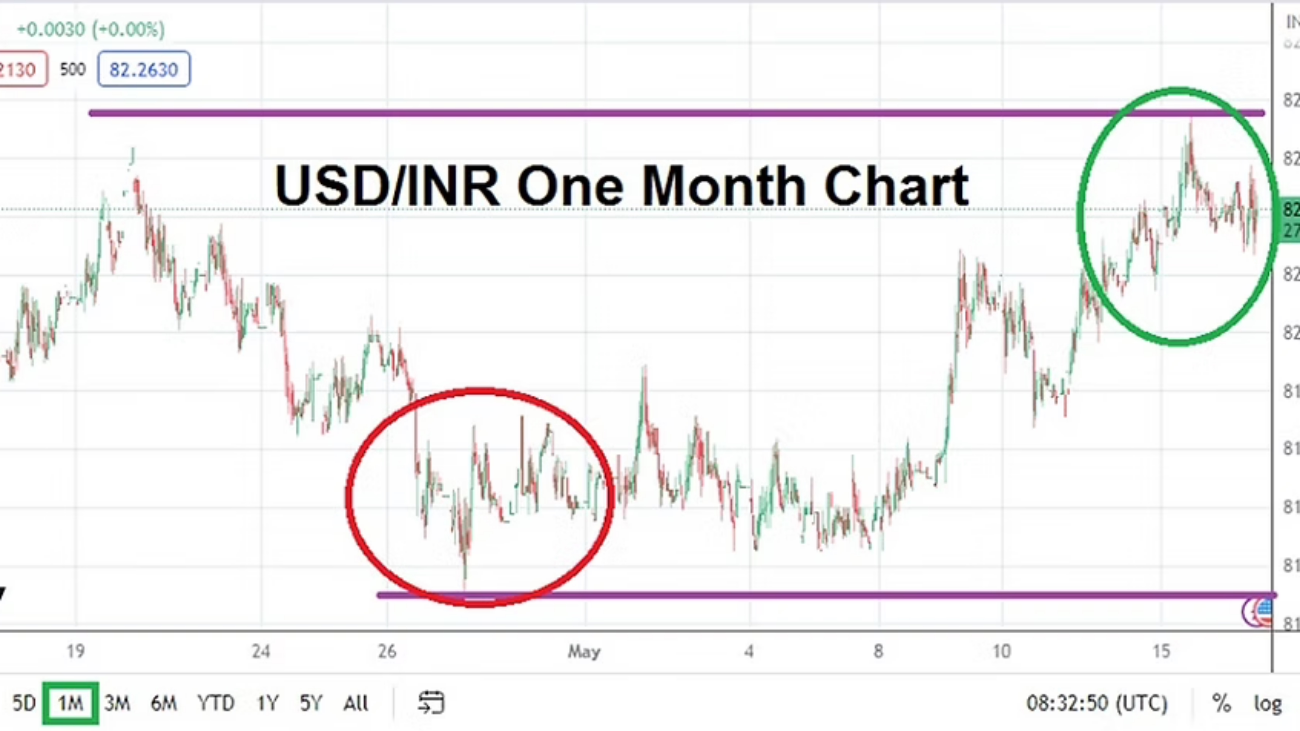
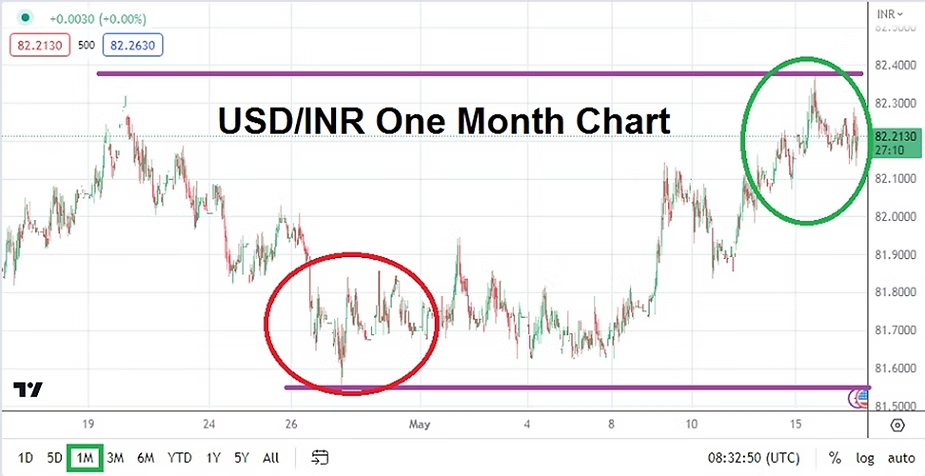
The USD/INR is trading near the 82.2200 mark as of this writing, which is within the higher elements of its one month price range. Volatility within the USD/INR has been abundant the past week and has likely proven expensive for speculators who were pursuing the currency pair with visions of more bearish price action to target. Early May values of the USD/INR certainly tested lows and likely fueled the appeal of selling positions. However, the early May lows within the Forex pair tested the 81.6260 mark, while never actually hitting April’s lowest values which tested the 81.5500 ratio on a couple of occasions.

USD/INR One Month Chart as of 16th May 2023

One of the dangers of trading is always the potential for a sudden change in behavioral sentiment. The lows in the USD/INR seen on the 8th of May, which is only a little bit more than a week ago, highlights the price velocity the currency pair has demonstrated. While many speculators are trying to understand why the sudden shift in dynamics has taken place, it is important to remember the USD/INR was actually trading above its current values in February, March and early April of this year.

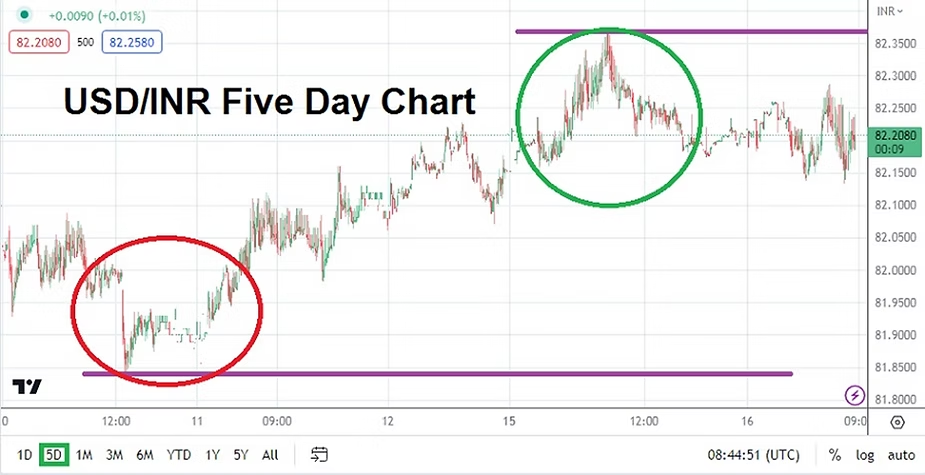
USD/INR Five Day Chart as of 16th of May 2023

The Difference between Day Traders and Financial Institutions

The outlook of speculators within the USD/INR is totally different than financial institutions. This is because most speculators are short and near-term traders. They do not have deep pockets like financial institutions – which can hold the USD/INR in a chosen direction for a long period of time and simply allow the currency pair to trade until they want to cash out of a position. Day traders are also using leverage a lot of the time, and the combination of leverage with limited available trading funds makes the daily gyrations of trading volatile and frequently dangerous.

Short-term traders look at the USD/INR with a technical viewpoint much of the time, financial institutions are likely maneuvering in the Forex pair with fundamental perspectives and inside knowledge based on known transactions they have to accomplish.

Many financial houses believe the U.S Federal Reserve will have to become less aggressive regarding its hawkish interest rate stance it has maintained the past year and a half. However there is enough nervousness within the broad Forex markets to make things very difficult for day traders, this as the potential for risk adverse trading based on economic data results move currency pairs including the USD/INR constantly, particularly if a financial institution needs to react quickly.

The ability of the USD/INR to move downward and hit support depths at the beginning of last week, may indeed be a sign that financial institutions have a belief the currency pair should be lower. However, the recent strength of the USD the past handful of days may have been brought on by the simple notion that financial houses grew momentarily nervous. There is also the possibility that large corporations made transactions in the USD/INR that moved the price higher. Day traders must understand there are forces within the USD/INR that are much stronger than their opinions. The USD/INR is not a widely traded currency pair in the open markets, it is difficult for instance to trade the currency pair in a speculative manner within India and traders in the nation face restrictions, which forces many Indian speculators who want to wager on the USD/INR to seek foreign brokers abroad.

Data and Rumors Can Sometimes be False Flags for USD/INR Traders

Some analysts have claimed the recent move higher in the USD/INR has taken place because of factors like a fear of the U.S debt ceiling not being raised in time and causing chaos in the financial markets, however this if true is likely only a short-term worry. It is very unlikely the U.S government is ‘idiotic’ enough to allow the U.S debt ceiling to not be taken care of within Congress. It would be very problematic for the U.S Federal Reserve and Treasury to have to explain why U.S bonds are suddenly difficult to repay. In other words, the U.S debt ceiling is likely to be taken care of and many financial institutions with a long-term view know this, although it is a possibility they could ‘punish’ the financial markets and act in a risk adverse manner in the short-term.

Data from the U.S yesterday highlighted another important aspect again regarding behavioral sentiment. The U.S Empire State Manufacturing Index reading came in with a negative number of minus -31.8. The expected result was -3.7, the report shows that New York business activity and outlook is worse than forecasted. This doesn’t mean the entire U.S manufacturing sector will have the same results, but it underscores the potential for a U.S recession to possibly occur. Today the U.S will release Retail Sales numbers. If these numbers come in with a negative result this could spur on bearish sentiment within the USD/INR in the near-term, particularly if financial institutions feel the results are more evidence the U.S Federal Reserve will have to pause interest rate hikes in June. USD/INR day traders should be ready for more choppiness. But there is reason to suspect resistance above in the currency pair may start to prove durable from a speculative point of view considering the trading results the past month in the USD/INR.

Traders wishing to pursue the USD/INR need to use solid risk management. Entry price orders will help traders get a ‘fill’ they are expecting and the use of stop loss and take profit tactics are highly encouraged. The past week of trading in the USD/INR has likely tested the nerves of many speculators and the assault on highs is alarming, but downside price action may be ready to reignite if U.S economic data continues to falter in the near-term.