post252

No Chance of a Nimble U.S Fed as Entitled Investors Served

No Chance of a Nimble U.S Fed as Entitled Investors Served

On Wednesday of this week Consumer Price Index numbers will be published, followed by Producer Price Index data on Thursday. Inflation statistics from the U.S for several months have been coming in rather tame and sometimes below forecasted results. Fed Chairman Powell and his team of FOMC members continue to plead uncertainty as the main reason for a lack of Federal Fund Rate cuts because of tariff concerns. The next meeting by the Fed finishes on Wednesday the 18th of June.
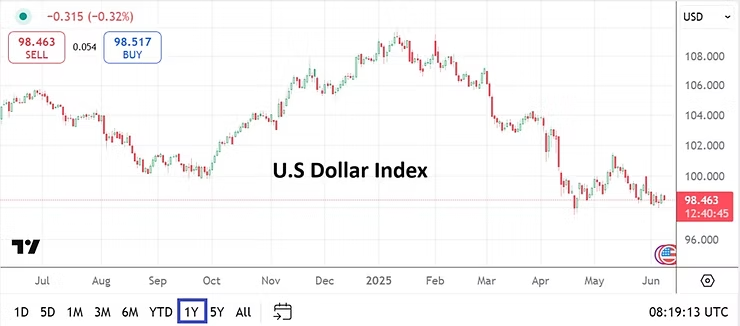
U.S Dollar Index One Year Chart as of 9th June 2025

Even if the inflation numbers come in as anticipated in the next few days, the Federal Reserve is unlikely to cut interest rates next week. President Trump and some in his cabinet have spoken about the need for rate cuts. Not only would it help consumers via mortgage rates, borrowing costs to buy autos and other high ticket items, but it would help the U.S government pay less on interest rate expenditures generated by inflamed Treasury yields.

The Fed continues to stay passive about its outlook, but if inflation data via the CPI and PPI are near forecasts this week, why would the U.S central bank continue to take such a stubborn stance? Interest rate decisions are not supposed to be political. The Fed has pointed to the potential of sudden inflation occurring due to tariff implications. This is a genuine concern. However, why can’t the Federal Reserve be more nimble? Inflation has not shown signs of immediate upwards pressure.

Perhaps it is because the Fed serves large U.S and foreign financial institutions, and has gotten into the habit of telling important folks not only what it anticipates, but handing out its interest rate plans on a silver platter so large players can position themselves beforehand like entitled elites. The Fed is very unlikely to cut interest rates the middle of next week, but it is probable they will open the door to a 25 basis point cut in July. However, July’s meeting is scheduled for the end of that month, in essence this is the middle of the summer, which is a long time to wait for action.

Day traders hoping to ride the trends that flow through the marketplace as they pursue speculative wagers remain in a difficult spot. Intraday volatility remains dangerous. Mid-term outlooks are certainly taking hold in Forex and equity indices, but sudden reversals for those using too much leverage continues to cause harm. Short-term speculators need to remain patient and vigilant, it is important to remember day traders are seen as second class citizens in the big scheme of the financial world, and this is not going to change for the moment.
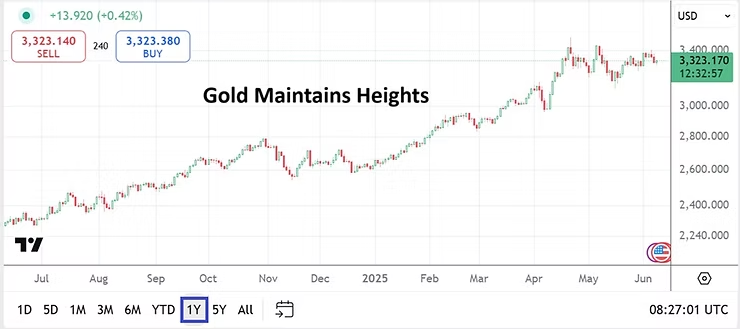
Gold One Year Chart as of 9th June 2025

A lack of clarity has spooked large players in the financial markets the past handful of months, but it does appear many institutions are becoming more comfortable. Though not at all-time highs, the major stock indices are within sight of important values. Behavioral sentiment seems to be leaning into a more positive outlook. Large investors appear to have concluded that while President Trump talks a tough game and often presents a strong stance, that ultimately he allows for tactical maneuvering to achieve deals. Trump is not big on being polite and this occasionally inflames markets. Bullish sentiment is growing on the hope President Trump’s characteristics are understood.

The Fed and the White House are likely to continue locking horns for the next few weeks. Perhaps if Jerome Powell tries to placate Donald Trump with a solid hint of an interest rate cut in July this will smooth things over. However, waiting for an interest rate cut in late July seems like a road too far, particularly when inflation levels the past couple of months avail the U.S economy to proactive actions from a Federal Reserve now.

Let’s remember, there is no law that says the Fed cannot cut or raise interest rates only during the conclusion of FOMC meetings. The U.S central bank has the ability to make changes to the Federal Funds Rate whenever it deems needed. Yet, the Fed refuses to be nimble in an age when technology allows data to be attained faster, this is a detriment.

The inability of the Fed to show it can be agile is another reason why investors are nervous about U.S policy regarding fiscal matters. The U.S government’s bureaucracy is too slow and bloated. The U.S is still a golden place to invest, but it is becoming problematic and this is leading to changes which effect long-term financial decisions.

postN61.1

Nervous Results Next: Forex and Equities Wait for Jobs Data

Nervous Results Next: Forex and Equities Wait for Jobs Data

Tomorrow’s jobs numbers from the U.S will get plenty of media coverage. Typically the Non-Farm Employment Change data is used as a selling tool by brokers to get their traders motivated and speculating on Forex and stocks via CFDs with the promise of swift price action. Many times the jobs numbers prove to have limited value, serving mostly as entertainment for back office risk managers at Forex houses as the whipsaw value changes wipe out speculators across the board. However, tomorrow may prove different.

Friday’s Non-Farm Employment Change and the Average Hourly Earnings statistics may produce dynamics worthy of their news coverage. Financial institutions are actually quite interested in tomorrow’s coming reports as the U.S Federal Reserve lingers in the shadows having spoken boldly about raising the Federal Funds Rate in November. It would take a weaker hiring result from the Non-Farm Employment Change data, and lower inflation numbers from the Average Hourly Earnings outcome to change financial institution outlooks regarding the U.S central bank.

EUR/USD One Month Chart as of 5th Oct. 2023

The trend of the EUR, GBP and JPY clearly demonstrate the value that has been lost against the USD over the past three months. While many financial institutions and speculators believe the USD will begin to lose strength eventually, timing the moment this is going to start happening in earnest is difficult. U.S Treasuries have come off of highs in recent trading, but nervousness remains abundant and recent heights remain in sight. Tomorrow’s U.S jobs number could reignite fear and spark behavioral sentiment which is reactionary.

As a side note, while U.S indices turned in some gains on Wednesday, the moves higher were not exactly momentous which sets up the U.S stock markets to produce a sudden reversal lower if widespread nervousness is produced today and tomorrow.

Importantly, hiring is believed to be weakening in the U.S by some analysts, but there is plenty of talk about a lack of qualified workers to fill important jobs still. So while the Non-Farm Employment Change number may come in below estimates and could spark hope among financial institutions the U.S Fed will be given a reason to sit on their hands, it is the Average Hourly Earnings inflation numbers which should be watched even more closely. If the costs of paying wages is more expensive than the previous month, this would spark concerns about price pressures remaining problematic.

Analysts have also continued to speak about concerns regarding revisions being made by the U.S government to past jobs reports, which means financial institutions are wary of positioning themselves fully based on the current month’s reporting. Accurate reporting from the U.S government has become problematic, and is causing nervous and conspiracy minded chatter in some trading corners.

WTI Crude Oil One Month Chart as of 5th Oct. 2023

Another factor which day traders may want to consider is the price of Crude Oil which has sunk below 84.00 USD per barrel in the footsteps of a one week decline. If the price of the commodity can remain muted and show a solid trend downwards this would help reduce hawkish rhetoric from the Federal Reserve.

As we go into tomorrow’s jobs numbers from the U.S, the broad markets do continue to exhibit nervousness which appears justified. The results of the Non-Farm Employment Change and Average Hourly Earnings may produce results which cause a reaction which shakes the outlooks of financial institutions and carries strong implications for day traders that matter.

postN52

Risks: Short Term Market Chaos and Long Term Viewpoints

Risks: Short Term Market Chaos and Long Term Viewpoints

Today I got the date wrong, I thought it was Friday the 9th of September, turns out that I caught the error and managed to hide some of the wrong usage. In another calendar gone wrong saga, a couple of years ago I believed there would be a 31st of April on a following day.

I couldn’t understand why my significant other was giving me an odd look when I asked her several times to confirm an event we were scheduled to attend that Sunday, which turned out to be the 1st of May. She thought I was playing a late April Fools’ Day joke, but no I simply did not know there wasn’t a 31st of April. I learned to accept I was wrong.

I don’t know everything. This summer has produced wicked results in Forex and the affects have been hard to swallow for many speculators. The strength of the USD has been steadfast in many cases. The upwards path of U.S Treasury yields have certainly shadowed the markets. The slight downhill slope of U.S stock indices this week has added some loud chatter, this as media pundits clamor for the next apocalypse to gain ratings.

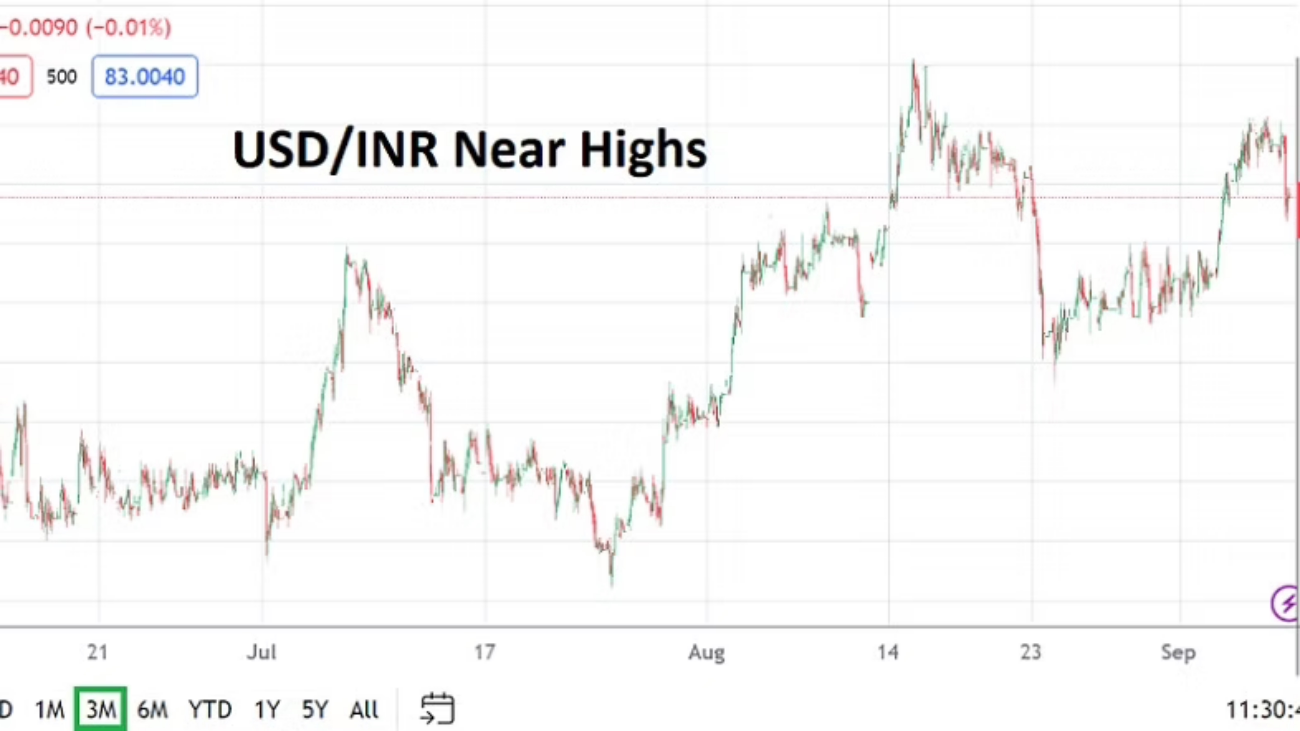
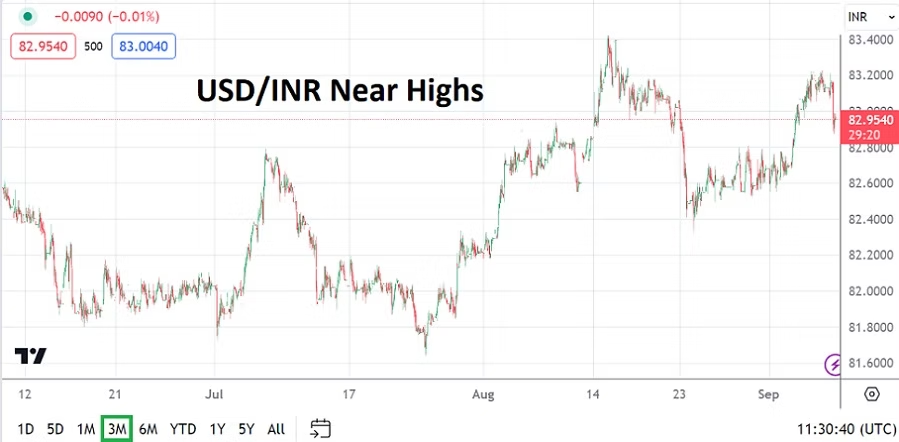
USD/INR Three Months Chart as of 8th Sept. 2023

I do not know what will happen today in the stock markets or next week. I also do not know what will happen at the G20 this weekend in India, except I will bet Joe Biden makes an error to two regarding context as he speaks. The broad financial markets are showing signs of nervousness certainly, but it is hard to time when there will be an optimistic turnaround or a bone crushing downturn, or if things will simply remain unclear over the mid-term.

Risk analysis is a bit like forecasting the weather, most of the time you can look up at the sky and and tell what the next 12 and hopefully 24 hours will bring. Within the trading world you can often tell by volumes and price velocity if a potential storm is building. I certainly do not want to be someone known as a scaremonger. I prefer to warn and remind traders to use entry points, stop losses, take profits, and to know how to navigate potential ill winds, while searching for smooth sailing.

The trend in the USD has been strong and while I tend to believe that a ‘downturn’ is due, the ability of the ‘greenback’ to continue adding value in Forex cannot be denied. The drop in value of the EUR and GBP the past month and a half is not only interesting, but creates the gut instinct that something is ‘not right’ in the markets. Yes, I can take a look at U.S Treasuries and try to correlate all results to the higher yields, and economic data, but it feels like something else is amiss. I see ‘oversold’ and ‘overbought’ signals aplenty, but the market prices are real, even if my sentiment tells me something is wrong, and until the markets reverse I have to remain cautious regarding my outlooks.

Short-term market outlook looks chaotic . Nervous results continue to filter into view. During these type of conditions I prefer to trust my long-term vision. One insight that has grown on me in the past year is that I am ‘long’ India. I believe the development and progress we are witnessing within India is important and that the nation will continue to make great strides if it remains stable and democratic. Understanding short-term conditions are rough and need to be dealt with carefully is crucial, and having a long-term plan to work towards provides a solid path to improve.