post233

Stock Market Narrative and Looking for a Trump Silver Lining

Stock Market Narrative and Looking for a Trump Silver Lining

S&P 500 One Year Chart as of 14th March 2025

U.S stock markets have been hit on the nose in recent weeks, the major indices have put in rather consistent declines since the 19th of February, and the selling frenzy and particularly noise have grown worse since the start of March. Narrative regarding tariffs and a lack of clarity have certainly had a negative effect. The notion that there is a part of the media that wants to see a downturn in the markets and blame President Trump could also be factoring into concerns and fragile sentiment among indices participants. I am not blaming the media for the downturn, just pointing out that there are some entities which are not unhappy about the recent selling in the stock markets, this because it fits comfortably into their narratives.

While the bearish decline on the S&P 500, Nasdaq 100, and Dow 30 have all been easy to see, defining the dynamics of the downturn, and reactions from day traders and investors are complicated. The stock markets are not guaranteed to always go higher. This may sound naive, but people have gotten so used to the notion that U.S indices always go up that they forget about the potential for downturns. Yes, the stock markets have turned negative, but a one month decline is not uncommon historically. And some of the folks rooting against Donald Trump may want to take that into consideration.

Risk premium has certainly been factored into the markets which has influenced equities, but has created forceful moves in Forex too. Risk adverse tension because of persistent rhetoric about tariffs and their impact on behavioral sentiment cannot be discounted. However, the stock markets are still higher over the past year.

The Trump Effect is certainly being pointed at by many as the cause for the sudden downturn, but it should be remembered that all-time highs occurred after Trump won the election. Yes, the selloff has definitely happened too, and stock markets are now traversing values seen before the election. And support levels are being looked at with caution and more selling could lead to a test of psychological ratios which pressure market confidence further. Yet, it should also be remembered the S&P 500 at this time last year was around the 5,150 ratio compared to its current mark near 5,565.

Day traders have been hard pressed to find momentum with solid wagering opportunities, particularly if they have been in search of a bullish trend in recent weeks. The belief that U.S indices always go up eventually is a solid reference, but in the short-term can cause expensive losses for stubborn betters. Investors certainly have an easier time with stock indices if they practice the long-game and do not worry about the daily and monthly gyrations when their money is parked in indices. The use of leverage when betting on the daily results of stock markets can become ultra expensive for speculators, particularly when upside bias is being counted upon.
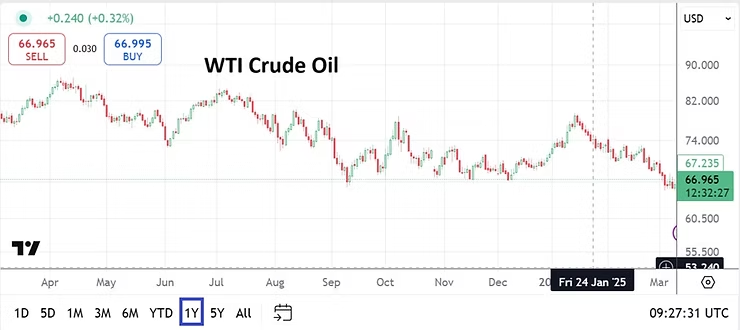
WTI Crude Oil One Year Chart as of 14th March 2015

Data this week from the U.S has actually been positive regarding lower inflation, both the CPI and PPI reports released the past two days has shown a slow down in costs. Yet, these results have little to do with President Trump, since he has only been in power less than two months. However, the lower WTI Crude Oil prices being achieved at this moment will start to factor into weaker inflation and will benefit the U.S economy.

The U.S Federal Reserve will have to be watched, because Fed officials seemingly continue to be among the crowd worried about tariff knock-on repercussions. But it should be remembered during Trump’s first term in office, there were tariff concerns too and inflation was tame. It will take a few months to still see results via inflation under this Trump administration, but if energy prices remain stable and low, this can mitigate circumstances while the tariff winds blow and their effects are waited upon. Interest rates from the Federal Reserve, U.S taxes on the public will continue to come under scrutiny. The likelihood of Trump and the Federal Reserve locking horns regarding interest rates seems to be a certainty in the coming months.

U.S stock markets have proven dangerous for bullish perspectives the past handful of weeks, but the viewpoint that markets have been too discounted will certainly start getting the attention of large players. U.S Treasury yields remain a barometer, but short-term results do not always correlate. Speculators without deep pockets may want to continue to watch from the sidelines.

Traders should also remember there is the ability to short U.S indices, but this brings up the healthy question about when will price support start to become a factor. It is nearly impossible to pick the precise moment financial assets will stage a turnaround for day traders, but history does indicate that bullish sentiment will start to be seen. Betting on a continued downturn could prove more expensive in the end, compared to speculating on upside.

Trading is not easy. It takes a lot of stamina to endure price movements that do not go according to plans. The financial markets are proving difficult for many. We are likely not out of the woods yet because clarity remains problematic, investors who have longer timeframes are likely anxious too. Price velocity needs to be given attention, markets can certainly go lower. However, at some juncture equities will start to look cheap to important long-term players. Behavioral sentiment among investors will likely also start to acclimate to the Trump Effect.
post230

FX Trends: Brutal Months for Day Traders and Happy Brokers

FX Trends: Brutal Months for Day Traders and Happy Brokers

The past few months for day traders have likely not been pleasant experiences for many. Forex, equity indices and other assets have experienced plenty of volatility and finding a trend has not been easy. While speculators who are wagering on the ups and downs in the marketplace have been getting crushed, their brokers likely have not been getting hurt.

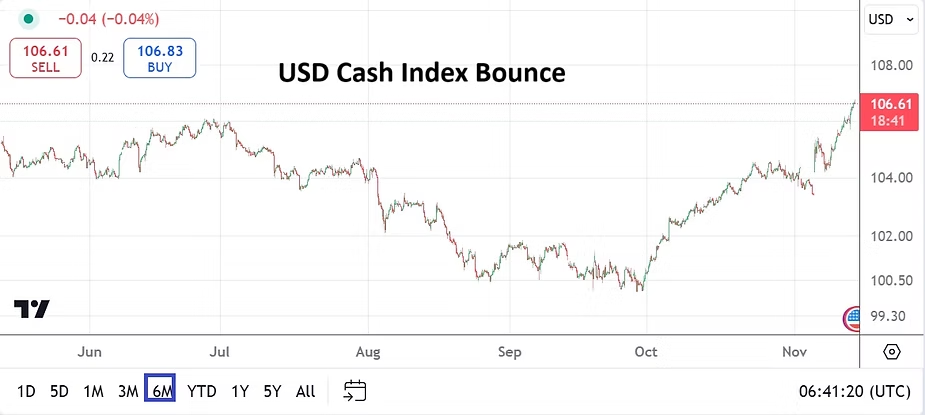
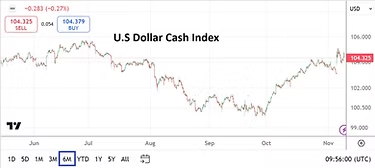
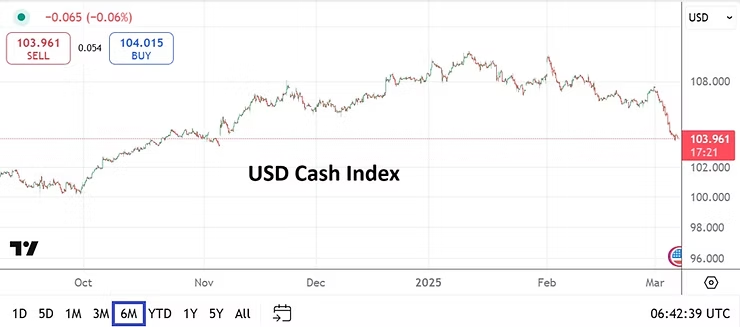
USD Cash Index Six Month Chart as of 7th of March 2025

Day traders need to understand that CFDs are virtual. Your broker is merely placing a wager for you on chosen direction, in most cases they are acting as ‘the house’ and know the volatility is going to knock you out of your trade. They pocket your losses as their winnings in many cases. The brokers are not only making money from the differentials from the bids and asks (the spread), they might also be charging you a transaction fee.

If a broker feels less confident about their ability to make a profit off your poor results (I am not kidding about this), then they sometimes insure your wager via a liquidity provider who in many cases is literally betting against your broker, because the liquidity providers believe your broker is likely being overly cautious. (A vicious circle). In other words brokers allow your trades to work virtually (not in the real marketplace) on something many risk management rooms in Forex call the B Book. If the broker is not certain if you will lose money, they put your trades into something called an A Book. And, yes, many liquidity providers (the A Book providers) are betting against their clients (who are brokers seeking to mitigate their risks).

Again, the brokers and the liquidity providers do not believe you will make money most of the time. They are allowing you to bet and they are happy to take your wager, because historical evidence shows retail bettors in Forex tend to lose money via their trading accounts at least 85% over long durations. Depending on what source you look at regarding CFD statistics, speculators tend to do a little better against their brokers but still lose money more than 50% of the time. Some statistics claim up to 75% of the CFD outcomes via trading accounts equate into losses for speculators.

And if all of this sounds like sour grapes, it is not, it is a warning to you the bettor. Brokers in many cases are glorified casinos that provide you an opportunity to wager. You need to acknowledge the above before your start trading. Speculating on Forex and CFDs ( via equities, indices and commodities) is like betting on a horse. The racetrack doesn’t lose money, they know most bettors simply enjoy the thrill of gambling and don’t mind losing. Racetracks are happy to pay the occasional winner. If you choose to wager on Forex and CFDs you need to practice risk management.

You probably didn’t come here to be reminded about risk management, you have heard it before – conservative leverage, price targets, timeframe parameters, entry – stop loss – take profit orders are standard warnings. You want to read about trends, you want to know which direction you should take, yet there are no guarantees and that is why speculating is gambling. You are wagering.

If you intend on improving your odds, by following solid risk taking tactics – including trying to understand behavioral sentiment via the financial institutions you are trying to emulate, you might find better results. And still, speculating will be tough.

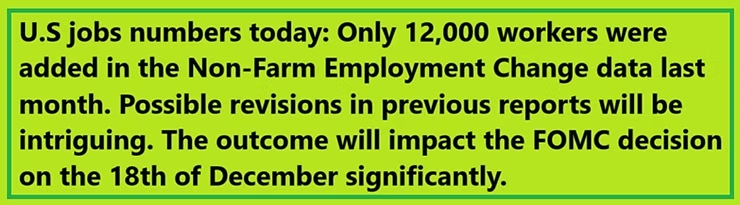
The U.S will release Non-Farm Employment Change numbers today, but traders should pay attention to the Average Hourly Earnings report which will give insights about inflation too. However, the jobs numbers may prove to be a false narrative, because more importantly, whether you like him or not, there is the Trump Effect to ponder.

Tariff mantras and fears, negotiations regarding the fate of Ukraine, and a myriad of other concerns have financial institutions anxious as they try to seek clarity. Equity indices have been a mess. Yet, the USD Cash Index has given back a lot of its gains since February the 4th – this after the Forex bloodshed caused by nervous reactions to fear of tariffs being implemented. And now, not so coincidently the USD Cash Index is traversing values it saw on the 5th of November 2024, yes, U.S Election Day. Speculators and financial institutions have returned full circle to big unknowns.

post225

Reserve Bank of New Zealand Expected to Cut 0.50 from Rate

Reserve Bank of New Zealand Expected to Cut 0.50 from Rate

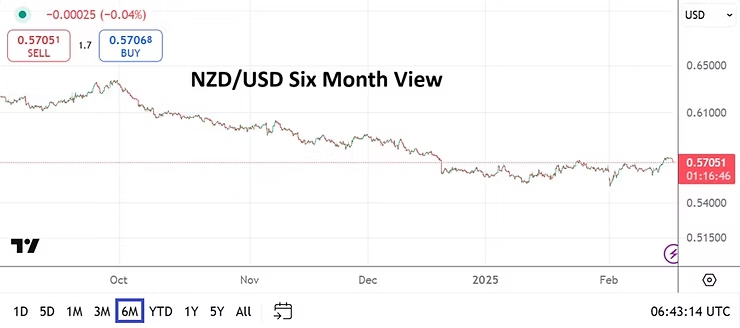
NZD/USD Six Month Chart as of 18th February 2025

NZD/USD Revival Mid-Term Coming? Reserve Bank of New Zealand is expected to cut its Official Cash Rate by 0.50 on Wednesday. N.Z govt is being proactive as they try to ignite the economy. The RBNZ also cut by 0.50 basis points in November. The central bank is expected to continue to remain aggressive tomorrow and suggest further cuts will be seen, perhaps via 0.25% afterwards.

The NZD/USD was trading around 0.63600 in late September of 2024 after gaining in correlation against the USD with the broad Forex market, via a bullish run which began in July. The NZD/USD is still traversing within its lower realms and it is logical to assume many financial institutions feel that support levels around the 0.56000 vicinity will prove rather durable going forward.

Day traders who believe the mid-term holds an optimistic bullish run for the NZD/USD may be correct, but speculators cannot be overly confident about a sustained surge higher quite yet. Conservative leverage is urged while looking for upside while betting. Speculators also need to remember tomorrow’s expected interest rate cut from the RBNZ has already been factored into the currency pair.

The rate cut is important for Wednesday, but it is the stance the Reserve Bank of New Zealand takes via its Monetary Policy Statement that affect behavioral sentiment among financial institutions. If the RBNZ sounds cautiously aggressive, meaning they suggest further cuts are being strongly considered this could help firm the NZD/USD and create more optimism regarding the potential for a move higher.

Yes, the shadow of the U.S White House administration looms over the Forex landscape. Decision making will remain tentative via financial institutions, but it is reasonable to suspect large players would treat clarity from the Reserve Bank of New Zealand with a positive Forex stance.

post219

MicroStrategy and Bitcoin: Will They Turn into Smithereens?

MicroStrategy and Bitcoin: Will They Turn into Smithereens?

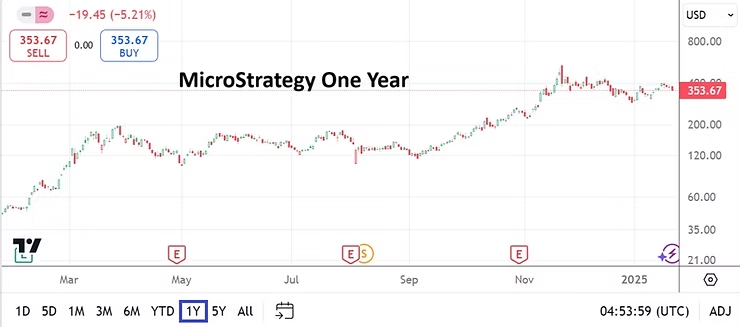
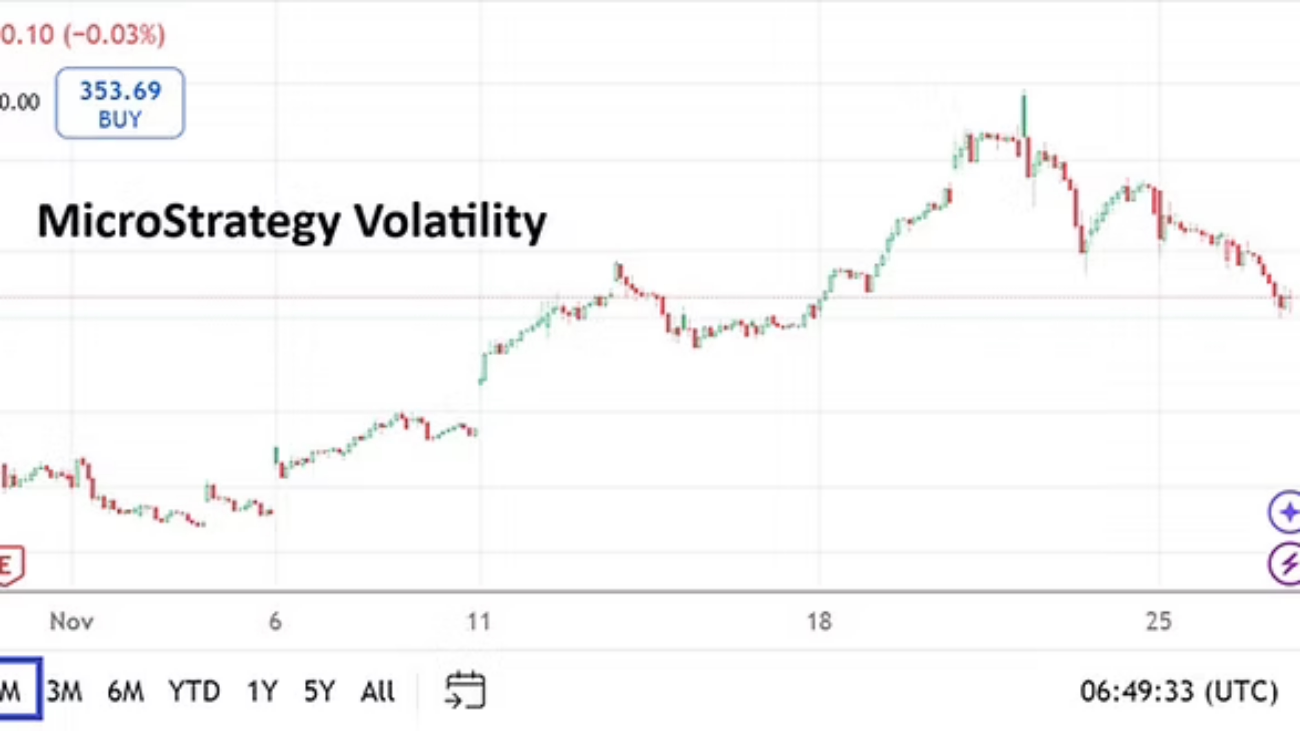
MicroStrategy One Year Chart as of 25th January 2025

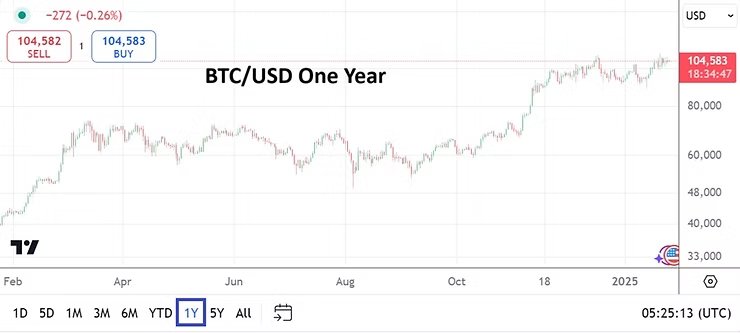
MicroStrategy near 353.67 per yesterday’s close. Bitcoin around $104,625 this morning. Will the balloons keep inflating or become smithereens? The combo of MSTR and BTC/USD are combustible.

MarketWatch has published an excellent article on the borrowing via bonds that MicroStrategy is undertaking with investors. https://www.marketwatch.com/story/why-investors-are-lending-microstrategy-billions-of-dollars-at-0-interest-so-it-can-buy-bitcoin-03f7cacf The article highlights the red hot glow that some investors are pursuing via bets on MicroStrategy and Bitcoin.

MSTR has turned from a data driven company that produces revenue into a proxy bet on Bitcoin. Not everyone is a fan. As of late November 2024 Citron Capital has been reported to be ‘shorting’ MicroStrategy.

Students intrigued by the art of speculation, finance and business outlook have an active case study via MicroStrategy. This is a saga which will continue to grow in stature as investors and speculators seek profits. While the potential for disaster remains high, Michael Saylor of MicroStrategy and his cult like leadership capabilities has led his flock of believers into a golden land for now, but what storms await?

BTC/USD One Year Chart as of 25th January 2025

Naysayers of MicroStrategy’s foray into Bitcoin have thus far been proven wrong. Michael Saylor and his legions will continue singing praises about Bitcoin and its ability to turn into the modern version of gold, but perhaps it will turn into a digital asset nightmare. However, there is no denying the strength of the trend which has manifested the past year in both MSTR and BTC/USD. With the advent of President Trump and his seemingly pro digital asset stance being taken; and the growing desire by some crowds to turn fiat currencies which have been paper based into Central Bank Digital Currencies (CBDC) there are likely years left in this saga to unfold.

There has been a growing clamor for central banks to start holding some of their reserves in Bitcoin instead of gold, but for the moment this seems like too wild a thought and a purely speculative notion. Wagering on the confidence generated by digital hype with little intrinsic value, except the ability to create hot air via rhetoric and lofty visions of grandeur still appears to a step too far for most central bankers. Speculating on MicroStrategy and Bitcoin is one of the ultimate bets looking to take advantage of behavioral sentiment in the digital asset realm. MSTR and BTC/USD are highly volatile and have certainly created profits, but the combination could also turn into a horror if things go wrong.

post206

MSTR fell from 400.00 USD yesterday to the 350.00 level.

MSTR fell from 400.00 USD yesterday to the 350.00 level.

MicroStrategy One Month Chart as of 27th November 2024

MicroStrategy went from above 400.00 USD yesterday to the 350.00 level. MSTR is a Bitcoin proxy and speculative. Michael Saylor, the Chairman of MSTR, takes many risks as its leader and appears to have a lot of decision making power when it comes to the company’s corporate treasury purse strings.

MicroStrategy if pursued by retail traders as a CFD or held as a equity in a portfolio needs to be treated as a speculative asset that is highly volatile. Technically MicroStrategy has seen its value correlate to Bitcoin in a well defined manner over the past handful of years. Per current accounting MSTR holds over 386,000 Bitcoin, this per MicroStrategy’s own reporting and publication of a Form 8-K via the SEC.

Its corporate governance has essentially allowed MSTR to become a company that while listed as a data provider including business intelligence, mobile software and cloud based services for users is for all intensive purposes now ‘married’ to Bitcoin as a main driver for its value. MSTR is traded on Nasdaq and the Russell 1000. The company is based in Virginia, USA.

postR200

AMT Top Ten Miscellaneous Musings for the 18th of November

AMT Top Ten Miscellaneous Musings for the 18th of November

10. Election Results: The U.S election concluded almost two weeks ago and there is no discussion this time around of mischievous results, which we can all be thankful. However, there is still talk about results from the past, but perhaps these folks should be thankful for the prospect of a serendipitous outcome this time and get to work.

9. Conspirators: The Onion has tried to buy InfoWars via an auction which is now under review by a court to judge if the procedure was undertaken fairly. Alex Jones’s InfoWars and its sometimes other worldly offering of bizarre and misguided notions is in bankruptcy. The Onion wants to turn the tables on InfoWars and dedicate the ‘purchase’ of the site to ridiculing media and conspiracy folks who produce mindless gobbledygook.

8. From Beyond: The UAP, unidentified aerial phenomena, hearing before Congress last week led to a variety of questions and answers which rehashed known ‘unknowns’ while discussing orders of magnitudes of speed and g-forces that humans and machines can endure. The UAP (UFO) hearing didn’t disclose much in the way of developments regarding alien crafts visiting Earth, except to make it obvious to some that if ‘they’ are out there, we had better hope they are friendly. And if it is earthly corporations or nations testing and displaying new technologies, there seems to be little information publicly available about who may be playing in the skies and waters. Optical illusions?

7. Polymarket Raid: Many folks started pointing fingers when the CEO of Polymarket, Shayne Coplan, had his home raided on the 13th of November, claiming the FBI was politicizing Polymarket’s prediction that Donald Trump would win the U.S President race. But after further review, few have pointed out that Kalshi Inc., which also operates in the U.S and allows sentiment betting was not raided. The difference perhaps being that Kalshi is regulated via contract markets with the CFTC, and Polymarket is not and appears to be potentially operating in non-accordance to U.S laws.

6. Bitcoin & Coffee: BTC/USD continues to tread within the highest of tides and is slightly below 92,000 as of this writing. Coffee Arabica and Robusta are boiling within apex price ranges. Cocoa also remains rather impressively expensive. Which one of these speculative assets has no intrinsic value?

5. Buyer Remorse: At some juncture votes may start to feel a bit of angst per their recent voting decisions. We suggest to Polymarket and Kalshi to allow wagers on when this might be displayed in mass. However, in a very real way the U.S election in two years will be the key instrument to gauge the reaction to what is about to come from the new White House administration. Who will control the House of Representatives in two years time?

4. Forex: Foreign exchange should likely be placed in a number two or one AMT ranking, except to say we do not think retail traders should be enticed by being told no. Volatility that has pervaded the FX markets is not finished quite yet. While USD centric strength continues to cause upheavals against major currencies, and technical support and resistance levels are testing mid and long-term considerations, there still may be a week or so left in swirling whipsaw storms. Risk management has hopefully helped retail traders survive to wager again, but it shouldn’t be today.

3. Fed Donations: Federal law mandates employees of the U.S government, https://www.commerce.gov/sites/default/files/2023-08/political_activities-dos_and_donts-2022.pdf, must disclose their political donations. Recent studies indicate that approximately 90% of Federal Reserve employee donations to political candidates go to Democrats, https://www.yahoo.com/news/federal-employees-overwhelmingly-donate-democratic-175055289.html. This highlights the possibility that many current Fed employees have different perspectives regarding economics compared to those about to take positions of power in Washington D.C.

2. See No Data: U.S economic statistics have been rather tame recently, but financial institutions clearly are not paying much attention to near-term considerations about the potential influence of the Federal Reserve and interest rates. Instead behavioral sentiment appears anxiety laden. Retail traders and large speculators may be getting crushed together in a cyclone of certain assets, particularly if they are trying to fight short-term trends while infatuated with mid-term outlooks. The Fed may cut interest rates again in December.

1. The Clash: The highs in U.S Treasury yields and record territory of U.S stocks being traversed together indicates we will see a rather violent collision when one of these investment pursuits likely capitulates to market dynamics, allowing the other to take precedent. Some long-term investors may be nervous about President-elect Trump taking power in the third week of January, but it would be unwise to bet against him in the next six months. Meaning stocks may ultimately win this battle of attrition against bonds and prove they are more appealing.

postR199.1

Forex: The Art of Not Making Sense and Accepting Price Values

Forex: The Art of Not Making Sense and Accepting Price Values

Retail traders are likely learning the hard way that attempting to trade in Forex for the moment is more than dangerous, it is expensive. The U.S Consumer Price Index numbers yesterday met expectations, which essentially allows the Federal Reserve to remain in a cautious dovish stance. However, after an initial show of USD weakness upon the data in many FX pairs, USD centric strength quickly returned.

USD Cash Index Six Month Chart as of 14 November 2024

Short and near-term trading for speculators who do not have deep pockets and are suffering from whipsaw movements are creating the need to take a step back. As many major currencies have suffered losses against the USD since late September, the tendency is to likely think a reversal is going to develop sooner rather than later. However, until financial institutions become comfortable with the notion President-elect Trump’s policies aren’t going to harm economic prospects in a variety of nations regarding tougher trade agreements, risk adverse trading is going to remain a key in Forex.

Yes, at some point the USD will start to give back some value, but timing the moment this is going to start and become sustained for day traders is simply betting. Financial institutions are feeling anxious about their commercial forward positions in Forex too, which will continue to create volatility for all trying to predict where the USD will be mid-term. Federal Reserve policy may actually be able to deliver a 0.50 basis point total cut over the next few months, but this notion has had almost no impact on USD strength short-term. Perhaps financial institutions do not feel the Fed will be that dovish through February, but if inflation remains tame the Federal Funds Rate still has room to decrease.

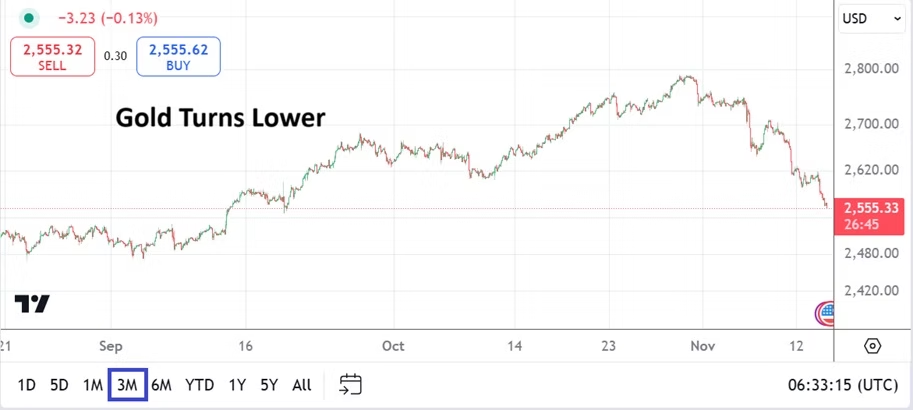
Gold Three Month Chart as of 14 November 2024

Today’s Producer Price Index inflation reports will be watched, but like yesterday the results are unlikely to be a key which will suddenly ignite strong reversals in Forex. In the meantime traders need to practice solid risk taking tactics and patience. Retail Sales figures will come from the U.S on Friday, but again day traders should expect financial institutions to remain risk adverse until there is an event which changes their cautious mindsets.

Gold is noteworthy because it has struggled since early November. There is the possibility the precious metal has turned lower because investors feel more sure about their long-term bets in the U.S equity markets for a moment, but that is likely wrong. It could also be argued speculators are cashing out winnings they have made the past handful of months. The point being that explanations for price movements are tenuous. False narratives abound. Fundamentals like behavioral sentiment are shifting because new economic policies from the U.S are going to develop and market participants want greater clarity.

Like the major currencies suffering significant declines versus the USD, the value of gold can be argued, but the market is telling us what participants are willing to pay for assets whether we agree or not. Let there be no doubt that the highs being produced in U.S Treasury yields which are near early summer values, the USD Cash Index reversing towards technical levels seen in early July, gold recently losing value, and U.S equity indices being near all-time highs makes it particularly difficult for predictions regarding what is next. Except to say the Trump victory in many ways has sparked a buy American parade for the moment. If you want to bet against the trends you are free to do so, but behavioral sentiment is proving once again the king of the hill.

While the broad markets may not feel like they are making much sense to some, as traders we need to be able to put our bias to the side and accept the markets as they are, not what we think they should be. There is a significant difference between near-term and long-term targets. Day traders need to understand they are wagering in markets that will remain dangerous for a while. Nothing is guaranteed, but the idea that U.S equities may continue to rally into the New Year is being wagered upon by larger players and they might be proven correct.

postR198

CPI Meets Expectations but Caution Remains as USD Stays Strong

CPI Meets Expectations but Caution Remains as USD Stays Strong

EUR/USD One Day Chart on 13th November 2024

Initial jump in EURUSD, but caution returned after U.S CPI data met expectations. This was a tame outcome for inflation and Fed doves, but financial institutions in Forex remain risk adverse and USD centric. When will tide turn to bullish perspectives vs. USD? PPI tmrw.

postR197.1

Return to Normal Market Conditions and a Trump Outlook

Return to Normal Market Conditions and a Trump Outlook

Retail speculators can now expect a return to calm and clear financial market outlooks, knowing that potential influences from new U.S policies will start to be considered. With the U.S elections in the rear view mirror and a Trump mandate delivered by many U.S voters, global financial institutions and traders will again be able to focus on a combination of technical perspectives, current behavioral sentiment and outlook.

USD Cash Index Six Month Chart as of 10 November 2024

Some technical traders may believe behavioral sentiment has nothing to do with the long-term prospects of studying charts, but price action last week in FX and equities clearly showed why traders must be attuned to storms created by human emotions. Risk adverse trading has been prevalent since the end of September. A glance at the six month USD Cash Index demonstrates the extent of behavioral sentiment causing volatility the past handful of months. After believing the U.S Federal Reserve was going to become dovish which propelled the USD lower in many Forex pairs in early July, financial institutions expressed concerns about political outlook the past handful of weeks as a lack of clarity started to shroud their perspectives. USD centric positions have powered Forex.

And now that there is a Trump administration coming, and the U.S Fed has remained cautiously dovish this past Thursday, financial institutions may exhale with relief. The election on November the 5th has delivered a clear message regarding the potential for changes to U.S administration mandates regarding trade. Whether a stronger U.S economy is attained because of these hopes is not the question, it is the perception new policies will be initiated which try to deliver results which have been promised. Yes, promises can be broken.

However, the ability to believe changes are coming will affect behavioral sentiment. The Trump soundbites may prove to be rather weak in the future, but there is a chance he will also get things done regarding stronger trade agreements which protect U.S business enterprise and manufacturing. Folks can argue until they are blue in the face regarding the prospects of all things, but the U.S major equity indices rising like a rocket ride in the middle of last week is clear evidence that many believe the prospects for U.S corporations is better. No matter if it is only hopes about tax laws changing, less regulation, and better U.S trade agreements, investors are clearly betting on optimistic outlooks for the mid-term.

Dow Jones 30 One Month Chart as of 10 November 2024

Improved attitudes are great for the prospect of financial institutions, but traders still have to certainly protect their positions against volatility developing. Markets should start to return to tranquil conditions in the days ahead. U.S data will come this week which will be important via the CPI numbers on Wednesday and PPI figures this Thursday – the combination of these inflation reports will be important. Friday will see Retail Sales from the States.

The return to data as a guideline for financial institutions teamed with the Fed’s rate cut this past Thursday may be an ointment for retail traders who seek a return to normal conditions. Nervous behavioral sentiment could remain a factor in the coming days as people adjust their outlooks to a Trump White House, but the coming week should be relatively quiet regarding surprises.

It isn’t a question of liking or disliking the outcome of the U.S election, it is a question about how behavioral sentiment will now be affected. While some bring up potential tariffs as a major risk for the U.S and global economy, we have been down this road before with Trump. The risk of inflation if trade disagreements flourish should be taken seriously, but Trump has dealt with China in the past and both sides did find a way to do business in many respects. China is probably worried about Trump being in the White House again, but they likely have a gameplan for the tough business discussions ahead. The experience of having dealt with President Trump before allows China and others to know what they may face this time and empower them to be prepared.

It should be noted that Trump has shown in the past a tendency to enter negotiations with a difficult offer and permitting the other side to counter. Trump then might turn down a proposal, but often shows he is open to discussing things further and reaching a compromise. And that is the crucial word – compromise. It is about business and geopolitics. Financial institutions have dealt with a Trump White House before. This time around there is a hope Trump’s naming of a White House cabinet will not be as messy an affair as it was the first time.

The naming of Susie Wiles as the White House Chief of Staff last week looks like a good first step, also having strong Republican leadership in the Senate and House of Representatives may make things easier. While some are worried about a slew of loud rhetorical stances by Trump, perhaps pragmaticism will be practiced. And based on that rather optimistic viewpoint, retail traders may also feel businesslike conditions are ahead and that the financial markets will be a safer place to pursue speculative wagers again in the near and mid-term.

postR196

AMT Top Ten Miscellaneous Votes for the 4th of November

AMT Top Ten Miscellaneous Votes for the 4th of November

10. Priorities: Not to dismiss the execution of beloved Peanut the Squirrel by New York authorities recently, but lets reflect on the fact that this little fellow made international news while wars are raging, and nearly 300 people in the U.S are dying from drug overdoses per day. Social media is rather powerful.

9. NBC: Kamala Harris appeared on Saturday Night Live for roughly 90 seconds this weekend, this created criticism and questions about unfair airtime for the Vice President. SNL is lucky to get more than 5 million viewers per episode on average. To try and apologize for the potential trouble, NBC then gave Donald Trump free commercial airtime twice yesterday, once during a NASCAR race which on average attracts over 3 million viewers, and on a Sunday night NFL broadcast which averages sometimes up to 22 million viewers.

8. Saber-Rattling: There is a potential Iran is waiting on the outcome of the U.S vote for President before undertaking more military actions. Deciding if and how they are going to launch another attack on Israel, depending on who wins the U.S election because of the potential ramifications is likely part of their military strategy.

7. BTC/USD: Bitcoin as of this writing is trading near 68,500 USD. The digital asset continues to bounce around rather intriguing resistance. On Tuesday of last week Bitcoin traded near 73,500 momentarily, while the highs are certainly noteworthy, support for the speculative asset has been around 66,000 since the middle of October. There are reasons to suspect Bitcoin will display a large amount of volatility this week, particularly when the new U.S President is known.

6. Forex: As of this writing the USD/JPY is slightly below 152.000, the EUR/USD is around 1.09000, the GBP/USD is near 1.29650. The question is where these currency pairs and other major FX assets will be in three nights. Day traders dreaming of riding momentum via financial institutions need to understand the equilibrium of risk and reward. In other words, the same amount of money you can make, is likely the same amount of money you can lose. Risk management will be a life preserver for many speculators this week.

5. U.S. Data: This past Friday the Non-Farm Employment Change numbers came in wildly below the 106,000 jobs added estimate, the result of only 12,000 hired was rather shocking, but met with almost muted bewilderment. Also, the jobs numbers showed another revision lower from the previous month. Advanced GDP quarterly numbers, on Wednesday the 30th of October, also missed their estimate coming in with a 2.8% gain compared to anticipated growth of 3.0%. The U.S economy is still under stress.

4. Barometers: Risk adverse trading has been widespread the past handful of weeks. While gold has reached new highs and is slightly below the 2,750.00 mark for the moment, one month from now will be a telltale for gold and many assets. Since the end of September a number of narratives have been heard trying to explain the results seen across the board, but the simple answer is caution has entered the markets. U.S equity indices are still flirting with highs, even as they have suffered downturns in recent trading. WTI Crude Oil is near 71.50 USD per barrel. Gold, U.S equities and WTI Crude Oil will react to the outcome of the U.S election and serve as solid behavioral sentiment indicators in one month when compared to current prices.

3. Federal Reserve: If last week’s U.S economic data had been delivered without the fanfare of the U.S election approaching, Fed observers would likely be anticipating a dovish sounding FOMC Statement coming on the 7th of November. Instead, the USD has remained rather strong as risk adverse trading has been demonstrated in the broad markets. The Fed is certainly in a position to cut the Federal Funds Rate by another 0.25 basis points, some could even argue for another 0.50% cut. However, the Fed is likely to cut interest rates by a quarter of a point and sound rather cautious as they too read the landscape in the wake of the U.S voting results. Mid-term outlook from the Fed will be scrutinized this Thursday.

2: Nervousness: Day traders who decide to participate in the broad markets near-term may also enjoy walking outside and looking at approaching storms and dreaming about the fury about to come. Being anxious before and during large risk events when outcomes are unknown is a survival instinct. Speculators need to protect themselves over the next couple of days. Tranquil trading in all major assets may appear, but as tomorrow grows long assets will begin to percolate and by Wednesday almost all financial markets will be boiling. While this is certainly being hailed as the most important week of the year because of the U.S election and the Federal Reserve, it is also a very dangerous time to be trading. Those with limited funds may want to hunker down in a safe place and watch the markets create bedlam over the next 48 hours.

1. U.S Election: The vote is less than one day away when old standards are considered. However, more than 72 million votes have been cast early in the U.S already. That’s more than 45% of the total U.S vote during 2020, when 158,434,567 votes were counted. While the media bangs the drum regarding the incoming results tomorrow, it is important to note that many Americans and global observers are merely waiting for the final results to be announced. The end of the election campaign is nearly upon us, now financial institutions and traders await clarity. Wednesday the 6th of November is going to be an interesting day for the markets.

postR194.1

Forex: Dangerous Triggers Abound for Inexperienced Speculators

Forex: Dangerous Triggers Abound for Inexperienced Speculators

While the U.S jobs reports via the Non-Farm Employment Change and Average Hourly Earnings will grab attention today, and the Advance GDP this Wednesday and inflation numbers yesterday were important. Institutional trading focus in many respects will be elsewhere, behavioral sentiment and the potential reactions that lurk after the results from the U.S election are known are the biggest risk threat.

USD/SGD Three Month Chart as of 1st November 2024

Yesterday’s weaker than expected Employment Cost Index will help the U.S Federal Reserve to clip another 0.25% off of the Federal Funds Rate on the 7th of November. However, the winner of the U.S Presidency will be a talking point in the coming FOMC meeting, and also the halls of the U.S Treasury, influencing potential policies. Weaker than expected jobs numbers would fuel dovish perspectives from financial institutions today, but because of the coming U.S election on Tuesday results will fall on ears possibly tuned into other frequencies. And let’s remember last month’s job numbers were stronger than expected, and revisions downward in the back months remains a problem causing mixed sentiment.

Major currencies versus the USD continue to thread within cautious weaker values. USD centric strength has been persistent since the last week of September. If this had been a normal week of trading, the USD would have likely gotten weaker after the Advance GDP results came in slightly less than anticipated. Fuel might have been added to USD selling on yesterday’s lower than expected labor costs too, but this did not happen in many cases. This needs to be a consideration for day traders who are trying to interpret U.S economic data as the U.S election looms. Simply put, behavioral sentiment in the near-term is being more influenced by the race for the White House.

If a trader wants to bet on who they think the winner of the U.S vote will be they need to be careful too, not only because they could be wrong, but if their ‘winner’ takes the presidency, reactions may be more tumultuous than planned. Speculators need to understand that financial institutions too have likely been positioning their cash forward transactions based on who they think is going to win the U.S vote. Meaning wicked reversals and take profit orders could be triggered when the U.S election outcome is known. Forex trading volumes next week should be immense.

Gold Three Month Chart as of 1st November 2024

It is a dangerous time for inexperienced traders to participate in Forex. Brokers will certainly sell this alluring show and point out that there is a lot of opportunity to make money in the coming days, but the opposite is true too. Because if you can make a lot of money from volatility, you can also lose a lot of money. Folks without deep pockets who are using leverage will be vulnerable to price velocity.

Retail traders need to understand the risks that confront them are dangerous because their Forex positions cannot be held over a long-term because of too much carrying costs, too much volatility and frequently too much leverage. Large financial institutions who are the shakers in Forex play by a completely different set of rules. It may help a day trader immensely to understand they can really only feast on profits when they have been able to ride the technical momentum caused by the influence of financial institutions.

The cyclical nature of Forex has been on full display the past three months. Trading within the USD/SGD the past three months is a solid example of a major currency teamed against the USD and sustaining a strong bearish cycle on the expectation the U.S Fed would become dovish, and then the reversal higher since late September as financial institutions started to become risk adverse. While some analysts may argue this point, the coming results in the weeks ahead will tell us a lot as large players react to clarity via a new U.S President and the Federal Reserve’s monetary policy outlook. Traders large and small over the next five days in Forex will be treated to quite a carnival like experience.