postN53.1

Anxious Results and Outlooks as Traders Brace for Week Ahead

Anxious Results and Outlooks as Traders Brace for Week Ahead

Speculators with visions of taking advantage of day trading perspectives often look for correlations within asset classes to help gain an outlook on another trading vehicle they may be considering. The problem with this like many things for day traders is that sudden gyrations in asset classes technically are often affected by positioning from large players who do not care what the ‘minnows’ are doing. Institutional trading is frequently done with long-term considerations.

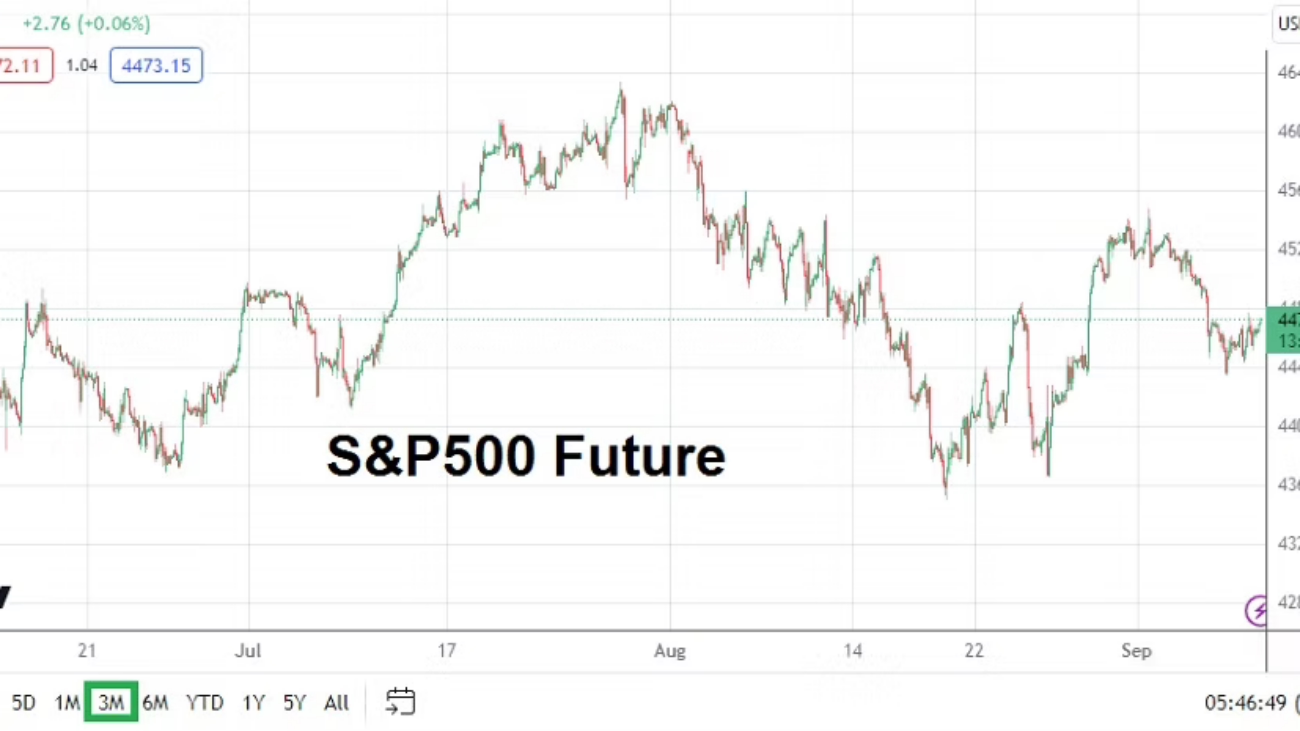
S&P500 Index Future Three Months Chart as of 11th Sept. 2023

The Forex market has seen the USD grow stronger since the middle of July against most major currencies. At the same time charts via U.S Treasuries clearly demonstrate yields increasing. This is not a coincidence. Market behavior remains anxious as financial institutions look to lock in a certain amount of ‘guaranteed’ returns. Recent economic data has been lackluster from the U.S and this week important inflation numbers are certain to influence existing sentiment.

A side note for day traders who like to study economic data, ‘revisions’ via published data is starting to set off concerns among traders. Revisions to previous statistics reported are becoming a talking point among investors who believe the numbers they are looking at from many countries, including the U.S, need to be given a certain degree of skepticism. The Wall Street Journal published an article about this a couple of weeks ago.
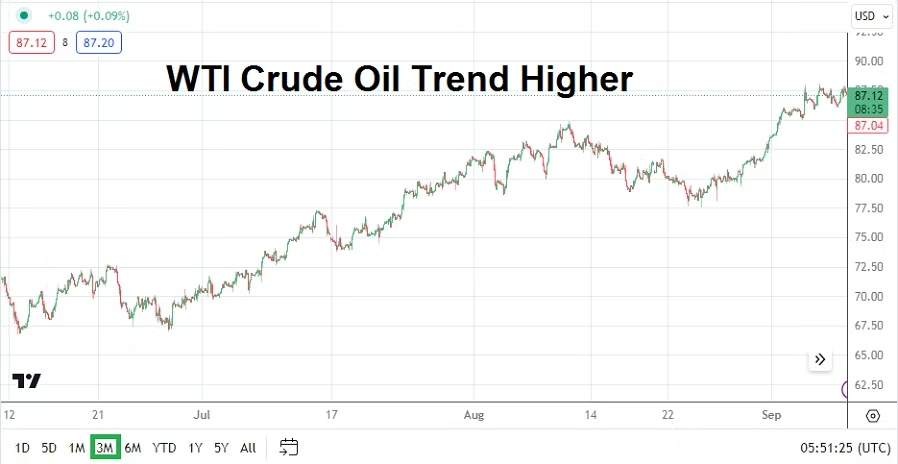
WTI Crude Oil Three Months Chart as 11th Sept. 2023

In the coming days the price of Crude Oil may make headlines as the commodity enters this week near values last seen in November of 2022. The high price of Crude Oil will spark vocal warnings about potential inflation dangers. Speculative elements within the energy sector will be active and hope to take advantage of its trend. A sustained move above 90.00 USD per barrel would be intriguing.

Some analysts might try to correlate higher energy prices to increased demand from global manufacturing sectors, but this could be questionable considering many spheres are suffering from recessionary pressures. But again, the real facts and dynamics behind a potential sustained climb of Crude Oil prices are complex.

Smaller traders need to understand the news they are reading today was known by ‘insiders’ many days before and they have already acted on their knowledge to take advantage of prices.

The cuts in production from Saudi Arabia and other producers has sparked speculative influence, and perhaps the narrative that outlook for more Crude Oil demand could build if the U.S continues to demonstrate a ‘soft landing’. The chatter and explanations for changes to price are almost limitless and day traders need to be aware they will not be privy certain information.

This leaves the door open for day traders to consider trying to understand market behavior within the financial world. The answer for short-term speculators who are wagering on price direction is not a simple interpretation of technical charts, they should also consider fundamental knowledge of the asset mixed with an understanding of current market dynamics as sentiment shifts among institutional players.

In other news to look out for this week, traders who are active in the cryptocurrency space should continue to monitor the support levels that Bitcoin and Binance Coin are traversing. Incremental drops in value continue to be seen and a sustained reversal higher has been difficult to attain.

Monday, 11th of September, China New Loans – the amount of borrowing from businesses and consumers within China will provide insights regarding the strength (or weakness) of the domestic economy.

Tuesday, 12th of September, U.K Claimant Count Change and Average Earnings Index – the jobs numbers from the U.K will provide the GBP/USD with a bit of additional impetus. The U.K economy is in the spotlight and critics have become loud as many point to Brexit problems, which they claim are causing complications. However, within a global economy that is under pressure the fact that conditions in Britain are difficult doesn’t take a lot of time to find other correlations.

Tuesday, 12th of September, Germany Economic Sentiment via ZEW – the reading is expected to show a negative outlook again from the responses of institutional investors based in Germany. A result of minus -15.0 is the forecast. The report could shake the EUR/USD a bit momentarily.

Wednesday, 13th of September, U.K GDP – growth numbers will certainly get plenty of attention for Britain. The anticipated number is minus -0.2%. If the result is worse than the recessionary estimate it could spark more negative sentiment.

Wednesday, 13th of September, U.S Consumer Price Index reports – inflation statistics will be studied carefully and impact Forex immediately if the published results do not meet expectations. The Federal Reserve, institutional investors and the broad financial markets will react to the CPI data.

Thursday, E.U European Central Bank Main Refinancing Rate – the ECB is not expected to make any changes to borrowing rates. The European Central Bank is also anticipated to warn that economic conditions remain challenging and they are monitoring inflation and growth. Anything more than these words via the ECB Monetary Policy Statement and Press Conference could spark some EUR/USD price action.

Thursday, 14th of September, U.S Producer Price Index – like Wednesday’s inflation numbers, the PPI statistics will affect market sentiment regarding outlook and interpretations regarding the potential responses from the Federal Reserve.

Thursday, 14th of September, U.S Retail Sales – this data will give traders insights regarding the spending habits of U.S consumers, which is a key barometer for equity traders regarding consumer driven stocks, and also because an increase would underscore solid economic sentiment from the public.

Friday, 15th of September, China Industrial Production and Retail Sales – these two reports will provide additional insights about the Asian giant. Global investors continue to be concerned about the direction of the Chinese economy. Slight gains are forecast for both publications.

Friday, 15th of September, U.S University of Michigan Consumer Sentiment – the preliminary report is expected to have a reading of 69.2 which would be below the previous reading.
postN48.1

Absurd Friday Forex Results? Suspicions as the Week Begins

Absurd Friday Forex Results? Suspicions as the Week Begins

This coming week may be an opportunity where speculators can test their conspiracy thinking, perceptions of technical and fundamentals in unison. Experienced traders who typically have a high degree of skepticism about markets (particularly when results don’t go in the direction they expected) may question late last week’s results.

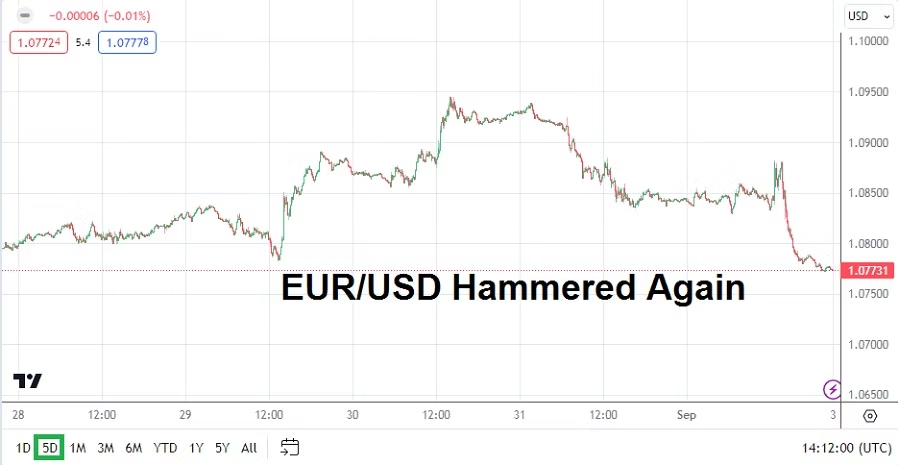
EUR/USD 5 Day Chart as of 3rd of Sept. 2023

Without trumpets or too much hyperbole, was Friday before going into the weekend a ‘false flag’, this as the USD gained strength against many other major currencies. A lack of volume because of the Labor Day holiday coming in the U.S and Canada tomorrow may have affected the Forex landscape. While trading is largely done by computer programs in financial institutions, day traders should understand last Friday worked as a get away day to enjoy a long holiday weekend in North America.

Meaning financial executives largely escaped their offices because they have seniority and the ability to disappear while their ‘underlings mind the store’. Essentially senior management often tells the staff that has to stay behind, “monitor and not touch the system”. This could have left the door open for what appears to be a strange reaction in Forex upon what was in fact weaker data on Friday from the U.S via the Average Hourly Earnings which came in slightly below expectations, and less than stellar U.S GDP results on Wednesday the 30th of August.

Yes, also this past Friday the Non-Farm Employment Change numbers were fractionally better this month than anticipated, but the prior month’s results were actually revised downward. And yet the USD remained strong. Is this because senior analysts, chief traders and risk management officers were absent on Friday?

Tomorrow the same folks will remain largely away from the markets too, meaning results should also be viewed with suspicion. Which sets the table for an intriguing Tuesday and Wednesday for all the major and minor currency pairs teamed against the USD. Gold and equity markets will need to be monitored closely too.

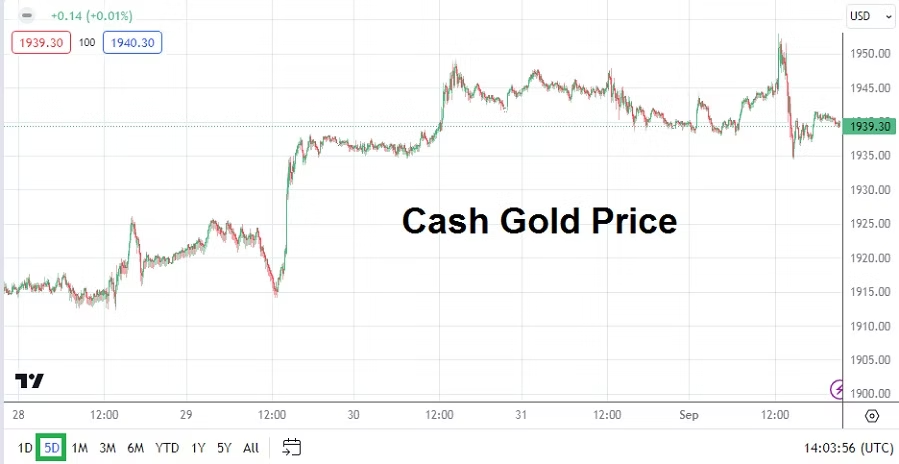
Gold Cash Price Five Day Chart as of 3rd Sept. 2023

Some potential clues are that the price of gold stumbled slightly on Friday as the weekend approached, but this happened as the EUR/USD sank to a low for the week, and the GBP/USD came under renewed pressure. But again this happened in rather questionable circumstances. Important support levels technically may get tested tomorrow, but trading volumes should be examined. Gold in many respects held onto gains made earlier in the week.

Yes, there are reasons to be nervous in financial institutions, due to higher short-term U.S Treasury yields, concerns about the China economy, mortgage rate worries in the U.S and elsewhere, fears about credit availability for small U.S businesses. However, these troubles have not caused a massive meltdown in the most primal of trading venues yet – major stock indices.

September is a notoriously volatile month for equities and speculators who use CFDs to participate in the stock markets globally need to be careful. Correct, some well known ‘traders’ are talking about a coming selloff in the markets, but so far we have not seen a major decline in the NASDAQ, S&P 500 or Dow Jones 30 indices. Day traders should not and cannot underestimate the potential for volatility to occur suddenly. Successful speculative bets via limited funds often means having to practice patience and risk management.

Thus, as the week begins early this Monday, day traders should be careful. Please note that a lack of big trading volumes because of the absence of U.S and Canadian financial institutions will make tomorrow’s results questionable. Opening the door for the potential of reversals on Tuesday, which might be abrupt as a ‘re-balancing’ of sorts takes place as folks returning to their offices seek equilibrium perhaps with their adjusted outlooks.

Simply put the U.S Federal Reserve the past two weeks has seen the same lackluster U.S data as all global traders, and the U.S central bank is in no position to raise interest rates over the mid-term. It would be useful if the Fed voiced their insights regarding the weaker than expected U.S Gross Domestic Product results last week, and the lower than expected Average Hourly Earnings report seen before the weekend. However, do not count on the Federal Reserve to do the right thing.

postN39

USD/INR: Higher Move Correlates and Political Shadows Loom

USD/INR: Higher Move Correlates and Political Shadows Loom

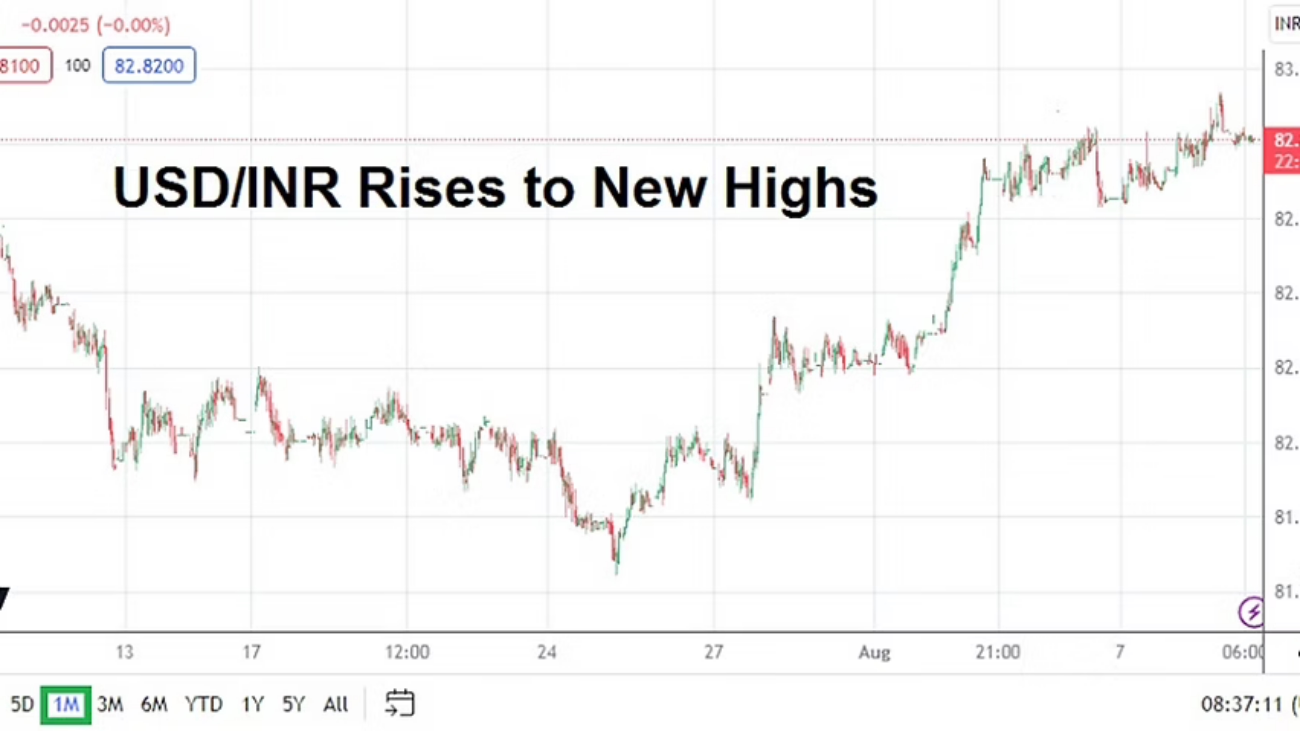
The USD/INR is near the 82.8150 ratio as of this writing the 9th of August, on the 25th of July the currency pair was near the 81.6500 level momentarily. Upwards movement of the USD/INR did produce price volatility in the last week of July, and on the 1st of August the Forex pair was near the 82.1700 ratio. Another dose of upwards momentum quickly occurred on the first day of August, and by the 2nd the USD/INR was trading around the 82.7650 mark.

From Wednesday of last week the USD/INR has essentially taken on a consolidated framework, speculators who are gambling on the USD/INR and need big movement to occur in order to facilitate profits have likely found the currency pair difficult to manage. Yesterday a high of nearly 82.9500 came within sight briefly, this as global risk adverse conditions arose because of the Moody’s rating agency downgrade of some U.S mid and small size banks regarding their fundamental ‘soundness’ and credit worthiness.

Rising interest rates from the U.S Federal Reserve have made it harder for many U.S banks to conduct their business, and loans have become more expensive for their clients struggling to keep up with the rising payments. Particularly if borrowers have the unfortunate position of holding ‘variable’ loans which cost more when interest rates are going up. This has also affected the housing sector in the U.S and in the U.K, as mortgages have become highly priced due to the Federal Reserve and Bank of England having aggressive interest rate policies which are affecting the cost of new home purchases.

The question USD/INR traders may be asking is what does this have to do with them?

USD/INR One Month Chart as of 9th of August

The USD/INR Doesn’t Trade in a Vacuum

The USD/INR has risen in value the past two and half weeks as many other major currency pairs have suffered a similar fate. Nervous sentiment abounds in the global markets because financial institutions are wary of what the major central banks will do next. U.S economic data has been mixed recently, but this perspective depends on time frames regarding outlooks.

Short and mid-term viewpoints continue to point to complications regarding growth and inflation expectations and interpretations of U.S data. The ratings downgrade of some U.S banks from Moody’s yesterday, and early last week Fitch’s downgrade of U.S Treasuries all is related. Rating agencies are getting nervous, perhaps because they do not want to be blamed and held liable if the proverbial ‘fluff’ hits the fan over the mid-term. Rating agencies largely ‘missed’ the financial crisis of 2007 in a famously bizarre manner. The sudden emergence of rating agencies warning investors has made the USD stronger as global investors have become risk adverse temporarily. Yes, this might feel illogical, but the USD remains the world’s safe haven.

The USD/INR also certainly trades because of economic conditions affecting its value from within India. The Reserve Bank of India has a large hand in managing values and is known to be rather active regarding interventions. Yet the USD/INR is being ‘allowed’ to continue to trade near all-time highs. This as India’s status as a growing economic power has taken shape in the global financial markets the past year. The India government has not been aggressive regarding its interest rate policy, and has allowed inflation to seep into the domestic economy via a weaker Indian Rupee for a number of complex reasons. Purchasing goods from India abroad and the ability to invest in India by global financial institutions may be more attractive to those holding USD and needing to convert into INR only when the time is necessary.

Politics and the USD/INR Price Level as 2024 Elections Start to Lurk

From a political perspective too, let’s acknowledge a general election will take place in India in April and May of 2024. Economic decisions being made today and for the mid-term are certainly being affected by the ruling Indian government’s outlook and desire to remain in power. Having come off of yesterday’s highs in the USD/INR the currency pair does remain within sight of highs.

The 83.0000 level likely remains a key barometer for the USD/INR and the Reserve Bank of India is likely watching this value carefully. While it seems unlikely the India government wants the USD/INR to trace much higher because of the psychological implications, global risk adverse sentiment are making the higher values of the currency pair sticky. Tomorrow’s inflation data from the U.S will affect Forex and the USD/INR via the Consumer Price Index. Friday the U.S Producer Price Index will be published. A slight rise in the broad CPI results tomorrow is expected, while Friday’s PPI outcome is expected to match last month’s numbers.

If risk adverse trading remains evident today and the USD/INR holds its ground over the next 20 hours, the currency pair could find that its consolidated price movement from the past week suddenly changes. A higher tick in U.S inflation could be enough to cause the USD/INR to challenge the 83.0000 ratio. Speculators who are wagering on the USD/INR are cautioned to be pro-active regarding their risk management the remainder of this week.

postN23

Fed Spits into the Wind as Day Traders React to Volatility

Fed Spits into the Wind as Day Traders React to Volatility

Broad market analysts continue to spit up an eternal fountain of opinions and data to show why yesterdays moves happened and why tomorrows are going to have bright sunshine and positive outcomes. However, day traders know this is not the reality for them and understand the gyrations and volatility of the marketplace is actually quite dangerous in the short-term.

Day traders may even know market correlations looking backwards are also tales of fiction sometimes. Random results from various fronts are often viewed and assembled by analysts and data providers to give credence as to why ‘John Doe’ lost all of his money, because he was not paying attention to the storm that was ‘obviously’ developing in front of his face. Thus, wiping away any stains of responsibility the analysts and data providers may have for their clients loss of money.

Gold Five Year Chart as of 28th June 2023

Traders seemingly want to know what the U.S Federal Reserve is going to do every minute. If they could, short-term speculators would probably buy information on the amount of coffee breaks FOMC members take, and monitor what Fed officials daily meals are to understand their moods.

However, we should also understand that a lot of the day to day mechanics in the financial markets are tasks that have been done thousands of times before, in other words we know the history and results of many financial institutions. The U.S Federal Reserve is doing nothing new and their actions in July, August and onward really do not amount to much. The monthly decisions and annual manifestations of governments that spend too much cash and their officials trying to balance the value of their national currencies are well documented historically.

Markets in reality think long-term and this is where nearly all of the large money is invested. Day traders need to understand what they are doing is almost considered a ‘hobby’ by investment professionals who do not take the ‘hobby’ of the small speculators very seriously. This because the amount of money most day traders are using doesn’t affect market price very much, unless they form a ‘team’ like the Wall Street Bets ‘crew’ or act in unison via other social media groups influenced by people they mostly do not know personally, and should be wary of regarding motives. Let’s point out for a moment though, that long-term investors can lose money too based on faulty outlooks.

Long-term money is invested with perspectives that stretch often for periods of two to three years and beyond. Outcomes are projected not on data that cause daily momentary values to change, but rather on sophisticated insights which take a perspective the value of equities and certain indices, and other assorted assets tend to rise. Long-term investors mix their outlooks on economic road signs which will be affected by the investing landscape over a period of years. Meaning knowledge of geopolitics, interest rates, social stability and economic transparency are vital. History is a guide post for established financial institutions as they work. But sometimes these factors do not work, and employees at long-term thinking financial institutions find they need new jobs.

U.S Federal Reserve officials, after yesterday’s Core Durable Goods Orders and the CB Consumer Confidence reports which showed strength were published, might have raised their eyebrows. FOMC members likely acknowledged the long-term exuberance and nature of the U.S economy and thought ‘we need to raise interest rates again in July’ because growth data is too resilient. However, they have already said this via their FOMC Statement in June which warned about inflation and why it continues to be a concern, but the ‘words’ thus far have not been taken too seriously.

Yesterday’s reaction in the broad markets was not overly volatile because of the U.S data outcomes. Yes, short-term Forex traders were likely hurt or rewarded depending on the what lucky side of the coin they were betting. However, for the most part many long-term investors have already placed their positions and continue to do so, which they may not alter for the next two to three years depending on the amount of cash reserves they have in their arsenal. This ammunition of large capital, allows long-term players to remain in the game until a result can be quantified – good or bad.

Day traders and long-term investors are playing a different game. Their mode of operations work in different manners. Again, it must be stressed long-term investors do not take into consideration the outcome of most short-term traders, nor for that matter do global central banks. In fact most global central banks and the governments behind them, would rather see day traders simply give their money to investment ‘experts’ who put the ‘little peoples’ money into long-term savings and investment programs.

Speculative cash in the markets does exists, but the amounts of money being used by day traders and large ‘players’s looking for short-term results are quite different. It should also be pointed out that many day traders are using CFD’s – which largely means their positions are being wagered virtually – and are not really being deposited into the ‘cash markets’. In other words day traders can go broke much faster than their long-term counterparts who are investing in positions that have the power of time duration on their side. The virtual positions of CFD wagers are not going into the real cash market, thus not causing a reaction in the actual assets being traded.

Many day traders participating in the daily results of Forex, and equities and indices are merely trading on casino like platforms built for wagering on the results of what is happening elsewhere in the real cash markets of assets. It in a sense, it quite a bit like sports gamblers betting on the outcome of game they are not participating.

Tomorrow the GDP numbers will come from the U.S and the growth numbers will certainly be watched. The results will be consumed differently by day traders compared to long-term speculators. The Final Gross Domestic Product numbers from the States on Thursday are expected to show a slight rise. An outcome of 1.3% was seen last month, tomorrow’s anticipated number is a 1.4% gain.

If the growth number is stronger than expected, this would put the U.S Federal Reserve in a position in which it would almost certainly have to acknowledge another hike to the Federal Funds Rate is ‘needed’ in July. The Fed has learned the hard way that incremental rises in the costs of borrowing (Federal Funds Rate) are not curtailing the spending of U.S consumers. If the U.S doesn’t start to show recessionary like economic signs in the mid-term, the Fed may feel like it has been spitting into the wind. Day traders will find tomorrow’s GDP report causes volatility, but long-term investors will likely view this as just another day with a momentary price reaction.

postN20.1

Friday Barometer Regarding the BoE Decision and Gold Prices

Friday Barometer Regarding the BoE Decision and Gold Prices

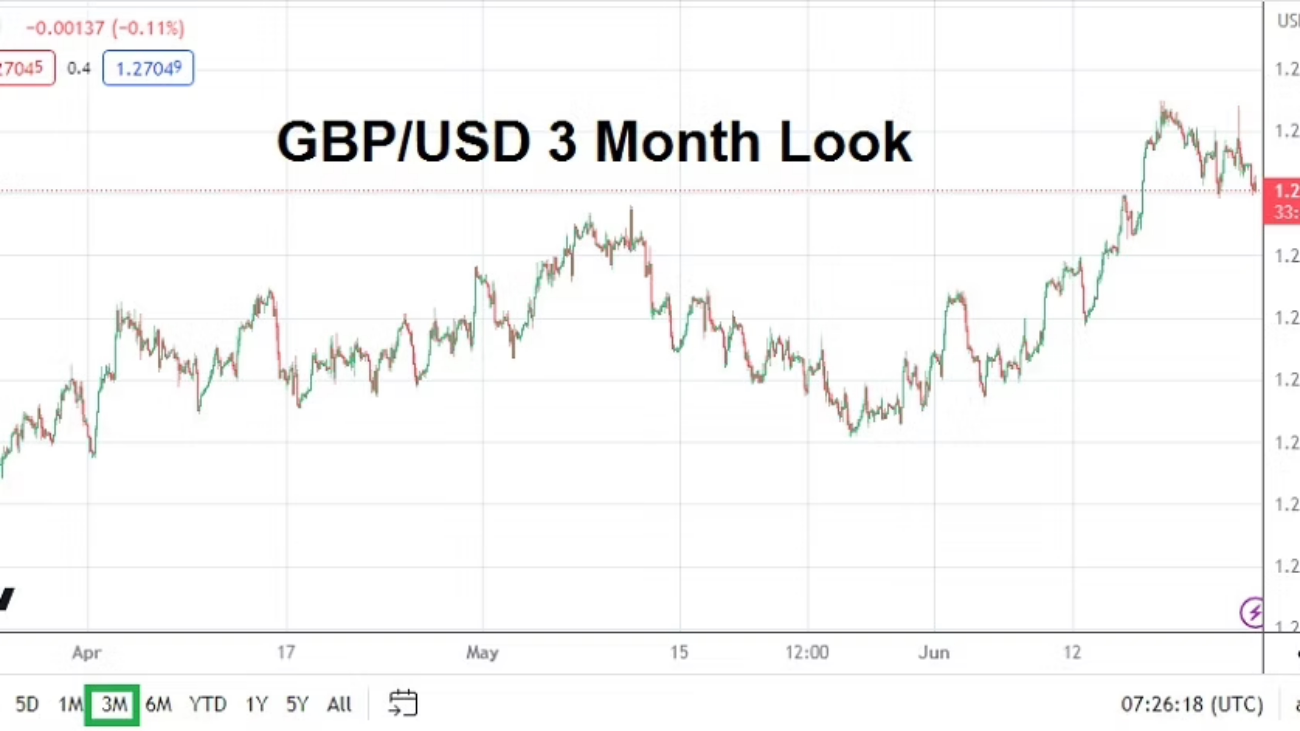
The Bank of England’s rate hike of 0.50% cements the notion that global central banks remain steadfastly locked on inflation, and understand politically the implications on the public regarding higher consumer prices which are being experienced. The Bank of England ‘met’ before its Official Bank Rate announcement with corporate bank executives it was whispered, to discuss their concerns regarding the knock on affects of higher mortgage rates to come. However, this did not stop the BoE from being aggressive.

GBP/USD Three Month Chart as of 23rd June 2023

Is the BoE Move a Sign Regarding the Fed’s Next Decision?

The move by the BoE also is intriguing because the larger than expected hike puts into play the notion the U.S Fed may be raising the Federal Funds Rate in July. The reasoning is based on the idea the Bank of England wants to protect the British Pound from another interest rate hike from the Fed, thus ‘securing’ the value of GBP/USD Forex mechanics.

The U.S Federal Reserve, the BoE and ECB finally seem to have a grasp on import inflation implications. Although higher costs and dynamic pressures on exporting countries like China, India and others that face the gauntlet of these challenges remains critical, because these nations need to raise the costs of manufactured goods internationally when they sell.

Smart Money and the Value of Gold

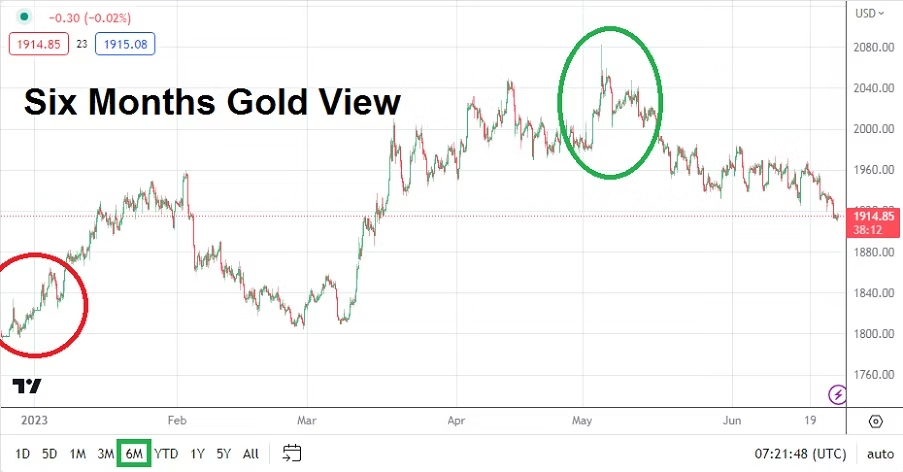
Let’s talk about ‘smart money’ for a moment surrounding Gold – and please try to hold down your laughter – but the price of the precious metal is interesting and should be monitored even by folks who do not trade the commodity. Gold as of this morning is near the 1915.00 USD ratio.

Gold Six Month Chart as of 23rd June 2022

On the 4th of May the price of the precious metal momentarily challenged the 2080.00 level. On the 1st of June the price of the commodity was near 1985.00. Do you see a trend here? Please note, Gold isn’t going to zero.

The point to be made is that the build up in the price of the precious metal from the 22nd of November 2022 when Gold was around the 1625.00 USD per ounce level, until early May anticipated the U.S Federal Reserve was going to become more dovish regarding their interest rate polkicy. For consideration look at the price of the USD during this time too, against many major currencies – the value of the USD also started to come down.

‘Smart money’ is showing signs of nervousness certainly since the start of June that more hikes are feared from the Federal Reserve. However, the price of Gold and the USD are not correlating well at this moment. This is a potential sign that Gold and the USD are both within speculative trading zones in which financial institutions are seeking ‘true’ equilibrium and are not comfortable. Fragility in the financial marketplace is likely to be seen until the Federal Reserve Federal Funds Rate announcement late in July. Expect financial institutions to price in their outlooks respectively depending on their outlooks.

Gold and U.S Treasuries: Inverted Interest Rate Implications

Gold definitely fluctuates within daily trading conditions, it is a speculative commodity, but it is also a solid barometer of risk management among the elite. If financial institutions are in favor of buying items like U.S bonds because of their guaranteed short term interest payments (look at the fact U.S Treasuries are mostly inverted – meaning shorter term bond interest rates are paying higher returns compared to longer term bonds) instead of buying Gold as an investment tool.

The Gold and USD Forex dynamics tells us that investment institutions are still very nervous about the Fed potentially raising interest rates a couple of more times this year. July and late this year appear to be reasonable bets. This Fed consideration and concern remains legitimate while looking forward as long as inflation remains elevated in the U.S. However, the Federal Reserve must also feel comfortable they will not kill mid and small sized banks, which by now should have shifted their business practices allowing for slightly higher interest rates to be delivered.

postN17

Returning to the Roots of Commerce and Positive Contribution

Returning to the Roots of Commerce and Positive Contribution

This article was originally written in September of 2009 when the U.S national debt was 3 trillion , as of June 2023 it is above 32 trillion USD. Mr. Jeremy Blatch suggests current economic conditions warrant further reflection.

As the bloodletting continues in an attempt to cure the banking disease, we are no closer to resolving the root cause of the problem of the financial crisis. Unlike the proletariat in France before the revolution, the masses have not been offered cake to chew on, but a diet of more indebtedness. The chosen elite have distributed billions of other people’s money leaving the silent majority to choke in anger and incredulity.

The Chairman of the U.S Federal Reserve, when challenged by Congress as to the authority which allowed him to give away billions of tax payer’s dollars, nervously sighted the Federal Reserve Act of 1913. The total capitalization of the USA at that time was perhaps USD 500b. The current Public Account Deficit of the USA is around 3 trillion USD (3,000,000,000,000). Where is the money coming from to repay this?

The Dominance of Central Bank Policy and Government Mismanagement

For the first time in history, we have witnessed central banks and governments acting in unison to give away huge sums, seemingly daily to banks and the capital markets. In the press and media, figures in billions and even trillions have become common place. Governments are not companies. They cannot manufacture anything except perhaps lies. Or misspeak if you prefer to be politically correct. What they can do is print money, as they own and control the printing presses. They can then distribute the paper. In this case swallowed up by a banking system, drowning in its own sea of corruption, deception, mismanagement and greed.

We are told that the banking system is now stable again. But for how long and at what cost? The Damocles sword for failure in times of plenty, has yet to fall and will do so as a crippling tax burden on future generations. This at a time when Western governments are unable to guarantee their own elderly a life of dignity in their final years. The great champion of freedom and equality – the USA, cannot even guarantee its people a basic level of free health care at point of need.

The last decade has ended on a sad but predictable note, proving that we have sown the wind of increasing wealth at any cost, and have reaped the whirlwind. In the process we have singularly failed to distribute that wealth and resources equitably to where it’s needed.

Ironically one if the trends to emerge over the past decade of plenty are the development of socially responsible funds. The concept is to allow investors to direct their money into companies whose activities and ‘modus operandi’ are contributing positively to society. This is of course is selective, but at least the investor knows what their money is buying.

The Rise of Sovereign Wealth Funds as a ‘Caretaker’

Governments, especially with oil revenues have joined the band wagon creating Sovereign Wealth Funds. Norway the third largest oil producer, has formed a fund aimed at being socially responsible. In a global economy, ownership of companies is the most important way to have influence claims the Norwegian Foreign Minister. More humanitarian than an oil baron, the Norwegian government was key in gaining the International Land Mines Treaty, and also hosted the historic meeting in Oslo between Israel and Palestine. With the wisdom of Joseph they established a Petroleum Fund, in 1996, now renamed the Pension Fund to take care of the future generations. What a comparison to the arrogant ineptness of the USA, UK and Europe, who have burdened their future generations. The Norwegian government pension fund excludes companies that it believes are failing ethically. Interestingly, there are as many companies who are blacklisted abusing their employees as there are failings in other areas.

Whilst Norway has unambiguously laid out its outline addressing the needs of its own people before the needs of society at large, not the same can be said of Sovereign Wealth Funds which in general are about gaining political and strategic power by buying into the economy and owning strategic assets in the western industrialised nations. As we witness a shift in the balance of world economic power, ownership of strategic assets and the ability to guard and maintain trade routes will dominate the next decade’s macro economic strategy.

The concept of allowing investors choices consistent with their ethical beliefs is nothing new. But is it possible to combine successful business practices while looking after the disadvantaged.

The Impact of the Quakers in the Business World

The first funds to allow investors to direct their money into companies whose activities they approved of were pioneered by the Life Assurance Group Friends Provident in the 1980’s. This pioneering move was typical of the Quakers who were the founders of the Life Assurance Company. The Religious Society of Friends was a Christian movement founded in England in the 17th Century by George Fox. Puritans and non-conformist, they were given the name Quakers’ a term of derision, as they would often quake in the presence of God. They gained a reputation for social activism and were instrumental in the campaign against the transatlantic slave trade of the 18th and 19th centuries. Many were imprisoned for their faith and beliefs.

The Quakers flourished in business and due to both their success and religious beliefs made more enemies than friends. Persecuted and unable to gain insurance, they formed their own company. One of the overriding concerns of the Friendly Society, was to care for the poor and disadvantaged in their own communities.

Many captains of commerce and industry, in the 1800’s were Quakers, who founded and managed their businesses on biblical principals. Joseph Fry who started the famous Fry’s chocolates built a small town for his employees of his factories, with all amenities, schools, hospitals and recreation facilities. Work was scare, and many had to leave their home towns to find employment. Fry’s were bought by the Cadbury company. John Cadbury, himself, also being a Quaker. Edward Pease, owner and pioneer of the first railway in England from Stockton to Darlington housed his own employees, and Joseph Rowntree founder of the famous Rowntree Chocolates was the first person to develop low cost housing for the poor.

Barclays Bank had its roots in the Quaker movement. Unable to obtain loans the Quakers decided to form their own bank. True to their faith and beliefs employees were well housed and looked after.

In spite of being persecuted for their beliefs, through their success in business they were able to alleviate much poverty in serve the wider community. They didn’t need to wait for governments to bankrupt their future generations, they used what they had wisely, and gave something back. The bottom line in any business must be to make money. But as we have seen with the banking and financial crisis of today at what cost?

Originally published in www.ehh.gi in September 2009. Jeremy Blatch is the Founder and Consultant of Ein Harod Family Office.

postN16.1

Week Ahead: Summer Begins with Questions Lurking for Traders

Week Ahead: Summer Begins with Questions Lurking for Traders

Monday, the 19th of June, China Foreign Direct Investment – data from China has been lackluster and last week’s announcement of a stimulus program from the government underscores economic concerns regarding growth.

Monday, the 19th of June, U.S banking holiday – for commemoration of Juneteenth.

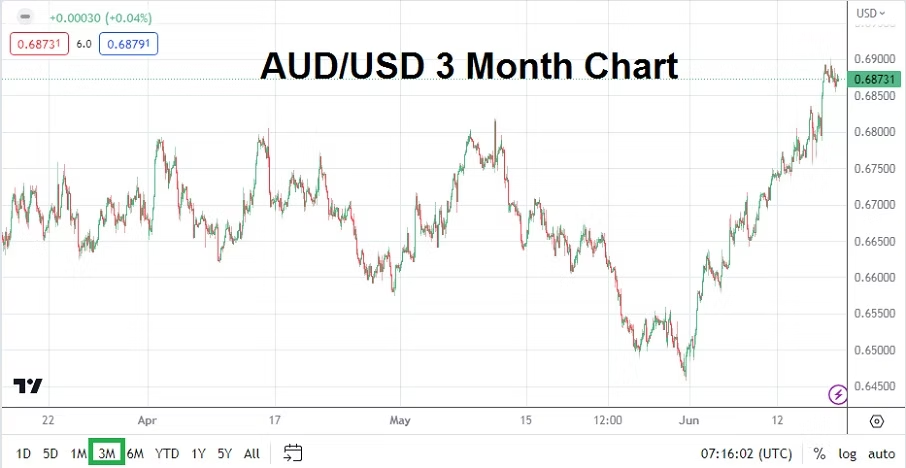
AUD/USD Three Month Chart as of 18th June 2023

Tuesday, the 20th of June, Australia Monetary Policy Meeting Minutes – report from the Reserve Bank of Australia will interest AUD traders and those with an interest in Asian Pacific economics.

Tuesday, the 20th of June, U.S FOMC member John Willliams – as the President of the New York Federal Reserve, Williams, is a key member regarding policy. Taking into consideration last week’s pause, traders may want to pay attention to the New York Fed Presidents’s remarks to see if the pause in Federal Funds Rates seen last week is looked upon as a halt or a ‘skip’ by Williams. The difference between a pause and a skip may appear to be semantics, but a skip would mean an interest rate hike is coming in July. Williams is not going to say what is going to happen at the next Federal Reserve meeting, but he may give a hint regarding his opinion on what should be done.

GBP/USD Three Month Chart as of 18th June 2023

Wednesday, the 21st of June, U.K Consumer Price Index – the data will be important regarding inflation insights for Britain. The Bank of England is expected to raise their Official Bank Rate on Thursday by 0.25%. Another report showing stubborn inflation could set the table for a rather hawkish Monetary Policy Statement from the BoE.

Wednesday, the 21st of June, U.S Federal Reserve Chairman Powell testimony – the Fed Chairman will begin two days of speaking and taking questions. The first day will be before the House of Representatives and the second day in front of the Senate. Because a major election is coming in the U.S in 2024, this will be an opportunity for politicians from both sides of the aisle to get airtime and take a ‘stance’ while bludgeoning Jerome Powell. The Fed Chairman’s remarks could stir the markets slightly, but Powell will be as careful as possible not to put a scare into the financial sector.

Thursday, the 22nd of June, U.K Bank of England – the Official Bank Rate, Monetary Policy Summary and vote count from the Monetary Policy Committee will be released. A hike has been widely expected by GBP traders and has been factored into the British Pound already.

Thursday, the 22nd of June, U.S Existing Home Sales – the housing report will cause a few murmurs in the marketplace because it is seen as an extension of consumer health and interest rate policy in the U.S regarding behavioral sentiment. Existing home sales numbers have been dropping as people with homes have decided to stay put in their current residences. ‘Locked in’ interest rates are more attractive, instead of taking on a higher rate via a new purchase due to costlier mortgages because of more expensive borrowing fees.

Friday, the 23rd of June, E.U Manufacturing and Services PMI – the flash reports from the likes of Germany, France and the U.K should be watched. Manufacturing readings have been producing recessionary readings while Services data is expected to show incremental decreases too.

Friday, the 23rd of June, U.S Manufacturing and Services PMI – the flash reports via the Purchasing Managers Index data need to be monitored too from the States. The readings give a rather good insight regarding outlook of U.S business sentiment.

postN9

India’s Speculative Real Estate Bubble and Values: Part One

India’s Speculative Real Estate Bubble and Values: Part One

India’s Real Estate Sector is a Well Known Affair to its own Citizens and to Global Asset Management Companies

India’s major cities like Mumbai, the financial capital of India, Gurgaon, Delhi, Bengaluru and Hyderabad, the tech hub of the nation, serve as major attractions for local players and international corporate giants who want to participate in the real estate sector. While transparency still remains a challenge that needs to be addressed in Tier 2 and Tier 3 cities of India, underlying demand continues to expand throughout the nation. The Real Estate Regulatory Authority, passed a bill known as the RERA Act, by the serving government in March of 2016, to create transparency and fairness between buyers and sellers in the residential real estate market, however these measures do not always help circumstances as hoped.

Well known companies like Blackstone which is based in New York, and Brookfield Asset Management of Toronto have vast operations in the commercial real estate sector of India. Their estimated investments are significant. Amounts spent are believed respectively to be nearly 50 billion USD by Blackstone, and the Brookfield figure is likely around 22 billion USD. The companies concentrate money for real estate, and infrastructure like telecommunications, roads and other spheres crucial to create value.

The reason why private equity giants allocate massive investments into India commercial real estate is due to the remarkable advantages of the locations available for property, and the capability to turn a profit. The land purchased and developed is usually situated close to burgeoning information technology companies. It is easily understood these IT companies have expansive needs to function properly which include plenty of area for employees to work. This is relevant in the north of India where Brookfield has invested in places like Mumbai and Gurgaon. Apart from the commercial demand for property, the employees who work in these type of companies also drive residential apartment sales in these cities.

The real estate market in Gurgaon has seen remarkable growth in the recent years where prices have experienced double digit appreciation. Readers need to understand that Gurgaon, is a city near India’s capital of New Delhi in northern

India. It’s known as a financial and technology hub. The rise of e-commerce players like Amazon and the Walmart owned Flipkart are important. Walmart spent around 16 USD billion to buy about 77% of Flipkart in 2018 and their vast operations also have sparked demand for huge amounts of property, including warehouses. This activity has certainly attracted the attention and desire of global players to invest in commercial real estate operations.

The residential real estate market has grown fast, and continues to achieve huge growth even after the coronavirus pandemic. An extremely rapid pace is fueled because low interest rates have appealed to new home buyers to initiate purchases of apartments and condominiums in metropolitan cities like Chennai, Mumbai, Hyderabad, and Bengaluru. Many affluent families in India from these major cities continue to own and rent residential homes in the areas, taking advantage of demand. According to a survey conducted by the global property consultancy firm Savills, now 70% of families in the metropolitan cities mentioned previously from the north and south of India have answered positively when asked if they would like to buy a second home in the next couple of years.

Residential real estate sales have been rising after the pandemic, especially for double bedroom apartments averaging 1200 square feet of housing, usually within a category that is priced in a range above 5,000,000 Rupees (around 60,000 USD). India’s benchmark mortgage rate is in the 8.7% to 9.7% range as of this writing, this is higher than it was one year ago. But Indian home buyers haven’t yet stepped back from buying, this because interest rates in India have not increased too much in percentage terms. The average time to pay a loan for residential mortgages ranges from 10 to 20 years in India. This allowable time frame makes it affordable for employees to pay via Monthly EMI, Equated Monthly Installments. The mortgages come with a floating rate meaning the buyers can reset their rates when the local interest rate falls. Yes, floating rates certainly do contain dangers if interest rates climb too high.

A Speculative Roulette Game: The Least Known and Unequal Affair

But there is another reality and a very different story in certain areas of India where data misses critical elements of the real estate business. Speculative participation in property is done by the most affluent who are the dominant buyers and sellers; speculative buying and selling is too expensive for most citizens. Real estate has frequently been used as a tool to hide wealth and avoid taxes by many within certain segments of India. The real estate speculative bubble creates vast distortions in the costs of rents, and affects employment opportunities for the masses. Government offices may sometimes turn a blind eye to these circumstances, because as long as cities and regions can collect money from the speculative frenzy there is little reason to turn off the revenue streams.

Frequently there is someone who is capable of bidding higher for lands in most of the Tier 2 and Tier 3 cities discussed, compared to those who actually need the property to live there and function properly. It is important to mention Tier 2 and Tier 3 cities and what is taking place in these areas, because these locations frequently lack substantial income generation opportunities for people and don’t have massive infrastructure or enough office space to employ people where wages have stagnated for many years. Take for example the Tamil Nadu, a state in southern India where I live, the average price of a double bedroom 1200 sq’ft residential apartment in the capital city of Chennai is around 6,000,000 Rupees (around $73,000 USD).

Readers need to note that the Indian ‘middle class’ prefers to have 2 bedroom 1200 sq’ft residential houses and apartments on average, thus builders construct houses and units based on land availability. Market prices for the property equals the costs of building materials and labor along with the speculative factors worked into the total value.

A look at the town of Madurai where the same apartment is available at a comparable price tag like Chennai is important to critique. Because wages in Madurai are a quarter, and sometimes less than half of what one could earn in Chennai, the disparities in the income distribution and the property prices in India become evident and need to be recognized.

In some rural towns where wages have not grown more than 5% per year,

India has seen real estate prices doubling every 4 years. For example, the rural town called Ponnamaravathy near to Madurai, which is my hometown, speculation in the real estate sector has seen frenzied pricing in an unprecedented manner for land and newly built houses. There is a great divergence between real per capita income versus the escalating real estate prices and rents in the interiors of India in towns such as Ponnamaravathy.

According to real estate analysts, most land parcels and their inventory of projects within metropolitan cities that are under construction has been bought by speculators. When units in new projects are sold to speculators, these generally change hands multiple times during the construction period, which generally lasts three to four years. Such heavy ‘churning’ means fast price increases. Also, the builders who market their own projects as investments raise list prices frequently to keep existing investors happy with notional gains, so they can point to the ‘attractiveness’ of potential speculation.

While it may not matter to some citizens in the larger cities, the problem of speculative influences do matter in the small towns where community wages have not grown properly. Inflation and speculative investments in these towns do not create sufficient job growth either. Surplus cash profits earned by many businesses, and foreign remittances, which were close to 108 billion USD in 2022, goes back into real estate speculation causing higher rents and forcing lower income households to struggle.

Rural Wages Haven’t Grown but Prices are Increasing for Homes

According to economists data, Average Nominal Wages in rural India is approximately 15,000 Rupees per month for men and 8,000 Rupees per month for women.There is an ample real estate supply in the rural market, but speculative demand has created steep pricing, typically initiated by large ‘investors’ willing to pay top money for any asset irrespective of its location, affordability or current market price based on the assumption values will continue to increase.

The difference between rural wages and costs for homes creates heavy disparities and inequalities for households living within the lower thresholds of society. For example, a double bedroom 1200 sq’ft residential apartment in Ponnamaravathy can be selling at a whopping 7,000,000 Rupees (approximately 85,365 USD). This is 20% more than what we have seen before on average in Chennai, and Madurai, a Tier 2 city, in Tamil Nadu state. The wages in the rural town of Ponnamaravathy are just 10% compared to what one could earn in Chennai annually, making the purchase of a residence priced at these higher values difficult for most residents and making many people renters for life.

post37.1

Nervous Contradictory Trading Winds for Behavioral Sentiment

Nervous Contradictory Trading Winds for Behavioral Sentiment

Behavioral sentiment in the broad financial markets is nervous, and mixed results in the major asset classes are likely causing retail traders to feel uneasy. Most day traders try to perceive which direction they should lean based on price momentum while looking for fast profits. The current state of the broad markets are making decisions difficult for retail traders.

A healthy dose of nervousness at this moment might be a good thing for speculators and keep them conservative. Swirling results in Forex and commodities are causing plenty of problems for traders who instinctively like to pursue buying positions because of the human tendency to be optimistic.

Federal Reserve Causing Headaches for Smaller Banks and Forex

Forex markets have been choppy since the beginning of February 2023, when the U.S Federal Reserve surprised many people with continued aggressive rhetoric. The U.S central bank has backed up its ‘tough’ talk as it ‘fights’ inflation with more interest rate hikes. Clarity regarding a potential June hike from the Fed remains problematic with no certain answer yet. For the moment there seems to be a belief there will be a genuine pause, which may be fueling better returns for U.S equity indices, but there are no guarantees. Behavioral sentiment remains fragile.

The detrimental effect from higher interest rates on mid and small size banks in the U.S remains harmful. Mid and smaller corporate banks continue to struggle with the increased Federal Funds Rate. Bad business decisions within these banks have made it difficult to make profits in an environment when money is no longer ‘free’, this as many of their depositors look for better returns.

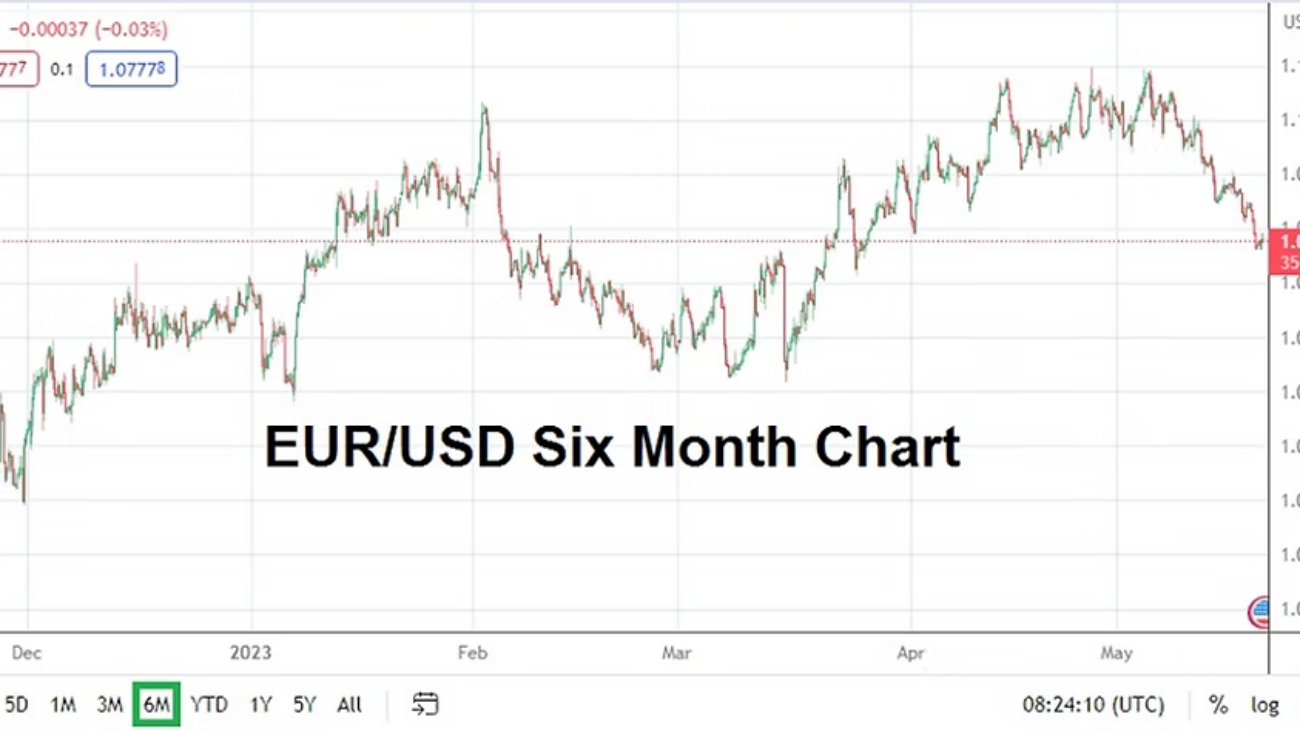
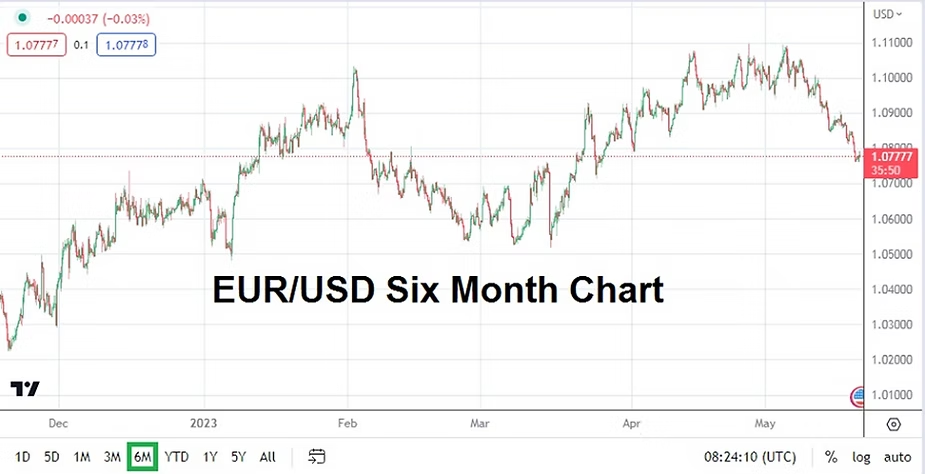
A six month chart of the EUR/USD below shows how the EUR started to climb in the fall of 2022, but then began to run into headwinds when financial institutions started to reconsider the seriousness of U.S Federal Reserve policy earlier this year. Analysis regarding the timing of the Federal Funds Rate forecast to actually start becoming dovish has proven problematic.

While the EUR/USD still maintains plenty of its gains, the current price of the the currency pair is below early February highs. The EUR/USD was trading near 0.95700 in late September of 2022, and the price as of today near 1.07800 is a vast improvement for the EUR. However, the choppiness of the Forex market the past few months has not been easy for day traders who have suffered from sudden reversals frequently in many of the major currency pairs.

EUR/USD Six Month Chart as of 19th May 2023

The KRE regional bank index below shows the dramatic drop in value of the mid and small size banks in the U.S the past year, and the sector certainly still has financial concerns and shadows which are causing pressure on their corporate share values. Stubborn inflation remains and the desire of the U.S Federal Reserve to attack rising costs with higher interest rates remains a serious concern.

KRE Regional Banking Index One Year Chart as of 19th May 2023

Stock Markets Suddenly at One Year Highs as Investors Seem to Return

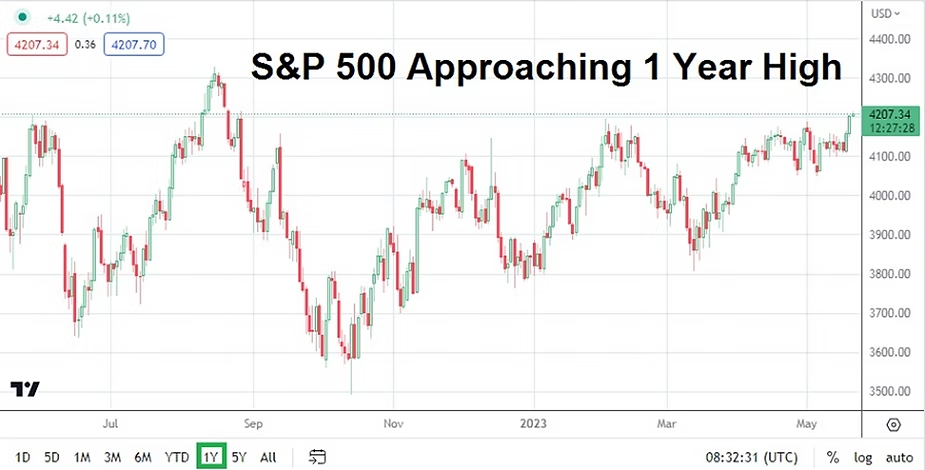
Is the S&P 500 a harbinger of things to come or are investors in the index being too optimistic? Day traders likely stay away from the S&P 500 many times because they are mostly trading the index via CFD’s and this can prove expensive regarding transactions, they are not long-term investors – meaning they do not like to make bets that take awhile to materialize. The results from the past year and a half in the stock markets have made speculators nervous regarding bets on equities.

However, institutions and long-term investors buy and hold the S&P with a vision towards the future; they also reap the rewards of its dividends. The ability of the S&P to be trading at nearly one year highs is curious. The improvement in equity values in the indices may be a sign that ‘smart money’ continues to invest in the stock market for the long-term, even during what is perceived as a fragile period of behavioral sentiment. Financial institutions may also be betting on the U.S Federal Reserve having to become more dovish regarding interest rate policy in June and looking forward.

S&P 500 Index One Year Chart as of 19th May 2023

Results on the NASDAQ 100 may be surprising to many and the index is trading at one year highs, and though like the S&P it is still under all-time highs from late 2021 and early 2022, investors have shown a taste for investing in the ‘hi-tech’ index again. While this may contradict the behavioral sentiment of Forex and the results in the mid and small size banking sector, the NASDAQ 100 does point out money is still being invested and might be an indication that day traders need to be more patient, more optimistic about the coming months and year.

While a recession might be looming, large companies have started to lay off workers and scale back on bonuses in an effort to fight against reduced profits. The narrative from the media may be negative in many cases, but many long-term investors tend to look at more conservative fiscal policy in companies as a good practice and a sign they should invest.

Perhaps the market is going through a needed case of the jitters and the U.S indices are showing that brighter days are ahead, even if there are storm clouds that still must be dealt with regarding inflation and possible recession.The long-term horizon tends to always be more optimistic. Day traders may not be able to take advantage of quick hitting trades, but what about changing perspective and looking for more patient results by being more conservative as a speculator? Or maybe investors in the stock market are wrong and another violent selling surge will return into equities, but what if it doesn’t.

NASDAQ 100 Index Five Year Chart as of 19th May 2023

There is a fear among mid-size brokers that trading volumes in many sectors are dropping. Showing cautious investor sentiment on the retail front – which may be a healthy reaction in many respects because it is hard to read momentum right now. Day traders tend to get killed by the daily gyrations of Forex and equities in choppy markets because they are using too much leverage. However, historically when retail traders have turned cautious, this is when institutional trading houses have tended to do remarkably well. Investment houses can take on more risks in markets that are perceived as nervous and fragile, because they have a longer time horizon and more cash to absorb momentary losses.

Commodity prices are also intriguing because after hitting highs nearly one year ago in May and June of 2022, the ratios of many broad commodity indices have come down and values are traversing near late 2021 levels. Which brings us to the consideration that global demand for physical resources are limited because corporations are not making large purchases of commodities, this as they wait on better manufacturing demand for their products. This may appear contradictory and create nervous behavioral sentiment for traders, but cautious business practices are a way to make sure there is enough money for the future when conditions turn optimistic again.

post34

Economic Data and Underlying Factors this Week

Economic Data and Underlying Factors this Week

Monday 15th of May, U.S Empire State Manufacturing – N.Y manufacturing sector report regarding business conditions, which serves as a sentiment reading. A lackluster outcome could put a bit more pressure on the Federal Reserve to lessen their aggressive stance, and certainly point out nervousness among U.S corporations regarding profits.

Monday 15th of May, U.S TIC Long-Term Purchases – report shows results from between domestic and international purchases of U.S Treasuries. While not considered a major data release, this one could give an impetus to investors in U.S banking sector who may find intriguing potential correlations. An increase in the number of domestic purchases compared to international buyers would be of interest. Large dark shadows on the U.S mid and small size banking sector still exists, pressures boil as depositors are still considering parking their money elsewhere, and corporate share values remain fragile.

Tuesday 16th of May, China Industrial Production and Retail Sales – China economic results are a barometer of global health due to the fact the nation is a large supplier of worldwide products. Industrial Production results if they are lagging in China, would indicate decreasing demand and global economic weakness. Retail Sales figures from China is an indicator of consumer sentiment within the nation.

Tuesday 16th of May, U.S Retail Sales – results indicate buying power and confidence among U.S consumers. Underlying numbers also focus on how Americans are spending, in other words – are they paying the full price being asked or are they looking for discounted goods as inflation continues to hit wallets.

Wednesday 17th of May, Japan Preliminary Gross Domestic Product – No real surprises expected from Japan’s growth numbers, but the results are always appealing to economists who debate the nation’s ability to remain among the wealthiest without any truly outstanding GDP numbers produced in years. In other words a lot of noise for traders without much real impact.

WTI Crude Oil – One Month Chart as of 14th May 2023

Wednesday 17th of May, U.S Crude Oil Inventories – another report that seems important for commodities traders, but without any real surprises has limited impact. Many times even among WTI Crude Oil speculators, they are often looking at other data they have gathered like production numbers from OPEC, Mexico and Canada. And also oil tanker movements around the globe.

Thursday 18th of May, Australia Employment Change and Unemployment Rate – outcome from these numbers could factor into AUD/USD momentarily, but without a major surprise will likely have little impact on global speculators for more than a couple of hours.

Thursday 18th of May, U.S Existing Home Sales – housing numbers are under some scrutiny as they reflect behavior of current U.S home owners as they react to growing interest rate pressures on mortgages and stay within their current homes to avoid higher borrowing costs.

post25.1

Forex, Interest Rates, the Fed and Conspiracy Politics

Forex, Interest Rates, the Fed and Conspiracy Politics

If you have been looking for road signs regarding what the U.S Federal Reserve is going to do next week and trying to get a feel for its rhetoric which will be delivered in the FOMC Statement on the 3rd of May, this week’s U.S data outcomes should be monitored. And as of now the data might be suggesting the Fed will remain aggressive in June.

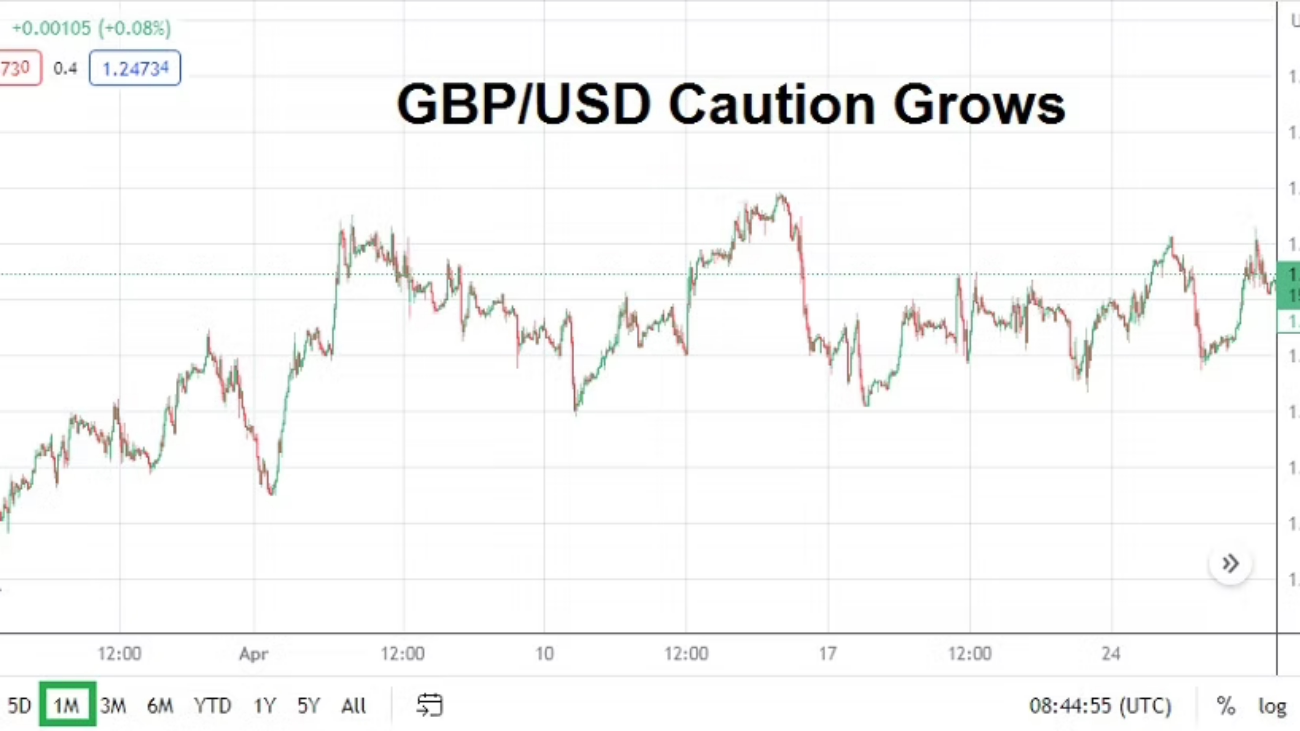
GBP/USD One Month Chart

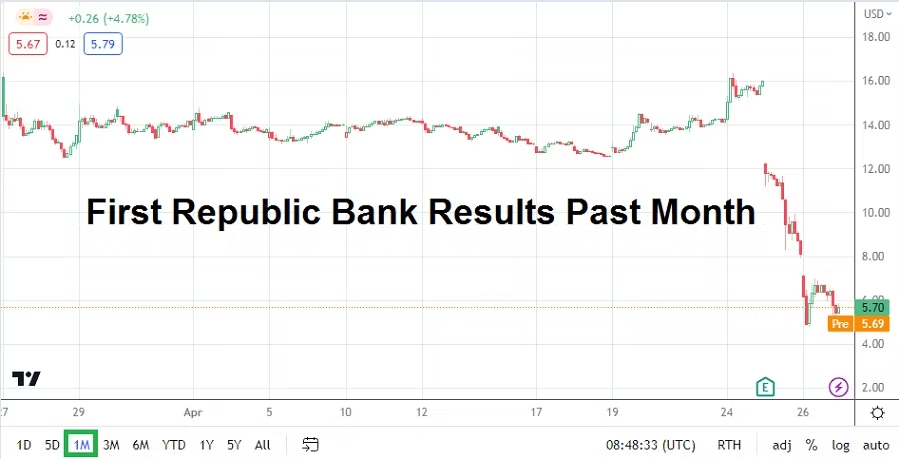
A Fed Funds Rate hike is going to happen on the 3rd of May unless there is a financial catastrophe that suddenly emerges that is nearly cataclysmic. While First Republic Bank wobbling is certainly a problem (Mark Zuckerberg is supposedly a rather large client of the bank), if this entity fails completely it may not cause massive bedlam. The stock has dropped violently, so a collapse should not be a surprise. No, it will not be welcome, but it should not be an unexpected calamity.

The question is how much the U.S government will protect depositors? The large clients who are not insured above the standard 250k USD ratio will want the same benefits that clients of Silicon Valley Bank received in March. Should they be rewarded the same way? The American public may not like the idea of another bailout for the deep pocketed, but there may not be much they can do about it, except to vote the politicians out, but who do you exactly punish?

First Republic Bank – One Month Chart as of 27th April 2023

What a collapse of First Republic Bank will do is hurt the corporate bond sector in banking again, because it is likely holders of these bonds will be put at the back of the line once again if the U.S government decides to protect big depositors of millions of dollars like Zuckerberg, before it protects bond holders.

U.S Data in Focus and the Allure of a Black Dress with Growth

But I digress, yesterday’s Core Durable Goods Orders statistics came in better than expected. Today Advance GDP will come from the U.S and if this number produces an increase instead of a downturn, the U.S Federal Reserve will have more ammunition to remain aggressive regarding interest rate hike rhetoric. An increase of 0.25% has been calculated into Forex for next week. The USD has done rather well recently, but what is of intrigue is the perception the USD is doing well after the financial markets have seemingly priced in a rate hike on the 3rd of May. Meaning, typically the USD would have started to ebb a bit lower after financial houses put their interest rate outlook into their Forex positions. Yesterday’s better than expected Core Durable Goods Orders leaves the door open for another hike on June the 14th to be precise.

While Core Durable Goods Orders isn’t a sexy statistic, GDP numbers frequently are, and if the growth numbers show up with a stunning black dress on with alluring ‘expansion’ it could send large speculators into a tizzy and make them believe the Fed could increase by another quarter of a point in June. The Fed during its FOMC Statement next week will certainly try to help financial institutions anticipate outlook. The Fed doesn’t need to hold the hand of investors, but it often treats them like children.

Financial houses had largely believed the Fed would hike in May and might raise in June. The notion that a June increase is certain would then put the focus back on the long-term again, and Forex could then break free of its rather consolidated incremental USD strength seen the past couple of weeks. Inflation remains a drum beat that is steady. And while today’s GDP numbers will be important. Tomorrow PCE inflation statistics will be the final nail in the coffin. If growth is stronger than expected today, and inflation numbers remain stubborn tomorrow, the Fed would certainly consider another June increase valid.

On the bright side for day traders is that the cautious choppy air which has circulated the past couple of weeks in Forex is almost done. While steady trends may not reappear for a while, at least near-term outlook will have more clarity by this time next week.

Big Institutions Have Long Term Outlooks and Treat Trading Conditions Differently

Long term outlook is another game as day traders should know and one they cannot easily participate. Long term investors have the money to specialize in assets which are not expecting profits today, but instead have a larger time frame for making money. Deep pockets, patience and the need for less leverage help financial institutions trade in a more stable manner, frequently putting the ‘odds’ in their favor.

The price of Crude Oil is actually behaving politely in recent trading, and its ability to find a mid 70.00’s USD price range is interesting and may help inflation move lower if it can be sustained. If supply of goods can adequately stabilize and global logistics costs come down, inflation could decrease. These factors are part of the long term perspective of financial institutions. Day traders may want to consider this because it could affect behavioral sentiment moving forward.

Higher interest rates from the Fed are causing other currencies to loss value and this has caused increased costs for international manufacturing companies located outside the U.S which frequently have to buy commodities in USD from their converted domestic currencies, this causes inflation. This is a factor not spoken about enough and traders need to consider this within their perspectives too.

The Fed and Perhaps a Conspiracy Theory

If the Fed actually starts to decrease its interest rates, it would help other currencies stabilize. And yes, if the Fed stops increasing interest rates it may actually help weaken global inflation. The Fed has caused import inflation to occur into the U.S. Are they aware of that? It is a good question. The likelihood is a yes, and it has been disregarded, but why? Perhaps there is another reason; does the U.S Fed and U.S government want to cause inflation globally to strike politically at some competitors? This is a different topic………kind of. Conspiracy theory.

While insight regarding the dialogues between the Federal Reserve and U.S government is certainly above my pay grade, one has to wonder about considerations regarding inflation and a stronger USD and its potential effect on China. The Fed increases may be a way of trying to inflict harm economically and in a subtle manner, but this cannot be proven. Perhaps the Fed is unaware of the global conflict being waged.

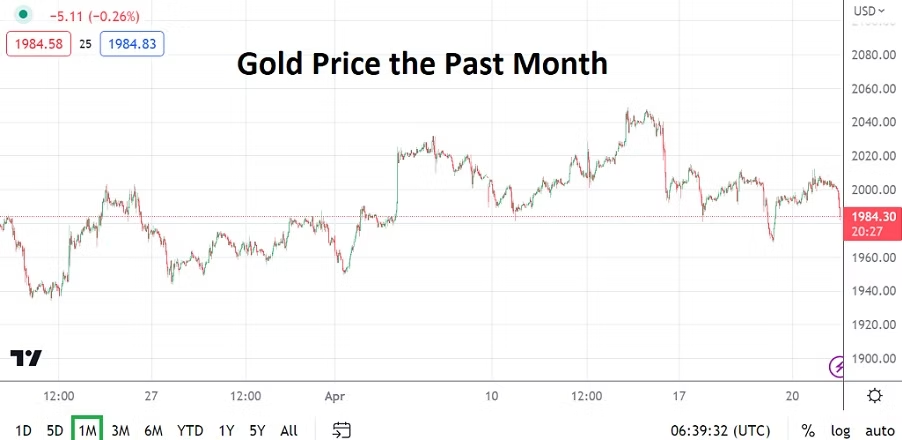
On another note, Gold remains near 2000.00 an ounce – almost steadily, displaying a certain amount of cautious behavior.

Gold One Month Chart

post22

Quick Thoughts for Friday 21st April

Quick Thoughts for Friday 21st April

It appears the broad financial markets are producing rather cautious price ranges which day traders should be wary of and this could continue until the 3rd of May. The Federal Reserve will release its FOMC Statement and Federal Funds Rate on Wednesday the 3rd of May. It is likely a quarter of a basis point will be added then, meaning an increase of another 0.25%. The worry for financial institutions is the potential for another Federal Funds hike in June and unease regarding the possible move.

Choppy markets are also happening because of a lack of major U.S economic data the past few days, which has created an air of uncertainty and undefined trends in many assets.

The difficulty of finding a defined trend for day traders can cause them to get eaten alive. Skittish conditions are not good for a majority of retail Forex and CFD traders – and plays into the fact 90% of retail speculators are eventually wiped out. An absence of deep pockets to withstand volatility because leverage is being used too excessively, and an inability to digest overnight ‘carrying charges’ which must be factored in too as ‘costs of trading’ also causes money to disappear – although your broker might try to ‘sell’ this as part of your learning curve while they try to convince you to trade again.

Next week the U.S will see the CB Consumer Confidence report on Tuesday the 25th of April, Thursday will have Advanced GDP and Friday will finish with inflation data. However, it is the week afterwards which is already a large focus. Yes, corporate earnings are being published today and in the coming week too, but many eyes are on the U.S Federal Reserve. Clarity on interest rates is what is desired.

Gold price the past month of trading as of 21st of April 2023

If you are looking for evidence regarding what ‘smart money’ may be doing, it should be noted the price of Gold remains hovering around 2000.00 USD per ounce. Suddenly the price of Gold has become almost calm, please do not expect this to continue. The rather tight and ‘high’ price range of the precious metal is a potential sign that financial folks still believe that the U.S Fed may remain semi-aggressive in the mid-term, while ‘hoping’ over the long-term lower interest rates are coming.

As traders should know by now, nothing is guaranteed. Trying to understand behavioral sentiment helps.