post264

India Insider: Concern IT Empire is at Risk in Age of AI

India Insider: Concern IT Empire is at Risk in Age of AI

When China’s DeepSeek announced its Generative AI program as a rival to U.S based ChatGPT, the world paid close attention. In fact, Nasdaq bellwether stock Nvidia, the world’s most valuable company, took a hit because the DeepSeek product was made with less expensive chip processors compared to ChatGPT’s infrastructure, which uses Nvidia’s GPU technology.

In North America and Europe, DeepSeek’s rollout was met with much surprise and intrigue. And the true ‘poster child’ of India’s post-liberalization era, the IT (Information Technology) sector has been facing its own challenges and was also caught off guard. India’s IT sector employs some 5.3 million people and helps maintain its current account balance sheet by earning crucial foreign exchange reserves. The top four major IT companies have a combined market cap of $300 billion USD, larger than India’s richest man Mukesh Ambani’s Reliance Industries, which stands around $238 billion USD.
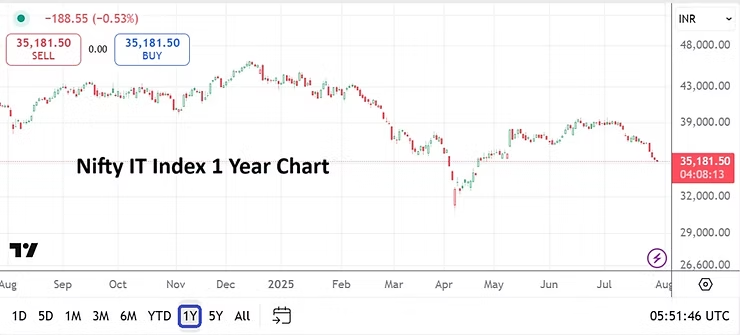
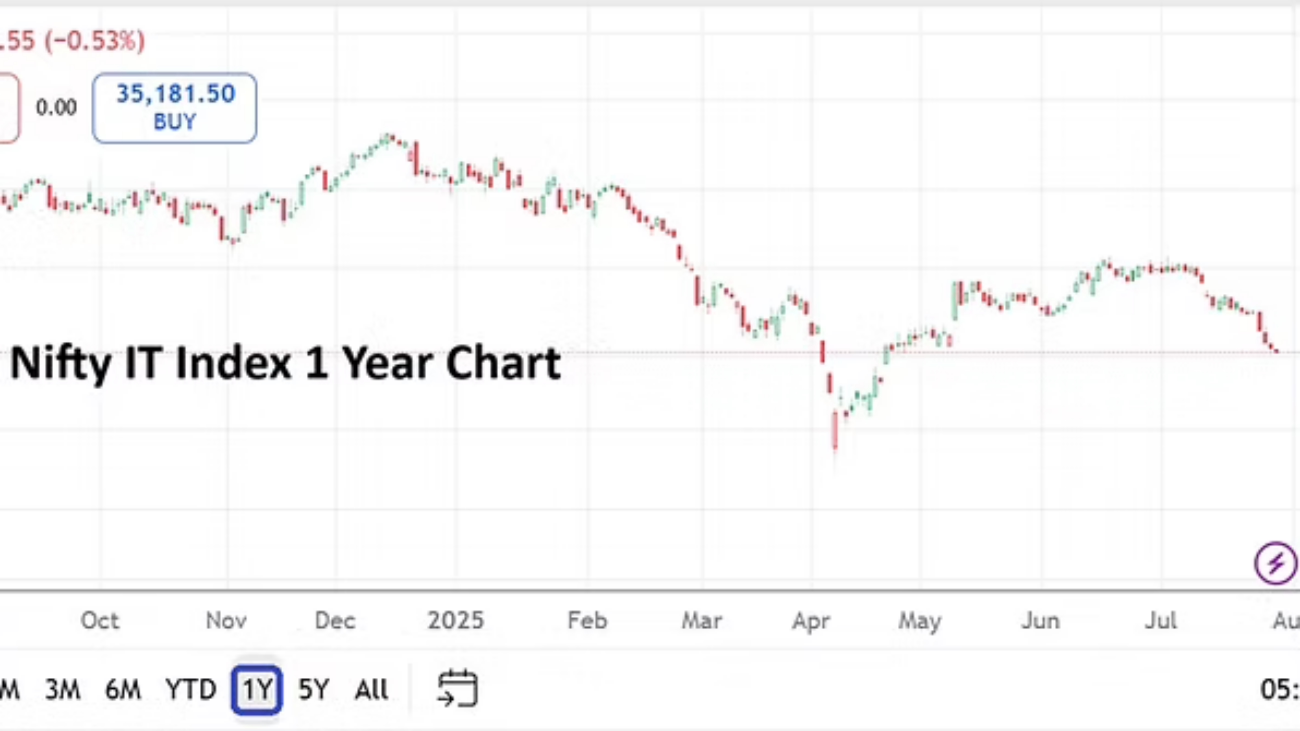
Nifty IT Index One Year Chart as of 29th July 2025

India’s IT Business Model and Artificial Intelligence

Indian IT companies operate on a model of software servicing for offshore clients, typically via medium to long-term contracts. Their business operations are embedded across the globe thanks to affordable pricing and the quality of services provided by Indian software engineers. Now, this model is being threatened by the rise of Generative AI and taking it lightly would be a serious mistake by India.

Shares of major IT companies ­- TCS, Infosys, Wipro, and HCL have delivered lackluster returns since their post pandemic rally. Since Covid high valuations amid deal pessimism were a concern. Now those worries are amplified by AI and the disruption it brings to their business models. Software exporters remain the worst performers, the Nifty IT index is down 18% year-to-date, underperforming the broader index consequentially.

The recent release of Q1 fiscal year 2026 numbers from these four IT companies have been met with skepticism regarding forecasted outlook. Analysts noted that Indian IT firms are grappling with margin pressures amid persistent macroeconomic headwinds and rising threats from AI-driven productivity improvements. In response, companies have started to protect their margins with layoffs, TCS (Tata Consultancy Services) shed around 2% of its workforce this past weekend which could affect more than 12,000 jobs.

Time For India’s IT Sector to Become Proactive

Pricing models that IT companies charge customers are changing from long to short-term flexible contracts like ‘pay as you go’ over traditional fixed annual licensing models. Despite changing CEOs in several of these companies over the last few years, animal spirits are failing thus far to innovate AI products that can enhance the bottom line. Instead, companies prefer share buybacks and paying stellar dividends to appease the shareholders rather than to invest in R&D especially when their core model is under threat.

Hang Seng Index One Year Chart as of 29th July 2025

The euphoria surrounding India’s $5.4 trillion equity market is cooling in 2025, amid concerns over slowing earnings growth, elevated valuations, and tariff related uncertainty. At the same time, sentiment towards Hong Kong’s listed Chinese shares are improving with global fund managers rapidly reallocating capital to that market. The Hang Seng Index has delivered an impressive 27% return year-to-date. Meanwhile, India’s stock market still lacks depth for investors seeking meaningful exposure to the booming Artificial Intelligence theme.

Indian IT companies excel at scaling and delivering AI solutions for global clients, but they do not own the core models, platforms, or consumer data needed to become true AI disruptors like China’s tech giants. The industry contributes approximately 7.5% to India’s GDP and remains the primary employment avenue for engineering graduates. It’s time for India’s IT sector to proactively address the growing AI threat posed by global competitors.
post220

Nasdaq 100: U.S Exceptionalism and Competition from China

Nasdaq 100: U.S Exceptionalism and Competition from China

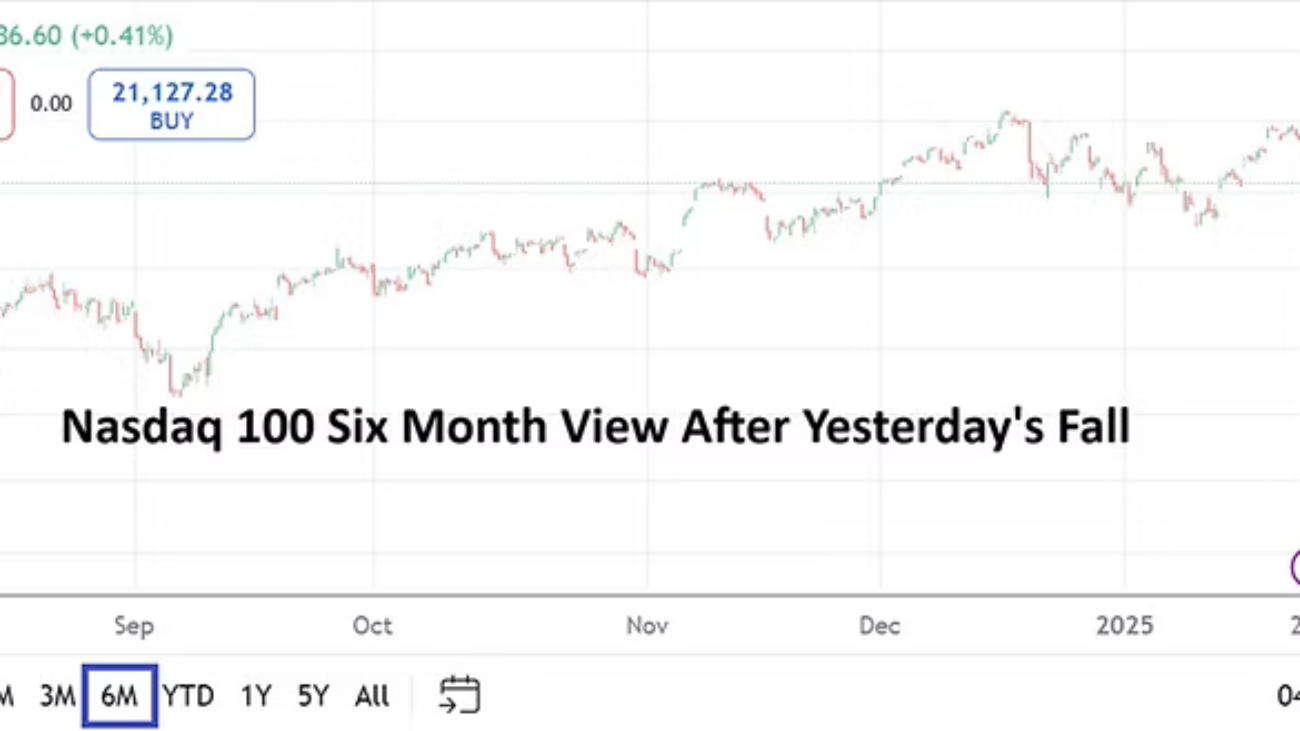
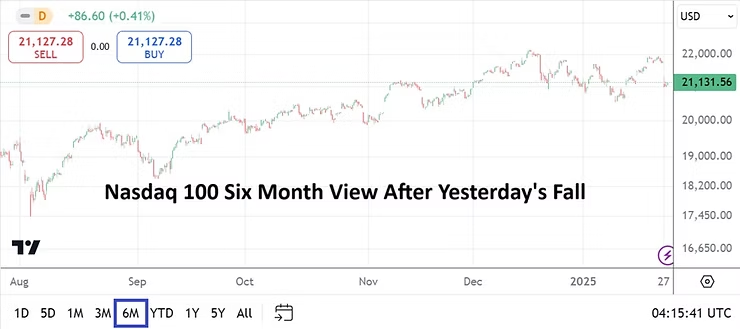
Nasdaq 100 Six Month Chart as of 28th January 2025

The losses on the Nasdaq 100 yesterday were bad. Wall Street participants were reminded that technology is and always has been a competitive landscape. It is rather remarkable that the lesson being given to capitalists came from China which is led by a Communist government. U.S Exceptionalism which has been spoken about in loud tones the past week because of President Trump’s return to the White House has been put on notice.

There will be additional bad days on Wall Street, but the idea that the Nasdaq 100 now faces an existential threat from DeepSeek is farfetched. Traders must take a healthful breath and remember yesterday’s loses while bad were not catastrophic. Premium froth from Nvidia and other companies saw some of their likely overvalued worth selloff on Monday. Perhaps more will follow today, but tech and innovation companies have always faced a competitive landscape.

Was yesterday an indication there is a crack in U.S Exceptionalism via technology that is going to be long lasting? Companies must always compete to be the best, if DeepSeek’s entry into the news cycle was a ‘sputnik’ moment as some claim, folks need to remember the U.S bounced back rather nicely and eventually outpaced the Russians – who still remain a tech competitor regarding rockets and space.

This weekend’s news from China has provided another moment the world realizes technological gains are often hard fought. While many media pundits act with hyperbolic noise and state vivid concerns about the future of the technological competition between China and companies around the globe, the race for innovation has and always will exist.

AI for the moment is grabbing the headlines, but Artificial Intelligence is also a buzzword – it is marketing usage by those who are trying to entice investors with big promises, except machine learning has been around for decades. Progress the last few years has been significant, but AI isn’t ready to make humans into a new species. Competitive battles in equity markets centering on innovation via semiconductors, quantum computing, robotics, IoT, biotech, transportation, and other sectors have been relevant and will remain this way.

Monday’s results on the Nasdaq 100 and harsh falls for some tech giants like Nvidia is a reminder that while speculating and investing in one company is a potential way to make solid returns, investing in indices and a large group of diverse companies often produces steadier yields. Yes, yesterday’s losses on the Nasdaq 100 were bad, but they were less critical compared to the losses Nvidia suffered. And let’s remember Nvidia will survive yesterday’s declines.

After Monday’s Nasdaq 100 decline, today will prove a another test of sentiment. Premium froth in companies such as Nvidia that sold off, will now cause people to question fundamental analysis of tech and innovation. Bubbles sometimes burst. The remainder of this week will be a solid test of behavioral sentiment. A battle between large speculators and investors will also be seen. Those who plan on cashing out of the market near-term to book profits may find that investors with long-term ambitions still win the race.

Perceptions are constantly being shaped, we should always be questioning the ability of technology which is proven versus marketing mayhem that is hot air. Artificial Intelligence has had a gravitational pull on the investment landscape. The froth created by investment into the AI sphere is important, but it only one part of many combined technologies constantly developing.

Many companies claiming they are AI centric have no real basis to make the statement. Semiconductor companies have led a lot of the gains in Nasdaq’s run higher because they are the ones supplying micro processing to companies that need the technology to build machine learning capabilities, China has always been a competitor and yesterday provided a wake up call for those who forgot. A dose of reality has been delivered once again to Wall Street.