postN42.1

Day and Institutional Traders Suffering Nervous Conditions

Day and Institutional Traders Suffering Nervous Conditions

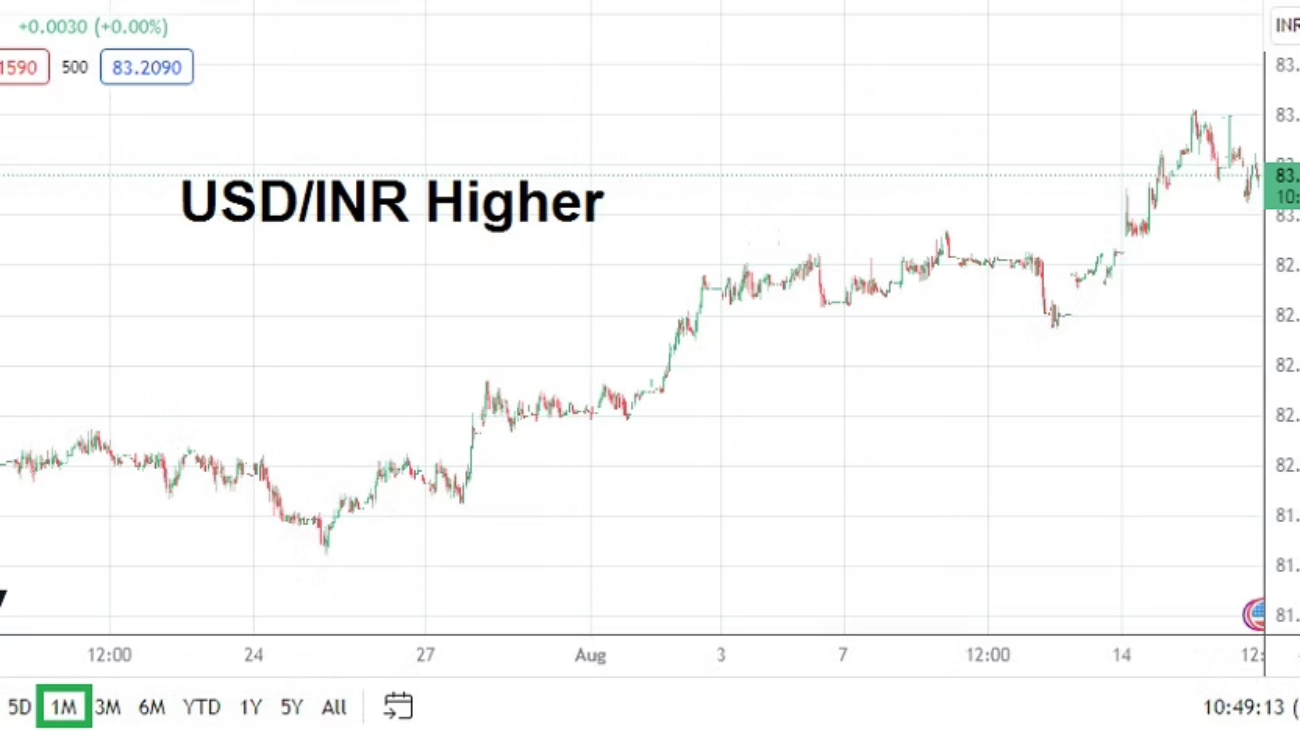
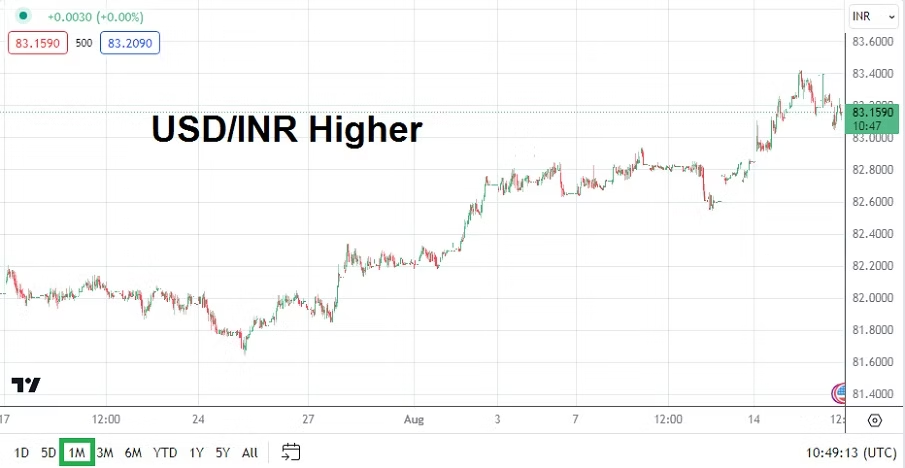
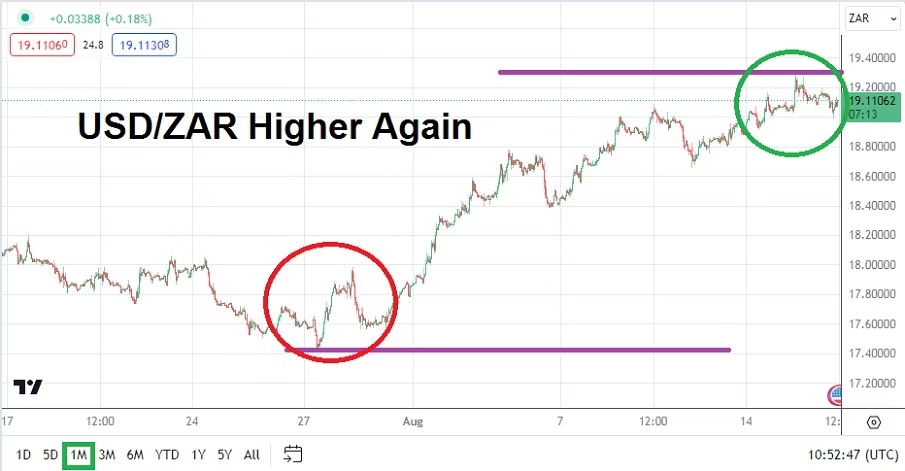
Market price action has caused quite a few interesting interpretations of the prices being demonstrated in Forex, gold and equity markets recently. The USD/INR is now at record heights, the USD/ZAR is back above 19.00000 and the USD/BRL is again near the 5.0000 ratio.

USD/INR One Month Chart as of 16th August 2023

While Forex traders around the world look for clues as to why their local currencies are suffering and are likely blaming domestic policy from their own governments and central banks, they should remember the larger global financial markets tend to move in a unified sphere. Domestic concerns are a real cause for market action often, but when global sentiment becomes nervous the larger force of institutional financial houses shake the ground.

Correlations exists worldwide because of behavioral sentiment ruling outlooks over the near, mid and long-term in the marketplace. While we like to put our faith in the financial markets as an all knowing entity, this is far from the truth. Humans who react to nervous conditions and also have bias are the ones still making decisions in financial houses, they are the ones giving orders to their programmers via their trading software which is largely geared to follow perceived trends these institutions deem important.

USD/ZAR One Month Chart as of 16th August 2023

Most financial institutions are not speculative in nature, day and even longer term retail traders should remember this point. Most institutions are trying very hard not to ‘speculate’, they are simply positioning per their outlooks based on their understanding of the trading landscape. Whispers of potential downgrades from U.S rating agencies on larger corporate banks yesterday sent a shudder through the broad markets, economic data and rumors swirling about China are not helping either. The current volatility in the broad markets is not welcomed warmly by financial institutions.

When price velocity accelerates and volatility flourishes in highly charged trading situations, this suggests financial institutions are nervous and not able to find comfortable positions. Conflicting ‘opposite’ positions from other larger players are causing market chaos in Forex, equities and other financial assets. There is a herd mentality in trading and when the herd doesn’t march in an unified direction chaos happens.

Most institutional players want calm, they want tranquil trading conditions so they can manage their clients’ money quietly. Bonds, equities and indices, real estate holdings via REITs, and gold make up a large part of their holdings.

Most U.S pension funds for instance have mandates to be positioned into a large amount of quiet investment vehicles which do not trade with wild price ranges. They seek steady returns from their institutional investors that can be counted on in a quantitative manner to demonstrate to their clients.

Large financial institutions are allowed sometimes to trade 2 to 4% of their holdings in different categories of speculative investments – such as start-ups, allocate cash to hedge funds they trust, small cap stocks they might know about, etc., depending on the exact mandates agreed upon.

Yes, hedge fund managers like Bill Ackman and investor Michael Burry get a lot of attention when they bet against the markets, but believe it or not they are small fish in a large ocean a lot of the time. They are good at what they do, but their speculative positions cannot be mirrored by most financial institutions or small day traders.

Ackman and Burry may be trading billions, but remember institutional financial companies including pension funds when combined total approximately 80% of market cap. Institutional trading decisions can cause massive waves in the financial world, but they actually seek calm seas.

When markets become volatile this often means institutional traders are not comfortable and their behavioral sentiment is fragile. Forex for example is often affected by financial institutions moving money as they handle export and import transactions for companies, but transactions are often done to buy and sell equities too. The Bank of International Settlements estimated an average around 7.5 trillion USD in value was traded in Forex everyday in 2022.

Day traders should not take it personally when the markets move against them, instead they should look to try and mirror the sentiment of larger financial movers. However, knowing and timing financial institution decisions is elusive because short term compared to long term considerations are often different.

Most traders are merely betting on the price action the large institutional funds are undertaking via the direction of the marketplace. Day trading for most retail speculators remains dangerous. A solid fundamental understanding of market ‘forces’ can allow smaller traders to feel more comfortable.

post7.1

Horror Show to Come for Bitcoin and MicroStrategy?

Horror Show to Come for Bitcoin and MicroStrategy?

How cruel do hedge funds want to be? Actually it isn’t about being cruel, it is about making money. And hedge funds have an opportunity they could be pursuing which will affect Bitcoin and MicroStrategy.

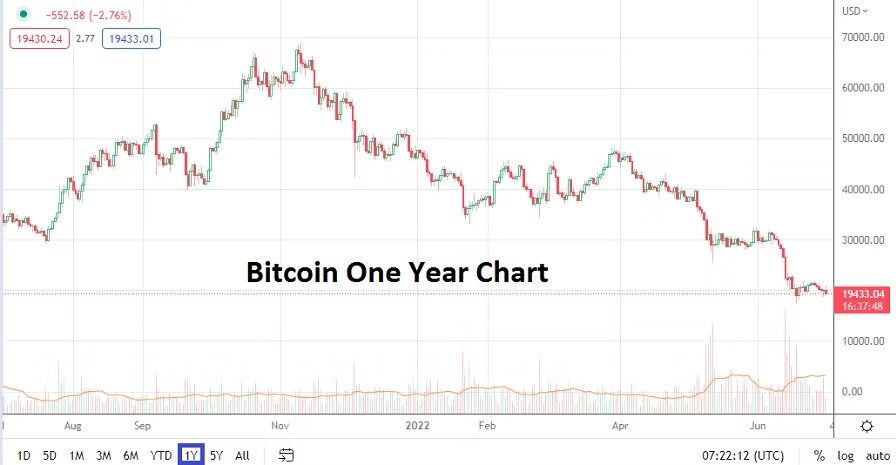
Bitcoin is traversing slightly above the 19,581.00 as of this writing. Michael Saylor, the CEO of MicroStrategy, announced a couple of days ago his company has bought 480 additional Bitcoin near an average price of 21,817.00.

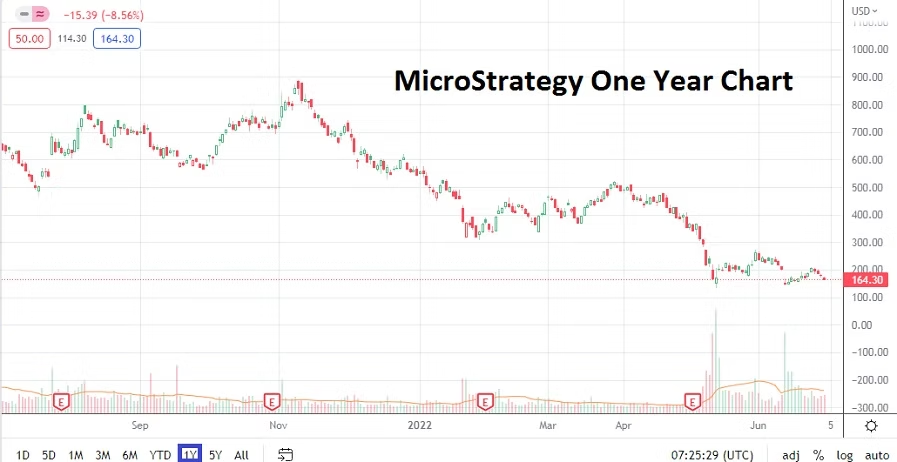
MicroStrategy is selling for around 164.30 via its listing on NASDAQ as of this morning. Because MicroStrategy holds 129,699 Bitcoin as of the 28th of June, the price of the company is certainly feeling the pressure of the bearish trend in Bitcoin. There is a direct correlation.

Now how can you take advantage of that? Well you may not be able to as an individual, unless you have plenty of money to wager on a massive speculation. However, hedge funds do have huge amounts of money to bet, and they potentially could be setting the table for a ‘bloodletting’ in Bitcoin and MicroStrategy which could equate into a massive payday for the hedge funds.

Let’s say some analyst for one of the hedge funds who is quantifying numbers as part of their job, and is looking for potential weaknesses in the current world of financial affairs takes a long look at Bitcoin and MicroStrategy and smells an opportunity. Let’s for a moment, consider the possibility that if the hedge fund believes Bitcoin can sink further and wants to short the digital asset it might be a good idea. Combine that with the notion that MicroStrategy is under pressure and could lose additional value if Bitcoin falls in price. This would set the table for a hedge fund to short both Bitcoin and MircoStrategy.

A combined short on BTC/USD and MicroStrategy is a potential huge payoff. The ability of knowing exact short positions on Bitcoin, also correlates into projections regarding MicroStrategy’s outlook. It is the equivalent of a daily double horse racing strategy.

Considering that the market capitalization of Bitcoin is around 373.6 billion USD at this moment around a price of 19,581.00 per coin, this is not a massive amount of money if a handful of hedge funds were to combine in the endeavor of seeking erosion of value in Bitcoin and MicroStrategy.

A reduction in price of Bitcoin also will likely lead to more capitulation among ancillary businesses related to the digital asset. There is a definite fear of contagion among decentralized finance enterprises and some are wobbling already, expect more carnage.

There are no guarantees in trading. Risk is aplenty. However, hedge funds can create much more force in the market and a combination of efforts to seek havoc is actually a healthy part of the marketplace. Hedge funds are able to take risks because they have a better ability to absorb pain for longer periods of time than a mere speculator.

Hedge funds seek weaknesses and strengths and take advantage of errors in the system. Bitcoin and MircroStrategy are vulnerable and together they could sink further.

post5

Silence Of Tether a Loud Warning in Crypto Trading World

Silence Of Tether a Loud Warning in Crypto Trading World

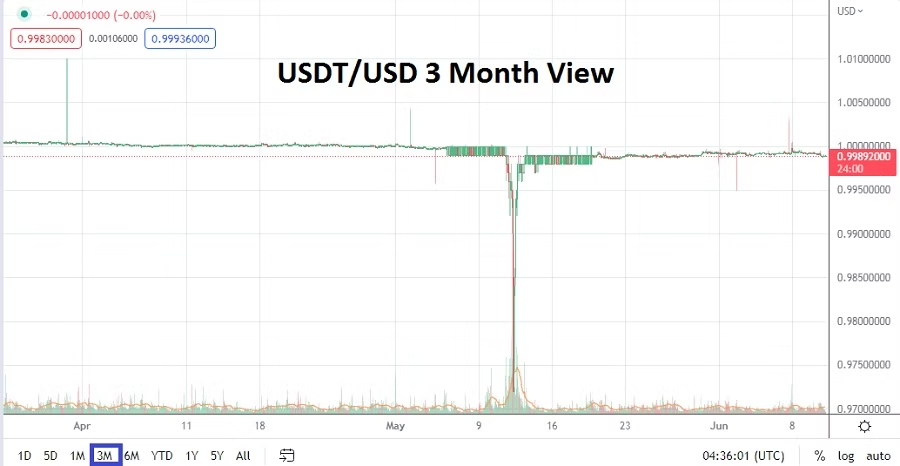
Tether continues to trade below its stated target value of 1.0000 via its stable coin ‘mandate’, and its failure to attain the target for nearly a month may be a loud warning.

Failure to Maintain 1.00000000 value in Tether

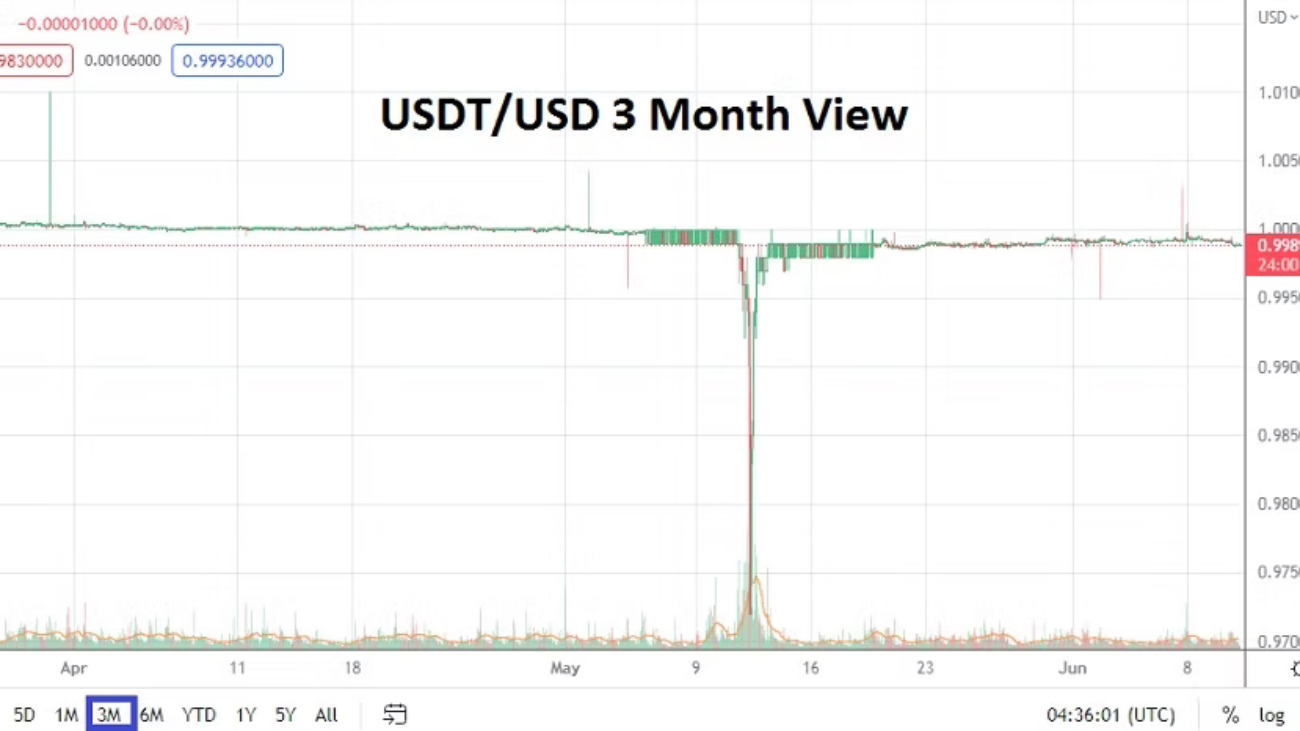
USDT/USD is trading near 0.99892000 via a Coinbase quote as of this writing. The last time Tether traded above the 1.0000 level in a sustained manner was in the last week of April. Since the destruction of TerraUSD, USDT/USD has not attained its objective as a stable coin in a month and a half.

One of the Tether functions in the cryptocurrency world is to facilitate transactions for digital asset businesses. If a tech firm, for instance, were to initiate an investment for a project in the crypto world, they might ask for the equivalent of 1 million USD. This transaction via the funding in the investment is often paid for via a stable coin. Tether is a mainstay of these investment deals.

Receiving Tether allows the business taking in the stable coin investments, to ‘know’ they hold what is supposed to be a nearly exact USD based exchange rate, if they decide to cash in their Tether if they need dollars to pay bills. The problem for USDT/USD currently is that the exchange rate is not meeting this need and expectation.

Yes, a crypto based business could say, ‘well, we know the rate is now 99 cents on the dollar, so we need to ask for more Tether to make sure we get the equivalent of our investment asking price in USD’. OK, good enough, but this creates complications that are unwanted.

The silence of Tether not trading at 1.000 speaks about a much more problematic possibility in the cryptocurrency world. What if USDT/USD is actually starting to show signs of fatigue? What if USDT/USD continues to incrementally lose a little bit of its value moving forward?

Where have the Speculators Gone?

Is it possible there are large speculative funds betting against Tether and shorting the stable coin with the belief it will continue to lose value? If funds are wagering against Tether and have the fortitude to maintain long term selling positions against USDT/USD, they could trigger big problems down the road if they are proven correct.

The cryptocurrency world is showing massive signs that speculators are not participating. While Bitcoin has been able to maintain some semblance of value, BTC/USD is still stumbling near lows and has not been able to create a large reversal higher. Bitcoin is struggling during this prolonged bearish trend. The mantra that cryptocurrencies are a hedge against inflation has proven brazenly false.

Even worse is that most of the other cryptos are struggling too. Ethereum continues to test lower values. As of this writing ETH/USD is near the 1674.00 ratio. Technical support levels are faltering and there appears to be no momentous wave of speculative zeal flourishing which is looking to buy into the digital asset world on the notion that cryptos are oversold. Cardano, Avalanche, Solana, Polkadot and Ripple are all struggling via their coins.

HODL mantra, Corporate Treasury and Hedge Funds

If speculators really have gone away, this leaves the folks who are die hard supporters known as HODL’ers (Hold on for Dear Life). It also leaves intriguingly major companies who have purchased some digital assets such as Bitcoin and cryptos such as Ethereum as ‘assets’ within their corporate treasury structures. There are also hedge fund companies that are holding cryptos as speculative investments. What if corporate treasury suddenly gets scared and decides to cash out of the digital asset world? Will the directors of MicroStrategy and Tesla get nervous and force sales of their digital asset holdings? Michael Saylor has repeatedly said no and that he will keep buying Bitcoin for MicroStrategy.

The lack of a rise in cryptocurrencies during this long bearish trend, and the notion that no massive reversal has been demonstrated during the large erosion of value the past two months is a potentially negative bad sign. Critical technical support levels have been tested repeatedly and their penetration lower is a loud screaming sign that something is going wrong from a short term speculative point of view. It doesn’t appear that we have reached the end of the downturn in cryptocurrencies yet.

If some deep pocketed folks are betting against Tether as a stable coin and believe its value will continue to dwindle without a fight upwards, the silence of USDT/USD recently in the digital asset world may prove to be vicious signal that worse is going to come for cryptos in the coming months.

Cryptocurrencies remain speculating. No matter what some folks say, digital assets over the long haul still have a questionable future via utilitarian capabilities and as their technology evolves. Corporate treasury and hedge funds who ‘invest’ in digital assets are speculating and they may pay a heavy price if they bet on the wrong direction.

The inability of USDT/USD to move back towards its 1.000 value is troubling. If speculators stay on the sidelines and do not participate in cryptos, corporations and hedge funds holding digital assets may be forced to start capitulating . Meaning they may start to sell. If directors of companies and speculative hedge funds start to get nervous about the long term outlook for Bitcoin, and Tether continues to loss value while it proclaims it is a stable coin – then darker days will come.