post289

India Insider: Speculation, IPO Mania, and Capital Erosion

India Insider: Speculation, IPO Mania, and Capital Erosion

A speculative frenzy is reflected nowadays via India social media around quarterly results and IPOs. Animated talk about investment potential in India can be compared in some respects to the Dot-com bubble in the U.S which grew in stature into the late 1990’s and peaked in March of 2020 before imploding. Retail speculators in India rush into untested technology stocks hoping for quick profits, often without understanding the businesses. Avoiding a Dot-com like crash is important.

Hedge funds and institutions with their superior supply of capital often speculate across stocks, bonds, Forex and commodities as part of their strategies. However, retail investors should only purchase individual corporate stocks like pieces of businesses which they want to own when they have the ability. Market fluctuations lower can be used to buy quality companies when intrinsic value has been discounted allowing investors with limited funds to take advantage of stock volatility.

Charlie Munger, the right hand man of Warren Buffett, when asked what the secret of running Berkshire Hathaway Inc. was replied, “Warren likes to say, just tell us the bad news, the good news can wait. So people trust us in that (decision making process), and that helps prevent mistakes from escalating into disasters. When you’re not managing for quarterly earnings and you’re managing only for the long pull, you don’t give a damn what the next quarter’s earnings look like.” And this has proven to be advice that all investors can learn from.

Lessons from Yes Bank and Ola Electric:

Many speculative investors rely on technical charts using support and resistance patterns for trading decisions. This frequent buying and selling enriches brokers but rarely investors. Technical trading entices because it often is easier to look at a chart and feel that by glancing at past results you are able to predict the future, but this frequently proves to be incorrect. Fundamentals should always be a large part of investment decisions.

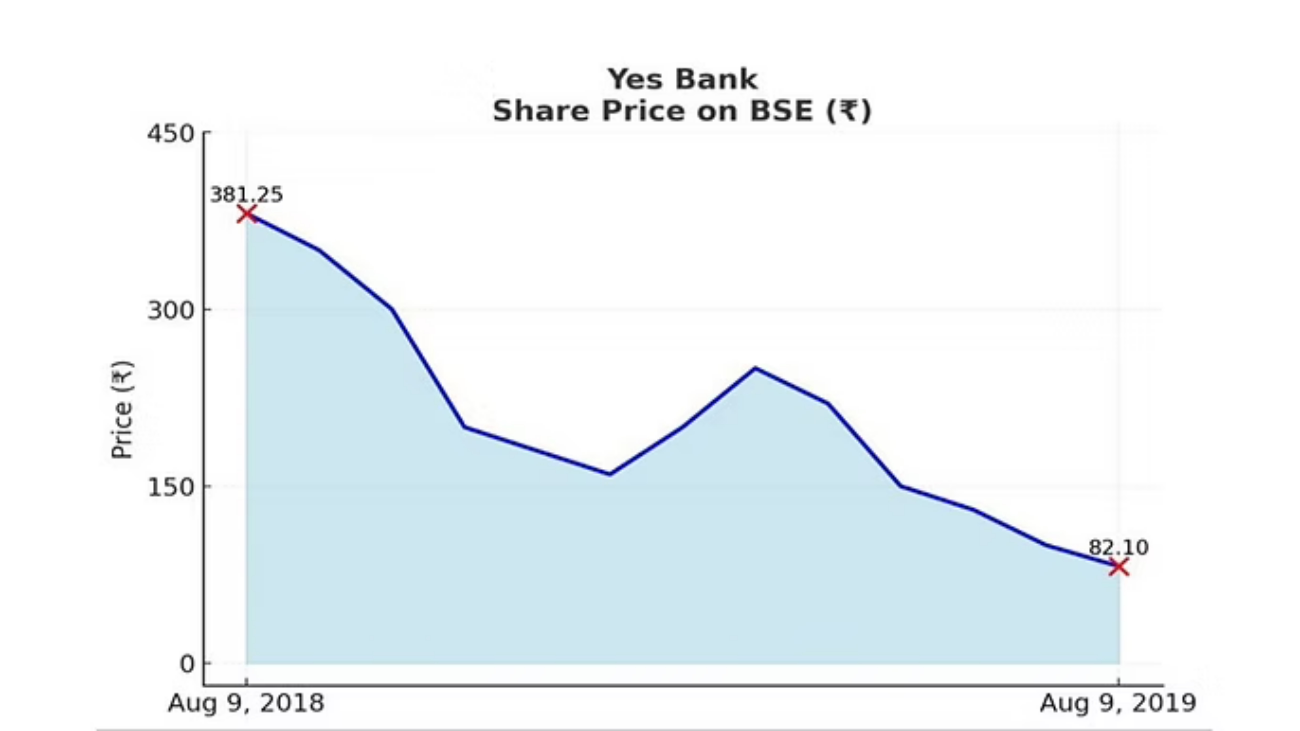
Yes Bank is a classic example. Investors assumed strong fundamentals in 2018, but allegations against founder Rana Kapoor revealed critical issues which proved to be damaging. The Reserve Bank of India stepped into the mess, forcing a consortium of banks to inject equity. Small investors who bought the dips blindly learned the cost of ignoring fundamentals and were hurt financially.
Yes Bank Share Value from 9th of August 2018 to 9th of August 2019 in India Rupees

Another example unfortunately is Ola Electric Mobility Ltd which highlights a similar trap. Ola’s 2024 IPO raised 75 billion Indian Rupees ($900 million USD) at a value of 76 INR per share. It was hailed as a ‘BYD of India’, and despite high valuation warnings, investors pushed share value towards 160 INR. Predictably as cash burn mounted and with no operating profitability, Ola Electrical Mobility value soon fell below the IPO price and speculators who dreamed big soon began to feel like they had lost. The Yes Bank and Ola Electric Mobility cases demonstrate the dangers of investing outside one’s circle of competence.
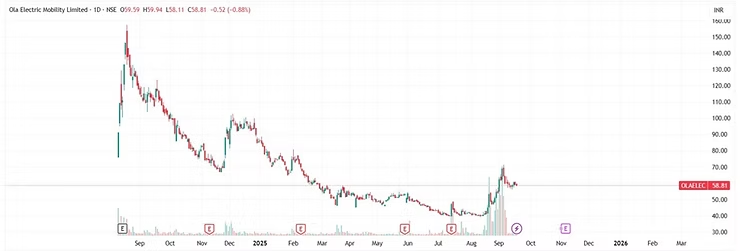
Ola Electric Mobility One Year Chart as of 17th September 2025

Valuations and Investor Behavior:

From October 2022 to October 2024, Indian markets moved significantly higher, stretching valuations beyond earnings. Even after U.S. Liberation Day tariffs triggered a pullback in India, investors continued pouring money into mutual funds through SIPs (Systematic Investment Plans), ignoring glaring fundamental problems. This raises concerns and creates doubts about whether SIP passive investing is wise without understanding individual businesses.

Investment becomes more intelligent when it is done with a business like approach. As Warren Buffett said, “the stock market is a device for transferring money from the impatient to the patient.” But patience should not mean overpaying for growth stories. Predicting future earnings is difficult, and paying lofty prices for stocks in the EV, battery, and micro-processing chip sectors based only on expectations can be dangerous.

When competition or innovation shifts, stock prices collapse as Ola Electric Mobility has shown. True investing is businesslike. It requires understanding, discipline, and buying below intrinsic values. Chasing hype, speculation, and every new IPO can lead to erosion of capital. Smaller investors can do better and they should desire to study fundamentals in order to make good decisions.

post228

Market Volatility Concerns While Deflecting Noise From Afar

Market Volatility Concerns While Deflecting Noise From Afar

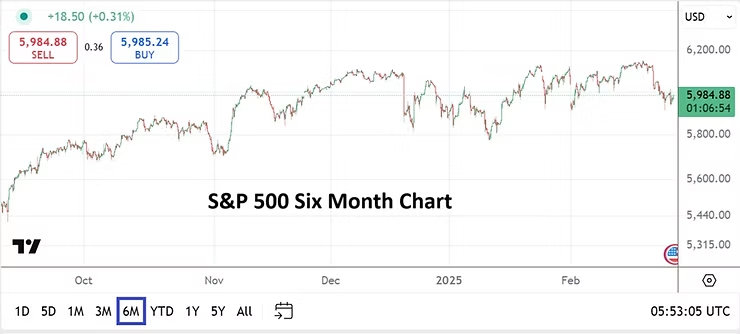
S&P 500 Six Month Chart as of 27th February 2025

The phrase if it bleed it leads is a fixture regarding the world of media. People and their companies want your attention. The addition of Donald Trump to the White House helps those that are content to see him in office, but it also helps those who oppose him because it gives his detractors a centerpiece to a lot of their ‘insights’. Perspectives abound and while watching the financial markets, we are bombarded with loud opinions formed by folks vying for our time. In many cases they are also trying to attract our money.

Wall Street has seen choppy results the past week, but speculators need to remain objective and not allow distractions to destroy their ability to gauge the marketplace. When looked upon with a mid-term reference it is rather easy to define the results upwards in the stock indices from the U.S have been rather good. There is no guarantee you are going to make money speculating. Losses occur and they do not only happen to speculators but they happen to investors too.

Timeframe speculative management and separating the noise from facts is difficult enough under normal circumstances. However, because of the notion if it ‘bleeds it leads’ which is dominating media for the moment, we are within a cycle when influencers can use headlines to catch our attention. Perhaps they believe what they say, perhaps they are trying to guide us towards a product, or perhaps they simply enjoy predicting misfortune.

EUR/USD Six Month Chart as of 27th February 2025

Yesterday during President Trump’s cabinet meeting when asked about the E.U, Trump stated a proclamation of love for Europe, but then added that the E.U was a special economic case and has been getting away with a lot of things like expensive tariffs on the import of U.S cars. He also said the E.U was created to compete with the U.S – though this needs to be taken into context and that Trump meant this only as a trade competitor.

Nearly as quickly as Trump made his statement, some began to use this loose remark as a narrative that the EUR/USD was struggling because of these new worries. Fears about a massive trade war were sounded from some legitimate but overly contrived media sources. Yet, a trade war between the U.S and E.U isn’t going to happen ladies and gentlemen.

The fact is that the EUR/USD has been struggling for a handful of months and is starting to show signs that support levels are durable. The greater likelihood is that financial institutions believe the EUR/USD is oversold and have a bullish perspective for the currency pair over the mid-term. Yes, Europe continues to produce lackluster economic data, but a lot of the value in the EUR/USD has had risk adverse concerns priced in already. Looking for upside from the currency pair around its current levels is not farfetched. Downside risks look limited compared to upside potential.

Once again the financial media who want your attention were given click bait material to get you to react. Day traders need to understand they are constantly being sold not only false narratives but false opportunities too. Speculators looking for profits with quick hitting trades can make money, but many times they lose money because they are working in conditions in which they do not have enough control of their emotions. Day traders should clearly understand they are operating within a gambling universe when they attempt to trade Forex, equities, Indices, commodities and needless to say cryptocurrency.

Traders must work on improving their decision making process. They need to take into consideration their perceptions of the financial landscape, but also understand what their counterparts are thinking too. Financial institutions certainly trade for short-term results, but they are also operating with mid-term outlooks. The likelihood that they are worried about an onslaught of tariffs from the Trump administration is contained by the realization that the current President of the U.S negotiates using tough methods. The bombastic hyperbole of President Trump’s business techniques are not loved by everyone, but they often get the job done regarding his intended desires.

So what should you do? First of all relax with a deep breath. The world is not coming to an end. The financial landscape is not facing a cataclysmic scenario. Many volatile financial events have been seen throughout time. Traders need to understand that the market action on the SP500, Dow30, and Nasdaq are vulnerable to selloffs occasionally that can last for unknown durations which makes daily speculative wagering prone to significant cash losses. This is why investors who have different perspectives regarding timeframes and take a slow and steady approach often come out better than folks who are merely gambling.

Day traders need to eliminate as much noise as possible. This is done with solid risk taking tactics using methods which involve knowledge gained through experience, and knowing that not everything they are hearing is meant to help. Practice a trading mantra by having realistic price targets, chosen timeframes, conservative leverage; using entry orders helps, adding stop loss and take profit orders to get out of positions are vital too.

The mid-term outlook for the EUR/USD and the stock markets likely remains bullish in the eyes of financial institutions. There are many factors in trading, and the virtues of patience and knowledge help considerably. Again, remain calm because while the financial markets often react to shortcomings via human fallibility, they frequently become optimistic once again.

postN84.1

December Cheer, Full Volume, Considerations for Coming Week

December Cheer, Full Volume, Considerations for Coming Week

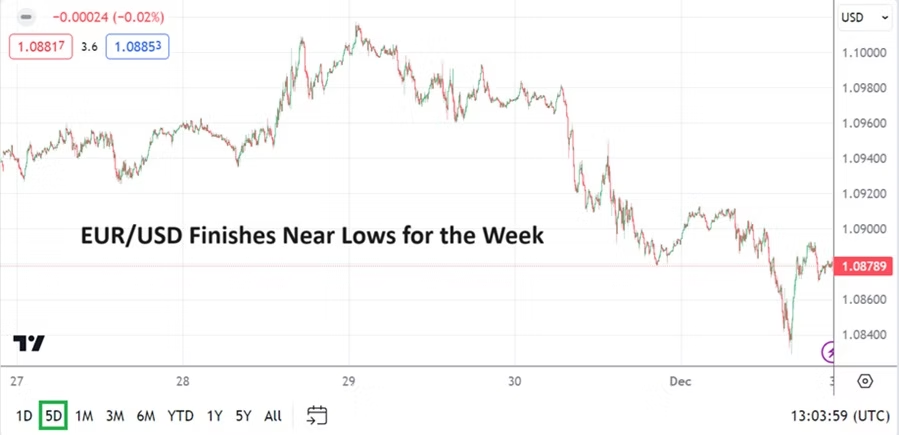
The EUR/USD finished the past week of trading below its starting point essentially closing this Friday around the 1.08790 mark. While the slight downturn may have hurt bullish day traders who kept on looking for higher ground in the short-term, the EUR/USD did trade above the 1.10000 on late Tuesday and held its ground briefly on Wednesday before starting to trend lower. A depth of nearly 1.08310 was momentarily challenged on Friday with solid price velocity, but the EUR/USD did exhibit some buying before going into the weekend.

EUR/USD Five Day Chart as of 3rd December 2023

Speculators who were looking for a higher finish for the week from the EUR/USD may have been disappointed, but the end of the trend upwards may not be finished. U.S Fed Chairman Jerome Powell sounded optimistic on Friday regarding Fed policy and mentioned a ‘soft landing’ and indicated interest rates at their current level will still need a bit of time to have their full effect. U.S growth numbers via the Gross Domestic Product came in stronger than expected on the 29th of November, but inflation data continues to show a slight erosion.

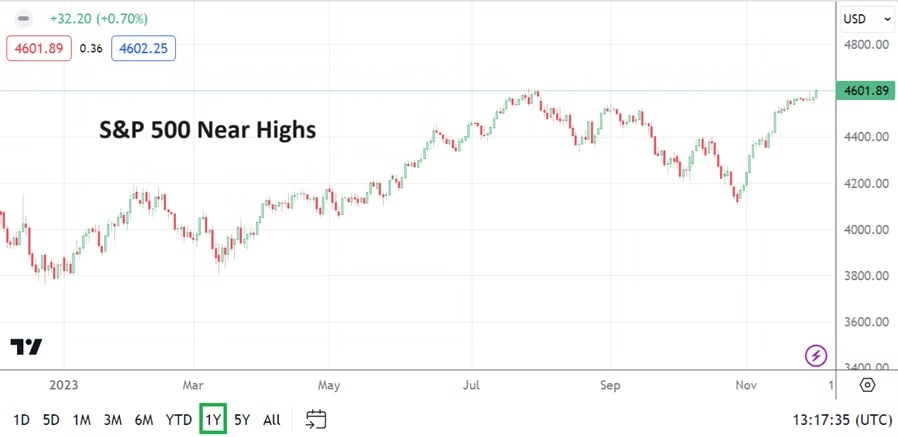
This puts the U.S Federal Reserve in position to actually sound rather neutral when the FOMC Meetings conclude in a week and a half. And if global events do not cause any sudden alarms to ring, it appears risk appetite is within a rather optimistic state. U.S equity indices continued to roll along merrily and the 3 big indexes are challenging highs. The S&P 500 and Nasdaq Composite are challenging July values, and the Dow Jones 30 is trading at ratios last seen in January of 2022.

While U.S Treasury yields have also continued to erode and are near mid-term lows, the USD/JPY continued to create a bearish trend for the week and is trading at values last seen in the second week of September. The GBP/USD finished the week within sight of highs attained on Tuesday and Wednesday, this as the currency pair also trades near values last seen in late August and early September. The EUR/USD is the outlier among the three major currency pairs and speculators may look at the EUR as potentially being in oversold territory as the week gets set to begin. Risk management as always is essential for wagering on Forex.

S&P 500 One Year Chart as of 3rd December 2023

The next two and a half weeks of trading will see full volumes, this before holiday trading starts to hit the broad marketplace. The upward moves in U.S equity indices may be seen as overdone by many analysts, but the trend has been strong and trying to step in front of the ‘optimism’ within the indexes may prove expensive in the coming days and weeks. Day traders should make sure conservative leverage is being used if they are attempting to climb aboard the moving train.

Some analysts are pointing out correctly, that if it weren’t for a few ‘workhorse’ corporations in the U.S equity indices, declines would have been seen. But day traders who are wagering on CFDs via their brokers and financial institutions investing in the three major stock indices are likely enjoying their profitable returns.

Monday, the 4th of December, E.U Sentix Investor Confidence – the reading is expected to come in with a negative result, but slightly better than last month’s outcome of minus -18.6. About a hour and a half before this European survey, German Trade Balance numbers will be released. The EUR/USD may be affected by this data, but the currency pair is likely moving within the shadows of behavioral sentiment which is USD centric. Europe is struggling with recessionary conditions, but it is outlook which drives the marketplace. If the EUR/USD can find durable support it may prove that its bullish trend has not come to an end.

Tuesday, the 5th of December, U.S ISM Services Purchasing Managers Index – an improvement is expected compared to last month’s outcome. Recent data from the manufacturing sector came in less than expected, thus the services sector will be watched closely, but as long as the result is around the expectation this will not hinder broad market sentiment. Meaning the report could be a non-factor.

Wednesday, the 6th of December, Canada BoC Overnight Rate – traders will be keen to see what line of rhetoric is taken within the Rate Statement from the Bank of Canada. No change to borrowing costs are expected. The rate is anticipated to remain at 5.00%. The economy of Canada has been struggling as recessionary clouds are shadowing, but recent GDP data was slightly better than expected and inflation has shown signs of weakening. The USD/CAD went into this weekend near its lows and in sight of values seen in late September.

Thursday, the 7th of December, China Trade Balance – economic numbers via the manufacturing sector last week came in below expectations. The lackluster China data may be a factor in the weaker WTI Crude Oil prices, but perhaps that is only speculative. Some investors participating in China are worried about outlook over the mid-term. Analysts will comment on the Trade Balance numbers, but traders should make sure they separate the ‘noise’ which may be delivered from biased perspectives depending on ‘world view’ compared to actual outcomes and genuine insights.

Friday, the 8th of December, U.S Non-Farm Employment Change and Average Hourly Earnings – the jobs numbers will be looked at attentively by market participants. The data will be correlated to existing behavioral sentiment and risk appetite that has sustained a weaker USD, higher U.S equity indices, lower yields on U.S Treasuries and the high price of gold. If the jobs data comes in around expectations that will likely be enough for investors to remain calm and look forward to the 13th of December, this is when the U.S Federal Reserve will release its FOMC Statement – which may keep risk appetite strong.

postN64

Optimism in Challenging Conditions and Time Considerations

Optimism in Challenging Conditions and Time Considerations

Traders by nature are optimists, after all they are wagering on outcomes they believe are valid with targets regarding future results. Global market conditions for the moment have created expensive price action unfortunately, this as plenty of day traders wagering on their perceptions have found out while whipsaw movements and fast velocity have taken place and caused losses.

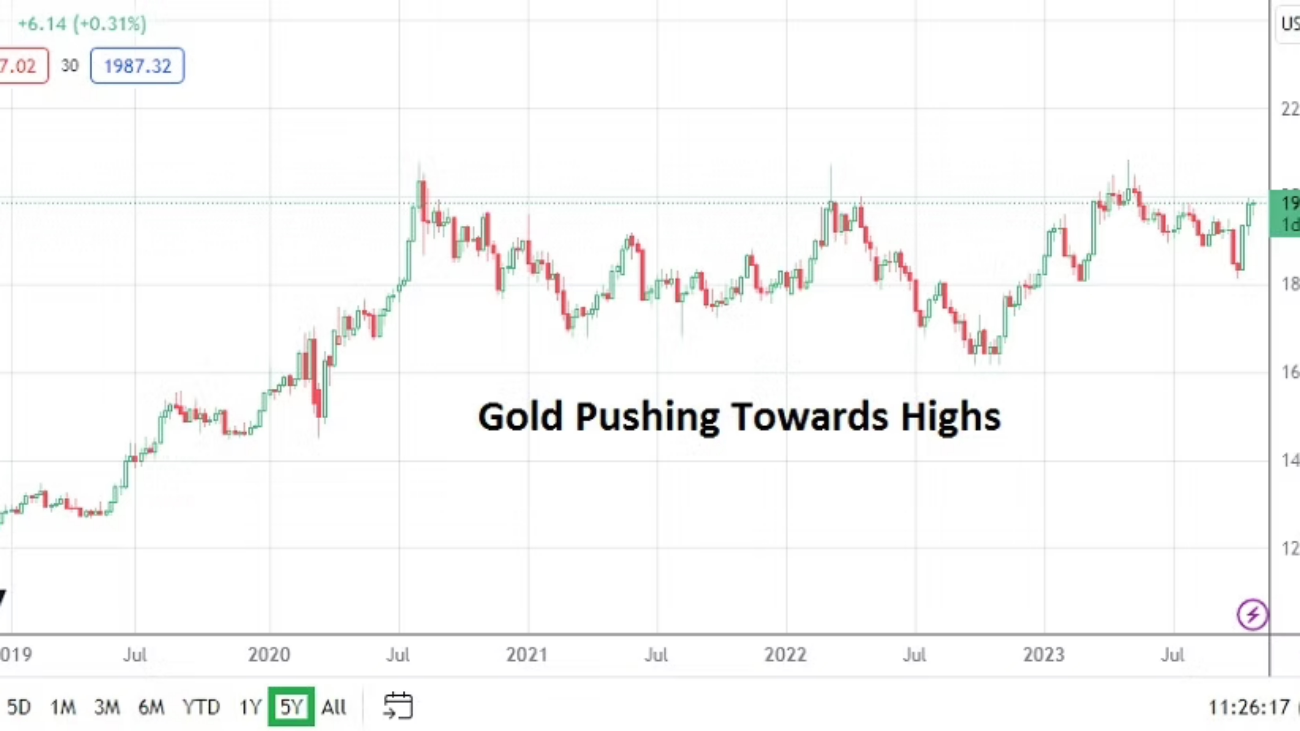
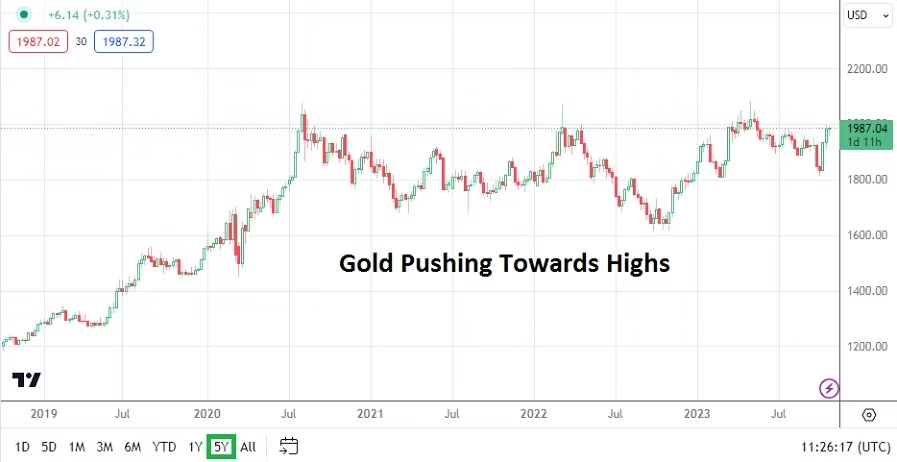
The USD continues to create turbulent higher values among many major currencies it is teamed against as financial institutions exhibit risk adverse tendencies. U.S Treasury yields may be going up because the U.S Federal Reserve continues to sound alarms regarding inflation, but the last two weeks of trading globally have seen an influx into U.S Treasuries as a safe haven move. Another signal that risk appetite is poor among global investors is because while the USD has gotten stronger, gold has also risen in value.

Gold Five Year Chart as of 26th Oct. 2023

And importantly, global markets are trading in conditions which are not considered normal. Many inexperienced people within financial institutions have not dealt with markets like the ones being battled now. High interest rates combined with risk adverse conditions because of concerns regarding an escalation of war conditions in the Middle-East are causing a storm of volatility. U.S stock indices are trading at mid-term lows, and this may continue to be a theme over the next few weeks and beyond, but certainly there are those among us who look towards sunnier days.

So what does an optimist do if they are a day-trader? Perspective needs to be questioned at all times by speculators, and bias regarding all insights by individuals need to be given consideration. A trader must make sure they are not trading based on noise which is coming from the media and tainted with hyperbole. A trader must also question their personal instincts making sure they are free of preconceived notions. Behavioral sentiment gets affected from many angles when market noise becomes loud. Looking for a quiet place to think about market direction is vital for everyone.

Speculators need to remain calm and stick to risk management tactics that prove effective even during chaotic trading conditions. A variety of ways to be involved with the markets directly exists for all, Forex, equities and indices, commodities, bonds are only some of the avenues. Traders can go long or short on their chosen positions, they can participate in the ‘cash’ markets, but can also participate in futures and options trading via time related duration.

Famous investors are known for taking advantage of lower values when fear is high. They look for value via fundamentals within assets with long-term track records. It is not an accident the USD is strong, U.S Treasuries are being sought, gold is being bought currently.

Trends are there to be found and can be taken advantage of by day traders who are looking for quick hitting outcomes, but they must proceed carefully. Because it is also important to acknowledge that no matter how bad circumstances sometimes look in the short-term, that a positive quality among we as humans is to seek optimism. There are reasons to participate in trades with a perspective knowing more tranquil days will come and the markets will grow calm again, markets can reverse and suddenly display risk appetite.

postN27.1

Risk Friday: Fear is a Terrible Thing to Waste

Risk Friday: Fear is a Terrible Thing to Waste

Behavioral sentiment in the broad markets took a turn for the worse yesterday among many major equity indices. This as financial institutions seemingly came to the short-term conclusion the Federal Reserve may actually have to raise interest rates again on the 26th of July, and possibly beyond. Meaning, the Fed might actually back up what it has been saying.

Yes, investors have been warned many times already by some analysts that the handwriting was on the wall regarding additional increases to the Federal Funds Rate, but it seems a fear of losing out has kept many market participants actively running forward with blinders on not cognizant of the Fed’s rhetoric.

Day traders should always be mindful of their emotions. While it is not good to trade based on emotions when involved in an active position, intuition and gut instinct sometimes can save you money when you decide to simply sit on the sidelines and watch the market action instead of participating. In other words, if you are nervous and your instinct is bothering you – do not attempt to enter the trade.

U.S Data Remains Rather Strong even as Inflation Boils

Yesterday’s better than expected jobs report via ADP helped create sparks early regarding U.S economic data continuing to show it is robust, but the ISM Services PMI threw gasoline onto the fire with a much better result of 53.9 compared to the estimated reading of only 51.3. While inflation simmers in the U.S, signs of limited growth abound too making stagflation a real danger.

Investors can now attain a yield around 4.995% on 2-year U.S government Treasuries. A gain of nearly 5% that is almost assured with very little costs regarding commission rates needing to be spent, looks like a solid short-term investment to many. Equity markets have a reason to feel spooked. If the U.S Fed raises the Federal Funds Rate which is now 5.25% to 5.50% at the end of July, and at the same time continues to speak in an aggressive manner about other potential hikes later this year, summer may lose its sense of tranquility for financial institutions.

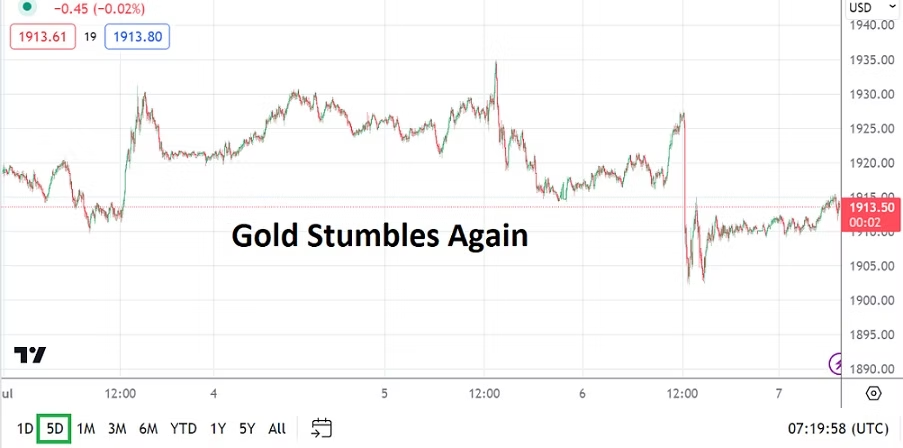
Gold Five Day Chart as of 7th July 2023

Gold which was trading at nearly 1925.00 USD yesterday, suddenly fell to around the 1900.00 briefly in the wake of the better U.S economic data, showing investors are worried the USD has some additional strength to display potentially. Again, the results of intraday gyrations may not mean a lot to mid and long-term investors, but day traders speculating on the outcome of quick hitting results frequently get hurt by the bursts of volatile storms.

U.S Official Jobs Numbers Today and Anticipation

Adding another dose of intrigue to the day are the upcoming official jobs numbers from the U.S, including the Non-Farm Employment Change and the Average Hourly Earnings reports. The inflation data via the earnings statistics are anticipated to show a gain of 0.3%, if for some reason it comes in stronger than expected this could create more fireworks. Having said that, the Wall Street Journal reported yesterday that Americans appear to have stopped quitting their jobs in order to switch to similar competitive positions as much as they had been the past couple of years. Perhaps this signals wages are starting to cool or least will in the near-term.

Let’s also remember that yesterday’s selloff in equities may have been anticipating better Non-Farm Employment Change results today based on the ADP outcome Thursday, and other solid U.S data before like last week’s GDP gains. Day traders betting on quick hitting CFDs via their brokerage platforms should be careful today and listen to news regarding the U.S bonds market. Inexperienced speculators should try to understand the adage – buy the rumor and sell the fact. Meaning ‘smart money’ often acts before others and takes advantage of their outlooks regarding data.

Quick Warning on Binance and Cryptocurrencies for Gamblers

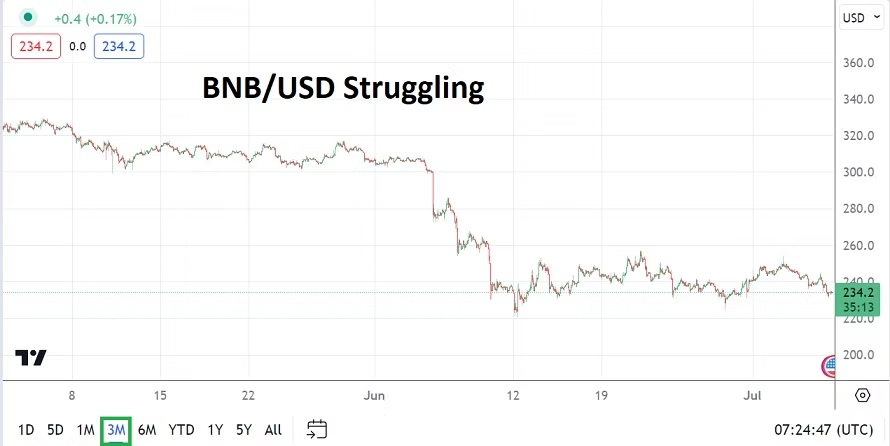
BNB/USD Three Month Chart as of 7th July 202

In a non-related subject, cryptocurrency traders seem to remain rather steady but should be nervous – if anyone is actually really trying to speculate in this endeavor besides Larry Fink of BlackRock currently, news regarding Binance remains troubling on the surface as legal clouds grow. Folks involved with the BNB coin should be careful. As one of the most ‘important’ crypto exchanges Binance’s legal problems moving forward could affect the prices of cryptocurrencies significantly. As of this writing BNB/USD is at nearly 233.00, and it should be noted Tether’s USDT appears to remain rather solid for the moment at 1.00. A look at the current three month chart of BNB/USD highlights its latest value struggles.

postN25

Revitalizing Cricket in the USA: Rise of Franchise Cricket

Revitalizing Cricket in the USA: Rise of Franchise Cricket

Cricket, with a rich historical presence in the United States, has struggled to gain a large following compared to other sports like baseball. However, recent efforts to promote the game have emerged, including the establishment of franchise-based cricket leagues. Here’s a brief history of cricket in the USA, the challenges it has faced, and the introduction of new leagues and cricket franchises as a catalyst for potential growth.

AngryMetaTraders.com Cricket Coverage

Early Presence and Decline:

Cricket has a long history in the United States, dating back to the 18th century, with the first recorded match taking place in 1751 in New York. During the 19th century, the sport enjoyed significant popularity, attracting large crowds to matches. However, the rising prominence of baseball, another bat-and-ball sport, and the exclusion of the USA from the Imperial Cricket Conference in 1909 led to cricket’s diminishing relevance within the country.

Perseverance through Immigrant Communities:

Cricket has managed to endure in the USA primarily due to immigrant communities from cricket-playing nations such as India, Pakistan, and the Caribbean islands. The USA now has a national cricket team recognized by the International Cricket Council (ICC), largely composed of players from these immigrant communities.

Franchise Cricket – A New Approach:

In recent years, the concept of franchise cricket has gained traction in the United States as a means to stimulate interest in the sport. Franchise-based leagues have played a pivotal role in popularizing cricket globally, attracting international players, unearthing local talent, and delivering captivating cricketing action to fans. Indian Premier League (IPL) is one of the most lucrative cricket leagues globally. Similar leagues have become popular in other countries like Australia (BBL), Pakistan (PSL), England & Wales (The Hundred), Bangladesh (BPL), West Indies (CPL) and many more.

Using this model in the USA, two franchise cricket leagues have emerged: Minor League Cricket (MiLC) and Major League Cricket (MLC). The MiLC was launched in 2020 and focuses on regional talent development, providing local players and youth (via cricket academies) with a platform to compete at a higher level. However, MiLC’s impact beyond immigrant communities may be limited as the players are still largely composed of immigrants from cricket playing nations.

MLC’s Potential:

The inaugural year of Major League Cricket is set to begin the 13th of July 2023, featuring six franchise teams with international players competing in matches scheduled in Texas and North Carolina. There are some big names who have invested in the MLC, ranging from tech CEOs like Satya Nadella to Bollywood stars like Shahrukh Khan, and venture capitalists among others. These investors will eventually turn into franchise owners. Although the launch of MLC has garnered attention in the cricketing world, its long-term success depends on factors such as attracting sponsorship, generating advertising revenues, and establishing loyal fan bases.

Measuring Success and Building Cricket Culture:

While cricket faces stiff competition from popular sports like baseball, football, and basketball in the United States, the investors and stakeholders in MLC probably understand the challenges ahead. Success should not solely be measured by financial returns, but also by providing opportunities for American cricketers to shine on an international stage. As interest grows, the hope is that cricket will gradually find its way into elementary schools, recreation programs, and the wider U.S sporting landscape.

Growth of USA Cricket and Sustainability:

Cricket’s journey in the United States has been marked by historical significance, challenges, and recent endeavors to popularize the sport. The introduction of franchise cricket leagues like MiLC and MLC brings new opportunities for growth and development, both for players and the overall cricketing culture in the USA. While cricket may never rival the popularity of established American sports, the passion and efforts invested in franchise cricket aim to build a sustainable future for the game, in order to create a lasting impact on the playing fields of the United States.

If you want to read more about cricket, please go to this article by Ibrahim Mirza: https://www.angrymetatraders.com/post/cricket-destined-to-be-a-fountain-of-joy-money-in-india

post2

NASDAQ Composite: Bearish Trend Testing Trading Inexperience

NASDAQ Composite: Bearish Trend Testing Trading Inexperience

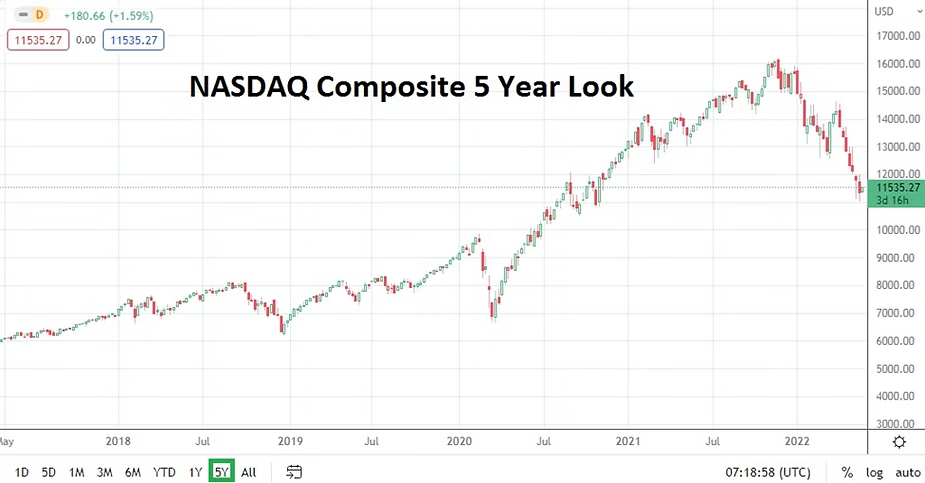
The NASDAQ Composite has been within the grasp of a selling trend since late November of 2021, and traders who feel the urge to buy should understand their goals and time frames clearly.

The NASDAQ Composite has seen a strong wave of selling take hold of its equities since the later stage of 2021. Investors have likely been spooked by inflation and high PE ratios which correlate into questionable values and fears of over exuberance and reactions. The combination of U.S Federal Reserve policy which is certainly having an effect on behavioral sentiment is problematic too. Investors are not fans of unclear outlooks and current economic conditions are definitely causing nervous sentiment.

Many traders and investors have not experienced a sincere bear market during their financial careers. Indices and their equities have produced a rather steady upwards vehicle for years. The thought that an equity index can actually go down for a long duration, without significant reversals higher following is troubling and new for many people. Timing new trends is exceptionally hard. An investor who has a ten year outlook certainly brings a different perspective to buying the NASDAQ Composite compared to a day trader who is likely maneuvering in the index with short term wagers using CFDs.

Current market conditions in the NASDAQ and other major global equity indices remain challenging and this will likely continue into early this summer. The U.S Federal Reserve will be conducting an FOMC meeting in mid-June and another interest rate hike is likely being considered. A potential rate hike of 0.50% may be seen. The potential of this additional hike to the current interest rate of 1.00% has likely been digested into the marketplace by financial institutions, but that is not the end of the troubling concerns.

Technical traders who watch the daily results of the NASDAQ Composite and other indices may attempt to speculate on the gyrations of their moves based on short term volatility. These traders should understand they are also battling large institutional traders who use complex algorithms to pursue their positions. The combination of nervous equity markets caused by uncertain economic outlooks, while it waits on the pronouncements of the U.S Federal Reserve are bound to deliver more nervous results in the NASDAQ Composite and other global equity indices.

While it may be accepted that the U.S Fed will raise interest rates again in June, the greater question that financial institutions want answered is what the U.S central bank’s outlook on additional interest rate hikes in the summer and fall will be. Inflation in the U.S remains troubling high. The rising costs of logistics, food and consumer goods are largely a manifestation of higher energy costs.

Yes, coronavirus has been a large ingredient too, regarding inflation and its current effect on employment and the resulting lack of workers is a component in the equation due to new perspectives among the workforce. The shortage of employable labor has also sparked concerns about demographics for the future. While the virus and its effects seem to have eroded in the West for the time being, unfortunately there are concerns regarding a potentially large problem in China if coronavirus infections continue to occur there. Shutdowns in China due to the virus can affect supply and commodities prices globally.

The costs of higher energy and commodity prices are something that companies and consumers will have to deal with in the months ahead. Disinflation is likely to come, but it may take a handful of months more. It is a complex puzzle and traders who want to bet on short term results will have to endure sudden storms of volatility which are likely to arise. Unanswered questions await and because of the shadows that hover over the economic landscape, clarity is not going to be delivered soon.