postN42.1

Day and Institutional Traders Suffering Nervous Conditions

Day and Institutional Traders Suffering Nervous Conditions

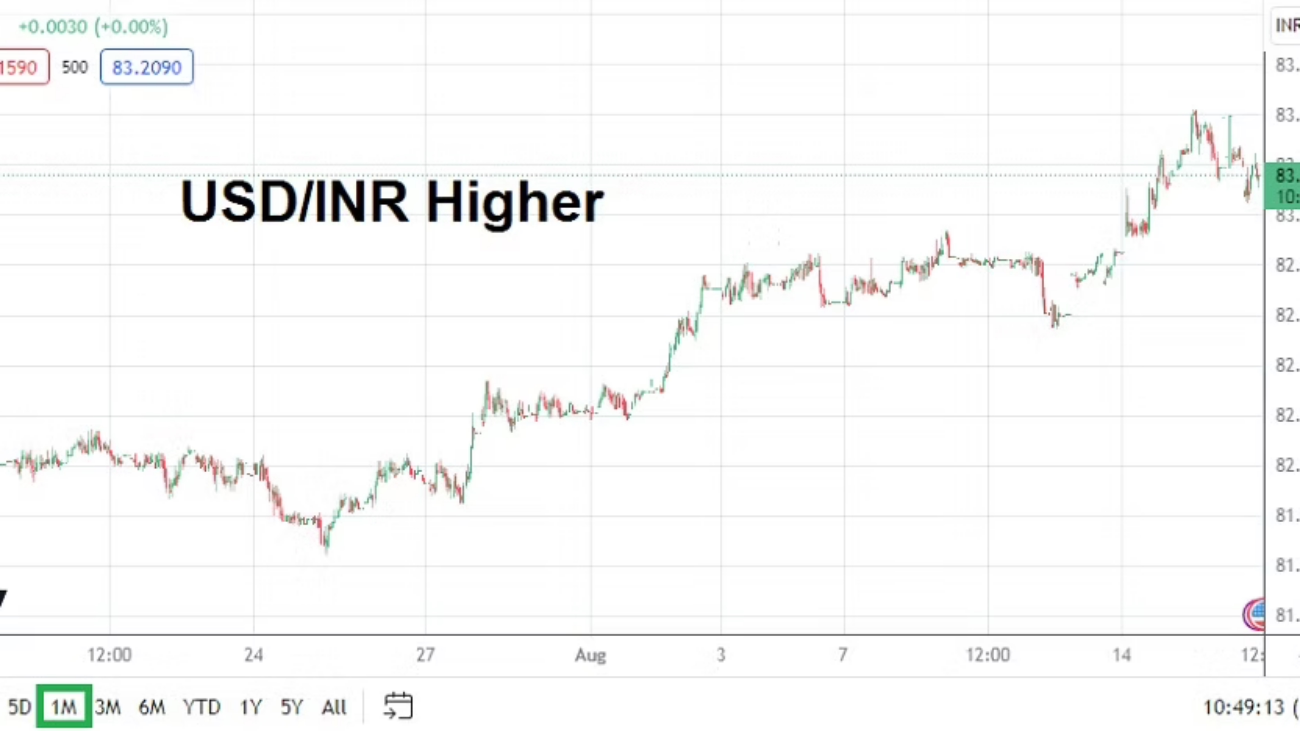
Market price action has caused quite a few interesting interpretations of the prices being demonstrated in Forex, gold and equity markets recently. The USD/INR is now at record heights, the USD/ZAR is back above 19.00000 and the USD/BRL is again near the 5.0000 ratio.
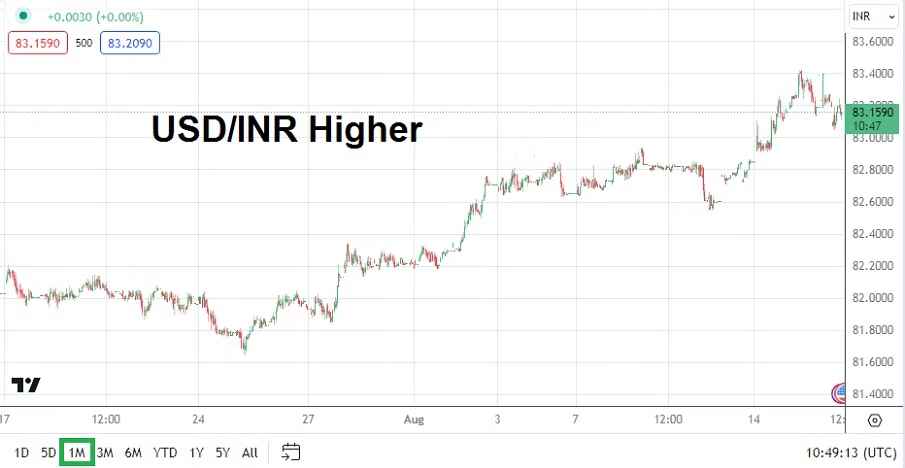
USD/INR One Month Chart as of 16th August 2023

While Forex traders around the world look for clues as to why their local currencies are suffering and are likely blaming domestic policy from their own governments and central banks, they should remember the larger global financial markets tend to move in a unified sphere. Domestic concerns are a real cause for market action often, but when global sentiment becomes nervous the larger force of institutional financial houses shake the ground.

Correlations exists worldwide because of behavioral sentiment ruling outlooks over the near, mid and long-term in the marketplace. While we like to put our faith in the financial markets as an all knowing entity, this is far from the truth. Humans who react to nervous conditions and also have bias are the ones still making decisions in financial houses, they are the ones giving orders to their programmers via their trading software which is largely geared to follow perceived trends these institutions deem important.
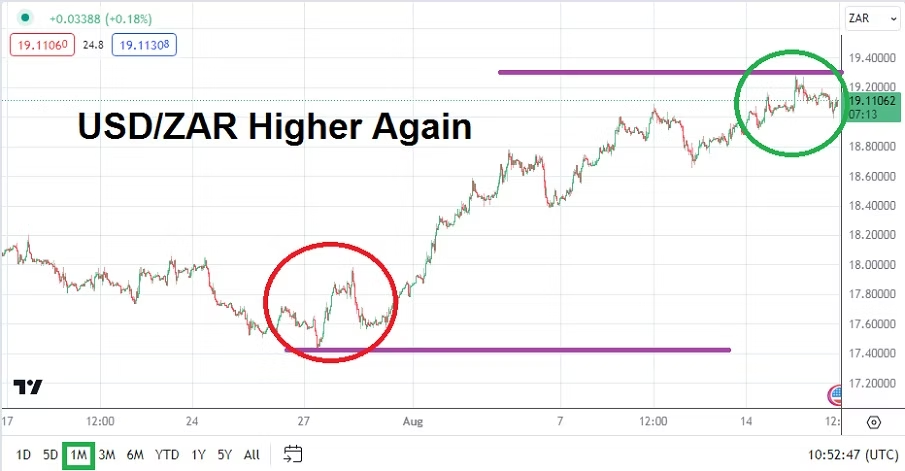
USD/ZAR One Month Chart as of 16th August 2023

Most financial institutions are not speculative in nature, day and even longer term retail traders should remember this point. Most institutions are trying very hard not to ‘speculate’, they are simply positioning per their outlooks based on their understanding of the trading landscape. Whispers of potential downgrades from U.S rating agencies on larger corporate banks yesterday sent a shudder through the broad markets, economic data and rumors swirling about China are not helping either. The current volatility in the broad markets is not welcomed warmly by financial institutions.

When price velocity accelerates and volatility flourishes in highly charged trading situations, this suggests financial institutions are nervous and not able to find comfortable positions. Conflicting ‘opposite’ positions from other larger players are causing market chaos in Forex, equities and other financial assets. There is a herd mentality in trading and when the herd doesn’t march in an unified direction chaos happens.

Most institutional players want calm, they want tranquil trading conditions so they can manage their clients’ money quietly. Bonds, equities and indices, real estate holdings via REITs, and gold make up a large part of their holdings.

Most U.S pension funds for instance have mandates to be positioned into a large amount of quiet investment vehicles which do not trade with wild price ranges. They seek steady returns from their institutional investors that can be counted on in a quantitative manner to demonstrate to their clients.

Large financial institutions are allowed sometimes to trade 2 to 4% of their holdings in different categories of speculative investments – such as start-ups, allocate cash to hedge funds they trust, small cap stocks they might know about, etc., depending on the exact mandates agreed upon.

Yes, hedge fund managers like Bill Ackman and investor Michael Burry get a lot of attention when they bet against the markets, but believe it or not they are small fish in a large ocean a lot of the time. They are good at what they do, but their speculative positions cannot be mirrored by most financial institutions or small day traders.

Ackman and Burry may be trading billions, but remember institutional financial companies including pension funds when combined total approximately 80% of market cap. Institutional trading decisions can cause massive waves in the financial world, but they actually seek calm seas.

When markets become volatile this often means institutional traders are not comfortable and their behavioral sentiment is fragile. Forex for example is often affected by financial institutions moving money as they handle export and import transactions for companies, but transactions are often done to buy and sell equities too. The Bank of International Settlements estimated an average around 7.5 trillion USD in value was traded in Forex everyday in 2022.

Day traders should not take it personally when the markets move against them, instead they should look to try and mirror the sentiment of larger financial movers. However, knowing and timing financial institution decisions is elusive because short term compared to long term considerations are often different.

Most traders are merely betting on the price action the large institutional funds are undertaking via the direction of the marketplace. Day trading for most retail speculators remains dangerous. A solid fundamental understanding of market ‘forces’ can allow smaller traders to feel more comfortable.
postN26.1

USD/INR: Bounce Higher Ignites a Return to High Water Values

USD/INR: Bounce Higher Ignites a Return to High Water Values

The USD/INR is trading near 82.4350 as of this writing, which is a value the currency pair has not touched since the second week of June. While some analysts may say the move to higher ground yesterday and early this morning is based on the U.S FOMC Meeting Minutes, Wednesday’s report from the Federal Reserve likely only reinforced the bullish momentum which started earlier this week. The world of Forex can feel fickle, particularly when so many of the internal dynamics are hidden from a large segment of people who are trying to speculate on the results.

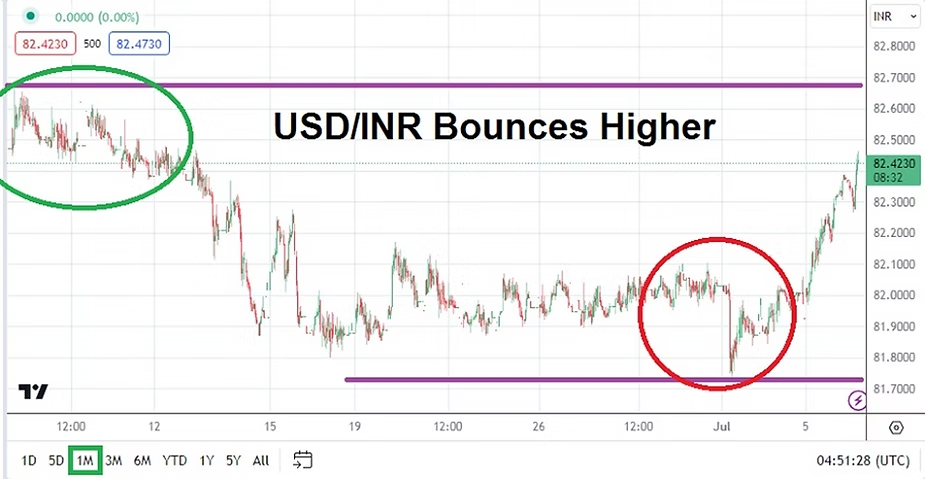
If the mechanics of the move higher which started on Monday are examined a couple of points should be considered closely, the low of the USD/INR was around 81.7300 on the 3rd of July. This low took place as most U.S financial institutions were on holiday in preparation for Tuesday’s 4th of July celebrations.

Fears of U.S Economic Prospects: Behavioral Sentiment and Stagflation Potential

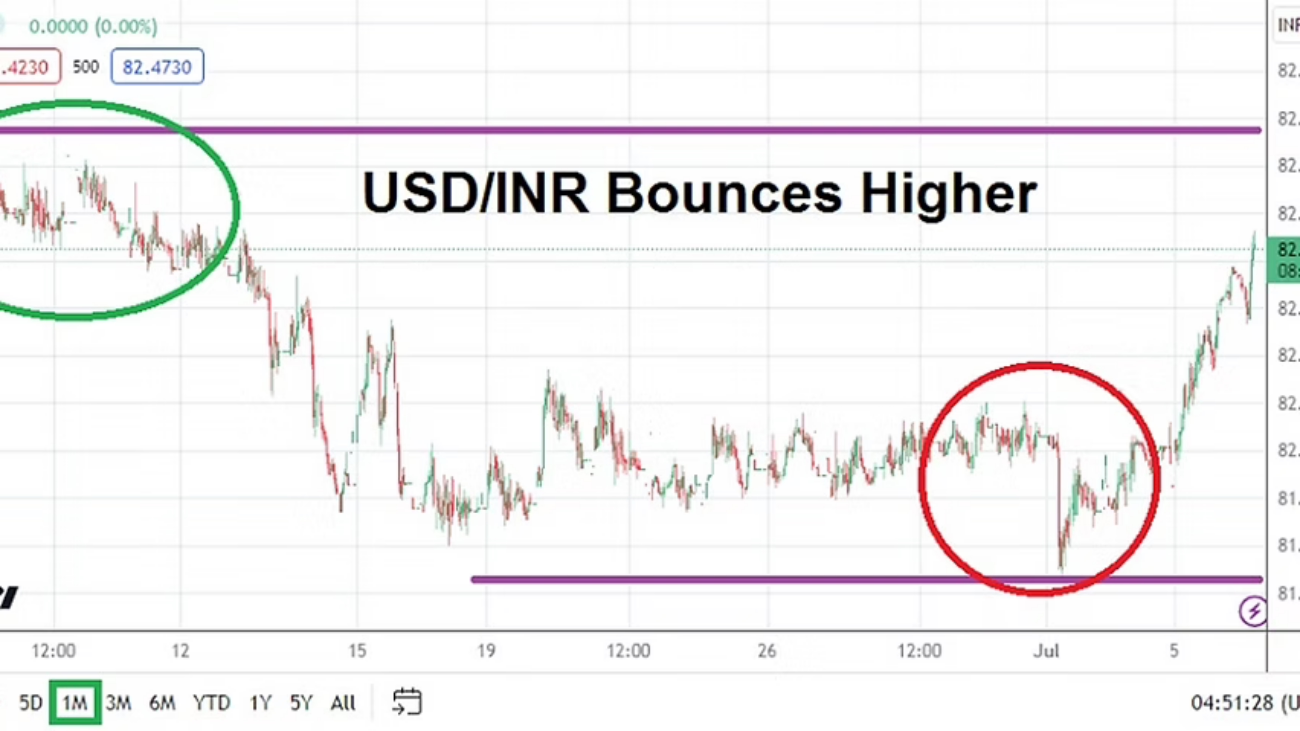
The reversal higher since the 3rd of July has been pronounced, but before going into last weekend the USD/INR was largely trading within a consolidated manner near the 82.0000 level with a test of this mark having been displayed forcefully since the middle of June. A range of nearly 81.8500 to about 82.1500 largely has played out the past three weeks of Forex trading.

USD/INR One Month Chart as of 6th July 2023

Monday’s dip in value to lows around 81.7300 took place when there was very little volume in the USD/INR market. The depths challenged marks not seen since the first week of May.

The reversal higher the past few days is certainly part of more transactional volume starting to be pumped into the USD/INR as U.S financial institutions have returned, but they are also likely being caused by an underlying nervousness within the Forex markets which may be factoring in the notion the U.S Federal Reserve seems to be on a path which will increase the Federal Funds Rate on the 26th of July.

The behavioral sentiment being generated regarding a Federal Reserve which stays in an aggressive stance started before yesterday’s release of the FOMC Meeting Minutes. Nervous conditions have been on the surface of the broad markets because U.S inflation remains rather resilient – but also importantly because last week’s Gross Domestic Product numbers published on the 29th of June, came in stronger than anticipated. From a troubling perspective some analysts could point to the moderately improved growth and combination of stubborn inflation as a sign stagflation is starting to shadow the U.S, which would certainly be a troubling predicament.

USD/INR Move to New Highs this Morning could Ignite more Nervous Reactions

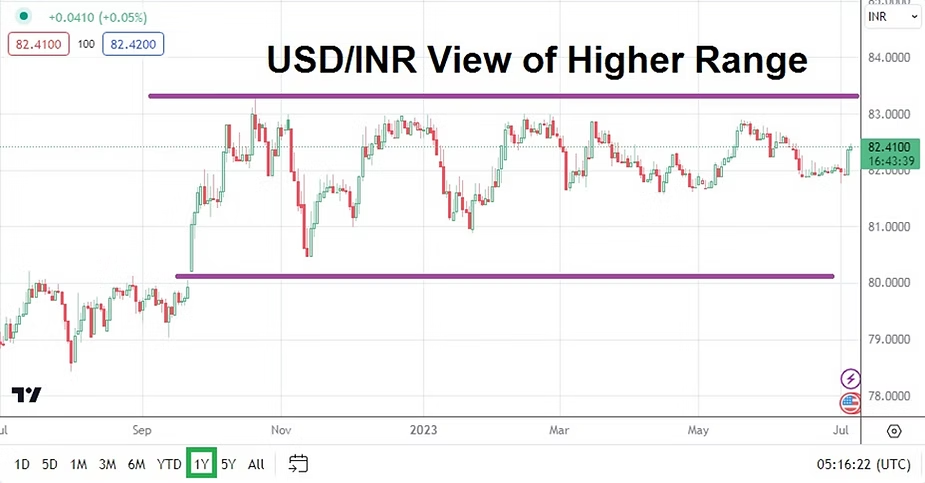
USD/INR speculators may believe the move higher in the currency pair is overdone and that values need to be lower. However, the current price of the USD/INR is one that has been experienced quite a bit since October of 2022. A look at a one year chart shows the USD/INR has returned to higher ratios of its price range which it has experienced since breaking upwards in the middle of September 2022. And to make things more interesting for technical traders, the USD/INR has actually produced a rather stable range between 81.6000 and 82.9000 since February of this year.

USD/INR One Year Chart as of 6th July 2023

While traders are certainly trying to anticipate what will happen next in the USD/INR to gain an advantage, they should remember the currency markets are almost impossible to time on a daily basis, but a look at mid-term prices does offer plenty of insights. If the USD/INR climbs too high, perhaps to the 82.5000 level the Reserve Bank of India could get a bit nervous and consider some type of intervention which it supposedly has done a few times over the past handful of months – but perhaps at higher price ratios.

USD/INR Mid-Term Considerations and the Current Price Range

However it is more cost efficient and reputably less damaging for central banks to not intervene if they do not have to, and simply let market dynamics effectively create a price for the USD/INR based on supply and demand. Meaning the current prices of the USD/INR look to be rather high, but taking into consideration the range of the Forex pair the past five months the values are not new. The prices in fact have been rather established, meaning the USD/INR may trade slightly higher, but then a lower wave of downward momentum could be anticipated.

Day traders who are gamblers may be tempted to sell the USD/INR if the currency pair finds more upwards mobility in the near-term. Trading volumes should be back to normal now that U.S financial institutions have returned from their holidays, and traders should be ready for the potential of fast price velocity developing. Risk management on wagers regarding the USD/INR are essential as always.

post18

We Have Seen This Show Before Friends

We Have Seen This Show Before Friends

Another day, week, month and year – another financial crisis causing havoc. We have seen this show before, and experienced traders should make sure friends who are ‘newbies’ are prepared for what is going to happen next. And what is next is: unknown.

People who believe they can profit from the current mess in the markets need to have deep pockets to sustain choppy conditions and a time parameter that allows for volatile prices until the results targeted are achieved. Day traders need to have very narrow goals, because if they do not cash out of the market quickly, then they should expect to get burned by the price velocity which will ensue.

Sharks Eating the Minnows as Crony Capitalism Flourishes

The demise of Silicon Valley Bank and Signature Bank are unpleasant surprises, but not shocking, and not to sound too matter of fact or contradictory, but the handwriting has been on the wall. The aggressive stance by the Federal Reserve finally caused enough nervousness in the stock markets to make certain equities shake and the banking sector has proven vulnerable. It is easy for many corporations to make money when it is cheap, but when ‘and not so suddenly’ borrowing costs, inflation and bonds chaos combine and deliver mayhem then profitable outcomes become more difficult, and for some – impossible. Corporate investors do not look kindly on mid-term and long-term projections which hint of negative growth implications. Investors tend to punish these equities.

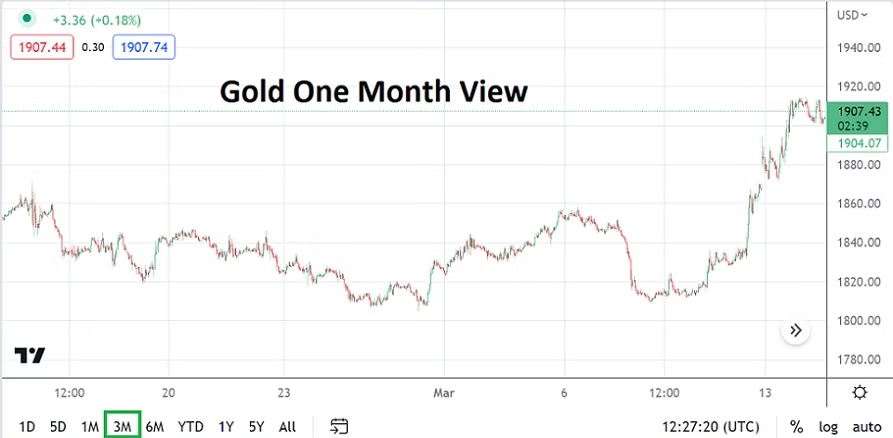
Gold One Month Chart

What comes over the next week and month will likely anger many people. Capitalism is good, it is even great. However, a dark and evil shadow lurks when crony capitalism starts to have an upper hand. The insolvency of Silicon Valley Bank raises the prospect for crony capitalism to be witnessed by all. Suddenly the U.S Treasury, Federal Reserve and government have emerged to save the skin of depositors within a bank which up until last week was heralding its ability to be a ‘lone wolf’; merrily disregarding sound investment principles and saying they knew better. It is only my opinion, but it stinks of contradiction that both the U.S Federal Reserve and Silicon Valley Bank have made vast mistakes and now are being allowed to cover their tracks and protect members of their ‘club’. Both Fed and Silicon Valley Bank officers need to be held accountable, but do not count on this result producing more than scapegoats.

Rising interest rates which are causing ‘import inflation’ has been a worry expressed by some economists and they can still be heard, but obviously not given enough attention. The Fed has marched to its own drummer and disregarded ‘the street’ for its own ideals and statistics viewed from its ‘ivory tower’ where it could not be held accountable.

Inflation is stubborn, yes, but it is a result of chaos via global commerce from the effects of difficult supply and logistics problems caused by coronavirus. Inflation became problematic two years ago and it was essentially disregarded for about nine months, until the Fed and others admitted rising prices was a concern. Hopes of transitory inflation have faded into oblivion. But I digress…..

Nervous Financial Institutions Battling as Federal Reserve Wavers

A sin bin of mistakes has collected and is now being exposed. Many financial houses were surprised when the Fed came out on the 1st of February and sounded so aggressive talking about inflation while increasing the Federal Funds rate again. Then jobs numbers came out on the 3rd of February, along with Average Hourly Earnings and showed the U.S economy was stronger than expected. The USD began to find strength again, and inflation data then added an extra punch by coming in strong again in February via the CPI results.

Btw, Consumer Price Index will be published today too from the U.S, and this will cause a reverberation for those attempting to day trade among waters filled with nervous financial houses who have their programmed algos ready to take advantage of hectic markets. Volatility the next handful of trading days is set to be wild. The Fed is not likely to raise interest rates by half a basis point on the 22nd of March, but if CPI numbers are stronger than anticipated today, this could cause a tremor and fear. Even if the Fed pauses for the moment, the prospects of raising interest rates again in the near future unless the banking sector shows it cannot sustain another round of Federal Fund increases is troublesome. Nothing like a complete lack of clarity for short-term traders to cause bedlam and a complex gauntlet of inflation statistics to make the Federal Reserve squirm.

Traders have to understand that if they are going to attempt to wager on the markets in the near-term that they are taking a huge risk. The use of leverage could provide solid profits on a winning bets via Forex, commodities or CFD wagers, but it could also wipe a trader completely out if they are caught by a violent wave. And the U.S Federal Reserve is not here to protect small traders, they frankly do not consider your results very much and likely believe you should not be wagering.

What the U.S government and its institutions like the Fed, Treasury and FDIC want to do is guard against systemic risks for the larger speculators – corporate traders, banks, hedge funds, V.C’s, etc. to make sure they do not go belly up and cause a global financial sink hole and long-term ruptures. The financial crisis of 2007 and 2008, the coronavirus pandemic starting in 2020 and the ongoing Ukrainian war have tested the markets and were likely enough for most of us to voice troubles. Now the prospects of a far-reaching banking crisis and illiquidity adding fuel to the fire are quite a combination of risk events usable as costly teaching moments. Do we seriously need another teaching moment however?

We are the little people and nobody sees us. We may yell, we may bellow our angst towards the system, but the system treats us as an afterthought. Day traders should keep this in mind as they bet in the coming days, because more gyrations are likely as a metaphoric ‘country club for institutional risk takers’ is given sanctuary. This as we minnows look up, shaking our heads in disbelief while our trading accounts flounder.

post6

Bitcoin Winter Threatens to Become an Ice Age

Bitcoin Winter Threatens to Become an Ice Age

Many influencers within the digital asset world use the term ‘crypto winter’ as a way to explain the dramatic cyclical falls of value when cryptocurrencies prices crumble. The sun it is psychologically suggested, will shine again during summer, prices always heat up says the mantra.

However, the prices of the largest cryptocurrencies are suffering extensive erosion during this ‘winter’ storm. Although it may sound like a joke, a fear of a cryptocurrency ice age seems plausible. If values freeze too dramatically in the cryptocurrency world, will prices be able to thaw again?

Concerns regarding the ‘evangelists’ like mantras of Bitcoin backers such as Michael Saylor, the CEO of MicroStrategy, are noteworthy. Perhaps Michael Saylor will be warmed by ‘summer’ prices again and see Bitcoin emerge higher, but many of his ‘followers’ are likely to get hurt if prices do not rebound soon. Clever quotes like Bitcoin is better than fiat currency. Bitcoin is scarce. Bitcoin can be taken anywhere in times of crisis, are all frequently heard. But these quips become rather shallow sounding and questionable, during these massive selloffs which can destroy an average person’s speculative pursuits if they have over leveraged on their wagers.

Some backers will certainly say people should not be speculating on Bitcoin, they should buy and hold. However its does appear any buying of Bitcoin is speculative. Anyone who decides to purchase Bitcoin should be willing to lose all of their money. Its history as a volatile speculative asset underscores this fact.

Influencers and backers will claim they are not responsible, and in many cases they are not, but fingers will be pointed and blame will be cast and evidence will be gathered. Class action lawsuits will certainly spring forth as people who lost money look for folks and companies to accuse of wrongs. Responsibility will likely have to be proven in a court of law. Lawyers are certain to make money from their work, they may be the only ones who are guaranteed financial success from Bitcoin.

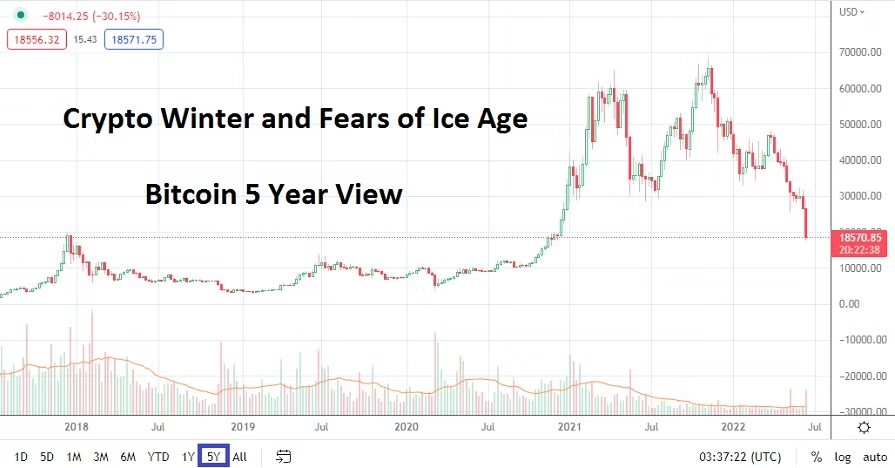
The average costs of purchased Bitcoin is said to be around 23,500.00 USD within the current total supply of 19 million plus existing coins. The problem for BTC/USD is that it is below this average purchase price as of this morning by a rather steep margin as it trades near 18,400.00 per digital asset. Meaning many folks who bought Bitcoin now have a substantial loss. Yes, the buyers who paid too much can become ‘HODLers’, but will they really be able to maintain this stance?

Another noteworthy number, it should also be remembered that it is estimated around 3 million Bitcoins have been ‘lost’ permanently via the misplacing of cold wallet information, and the forgetting of passwords that are needed to access coins in hot wallets.

Consideration must be given to the costs of producing one BTC, which supposedly is around 26,000.00 USD currently. If the price of Bitcoin continues to struggle, at what point do miners say it no longer makes viable economic sense? The price of mining a Bitcoin is not about to get cheaper in this high inflation period as energy costs grow.

When does a real capitulation take place? Why is Bitcoin being so violent during the weekends? Why does some of the greatest volatility apparently occur on Saturdays and Sundays?

Now that the 19,000.00 price level has proven vulnerable, which is the next technical level BTC/USD could challenge? Price velocity is lightning fast. Many seasoned traders could historically say this shows that fear has taken hold in the marketplace, and that may be true. But typically the fear eventually runs into an intrinsic value for the asset which creates a pause. Traders seeking value can jump in and take advantage of the low prices and wait for summer to shine. However, Bitcoin has very little intrinsic value that can be quantified. So where is the price investors jump in?

Will the price of Bitcoin fall to 13,000.00 during this so-called winter? Could it become even worse? Who is going to jump in and buy Bitcoin if it continues to stumble and its price is as cold as ice?