post233

Stock Market Narrative and Looking for a Trump Silver Lining

Stock Market Narrative and Looking for a Trump Silver Lining

S&P 500 One Year Chart as of 14th March 2025

U.S stock markets have been hit on the nose in recent weeks, the major indices have put in rather consistent declines since the 19th of February, and the selling frenzy and particularly noise have grown worse since the start of March. Narrative regarding tariffs and a lack of clarity have certainly had a negative effect. The notion that there is a part of the media that wants to see a downturn in the markets and blame President Trump could also be factoring into concerns and fragile sentiment among indices participants. I am not blaming the media for the downturn, just pointing out that there are some entities which are not unhappy about the recent selling in the stock markets, this because it fits comfortably into their narratives.

While the bearish decline on the S&P 500, Nasdaq 100, and Dow 30 have all been easy to see, defining the dynamics of the downturn, and reactions from day traders and investors are complicated. The stock markets are not guaranteed to always go higher. This may sound naive, but people have gotten so used to the notion that U.S indices always go up that they forget about the potential for downturns. Yes, the stock markets have turned negative, but a one month decline is not uncommon historically. And some of the folks rooting against Donald Trump may want to take that into consideration.

Risk premium has certainly been factored into the markets which has influenced equities, but has created forceful moves in Forex too. Risk adverse tension because of persistent rhetoric about tariffs and their impact on behavioral sentiment cannot be discounted. However, the stock markets are still higher over the past year.

The Trump Effect is certainly being pointed at by many as the cause for the sudden downturn, but it should be remembered that all-time highs occurred after Trump won the election. Yes, the selloff has definitely happened too, and stock markets are now traversing values seen before the election. And support levels are being looked at with caution and more selling could lead to a test of psychological ratios which pressure market confidence further. Yet, it should also be remembered the S&P 500 at this time last year was around the 5,150 ratio compared to its current mark near 5,565.

Day traders have been hard pressed to find momentum with solid wagering opportunities, particularly if they have been in search of a bullish trend in recent weeks. The belief that U.S indices always go up eventually is a solid reference, but in the short-term can cause expensive losses for stubborn betters. Investors certainly have an easier time with stock indices if they practice the long-game and do not worry about the daily and monthly gyrations when their money is parked in indices. The use of leverage when betting on the daily results of stock markets can become ultra expensive for speculators, particularly when upside bias is being counted upon.
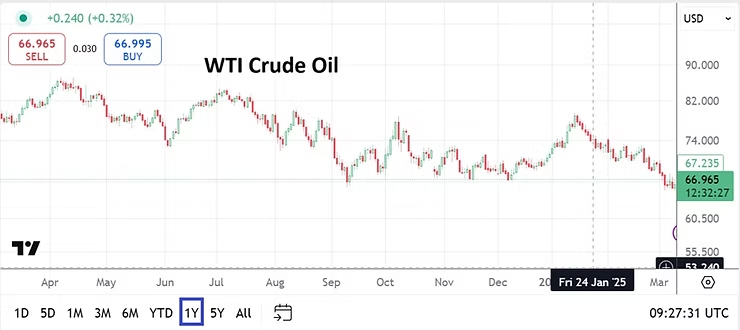
WTI Crude Oil One Year Chart as of 14th March 2015

Data this week from the U.S has actually been positive regarding lower inflation, both the CPI and PPI reports released the past two days has shown a slow down in costs. Yet, these results have little to do with President Trump, since he has only been in power less than two months. However, the lower WTI Crude Oil prices being achieved at this moment will start to factor into weaker inflation and will benefit the U.S economy.

The U.S Federal Reserve will have to be watched, because Fed officials seemingly continue to be among the crowd worried about tariff knock-on repercussions. But it should be remembered during Trump’s first term in office, there were tariff concerns too and inflation was tame. It will take a few months to still see results via inflation under this Trump administration, but if energy prices remain stable and low, this can mitigate circumstances while the tariff winds blow and their effects are waited upon. Interest rates from the Federal Reserve, U.S taxes on the public will continue to come under scrutiny. The likelihood of Trump and the Federal Reserve locking horns regarding interest rates seems to be a certainty in the coming months.

U.S stock markets have proven dangerous for bullish perspectives the past handful of weeks, but the viewpoint that markets have been too discounted will certainly start getting the attention of large players. U.S Treasury yields remain a barometer, but short-term results do not always correlate. Speculators without deep pockets may want to continue to watch from the sidelines.

Traders should also remember there is the ability to short U.S indices, but this brings up the healthy question about when will price support start to become a factor. It is nearly impossible to pick the precise moment financial assets will stage a turnaround for day traders, but history does indicate that bullish sentiment will start to be seen. Betting on a continued downturn could prove more expensive in the end, compared to speculating on upside.

Trading is not easy. It takes a lot of stamina to endure price movements that do not go according to plans. The financial markets are proving difficult for many. We are likely not out of the woods yet because clarity remains problematic, investors who have longer timeframes are likely anxious too. Price velocity needs to be given attention, markets can certainly go lower. However, at some juncture equities will start to look cheap to important long-term players. Behavioral sentiment among investors will likely also start to acclimate to the Trump Effect.

postN36.1

Anxiety and Surprising U.S Data for Day Traders to Consider

Anxiety and Surprising U.S Data for Day Traders to Consider

Global central banks stayed in their anticipated lanes last week as the Fed and ECB raised their key lending rates. The BoJ has admitted it is allowing its yield curve to increase, meaning the Japan government is cutting back on purchases of Japanese bonds. Forex produced anxiety and choppy results for day traders.

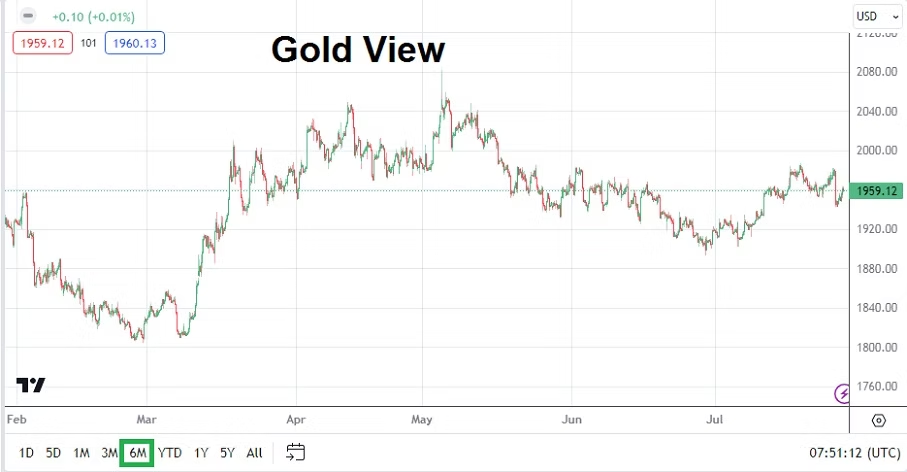
Gold 6 Months Chart as of 30 July 2023

Economic data from the U.S last week provided a strong Gross Domestic Product result on Thursday, and followed with weaker than expected Personal Consumption Expenditures and Personal Income statistics before going into the weekend. Meaning the U.S economy appears to be surprisingly solid, while inflation pressures do indicate they are in decline. The Forex market turned volatile on Thursday and Friday, gold which traded at nearly 1980.00 USD on Thursday went into the weekend near 1959.00.

VIX Index 1 Year Chart as of 30 July 2023

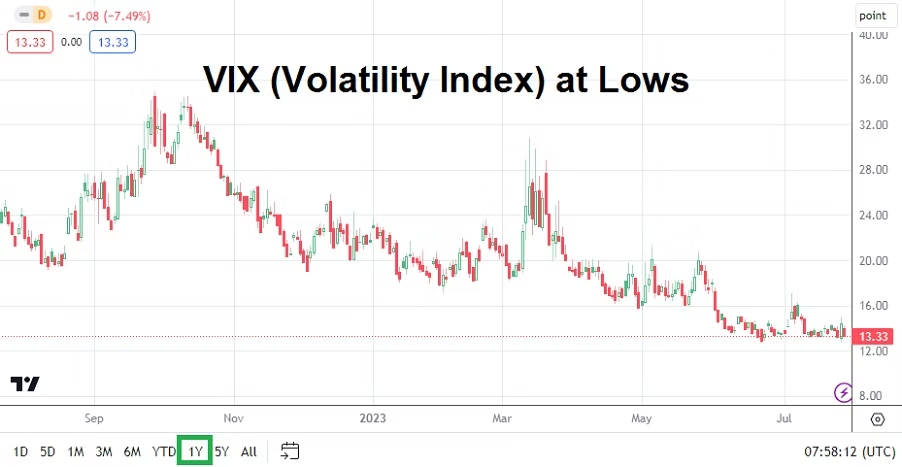
Stock markets in the U.S via the major indices continue to incrementally rise and folks waiting for a big sustained selloff are having their patience tested. Perceived volatility in U.S markets is very low and the VIX (Volatility Index) indicates many investors are not taking the time to hedge with options because their confidence is remarkably high. A cautious reminder for traders, one bad day could change all of the optimistic sentiment.

In the cryptocurrency world, folks should continue to keep their eyes on the Binance exchange and its Binance coin. Many digital assets seem to be suspiciously close to important support levels as this week begins and appear vulnerable.

Monday, 31st of July, China Manufacturing PMI – while U.S data surprisingly improves, China has not begun to show signs of a positive turnaround quite yet, and this reading is expected to be below last month’s outcome. China data is a solid barometer of global economic health and traders should give these results proper attention.

Monday, 31st of July, E.U Consumer Price Index Flash Estimates – the European CPI numbers are expected to come in slightly below the previous month’s reading. If for some reason these inflation numbers are higher than expected, this could cause some chaos briefly for the EUR/USD. A weaker number however offers no sound wagering basis for short-term day traders either. Behavioral sentiment appears to be ruling the EUR/USD landscape for the time being, and technical levels should be watched.

Tuesday, 1st of August, Australia Reserve Bank Cash Rate – the RBA is expected to follow in the footsteps of the Fed and ECB and raise its lending rate by 0.25%.

Tuesday, 1st of August, E.U Manufacturing PMI – Germany and France are anticipated to produce similar results to last month’s outcomes. Recessionary pressures are a concern in the E.U and better than expected numbers would be welcomed, but this may prove difficult to demonstrate as economic conditions remain challenging.

Tuesday, 1st of August, U.S ISM Manufacturing PMI – the results from the manufacturing sector in the States should be watched. A slight improvement is expected, but the reading is not expected to produce a wildly optimistic result. An outcome which slightly beats expectations, but is not too strong might make the USD slightly weaker. Global investment institutions are likely hoping for any signs that the Federal Reserve will have to become less aggressive. A lackluster to ‘fair’ ISM Manufacturing PMI result could be evidence larger Forex traders want to see if they are aiming for bearish momentum in the USD.

NZD/USD 3 Months Chart as of 30 July 2023

Wednesday, 2nd of August, New Zealand Employment Change – the jobs statistics are expected to show slightly weaker results from the nation. The NZD/USD remains within the lower elements of its long-term price range. There are many NZD/USD bullish traders waiting for a sustained reversal higher, but it is unlikely to be produced from these New Zealand jobs numbers.

Thursday, 3rd of August, U.K BoE Monetary Policy Summary and Official Bank Rate – the Bank of England remains in a difficult spot and it will likely raise interest rates by another 0.25%. Criticism of the Bank of England has been loud in Britain, but the BoE likely feels it has to remain in line with the Fed and ECB. Recessionary pressures continue in the U.K and inflation remains problematic. Concerns will be heard regarding property mortgages for home owners if the BoE hikes. The GBP/USD will certainly move depending on the rhetoric from the Monetary Policy Summary and talking points delivered by BoE Governor Andrew Bailey.

Friday, 4th of August, U.S Non-Farm Employment Change and Average Hourly Earnings – the jobs data parade will climax at the end of the week, this after starting on Wednesday via the ADP jobs numbers. Investors will watch the Non-Farm Employment Change data carefully and correlate them to the better than expected GDP results from the 27th of July. The wages data from the Average Hourly Earnings is expected to come in with a slight decrease. A weaker inflation result from the wages statistics could cause additional softness in the USD. However, recent data from the U.S has been hard to predict correctly, and day traders may want to sit on the sidelines until all the jobs numbers are digested.