Outflows 20250220a

India Insider: Macro Stress a Capital Flow Problem, Not a Trade One

India Insider: Macro Stress a Capital Flow Problem, Not a Trade One

Editor’s note: This article was originally written in January 2026. It has been updated to incorporate developments through February 2026, including the U.S – India interim trade agreement and subsequent capital flow data.

India is currently experiencing what can best be described as macro stress. By macro stress, we mean pressure across the broader economy that shows up simultaneously in the currency, financial markets, and capital flows, rather than a problem limited to one sector or company. In India’s case, this stress is visible in a weak rupee, persistent foreign investor outflows, and rising concerns about equity valuations.

This stress is often misinterpreted as a trade or export problem. In reality, the pressure on the Rupee and the growing fragility in equity markets stem primarily from the capital account, not from collapsing exports or remittances. Even as the U.S Dollar softens – helped by Federal Reserve rate cuts and renewed trade tensions under U.S President Donald Trump, India continues to struggle to attract foreign capital, exposing a deeper structural imbalance.
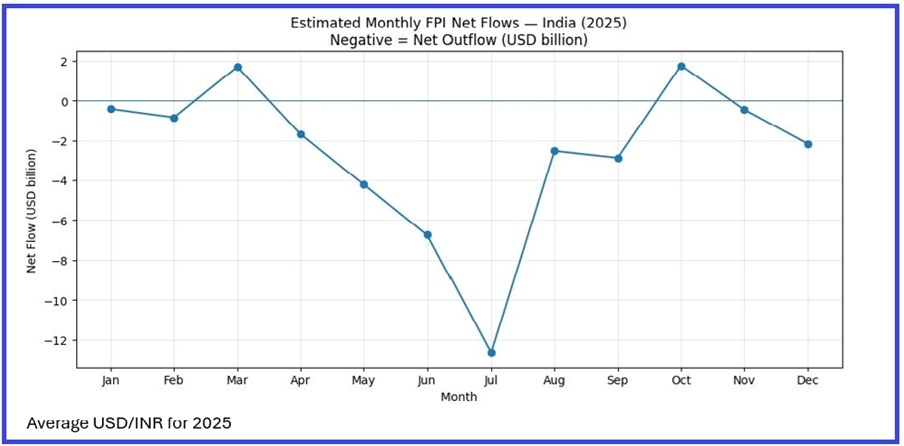
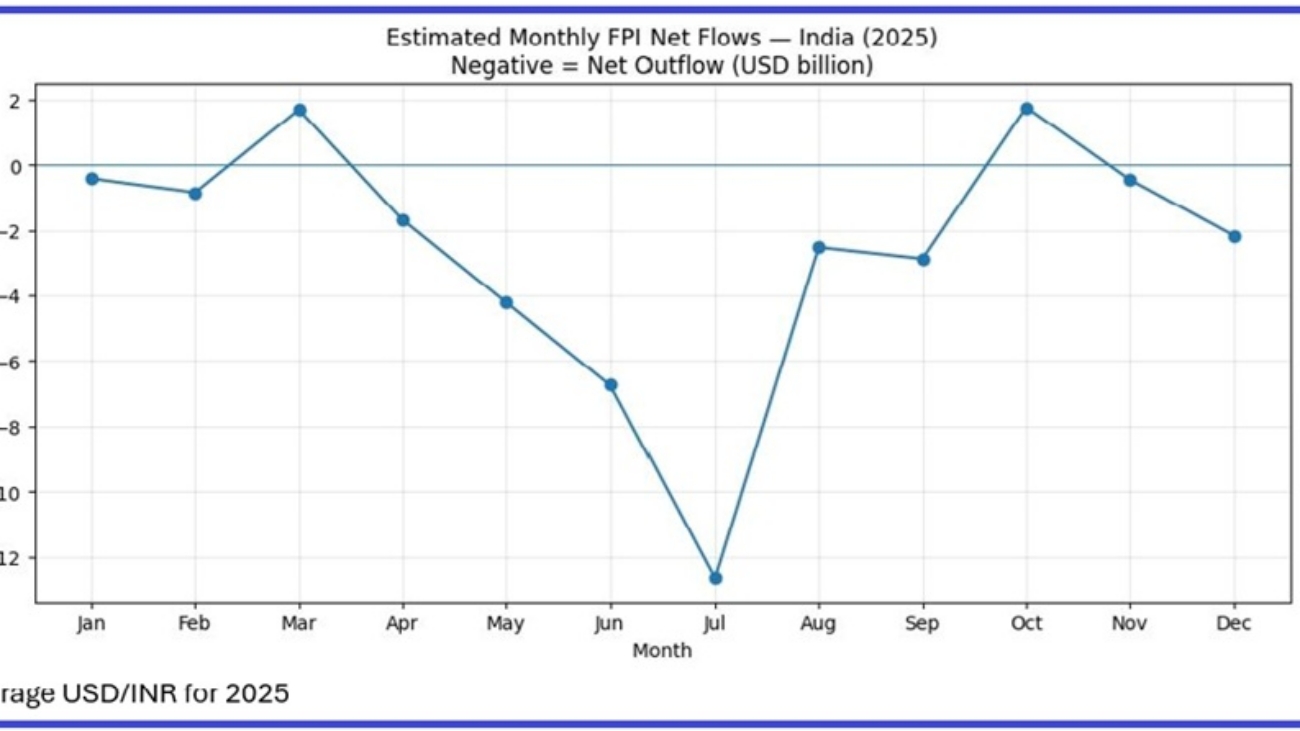
Source: NSDL (FPI Equity Flows): Reuters and author’s calculations.

Recent weakness in the USD would normally support emerging market currencies and risk assets. This time, however, the response across emerging markets has been uneven. Capital has flowed toward economies linked to artificial intelligence, semiconductors, and commodities, as well as toward markets where valuations have already adjusted. South Korea, Hong Kong, Chile, and South Africa have all benefited from this rotation. India has not.

The Rupee’s weakness reflects this divergence. USD/INR continues to trade around ₹91.5–91.6 despite the absence of a sharp deterioration in India’s trade fundamentals. Services exports, particularly IT services, remain resilient, and remittances continue to provide a steady source of foreign exchange. This brings us to the current account.

The current account represents a country’s net trade balance with the rest of the world, including goods, services, and remittances. India runs a current account deficit, meaning it imports more than it exports. While this deficit persists, it is manageable at present, supported by stable services exports and remittance inflows.

The real problem lies in the capital account, which tracks investment flows such as foreign investors buying or selling Indian equities and bonds. When foreign capital flows into the country, it helps finance the current account deficit. When it flows out, pressure builds quickly on the currency and financial markets.

Foreign capital is neither entering India in sufficient scale, nor remaining invested. Portfolio outflows have become persistent, and this has emerged as the dominant driver of currency pressure. In calendar year 2025, foreign portfolio investors sold approximately USD 19–20 billion worth of Indian equities, marking one of the largest annual equity outflow episodes in recent years. Importantly, this selling has been sustained rather than episodic, pointing to a structural reassessment of India’s growth outlook and valuation premium rather than a temporary risk off shock.

Crucially, this capital flight is not the result of a collapse in exports to the United States. Despite tariff concerns, the U.S remains India’s largest export destination. Between April and December 2025, Indian exports to the U.S rose to roughly $65–68 billion, compared with $60–63 billion during the same period last year. Trade flows, for now, are holding up better than sentiment suggests.

The effects of capital account stress are most visible in financial markets. Indian equities are failing to attract foreign inflows as growth momentum weakens. Market leadership has narrowed, with headline indices supported by a small group of large-cap stocks, while consumption-sensitive sectors such as FMCG remain under pressure.

This dynamic fits squarely within the balance of payments framework described by Professor Michael Pettis. He described, “a country cannot sustainably run a current account deficit without stable capital inflows. When capital inflows weaken, the adjustment shows up through a weaker currency, tighter financial conditions, and pressure on asset prices.”

Indian equities now trade at some of the highest valuation multiples globally, supported largely by domestic retail and mutual fund flows. However, domestic capital is structurally constrained, while global investors can freely reallocate. As Bloomberg’s Andy Mukherjee recently noted, Indian cement stocks now trade at higher valuations than Hong Kong Tech stocks showing the exuberance of Domestic equity capital chasing local themes.

At a deeper level, India’s vulnerability reflects a structural imbalance between savings and investment. Domestic savings are insufficient relative to the economy’s long term investment needs, and the financial system lacks the institutional capacity to consistently channel savings into productivity enhancing investment. As a result, growth has become increasingly dependent on mobile foreign capital – capital that is cyclical, return sensitive, and easily reversible. It is this dependence, more than any near term trade shock, that leaves the Indian rupee vulnerable when global capital flows turn cautious.

Update: The US–India Interim Trade Agreement (February 2026)

Since this article was first written, a significant development has reshaped the near-term outlook. In early February 2026, the United States and India reached an interim trade agreement. As part of the deal, the US lowered its reciprocal tariff on Indian goods from 25% to 18%. President Trump also signed a separate executive order removing an additional punitive 25% tariff that had been imposed as a penalty for India’s purchases of Russian oil, meaning the effective tariff burden on Indian exports had, at its peak, approached 50% before being brought down to 18%.

The announcement acted as an immediate sentiment catalyst. The rupee, which had been trading in the ₹91.5–92 range under stress conditions, strengthened on the news, touching ₹90.30 before settling near ₹90.70. Foreign portfolio investors, who had spent most of 2025 as relentless net sellers, turned net buyers in the first week of February 2026, purchasing approximately $897 million worth of Indian equities.

These are meaningful moves. After 18 months of persistent underperformance relative to other emerging markets, India’s excessive valuation premium has moderated toward historical averages, which may create better entry points for global capital going forward.
Copy and paste the text from AMT that you want to share

Post306

India Insider: Reserve Bank of India Intervention is Limited

India Insider: Reserve Bank of India Intervention is Limited

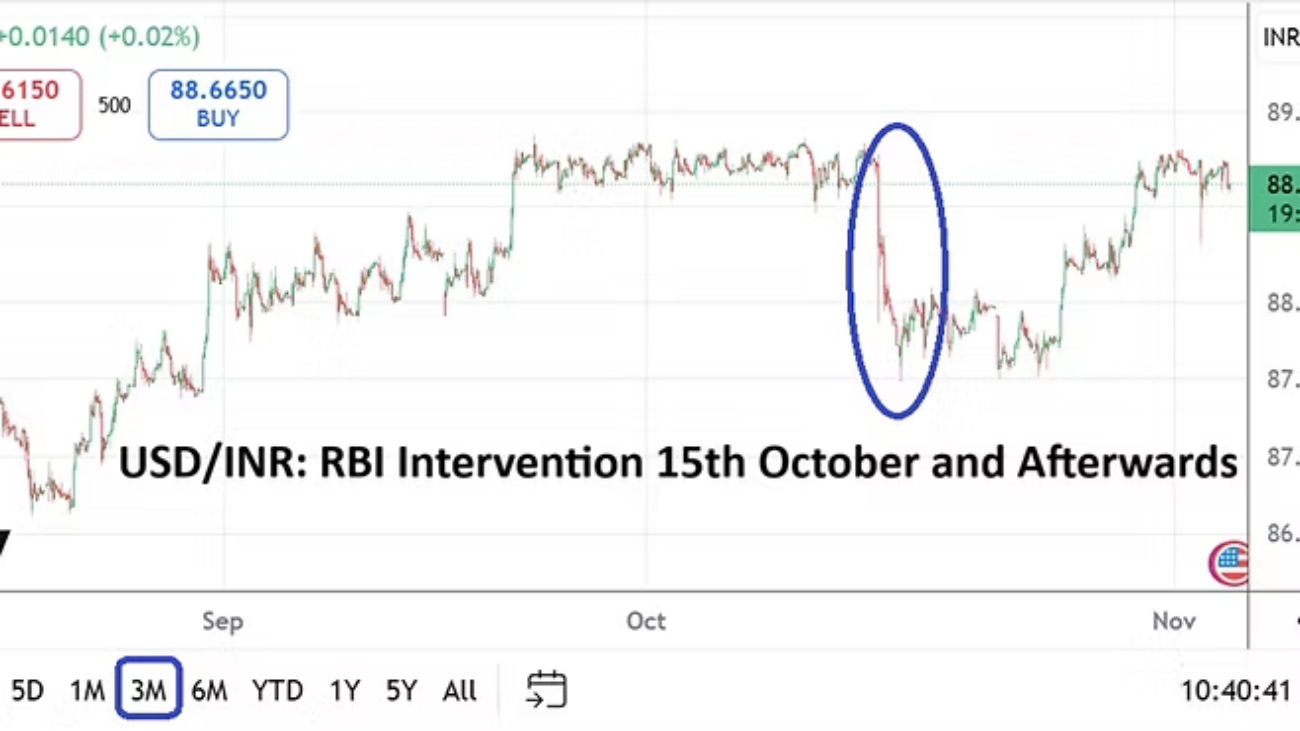
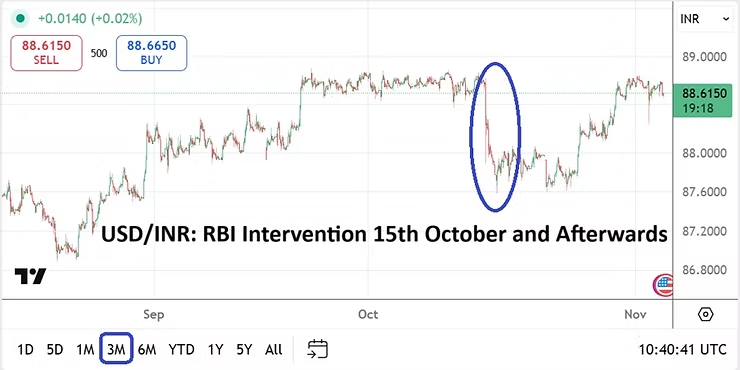
After weeks of steady appreciation due to Reserve Bank of India intervention on the 15th of October, the Indian Rupee has now returned to the same 88.72 levels against the USD before the policy action was enacted. The RBI’s recent offensive against speculators may have calmed the market temporarily, but it reflects a reactionary and short-term approach to deeper structural pressures facing India’s external administrative policies regarding the USD/INR.

USD/INR Three Month Chart as of 5th November 2025

Despite the Reserve Bank of India’s efforts to influence the cash forward market, where Dollar shorts rose by 6 billion USD in September to $59 billion, fundamentals suggest that Rupee weakness is not purely speculative. It is a rational market adjustment due to rising trade barriers amid U.S tariffs on India’s merchandise exports. The added uncertainty regarding trade caused the Rupee to naturally absorb external shocks. Merchandise exports to the U.S fell 12% in September year on year, according to official India data, prompting some calls for government relief.

India’s Foreign Remittances & H1-B Visa Fee Hike

According to World Bank data, India received about 137.7 billion USD in personal remittances from abroad in 2024. From that amount, around $40 billion is coming from the United States. The Trump administration raised the cost of H1-B visa fees from below 10,000 USD to nearly $100,000. And there is now also an increased likelihood of measures aimed at limiting digitally delivered software services to the U.S from India. These combined measures would substantially reduce Dollar receipts via exports of technology driven software and IT services, as well as remittances from a reduction of workers on temporary U.S visas providing on site services to U.S clients. USD inflow has been crucial for India’s balance of payment’s stability.

Reduction of USD reserves when the trade deficit is already rising because of hikes caused by tariffs on India’s exports would widen the current account deficit. Concerns about a decrease in remittances leading to a potentially significant decline of India’s USD reserve ability is possibly discouraging the India Reserve Bank to voluntarily expend reserves to support the Rupee.

Service Exports Cushion India’s Balance of Payments:

India’s total service exports touched 400 Billion USD over the past year with a predominant amount coming from the U.S. In other words, India has had a $202 billion in services trade surplus over the last 12 months, which covered almost 114% of India’s merchandise trade deficit in 2024-25.

India’s goods trade deficit is matched by a services surplus, plus net foreign personal remittances. This USD equation is under threat because of prolonged paralysis from stubborn US and India trade negotiations debating Russian Oil usage and the U.S demand to allow agricultural products into India.

Foreign Investors Selling Indian Equities

In addition, the Indian Rupee is not getting support from investment portfolio inflows. A shortfall of AI related avenues in the nation’s tech sector, and perhaps because of valuations considered too rich, foreign Investors have pulled 17 billion USD so far this year. This sum is more than any other emerging market, which is eating away at the Reserve Bank of India’s FX reserves too.

Global and India-specific uncertainties spurred by the Trump administration’s actions are setting off a retreat of footloose portfolio capital invested into India’s equity and bond markets. If the Reserve Bank of India was confident that inflows of foreign capital would replenish reserves it would likely help the Indian Rupee, and thus investor confidence coming from abroad.

Policy Irony and the Limits of Intervention

The U.S. remains India’s largest export market, but new levies of 50% tariffs are hurting labor-intensive sectors such as textiles, leather, footwear, and gems & jewelry.

While concerns about imported inflation are valid, the benefits of a weaker Rupee should not be overlooked. A mild depreciation could boost India’s service exports, improve the balance of payments, and partly offset the effects of U.S. tariffs on merchandise exports.

A material improvement in U.S and India trade relations is needed. Until a restoration is achieved in relations and a merchandise surplus is possible, alongside healthy services and remittance inflows occurring again, the Rupee’s weakness is likely to persist. In the meantime, Reserve Bank of India interventions could prove to be a short term tactic that proves vulnerable mid-term to the influence of market forces known and unexpected.

post209

Forex: Trump Effect and Reasonable Trading Caution for All

Forex: Trump Effect and Reasonable Trading Caution for All

The Forex market the past two months has created a profoundly stronger USD against many major currencies. The combination of late September intrigue regarding U.S Federal Reserve outlook, then nervousness about the approaching U.S election, followed by the subsequent results have been a dumpster fire for many speculators looking for a sustained return to USD centric weakness. Hopefully risk taking tactics have included a solid dose of caution.

This week’s Non-Farm Employment Change numbers scheduled for Friday may give financial institutions a moment to focus on economic data instead of President-elect Donald Trump’s loud pronouncements, but the effect may prove to only be momentary. It isn’t data that is driving Forex for the moment it is nervousness and fear of the unknown.

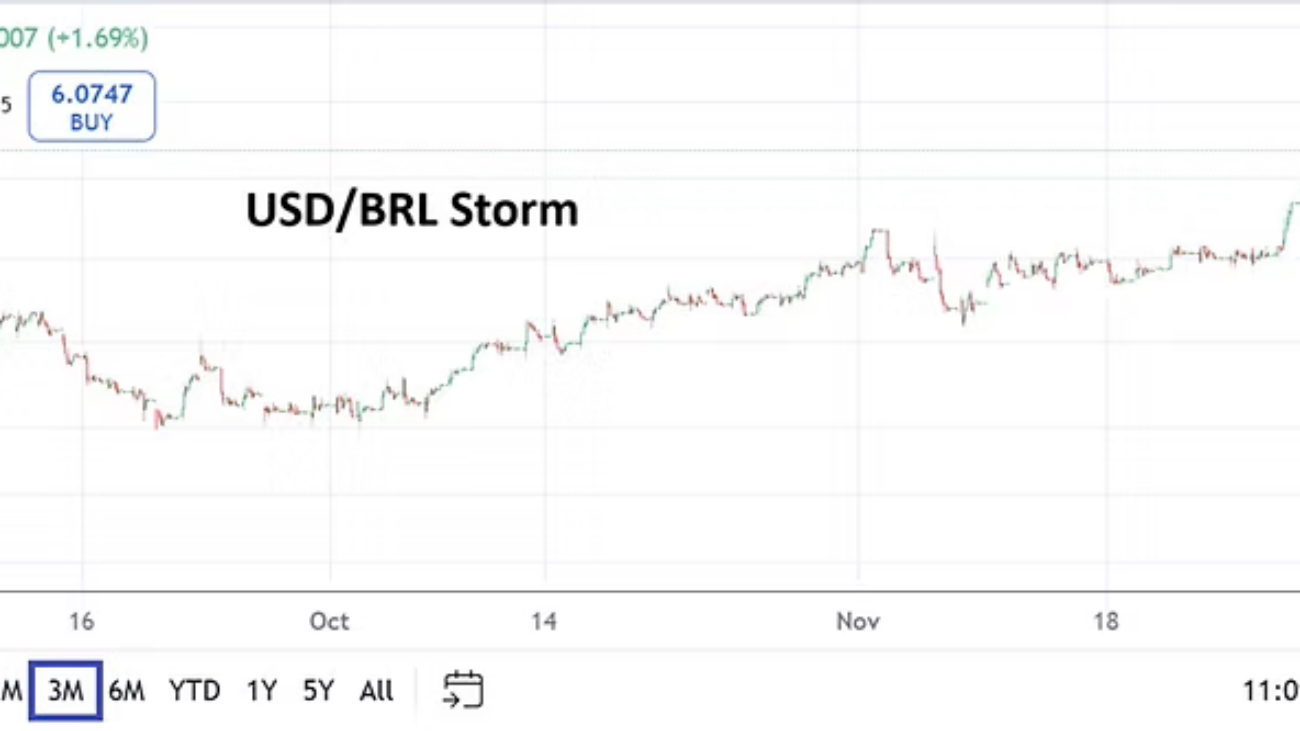
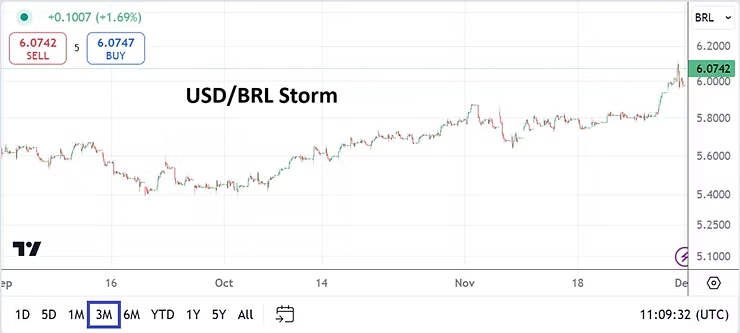
USD/BRL Three Month Chart as of 3rd December 2024

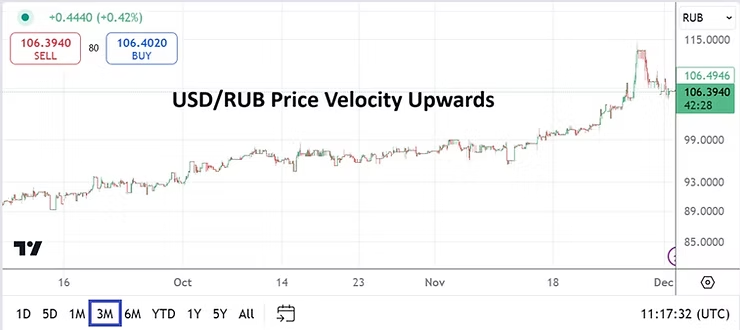
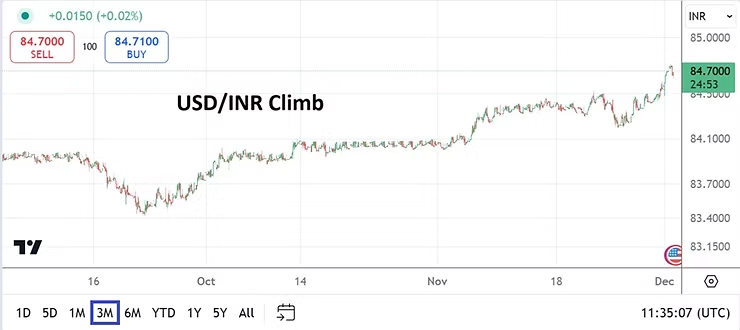
While many financial institutions and speculators trade only the major currency pairs, taking a look at the less obvious and more infrequently transacted major currencies may provide retail traders additional perspectives regarding the fragile nature of Forex. Many nations and large institutions are demonstrating concerns about possible sea changes to U.S foreign economic policy. Yes, the EUR/USD, GBP/USD and USD/JPY have all seen volatility via USD strength the past two months, but price velocity in the USD/BRL, USD/RUB, and USD/INR may be equally intriguing. And prove that mid-term forecasts (or lack of them) are causing bedlam for all.

USD/RUB Three Month Chart as of 3rd December 2024

While it is more than probable calmer heads will start to be seen in Forex and weakness eventually will return to the USD, trying to pick the exact moment this is going to happen remains a guessing game. Financial institutions via evidence in current Forex pricing remains rather cautious regarding their cash forward commercial enterprise. President-elect Donald Trump has certainly been dealt with before and his negotiation style is that of a businessman, it is not a coincidence that some global leaders who do not exactly see eye to eye with Trump are giving him respect because they understand he will act upon threats if not dealt with fairly.

Trump’s recent brief rhetoric regarding BRICS and the organization’s public consideration of creating a new currency to compete with the USD did not go unnoticed this weekend. Critics may want to proclaim Trump’s threats as belligerent, but BRICS is free to create a new currency still if they wish. While Trump cannot stop the birth of a BRICS currency, he can certainly try to initiate actions (via sanctions) against nations that attempt to create a new unified currency which tries to curtail the dominance of the USD. It would certainly help Trump’s bargaining position and the USD also, if better fiscal policy is practiced by the U.S Treasury and government.

USD/INR Three Month Chart as of 3rd December 2024

It needs to be pointed out that Trump’s warning to BRICS may not be needed. Even though the organization may be able to create a currency based on a commodities backbone, the lack of trust many financial institutions and nations would feel towards a non-transparent fiat currency powered by the fiscal monetary policies from the likes of Russia, China, Brazil and South Africa remains a difficult sell. Until many changes happen domestically within these nations via governance, creation of a BRICS currency remains wishful thinking.

Getting back to the big picture and the volatility recently seen in Forex. While the major currencies teamed against the USD have certainly faced hectic conditions, the fluctuations have not been unexpected. Day traders need to understand the month of December is likely going to remain choppy and see a test of technical support and resistance levels that are wide and full of fast reversals.

The question for the EUR, GBP, and JPY is if most of the negative inputs into these currencies has been factored into value. The suspicion may be yes, and that strength may rightfully appear in these big three sooner rather than later. However, the approaching holiday season and potential bluster from President-elect Trump will not make this a comfortable or easily wagered avenue.

Short-term retail traders looking to take advantage of the bloodbath created in Forex the past two months who seek opportunities should focus on perceived targets which aren’t overly ambitious. The coming U.S jobs data this Friday may allow the U.S Federal Reserve room to cut the Federal Funds rate on the 18th of December by another quarter of a point. As a point of attention, the European Central Bank will announce their Main Refinancing Rate on the 12th of December. The ECB’S actions may be a solid clue regarding the Fed’s approach to upcoming policy.

However, even if an interest rate cut were to take place via the Federal Reserve, it is likely the cut has already been factored into Forex. Which also highlights the high degree of nervousness that exists because of fears which permeate due to Donald Trump’s tough negotiation stances which have been made public. Meaning those who are looking for USD centric weakness to emerge still need to rely on a shift within behavioral sentiment to occur that is not generated because of the Federal Reserve. Nations need to show a willingness to amend existing trading agreements with the U.S, allowing for changes to internal policies regarding exuberant price duties they place on U.S goods in their own countries.

post35.1

Sudden Bullish Momentum of Indian Rupee Raises Questions

Sudden Bullish Momentum of Indian Rupee Raises Questions

The past week of trading within the USD/INR has seen a bullish trend emerge, this while many speculators were likely starting to believe lower price realms and targets were possible.

The USD/INR is trading near the 82.2200 mark as of this writing, which is within the higher elements of its one month price range. Volatility within the USD/INR has been abundant the past week and has likely proven expensive for speculators who were pursuing the currency pair with visions of more bearish price action to target. Early May values of the USD/INR certainly tested lows and likely fueled the appeal of selling positions. However, the early May lows within the Forex pair tested the 81.6260 mark, while never actually hitting April’s lowest values which tested the 81.5500 ratio on a couple of occasions.

USD/INR One Month Chart as of 16th May 2023

One of the dangers of trading is always the potential for a sudden change in behavioral sentiment. The lows in the USD/INR seen on the 8th of May, which is only a little bit more than a week ago, highlights the price velocity the currency pair has demonstrated. While many speculators are trying to understand why the sudden shift in dynamics has taken place, it is important to remember the USD/INR was actually trading above its current values in February, March and early April of this year.

USD/INR Five Day Chart as of 16th of May 2023

The Difference between Day Traders and Financial Institutions

The outlook of speculators within the USD/INR is totally different than financial institutions. This is because most speculators are short and near-term traders. They do not have deep pockets like financial institutions – which can hold the USD/INR in a chosen direction for a long period of time and simply allow the currency pair to trade until they want to cash out of a position. Day traders are also using leverage a lot of the time, and the combination of leverage with limited available trading funds makes the daily gyrations of trading volatile and frequently dangerous.

Short-term traders look at the USD/INR with a technical viewpoint much of the time, financial institutions are likely maneuvering in the Forex pair with fundamental perspectives and inside knowledge based on known transactions they have to accomplish.

Many financial houses believe the U.S Federal Reserve will have to become less aggressive regarding its hawkish interest rate stance it has maintained the past year and a half. However there is enough nervousness within the broad Forex markets to make things very difficult for day traders, this as the potential for risk adverse trading based on economic data results move currency pairs including the USD/INR constantly, particularly if a financial institution needs to react quickly.

The ability of the USD/INR to move downward and hit support depths at the beginning of last week, may indeed be a sign that financial institutions have a belief the currency pair should be lower. However, the recent strength of the USD the past handful of days may have been brought on by the simple notion that financial houses grew momentarily nervous. There is also the possibility that large corporations made transactions in the USD/INR that moved the price higher. Day traders must understand there are forces within the USD/INR that are much stronger than their opinions. The USD/INR is not a widely traded currency pair in the open markets, it is difficult for instance to trade the currency pair in a speculative manner within India and traders in the nation face restrictions, which forces many Indian speculators who want to wager on the USD/INR to seek foreign brokers abroad.

Data and Rumors Can Sometimes be False Flags for USD/INR Traders

Some analysts have claimed the recent move higher in the USD/INR has taken place because of factors like a fear of the U.S debt ceiling not being raised in time and causing chaos in the financial markets, however this if true is likely only a short-term worry. It is very unlikely the U.S government is ‘idiotic’ enough to allow the U.S debt ceiling to not be taken care of within Congress. It would be very problematic for the U.S Federal Reserve and Treasury to have to explain why U.S bonds are suddenly difficult to repay. In other words, the U.S debt ceiling is likely to be taken care of and many financial institutions with a long-term view know this, although it is a possibility they could ‘punish’ the financial markets and act in a risk adverse manner in the short-term.

Data from the U.S yesterday highlighted another important aspect again regarding behavioral sentiment. The U.S Empire State Manufacturing Index reading came in with a negative number of minus -31.8. The expected result was -3.7, the report shows that New York business activity and outlook is worse than forecasted. This doesn’t mean the entire U.S manufacturing sector will have the same results, but it underscores the potential for a U.S recession to possibly occur. Today the U.S will release Retail Sales numbers. If these numbers come in with a negative result this could spur on bearish sentiment within the USD/INR in the near-term, particularly if financial institutions feel the results are more evidence the U.S Federal Reserve will have to pause interest rate hikes in June. USD/INR day traders should be ready for more choppiness. But there is reason to suspect resistance above in the currency pair may start to prove durable from a speculative point of view considering the trading results the past month in the USD/INR.

Traders wishing to pursue the USD/INR need to use solid risk management. Entry price orders will help traders get a ‘fill’ they are expecting and the use of stop loss and take profit tactics are highly encouraged. The past week of trading in the USD/INR has likely tested the nerves of many speculators and the assault on highs is alarming, but downside price action may be ready to reignite if U.S economic data continues to falter in the near-term.

post26.1

BRICS and a Potential New Currency Paradigm

BRICS and a Potential New Currency Paradigm

The BRICS nations are causing alarm in some ‘Western’ financial circles as they seek to strengthen their trading alliance reflecting their ability to be large producers and consumers. BRICS has a common goal of creating better trade and financial conditions for each other, and as a potential byproduct to possibly create an alternative to USD dominance.

While political crisis and global security concerns have grown the past few years and are causing uncertainty and instability, the strength of the USD has also caused inflationary problems for many nations including BRICS members. Cash reserve shortages of USD have become problematic and have been fueled measurably by decisions from the U.S government, Federal Reserve system and U.S Treasury. This has ignited many emerging market nations to seek dialogue about potential BRICS membership.

Alliance intrigue and concerns also shadow BRICS members often, the February 2023 naval exercise held between Russia, China and South Africa within waters near Cape Town raised anger in the United States and the European Union. The fact that the joint military exercise was held during the first anniversary of the Russian invasion of Ukraine did not go unnoticed. While no signed military alliance exists between these nations, it should be noted that Russia, China and South Africa also held a naval exercise in November 2019 also within proximity to Cape Town, South Africa.

USD/ZAR 1 Year Chart as of 28th April 2023

Formation and Agenda as Members Scoff at the ‘King Dollar.

The agenda of the BRICS nations often appears a desire to topple the dominance of the USD to those watching from outside, but is it realistic? Trading alliances are important certainly in order to create better economic stability. The BRICS potential effect on the USD is concerning, although not critically dangerous at this juncture the bloc needs to be monitored. In addition there are worries from some in the West that new military alliances could be formed, but historical and cultural differences within BRICS makes this rather questionable for the time being when contemplated in total.

BRIC was an acronym coined by then Goldman Sachs Chief Economist Jim O’Neill to identify potential opportunities for investors within emerging market nations. Members in this ‘bloc’ are countries that have begun to work in unison. About two months ago, Jim O’Neill reiterated the same refrain and alluded to the BRICS theme of suppressing USD strength and its reliance in global trade. BRIC (Brazil, Russia, India and China) was formed in 2009, and they added South Africa as a member in 2010 formally initiating BRICS. This coalition has met annually to discuss coordinated policies regarding trade, finance and investment opportunities. The next annual meeting will be held in August 2023 in South Africa. Vladimir Putin’s potential attendance at this year’s meeting is being monitored widely.

Plenty of discussions have already been articulated internationally about undermining USD dominance in global trade, but little effect has come to fruit in reality and the USD retains its moniker of ‘King Dollar’. However, countries being affected by the rise of inflation and the strength of the USD are becoming numerous and this has caused a diverse group of nations to seek conversations with BRICS leadership about being able to join the trading alliance. Iran, Algeria, Argentina, Mexico, Nigeria, Saudi Arabia, Indonesia, Pakistan, Egypt, Sudan, Syria, the United Arab Emirates, Bahrain, Turkey, Venezuela, Sri Lanka and Zimbabwe are some of the nations that have expressed interest in BRICS membership.

Impact of Sanctions on Russia and its Ability to Counter via BRICS

Russia has been waging a war with Ukraine for over a year and is currently under many Western sanctions. It’s been kicked out of the SWIFT banking system, which means it has limited opportunity to trade the RUB with Western countries. This in theory also limits the amount of USD that Russia can get its hands on.

Russia last year asked to be paid in Rubles (RUB) for gas and other energy purchases when dealing with E.U countries, trying to play a game of chess which largely failed. This while China too, tries to make the Yuan (CNY), a more significant currency in order to suppress USD dominance. China certainly has plenty of political and economic reasons to have the CNY emerge as a global power.

Russia has supposedly wanted to get out of Western currencies and especially the USD, this to punish the West, but will it work out and is it pragmatic? No. Russia’s attempts are high on rhetoric, but low on quantified changes thus far. The USD is far too dominant within the global banking system, and while incremental challenges to the USD have been tested, chipping away at USD strength remains difficult at best. The Kremlin has tried to inoculate itself from the pain caused to its trade balance because of sanctions, and create problems respectively for countries that oppose its invasion of Ukraine by cutting off gas supplies which were used for heating and to generate power for industrial purposes. Threatening to not allow grain to flow from Ukraine has also been a rather constant noise made by Russia.

Prices were capped on Russian energy via the G7 beginning in 2022 as a retaliatory move to limit revenues for Russia, and alternative gas agreements were sought by many European nations creating a loss of momentum for the Kremlin’s chess game. The Nord Stream pipeline was also damaged via sabotage. Russia used to supply Europe with 50% of its energy until sometime in 2021, it now provides less than 20% after Western sanctions. Russia has moved its eye towards other nations hungry for energy, ones that are not obligated to make transactions in USD, which brings BRICS into focus.


USD/RUB 1 Year Chart as of 28th April 2023

Inflation and a Strong USD have Caused Harm Globally

Inflation has caused problems across the globe following the impact of the coronavirus epidemic. The Federal Reserve, BoE and ECB have raised rates to try and cool inflation in their respective economies. This has made the USD attractive against emerging market currencies and caused capital outflows. An economic nightmare has occurred in Sri Lanka which is suffering from staggering political and economic problems the past two years, and nations like Pakistan and Egypt have been hit hard too by inflation’s impact and debt. USD reserves dwindled in these nations and they found it difficult to service their USD denominated debt in 2022, and troubles persist in 2023. Import without any USD reserves is difficult and sometimes impossible.

Russia and China as Major Players in ‘Their’ Bipolar World with ‘Friends’

Global trade is still dominated by the “King Dollar”. Almost 88% of global trade happens with the USD. The USD accounted for more than 71% of currency reserves at central banks in 2000, but has now declined to slightly below 59%. Oil and gas exports are important for Russia as these revenues constitute nearly 45% of its Federal Budget and it’s already been in deficit since February 2023, because oil revenues have slumped by half. Russia has a growing dependence on BRICS and is actively trying to get other nations to join the trading coalition, this because it has few other places to turn, and there appears to be no end in sight regarding the war with Ukraine.

Trading with other nations and signing currency agreements which would not include USD transactions is a long term goal of Russia and China, this if monetary values via the other nations currencies can remain firm. And then there is a wished for and ‘feared’ long-term dream of creating an alternative ‘super’ currency to compete against the USD.

Even before the escalation of fighting in the Russia and Ukrainian War, Russia was strongly advocating an end to USD dominance in global trade via rhetoric, particularly during previous BRICS Summits. We need to understand the political implications and complexities within BRICS, when talk of a decoupling from USD dominance news flares up. The U.S certainly keeps an eye on BRICS and so do other Western nations. At this moment South Africa has a delegation in Washington, D.C regarding the questionable South African policy behavior, particularly in light of recent military exercises with Russia and China, to try and smooth its U.S relationship. South Africa membership in AGOA, the Africa Growth and Opportunity Act, which grants special trade benefits to the nation and other members is being questioned strongly by U.S politicians. Getting kicked out of AGOA would cost South Africa billions of dollars in aid.

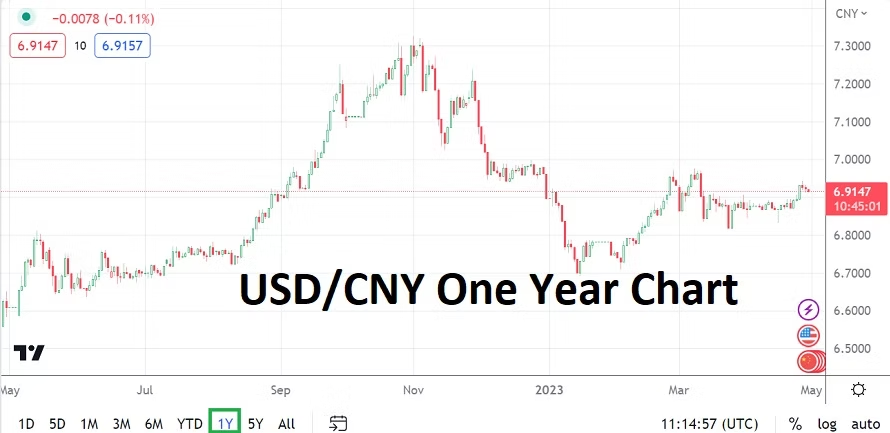
China and Russia seemingly want to create a bipolar power sphere, one in which U.S dominance is not so easy. Chinese President Xi Jinping and Vladimir Putin have met several times recently and are certainly collaborating regarding trade and investments. The developing news regarding the potential of BRICS enlargement shows that China and Russia maybe preaching multi-polarities such as their involvement with South Africa, but may actually be working towards a bipolar constellation of forces in which they would lead a broad alliance of countries in countering the preponderance of Western economies and potentially military might.

USD/CNY 1 Year Chart as of 28th April 2023


By allowing membership of BRICS to expand, U.S influence and the dominance of the USD would be lessened incrementally. A long game seems to be in play and if that is the case, the game of chess being played by Russia and China together against the West is complex and the U.S and its allies will need to be ready with a response if they want to protect the USD.

From the China point of view, the internationalization of the CNY is a positive. It has recently brokered a peace deal between Saudi Arabia and Iran, long-term arch rivals which surprised many in the West and seemingly caught the U.S unaware. China has also lent close to 1 trillion in USD value to Ghana, Pakistan, Nigeria and other smaller African countries. China is wielding power via trade and investment leverage into these respective nations strategically, pushing its global trade agenda even as Washington quietly threatens to punish China for backing Russia in the war with Ukraine.

Changing Role of China on the World Stage and BRICS

China’s role today is very different than in 2009 when BRIC was founded, this as the nation has become more secure regarding its stature globally. In the initial stages of BRICS there were talks about challenging USD dominance in global trade by member countries, but China vehemently avoided discussing this proposition openly to avoid conflict. The game has changed significantly regarding rhetoric, this as U.S – China relations have worsened as global trade, military security and corporate surveillance issues become more troubling. Political tensions with Taiwan as China rattles swords is a drama that nations are also watching attentively.

For China, the developing alliance with Russia has been a complex and sometimes slowly evolving plan historically, but one that has grown amidst tensions with Washington since the Trump presidency. The Russia and Ukraine war has accelerated the desire to break U.S led global dominance, and that means trying to break the USD internationally when it is possible. It is a long game and BRICS is part of this equation.

China and Russia view themselves at the vanguard in the struggle against Western global predominance, and they are eager to bring others on board. At the last summit of BRICS in June 2022, both Chinese President Xi Jinping and Russian President Vladimir Putin argued in favor of expanding into BRICS Plus. Beijing has become particularly interested with developing BRICS as a counterweight to the G7. While it has been difficult to establish a consensus on expansion among the current BRICS members, it appears to be a certainty that expansion is coming and the summit in South Africa this August will provide insights.

China is promoting the CNY in exchange for getting oil from Russia. The CNY is now ranked fifth regarding global transactions according to many banking sources. From the Kremlin’s point of view accumulating CNY reserves is good for Putin in the short-term; this creates more buying power for goods from countries that are friendly to Russia and China collectively and creates strategic momentum.

Yes, there are long-term historical complexities between Russia and China which will likely prove difficult politically to solve, but for the moment money is helping grease their wheels of diplomacy. Differences of opinion between Russia and China cannot be ruled out in these kinds of power games. Putin is an astute politician and liable to act in a surprising manner, this while trying to help Russia and its place among nations. Russia is certainly not keen on becoming a puppet state of China.

Trust is Almost a Four Letter Word for Some Economically and Politically

In his acclaimed book ‘Trust: The Social Virtues and the Creation of Prosperity’, the political economist Francis Fukuyama illustrates how degrees of trust in a society and indeed in a company can be decisive for prosperity and the ability to compete. In “low-trust” societies such as China, Russia and Italy, you cannot assume that everyone is willing to follow the rules. Members of these societies must frequently renegotiate ‘asserted’ rules, and often have to go to court to decide on matters. Ironically, one can see that this also applies to trading of the CNY.

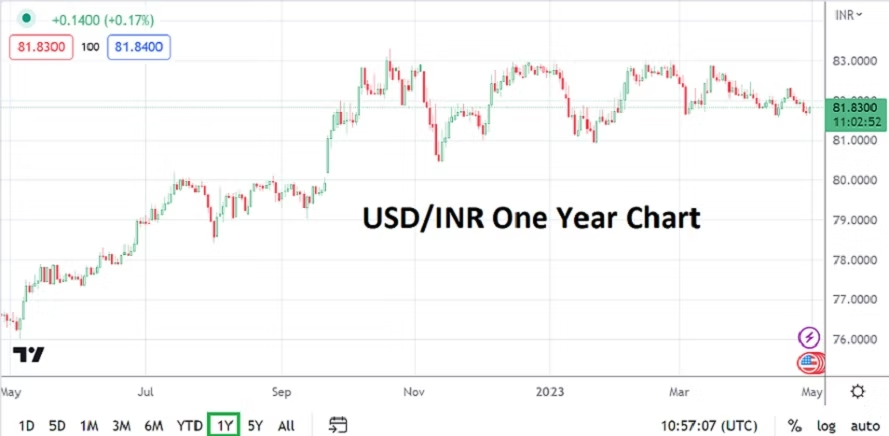
USD/INR 1 Year Chart as of 28th of April 2023

For instance, while China promotes the use of the CNY, countries like India are still using UAE Dirham (AED) for buying oil from Russia. BRICS still needs to sort out which currency they will use extensively for trade, this while many members try not to make enemies of other nations. South Africa exports are significantly more to the E.U, U.S and the U.K compared to Russia. Its share of exports to Russia are minuscule compared to the other three. Not only is South Africa risking free trade agreements with the U.S, E.U and U.K, but membership in key groups like AGOA as it tries to play on both sides of the fence politically is in jeopardy. Western observers are certainly watching South Africa and they will watch any other nation that joins BRICS. How long will the ANC led government of South Africa will be allowed to flirt with Russia and China militarily before it is stopped?

India has a Large Role in BRICS and is Growing in Stature

India is a vital member of BRICS, but also an important member of the QUAD alliance, the Quadrilateral Security Dialogue. Japan, Australia, the U.S and India are members and confer over trade and security. India is the largest democracy in Asia – and the world – and a Western advocate in South East Asia, even as China plays a dominant role in geopolitics. While BRICS wishes may be good for conducting bilateral trade among members, it is not necessarily good for global trade and political understandings. Complications from long-term political and historical disagreements between India and China cannot be discounted either.

Is the Indian Rupee (INR) or CNY more relevant for international trade? Use of the INR and the CNY needs coordination with other countries many times. Australia is a good example regarding the ability to trade INR internationally. If Australia and India agree to make their payments for exports and imports in their respective nation’s currencies, trade can be conducted rather well, but then Australia would have to find another nation for its ‘extra’ INR, because it would likely suffer due to trade imbalances. It would be important for another country outside of India to agree to take INR from Australia for other trades. Potentially some Gulf countries could be open to these types of INR transactions. A bigger group of BRICS nations would help India certainly.

Saudi Arabia has recently agreed to sell oil for CNY, but shoring up CNY in their coffers has long-term implications. This as Saudi Arabia wrangles politically with the U.S occasionally. Saudi Arabia has demonstrated a desire to take on a seemingly more neutral tone and perhaps wants to limit its exposure to the strength of the USD, particularly if the U.S tries to make a weapon of the USD via political policy. Thus, India as the most populated nation in the world and a growing economic sphere of importance, has to make careful considerations moving forward as it positions its economic stature for complexities that will develop. India and Saudi Arabia may have visions of becoming great ‘neutral’ economic powers moving into the next one hundred years.

The Indian Government has made economic deals with Egypt, Sri Lanka and Malaysia for bilateral INR trade, but still no pure INR trades of significance have materialized according to official banking data. There are multiple headwinds for BRICS nations to overcome USD dominance in international finance. Whenever exchanges of INR or CNY to other currencies for trade settlement are needed, they need to first change the base currency to USD to buy RUB or AED. Few exporting countries will accumulate CNY without a total need. Holders of these currencies would likely dump the INR and CNY for USD via Forex.

China Economic Transparency is Lacking and the Future of India in BRICS

China doesn’t make it easy for foreigners to own assets in their nation. The China government does not want massive trade deficits and free capital flows are restricted with force. Who would invest in China and risk having their money being stuck in the nation without guarantees? China continues to ramp up its oversight and aggressive tactics of supervision of foreign owned companies that have operations in the nation.

Now and into the foreseeable future, the Chinese government will control transactions of CNY with an iron fist. The United States will likely remain the predominant place for trade because of its huge economy, and as a nation that allows many other countries and foreign citizens to own and invest their assets within it boundaries. There is still something to be said for transparency. Any new nation or coalition trying to challenge U.S government debt instruments are likely to fail. The U.S continues to be a place where nations can hold ‘safe assets’ with a guaranteed return of interest for the long-term. No country equals the asset size and security of U.S Treasury Bonds. On that basis alone, there will be a no challenge to the USD in the near future.

Liquidity remains an issue for capital flows and convertibility within BRICS. A lot of hard work via transparent trade agreements will have to be signed to get these issues resolved. Plenty of questions exist regarding China’s economic data and its reliability because of a lack of oversight from ‘recognized’ outside agencies which are often forbidden.

India is still having border issues with China and these problems remain unresolved. India’s role of leadership in G20 is hard to ignore despite its alliance with BRICS. The Indian government has advised traders not to speculate in CNY. This shows that strained relationships between China and India remain and a lack of trust regarding clarity continues. In the U.S, New Delhi is considered an important partner, one that can be trusted regarding the growing rivalry between the U.S and China. Prime Minister Narendra Modi, said last year, “this is not an era for wars”, and this shows India wants stability and wants to play a global role in diplomacy.

There is a definite strategy for BRICS to grow with the nations of the Middle East and others. Using their currencies for mutual trade arrangements could eventually work out, but it will take a long time for this to change the dynamics of USD dependence and dominance.

However, we shouldn’t forget that almost 40% of the world’s population lives in Asia. Yet, even if oil producing nations will trade in a BRICS backed currency basket, which has been dreamed about for a long time, China’s leader Xi didn’t highlight this goal while in Moscow or in Saudi Arabia during recent summits. China is certainly playing a long game, but it also shows they remain cautious and vulnerable to the strength of the USD globally. If Xi wanted to cause the greatest pain to the United States, he would liberalize his financial sector and make the CNY a true competitor to the USD with complete economic transparency, but that would take him in the direction of free markets and levels of openness that are likely the opposite of China’s domestic ambitions. A strong due diligence of the Chinese economy, is something Chinese leadership likely wants to avoid for the foreseeable future.

BRICS: A Multi-Polar World and Avoiding Confrontation

Many developing countries will want to avoid a confrontation consisting of China and Russia on one side, and Western powers on the other side. India has overtaken China regarding population numbers, and will likely become the world’s third largest economy before the end of this decade. India will become a strong voice in favor of a multi-polar world. Arguably, ideas of a more multi-polar world are being worked towards in pragmatic ways, but the BRICS coalition will not develop their own asset backed common currency unless they can resolve issues regarding trade and monetary agreements with transparency. It is a matter of trust.

post13.1

Is the USD Bullish Surge Coming to an End?

Is the USD Bullish Surge Coming to an End?

The long and brutal bullish trend the USD has exhibited against many other currencies could be coming to an end, as behavioral sentiment begins to suspect the U.S Federal Reserve will have to consider halting its interest rates hikes sooner rather than later.

PMI and Consumer Confidence statistics from the United States on Monday and Tuesday has heightened the perception that the U.S is within a recessionary cycle which the U.S Federal Reserve will have to act upon – by not acting. The Fed is likely to raise interest rates in November per their hawkish rhetoric, but the notion that the U.S central bank will then sit back consider the statistical landscape is growing. In other words a halt of hawkish policy appears to be a legitimate prospect after November.

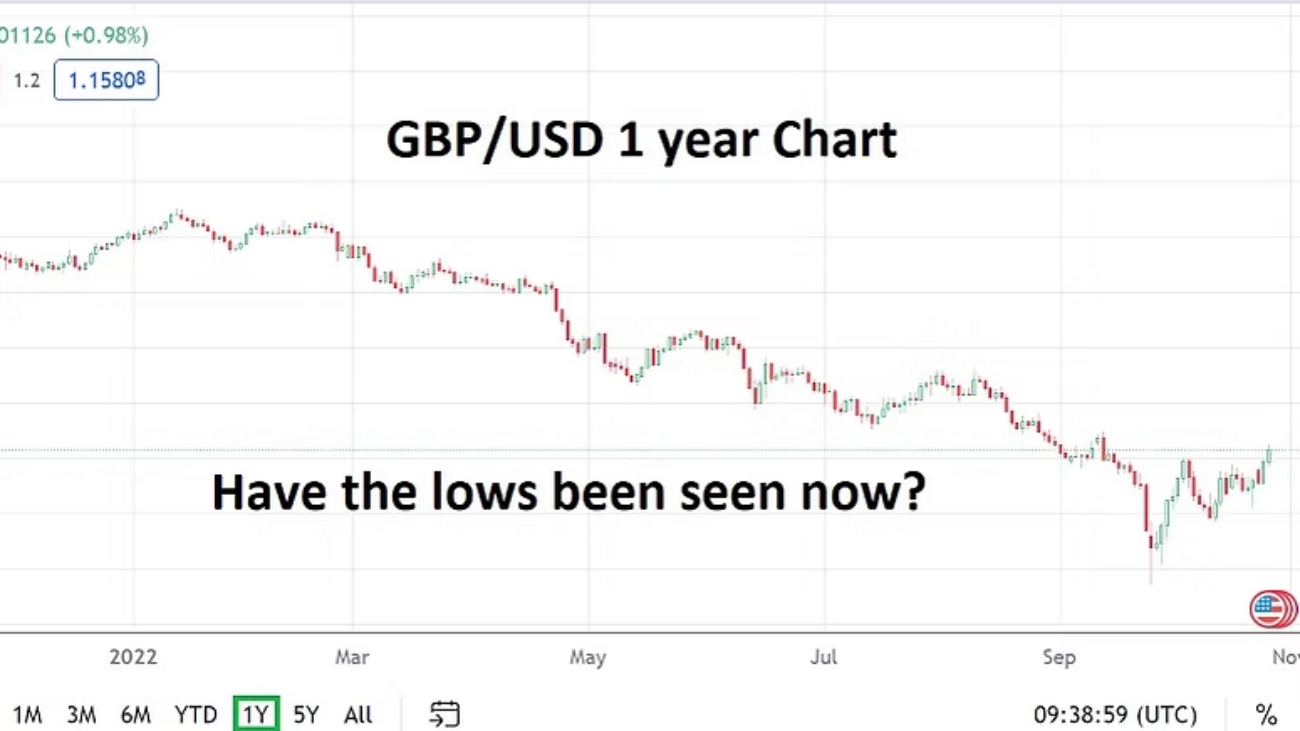
GBP/USD 1 Year Chart

If recessionary data continues to be exhibited in the U.S, the USD fundamentally could lessen its grip in Forex and allow other currencies begin to gain ground. The GBP/USD has been hit extremely hard – yes, this has had just as much to do with the political environment in the U.K which has resembled a three ring circus. The idea of tranquility within the U.K politically could help the GBP/USD move higher, the prospect of a less hawkish U.S Federal Reserve should help the British Pound also.

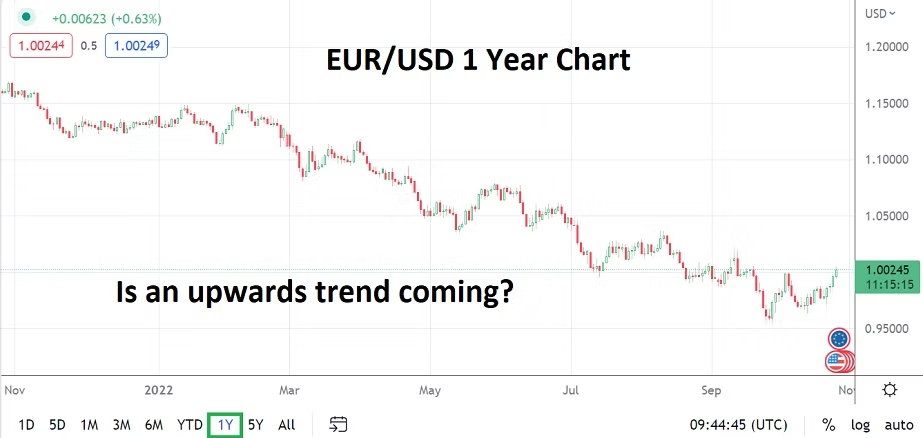
The EUR and JPY also may have the ability to gain within the EUR/USD and and USD/JPY as financial institutions begin to change their outlooks. Yes, the walls could crumble unexpectedly and another round of chaos could ensue which could cause a shockwave in Forex. However, if the U.S enters a recession which has to be officially recognized by the government and thus the Federal Reserve, the USD will be affected.

EUR/USD 1 Year Chart

This is not written to suggest a weaker USD will bring upon a great fix for the ailing global economic outlook mid-term. But it is certain that a weaker USD which trends in a bearish manner may be rather interesting to retail traders looking to gain an edge via Forex speculation. Equity indices may continue to struggle if corporations report weaker than expected earnings, but the downward trajectory in many stocks also means that PE ratios are becoming more realistic and a potential buying opportunity for long term investors. Warren Buffett can be your imaginary friend.

It has been a dynamic year of results in Forex as the USD has created stark trends with the USD/JPY, USD/ZAR, EUR/USD, GBP/USD and the USD/INR. Results in Forex and their volatility have created trading opportunities for speculators that have been likely better than wagering on cryptocurrencies; Bitcoin and Ethereum continue to stagnate and wait for the next great upheaval.

The past year has seen major equity indices suffer stark losses. Traders who have a constant bullish perspective because being positive is part of the human psychology have likely suffered if they have tried to be day traders via CFD’s of equity indices on the buy side constantly. Choppy conditions in the stock markets may continue for a while. Certainly in the long term many indices will rebound upwards, but buying individual stocks with leverage in anticipation that widespread bullish momentum is going to be a constant remains a nervous bet.

Forex via a USD pairing is beginning to look opportunistic for speculators. Picking the exact time a true solid reversal is going to become a constant is difficult and dangerous. There are no guarantees that we have seen the lows for the GBP, the EUR and JPY along with others currencies versus the USD, but if the U.S is truly going to have to admit recessionary pressures are taking hold, this may have an impact on inflation as demand decreases which the Fed would react to.

Things can wrong, more war breaking out, viruses bursting forth can be transmitted, political upheavals are a possibility in various locales, but from a risk reward perspective perhaps we are drawing to a close regarding the dominance the USD has shown the past year.