postN105.1

India Insider: Agriculture Still Traps Nation’s Workforce

India Insider: Agriculture Still Traps Nation's Workforce

A Field Survey in South India’s Agricultural Towns

India’s growth story is usually told through noteworthy headline numbers. Yet beneath these aggregates lies a persistent imbalance, agriculture continues to employ a large share of the workforce, while contributing a much smaller share of output. This gap shapes income stability, consumption patterns, and the complicated experience of growth across much of the country for many people.

This essay uses field observations comparing two major agricultural towns in Tamil Nadu State in India, Tiruvannamalai and Kallakurichi. After analyzing their respective data and examining how this imbalance plays out on the ground, I offer my perspective.

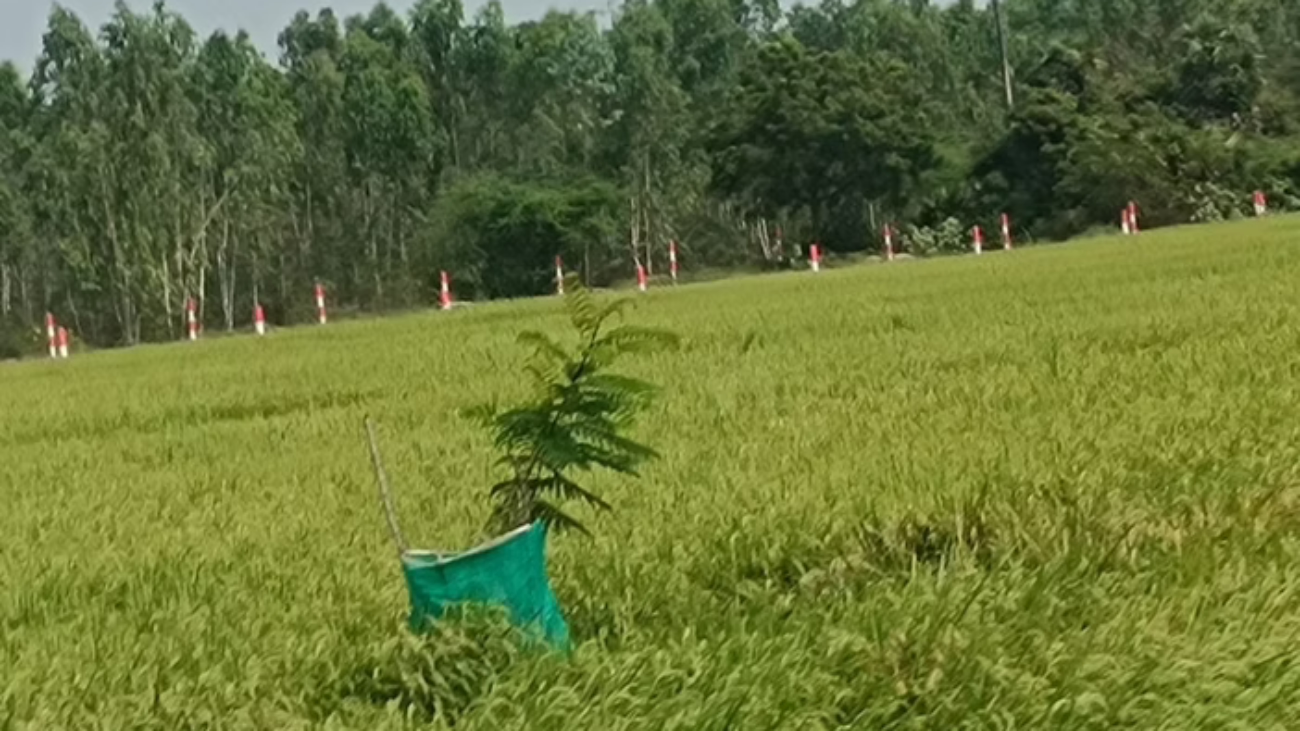
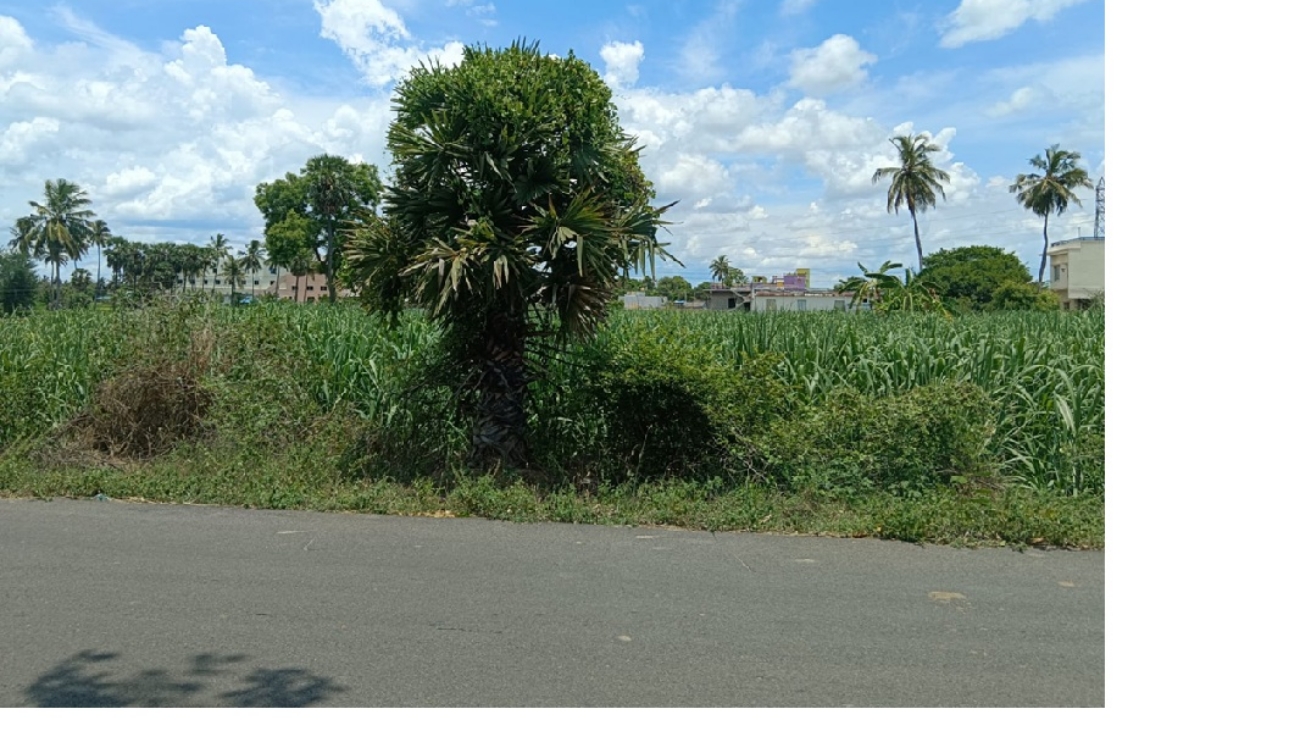
Typical Agricultural Field in Southern India

Tiruvannamalai: Growth Without Employment Transformation

In Tiruvannamalai district, I visited several areas where housing conditions were poor and informal settlements were widespread. I have visited many households here since 2023. These conditions are now changing, but not in a way that fundamentally transforms employment.

Capital inflows from the neighboring State of Andhra Pradesh have fueled a real estate boom and expanded services such as lodging, restaurants, and transport. While this has altered the physical landscape and raised asset values, it has not created stable non-farm jobs at scale. Employment remains largely informal, seasonal, and low-paid, leaving the underlying agricultural labor trap intact.

Although Tiruvannamalai exhibits a relatively high services share in district GDP, the income generated by this sector accrues from a narrow group of asset owners, intermediaries, and rent-seekers. As a result, per capita income figures overstate the extent of broad-based welfare. A large share of the workforce remains engaged in low-wage service activities with limited income security.

Kallakurichi: Agricultural Dependence, Weaker Services

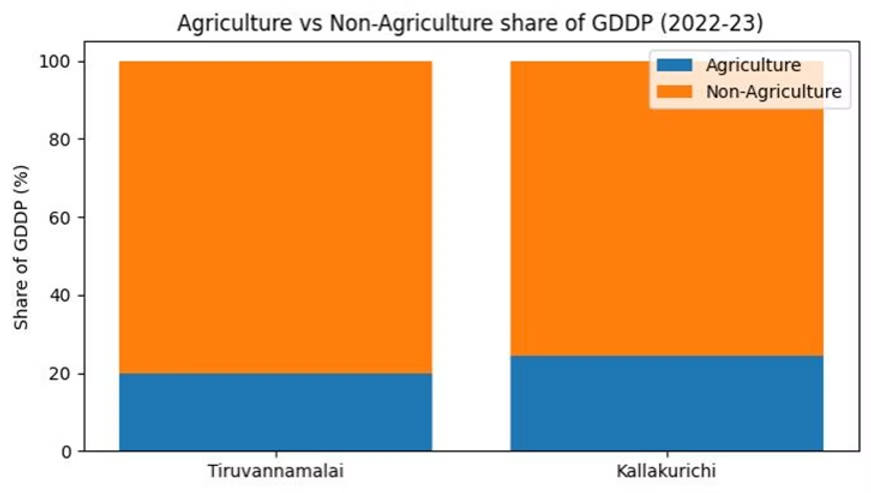
In Kallakurichi district, the structural imbalance is even more pronounced. Agriculture accounts for a noticeably larger share of district GDP than in Tiruvannamalai, while the services share is correspondingly lower. District level GDDP and sectoral composition data from the Department of Economics and Statistics, Government of Tamil Nadu (2022–23 provisional, current prices), show that agriculture contributes roughly one-fifth of district output, even as a disproportionately large share of the workforce continues to depend on this type of work for income.

This high dependence on agriculture results in extremely low output per worker, widespread disguised unemployment, and chronically weak incomes. Growth exists, but it is concentrated in activities that do not absorb labor effectively.

Gross Domestic District Product Comparison of Agriculture versus Non-Agriculture

Core Problem: Growth Composition, Not Growth Absence

The core structural problem in districts like Tiruvannamalai and Kallakurichi is therefore not the absence of growth, but its composition. Too many workers remain tied to a sector that generates relatively little value. Services and industry have expanded, but not in a manner that absorbs surplus rural labor at scale.

As long as labor remains trapped in low productivity farming, while non-farm sectors fail to provide stable employment opportunities, headline income measures will continue to overstate actual welfare.

Consumption Consequences of Agricultural Dependence

This imbalance has direct consequences for consumption. Towns that depend heavily on agriculture tend to exhibit weak and uneven consumption patterns. Farm incomes are inherently volatile, driven by fluctuations in commodity prices, weather conditions, and market access. In many cases, farmers are forced to sell produce at a discount, incur outright losses, or delay sales under distressing conditions. Only intermittently do they realize meaningful profits.

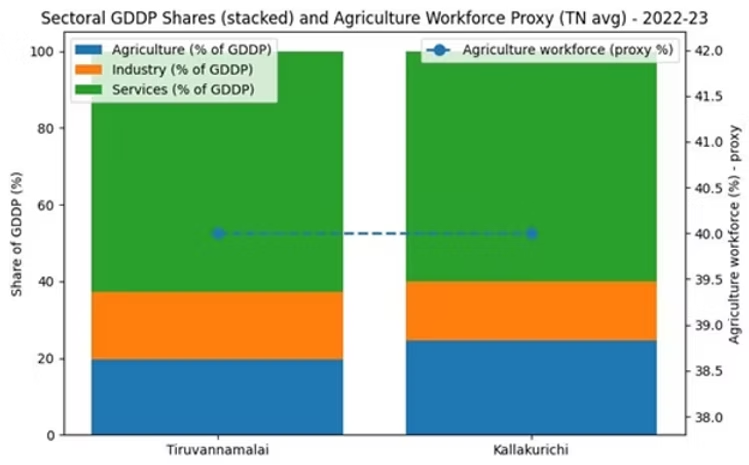
Chart Comparing Towns of Tiruvannamalai and Kallakurichi in Tamil Nadu

This volatility translates into cautious spending behavior. Consumption rises in short bursts following a good season, but thereafter contracts sharply. This pattern is clearly visible in districts such as Tiruvannamalai and Kallakurichi, where agricultural dependence suppresses steady consumption despite occasional income windfalls.

The same dynamic is visible at State level. Across Tamil Nadu, agriculture employs over 40 percent of the labor force, while contributing a far smaller share of output. The statistics exhibited at the district level are therefore not an isolated phenomenon, but a systemic one.

National Structural Imbalance

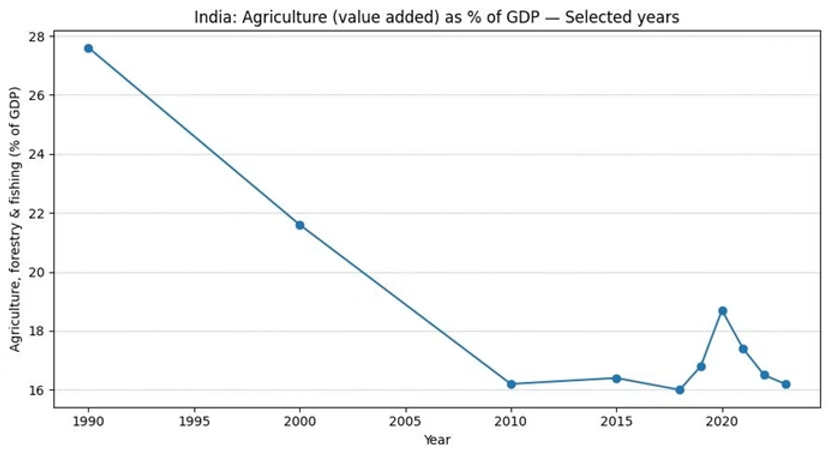
Zooming out further, what is visible in Tiruvannamalai and Kallakurichi mirrors India’s broader structural imbalance. Nationally, agriculture employs close to half the workforce, but contributes less than a fifth of GDP. This gap suppresses incomes, weakens consumption, and reflects India’s limited success in industrializing at scale.

India Agriculture as Percent of GDP from 1990s into 2020s

Services have grown rapidly, but they remain reliant on capital and skill intensive, and unable to absorb surplus rural labor in large numbers. As a result, economic growth continues without broad based prosperity. Headline GDP numbers improve, but the underlying structure remains fragile.

India’s central economic scrouge is growth without labor mobility. Until workers move out of low productivity agriculture jobs and into stable non-farm employment at scale, income volatility and weak consumption will remain defining features of the economy. Regardless of how strong the headline growth numbers appear, a national challenge remains.

Copy and paste the text from AMT that you want to share

postN104

India Insider: Weakening the MNREGA Employment Guarantees

India Insider: Weakening the MNREGA Employment Guarantees

When the Mahatma Gandhi National Rural Employment Guarantee Act was enacted in 2005, it was conceived as more than a poverty-alleviation program. It was a direct intervention in India’s rural labor market. By guaranteeing employment on demand at a statutory wage, MNREGA established what the agrarian economy had long lacked – a credible wage floor.

For India, where nearly half the workforce remains trapped in agriculture and align activities often involuntarily, this mattered enormously. Rural labor markets are structurally weak in India. They are seasonal, informal, and dominated by excess labor. In such conditions, wages do not rise organically. MNREGA altered that balance by providing an outside option. A worker who could demand public employment could also refuse exploitative private wages. That is why rural real wages rose meaningfully during the first decade of MNREGA’s implementation.

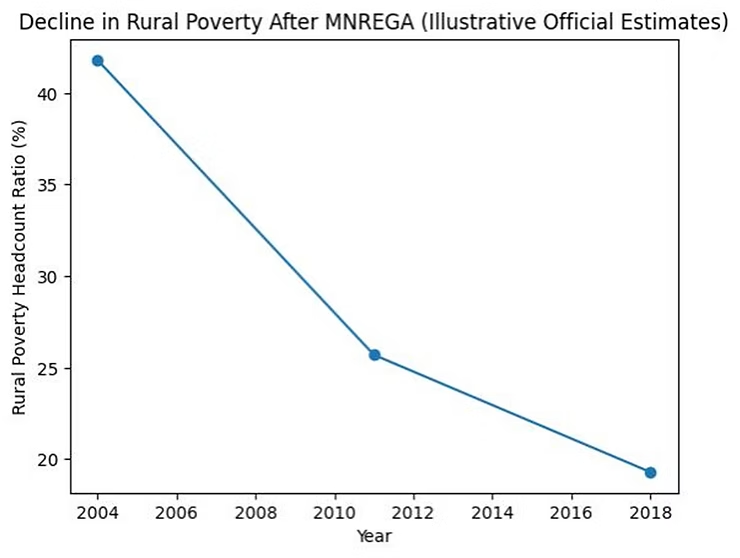
MNREGA Rural Poverty Data from 2005 to 2018

The figure above illustrates the broader context in which MNREGA operated. Rural poverty declined sharply after 2005, falling from over 40 per cent in the mid 2000s to below 20 per cent by the late 2010s. While this decline reflects multiple forces like overall growth, structural change, and social programs, micro-level studies consistently find that districts and households with higher exposure to MNREGA experienced significantly larger gains in consumption and poverty reduction compared to areas where the program was weakly implemented.

The scheme also acted as a counter cyclical stabilizer. During droughts, agrarian distress, or macro slowdowns, MNREGA expanded automatically, injecting purchasing power into rural areas. This supported consumption, reduced distress migration, and softened downturns. In macroeconomic terms, MNREGA transferred income to households with the highest marginal propensity to consume, precisely where fiscal multipliers are strongest.

Despite its strong design, MNREGA has long suffered from implementation weaknesses. Chronic delays in wage payments undermined its credibility as a reliable source of income. Corruption has generated fake muster rolls, ghost workers, inflated material bills, and substandard asset creation. Social audits which meant to be the backbone of accountability were uneven across states while effective in some.

Technological reforms such as Aadhaar linked payments, and digital attendance reduced certain leakages but introduced new problems, including worker exclusion, authentication failures, and further payment delays. The result was not only fiscal leakage, but a weakening of MNREGA’s core economic function which had promised a dependable wage floor.

Yet instead of fixing these implementation failures, a new policy chose to change the promise itself. In December 2025, this shift became explicit with the passage of the VB-G RAM G Act, 2025 in Parliament, replacing the Mahatma Gandhi National Rural Employment Guarantee Act with a redesigned rural jobs framework.

Under MNREGA, employment was a legal right, if work was demanded, it had to be provided. The new framework reverses this logic altogether. Employment now depends on budget limits, administrative approvals, and notifications from the center, not on demand. What was once automatic is now conditional.

This change also quietly shifts risk onto States. With limited revenue powers and tight borrowing limits, States responded by rationing work and delaying payments. As a result, the employment guarantee weakens, rural workers lose bargaining power, and wages come under pressure. What appears as fiscal control for the central government to rein on capital expenditures on paper thus becomes wage suppression in practice for rural workers.

Almost half of India’s workforce, around 46 per cent, still depends on agriculture and allied rural activities for employment, even though agriculture produces a much smaller share of the country’s total output. This gap between employment and output signals very low productivity in rural work and a large pool of surplus labor. For most of these workers, moving out of agriculture is difficult. They face barriers because of a lack of skills, weak urban job absorption, high migration costs, and social constraints. As a result, the ability to bargain for higher wages is structurally limited.

In such an economy, rural labor markets tend not to be competitive. Employers often face many workers competing for few jobs, while workers have few alternative sources of income. This creates conditions close to monopsony, where employers have disproportionate power in setting wages. In the absence of an institutional counterweight, wages tend to settle near subsistence levels rather than reflecting productivity or broader economic growth.

The consequences are visible in wage outcomes. Daily wages in rural areas stagnate or decline in real terms, failing to keep pace with inflation. Over time, this suppresses labor incomes relative to profits and rents, leading to a further decline in labor’s share of national income. In effect, weakening the employment guarantee shifts income distribution away from workers and back toward employers, reinforcing existing structural inequalities in the economy.

Copy and paste the text from AMT that you want to share

post269

India Insider: Labor Productivity and Rising Household Debt

India Insider: Labor Productivity and Rising Household Debt

The desire for India to become a fast growing economy can be alluring, but without proper distribution of income and improved labor codes, this remains a major challenge to achieve. During coronavirus, acute problems were faced by those working in private enterprises. While some businesses and institutions supported their employees, many people were left behind without social protective measures.

According to Business Line newspaper analysis, from July 2022 to June 2023, an average salaried Indian male made 20,666 Rupees ($236 USD) and a woman made 15,722 Rupees ( $180 USD) per month.

Experience tells us that lower salaries in the rural areas are pervasive. Many private sector nurses, schoolteachers, and other service workers earn less than the international poverty line of $3 per day (around 250 Rupees per current Forex). Sometimes due to extensive workforce supply, some educated people must work blue collar service jobs additionally to make their ends meet.

Agriculture and Low Productivity:

Wage disparity and underemployment exists rampantly. Half of India’s labor force works in agriculture, where productivity is poor. In agriculture, farmers are both producers and consumers. There are barriers in food supply and demand for agricultural products. Farmers need access to local markets where their buyers can afford to purchase their produce. Without solid markets or better road infrastructure to reach them, many rural areas have less incentive to improve productivity.

As a result, many farmers produce low volumes. This is also one of the reasons why New Delhi is reluctant to permit U.S imports of agricultural and dairy products. Smaller farmers cannot afford to invest in education, which hinders their efforts to move into industries with higher wages. Without increasing labor productivity and better opportunities, most of the population will continue to work in agriculture.

Stagnant Wages, Informal Work and Problems in Micro-Finance:

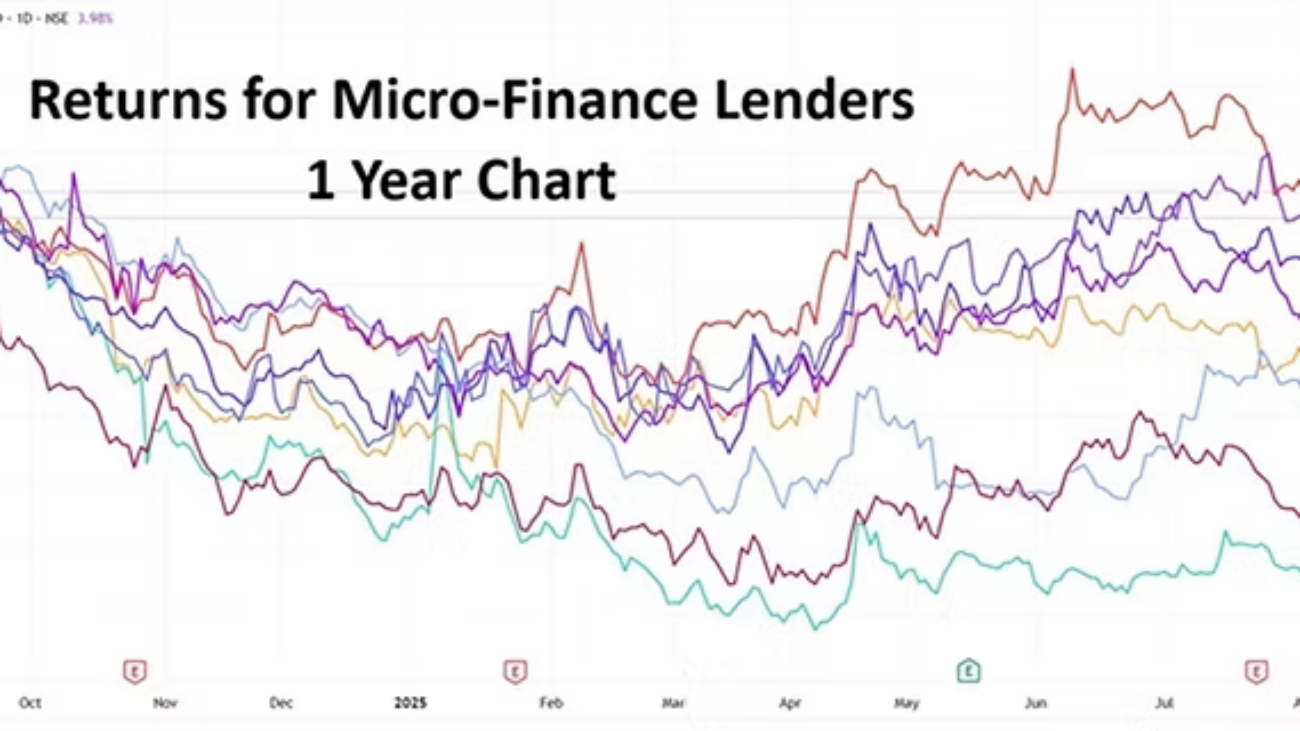
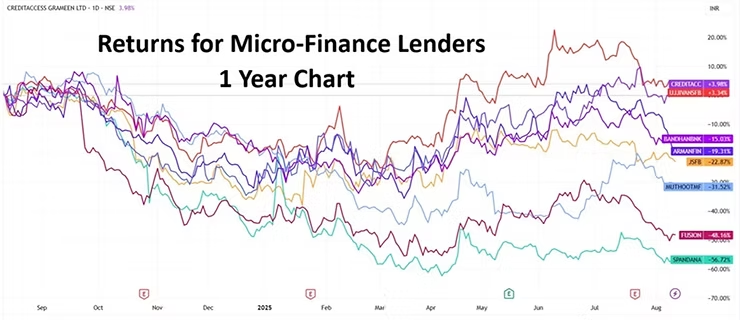
India’s Micro-Finance Lenders Culminative Returns Past Year

A large portion of the workforce is employed via informal and low-paying jobs. If wage growth does not keep pace with increased productivity, domestic consumption will remain weak, making the economy more fragile during global downturns. Drivers and gig workers provide some insights because of their inability to make ends meet. Minimum wage policies are lacking for many gig workers. Employees work higher hours in these enterprises. Yet another reason why Indian households prefer to prepare their children for government jobs.

India’s micro lending industry is under stress as delinquencies rise at an alarming pace. This has prompted the Reserve Bank of India to intervene and impose fines on lenders charging excessive interest rates. Loan disbursements shrank 13.5% year-on-year, and shares of some small finance banks have fallen, this as they have been forced to set aside higher provisions for bad loans.

Total loans outstanding in the industry are around 3.75 lakh crore rupees ($43 billion USD) in financial year 2025, with non-housing retail loans accounting for nearly 55% of total household debt. Small ticket loans were meant to ensure financial inclusion in underserved areas. The RBI defines microfinance as collateral-free loans to households with annual incomes of up to 3 lakh Rupees (approximately $3,400 USD).

But when wages do not rise in line with inflation, households begin to borrow to cover deficits, often at high interest rates. This creates risk for small finance banks when borrowers default, besides many consumers who are clearly struggling. A bank employee in Tamil Nadu has said loan disbursements are now scrutinized more closely, and applicants with monthly EMIs – equated monthly installments – above 10,000 Rupees ($115 USD) are no longer eligible for micro-loans.

Job creation in the Manufacturing:

Despite media portrayals of India’s manufacturing ascent, Harvard economist Dani Rodrik offered a compelling remark paraphrased here which points out obstacles ahead, ‘what made manufacturing a vehicle for transformational growth was its ability to generate productivity while drawing unskilled labor from traditional farming’. Rodrik seems to believe manufacturing remains a lower income sector in India due to its large work force and inability to transform efficiently, while also facing globalization problems from other Asian competitors.

The reason why manufacturing companies in India can pay lower salaries is because of high unemployment ratios and a steady supply of new graduates every year, making it easy to find new employees. Wages don’t see much improvement because workers are replaced easily. Many employees working in manufacturing actually have engineering and Masters’ degree backgrounds. Their average salary is around 15,000 Rupees a month ($170 USD), the same amount paid to low skilled employees who have technician diplomas.

India needs to work on improving core manufacturing capabilities, creating better infrastructure via land reforms and logistical capabilities. Implementing a fair minimum wage policy would also influence the economy via better household wages. Yes, inflation is a concern, but India’s aspiration to become a $10 trillion economy will remain hard to attain unless coordinated policy changes occur.

Notes: 1 USD = 87.5 Rupees

post266

India Insider: Manufacturing Strategy to Create Rural Jobs

India Insider: Manufacturing Strategy to Create Rural Jobs

Across much of India’s rural landscape, manufacturing remains scarce and finding a solution for this remains a priority. While some towns do have small scale industries that offer jobs, this is still limited. As of financial year 2023, agriculture accounts for only 16% of India’s GDP, down sharply from around 35% in the 1990s, due to a structural shift toward services and manufacturing.

A large share of rural families still depend on agriculture, often engaging in farming and irrigation with modern equipment. However, marketing their produce remains a persistent challenge. Meanwhile, many rural workers are engaged in low-wage trade and commerce, often in informal settings such as small shops and roadside businesses. These roles typically offer limited income and little upward mobility. Falling real wages have pushed many to migrate to India’s urban centers or venture overseas to Singapore, Malaysia, and the Gulf countries in search of better livelihoods, aided by favorable exchange rates.

Capitalism and Efficient Manufacturing

Adam Smith, in his seminal work The Wealth of Nations wrote that, ‘it is not by gold or silver, but by labor that all the wealth of nations is created’. This fundamental idea underpins the modern economic thought that wealth is not derived merely from money, but from the productive capacity of people.

When capital is invested in a capitalist enterprise, it generates profits for the owner, provides wages for employees, and delivers returns (such as dividends) for shareholders. But this cycle of value creation depends on active and efficient enterprise, particularly manufacturing which has been missing or underdeveloped in many parts of rural India.

Unlike countries such as the United States, where people readily relocate across States, India faces some unique challenges. Like the European Union, India is a union of diverse linguistic and cultural regions. It is uncommon for a small business owner from Himachal Pradesh to directly access markets in Tamil Nadu or Karnataka due to language barriers, cultural differences, and logistical constraints. These frictions further isolate rural producers from wider markets.

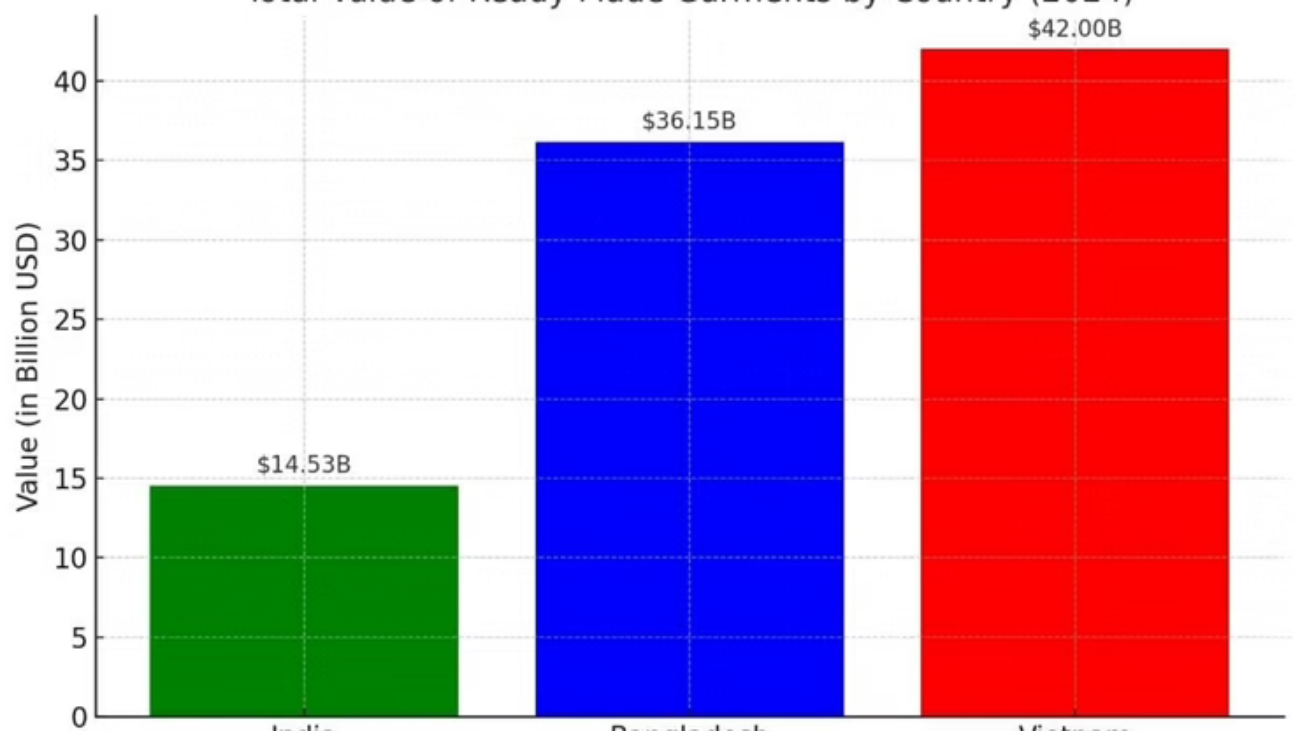
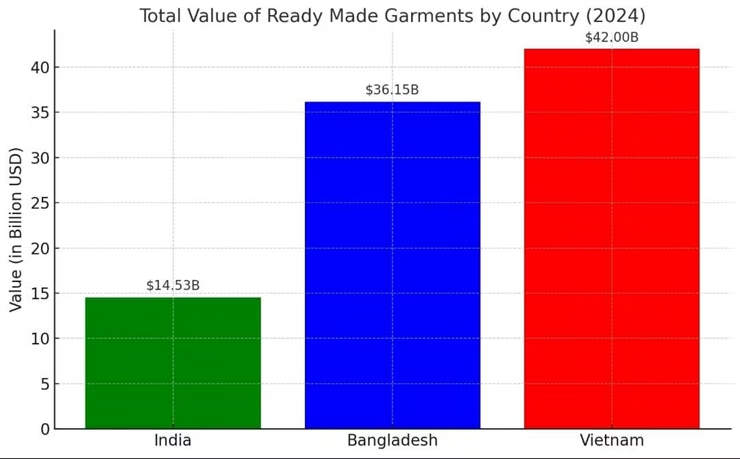
Garment Industry Values in India, Bangladesh and Vietnam

Strategic Solutions and the Role of State Governments

To revive rural economies, business people along with their state governments must identify and invest in strategic sectors that create jobs and add value. Kerala is a fine example: as one of India’s top spice-producing States, Kerala has the potential to establish local industries focused on spice processing, packaging, and export. Coordination between agriculture and manufacturing can generate employment, stimulate local economies, and enhance foreign exchange earnings.

Albert Hirschman, a development economist, highlighted this approach through his theory of unbalanced growth and economic integration. He argued that certain industries have strong reciprocal connections with other parts of the economy. By prioritizing sectors with good synergy potential, developing countries can achieve significant growth even with limited resources.

Growing competition from countries like Bangladesh and Vietnam which both enjoy favorable trade agreements do pose new challenges, this must be taken seriously by India and create a focus on forward looking international commerce. There will always be competition from distant enterprises and nations, this must be accepted and planned for via commercial insights.

Within India is Tiruppur, a city in Tamil Nadu, known as the ‘Manchester of South India’ due to its vibrant textile industry. The city has created an ecosystem of manufacturing that consistently offers higher real wages compared to other towns in the region. It has successfully shifted labor from agriculture to industry, thereby increasing productivity and income. It is a bright example and defines one way to make progress.

Protecting New Industries and Creation of Success

In his book How Rich Countries Got Rich and Why Poor Countries Stay Poor, economist Erik Reinert argues that nations develop not just by doing what they are currently good – such as agriculture or mining, but by nurturing industries that can become more productive long-term. Typically manufacturing and technology sectors lead to greater innovation and economic resilience.

Reinert provides numerous examples, like South Korea’s emerging growth in steel and its automotive industries, and Ireland’s rise in information technology where specific protections and support for young industries has led to long-term prosperity.

India’s rural transformation cannot rely on New Delhi alone. State governments along with business people must take the lead by identifying sectors that have the potential to foster high growth and employment. Helping to create local value chains, investing in infrastructure, training, and market access will build resilience in these communities. By encouraging small-scale manufacturing and leveraging regional strengths, the country’s rural areas can become engines of economic growth.