post42

Calendar this Week includes Debt Ceiling, Earnings and Jobs

Calendar this Week includes Debt Ceiling, Earnings and Jobs

Monday the 29th of May, Many banking holidays including in the U.S and U.K – traders choosing to participate in the markets should be aware that low transaction volumes can cause volatility due to imbalances. Be careful if you choose to trade on Monday.

Tuesday the 30th of May, U.S Debt Ceiling – talks and vote will be in focus. It appears an agreement may be in place, but financial institutions will certainly monitor the shenanigans from Washington, D.C. this week to see if a compromise can avert a crisis. Equity and Forex markets will respond to all developing news.

Tuesday the 30th of May, U.S CB Consumer Confidence – this survey of households in the States should be monitored. Spending remains strong in the U.S while manufacturing outlook appears nervous. The results may imply forward looking sentiment for U.S economy regarding consumption and could stir the markets slightly.
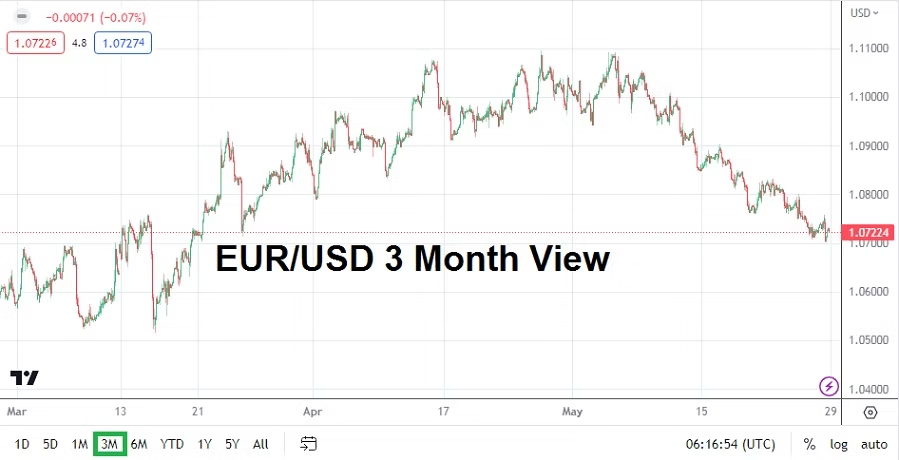
EUR/USD Three Month Chart as of 28 May 2023

Wednesday the 31st of May, Germany Preliminary CPI – inflation remains troubling in Europe and the German economy is seen as the linchpin. The result from the Consumer Price Index could rattle the EUR/USD a bit.

Thursday the 1st of June, China Caixin Manufacturing PMI – this Purchasing Managers Index from China will give some insight regarding the nation’s economic sentiment and its results will offer some clues regarding global demand for goods. Last month’s number was viewed as slightly negative.

Thursday the 1st of June, U.S ISM Manufacturing PMI – last week’s manufacturing and Core Durable Goods Orders numbers from the U.S were negative. While growth via the Prelim GDP came in slightly better this past Thursday, economic outlook remains skittish. Last month’s ISM data result was negative and this month’s forecast is not optimistic either.

Friday the 2nd of June, U.S Average Hourly Earnings and Non-Farm Employment Change – the results will shake the broad marketplace. Inflation via wages in the U.S remains a concern for the U.S Federal Reserve and the job market has appeared on the surface to remain rather strong statistically. A strong number from the Average Hourly Earnings could keep the Fed nervous and another hike on the 14th of June within their mindset.
post28

Gut Feeling about Fed June Hike, Perhaps Wrong

Gut Feeling about Fed June Hike, Perhaps Wrong

I have a distinct feeling the U.S Federal Reserve is going to suggest via their FOMC Statement tomorrow that another increase of the Federal Funds Rate is likely going to happen in June. I could definitely be wrong, but my gut instinct is rumbling.

Inflation Remains a Sincere Problem Per the Fed’s Thinking

Wage data demonstrated last Friday via U.S Personal Income that inflation remains stronger than expected. Yesterday’s ISM Manufacturing Prices reading also spiked to 53.2 versus the expectation of only 49.4. The increases shown within these economic reports will not please the Federal Reserve.

While a hike tomorrow is nearly a certainty, the Forex market remains rather unimpressed with the potential for an increase on the 14th of June. Behavioral sentiment has shown a rather polite USD actually losing momentum the past few days. Caution has seeped into the USD today, but are financial institutions too relaxed regarding a potential hike by the Fed in June?

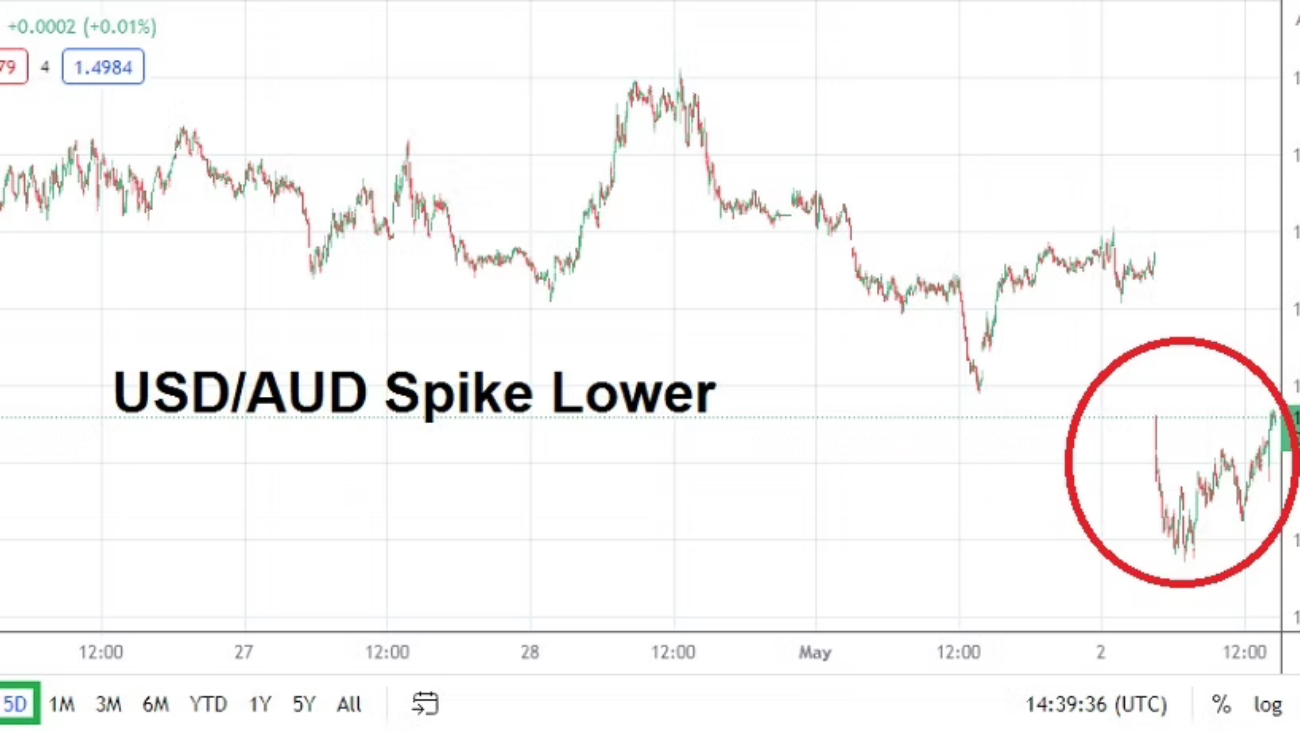
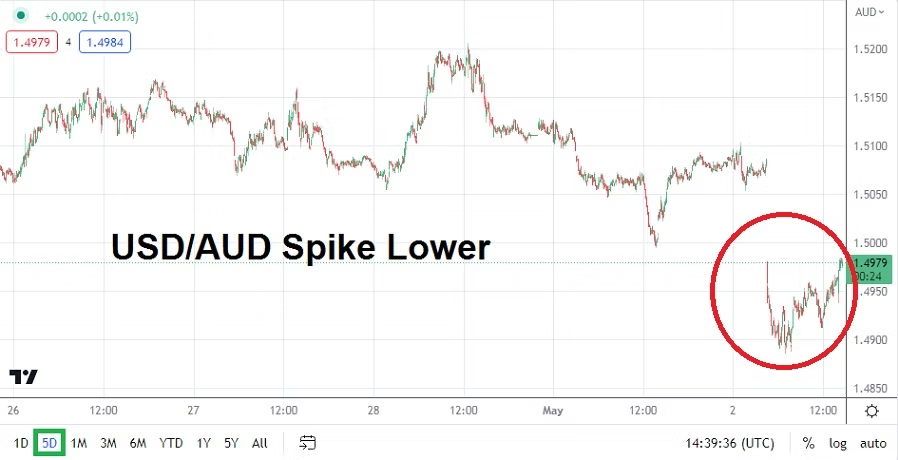
USD/AUD 5 Day Chart as of the 2nd May 2023

Reserve Bank of Australia’s Hike Earlier Today Caught Many Folks Unready

The Reserve Bank of Australia’s hike today, may be another sign the U.S Fed will not only hike tomorrow, but in June as well. What are the chances the Federal Reserve hinted strongly to the RBA, that if they wanted to protect the value of the AUD that an increase would be justified in order to guard against the Fed’s rhetoric to come? The Australian hike caught a lot of financial houses and day traders unprepared as the USD/AUD spiked lower this morning, for proof of the surprise simply look at the gap created downward today on the five day chart of the currency pair.

The RBA hiked their Cash Rate by 0.25% from 3.60% to 3.85% while sighting stubborn inflation as a main cause. Nothing is certain, but if the Federal Reserve’s FOMC Statement is rather strong tomorrow and says it will still consider a June increase perhaps we should not be shocked. Central banks do share information with one another.

Early February’s Rhetoric from the Fed wasn’t Treated Seriously at First Glance

Coincidentally, the Fed’s increase in early February was two days before the Non-Farm Employment Change and Average Hourly Earnings were reported on the 3rd of February. On the 1st of February the Federal Reserve warned that inflation remained stubborn, but the market didn’t take their words too seriously as the USD traded rather politely following the anticipated interest rate hike.

However, the USD gained violently the day after when Fed officials began to reiterate the strong tone from Fed Chairman Jerome Powell from the day before. And then stronger than expected jobs numbers followed on Friday. Note, that the Non-Farm Employment Change and Average Hourly Earnings will be published this coming Friday.

The Federal Reserve remains in a difficult position, a hike tomorrow will bring the Federal Funds Rate up to 5.25%, a June hike may not be welcomed by the broad financial markets, particularly equities in the near-term, but people may want to consider the possibility of it happening. Day traders should brace for strong price velocity developing. Tomorrow’s Forex action will be violent for speculators who are not ready, and if the Fed suggests a potential hike to 5.50% in June perhaps we should not be stunned.

post27

Risk Events Pose Danger this Week

Risk Events Pose Danger this Week

Monday 1st of May, U.S ISM Manufacturing PMI – weaker than expected Advance GDP results last week make this report of keen interest for investors regarding U.S growth (or recessionary) prospects.

Tuesday 2nd of May, Australia RBA Cash Rate – Reserve Bank of Australia is expected to hold the line regarding borrowing.

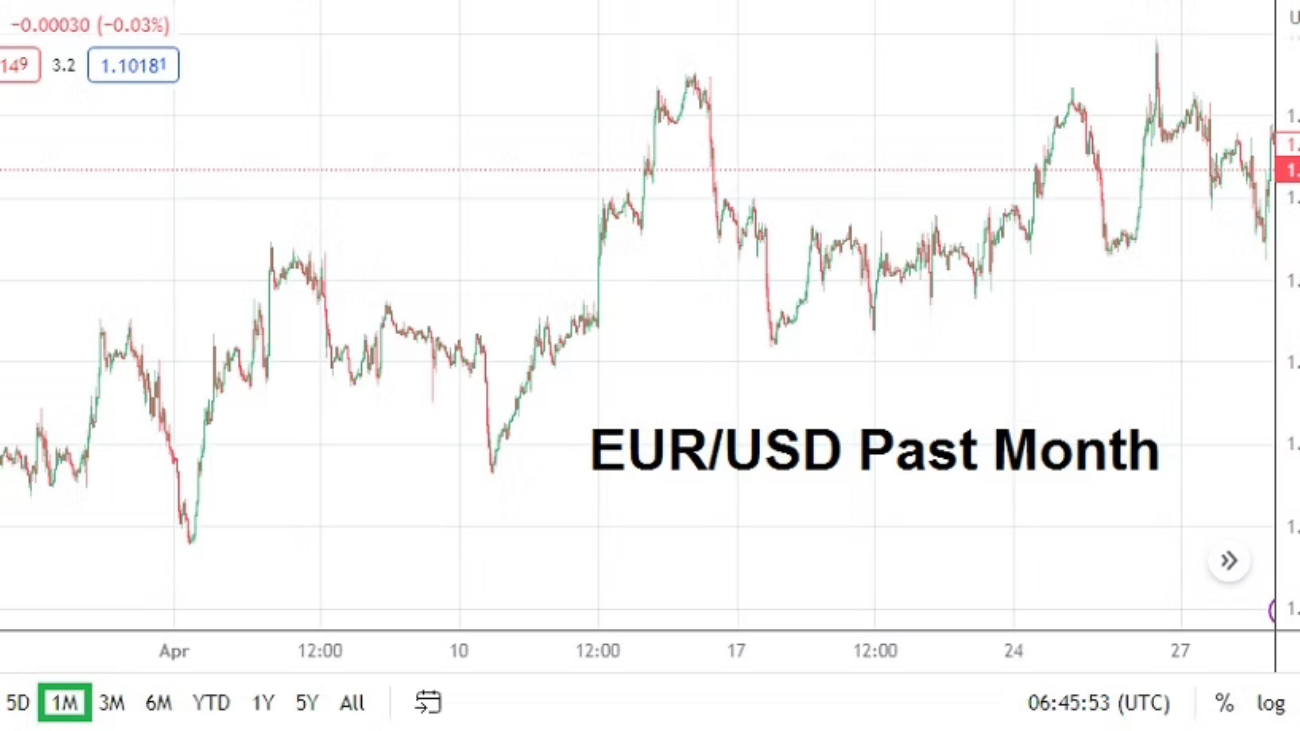
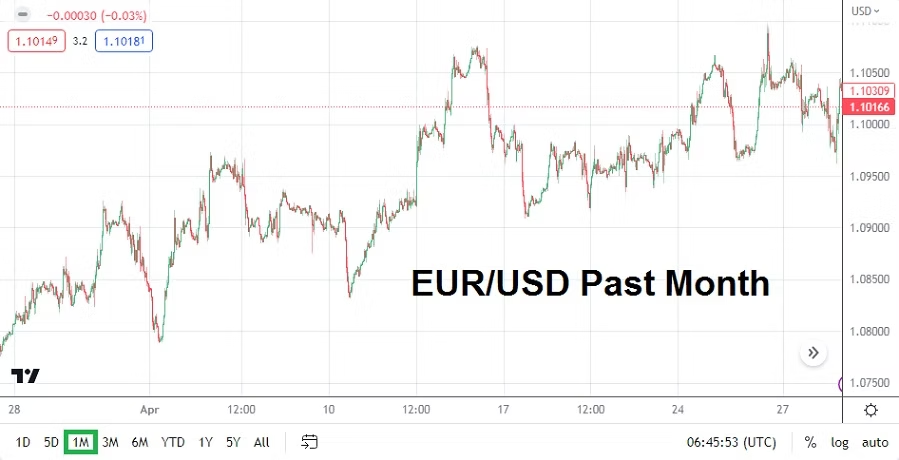
EUR/USD 1 Month Chart as of 30th April

Wednesday 3rd of May, U.S Federal Reserve FOMC Statement and Federal Funds Rate – U.S central bank expected to raise by another 0.25% making key lending mark 5.25%. This number has been digested into the broad markets, what investors want to know is the Fed’s June outlook. Federal Reserve outlook and FOMC Press Conference will move Forex and equities globally. Traders remains suspicious regarding another hike in June.

Thursday 4th of May, E.U ECB Main Refinancing Rate – European Central Bank expected to hike by another 0.25%. Anything different would be a surprise. ECB Press Conference should be rather tranquil.

Friday 5th of May, U.S Non-Farm Employment Change and Average Hourly Earnings – while jobs numbers are always of interest, it is the earnings statistics which should be watched and will give insight regarding inflation and potential actions about Fed’s June considerations.

post17

Angry Voters and the Federal Reserve

Angry Voters and the Federal Reserve

Federal Reserve Chairman Jerome Powell is scheduled to testify before the U.S Senate tomorrow. Certainly we are going to hear the words inflation and growth mentioned, this as the Fed Chairman speaks about monetary policy and the trajectory for the U.S central bank to continue raising interest rates over the mid-term.

Via prices in the Forex market since the start of February, financial houses have likely priced in two additional interest rate hikes from the U.S central bank into the USD, one of them being a quarter of a point increase coming on the 22nd of March. The USD has been mostly stronger across the board the past four weeks. This week’s coming Non-Farm Employment Change numbers and Average Hourly Earnings data results should be monitored on Friday.

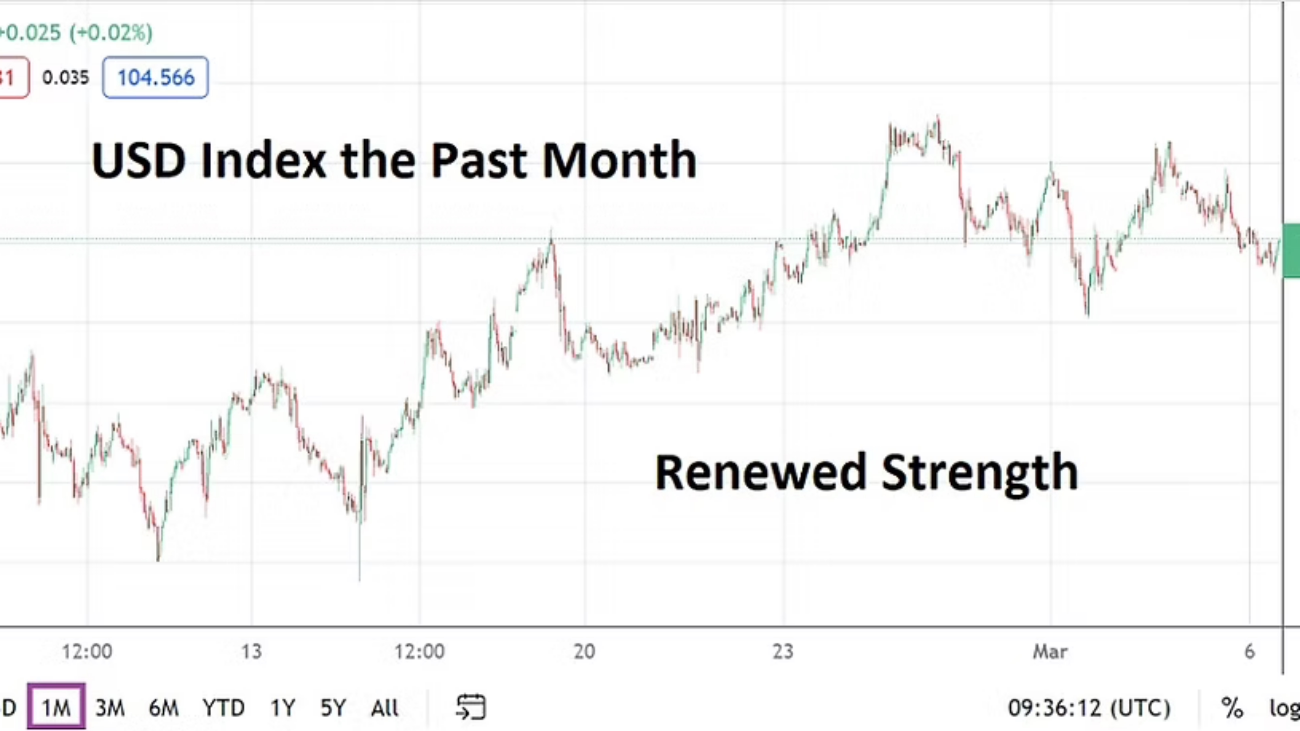
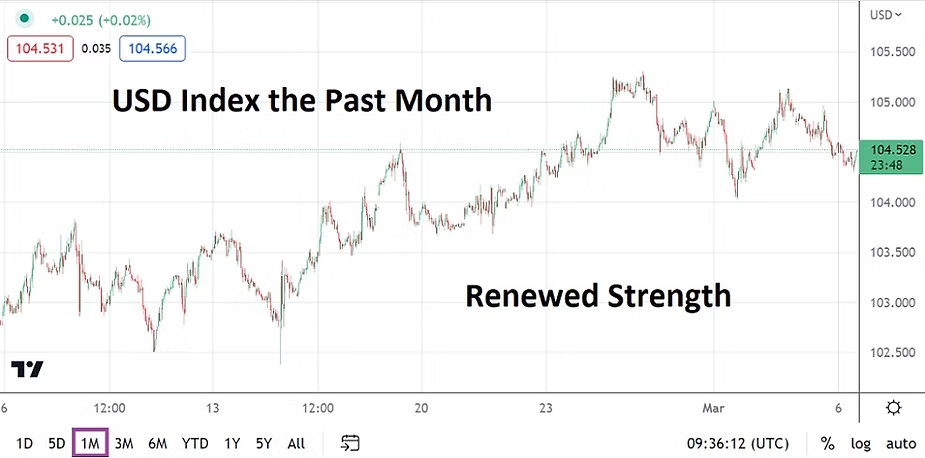
USD Index One Month Chart

While financial houses may have accepted the interest rates to come, this doesn’t change the rather complex economic data in the U.S which is demonstrating rather stubborn inflation, while also showing growth is not slowing down as much as has been anticipated. GDP numbers reported recently from the States showed only a slight decrease.

  • How much more can the U.S Federal Reserve increase interest rates over the next six months without making the USD too strong?

  • At what point will the Fed become less aggressive?

  • While an additional .50% has been ‘accepted’ by financial institutions, will the Fed bring the lending rate to 5.50%?

  • High inflation and limited growth could result in political quicksand for many elected officials.

The U.S Federal Reserve is going to get pressure from both sides of the aisle in Washington D.C.. Traders should not discount their perceptions that elected officials are starting to consider the ramifications of the coming elections in a year and half, because this will affect behavioral sentiment in the markets. Neither Democrats or Republicans will be happy if inflation remains a problem going into the vote. Rising costs equal less money in the bank accounts of American voters.

The U.S public has a history of voting via sentiment generated from their wallets and the power to consume. Prices that feel like they are out of control will win no friends. While energy prices seem to have calmed down in the headlines, energy costs remain a risk and concern for manufacturers worldwide. The inability to save money for individuals, and lack of profits for corporations makes for potentially angry voting results.

There is an additional problem lurking. The strong USD driven by the Federal Reserve’s increased borrowing costs, the Federal Funds Rate, has weakened currencies across the world. Vulnerable currencies have spurred inflation in many nations which are producers of goods that global consumers buy, these rising prices are being imported into the U.S economy.

As much as international economic integration helps the world, the rise of coronavirus and its knock-on affects via costs were not anticipated enough, causing weaknesses to be exposed. The U.S attempted to save its skin economically by creating a massive amount of stimulus, which certainly fueled domestic inflation. The U.S might have saved the American public in the short-term, but the government faces a long climb upwards to fix the problems overspending has caused.

The rising costs of logistics and the spotty supply of commodities internationally generated higher prices in the aftermath of coronavirus. Commodity prices have become more tranquil, but the costs of production has not eased because weaker currencies globally are hurting producers who need to use the USD to purchase resources. The U.S Federal Reserve’s attempt to tackle inflation with higher interest rates, has fueled ‘import’ inflation. This is not an easy problem to solve.

The Fed will not say in public they want the U.S economy to slow down, this acknowledgement would costs jobs which rely on political backing. The White House certainly doesn’t want the economy to suffer as it prepares for an election within a year and a half, but quietly officials likely accept slower growth and perhaps recession may become inevitable. Both the Fed and elected officials are performing a delicate dance that may be interrupted any moment.

The Fed doesn’t want us to remember they said inflation would prove transitory almost two years ago. The Fed needs to fight rising costs certainly, but very carefully. The desire to weaken inflation is correct but a dangerous balancing act, because the USD remains the global reserve currency.