postN101

Anonymous Kingdom: Bitcoin’s Lack of Transparency is Supreme

Anonymous Kingdom: Bitcoin's Lack of Transparency is Supreme

Bitcoin has fallen below the 40,000.00 USD price level today, and after penetrating the depth of 39,500.00 USD has shown additional velocity lower. Bitcoin is now testing support near the 38,850.00 ratio, a value it last tested on the 2nd of December.

Influencers will likely urge their fanbases to look at six-month charts to understand Bitcoin is still within the upper levels of its price range, this because a look at a three-month chart isn’t as cheerful. The speculative asset remains a dangerous place for day traders to participate who do not have legitimate insights regarding Bitcoin.

BTC/USD Six Month Chart as of 23rd January 2024

The question that some are likely starting to ask is what happened to the bullish rush in Bitcoin that was evangelized as a source of inspiration when the U.S Bitcoin ETFs materialized? FOMO (fear of missing out) again became an ‘advert’ for Bitcoin. True patience is needed when investing in financial assets, but day traders aren’t investing they are speculating and BTC/USD is likely costing them plenty of money.

It has been publicized that BlackRock’s spot Bitcoin ETF now holds over 1 billion USD in funds. However, while BlackRock and other ETFs have added to their assets under management of Bitcoin, what are short positions within the ETFs regarding size? This number is elusive, but the ability to sell ETF ‘share’ value within the new Bitcoin funds being offered is said to exist.

Bitcoin’s open interest numbers within the CME’s future contracts was nearly 26,669 positions on the 11th of January, yesterday’s reporting via the Chicago Mercantile Exchange was 22,250 open positions. While day traders may be speculating on the price of BTC/USD via their brokers’ trading platforms, they have to understand that their wagers are not affecting the real market price. The big players within the Bitcoin market do not operate on brokerage platforms which are merely offering CFD positions. The large traders are using cryptocurrency exchanges, futures and options via the CME, and now ETF positions.

Unless a trader is actively selling Bitcoin on a selected cryptocurrency exchange – and likely being asked to open a margin account – and thus opening the door to leverage and volatility, which it can be argued is designed to knock you out of the positions. You are going to find it difficult to actually sell ‘physical’ Bitcoin via short positions that are ‘manipulating’ the cash/spot market.

Bitcoin is a playground for sophisticated traders with plenty of cash to speculate and will continue to produce a world of extreme price volatility. On the 11th of January the price of Bitcoin jumped towards the 49,000.00 mark before declining. Bitcoin’s high early this morning was around the 40,150.00 ratio before stumbling the past handful of hours. Note, that open interest was at its highest on the 11th of January via CME futures trading information.

If you want to speculate (bet) on the value of Bitcoin as a day trader you should understand that you are participating in a marketplace that still doesn’t have the best of transparency. Yes, in most assets day traders are always competing against complex dynamics in which they have no control. However, speculating on BTC/USD is still being done almost blindfolded because of the lack of insights that is part of Bitcoin’s anonymous allure that many of its proponents love. We are still a distance away from transparency within the world of Bitcoin.

If traders can get access to volumes data – and the size of long and short positions being placed within the crypto exchanges they are using that helps. But because Bitcoin trading is still unregulated, and since there are many crypto exchanges operating you will only be getting small bits of information. The lack of information should worry day traders and serve as a caution sign.
postN27.1

Risk Friday: Fear is a Terrible Thing to Waste

Risk Friday: Fear is a Terrible Thing to Waste

Behavioral sentiment in the broad markets took a turn for the worse yesterday among many major equity indices. This as financial institutions seemingly came to the short-term conclusion the Federal Reserve may actually have to raise interest rates again on the 26th of July, and possibly beyond. Meaning, the Fed might actually back up what it has been saying.

Yes, investors have been warned many times already by some analysts that the handwriting was on the wall regarding additional increases to the Federal Funds Rate, but it seems a fear of losing out has kept many market participants actively running forward with blinders on not cognizant of the Fed’s rhetoric.

Day traders should always be mindful of their emotions. While it is not good to trade based on emotions when involved in an active position, intuition and gut instinct sometimes can save you money when you decide to simply sit on the sidelines and watch the market action instead of participating. In other words, if you are nervous and your instinct is bothering you – do not attempt to enter the trade.

U.S Data Remains Rather Strong even as Inflation Boils

Yesterday’s better than expected jobs report via ADP helped create sparks early regarding U.S economic data continuing to show it is robust, but the ISM Services PMI threw gasoline onto the fire with a much better result of 53.9 compared to the estimated reading of only 51.3. While inflation simmers in the U.S, signs of limited growth abound too making stagflation a real danger.

Investors can now attain a yield around 4.995% on 2-year U.S government Treasuries. A gain of nearly 5% that is almost assured with very little costs regarding commission rates needing to be spent, looks like a solid short-term investment to many. Equity markets have a reason to feel spooked. If the U.S Fed raises the Federal Funds Rate which is now 5.25% to 5.50% at the end of July, and at the same time continues to speak in an aggressive manner about other potential hikes later this year, summer may lose its sense of tranquility for financial institutions.

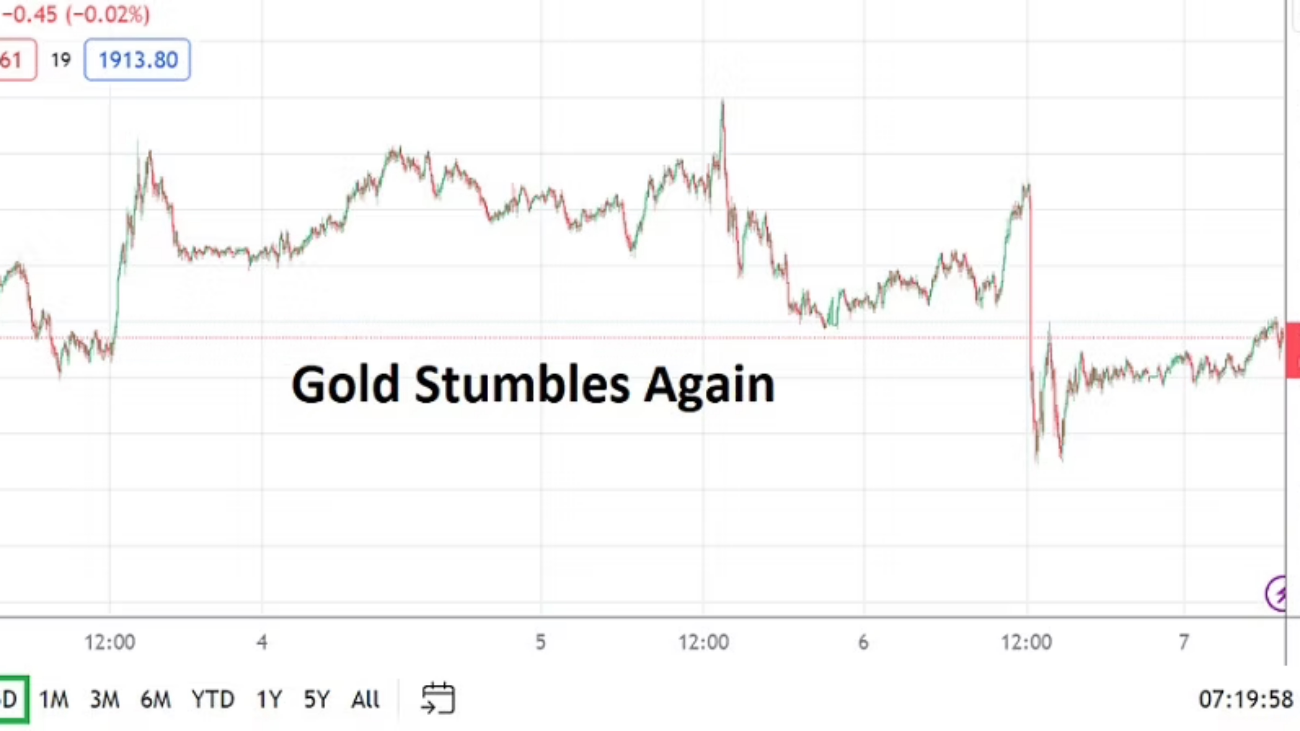
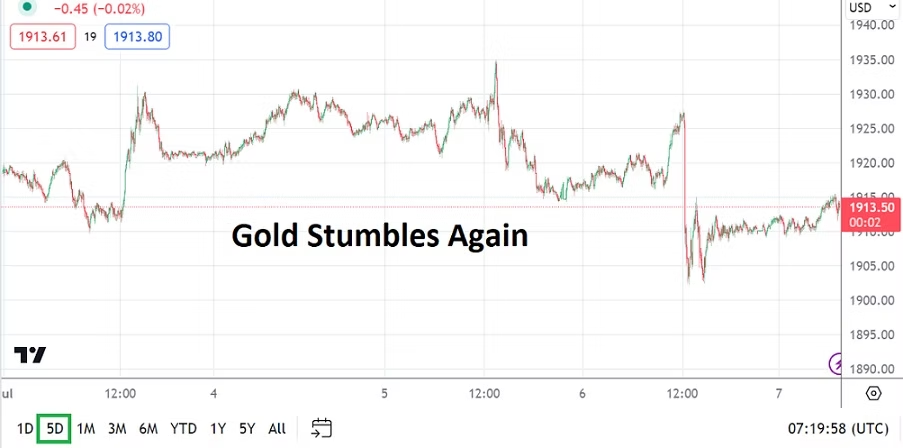
Gold Five Day Chart as of 7th July 2023

Gold which was trading at nearly 1925.00 USD yesterday, suddenly fell to around the 1900.00 briefly in the wake of the better U.S economic data, showing investors are worried the USD has some additional strength to display potentially. Again, the results of intraday gyrations may not mean a lot to mid and long-term investors, but day traders speculating on the outcome of quick hitting results frequently get hurt by the bursts of volatile storms.

U.S Official Jobs Numbers Today and Anticipation

Adding another dose of intrigue to the day are the upcoming official jobs numbers from the U.S, including the Non-Farm Employment Change and the Average Hourly Earnings reports. The inflation data via the earnings statistics are anticipated to show a gain of 0.3%, if for some reason it comes in stronger than expected this could create more fireworks. Having said that, the Wall Street Journal reported yesterday that Americans appear to have stopped quitting their jobs in order to switch to similar competitive positions as much as they had been the past couple of years. Perhaps this signals wages are starting to cool or least will in the near-term.

Let’s also remember that yesterday’s selloff in equities may have been anticipating better Non-Farm Employment Change results today based on the ADP outcome Thursday, and other solid U.S data before like last week’s GDP gains. Day traders betting on quick hitting CFDs via their brokerage platforms should be careful today and listen to news regarding the U.S bonds market. Inexperienced speculators should try to understand the adage – buy the rumor and sell the fact. Meaning ‘smart money’ often acts before others and takes advantage of their outlooks regarding data.

Quick Warning on Binance and Cryptocurrencies for Gamblers

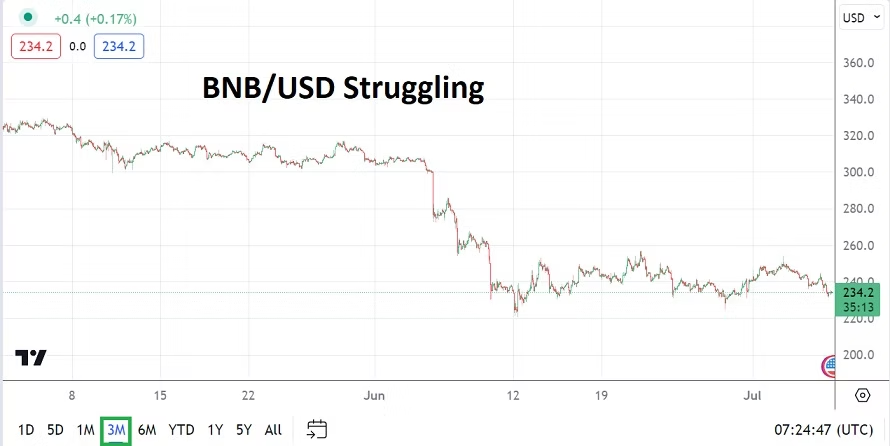
BNB/USD Three Month Chart as of 7th July 202

In a non-related subject, cryptocurrency traders seem to remain rather steady but should be nervous – if anyone is actually really trying to speculate in this endeavor besides Larry Fink of BlackRock currently, news regarding Binance remains troubling on the surface as legal clouds grow. Folks involved with the BNB coin should be careful. As one of the most ‘important’ crypto exchanges Binance’s legal problems moving forward could affect the prices of cryptocurrencies significantly. As of this writing BNB/USD is at nearly 233.00, and it should be noted Tether’s USDT appears to remain rather solid for the moment at 1.00. A look at the current three month chart of BNB/USD highlights its latest value struggles.

post30

Pay Attention to Mid-Size Banking Noise

Pay Attention to Mid-Size Banking Noise

About a week and a half ago the U.S Federal Reserve ‘admitted’ they made a mistake regarding their oversight of Silicon Valley Bank. In essence, the Fed used the sports phrase that sprung to life in the early 2000’s by baseball players who said, “my bad”, as if by admitting when they made a mental error on the field it would soon be forgiven. “What a good guy”, some folks would say as a player took responsibility, but their team would lose the game.

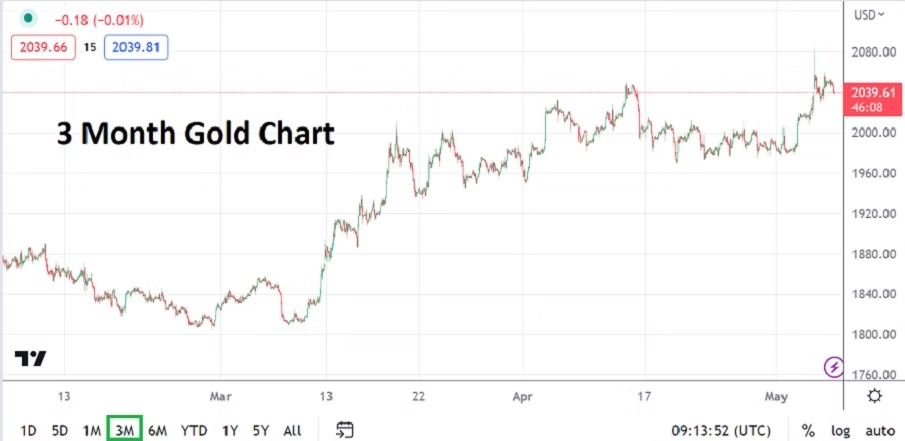
Gold 3 month chart as of 5th May 2023

The question for the Fed is what will they say when other so-called mid-size and smaller banks start to crumble from duress? The Federal Funds Rate was increased again this week by an expected 0.25% and the corporate banking sector in the U.S is under strain. Many banks are seeing share values on Wall Street disappear as they watch their trading screens with alarm.

Let’s not get caught up in hyperbole, or scare mongering, but these banks and the Federal Reserve have simply proven again they have no real grasp regarding risk analysis and what to do when the proverbial ‘fluff’ hits the fan. It is easy to point fingers now, yes, but the writing has been on the wall. It is much easier to make money for a bank when money is cheap. Little to no interest rates allowed banks to be speculative – compared to an environment when the lending rate is high and folks do not borrow, or pay back slowly. Deposits are also dwindling because bonds and other assets have become attractive for ‘clients’ who want to park their money elsewhere to earn better returns. The middle class and lower class are under pressure and small businesses are too as mid-size banks get nervous.

In the FOMC Statement this week which was somehow a unanimous decision – no dissension is a bad sign ladies and gentlemen – the Fed stated “The U.S. banking system is sound and resilient. Tighter credit conditions for households and businesses are likely to weigh on economic activity, hiring, and inflation…..” However, they also pointed out that inflation remains ‘elevated’. And let’s dissect the banking is sound statement, the Federal Reserve did not elaborate. They surely cannot mean the mid-size and smaller banking sector which is losing value almost daily because of struggling corporate share values are sturdy. Financial houses of various types are clearly betting these banks will come under immense weight because interest rates remain high.

Oh, and borrowing costs can still go higher, because let’s face it, inflation is not going away soon. The Fed has helped ramp up inflation by creating ‘import inflation’ as they have ‘killed’ foreign currencies values. If you are a fan of body language watch Fed Chairman Jerome Powell answer questions during the Fed Press Conference from this Wednesday the 3rd of May, when pushed on details regarding the mid-size banking sector and the future of interest rates. He didn’t put his hand up in the air and say, “my bad”, but it would not have been surprising, however it did look like he wanted to walk off of the field. The stadium packed with depositors within mid-sized and smaller banks should be prepared to show their disdain. Middle America should be unwilling to take this loss.

No historical events are exactly similar, but the Fed and its continued ability to put on ‘blinders’ as the corporate mid-size banking sector in the U.S potentially cracks, smells eerily similar to what happened during the financial crisis of 2007 and 2008 when rumors became strong whispers and then turned into a nightmare. Please say hello to the possibility of another massive bailout from the U.S government, because J.P Morgan, BlackRock and other ‘banking’ mammoths do not have enough capital to keep everyone liquid and safe.

Nervous behavioral sentiment is rising its head and looking out over a dangerous landscape. Middle America should be prepared to react to the potential that their neighborhood banks might be in trouble. And the U.S had also better get ready for the very ugly word ‘stagflation’.