postN54.2

Last Week Caught Many by Surprise, as Fed Looms Wednesday

Last Week Caught Many by Surprise, as Fed Looms Wednesday

The ECB obviously decided to highlight how seriously they want to fight inflation last Thursday, when they increased their Main Refinancing Rate by a quarter of a point. The move was not only a surprise to many financial institutions, but displayed a large ‘miss’ by most analysts. While some point out the European Central Bank is powered by Germany who have a historically bad memory regarding inflation, it would also be correct to acknowledge the ECB is trying to protect their own currency against the potential volatility the Federal Reserve could cause with a rather aggressive monetary policy stance this coming Wednesday.

WTI Crude Oil One Month Chart as 18th Sept. 2023

Another broad market influence as this week begins remains the high price of Crude Oil which has now surpassed 90.00 USD per barrel. The higher energy price will certainly not calm inflation anxiousness. Higher energy costs equate into costlier logistics, manufacturing, and agricultural production – this is not a problem central banks wished upon their plates as the final quarter of 2023 gets set to start in a couple of weeks.

Monday, 18th of September, Canada Housing Starts – the housing market in Canada is important to its economy and the nation has enjoyed a housing price bubble for a couple of decades. The past two months have produced higher than expected Housing Starts numbers which is intriguing because Canada is suffering from lackluster growth. The USD/CAD could move slightly on this result, but unless there is a profoundly surprising number from this report, the currency pair will remain focused on ‘other’ things to come.

Tuesday, 19th of September, Canada Consumer Price Index – last week’s CPI and PPI numbers from the U.S came in stronger than anticipated, and Canada’s projected estimates for Tuesday’s results nearly match the nation’s total from last month. Leaving the suspicious notion that inflation could possibly come in stronger in Canada like it did in the U.S last week since these two economies often mirror each other.

Wednesday, 20th of September, China One and Five Year Loan Prime Rates – China continues to be watched closely as investors point out potential dark shadows creating headwinds for the nation economically. The results regarding the loans taken by household and businesses are a solid barometer for outlook if the data is transparent.
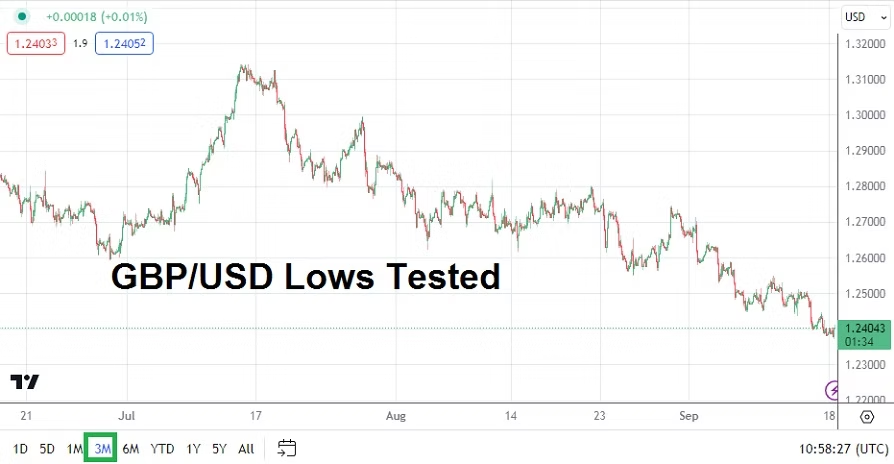
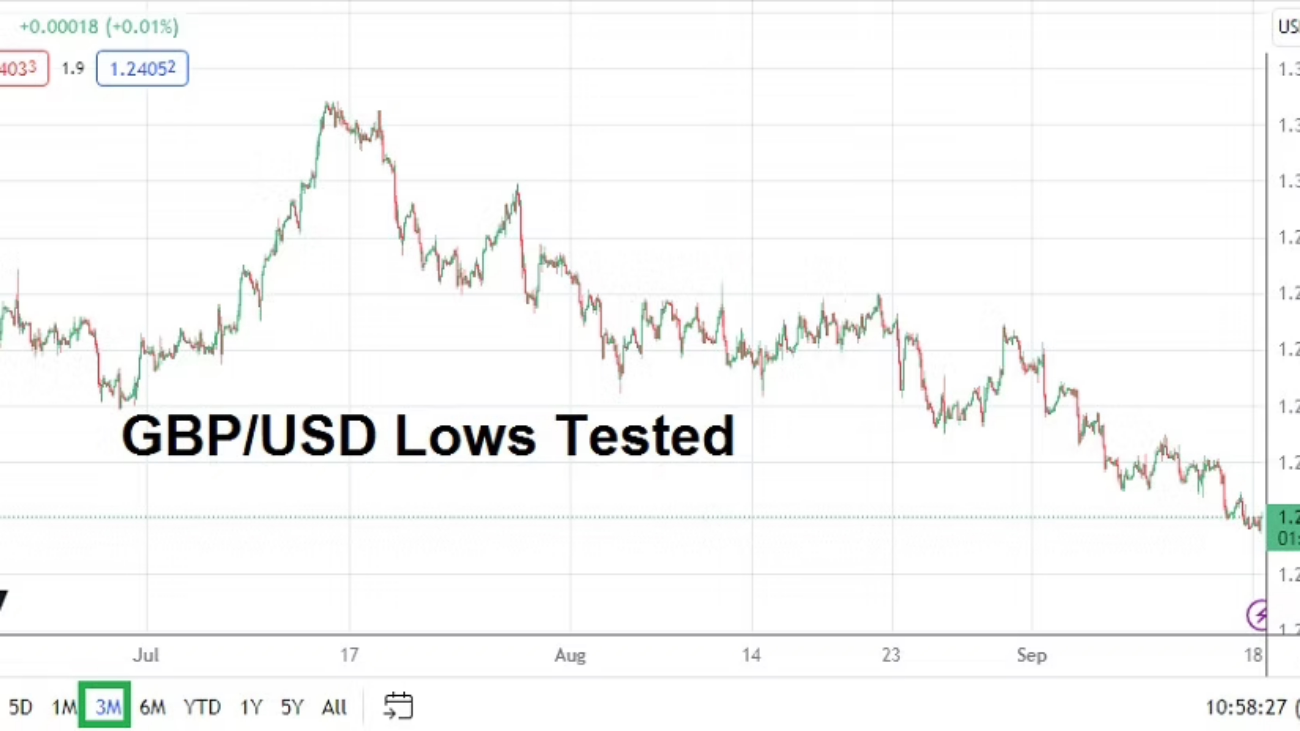
GBP/USD 3 Months Chart as of 18th Sept. 2023

Wednesday, 20th of September, U.K Consumer Price Index – the anticipated numbers expects an inflation result of 7.1%, which would be remarkably high and not treated kindly. The results will create havoc in the GBP/USD because not only is the Fed is waiting literally in the wings after this report, but the BoE is going to respond on Thursday.

Wednesday, 20th of September, U.S Federal Reserve Funds Rate – one week ago this day didn’t look like it would cause that much excitement. This all changed last Thursday when the ECB raised its borrowing costs and put financial institutions into a full state of alarm. Yes, the ECB may have acted on its own, but some suspect they know what the Fed is planning on doing already. The Fed is not expected to raise interest rates, but they will certainly sound aggressive and point out inflation remains a danger. Here’s the thing, the ECB sounded quite confident last Thursday, that it will not raise its interest rates again in the mid-term, essentially saying they were done. Did the ECB base this on knowledge that the Fed could do the same thing? What was perceived as a potentially sleepy and quiet Fed meeting and FOMC Statement has now taken on major importance. Forex, U.S Treasuries and global equities will move based on the Federal Reserve’s action and rhetoric. How will the Fed react to higher inflation data?

Thursday, 21st of September, U.K Bank of England Official Bank Rate – the BoE is widely expected to raise the borrowing rate by a quarter of a point. If the Fed did not raise rates the day before and the BoE acts as expected, this could in theory help the GBP/USD gain. However, it should be pointed out following the ECB’s interest rate hike last week, the EUR/USD traded into this past weekend weaker.

Friday, 22nd of September, E.U, U.K and U.S Services and Manufacturers PMI – Europe, Great Britain and the U.S will all release this data on Friday and all expect rather lackluster results. While this data is important, the broad financial markets will likely still be reacting to the actions of the major central banks and the credit crunch problems they are causing globally for consumers and businesses who are facing cash shortfalls and costlier loan expenditures.
post41.1

Risk Friday: To Freeze or Reduce is not the Correct Question

Risk Friday: To Freeze or Reduce is not the Correct Question

The U.S debt ceiling debate in actuality, is a vote to legally increase the amount of debt the U.S government can spend. Approval of the debt ceiling vote will give a green light to the government to be a larger debtor without consequence. Other than eventually not being able to pay its bills in the future, what’s the problem some might ask. And let’s not consider potential downgrades from S&P, Fitch Ratings and others for the moment.

Here are the Problems Ahead for the U.S

U.S debt dominoes have grown heavy and are getting harder to stand back up, but those with the ability to spend simply do not care because they will never be held responsible. The U.S government seems to have forsaken capitalism and have entered the plundering stage, where the government believes it can ‘find’ enough revenues from higher taxes and the selling of long-term Treasury bonds while remaining the big man on campus.

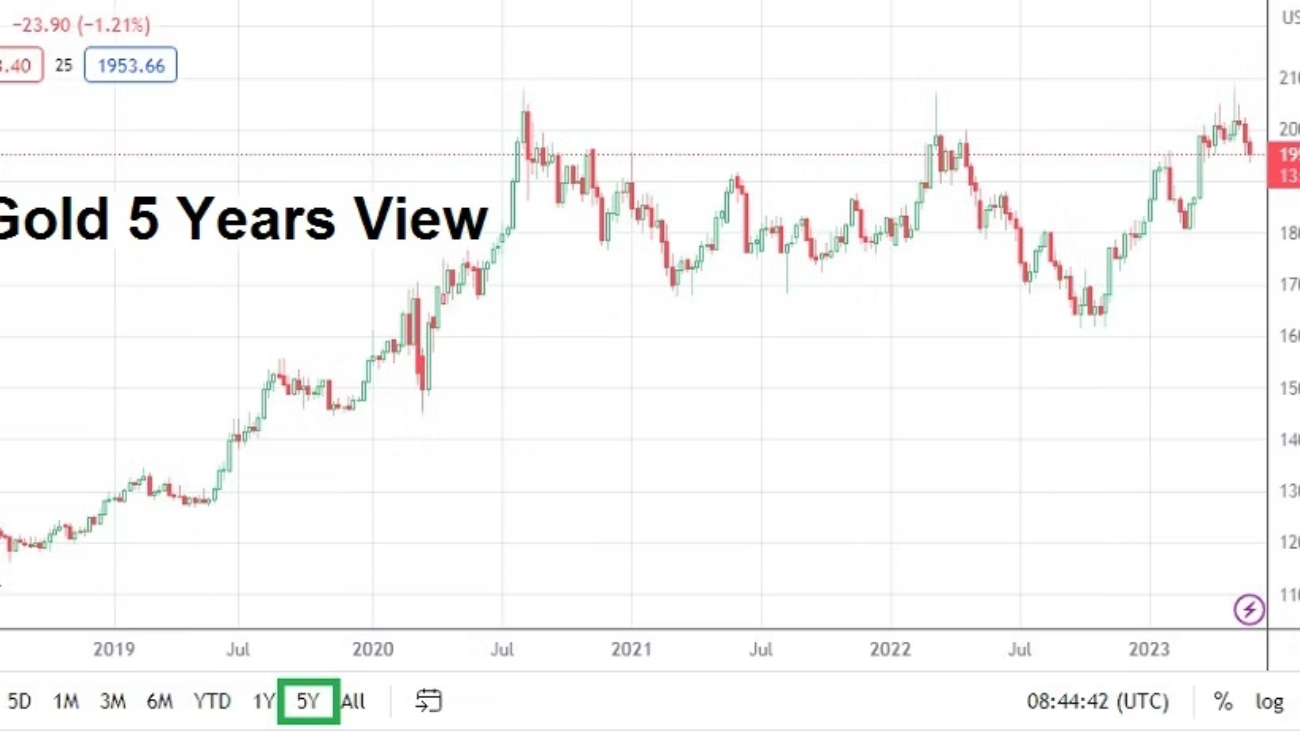
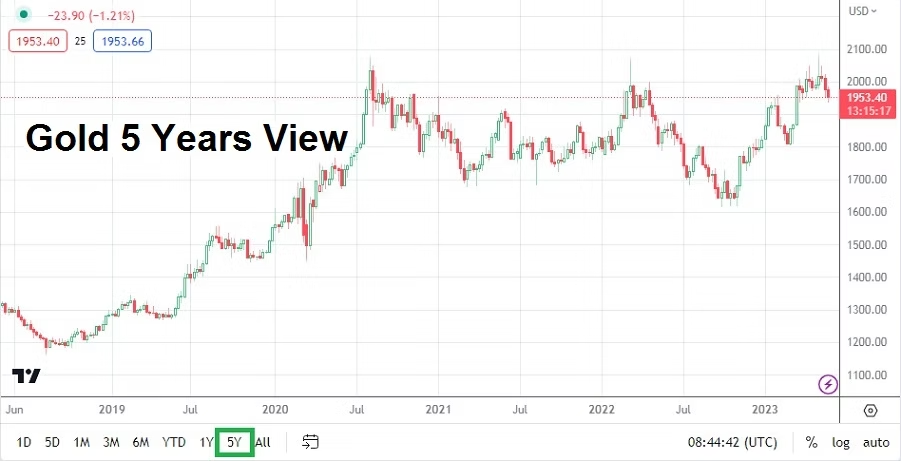
Gold Five Years Chart as of 26 May 2023

Higher taxes frequently stymie businesses and make it harder to hire employees because the expenses become too big. As an example for what the future could look like in the States turn your eyes to Chicago, where elected city leadership is considering implementing a ‘head tax’ in which businesses would need to pay a fee on each person it employs. The tax situation is getting so ridiculous in Chicago, that long time economic juggernauts like the Chicago Mercantile Exchange are grumbling and threatening to leave because of “ill-conceived” policies.

Likewise, the U.S government seemingly doesn’t understand that spending cannot be replenished by tax collection alone. Actual cuts to spending need to take place. It is called reducing the deficit. The naive will eventually be made to see the light painfully.

The Ramifications for the U.S could be Economically Untenable

U.S interest rates which have been raised the past year and a half, have affected mid and small sized banks and the amount of money the U.S government has to pay on maturing bonds because of higher borrowing costs. Fitch Ratings has recently whispered publicly they may be forced to downgrade U.S debt offerings, this if the U.S government doesn’t increase the amount of money it is legally allowed to owe. Pause for a second here, do you see the absurdity in this clown show? In other words a rating service company is OK with the debtor being allowed to ‘borrow’ more money from itself that it does not have – in order for that same debtor to be allowed to ‘promise’ it can repay its debt at a later time.

The U.S government keeps allowing debts to grow and creating entitlements as if this has no effect on inflation. Quantitative easing and stimulus packages initiated by the U.S government artificially kept the Gross Domestic Product figures looking positive and the equity markets happy for more than a handful of years. However, the proverbial ‘can’ has been kicked down the road so many times it is ready to disintegrate. The debt problem is simply being passed down to the children and grandchildren of the U.S, or so the current leadership seems to hope. But what if the debt problem explodes now? This generational problem is systematic globally, other governments practice equally bad or worse fiscal policy. Politicians do not like to walk around with empty hands.

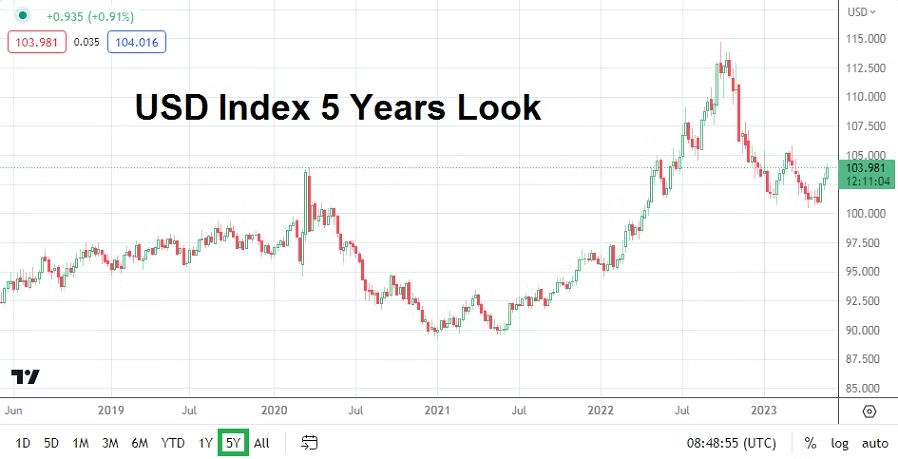
USD Index Five Years Chart as of 26 May 2023

The Clock is Ticking Loudly and Some Investors are Paying Attention

The clock is ticking in the U.S and unless they can prove expenses can be managed better, they are on a perilous road to becoming a regular nation among others, that is looked upon with scorn and derision because they cannot pay their debts. The dominance of the USD will be punished and shattered if they do not stop the nonsense. The dollar’s status as the reserve currency of the world has been slipping incrementally for a couple of decades and this will continue if the U.S government does not seize the problem and find solutions. A failure to show budgetary sanity and decrease expenditures will eventually cause something many U.S citizens do not want, relegation to the status of a ‘regular’ nation. The attitude of, “I remember when” could become a refrain heard in the U.S sooner rather than later.

The U.S is in a precarious place and sunshine in many respects is not on the horizon. Financial institutions supposedly believe the U.S debt ceiling will be taken care of in the coming days or weeks. However, a debt ceiling agreement is not the correct bandage for a broken leg, the problem is much larger. Debt should not be allowed to continuously grow. If the situation gets worse, some nations sitting on the geopolitical fence may shift their alliances depending on the ability of mutual relationships to help deliver economic stability.