postR160.1

Forex: Shifting Winds and Potential Optimism for Speculators

Forex: Shifting Winds and Potential Optimism for Speculators

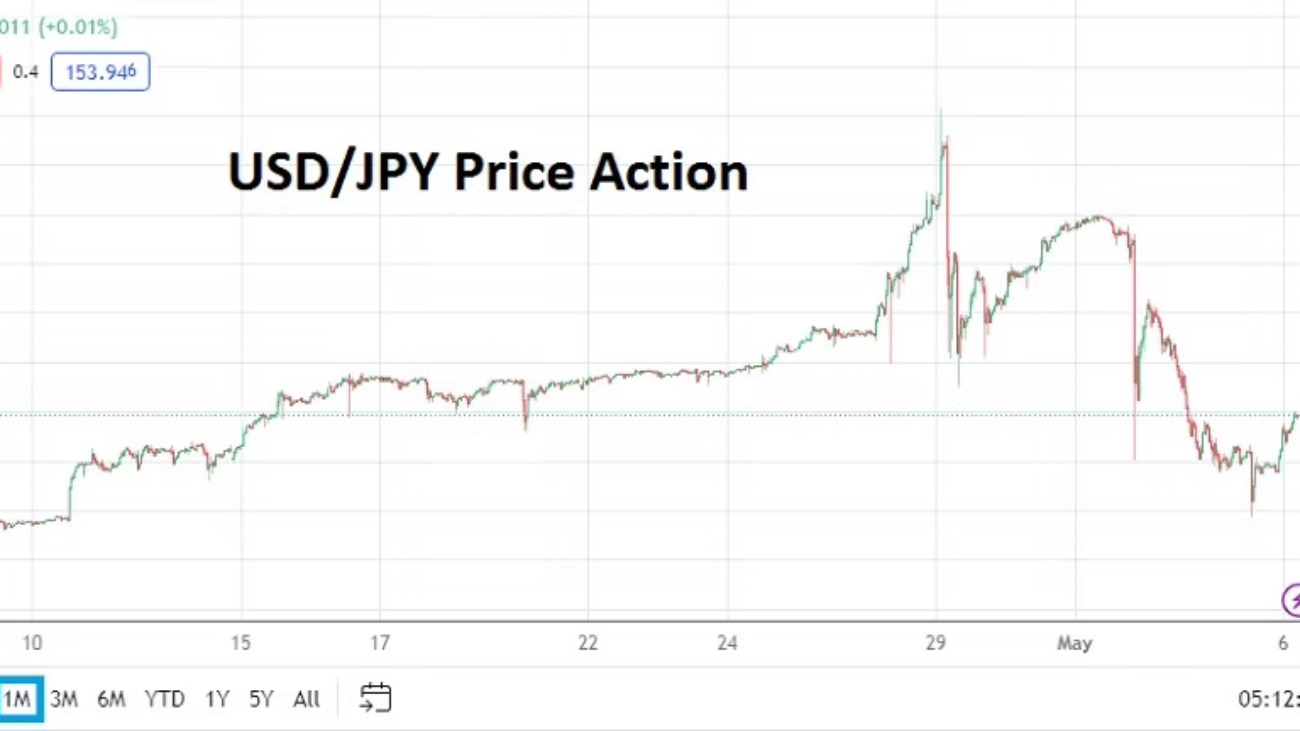
The BoJ intervened in Forex and propelled two fast selloffs of the USD/JPY last week. The actions by the Bank of Japan did not come as a surprise as the central bank seeks to maintain a dovish interest rate policy, a relatively weak Japanese Yen – but also a philosophy of not letting the JPY to suffer too much. Speculators and financial institutions got caught up in the price action which ensued as a clash developed between large traders and the BoJ as equilibrium was sought.

The BoJ clearly wants to keep the USD/JPY within the weaker realms of its long-term values to spur on the Japanese export sector with solid business results. However, domestically the Japanese government doesn’t want inflation within Japan to inflict too much pain for its citizens. BoJ interventions were carried out twice last week, once during a holiday in Japan, and the second when most global financial institutions were shuttered. At the time of this writing the USD/JPY is trading near the 153.720 mark.

Day traders always need to understand just how small they are within the larger speculative world. They need to judge economic intelligence and forecasts to get an understanding where behavioral sentiment could affect tides.

USD/JPY One Month Chart on 6th of May 2024

In the U.S, inflation and growth data caused investors to react nervously a week and a a half ago, additionally more anxious moments were fueled by the Federal Reserve’s FOMC Statement this past Wednesday when the Fed said it was uncertain about the timetable that inflation would return to their stated goal of two percent. Forex trading has been volatile the entire calendar year of 2024 for speculators.

Nearly ten days ago while inflation continued to prove it was stubborn via the U.S GDP Price Index on the 25th of April, Advance GDP data was much weaker than expected showing that economic growth was slowing. And last Friday’s Non-Farm Employment results were not only weaker regarding hiring, but also showed a slight drop in Average Hourly Earnings. This might have been enough to begin causing a shift in financial institution outlooks. This week of trading will prove interesting regarding risk appetite versus risk averse sentiment, particularly if large players believe economic data is finally catching up to the Fed’s rhetoric.

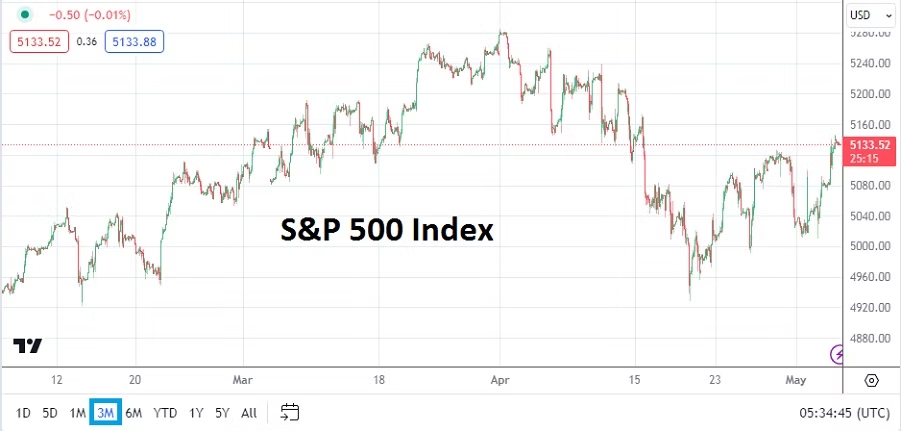
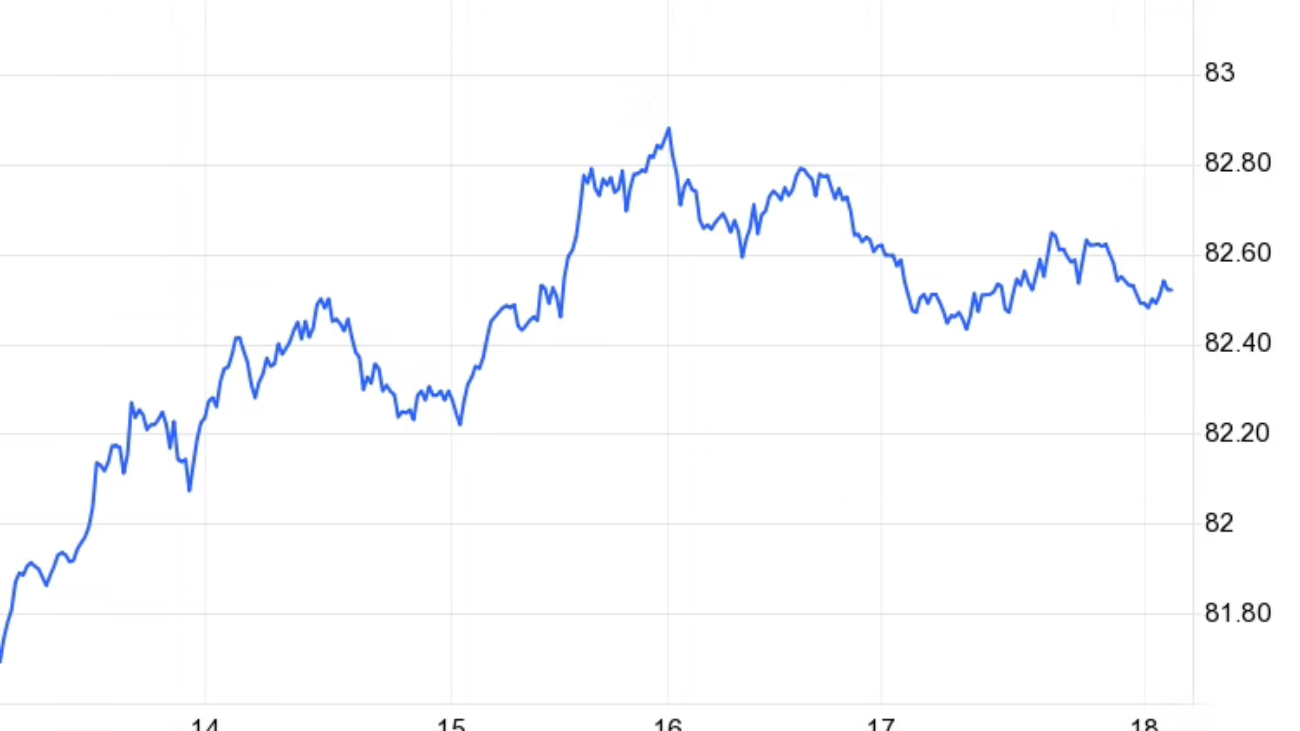
U.S equity indices which started last week with selling and battled lower depths in the middle of the week, began to see buying develop on Thursday, and finished Friday’s trading within their highs via weekly technical charts. While it is easy to report the past, it is the future speculators want to know. The ability of the U.S jobs numbers to produce results which were seen in a favorable light regarding the Fed’s ability to potentially cut the Federal Funds Rate certainly was an optimistic sign for financial institutions. If inflation can remain under control it would help the global economic picture. On that note, WTI Crude Oil is trading below 80.00 USD and should be monitored.

S&P 500 Index Three Month Chart on 6th of May 2024.

Monday, 6th of May, European Union Final Services PMI – Italy, France and Germany among other will present Purchasing Managers Index data. The broad numbers are mostly expected to replicate the previous month’s outcomes. Traders should note the U.K is observing a banking holiday today, which means lighter than normal Forex volumes will be seen.

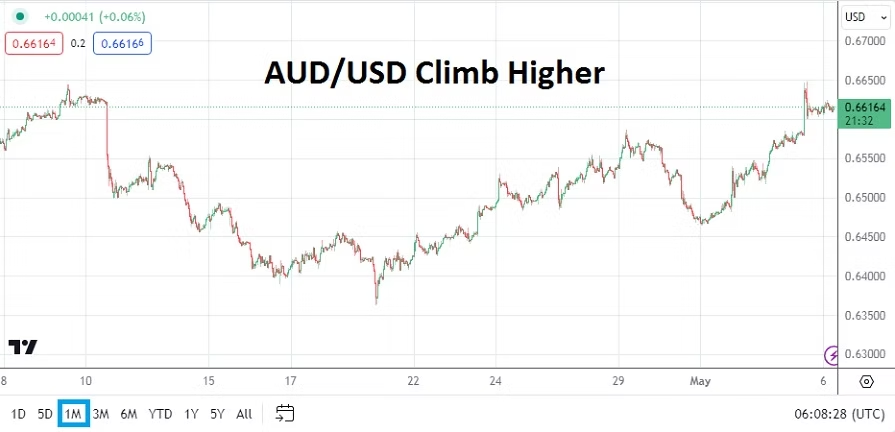
Tuesday, 7th of May, Reserve Bank of Australia Monetary Policy Statement – the central bank is not expected to change its interest rate. The AUD/USD has provided some upwards momentum the past week. The RBA is not expected to step out of line regarding global central bank policies. Expect talk about an optimistically cautious outlook by the RBA as they preach patience regarding an interest rate cut.

AUD/USD One Month Chart on 6th of May 2024

Wednesday, 8th of May, Bond Sales from Japan, the U.K and the U.S – while many European nations observe a holiday, Japan, Great Britain and the U.S will sell government debt. U.S Treasury yields should be watched and equity indices should have an eye kept on them. If behavioral sentiment remains optimistic as this day comes to a close it could set the table for more bullishness, particularly if the USD remains relatively tame or weaker.

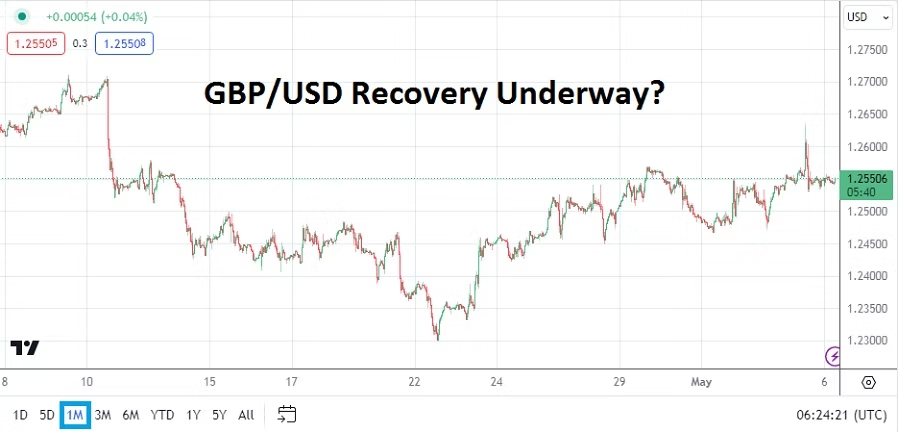
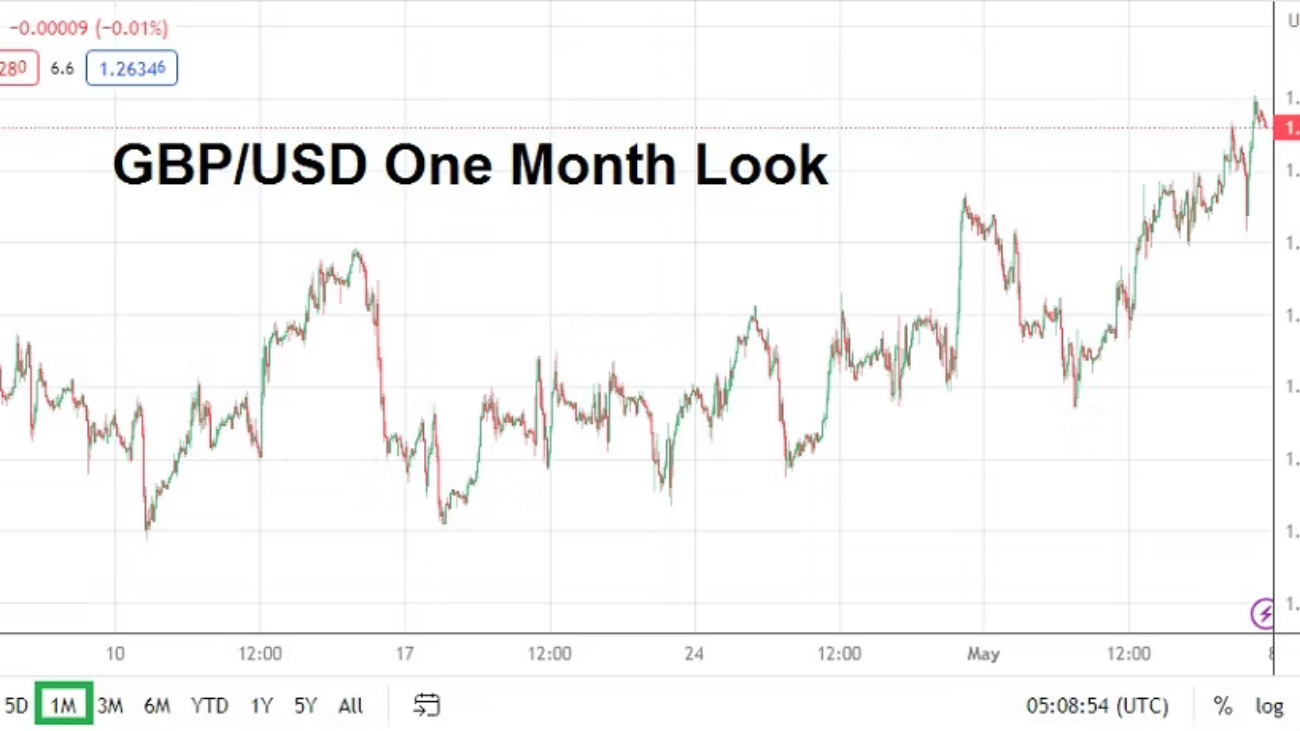
Thursday, 9th of May, Bank of England Monetary Policy Summary – the BoE is likely to mirror other central banks and keep its interest rate policy in place. No changes are expected to the Official Bank Rate. However, it would not be surprising to hear the BoE try to pose upbeat expectations, and if this occurs perhaps the GBP/USD will continue to find some momentum upwards.

GBP/USD One Month Chart on 6th of May 2024

Thursday, 9th of May, U.S Weekly Unemployment Claims – investors will keep their eyes on the jobs report. If the numbers come in around expectations this would allow risk appetite to remain strong in the near-term.

Friday, 10th of May, U.K Gross Domestic Product – an expected gain of 0.1% is forecast. GBP/USD traders who have bullish sentiment will be looking for the number to match expectations or beat the anticipated result. If the number is weaker, this could cause a reversal lower in the GBP/USD and an attempt to push back against gains made in the currency pair recently.

Friday, 10th of May, U.S Consumer Sentiment and Inflation Expectations via the University of Michigan – these readings will be watched by investors to see if consumers continue to show decreasing confidence in the U.S economy. While it sounds counter intuitive to want eroding sentiment regarding the ability to spend money, this would create more ammunition for the Federal Reserve to consider an interest rate cut. The Inflation Expectations could be the catalyst for traders going into the weekend regarding the USD.

postN86.1

Dynamic Forex Conditions Expected via Inflation Data and Fed

Dynamic Forex Conditions Expected via Inflation Data and Fed

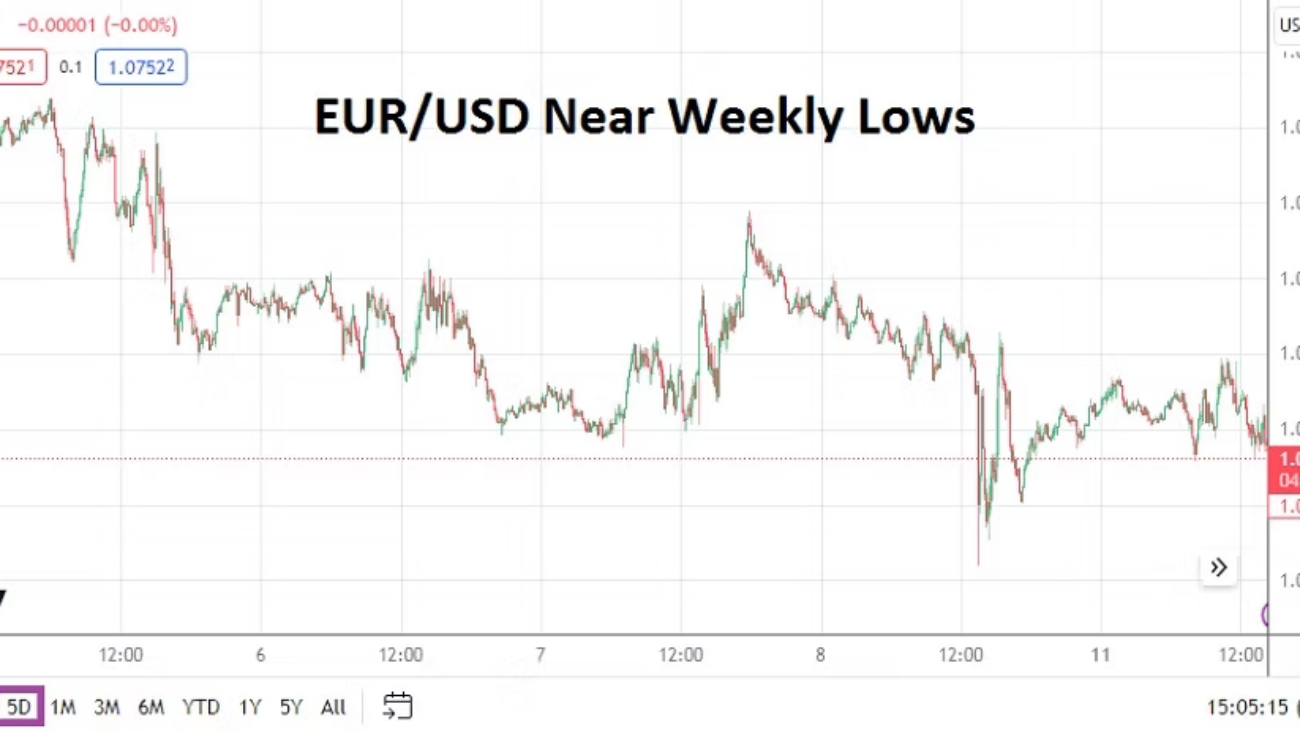
Day traders may have experienced difficult results the past few days as Forex produced choppy conditions. The USD proved rather strong on occassion and likely whipsawed technical speculators, particularly if they were looking for sustained trends to emerge with bearish perspectives regarding the USD. The EUR, GBP and JPY have demonstrated rather turbulent values. More challenging days are likely ahead for speculators, this as inflation reports from the U.S and the Federal Reserve are on the horizon.

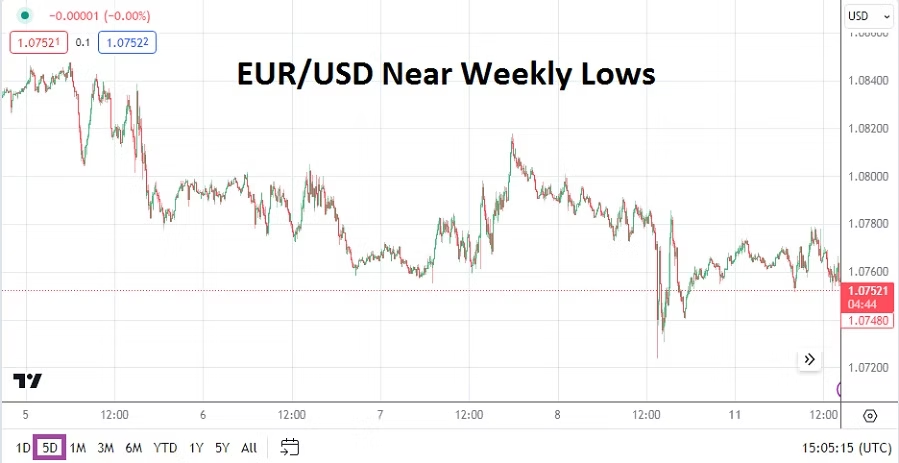
EUR/USD Five Day Chart as of 11th December 2023

Curious economic data was published at the end of last week, this as the broad markets turned in a rather convulsive five days of results via financial assets. U.S jobs numbers came in slightly higher than expected for the Non-Farm Employment Change figures and the Average Hourly Earnings. Following the employment data, the Preliminary University of Michigan’s Consumer Sentiment reading came in much stronger than anticipated, and its inflation data found that people are less fearful of inflation looking forward in the States.

On Saturday, China released its CPI and PPI statistics and they continued to show a downwards path. China has taken on a rather sticky deflationary track and this signals that consumers and producers in the nation remain burdened by harsh economic considerations.

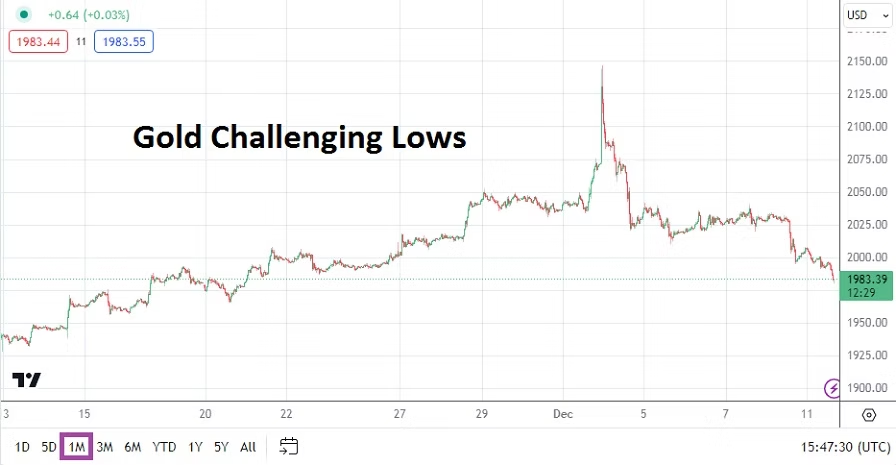
Gold One Month Chart as of 11th December 2023

U.S equity indices were rather jerky, but finished last week’s trading higher than they started. U.S Treasury yields finished the week higher, except for the 30 Year Bond which came in with a result slightly below its starting point for the five day period. Gold has seen its price come down from highs and this may be interpreted as a reaction to the stronger USD. The precious metal may be in for volatile days ahead.

The risk appetite flame has apparently been turned lower, but is still simmering and this is due to financial instiutions waiting to see if the U.S Federal Reserve delivers a neutral monetary policy rhetoric this coming Wednesday. The USD which had been getting weaker across the board for a handful of weeks, suddenly seemed to hit ‘support’ and reversed higher as questions regarding ‘fair market value’ may have been considered. Larger players in Forex are likely waiting for their outlooks to be confirmed via the Federal Reserve or dampened considerably. The higher Average Hourly Earnings data on last Friday was a reminder inflation data continues to be stubborn, even if many analysts believe the Fed’s higher interest rates will begin to have an impact in 2024 and slow the U.S economy.

Monday, 11th of December, U.S Ten Year Bond Auction – the results of the auction will be studied by financial institutions, particularly as investors debate the necessity for interest rates to be kept high, against those who are arguing for the need to cut the Federal Funds rate by late spring 2024.

Tuesday, 12th of December, U.S Core Consumer Price Index – the inflation numbers will be critical for behavioral sentiment and certainly affect the attitude of financial houses and their trading positions before the Fed steps into the limelight on Wednesday. The Core CPI numbers are expected to be slightly higher compared to last month’s outcome. Perhaps last Friday’s higher U.S earnings data will pave the way for a calm reaction if the CPI is strong. Forex markets will respond to this report and day traders should be braced for price ranges and spreads to get wider.

Wednesday, 13th of December, U.S Producer Price Index – the PPI numbers will be released early in the States, five and a half hours before the Fed’s Federal Funds Rate publication. Traders need to be ready for volatility before the Producer Price Index figures are reported. The inflation numbers are expected to be higher than the previous month’s outcome.

Wednesday, 13th of December, U.S Federal Reserve – the last interaction of the year for the U.S central bank and financial institutions will be an important affair. The Fed’s Federal Fund Rate, FOMC Statement and Press Conference will get full attention. The Fed is expected to hold interest rates in place, the question is what ‘vocabulary’ the central bank will use as it lays the groundwork for its 2024 outlook. While talk of a more neutral Fed, one that isn’t as aggressive has been envisioned, financial institutions want to see a ‘softer’ tone become the reality.

Depending on how the U.S Federal Reserve talks about inflation and its monetary policy insights for the next few months to come via this FOMC Statement, the USD will take center-stage and Forex conditions may become rather violent as Wednesday concludes. Day traders are advised to be very careful if they plan on trying to surf the waves caused by the Fed’s storms which will certainly be stirred.

Thursday, 14th of December, E.U European Central Bank – the ECB will release its Main Refinancing Rate, Monetary Policy Statement and conduct its Press Conference. The last ECB event proved to be rather mundane. While some talking heads may try to make this coming event into must see television, many financial institutions likely expect the European Central Bank to say, “the E.U economies remain lackluster, there are glimmers of growth in some spheres, but recessionary problems are still evident”, this while also mentioning inflation is observed to still be too strong, but showing signs of erosion. In other words, the EUR/USD is likely to remain USD centric according to existing behavioral sentiment that has been triggered earlier.

Friday, 15th of December, China, Industrial Production – the report is anticipated to show a better outcome than last month’s figure. China skeptics will examine these reports carfully, as well investors with ‘skin in the game’ in the nation.

Friday, 15th of December, E.U, U.K and U.S Manufacturing and Services PMI – these reports will be watched from the European Union nations, the United Kingdom and U.S, but the results will be filtered into existing sentiment which has been generated on Wednesday and Thursday from the Fed and ECB. Behavioral sentiment in Forex will likely look at the PMI results with vague interest levels. Traders should note that as the weekend approaches, there will be only one full week of trading left before the holiday season gets underway and financial markets begin to experience thin volumes.

postN17

Fed Caught Again in Reactive Stance waiting for ‘Good’ News

Fed Caught Again in Reactive Stance waiting for 'Good' News

Let’s recall that about two and a half years ago the U.S Federal Reserve was still calling inflation transitory and claiming that price pressures would subside quickly as the onslaught of coronavirus decreased. Nearly all financial institutions could see the Fed was merely being stubborn, and that is a polite way of putting it, instead of being realistic.

It would be nice to give the Fed the benefit of the doubt now, and say the Fed have better information and know how to quantify the outlook of the U.S economy in a more dynamic fashion. However, being skeptical of the U.S Federal Reserve and its ability to miss signs plainly in front of them is a full time job for many analysts and it pays well.

As said by many before, many members of the U.S Federal Reserve have the profound disadvantage of not having the experience of ‘skin in the game’. Many Fed officials have worked as paid bureaucrats their entire lives and have literally ‘studied’ their way to the top of the central banking world, without having firsthand knowledge regarding the daily chore of running businesses. Most Fed officials have no dirt under their fingernails.

The Fed is clamoring now to return the U.S inflation level to 2.0%, and there is a large amount of disagreement about how this number is interpreted via different economic gauges. The Federal Reserve has a poor track record as stated above for being able to know what is actually ahead. They have been very aggressive regarding raising interest rates the past year and a half, and now they are finding it difficult to say they are done. This tough talk could be an attempt by the Fed to create headwinds for those considering proclaiming the U.S central bank should become ‘dovish’ by speaking tough about potential pitfalls to come, this even though the Fed plainly missed dangerous road signs a few years ago which helped agitate the problems being dealt with at this moment.

What could go wrong you ask? A credit crunch for banks and consumers.

However, business people know all about potential crisis if they have enough experience. Paying employees wages, finding additional good employees, landing a space that charges a reasonable amount for rent, hoping taxes remain sane, and hoping your shop is not shoplifted into poverty are some obstacles business owners face nowadays in the U.S. The rising costs of wholesale prices has not completely disappeared, but things may be getting better via economic data. Maybe this will be proven wishful thinking, but outlook is important and should be considered.

The rising costs of doing business is then passed along to consumers. The Federal Reserve seemingly doesn’t understand that it has made it more expensive to accomplish positive business results for small owners of enterprise in the U.S, and the Fed seems to forget that over 44% of the American economy is powered by what can be called family owned companies. The Fed certainly doesn’t mention that it is hard enough for small U.S business to survive over the long haul, with a number of nearly 65% becoming failures after ten years statistically.

So while the Federal Reserve talks a great game about managing interest rates via their monetary policy and the Federal Funds Rate, they often forget about the problem small business owners face. Having said that, the higher interest rates the Fed has sparked because of its slow reaction to what they perceived as transitory inflation two years ago – is having a bad effect on bigger businesses too. This because big corporations no longer enjoy ‘free money’ from their banks. Money has become harder to attain.

Once again it has been proven that everyone looks like a genius when the U.S economy is sailing smoothly, but when obstacles develop and people have to quantify solutions to real problems, suddenly it is harder to produce profitable results. The U.S government has created massive deficits by using huge amounts of cash stimulus to protect economic growth in the U.S over the past five years. In fact because of the quantitative easing after the financial crisis of 2007, it can be argued the U.S has used stimulus for more than 15 years to make sure the U.S economy is ‘stable’. Politicians like to keep their jobs because there is little else they can do in the real world.

The Federal Reserve by increasing the Federal Funds Rate has made U.S Treasuries a feeding frenzy and yields have increased substantially. The higher rates of interest the U.S government will have to pay down the road on existing U.S Treasuries is not a small problem mathematically. However, for the time being the Federal Reserve and U.S government seem to be less concerned about what they are potentially putting on the shoulders of future generations of U.S citizens, and trying to keep the U.S population tranquil. Luckily for many American homeowners, U.S mortgages are still mostly being paid out via the lower interest rate amounts agreed upon a couple of years ago and beyond. New home sales and existing home sales are sputtering in the U.S, because many people do not want to pay the higher interest rates that now need to be signed upon for mortgages and paid.

What the U.S Federal Reserve needs to do is to state publicly that it is not going to raise interest rates over the mid-term, and that it is going to allow the free market to work itself out via enterprise with supply and demand ratios taking center stage and being allowed to work. And lastly, that if inflation conditions as expected continue to improve by decreasing, that the Federal Reserve will consider lowering interest rates in the first part of 2024.

However, the Federal Reserve is worried that if it does sound too positive, businesses will start to gamble on a better outlook and this will raise existing inflation which has been stubborn. But again, the Federal Reserve often doesn’t understand how smaller U.S businesses work. To get out of the current economic mess the U.S Federal Reserve needs to be pro-active and not reactive. Also, the ‘ruling’ U.S government has to cut back on stimulus programs with promises of a ‘free lunch’ for all and return to looking at numbers realistically. Fiscal responsibility is an idea that can actually be practiced.

post31

Economic Data that needs Attention this Week

Economic Data that needs Attention this Week

Tuesday 8th of May, U.S FOMC Member Speaks – N.Y Federal Reserve President John Williams will talk at the New York Economic Club. N.Y Fed is important regarding monetary policy particularly for financial institutions. Williams words should be given merit. Williams will also be likely listened to for any comments regarding U.S corporate banking health regarding mid-size and smaller institutions.

Wednesday 9th of May, U.S Consumer Price Index reports – three key inflation consumer price statistics will be published including monthly, annual and core monthly changes. The results will be important taking into consideration the manner the U.S Federal Reserve conducted its ‘sitting on the fence’ rhetoric last week, as if looking for an accuse to continue to raise interest rates if inflation remains stubborn or worse continues to climb.

Thursday 10th of May, U.K BoE Monetary Policy Summary and Official Bank Rate – which is expected to produce another increase of 0.25%.

GBP/USD One Month Chart as of 7th of May 2023

Friday 11th of May, U.K Gross Domestic Product – growth numbers from the U.K are expected to demonstrate economic conditions remain challenging.

Friday 11th of May, U.S Preliminary University of Michigan Consumer Sentiment – a rise in consumer sentiment from this report could add to the confusion and ‘concern’ that financial institutions have regarding the U.S Federal Reserve’s short term monetary policy regarding the prospects for a June increase to the Federal Funds Rate. If the number is weaker than expected this could help ‘pause’ outlooks.

post20

USDINR: 83/$ & Above is a Possibility

USDINR: 83/$ & Above is a Possibility

The Indian Rupee continues to remain under pressure as volatility in the global market triggers capital outflows amid investors concerns over the stress levels in banks worldwide especially in the U.S and in Europe.

RBI Governor Das yesterday, said in a conference that India today has a well regulated and well supervised banking sector.

Not to forget, India has past issues with some private banks that have been lending to corporations that defaulted on their debt . Yes Bank and Lakshmi Villas Bank are some of these examples, and today these banks are well capitalized and their loan books are diversified as the RBI has tightened its grip on regulatory frameworks.

Also, the loan books of Indian banks are being more diversified, and Government Bonds portfolios are comprising only 18-22% of the total assets, meaning banks are not at greater risk than their western counterparts.

The central bank of India holds Forex reserves of over $560 billion USD and has been actively intervening in the Spot & Forward markets since 2022 as the U.S Federal Reserve started to raise rates to tackle higher inflation. Governor Das also cautioned, ”the worst of inflation is behind us,” but pointed out that with the Russia – Ukrainian war, along with monetary tightening by major central banks, that there is still stress for nations that have high external debt and more capital outflows, which can put pressure on their currencies and trigger imported inflation.

India also has sticker inflation of around 6.4% down from 6.52% in January, this while the RBI is expected to raise rates by 25 bps in the April monetary policy meeting . The Indian Rupee was among the worst-performing currencies among emerging Asian peers last year, counter weighed by a stronger dollar and outflows from local assets. 

As a net importer of oil from Russia which grew 4 times in 2022, and less exposure to external debt means headwinds from shocks will be minimal which will help the Indian Rupee. However, as growth slows down in the West, this means more capital outflows and a flight to safer assets possibly taking place.

The RBI stance is very different than a month ago, where it didn’t allow markets to take the Indian Rupee above 83/$, but now it’s significant that the central bank could let to the USD/INR depreciate above 83 to save foreign exchange reserves.

The RBI’s equation is very simple as the Federal Reserve reduced its rates to zero back in 2020 because of Covid19, more money chased speculative assets especially in the emerging markets. And the RBI accumulated a lot of Forex reserves. Now the tables have changed. In addition to this, India also is not keen to add its bonds to global indexes due to concerns over potential ensuing market volatility not supporting capital inflows, and thus perhaps damaging the Rupee.

With current account deficits widening to 4.4% of India GDP in Q2, this means India needs to work hard to achieve better capital flows, particularly as tensions on some important global banks continue to be demonstrated.

post17

Angry Voters and the Federal Reserve

Angry Voters and the Federal Reserve

Federal Reserve Chairman Jerome Powell is scheduled to testify before the U.S Senate tomorrow. Certainly we are going to hear the words inflation and growth mentioned, this as the Fed Chairman speaks about monetary policy and the trajectory for the U.S central bank to continue raising interest rates over the mid-term.

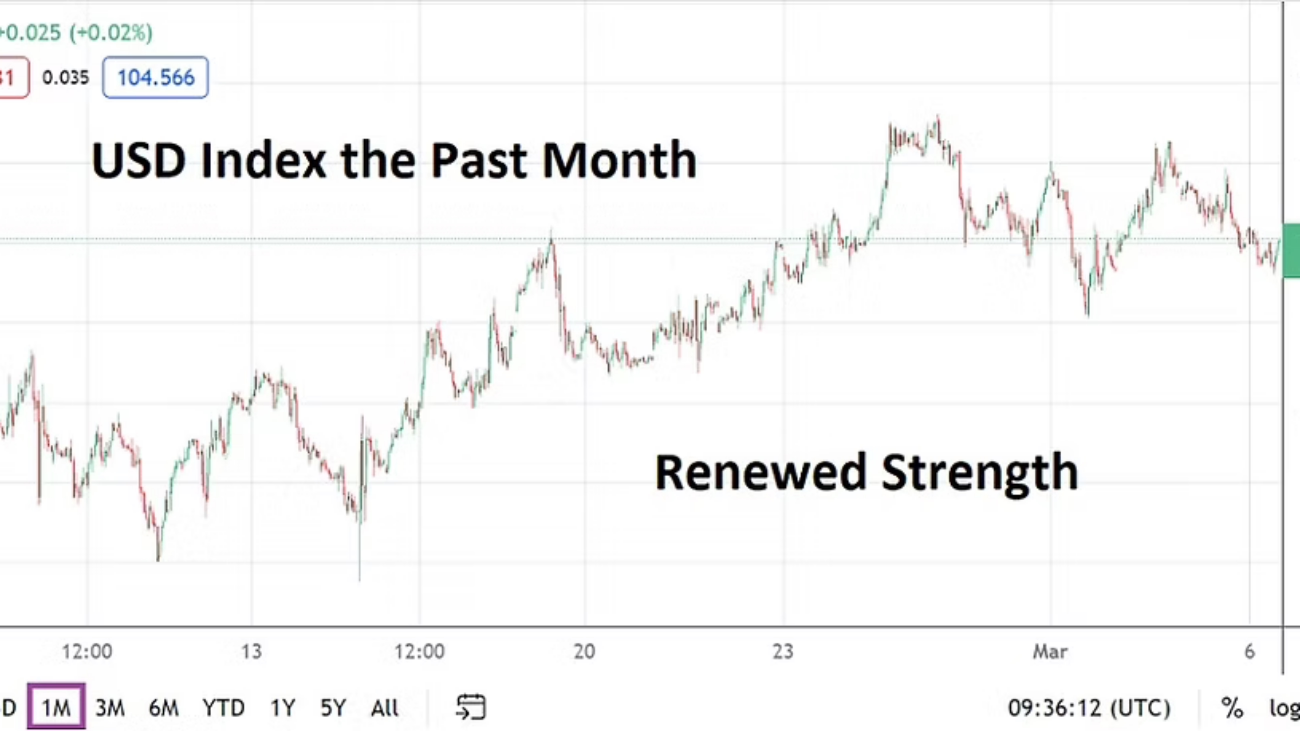
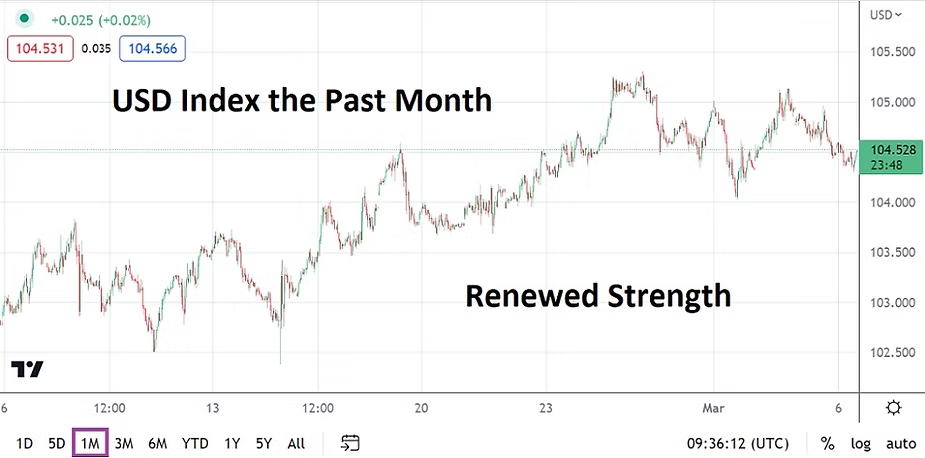
Via prices in the Forex market since the start of February, financial houses have likely priced in two additional interest rate hikes from the U.S central bank into the USD, one of them being a quarter of a point increase coming on the 22nd of March. The USD has been mostly stronger across the board the past four weeks. This week’s coming Non-Farm Employment Change numbers and Average Hourly Earnings data results should be monitored on Friday.

USD Index One Month Chart

While financial houses may have accepted the interest rates to come, this doesn’t change the rather complex economic data in the U.S which is demonstrating rather stubborn inflation, while also showing growth is not slowing down as much as has been anticipated. GDP numbers reported recently from the States showed only a slight decrease.

  • How much more can the U.S Federal Reserve increase interest rates over the next six months without making the USD too strong?

  • At what point will the Fed become less aggressive?

  • While an additional .50% has been ‘accepted’ by financial institutions, will the Fed bring the lending rate to 5.50%?

  • High inflation and limited growth could result in political quicksand for many elected officials.

The U.S Federal Reserve is going to get pressure from both sides of the aisle in Washington D.C.. Traders should not discount their perceptions that elected officials are starting to consider the ramifications of the coming elections in a year and half, because this will affect behavioral sentiment in the markets. Neither Democrats or Republicans will be happy if inflation remains a problem going into the vote. Rising costs equal less money in the bank accounts of American voters.

The U.S public has a history of voting via sentiment generated from their wallets and the power to consume. Prices that feel like they are out of control will win no friends. While energy prices seem to have calmed down in the headlines, energy costs remain a risk and concern for manufacturers worldwide. The inability to save money for individuals, and lack of profits for corporations makes for potentially angry voting results.

There is an additional problem lurking. The strong USD driven by the Federal Reserve’s increased borrowing costs, the Federal Funds Rate, has weakened currencies across the world. Vulnerable currencies have spurred inflation in many nations which are producers of goods that global consumers buy, these rising prices are being imported into the U.S economy.

As much as international economic integration helps the world, the rise of coronavirus and its knock-on affects via costs were not anticipated enough, causing weaknesses to be exposed. The U.S attempted to save its skin economically by creating a massive amount of stimulus, which certainly fueled domestic inflation. The U.S might have saved the American public in the short-term, but the government faces a long climb upwards to fix the problems overspending has caused.

The rising costs of logistics and the spotty supply of commodities internationally generated higher prices in the aftermath of coronavirus. Commodity prices have become more tranquil, but the costs of production has not eased because weaker currencies globally are hurting producers who need to use the USD to purchase resources. The U.S Federal Reserve’s attempt to tackle inflation with higher interest rates, has fueled ‘import’ inflation. This is not an easy problem to solve.

The Fed will not say in public they want the U.S economy to slow down, this acknowledgement would costs jobs which rely on political backing. The White House certainly doesn’t want the economy to suffer as it prepares for an election within a year and a half, but quietly officials likely accept slower growth and perhaps recession may become inevitable. Both the Fed and elected officials are performing a delicate dance that may be interrupted any moment.

The Fed doesn’t want us to remember they said inflation would prove transitory almost two years ago. The Fed needs to fight rising costs certainly, but very carefully. The desire to weaken inflation is correct but a dangerous balancing act, because the USD remains the global reserve currency.