Indian Rupee 20260611

India Insider: Should the RBI Raise Interest Rates?

A Case for Higher Interest Rates In India

As the Rupee remains under pressure and oil prices continue to rise amid tensions in the Middle East, the debate has shifted towards what the Reserve Bank of India (RBI) should do next.

Economist Janak Raj has argued that raising interest rates to defend the Rupee comes with significant costs. Higher rates increase the cost of capital for businesses, reduce investment activity, and compress equity valuations. In theory, this could even accelerate foreign outflows from equities rather than attract fresh capital. Yet the RBI may soon find itself with limited options.
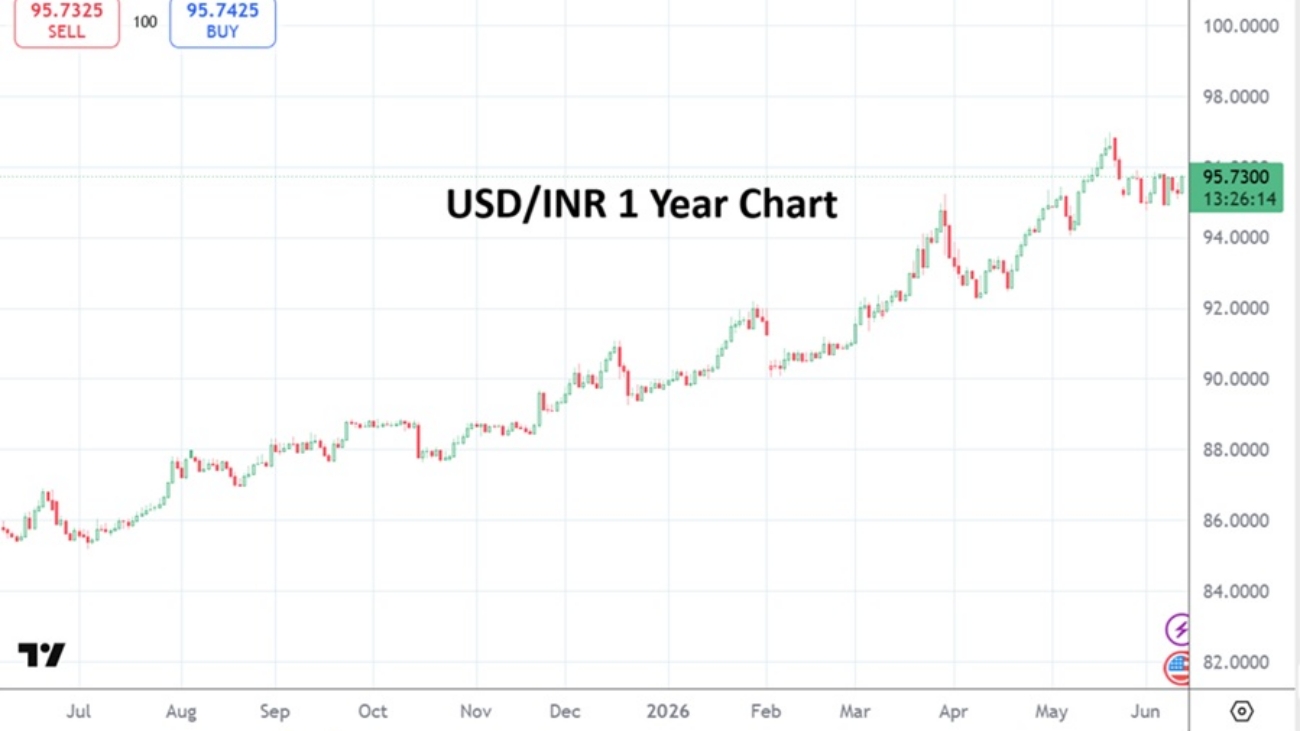
USD/INR One Year Chart as of 11th of June 2026

Foreign Portfolio Investors (FPIs) were net buyers of Indian equities for most of the period between 2004 and 2024, with only a few exceptions such as 2011, 2018 and 2022. However, the trend has changed. FPIs sold approximately $19 billion USD worth of Indian equities in 2025 and another $24 billion USD so far in 2026.

Question: Why are Foreign Investors Selling

One reason is that global investors today have alternatives. The growth of Artificial Intelligence related companies in the United States has created significant investment opportunities. At the same time, U.S Treasury yields hovering around 4.6% offer attractive risk-free returns in a strengthening dollar environment.

For many global investors, earning high returns in Dollar assets is preferable to taking exposure in emerging markets that face current account pressures from rising  Crude Oil prices and other energy costs.

Taxation is another factor. India taxes foreign investors at 20% on short-term capital gains and 12.5% on long-term gains. Meanwhile, competing financial centres such as Singapore, Hong Kong, Malaysia and Thailand generally do not tax foreign investors’ capital gains.

Some global funds have argued that India should move closer to international norms, where capital gains are usually taxed in the investor’s home jurisdiction rather than the country where the investment is made. Higher post-tax returns would undoubtedly make Indian assets more attractive.

A stable Rupee would also reduce hedging costs, lower currency-risk premiums and improve the overall risk-reward profile for overseas investors. However, tax cuts alone cannot solve India’s problem.

The Real Issue is Balance of Payments

As Business Line columnist Lokeshwari Mam has pointed out, a significant portion of equity outflows consists of short-term speculative capital. Long-term capital tends to remain invested. This is why the decline in net Foreign Direct Investment (FDI) should concern policymakers more than short-term fluctuations in portfolio flows.

Net FDI has fallen sharply from $28 billion in FY 2022-23 to just $7.7 billion in the year ended March 2026. This is a worrying trend because FDI is the most stable source of external financing. Unlike portfolio flows, it creates factories, jobs, exports and long-term productive capacity.

India therefore needs more than tax incentives. A genuine single window clearance system, reduced bureaucracy, easier business regulations and reforms in manufacturing remain essential. Attracting long-term capital should be a national priority.

The recent foreign buying of Indian bonds after tax cuts is encouraging. But relative to India’s current account financing requirements, it remains a small drop in the ocean.

For example, in FY 2025, the current account deficit was 0.6% of GDP. And in Q4, the current account became a surplus. Is it really that difficult to finance it’s small current account deficit?

India’s external vulnerability is determined not merely by a current account deficit, but by whether the capital account can be comfortably financed. A modest current account deficit still creates currency pressure if foreign capital inflows weaken (which we are seeing), while a larger deficit may be sustainable when capital inflows remain strong. The risk of sustained higher oil prices could widen the deficit, increasing India’s dependence on foreign capital at a time when global liquidity is tightening and U.S Treasury yields are rising.

Furthermore, hedging costs continue to erode much of the yield advantage that Indian bonds offer over U.S Treasuries. In that sense, active global money is likely to prefer Dollar assets over emerging-market debt or equities

India’s repo rate currently stands at 5.25%. The RBI’s decision to raise its inflation forecast to 5.1%, while lowering its GDP growth projection to 6.6% reveals where the shock from the Iran conflict is likely to be felt via higher inflation and weaker growth. For an economy that remains heavily dependent on imported oil, a depreciating Rupee only compounds the problem by increasing the cost of energy imports. 

In such an environment, the Monetary Policy Committee is unlikely to focus solely on growth. Currency stability, inflation expectations and the availability of foreign capital to finance India’s external requirements could become increasingly important considerations. If these pressures persist, the RBI should raise the repo rate, in the same manner other Asian central banks have done in recent weeks.
Copy and paste the text from AMT that you want to share

Indian Rupee 20260515

India Insider: Rupee Under Pressure as Oil Prices Surge and Import Bills Rise

Iranian War and Implications for India as Energy Prices Cause Vulnerability

India is currently facing mounting external economic pressures as rising global crude oil prices weaken the Rupee, widen the current account deficit, and increase the risk of imported inflation. As one of the world’s largest energy importing nations, India remains highly vulnerable to fluctuations in global oil markets. The recent surge in energy prices, combined with geopolitical tensions and volatility in currency markets, has intensified concerns among policymakers, economists and investors.

The Reserve Bank of India (RBI) has stepped up its intervention in the foreign exchange market to stabilize the Rupee, while the government is evaluating measures to reduce pressure on import billing. Rising fuel prices, weakening currency conditions and growing external imbalances have combined to create a challenging macroeconomic environment that may test India’s economic resilience in the coming years.

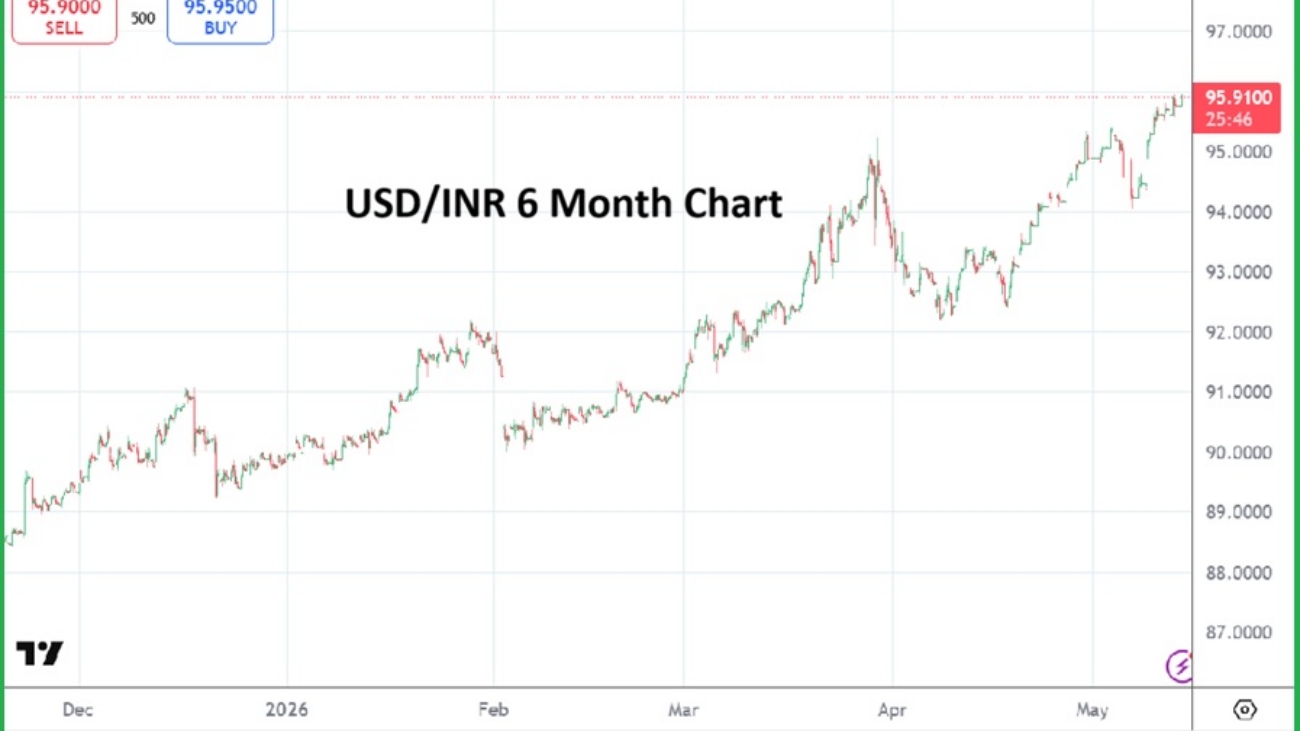
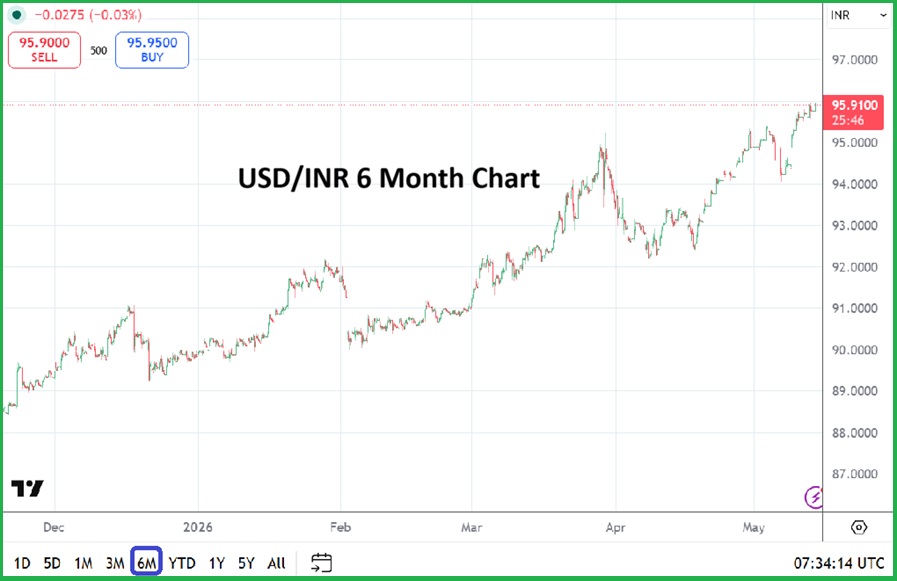
USD/INR Six Month Chart as of 15th March 2026

Gold and consumer electronics imports are increasingly being viewed as non-essential imports, and policymakers may consider restricting these categories in order to reduce stress on the current account deficit. Officials are concerned that a widening trade imbalance could place further downward pressure on the Rupee and increase dependence on foreign capital inflows.

The Rupee on Thursday fell to a record low near ₹95.95 per USD, making it one of Asia’s weakest performing currencies this year. The currency has erased most of the gains achieved following earlier RBI intervention measures aimed at curbing speculation in the Forex market. Analysts expect the Rupee to remain under pressure through 2026, especially if global crude oil prices continue to rise and significantly increase India’s import billings.

The impact of rising crude oil prices is becoming increasingly visible across the Indian economy. Private fuel retailers have either reduced diesel sales or raised prices in response to the rally in global oil markets, leaving state owned refiners to absorb a larger share of domestic demand. Long queues at fuel stations and rising transportation costs have intensified concerns over inflationary pressures.

Earlier today, State-owned fuel retailers raised fuel prices for the first time in nearly four years as New Delhi adjusted domestic pricing to reflect higher international crude prices following escalating tensions in Western Asia. Diesel and gasoline prices increased by more than 3%, even though Brent crude prices had risen by nearly 50% over the same period.

In New Delhi, diesel prices climbed to around ₹90.67 per litre, while gasoline prices rose to approximately ₹97.77 per litre. These are among the highest levels recorded since 2022 and reflect the growing burden of imported energy costs on the Indian economy.

Economists argue that the rise in fuel prices signals a gradual shift toward market based pricing rather than extensive government controls. Policymakers increasingly recognize that artificially suppressing fuel prices could worsen fiscal pressures and create larger external imbalances over time.

Currency Weakness and Monetary Policy Challenges

RBI Governor Sanjay Malhotra recently remarked at an event in Switzerland that continued currency weakness may be “only a matter of time” if global energy prices remain elevated and capital flows become increasingly volatile.

Foreign outflows during the year have already exceeded previous levels, while a sustained rise in crude oil prices above $100 per barrel could significantly widen the trade deficit and push India towards another period of pressure on balance of payments.

In this climate, attracting foreign capital via various tax cuts or raising the interest rates is paramount to reduce the pressure on the currency. It’s already been seen that New Delhi is working on reducing taxes for foreigners investing in Indian bonds.

Rise of Inflationary Pressures

Although India’s headline inflation remains relatively contained and below the RBI’s 4% medium term target, imported inflation risks are steadily increasing.

Economists also believe the RBI may eventually be forced to maintain tighter monetary conditions or raise interest rates further if energy prices continue to accelerate.

The central bank has already raised interest rates to around 5.25% this year, but several economists argue that further tightening may still become necessary.

Historical Perspective and Structural Risks

Economic historians often compare the current situation with the oil shocks of the 1970s. During that period, the United States was heavily dependent on imported oil. The oil crises of 1973 and again in 1979 contributed to inflationary pressures, balance of payments stress, and periods of USD weakness.

However, economists note that today’s global environment is significantly different. The United States has become one of the world’s largest oil and gas producers, reducing its dependence on imported energy. As a result, rising oil prices no longer weaken the U.S Dollar in the same way they did during earlier oil shocks.

For countries like India, the impact remains severe. India imports the majority of its crude oil requirements. Higher global oil prices directly increase India’s import billing and create additional demands for USD.

As Economist Philip Verleger was quoted by Bloomberg, “when you are a major oil importing nation, you are not only paying more for crude itself, you are also paying more for the dollars required to purchase it.” India is now facing this realization again.

Copy and paste the text from AMT that you want to share

post262

India Insider: Booming GDP & Fragile Foundations of Growth

India Insider: Booming GDP & Fragile Foundations of Growth

India’s economic footprint on the global stage is expanding significantly each year. As the world’s largest democracy, the nation achieved a remarkable 7.4% GDP growth rate January to March of this fiscal year. Yet, beneath this impressive headline, job creation remains tepid, overshadowed by slowing foreign direct investments (FDI) and lower corporate investments from India’s domestic market.

Despite Prime Minister Narendra Modi’s initiative to attract manufacturing into India and boost jobs, the manufacturing share of GDP has stubbornly clung to 16% for the last decade. While India’s services sector accounts around 55% of GDP, the IT and allied services sectors contributes a mere 3-4% of total employment. Even after the last two decades in which India’s Asian neighbors have shifted labor force out of agriculture and into high scale manufacturing, 45% of India’s workforce still are employed in agriculture and aligned services constituting only 15-17% of GDP.

Speculative Capital, Excessive Credit and Rising Financial Risk

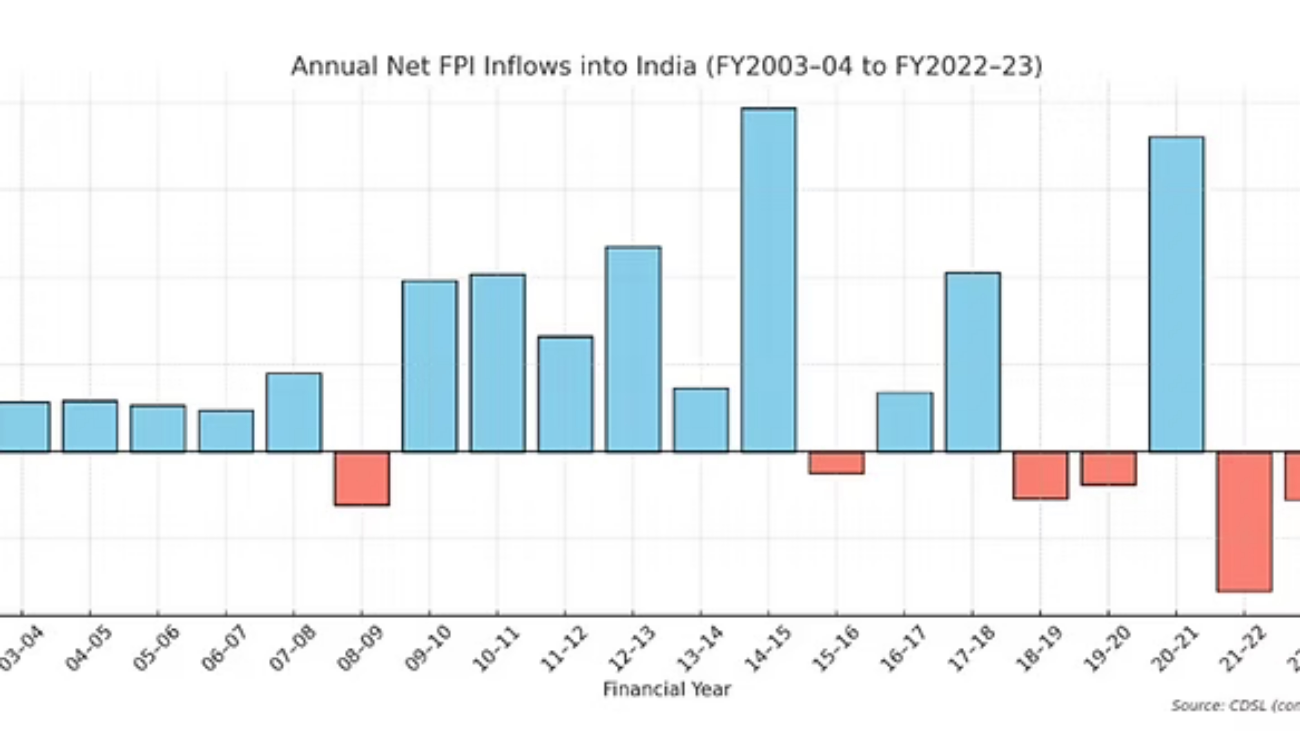
Between 2003 and 2023, India attracted approximately $275 Billion USD from foreign capital inflows, encompassing mostly equity and debt foreign portfolio investments. These capital injections are speculative in nature, primarily chasing returns in financial markets, rather than being directly invested into long-term productive infrastructure like manufacturing and export oriented industries.

Foreign Portfolio Investment into India 2003 to 2023

Interestingly, India’s public sector banks especially between 2008 and 2015 aggressively lent to infrastructure, real estate and capital intensive projects. The state owned banks tried to fill the gap left behind by private investors. A substantial share of these loans later turned into non-performing loans, exacerbating a duel crisis as corporate and bank balance sheets came under severe stress within a few years. The government of India stepped in and injected 3.1 lakh crore Rupees ($45 Billion USD) to recapitalize the struggling banks, and also orchestrated mergers of weaker banks with stronger banks. India’s citizens helped cover these costs via higher taxes and hidden banking charges.

Reserve Bank of India: FX Reserves and Liquidity Dynamics 

As of financial year 2025, the RBI’S Foreign Exchange Reserves stand at around $696 billion USD. While a stronger reserve buffer is crucial for maintaining external stability, the Reserve Bank of India’s purchase of foreign currency to build reserves leads to problems with domestic Rupee liquidity and creates liabilities for the RBI’s balance sheet. Unless it’s not fully absorbed via Open Market operations, it will end up as excess liquidity in the banking system.

Post 2020 and the Covid19 pandemic, loose monetary policy and excess liquidity within the banking system has culminated with more reckless lending. Unsecured retail credit particularly in personal loans, credit cards and consumer finance is troubling. Non-banking financial companies (shadow banking) and fintech enterprises also expanded rapidly into this segment and now pose risks.

India Falling into Debt Trap 

Per a recent survey conducted by the RBI,  household financial savings have sharply declined to a five decade low of 5.1% of GDP in FY2023, down from 11.5% in 2021. Concurrently, household liabilities have risen, particularly in the unsecured credit segment.

Delinquencies in small ticket personal loans and “Buy Now, Pay Later“ programs are on the rise, prompting the RBI to intervene recently with tightening of personal loan norms in late 2023. This dynamic suggests that excessive credit creation, unaccompanied by productive or real income growth, is fueling a fragile boom in consumption backed predominately by debt especially among middle and lower income groups.

Lower Net Foreign Direct Investment amid Higher Repatriation

Even with coordinated efforts from the likes of Apple, Foxconn (Hon Hai Technology Group) and other electronics companies setting up facilities, and the assembly of manufactured goods like iPhones as part of the “China Plus“ strategy, a more comprehensive method of doing business and improved proactive FDI policy is needed. Overall results are still falling short. Evidence shows many companies continue to choose Vietnam and Mexico over India, which is clearly reflected in the lower net FDI figures in India’s Balance of Payments. In financial year 2024-25, net FDI fell 96% to $353 million USD, caused by a surge of money being repatriated out of India led by foreign companies, and also increased foreign investments by Indian companies to other nations, per the Hindu magazine.

The irony is that India needs foreign capital to finance its current accounts deficit, long-term capital investment would boost jobs and increase wages. As the central Indian government practices an austerity drive and its corporations show an unwillingness to invest, India needs higher foreign capital at this crucial juncture. How will India achieve this task? Without better employment and raising wages, India’s celebrated growth faces risks from underlying cracks.

post20

USDINR: 83/$ & Above is a Possibility

USDINR: 83/$ & Above is a Possibility

The Indian Rupee continues to remain under pressure as volatility in the global market triggers capital outflows amid investors concerns over the stress levels in banks worldwide especially in the U.S and in Europe.

RBI Governor Das yesterday, said in a conference that India today has a well regulated and well supervised banking sector.

Not to forget, India has past issues with some private banks that have been lending to corporations that defaulted on their debt . Yes Bank and Lakshmi Villas Bank are some of these examples, and today these banks are well capitalized and their loan books are diversified as the RBI has tightened its grip on regulatory frameworks.

Also, the loan books of Indian banks are being more diversified, and Government Bonds portfolios are comprising only 18-22% of the total assets, meaning banks are not at greater risk than their western counterparts.

The central bank of India holds Forex reserves of over $560 billion USD and has been actively intervening in the Spot & Forward markets since 2022 as the U.S Federal Reserve started to raise rates to tackle higher inflation. Governor Das also cautioned, ”the worst of inflation is behind us,” but pointed out that with the Russia – Ukrainian war, along with monetary tightening by major central banks, that there is still stress for nations that have high external debt and more capital outflows, which can put pressure on their currencies and trigger imported inflation.

India also has sticker inflation of around 6.4% down from 6.52% in January, this while the RBI is expected to raise rates by 25 bps in the April monetary policy meeting . The Indian Rupee was among the worst-performing currencies among emerging Asian peers last year, counter weighed by a stronger dollar and outflows from local assets. 

As a net importer of oil from Russia which grew 4 times in 2022, and less exposure to external debt means headwinds from shocks will be minimal which will help the Indian Rupee. However, as growth slows down in the West, this means more capital outflows and a flight to safer assets possibly taking place.

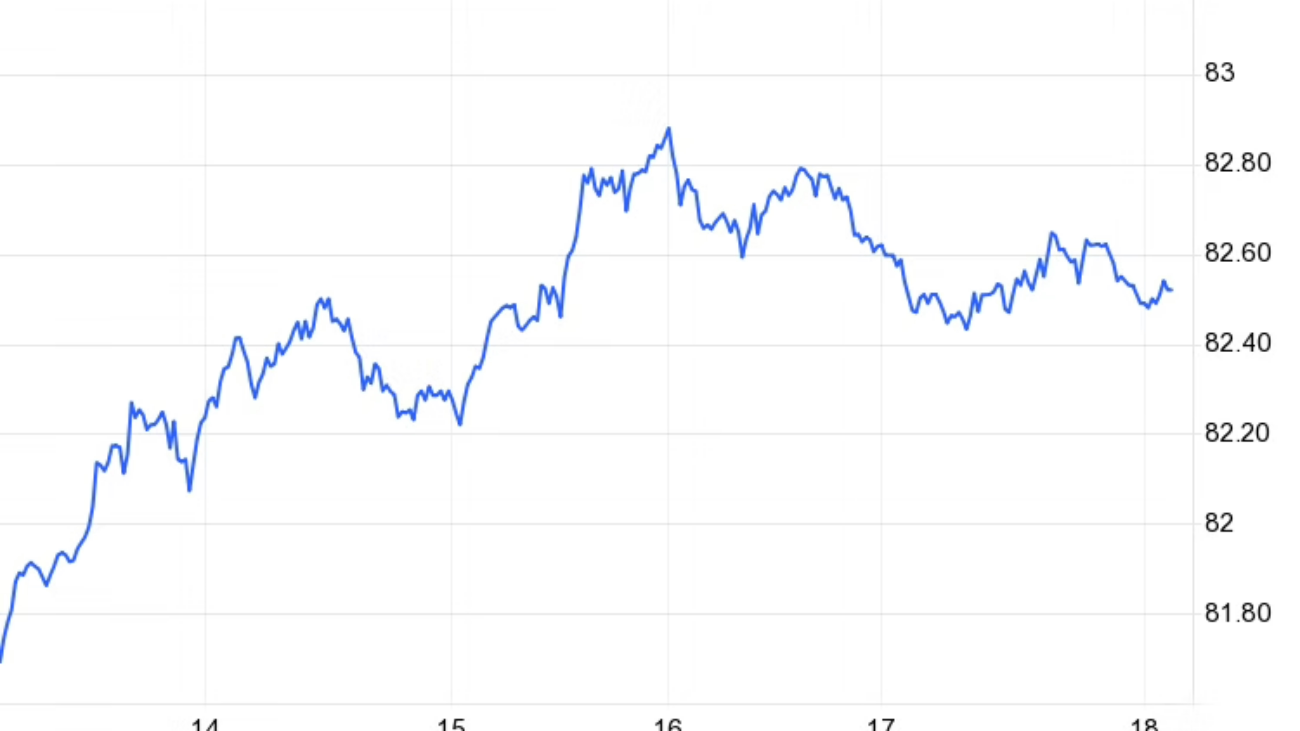
The RBI stance is very different than a month ago, where it didn’t allow markets to take the Indian Rupee above 83/$, but now it’s significant that the central bank could let to the USD/INR depreciate above 83 to save foreign exchange reserves.

The RBI’s equation is very simple as the Federal Reserve reduced its rates to zero back in 2020 because of Covid19, more money chased speculative assets especially in the emerging markets. And the RBI accumulated a lot of Forex reserves. Now the tables have changed. In addition to this, India also is not keen to add its bonds to global indexes due to concerns over potential ensuing market volatility not supporting capital inflows, and thus perhaps damaging the Rupee.

With current account deficits widening to 4.4% of India GDP in Q2, this means India needs to work hard to achieve better capital flows, particularly as tensions on some important global banks continue to be demonstrated.