postN64

Optimism in Challenging Conditions and Time Considerations

Optimism in Challenging Conditions and Time Considerations

Traders by nature are optimists, after all they are wagering on outcomes they believe are valid with targets regarding future results. Global market conditions for the moment have created expensive price action unfortunately, this as plenty of day traders wagering on their perceptions have found out while whipsaw movements and fast velocity have taken place and caused losses.

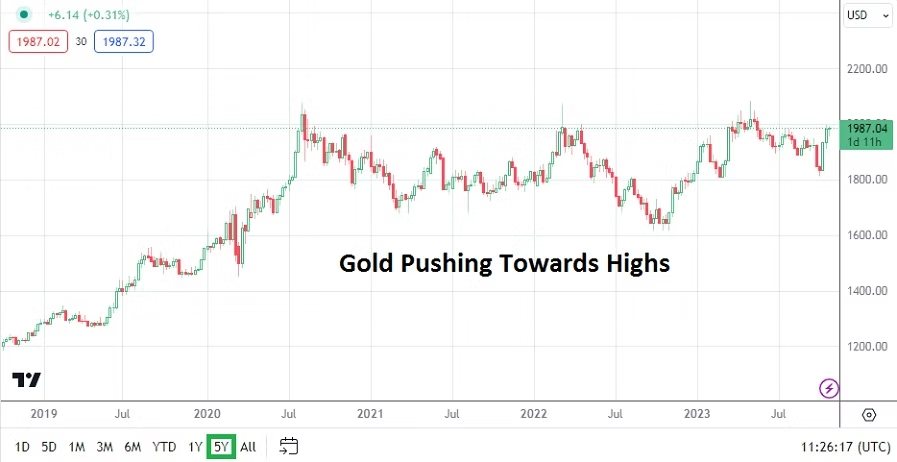
The USD continues to create turbulent higher values among many major currencies it is teamed against as financial institutions exhibit risk adverse tendencies. U.S Treasury yields may be going up because the U.S Federal Reserve continues to sound alarms regarding inflation, but the last two weeks of trading globally have seen an influx into U.S Treasuries as a safe haven move. Another signal that risk appetite is poor among global investors is because while the USD has gotten stronger, gold has also risen in value.

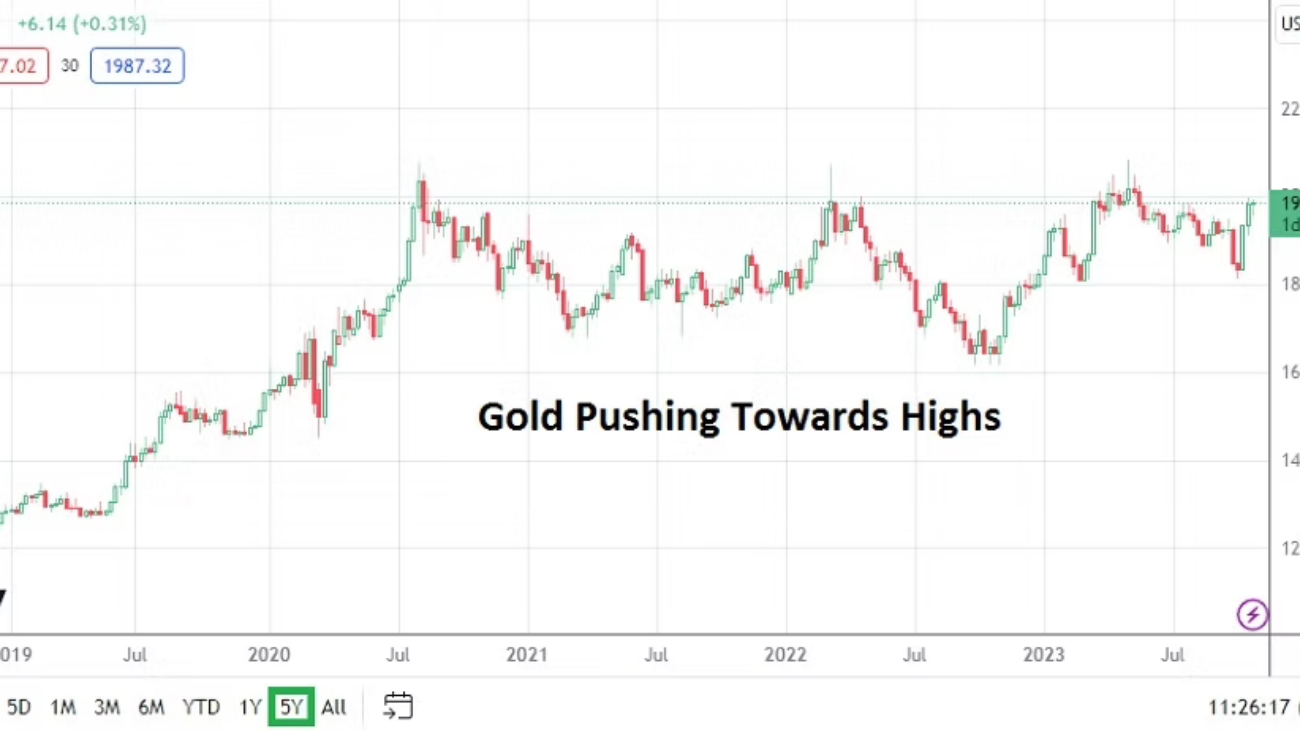
Gold Five Year Chart as of 26th Oct. 2023

And importantly, global markets are trading in conditions which are not considered normal. Many inexperienced people within financial institutions have not dealt with markets like the ones being battled now. High interest rates combined with risk adverse conditions because of concerns regarding an escalation of war conditions in the Middle-East are causing a storm of volatility. U.S stock indices are trading at mid-term lows, and this may continue to be a theme over the next few weeks and beyond, but certainly there are those among us who look towards sunnier days.

So what does an optimist do if they are a day-trader? Perspective needs to be questioned at all times by speculators, and bias regarding all insights by individuals need to be given consideration. A trader must make sure they are not trading based on noise which is coming from the media and tainted with hyperbole. A trader must also question their personal instincts making sure they are free of preconceived notions. Behavioral sentiment gets affected from many angles when market noise becomes loud. Looking for a quiet place to think about market direction is vital for everyone.

Speculators need to remain calm and stick to risk management tactics that prove effective even during chaotic trading conditions. A variety of ways to be involved with the markets directly exists for all, Forex, equities and indices, commodities, bonds are only some of the avenues. Traders can go long or short on their chosen positions, they can participate in the ‘cash’ markets, but can also participate in futures and options trading via time related duration.

Famous investors are known for taking advantage of lower values when fear is high. They look for value via fundamentals within assets with long-term track records. It is not an accident the USD is strong, U.S Treasuries are being sought, gold is being bought currently.

Trends are there to be found and can be taken advantage of by day traders who are looking for quick hitting outcomes, but they must proceed carefully. Because it is also important to acknowledge that no matter how bad circumstances sometimes look in the short-term, that a positive quality among we as humans is to seek optimism. There are reasons to participate in trades with a perspective knowing more tranquil days will come and the markets will grow calm again, markets can reverse and suddenly display risk appetite.

postN48.1

Absurd Friday Forex Results? Suspicions as the Week Begins

Absurd Friday Forex Results? Suspicions as the Week Begins

This coming week may be an opportunity where speculators can test their conspiracy thinking, perceptions of technical and fundamentals in unison. Experienced traders who typically have a high degree of skepticism about markets (particularly when results don’t go in the direction they expected) may question late last week’s results.

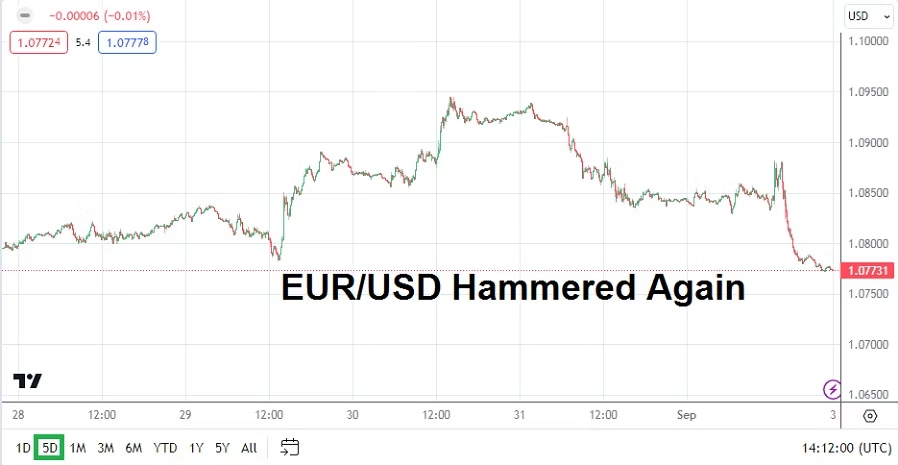
EUR/USD 5 Day Chart as of 3rd of Sept. 2023

Without trumpets or too much hyperbole, was Friday before going into the weekend a ‘false flag’, this as the USD gained strength against many other major currencies. A lack of volume because of the Labor Day holiday coming in the U.S and Canada tomorrow may have affected the Forex landscape. While trading is largely done by computer programs in financial institutions, day traders should understand last Friday worked as a get away day to enjoy a long holiday weekend in North America.

Meaning financial executives largely escaped their offices because they have seniority and the ability to disappear while their ‘underlings mind the store’. Essentially senior management often tells the staff that has to stay behind, “monitor and not touch the system”. This could have left the door open for what appears to be a strange reaction in Forex upon what was in fact weaker data on Friday from the U.S via the Average Hourly Earnings which came in slightly below expectations, and less than stellar U.S GDP results on Wednesday the 30th of August.

Yes, also this past Friday the Non-Farm Employment Change numbers were fractionally better this month than anticipated, but the prior month’s results were actually revised downward. And yet the USD remained strong. Is this because senior analysts, chief traders and risk management officers were absent on Friday?

Tomorrow the same folks will remain largely away from the markets too, meaning results should also be viewed with suspicion. Which sets the table for an intriguing Tuesday and Wednesday for all the major and minor currency pairs teamed against the USD. Gold and equity markets will need to be monitored closely too.

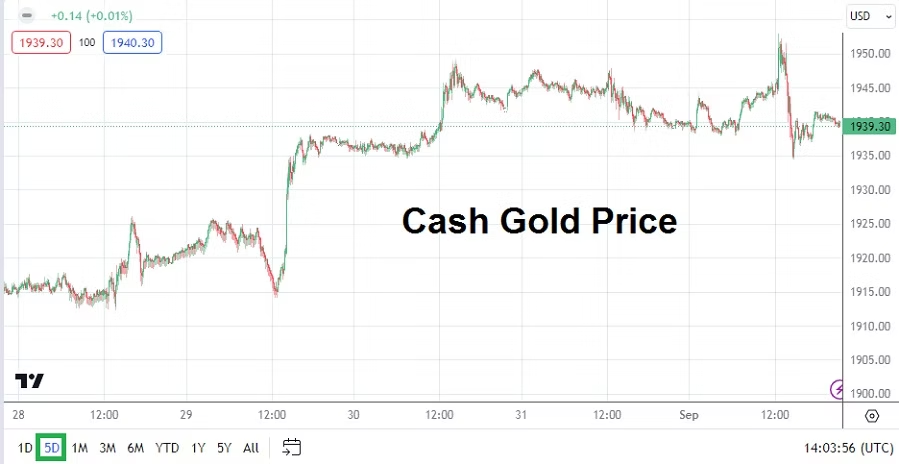
Gold Cash Price Five Day Chart as of 3rd Sept. 2023

Some potential clues are that the price of gold stumbled slightly on Friday as the weekend approached, but this happened as the EUR/USD sank to a low for the week, and the GBP/USD came under renewed pressure. But again this happened in rather questionable circumstances. Important support levels technically may get tested tomorrow, but trading volumes should be examined. Gold in many respects held onto gains made earlier in the week.

Yes, there are reasons to be nervous in financial institutions, due to higher short-term U.S Treasury yields, concerns about the China economy, mortgage rate worries in the U.S and elsewhere, fears about credit availability for small U.S businesses. However, these troubles have not caused a massive meltdown in the most primal of trading venues yet – major stock indices.

September is a notoriously volatile month for equities and speculators who use CFDs to participate in the stock markets globally need to be careful. Correct, some well known ‘traders’ are talking about a coming selloff in the markets, but so far we have not seen a major decline in the NASDAQ, S&P 500 or Dow Jones 30 indices. Day traders should not and cannot underestimate the potential for volatility to occur suddenly. Successful speculative bets via limited funds often means having to practice patience and risk management.

Thus, as the week begins early this Monday, day traders should be careful. Please note that a lack of big trading volumes because of the absence of U.S and Canadian financial institutions will make tomorrow’s results questionable. Opening the door for the potential of reversals on Tuesday, which might be abrupt as a ‘re-balancing’ of sorts takes place as folks returning to their offices seek equilibrium perhaps with their adjusted outlooks.

Simply put the U.S Federal Reserve the past two weeks has seen the same lackluster U.S data as all global traders, and the U.S central bank is in no position to raise interest rates over the mid-term. It would be useful if the Fed voiced their insights regarding the weaker than expected U.S Gross Domestic Product results last week, and the lower than expected Average Hourly Earnings report seen before the weekend. However, do not count on the Federal Reserve to do the right thing.

postN43

Alert: Important Support in View for Binance Coin Traders

Alert: Important Support in View for Binance Coin Traders

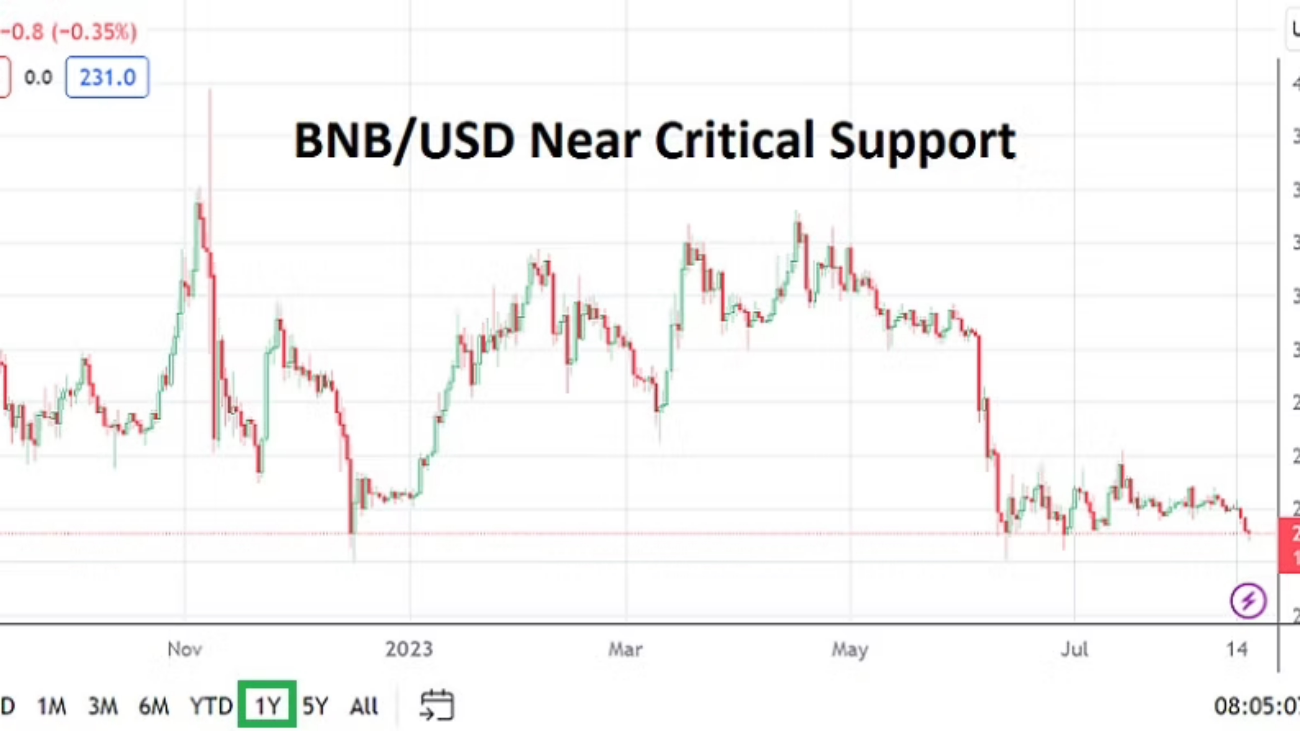
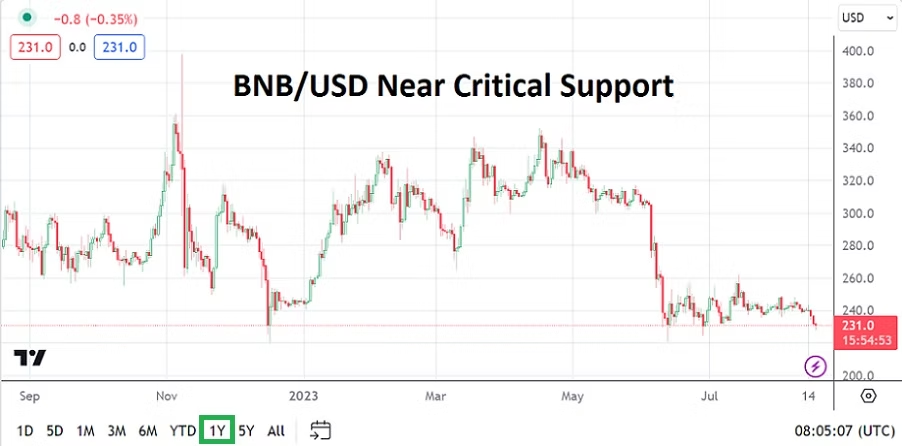
BNB/USD One Year Chart as of 17th August 2023

Important support for BNB/USD is now being battled. The price of Binance coin is near a key inflection value of 230.00 USD. The digital asset world including Bitcoin and other cryptocurrencies has taken on stronger selling recently. Legal issues surrounding Binance have not gone away, nor will they. If Binance starts to show stronger price velocity lower it could spook the broad cryptocurrency market in a large manner. Binance is still the biggest crypto exchange in the world, even as it has come under the investigative pressures of the U.S and some European nations.

Traders should pay attention to ‘stablecoins’ as a barometer of behavioral sentiment in the cryptocurrency landscape. Tether should be watched closely. If USDT sustains value below the 1.00000 USD level for more than a couple of days this would be a negative signal that ‘players’ in the cryptocurrency world are getting more nervous.

Bitcoin is also seeing steady selling early this morning and the price of BTC/USD is near 28,550.00 as of this writing. If BTC/USD were to break below the 28,000.00 this could also add to fear and noise in the cryptocurrency world.

The next seemingly important level for BNB/USD below is around the 225.00 USD mark if tested, if this level proved vulnerable and trading momentum continued downward stronger selling could develop if panic erupts surrounding Binance coin. Traders should be very careful in the cryptocurrency trading environment right now. Legal shadows hovering over Binance have existed for a long-time, and if selling pressure were to mount and values are suddenly tested from June of last year when the 200.00 BNB/USD level was last tested (this as FTX collapsed) this would clearly not be a good signal.

postN39

USD/INR: Higher Move Correlates and Political Shadows Loom

USD/INR: Higher Move Correlates and Political Shadows Loom

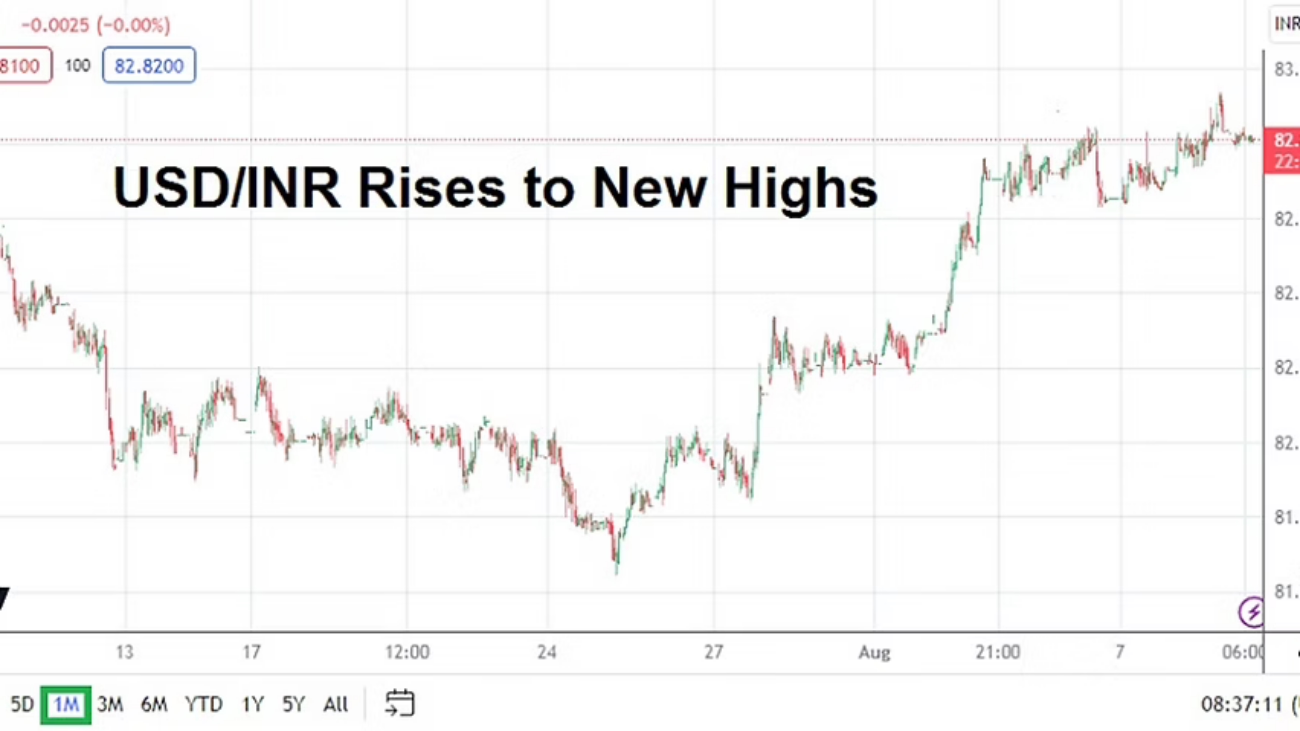
The USD/INR is near the 82.8150 ratio as of this writing the 9th of August, on the 25th of July the currency pair was near the 81.6500 level momentarily. Upwards movement of the USD/INR did produce price volatility in the last week of July, and on the 1st of August the Forex pair was near the 82.1700 ratio. Another dose of upwards momentum quickly occurred on the first day of August, and by the 2nd the USD/INR was trading around the 82.7650 mark.

From Wednesday of last week the USD/INR has essentially taken on a consolidated framework, speculators who are gambling on the USD/INR and need big movement to occur in order to facilitate profits have likely found the currency pair difficult to manage. Yesterday a high of nearly 82.9500 came within sight briefly, this as global risk adverse conditions arose because of the Moody’s rating agency downgrade of some U.S mid and small size banks regarding their fundamental ‘soundness’ and credit worthiness.

Rising interest rates from the U.S Federal Reserve have made it harder for many U.S banks to conduct their business, and loans have become more expensive for their clients struggling to keep up with the rising payments. Particularly if borrowers have the unfortunate position of holding ‘variable’ loans which cost more when interest rates are going up. This has also affected the housing sector in the U.S and in the U.K, as mortgages have become highly priced due to the Federal Reserve and Bank of England having aggressive interest rate policies which are affecting the cost of new home purchases.

The question USD/INR traders may be asking is what does this have to do with them?

USD/INR One Month Chart as of 9th of August

The USD/INR Doesn’t Trade in a Vacuum

The USD/INR has risen in value the past two and half weeks as many other major currency pairs have suffered a similar fate. Nervous sentiment abounds in the global markets because financial institutions are wary of what the major central banks will do next. U.S economic data has been mixed recently, but this perspective depends on time frames regarding outlooks.

Short and mid-term viewpoints continue to point to complications regarding growth and inflation expectations and interpretations of U.S data. The ratings downgrade of some U.S banks from Moody’s yesterday, and early last week Fitch’s downgrade of U.S Treasuries all is related. Rating agencies are getting nervous, perhaps because they do not want to be blamed and held liable if the proverbial ‘fluff’ hits the fan over the mid-term. Rating agencies largely ‘missed’ the financial crisis of 2007 in a famously bizarre manner. The sudden emergence of rating agencies warning investors has made the USD stronger as global investors have become risk adverse temporarily. Yes, this might feel illogical, but the USD remains the world’s safe haven.

The USD/INR also certainly trades because of economic conditions affecting its value from within India. The Reserve Bank of India has a large hand in managing values and is known to be rather active regarding interventions. Yet the USD/INR is being ‘allowed’ to continue to trade near all-time highs. This as India’s status as a growing economic power has taken shape in the global financial markets the past year. The India government has not been aggressive regarding its interest rate policy, and has allowed inflation to seep into the domestic economy via a weaker Indian Rupee for a number of complex reasons. Purchasing goods from India abroad and the ability to invest in India by global financial institutions may be more attractive to those holding USD and needing to convert into INR only when the time is necessary.

Politics and the USD/INR Price Level as 2024 Elections Start to Lurk

From a political perspective too, let’s acknowledge a general election will take place in India in April and May of 2024. Economic decisions being made today and for the mid-term are certainly being affected by the ruling Indian government’s outlook and desire to remain in power. Having come off of yesterday’s highs in the USD/INR the currency pair does remain within sight of highs.

The 83.0000 level likely remains a key barometer for the USD/INR and the Reserve Bank of India is likely watching this value carefully. While it seems unlikely the India government wants the USD/INR to trace much higher because of the psychological implications, global risk adverse sentiment are making the higher values of the currency pair sticky. Tomorrow’s inflation data from the U.S will affect Forex and the USD/INR via the Consumer Price Index. Friday the U.S Producer Price Index will be published. A slight rise in the broad CPI results tomorrow is expected, while Friday’s PPI outcome is expected to match last month’s numbers.

If risk adverse trading remains evident today and the USD/INR holds its ground over the next 20 hours, the currency pair could find that its consolidated price movement from the past week suddenly changes. A higher tick in U.S inflation could be enough to cause the USD/INR to challenge the 83.0000 ratio. Speculators who are wagering on the USD/INR are cautioned to be pro-active regarding their risk management the remainder of this week.

postN27.1

Risk Friday: Fear is a Terrible Thing to Waste

Risk Friday: Fear is a Terrible Thing to Waste

Behavioral sentiment in the broad markets took a turn for the worse yesterday among many major equity indices. This as financial institutions seemingly came to the short-term conclusion the Federal Reserve may actually have to raise interest rates again on the 26th of July, and possibly beyond. Meaning, the Fed might actually back up what it has been saying.

Yes, investors have been warned many times already by some analysts that the handwriting was on the wall regarding additional increases to the Federal Funds Rate, but it seems a fear of losing out has kept many market participants actively running forward with blinders on not cognizant of the Fed’s rhetoric.

Day traders should always be mindful of their emotions. While it is not good to trade based on emotions when involved in an active position, intuition and gut instinct sometimes can save you money when you decide to simply sit on the sidelines and watch the market action instead of participating. In other words, if you are nervous and your instinct is bothering you – do not attempt to enter the trade.

U.S Data Remains Rather Strong even as Inflation Boils

Yesterday’s better than expected jobs report via ADP helped create sparks early regarding U.S economic data continuing to show it is robust, but the ISM Services PMI threw gasoline onto the fire with a much better result of 53.9 compared to the estimated reading of only 51.3. While inflation simmers in the U.S, signs of limited growth abound too making stagflation a real danger.

Investors can now attain a yield around 4.995% on 2-year U.S government Treasuries. A gain of nearly 5% that is almost assured with very little costs regarding commission rates needing to be spent, looks like a solid short-term investment to many. Equity markets have a reason to feel spooked. If the U.S Fed raises the Federal Funds Rate which is now 5.25% to 5.50% at the end of July, and at the same time continues to speak in an aggressive manner about other potential hikes later this year, summer may lose its sense of tranquility for financial institutions.

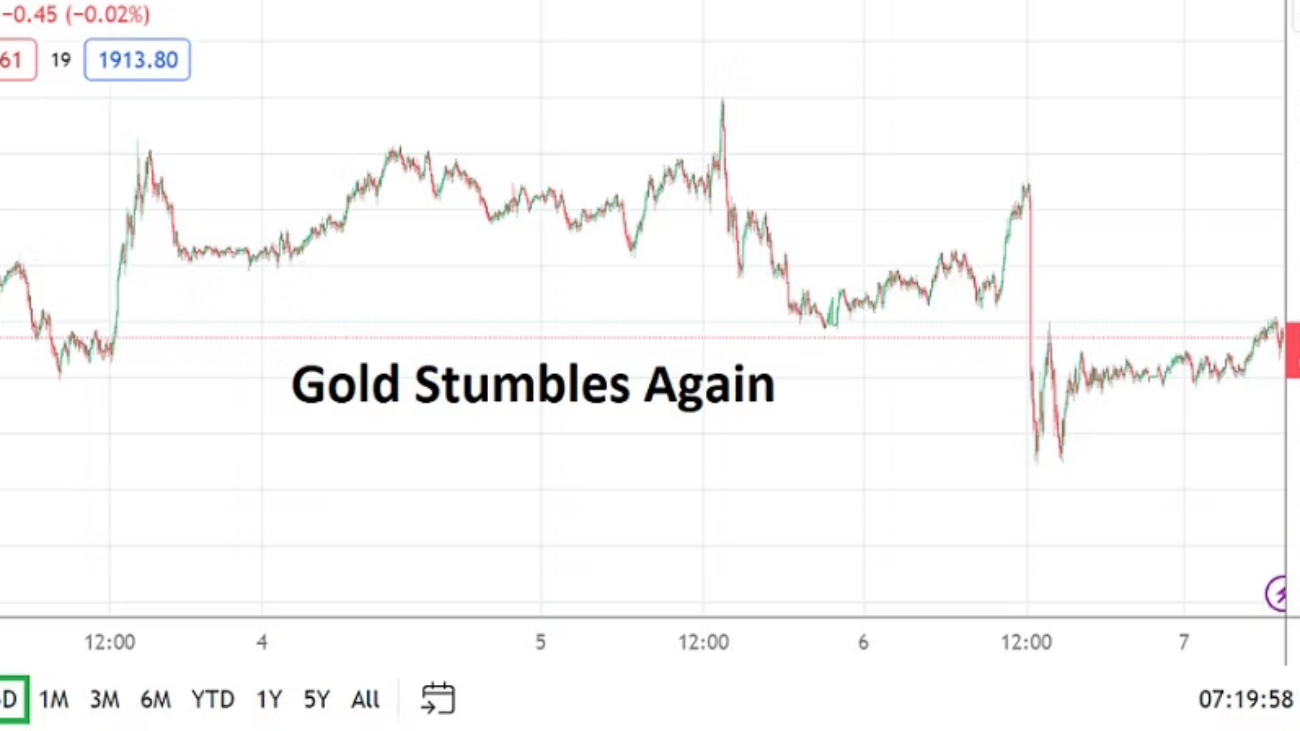
Gold Five Day Chart as of 7th July 2023

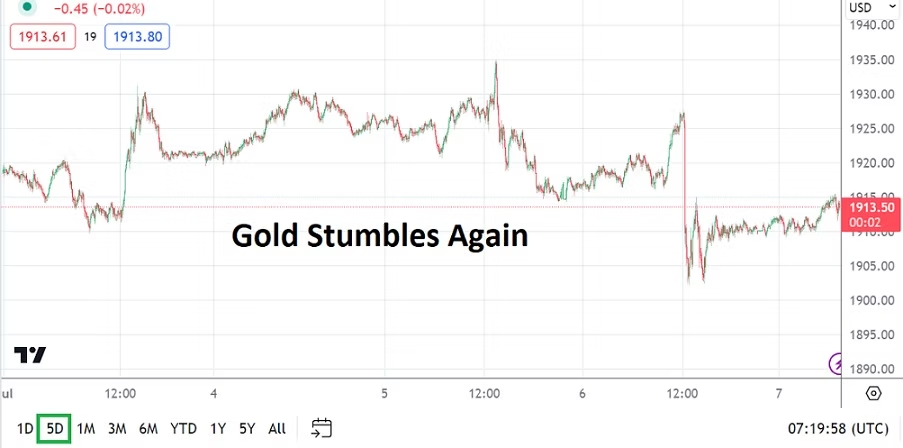
Gold which was trading at nearly 1925.00 USD yesterday, suddenly fell to around the 1900.00 briefly in the wake of the better U.S economic data, showing investors are worried the USD has some additional strength to display potentially. Again, the results of intraday gyrations may not mean a lot to mid and long-term investors, but day traders speculating on the outcome of quick hitting results frequently get hurt by the bursts of volatile storms.

U.S Official Jobs Numbers Today and Anticipation

Adding another dose of intrigue to the day are the upcoming official jobs numbers from the U.S, including the Non-Farm Employment Change and the Average Hourly Earnings reports. The inflation data via the earnings statistics are anticipated to show a gain of 0.3%, if for some reason it comes in stronger than expected this could create more fireworks. Having said that, the Wall Street Journal reported yesterday that Americans appear to have stopped quitting their jobs in order to switch to similar competitive positions as much as they had been the past couple of years. Perhaps this signals wages are starting to cool or least will in the near-term.

Let’s also remember that yesterday’s selloff in equities may have been anticipating better Non-Farm Employment Change results today based on the ADP outcome Thursday, and other solid U.S data before like last week’s GDP gains. Day traders betting on quick hitting CFDs via their brokerage platforms should be careful today and listen to news regarding the U.S bonds market. Inexperienced speculators should try to understand the adage – buy the rumor and sell the fact. Meaning ‘smart money’ often acts before others and takes advantage of their outlooks regarding data.

Quick Warning on Binance and Cryptocurrencies for Gamblers

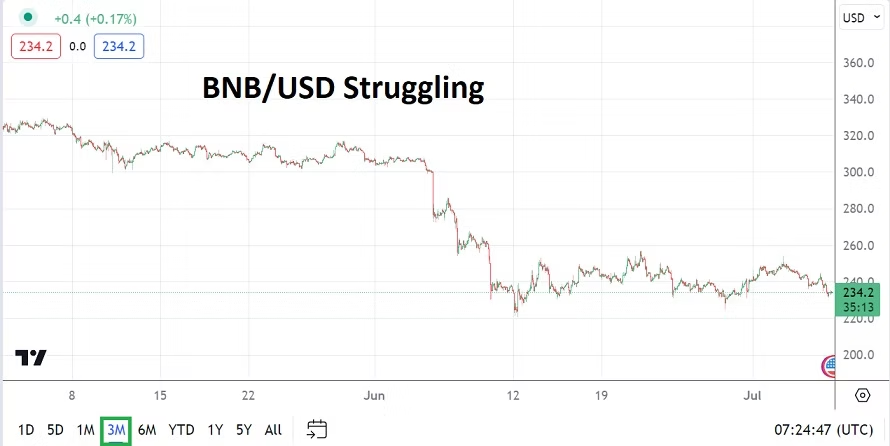
BNB/USD Three Month Chart as of 7th July 202

In a non-related subject, cryptocurrency traders seem to remain rather steady but should be nervous – if anyone is actually really trying to speculate in this endeavor besides Larry Fink of BlackRock currently, news regarding Binance remains troubling on the surface as legal clouds grow. Folks involved with the BNB coin should be careful. As one of the most ‘important’ crypto exchanges Binance’s legal problems moving forward could affect the prices of cryptocurrencies significantly. As of this writing BNB/USD is at nearly 233.00, and it should be noted Tether’s USDT appears to remain rather solid for the moment at 1.00. A look at the current three month chart of BNB/USD highlights its latest value struggles.

postN23

Fed Spits into the Wind as Day Traders React to Volatility

Fed Spits into the Wind as Day Traders React to Volatility

Broad market analysts continue to spit up an eternal fountain of opinions and data to show why yesterdays moves happened and why tomorrows are going to have bright sunshine and positive outcomes. However, day traders know this is not the reality for them and understand the gyrations and volatility of the marketplace is actually quite dangerous in the short-term.

Day traders may even know market correlations looking backwards are also tales of fiction sometimes. Random results from various fronts are often viewed and assembled by analysts and data providers to give credence as to why ‘John Doe’ lost all of his money, because he was not paying attention to the storm that was ‘obviously’ developing in front of his face. Thus, wiping away any stains of responsibility the analysts and data providers may have for their clients loss of money.

Gold Five Year Chart as of 28th June 2023

Traders seemingly want to know what the U.S Federal Reserve is going to do every minute. If they could, short-term speculators would probably buy information on the amount of coffee breaks FOMC members take, and monitor what Fed officials daily meals are to understand their moods.

However, we should also understand that a lot of the day to day mechanics in the financial markets are tasks that have been done thousands of times before, in other words we know the history and results of many financial institutions. The U.S Federal Reserve is doing nothing new and their actions in July, August and onward really do not amount to much. The monthly decisions and annual manifestations of governments that spend too much cash and their officials trying to balance the value of their national currencies are well documented historically.

Markets in reality think long-term and this is where nearly all of the large money is invested. Day traders need to understand what they are doing is almost considered a ‘hobby’ by investment professionals who do not take the ‘hobby’ of the small speculators very seriously. This because the amount of money most day traders are using doesn’t affect market price very much, unless they form a ‘team’ like the Wall Street Bets ‘crew’ or act in unison via other social media groups influenced by people they mostly do not know personally, and should be wary of regarding motives. Let’s point out for a moment though, that long-term investors can lose money too based on faulty outlooks.

Long-term money is invested with perspectives that stretch often for periods of two to three years and beyond. Outcomes are projected not on data that cause daily momentary values to change, but rather on sophisticated insights which take a perspective the value of equities and certain indices, and other assorted assets tend to rise. Long-term investors mix their outlooks on economic road signs which will be affected by the investing landscape over a period of years. Meaning knowledge of geopolitics, interest rates, social stability and economic transparency are vital. History is a guide post for established financial institutions as they work. But sometimes these factors do not work, and employees at long-term thinking financial institutions find they need new jobs.

U.S Federal Reserve officials, after yesterday’s Core Durable Goods Orders and the CB Consumer Confidence reports which showed strength were published, might have raised their eyebrows. FOMC members likely acknowledged the long-term exuberance and nature of the U.S economy and thought ‘we need to raise interest rates again in July’ because growth data is too resilient. However, they have already said this via their FOMC Statement in June which warned about inflation and why it continues to be a concern, but the ‘words’ thus far have not been taken too seriously.

Yesterday’s reaction in the broad markets was not overly volatile because of the U.S data outcomes. Yes, short-term Forex traders were likely hurt or rewarded depending on the what lucky side of the coin they were betting. However, for the most part many long-term investors have already placed their positions and continue to do so, which they may not alter for the next two to three years depending on the amount of cash reserves they have in their arsenal. This ammunition of large capital, allows long-term players to remain in the game until a result can be quantified – good or bad.

Day traders and long-term investors are playing a different game. Their mode of operations work in different manners. Again, it must be stressed long-term investors do not take into consideration the outcome of most short-term traders, nor for that matter do global central banks. In fact most global central banks and the governments behind them, would rather see day traders simply give their money to investment ‘experts’ who put the ‘little peoples’ money into long-term savings and investment programs.

Speculative cash in the markets does exists, but the amounts of money being used by day traders and large ‘players’s looking for short-term results are quite different. It should also be pointed out that many day traders are using CFD’s – which largely means their positions are being wagered virtually – and are not really being deposited into the ‘cash markets’. In other words day traders can go broke much faster than their long-term counterparts who are investing in positions that have the power of time duration on their side. The virtual positions of CFD wagers are not going into the real cash market, thus not causing a reaction in the actual assets being traded.

Many day traders participating in the daily results of Forex, and equities and indices are merely trading on casino like platforms built for wagering on the results of what is happening elsewhere in the real cash markets of assets. It in a sense, it quite a bit like sports gamblers betting on the outcome of game they are not participating.

Tomorrow the GDP numbers will come from the U.S and the growth numbers will certainly be watched. The results will be consumed differently by day traders compared to long-term speculators. The Final Gross Domestic Product numbers from the States on Thursday are expected to show a slight rise. An outcome of 1.3% was seen last month, tomorrow’s anticipated number is a 1.4% gain.

If the growth number is stronger than expected, this would put the U.S Federal Reserve in a position in which it would almost certainly have to acknowledge another hike to the Federal Funds Rate is ‘needed’ in July. The Fed has learned the hard way that incremental rises in the costs of borrowing (Federal Funds Rate) are not curtailing the spending of U.S consumers. If the U.S doesn’t start to show recessionary like economic signs in the mid-term, the Fed may feel like it has been spitting into the wind. Day traders will find tomorrow’s GDP report causes volatility, but long-term investors will likely view this as just another day with a momentary price reaction.

postN10.1

USD/INR: Elevated Range as Questions about Values Persists

USD/INR: Elevated Range as Questions about Values Persists

The USD/INR has traded the past week approximately between the 82.2200 and 82.7000 ratios. Plenty of discussion regarding what the Reserve Bank of India has been doing as they battle the strong USD has been whispered openly, and is being questioned from financial institutions and speculators. Day traders who have been trying to wager on the value of the Indian Rupee have likely found the waters difficult to swim. As of this writing the USD/INR is near 82.5200.

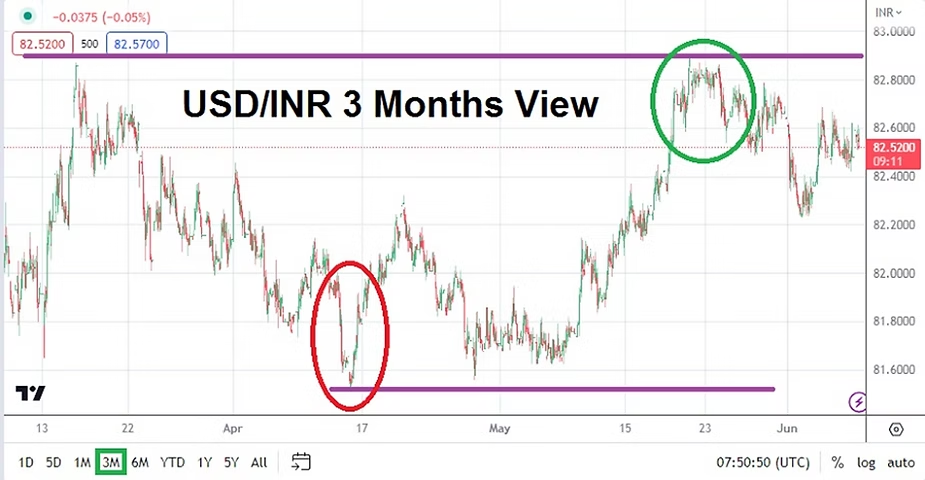
USD/INR Three Month Chart as of 8th June 2023

Last Wednesday’s sudden rhetoric, from two U.S Federal Reserve officials caused mayhem briefly within the USD/INR. The currency pair got hit after India’s official trading hours closed, and essentially moved in overseas accounts based on the spoken words from the two Fed members stating the U.S central bank should not raise the Federal Funds Rate on the 14th of June. These sudden Forex moves hurt many USD/INR speculators. After this rhetoric from the two well-regarded FOMC members, like clockwork U.S economic data provided a counter punch last Friday with better than anticipated Non-Farm Employment Change numbers, this while inflation results also remained persistent.

Three Month View of the USD/INR offers Sentiment Insights and perhaps Clues

The past three months of trading in the USD/INR have produced a rather rocky price trend. A low of nearly 81.5200 was seen on the 14th of April, which turned into a high of approximately 82.9000 on the 19th of May. Intriguingly while many USD/INR speculators may be looking at the U.S Federal Reserve and casting blame, questioning the potential interventions by the Reserve Bank of India remains relevant. The Reserve Bank of India has actually been rather tranquil regarding its use of interest rate hikes; it has not raised the key lending rate aggressively in India like many of its major global counterparts. Why is this?

Is there a potential the Reserve Bank of India and the government has wanted the Indian Rupee to get weaker? Deflating the Indian Rupee’s value in order to potentially create an unseen tax is considered an old trick by economists. This because some believe inflation is a way to tax people without actually raising interest rates, the deflated value of a currency makes it easier for governments to sometimes repay debt, based on the notion the money they are now using is cheaper compared to when the Indian Rupee’s value was better.

Where is the USD/INR Going to Go Next?

I am no economist; my specialty tends to be risk analysis. There is an old joke, ‘why did god create economists? To make weathermen look good.’ The point is that economists often get their outlooks wrong, but we cannot blame only economists for getting their outlooks wrong, many of us do. The USD/INR has a tough few days ahead, it must deal with nervous market sentiment generated from a lack of clarity via the U.S Federal Reserve. Looking for correlations in the Forex market is proving difficult for the moment for all short-term speculators. Choppy trading in the USD/INR has been noticeable the past few days, this Monday’s upwards trend has turned into near-term consolidated day trading. Other major currency pairs are turning in rather turbulent results also without a firm technical stance.

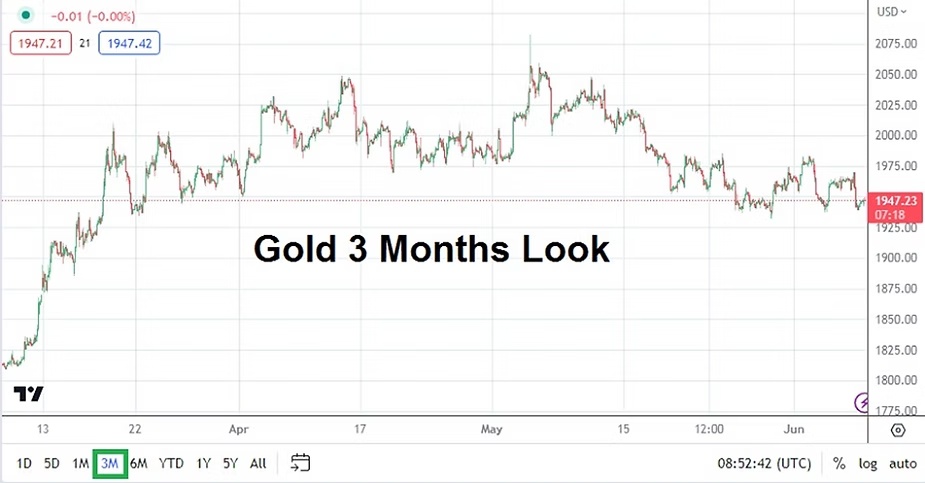
Gold Three Month Chart as of 8th of June 2023

After speaking with many associates in the financial sector the past week, it appears many people believe the Fed should stop raising interest rates for the time being. Some financial institutions seem to be leaning in this direction, but there are caution signs all over that warn about potential surprises from the U.S Federal Reserve.

Yesterday the Bank of Canada raised its Overnight Rate by another 0.25%, when most analysts believed they would pause. Another interesting sign is the current price of Gold near 1950.00. The recent lower price could indicate some financial houses believe the Federal Reserve may actually remain active regarding further interest rate hikes, this because the price of Gold has tended to rise when the perception existed the Federal Reserve is going to be dovish. Gold’s downward price action should raise suspicious eyebrows.

But then again, I am not an economist; I am merely a risk analyst. So my words to you are, be careful if you are wagering on the USD/INR before the U.S Federal Reserve’s pronouncements next Wednesday on the 14th of June.

postN6

Federal Reserve Noise as Short and Long-Term Clarity Fades

Federal Reserve Noise as Short and Long-Term Clarity Fades

There is a storm in the Forex markets currently and it will persist tomorrow. Today is a good day to talk about the difference between short-term trading and long-term investing. Short-term outlooks typically are top heavy with technical interpretation, and behavioral sentiment mixed with fundamentals when speculators are pursuing the marketplace looking for quick profits. Loud short term thunderbolts coming from various components that affect trading are significant. Yesterday’s noise had an impact.

Long-term investment is done with a focus on patience, conservative outlooks regarding fundamentals and potential behavioral sentiment that could develop and encapsulate attitudes within a chosen asset. Day traders are often ready to bet on what is going to happen in a matter of minutes, hours and perhaps a day. If a so called day trader has to be in a position longer than a couple of days, they often find that they are not emotionally prepared to wait for outcomes.

There is also the problem regarding a lack of enough cash in many trading accounts. Short term traders often do not have enough money to carry positions for a significant duration, sometimes overnight transaction fees charged by their brokerage platforms are too expensive. The availability of limited money is a liability and creates unprofitable propositions, unless an extreme amount of leverage is being used. Most short term traders lose their money when trying to apply excessive leverage. Dangers abound for day traders.

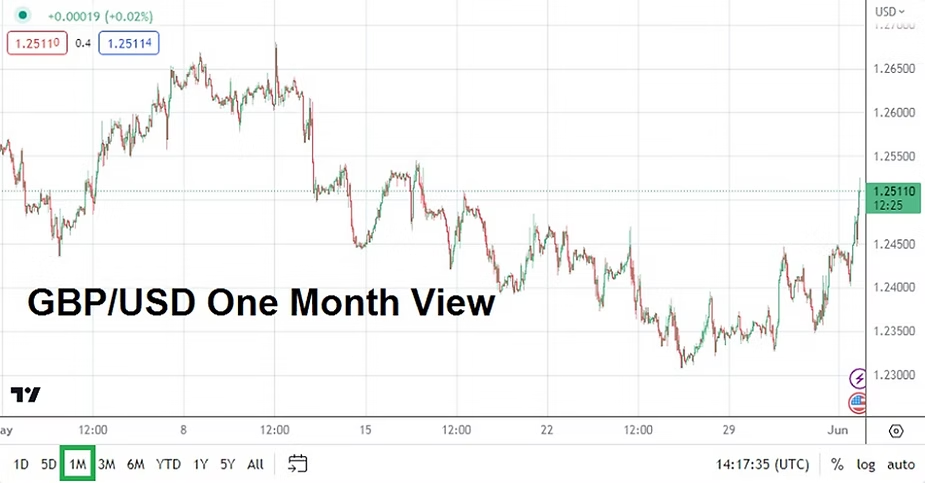
GBP/USD One Month Chart as of 1st of June 2023

Important U.S Data is on the Schedule Tomorrow which may not be mere Noise

Tomorrow the Non-Farm Employment Change number will be published, but the Average Hourly Earnings report will be a crucial part of the data brought forth too. Short-term traders like wagering on the jobs outcome and trying to ride its impetus, hoping a prosperous wave delivers them to the shore with profits. If the Average Hourly Earnings report comes in stronger than anticipated tomorrow, this could send Forex markets into a volatile and dangerous session as it mixes with yesterday’s Federal Reserve ‘dust’ which is still in the air causing problems.

Federal Reserve Dust Storm Caused by Jefferson and Harker Yesterday

Two members of the Federal Reserve’s FOMC committee, Philip Jefferson a Federal Reserve Board of Governors member and Patrick Harker the President of the Federal Reserve Bank of Philadelphia, suggested on Wednesday that keeping the Federal Funds Rate in place on the 14th of June would be a good idea.

Philip Jefferson has been nominated by President Biden to take the powerful seat of Vice-Chair of the Federal Reserve, but he has not been appointed to the position yet officially. The position of Vice-Chair is a key job within the Fed which creates a rather strong voice regarding policy historically. Jefferson’s voice could make a difference in the next two weeks. However, even with Patrick Harker joining Jefferson’s rhetoric yesterday, among them are a handful of other FOMC voting members who have expressed loud concerns about inflation and made it clear in their opinions, that staying aggressive regarding interest rate policy is important.

Clarity remains difficult to visualize regarding what the U.S Federal Reserve will do near and mid-term. However, the Federal Reserve has been exceptionally good at creating choppy Forex conditions much to the detriment of short-term traders, which is supposedly not part of the Fed’s mandates.

Forex Markets have been Stirred and Tomorrow’s Data could Shake Conditions More

Wednesday’s comments from the two Federal Reserve members briefly stirred global Forex and the broad marketplace. Short term traders likely got caught in the momentary flashes of hysteria caused by the comments of the two gentlemen.

Arriving closely behind the comments by the Fed officials yesterday was the U.S JOLTS Job Openings report, which is viewed suspiciously by many professionals in the investment world because its numbers are sometimes suspected of being inflated by ‘headhunters’. However yesterday’s JOLTS results showed a huge increase in available employment options and caused another temporary reaction in Forex – in many ways counteracting the Fed voices.

Meaning tomorrow’s Non-Farm Employment Change numbers, and the inflation report via the Average Hourly Earnings will cause a loud buzz before and after their publication. This as the rhetoric from Fed members Jefferson and Harker mixes into the statistical outcomes.

The USD has been strong in the broad markets the past few weeks against many major currencies. This as evidence has grown the Federal Reserve may feel pressured into increasing the Federal Funds Rate in June in order to fight inflation. Tomorrow’s job reports will be essentially a week and half before the interest rate decision on the 14th of this month.

Short-term traders will likely bet on what will happen tomorrow and will continue to speculate in the coming two weeks regarding what the Federal Reserve will do. This while long-term players position their portfolios based on outlooks that can deal with the ‘dust’ in the air momentarily, knowing they should remain patient. Long-term investors do not always make money, but yesterday’s brief fireworks caused by the Federal Reserve officials weren’t quite as troubling for investors with a broader horizon who don’t flinch with fear from short-term murmurs.

postN5

USD/INR: Stubborn Higher Range and Risky Speculative Wagers

USD/INR: Stubborn Higher Range and Risky Speculative Wagers

The USD/INR has remained within the higher level of its one month price range as behavioral sentiment remains difficult to gauge. As of this writing the USD/INR is near the 82.7200 ratio, but readers are urged to check this price against live market action as they read to compare conditions.

The Broad Forex Market is Nervous and so is the USD/INR

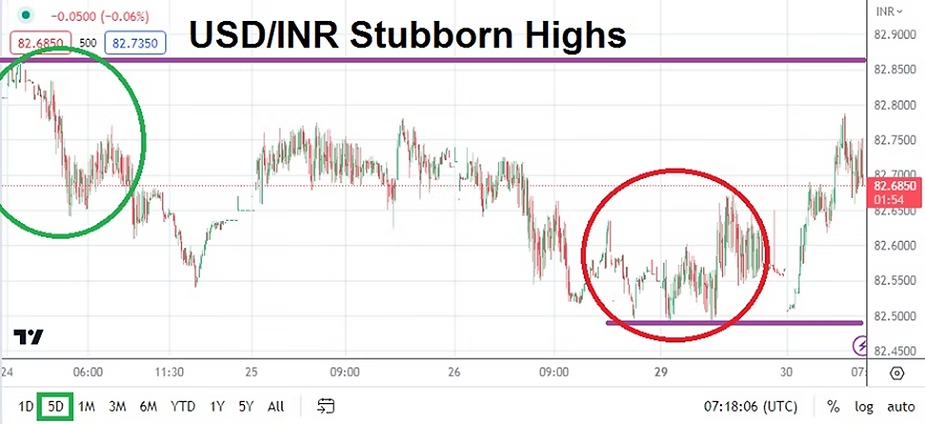
While many traders of the USD/INR who have been tempted to be sellers of the currency pair might be taking it personally that their perceived price targets have not been accomplished, they should note the broad Forex market has been difficult for most global speculators. The price action the USD/INR is experiencing currently comes from impetus due to nervous behavioral tendencies being generated from conflicting sentiment. The price range between 82.5000 and 82.8500 since the 18th of May has been rather persistent with momentary outliers.

USD/INR Five Day Chart as of 30th May 2023

Fear of the U.S Federal Reserve remains rather strong in Forex, this has affected the USD/INR because of concerns the U.S central bank might increase the Federal Funds Rate on the 14th of June. Inflation remains durable and is showing few signs of vanishing. The higher consumer prices in the U.S are a thorn in the side of the Federal Reserve which is intent on trying to put a dent into rising prices. If U.S data continues to show inflation is pushing ahead a rate increase could happen, and the higher prices in the USD/INR likely reflect this has been priced into the currency pair.

Federal Reserve policy can certainly be debated and fingers pointed at their wrong conclusions and decisions made the past two years. The current circumstances for the Fed has put it in a very difficult position. The lack of a clear outlook for financial institutions is leading to a lot of risk adverse trading since the 9th of May. Also concerns about the U.S debt ceiling did not calm many nerves the past few weeks, although the crisis seemingly has found a compromise which is likely to be approved tomorrow in Washington.

High U.S Interest Rates and More Corporate Banking Woes as a Potential

Higher interest rates are hurting U.S corporate banking particularly in the mid and small sized sectors of the industry. If these banks continue to suffer, their problems will create a credit crunch for many in the U.S middle class, which could have a big effect on consumer spending.

Higher interest rates via the increasing Federal Funds Rate are hurting the corporate banking sector because it makes it harder to lend money, and some clients are taking their money out of deposits to seek better returns elsewhere – like Treasury Bonds. The increased interest rates in the U.S also hurt many global currencies like the USD/INR because global financial institutions sometimes seek the better paying U.S bonds, which are also seen as more trustworthy long-term investment vehicles.

Thus, while the Fed is projecting tough talk about the potential of raising interest rates in June, and warning the mid and long-term outlook is cause for concern as inflation shows its ugly head, financial institutions are demonstrating nervous behavioral sentiment. The strong rhetoric from the U.S Fed and its lack of clarity regarding real direction has left the USD/INR and many other major currency pairs in awkward choppy positions with highs being tested. Until U.S economic data shows inflation is under control and growth is slowing down substantially, the Fed may have to continue to be rather hawkish sounding, which will not help the USD/INR selloff strongly in the near-term. In other words traders considering selling should be conservative with the USD/INR and not be overly ambitious with their targets.

Today the CB Consumer Sentiment reading is coming from the U.S, a lackluster report with negative data would actually help the USD/INR. Also this coming Friday jobs statistics will be published. While many folks will watch the employment outcome from the Non-Farm Employment Change, the Average Hourly Earnings could be more important and provide insights regarding inflation which could prove crucial. A rise in wages is not the outcome the Federal Reserve wants to see.

Warning: Use Entry Price Orders when Trading the USD/INR when Possible

Traders should also note that short-term wagers on the USD/INR should be done with entry price orders to make sure they are not caught and hurt by the large spreads which might be offered by their brokers – the spread is the differential between the ‘bid and ask’ price. Frequently a trader will be given a price fill that leaves them feeling like they have been cheated. Speculators frequently try to target short-term price goals with quick hitting bets, but bad price fills make these types of wagers difficult to get a positive result – when only a handful of pips in either direction can hurt a trader because too much leverage is being used.

USD/INR traders who are buyers should understand they will most likely be given the sell price of the ‘bid and ask’ when seeking upwards direction, and sellers of the currency pair are likely to get the ‘buying’ price of the spread – thus making a chosen wager on direction further away and difficult to achieve profits. Using an entry order which pinpoints a chosen price to enter a trade is vital. A trader should not expect to get a price fill which is ‘geared’ towards their chosen direction. Also, spreads in the USD/INR are wider than many major currency pairs because the amount of volume in the Indian Rupee cash market tends to be thinner, leaving more room for the technological capabilities of Forex brokers to provide less than attractive pricing.

post37.1

Nervous Contradictory Trading Winds for Behavioral Sentiment

Nervous Contradictory Trading Winds for Behavioral Sentiment

Behavioral sentiment in the broad financial markets is nervous, and mixed results in the major asset classes are likely causing retail traders to feel uneasy. Most day traders try to perceive which direction they should lean based on price momentum while looking for fast profits. The current state of the broad markets are making decisions difficult for retail traders.

A healthy dose of nervousness at this moment might be a good thing for speculators and keep them conservative. Swirling results in Forex and commodities are causing plenty of problems for traders who instinctively like to pursue buying positions because of the human tendency to be optimistic.

Federal Reserve Causing Headaches for Smaller Banks and Forex

Forex markets have been choppy since the beginning of February 2023, when the U.S Federal Reserve surprised many people with continued aggressive rhetoric. The U.S central bank has backed up its ‘tough’ talk as it ‘fights’ inflation with more interest rate hikes. Clarity regarding a potential June hike from the Fed remains problematic with no certain answer yet. For the moment there seems to be a belief there will be a genuine pause, which may be fueling better returns for U.S equity indices, but there are no guarantees. Behavioral sentiment remains fragile.

The detrimental effect from higher interest rates on mid and small size banks in the U.S remains harmful. Mid and smaller corporate banks continue to struggle with the increased Federal Funds Rate. Bad business decisions within these banks have made it difficult to make profits in an environment when money is no longer ‘free’, this as many of their depositors look for better returns.

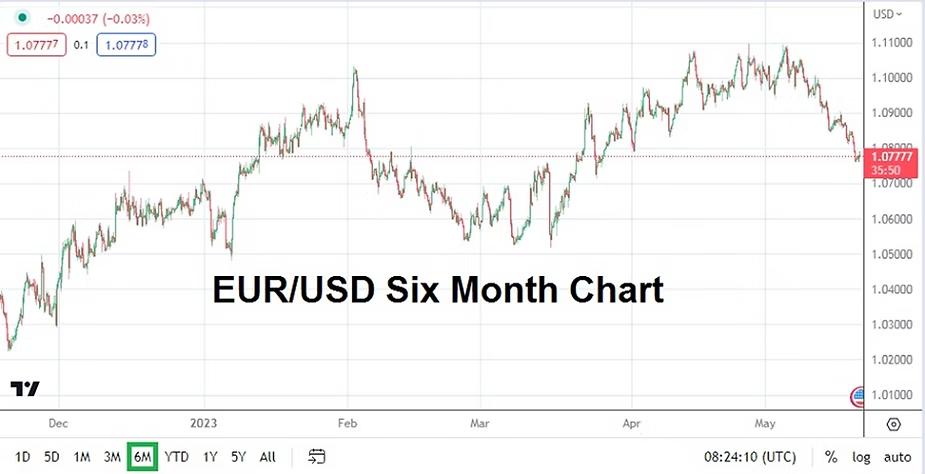
A six month chart of the EUR/USD below shows how the EUR started to climb in the fall of 2022, but then began to run into headwinds when financial institutions started to reconsider the seriousness of U.S Federal Reserve policy earlier this year. Analysis regarding the timing of the Federal Funds Rate forecast to actually start becoming dovish has proven problematic.

While the EUR/USD still maintains plenty of its gains, the current price of the the currency pair is below early February highs. The EUR/USD was trading near 0.95700 in late September of 2022, and the price as of today near 1.07800 is a vast improvement for the EUR. However, the choppiness of the Forex market the past few months has not been easy for day traders who have suffered from sudden reversals frequently in many of the major currency pairs.

EUR/USD Six Month Chart as of 19th May 2023

The KRE regional bank index below shows the dramatic drop in value of the mid and small size banks in the U.S the past year, and the sector certainly still has financial concerns and shadows which are causing pressure on their corporate share values. Stubborn inflation remains and the desire of the U.S Federal Reserve to attack rising costs with higher interest rates remains a serious concern.

KRE Regional Banking Index One Year Chart as of 19th May 2023

Stock Markets Suddenly at One Year Highs as Investors Seem to Return

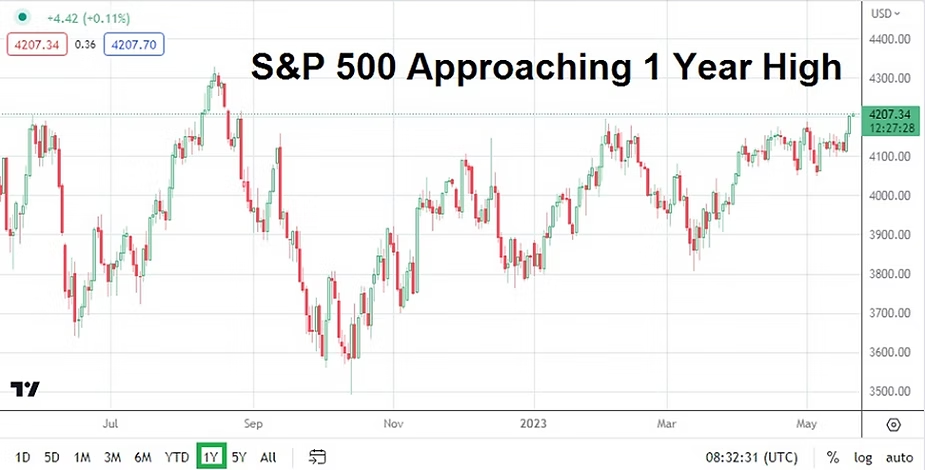
Is the S&P 500 a harbinger of things to come or are investors in the index being too optimistic? Day traders likely stay away from the S&P 500 many times because they are mostly trading the index via CFD’s and this can prove expensive regarding transactions, they are not long-term investors – meaning they do not like to make bets that take awhile to materialize. The results from the past year and a half in the stock markets have made speculators nervous regarding bets on equities.

However, institutions and long-term investors buy and hold the S&P with a vision towards the future; they also reap the rewards of its dividends. The ability of the S&P to be trading at nearly one year highs is curious. The improvement in equity values in the indices may be a sign that ‘smart money’ continues to invest in the stock market for the long-term, even during what is perceived as a fragile period of behavioral sentiment. Financial institutions may also be betting on the U.S Federal Reserve having to become more dovish regarding interest rate policy in June and looking forward.

S&P 500 Index One Year Chart as of 19th May 2023

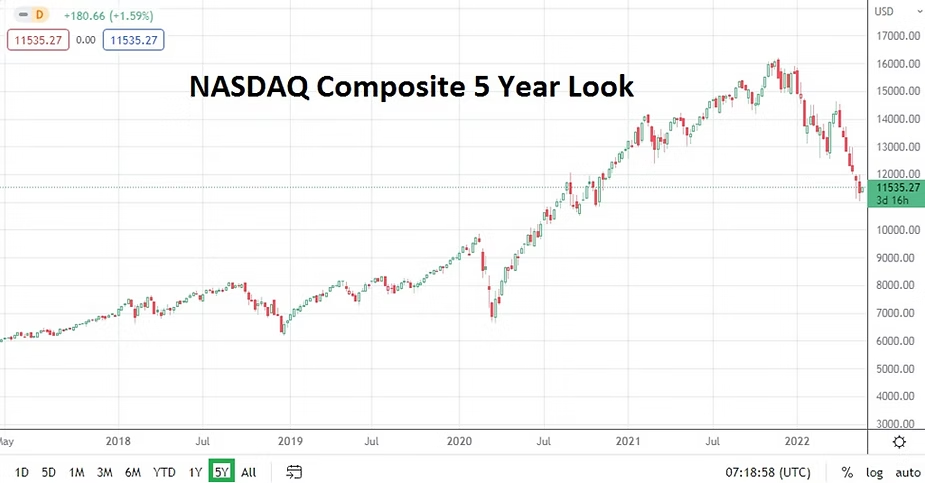
Results on the NASDAQ 100 may be surprising to many and the index is trading at one year highs, and though like the S&P it is still under all-time highs from late 2021 and early 2022, investors have shown a taste for investing in the ‘hi-tech’ index again. While this may contradict the behavioral sentiment of Forex and the results in the mid and small size banking sector, the NASDAQ 100 does point out money is still being invested and might be an indication that day traders need to be more patient, more optimistic about the coming months and year.

While a recession might be looming, large companies have started to lay off workers and scale back on bonuses in an effort to fight against reduced profits. The narrative from the media may be negative in many cases, but many long-term investors tend to look at more conservative fiscal policy in companies as a good practice and a sign they should invest.

Perhaps the market is going through a needed case of the jitters and the U.S indices are showing that brighter days are ahead, even if there are storm clouds that still must be dealt with regarding inflation and possible recession.The long-term horizon tends to always be more optimistic. Day traders may not be able to take advantage of quick hitting trades, but what about changing perspective and looking for more patient results by being more conservative as a speculator? Or maybe investors in the stock market are wrong and another violent selling surge will return into equities, but what if it doesn’t.

NASDAQ 100 Index Five Year Chart as of 19th May 2023

There is a fear among mid-size brokers that trading volumes in many sectors are dropping. Showing cautious investor sentiment on the retail front – which may be a healthy reaction in many respects because it is hard to read momentum right now. Day traders tend to get killed by the daily gyrations of Forex and equities in choppy markets because they are using too much leverage. However, historically when retail traders have turned cautious, this is when institutional trading houses have tended to do remarkably well. Investment houses can take on more risks in markets that are perceived as nervous and fragile, because they have a longer time horizon and more cash to absorb momentary losses.

Commodity prices are also intriguing because after hitting highs nearly one year ago in May and June of 2022, the ratios of many broad commodity indices have come down and values are traversing near late 2021 levels. Which brings us to the consideration that global demand for physical resources are limited because corporations are not making large purchases of commodities, this as they wait on better manufacturing demand for their products. This may appear contradictory and create nervous behavioral sentiment for traders, but cautious business practices are a way to make sure there is enough money for the future when conditions turn optimistic again.

post10

Central Bank Capitulation led by Federal Reserve

Central Bank Capitulation led by Federal Reserve

The 21st and 22nd of September were potentially important signals for traders as the Federal Reserve admitted they remain reactive to inflationary pressures, and other global central banks countered with acts of their own.

While it is difficult and often foolish to believe the markets can be timed, this past Wednesday may have been an important moment for speculators in Forex. Many traders may have veered off into cryptocurrencies or into equities as day traders the past few years, but FX still remains a place that offers volatility and where wagers on price direction can be made.

The Federal Reserve raised their interest rate 0.75% again, and importantly issued a loud admission that the U.S central bank is caught in a reactionary mode. Other global central banks have begun to protect their own currencies too. Jerome Powell, the U.S Federal Reserve Chairman, said he believes the current interest rate is likely at the low end of the spectrum regarding where it has to be to have an affect on current inflationary pressures.

The USD has been strong against many major currencies with a rather unforgiving bullish trend. Raising the Federal Funds rate from 0.25% to 3.25% the past year in the U.S has made short term purchases of U.S debt attractive to many financial institutions. On Wednesday, Jerome Powell made it clear other hikes will be delivered and it is not farfetched to believe the U.S is looking at a potential rate of 4.50% and higher in the spring of 2023. This doesn’t mean the Fed’s policy is correct, it is simply an outlook for the potential Federal Funds Rate based on rhetoric.

  • A Federal Funds Rate in the U.S of 4.00% is likely by early this winter, per the Federal Reserve’s interest rate outlook.

  • Global central banks have reacted to the U.S Fed’s recent interest rate hike, by enacting methods to try and safeguard the value of their own domestic currencies.

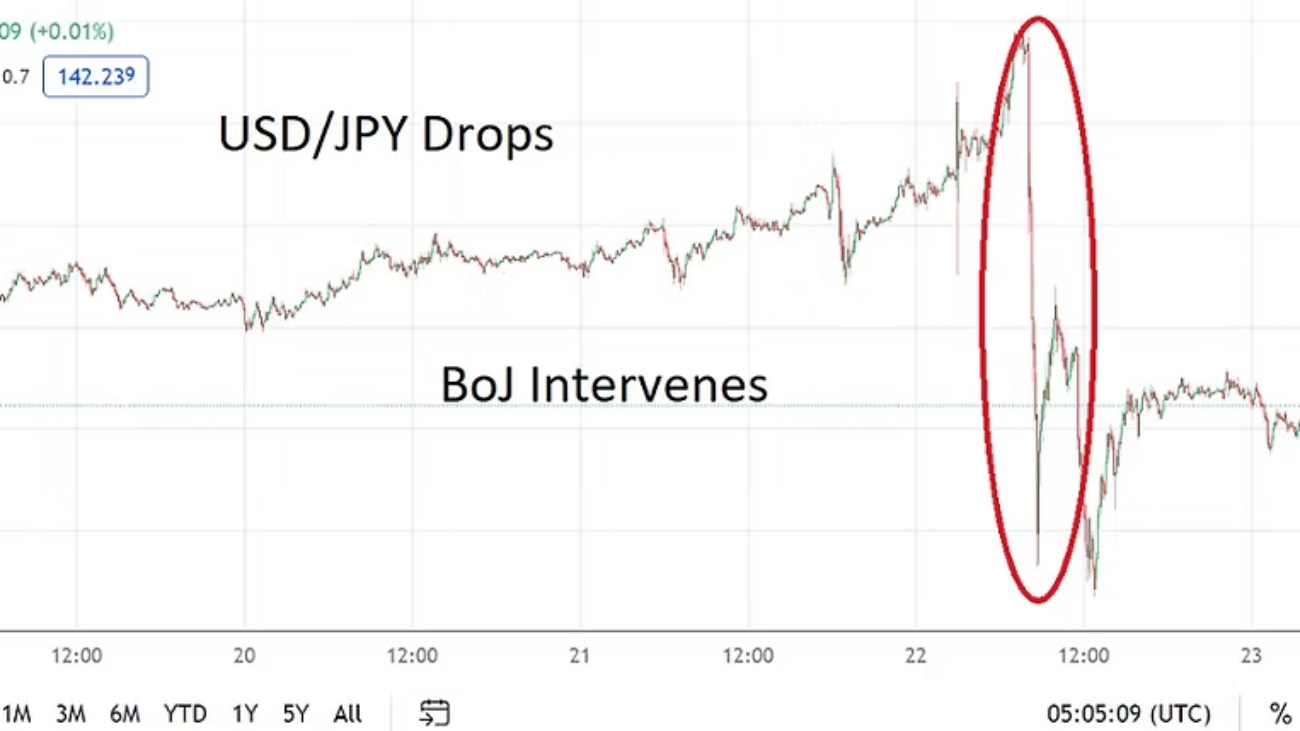
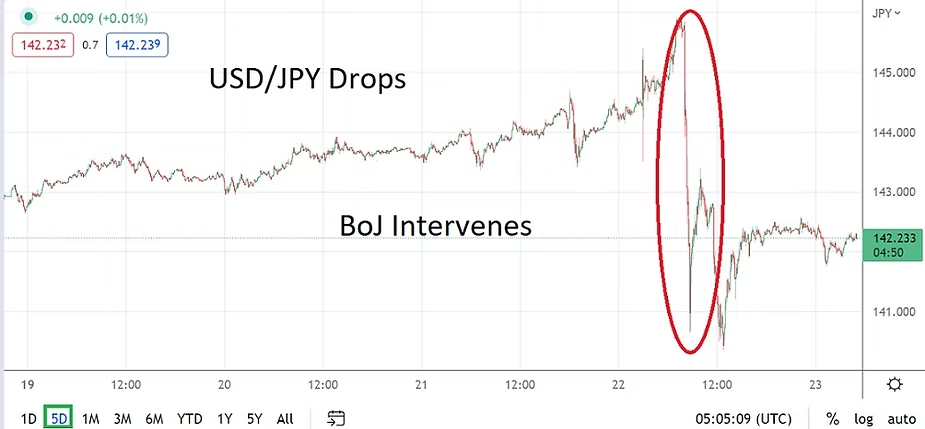
The USD surged ahead slightly before the rate announcement from the Fed, while many other currencies lost value. However, on Thursday the Bank of Japan intervened by starting to buy Japanese Yen against the USD. The Bank of Japan said it will not raise interest rates yet, but its action showed it clearly does not want the JPY to lose additional value to the USD, via the USD/JPY Forex pair. Whether the BoJ’s actions work mid-term remain to be seen.

Global Central Banks feel they must counter the U.S Federal Reserve’s Actions

Other central banks started to act too. The Bank of England and Swiss central bank both raised interest rates yesterday. Speculators who have been watching the USD dominate Forex the past year, may now have to consider that the last two day’s of action via global central banks is a signal an attitude change has taken place, which may begin to affect Forex long term. Traders need to understand opportunity also means there are risks.

Inflation remains high and governments have reached a point where they have had to admit they will have to risk slowing their economies and potentially suffer recessionary pressures to curb price increases. Many central banks likely feel they have to match the hike increases by the U.S Federal Reserve within their own systems to protect the value of their currencies.

BoJ Intervention on the 22nd of September

End of the Dominant USD Bullish Cycle in Forex?

While Japan for the moment refuses to raise borrowing rates, the BoJ’s buying of JPY effectively signals the USD has become too strong and is starting to hurt the Japanese economy. The the Bank of Japan will be interesting to study long term, to quantify if Japan’s lack of raising rates proves to actually be correct in the current environment.

Philosophical differences and central bank maneuvering is complex and has a long history of debate. Having said that the Bank of Japan has been largely scorned by many other central banks the past three decades for its methods, but while Japan has never recaptured the growth numbers it attained in the 1970’s and 1980’s, the nation remains one of the world’s richest.

The action of the BoJ and other global central banks means that speculators may want begin to look at Forex and tinker with the notion that the bullish trend of a dominant USD may start coming to an end. The cycle has been strong and again, it is difficult to say today is the day. Timing the market is often proven wrong, but the messaging from global central banks that they will start to shadow and react to the U.S Federal Reserve’s actions may mean that they will try to curtail the decreasing values of their own domestic currencies with more robust methods.

Day Traders need to understand a Complex Puzzle is Ahead

Forex markets can produce dramatic changes of value abruptly and cause costly losses to traders who bet wildly. The use of too much leverage and a lack of efficient risk management frequently destroys value quickly. However, now may be the time to contemplate testing Forex with the notion the USD may start to incrementally loss value. A lot has to happen. There are plenty of risk events ahead which could lead to wildly unforeseen results. In other words there are no guarantees.

Global equities led by the U.S indices appear very fragile and if the major stocks loss more value, this could also cause a stronger USD. Why? Because the USD would have to be purchased to buy U.S stocks by foreign investors who want a safe heaven. While it may seem contradictory to think U.S equities would be bought in downturns, this is what has historically happened when global financial institutions seek safe havens and believe other places are too dangerous to invest.

Remember financial institutions are not supposed to be day traders, they are supposed to be long term investment vehicles. Meaning if global equities suffer, even if U.S indices suffer too, the U.S is likely to remain the choice of investment houses as the place to seek shelter if they have to purchase equities as part of their mandates.

Yes, Forex will always be a complex puzzle for short term traders seeking to take advantage of the daily gyrations in the global markets. If a speculator insists on participating with wagers in the market place, they must consider that financial storms are always brewing because trading is seldom easy.