postN73

U.S National Security, Part 2: Regional Alliances – Europe

U.S National Security, Part 2: Regional Alliances - Europe

Opinion: The following article is commentary and its views are solely those of the author. This article was first published the 25th of December via The Angry Demagogue.
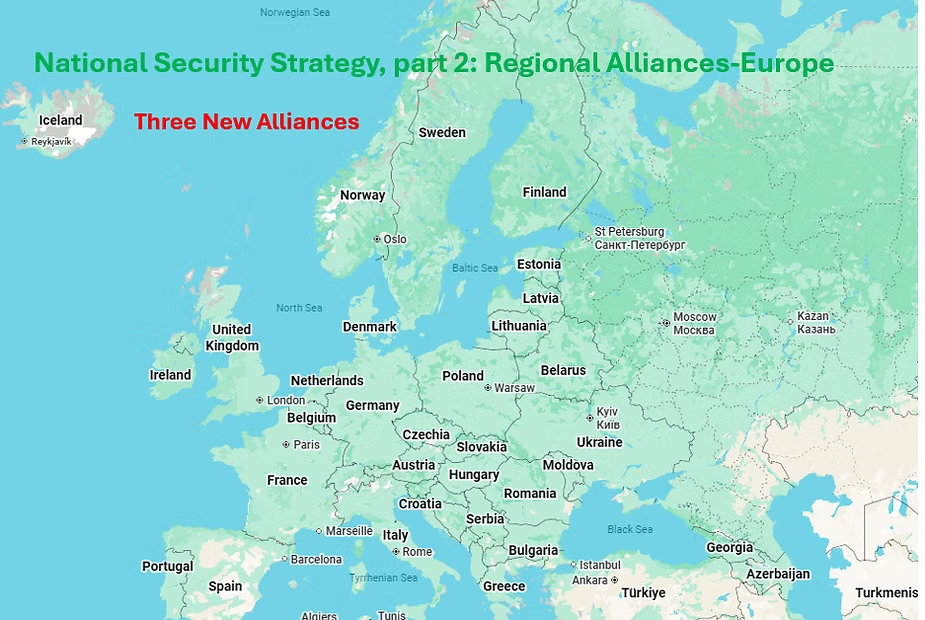
As we continue our tour of the administration’s National Security Strategy we will stay with “part III: What Are America’s Available Means to Get What We Want?” and move to the sixth bullet point: “A broad network of alliances, with treaty allies and partners in the world’s most strategically important regions” and work through the important regions that the strategy documents – Asia, Europe, the Mideast and Africa. For good or for bad we will need to split these regions up since the key point is forming coalitions that can handle their actual region. Sweden can’t be part of a coalition to protect Italy’s interests in the Mediterranean and Japan won’t be protecting Singapore.

Some U.S allied countries, like Australia, Israel and India will be involved in multiple regions helping lead alliances in all areas important to them. With that in mind we will point out the first mistake of the discussion on regions and that is Europe. We will suggest something here that would not usually come from the mouth of a hawk and pessimist and that is that NATO has no real mission and needs to be replaced by a series of alliances that make more sense. While the fear during the Cold War was a Warsaw Pact ground invasion into Germany and beyond which would have required the totality of American and European forces, Europe now is facing a Russia that could not conquer Ukraine in nearly four years of war. That is not to say that Russia is not to be feared only that each part of Europe needs to ally to face a Russian onslaught in its own theatre.

Italy is not going to send troops to Sweden to prevent an attack and Norway won’t be helping Greece in any fight. Turkey is a country that other NATO countries fear more than trust, especially regarding Russia.

In short, NATO needs to be broken up into different alliances where each country will be allied with countries whose fall would affect its national security. The United States can either be a signatory to these alliances or it can decide how involved it wants to get in any conflagration depending on its own interests at that time. It can decide to position ground troops in the countries, supply air cover or, as in the 12-day war between Israel and Iran, help with missile defense and in providing the final blow with weapons only America has. Or – it can decide that it will never participate. One hopes that that won’t happen, but each alliance will need to be ready to fight on its own.

We can include France and the U.K as large countries with advanced armed forces as allies to all of these alliances. France certainly can contribute air power to each of the alliances that are faced against Russia. As for the U.K, it is difficult to know where that country is going but its navy and air force are still powerful.

Today we will deal with north, central and western Europe.

The Baltic Alliance

This would be an alliance that includes Poland, Germany, Sweden, Finland, Norway, Denmark, Latvia, Lithuania and Estonia and would provide cover for land, air and naval battles. Each of these countries, with the exception of Germany, has a border with Russia and all are on the Baltic Sea – a key waterway for them and for Russia.

An alliance of these countries would force them to concentrate on those areas necessary for their defense. An incursion, for example into Finland would force Poland to mass forces on its border with Russia and Belarus (Poland borders Russia in Kaliningrad which is separated from Russia proper by Lithuania) and Germany to move forces to Poland. All countries could also contribute ground forces to Finland as well as naval and air power.

The only thing missing is the lack of a nuclear umbrella. That is no small issue but can be dealt with by support or threats from France or the U.K.

The Atlantic Alliance

Aside from helping the Baltic Alliance, France and the U.K will have major responsibility along with the Netherlands for patrolling the North Atlantic and, with help from Portugal, and Spain the South Atlantic. As the Atlantic Ocean can be considered one of America’s seas, this alliance will need to have the close cooperation if not outright membership of the United States. Canada too, will need to be part of this alliance. We can include the increasingly important Arctic Ocean into this alliance’s responsibilities.

As we move towards the south Atlantic countries such as Morocco, can be included as well as other western African allies of the west. An alliance like that could encourage western African countries to abandon close security and economic ties with China and Russia. The “border” of this alliance would be that squiggly line in the middle of the Atlantic that separates the Eastern and Western hemispheres.

The Central European Alliance

We can look at the smaller central European countries that formed the heart of what was the Hapsburg Empire but are not front line countries bordering Russia – Romania, Hungary, Slovakia, Czech Republic, Austria, Serbia and Bulgaria – and we have an alliance that, backed by Germany, Poland and the United States, would create a further deterrence to Russian encroachment into Europe proper.

Where, do you ask does Ukraine fall in this European alliance structure? That answer will have to come from the major European powers in concert with the United States. Adding Ukraine to the Baltic alliance might be viewed as another attempt to NATO-ize them by the Russians. However, attaching them to the less threatening Central European Alliance of smaller countries might be the excuse and “victory” that Putin would need to end the war. But we are getting ahead of ourselves here. Ukraine is a problem that can only be solved if the West decides to actively join the fight against Russia (unlikely) or when Putin and Russia get tired of the fight and look for a way out that could allow them to claim victory (more likely than the former, but sadly, a long way off).

The Administration’s concentration on regions and how certain countries can become leaders in support of western and American interests is correct – but the breakdown of the regions has to go beyond the post WWII world. The place of America in the post-cold war world, with a China that wants to challenge America’s economic and military interests and leadership needs to break down old alliances into more manageable and logical pieces.

The wild card in all of this is, of course, the will of the European powers to take their own defense seriously. The Baltic Alliance we spoke about seems to be filled with countries that understand the threat from Russia, but do they recognize the threat to them from the alignment, the Axis if you will, of Russia, Iran, North Korea and China? And of more importance have they yet come to understand the threat to their countries, as they know them, from open immigration and from their own abhorrence of families? The former is something only the governments can handle, the latter though, must come from the people themselves.

A whole generation (or two in many instances) of Europeans have grown up not only as “only children” but in families that have no aunts and no uncles, no cousins and only very elderly grandparents, if that. They have grown up in other words without families. Will the young generation see the importance of families to themselves and their countries or will they continue the nihilistic lives that they parents have “sanctified”? Religious institutions, too will have a major role in this challenge. No amount of “parental leave” and childcare subsidies will convince the young to marry and have children – will only come from a change in the culture. Is Europe up to it?

Disclaimer: the views expressed in this opinion article are solely those of the author, and not necessarily the opinions reflected by angrymetatraders.com or its associated parties.

You can follow Ira Slomowitz via The Angry Demagogue on Substack https://iraslomowitz.substack.com/ 

postR175.1

U.S Growth (Lack of it) and Inflation Report Key to End of Week

U.S Growth (Lack of it) and Inflation Report Key to End of Week

Day traders may believe they are being confronted by another wave of data and news which is going to make their endeavors more difficult. The announcement by Joe Biden that he will not run for re-election in November however was not a major surprise. The handwriting on the proverbial wall has been clear for nearly a month that Biden was under immense pressure to step aside. It appears Kamala Harris will get the Democratic nomination per reports that delegates are starting to pledge their loyalty.

Financial markets which may have been interpreted yesterday as cautious due to the Biden and Harris news may actually not have had a tremendous effect. It is quite possible investors and traders have started to position their assets for a Trump victory. Love him or hate him, the polling numbers appear to suggest the Republicans are potentially going to win big in November. Except the word November is the key, there are still over 100 days for things to go wrong for the Republicans. Nothing is settled and day traders need to understand that a lot can change. Economic data from the U.S will be plentiful in the coming days. Also, China has lowered key borrowing costs in an effort to try and fuel spending in the nation as consumers remain hesitant and a sign the nation is battling a troubling economy.

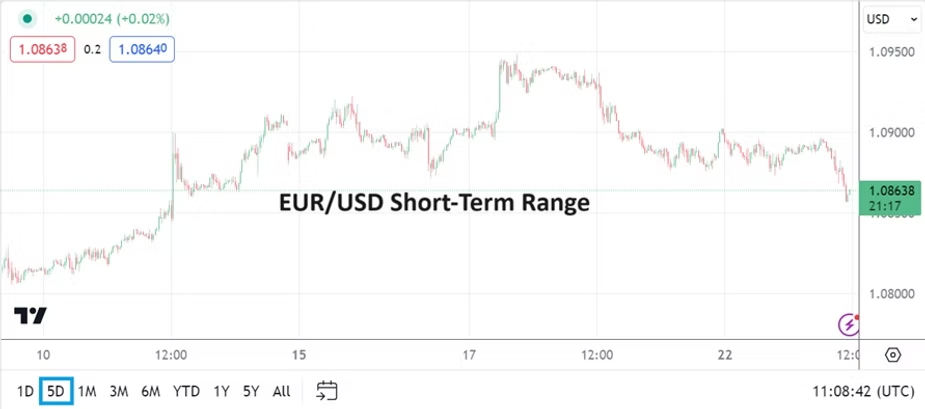
EUR/USD Five Day Chart on the 23rd July 2024

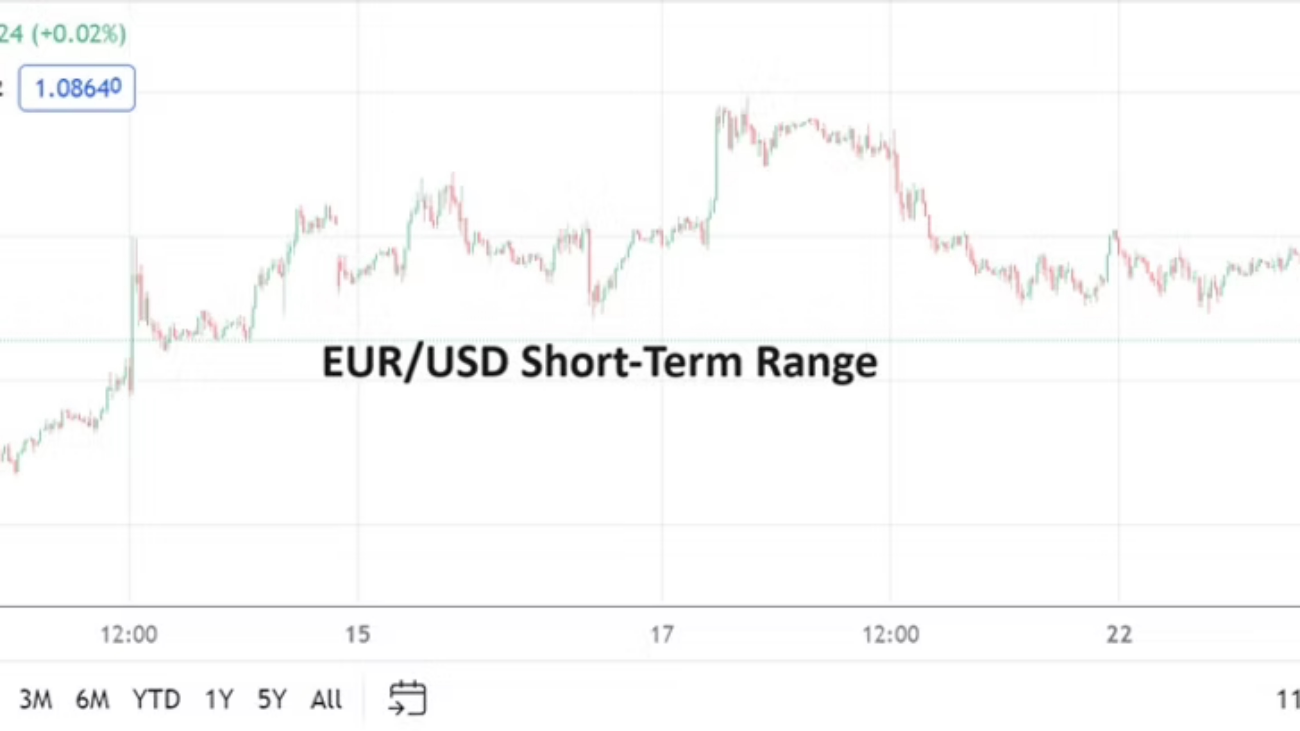
Traders who have been trying their hand in Forex have seen the EUR/USD and GBP/USD sink in value via short-term price changes. While retail speculators may look at the moves over the past day as vicious, they should note that since Wednesday of last week the USD has been stronger in Forex. It is doubtful financial institutions were betting on Biden to drop out of the race last week or for China to lower their interest rates. What in fact might be playing out is the possibility that most financial institutions believe the USD had been oversold and now want to position for the economic statistics coming this week. Results this week will help motivate notions the Federal Reserve will have to become dovish in September and proclaim a weaker U.S economic outlook through the end of this year, or for more idle chatter as the Fed undertakes a soundtrack which pleads for caution if inflation numbers remain stubborn.

USD/CNY One Year Chart on the 23rd July 2024

Monday, 22nd July, China One and Five Year Loan Prime Rates – borrowing costs were cut officially yesterday. The interest rate reductions of 0.10% were small, but China hopes this change helps propel stimulus for its struggling economy. It may not. But before folks sell China short, the nation continues to be a dynamic economic and political force and this power is not going to abate soon. The USD/CNY has incrementally risen since the start of 2024, but it is still below the higher values seen from August into early November of last year. It seems possible the Chinese government will continue to allow the Yuan to lose value in an attempt to reignite export.

Tuesday, 23rd July, U.S Existing Home Sales – the past few months have seen a decrease in the housing data. However, last month’s outcome was stronger than anticipated. These numbers tend to get a lot of fanfare, because they are a solid barometer of U.S outlook regarding interest rates and potential inflation. If folks feel like they should not sell their homes because their current payments are cheaper via their existing mortgages compared to taking on higher costs which are being offered now due to more expensive interest rates, this causes existing home sales to often fall. This because those with homes are not looking to move and simply want to stay in place, also making the potential of finding a house for folks who want to enter the market a more expensive proposition. Again, the outcome of this data is more of a barometer and doesn’t tend to affect financial markets like equities or Forex too much.

Wednesday, 24th July, Europe Manufacturing and Services PMI – E.U nations and the U.K will publish their readings. Last week the ECB kept their key lending rate in place. Political questions still linger in France which is more of a thorn in the side of the E.U than the potential outcome of these data reports. France and Germany expect better results from the Manufacturing and Services numbers. The broad E.U estimate also is optimistic about better results. Great Britain too is expecting better numbers. However, Forex traders will likely be more focused on coming U.S data and stay in a USD centric mindset the remainder of the week when making their forward considerations. And it should be noted the E.U and U.K economies are still struggling.

Wednesday, 24th July, U.S Manufacturing and Services PMI – these reports will be important certainly regarding the sentiment of Purchasing Managers, but the index reading may not be the biggest thing on investors minds. U.S data statistics on Thursday and Friday will be the outcomes that are being prepared for regarding potential affects. The Manufacturing number is expected to match the previous result, the Services figure is anticipated to be weaker.

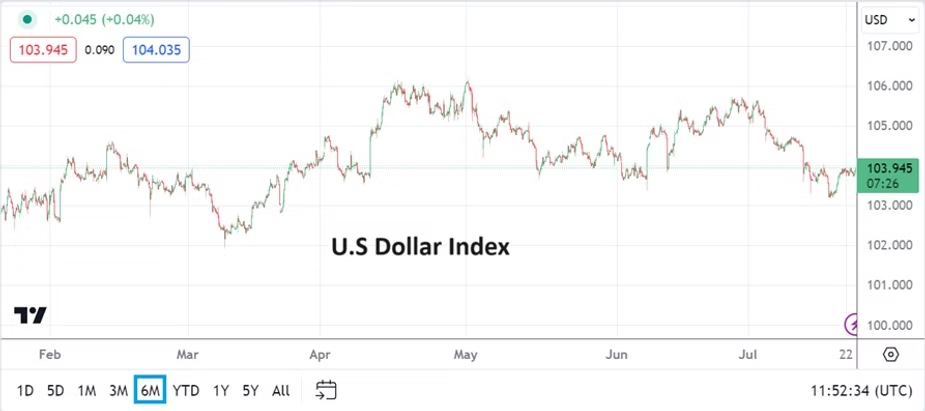
U.S Dollar Index Six Month Chart on the 23rd July 2024

Thursday, 25th July, U.S Advance GDP and Advance GDP Price Index – last month’s growth number came in below expectations, this GDP number is anticipated to produce slightly better numbers. The U.S economy via data has been showing signs of slowing the past few months and this Gross Domestic Product number is going to get a lot of airplay not only because of investors who will use it as an outlook because they believe the Fed will be paying attention, but also because the GDP result will start to become a political football for the Republicans and Democrats. If the growth numbers are weaker than anticipated this could propel USD centric weakness. However, day traders need to keep their eyes on the GDP Price Index stats too – if the inflation report comes in below expectations this could also fuel USD selling. Day traders need to pay attention to the USD Index charts later this week. While the short-term has seen some bullishness, the range of the USD remains near important support levels via a six month perspective and as the Fed comes under more scrutiny, traders should expect more tests in the near-term.

Friday, 26th July, U.S Core PCE Price Index – last month’s report matched expectations. If this inflation number meets the anticipated outcome, or comes in below the estimate this could sustain USD centric bearish momentum into the weekend and early next week.

postN51

AMT Top Ten Miscellaneous Raindrops for 16th of February

AMT Top Ten Miscellaneous Raindrops for 16th of February

10. Bitcoin is trading within sight of 52,000.00 USD, the digital asset was trading near 38,700.00 on the 23rd of January, which is over 34% in less than a month. That’s a lot of air in the balloon folks.

9. Gold: The precious metal has climbed above 2000.00 USD, this after a drop to 1985.00 USD on the 14th of February. Sentiment is uneasy.

8. Not April Fool’s Day: Iran has announced ‘plans’ to build a naval base on Antarctica, after declaring ‘property rights’.

7. WTI Crude Oil: The price of the commodity continues to battle the 77.00 USD level. Higher energy costs will not be looked on favorably by inflation hawks.

6. U.S Treasuries: Yields should be watched today after having provided anxious results this week, U.S equity indices will continue to react to the ‘bonds’ market.

5. Nvidia: After delivering superlative results in 2023, the company has announced the release of Chat with RTX, which allows independent AI chatbot capabilities to interface with your own documents, videos, etc., providing insights from personal queries.

4. Chinese Property: Investments dropped by over 9% in 2023. China’s government faces a clash between socialistic ideology in order to help the market versus practical supply and demand realities.

3. U.K: Gross Domestic Product numbers came in with negative results yesterday for Britain, the combination of recessionary GDP and stubborn inflation is stagflation. Bank of England faces a difficult decision. Will the BoE get proactive and cut interest rates before the Federal Reserve? GBP/USD is below 1.25800 this morning.

2. Data: Stronger than expected U.S CPI statistics caused bedlam on Tuesday, but yesterday’s Retail Sales came in weaker. The ‘disappointing’ consumer spending numbers were likely welcomed by the Federal Reserve and financial institutions. Producer Price Index statistics will be published today, surprise inflation results could jostle financial markets.

1. Forex: Day traders witnessed whipsaw results early this week and should remain cautious going into this weekend. Patience will be needed as USD centric outlooks adjust to nervous shifts in behavioral sentiment.

post 183

An India-Israel Alliance: Prospects to Serve Global Freedom

An India-Israel Alliance: Prospects to Serve Global Freedom

Opinion: The following article is commentary and its views are solely those of the author.

We wrote a few weeks ago in response to Nassim Taleb’s claim that Israel was fragile due to its over-dependence on the United States, and we came to the conclusion that in general he was correct although not in every aspect Is Israel a Fragile Country?.

Also, we compared Israel’s fragility with that of other free or status-quo countries (as opposed to revolutionary countries like Russia, Iran and China) and thought that Israel was certainly not more fragile than other free countries in difficult neighborhoods.  We then gave a general outline of how the free-status-quo world might look should we actually see the end of America’s commitment to global freedom The Day After Pax Americana.  

I would like to examine in a more detailed way about Israel and India and how their potential relationship could be a model for this world. With the U.S reluctantly and belatedly responding to attacks from Iranian backed groups in Syria, Iraq and Yemen and their stubborn resistance to attacking Iran itself each free or status-quo country needs to look into its own defense. The U.S also needs to see how it can help midwife these alliances so as to guarantee a free world after their voluntary end to the Pax Americana.

Israel will need  to expand its reach and move towards a more anti-fragile existence without damaging the all important U.S relationship. We can’t underestimate the importance of the U.S relationship to Israel and how important it is to maintain and even expand it – but as the U.S political landscape is changing and as the elite part of the younger generation is, for some reason, excusing violence against Jews in general and Israel in particular, Israel needs new strategic partners if it is to thrive and move at least part of the way towards anti-fragility.

Israel’s relationships with the Arab world, the Abraham Accords along with its older peace treaties with Jordan and Egypt are dependent upon dictators remaining in power. The most vocal and belligerent voice against Israel by a government in the (non-Iranian influenced) Arab comes from Jordan and the most vocal and belligerent non-governmental voice in the (non-Iranian influenced) Arab world probably comes from Egypt. These treaties are all important and they are based upon the self interest of the current rulers of the countries (which is a good thing), but no one can know how long they can last and how firm they really are.

Israel also has a strong and growing relationship with Greece and Cyprus in the eastern Mediterranean and have joint military exercises together. Their navies and air forces train together and even their ground forces have joint exercises but neither of those two countries have the economic, military or diplomatic heft that Israel needs.

If Israel is looking for a second strong ally but one that itself lives in a dangerous neighborhood then the place to turn to is India. With the largest population in the world, a democratic government and a growing economy, India is the ideal strategic ally for Israel. Both are countries that live in dangerous neighborhoods, are working democracies and have experience dealing with terrorism. India, under with the premiership of Narendra Modi already has a strong relationship with the Israeli military. Israel has sold more than $600 million worth of military equipment to India (second only to Russia) and the two militaries have cooperated on anti-terror policy. The Israeli navy also reportedly has close ties to the Indian navy including submarine exercises in the Indian Ocean. Israel already has nearly $5 billion in trade with India (import and export) and it is time for Israel to start purchasing basic military supplies from India. India has five domestic manufacturers of the standard 155 mm artillery shells and it has large small arms industry – this should be an alternative to total dependence on the U.S for this standard equipment.

There is now a consensus in the country that Israel needs to broaden its military manufacturing and acquisition and the best way to do this would be to expand its relations with India. In order for this to make sense the time has come for Israel to say a very big “thank you very much” to the United States for the $3.9 billion in military aide it gets annually and instead purchase directly from the U.S and other sources.   India could also help in building factories in Israel – which could even be operated by Indian nationals through Israel’s guest worker program.

The military cooperation should be expanded to the air-force as well as ground forces.  There ought to be joint officer training, just as there is now with the U.S and some European countries. There should be a process in place that will eventually lead to a freedom of the seas treaty in the waters between India and Israel’s Gulf of Eilat. This should include cooperation between naval, air and anti-missile forces. 

The foreign worker program should also be expanded. Israel is trying to free itself from dependence upon Palestinian labor – from both Gaza and the West Bank – and India and Israel have been talking about an expanded guest worker program. Currently there are Indian citizens working as aides to the elderly and disabled and that needs to be expanded to construction and agriculture. 

Israel is a small country with around 10 million people and due to its large birthrate and legal immigration there is a lack of new housing construction in the country. The guest worker program in place with countries like Philippines, Thailand, Sri Lanka and others allows workers to work for up to five years and earn much more than they can earn in their home countries. They are provided with the same health care as Israeli citizens (paid for by their employers) and are even given pension benefits which they take with them when they return to their home countries. Israel could probably host up to 100,000 Indian workers a year.  

Scientific and student cooperation should be increased. This will not only help both countries develop important technology in areas such as healthcare and biotech, but will help India and Israel retain some of the scientists that would otherwise emigrate to the U.S and U.K. The exchange programs at university science and technology departments could lead to the creation of world class companies in the respective fields. 

Finally, cooperation regarding the capital markets could help both countries develop world class markets. India has the potential to be a global financial center in the coming decades and Israel, while far from being a financial powerhouse could be a link to European markets and investors with the time zone 1-2 hours ahead and close connections with those markets. 

The United States will be Israel’s main ally for the next few decades but it will be healthy for both countries if Israel was able to share interests – political, diplomatic, cultural and military with another major country. While France was that country until 1967 no European power has the position or the disposition to ally with Israel. India is democratic and attained its independence at the same period Israel did and from the same (then) major colonial power.  Also, both countries have overcome their socialist beginnings to thrive on the global economic stage. 

Now is the time for Israel and India to take the next step on the road to a true alliance. If we have truly reached the end of the Pax Americana, then this can be an example to the rest of the free-Status-quo world on how to manage without the vast power that is the United States. If somehow America shows the will to continue to lead the free world an Israel-India alliance will only contribute to the freedom that a continued Pax Americana protects. It would be helpful in any future conflict in the Pacific and the alliance could expand to the Gulf countries, East Africa and maybe even Egypt. 

Economically and technologically the obvious expansion would be towards South Korea and Japan. Militarily, it could aide and potentially replace the U.S naval presence in the Persian Gulf and allow it to concentrate its forces more in the Pacific. We are not talking here of a relationship that will replace the U.S military tomorrow or even next year. 

This is a long term process and requires the governments, corporations and individuals in both countries to be aggressive in turning a relationship into an alliance.  And it will require the cooperation and encouragement of the United States which will have to agree to support this and similar alliances even if it does not agree with all the tactics used in a moment of crisis.     

It is time to start looking forward and to stop depending on the goodwill of the American people as America, too faces major fiscal, strategic and military challenges of its own. 

Disclaimer: the views expressed in this opinion article are solely those of the author, and not necessarily the opinions reflected by angrymetatraders.com or its associated parties.

You can follow Ira Slomowitz via The Angry Demagogue on Substack https://iraslomowitz.substack.com/ 

postN98.1

Choppy Forex Conditions and the Trading Week Ahead

Choppy Forex Conditions and the Trading Week Ahead

Forex traders may be feeling a bit perplexed if they have blindly been looking for a weaker USD the past two weeks. While outlook for a bearish USD over the mid-term remains a theme from many analysts, day traders need to accept that intra-day results often create price fluctuations which make wagering on short and near-term perspectives dangerous. Trading conditions have been turbulent the past week and early this morning.

While analysis of monetary policies and economic data are vital, it is also important to remember there is a significant difference between the desires and needs of businesses functioning in global commerce, and the trading perspectives of speculators who are hoping to ride on the back of ‘insights’ provided by experts. It should also be considered that coming out of the holiday season many global corporations are now repositioning for 2024, and the financial institutions that work for these companies are also trying to get these outlooks aligned.

The USD has become stronger over the past day against many major currencies, but looking for a 100% reason to explain why this happened is likely misguided. Most U.S financial institutions were closed yesterday for the MLK holiday observance. While inflation data from the U.S Producer Price Index was weaker than anticipated last Friday and caused a brief spurt of USD bearishness, the greenback is lingering within the stronger realms of its near-term values against many currencies.

The idea that recent USD bullishness may simply be a sign that financial institutions believed the greenback had been oversold over the past couple of months may be correct, but this also opens the door for the potential of a reversal to develop and more USD selling as sentiment and economic data try to dance in a unified manner.

The week ahead may still prove to be choppy, but there are interesting bits of evidence that risk appetite lingers within the stomachs of many large investors. The slight rise in U.S Treasury yields recently may be worrying to some, but it should be acknowledged that the climb higher has been achieved while yields remain near mid-term lows. The same can be said for U.S equity indices which provided choppy conditions last week but certainly remain in highly valued realms.

Patience is a needed tool when trading, speculators looking for instantaneous results often lose money because they are being too aggressive. Risk taking tactics always have to be given importance.

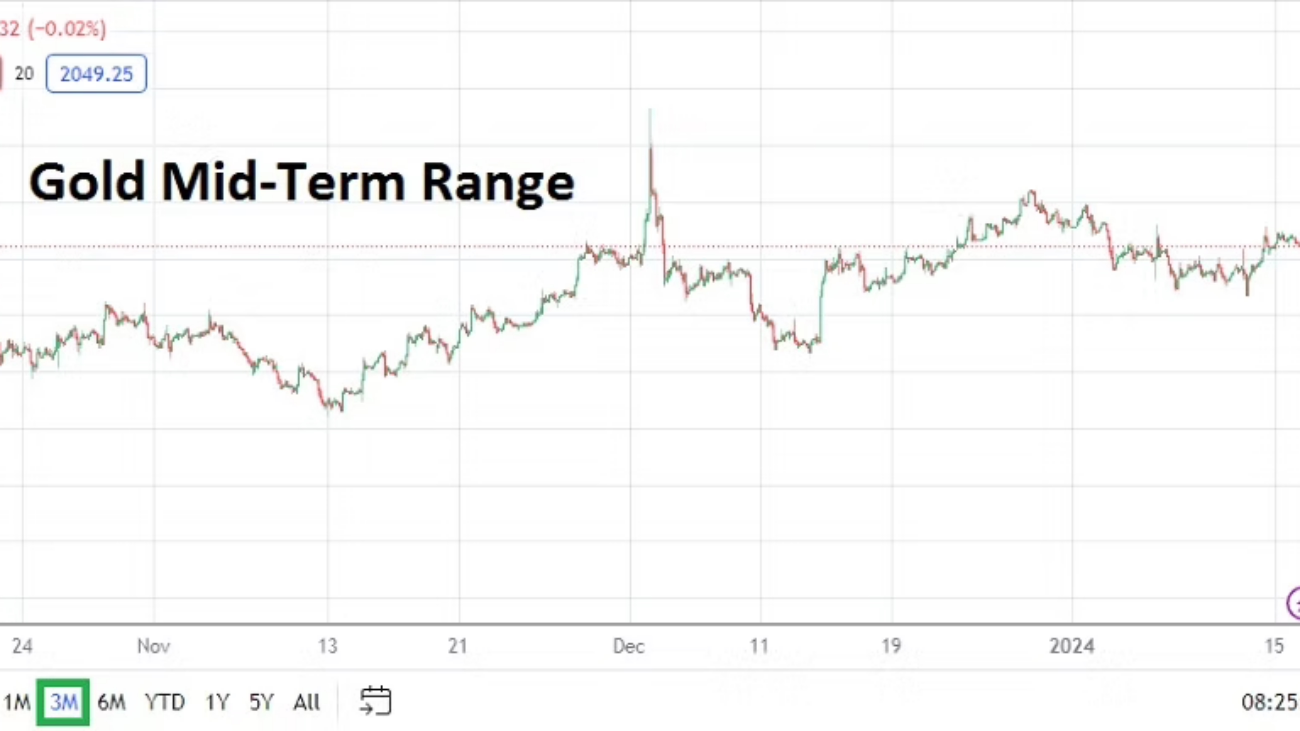
Gold Three Month Chart as of 16th January 2024

Gold remains rather comfortable above the 2000.00 USD level. As of this writing the spot price for the precious metal is near 2050.00 USD. This is fascinating because it underscores the notion that long-term gold buyers appear to believe the USD will remain within weaker territory. But again, short-term and mid-term outlooks for speculative wagers are two very different things.

Tuesday, 16th of January, Canada Consumer Price Index – the inflation numbers from the ‘North’ are expected to be lower than last month’s results.

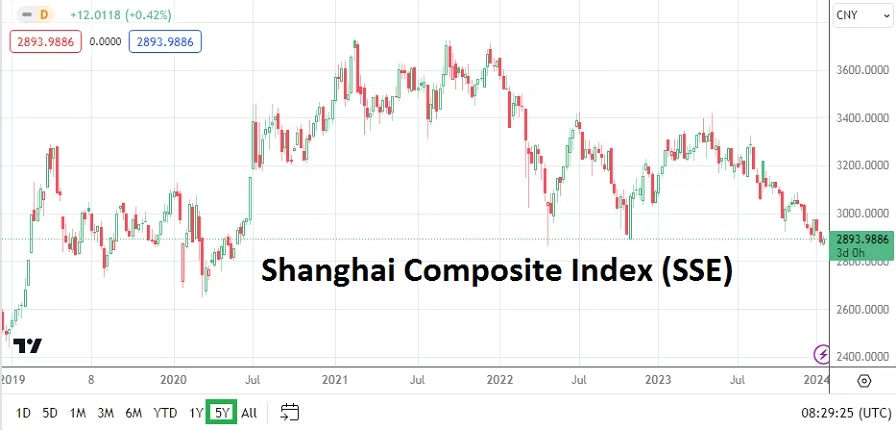
Shanghai Composite Index Five Year Chart as of 16th January 2024

Wednesday, 17th of January, China Industrial Production and GDP – recent economic reports regarding the deflationary troubles the nation is facing have been loud. The industrial and growth numbers should be monitored. The Shanghai Composite Index (SSE) is trading near values last seen in May of 2020, this is not a good signal.

Wednesday, 17th of January, U.S Retail Sales – the consumer data will have an affect on sentiment in the broad markets. The results are anticipated to match the Core Retail Sales gains from last month, and the broad number is expected to be slightly higher. Traders should be alert in case a surprise outcome occurs. If the statistics are close to the estimates, this could create some calm in Forex and perhaps set the table for USD weakness to be seen for a moment.

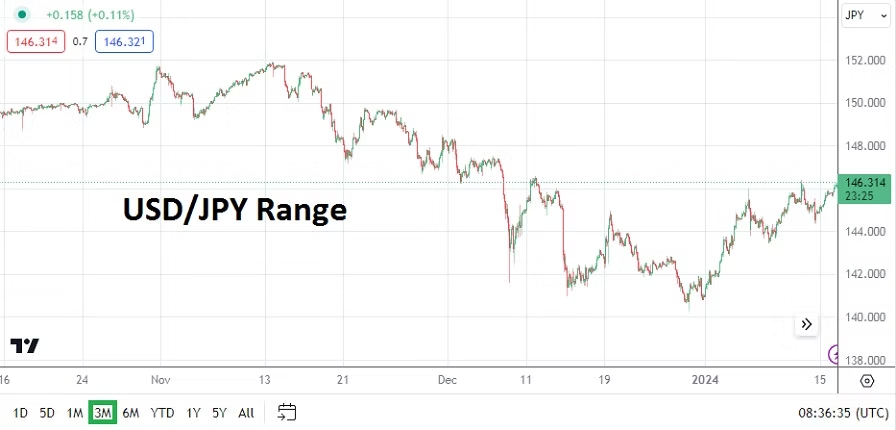
USD/JPY Three Month Chart as of 16th January 2024

Thursday, 18th of January, Japan Revised Industrial Production – while the report is not viewed as a major piece of financial impetus in the speculative world, the USD/JPY has been rather dangerous for short-term traders caught on the wrong side of recent bullishness. If the number comes in at minus -0.9% as expected, it will then likely take USD centric bearish sentiment to cause a reversal lower. The past two weeks in the USD/JPY have been difficult for traders looking for downside momentum. A stronger than expected industrial number from Japan would likely help USD/JPY bearish outlooks.

Friday, 19th of January, U.K Retail Sales – the British consumer spending numbers are expected to come in weaker. The GBP/USD is currently trading near early January values as choppy short-term conditions persists.

postN33.1

Federal Reserve Bank Decision and FOMC Statement Wednesday

Federal Reserve Bank Decision and FOMC Statement Wednesday

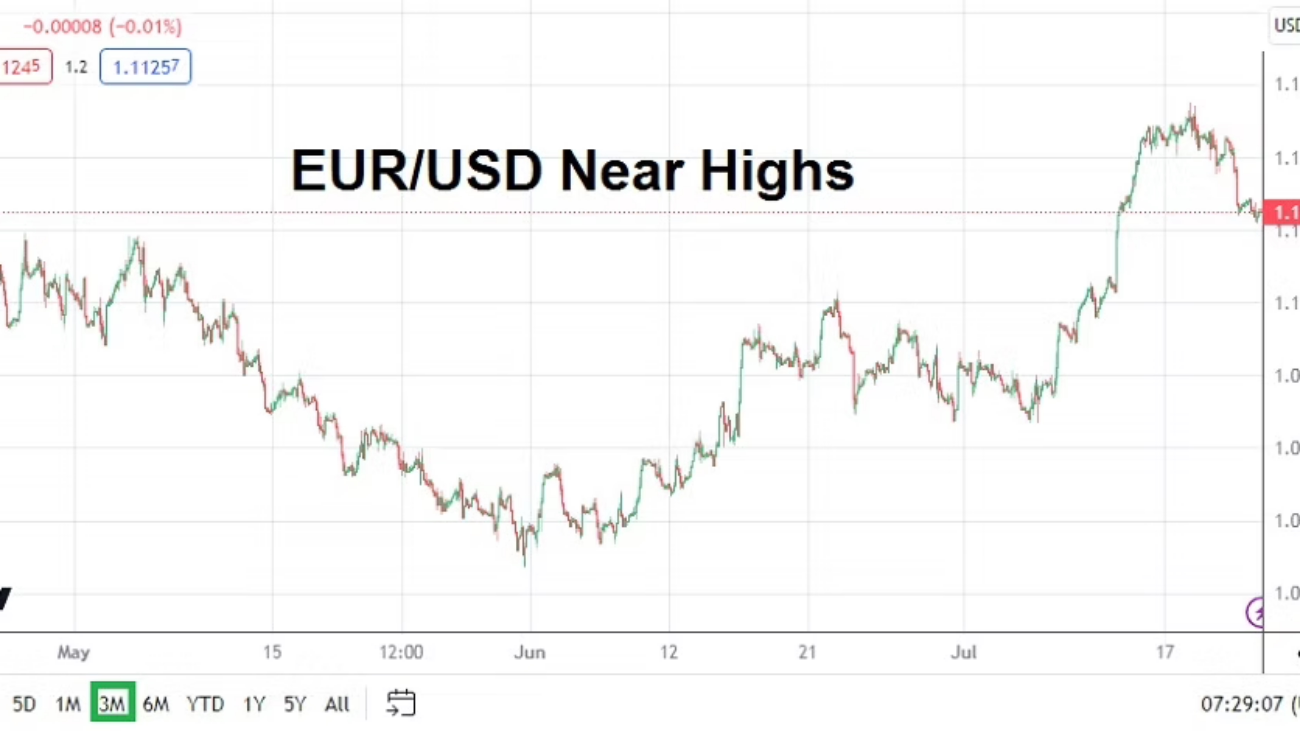
Monday, 24th July 2023, E.U Flash Manufacturing and Services PMI – a slew of Purchasing Managers Index readings will come from European Union nations including Germany and France. Projected outcomes are expected to show slight improvement in the Services readings and mixed results from the Manufacturing sector. The EUR/USD may get a momentary nudge from the published numbers.

EUR/USD 3 Month Chart as of 23rd July 2023

Monday, 24th July 2023, U.K Flash Manufacturing and Services PMI – the British economic reports are anticipated to come in below last month’s readings. The U.K did report slightly better Retail Sales numbers last week, but a Consumer Confidence outcome was weaker than expected. The GBP/USD might react briefly to the U.K PMI data.

Monday, 24th July 2023, U.S Flash Manufacturing and Services PMI – the reports from the States are forecast to be below last month’s numbers. U.S data produced nervous and weaker economic insights last week from the Housing sector. The Federal Reserve will certainly give some attention to the PMI data as they try to gauge the strength of the U.S economy while likely preparing to hike the Federal Funds Rate on Wednesday. The PMI statistics could factor into the Fed’s outlook, which is the crucial ingredient that financial institutions want to understand and still have skepticism about while considering the Federal Reserve’s potential actions later this week.

Tuesday, 25th of July 2023, Germany ifo Business Climate – the results are expected to be slightly weaker than last month, showing businesses in Germany are not optimistic about current conditions and outlooks.

Tuesday, 25th of July 2023, U.S CB Consumer Confidence – the report is anticipated to show U.S consumers are feeling more confident about their spending habits. If this report is stronger than expected, it could be one final clue before the U.S Federal Reserve springs into action the next day.

Wednesday, 26th of July 2023, U.S Federal Funds Rate and FOMC Statement – most financial institutions are prepared for a hike of 0.25%, which would bring the key borrowing cost to 5.50%. This number has been anticipated for a handful of weeks and any deviation would cause volatility. Forex has largely priced in the rate hike. Speculators need to pay attention to the FOMC Statement regarding outlook regarding comments on inflation, growth and what the Fed is prepared to do moving forward.

Because U.S inflationary price pressures showed a decrease recently, many financial institutions are likely betting on a slightly more optimistic sounding FOMC Statement. The question is if the Federal Reserve will risk sounding dovish, or continue to voice disciplined rhetoric about its ability fight inflation as needed and keep a middle ground. For all the criticism of the U.S Federal Reserve if it can raise interest rates without causing a credit crunch on mid and small sized banks the remainder of the summer, that would be a victory – particularly if it is perceived the U.S central bank will not raise hike the Federal Funds Rate the remainder of the year. However, that remains to be seen.

Thursday, 27th of July, E.U European Central Bank’s Main Refinancing Rate and Monetary Policy Statement – the ECB is expected raise their key lending rate by 0.25% and back up their recent ‘tough’ and heightened rhetoric regarding inflation. Again, day traders should understand the interest rate hike to 4.25% has been anticipated and largely digested into Forex. The question is the ‘voiced’ concern from the ECB within its Monetary Policy Statement. Financial institutions will react to the ECB Press Conference led by Christine Legarde, which comes about half an hour after the release of the Monetary Policy Statement.

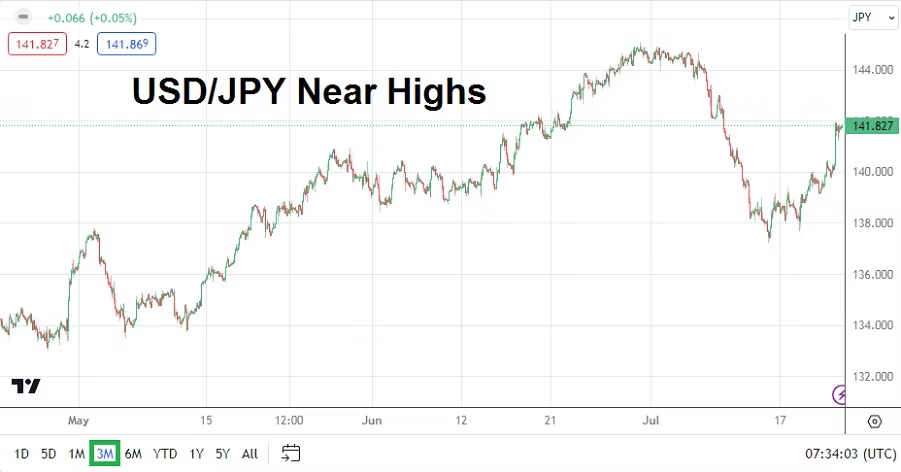
USD/JPY 3 Month Chart as of 23rd July 2023

Friday, 28th of July, Japan BoJ Policy Rate and Outlook Report – the Bank of Japan is the one global central bank that marches to its owner drummer and this will not change in the near-term. The BoJ is expected to keep its policies of low interest rates in place, voice concern about inflation and likely say their ‘boat’ remains steady on the water. The USD/JPY will have reacted before to the rhetoric from the Federal Reserve in the middle of the week. Yes, the USD/JPY could see a flourish of volatility on Friday, but most of it will have likely been seen already on Wednesday and early Thursday.