postN41.1

Nervous Trading Results End of Last Week Serve as Caution

Nervous Trading Results End of Last Week Serve as Caution

The end of last week saw mixed U.S inflation data and lingering nervous sentiment regarding outlooks about U.S Treasuries, create rather choppy conditions for day traders. Economic data this week should be more calm because there appears to be less significant risk events on the horizon. Financial institutions finished Friday within a USD buying mode, a bearish gold trend, and U.S stock indices declining – highlighting fragile conditions remain evident among larger market players.
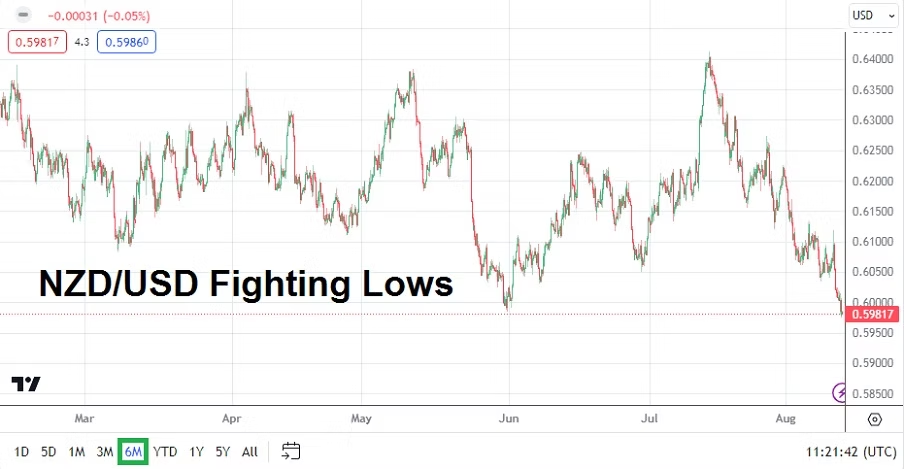
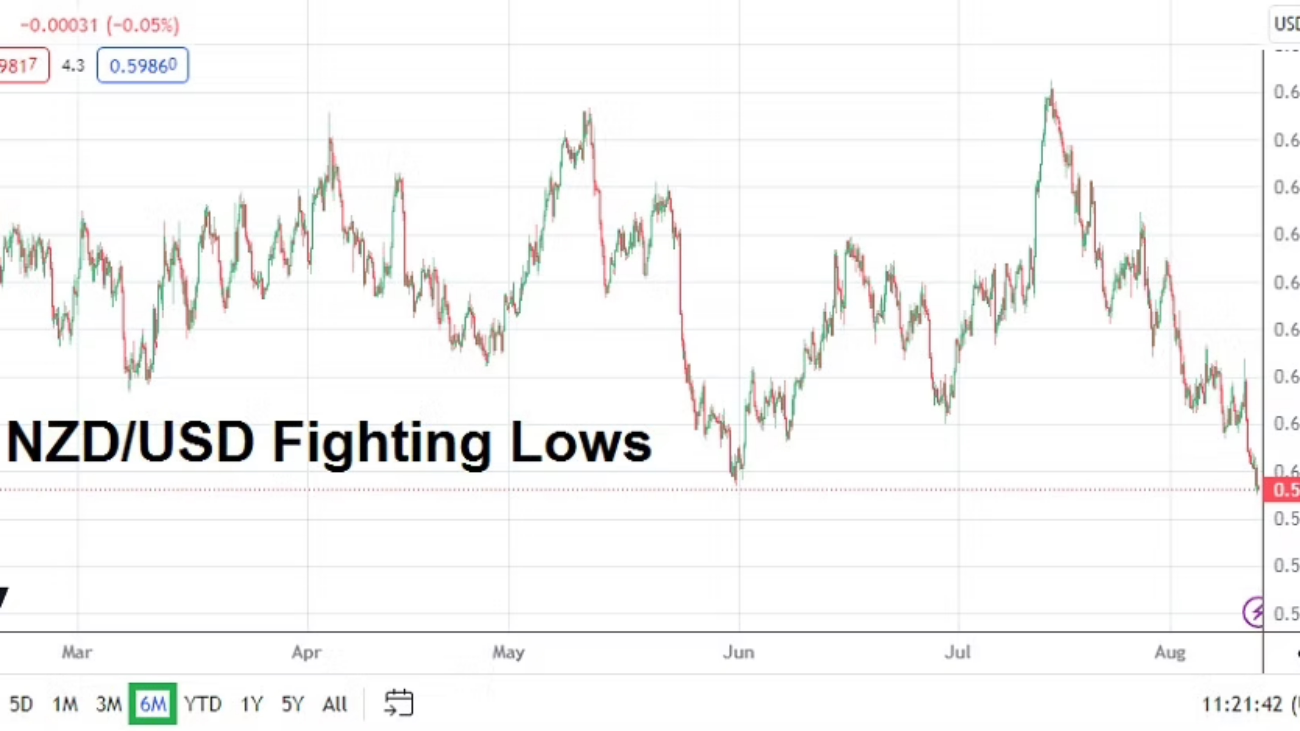
NZD/USD Six Months Chart as of 13th August 2023

Monday, 14th of August, New Zealand Business Services Index – this report may turn out to be the highlight of the day for some traders. The NZD/USD which will start tomorrow near values last seen in the middle of November of 2022, may find interested speculators glancing at the report. But the NZD is moving largely under a USD centric driven market, like most of the broad Forex market. Mid and long-term technical support levels are certainly in focus, and they have proven vulnerable recently as the NZD/USD trends lower.

Tuesday, 15th of August, China Industrial Production – economic data from the nation has been troubling regarding deflation. However, traders who lean towards a ‘Western’ bias should remember to keep their perspectives realistic, because weaker China economic results mean the global economy is struggling too. A slight decline in Industrial Production is expected. Weaker than expected numbers from China could indicate ‘soft’ demand via export partners.

As an aside financial institutions will keep their eyes on the China real estate market too, this as whispers about ‘Country Garden Services Holdings’ funding problems remain a talking point and potentially escalate. Values of properties are suffering from declines too in China and this is hurting the domestic economy.

Tuesday, 15th of August, U.S Retail Sales – a slight gain in spending by U.S consumers is expected to be seen. If the number can meet the anticipated gain of 0.4% the result may not spark too much volatility. If for some reason a higher outcome is produced, this could spark some concerns about U.S Federal Reserve rhetoric. Although it may seem counter-intuitive to some traders, a weaker number could help ignite some bearish selling of the USD.

Wednesday, 16th of August, New Zealand Official Bank Rate – the interest rate policy from the RBNZ is expected to remain in place. Although it should be noted both New Zealand and Australia have almost made it a habit to surprise investors over the past few months.

Wednesday, 16th of August, U.S FOMC Meeting Minutes – the report will be studied for clues regarding outlook. However, the Fed has a well-practiced ability to maintain tight lips and not disclose too much internal thinking, particularly when it comes to disagreement regarding policy – which is seemingly escalating in the Federal Reserve.

Thursday, 17th of August, U.S Weekly Unemployment Claims and Philly Fed Manufacturing PMI – in what has likely been a quiet week of data leading up to these reports, some analysts may try to get the attention of their clients regarding these results to create ‘noise’, but unless there is a strong miss the data is likely to simply be digested quietly into the broad marketplace.
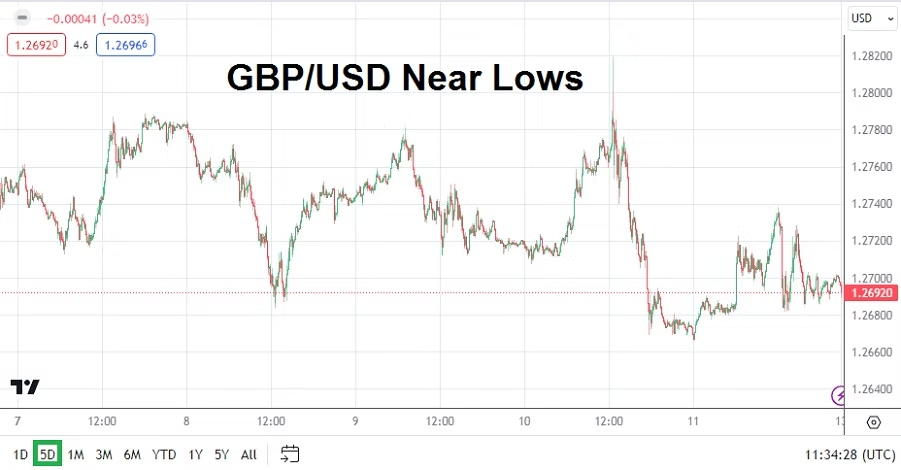
GBP/USD One Week Chart as of 13th August 2023

Friday, 18th of August, U.K Retail Sales – last week’s better than expected GDP numbers from Britain will make the outcome of this consumer data rather intriguing. The GBP/USD could find some impetus from the results. The estimate is calling for a decline of minus -0.4% compared to last month’s gain of 0.7%. The GBP/USD which went into last weekend near lows will likely find plenty of attentive traders as this new week comes to a close.
postN39

USD/INR: Higher Move Correlates and Political Shadows Loom

USD/INR: Higher Move Correlates and Political Shadows Loom

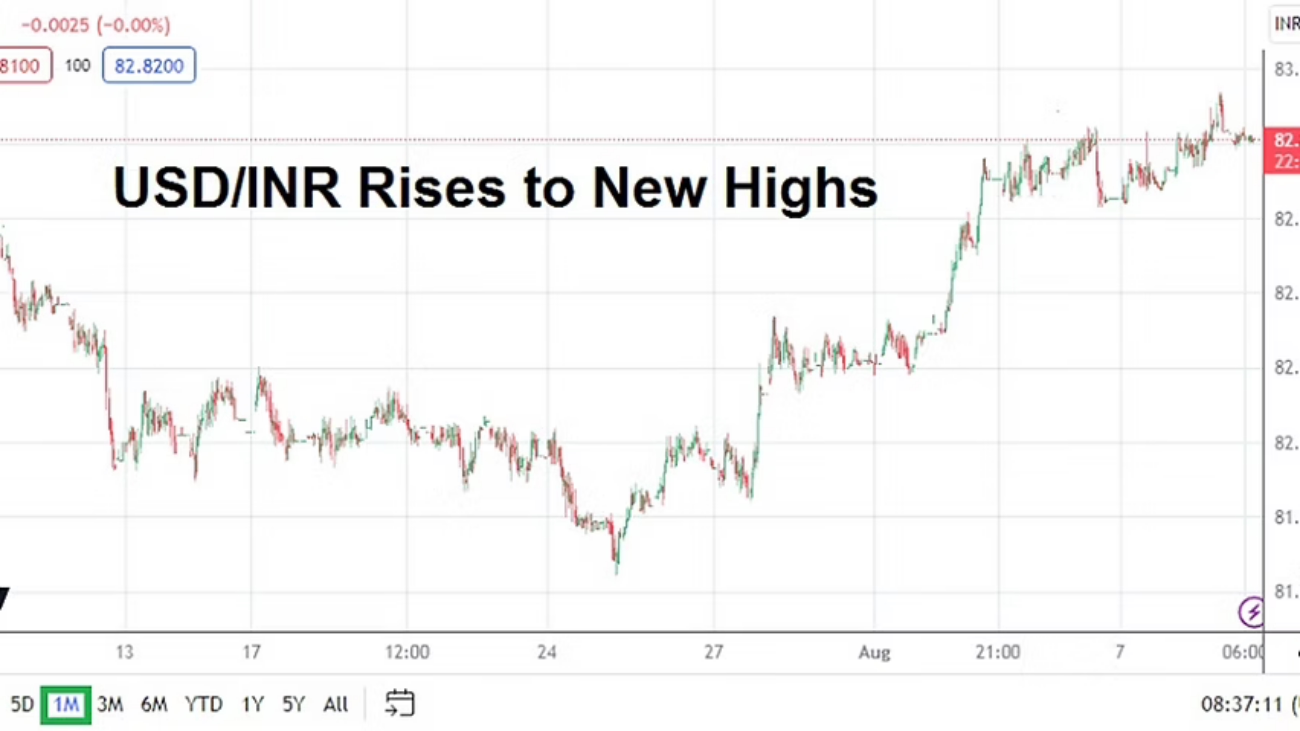
The USD/INR is near the 82.8150 ratio as of this writing the 9th of August, on the 25th of July the currency pair was near the 81.6500 level momentarily. Upwards movement of the USD/INR did produce price volatility in the last week of July, and on the 1st of August the Forex pair was near the 82.1700 ratio. Another dose of upwards momentum quickly occurred on the first day of August, and by the 2nd the USD/INR was trading around the 82.7650 mark.

From Wednesday of last week the USD/INR has essentially taken on a consolidated framework, speculators who are gambling on the USD/INR and need big movement to occur in order to facilitate profits have likely found the currency pair difficult to manage. Yesterday a high of nearly 82.9500 came within sight briefly, this as global risk adverse conditions arose because of the Moody’s rating agency downgrade of some U.S mid and small size banks regarding their fundamental ‘soundness’ and credit worthiness.

Rising interest rates from the U.S Federal Reserve have made it harder for many U.S banks to conduct their business, and loans have become more expensive for their clients struggling to keep up with the rising payments. Particularly if borrowers have the unfortunate position of holding ‘variable’ loans which cost more when interest rates are going up. This has also affected the housing sector in the U.S and in the U.K, as mortgages have become highly priced due to the Federal Reserve and Bank of England having aggressive interest rate policies which are affecting the cost of new home purchases.

The question USD/INR traders may be asking is what does this have to do with them?

USD/INR One Month Chart as of 9th of August

The USD/INR Doesn’t Trade in a Vacuum

The USD/INR has risen in value the past two and half weeks as many other major currency pairs have suffered a similar fate. Nervous sentiment abounds in the global markets because financial institutions are wary of what the major central banks will do next. U.S economic data has been mixed recently, but this perspective depends on time frames regarding outlooks.

Short and mid-term viewpoints continue to point to complications regarding growth and inflation expectations and interpretations of U.S data. The ratings downgrade of some U.S banks from Moody’s yesterday, and early last week Fitch’s downgrade of U.S Treasuries all is related. Rating agencies are getting nervous, perhaps because they do not want to be blamed and held liable if the proverbial ‘fluff’ hits the fan over the mid-term. Rating agencies largely ‘missed’ the financial crisis of 2007 in a famously bizarre manner. The sudden emergence of rating agencies warning investors has made the USD stronger as global investors have become risk adverse temporarily. Yes, this might feel illogical, but the USD remains the world’s safe haven.

The USD/INR also certainly trades because of economic conditions affecting its value from within India. The Reserve Bank of India has a large hand in managing values and is known to be rather active regarding interventions. Yet the USD/INR is being ‘allowed’ to continue to trade near all-time highs. This as India’s status as a growing economic power has taken shape in the global financial markets the past year. The India government has not been aggressive regarding its interest rate policy, and has allowed inflation to seep into the domestic economy via a weaker Indian Rupee for a number of complex reasons. Purchasing goods from India abroad and the ability to invest in India by global financial institutions may be more attractive to those holding USD and needing to convert into INR only when the time is necessary.

Politics and the USD/INR Price Level as 2024 Elections Start to Lurk

From a political perspective too, let’s acknowledge a general election will take place in India in April and May of 2024. Economic decisions being made today and for the mid-term are certainly being affected by the ruling Indian government’s outlook and desire to remain in power. Having come off of yesterday’s highs in the USD/INR the currency pair does remain within sight of highs.

The 83.0000 level likely remains a key barometer for the USD/INR and the Reserve Bank of India is likely watching this value carefully. While it seems unlikely the India government wants the USD/INR to trace much higher because of the psychological implications, global risk adverse sentiment are making the higher values of the currency pair sticky. Tomorrow’s inflation data from the U.S will affect Forex and the USD/INR via the Consumer Price Index. Friday the U.S Producer Price Index will be published. A slight rise in the broad CPI results tomorrow is expected, while Friday’s PPI outcome is expected to match last month’s numbers.

If risk adverse trading remains evident today and the USD/INR holds its ground over the next 20 hours, the currency pair could find that its consolidated price movement from the past week suddenly changes. A higher tick in U.S inflation could be enough to cause the USD/INR to challenge the 83.0000 ratio. Speculators who are wagering on the USD/INR are cautioned to be pro-active regarding their risk management the remainder of this week.

postN20.1

Friday Barometer Regarding the BoE Decision and Gold Prices

Friday Barometer Regarding the BoE Decision and Gold Prices

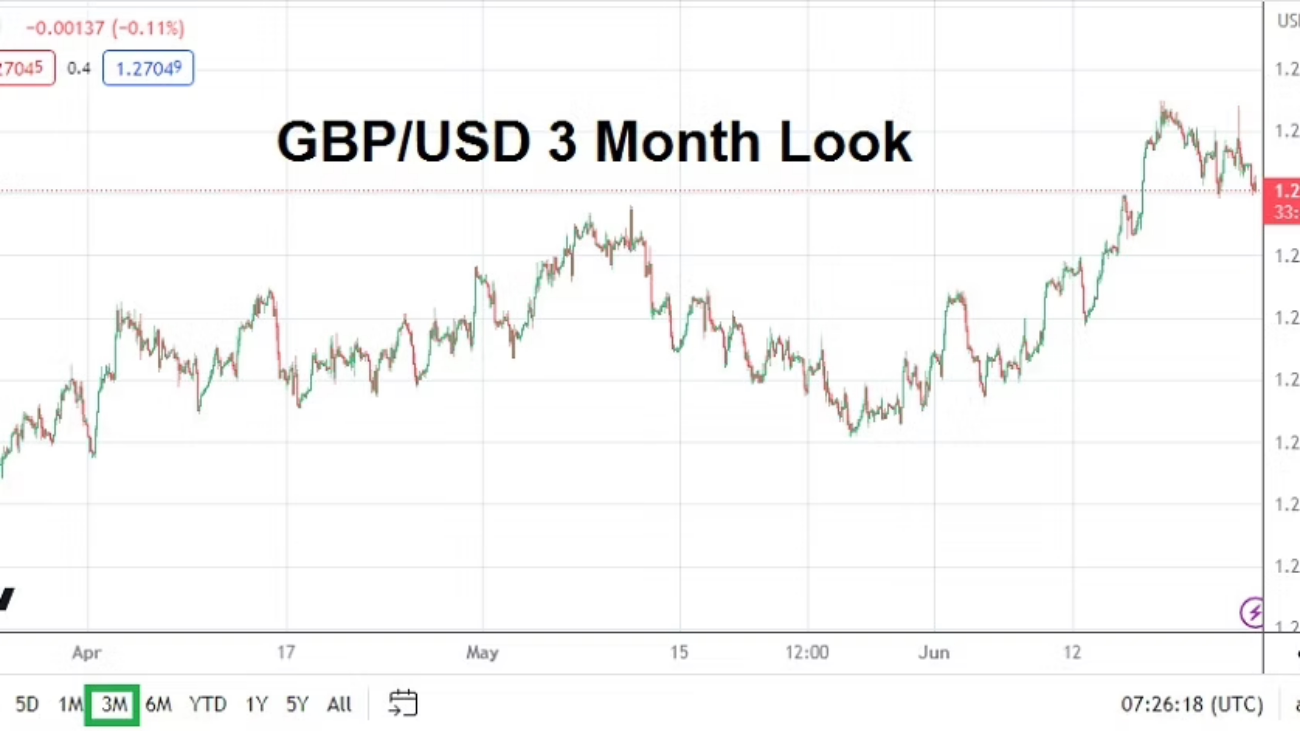
The Bank of England’s rate hike of 0.50% cements the notion that global central banks remain steadfastly locked on inflation, and understand politically the implications on the public regarding higher consumer prices which are being experienced. The Bank of England ‘met’ before its Official Bank Rate announcement with corporate bank executives it was whispered, to discuss their concerns regarding the knock on affects of higher mortgage rates to come. However, this did not stop the BoE from being aggressive.

GBP/USD Three Month Chart as of 23rd June 2023

Is the BoE Move a Sign Regarding the Fed’s Next Decision?

The move by the BoE also is intriguing because the larger than expected hike puts into play the notion the U.S Fed may be raising the Federal Funds Rate in July. The reasoning is based on the idea the Bank of England wants to protect the British Pound from another interest rate hike from the Fed, thus ‘securing’ the value of GBP/USD Forex mechanics.

The U.S Federal Reserve, the BoE and ECB finally seem to have a grasp on import inflation implications. Although higher costs and dynamic pressures on exporting countries like China, India and others that face the gauntlet of these challenges remains critical, because these nations need to raise the costs of manufactured goods internationally when they sell.

Smart Money and the Value of Gold

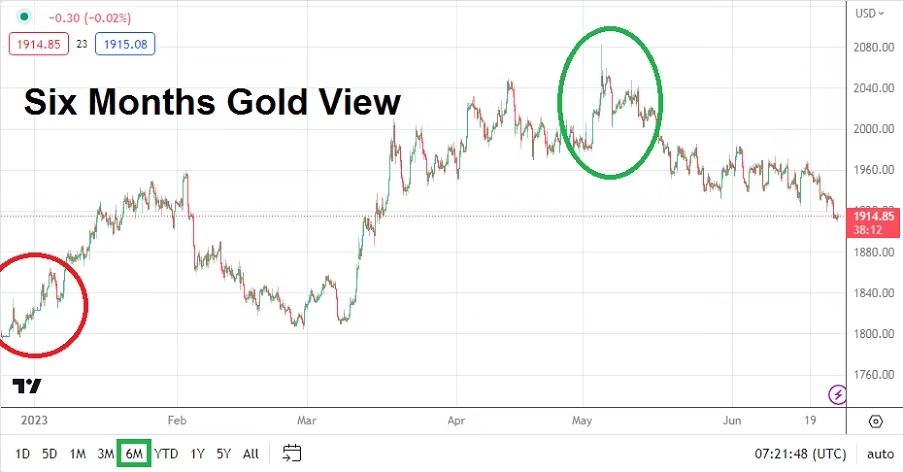
Let’s talk about ‘smart money’ for a moment surrounding Gold – and please try to hold down your laughter – but the price of the precious metal is interesting and should be monitored even by folks who do not trade the commodity. Gold as of this morning is near the 1915.00 USD ratio.

Gold Six Month Chart as of 23rd June 2022

On the 4th of May the price of the precious metal momentarily challenged the 2080.00 level. On the 1st of June the price of the commodity was near 1985.00. Do you see a trend here? Please note, Gold isn’t going to zero.

The point to be made is that the build up in the price of the precious metal from the 22nd of November 2022 when Gold was around the 1625.00 USD per ounce level, until early May anticipated the U.S Federal Reserve was going to become more dovish regarding their interest rate polkicy. For consideration look at the price of the USD during this time too, against many major currencies – the value of the USD also started to come down.

‘Smart money’ is showing signs of nervousness certainly since the start of June that more hikes are feared from the Federal Reserve. However, the price of Gold and the USD are not correlating well at this moment. This is a potential sign that Gold and the USD are both within speculative trading zones in which financial institutions are seeking ‘true’ equilibrium and are not comfortable. Fragility in the financial marketplace is likely to be seen until the Federal Reserve Federal Funds Rate announcement late in July. Expect financial institutions to price in their outlooks respectively depending on their outlooks.

Gold and U.S Treasuries: Inverted Interest Rate Implications

Gold definitely fluctuates within daily trading conditions, it is a speculative commodity, but it is also a solid barometer of risk management among the elite. If financial institutions are in favor of buying items like U.S bonds because of their guaranteed short term interest payments (look at the fact U.S Treasuries are mostly inverted – meaning shorter term bond interest rates are paying higher returns compared to longer term bonds) instead of buying Gold as an investment tool.

The Gold and USD Forex dynamics tells us that investment institutions are still very nervous about the Fed potentially raising interest rates a couple of more times this year. July and late this year appear to be reasonable bets. This Fed consideration and concern remains legitimate while looking forward as long as inflation remains elevated in the U.S. However, the Federal Reserve must also feel comfortable they will not kill mid and small sized banks, which by now should have shifted their business practices allowing for slightly higher interest rates to be delivered.