postN95.1

Trading Optimism for 2024 and Pursuit of Castles in the Air

Trading Optimism for 2024 and Pursuit of Castles in the Air

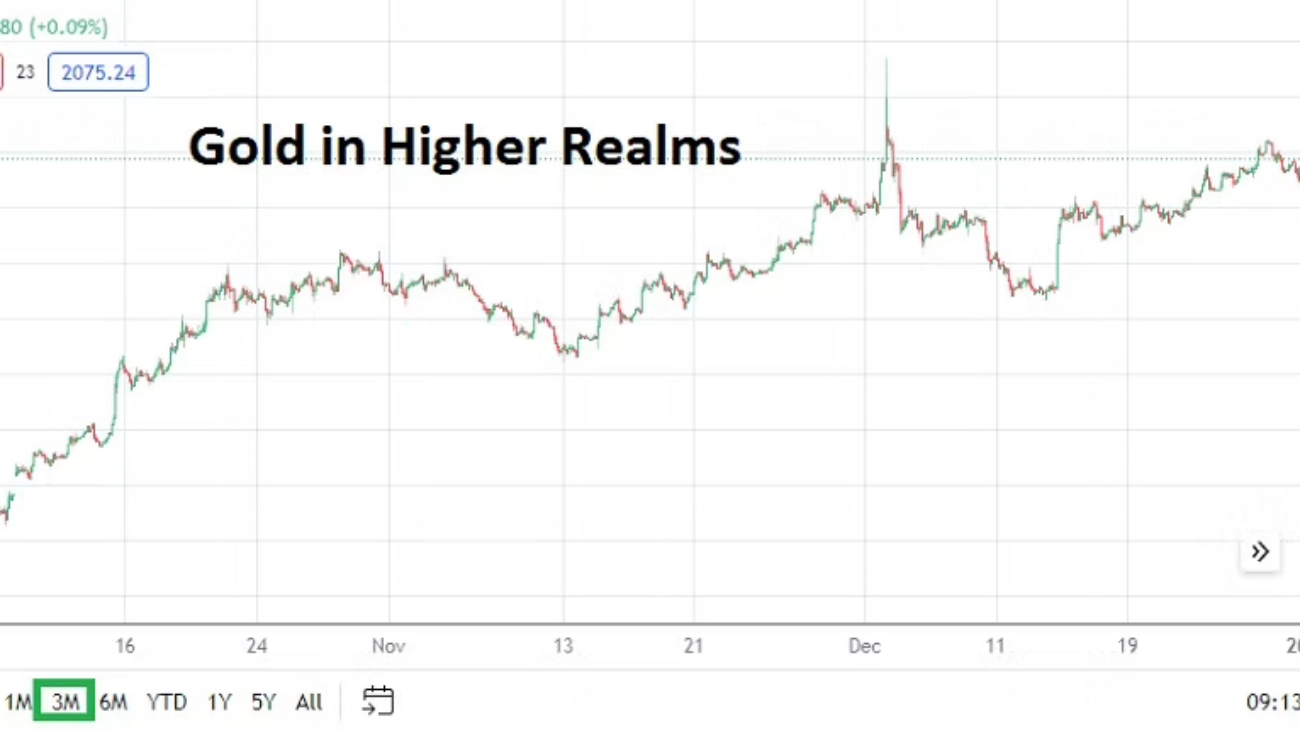
Traders may feel like horses being kept in their stables right now. The desire to run freely in Forex and other markets is certainly being felt, this as many analysts have jumped onto optimistic bandwagons and are pointing to the U.S Federal Reserve and its rather dovish outlook for 2024. Gold in early trading this morning is lingering near highs and the USD remains within weaker territory when technical charts are inspected via one month results.

Gold Three Month Chart as of 2nd January 2024

Yet, thin holiday trading is full in effect. Light volumes will continue to be seen early this week after the New Year’s celebrations. Financial institutions will open their doors today, but their corporate clients around the world will have plenty of employees who will remain on vacation until the 8th of January. Thus, while day traders may feel enticed to wager in the markets with various CFDs, they should be careful and understand unbalanced positions may cause temporary chaos. Risk taking tactics should be carefully considered.

The desire to dream about castles in the air is a source of comfort for many new day traders. But remaining realistic about potential results, while not getting overly ambitious about targets is an important aspect for all speculators. While trends may look attractive in Forex, commodities and equities a well planned approach regarding risk taking is a practical road. Castles in the air tend to vanish.

Optimism will be a word frequently heard in the coming days and weeks, and here’s to wishing everyone a prosperous and peaceful 2024. The potential of a more dovish U.S Federal Reserve regarding monetary policy and declining Treasury yields sparking more risk appetite in equities as investors seek solid returns is alluring, however risks remain on the table. The economy of China continues to worry analysts and tensions in the Middle East are still a long way from being solved.

However, the biggest cause for speculative concerns during 2024 may come from elections in Taiwan, India, South Africa and the United States. Taiwan’s presidential vote is on the 13th of January. China will certainly be watching the results, and traders should expect to hear swords rattling afterwards and then hope the noise calms down.
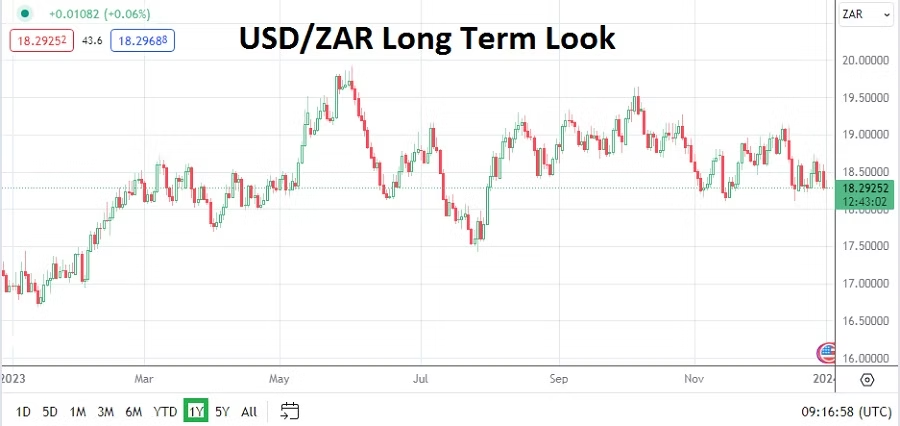
USD/ZAR One Year Chart as of 2nd January 2024

Tranquil voting results in India will be welcomed by investors. India is becoming a noteworthy economic giant, its rapid growth and ascension as an important investment vehicle needs to remain stable. South Africa remains troubled domestically by concerns regarding corruption and inefficiency, its upcoming spring election results may not solve the problems it faces. There will be many elections in Africa this year, which could spur on considerations regarding geopolitical alliances and the price of commodities.

The U.S election late in 2024 will start to grow in noise as the months progress and by early this summer behavioral sentiment will begin to become nervous regarding the outcomes for the White House and Congress. The U.S appears to be braced for an election between Joe Biden and Donald Trump and this will certainly cause skittish storms.

Traders should feel confident about risk appetite in the global markets improving, but they should keep in mind that impetus coming from many different spheres can affect the financial world.

Tuesday, 2nd of January, U.S Final Manufacturing PMI – today’s Purchasing Managers Index is expected to show a slight improvement, but the results may fall on deaf ears because many market participants will not be around to react due to the fact they are still on vacation.

Wednesday, 3rd of January, U.S ISM Manufacturing Prices – this inflation survey from purchasing managers may be given a bit of attention, but its effect may be limited because of light trading volumes still being exhibited.

Thursday, 4th of January, Germany Preliminary CPI – the inflation data from Germany will get some consideration, and the result is expected to show a slight increase. Services PMI data will also come from European Union nations, the U.K and U.S.

Friday, 5th of January, U.S Non-Farm Employment Change and Average Hourly Earnings – the jobs reports will get the notice of financial institutions. The results for employment and wages are expected to be slightly weaker than the previous month’s outcomes. Typically these numbers would cause a stir, but unless there are surprises, most financial institutions may not react massively to the reports because it remains a ‘holiday’ week. If the numbers come in weaker than expected this could cause interesting reactions on the 8th of January and weaker USD sentiment.

postN93

Leverage and the Holidays Often Leads to Costly Volatility

Leverage and the Holidays Often Leads to Costly Volatility

This may seem like an unfriendly reminder for this time of year, but holiday trading can lead to dangerous storms for traders. Keeping a realistic viewpoint regarding your ambitions during Christmas and New Year’s is important.

Most day traders cannot afford to have an outlook that is beyond the short and near-term. This is an ugly fact many speculators with less than deep pockets have to acknowledge if they are new to speculating. While large traders and financial institutions can maintain mid and long-term outlooks, day traders who do not have the funds to keep overnight positions need to operate in an entirely different fashion.

Trends via technical charts and fundamentals are crucial for all traders. Behavioral sentiment is a key ingredient too for all participants chasing assets. However, day traders also need to understand unique risk management limitations. The use of leverage is a vital dynamic, and can cause devastation fast when too much money has been wagered. The use of leverage by day traders effectively raises the probability that a trade will lose money.

Incremental changes in value to a Forex pair, commodity and equity share being traded on a brokers platform by a speculator using ‘borrowed’ money via an account that allows for margin often leads to quick outcomes that fail. Many brokers offer traders ‘polite’ leverage ranging from 10% to 100% in extra funds, this while enticing the speculator to the potential of profiting in a quicker and more robust manner. It should also be noted that when a broker is offering vast amounts of leverage, they are knowingly increasing a traders likelihood of losing. The use of leverage beyond 10% leads to plenty of expensive mistakes.

Unfortunately, the simple truth is if you can make fast money trading, you can lose fast money while trading. The use of the word speculating is simply a gentle way of not using the word ‘gambling’.

Traders tempted to pursue wagers during the next couple of weeks should remember a lack of normal volumes make many asset classes more volatile, meaning the use of leverage by speculators often leads to dangerous gyrations within their accounts.

Risk appetite has taken on a optimistic tone globally because of the upside U.S equity markets have been producing, while U.S Treasury yields are decreasing, but dangers still lurk. Day traders need to remain realistic regarding their pursuit of quick hitting trades during the holiday season, and make sure they use solid tactics while pursuing their outlooks. The trend may appear to be your friend, but short-term reversals in the wrong direction can cost money.

No one wishes for bad things, but speculators should also note that if risk adverse events occur during the holidays, that ‘negative news’ can often become amplified this time of year and cause more volatility. Speculative positions in Forex, Crude Oil and gold can produce rather wild results, and thin trading volumes can add to the swift changes in values.

postN51

AMT Top Ten Miscellaneous Thoughts for the 8th of December

AMT Top Ten Miscellaneous Thoughts for the 8th of December

10. Book: A History of Venice by John Julius Norwich.

9. Music: Gram Parsons (featuring Emmylou Harris) playing Ooh Las Vegas.

8. Artificial Intelligence: Speed and processing advances will continue to make AI a buzzword in 2024, this as quantum computing looms in the distance.

7. Trading Volumes: Speculators should note there are about two full weeks of trading left before ‘thin’ holiday markets will begin to be seen. Meaning financial institutions while being cautious, will also start to position their assets according to their outlooks for early next year.

6. Energy Sector: WTI Crude Oil, Brent, Natural Gas and Unleaded Gasoline continue to challenge support levels as long-term lows remain in sight.

5. China: Important inflation numbers via Consumer Price Index statistics will come from the nation early Saturday, negative results are expected.

4. Risk Appetite: Optimism continues to be encouraging within behavioral sentiment, this as U.S equities remain near highs, the USD leans towards a mid-term outlook with potential weakness, and gold stays above 2000.00 USD per ounce.

3. USD/JPY: Bearish momentum continues in the currency pair, price velocity built speed yesterday and this morning’s trading has been dynamic.

2. Data: U.S jobs numbers will be released today, the Non-Farm Employment Change and Average Hourly Earnings reports will create reactions. However, unless the results are surprising, this data may simply work as an affirmation for existing risk appetite.

1. Federal Reserve: The Fed’s next FOMC Statement will be on the 13th of December, this knowledge will shadow the broad markets today and early next week.

postN70.1

Yields, Credit Worthiness, Trading and Geo-Political Risks

Yields, Credit Worthiness, Trading and Geo-Political Risks

Traders participating in Forex and equity indices this week may want to consider finding a very quiet room and avoiding the loud conjecture which is certain to be heard. U.S bond yields will remain a focal point the entire week, and Moody’s new negative label regarding U.S credit worthiness issued late on Friday will not help the Federal Reserve and Treasury as the size of U.S debt is called into question once again. Forex markets provided speculators velocity and volatility last Thursday and Friday, and this week’s risk events are certain to cause behavioral sentiment turbulence.

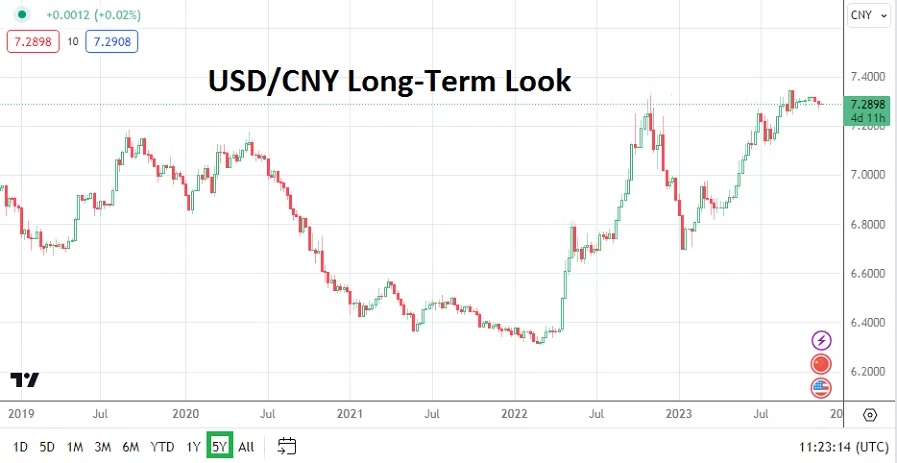
USD/CNY Five Year Chart as of 13th November 2023

Added to the ‘fun’ for speculators this week will be the APEC Summit gyrations which will be held in San Francisco, and includes a scheduled meeting with President Joe Biden and President Xi Jinping this Wednesday. The meeting comes at a critical time as geo-political and economic concerns come from Asia, the Middle East and Eastern Europe.

However, traders should not allow their emotions to grow too nervous, financial institutions actually showed a taste for U.S equity indices last week and the price of gold has declined, while the value of Crude Oil per barrel has also eroded. This shows that even in the midst of carnival like barking from pessimistic naysayers, that investors are still participating in the broad markets and makeing bets on the notion that optimism will continue to show sparks of light.

Monday, 13th of November, U.S Federal Budget Balance – this report is certain to be rather negative if studied closely. However, investors already know this story, and last week’s Moody’s downgrade of U.S credit accountability has already rang alarms. Thus, this report will likely fall on deaf ears today.

Tuesday, 14th of November, E.U Flash GDP – the numbers from the European Union are exected to be negative. However, last week’s slightly better than expected Germany Factory Orders may help the European Gross Domestic Product results limit the capability of a surprisingly bad decline. An expectation of only minus -0.1% is awaited.

Tuesday, 14th of November, U.S Consumer Price Index – the inflation numbers from the States will get the attention of most global investors. The results are sure to affect the USD, Treasury yields and equity markets. A weaker than expected outcome could propel the USD lower. Stronger than estimated statistics could ignite buying of the USD based on the notion the Fed will feel compelled to remain aggressive via its monetary policy rhetoric.

Wednesday, 15th of November, China Industrial Production – while the APEC Summit is highlighted by the media, it is economic data from China which remains important. Data from the nation continues to be lackluster and demand for commodities, the USD/CNY, domestic real estate and conusmer spending are all being watched and questioned by financial analysts. A gain of 4.5% is expected.

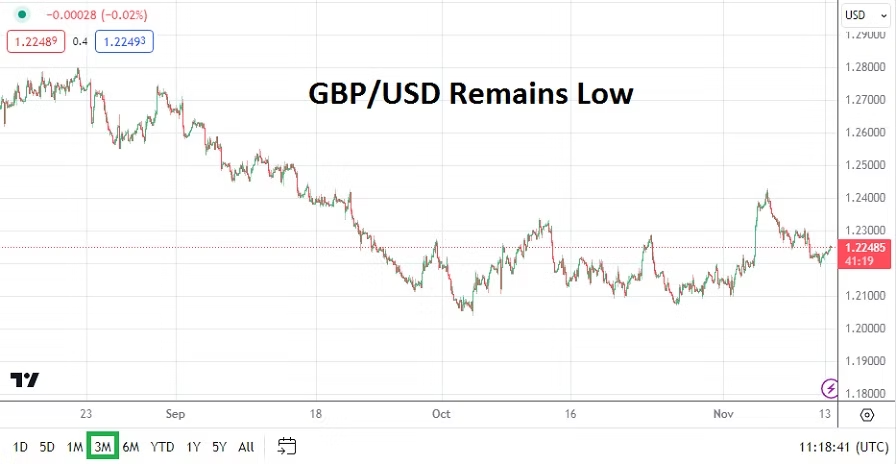
GBP/USD Three Month Chart as of 13th of November 2023

Wednesday, 15th of November, U.K CPI, the inflation numbers from Britain will be important and will follow Tuesday’s Average Earnings Index publication. The GBP/USD has found choppy terrain and the results of the combined numbers from the U.K will affect Forex, even if USD centric considerations remain key.

Wednesday, 15th of November, U.S Producers Price Index, Retail Sales, and the Empire State Manufacturing Index – these reports will be issued at roughly the same time and will factor into sentiment created from the U.S CPI data seen the day before. The combination of all these outcomes will play into the broad markets, and the USD within all major currency pairs. Weaker than anticipated numbers would be welcome by USD sellers. However, until the reports are published wagering on the USD will prove volatile and risk management is encouraged.

Thursday, 16th of November, U.S Federal Reserve Officials – at least 4 U.S Federal Reserve members will be speaking at various conferences. They are sure to give their opinions on the Federal Funds Rate outlook and will be asked to comment on the week’s data already published in the U.S regarding inflation and consumer spending.

Friday, 17th of November, U.K Retail Sales – a gain of 0.3% is expected compared to last month’s negative results. Speculators will react to the consumer driven data and the GBP/USD will again come under the influence of risk sentiment regarding outlook. However, traders need to understand these numbers are largely a result of looking backwards and not forwards regarding outcomes.

Friday, 17th of November, U.S Housing Starts and Building Permits – the American housing industry is being closely monitored and the high costs of mortgages is affecting the U.S marketplace. The Building Permits number is expected to be slightly lower than last month’s outcome. Traders should also keep their eyes on the potential of revisions to suddenly emerge from previous reports.

postN69.1

USD/INR and the 83.3000 Resistance Level is Not an Illusion

USD/INR and the 83.3000 Resistance Level is Not an Illusion

Traders of the USD/INR for those who remain short-term speculators of the currency pair, as opposed to financial institutions which position holdings for corporations and large investors, may be perplexed about values and momentum over the past three months. It is abundantly clear the USD/INR faces a rather strong force when it approaches the 83.3000 mark. Yes, sometimes the Forex pair has traversed above this level, but the moves have been momentary and have been pushed back.

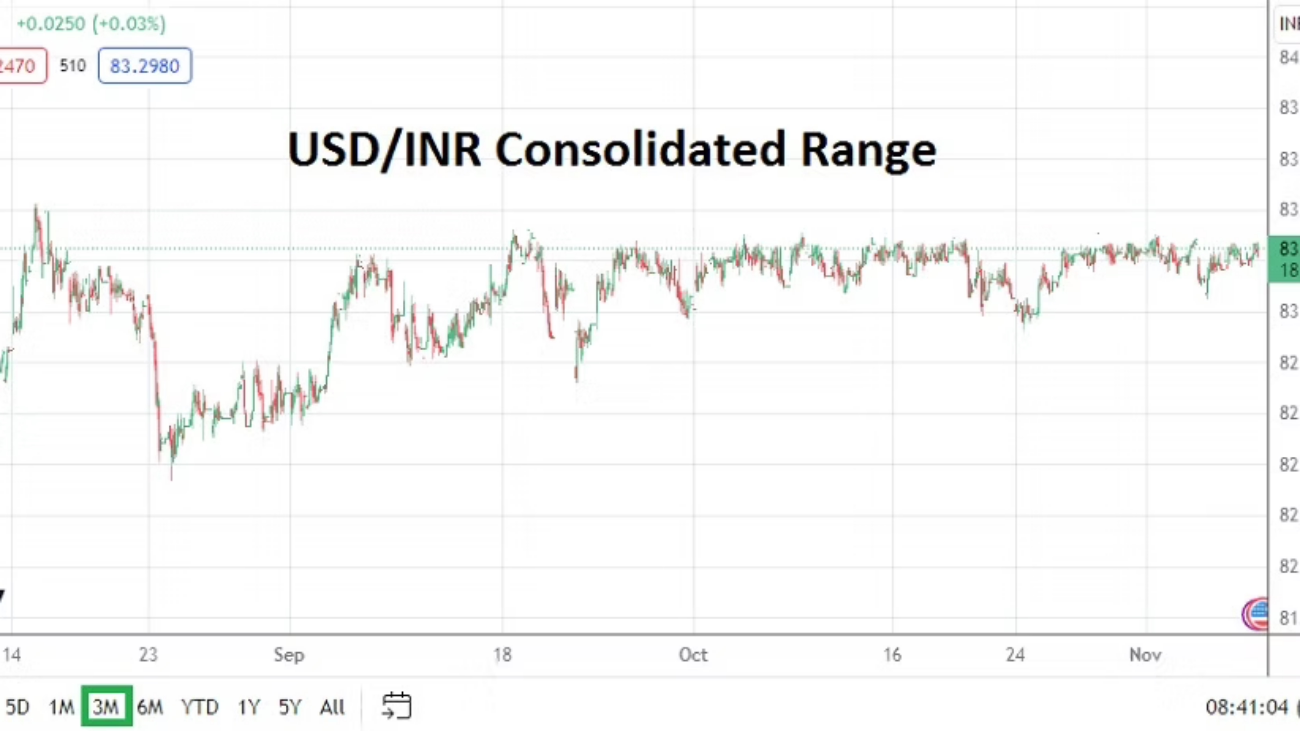
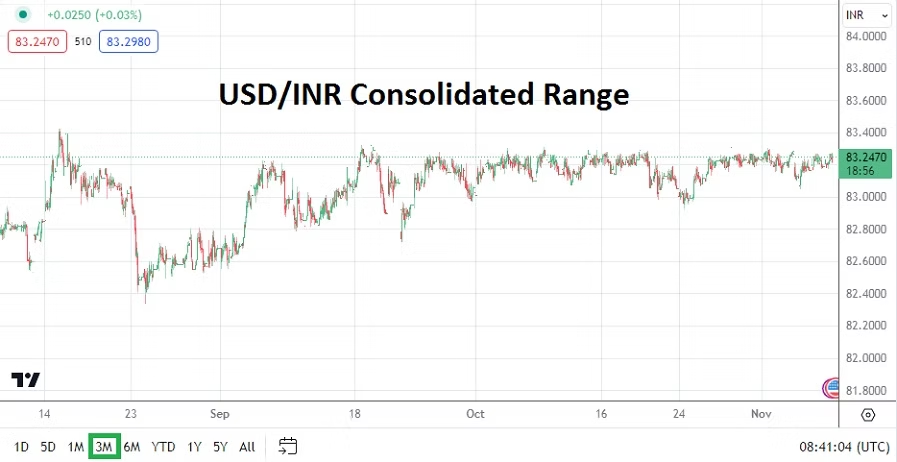
USD/INR Three Month Chart as of 8th of November 2023

It is not a conspiratorial thought to simply look at the three month chart of the USD/INR and see that when the 83.3000 level has come into play that selling pressure mounts. And it is not news the Reserve Bank of India is involved in the durability of this resistance level. Simply put the USD/INR doesn’t trade in a ‘free’ market manner, the constraints and persistence of the Reserve Bank of India to maintain a structured resistance value for the USD/INR is evident. The past month, and last five days of trading via technical charts shows the same dynamic. And it is important to point out the resistance level of 83.3000 has been sustained over the mid-term when global risk adverse trading has seen the USD gain strength against many other major currency pairs, meaning the USD/INR should have traded at higher levels.

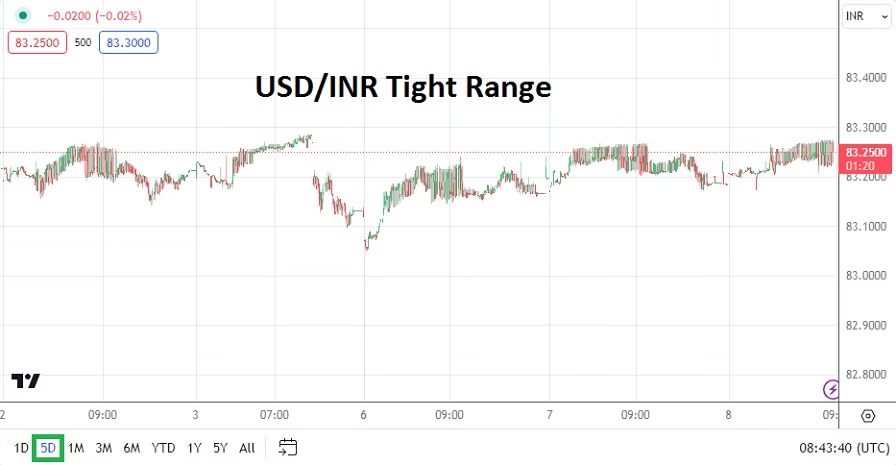
USD/INR Five Day Chart as of 8th of November 2023

The Indian government is managing the USD/INR with a philosophy which allows the currency pair to remain within its weaker elements regarding the Indian Rupee, but not allow it to lose too much value. And it must be pointed out that the USD/INR does show an ability to trade lower and the Reserve Bank of India doesn’t appear to mind if this happens. The 83.0000 was challenged from about the 20th to the 24th of October rather consistently and even traded at a low of 82.9300 very briefly.

As global risk conditions remain fragile the USD has shown an ability to remain strong against most major currency pairs, but risk appetite has picked up over the past handful of days. The 83.2000 to 83.2500 range of the USD/INR has been tested with momentary bursts lower. Last week’s U.S Federal Funds Rate was held in place as expected at 5.50%, and financial institutions are starting to believe the Fed has reached the end of its interest rate cycle which has seen consistent hikes. Yes, the U.S is likely to keep its higher interest rates in place over the mid-term, but U.S Treasuries yields are starting to show signs of an incremental decline. If U.S bonds start to decrease via their yields this will help soften the USD.

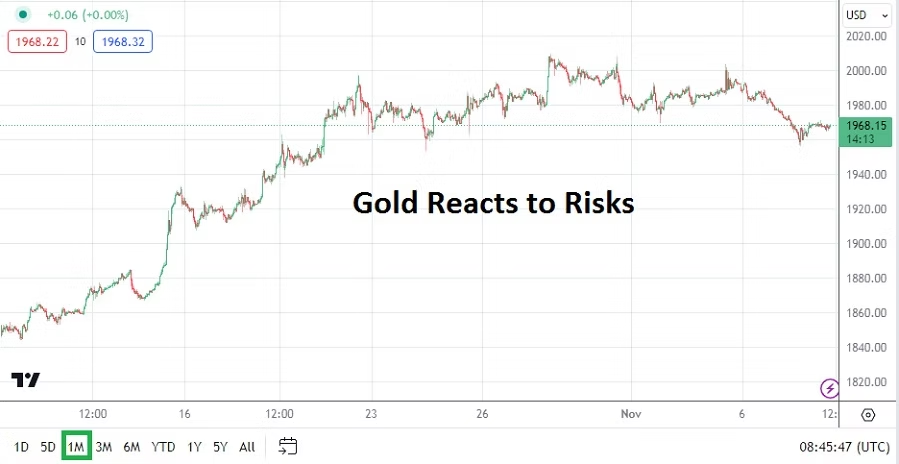
Gold One Month Chart as of 8th November 2023

Gold has started to come of its highs, but still remains within an elevated range per its one month chart. If the precious metal continues to trade around its current values, this can be taken as a sign risk sentiment wants to shift. The key word is ‘wants’ and there are no guarantees. While financial institutions have shown the ability to digest the escalated concerns because of the Middle East crisis there is always the possibility developing news can escalate quickly. But will it?

Unfortunately, the media and pundits largely control the narrative that is given to the public. Most traders are not privy to the inner workings of the ‘temples’ in which governments work. The Reserve Bank of India doesn’t issue a statement every time it makes a move within the USD/INR. Nor do the governments of the world which may say one thing publicly and say something else behind closed doors.

Day traders want to be told what to do and how they should react. First off risk management is essential, entry orders are crucial so fills meet expectations. However, achieving the direction desired and wagered upon is a gamble. Take profit and stop losses orders are urged as protection.

If the Reserve Bank of India had not intervened in the USD/INR it is likely the currency pair would have reached the 84.0000 level and higher over the past three months. The question is if risks will decrease now that the U.S Federal Reserve seems prepared to potentially take a less aggressive stance. While it seems logical the USD/INR should have been trading at higher values, the control the government of India has practiced has kept the currency pair within a ‘safe place’ while risks were heightened.

If behavioral sentiment conditions start to turn more tranquil and risk appetite increases it is possible the USD/INR could actually continue to show some selling momentum. However, traders looking for declines in the USD/INR need to be conservative and they might want to wait for the currency pair to come within sight of resistance levels to wager on short and near-term movements lower. Overly ambitious selling is likely to remain an expensive mistake until the U.S equity markets show sustained buying and U.S Treasury yields are no longer threatening long-term highs. Until there is a legitimate shift in behavioral sentiment, looking for quick hitting changes of value in the USD/INR needs to remain the focus for day traders.

postN62.1

Inflation Data and Fed’s FOMC Meeting Minutes This Week

Inflation Data and Fed's FOMC Meeting Minutes This Week

Last week’s economic data ended with rather tantalizing headline jobs numbers as the U.S showed more hiring than expected, but while this grabbed media soundbites in many circles – the Average Hourly Earnings numbers came in below expectations. The broad Forex market proved dynamic with a stronger USD in many cases, but intriguingly equity markets in the States generated upwards momentum on Friday too. U.S Treasuries were mixed regarding their yields, and the 10-year bond while finishing up for the week was below its highs.

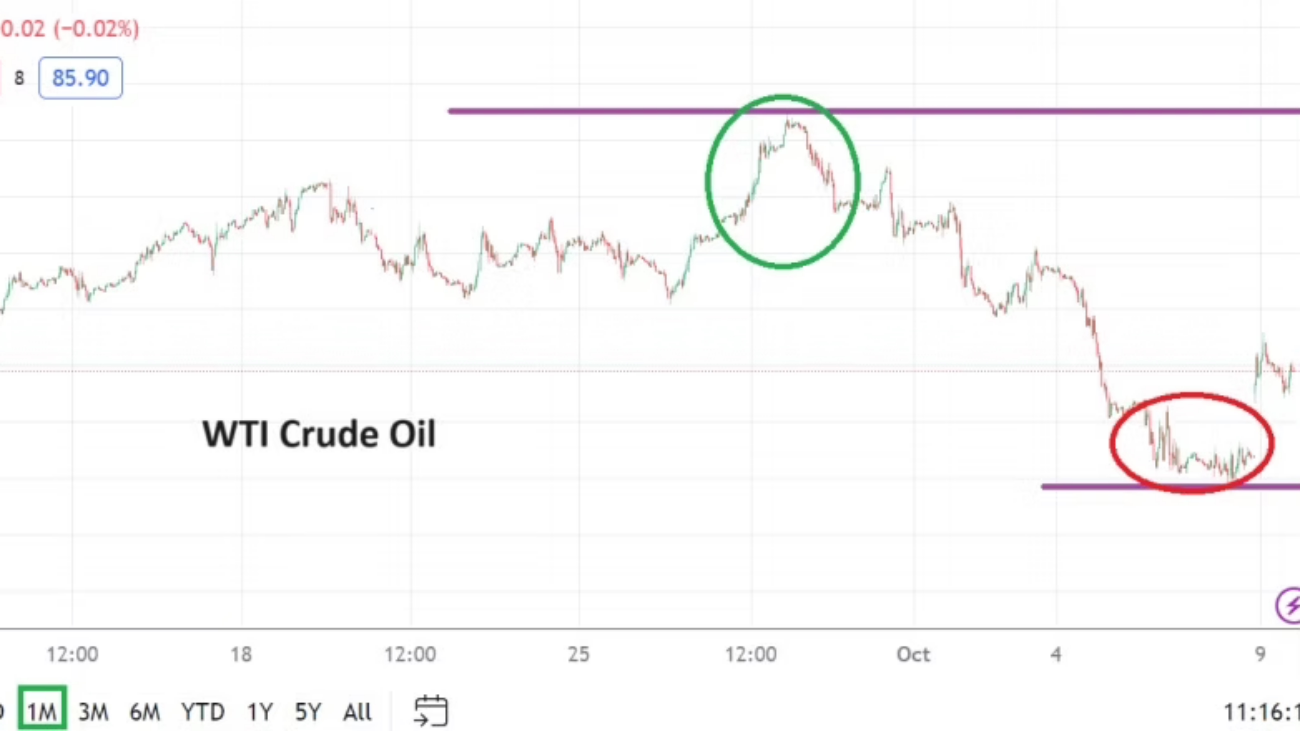
WTI Crude Oil One Month Chart as of 9th of Oct. 2023

The coming week will likely continue to produce nervousness, but outlook will be helped via a couple of U.S inflation reports and the FOMC Meeting Minutes report. Crude Oil prices should be watched as news from the Middle East unfolds. Gold remains under pressure.

Cryptocurrency speculators should keep their eyes on Binance Coin as it battles important lows. Bitcoin has remained relatively stable, but BNB/USD is near crucial support that could signal another wave of pressure is developing within the Binance exchange.

Monday, the 9th of October, International Monetary Fund – week-long meetings get underway and investors who participate in global stock markets and bonds should pay attention to the chatter.

Tuesday, the 10th of October, Central Bank Officials speaking – ECB President Lagarde will be speaking at the IMF conference. Federal Reserve officials will be speaking at meetings in the U.S. While the chatter may cause some nervous reactions briefly in financial institutions, it is unlikely the central bankers will say anything that is surprising.

Wednesday, the 11th of October, U.S Producer Price Index – the broad and core reports should be watched. Last week’s lower Average Hourly Earnings numbers were slightly surprising, but the recent higher energy costs could factor into the PPI results. The broad report is anticipated to show a decline. If the Producer Price Index statistics come in weaker than expected this could help the USD lose some strength.

Wednesday, the 11th of October, U.S FOMC Meeting Minutes – the publication is expected to follow the rhetoric already voiced by the Fed at their last press conference. However, insights regarding dialogue could move the needle in Forex. The U.S central bank is widely expected to raise the Federal Funds Rate in November, but what comes beyond this anticipated move is still in question. Expect the key word in the FOMC report to be ‘inflation’.

Thursday, the 12th of October, U.K Gross Domestic Product – the growth numbers from Great Britain are expected to show a slight rise in GDP. If the gains match expectations or come in better it could help bolster the GBP/USD which has been struggling against the USD for the past three months.

Thursday, the 12th of October, U.S Consumer Price Index – these reports will be crucial and will impact Forex and equities immediately after their release. While the Core CPI number is expected to match last month’s outcome, the broad reports are anticipated to be weaker. If the inflation numbers are stronger than expected the USD could gain strength, if the results are weaker it could help build selling momentum in the USD.

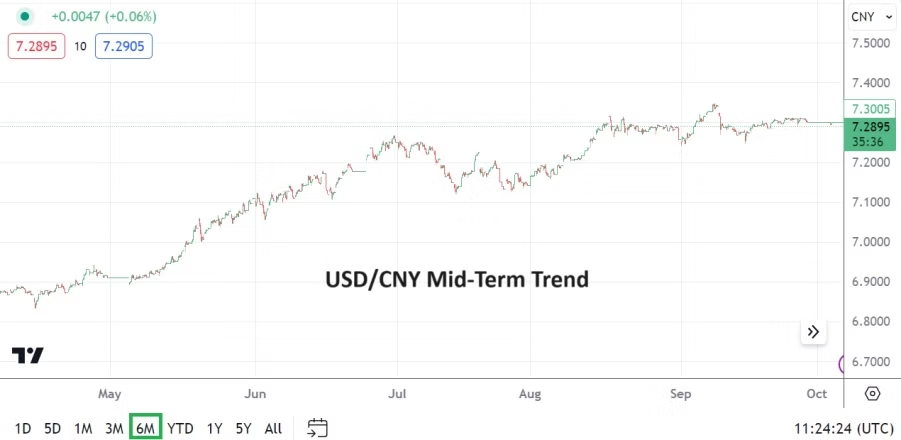
USD/CNY Six Month Chart as of 9th Oct. 2023

Friday, the 13th of October, China Consumer and Producer Price Index – the two releases will be watched carefully by investors. China’s economic data has been weak and financial institutions have become concerned by deflation. The USD/CNY may be impacted upon the publication of the reports.

Friday, the 13th of October, U.S Consumer Sentiment via the University of Michigan – following the CPI numbers from the U.S on Thursday, these numbers will show the attitude of U.S consumers and their spending habits. Financial institutions will monitor these numbers and correlate them to the U.S inflation reports seen earlier.

postN57.1

Concerns Ahead and a Potentially Noisy Week for Day Traders

Concerns Ahead and a Potentially Noisy Week for Day Traders

In the wake of last week’s central banks follies, day traders have what may appear on the surface a rather comfortable week of economic data to consider as they make their wagers. However, there are outside risk events looming which will likely stir the emotions and positions of financial institutions, and cause knock on tremors that speculators feel caused by a noisy storm of experts and media pundits.

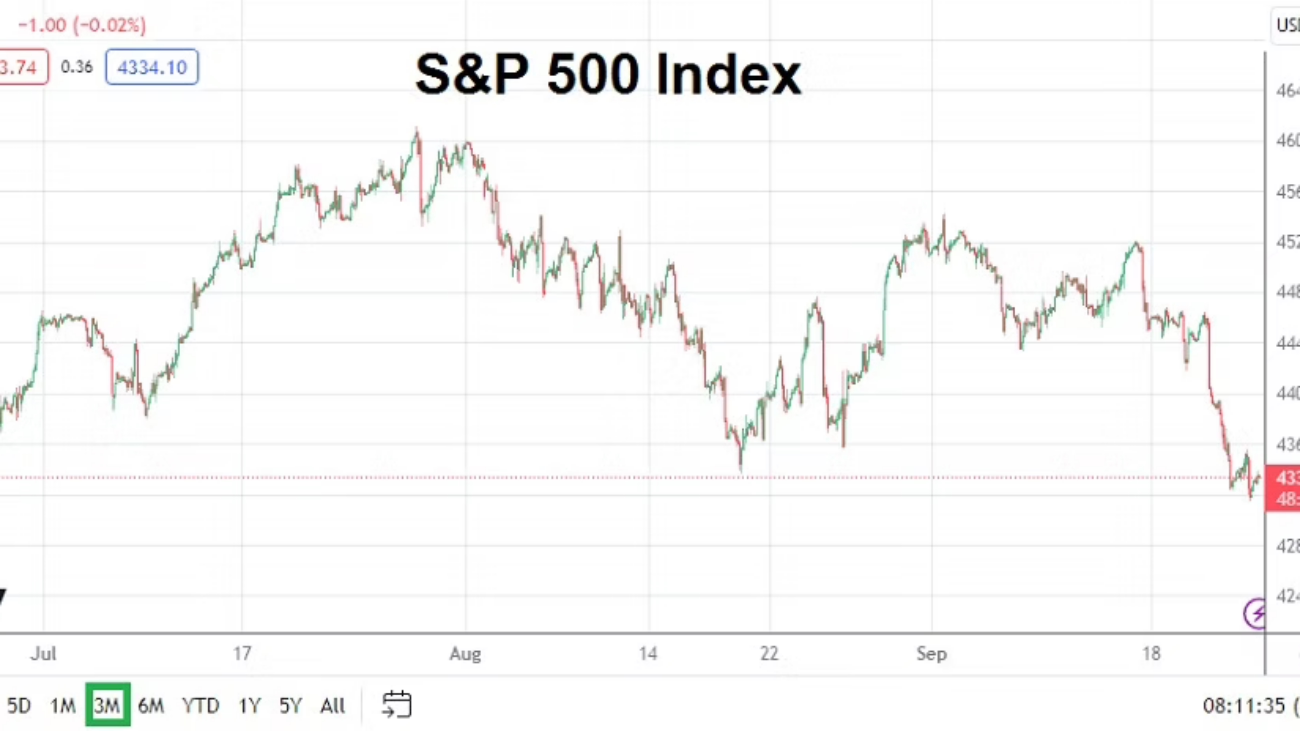
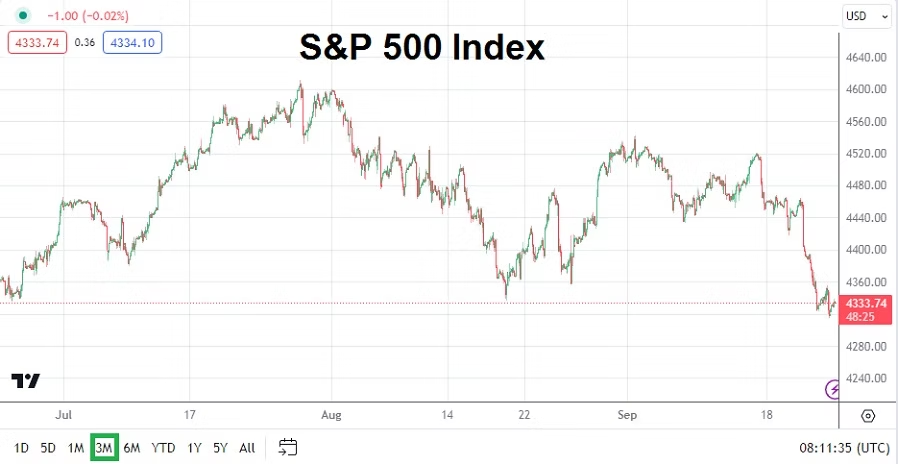
SP 500 Index Three Month Chart as of 25th of Sept. 2023

U.S equity indices have struggled recently and this should be viewed as a barometer of current behavioral sentiment. Concerns regarding higher Crude Oil prices, and talk of a growing U.S political crisis as a government shutdown is threatened (remember next year’s election is shadowing all spectacles in Washington D.C presently) highlight the nervous state of affairs. The USD has been stronger and gold has remained under pressure in recent trading. Risk adverse trading is proving rather flavorful for the moment.
The ongoing strong rhetoric from the U.S Federal Reserve and what appears to be an almost certain interest rate hike in November is causing market sentiment to remain anxious. Financial institutions are not only lining up to buy U.S Treasuries, but money market funds are also being sought too which offer the ability to accumulate returns from higher interest rates. While cash is being parked in ‘sure things’ because financial institutions and large investors are keen on locking in ‘known’ returns (profits), this creates potentially less money supply for buying of U.S and global equities momentarily.

Troubling economic data continues to mire the terrain also for financial institutions, and the heightened fear is causing a reaction which day traders need to deal with as short-term volatility mounts creating dangerous speculative conditions. Consumers face a rather large bag of ‘troubles’ via higher mortgages, debt obligations on credit cards and student loans, and inflation costs. Yet, intriguingly the U.S economy has shown resilience which is almost perplexing.

Current behavioral sentiment appears fragile and ready to crack open into a chaotic storm if too much pressure is exerted. Day traders should be cautious this week because plenty of diatribes and warnings are sure to be heard. Unfortunately the warnings being heard now for this coming week could prove correct.

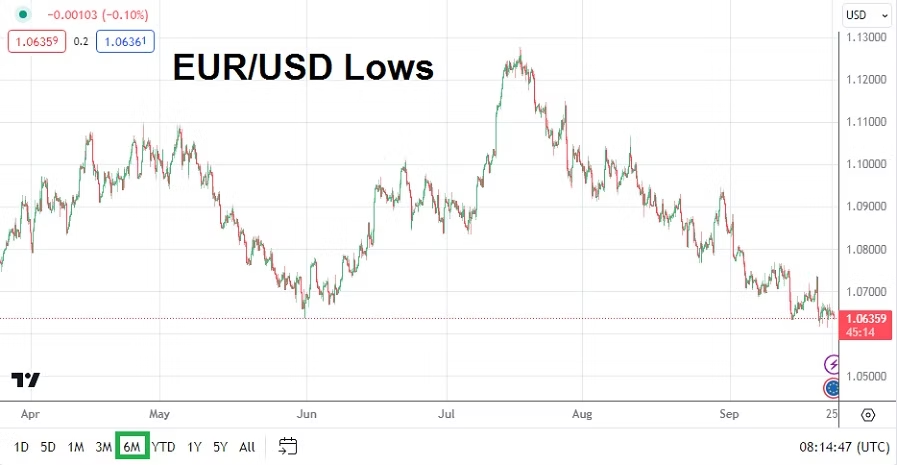
EUR/USD Six Month Chart as of 25th Sept. 2023

Monday, 25th September, Germany Business Climate via Ifo – investors will keep their eyes on the sentiment reading from Germany which is expected to be worse than last month’s results. The EUR/USD is trading at six month lows.

Tuesday, 26th September, U.S CB Consumer Confidence – the result is anticipated to be slightly negative compared to last month’s outcome. U.S consumers have remained strong and financial institutions will want to see if they remain optimistic regarding their outlooks. The outcome could affect the USD, particularly if the number is weaker than expected.

Wednesday, 27th September, U.S Durable Goods Orders – this report could prove noteworthy via the broad and core reports. Durable Goods Orders are a relatively important barometer on U.S big ticket spending and demand. The numbers are likely to cause a rumble in U.S equity markets.

Thursday, 28th September, Germany CPI – the inflation results will be watched carefully by EUR/USD speculators. Higher prices in Germany are not welcome and a larger number than anticipated would be troubling.

Thursday, 28th September, U.S GDP – the Gross Domestic Product data from the States on Thursday will be closely monitored and likely provide impetus for Forex and major indices. If the growth numbers are stronger than expected this will serve as another nail for the U.S Federal Reserve to hit when it makes its case for another interest rate hike. While it is good the U.S economic growth numbers have been relatively strong, better than expected data could play into U.S Treasury yields remaining high and spark additional complex considerations for investors.

Friday, 29th September, Canada GDP – the data from Canada is expecting a negative ‘growth’ result which would have an affect on the USD/CAD.

Friday, 29th September, U.S University of Michigan Consumer Sentiment – the revised numbers will give insights into American spending habits. The previous two months have been more lower than anticipated, this outcome is expected to produce a reading of 67.7.

Saturday, 30th September, China Manufacturing PMI – while the Purchasing Managers Index reports from China are forecast to show slight improvements, analysts remain worried about economic conditions in the nation. Transparency remains a focal point for investors who want to make sure the results they are being given are accurate.

postN50

Trading Tactics to Add to Your Risk Management Knowledge

Trading Tactics to Add to Your Risk Management Knowledge

Retail traders seeking quick speculative positions are not the masters of the financial world. Institutions which day traders are hoping to reflect are the real shakers of the markets. Understanding your actual place in the world of trading is crucial, accepting this point and putting ego to the side will create a better grasp of behavioral sentiment as you interpret combinations of fundamentals and technical perceptions and merge them into your risk taking.

Making your decisions with the acknowledgement of your place in the trading world is important. Your 10,000.00, 50,000.00 and 100,000.00 USD value based positions are very small fish in a large ocean. Your trades are very unlikely to affect market direction in any meaningful manner. The more leverage you use makes your available ‘margin’ prone to failure.

Risk analysis is vital for day traders, guarding you money should be a fundamental aspect of your tactical decisions. Deep pockets are not luxuries most day traders have.

If you happen to have a solid amount of money to speculate with it will assist you, but you will still need to practice solid risk taking strategies.

Plenty of rich folks have lost all of their money trading, that isn’t written to make you feel better, it is written as a warning and highlights that speculating is dangerous when not done with a solid plan of action. Once a trade is placed your work than immediately doubles via responsibility, because you have ‘skin in the game’ and need to manage your emotions and thinking as the markets move.

Metallgesellschaft and Barings Bank are two prime examples of two institutional traders who made vital mistakes with risk management and lost everything in the 1990’s. Protecting cash reserves are vital for all. Metallgesellschaft and Barings did not supervise their traders and ‘hoped’ that all things would work out in the end, because they had the false notion institutionally that their capacity to hold onto positions that were not profitable would eventually turn into positive results. Their losing trades caused the destruction of their enterprises.

Most speculators by nature are optimists. After all day traders are gambling on the movement of assets they believe they have a correct perspective regarding future direction of value. In order to wager a trader needs to feel confident regarding their outlook, otherwise they would not pursue currency trading. The same can be said for equities and indices, commodities and all other financial assets. False hope can destroy the efforts of all traders and they must be alert to perspectives which can lead to detrimental results as they trade.

Too much leverage, no real insights about direction, and trading based on ‘noise’ that influences and causes you to make unwise decisions are dangers. It might be boring to constantly be told to be careful, a bit like a parent warning you when you were little to act in a certain way. Good risk management while day trading is vital for surviving and finding success.

Do not be stubborn. In trading no matter if it is Forex, CFDs with equities, indices, commodities or cryptocurrencies you should not ‘marry’ your position blindly. If your trading position begins to show signs of potentially failing and you have concluded you are wrong – end the trade asap.

However, at the same time do not make your decisions based on emotions which may create whipsaw reactions regarding your choices. Having solid goals before going into a trade will help you eliminate emotional stress.

Have price targets and a strategy for getting in and out of trades. If the trade is going in your direction, then protect your profits by either cashing out of the trade, or raising your stop loss to a place that you are actually still going to make money. Some trading platforms may allow you to raise your stop losses – this is called a ‘trailing stop’. If you are lucky enough to catch a trend at the correct time and it is being sustained, using a ‘trailing stop’ is a solid risk management tactic and can protect your profits.

If the trend in your position starts to reverse against you, do not cancel your ‘trailing stop’ because you think the reversal is a momentary cycle. Trading floors are littered by people who had substantial gains and then watched them vanish, all because they thought the market would reverse in their chosen direction again. Folks dream about owning a castle when all they need is a comfortable home. Cancelling stop loss orders is a sure way to the poor house.

Immodest ambitions can ruin your trades when you become stubborn, unrealistic and emotional. Make sure you stay ‘grounded’ and are pursuing trades because you believe in them, and not because you are looking for price action to fill up a boring day with wagers than make no sense.

postN48.1

Absurd Friday Forex Results? Suspicions as the Week Begins

Absurd Friday Forex Results? Suspicions as the Week Begins

This coming week may be an opportunity where speculators can test their conspiracy thinking, perceptions of technical and fundamentals in unison. Experienced traders who typically have a high degree of skepticism about markets (particularly when results don’t go in the direction they expected) may question late last week’s results.

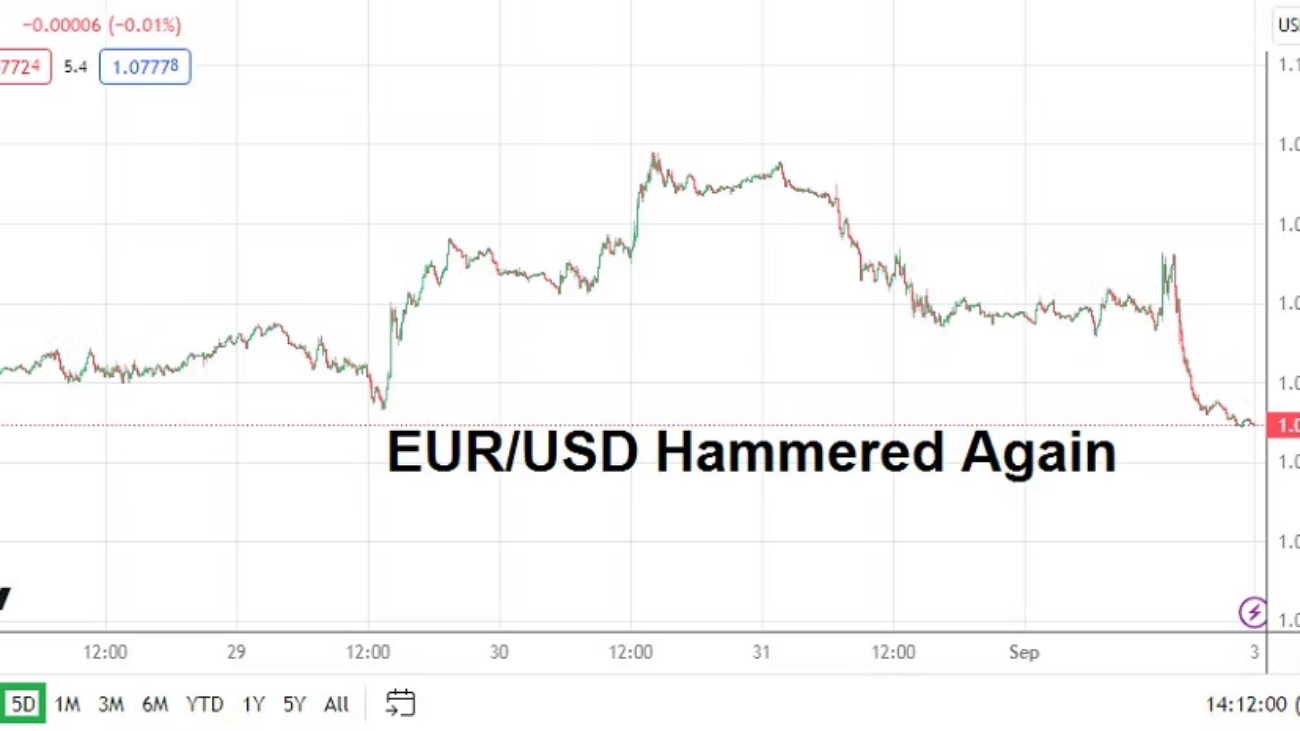
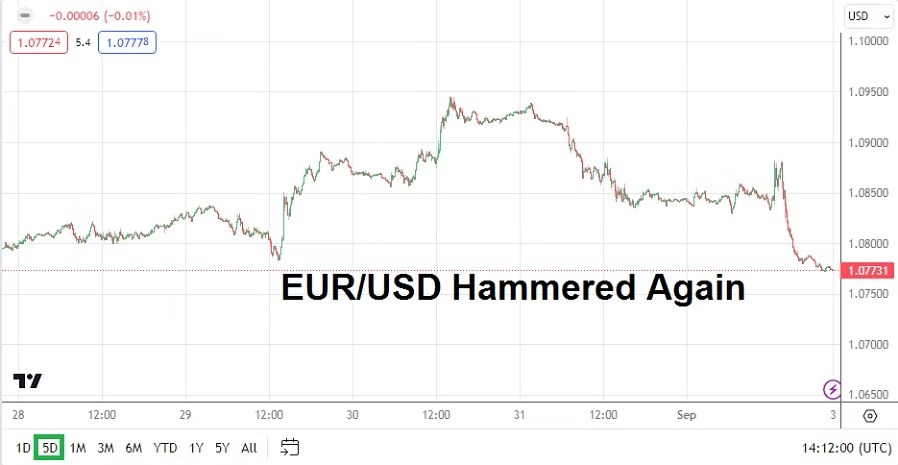
EUR/USD 5 Day Chart as of 3rd of Sept. 2023

Without trumpets or too much hyperbole, was Friday before going into the weekend a ‘false flag’, this as the USD gained strength against many other major currencies. A lack of volume because of the Labor Day holiday coming in the U.S and Canada tomorrow may have affected the Forex landscape. While trading is largely done by computer programs in financial institutions, day traders should understand last Friday worked as a get away day to enjoy a long holiday weekend in North America.

Meaning financial executives largely escaped their offices because they have seniority and the ability to disappear while their ‘underlings mind the store’. Essentially senior management often tells the staff that has to stay behind, “monitor and not touch the system”. This could have left the door open for what appears to be a strange reaction in Forex upon what was in fact weaker data on Friday from the U.S via the Average Hourly Earnings which came in slightly below expectations, and less than stellar U.S GDP results on Wednesday the 30th of August.

Yes, also this past Friday the Non-Farm Employment Change numbers were fractionally better this month than anticipated, but the prior month’s results were actually revised downward. And yet the USD remained strong. Is this because senior analysts, chief traders and risk management officers were absent on Friday?

Tomorrow the same folks will remain largely away from the markets too, meaning results should also be viewed with suspicion. Which sets the table for an intriguing Tuesday and Wednesday for all the major and minor currency pairs teamed against the USD. Gold and equity markets will need to be monitored closely too.

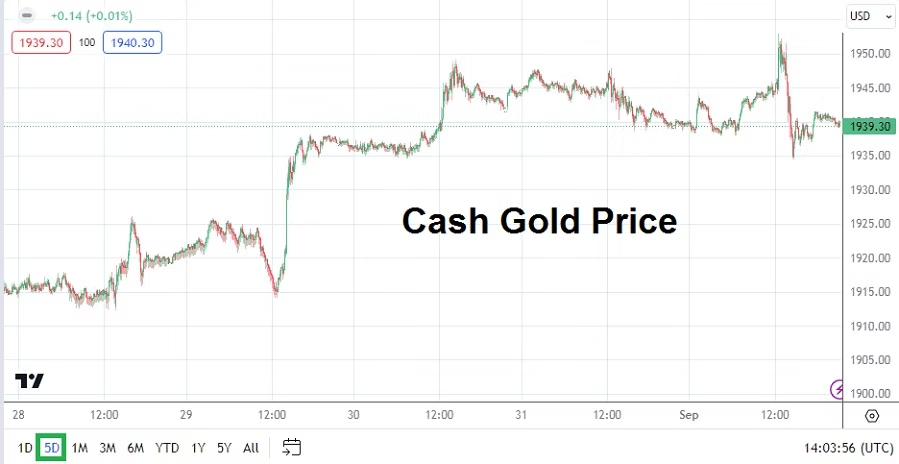
Gold Cash Price Five Day Chart as of 3rd Sept. 2023

Some potential clues are that the price of gold stumbled slightly on Friday as the weekend approached, but this happened as the EUR/USD sank to a low for the week, and the GBP/USD came under renewed pressure. But again this happened in rather questionable circumstances. Important support levels technically may get tested tomorrow, but trading volumes should be examined. Gold in many respects held onto gains made earlier in the week.

Yes, there are reasons to be nervous in financial institutions, due to higher short-term U.S Treasury yields, concerns about the China economy, mortgage rate worries in the U.S and elsewhere, fears about credit availability for small U.S businesses. However, these troubles have not caused a massive meltdown in the most primal of trading venues yet – major stock indices.

September is a notoriously volatile month for equities and speculators who use CFDs to participate in the stock markets globally need to be careful. Correct, some well known ‘traders’ are talking about a coming selloff in the markets, but so far we have not seen a major decline in the NASDAQ, S&P 500 or Dow Jones 30 indices. Day traders should not and cannot underestimate the potential for volatility to occur suddenly. Successful speculative bets via limited funds often means having to practice patience and risk management.

Thus, as the week begins early this Monday, day traders should be careful. Please note that a lack of big trading volumes because of the absence of U.S and Canadian financial institutions will make tomorrow’s results questionable. Opening the door for the potential of reversals on Tuesday, which might be abrupt as a ‘re-balancing’ of sorts takes place as folks returning to their offices seek equilibrium perhaps with their adjusted outlooks.

Simply put the U.S Federal Reserve the past two weeks has seen the same lackluster U.S data as all global traders, and the U.S central bank is in no position to raise interest rates over the mid-term. It would be useful if the Fed voiced their insights regarding the weaker than expected U.S Gross Domestic Product results last week, and the lower than expected Average Hourly Earnings report seen before the weekend. However, do not count on the Federal Reserve to do the right thing.

postN26.1

USD/INR: Bounce Higher Ignites a Return to High Water Values

USD/INR: Bounce Higher Ignites a Return to High Water Values

The USD/INR is trading near 82.4350 as of this writing, which is a value the currency pair has not touched since the second week of June. While some analysts may say the move to higher ground yesterday and early this morning is based on the U.S FOMC Meeting Minutes, Wednesday’s report from the Federal Reserve likely only reinforced the bullish momentum which started earlier this week. The world of Forex can feel fickle, particularly when so many of the internal dynamics are hidden from a large segment of people who are trying to speculate on the results.

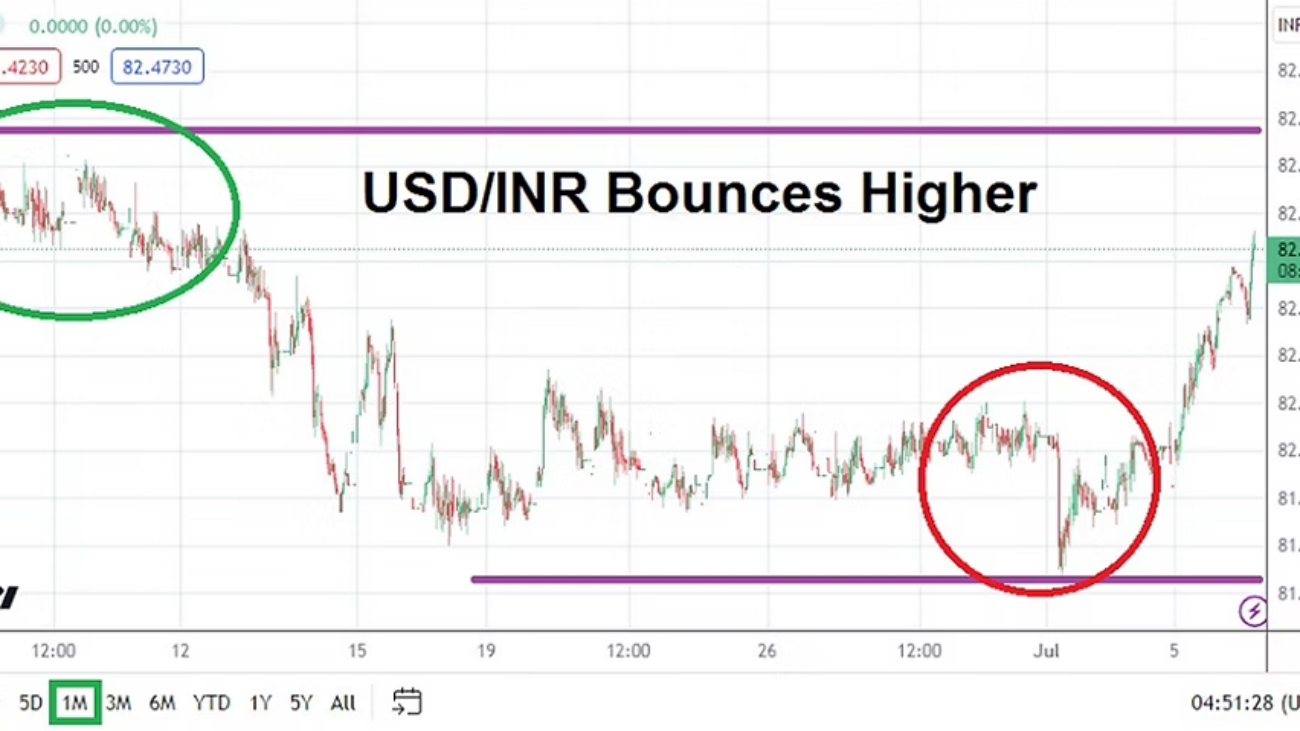
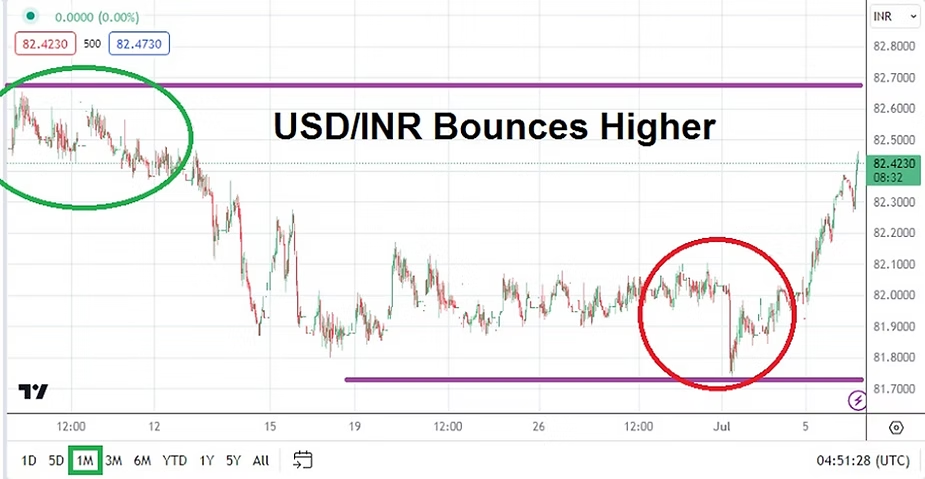
If the mechanics of the move higher which started on Monday are examined a couple of points should be considered closely, the low of the USD/INR was around 81.7300 on the 3rd of July. This low took place as most U.S financial institutions were on holiday in preparation for Tuesday’s 4th of July celebrations.

Fears of U.S Economic Prospects: Behavioral Sentiment and Stagflation Potential

The reversal higher since the 3rd of July has been pronounced, but before going into last weekend the USD/INR was largely trading within a consolidated manner near the 82.0000 level with a test of this mark having been displayed forcefully since the middle of June. A range of nearly 81.8500 to about 82.1500 largely has played out the past three weeks of Forex trading.

USD/INR One Month Chart as of 6th July 2023

Monday’s dip in value to lows around 81.7300 took place when there was very little volume in the USD/INR market. The depths challenged marks not seen since the first week of May.

The reversal higher the past few days is certainly part of more transactional volume starting to be pumped into the USD/INR as U.S financial institutions have returned, but they are also likely being caused by an underlying nervousness within the Forex markets which may be factoring in the notion the U.S Federal Reserve seems to be on a path which will increase the Federal Funds Rate on the 26th of July.

The behavioral sentiment being generated regarding a Federal Reserve which stays in an aggressive stance started before yesterday’s release of the FOMC Meeting Minutes. Nervous conditions have been on the surface of the broad markets because U.S inflation remains rather resilient – but also importantly because last week’s Gross Domestic Product numbers published on the 29th of June, came in stronger than anticipated. From a troubling perspective some analysts could point to the moderately improved growth and combination of stubborn inflation as a sign stagflation is starting to shadow the U.S, which would certainly be a troubling predicament.

USD/INR Move to New Highs this Morning could Ignite more Nervous Reactions

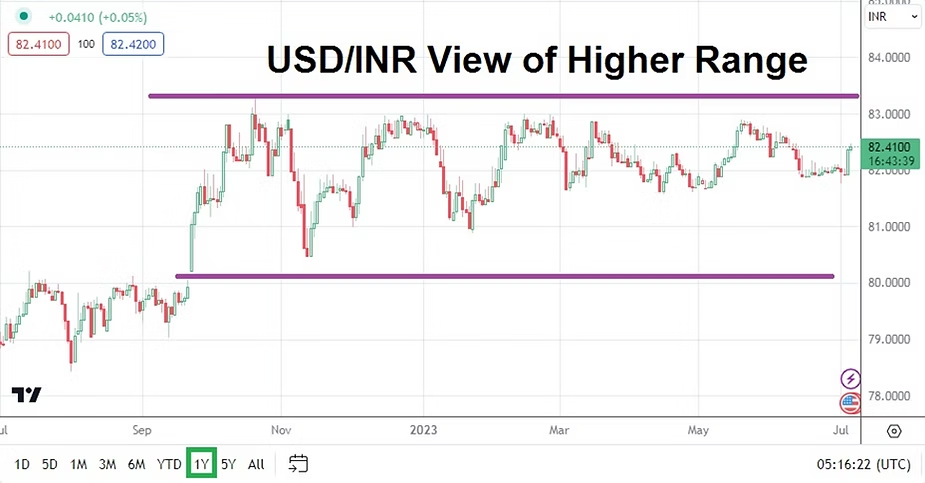
USD/INR speculators may believe the move higher in the currency pair is overdone and that values need to be lower. However, the current price of the USD/INR is one that has been experienced quite a bit since October of 2022. A look at a one year chart shows the USD/INR has returned to higher ratios of its price range which it has experienced since breaking upwards in the middle of September 2022. And to make things more interesting for technical traders, the USD/INR has actually produced a rather stable range between 81.6000 and 82.9000 since February of this year.

USD/INR One Year Chart as of 6th July 2023

While traders are certainly trying to anticipate what will happen next in the USD/INR to gain an advantage, they should remember the currency markets are almost impossible to time on a daily basis, but a look at mid-term prices does offer plenty of insights. If the USD/INR climbs too high, perhaps to the 82.5000 level the Reserve Bank of India could get a bit nervous and consider some type of intervention which it supposedly has done a few times over the past handful of months – but perhaps at higher price ratios.

USD/INR Mid-Term Considerations and the Current Price Range

However it is more cost efficient and reputably less damaging for central banks to not intervene if they do not have to, and simply let market dynamics effectively create a price for the USD/INR based on supply and demand. Meaning the current prices of the USD/INR look to be rather high, but taking into consideration the range of the Forex pair the past five months the values are not new. The prices in fact have been rather established, meaning the USD/INR may trade slightly higher, but then a lower wave of downward momentum could be anticipated.

Day traders who are gamblers may be tempted to sell the USD/INR if the currency pair finds more upwards mobility in the near-term. Trading volumes should be back to normal now that U.S financial institutions have returned from their holidays, and traders should be ready for the potential of fast price velocity developing. Risk management on wagers regarding the USD/INR are essential as always.

postN21

Risk Events and Questioning the Hyperbole of ‘Bad Actors’

Risk Events and Questioning the Hyperbole of 'Bad Actors'

The week in a way has already started for financial institutions and traders because of the developing news from Russia. Due to yesterday’s events surrounding the ‘noise’ caused by the Wagner Group’s leader Yevgeny Prigozhin, let there be no doubt that energy sector traders became nervous and fragile behavioral sentiment was being anticipated for Monday’s openings. However, like a well staged drama (perhaps this is giving too much credit to the actors) the Russian saga seems to have come to an odd conclusion. Leaving the possibility for a Part Two to develop. Stay tuned ladies and gentlemen.

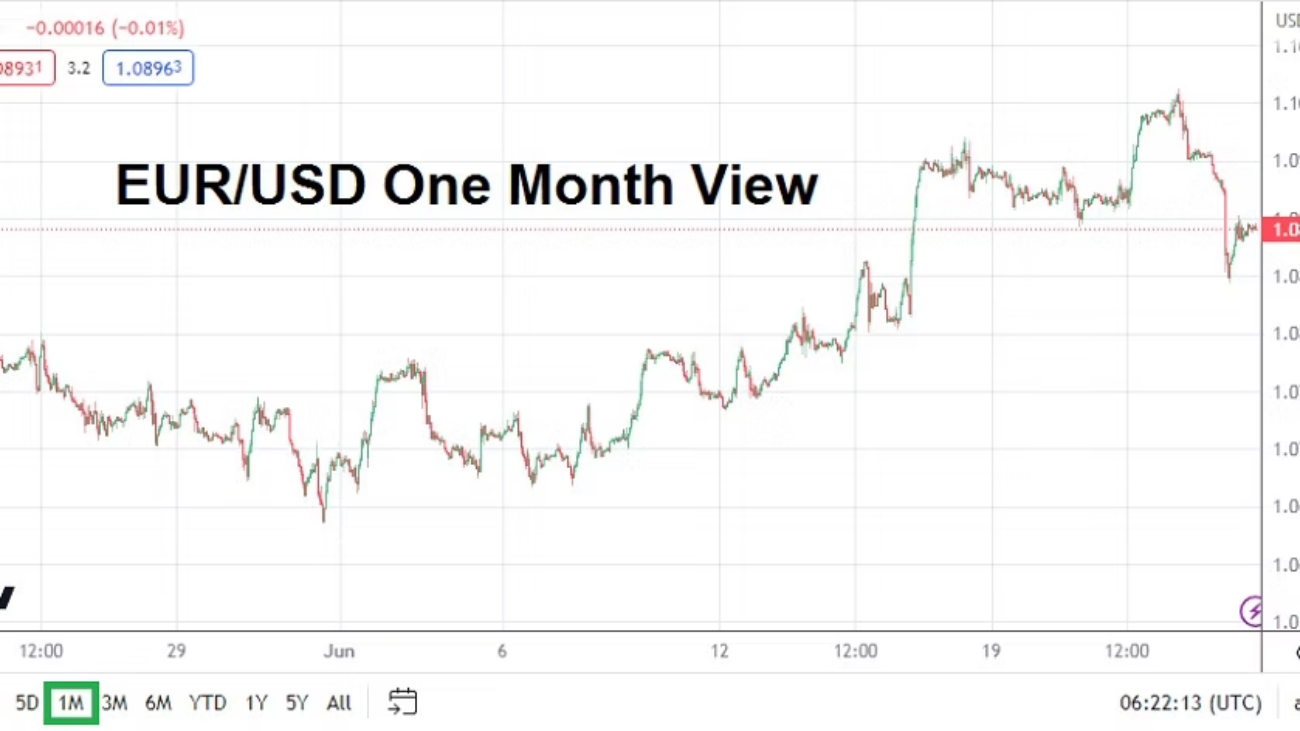
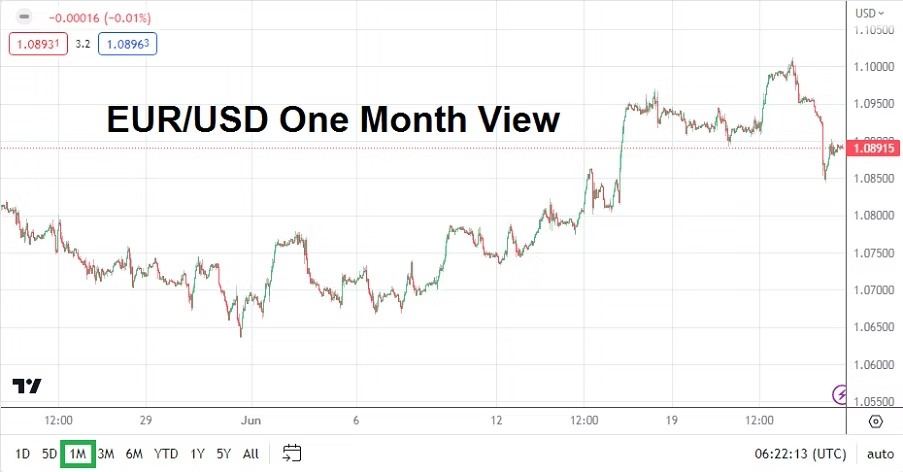
EUR/USD One Month Chart as of 25th June 2023

Monday, the 26th of June, Germany ifo Business Climate – the reading is forecast to come in worse than the previous month. Germany has turned in rather troubling economic data and the E.U as a whole is struggling under the weight of inflation and lackluster growth. The EUR/USD could be affected from the business climate survey.

Monday, the 26th of June, E.U ECB Forum on Central Banking – the annual event which is a bit like the Fed’s Jackson Hole Symposium will be attended by the leading central bank officials from around the globe. This year’s event in Sintra, Portugal will focus on inflation. ECB President Christine Legarde will kick off the event, which will end on Wednesday the 28th of June with speeches from Fed Chairman Jerome Powell, BoE Governor Andrew Bailey and others.

Tuesday, the 27th of June, Canada Consumer Price Index – a slew of inflation reports will be delivered. The forecast anticipates a slight drop in price pressure, but will that actually be the result? The USD/CAD could move based on the outcomes.

Tuesday, the 27th of June, U.S Consumer Confidence via the Conference Board – this survey is expected to show a slight improvement in the outlook of American consumers.

Wednesday, the 28th of June, E.U ECB Forum on Central Banking – the event will conclude with speeches from the heads of the ECB, Bank of Japan, Bank of England and Federal Reserve. The event is not supposed to stir up the dust, but Forex traders should monitor the rhetoric generated.

Thursday, the 28th of June, Germany Preliminary Consumer Price Index – the data is expected to show an increase in prices and underscore the ECB’s aggressive rhetoric regarding inflation.

Thursday, the 28th of June, U.S Final Gross Domestic Product – the growth numbers are projected to show a gain of 1.4% compared to last month’s 1.3%. The results will move the financial markets if they are surprising. Traders should be on the lookout for revisions to the previous month’s numbers.

Friday, the 29th of June, U.K Final Gross Domestic Product – an expected ‘growth’ number of 0.1% is anticipated, which would match last month’s lackluster outcome. The U.K is hovering under recessionary pressures and this GDP result will be watched by GBP/USD day traders.

postN14.1

Anticipated Federal Reserve Shop Talk to be Delivered Today

Anticipated Federal Reserve Shop Talk to be Delivered Today

For what it’s worth, here is my prediction regarding what the Federal Reserve will do today. The Federal Funds Rate will remain unchanged in my opinion. The FOMC Statement may show that the vote actually was debated and not unanimous. The statement is likely to warn that inflation remains stubborn and potentially problematic, meaning the Federal Reserve continues to believe it may have to raise the Federal Funds Rate over the mid-term and again before the end of 2023.

The Forex market has seen the USD get weaker against many major currencies since late May. While financial institutions have seemingly positioned for no increase from the Federal Reserve today, this move has also likely been priced into Forex. Day traders need to understand institutional traders will not be betting on what took place the last three weeks, but are trying to anticipate what will happen into early July and beyond regarding their Forex positions.

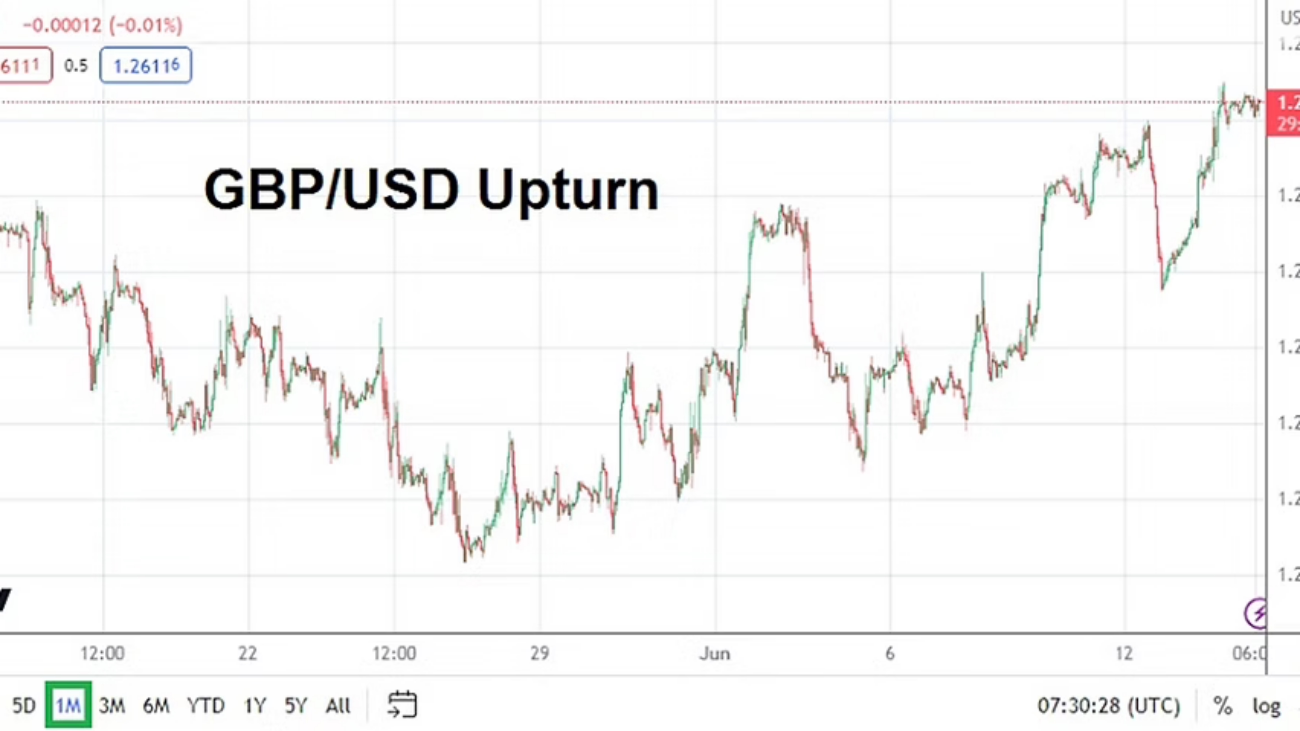
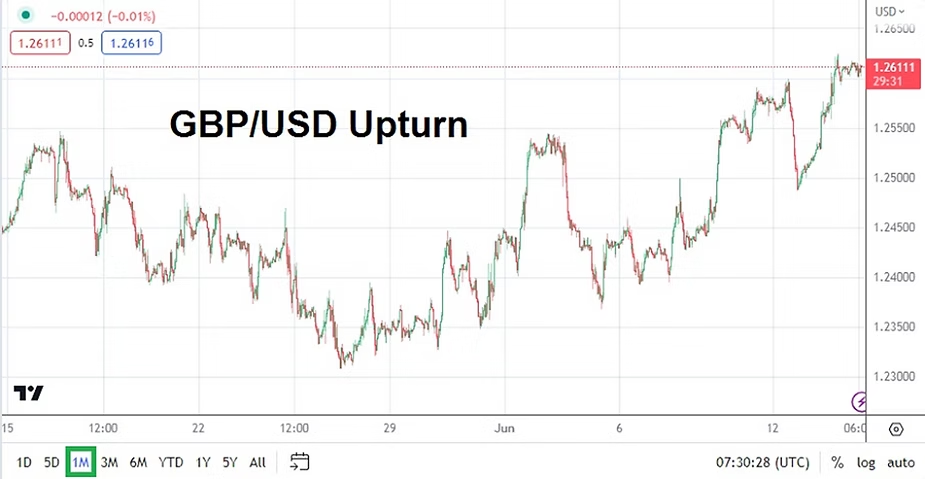
GBP/USD One Month Chart as of the 14th June 2023

Many financial institutions may still be betting the Fed will remain more dovish than the U.S central bank wants to admit, but this is a dangerous perception and could prove costly. Financial institutions are concerned about the Fed because they know the central bank has painted itself into a corner it may not be able to maneuver freely within. The battle to conquer inflation while trying to fuel economic growth is not an easy one. Mixed sentiment abounds regarding the U.S economy depending on who is asked.

Talk of a soft landing and a small recession continues to be heard, this while some analysts warn about a hard drop and darker days ahead. Folks, it is all about timelines and their interpretations, experts warning about brighter or darker days ahead have a tendency to be vague regarding exact moments in time. Everyone has an opinion, and people often have more than one.

In my opinion – my one opinion, the Fed is likely to say that it is not going to raise rates today, but may have to do so in the mid-term. If these were normal times and economic conditions were not suffering from huge spending running amok in Washington and the corporate banking sector wasn’t fragile, the Fed may actually have raised the Federal Funds Rate today to continue to battle inflation deliberately. However, a pause for the moment seems like the logical choice, this while ‘hoping’ inflation continues to diminish. And hope is a key word here. Everyone seems to be hoping. The question financial houses and traders need to decide after the FOMC Statement takes place today is how seriously do they consider the Fed’s remarks.

If they believe the Fed will have to continue to remain neutral regarding its mid and long-term interest rate policy, the USD may soften and incremental selling might be demonstrated. Human instinct tends to be optimistic, which means financial institutions and maybe even the Fed wants to believe inflation will ebb lower. If this happens the USD would weaken further. However, the Fed may have to sound more aggressive than people want, but that would damper the mood of financial institutions – so look for optimistic interpretations to abound with rose colored glasses, even if they are wrong in the long-term.

Gold One Month Chart as of the 14th June 2023

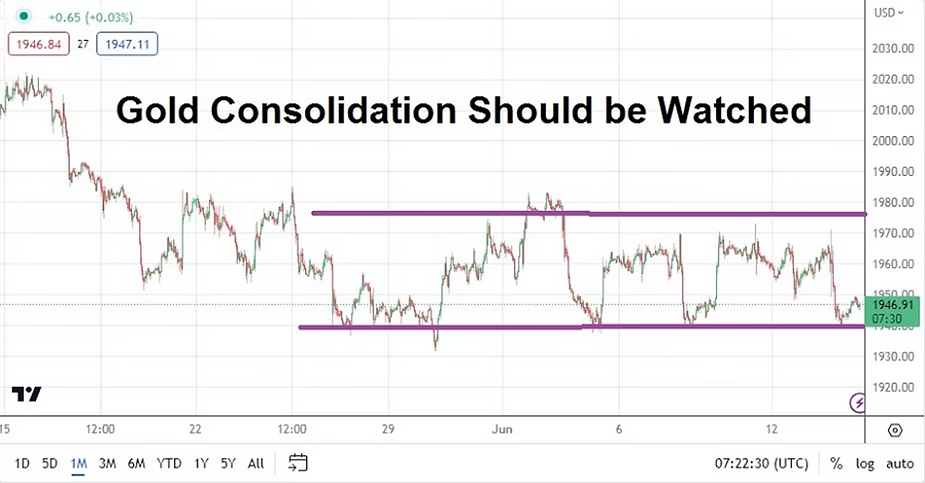
For evidence of outside barometers, traders may want to look at Gold which has essentially traded between 1940.00 and 1975.00 with a few outliers since the last week in May. The price of Gold has seemingly situated within a consolidated framework the past few weeks. The precious metal may produce a strong move if the Fed shows more dovish behavior today, particularly if financial institutions show more optimism via behavioral sentiment in Forex – meaning if a weaker USD trend continues momentarily Gold could traverse higher.

My prediction and $1.00 USD may get you on a bus. As always caution will be needed if you are trading immediately before and after the U.S Federal Reserve’s rate decision. I advise using a seat belt today consisting of entry price, stop loss and take profit orders via solid risk management, but then again these cautious attitudes should always be practiced by day traders.