post287

Forex: Tomorrow is Known, October and Beyond are Uncertain

Forex: Tomorrow is Known, October and Beyond are Uncertain

The U.S Federal Reserve will cut its Federal Funds Rate by 25 basis points tomorrow. The big question all financial institutions would like some clarity about is whether the U.S Central Bank will strongly suggest that another cut of 25 basis points will need to take place in late October during the next FOMC meeting.

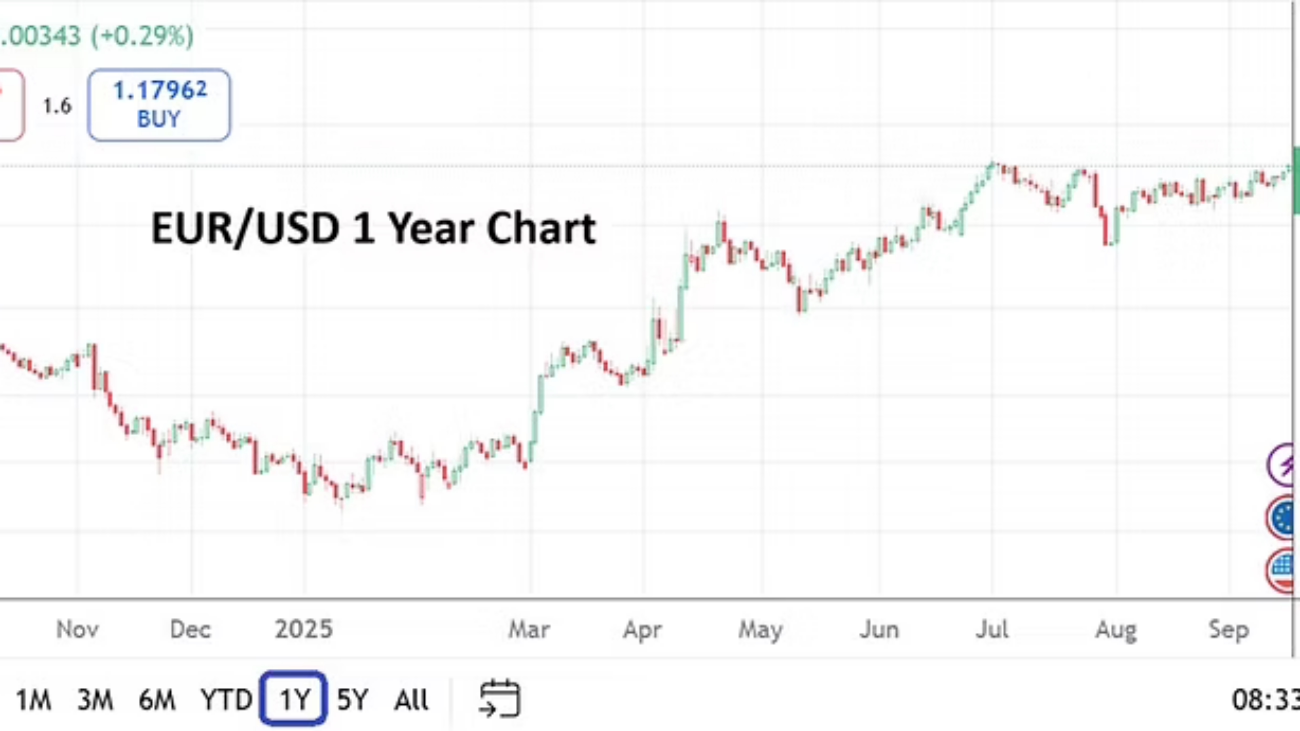
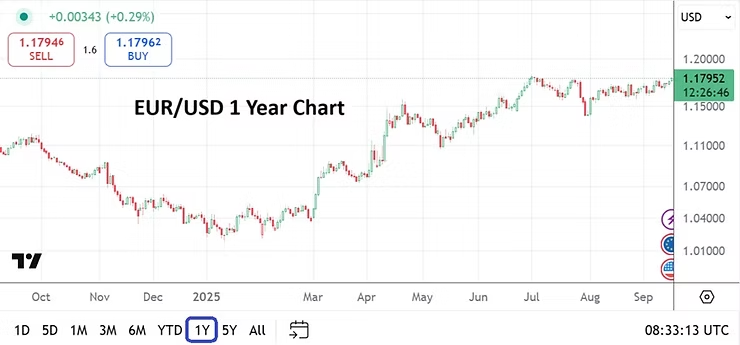
EUR/USD One Year Chart as of 16th September 2025

Forex has certainly seen the USD weaken because a definitive interest rate cut has already been factored into mid-term outlooks. Those who are betting on a 50 basis point cut tomorrow are spitting into the wind and most likely wrong. The Fed under Jerome Powell has proven time and again that it is cautious. The word uncertainly is likely to be heard on Wednesday, even as the Fed Chairman admits conditions warrant cutting interest rates further.

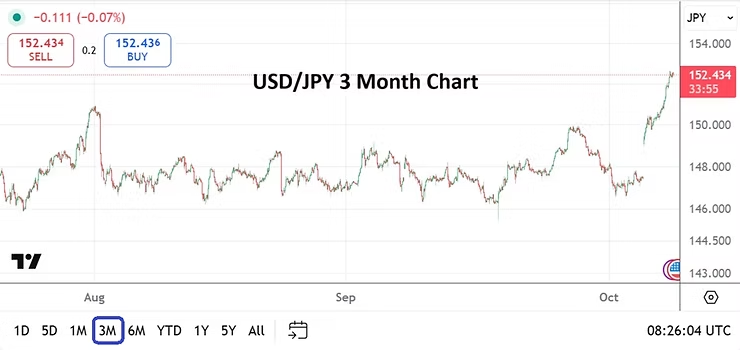
And this is where it will get tricky for day traders betting on conditions beyond tomorrow. Since the quarter of a point cut has been factored into Forex already, and the EUR/USD, GBP/USD and even the USD/JPY are bouncing up against technical inflection ratios for the time being, powerful reactions and dangers will ignite based on the perceptions generated about late October outlook. It is likely some large financial institutions have already priced a rate cut of 25 basis points into the USD already for their October outlooks, meaning some big houses have accounted for a 50 basis point cut mid-term.

It is probable some larger firms have remained conservative, and have not leaned into overly confident cash forward contracts for their corporate clients. This because they want to be certain the Fed is definitely setting the table for another interest rate cut in October.

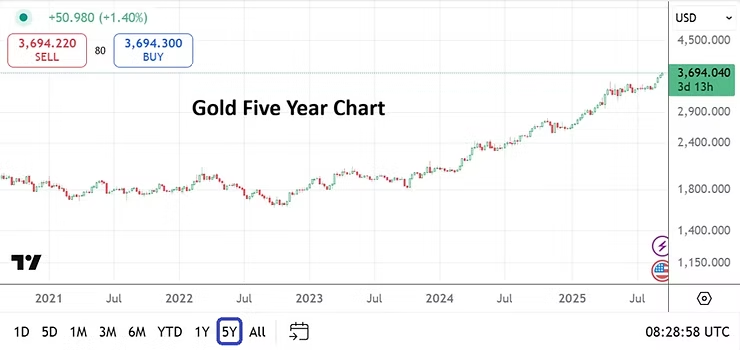
Gold Five Year Chart as of 16th of September 2025

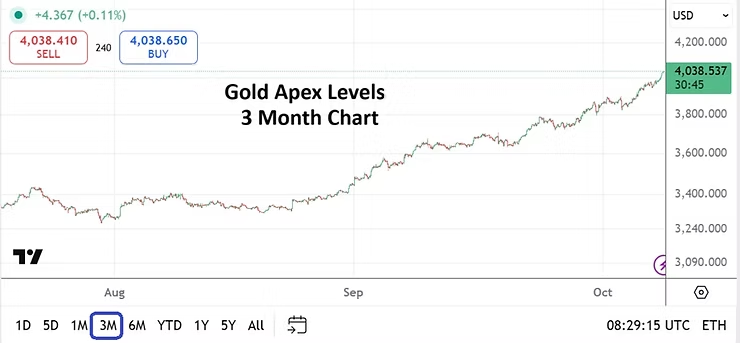
Nothing is guaranteed and Fed Chairman Powell is likely to state this obvious point tomorrow. However, he may have to admit the jobs market looks weak. And he may have to also acknowledge, that although he and other FOMC members remain concerned about the threat of inflation, that for the moment it remains somewhat tame. This is where a secret ingredient in Forex trading tomorrow may fuel volatility. Inflation fears telltale signal is being seen in the current price of Gold which is within record territory and sight of $3,700.00 as of this writing, this even as the 10-Year U.S Treasury yields have decreased.

As a critic of the Federal Reserve’s conservative approach to cutting interest rates the past half year, I have to acknowledge that it is important that the Fed remains nimble, they cannot simply give into pressures from political circles. However and unfortunately, the Fed has been anything but nimble the past six months. The Fed should have cut interest rates by 50 basis points in total in the late spring and early summer, they did not. Now they are once again behind the proverbial curve and in a position in which they are being forced to be reactive instead of proactive.


Again the Fed has at its disposal high tech quantified data via its distinct Fed Districts to know the economic landscape and react at a quicker pace. It chooses not to do this efficiently, this was a feature of the Fed’s inability to accept that inflation was a danger almost four years ago and its snail like reaction which caused economic harm. Now the Fed finds itself in a position in which it should be admitting that it should have been cutting interest rates six months ago, while also knowing logically storm clouds are on the horizon regarding murky economic outlooks due to the threat of inflation actually increasing in the mid-term. Justification for a nimble Federal Reserve remains a pragmatic desire.

Here’s the thing, the Federal Reserve is going to cut the Funds Rate by 25 basis points tomorrow and say they are considering another cut in October. The Fed will probably also say after another cut in October, that they anticipate taking a way and see approach into the end of this calendar year.

Regarding the potential reactions of the EUR/USD, GBP/USD and USD/JPY tomorrow and into Thursday, volatility needs to be expected. The consolidation we have seen develop the past few days near important levels that seemingly are holding back large value moves will vanish for day traders. Small retail speculators in Forex need to understand what they view as massive moves are often considered simple small mathematical gyrations by financial institutions which are not only participating in the cash forward business via FX rates, but also taking part in hedging via futures trading through the likes of the Chicago Mercantile Exchange and other venues.

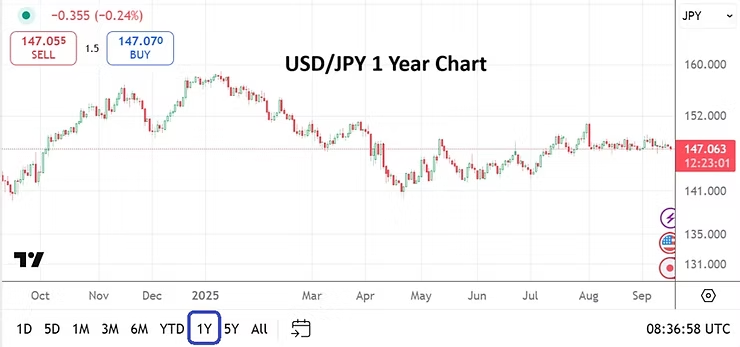
USD/JPY One Year Chart as of 16th September 2025

It needs to be noted the Bank of England will release its Official Bank Rate on Thursday along with its Monetary Policy Summary. And the Bank of Japan will issue its Policy Rate and Monetary Policy Statement on Friday. The BoE is not expected to change its borrowing rates on Thursday, and the Bank of Japan is expected to stand in place too. It should be pointed out that the Bank of Japan does have room to increase its borrowing costs, but the government of Japan appears to be married to maintaining a weaker Japanese Yen, much to the chagrin of some economists.

If the Fed admits they need to likely cut interest rates again in October this might spur on some USD weakness and create volatile conditions tomorrow and Thursday. However, if the Fed offers the phrase that they will take a wait and see approach after October, until further economic data can be accessed in November and December, then the USD may start to show signs of firming. The Fed’s interest rate is 4.50% today, by the end of Wednesday it should be at 4.25% with signs that by the end of October it will be 4.00%. Looking for more than those clues is speculative, financial institutions want answers like everyone else.

post278

Behavioral Sentiment: False Narratives and Noisy Realities

Behavioral Sentiment: False Narratives and Noisy Realities

The past handful of months in Forex have provided day traders problems if they have been trying to pursue steady trends. Constant flashes of rhetoric and news pervading tariff implications, U.S Federal Reserve interpretations from various media and analytical corners, and mixed economic data has caused a rather mired reality for speculators trying to operate.

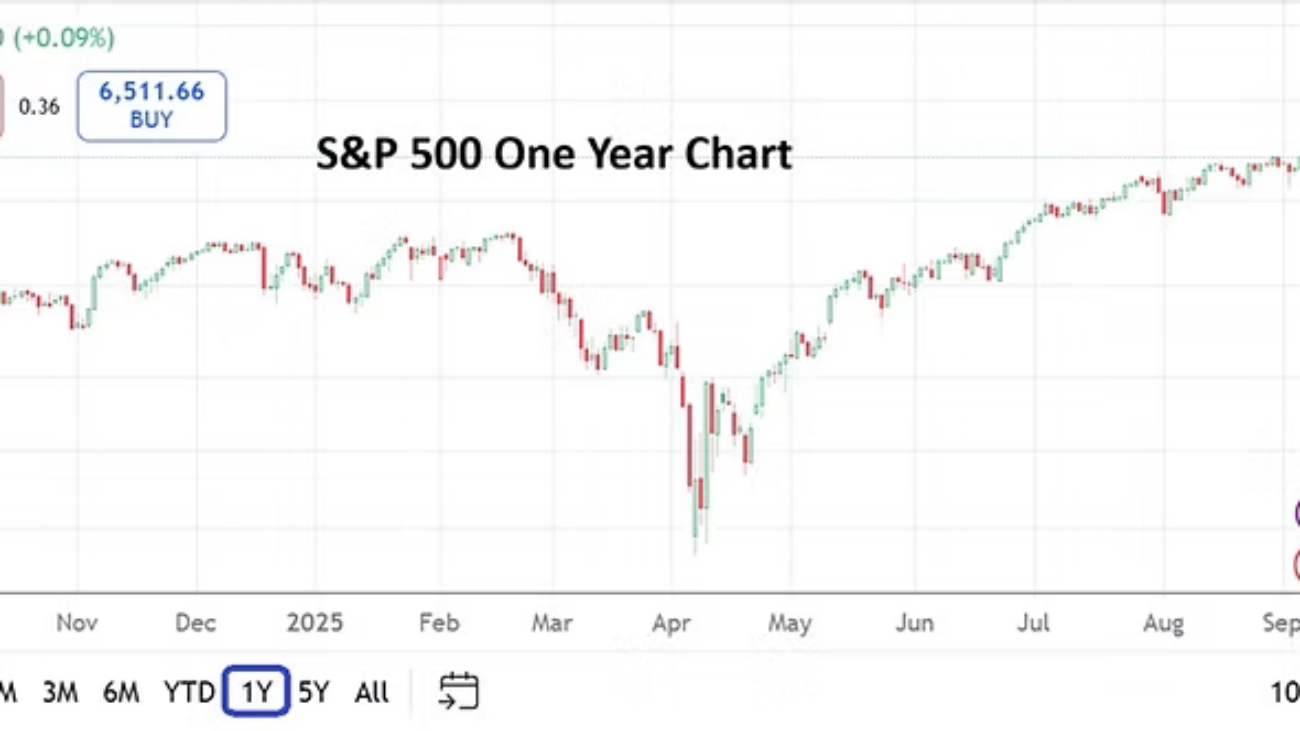
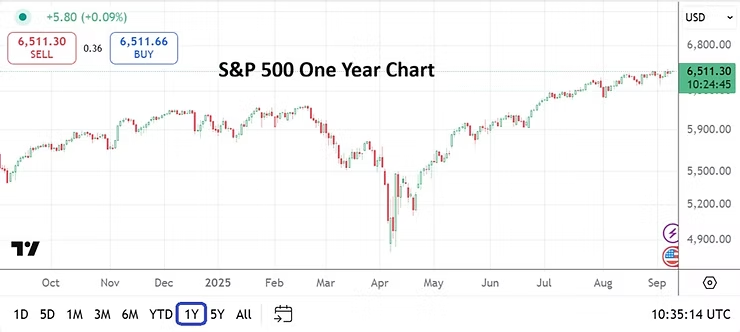
S&P 500 One Year Chart via Futures CFD Trading on the 9th of September 2025

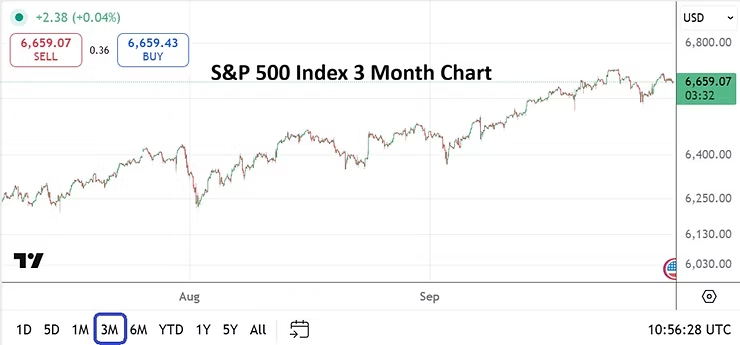
However, if the noise is turned down by day traders and sometimes given less importance regarding potential influences, signals become visible and some perceptions can be looked upon as roadmaps. While many want to to throw their hands up and proclaim some sort of developing economic meltdown and a coming apocalypse, the major U.S indices are actually performing quite well as a barometer. The S&P 500 is continuing to challenge all-time values. Yes, the Nasdaq 100 and Dow Jones 30 are not marching in lockstep with the S&P 500 to new highs, but they are not far behind. The stock market has never guaranteed people an ability to constantly move upwards, but it does offer the potential to judge outlook and mid-term sentiment.

The USD has been extremely choppy since the start of this year, this as the Trump administration has taken over, but its trend towards weakness has been rather clear. The EUR/USD and GBP/USD have done reasonably well regarding mid-term strength. Yes, the USD/JPY has produced whipsaw movements and the Japanese Yen remains awkward, but this is a direct reflection of mitigating Japanese government policy (some may call it incompetence) regarding its ability to manage fiscal concerns, interest rates, and fight deflation and now inflation (which has been going on for a few decades).

Gold is traversing record heights and is showing signs of sustaining values above 3,600.00 as of yesterday. After languishing (albeit within elevated realms) near 3,350.00 the past handful of months with prevalent volatility, the precious metal has bolted out of its consolidation. And the likely reason for this is the anticipated Federal Reserve policy changes regarding interest rates. 10 Year U.S Treasury yields have also been pushed lower recently – this as financial institutions await a definite cut in interest rates by the Fed on the 17th of September. But folks who believe a 50 point basis reduction is coming late next week are likely wrong.

The Federal Reserve under Chairman Jerome Powell has been quite conservative, this will probably not change next Wednesday. It is more likely a cut of 25 basis points will take place on the 17th, and the FOMC Statement will offer the potential of another interest rate cut in October. Tomorrow’s PPI numbers and Thursday’s CPI results will influence the Fed’s coming meeting and mid-term outlook.

What we are left with is a broad market that is having a lot of noise applied to it by people with a variety of biases. Political bantering has reached a threshold in which it might be best to simply not pay attention to anything – but that is dangerous too. Yes, some people do talk sense, and some people do show signs of actually trying to engage in adult decision making regarding their insights, but it often feels like wanting to sound correct is more important than outcomes. Technical traders may be enjoying a quiet laugh at the expense of fundamental players right now.

However, economic data remains important. While rhetoric from the U.S White House and its opponents remains within a state of hyperbole, day traders should try to turn down the noise and pay attention to signals that long term investors continue to produce and take advantage of their sentiment. Stocks continue to be pursued and indices have done well, but volatility should be expected particularly into next week.
post275

Nvidia: Short-Term Speculative Reactions Versus Investing

Nvidia: Short-Term Speculative Reactions Versus Investing

Nvidia is near 181.60 as of this writing, this after the company issued a quarterly report that beat expectations, but also pointed out that mid-term concerns may slow down the pace of some of its data driven business, and that China enterprise complications remain murky.

Nvidia Five Day Chart Early Morning as of 28th August 2025

Day traders should be certain they acknowledge the difference between a short and near-term wager on Nvidia compared to mid and long-term outlooks. Speculators who want to venture forth and gamble on Nvidia based on last night’s quarterly earnings report are free to do so. However, there is a distinct difference between betting on what today and tomorrow’s reactions in Nvidia will be compared to folks who are investing long-term in the company and believe that over the long haul it will remain a solidly profitable company that adds value to bottom lines.

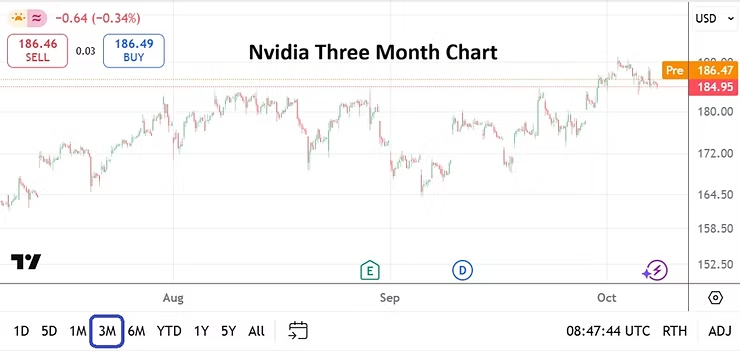
In early August Nvidia was challenging the 185.00 ratio. As of this morning the stock is near the 181.60 mark. Nvidia faces headwinds currently in after hours markets because the company had the gumption to say it outperformed expectations in the last quarter, but put up a cautionary sign saying its data business may face some obstacles regarding growth, and outlooks for its China enterprise remains solid but could face some complications.

Reacting to Short-Term Temptations and Speculating:

For those who want to sell Nvidia based on the above ‘warnings’ today, they are free to try their luck. However, selling positions could quickly turn into buying opportunities. Nvidia like most equities is about considering reactions due to behavioral sentiment, short-term nervousness could rapidly shift to bullish perspectives in the eyes of investors, programmed trading software, and – yes – day traders.

Lower support for Nvidia technically when a five day chart is looked at may be 170.00 if someone is overly cautious. A look at a one month chart for day traders who have a bit more of an aggressive manner, may believe technical chart evidence suggests a lower move can be taken advantage of at 177.00, this if they are keen on waiting for a downturn to look for an opportunity to buy at lows.

Yes, perhaps some short sellers may target the mentioned values as places to cash out positions while speculating. But there is a chance Nvidia will not touch those lows. Perhaps bearish reactions – if they even happen – will fade quickly and additional bullish sentiment will continue to seep into Nvidia. Does anyone really think Nvidia is about to face a steep selling curve?

Tech Stock Consideration and Looking for a Barometer:

·       Some folks are talking about AI and its potential status as a bubble.

·       However, this is Nvidia we are talking about, even if there is a bubble in the AI sector, Nvidia long-term is a solid stock that will likely do well for years to come.

·       Short-term reactions seen the remainder of this week and perhaps over the next few weeks may be choppy, but this would include reversals in both directions.

·       Betting on a big downside in Nvidia looks to be wrongheaded.

·       Traders who are conservative and believe Nvidia is a good buy short-term after some selling happens, while looking for momentum higher – at least back to known resistance levels – may be making a solid wager.

Nvidia is one of the most important equities in the stock market. Some may justifiably say it is the most important at this moment. As a big driver of the Nasdaq 100, Nvidia has in many respects traded sideways since late July. This has been one of the reasons the Nasdaq 100 has faced headwinds too. The broader S&P 500 has been doing better than the Nasdaq 100 the past few weeks, this because tech stocks like Nvidia are facing some skepticism regarding just how high they can go. However, Nvidia as a stand alone company has excellent long-term prospects.

post273

China’s Economic Future: Speculation & Transparency Question

China's Economic Future: Speculation & Transparency Question

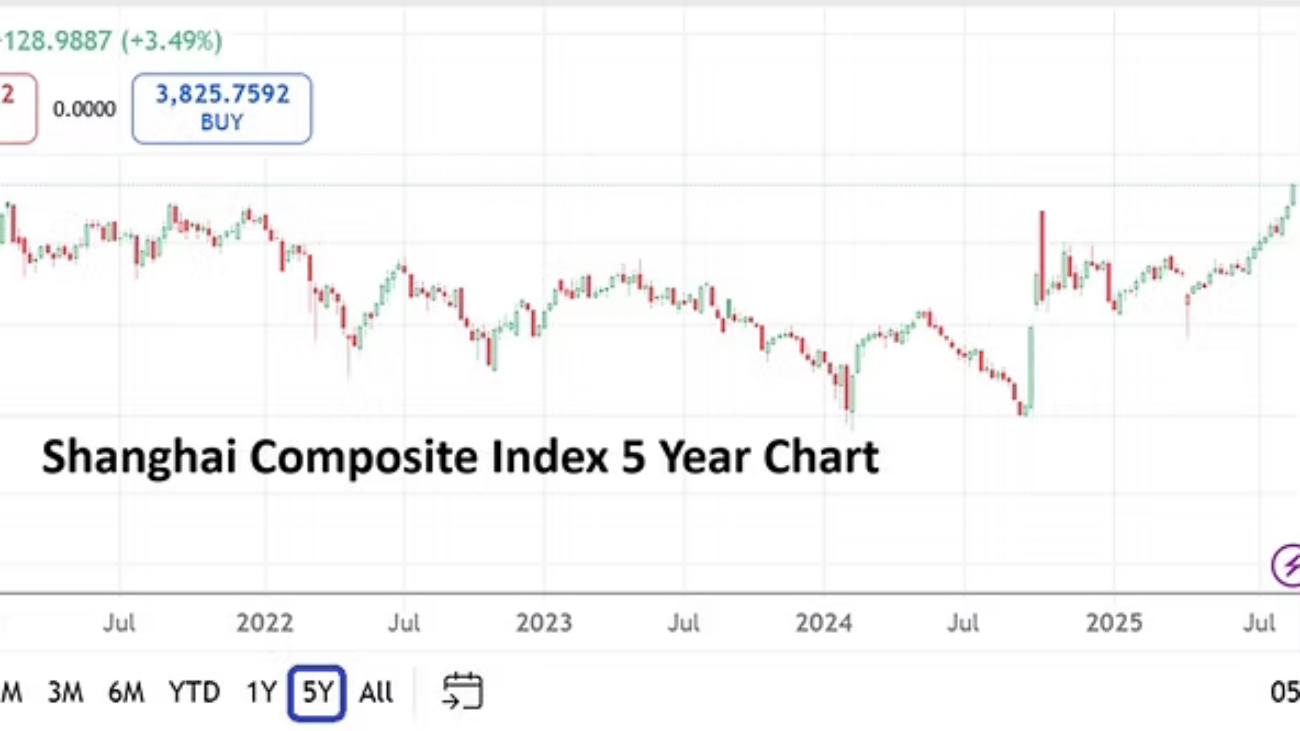
China’s economy has been underperforming for a handful of years. Growth has not only stagnated but has experienced a downturn, deflation has been experienced. Strong leadership from Xi Jinping has led to a firm approach regarding the management of China’s political and economic affairs. Until this year, Xi’s grip on power had grown significantly since he took office as the President and General Secretary of the Chinese Communist Party in 2012, but his control appears to be waning. Yet even as lackluster Chinese economic data has persisted, the Shanghai Composite Index (SSE 000001) has mirrored many global equity indices and done remarkably well since April of this year.

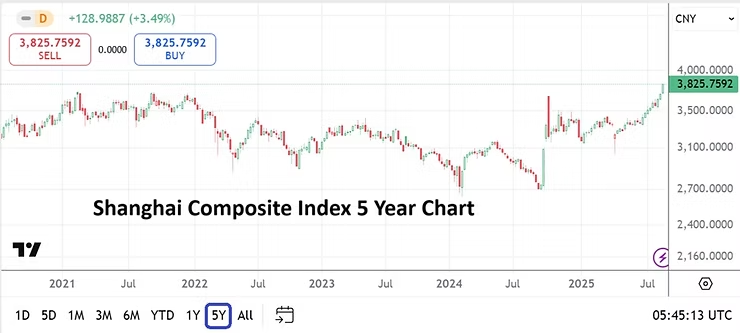
The SSE is near 3,826 currently. In early April the SSE was around 3,080, and in the middle of September 2024 the Shanghai Composite Index was close to 2,700, which was clearly within sight of long-term lows. The current heights of the SSE have not been seen since August of 2015. Yes, the Shanghai Composite Index was over 5,000 in April of 2015 and also in 2007. The point being that highs being traversed have not been seen in a long time. But is the positive speculation in the SSE a sign that economic conditions and political considerations in China are positive? Where is the transparency?

Shanghai Composite Index Five Year Chart as of 24th August 2025

China’s ability to create significant growth over the past four decades has transformed the nation into a global powerhouse economically and militarily. Yet, the past few years have begun to show cracks in the single handed approach to centralized decision making regarding the economy, government data presented has become suspicious. Rampant speculative forces in the SSE have been seen before. Is now the time to buy more Chinese equities or is it time to become cautious? Reliable statistics remain a troublesome aspect for investors.

China’s real estate market collapsed under the weight of too much building and speculative buying of apartments. Yes, inflated property and sudden deflation has been seen in capitalist countries in the past and will be witnessed again in the future. But the bubble in Chinese real estate and its crash also points out problems regarding a lack of transparency. While the Chinese government has tried to fix the fiscal problems caused by the real estate implosion, it has also created significant fractures within its banking system, which are confronting the Chinese government and public, and sometimes feels like a coverup trying to hide bad news. When will there be a recovery in the China real estate sector, is the worst of the crisis fixed?

Chinese political questions and some evidentiary circumstances point to intriguing considerations. There is evidence in China that a change of leadership is progressing. In the past couple of months small hints have been allowed to be published via China’s state media, the Xinhua News Agency. Rule changes have been made regarding decision making processes in the Chinese Communist Party, this was published by Xinhua in late June and republished by the South China Morning Post of Hong Kong in early July. While paraphrasing, both news entities expressed that rule changes meant Xi Jinping would officially have to delegate more decision making.

USD/CNY One Year Chart as of 24th August 2025

Speculation is growing beyond a mere whisper that the Chinese military has become a wildcard and a source of power that is potentially ready to help remove Xi Jinping. The military apparently is not supporting Xi and wants a more collective approach to decision making via the Chinese government. Yes admittedly, this information can be described as being from news services and podcasts that do not favor the Chinese government, but they seem to be singing in unison. It appears that China’s People’s Liberation Army have decided it is time for a change and is ready to play a role in the selection of new Chinese leadership.

The 80th Anniversary Victory Day Parade in Beijing will be held on the 3rd of September, what role will Xi Jinping play in the show of military force? Will it become apparent that Xi is merely a figurehead until an official decision is made on how the Chinese Communist Party will be led? Importantly, the 15th Five Year Planning Conclave for the Chinese Communist Party will be held in October and this is where a leadership change could take place including the official removal of Xi Jinping.

There appears to be – yes, via the dissident information heard, two factions within the Chinese Communist Party vying for power – hardliners and reformers. The army still hasn’t made it clear if they are backing the hardliners or the reformers. What is evident however via many publications, is that China’s PLA has decided along with other important leadership circles in China’s Communist Party that Xi had too much control and they want a more collective leadership.

Regarding the Chinese economy which has undergone a period of stagnation and lackluster results the past handful of years under Xi’s strong centralized approach, something big is about to happen which will have ramifications for the next five years. Who will lead China? The hardliners who are true believers in ideological communism or reformers who want China to move towards more of a market economy? This is a huge question. This type of political infighting has been seen in China during the past four decades and played a role in key leadership changes. It is not a conspiracy plot which is being sounded, it is the possibility of a transfer of power which happens cyclically in many nations when changes are warranted.

China’s Shanghai Index has done well recently. Perhaps this is a correlation reflecting optimism being sparked globally in equities in recent months. Or is it also possible that some folks in the know are betting on the reformists to take control of the Chinese government? Tariff concerns have seemingly been brushed to the side in China and something bigger is certainly at play. President Donald Trump is not the story here. Investors participating in China need to pay attention to the political changes that seem to be brewing. While speculation has certainly brought the Shanghai Composite Index to long-term highs, transparency from China is a concern economically and politically and there will be an impact if changes to leadership occur.

post271

Hard Truth: No Secret Sauce, A Possibly Unfriendly Reminder

Hard Truth: No Secret Sauce, A Possibly Unfriendly Reminder

Day traders face constant battles. Choppy conditions in markets lead many salespeople within brokerage firms to proclaim the ability to take advantage of technical shifts to their clients, but it is much easier to demonstrate what has taken place before compared to what is going to happen next. Technical trading via charts often looks good for those offering its charms until reality bites.

Day traders also have the disadvantage of fighting large market institutional forces that have completely different timeframes, deeper pockets, and perhaps even a fair amount of analyses they can use to validate their reasons for taking a position – not necessarily a correct position – but enough to provide insurance regarding their decision making.

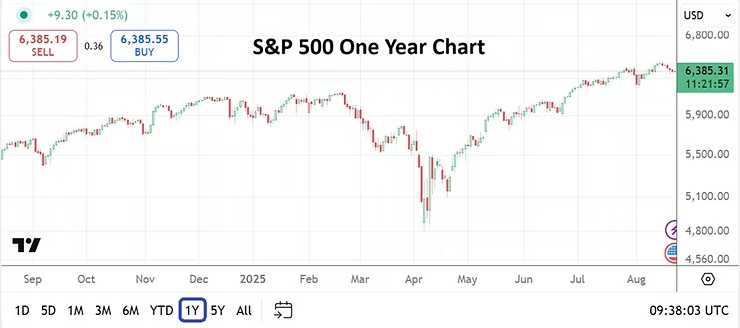
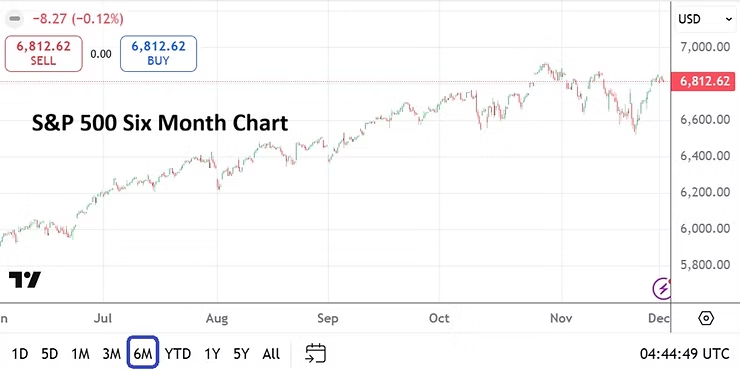
S&P 500 One Year Chart as of 22nd August 2025

Institutional traders can fall back on the analyses they have at their disposal and point to it as the reason why they made a trade. Literally giving them an excuse to explain why things went wrong, so they can tell inquiring management when needed, this in order to protect their miscues. Institutional players do not get fired easily from their positions, they usually just wait a few years and shift to another company when too many bad trades have been made – that is a dirty little secret in the trading world.

Comparatively, day traders simply blow out their own accounts while losing money. Yes, sometimes they have to explain to their romantic partner why they can’t go on the trip they had been planning because there is a sudden lack of funds. Hopefully they didn’t wipe out too much money that they may have borrowed from family or friends, this via ambitions and proclamations that a coming trade was a once in a lifetime opportunity.

But wait, yes, there are speculators and large traders who do make money. These are the folks many allude to who are – in many peoples’ minds – sitting on a yacht in a lovely ocean locale and enjoying the fruits of their labors. They do exists and we should acknowledge this, even if we sometimes think they are merely lucky and one day will face a losing streak.

However, many of these anointed winners do not exists either. Beware of experts ladies and gentlemen. Influencers are often selling a dream they know a day trader desires. Commissions drive the brokerage business. Unfortunately, it is seldom profits made by an emerging victorious crowd via newly minted speculators that make brokerages money.

I am frequently warned that this is not what day traders want to read. They do not want to be reminded that 90% of their group usually loses most of their money, or at a minimum walks away with less money than they started. The U.S Fed’s Jackson Hole Symposium is now underway in Wyoming. Yet, most day traders will only be able to take advantage of this event by trying to ride on the sentiment tides created by large institutional traders in Forex. The headline: Fed Rhetoric and Jackson Hole, will be the talking point of the media today.

However wait a moment please, the retail brokerage business in the States must be pointed out as a reason for some positive momentum in the major U.S indices the past handful of years and needs to be watched regarding its sentiment. Reddit, X, Instagram, Quora and other social media sites can be monitored to gather this info. Behavioral sentiment is becoming important in the markets. While some institutional investors are showing caution via inquiries (polling) and actual market positions, some public cash appears to be supporting the S&P 500, Nasdaq 100 and Dow Jones 30 via purchases through reputable brokers who do buy the actual asset.

That is a contradiction of sorts compared to what has been written in previous paragraphs, but then again this is trading (and investing) we are discussing, so there are no straight lines, and often complexity rules. Perhaps you noticed that I didn’t say, institutional players are smarter than day traders. In many cases institutions and their managers merely have more money to wager with, and can do this without too much leverage and over much longer timeframes – giving them the ability to ride out financial storms and survive.

Under the current market circumstances the Fed is expected to cut interest rates in September by 25 basis points. But the U.S central bank is going to face a possible battle via murky data that will have to be factored into October, November and decisions beyond, meaning caution prevails. Trading choppiness in Forex will continue in the near term. The possibility that financial institutions may believe current pricing represents fair value is legitimate.

Let’s remember that the movements in Forex, stocks and indices, commodities, bonds and other assets always appear more volatile for smaller traders, because intraday price action and the absurd amount of leverage being used by many folks often leads to dangerous speculative circumstances.

Traders need patience, shouldn’t use too much leverage and allow for the ability to walk away from a losing trade with limited losses. Leaving enough cash in your account to participate again later can lead to other opportunities. There are no guarantees in trading. Good trading discipline is essential.

post261

Unpredictability of President Trump and the Markets

Unpredictability of President Trump and the Markets

Everyone wants to know what will happen in the future in the financial world. Most everyone also knows that this is impossible. However, clarity about the mid-term is a legitimate focal point that financial institutions strive. Risk managers define their considerations on assorted perspectives depending on their backgrounds.

While some may like him and others clearly are are not fans, President Trump has a reputation for wanting to get things done. His calling card for a long time has been an ability to make business deals. President Trump however has put himself in a rather difficult position and the next two weeks may prove to be an important milestone. One in which those who like the President and those who don’t will be given more credence to debate.

The Federal Reserve will announce their FOMC decision on the 30th of July. Tariff deadlines will supposedly come on the 1st of August. President Trump has made it clear he does not like the lack of aggressiveness which Fed Chairman Jerome Powell is displaying. Trump has called for the Federal Funds Rate to be cut and Powell has not acquiesced.

President Trump has openly spoken about trying to replace the Fed Chairman, but at this juncture the Trump White House knows this will be difficult unless they can prove Jerome Powell has done something maliciously. Not lowering the Federal Funds Rate because of a fear inflation will develop because of potential effects due to tariff fallout is a legitimate reason not to act. Even if the Fed Chairman is wrong, he appears to still be working on a basis which is based on an economic interpretation.

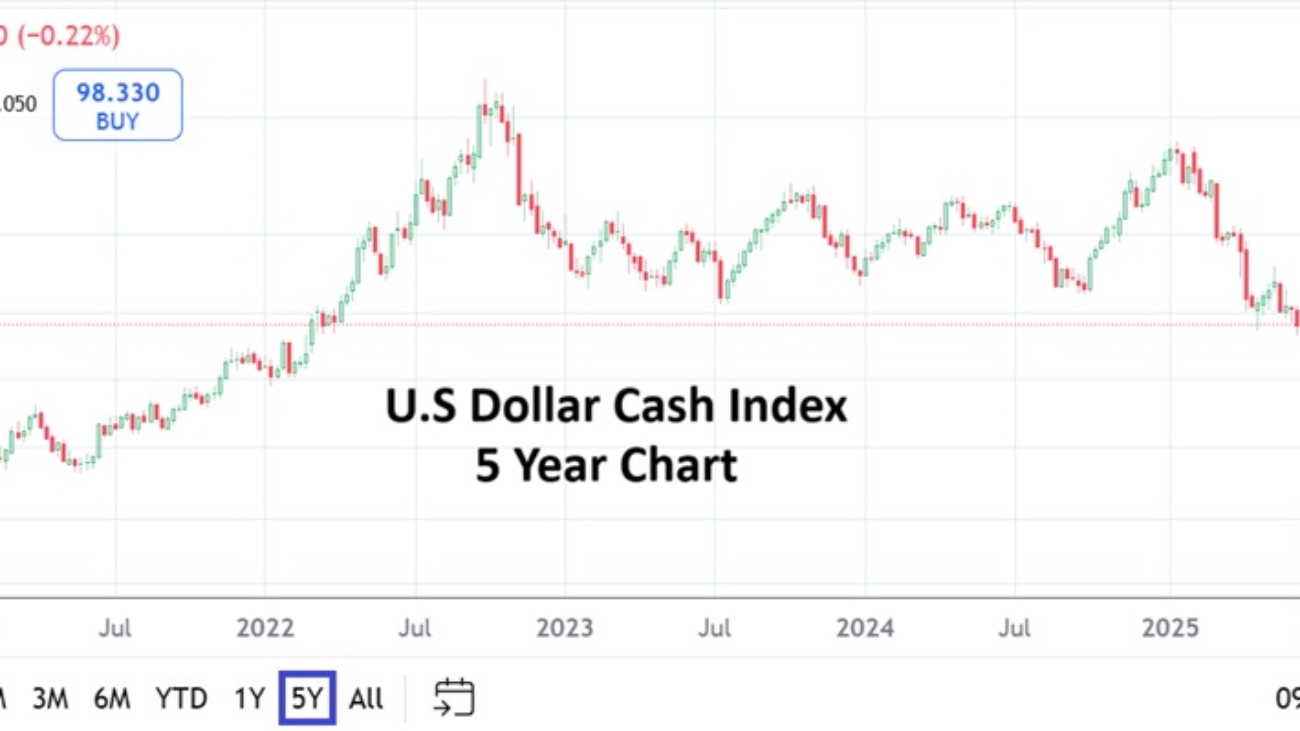
For the next two weeks the broad markets will hear about the Trump and Powell disagreement. It has been argued the Federal Reserve should have lowered the Federal Funds Rate a few months ago, clearly this was not done. However, the USD did trade with weaker sentiment in Forex from early April until the beginning of July. In the past few weeks the USD has garnered some strength, but remains within the lower part of its long-term realms via the U.S Dollar Cash Index. The weakness in the USD was likely due to financial institutions betting on rate cuts to come over the mid and long-term, and which they still believe will happen.

The upwards momentum generated recently by the USD has put the greenback in a position that seems to indicate financial institutions are transacting their cash forward orders cautiously for the moment, while waiting on the next round of impetus. And that is where Federal Reserve clarity and tariff threats now shadow mid-term outlooks.

U.S Dollar Cash Index Five Year Chart as of 21st July 2025

We have entered an unpredictable window and President Trump apparently doesn’t mind allowing a little danger into the mindsets of the financial markets. It is one thing to proclaim tremendous results and great, magnificent prospects, but how long will investors tolerate a lack of clarity regarding tariff agreements? President Trump has postponed the tariff deadlines several times and what should be considered is the potential that at some point he will have to take action to prove he means business. If the August 1st deadline is extended again this may not cause much of a shock, but it will not be met with optimism.

Instead, the main interpretation from financial institutions may be that Trump is struggling to get agreements done as he had promised. While that might lead to the idea that global commerce will continue on as is, this will certainly not help create the positive impetus which President Trump desired. At some juncture President Trump may begin to be perceived as the little boy that cried wolf. No one will pay attention and the markets will proceed without him. But President Trump will not likely let that happen, he does like attention.

The Nasdaq 100 and the S&P 500 are near record highs, so there isn’t a lot to complain about by index investors. The U.S economy has shown signs of green shoots regarding better retail sales and the recent Philly Fed Manufacturing Index. The grey area for many remains inflation, which has been coming in rather well behaved although the most recent report showed a slightly higher outcome with the yearly CPI reading. However, the Federal Reserve actually has evidence that inflation has been tame. Yes, there are questions regarding the coming influence of tariffs on the U.S economy, but for the moment inflation has not risen.

The lack of clarity and not having a mid-term comfort level which is unperturbed may be problematic for small U.S business owners that face tariff concerns on their imported goods. And the bigger picture remains unclear for large U.S corporations – but they certainly continue to try being optimistic. And this is where it gets more dangerous, plenty of perspectives are being driven (inspired) by analysts who have confirmation bias. For instance the downturn in the USD from April until early July was amplified by many who saw this as a sign the USD was being punished by foreign governments opposed to President Trump. This in fact was highly unlikely, traders need to remain alert to false narratives.

The next two weeks need to be treated carefully. There will be a running monologue among many analysts that changes daily as behavioral sentiment moves depending on what is being spoken about the Federal Reserve and tariffs. However, until there are actual answers the financial markets are likely to remain rather choppy. Self awareness will be crucial for speculators. Also, a large factor in the financial markets will be played by the U.S White House regarding how incoming results are presented. Until then day traders may want to watch technical charts and try to figure out where programmed trading lurks regarding support and resistance levels. Price velocity in Forex, bond yields and gold should be monitored.

post256

Crude Oil: A Guess from the Underbelly On What Happens Next

Crude Oil: A Guess from the Underbelly On What Happens Next

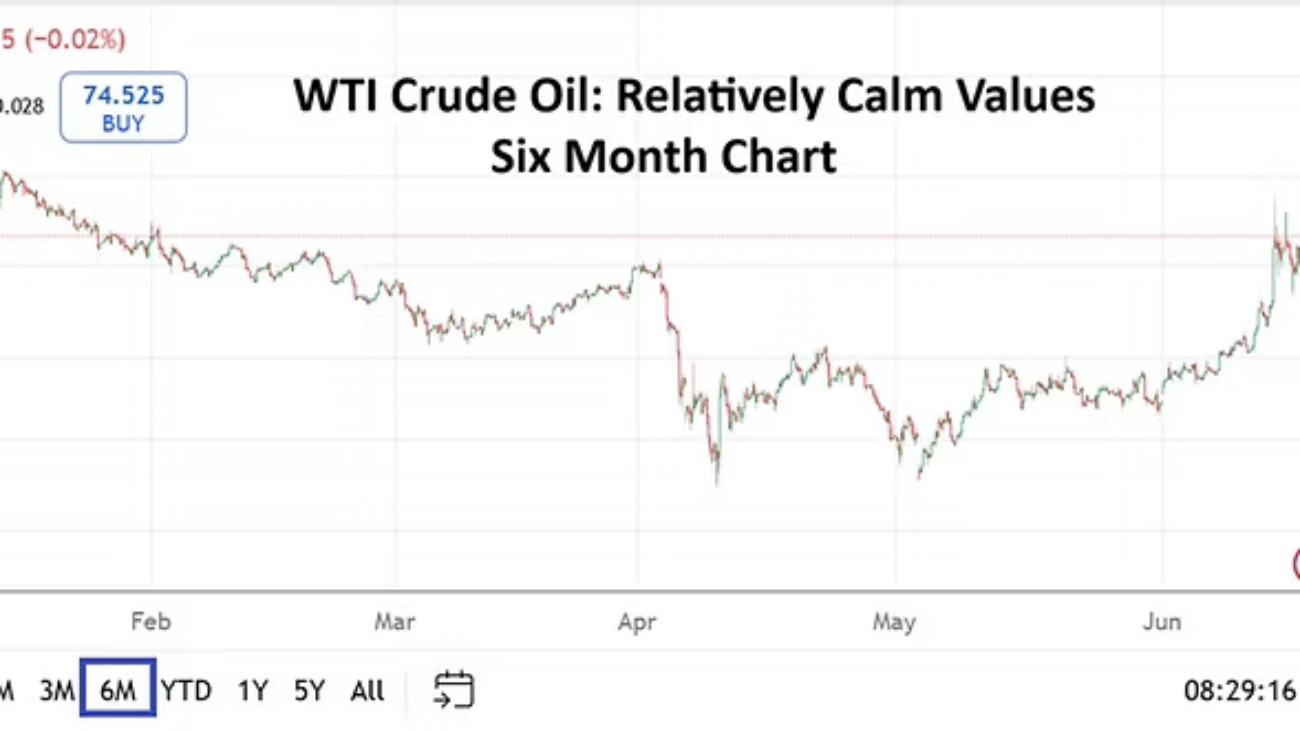
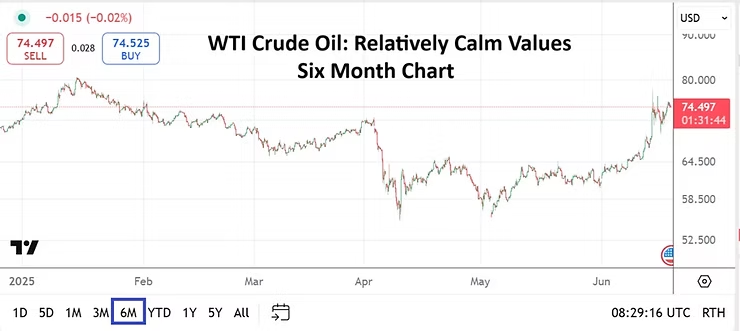
Why has the WTI Crude Oil Spot price remained relatively calm? The war between Israel and Iran has been going on per this latest violent phase since Friday the 13th. While tensions have been high between the two nations from the 7th of October 2023 in a very outward manner, and missiles were fired from Iran towards Israel on two separate dates in 2024 which then featured Israeli retaliation, the past handful of days is a new escalation.

WTI Crude Oil Spot Price Six Month Chart as of 18 June 2025

Day traders of WTI Crude Oil need to understand that large players in the energy sector have a vast amount of experience and intel regarding production and supply worldwide when they make their buying and selling decisions. However, the biggest oil traders do not always share the same political viewpoints, except to say most large players in the energy sector practice the art of realpolitik. Day traders of WTI Crude Oil should try to get into the minds of the real movers of WTI Crude Oil via realpolitik considerations.

As of this writing the price for WTI Crude Oil is around 73.930 Spot, late yesterday it did move higher to within sight of the 75.750 USD mark – this when information that President Trump is considering a U.S military strike on Iran heightened. Traders need to understand Spot Crude Oil and Futures pricing can be different. The current value of WTI Spot is higher than the Futures pricing because of the short and near-term known risks.

However, volatility in WTI Crude Oil Spot has remained fairly muted, almost tame as Israel and Iran wage war. Other spot energy prices like Brent and Natural Gas are being affected directly too because of shifts in behavioral sentiment. But again, the prices within the energy sector have remained calm considering what is at stake for global economics. Here are points that may be affecting the WTI Crude Oil landscape and energy complex, which some large traders may be contemplating:

  • It is highly likely the U.S has told Israel not to harm Iranian Oil production or supply sites, including shipping.

  • The U.S does not want the price of WTI to jump rapidly because of the current war between Israel and Iran.

  • Inflation would be a scrouge for the global economy, not to mention President Trump’s ambitions.

  • Even though the U.S has its own energy supply, the price of WTI is affected by behavioral sentiment within the global Crude Oil complex.

  • Meaning conflicts in the Middle East and elsewhere always cause ripple affects, even if Crude Oil is flowing freely in the U.S via its own production.

  • The U.S doesn’t want China to be given a reason to consider becoming an open belligerent in the Middle East war.

  • China gets a lot of Crude Oil from Iran. The stated percentage is around 15% of its total supply, but it could be more if Iran sends oil to other locations and then reroutes supply to China afterwards.

The U.S not only wants to keep China calm about its energy supply, but also doesn’t want to give China an excuse to escalate political or military tensions elsewhere – read Taiwan.

As an aside there are a lot facts and rumors coming from China, highlighting that a powerplay is emerging between competing factions for leadership in China’s military, this may include the authority that Xi Jinping has too. China will be conducting Politburo meetings in the coming weeks that will get plenty of attention via Beijing analysts. If U.S intelligence knows an internal political fight is taking place in China, they will want to keep China calm regarding external considerations and not give China excuses to act. Concerns regarding the Middle East as a justification for more Chinese actions against Taiwan in some type of economic political/ military theatre is a threat.

By telling Israel not to attack Iranian oil infrastructure, this allows the U.S to placate China. Only if Iran were to attack U.S infrastructure – including military assets or interests in the Persian Gulf via attacks on Gulf States like the UAE, Bahrain or Saudi Arabia would the U.S consider retribution against Iranian Crude Oil.

While the U.S has an interest in global politics certainly, it also wants to maintain a stable global economic environment. President Trump knows this and so does his cabinet supposedly. The Federal Reserve meets later today and they will certainly speak about uncertainty regarding inflation. Whether or not they mention the Middle East war will be interesting.

Thus, it is likely the U.S will only allow an attack on Iranian Crude Oil production and supply if it has been directly threatened. And this is where it gets potentially more interesting for Crude Oil traders. It appears likely the U.S will get involved directly in Iran by hitting known Iranian nuclear facilities deep underground with heavy U.S ordinance. If the U.S does attack Iran via B2s using heavy bombs, how will Iran’s Revolutionary Guard Corps react?

Will the existing IRGC allow for the destruction of its nuclear ambitions and accept that it will have to prepare for a new political environment in which their power will likely be challenged by not reacting? Or will those in power of the IRGC double down on stupidity and attack U.S assets with some of the Iranian military weaponry that still remains? An attack on U.S ‘interests’ would risk aggravating the U.S more – giving the U.S reasons to attack Iranian economic infrastructure which is mostly Crude Oil, and likely close the door on the chances of the IRGC to survive after the war concludes.

Things often do not work out via political and military outlooks. The law of unintended consequences is always a danger. The end game is quickly approaching for Iran’s current leadership. The U.S and Israel also hopefully have taken this into account. Recent outcomes in Iraq and Afghanistan have not gone as planned for the U.S when seeking a serene endgame.

As an example, it might be better not to eliminate the current Ayatollah Khamenei, and allow the people of Iran an opportunity to remove him if they want. The Iranian Revolutionary Guard Corps and its various factions are probably eyeing what will come after a capitulation. There will be a fight for survival politically and a leadership vacuum.

The IRGC fiefdom gets most of its money from Crude Oil revenues. It is quite possible in a forward looking manner the IRGC may choose not to risk having the U.S ruin Iran’s one giant economic asset, thinking rightly or wrongly that they can continue to profit from Crude Oil the day after the war ends.

post255

Quick Hits: Inflation, USD, China and U.S Trade and WTI

Quick Hits: Inflation, USD, China and U.S Trade and WTI

Yesterday’s weaker than anticipated CPI data from the U.S cements the realization that inflation is eroding in the States statistically in a rather consistent fashion. Today’s PPI numbers will be watched, but yesterday’s results clearly show the Federal Reserve has been far too cautious.

Media reported yesterday’s inflation results differently showing bias as some pointed out that inflation rose, compared to some outlets that showed it came in less than expected. Bottom line – inflation has been below expectations consistently and tariff concerns as of yet have not killed the U.S economy with higher prices. The Fed’s insistence on being cautious are comparable to the instincts of an overly protective parent. Day traders need to understand their perceptions are in danger of being affected by folks with confirmation bias.

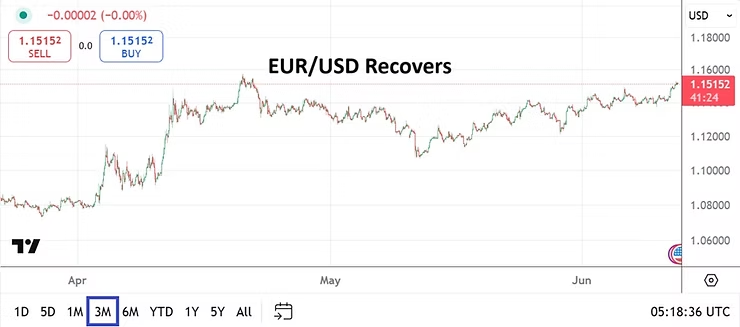
EUR/USD Three Month Chart as of 12th June 2025

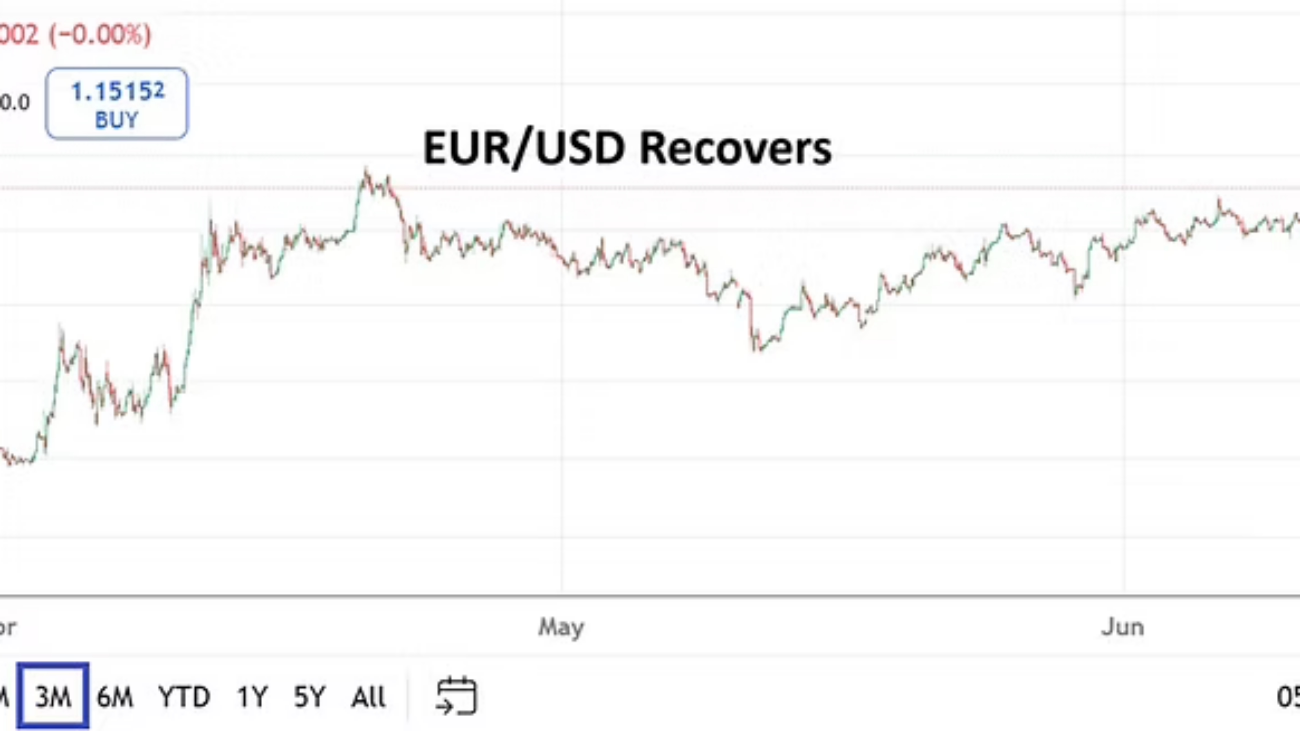
The EUR/USD climbed above the 1.15000 level again yesterday confirming mid-term outlook for a weaker USD based on the notion the Federal Reserve will have to lower the Federal Funds Rate exists. While perhaps kicking and screaming against their desires to remain hawkish, the Fed will start feeling the heat to act. Next week’s FOMC meeting is unlikely to be the actual date. However, financial institutions have certainly been leaning into a weaker USD since April, and the upwards trajectory in values by major currencies against the USD may prove to be a solid baseline via support prices moving forward.

Certainly, day traders should consider the notion that larger traders have bet against the USD already, thus leaving the door open to the potential of reversals. Yet, mid-term price levels are what financial institutions are gearing their outlooks towards via cash forward transactions for commercial companies. If financial institutions believe the Fed will have to indicate the potential of a rate cut not only in July, but another one in September this could spur on additional USD weakness. Folks should also consider the notion that the White House won’t be against a somewhat weaker USD in order to help U.S manufacturers and producers export.

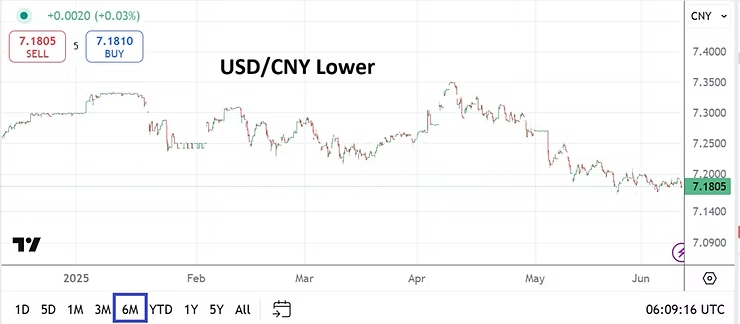
USD/CNY Six Month Chart as of 12th June 2025

U.S stock indices didn’t climb on the results of the China tariff news proclaiming a working agreement has been attained over the past two days. Perhaps markets are inclined to believe there will be more fireworks regarding rhetoric from the U.S and China over the coming months – which appears logical given the circumstances between the two nations.

While rare earth metals got the headlines, there appears to be plenty of line items in the tariff negotiations that still must be worked on. The announcement that the deadline has been pushed back again, this time until the 9th of August shows that talks are making progress – but slowly. Red lines keep getting erased.

Financial markets reacted rather passively to the U.S and China news, seemingly indicating larger players are now focused on other matters, and funds have played most of their cards regarding the China and U.S saga via their existing trading positions. Noteworthy, is the fact, the USD/CNY has reacted in a rather correlated fashion with the broad Forex market the past six months. For all the talk about a catastrophe for China and U.S trade, the USD/CYN has behaved quite well, showing the Chinese government is playing a long game against President Trump and doesn’t want to create a huge firefight via currency manipulation accusations.

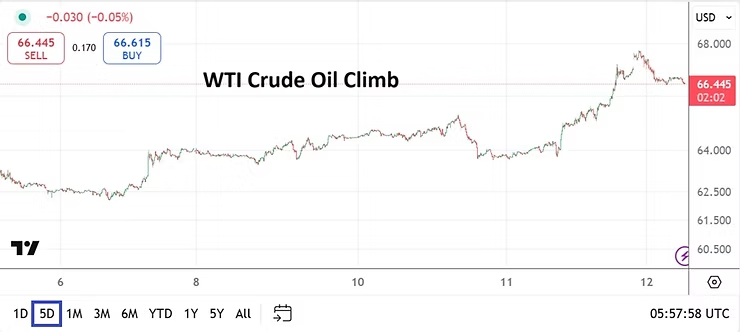
WTI Crude Oil Five Day Chart as of 12 June 2025

Middle East Escalation: WTI Crude Oil jumped late yesterday as news quickly filtered through social circles of embassy evacuations in various proximities within reach of Iran. The loud whispers certainly caused the price of the commodity to surge to almost $67.75 last night, but this morning’s values suggest some deep breaths have been taken as WTI trades near $66.45.

For options traders who want to buy cheap calls on WTI, they will likely have to look several months out and speculate on military escalation under rather speculative circumstances. If traders want an idea of what larger players are doing in options they can use CME (Chicago Mercantile Exchange) info to get some thoughts on positioning pattens in WTI Crude Oil calls and puts. The call options did get more expensive last night – meaning that some large traders are hedging against the threat of higher WTI Crude Oil prices because they are likely leaning into cheaper oil for the time being, or they are betting on the price of the commodity to rise if chaos breaks out in the Middle East.

post252

No Chance of a Nimble U.S Fed as Entitled Investors Served

No Chance of a Nimble U.S Fed as Entitled Investors Served

On Wednesday of this week Consumer Price Index numbers will be published, followed by Producer Price Index data on Thursday. Inflation statistics from the U.S for several months have been coming in rather tame and sometimes below forecasted results. Fed Chairman Powell and his team of FOMC members continue to plead uncertainty as the main reason for a lack of Federal Fund Rate cuts because of tariff concerns. The next meeting by the Fed finishes on Wednesday the 18th of June.

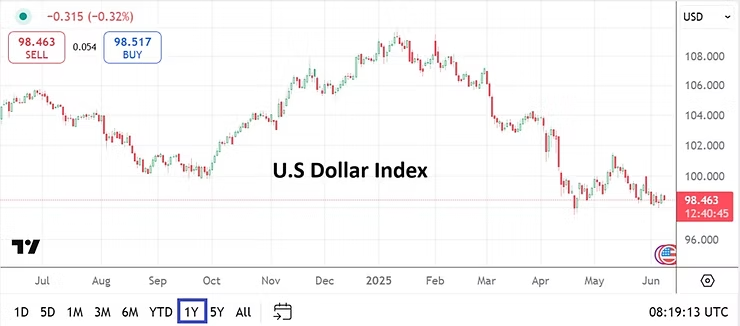
U.S Dollar Index One Year Chart as of 9th June 2025

Even if the inflation numbers come in as anticipated in the next few days, the Federal Reserve is unlikely to cut interest rates next week. President Trump and some in his cabinet have spoken about the need for rate cuts. Not only would it help consumers via mortgage rates, borrowing costs to buy autos and other high ticket items, but it would help the U.S government pay less on interest rate expenditures generated by inflamed Treasury yields.

The Fed continues to stay passive about its outlook, but if inflation data via the CPI and PPI are near forecasts this week, why would the U.S central bank continue to take such a stubborn stance? Interest rate decisions are not supposed to be political. The Fed has pointed to the potential of sudden inflation occurring due to tariff implications. This is a genuine concern. However, why can’t the Federal Reserve be more nimble? Inflation has not shown signs of immediate upwards pressure.

Perhaps it is because the Fed serves large U.S and foreign financial institutions, and has gotten into the habit of telling important folks not only what it anticipates, but handing out its interest rate plans on a silver platter so large players can position themselves beforehand like entitled elites. The Fed is very unlikely to cut interest rates the middle of next week, but it is probable they will open the door to a 25 basis point cut in July. However, July’s meeting is scheduled for the end of that month, in essence this is the middle of the summer, which is a long time to wait for action.

Day traders hoping to ride the trends that flow through the marketplace as they pursue speculative wagers remain in a difficult spot. Intraday volatility remains dangerous. Mid-term outlooks are certainly taking hold in Forex and equity indices, but sudden reversals for those using too much leverage continues to cause harm. Short-term speculators need to remain patient and vigilant, it is important to remember day traders are seen as second class citizens in the big scheme of the financial world, and this is not going to change for the moment.

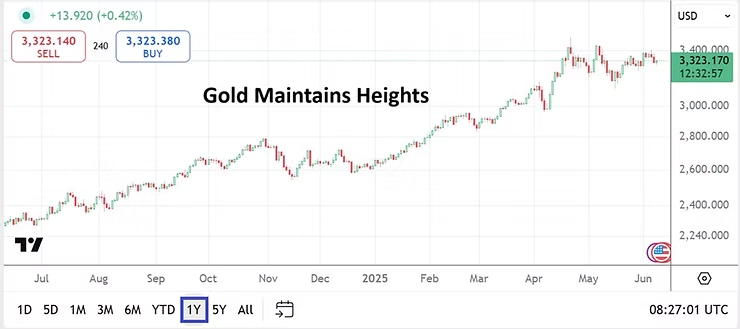
Gold One Year Chart as of 9th June 2025

A lack of clarity has spooked large players in the financial markets the past handful of months, but it does appear many institutions are becoming more comfortable. Though not at all-time highs, the major stock indices are within sight of important values. Behavioral sentiment seems to be leaning into a more positive outlook. Large investors appear to have concluded that while President Trump talks a tough game and often presents a strong stance, that ultimately he allows for tactical maneuvering to achieve deals. Trump is not big on being polite and this occasionally inflames markets. Bullish sentiment is growing on the hope President Trump’s characteristics are understood.

The Fed and the White House are likely to continue locking horns for the next few weeks. Perhaps if Jerome Powell tries to placate Donald Trump with a solid hint of an interest rate cut in July this will smooth things over. However, waiting for an interest rate cut in late July seems like a road too far, particularly when inflation levels the past couple of months avail the U.S economy to proactive actions from a Federal Reserve now.

Let’s remember, there is no law that says the Fed cannot cut or raise interest rates only during the conclusion of FOMC meetings. The U.S central bank has the ability to make changes to the Federal Funds Rate whenever it deems needed. Yet, the Fed refuses to be nimble in an age when technology allows data to be attained faster, this is a detriment.

The inability of the Fed to show it can be agile is another reason why investors are nervous about U.S policy regarding fiscal matters. The U.S government’s bureaucracy is too slow and bloated. The U.S is still a golden place to invest, but it is becoming problematic and this is leading to changes which effect long-term financial decisions.

post249

Taco Trade Consideration: All about Accumulation Not Ego

Taco Trade Consideration: All about Accumulation Not Ego

Taco Friday is upon us. Fair or not the newly coined expression TACO – Trump always chickens out – is a rather savvy way of looking at current market perspectives. Day traders have run into a buzzsaw trying to speculate on daily gyrations, but investors who have the ability to accumulate based on valuations in equities, Forex and perhaps even commodities such as gold and WTI Crude Oil have likely enjoyed the choppy ride the past handful of months.

Nvidia One Year Chart as of 30th May 2025

Day traders who are betting on the daily whims of Forex or the stock markets have been participating in assets being stirred by a constant storm via behavioral sentiment shifts caused by White House rhetoric. President Trump has said the expression is mean. And in fact the Taco statement may be wrong all together, because what has gone down and back up, has also gone down again followed by additional reversals. But let’s put ego and wrong notions to the side for a moment. Because the important point about the Taco expression is actually about finding value.

Let’s consider that financial institutions have experience and skin in the game. The ability to buy stocks on lows and accumulate them based on a long-term mindset is likely going to prove correct. Consider Nvidia, it has suffered pratfalls, but continues to recover and pick itself off the floor and is now challenging highs again. Yes, the SP500, Nasdaq and Dow30 have all seen what can be described as whipsaw results. However, the optimistic notion that common sense rules and quality will prevail is a feature of investing. Blood on the streets as Warren Buffet has often said, is not a bad thing, it is an opportunity.

Nasdaq 100 One Year Chart as of 30th May 2025

Day traders attempting to time the markets have always experienced a great deal of pain when speculating on notions that ‘now is the time’. Patience often proves to be worthwhile in trading and investing. Anyone who claims they are constantly buying exactly on lows and selling on apex values should be treated suspiciously. Attempting to time highs and lows is a bit like gambling on sports without any inside knowledge, sometimes you win and sometimes you lose.

U.S Dollar Index as of 30th May 2025

In Forex the USD has been battered but continues to produce sudden violent price action. Today’s Core PCE Price Index from the U.S is expected to produce a 0.1% increase – which would be considered negligible by the markets. Fed Chairman Jerome Powell recently met with the President for the first time since Trump took control of the White House this term. The President is on the record as saying the Fed should cut interest rates now, this while Powell repeats the word ‘uncertainty’ repetitively.

Today’s inflation report is a vital statistical report for the Federal Reserve and will stir Forex. Perhaps, Jerome Powell should consider the Taco expression and understand that while talking tough Trump often is only expressing a strong stance to achieve a middle ground. If inflation numbers are near the forecasted outlook, the Fed should certainly cut interest rates sooner rather than later.

In the meantime, investors who have been accumulating stock on lower values and are playing a long game, may also be counting on ignition fuel being poured upon the markets to create a dynamic bullish run via positive impetus. Yet, even if profits are not achieved in the short-term, investors also understand they are being given an opportunity via the occasional outbursts from President Trump to take advantage of a rather delicious tactic.

post245

Why No Major Panic in U.S Stock via Moody’s Downgrade?

Why No Major Panic in U.S Stock via Moody's Downgrade?

While Asian equity markets opened with initial nervousness yesterday after Friday’s late downgrade of U.S debt by Moody’s to Aa1. The U.S major indices did not respond with panic selling, By the end of yesterday’s trading the Dow30, Nasdaq100 and SP500 turned in rather mundane and positive results. Behavioral sentiment and knowing what experienced investors think remains important for people trying to mirror the actions of larger players while trying to take advantage of potential market action.

Dow Jones 30 One Year Chart as of 20th May 2025

What was NOT mentioned widely in the press yesterday were the facts that Standard & Poor’s had actually downgraded U.S debt in 2011 from AAA to AA+, also Fitch had been warning of a downgrade the past handful of years and did so in 2023 to AA+. U.S government debt remains a definite burden on the U.S economic outlook, but investment institutions have been discussing the dangers of the 36+ trillion USD deficit for years. Talking about something doesn’t mean it is fixed, but it does mean it has been acknowledged and this is where sentiment comes into play.

Wall Street remains in many respects the only game in town for large global investors looking for quiet steady returns. U.S exceptionalism – or at least the concept that the U.S economy remains a true safe haven compared to other investment vehicles worldwide – continues to spur on a confidence game that sees money pumped into it by global pension funds and long-term investors which seek yields that outpace inflation. It can certainly be argued that this endeavor is not always achieved, but the concept that the ability to grow money faster in equity investments via the likes of index investing compared to letting money sit in a bank is noteworthy. The ability of large institutions to place considerable amounts of money in more speculative pursuits like singular equities in sectors they are interested in like AI and quantum also creates a dimension to outperform benchmark indices., but is riskier.

The USD remains the world’s currency of choice for effective trade and protection against the dangers of volatile Forex. The Trump administration likely wants a weaker USD in order to spur on export from the U.S, but it certainly doesn’t want to see the greenback killed. Nor does the White House want to see U.S Treasury yields balloon too high. Day traders may not have been told to watch yields in the 10 Year U.S Treasuries by their brokers, but it is an open secret that should be used as a barometer for investor sentiment. The signals may not work everyday, but over the long-term if U.S yields on the 10 Year U.S Treasuries are soaring it likely means major U.S equity indices are struggling with anxiety – and when the yields are turning lower it can be expected that U.S equity indices are gaining.

An important piece of the confidence game that speculators should note regarding confidence in U.S markets is that 10 Year U.S Treasury yields yesterday declined, and are now lower than values seen last Friday after the ratings downgrade by Moody’s, and are testing values seen on the 14th of May. Traders should certainly stay alert, but they must remember the U.S investment landscape is resilient and is likely not going to perish suddenly. Investors like most humans tend to be optimistic and believe things will work out with positive results somehow developing. It doesn’t mean stock values will always go up, in fact they can move lower violently periodically, but a long-term vision helps when investing in U.S equities.

There has been no panic in U.S equities and the world continues to look at the SP500, Dow30 and Nasdaq100 as places to position investments. Yes, other spheres exists which can produce greater yields, but this also includes higher risks. International diversification is a solid focal point for investors, and day traders need to understand a complex game is being played. Reacting to every soundbite of developing news probably does more harm to speculators compared to good. A steady approach and conservative risk taking tactics are vital.

post244

High Level Antics as Trump Battles Institutions over Economy

High Level Antics as Trump Battles Institutions over Economy

Late last week Moody’s downgraded U.S debt, and the 10 Year Treasury yields as of this morning are near 4.50%. Yet, the Chicago Volatility Index is around the 17.25 level which is actually a small victory and shows that sentiment has improved quite a bit the past month. Let’s remember the VIX was near 60.50 in early April.

Wall Street had a handful of rather positive trading days too last week. Complexity remains a fixture for investors as they navigate their sentiment which is being generated by a rather stormy mix of perceptions. Day traders continue to face a tough betting environment via trends. The S&P 500 and other stock indices are showing signs of life, but how will they react to the Moody’s downgrade with a full weekend of consideration?

10 Year U.S Treasury Yields Six Month Chart as of 19 May 2025

Last week’s U.S inflation numbers via CPI and PPI were weaker than expected, which raises the curious and obvious question as to why the Federal Reserve remains overtly cautious and refuses to cut the Federal Funds Rate by 0.25% basis points? Short-term traders still have difficult days ahead and those anticipating a fast and powerful bullish run in equities among the bigger indices need to remain vigilant. Sustained higher price action has likely not arrived quite yet for overly optimistic endeavors.

S&P 500 Six Month Chart as of 19 May 2025

Let there be no doubt that there is a coming collision between the U.S White House and the Federal Reserve. The high level of yields the U.S Treasuries are accountable for are unsustainable and costly for the economy. President Trump will be in no mood for polite conversation with Fed Chairman Jerome Powell. Now that Trump is back from his Middle East trip he will likely turn his attention to the U.S debt downgrade and blame not only his predecessor in the White House but Powell too. Treasury Secretary Scott Bessent will likely address monetary policy too in the coming days.

The lower costs of WTI Crude Oil seen the past few months is helping fight inflation. As of this morning $61.70 is the vicinity for early trading. The price of energy appears to be within a solid lower range and likely has little ability to raise significantly. If the price of WTI remains under 70.00 USD this will help global inflation remain rather polite.

But this doesn’t take away from the threat of tariff pressures which do remain unknown. However, it can be argued the Federal Reserve is being far too cautious in the interim. Yes, the U.S central bank faces uncertain economic forecasts because of the potential of U.S tariffs hitting manufacturing and consumer prices, but there is a chance also the Trump administration will actually achieve better than anticipated trade agreements.

EUR/USD Six Month Chart as of 19 May 2025

Gold as of this morning is slightly above $3,200.00 per ounce, which shows that speculators and investors have backed away from the buying power the precious metal created in the third week of April when the $3,500.00 price was challenged. The USD remains in a dog fight against major currencies in Forex as financial institutions look for equilibrium and try to decide if they should gamble on the Fed cutting interest rates in July. The USD has lost value since early April and remains in weaker mid-term territory. However, the EUR/USD has given back a lot of its gains made throughout April, but financial institutions may now look at current levels as viable support and become buyers again.

Day traders remain in a difficult spot. Wagering on daily market gyrations via interpretations of behavioral sentiment is sensible, but the problem is the quickly shifting winds that still remain a danger. Folks participating in the markets should use the 10 Year U.S Treasury yields as a barometer. Having fallen to lows below 4.00% in the first week of April, investors are again demanding more incentives to buy U.S debt, highlighting murky mid-term outlooks.

U.S Manufacturing PMI numbers will be released this week on Thursday, but this will not influence the markets too much. Instead investors will keep their eyes on the White House as media focus turns from Middle East politics to U.S economic policy. While there have been ‘green shoots’ emerging in the SP500, Nasdaq100 and Dow30, traders should keep their leverage at conservative levels if they merely intend on making short-term wagers.