post236

Examination Time: Nasdaq 100 and Trump Behavioral Sentiment

Examination Time: Nasdaq 100 and Trump Behavioral Sentiment

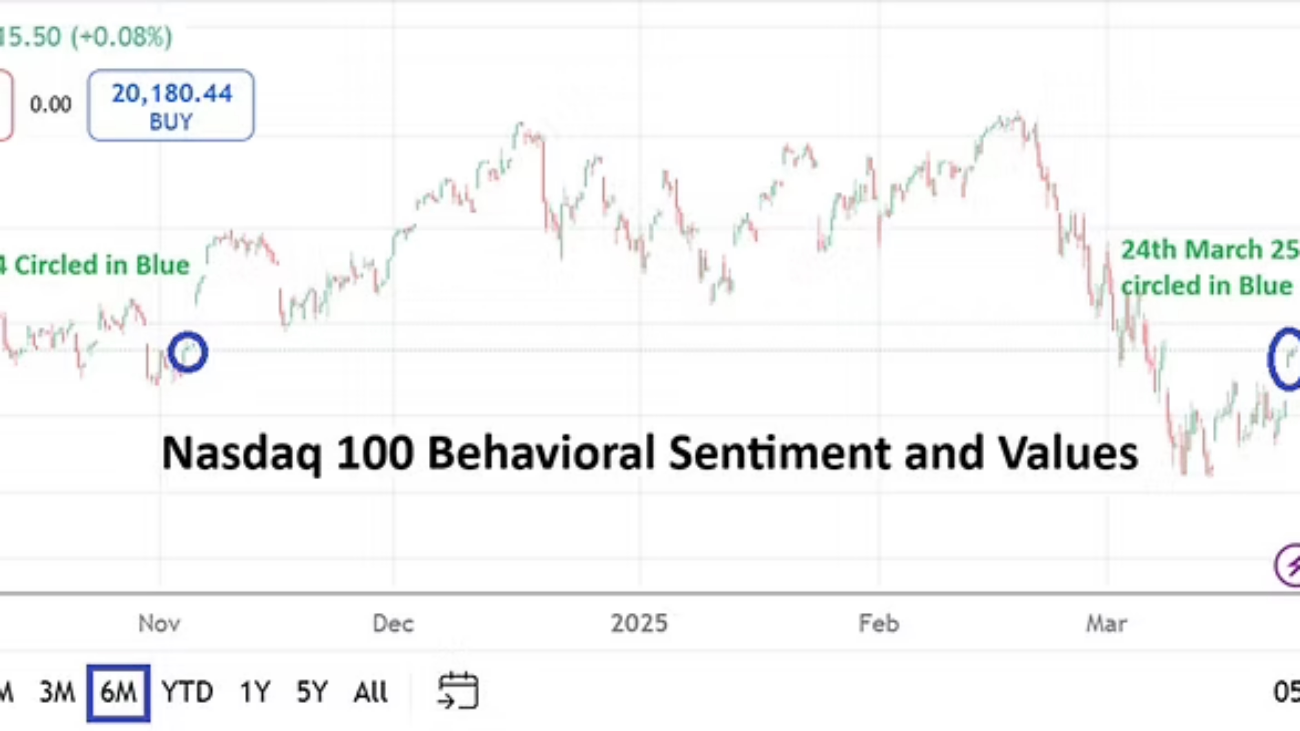
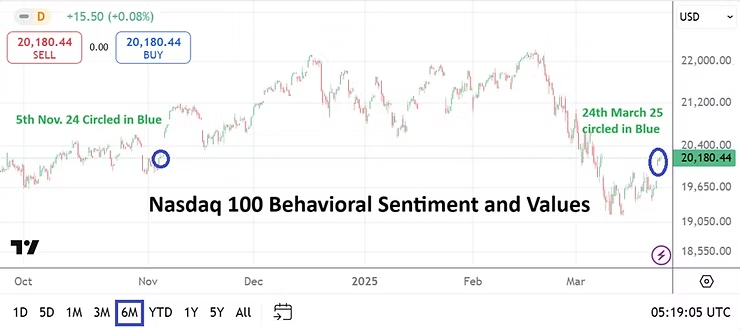
Nasdaq 100 Six Month Chart as of 25th March

Near-term trading in the Nasdaq 100 will face an examination of behavioral sentiment today and the remainder of the week. The stock index finished yesterday’s trading around 20,180.44, essentially traversing near levels directly before the U.S election results were known on the 5th of November. When trading reopened on the 6th following Donald Trump’s victory, the Nasdaq 100 jumped higher and began its trading near the 20,560.00 vicinity.

On the 29th of October 2024, the Nasdaq 100 also tested the 20,560.00 ratio, before reversing lower and finding choppy conditions leading up to the election date. Behavioral sentiment was certainly a factor in the outcome of these results. It cannot be proven, but can be asked and guessed that financial institutions may have started to bet on a Donald Trump victory before the election. Big trading influences may have turned anxious in the immediate days preceding the vote, then after the results were known returned the Nasdaq 100 to highs seen the week before on the 29th of October. By the 7th of November the Nasdaq 100 was trading above 21,100.00 and this was likely a result of optimistic outlooks.

The ability to climb back above the 20,000.00 mark yesterday and sustain the level was important. Yes, if the mark fades and another downturn now occurs it will show financial institutions are still leaning into negative outlooks as they consider the implications of tariffs and potential knock-on effects from the unknown.

However, if financial institutions have decided that they have priced in maximum risk premium and the selloff of the Nasdaq 100 to the level of nearly 19,150.00 seen on the 11th of March, which tested ratios last seen in early September 2024, was extremely oversold. We then have evidence that yesterday’s results back to values seen on election day, set the table for an important examination of behavioral sentiment.

There is plenty of room to traverse from 20,180.44 to 20,560.00. Yet, if financial institutions have decided that they once again want to test optimistic mid and long-term outlooks, the price level of 20,560.00 is where they will likely aim. Day traders should not get overly ambitious and remain cautious while looking for upside momentum if that is their chosen direction.

U.S economic numbers will be light today. Tomorrow the monthly Core Durable Goods Orders data will be published, the results will be of interest because they will show manufacturing sentiment and the statistics are considered a leading indicator. Thursday will also be noteworthy because the Final GDP results will be brought forth, but because this data is based on quarterly factors, the data may not be as important as tomorrow’s opening act – the Core Durable Goods Orders.

While the economic data will be important, President Trump will remain the focus. Behavioral sentiment obviously is being swayed by the winds circulating from the White House. This is not going to change until financial institutions begin to believe the threat of rhetoric can be dismissed without fear. The 2nd of April is now being counted down and in the sights of financial institutions as they consider the implications and outcomes of tariff negotiations. The word ‘agreement’ is sought as a salve by financial institutions. Whether a soothing ointment will be provided remains unknown.

The near-term will provide a test for traders which may be quite a bit like the week before the U.S election from late October and into November 5th when the voting results were still being counted. The Nasdaq 100 has room to traverse upwards and test values from the 29th of October and after Donald Trump was elected President. The 2nd of April is next Wednesday, and trading up until then will reflect on the outlooks financial institutions have regarding tariff negotiations.

It is examination week. It is not a coincidence that the price levels of the Nasdaq 100 are treading water while waiting for impetus. Speculating on the outcome before the 2nd of April needs to be undertaken carefully. An important question each speculator (including financial institutions) taking this test must answer is this: How good is President Trump as a negotiator and will he be able to claim a victory on the 2nd of April?

post235

Predicting the Federal Reserve and President Trump’s Rhetoric

Predicting the Federal Reserve and President Trump's Rhetoric

Financial institutions have grown accustomed to the rather fierce rhetoric from President Trump in the early days of his second term. Financial institutions have also become quite used to the recent overly cautious statements from the Federal Reserve. This Wednesday the Fed’s FOMC Statement will be delivered and there will be no change to the Federal Funds Rate. The current ‘main’ borrowing rate offered by the Fed is 4.50%.

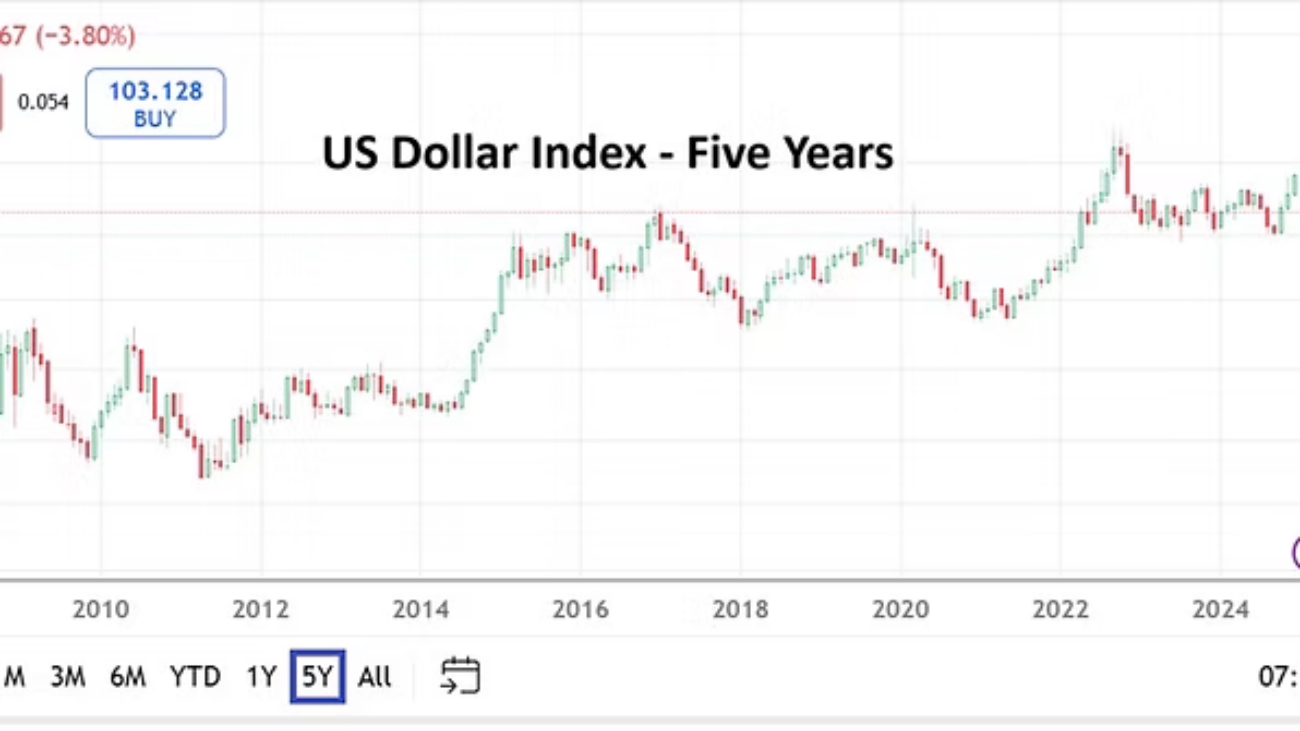
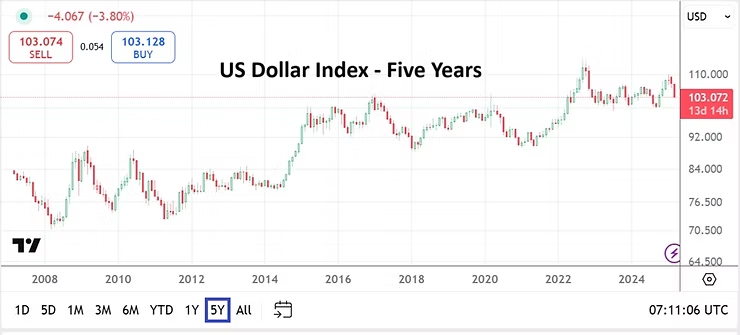
US Dollar Index Five Year Chart as of 18th March 2025

This Wednesday Fed Chairman Jerome Powell will speak about the recent CPI and PPI numbers which came in below expectations. This typically would be a good signal regarding weaker inflation. And Powell might also mention that energy prices in the U.S have started to erode. WTI Crude Oil is now trading in a sustained manner below the 70.00 USD threshold, and this will influence the potential of less inflation. It is a good development for the U.S and Federal Reserve.

However, Powell is unlikely to express the unease and anxiousness the Federal Reserve has regarding President Trump, this because the Fed certainly doesn’t want to get into an open confrontation with the White House.

The U.S Treasury is now being run Scott Bessent who was selected by President Trump. Bessent ran the Key Square Group and is well respected in financial circles, which includes vast experience in top financial institutions. Powell though perceived as pragmatic by many analysts, may not be within President Trump’s trusted inner circle like Bessent and Commerce Secretary Howard Lutnick, the former Chairman and CEO of Cantor Fitzgerald. Lutnick is perceived as a workhorse who get things done and is smart.

The Fed’s likely cautious FOMC Statement will not be enough to appease President Trump this week. While some may think Trump’s attention will be elsewhere, those who have come to understand Trump know his capability to react quickly to events should be taken seriously.

What will Bessent and Lutnick think about the Fed’s FOMC Statement and stance? Powell is not a trained economist, do Bessent and Lutnick trust Powell? One thing for certain is that Janet Yellen who served as the Fed Chairwoman before Powell, and the Treasury Secretary before Bessent is not part of the inner circle in the White House.

Powell’s loyalties may be questioned, and eyes should be kept on Trump later this week to see how the President responds to the rather cautious Federal Reserve. The Fed will certainly not want to say aloud it is waiting like everyone else regarding the effects of tariff negotiations and their implications. Powell wants to keep his job. Trump certainly wants lower interest rates. Bessent and Lutnick certainly want lower interest rates too, but like Powell these two may prove pragmatic and know inflation needs to erode further. The Treasury and Commerce secretaries may want to test chicken and egg questions. Will these two gentlemen push Trump to proactively push for lower interest rates in a louder fashion?

Day traders will have to wait to see how financial institutions react to tomorrow’s FOMC Statement – which has already been accepted as being a ‘no interest rate cut event’. And it is probably being discussed in the White House that the Fed may want to wait until early this summer – June? – to consider another interest rate cut. Which means the Fed may not be cutting interest rates mid-term, while the ECB and BoE may have to be more dovish and remain active via interest rate cuts if their economies continue to show recessionary trends.

Meaning that risk premium which was factored into the stronger USD centric buying since the Trump election on the 5th of November until the peaks in mid-January and early February, and have now reversed lower – needs to be watched technically and weighed in combination with behavioral sentiment.

Intriguingly the US Dollar Index is around levels it stood at on the 5th of November (Election Day 2024). It is also near values seen on the 15th of October. (Did financial institutions start to bet on a stronger USD around this time because of a more cautious Fed outlook and the potential Trump was going to win the election?) Raising the question, if financial institutions envision the USD can technically be weaker and attain values seen in late September and early October when the US Dollar Index was testing support levels which have held since April of 2022. The US Cash Index which stands around the 103.070 level now, was trading near 90.00 in the spring of 2021.

Trump wants lower interest rates, the Fed wants to wait on cutting the Federal Funds Rate until they have clarity regarding the results of tariff negotiations. There will be a collision between Jerome Powell and Donald Trump, the only question is when it will happen. The US Dollar Index has been lower historically. Trump, Bessent and Lutnick may not want to say it out loud, but a weaker USD in the global economy would help U.S exporters. A weaker USD may not convey the strong populist rhetoric of MAGA, but it may be economic hardware the Trump administration actually seeks. To sustain a weaker USD, inflation levels will have to erode, and interest rates will have to be lower (and another myriad of complex events have to happen), until then rhetoric and risk premium will factor into USD Forex trading for financial institutions and speculators.

post233

Stock Market Narrative and Looking for a Trump Silver Lining

Stock Market Narrative and Looking for a Trump Silver Lining

S&P 500 One Year Chart as of 14th March 2025

U.S stock markets have been hit on the nose in recent weeks, the major indices have put in rather consistent declines since the 19th of February, and the selling frenzy and particularly noise have grown worse since the start of March. Narrative regarding tariffs and a lack of clarity have certainly had a negative effect. The notion that there is a part of the media that wants to see a downturn in the markets and blame President Trump could also be factoring into concerns and fragile sentiment among indices participants. I am not blaming the media for the downturn, just pointing out that there are some entities which are not unhappy about the recent selling in the stock markets, this because it fits comfortably into their narratives.

While the bearish decline on the S&P 500, Nasdaq 100, and Dow 30 have all been easy to see, defining the dynamics of the downturn, and reactions from day traders and investors are complicated. The stock markets are not guaranteed to always go higher. This may sound naive, but people have gotten so used to the notion that U.S indices always go up that they forget about the potential for downturns. Yes, the stock markets have turned negative, but a one month decline is not uncommon historically. And some of the folks rooting against Donald Trump may want to take that into consideration.

Risk premium has certainly been factored into the markets which has influenced equities, but has created forceful moves in Forex too. Risk adverse tension because of persistent rhetoric about tariffs and their impact on behavioral sentiment cannot be discounted. However, the stock markets are still higher over the past year.

The Trump Effect is certainly being pointed at by many as the cause for the sudden downturn, but it should be remembered that all-time highs occurred after Trump won the election. Yes, the selloff has definitely happened too, and stock markets are now traversing values seen before the election. And support levels are being looked at with caution and more selling could lead to a test of psychological ratios which pressure market confidence further. Yet, it should also be remembered the S&P 500 at this time last year was around the 5,150 ratio compared to its current mark near 5,565.

Day traders have been hard pressed to find momentum with solid wagering opportunities, particularly if they have been in search of a bullish trend in recent weeks. The belief that U.S indices always go up eventually is a solid reference, but in the short-term can cause expensive losses for stubborn betters. Investors certainly have an easier time with stock indices if they practice the long-game and do not worry about the daily and monthly gyrations when their money is parked in indices. The use of leverage when betting on the daily results of stock markets can become ultra expensive for speculators, particularly when upside bias is being counted upon.

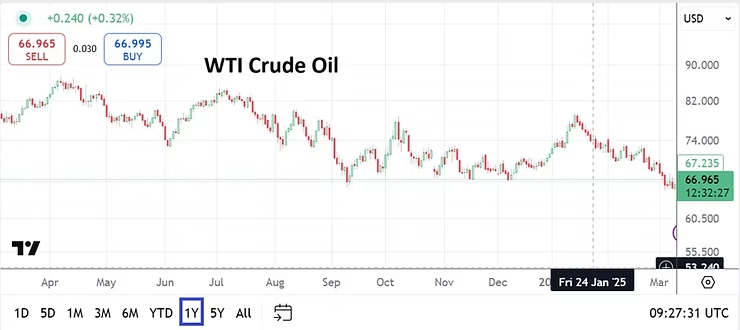
WTI Crude Oil One Year Chart as of 14th March 2015

Data this week from the U.S has actually been positive regarding lower inflation, both the CPI and PPI reports released the past two days has shown a slow down in costs. Yet, these results have little to do with President Trump, since he has only been in power less than two months. However, the lower WTI Crude Oil prices being achieved at this moment will start to factor into weaker inflation and will benefit the U.S economy.

The U.S Federal Reserve will have to be watched, because Fed officials seemingly continue to be among the crowd worried about tariff knock-on repercussions. But it should be remembered during Trump’s first term in office, there were tariff concerns too and inflation was tame. It will take a few months to still see results via inflation under this Trump administration, but if energy prices remain stable and low, this can mitigate circumstances while the tariff winds blow and their effects are waited upon. Interest rates from the Federal Reserve, U.S taxes on the public will continue to come under scrutiny. The likelihood of Trump and the Federal Reserve locking horns regarding interest rates seems to be a certainty in the coming months.

U.S stock markets have proven dangerous for bullish perspectives the past handful of weeks, but the viewpoint that markets have been too discounted will certainly start getting the attention of large players. U.S Treasury yields remain a barometer, but short-term results do not always correlate. Speculators without deep pockets may want to continue to watch from the sidelines.

Traders should also remember there is the ability to short U.S indices, but this brings up the healthy question about when will price support start to become a factor. It is nearly impossible to pick the precise moment financial assets will stage a turnaround for day traders, but history does indicate that bullish sentiment will start to be seen. Betting on a continued downturn could prove more expensive in the end, compared to speculating on upside.

Trading is not easy. It takes a lot of stamina to endure price movements that do not go according to plans. The financial markets are proving difficult for many. We are likely not out of the woods yet because clarity remains problematic, investors who have longer timeframes are likely anxious too. Price velocity needs to be given attention, markets can certainly go lower. However, at some juncture equities will start to look cheap to important long-term players. Behavioral sentiment among investors will likely also start to acclimate to the Trump Effect.

post230

FX Trends: Brutal Months for Day Traders and Happy Brokers

FX Trends: Brutal Months for Day Traders and Happy Brokers

The past few months for day traders have likely not been pleasant experiences for many. Forex, equity indices and other assets have experienced plenty of volatility and finding a trend has not been easy. While speculators who are wagering on the ups and downs in the marketplace have been getting crushed, their brokers likely have not been getting hurt.

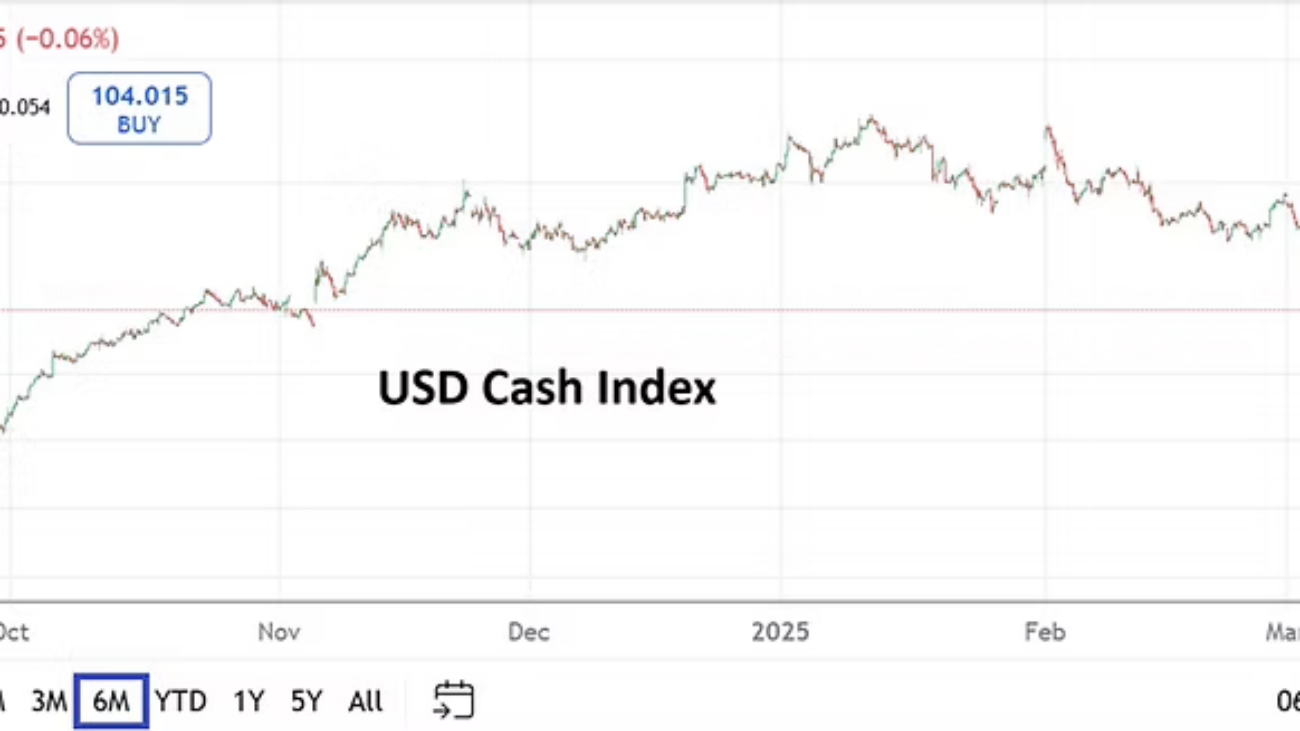
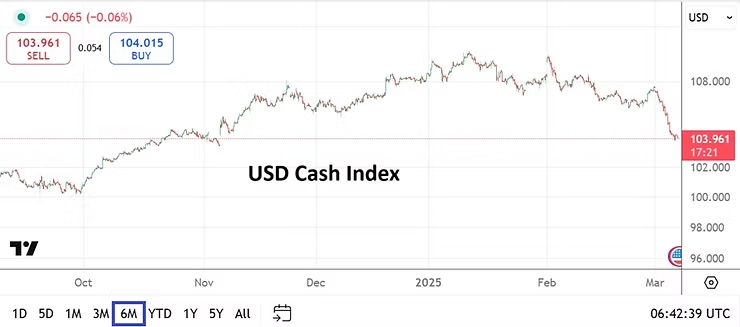
USD Cash Index Six Month Chart as of 7th of March 2025

Day traders need to understand that CFDs are virtual. Your broker is merely placing a wager for you on chosen direction, in most cases they are acting as ‘the house’ and know the volatility is going to knock you out of your trade. They pocket your losses as their winnings in many cases. The brokers are not only making money from the differentials from the bids and asks (the spread), they might also be charging you a transaction fee.

If a broker feels less confident about their ability to make a profit off your poor results (I am not kidding about this), then they sometimes insure your wager via a liquidity provider who in many cases is literally betting against your broker, because the liquidity providers believe your broker is likely being overly cautious. (A vicious circle). In other words brokers allow your trades to work virtually (not in the real marketplace) on something many risk management rooms in Forex call the B Book. If the broker is not certain if you will lose money, they put your trades into something called an A Book. And, yes, many liquidity providers (the A Book providers) are betting against their clients (who are brokers seeking to mitigate their risks).

Again, the brokers and the liquidity providers do not believe you will make money most of the time. They are allowing you to bet and they are happy to take your wager, because historical evidence shows retail bettors in Forex tend to lose money via their trading accounts at least 85% over long durations. Depending on what source you look at regarding CFD statistics, speculators tend to do a little better against their brokers but still lose money more than 50% of the time. Some statistics claim up to 75% of the CFD outcomes via trading accounts equate into losses for speculators.

And if all of this sounds like sour grapes, it is not, it is a warning to you the bettor. Brokers in many cases are glorified casinos that provide you an opportunity to wager. You need to acknowledge the above before your start trading. Speculating on Forex and CFDs ( via equities, indices and commodities) is like betting on a horse. The racetrack doesn’t lose money, they know most bettors simply enjoy the thrill of gambling and don’t mind losing. Racetracks are happy to pay the occasional winner. If you choose to wager on Forex and CFDs you need to practice risk management.

You probably didn’t come here to be reminded about risk management, you have heard it before – conservative leverage, price targets, timeframe parameters, entry – stop loss – take profit orders are standard warnings. You want to read about trends, you want to know which direction you should take, yet there are no guarantees and that is why speculating is gambling. You are wagering.

If you intend on improving your odds, by following solid risk taking tactics – including trying to understand behavioral sentiment via the financial institutions you are trying to emulate, you might find better results. And still, speculating will be tough.

The U.S will release Non-Farm Employment Change numbers today, but traders should pay attention to the Average Hourly Earnings report which will give insights about inflation too. However, the jobs numbers may prove to be a false narrative, because more importantly, whether you like him or not, there is the Trump Effect to ponder.

Tariff mantras and fears, negotiations regarding the fate of Ukraine, and a myriad of other concerns have financial institutions anxious as they try to seek clarity. Equity indices have been a mess. Yet, the USD Cash Index has given back a lot of its gains since February the 4th – this after the Forex bloodshed caused by nervous reactions to fear of tariffs being implemented. And now, not so coincidently the USD Cash Index is traversing values it saw on the 5th of November 2024, yes, U.S Election Day. Speculators and financial institutions have returned full circle to big unknowns.

post229

EUR/USD: Volatility is Visiting Again upon the Trump Effect

EUR/USD: Volatility is Visiting Again upon the Trump Effect

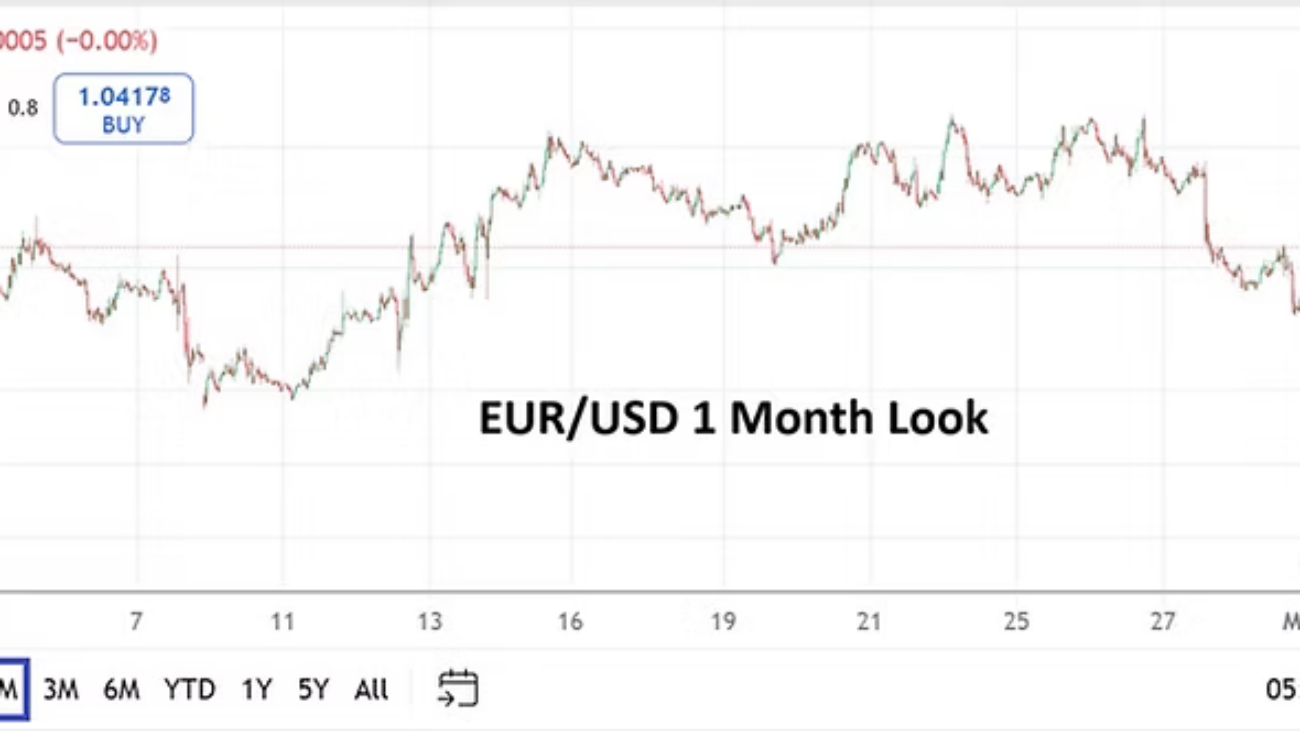
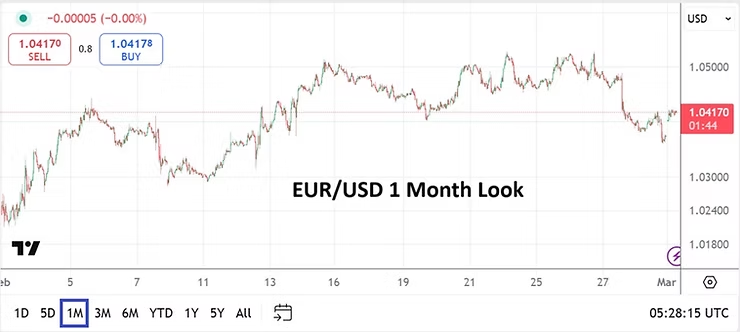
EUR/USD One Month Chart as of 3rd of March 2025

The EUR/USD bounced slightly higher in early trading this morning, this after Friday’s burst lower when nervousness was ignited by the loud outcome (and lack of a resolution) via the Zelensky and Trump meeting. However, after achieving some buying impetus to start today, the EUR/USD is running into nervous headwinds as concerns remain evident.

This Thursday the ECB is expected to cut another 0.25 from its Main Refinancing Rate. The difference between borrowing rates from the ECB and Fed will be significant if the ECB does lower costs. E.U economic data warrants the dovish policy, while concerns about stubborn U.S inflation persists. And President Trump will have something to say about the Federal Reserve’s policy too. Trump wants the Fed to lower the Federal Funds Rate.

The U.S will issue its Non-Farm Employment Change numbers this Friday. And many Fed members will be speaking at various engagements this coming Thursday and Friday which is certain to get attention. Financial institutions will certainly be listening for clues regarding the potential of shifting viewpoints regarding the Fed’s current stance which is cautious from FOMC officials.

Which brings us back to the current value of the EUR/USD and behavioral sentiment which is being generated by a deep sea which is not clear. The EUR/USD into early last week was showing signs of bullishness, this as folks piled into the notion the currency pair was in oversold territory. The ability of the EUR/USD to remain above 1.04000 today should be watched. While there has been upside early this morning, European traders and full market action will begin to kick off in about one hour.

Day traders need to know the potential rate cut cut from the ECB this coming Thursday has been anticipated and factored into the EUR/USD already. Leaving the currency pair ready to be influenced by USD centric perspectives, and Ukraine concerns which are unresolved. The U.S equity indices should be watched too via their less than inspiring results the past week. While many financial institutions believe the EUR/USD should be valued higher, this may be based on instinctive bias instead of fundamental reasons.

Economists are great for insights, but it is skittish sentiment which is driving the markets. Volatility is likely and the price range of the EUR/USD could prove tactically challenging and wide. If cautious attitudes in financial institutions create calm, the EUR/USD could produce durable support levels, which could be used for upside wagers. Speculators will have opportunities in the currency pair this week, but risk management will be essential to protect against sudden gusts caused by swirling Trump rhetoric.

post228

Market Volatility Concerns While Deflecting Noise From Afar

Market Volatility Concerns While Deflecting Noise From Afar

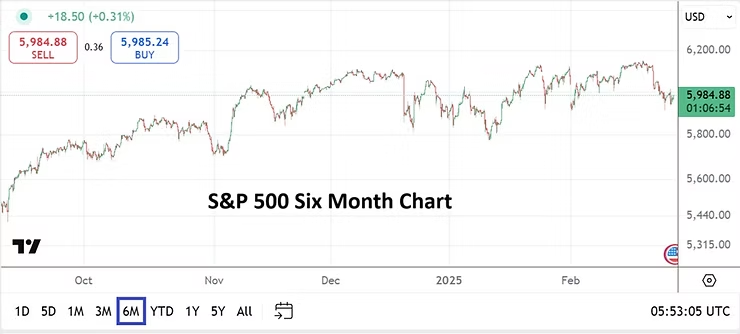
S&P 500 Six Month Chart as of 27th February 2025

The phrase if it bleed it leads is a fixture regarding the world of media. People and their companies want your attention. The addition of Donald Trump to the White House helps those that are content to see him in office, but it also helps those who oppose him because it gives his detractors a centerpiece to a lot of their ‘insights’. Perspectives abound and while watching the financial markets, we are bombarded with loud opinions formed by folks vying for our time. In many cases they are also trying to attract our money.

Wall Street has seen choppy results the past week, but speculators need to remain objective and not allow distractions to destroy their ability to gauge the marketplace. When looked upon with a mid-term reference it is rather easy to define the results upwards in the stock indices from the U.S have been rather good. There is no guarantee you are going to make money speculating. Losses occur and they do not only happen to speculators but they happen to investors too.

Timeframe speculative management and separating the noise from facts is difficult enough under normal circumstances. However, because of the notion if it ‘bleeds it leads’ which is dominating media for the moment, we are within a cycle when influencers can use headlines to catch our attention. Perhaps they believe what they say, perhaps they are trying to guide us towards a product, or perhaps they simply enjoy predicting misfortune.

EUR/USD Six Month Chart as of 27th February 2025

Yesterday during President Trump’s cabinet meeting when asked about the E.U, Trump stated a proclamation of love for Europe, but then added that the E.U was a special economic case and has been getting away with a lot of things like expensive tariffs on the import of U.S cars. He also said the E.U was created to compete with the U.S – though this needs to be taken into context and that Trump meant this only as a trade competitor.

Nearly as quickly as Trump made his statement, some began to use this loose remark as a narrative that the EUR/USD was struggling because of these new worries. Fears about a massive trade war were sounded from some legitimate but overly contrived media sources. Yet, a trade war between the U.S and E.U isn’t going to happen ladies and gentlemen.

The fact is that the EUR/USD has been struggling for a handful of months and is starting to show signs that support levels are durable. The greater likelihood is that financial institutions believe the EUR/USD is oversold and have a bullish perspective for the currency pair over the mid-term. Yes, Europe continues to produce lackluster economic data, but a lot of the value in the EUR/USD has had risk adverse concerns priced in already. Looking for upside from the currency pair around its current levels is not farfetched. Downside risks look limited compared to upside potential.

Once again the financial media who want your attention were given click bait material to get you to react. Day traders need to understand they are constantly being sold not only false narratives but false opportunities too. Speculators looking for profits with quick hitting trades can make money, but many times they lose money because they are working in conditions in which they do not have enough control of their emotions. Day traders should clearly understand they are operating within a gambling universe when they attempt to trade Forex, equities, Indices, commodities and needless to say cryptocurrency.

Traders must work on improving their decision making process. They need to take into consideration their perceptions of the financial landscape, but also understand what their counterparts are thinking too. Financial institutions certainly trade for short-term results, but they are also operating with mid-term outlooks. The likelihood that they are worried about an onslaught of tariffs from the Trump administration is contained by the realization that the current President of the U.S negotiates using tough methods. The bombastic hyperbole of President Trump’s business techniques are not loved by everyone, but they often get the job done regarding his intended desires.

So what should you do? First of all relax with a deep breath. The world is not coming to an end. The financial landscape is not facing a cataclysmic scenario. Many volatile financial events have been seen throughout time. Traders need to understand that the market action on the SP500, Dow30, and Nasdaq are vulnerable to selloffs occasionally that can last for unknown durations which makes daily speculative wagering prone to significant cash losses. This is why investors who have different perspectives regarding timeframes and take a slow and steady approach often come out better than folks who are merely gambling.

Day traders need to eliminate as much noise as possible. This is done with solid risk taking tactics using methods which involve knowledge gained through experience, and knowing that not everything they are hearing is meant to help. Practice a trading mantra by having realistic price targets, chosen timeframes, conservative leverage; using entry orders helps, adding stop loss and take profit orders to get out of positions are vital too.

The mid-term outlook for the EUR/USD and the stock markets likely remains bullish in the eyes of financial institutions. There are many factors in trading, and the virtues of patience and knowledge help considerably. Again, remain calm because while the financial markets often react to shortcomings via human fallibility, they frequently become optimistic once again.

post226

EUR/USD and German Elections: Saying Quiet Thoughts Out Loud

EUR/USD and German Elections: Saying Quiet Thoughts Out Loud

EUR/USD One Week Chart as of 23rd February 2025

The German Federal Election is taking place today and an expected shift to the right is being anticipated via the German voting public. The EUR/USD will react to the trading results tomorrow on Monday, and speculators who do not have deep pockets may want to remain on the side and simply watch the volatility as it develops.

After touching highs late last week which brought the 1.05000 vicinity into focus, also challenging the highs seen in the previous week, traders started to sell the EUR/USD going into this weekend. Financial institutions will react to the results from the German vote and if the Christian Democratic Union wins with strong results, and the AfD (Alternative for Deutschland) takes more seats than some anticipate this will cause an immediate reaction in the EUR/USD.

Voting publics in the U.S and elsewhere are showing signs of voting for more conservative leadership. Germany has seen lackluster economic results manifest for a long time and their public is certainly yearning for more GDP growth and less inflation. It is no secret that in nations such as Canada, Australia and countries in Europe that conservative voices are becoming louder when unbiased polling is conducted. Prime Minister Trudeau of Canada has already admitted his defeat via his decision to step aside.

The United States saw a very strong election result for Donald Trump and Republicans in November, and it would not be a surprise to see a similarly strong outcome for conservative candidates in Germany as results are announced late tonight and tomorrow. Voters seem to be expressing frustrations they feel they are not allowed to say out loud in polite circles. The results from Germany will likely mirror this consideration.

So what will the EUR/USD do if the voters in Germany elect a vastly more conservative government? Early results will be choppy, but a logical wager is to believe financial institutions will begin to look at the EUR/USD with a more bullish attitude, this if they believe a government is going to take power that is business friendly. Day traders should not bet blindly on EUR/USD upside. But looking for the 1.05000 level and higher to become a focal point for buyers is a legitimate outlook near-term.

The selloff in the EUR/USD this past Friday may have had a bit to do with financial institutions believing the upside had been overdone before the results of the German election were known. But that is likely a false narrative.

There is a better chance the sudden selloff in the EUR/USD on Friday which developed and saw fast velocity downwards, happened because Wall Street equities produced declines on its open and the selling continued going into the weekend. Forex is never easy, many complexities exists for speculators to consider.

The results from the German Federal Election today will influence major currency pairs this coming week and the EUR/USD will be centerstage. If Wall Street begins to show signs of stability this will also help the EUR/USD. Day traders should be extremely careful early tomorrow as financial institutions start participating and react to the results from Germany.

post225

Reserve Bank of New Zealand Expected to Cut 0.50 from Rate

Reserve Bank of New Zealand Expected to Cut 0.50 from Rate

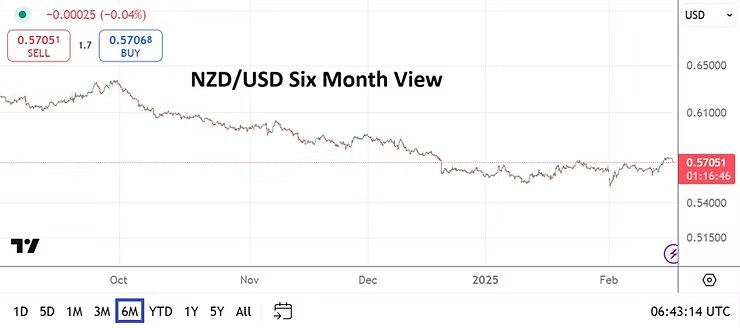
NZD/USD Six Month Chart as of 18th February 2025

NZD/USD Revival Mid-Term Coming? Reserve Bank of New Zealand is expected to cut its Official Cash Rate by 0.50 on Wednesday. N.Z govt is being proactive as they try to ignite the economy. The RBNZ also cut by 0.50 basis points in November. The central bank is expected to continue to remain aggressive tomorrow and suggest further cuts will be seen, perhaps via 0.25% afterwards.

The NZD/USD was trading around 0.63600 in late September of 2024 after gaining in correlation against the USD with the broad Forex market, via a bullish run which began in July. The NZD/USD is still traversing within its lower realms and it is logical to assume many financial institutions feel that support levels around the 0.56000 vicinity will prove rather durable going forward.

Day traders who believe the mid-term holds an optimistic bullish run for the NZD/USD may be correct, but speculators cannot be overly confident about a sustained surge higher quite yet. Conservative leverage is urged while looking for upside while betting. Speculators also need to remember tomorrow’s expected interest rate cut from the RBNZ has already been factored into the currency pair.

The rate cut is important for Wednesday, but it is the stance the Reserve Bank of New Zealand takes via its Monetary Policy Statement that affect behavioral sentiment among financial institutions. If the RBNZ sounds cautiously aggressive, meaning they suggest further cuts are being strongly considered this could help firm the NZD/USD and create more optimism regarding the potential for a move higher.

Yes, the shadow of the U.S White House administration looms over the Forex landscape. Decision making will remain tentative via financial institutions, but it is reasonable to suspect large players would treat clarity from the Reserve Bank of New Zealand with a positive Forex stance.

post223

USD/CAD Risk Premium Shifts from Ultra to Prudent Nervousness

USD/CAD Risk Premium Shifts from Ultra to Prudent Nervousness

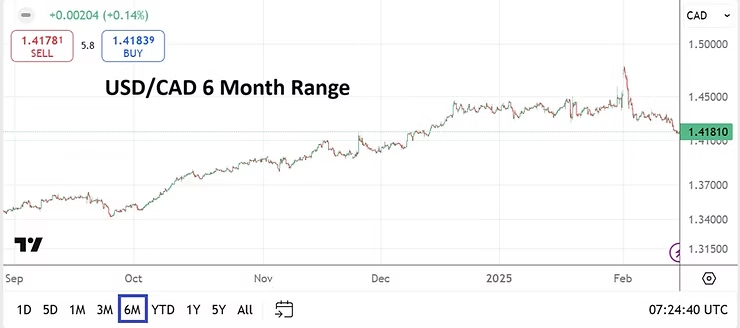
USD/CAD Six Month Chart as of 16th February 2025

The USD/CAD has experienced a bullish trend the past six months which has seen risk premium factor into the highs seen on the 3rd of February when the 1.48000 vicinity briefly witnessed a flirtation. The currency pair will enter this week near the 1.41800 area. It appears financial institutions are shifting from being ultra nervous about the rhetoric between the U.S and Canada to merely prudent.

On the 5th of November the USD/CAD was around 1.39000. The currency pair is now traversing values seen on the 10th of December. Economic data certainly factors into the USD/CAD value, but the move higher has definitely been a product of the rather raucous relationship between President Trump and Prime Minister Trudeau. The drama is not completely over and Forex traders who are looking for a sustained downturn in the USD/CAD should remain cautious regarding their wagers.

Consumer Price Index data will come from Canada this Tuesday. U.S inflation data released last week showed prices remain stubbornly above the target the Federal Reserve uses as a benchmark. Canadian inflation will likely demonstrate the same type of price pressures upward. However, these forecasted results from the Canadian CPI have likely been priced into the USD/CAD already by large players.

Which leaves us with the Trump/ Trudeau saga. And while Canada may feel like it is being unfairly pointed to as a villain by the White House, the problem for financial institutions is that Trump is firmly in power and Trudeau is about to vacate his office. The Canada Federal Election will be held on or before the 20th of October, and it is worthwhile to take into consideration the Liberal party is probably going to lose its leadership role to the Conservatives and Pierre Poilievre will be at the helm. Rest assured that financial institutions are taking this into consideration as they consider their mid-term outlooks.

The USD has shown some signs of less strength in recent trading across Forex. Financial institutions are perhaps factoring less risk premium into currencies as they anticipate tariff negotiations to provide answers and somewhat calmer conditions. Somewhat being the keyword. USD/CAD traders looking to target support levels in the near-term may try to anticipate the 1.41100 ratio as a goal. Looking for the USD/CAD to go below the 1.41000 level may be too much wishful thinking for the moment. Reversals higher in the currency pair will still be seen.

The USD/CAD will likely start to show a downturn, the question is when. Timing a sustained bearish trend in the USD/CAD for the moment remains gambling. The notion that the USD/CAD will see lower values in the mid-term however may be the right conviction, but deep pockets and patience will be needed.

post222

Apolitical Doesn’t Mean Blind to the Trump Forex Reality

Apolitical Doesn’t Mean Blind to the Trump Forex Reality

Has everyone stopped panicking in global Forex? It appears financial institutions are showing signs of stability and perhaps even optimism, this as USD centric strength appears to actually have begun giving back the outlandish gains made on Monday when spikes higher were seen across Forex.

The nervous buying of the USD early on Monday morning erupted after President Trump’s ultimatums were not taken seriously by financial institutions late last week. Outwardly it appears that the targets consisting of Mexico and Canada going into the past weekend also wanted to make believe all would be fine. The only nation to say that it would negotiate with Trump prior to Friday was China. And now Mexico and Canada have largely fallen into line.

Speculators may want to be apolitical. They may want to believe Forex has nothing to do with politics. And some traders may not like President Trump and what he represents. However, Forex participants need to make sure they put their biases to the side and understand that economic rhetoric and actions from the U.S do effect the Forex reality.

USD Cash Index Six Month Chart as of 5th February 2025

We have seen a vast example of this the past couple of weeks, in fact the past few months. Financial institutions have braced for and wagered on their outlooks since early November when the results of the U.S election became known. A strong USD centric element has been demonstrated as they prepared for President Trump to take executive power in the U.S again.

This past week has seen vivid Forex results and demonstrated why it is important to pay attention to international news flow, even when some may want to disregard what they are hearing. The price action in Forex particularly the USD/CAD and USD/MXN this week highlight the significance of not turning a blind eye. The highs seen on Monday followed by the reversals lower have brought support into view. Near-term and mid-term considerations will be fought over by financial institutions and retail traders may find technical opportunities to take advantage of nervous behavioral sentiment.

China which has dealt with President Trump before, appears to have handled the tariff bluster and negotiations better than Mexico and Canada. China has also been laying the groundwork to deal with the new White House administration based on having dealt with President Trump before. The USD/CNY has remained stable and China has set the table to deal with developing economic discussions in a calm manner.

It is not a question of liking or disliking Trump, it is a matter of understanding the reality and being ready to trade the circumstances that are seen across Forex. Bias when trading Forex can lead to bad decisions, it is not about betting on who you like, it is about wagering correctly on the results you believe will happen and managing your risks.

post221

A More Aggressive Sounding ECB Could be Wishful Thinking

A More Aggressive Sounding ECB Could be Wishful Thinking

EUR/USD Three Month Chart as of 30th January 2025

Will an interest rate cut by the ECB spark near-term buying in EUR/USD today? Financial institutions want news they have anticipated, day traders need to understand this dynamic.

The Federal Reserve stood in place yesterday almost acting as if it is afraid of its own shadow. No one was surprised the Fed did not cut the Federal Funds Rate. The Fed insisted inflation remains slightly elevated, it also said it thinks most of the worst employment data has been seen. What it did not say was that it remains in a quandary regarding the potential affects of President Trump’s policy on the U.S economy. The Fed wants to stay away from this debate. They also likely understand Donald Trump will bring up the subject himself. Trump wants the Fed to cut U.S interest rates more.

On the other side of the coin today stands the European Central Bank, which is anticipated to cut their Main Refinancing Rate by another 0.25, this to the 2.90% level. Financial institutions have certainly factored an interest rate cut from the ECB into the EUR/USD already. If there is no cut, this would cause an immediate reaction and likely a bad one against the EUR.

However, if the ECB acts as expected and cuts their rate this might actually spur on some near-term positive thoughts about the EUR and create some buying momentum. But for the move to be sustained and stronger, as outlandish as it might seem, what financial institutions will want to hear is that the ECB understands the E.U faces ongoing tough economic conditions and will remain dovish.

The problem with an overly aggressive attitude by the ECB today is that this is not anticipated. Yes, the rate cut of 0.25 is being counted upon, but the ECB and Fed are not exactly bastions of pro-active policy change. The ability of the EUR/USD climbing above the 1.05000 ratio last Friday and into Monday of this week was a signal financial institutions believe the EUR/USD is oversold, but they want to see more concrete steps taken. Doubts about what the ECB will say today has likely led to the 1.04000 level again being tested.

It may seem counterintuitive to believe that interest rate cuts from the ECB and a overly cautious Fed will help the EUR/USD achieve a bullish footing, but behavioral sentiment regarding mid-term outlook is crucial. Carry trade folks may say that if the ECB were to promise another cut today after their actions taken now, that this would create too large a difference between the ECB and Fed borrowing rates. This may be correct, but pro-active policy is something financial institutions would like to see. Day traders should be very careful today.

The EUR/USD hovering near 1.04000 is a signal that financial institutions will certainly react, there will be volatility in the coming hours. A rate cut from the ECB today will be the first ray of hope regarding a stronger EUR. However, unless the European Central Bank sounds like they will remain vigilant and are considering another potential cut sooner rather than later, the EUR/USD could quickly start to become choppy again.

The EUR/USD is essentially occupying a price range right now that it traded one month ago. Sentiment remains jittery. And President Trump will be watching and his comments which could come at anytime regarding the Fed, interest rates, potential tariffs and sanctions will create vulnerabilities for Forex and financial institutions in the days ahead.

post220

Nasdaq 100: U.S Exceptionalism and Competition from China

Nasdaq 100: U.S Exceptionalism and Competition from China

Nasdaq 100 Six Month Chart as of 28th January 2025

The losses on the Nasdaq 100 yesterday were bad. Wall Street participants were reminded that technology is and always has been a competitive landscape. It is rather remarkable that the lesson being given to capitalists came from China which is led by a Communist government. U.S Exceptionalism which has been spoken about in loud tones the past week because of President Trump’s return to the White House has been put on notice.

There will be additional bad days on Wall Street, but the idea that the Nasdaq 100 now faces an existential threat from DeepSeek is farfetched. Traders must take a healthful breath and remember yesterday’s loses while bad were not catastrophic. Premium froth from Nvidia and other companies saw some of their likely overvalued worth selloff on Monday. Perhaps more will follow today, but tech and innovation companies have always faced a competitive landscape.

Was yesterday an indication there is a crack in U.S Exceptionalism via technology that is going to be long lasting? Companies must always compete to be the best, if DeepSeek’s entry into the news cycle was a ‘sputnik’ moment as some claim, folks need to remember the U.S bounced back rather nicely and eventually outpaced the Russians – who still remain a tech competitor regarding rockets and space.

This weekend’s news from China has provided another moment the world realizes technological gains are often hard fought. While many media pundits act with hyperbolic noise and state vivid concerns about the future of the technological competition between China and companies around the globe, the race for innovation has and always will exist.

AI for the moment is grabbing the headlines, but Artificial Intelligence is also a buzzword – it is marketing usage by those who are trying to entice investors with big promises, except machine learning has been around for decades. Progress the last few years has been significant, but AI isn’t ready to make humans into a new species. Competitive battles in equity markets centering on innovation via semiconductors, quantum computing, robotics, IoT, biotech, transportation, and other sectors have been relevant and will remain this way.

Monday’s results on the Nasdaq 100 and harsh falls for some tech giants like Nvidia is a reminder that while speculating and investing in one company is a potential way to make solid returns, investing in indices and a large group of diverse companies often produces steadier yields. Yes, yesterday’s losses on the Nasdaq 100 were bad, but they were less critical compared to the losses Nvidia suffered. And let’s remember Nvidia will survive yesterday’s declines.

After Monday’s Nasdaq 100 decline, today will prove a another test of sentiment. Premium froth in companies such as Nvidia that sold off, will now cause people to question fundamental analysis of tech and innovation. Bubbles sometimes burst. The remainder of this week will be a solid test of behavioral sentiment. A battle between large speculators and investors will also be seen. Those who plan on cashing out of the market near-term to book profits may find that investors with long-term ambitions still win the race.

Perceptions are constantly being shaped, we should always be questioning the ability of technology which is proven versus marketing mayhem that is hot air. Artificial Intelligence has had a gravitational pull on the investment landscape. The froth created by investment into the AI sphere is important, but it only one part of many combined technologies constantly developing.

Many companies claiming they are AI centric have no real basis to make the statement. Semiconductor companies have led a lot of the gains in Nasdaq’s run higher because they are the ones supplying micro processing to companies that need the technology to build machine learning capabilities, China has always been a competitor and yesterday provided a wake up call for those who forgot. A dose of reality has been delivered once again to Wall Street.