Gold 20260409

Intraday Blues as Trading Conditions Remain Perilous

Red Flags Persists for Day Traders and Hedge Funds as More Wild Surf Predicted

Risk on or risk off? Day traders and hedge funds, two groups who are known to speculate, have both suffered considerably the past handful of weeks due to the market turbulence. While falls of 4 to 5% the past handful of weeks for long-term investors can be digested with proper patience and accumulation ability, those who are using leverage or making monster sized bets on intraday speculation continue to suffer from widespread anxiousness within the marketplace.

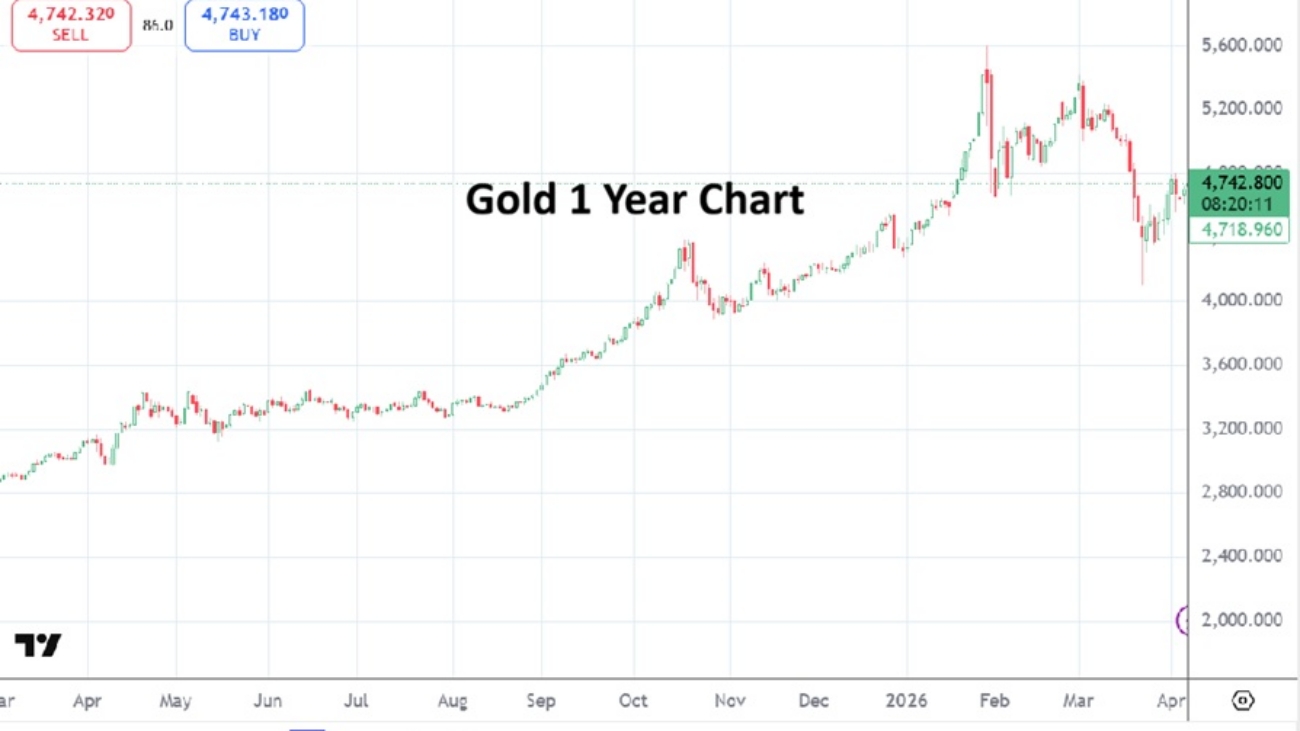
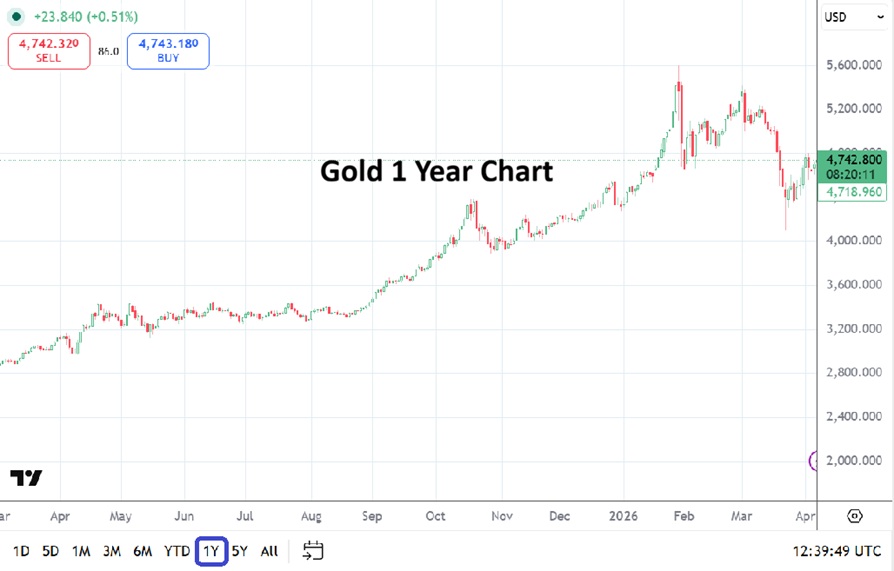
Gold One Year Chart as of 9th March 2026

WTI Crude Oil should have gone back down below $80.000 in many folks thinking – and they may have bet on this strike price via options –  due to ideas of an Iranian ceasefire, but the target has not been met. WTI did in fact challenge $88.000 early this week, but it is back around $93.000.

With the weekend quickly approaching and concerns about what will happen when the marketplace is largely shuttered, March mayhem has opened the door for April surprises. Gold is near $4,737.00, and this price remains mildly upsetting for many who believed it would act as a safe haven asset that would gain during the war, but hasn’t responded with buying fever. Gold was near $5,180.00 on the 27th of February. But in fact gold has performed rather well considering it was riding a long-term speculative buying spree and its current price still remains well above where is was last year around this time near $2920.00.

The point? The markets still exists and can still be bet on. The parameters may have changed, but let’s recall at this time last year global investors were dealing with the potential of Trump tariffs which was an entirely other set of hypersonic conditions caused by noise. If you don’t like loud markets you can cover your ears. You can try to take advantage of them too, but day trading the marketplace via Forex, commodities and stock indices has always been gambling. Perhaps this is what you are looking for – price action.

Again, the global markets are not concerned with your feelings. If you want to cry, grab a tissue and sit on the sidelines until the big show is over. However, know that the Iranian war is certain to have an encore from either a new round of potential fighting in the Middle East via stresses caused by the said openings/closings of the Hormuz Strait, or some other entirely new flashpoint elsewhere. 

The S&P 500 closed slightly below 6783.00 yesterday, last year the index was close to 5,745.00. Sometimes the best thing all traders and investors can do is take a deep breath and believe in better days.

Near-term price action will remain choppy. That is very easy to say and agree to, yet it tells you nothing. It doesn’t tell you what the markets are going to do today or tomorrow. And the reason for that is that intraday performance at this juncture is being driven by swiftly changing sentiment in which momentum is a swirling sea. Technical traders may claim they have a handle on the price skirmishes via their perceptions, but are likely suffering like everyone else as they try to surf the rather wild waves.

Copy and paste the text from AMT that you want to share

post275

Nvidia: Short-Term Speculative Reactions Versus Investing

Nvidia: Short-Term Speculative Reactions Versus Investing

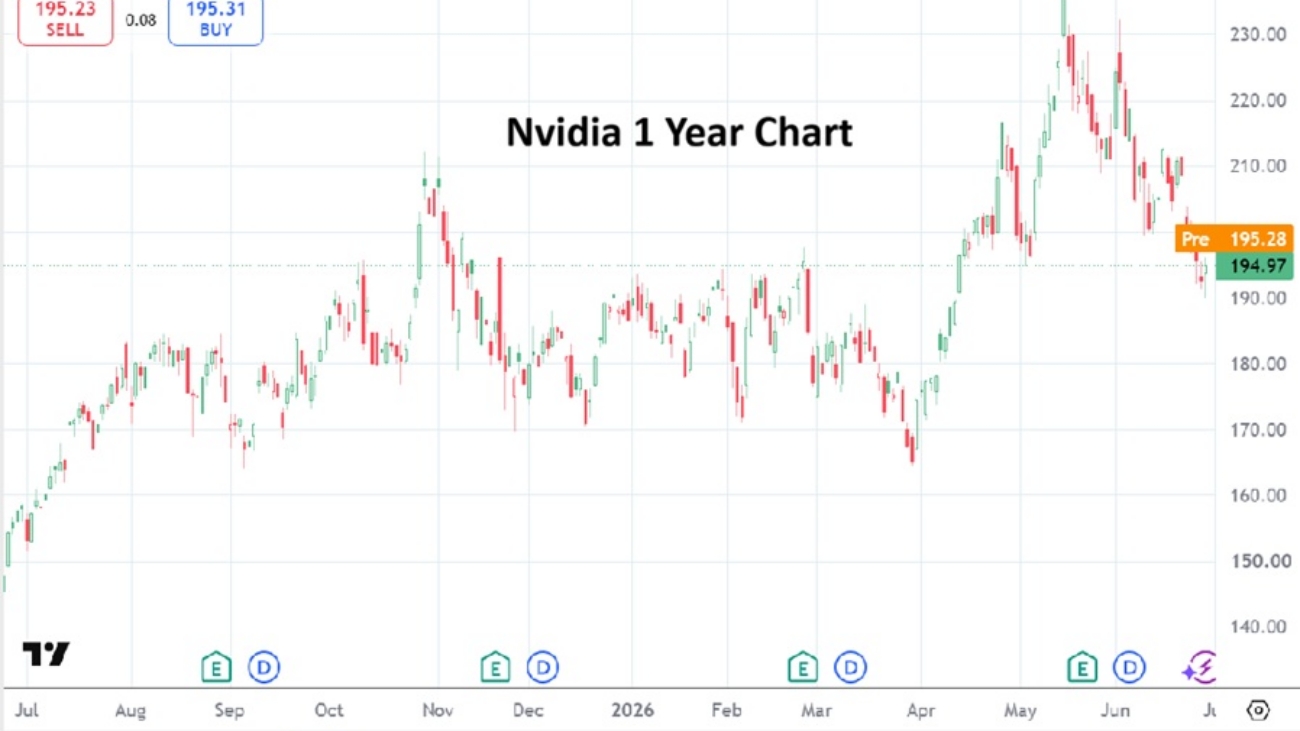
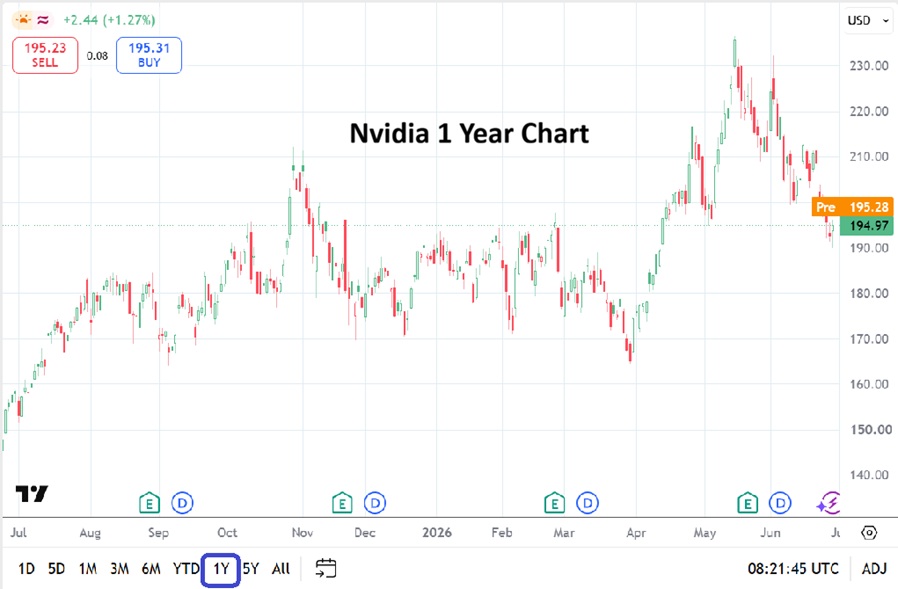
Nvidia is near 181.60 as of this writing, this after the company issued a quarterly report that beat expectations, but also pointed out that mid-term concerns may slow down the pace of some of its data driven business, and that China enterprise complications remain murky.

Nvidia Five Day Chart Early Morning as of 28th August 2025

Day traders should be certain they acknowledge the difference between a short and near-term wager on Nvidia compared to mid and long-term outlooks. Speculators who want to venture forth and gamble on Nvidia based on last night’s quarterly earnings report are free to do so. However, there is a distinct difference between betting on what today and tomorrow’s reactions in Nvidia will be compared to folks who are investing long-term in the company and believe that over the long haul it will remain a solidly profitable company that adds value to bottom lines.

In early August Nvidia was challenging the 185.00 ratio. As of this morning the stock is near the 181.60 mark. Nvidia faces headwinds currently in after hours markets because the company had the gumption to say it outperformed expectations in the last quarter, but put up a cautionary sign saying its data business may face some obstacles regarding growth, and outlooks for its China enterprise remains solid but could face some complications.

Reacting to Short-Term Temptations and Speculating:

For those who want to sell Nvidia based on the above ‘warnings’ today, they are free to try their luck. However, selling positions could quickly turn into buying opportunities. Nvidia like most equities is about considering reactions due to behavioral sentiment, short-term nervousness could rapidly shift to bullish perspectives in the eyes of investors, programmed trading software, and – yes – day traders.

Lower support for Nvidia technically when a five day chart is looked at may be 170.00 if someone is overly cautious. A look at a one month chart for day traders who have a bit more of an aggressive manner, may believe technical chart evidence suggests a lower move can be taken advantage of at 177.00, this if they are keen on waiting for a downturn to look for an opportunity to buy at lows.

Yes, perhaps some short sellers may target the mentioned values as places to cash out positions while speculating. But there is a chance Nvidia will not touch those lows. Perhaps bearish reactions – if they even happen – will fade quickly and additional bullish sentiment will continue to seep into Nvidia. Does anyone really think Nvidia is about to face a steep selling curve?

Tech Stock Consideration and Looking for a Barometer:

·       Some folks are talking about AI and its potential status as a bubble.

·       However, this is Nvidia we are talking about, even if there is a bubble in the AI sector, Nvidia long-term is a solid stock that will likely do well for years to come.

·       Short-term reactions seen the remainder of this week and perhaps over the next few weeks may be choppy, but this would include reversals in both directions.

·       Betting on a big downside in Nvidia looks to be wrongheaded.

·       Traders who are conservative and believe Nvidia is a good buy short-term after some selling happens, while looking for momentum higher – at least back to known resistance levels – may be making a solid wager.

Nvidia is one of the most important equities in the stock market. Some may justifiably say it is the most important at this moment. As a big driver of the Nasdaq 100, Nvidia has in many respects traded sideways since late July. This has been one of the reasons the Nasdaq 100 has faced headwinds too. The broader S&P 500 has been doing better than the Nasdaq 100 the past few weeks, this because tech stocks like Nvidia are facing some skepticism regarding just how high they can go. However, Nvidia as a stand alone company has excellent long-term prospects.

post230

FX Trends: Brutal Months for Day Traders and Happy Brokers

FX Trends: Brutal Months for Day Traders and Happy Brokers

The past few months for day traders have likely not been pleasant experiences for many. Forex, equity indices and other assets have experienced plenty of volatility and finding a trend has not been easy. While speculators who are wagering on the ups and downs in the marketplace have been getting crushed, their brokers likely have not been getting hurt.

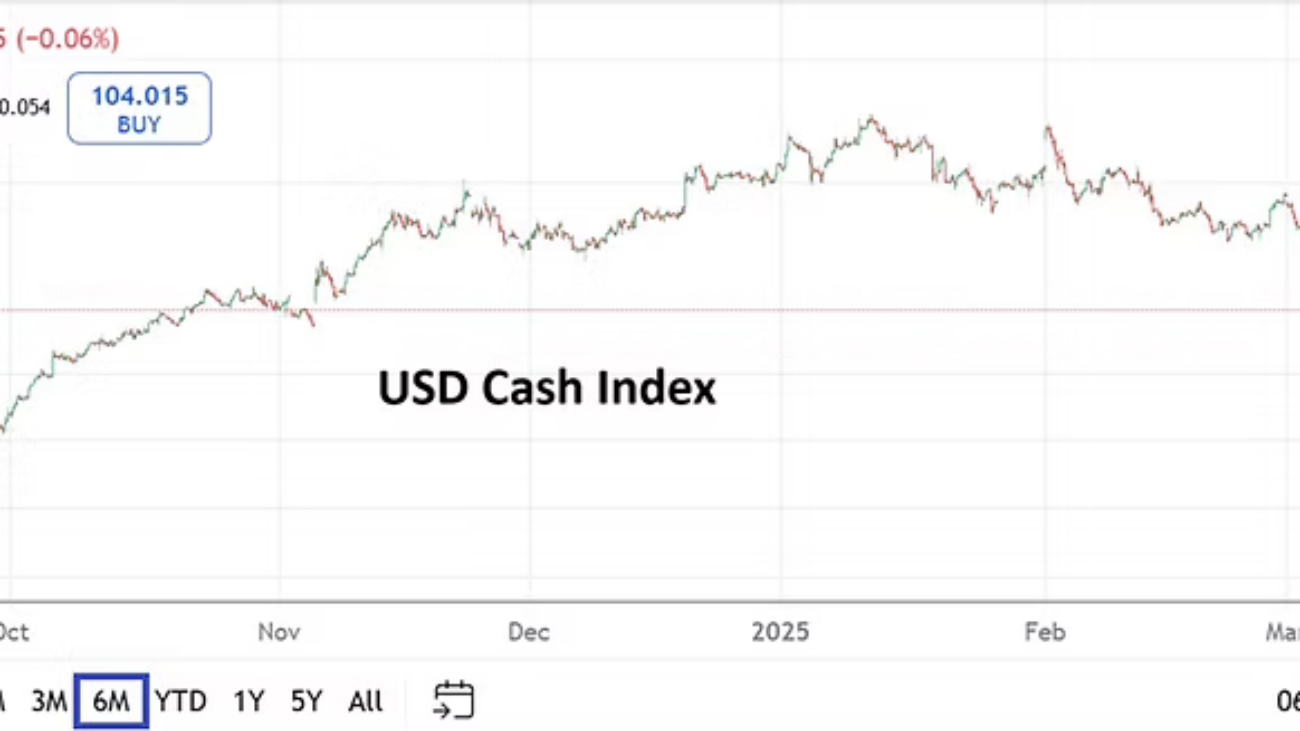
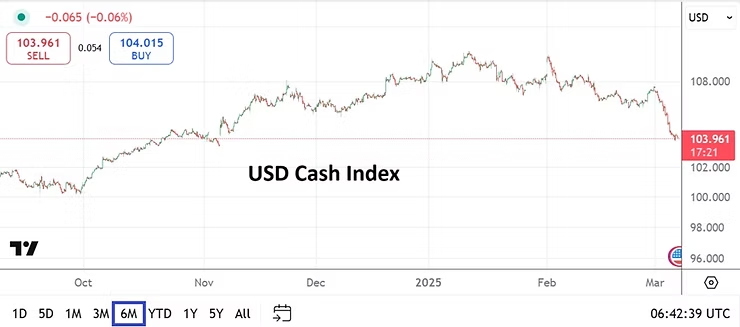
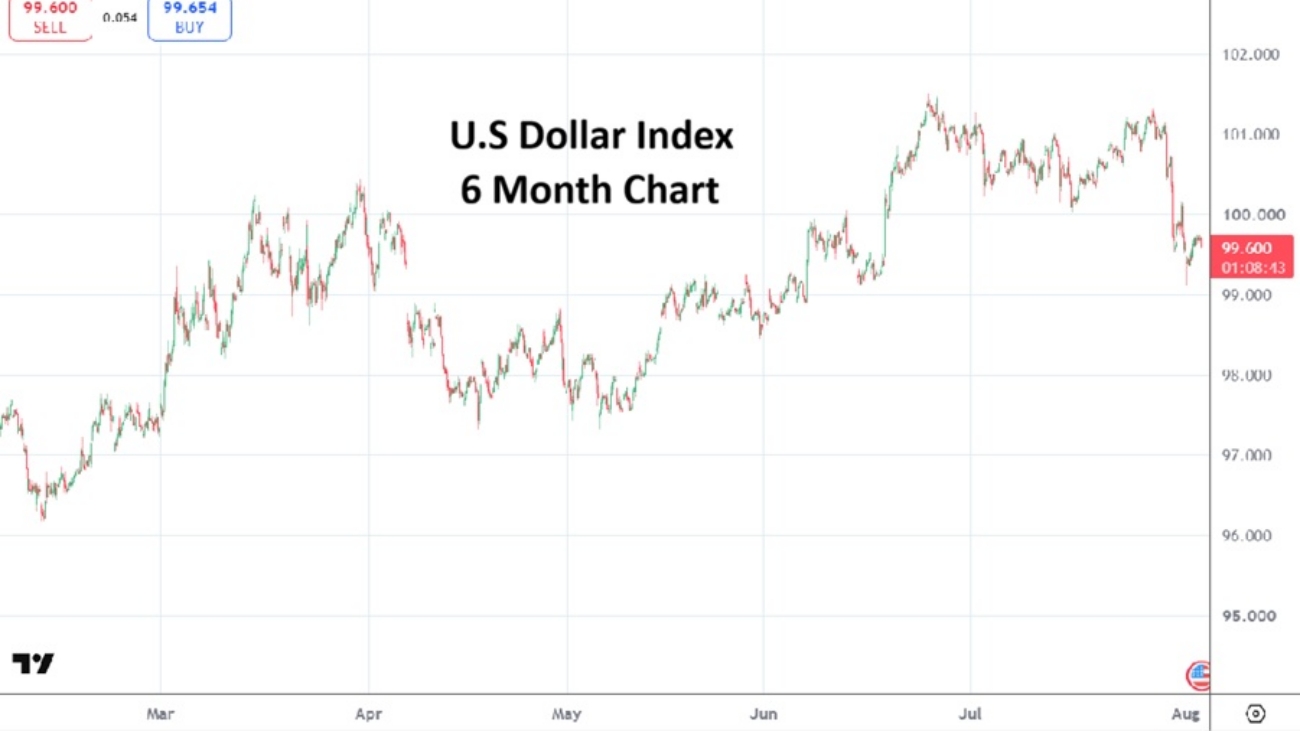
USD Cash Index Six Month Chart as of 7th of March 2025

Day traders need to understand that CFDs are virtual. Your broker is merely placing a wager for you on chosen direction, in most cases they are acting as ‘the house’ and know the volatility is going to knock you out of your trade. They pocket your losses as their winnings in many cases. The brokers are not only making money from the differentials from the bids and asks (the spread), they might also be charging you a transaction fee.

If a broker feels less confident about their ability to make a profit off your poor results (I am not kidding about this), then they sometimes insure your wager via a liquidity provider who in many cases is literally betting against your broker, because the liquidity providers believe your broker is likely being overly cautious. (A vicious circle). In other words brokers allow your trades to work virtually (not in the real marketplace) on something many risk management rooms in Forex call the B Book. If the broker is not certain if you will lose money, they put your trades into something called an A Book. And, yes, many liquidity providers (the A Book providers) are betting against their clients (who are brokers seeking to mitigate their risks).

Again, the brokers and the liquidity providers do not believe you will make money most of the time. They are allowing you to bet and they are happy to take your wager, because historical evidence shows retail bettors in Forex tend to lose money via their trading accounts at least 85% over long durations. Depending on what source you look at regarding CFD statistics, speculators tend to do a little better against their brokers but still lose money more than 50% of the time. Some statistics claim up to 75% of the CFD outcomes via trading accounts equate into losses for speculators.

And if all of this sounds like sour grapes, it is not, it is a warning to you the bettor. Brokers in many cases are glorified casinos that provide you an opportunity to wager. You need to acknowledge the above before your start trading. Speculating on Forex and CFDs ( via equities, indices and commodities) is like betting on a horse. The racetrack doesn’t lose money, they know most bettors simply enjoy the thrill of gambling and don’t mind losing. Racetracks are happy to pay the occasional winner. If you choose to wager on Forex and CFDs you need to practice risk management.

You probably didn’t come here to be reminded about risk management, you have heard it before – conservative leverage, price targets, timeframe parameters, entry – stop loss – take profit orders are standard warnings. You want to read about trends, you want to know which direction you should take, yet there are no guarantees and that is why speculating is gambling. You are wagering.

If you intend on improving your odds, by following solid risk taking tactics – including trying to understand behavioral sentiment via the financial institutions you are trying to emulate, you might find better results. And still, speculating will be tough.

The U.S will release Non-Farm Employment Change numbers today, but traders should pay attention to the Average Hourly Earnings report which will give insights about inflation too. However, the jobs numbers may prove to be a false narrative, because more importantly, whether you like him or not, there is the Trump Effect to ponder.

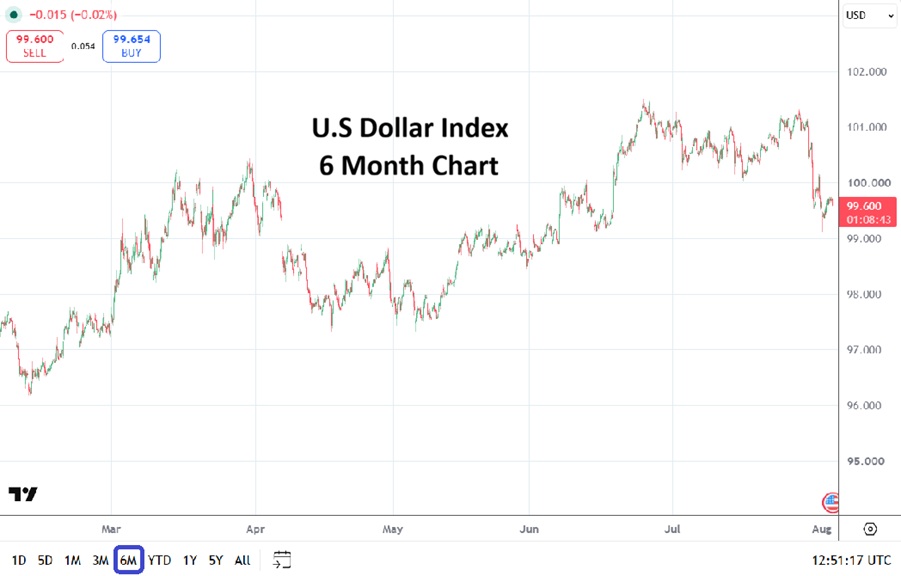
Tariff mantras and fears, negotiations regarding the fate of Ukraine, and a myriad of other concerns have financial institutions anxious as they try to seek clarity. Equity indices have been a mess. Yet, the USD Cash Index has given back a lot of its gains since February the 4th – this after the Forex bloodshed caused by nervous reactions to fear of tariffs being implemented. And now, not so coincidently the USD Cash Index is traversing values it saw on the 5th of November 2024, yes, U.S Election Day. Speculators and financial institutions have returned full circle to big unknowns.

post212

Cocoa Surges Past 11,500 per Ton, Coffee Flying High Too

Cocoa Surges Past 11,500 per Ton, Coffee Flying High Too

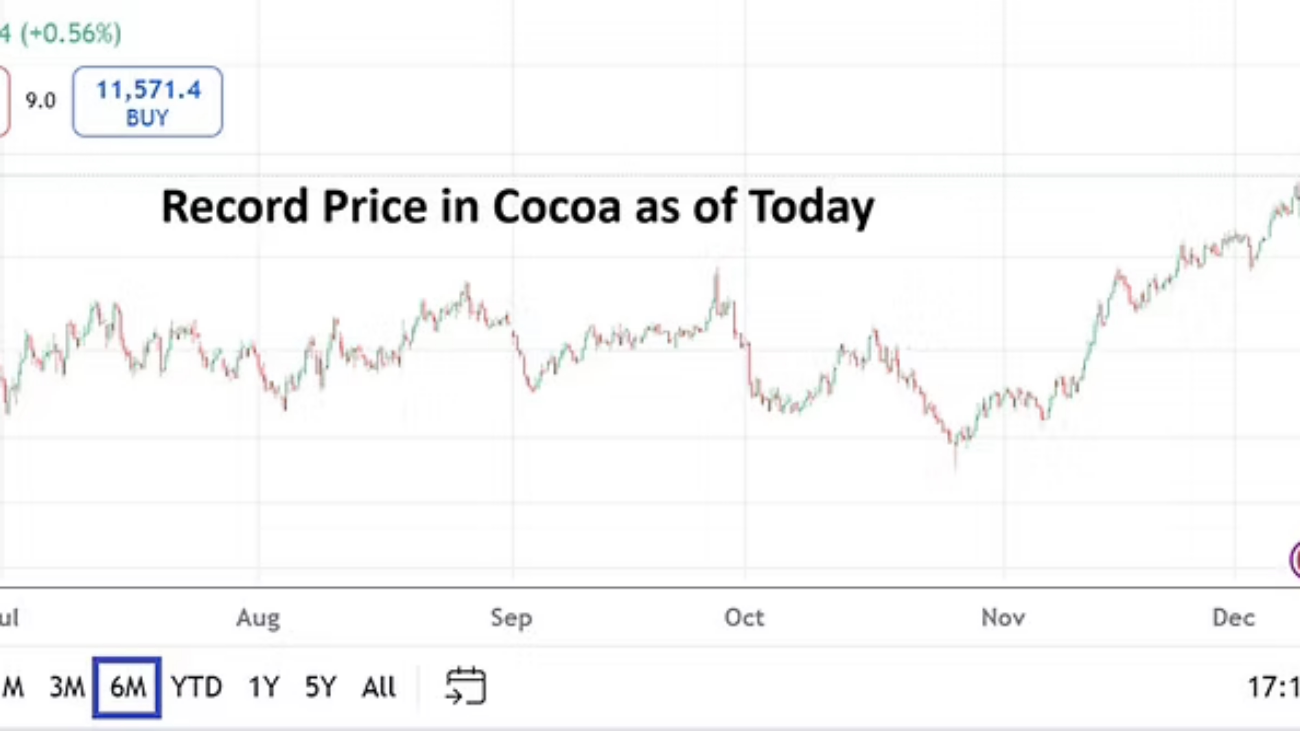
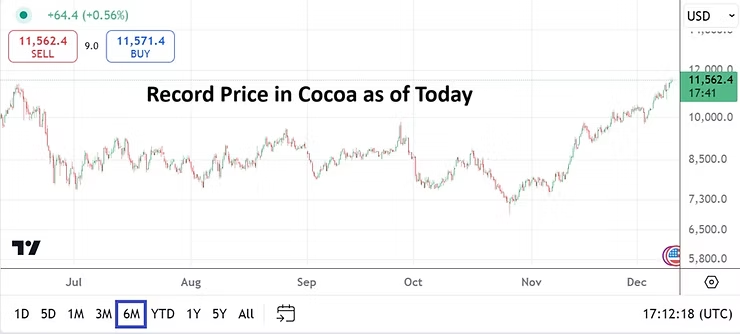
Cocoa above 11,500 per ton as of 10th December 2024

Holiday chocolate about to get more expensive? Cocoa and Coffee futures are hitting highs again. Someone, somewhere is making a lot of money off of the surges.

If you are a day trader trying to pursue these commodities you need deep pockets and conservative leverage (if at all). The reversals higher in Cocoa and Coffee futures since November have been fast and dangerous, even for the large players. The notion the market is overbought is logical, but it has also been fatal for short sellers.

postR192

Telling Someone to Not Trade Works Like Reverse Psychology

Telling Someone to Not Trade Works Like Reverse Psychology

From the strange but true file, comes the realization after working within risk analysis for a long time that telling a speculator to avoid a particular market because I believe it is going to be volatile often has the opposite effect. Perhaps the best thing to do is to remain silent and allow inexperienced day traders to lose their money, convincing them to walk away from speculative endeavors forever. But I prefer to constantly teach and warn, while providing help for those who have made the firm decision they want to pursue the financial markets.

It is rather well documented that 90% of retail traders lose their money. And as pointed out within AMT since our inception most brokerage institutions are counting on you to lose money. This because many platforms are letting you trade via CFD assets and virtual Forex wagering, meaning the brokers take the risks that you may actually make money and are willing to pay out your winning bet, because they know most of the time you are going to lose. If not today then tomorrow, because casinos always believe the gamblers will lose.

People ask why I refer to wagers and bets when I write about Forex, commodities and equity CFDs. The answer is because I feel the need to remind speculators constantly they are entering a domain that is akin to gambling. I have come to learn that I cannot stop inexperienced day traders from making costly mistakes by telling them not to trade. New retail speculators can be helped by providing them risk management via basic knowledge and expanding upon the theme. Angry Meta Traders intends to always make risk management and analysis of the markets its core foundation.

Yes, we also provide our insights about potential directions in particular assets constantly, and try to contribute our thoughts on the thinking of the large players within the marketplace. We would like AMT to become a membership pass into the temple for retail traders and the occasional institutional participant that reads our material. Temples are usually the domain for philosophies which have been gained through years of experience and contemplation about the human condition.

While it may sound absurd to discuss temples, experienced traders unless they have been merely lucky their entire careers, know the psychology of financial institutions is always important. Understanding the behavioral sentiment of large players and the quantitative engineering they use to make decisions is crucial. The keys to the inner workings of the financial temples is a metaphor, hopefully allowing day traders to feel like they have been given the ability to look inside and understand the decision making process of large institutions that can move the markets.

Angry Meta Traders is not always right, our analysis and predicted movements about assets are sometimes wrong. Yet, by stressing risk management via limited leverage, stop losses when appropriate (they almost always are), and telling traders to not be overly ambitious, we hope AMT delivers constant reinforcement and needed learning.

The noise of the market can be quite intense, false narratives, and misguided analysis are dangers all traders face, even the most experienced large players and financial institutions understand they will not always be correct. And this takes us back to the notion that trading for inexperienced people is not easy. But I know telling you not to trade works in the wrong way. So what I tell you now is to be patient, learn, gather wisdom as you trade and hopefully you will attain some of the tools needed to make your speculative life easier. Knowing that 90% of traders lose money, we hope that via our efforts to inform that we can put you within the small percentage of people who actually profit.

post202

Speculative Notions: Gold and the USD as the Casino Lives

Speculative Notions: Gold and the USD as the Casino Lives

Notes on speculation via the prism of Gold and the USD, with questions about value as short-term wagers versus long-term investment are considered.

Speculative forces eventually run out of power, leaving investors and businesses to conduct their affairs via the assets they are using to proceed with enterprise as they judge fair market price.

Assets like Gold (commodities) the USD (Forex) and equities (corporate shares) are a battleground for those who are trying to make short term profits from price action movement (sometimes – volatility) versus those who are holders of the assets in order to run their lives (corporations, private businesses, finance).

Perhaps the speculative forces are not a Las Vegas environment completely, but it is a strange mix of risk management and gambling. And because of the price changes in these assets as supply and demand are transacted – the realization that the potential of hedging against sudden gyrations in price is used as insurance, but also as a dangerous speculative tool needs to be considered.

Futures, options and cash markets combine and are mixed like a stew consisting of trillions of USD value as global enterprise and financial casinos flourish.

Let’s take a look at Gold as an example. There is only so much physical Gold on the planet earth – a finite amount. There is only so much that can be taken out of the ground in a year. There is only so much Gold an individual can safely store in their home, before they have to use other secure venues. Central banks may have backed away from the ‘gold standard’ but they understand the importance of the precious metal as proven and tested by thousand of years of commerce. Gold can be used as the exchange of value for a good and this will likely remain the case for long time.

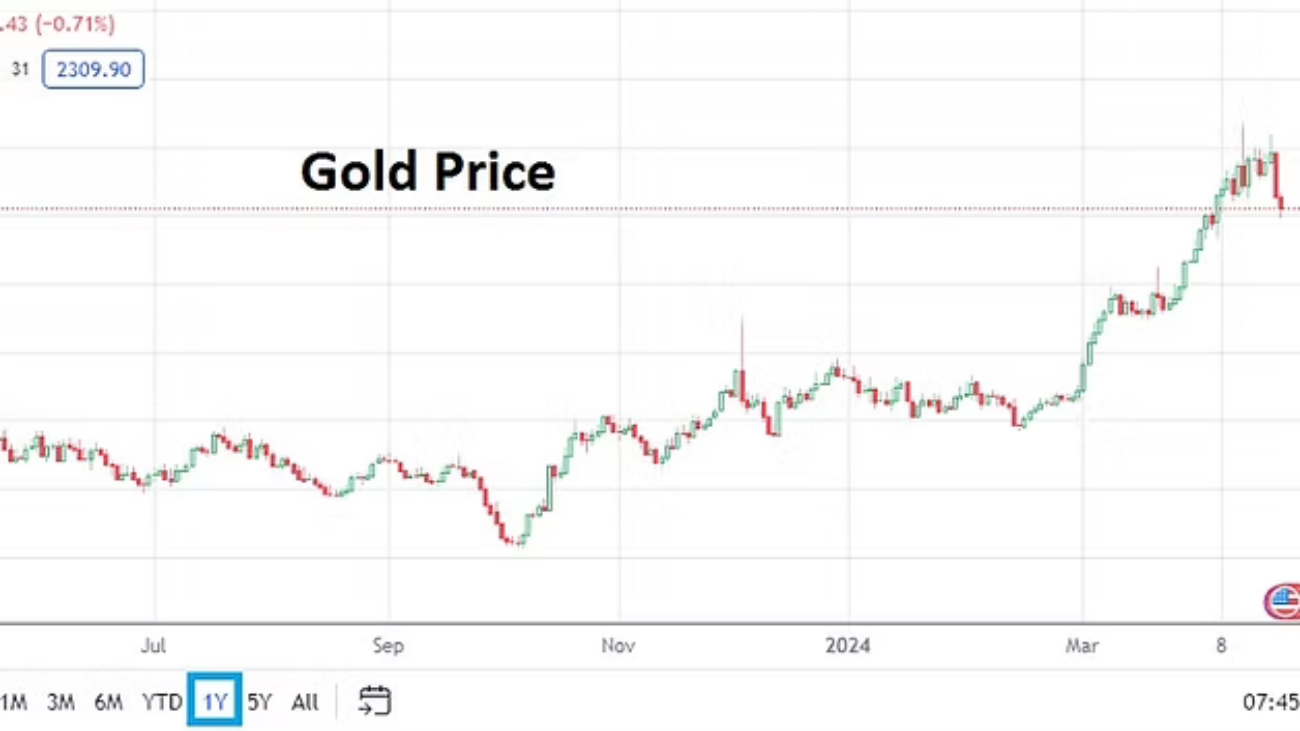
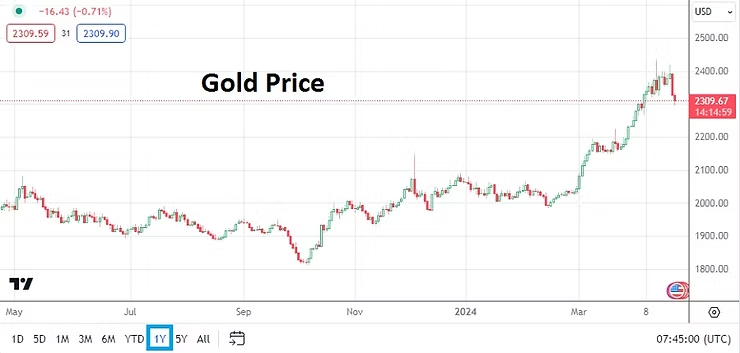
Gold One Year Chart as of 23rd April 2024

The price of Gold serves as a hedge against inflation. The value of Gold today roughly buys you the same things it bought you a thousand years ago, when compared to monetary units which fluctuate like the wind. Because cash in many cases throughout history becomes weakened, losing its value because of bad government policy which causes the people holding the ‘paper’ to lose confidence; and then creates the desire for the precious metal which has almost entered our conscious DNA as a source of value which doesn’t change.

We can speculate on what the Gold price will be today, tomorrow, next year, but we know the fluctuations will roughly equate into what our consciousness – logic – tells us what the main reserve currency that rules the land will be worth – in this case the USD.

For the time being, the USD acts as the reserve currency of the world and is weighed against the value of Gold – literally – remember Gold is valued per ounce in USD.

The ability of Gold to climb to record highs recently was put into question, because at the same time the USD was getting strong. This signaled to traders that a known speculative force in Gold was at play; yes, it could be said a speculative force was at play in the USD too, because of Forex and the Federal Reserve, but Gold rose the past month and a half dramatically while the USD also was gaining value.

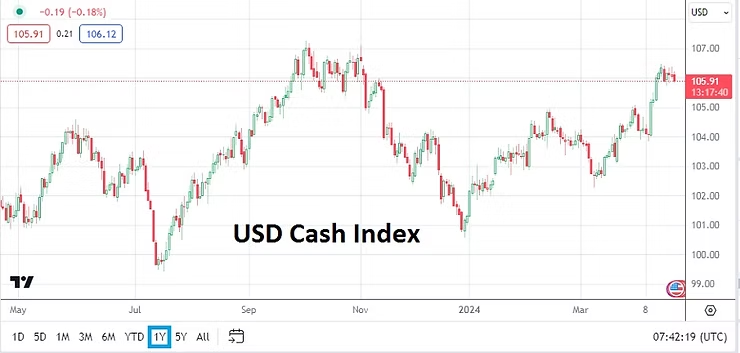
USD Cash Index One Year Chart as of 23rd April 2024

Thus, suddenly the inverse correlation of Gold and the USD which are literally weighed against one another was suddenly off balance. The USD was gaining and gold was rising, and one of them was likely ‘full of hot air’ – an imbalance.

Meaning Gold had become inflated in value perhaps, because of speculative forces. While folks could point to geopolitics, and central banks such as China and Russia and maybe Iran wanting Gold because they are ‘angry’ at the U.S and want to signal they do not believe in the USD. There is only so much money these speculative forces have, and they hold the USD as a store of value too, which means if they bet too much on Gold they can find their positions – weight – imbalanced.

The USD remains the world’s reserve currency, and the value of the greenback particularly as the Fed has come under pressure, via the weight of inflation, and had to admit they cannot cut interest rates until inflation erodes has made the reserve currency stronger again. The use of the USD is easier than using Gold. There is not enough Gold in the world to transact business to business, person to person physical exchange everyday. Thus Gold becomes a ‘store of value’ via inventories not only in secure facilities but our minds too.

The past couple of days have seen Gold perhaps lose value again as the counterweights have come back into focus. It was bound to happen as long as the USD remains the world’s reserve currency in which value can be distinguished versus the commodity.

Speculative forces do run out of power, and now after Gold flirted with the 2,400.00 plus level recently, maybe Gold should return to its values which were seen in late 2023, which is where the USD Cash Index is essentially standing technically. Lets also remember where U.S Treasury yields were during this time, long-term bonds are a measure of interest rates and outlook via the Federal Reserve – used as an insurance and investment vehicle by those looking to lock in ‘returns’. Yes, Treasuries can be speculated on too, but their values coincide with USD legitimacy and the Federal Funds Rate.

It is a thought, a speculative notion, let’s see what happens. What should the speculative price of Gold be now compared to the USD? Should it be lower, closer to the 2200.00 to 2100.00 USD levels? The casino will give us the answers.

postN17

AMT Warning: Many Brokers Do Not Care if you Lose your Money

AMT Warning: Many Brokers Do Not Care if you Lose your Money

Sounds like the title has been written wrong doesn’t it? Reads as if the editor clearly doesn’t understand the nature of the financial markets and how they work. Certainly anyone who offers their services to you would like to see you make money, or so you would like to think if you are an idealist who remains innocent and trusts all people.

Unfortunately, the title of this artcle which has lured you into reading this WARNING is not wrong. It has been written as cautionary advice for new and even experienced speculators. Many of the ‘financial’ websites and people you are considering to engage with via their day trading platforms and ‘expert’ systems are not worthy. Many do not care if you make money and some in fact are planning on ripping you off.

Blackjack Betting and Sitting at the Table with Too Much Leverage

Volatility is in the eye of the beholder, brokers like when day traders without deep pockets use leverage, because they expect their ‘clients’ to get wiped out. Yes, brokers are not your friends in many cases, in fact they are rooting against you in the back rooms of their trading operations. Why? Because they are not actually putting your trade into the cash markets, they are allowing you to trade virtuallly. Think of it as entering a casino.

The casino wants you to bet outrageous sums of money, because they know statistically most gamblers will lose. Again, you have been warned. Your use of leverage is music to the ears of your broker, because they know the volatility of the market will knock you out of a trade if your margin trading is too high and the slightest of technical reversals will produce a losing position for you. Then they will ask you if you want to make another wager. You can continue to sit at the ‘blackjack’ table or walk away.

Learn To Trade Without Getting Ripped Off

The first thing you might want to ask and acknowledge when you begin to trade is how much money can be lost? The answer is all of your money. If the answer being given to you is that there is minimal risk and that you are guaranteed profits – immediately close the website you are looking at and find another. Guaranteed profits equates into assured losses for unsophisticated traders most of the time.

If you are speaking to someone on the phone and the person keeps asking you how much money you want to make, please hang up the phone and speak to someone else. Self proclaimed gurus should be shunned. As someone once said, people tend to use the word guru, because the word charlatan takes too long to spell.

Yes, even in the most reputable and best of companies who provide trading platforms, you are going to lose money sometimes. The art of speculating and successsful trading is a delicate balance between losing money and making money. It is probable if you are a new trader, that unfortunately you are going to lose money and you will become uncomfortable. Sure you could get lucky or be a prodigy who is supremely talented, but you should understand many folks lose money in the beginning. There is a learning curve for day traders and you need good teachers. You also need a calm emotional state of mind.

Finding a Pro to Trade for You

You might want to consider letting someone that you trust and who has a proven track record with verifiable clients you can authenticate to invest your money. However to have a pro trade for you, the amount of money as a minimum you will need for them to consider trading your cash is likely sizeable. It doesn’t seem like a fair question from a social perspective, but are you wealthy enough to allow someone to trade for you?

If you find a person that is reputable to trade for you, make sure they have explained their modus operandi and you agree with their outline. In other words have them discuss their plan of attack and how they perceive complexities within the markets. What sectors do they invest in, what is the break down via percentages regarding the amounts of money they put into various financial assets? Asking questions may seem a bit impolite, but reputable fund managers and family offices should not get flustered by your questions, and they should have answers that are easy to understand. Do not let them talk over your head with fancy words and equations. Clear and concise language is necessary.

You shoud ask how often they rebalance their portfolios and if they issue a quartertly report. Importantly, ask for an example of transparent accounting which shows transaction fees that will be charged in full, including services they are charged by other financial providers within your account. Commission and banking fees can add up quickly. And then ask the magic question regarding drawdowns, and what are the allowable losses in a trade and in an account that can happen before they have to stop trading. You should get clear explanations regarding all of your inquiries.

But You Likely Still Want to Trade for Yourself

If your emotions do not let you take into consideration that there are going to be negative days, perhaps declines for weeks and bad months – simply put, trading isn’t for you. Learning to handle your money and investing should not be a speculative adventure, this is not about having fun. Oh you will certainly experience thrills, but you should try your best to limit crises. Risk management is a way to curb the elements of gambling which every day trader is undertaking.

Will you become a professional investor? What is a professional investor? Nothing like semantics and flattery to get the juices of a prospective investor going. Do not be fooled by flattery. Do not be fooled by the fact that you have a degree. There are folks who do not have high school graduation certificates looking to take advantage of you, some of them are great traders and will eat you alive. Education at the best of colleges or universities is no guarantee you will become a good trader. There is a difference between paper trading and having skin in the game.

The marketplace is waiting for you to enter and anticipates taking your money. Brokers are trying to get you to come to their trading platforms because they want to make money from your transactions and wagers if they are not reputable. These brokers actually do not believe you will make money. Until you prove you know what you are doing you will be treated like a ‘mark’. When you do prove you know what you are doing you will be treated differently in more ways than one, and it might prove difficult to withdraw your winnings.

Trust is Important, but Facts and Regulations Help

You must deal with people and companies you trust. Make sure to do a deep examination of the folks you are about to forge a trading association. Trading virtually via digitalized CFD and Forex houses that are not regulated can lead to financial disaster. And ask where your broker is regulated, and then check on the mandates of the entity and government which has written the rules for brokers – are they legitimate supervisors and who do the regulations favor? There is a lot of work involved before you trade, you must practice due diligence.

AngryMetaTraders wants you to understand the game of trading. We talk about sports often because the world of trading can be closely compared. If you are good and lucky, perhaps the world of investing awaits your success. If you suffer a learning curve like many, you can compare yourself to an athlete that must train to beat the best. You will need patience and dedication. Surround yourself with reputable firms and people to asssociate your speculative endeavors with in order to get solid results long-term.

postN47.1

Plenty of Data from the U.S and China Should be Anticipated

Plenty of Data from the U.S and China Should be Anticipated

As the last week of August trading gets ready to begin, day traders may be glad to put the past month behind. The BRICS Summit and Jackson Hole Symposium delivered soundbites as promised last week, but there were few surprises. Forex, equities and commodities have been supplying a bumpy road for a while and may continue to do so.

Behavioral sentiment in the broad markets remains fragile, this as short-term U.S Treasuries continue to allure institutional players looking for solid returns. Some well known market players continue to issue cautious words regarding U.S equities, but the three major indices are still near mid-term highs. We have yet to experience a blood curdling selloff in the U.S equity markets. This maybe producing choppy results for some day traders pursuing CFDs while betting against higher moves.

Which brings up the question, which quantified analysis do you want to act upon? While the major U.S indices are up, a lot of the market action in these indices are driven by the ‘top performers’ which have ‘floated the boat’ while many other stocks have not performed handsomely.

Retail traders who are wagering on daily fluctuations need to understand there is a vast difference between short-term speculative positions and long-term investments. Hence the reason day traders are reminded to only bet money on what can be lost without a great deal of discomfort. Speculation should only be done with a very limited amount of cash, because day trading never offers guaranteed profits.

The next handful of days will deliver plenty of important data. The question is how financial institutions will react as they weigh the coming results against their own sentiment and outlooks regarding mid-term interest rates via the U.S Federal Reserve’s rhetoric. Market nervousness remains on edge as more tranquil days are certainly sought via risk adverse financial decisions.

The cryptocurrency market should be watched carefully by participants within its volatile assets. Bitcoin continues to trade near the 26,000.00 level and this is considered important support by many. And Binance coin has failed to inspire a sustained upwards reversal as Binance exchange remains under legal and regulatory shadows.

Traders are also advised to note the U.S will be on holiday on the 4th of September, the coming long holiday weekend could spark rather dynamic market action Thursday and Friday as financial institutions trade in advance of Labor Day.

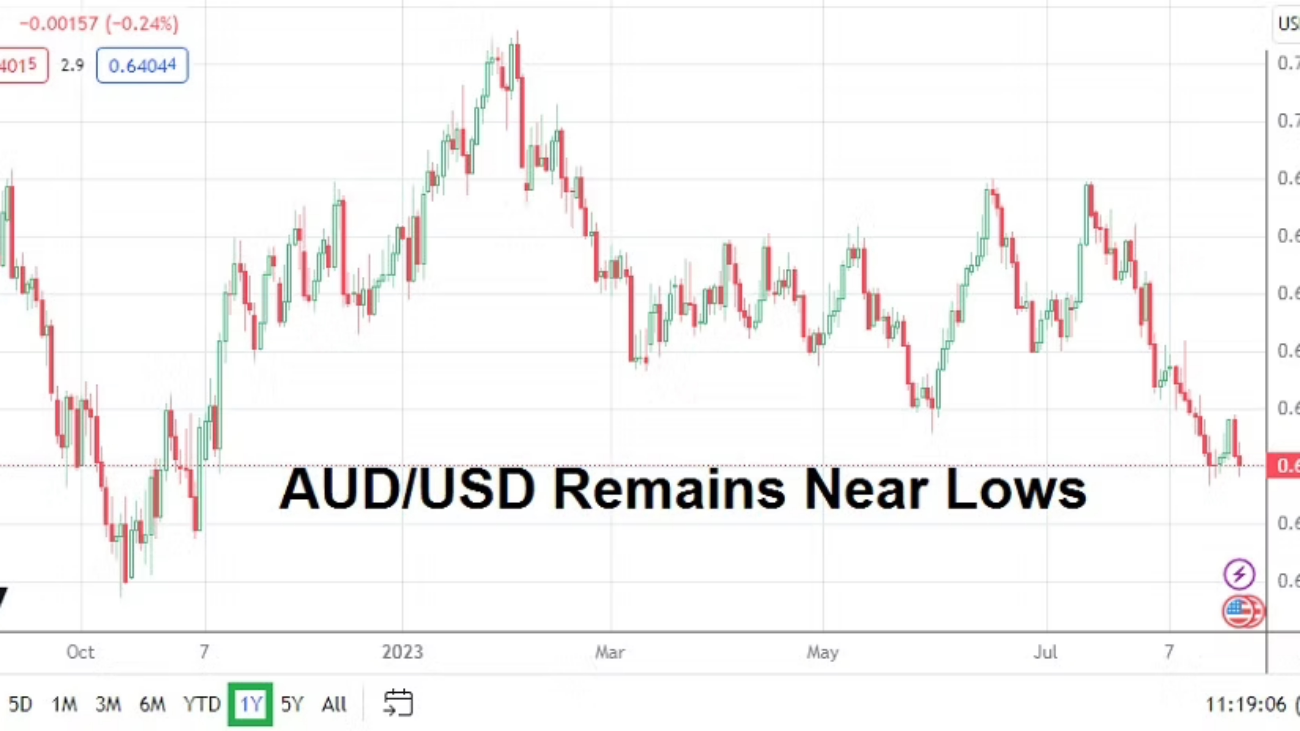
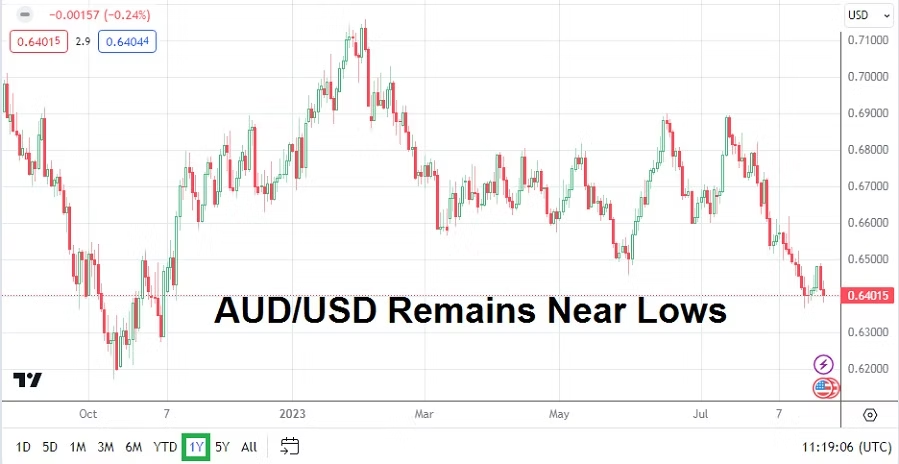
AUD/USD One Year Chart as of 27th August 2023

Monday, 28th of August, Australia Retail Sales – the numbers will cause a reaction in the AUD/USD and the result is expected to be slightly better than last month’s outcome. The AUD/USD is near important long-term lows.

Tuesday, 29th of August, U.S Consumer Confidence via The Conference Board – the anticipated result is lower than last month’s reading. However, the past three months have done better than expected, which may put some analysts on edge before the publication.

Wednesday, 30th of August, Germany Preliminary Consumer Price Index – the inflation numbers are expected to match last month’s gain of 0.3%. The EUR/USD will react to the outcome with momentary volatility. German economic data has been a concern in the European Union for a handful of months.

Wednesday, 30th of August, U.S Preliminary Gross Domestic Product and GDP Price Index – the numbers from the GDP reports will be watched by most financial institutions. Last month’s numbers surprised traders, this as growth remained quietly stubborn and inflation crept higher. The USD has been a powerhouse against the GBP and EUR recently. If these GDP reports surprise to the upside again, this could spark more buying of U.S Treasuries which could create additional strength in the USD.

USD/CNY One Year Chart as of 27th August 2023

Thursday, 31st of August, China Manufacturing PMI – the results from the Purchasing Managers Index from China since April have been lackluster and showed weak export demand globally. Economic data from China has sparked concerns from international investors, and the USD/CNY has certainly received attention as it has risen steadily and is now challenging highs from late October and early November 2022.

Thursday, 31st of August, U.S Core PCE Price Index – the Personal Consumption Expenditures data is expected to match last month’s gain. This inflation data, and the GDP Price Index numbers from the day before will certainly get a reaction from financial institutions which would prefer to see no surprises higher.

Friday, 1st of September, U.S Non-Farm Employment Change and Average Hourly Earnings – as always these reports could shake market sentiment instantly. However it is the wages data which will likely be a focal point for investors. If wages can come under last month’s gain of 0.4%, this would be welcomed by investors and they may go into the long U.S holiday weekend a bit more calm regarding the Federal Reserve.

postN42.1

Day and Institutional Traders Suffering Nervous Conditions

Day and Institutional Traders Suffering Nervous Conditions

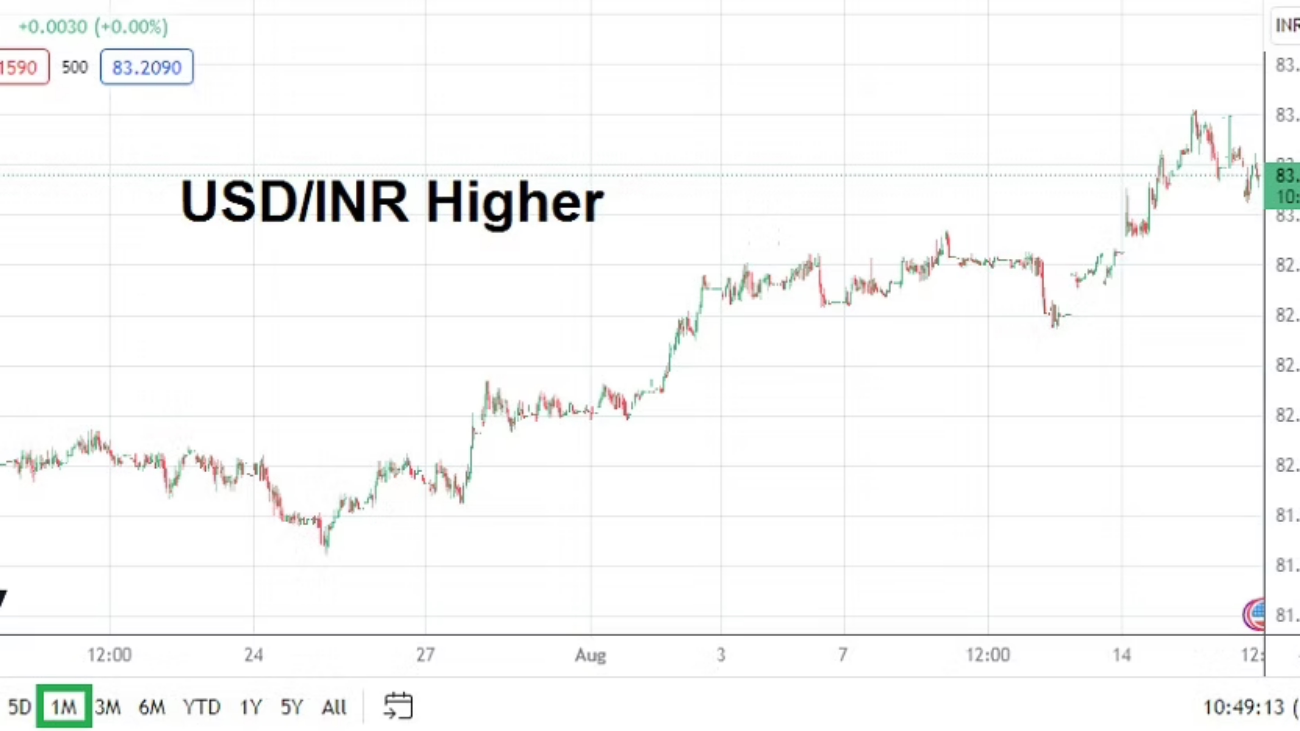
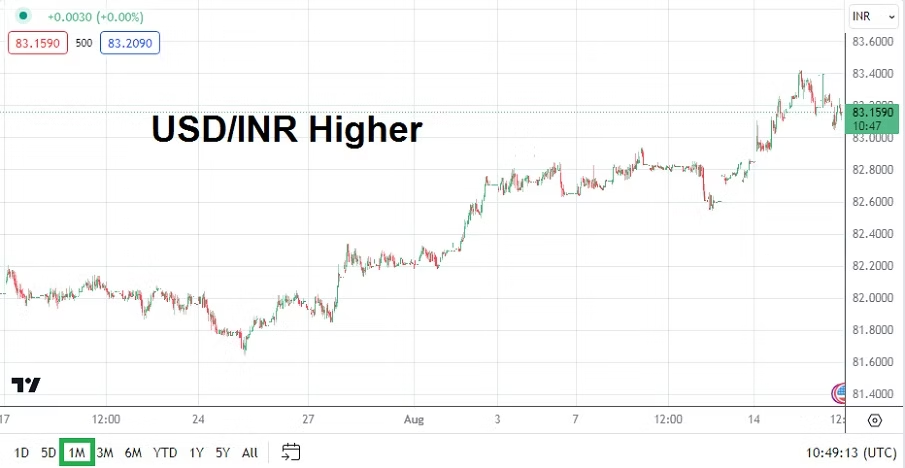
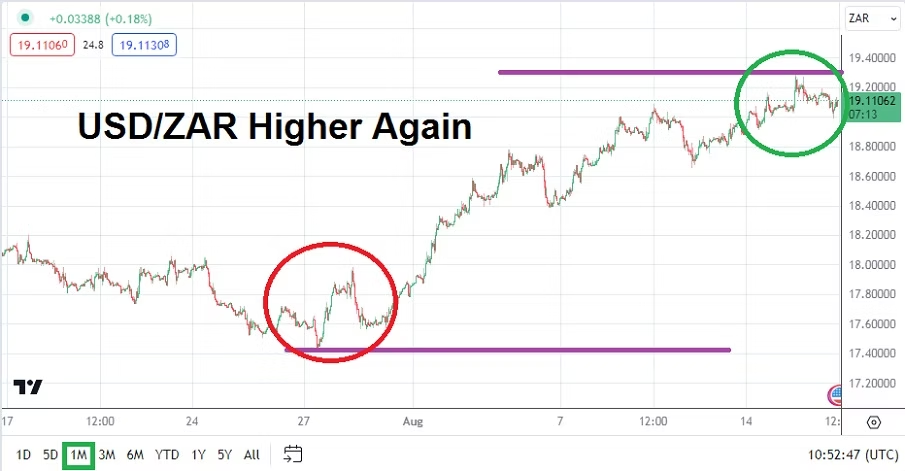
Market price action has caused quite a few interesting interpretations of the prices being demonstrated in Forex, gold and equity markets recently. The USD/INR is now at record heights, the USD/ZAR is back above 19.00000 and the USD/BRL is again near the 5.0000 ratio.

USD/INR One Month Chart as of 16th August 2023

While Forex traders around the world look for clues as to why their local currencies are suffering and are likely blaming domestic policy from their own governments and central banks, they should remember the larger global financial markets tend to move in a unified sphere. Domestic concerns are a real cause for market action often, but when global sentiment becomes nervous the larger force of institutional financial houses shake the ground.

Correlations exists worldwide because of behavioral sentiment ruling outlooks over the near, mid and long-term in the marketplace. While we like to put our faith in the financial markets as an all knowing entity, this is far from the truth. Humans who react to nervous conditions and also have bias are the ones still making decisions in financial houses, they are the ones giving orders to their programmers via their trading software which is largely geared to follow perceived trends these institutions deem important.

USD/ZAR One Month Chart as of 16th August 2023

Most financial institutions are not speculative in nature, day and even longer term retail traders should remember this point. Most institutions are trying very hard not to ‘speculate’, they are simply positioning per their outlooks based on their understanding of the trading landscape. Whispers of potential downgrades from U.S rating agencies on larger corporate banks yesterday sent a shudder through the broad markets, economic data and rumors swirling about China are not helping either. The current volatility in the broad markets is not welcomed warmly by financial institutions.

When price velocity accelerates and volatility flourishes in highly charged trading situations, this suggests financial institutions are nervous and not able to find comfortable positions. Conflicting ‘opposite’ positions from other larger players are causing market chaos in Forex, equities and other financial assets. There is a herd mentality in trading and when the herd doesn’t march in an unified direction chaos happens.

Most institutional players want calm, they want tranquil trading conditions so they can manage their clients’ money quietly. Bonds, equities and indices, real estate holdings via REITs, and gold make up a large part of their holdings.

Most U.S pension funds for instance have mandates to be positioned into a large amount of quiet investment vehicles which do not trade with wild price ranges. They seek steady returns from their institutional investors that can be counted on in a quantitative manner to demonstrate to their clients.

Large financial institutions are allowed sometimes to trade 2 to 4% of their holdings in different categories of speculative investments – such as start-ups, allocate cash to hedge funds they trust, small cap stocks they might know about, etc., depending on the exact mandates agreed upon.

Yes, hedge fund managers like Bill Ackman and investor Michael Burry get a lot of attention when they bet against the markets, but believe it or not they are small fish in a large ocean a lot of the time. They are good at what they do, but their speculative positions cannot be mirrored by most financial institutions or small day traders.

Ackman and Burry may be trading billions, but remember institutional financial companies including pension funds when combined total approximately 80% of market cap. Institutional trading decisions can cause massive waves in the financial world, but they actually seek calm seas.

When markets become volatile this often means institutional traders are not comfortable and their behavioral sentiment is fragile. Forex for example is often affected by financial institutions moving money as they handle export and import transactions for companies, but transactions are often done to buy and sell equities too. The Bank of International Settlements estimated an average around 7.5 trillion USD in value was traded in Forex everyday in 2022.

Day traders should not take it personally when the markets move against them, instead they should look to try and mirror the sentiment of larger financial movers. However, knowing and timing financial institution decisions is elusive because short term compared to long term considerations are often different.

Most traders are merely betting on the price action the large institutional funds are undertaking via the direction of the marketplace. Day trading for most retail speculators remains dangerous. A solid fundamental understanding of market ‘forces’ can allow smaller traders to feel more comfortable.

postN28

Week Ahead: Inflation will be the Crucial Word for Investors

Week Ahead: Inflation will be the Crucial Word for Investors

Last week finished with another reminder that inflation cannot be easily scoffed at by investors who continue to believe higher prices will eventually slowdown. Average Hourly Earnings last Friday came in above the expectation and this was enough to rattle Wall Street again, which saw the major equity indices decline and bond yields incrementally rise. Inflation ‘talk’ will remain important this week because of coming U.S data.

Real Estate including REITS becoming a Topic of Discussion as Mortgages Rise

Market watchers should also pay attention to news regarding mortgages on residential homes, and listen for troubles from the commercial real estate market, as these sectors deal with rising interest rates in the U.S and U.K. Increased nervousness within these markets could have an affect on behavioral sentiment. Let’s remember the catalyst for the financial crisis of 2007 was the real estate sector.

Which brings us back to inflation and the growing acceptance among investors the U.S Federal Reserve may be ‘forced’ to hike the Federal Funds Rate on the 26th of July, if price data continues to come in ‘hot’. Some investors will likely be heard saying an increase of 0.25% has already been factored into marketplace, but the prospect of another hike in late 2023 could be problematic. Forex, gold and bonds dynamics will tell us a lot when this week concludes regarding outlooks.

BNB/USD Price Should be Monitored as Binance Trembles

An outside source of financial and speculative news is likely to come from cryptocurrency. If you are gambling on this asset class (or should we say commodity based on hot air) and like the adventure of wagering, please continue to pay attention to Binance which is showing signs of duress. If the Binance cryptocurrency exchange shows additional signs of pressure on its BNB (Binance Coin), trading waters within the world of crypto could trigger additional drowning victims. If you thought the Sam Bankman-Fried story made interesting news last year regarding fraud and other criminal activity, the FTX saga could prove to be only the tip of the iceberg.

Data Events Ahead to Watch

Monday, 10th of July, China CPI and PPI – the inflation data could prove important for investors who correlate economic statistics from China into their global forecasts. Traders within India should pay attention to these Chinese price reports, because global investors are starting to shift their assets into the Nifty 50 and other NSE equities because of risk and reward equations.

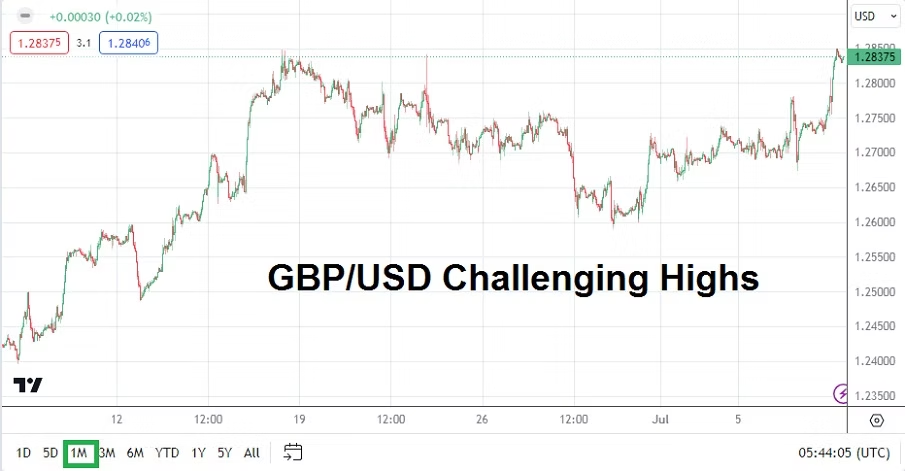
GBP/USD One Month Chart as of 9th July 2023

Tuesday, 11th of July, U.K Claimant Count Change and Average Earnings Index – the numbers need to be watched by GBP/USD speculators. The results from the U.K will be intriguing because of employment results, but more importantly for inflation concerns and the knock-on effects. Bank of England Governor Andrew Bailey is speaking a few times this week, and this includes Wednesday the 12th of July, when he will talk about the Financial Stability Report. The GBP/USD has moved towards monthly highs recently.

Wednesday, 12th of July, New Zealand RBNZ Official Bank Rate – NZD/USD day traders will want to pay attention to the central bank’s Rate Statement. While no increase of interest rates is predicted, the Reserve Bank of New Zealand at a minimum will likely have to admit inflation remains a concern.

Wednesday, 12th of July, U.S Consumer Price Index – the inflation reports from the States will have all eyes on the outcomes of the monthly and annual comparisons, including the Core numbers. The results from these inflation statistics will certainly cause momentary volatility within Forex with the USD as the focal point.

Wednesday, 12th of July, Canada BoC Overnight Rate – the Bank of Canada is expected to hike its interest rate by 0.25% to the 5.00% mark. USD/CAD will react to the BoC Rate Statement based on its outlook.

Thursday, 13th of July, U.K Gross Domestic Product – the ‘growth’ numbers are not expected to be positive. A drop of minus -0.3% is the expectation. Talk of recessionary pressures in Great Britain will be heard. Unfortunately, the discussion about a struggling economy, mixed with stubborn higher prices for consumers and mortgage rates that are rising will not make for calm stomachs. U.K equity results via the FTSE 100 Index should be monitored.

Thursday, 13th of July, U.S PPI – the Producer Price Index figures will be the last cog within the important inflation data for the week. Stubborn prices for wholesale goods are a concern, because the costs to consumers becomes more expensive when there are higher price pressures.

Friday, 14th of July, U.S Consumer Sentiment via the University of Michigan – if the Consumer Sentiment readings from the UofM report improves, and the U.S inflation data which was released earlier this week has proven stubborn, this could become a source of pain for investors who may be forced to consider the Fed will not only raise the Federal Funds Rate late July, but later in 2023 also. Short-term traders should monitor this report accordingly.

postN15.1

Tether’s Wobbling Should Set off Alarms for Crypto Traders

Tether's Wobbling Should Set off Alarms for Crypto Traders

Tether is wobbling and this should not come as a surprise to cryptocurrency traders. While many speculators likely do not carry USDT in wallets or day trade the cryptocurrency, it does serve as a barometer in the digital asset world regarding behavioral sentiment. A sustained drop below the 1.00000 USD price tag should raise eyebrows and increase nervousness.

Tether (USDT/USD) 5 Day Price Chart as of 15th June 2022

This morning’s drop in value in USDT/USD comes on the heels of trouble with Binanace and Coinbase via civil suits brought forth by U.S government agencies that accuse both exchanges of wrongdoing.

Tether’s accounting practices have been under suspicion for a long time and transparency has been lacking. While influencers within the crypto world can came claim all they want the Tether ‘stablecoin’ has nothing to hide – just like Binance and Coinbase – plenty of suspicion remains. And in fact a lawsuit brought against Tether’s parent company which was settled with a payment of nearly 41 million USD in 2021 to the U.S government via CFTC charges should serve as a caution sign.

A simple look at a five day chart of USDT/USD above shows the ‘stablecoin’ has incrementally suffered selling the past handful of days (this before today’s storm lower). Yes, folks may claim this has happened before and recoveries invariably have always developed higher, and they may be proven correct again. Perhaps today’s selling has been a mere reaction to the ‘public’ finding out about recent Binance transactions which are being reported, but maybe it is something more important – like a lose of confidence.

Until now the cryptocurrency world hasn’t really seen a strong reaction to the allegations brought forth from the U.S against Binance and Coinbase yet, and the question that should be asked is when is confidence going to crack again in the cryptocurrency world. Because as sure as the sun comes up and sets, the cryptocurrency world is going to suffer another major crisis, perhaps not today, but one will occur.

If the price of Tether starts to stumble badly and shows signs of not recovering that would spark a major downturn in the value of cryptocurrencies across the board. The darling of the ‘stablecoin’ world certainly has its detractors and there are certainly folks lurking who have been making long-term bets against Tether.

Binance Coin (BNB/USD) One Month Chart as of 15th June 2023

Speculators in the digital asset world will be watching Bitcoin and Tether values closely. It has been reported that by many crypto media sources that Binance has recently made large trades involving USDT in an effort to boost their liquidity. What should concern traders in the cryptocurrency space is the ability of noise in the sector to turn into actual thunder which causes dramatic reactions to cryptocurrency prices.

Because while some people try to claim there are reasonable ways to value cryptocurrencies, in fact behavioral sentiment rules the jungle and a loss of confidence in the sector remains an extinction level threat for nearly every digital asset at anytime. The entire cryptocurrency space is vulnerable to fragility.

post35.1

Sudden Bullish Momentum of Indian Rupee Raises Questions

Sudden Bullish Momentum of Indian Rupee Raises Questions

The past week of trading within the USD/INR has seen a bullish trend emerge, this while many speculators were likely starting to believe lower price realms and targets were possible.

The USD/INR is trading near the 82.2200 mark as of this writing, which is within the higher elements of its one month price range. Volatility within the USD/INR has been abundant the past week and has likely proven expensive for speculators who were pursuing the currency pair with visions of more bearish price action to target. Early May values of the USD/INR certainly tested lows and likely fueled the appeal of selling positions. However, the early May lows within the Forex pair tested the 81.6260 mark, while never actually hitting April’s lowest values which tested the 81.5500 ratio on a couple of occasions.

USD/INR One Month Chart as of 16th May 2023

One of the dangers of trading is always the potential for a sudden change in behavioral sentiment. The lows in the USD/INR seen on the 8th of May, which is only a little bit more than a week ago, highlights the price velocity the currency pair has demonstrated. While many speculators are trying to understand why the sudden shift in dynamics has taken place, it is important to remember the USD/INR was actually trading above its current values in February, March and early April of this year.

USD/INR Five Day Chart as of 16th of May 2023

The Difference between Day Traders and Financial Institutions

The outlook of speculators within the USD/INR is totally different than financial institutions. This is because most speculators are short and near-term traders. They do not have deep pockets like financial institutions – which can hold the USD/INR in a chosen direction for a long period of time and simply allow the currency pair to trade until they want to cash out of a position. Day traders are also using leverage a lot of the time, and the combination of leverage with limited available trading funds makes the daily gyrations of trading volatile and frequently dangerous.

Short-term traders look at the USD/INR with a technical viewpoint much of the time, financial institutions are likely maneuvering in the Forex pair with fundamental perspectives and inside knowledge based on known transactions they have to accomplish.

Many financial houses believe the U.S Federal Reserve will have to become less aggressive regarding its hawkish interest rate stance it has maintained the past year and a half. However there is enough nervousness within the broad Forex markets to make things very difficult for day traders, this as the potential for risk adverse trading based on economic data results move currency pairs including the USD/INR constantly, particularly if a financial institution needs to react quickly.

The ability of the USD/INR to move downward and hit support depths at the beginning of last week, may indeed be a sign that financial institutions have a belief the currency pair should be lower. However, the recent strength of the USD the past handful of days may have been brought on by the simple notion that financial houses grew momentarily nervous. There is also the possibility that large corporations made transactions in the USD/INR that moved the price higher. Day traders must understand there are forces within the USD/INR that are much stronger than their opinions. The USD/INR is not a widely traded currency pair in the open markets, it is difficult for instance to trade the currency pair in a speculative manner within India and traders in the nation face restrictions, which forces many Indian speculators who want to wager on the USD/INR to seek foreign brokers abroad.

Data and Rumors Can Sometimes be False Flags for USD/INR Traders

Some analysts have claimed the recent move higher in the USD/INR has taken place because of factors like a fear of the U.S debt ceiling not being raised in time and causing chaos in the financial markets, however this if true is likely only a short-term worry. It is very unlikely the U.S government is ‘idiotic’ enough to allow the U.S debt ceiling to not be taken care of within Congress. It would be very problematic for the U.S Federal Reserve and Treasury to have to explain why U.S bonds are suddenly difficult to repay. In other words, the U.S debt ceiling is likely to be taken care of and many financial institutions with a long-term view know this, although it is a possibility they could ‘punish’ the financial markets and act in a risk adverse manner in the short-term.

Data from the U.S yesterday highlighted another important aspect again regarding behavioral sentiment. The U.S Empire State Manufacturing Index reading came in with a negative number of minus -31.8. The expected result was -3.7, the report shows that New York business activity and outlook is worse than forecasted. This doesn’t mean the entire U.S manufacturing sector will have the same results, but it underscores the potential for a U.S recession to possibly occur. Today the U.S will release Retail Sales numbers. If these numbers come in with a negative result this could spur on bearish sentiment within the USD/INR in the near-term, particularly if financial institutions feel the results are more evidence the U.S Federal Reserve will have to pause interest rate hikes in June. USD/INR day traders should be ready for more choppiness. But there is reason to suspect resistance above in the currency pair may start to prove durable from a speculative point of view considering the trading results the past month in the USD/INR.

Traders wishing to pursue the USD/INR need to use solid risk management. Entry price orders will help traders get a ‘fill’ they are expecting and the use of stop loss and take profit tactics are highly encouraged. The past week of trading in the USD/INR has likely tested the nerves of many speculators and the assault on highs is alarming, but downside price action may be ready to reignite if U.S economic data continues to falter in the near-term.