post25.1

Forex, Interest Rates, the Fed and Conspiracy Politics

Forex, Interest Rates, the Fed and Conspiracy Politics

If you have been looking for road signs regarding what the U.S Federal Reserve is going to do next week and trying to get a feel for its rhetoric which will be delivered in the FOMC Statement on the 3rd of May, this week’s U.S data outcomes should be monitored. And as of now the data might be suggesting the Fed will remain aggressive in June.

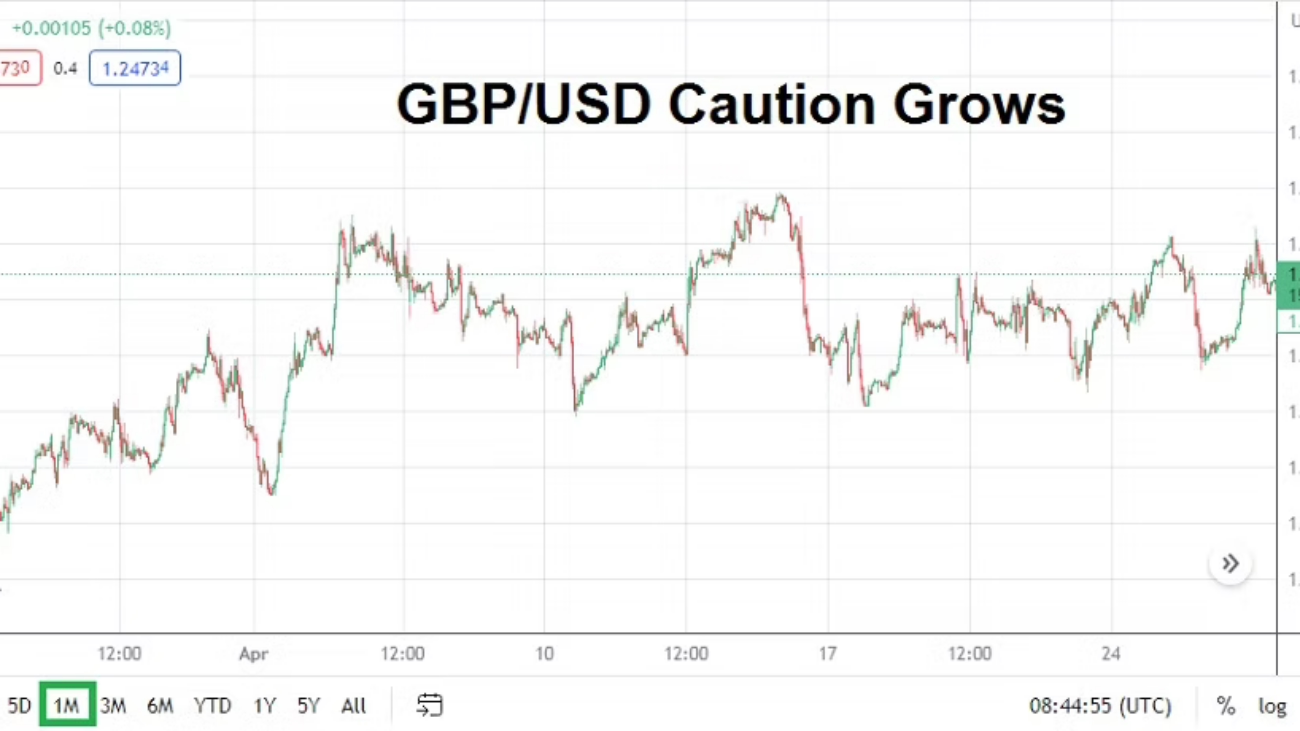
GBP/USD One Month Chart

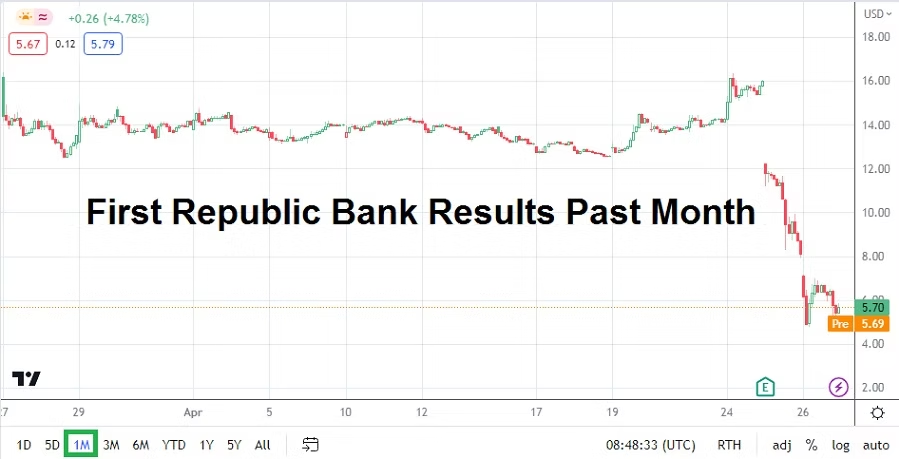
A Fed Funds Rate hike is going to happen on the 3rd of May unless there is a financial catastrophe that suddenly emerges that is nearly cataclysmic. While First Republic Bank wobbling is certainly a problem (Mark Zuckerberg is supposedly a rather large client of the bank), if this entity fails completely it may not cause massive bedlam. The stock has dropped violently, so a collapse should not be a surprise. No, it will not be welcome, but it should not be an unexpected calamity.

The question is how much the U.S government will protect depositors? The large clients who are not insured above the standard 250k USD ratio will want the same benefits that clients of Silicon Valley Bank received in March. Should they be rewarded the same way? The American public may not like the idea of another bailout for the deep pocketed, but there may not be much they can do about it, except to vote the politicians out, but who do you exactly punish?

First Republic Bank – One Month Chart as of 27th April 2023

What a collapse of First Republic Bank will do is hurt the corporate bond sector in banking again, because it is likely holders of these bonds will be put at the back of the line once again if the U.S government decides to protect big depositors of millions of dollars like Zuckerberg, before it protects bond holders.

U.S Data in Focus and the Allure of a Black Dress with Growth

But I digress, yesterday’s Core Durable Goods Orders statistics came in better than expected. Today Advance GDP will come from the U.S and if this number produces an increase instead of a downturn, the U.S Federal Reserve will have more ammunition to remain aggressive regarding interest rate hike rhetoric. An increase of 0.25% has been calculated into Forex for next week. The USD has done rather well recently, but what is of intrigue is the perception the USD is doing well after the financial markets have seemingly priced in a rate hike on the 3rd of May. Meaning, typically the USD would have started to ebb a bit lower after financial houses put their interest rate outlook into their Forex positions. Yesterday’s better than expected Core Durable Goods Orders leaves the door open for another hike on June the 14th to be precise.

While Core Durable Goods Orders isn’t a sexy statistic, GDP numbers frequently are, and if the growth numbers show up with a stunning black dress on with alluring ‘expansion’ it could send large speculators into a tizzy and make them believe the Fed could increase by another quarter of a point in June. The Fed during its FOMC Statement next week will certainly try to help financial institutions anticipate outlook. The Fed doesn’t need to hold the hand of investors, but it often treats them like children.

Financial houses had largely believed the Fed would hike in May and might raise in June. The notion that a June increase is certain would then put the focus back on the long-term again, and Forex could then break free of its rather consolidated incremental USD strength seen the past couple of weeks. Inflation remains a drum beat that is steady. And while today’s GDP numbers will be important. Tomorrow PCE inflation statistics will be the final nail in the coffin. If growth is stronger than expected today, and inflation numbers remain stubborn tomorrow, the Fed would certainly consider another June increase valid.

On the bright side for day traders is that the cautious choppy air which has circulated the past couple of weeks in Forex is almost done. While steady trends may not reappear for a while, at least near-term outlook will have more clarity by this time next week.

Big Institutions Have Long Term Outlooks and Treat Trading Conditions Differently

Long term outlook is another game as day traders should know and one they cannot easily participate. Long term investors have the money to specialize in assets which are not expecting profits today, but instead have a larger time frame for making money. Deep pockets, patience and the need for less leverage help financial institutions trade in a more stable manner, frequently putting the ‘odds’ in their favor.

The price of Crude Oil is actually behaving politely in recent trading, and its ability to find a mid 70.00’s USD price range is interesting and may help inflation move lower if it can be sustained. If supply of goods can adequately stabilize and global logistics costs come down, inflation could decrease. These factors are part of the long term perspective of financial institutions. Day traders may want to consider this because it could affect behavioral sentiment moving forward.

Higher interest rates from the Fed are causing other currencies to loss value and this has caused increased costs for international manufacturing companies located outside the U.S which frequently have to buy commodities in USD from their converted domestic currencies, this causes inflation. This is a factor not spoken about enough and traders need to consider this within their perspectives too.

The Fed and Perhaps a Conspiracy Theory

If the Fed actually starts to decrease its interest rates, it would help other currencies stabilize. And yes, if the Fed stops increasing interest rates it may actually help weaken global inflation. The Fed has caused import inflation to occur into the U.S. Are they aware of that? It is a good question. The likelihood is a yes, and it has been disregarded, but why? Perhaps there is another reason; does the U.S Fed and U.S government want to cause inflation globally to strike politically at some competitors? This is a different topic………kind of. Conspiracy theory.

While insight regarding the dialogues between the Federal Reserve and U.S government is certainly above my pay grade, one has to wonder about considerations regarding inflation and a stronger USD and its potential effect on China. The Fed increases may be a way of trying to inflict harm economically and in a subtle manner, but this cannot be proven. Perhaps the Fed is unaware of the global conflict being waged.

On another note, Gold remains near 2000.00 an ounce – almost steadily, displaying a certain amount of cautious behavior.

Gold One Month Chart

post13.1

Is the USD Bullish Surge Coming to an End?

Is the USD Bullish Surge Coming to an End?

The long and brutal bullish trend the USD has exhibited against many other currencies could be coming to an end, as behavioral sentiment begins to suspect the U.S Federal Reserve will have to consider halting its interest rates hikes sooner rather than later.

PMI and Consumer Confidence statistics from the United States on Monday and Tuesday has heightened the perception that the U.S is within a recessionary cycle which the U.S Federal Reserve will have to act upon – by not acting. The Fed is likely to raise interest rates in November per their hawkish rhetoric, but the notion that the U.S central bank will then sit back consider the statistical landscape is growing. In other words a halt of hawkish policy appears to be a legitimate prospect after November.

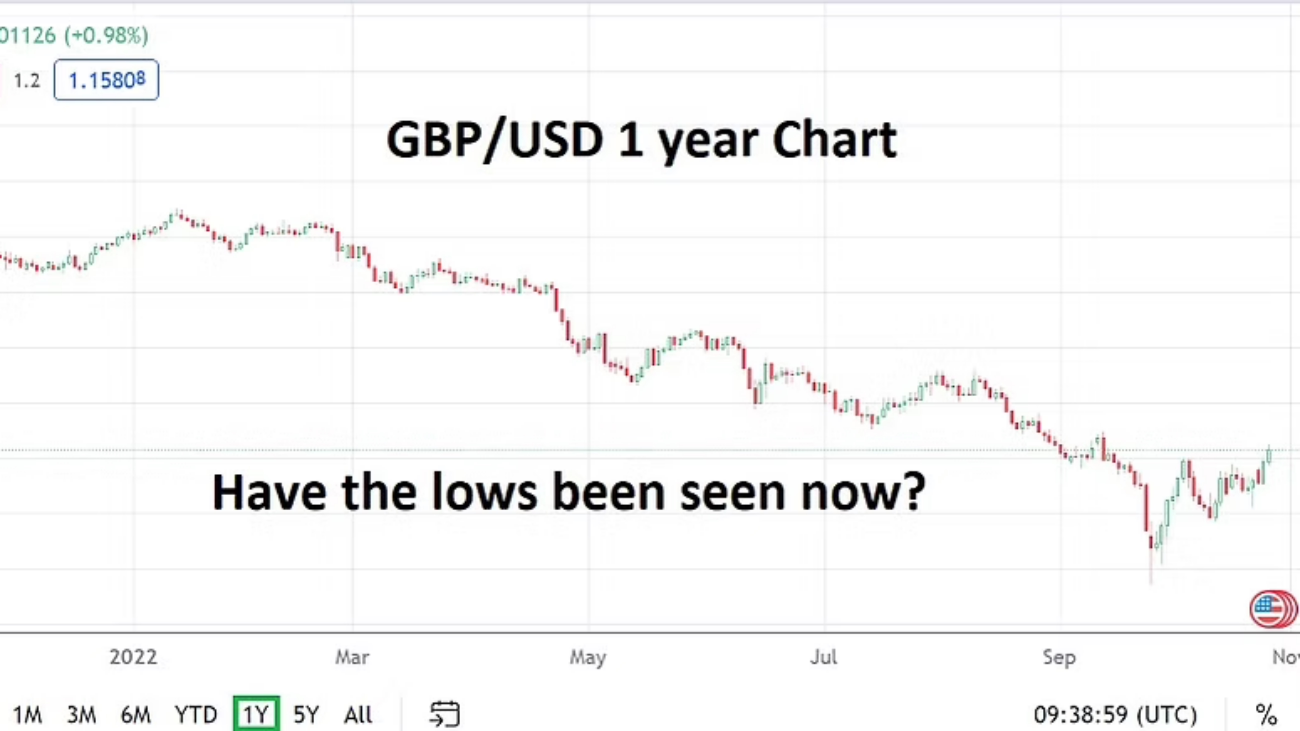
GBP/USD 1 Year Chart

If recessionary data continues to be exhibited in the U.S, the USD fundamentally could lessen its grip in Forex and allow other currencies begin to gain ground. The GBP/USD has been hit extremely hard – yes, this has had just as much to do with the political environment in the U.K which has resembled a three ring circus. The idea of tranquility within the U.K politically could help the GBP/USD move higher, the prospect of a less hawkish U.S Federal Reserve should help the British Pound also.

The EUR and JPY also may have the ability to gain within the EUR/USD and and USD/JPY as financial institutions begin to change their outlooks. Yes, the walls could crumble unexpectedly and another round of chaos could ensue which could cause a shockwave in Forex. However, if the U.S enters a recession which has to be officially recognized by the government and thus the Federal Reserve, the USD will be affected.

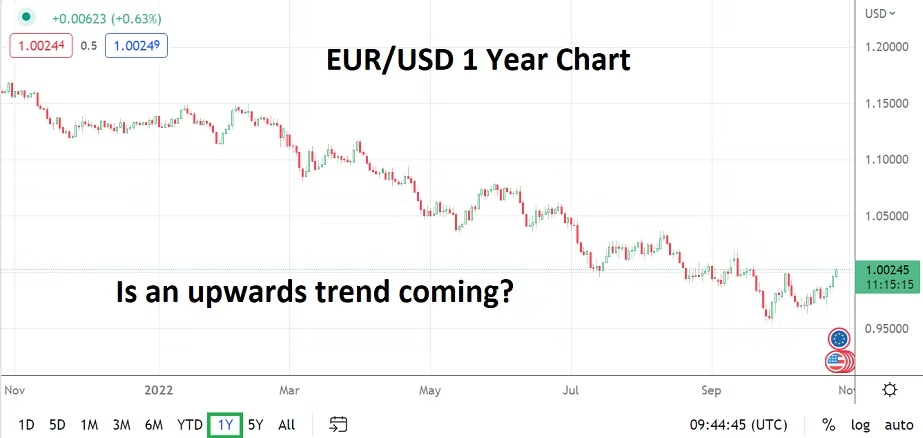
EUR/USD 1 Year Chart

This is not written to suggest a weaker USD will bring upon a great fix for the ailing global economic outlook mid-term. But it is certain that a weaker USD which trends in a bearish manner may be rather interesting to retail traders looking to gain an edge via Forex speculation. Equity indices may continue to struggle if corporations report weaker than expected earnings, but the downward trajectory in many stocks also means that PE ratios are becoming more realistic and a potential buying opportunity for long term investors. Warren Buffett can be your imaginary friend.

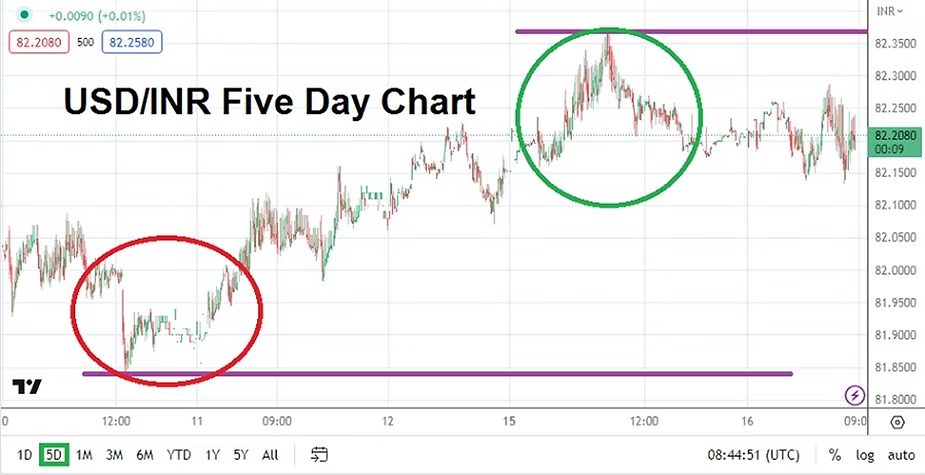
It has been a dynamic year of results in Forex as the USD has created stark trends with the USD/JPY, USD/ZAR, EUR/USD, GBP/USD and the USD/INR. Results in Forex and their volatility have created trading opportunities for speculators that have been likely better than wagering on cryptocurrencies; Bitcoin and Ethereum continue to stagnate and wait for the next great upheaval.

The past year has seen major equity indices suffer stark losses. Traders who have a constant bullish perspective because being positive is part of the human psychology have likely suffered if they have tried to be day traders via CFD’s of equity indices on the buy side constantly. Choppy conditions in the stock markets may continue for a while. Certainly in the long term many indices will rebound upwards, but buying individual stocks with leverage in anticipation that widespread bullish momentum is going to be a constant remains a nervous bet.

Forex via a USD pairing is beginning to look opportunistic for speculators. Picking the exact time a true solid reversal is going to become a constant is difficult and dangerous. There are no guarantees that we have seen the lows for the GBP, the EUR and JPY along with others currencies versus the USD, but if the U.S is truly going to have to admit recessionary pressures are taking hold, this may have an impact on inflation as demand decreases which the Fed would react to.

Things can wrong, more war breaking out, viruses bursting forth can be transmitted, political upheavals are a possibility in various locales, but from a risk reward perspective perhaps we are drawing to a close regarding the dominance the USD has shown the past year.

post7.1

Horror Show to Come for Bitcoin and MicroStrategy?

Horror Show to Come for Bitcoin and MicroStrategy?

How cruel do hedge funds want to be? Actually it isn’t about being cruel, it is about making money. And hedge funds have an opportunity they could be pursuing which will affect Bitcoin and MicroStrategy.

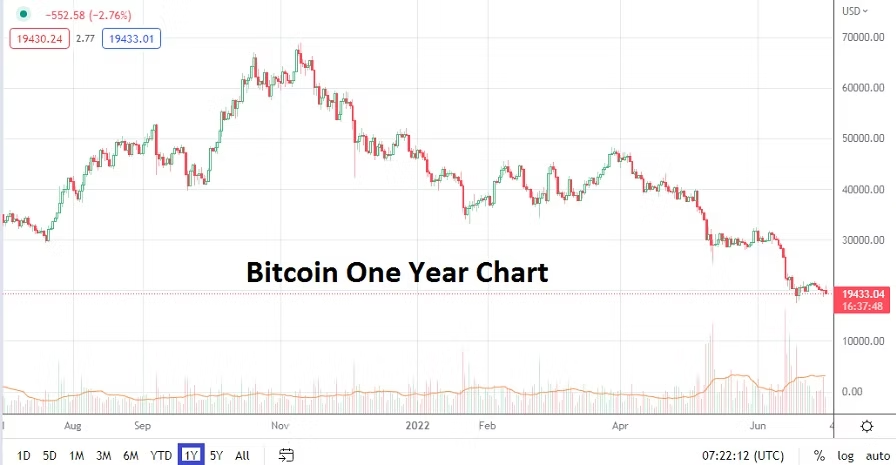
Bitcoin is traversing slightly above the 19,581.00 as of this writing. Michael Saylor, the CEO of MicroStrategy, announced a couple of days ago his company has bought 480 additional Bitcoin near an average price of 21,817.00.

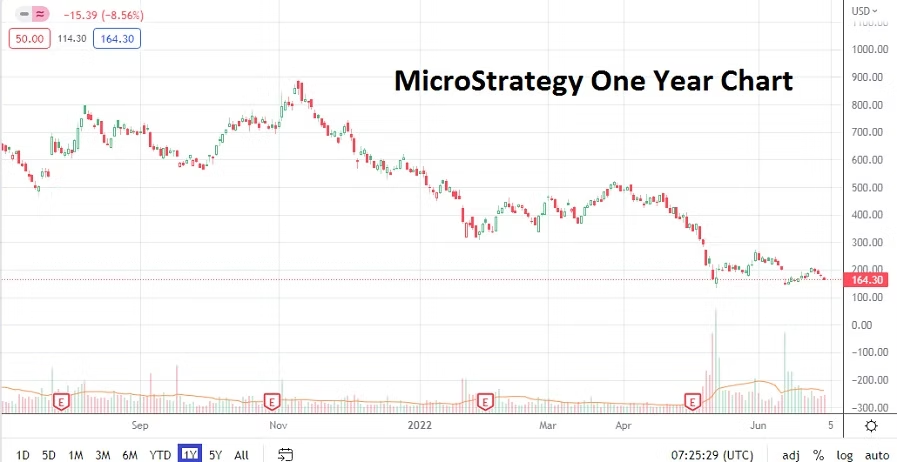
MicroStrategy is selling for around 164.30 via its listing on NASDAQ as of this morning. Because MicroStrategy holds 129,699 Bitcoin as of the 28th of June, the price of the company is certainly feeling the pressure of the bearish trend in Bitcoin. There is a direct correlation.

Now how can you take advantage of that? Well you may not be able to as an individual, unless you have plenty of money to wager on a massive speculation. However, hedge funds do have huge amounts of money to bet, and they potentially could be setting the table for a ‘bloodletting’ in Bitcoin and MicroStrategy which could equate into a massive payday for the hedge funds.

Let’s say some analyst for one of the hedge funds who is quantifying numbers as part of their job, and is looking for potential weaknesses in the current world of financial affairs takes a long look at Bitcoin and MicroStrategy and smells an opportunity. Let’s for a moment, consider the possibility that if the hedge fund believes Bitcoin can sink further and wants to short the digital asset it might be a good idea. Combine that with the notion that MicroStrategy is under pressure and could lose additional value if Bitcoin falls in price. This would set the table for a hedge fund to short both Bitcoin and MircoStrategy.

A combined short on BTC/USD and MicroStrategy is a potential huge payoff. The ability of knowing exact short positions on Bitcoin, also correlates into projections regarding MicroStrategy’s outlook. It is the equivalent of a daily double horse racing strategy.

Considering that the market capitalization of Bitcoin is around 373.6 billion USD at this moment around a price of 19,581.00 per coin, this is not a massive amount of money if a handful of hedge funds were to combine in the endeavor of seeking erosion of value in Bitcoin and MicroStrategy.

A reduction in price of Bitcoin also will likely lead to more capitulation among ancillary businesses related to the digital asset. There is a definite fear of contagion among decentralized finance enterprises and some are wobbling already, expect more carnage.

There are no guarantees in trading. Risk is aplenty. However, hedge funds can create much more force in the market and a combination of efforts to seek havoc is actually a healthy part of the marketplace. Hedge funds are able to take risks because they have a better ability to absorb pain for longer periods of time than a mere speculator.

Hedge funds seek weaknesses and strengths and take advantage of errors in the system. Bitcoin and MircroStrategy are vulnerable and together they could sink further.

post5

Silence Of Tether a Loud Warning in Crypto Trading World

Silence Of Tether a Loud Warning in Crypto Trading World

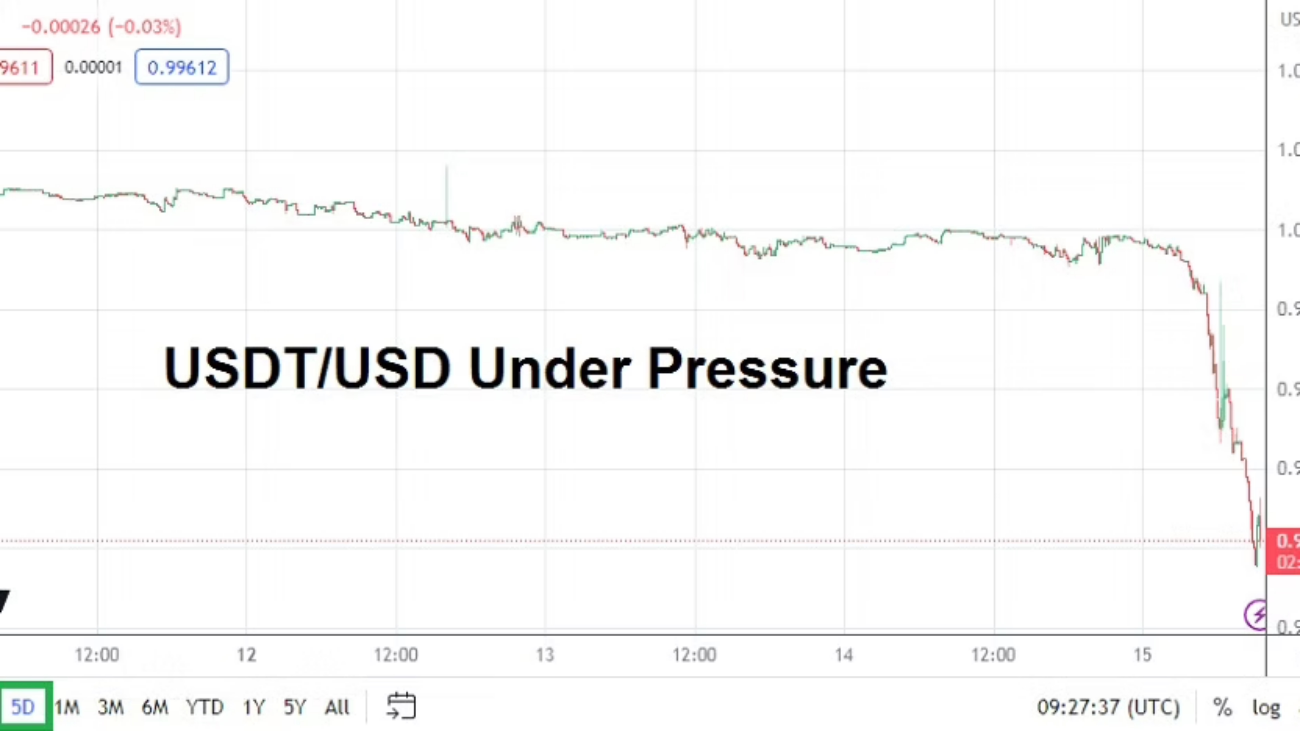
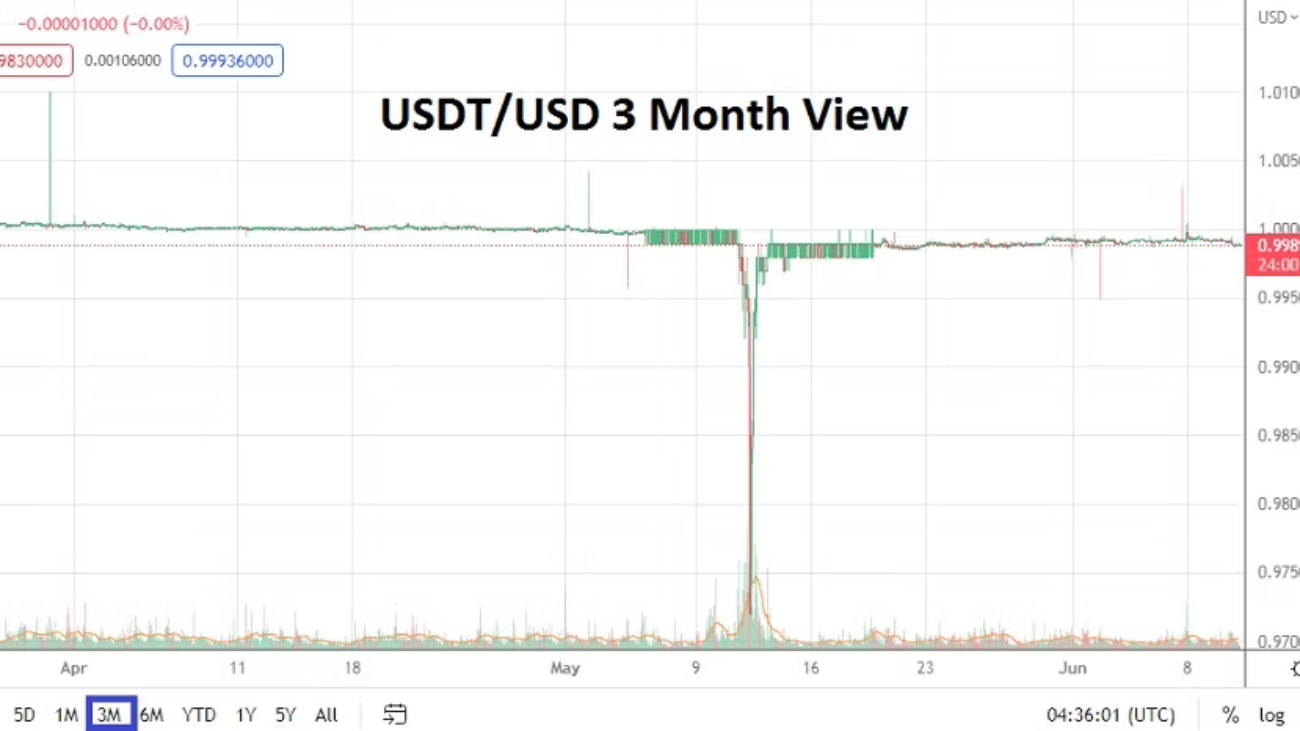
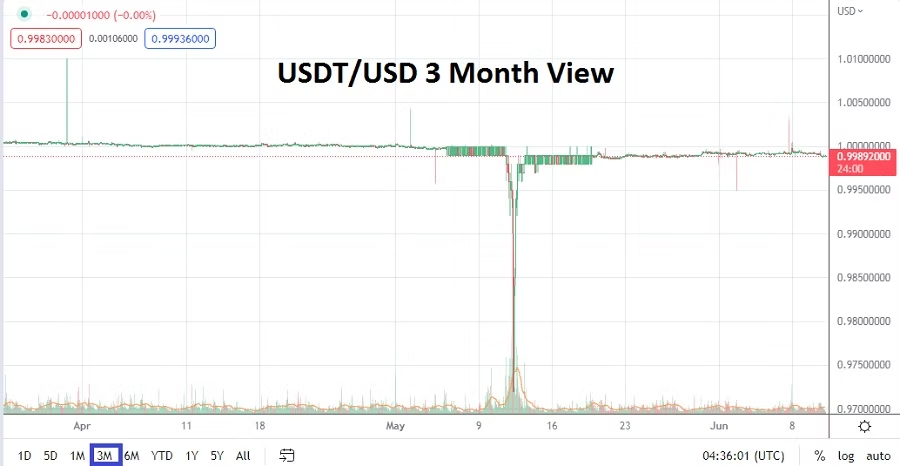
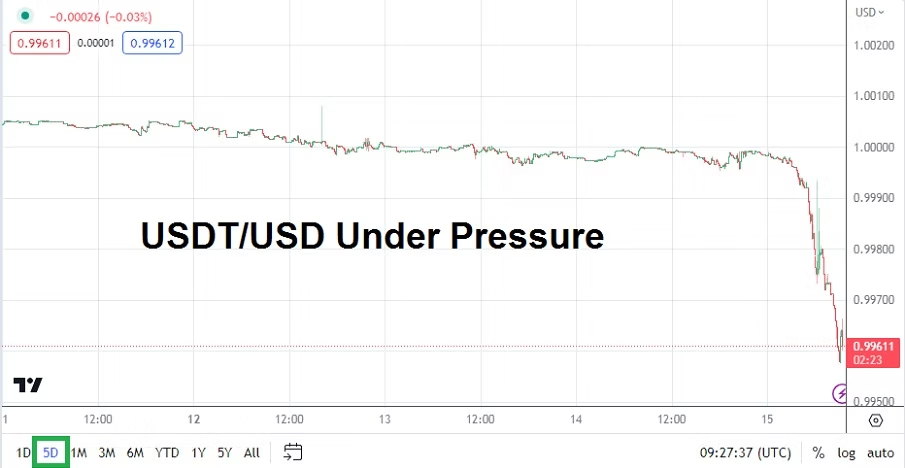
Tether continues to trade below its stated target value of 1.0000 via its stable coin ‘mandate’, and its failure to attain the target for nearly a month may be a loud warning.

Failure to Maintain 1.00000000 value in Tether

USDT/USD is trading near 0.99892000 via a Coinbase quote as of this writing. The last time Tether traded above the 1.0000 level in a sustained manner was in the last week of April. Since the destruction of TerraUSD, USDT/USD has not attained its objective as a stable coin in a month and a half.

One of the Tether functions in the cryptocurrency world is to facilitate transactions for digital asset businesses. If a tech firm, for instance, were to initiate an investment for a project in the crypto world, they might ask for the equivalent of 1 million USD. This transaction via the funding in the investment is often paid for via a stable coin. Tether is a mainstay of these investment deals.

Receiving Tether allows the business taking in the stable coin investments, to ‘know’ they hold what is supposed to be a nearly exact USD based exchange rate, if they decide to cash in their Tether if they need dollars to pay bills. The problem for USDT/USD currently is that the exchange rate is not meeting this need and expectation.

Yes, a crypto based business could say, ‘well, we know the rate is now 99 cents on the dollar, so we need to ask for more Tether to make sure we get the equivalent of our investment asking price in USD’. OK, good enough, but this creates complications that are unwanted.

The silence of Tether not trading at 1.000 speaks about a much more problematic possibility in the cryptocurrency world. What if USDT/USD is actually starting to show signs of fatigue? What if USDT/USD continues to incrementally lose a little bit of its value moving forward?

Where have the Speculators Gone?

Is it possible there are large speculative funds betting against Tether and shorting the stable coin with the belief it will continue to lose value? If funds are wagering against Tether and have the fortitude to maintain long term selling positions against USDT/USD, they could trigger big problems down the road if they are proven correct.

The cryptocurrency world is showing massive signs that speculators are not participating. While Bitcoin has been able to maintain some semblance of value, BTC/USD is still stumbling near lows and has not been able to create a large reversal higher. Bitcoin is struggling during this prolonged bearish trend. The mantra that cryptocurrencies are a hedge against inflation has proven brazenly false.

Even worse is that most of the other cryptos are struggling too. Ethereum continues to test lower values. As of this writing ETH/USD is near the 1674.00 ratio. Technical support levels are faltering and there appears to be no momentous wave of speculative zeal flourishing which is looking to buy into the digital asset world on the notion that cryptos are oversold. Cardano, Avalanche, Solana, Polkadot and Ripple are all struggling via their coins.

HODL mantra, Corporate Treasury and Hedge Funds

If speculators really have gone away, this leaves the folks who are die hard supporters known as HODL’ers (Hold on for Dear Life). It also leaves intriguingly major companies who have purchased some digital assets such as Bitcoin and cryptos such as Ethereum as ‘assets’ within their corporate treasury structures. There are also hedge fund companies that are holding cryptos as speculative investments. What if corporate treasury suddenly gets scared and decides to cash out of the digital asset world? Will the directors of MicroStrategy and Tesla get nervous and force sales of their digital asset holdings? Michael Saylor has repeatedly said no and that he will keep buying Bitcoin for MicroStrategy.

The lack of a rise in cryptocurrencies during this long bearish trend, and the notion that no massive reversal has been demonstrated during the large erosion of value the past two months is a potentially negative bad sign. Critical technical support levels have been tested repeatedly and their penetration lower is a loud screaming sign that something is going wrong from a short term speculative point of view. It doesn’t appear that we have reached the end of the downturn in cryptocurrencies yet.

If some deep pocketed folks are betting against Tether as a stable coin and believe its value will continue to dwindle without a fight upwards, the silence of USDT/USD recently in the digital asset world may prove to be vicious signal that worse is going to come for cryptos in the coming months.

Cryptocurrencies remain speculating. No matter what some folks say, digital assets over the long haul still have a questionable future via utilitarian capabilities and as their technology evolves. Corporate treasury and hedge funds who ‘invest’ in digital assets are speculating and they may pay a heavy price if they bet on the wrong direction.

The inability of USDT/USD to move back towards its 1.000 value is troubling. If speculators stay on the sidelines and do not participate in cryptos, corporations and hedge funds holding digital assets may be forced to start capitulating . Meaning they may start to sell. If directors of companies and speculative hedge funds start to get nervous about the long term outlook for Bitcoin, and Tether continues to loss value while it proclaims it is a stable coin – then darker days will come.

post4

Words Matter in the Financial World and Noise is Dangerous

Words Matter in the Financial World and Noise is Dangerous

As the financial markets trade in a nervous fashion the amount of ‘noise’ that traders must deal with has increased.

Markets Remain Jittery and Day Traders Pay the Price

The financial markets remain in a nervous state, and this is seen every day via the results from the major equity indices which continue to traverse within the framework of a threatening and potential bear market. Many new traders have not dealt with serious downturns in the financial markets before. Because human instinct is almost always positive, many speculators who participate in the markets tend to be buyers.

However in the past handful of months, many day traders who have been buyers have certainly found a difficult trading environment. Whether they are trying to pursue long positions in equity indices or cryptocurrencies, the speculative landscape has likely cost day traders money and produced trading accounts are negative, or worse simply have been closed.

U.S Federal Reserve Not Making Things Easy

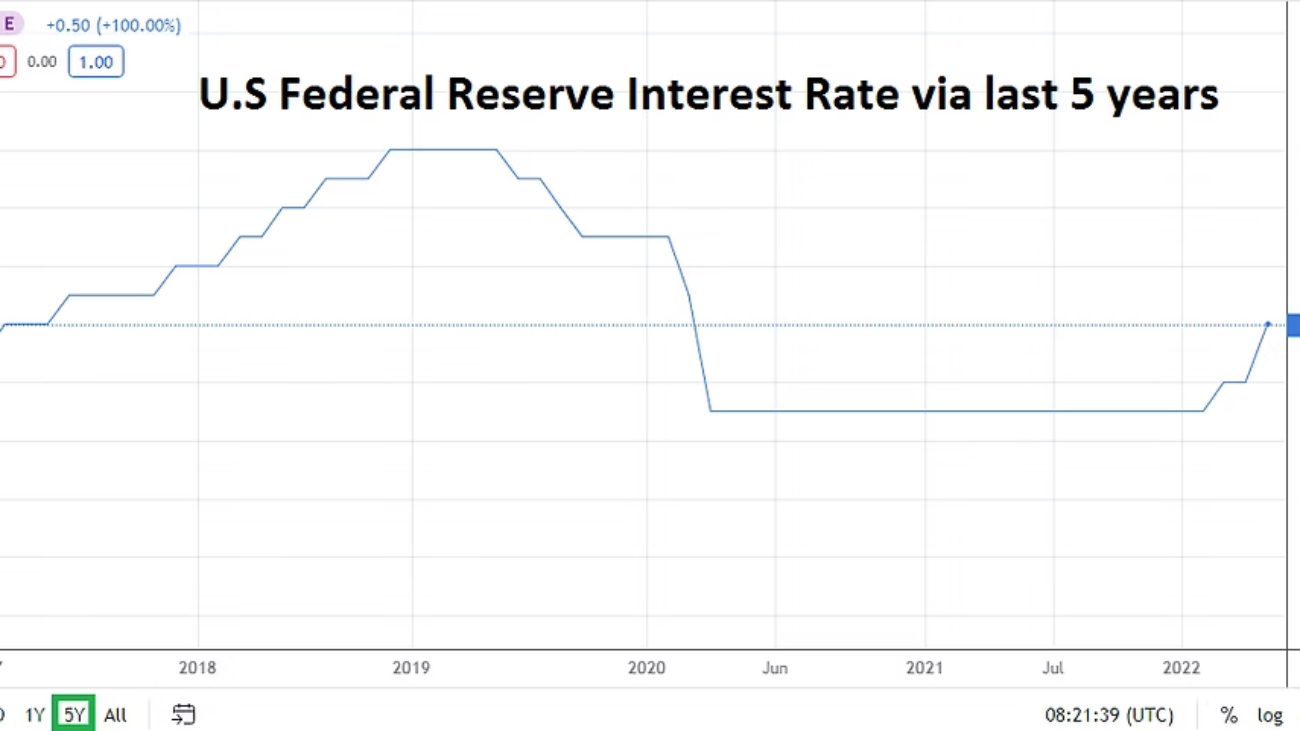
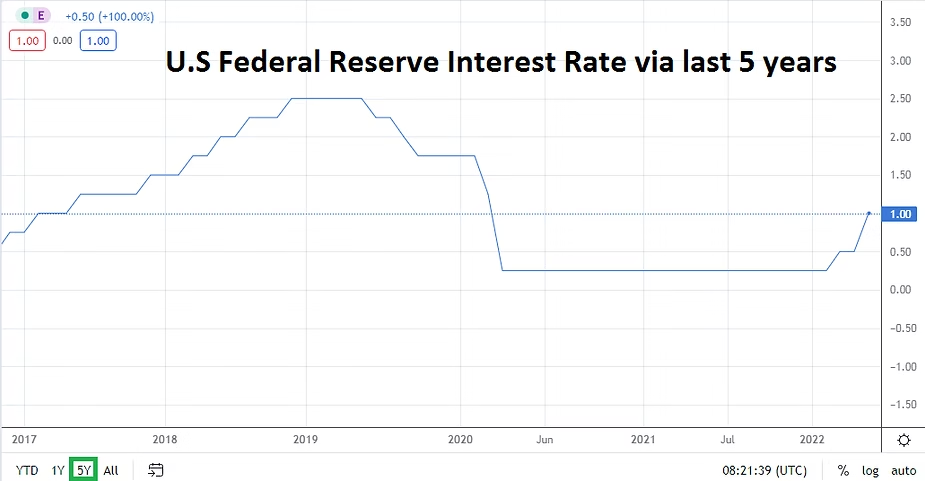
The broad financial markets are likely to remain nervous in the coming months. The U.S Federal Reserve has a major interest rate announcement which will be delivered in the middle of June, and another rate hike of 0.50% is expected. What has the financial world nervous is not the anticipated interest rate hike which has already been digested into the marketplace, but what the Fed will say regarding their outlook regarding additional rate hikes in the summer. The reason why this is unclear is because the economic landscape remains cloudy and hotly debated.

The Federal Reserve has not helped investors because they have largely misread the economic landscape and caused problems because of past statements. Last year the Fed insisted inflation was transitory, meaning that it would soon diminish, this obviously did not happen. Now the best the Fed can do is to hope that inflation becomes less strong and that disinflation occurs. Meaning the U.S central bank is simply hoping it can decrease the rate of inflation.

Words matter in this trading landscape for investors because the Federal Reserve’s policy has not exactly been met with popular fanfare. Many market participants feel that the Fed has pursued bad economic policy and that they have reacted slowly to data which was abundantly clear regarding supply problems, and the rising cost of production due to climbs in energy prices.

The Biden Administration and Energy Costs

While some in the Biden administration try to point the finger at the Ukrainian war with Russia as the culprit. Most people are not that naïve. Energy prices were on the rise before the war and it can be seen that the bullish trend in the price of crude oil has existed since the Biden administration took power.

President Biden during his recent trip to Japan spoke about inflation caused by rising energy prices that were in ‘transition’. He made it clear that rising energy prices in the U.S are happening because the U.S is following a green environment policy and that the shift in regulatory mandates is driving the costs of energy higher. This combined with the Federal Reserve’s frequent talk about inflation and its desire to raise interest rates has made for a dangerous combination.

Noise will remain at a High Volume

Inflation may come down in the coming months. Demand for certain commodities may erode to some extent. However the cost of energy is probably going to remain high throughout the summer. The additional shadow of mid-term elections in the U.S and the potential for a shift in power in the U.S Congress are going to affect nervous sentiment among financial institutions in the coming months leading right up to November.

Traders need to prepare for noise which will come from pundits as they express their opinions. Speculators who are day traders also have to take into consideration that their short term goals are in direct opposition to that of long term financial institutions. The difference in trading outlooks and monetary capabilities make this a difficult environment for day traders in the current market conditions.

Following short term trends for day traders based on behavioral sentiment is viable. Technical charts can be used to gather short term evidence, but this will not stop the constant threat of reversals and spikes in price velocity from suddenly gathering power and creating momentary bedlam.

Eliminating the noise generating from pundits who can walk away from their statements without any consequences is a must. Unfortunately the comments coming from the Federal Reserve and White House are often hard to ignore and cause reactions in the marketplace; because their words matter even if they sometimes seem to forget what they have said in the past.