SouthAfrican Rand 20260520

South Africa Outsider: Thoughts on the Rand and Guest Observations

USD/ZAR Considerations as Water Flows and Political Concerns are Compared

As a guest of South Africa (because of a personal relationship) and having been coming here frequently during the past four plus years it is easy to love the nation. Early last week a severe storm which brought high winds and plenty of rain hit a lot of the Western Cape knocking out electricity and water in a variety of towns. Having experienced hurricanes in the past, the wind was not quite comparable, but the consistency of the gusts over two days caused major damage.

Electricity and water have been restored to most people now. Wifi remains a problem for some, but folks are surviving. The damage to homes, infrastructure in towns and agriculture will keep individuals busy for a while. However, the Western Cape because of good political leadership and the stoic mannerisms of the people have worked together to move forward. So what does this all have to do with the South African Rand?
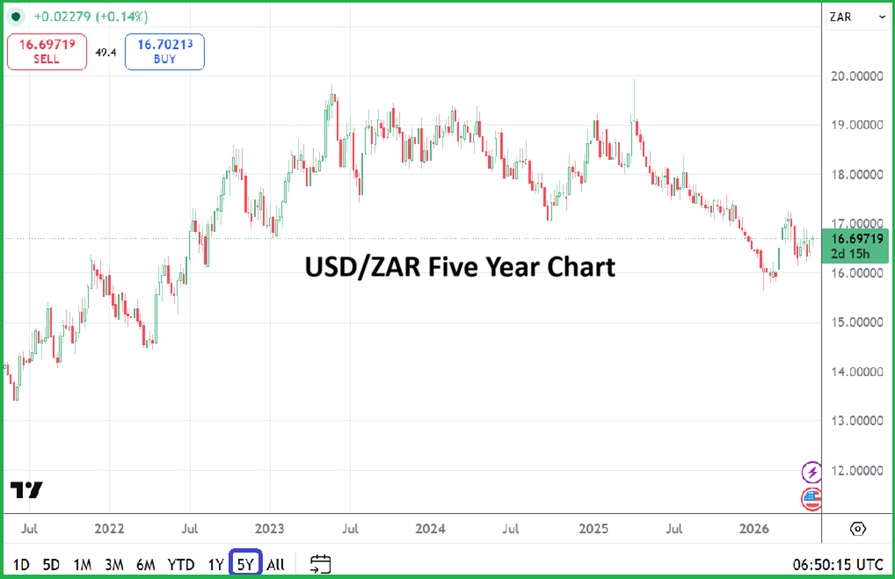
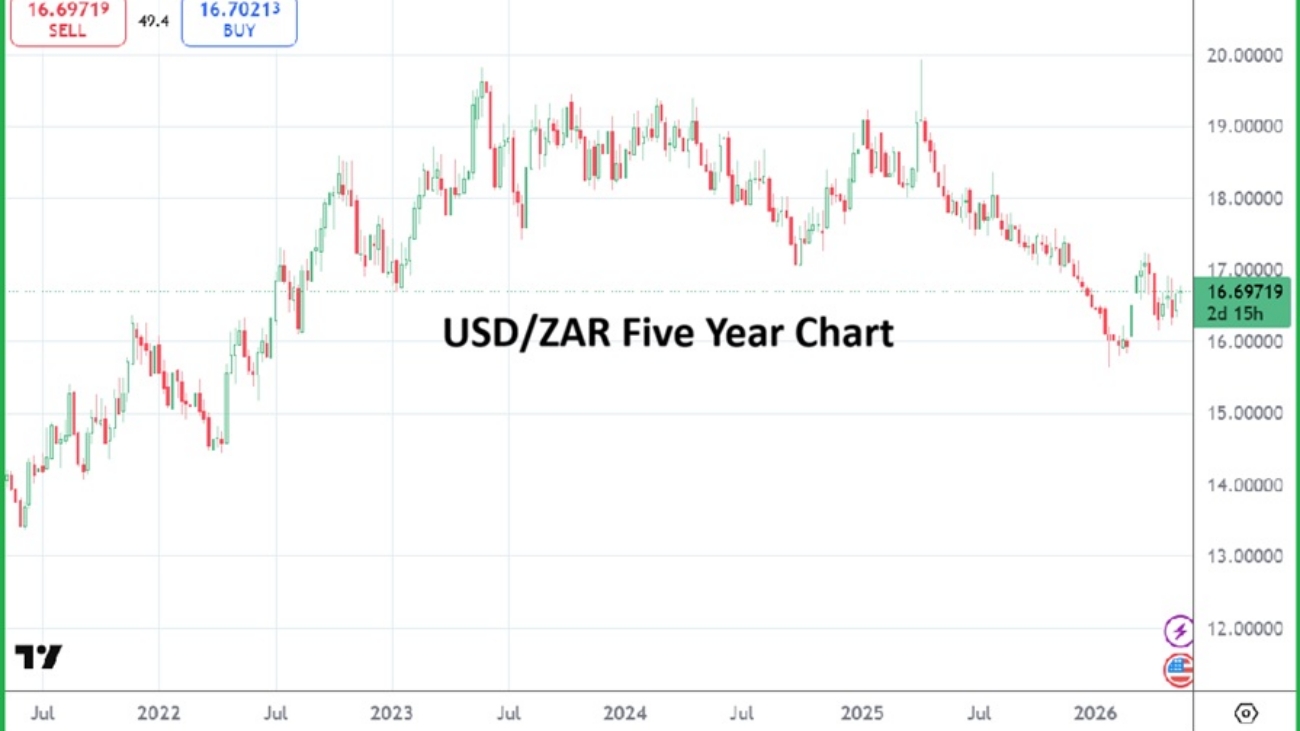
USD/ZAR Five Year Chart as of 20th May 2026

The USD/ZAR is traversing within a higher price realm since the start of March because of the Iranian conflict. The currency pair flirted with depths below 16.00000 in the middle of February. The value of the USD/ZAR at this time is close to 16.70000 depending on bids and asks. The Rand is correlating to the broad Forex market as USD centric strength has emerged recently, this as U.S 10 Year Treasury yields increase and threaten to become sustained. The U.S Federal Reserve is suddenly dealing with threats of inflation becoming sticky over the mid-term because of escalating energy costs. The U.S has plenty of WTI Crude Oil, but nations which had counted on energy from the Middle East are suddenly U.S customers and increased demand is going to cause WTI to remain elevated until the Iranian situation resolves. 

The USD/ZAR was in a bearish trend since early August 2025 when values were above 18.00000. The highs in early August of last year were caused by concerns the U.S White House sparked because of tariffs. South Africa is still facing tirades from the Trump administration about some policies being practiced in South Africa, but financial institutions have looked elsewhere regarding impetus for the Rand and its correlation to global Forex is the chief influencer.

While South Africa and its people and culture are easy to embrace, there are issues that remain problematic in the nation. Politics around the world often appear to be a complex myriad because certain people and partisanship are transfixed on power. Corruption globally is an issue in many nations that causes not only fiscal problems but inflation. South Africa suffers from these complications too. These matters can only be fixed with transparency and patience, and importantly – for citizens to demand better. 

Politically the current coalition government on the surface appears to be working. Yet, the potential for fractures to grow over the next handful of months as municipal elections approach –  the Johannesburg mayoral and city council results will prove fascinating, will be crucial for South Africa. Johannesburg has been facing a water supply crisis for a while and its consequences are a stark contrast to the Western Cape’s ability to repair and replace infrastructure in a matter of days after the recent storm.

The USD/ZAR is likely to correlate to USD centric price action near and mid-term, but there is a chance heightened political rhetoric and voting outcomes in a handful of months could shift impetus for a short while. Higher energy costs in South Africa now and into the mid-term will cause inflation. Food costs do appear to be incrementally rising in supermarkets. 

Yes, gold and platinum values will be looked at by some analysts and pointed to as reasons for the stronger South African Rand, and this influence may be real – to a degree. However for the moment, the USD/ZAR remains transfixed within the lower realms of its long-term price range mostly because the coalition government here is viewed positively, and the USD was weaker globally. 

The U.S Fed does have inflation concerns arising. As much as President Trump would like the new Fed Chairman, Kevin Warsh, to be dovish the reality for the U.S central bank and financial institutions judging outlooks lacks clarity for the moment. Sideways choppy price action in Forex and for the USD/ZAR may prevail in the coming days and weeks. And if the Iranian situation grows more boisterous, USD centric strength could grow.
Copy and paste the text from AMT that you want to share

postN24

Interest Rates, Fireworks, OPEC, Fed Minutes, and Jobs Data

Interest Rates, Fireworks, OPEC, Fed Minutes, and Jobs Data

Global day traders will certainly be able to work early this week, but they should note the 4th of July holiday in the U.S will deliver rather light volumes Monday and Tuesday. Markets in the U.S will be open on the 3rd, but speculators need to understand that price action may be flat and then experience sudden bursts of energy. Financial institutions in the U.S could be rather quiet until Wednesday.

Monday, the 3rd of July, European Manufacturing PMI – data will come from across Europe and is expected to show the sector remains rather lackluster. France, Germany, the U.K and others will issue reports.

Monday, the 3rd of July, U.S Manufacturing PMI via the ISM – the Purchasing Managers Index numbers are expected to produce a slight rise, but remain under the level of 50. However, any increase compared to last month’s outcome will be an additional sign the U.S economy is battling on and would give the U.S Federal Reserve another reason to lean towards an interest rate hike later this month.

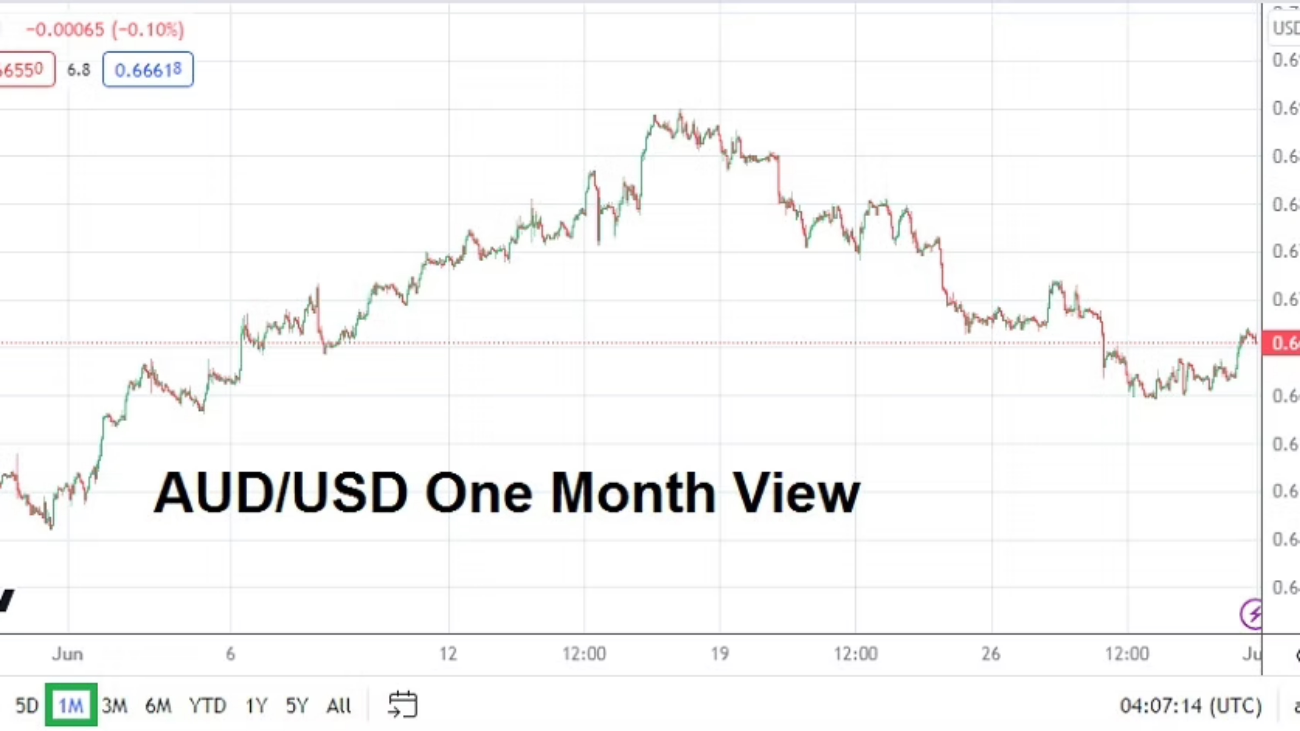
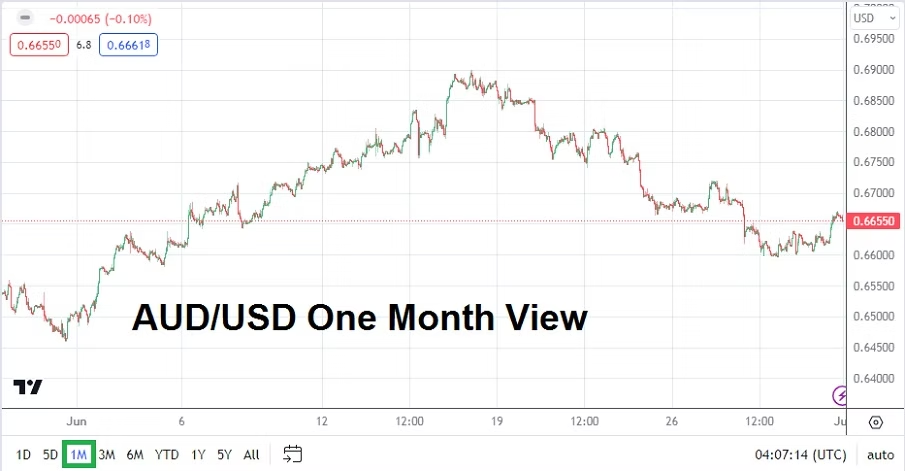
AUD/USD One Month Chart as of 2nd July 2023

Tuesday, the 4th of July, Australia RBA Cash Rate and Statement – while some analysts assume no interest rate hike will be delivered in July because the CPI has shown a slight downturn, there seems to be rather large whispers another hike of 0.25% could be added from the Reserve Bank of Australia. AUD/USD traders certainly need to pay attention, and folks with limited funds should stay on the sidelines until the decision is released.

Tuesday, the 4th of July, U.S Independence Day – banking holiday.

Wednesday, the 5th of July, China Caixin Services PMI – economic data from China has certainly shown signs of downward pressure. A slight decrease is the expected result.

Wednesday, 5th of July, OPEC Meetings – the energy cartel will be conducting its official get together in Vienna, Austria and oil traders should be on alert for any news and decisions made public that could affect the energy sector.

Wednesday, 5th of July, U.S FOMC Meeting Minutes – the publication will provide insights into the Federal Reserve’s decision to ‘pause’ interest rate hikes last month, but could also add fuel to the notion the U.S central bank remains within an aggressive stance regarding inflation. Forex markets will react to the report.

Thursday, 6th of July, U.S Services PMI via ISM – the statistics will be monitored closely due to the rather positive outcome from the GDP report last week, which showed the U.S economy remains rather resilient. A positive outcome in the Services numbers will add further evidence for the Federal Reserve to remain hawkish.

Friday, 7th of July, U.S Jobs Numbers – the employment data will culminate as the week comes to an end with the Non-Farm Employment Change and Average Hourly Earnings figures. Yes, on the day before, Thursday, traders will also see the JOLTS numbers and weekly Unemployment Claims. However, it is the Non-Farm and wages data that financial institutions will largely react upon depending on the outcomes. Because it is a ‘holiday’ week in the U.S, the reports may find a muted response, but financial institutions will use the information to gauge their mid-term outlooks and position their assets including Forex and bonds.

post25.1

Forex, Interest Rates, the Fed and Conspiracy Politics

Forex, Interest Rates, the Fed and Conspiracy Politics

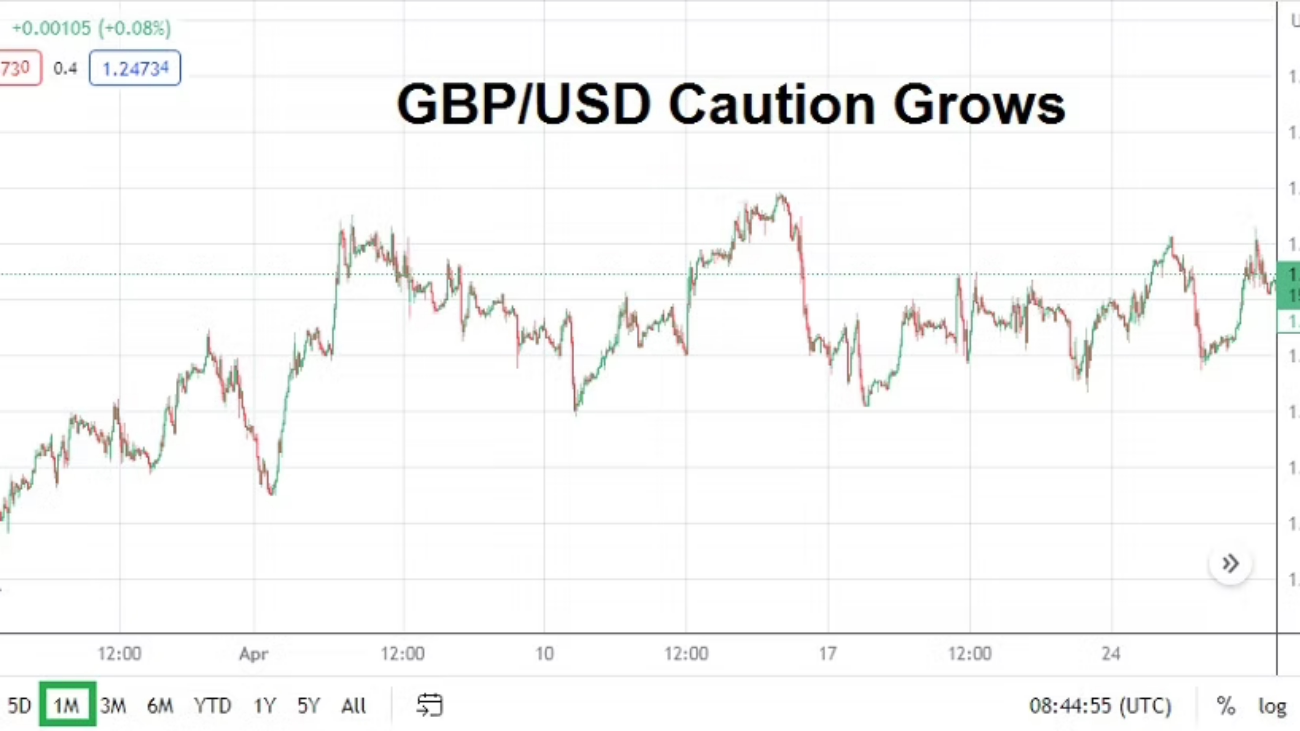
If you have been looking for road signs regarding what the U.S Federal Reserve is going to do next week and trying to get a feel for its rhetoric which will be delivered in the FOMC Statement on the 3rd of May, this week’s U.S data outcomes should be monitored. And as of now the data might be suggesting the Fed will remain aggressive in June.

GBP/USD One Month Chart

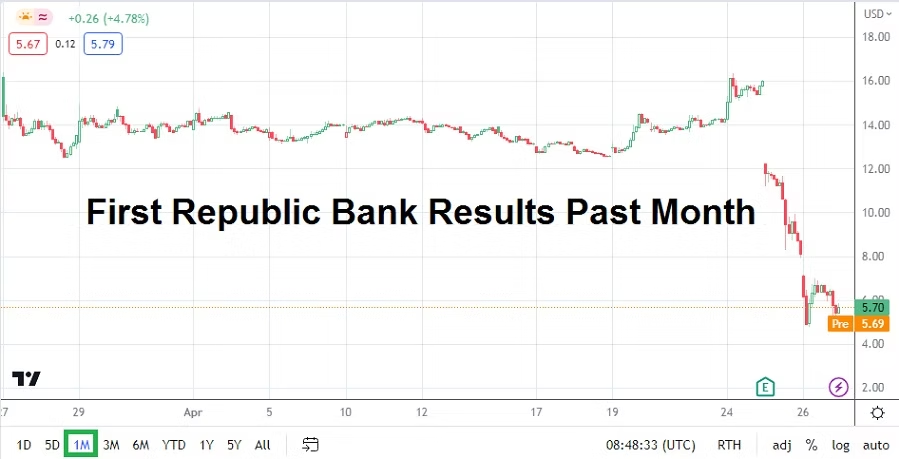
A Fed Funds Rate hike is going to happen on the 3rd of May unless there is a financial catastrophe that suddenly emerges that is nearly cataclysmic. While First Republic Bank wobbling is certainly a problem (Mark Zuckerberg is supposedly a rather large client of the bank), if this entity fails completely it may not cause massive bedlam. The stock has dropped violently, so a collapse should not be a surprise. No, it will not be welcome, but it should not be an unexpected calamity.

The question is how much the U.S government will protect depositors? The large clients who are not insured above the standard 250k USD ratio will want the same benefits that clients of Silicon Valley Bank received in March. Should they be rewarded the same way? The American public may not like the idea of another bailout for the deep pocketed, but there may not be much they can do about it, except to vote the politicians out, but who do you exactly punish?

First Republic Bank – One Month Chart as of 27th April 2023

What a collapse of First Republic Bank will do is hurt the corporate bond sector in banking again, because it is likely holders of these bonds will be put at the back of the line once again if the U.S government decides to protect big depositors of millions of dollars like Zuckerberg, before it protects bond holders.

U.S Data in Focus and the Allure of a Black Dress with Growth

But I digress, yesterday’s Core Durable Goods Orders statistics came in better than expected. Today Advance GDP will come from the U.S and if this number produces an increase instead of a downturn, the U.S Federal Reserve will have more ammunition to remain aggressive regarding interest rate hike rhetoric. An increase of 0.25% has been calculated into Forex for next week. The USD has done rather well recently, but what is of intrigue is the perception the USD is doing well after the financial markets have seemingly priced in a rate hike on the 3rd of May. Meaning, typically the USD would have started to ebb a bit lower after financial houses put their interest rate outlook into their Forex positions. Yesterday’s better than expected Core Durable Goods Orders leaves the door open for another hike on June the 14th to be precise.

While Core Durable Goods Orders isn’t a sexy statistic, GDP numbers frequently are, and if the growth numbers show up with a stunning black dress on with alluring ‘expansion’ it could send large speculators into a tizzy and make them believe the Fed could increase by another quarter of a point in June. The Fed during its FOMC Statement next week will certainly try to help financial institutions anticipate outlook. The Fed doesn’t need to hold the hand of investors, but it often treats them like children.

Financial houses had largely believed the Fed would hike in May and might raise in June. The notion that a June increase is certain would then put the focus back on the long-term again, and Forex could then break free of its rather consolidated incremental USD strength seen the past couple of weeks. Inflation remains a drum beat that is steady. And while today’s GDP numbers will be important. Tomorrow PCE inflation statistics will be the final nail in the coffin. If growth is stronger than expected today, and inflation numbers remain stubborn tomorrow, the Fed would certainly consider another June increase valid.

On the bright side for day traders is that the cautious choppy air which has circulated the past couple of weeks in Forex is almost done. While steady trends may not reappear for a while, at least near-term outlook will have more clarity by this time next week.

Big Institutions Have Long Term Outlooks and Treat Trading Conditions Differently

Long term outlook is another game as day traders should know and one they cannot easily participate. Long term investors have the money to specialize in assets which are not expecting profits today, but instead have a larger time frame for making money. Deep pockets, patience and the need for less leverage help financial institutions trade in a more stable manner, frequently putting the ‘odds’ in their favor.

The price of Crude Oil is actually behaving politely in recent trading, and its ability to find a mid 70.00’s USD price range is interesting and may help inflation move lower if it can be sustained. If supply of goods can adequately stabilize and global logistics costs come down, inflation could decrease. These factors are part of the long term perspective of financial institutions. Day traders may want to consider this because it could affect behavioral sentiment moving forward.

Higher interest rates from the Fed are causing other currencies to loss value and this has caused increased costs for international manufacturing companies located outside the U.S which frequently have to buy commodities in USD from their converted domestic currencies, this causes inflation. This is a factor not spoken about enough and traders need to consider this within their perspectives too.

The Fed and Perhaps a Conspiracy Theory

If the Fed actually starts to decrease its interest rates, it would help other currencies stabilize. And yes, if the Fed stops increasing interest rates it may actually help weaken global inflation. The Fed has caused import inflation to occur into the U.S. Are they aware of that? It is a good question. The likelihood is a yes, and it has been disregarded, but why? Perhaps there is another reason; does the U.S Fed and U.S government want to cause inflation globally to strike politically at some competitors? This is a different topic………kind of. Conspiracy theory.

While insight regarding the dialogues between the Federal Reserve and U.S government is certainly above my pay grade, one has to wonder about considerations regarding inflation and a stronger USD and its potential effect on China. The Fed increases may be a way of trying to inflict harm economically and in a subtle manner, but this cannot be proven. Perhaps the Fed is unaware of the global conflict being waged.

On another note, Gold remains near 2000.00 an ounce – almost steadily, displaying a certain amount of cautious behavior.

Gold One Month Chart

post17

Angry Voters and the Federal Reserve

Angry Voters and the Federal Reserve

Federal Reserve Chairman Jerome Powell is scheduled to testify before the U.S Senate tomorrow. Certainly we are going to hear the words inflation and growth mentioned, this as the Fed Chairman speaks about monetary policy and the trajectory for the U.S central bank to continue raising interest rates over the mid-term.

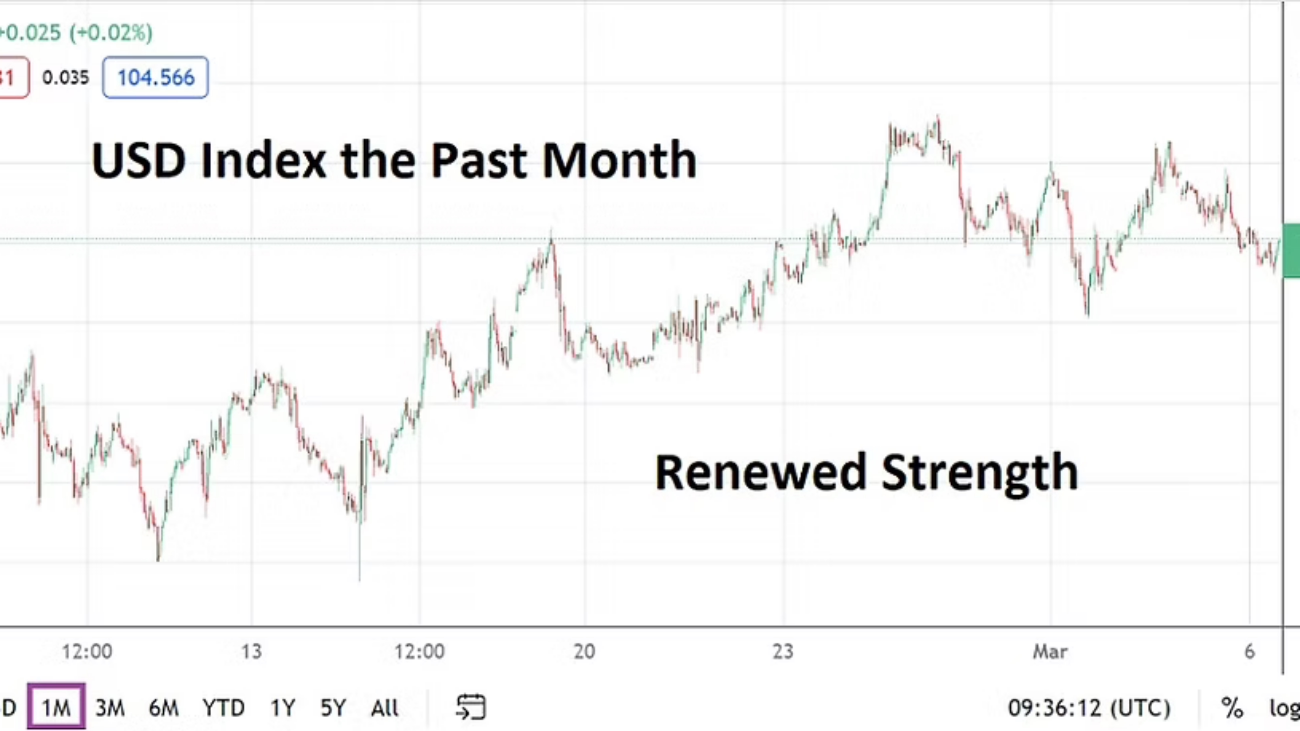
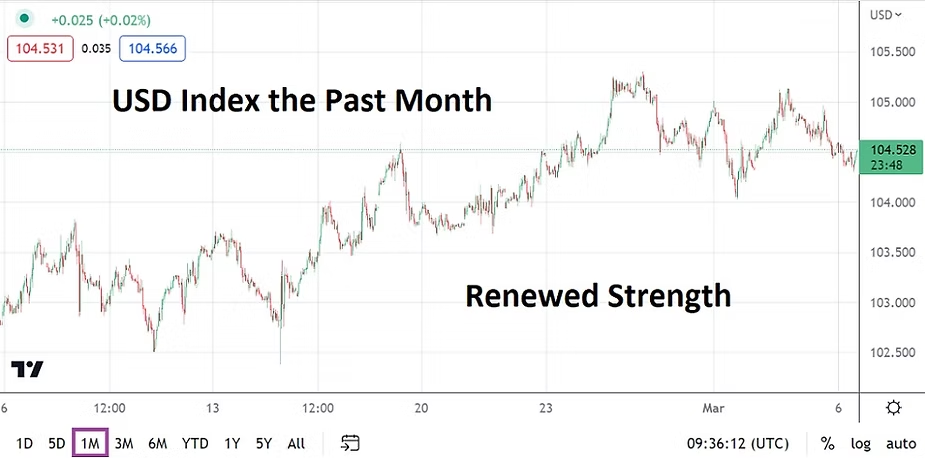
Via prices in the Forex market since the start of February, financial houses have likely priced in two additional interest rate hikes from the U.S central bank into the USD, one of them being a quarter of a point increase coming on the 22nd of March. The USD has been mostly stronger across the board the past four weeks. This week’s coming Non-Farm Employment Change numbers and Average Hourly Earnings data results should be monitored on Friday.

USD Index One Month Chart

While financial houses may have accepted the interest rates to come, this doesn’t change the rather complex economic data in the U.S which is demonstrating rather stubborn inflation, while also showing growth is not slowing down as much as has been anticipated. GDP numbers reported recently from the States showed only a slight decrease.

  • How much more can the U.S Federal Reserve increase interest rates over the next six months without making the USD too strong?

  • At what point will the Fed become less aggressive?

  • While an additional .50% has been ‘accepted’ by financial institutions, will the Fed bring the lending rate to 5.50%?

  • High inflation and limited growth could result in political quicksand for many elected officials.

The U.S Federal Reserve is going to get pressure from both sides of the aisle in Washington D.C.. Traders should not discount their perceptions that elected officials are starting to consider the ramifications of the coming elections in a year and half, because this will affect behavioral sentiment in the markets. Neither Democrats or Republicans will be happy if inflation remains a problem going into the vote. Rising costs equal less money in the bank accounts of American voters.

The U.S public has a history of voting via sentiment generated from their wallets and the power to consume. Prices that feel like they are out of control will win no friends. While energy prices seem to have calmed down in the headlines, energy costs remain a risk and concern for manufacturers worldwide. The inability to save money for individuals, and lack of profits for corporations makes for potentially angry voting results.

There is an additional problem lurking. The strong USD driven by the Federal Reserve’s increased borrowing costs, the Federal Funds Rate, has weakened currencies across the world. Vulnerable currencies have spurred inflation in many nations which are producers of goods that global consumers buy, these rising prices are being imported into the U.S economy.

As much as international economic integration helps the world, the rise of coronavirus and its knock-on affects via costs were not anticipated enough, causing weaknesses to be exposed. The U.S attempted to save its skin economically by creating a massive amount of stimulus, which certainly fueled domestic inflation. The U.S might have saved the American public in the short-term, but the government faces a long climb upwards to fix the problems overspending has caused.

The rising costs of logistics and the spotty supply of commodities internationally generated higher prices in the aftermath of coronavirus. Commodity prices have become more tranquil, but the costs of production has not eased because weaker currencies globally are hurting producers who need to use the USD to purchase resources. The U.S Federal Reserve’s attempt to tackle inflation with higher interest rates, has fueled ‘import’ inflation. This is not an easy problem to solve.

The Fed will not say in public they want the U.S economy to slow down, this acknowledgement would costs jobs which rely on political backing. The White House certainly doesn’t want the economy to suffer as it prepares for an election within a year and a half, but quietly officials likely accept slower growth and perhaps recession may become inevitable. Both the Fed and elected officials are performing a delicate dance that may be interrupted any moment.

The Fed doesn’t want us to remember they said inflation would prove transitory almost two years ago. The Fed needs to fight rising costs certainly, but very carefully. The desire to weaken inflation is correct but a dangerous balancing act, because the USD remains the global reserve currency.

post11.2

Nervous about the Markets, You’re not Alone

Nervous about the Markets, You're not Alone

U.K political chaos turning into clarity or further madness? Mid-term elections coming in the U.S about to deliver change? More turmoil in Brazil? What could go wrong?

So you are nervous about the global markets. You are thinking about the possibility of putting cash under your mattress. Perhaps closing your equity positions and just being a spectator for the next year, well, you are not alone. It doesn’t mean you are right however, and you may want to proceed with caution before your let paranoia guide your decisions.

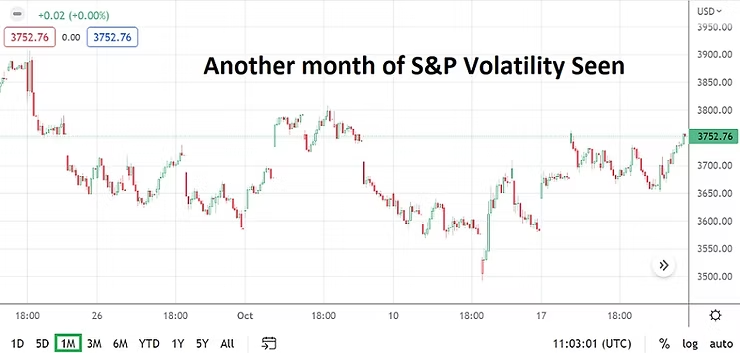
Past month of results from S&P 500

Global markets have faced perils before and will again in the future. Long term perspective is needed. The U.K, U.S and Brazil are all within intriguing political circumstance. The U.K is about to have its third Prime Minister after the ‘sacking’ of Liz Truss. The U.S is about to have a mid-term election and it appears the Republicans may seize control of the House of Representatives and Senate. Meanwhile in Brazil, the race for President appears to be getting closer and President Bolsonaro may actually pull off a photo finish against his challenger.

U.S indices have suddenly started to show brief moments of strong buying again. However many financial analysts remain skeptical. Fear of inflation, recession, quarterly earnings, debt and rumblings regarding stagnation are legitimate reasons for financial institutions to worry about this Halloween season. Jokes aside, the short term will likely remain rather challenging.

The U.S Federal Reserve has served as a solid place to show officials remain locked within their offices without a vision regarding the real world, but that is too easy to merely claim. Numbers need to be looked at and quantified to cast official blame on bad monetary policy. It does appear the Fed will raise interest rates again in November. Will they rest after this coming hike and actually wait for corporate evidence and economic data afterwards to help guide their decisions late in 2022 and early in 2023? We shall see.

The USD remains very strong and is hurting other economies as nations deal with the rising costs of food and energy, particularly when imports are involved. Things are not going to get tranquil in the short term, more hurdles need to be jumped. Remaining calm as an investor and trader is needed. Being reactionary will likely not lead to good results.

post8

U.S Fed will raise Interest Rates this Week Once Again

U.S Fed will raise Interest Rates this Week Once Again

September Federal Reserve Pronouncements on the Calendar

The U.S Federal Reserve will raise their Federal Funds Rate by another 0.75% this coming Wednesday the 21st of September. If they do not it would send a shock wave through the markets, inflation data via Core CPI statistics, which were published nearly ten days ago in the U.S cemented the hike to come.

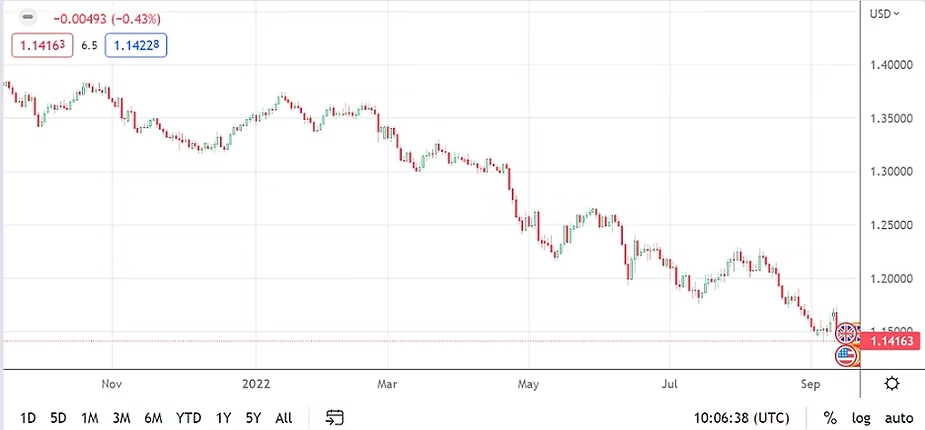
The hike has already been factored into the global markets. Forex has essentially gone ballistic via a strong USD, the GBP/USD is shown below as an example. The British Pound is now touching lows it has not seen since 1985 against the USD. Speculators may be tempted to trade this week believing they are smarter than the ‘crowd’, and that may be the case – congratulations if you are one of the few, but this may simply be an outcome of luck too. Many retail investors and speculators have been mauled in the current trading environment.

GBP/USD 1 Year Chart showing new Lows

Investors are Struggling as Clarity is Sought

Indices are struggling, gold is sputtering, U.S Treasury bonds are inverted, cryptos are under scrutiny. The U.S Fed is between the proverbial rock and hard place. Economic conditions promise to stay stormy in the next month and a half too. U.S elections will have an affect on behavioral sentiment. Certainly the Fed’s outlook which will be delivered on the 21st of September will cause turbulence also. A long term view via dividends from the S&P 500 remains a benchmark for investors seeking returns. Short term traders on the other hand must fight through the ‘noise of the experts’.

  • The U.S Fed is nearly certain to raise their key interest rate by 0.75% this week.
  • The key clarity investment houses seek is outlook regarding potential interest rate hikes to come later this year and early in 2023.

Where have the Gurus Gone?

Many self proclaimed gurus who claimed enlightenment only a year and a half ago, and offered their ‘insights’ regarding investment promises to eagerly awaiting traders are now hiding in their safe places and eating their words. Very few assets have proven profitable in the past year. Many investors are not used to the idea of merely preserving money, they have worked on the premise of solid gains made with speculative decisions which have been carried upwards by positive sentiment. Dealing with actual bear markets has not been a shared experience for many in the world of investing the past 13 years and the fresh scars are visible.

The ability to make money in this environment is difficult. The inverted bond yields in the U.S are evidence that folks are putting their money into relatively short term assets and trying to secure some of their capital. Traders can certainly wager this coming week in a variety of ways, but short term positions need to be considered with the knowledge volatility will be part of the terrain. Risk management is essential.

U.S Federal Reserve is in a Difficult Position

The notion that the U.S Federal Reserve will not stop raising their interest rates after the September meeting pronouncements this Wednesday still needs to be digested in many investment spheres. A Fed Funds Rate later this week of 3.25% is almost a 100% certainty. Speculation about a borrowing rate at 4% later this year may be realistic. And the question about how long the ‘transient’ inflation remains – yes, please laugh out loud, is a tough consideration. The outlook remains chilling.

While higher fuel costs have simmered a bit and have come off their highs, energy remains problematic and is having an effect on the costs of logistics, food and manufacturing. Energy concerns will remain the devil within the details. Some may want to look at the ISM Manufacturing data from the States for clues, but its merits remain debated too.

post4

Words Matter in the Financial World and Noise is Dangerous

Words Matter in the Financial World and Noise is Dangerous

As the financial markets trade in a nervous fashion the amount of ‘noise’ that traders must deal with has increased.

Markets Remain Jittery and Day Traders Pay the Price

The financial markets remain in a nervous state, and this is seen every day via the results from the major equity indices which continue to traverse within the framework of a threatening and potential bear market. Many new traders have not dealt with serious downturns in the financial markets before. Because human instinct is almost always positive, many speculators who participate in the markets tend to be buyers.

However in the past handful of months, many day traders who have been buyers have certainly found a difficult trading environment. Whether they are trying to pursue long positions in equity indices or cryptocurrencies, the speculative landscape has likely cost day traders money and produced trading accounts are negative, or worse simply have been closed.

U.S Federal Reserve Not Making Things Easy

The broad financial markets are likely to remain nervous in the coming months. The U.S Federal Reserve has a major interest rate announcement which will be delivered in the middle of June, and another rate hike of 0.50% is expected. What has the financial world nervous is not the anticipated interest rate hike which has already been digested into the marketplace, but what the Fed will say regarding their outlook regarding additional rate hikes in the summer. The reason why this is unclear is because the economic landscape remains cloudy and hotly debated.

The Federal Reserve has not helped investors because they have largely misread the economic landscape and caused problems because of past statements. Last year the Fed insisted inflation was transitory, meaning that it would soon diminish, this obviously did not happen. Now the best the Fed can do is to hope that inflation becomes less strong and that disinflation occurs. Meaning the U.S central bank is simply hoping it can decrease the rate of inflation.

Words matter in this trading landscape for investors because the Federal Reserve’s policy has not exactly been met with popular fanfare. Many market participants feel that the Fed has pursued bad economic policy and that they have reacted slowly to data which was abundantly clear regarding supply problems, and the rising cost of production due to climbs in energy prices.

The Biden Administration and Energy Costs

While some in the Biden administration try to point the finger at the Ukrainian war with Russia as the culprit. Most people are not that naïve. Energy prices were on the rise before the war and it can be seen that the bullish trend in the price of crude oil has existed since the Biden administration took power.

President Biden during his recent trip to Japan spoke about inflation caused by rising energy prices that were in ‘transition’. He made it clear that rising energy prices in the U.S are happening because the U.S is following a green environment policy and that the shift in regulatory mandates is driving the costs of energy higher. This combined with the Federal Reserve’s frequent talk about inflation and its desire to raise interest rates has made for a dangerous combination.

Noise will remain at a High Volume

Inflation may come down in the coming months. Demand for certain commodities may erode to some extent. However the cost of energy is probably going to remain high throughout the summer. The additional shadow of mid-term elections in the U.S and the potential for a shift in power in the U.S Congress are going to affect nervous sentiment among financial institutions in the coming months leading right up to November.

Traders need to prepare for noise which will come from pundits as they express their opinions. Speculators who are day traders also have to take into consideration that their short term goals are in direct opposition to that of long term financial institutions. The difference in trading outlooks and monetary capabilities make this a difficult environment for day traders in the current market conditions.

Following short term trends for day traders based on behavioral sentiment is viable. Technical charts can be used to gather short term evidence, but this will not stop the constant threat of reversals and spikes in price velocity from suddenly gathering power and creating momentary bedlam.

Eliminating the noise generating from pundits who can walk away from their statements without any consequences is a must. Unfortunately the comments coming from the Federal Reserve and White House are often hard to ignore and cause reactions in the marketplace; because their words matter even if they sometimes seem to forget what they have said in the past.