WTI Crude Oil 20260601

Clues and Insults: Forex and Equity Indices During the Iran Saga

Profits: Optimistic Wagers and Preserving Self as the Party Rages

New Federal Reserve Chairman Kevin Warsh certainly doesn’t want to have problems with President Trump. On the 17th of June the FOMC meeting via the Fed will make their interest rate decision known. Who really believes that during the first month on the job at the helm of the U.S central bank that Warsh is not going to fight to keep interest rates in place?

Those who are expecting an interest rate hike in June of a quarter of a point (0.25%) are most likely wrong. Yes, the price of WTI Crude Oil is high and the situation in Iran via narrative varies from one moment to the next per the reported incidents on the Strait of Hormuz.

However, just like the Fed there is a certain amount of reality that must be dealt with regarding human nature and behavioral sentiment regarding Iran and how it is dealt with via market participants. From the department of no news is good news: financial institutions and investors would like the noise to be kept to a minimum so they can continue doing their jobs and not be criticized themselves for potentially wrong outlooks. The art of making sure disclaimers are up to date is important for everyone who wants to stay employed.

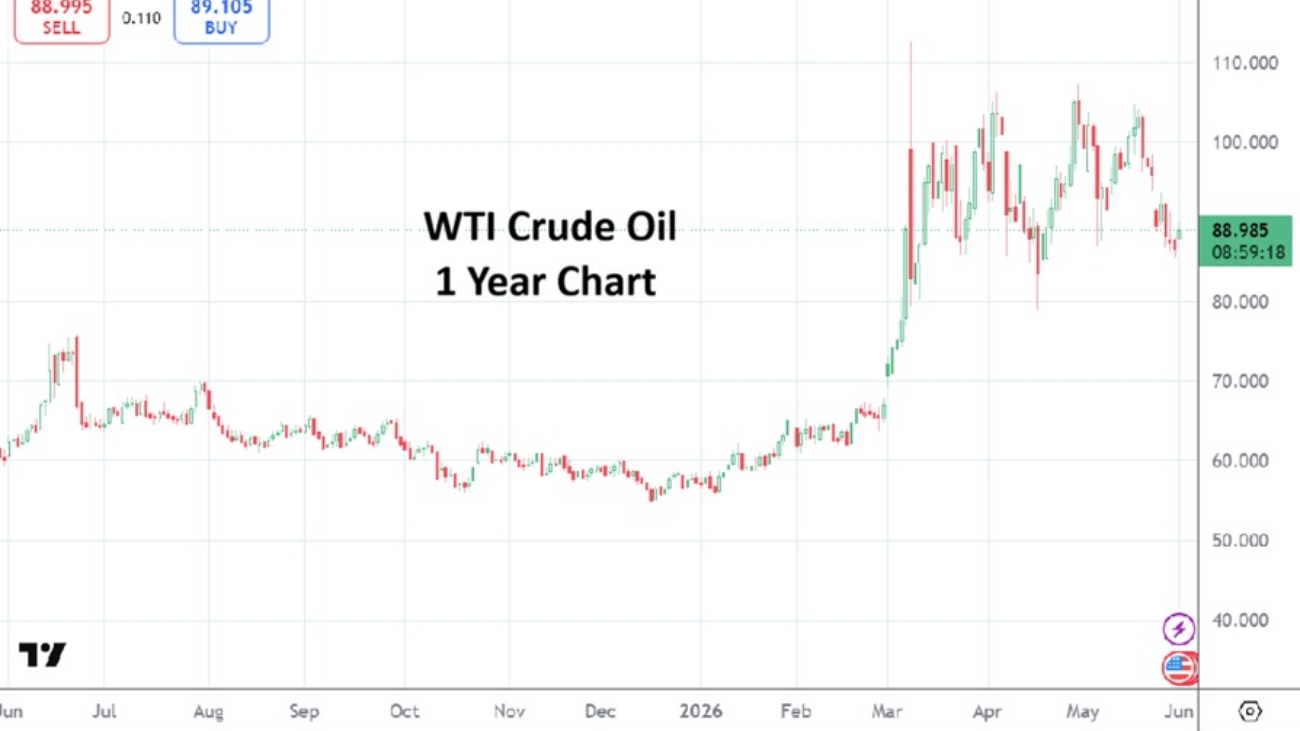
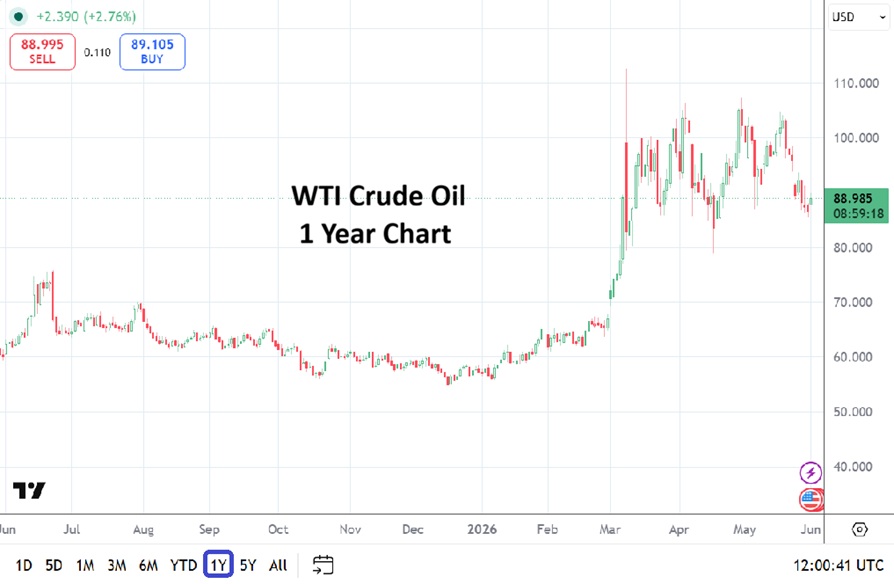
WTI Crude Oil 1 Year Chart as of 1st June 2026

USD centric weakness was seen late last week in many currency pairs, but a quick glance at the majors: EUR/USD, GBP/USD and USD/JPY actually show the pairs traversing rather cautious values. The EUR has gained slightly for instance, but at its current levels around 1.16410 some may believe it is a safe equilibrium. (One that may be able to be taken advantage of by those with the ability to bet on mid-term higher trajectories).

Central Banks globally also want to keep the noise down in their various locations. Inflation concerns persists worldwide depending on the amount of knock-on effects that higher energy costs have on national economies.

Also adding additional intrigue to the storyline of wanting to keep quiet while volatility threatens the gates, is that many people with comfortable jobs in various government institutions do not want to step out of line and sacrifice their careers for the sake of being proven right. They would rather be proven wrong, but would like to do this quietly without facing consequences.

The fact that we are now in a situation in which we are afraid to undertake critical thinking aloud is going to cause problems down the road, but for the moment most will simply go on with their various duties and pretend all is well.

U.S equity indices have been having a massive upwards party since the end of March as record heights are attained. Certainly some long-term investors are simply throwing money into indices as a way to get positioned before the SpaceX IPO which is coming soon. There will also be the Anthropic IPO which is reportedly set for late 2026.

The SPCX which seems to be aiming for the 12th of June will create a valuation well above 1 Trillion USD for SpaceX. The perceived value of Anthropic is becoming a loud talking point among analysts in the tech sectors and they are keen to have the company join the 1 Trillion USD party. The cost of admission for bragging rights is getting more expensive.

There was a time when things like PE (price and earnings) ratios mattered on Wall Street. Some brave folks still whisper about such things in meetings and bars late at night, but many do not want to be insulted or possibly worse get marketing folks selling these high priced products angry. The reason for speaking softly about actual earnings regarding SpaceX is because the company is actually working via an earnings loss, and instead price to sales estimates are being offered as some type of guideline. Having said the above, it would be foolhardy to bet against SpaceX and Elon Musk. And it might be equally unwise to bet against Anthropic in a handful of months. And thus, the rush into equity indices because there is a genuine fear of missing out does exist. Afterall, we all want to be part of the party.

And that brings us back to Fed Chairman Kevin Warsh who has the backing of President Trump and Treasury Secretary Scott Bessent, he doesn’t want to insult these men either. Warsh may be quite good at what he does, he might be an expert and have real world business experience, and that might be a real clue for Forex traders who think higher interest rates are coming. Warsh will likely want to keep his first months on the job at the Fed on good terms with the White House and the Treasury. Kevin Warsh might be a free-thinker and know legally he is an independent leader of the Federal Reserve, but he also knows he was hired with a stated mission. There is a pro-business, free enterprise administration in power at the White House. Bessent, Warsh and Trump are on the same team.

So again, while some traders may believe the Fed will raise interest rates in June because of concerns of higher inflation, it most likely will not happen. While the Iranian war continues to make headlines in the financial world and dealt with via sentiment decisions, actual economic U.S data will start being watched in the coming days and weeks and might even influence perspectives. Investors will get bored of the Iranian saga as long as its narrative stays somewhat tepid. Meaning investors will start looking at CPI and PPI numbers coming from the U.S next week and talking about higher interest rates that will likely not be delivered in the upcoming FOMC meeting. 

The price of WTI Crude Oil as boring as it is to say remains a strong sentiment gauge for traders intraday. Large players involved in Forex might believe this will involve higher interest rates, but on the 17th of June it is more likely that Kevin Warsh will say that for the moment the Fed chooses to watch energy sector costs with the belief prices will decline in the coming months. The Fed will not use the term ‘transitory’ which was used infamously during the Covid crisis and turned into a poison pill with inflation that was not effectively fought. What the Fed will likely do is say they want more info to be gathered and more clarity regarding the Iranian situation and its overall effect on oil prices for a little while longer. Some patience will be asked for and it might be granted by investors who want the party to continue via equities.

Day traders should expect cautious markets to prevail in Forex with choppy results as financial institutions weigh their behavioral sentiment and try to make believe they are not too worried about near-term inflation. The CPI and PPI readings next week will prove of interest, but the results may be brushed aside by market pundits.

In the meantime, the celebrations on Wall Street continue as folks march merrily into the frenzy. Retail speculators who want to pursue short or near-term profits on the Nasdaq 100, S&P 500 or Dow 30 indices need to be careful and might want to stay away from daily bets and instead engage in conservative positions that allow for a full week of results. The gains made since the end of March have been outlandish and likely will not be repeated anytime soon, but why try standing in front of a trend that can crush you.

Near-term considerations in these markets should be done carefully. The mid-term may be very different from where we stand today and our current outlooks. One thing that may bother some risk analysts is that it may prove wrong to bet against the current parade of optimists who insists on participating in dangerous conditions and profit, while they (the risks mavens) stand in place.

Copy and paste the text from AMT that you want to share

US Cash Index 20260424

Upcoming Weekend Nervousness: Does Anyone Know What is Going On?

Preaching Caution and Looking Like a Fool to Those Who Want to Profit

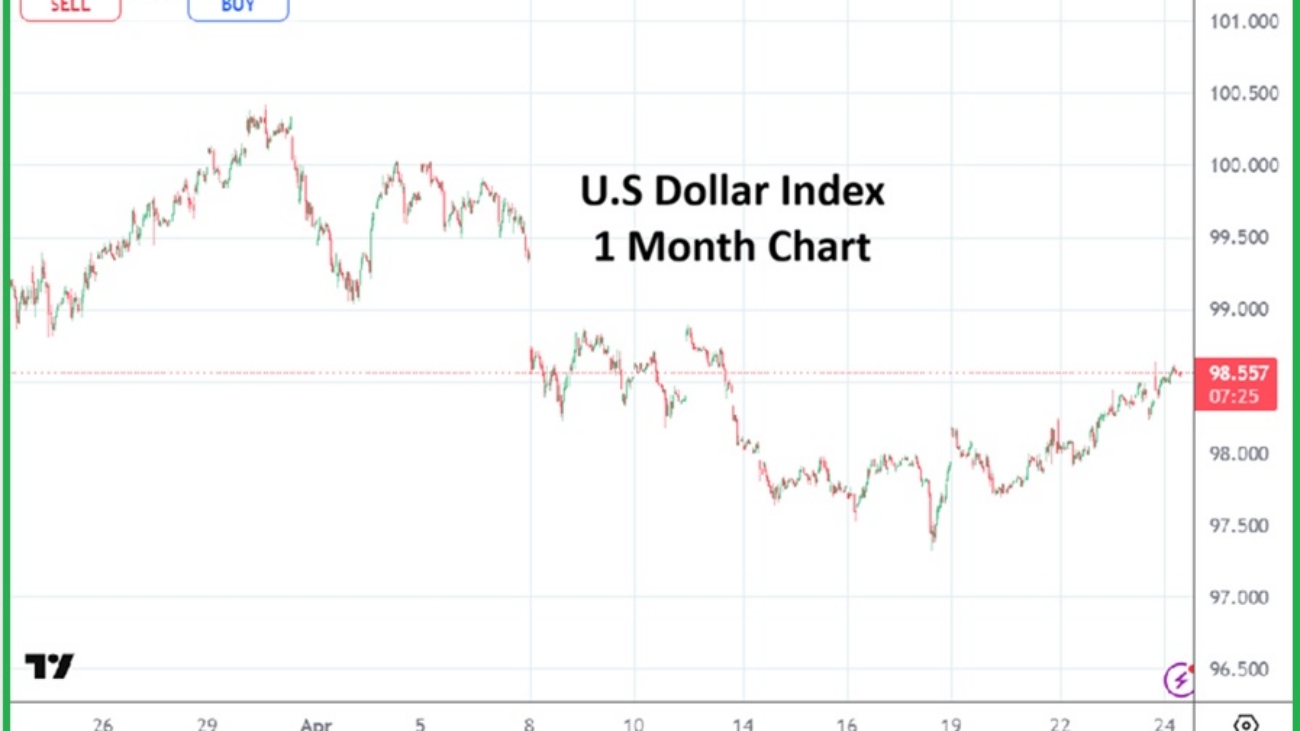
Can someone please tell the rest of us what is going on? Global markets via Forex this morning are demonstrating additional USD centric strength which developed yesterday. The price of WTI Crude Oil is above $94.00. Gold is languishing and around 4,675.00 USD. And although the 3 major U.S stock indices are all within their higher realms – one thing stands out – folks are uneasy.  But then again, the markets never move in one direction only, and perhaps current results can be interpreted as profit taking by those on winning sides.

U.S Dollar Index One Month Chart on the 24th April 2026

I would love to be the person to tell you what is going to happen, but as this weekend looms making short and near-term bets still appears a fool’s game. Yes, it is easy to make predictions, but being correct is more difficult. Retail traders are suffering more than most market participants, this as leverage and a lack of funds to remain in a position through violent reversals destroy plenty of trading accounts.

There is talk of manipulation via chat rooms regarding the price of WTI Crude Oil. The usual dialogues can be seen – largely based on conspiracies via large players trying to blow out smaller traders. However, these types of forum chatter are mostly wrong. Large players are getting hurt too in the energy markets. Anyone who is taking a position in order to speculate on a quick hitting foray in WTI is betting on their perceptions. 

The problem is that unless there is inside knowledge of what the next words out of President Trump’s mouth are going to be, or that from Iranian officials – any pursuit of WTI Crude Oil at this juncture is a ‘vibe’ trade. What is going to happen from Saturday and into Sunday is an unknown quantity. Folks holding positions into this weekend need to understand they are wagering. And some may find they are quite profitable afterwards, while others grimace and find themselves on the wrong side of the next surges higher or spikes downward. Intraday trading volatility in nothing new however.

The USD/JPY is near 159.600 as of this writing. The EUR/USD is close to 1.16820. While a tourist traversing foreign lands may not find the Forex incremental shifts in value mesmerizing or of interest, FX traders who do not have deep pockets are likely wondering why risk adverse conditions are prevailing suddenly. But as a risk analyst, I must say that conditions simply may have been perceived to have been oversold in the USD by financial institutions, this as the Fed looms on the horizon.

However, my task as a risk analyst the past two months has been like a carnival barker, because while it has been easy to say that a show is happening within the big tent of speculation, I have been hard pressed to predict short and near-term directions correctly. Perhaps I fret too much. The optimistic thunder claps upwards in the stock markets since the 31st of March have been astounding to many. Hopefully it has been prosperous for day traders, but the likelihood is that financial institutions are the ones who are profiting more via their pension funds purchases for institutional clients.

This coming week the U.S Federal Reserve will make their FOMC decision public. This will be Jerome Powell’s swan song at the Fed. The Chairman is being faded out by the U.S White House mid-May. And somewhere when he is all alone, Jerome Powell may be having a quiet laugh to himself. The Fed will not act this week. Rates will remain the same – unless there is some bizarre move in the global markets over the next handful of days. Yet, Powell’s remarks will be listened to for warnings. While it is not in Powell’s nature to issue a ‘I told you so’ quote, and he is likely content to walk away from the Federal Reserve quietly, it would be captivating if Powell looked into the cameras and pointed fingers. 

But because Jerome Powell like most others, likely has no clue what is going to happen next internationally he will remain mostly mute (cautious as always).

And here we meet again, wondering what the next 72 hours hold. Will the Iranian ceasefire remain observed? Is it even a ceasefire in reality? The Strait of Hormuz remains a linchpin for military action by the U.S Navy and Iranian Revolutionary Guards via a cascade of ship seizures. Maybe that continues to be the key, WTI Crude Oil prices remain a crucial barometer. USD centric prices via Forex action seems to be a reflection of fear or positive thinking in the energy sector depending on the prevailing tides.

Last week there was so much optimism folks were talking about WTI prices potentially hitting $75.00 and lower, now this hope seems to be wishful thinking. Global markets will remain fast and dangerous, that is easy to say and is right, but telling you which direction assets will move, that is a bit different.

And there is the old standard test I use when an opinion is definitely asked for: if someone were to put a gun theoretically to my head and ask me what I think, I would venture to say things will remain quiet and optimism will seep into the markets before the close this weekend. However, I don’t like to play fool’s games, so I will leave now and wish you luck via your own perspectives because the near-term remains more speculative than normal for day traders – even if strict risk management is used. 

Copy and paste the text from AMT that you want to share

Post306

India Insider: Reserve Bank of India Intervention is Limited

India Insider: Reserve Bank of India Intervention is Limited

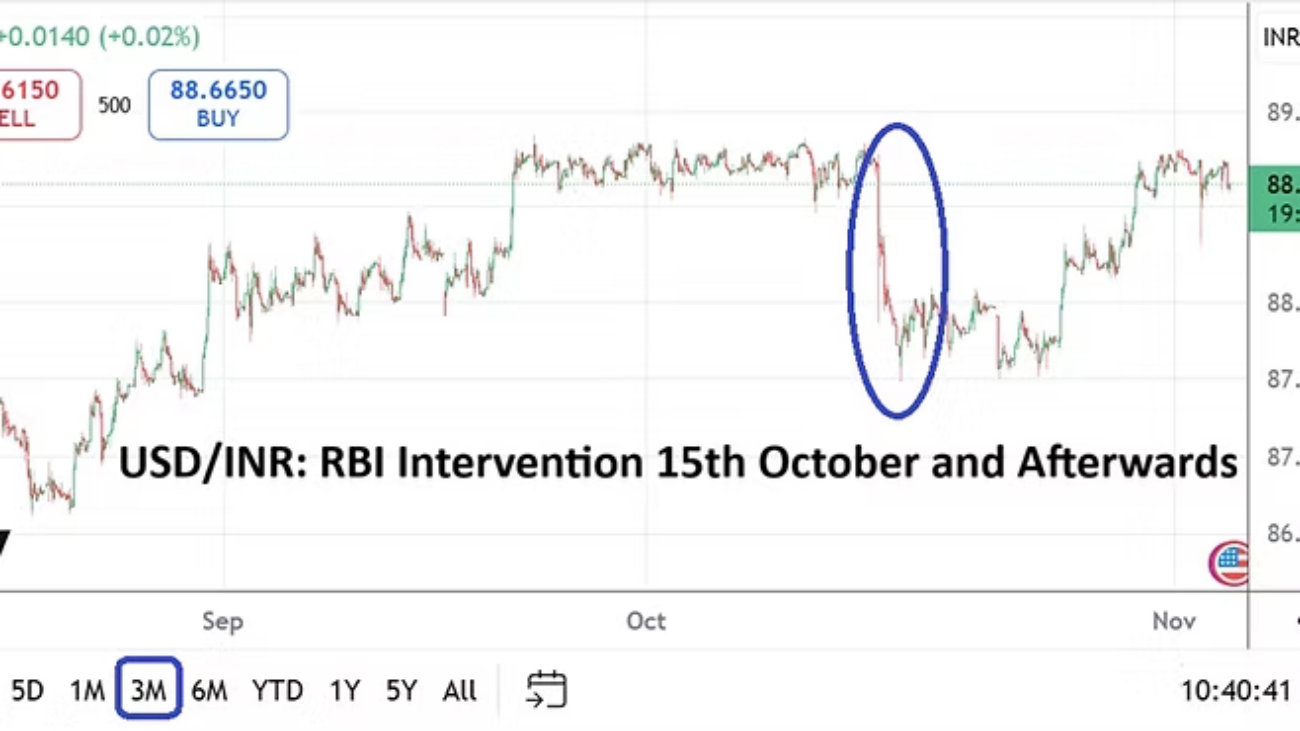
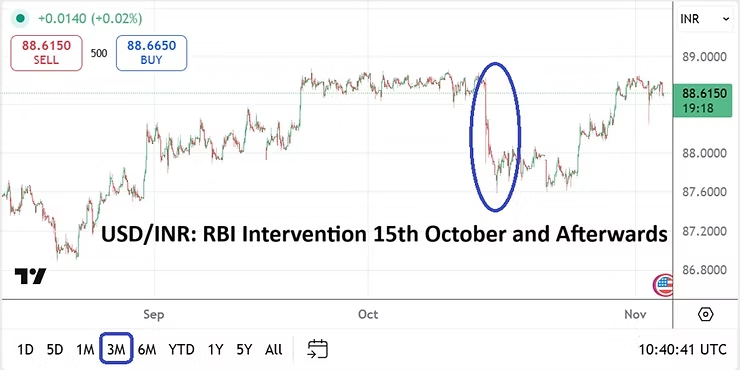
After weeks of steady appreciation due to Reserve Bank of India intervention on the 15th of October, the Indian Rupee has now returned to the same 88.72 levels against the USD before the policy action was enacted. The RBI’s recent offensive against speculators may have calmed the market temporarily, but it reflects a reactionary and short-term approach to deeper structural pressures facing India’s external administrative policies regarding the USD/INR.

USD/INR Three Month Chart as of 5th November 2025

Despite the Reserve Bank of India’s efforts to influence the cash forward market, where Dollar shorts rose by 6 billion USD in September to $59 billion, fundamentals suggest that Rupee weakness is not purely speculative. It is a rational market adjustment due to rising trade barriers amid U.S tariffs on India’s merchandise exports. The added uncertainty regarding trade caused the Rupee to naturally absorb external shocks. Merchandise exports to the U.S fell 12% in September year on year, according to official India data, prompting some calls for government relief.

India’s Foreign Remittances & H1-B Visa Fee Hike

According to World Bank data, India received about 137.7 billion USD in personal remittances from abroad in 2024. From that amount, around $40 billion is coming from the United States. The Trump administration raised the cost of H1-B visa fees from below 10,000 USD to nearly $100,000. And there is now also an increased likelihood of measures aimed at limiting digitally delivered software services to the U.S from India. These combined measures would substantially reduce Dollar receipts via exports of technology driven software and IT services, as well as remittances from a reduction of workers on temporary U.S visas providing on site services to U.S clients. USD inflow has been crucial for India’s balance of payment’s stability.

Reduction of USD reserves when the trade deficit is already rising because of hikes caused by tariffs on India’s exports would widen the current account deficit. Concerns about a decrease in remittances leading to a potentially significant decline of India’s USD reserve ability is possibly discouraging the India Reserve Bank to voluntarily expend reserves to support the Rupee.

Service Exports Cushion India’s Balance of Payments:

India’s total service exports touched 400 Billion USD over the past year with a predominant amount coming from the U.S. In other words, India has had a $202 billion in services trade surplus over the last 12 months, which covered almost 114% of India’s merchandise trade deficit in 2024-25.

India’s goods trade deficit is matched by a services surplus, plus net foreign personal remittances. This USD equation is under threat because of prolonged paralysis from stubborn US and India trade negotiations debating Russian Oil usage and the U.S demand to allow agricultural products into India.

Foreign Investors Selling Indian Equities

In addition, the Indian Rupee is not getting support from investment portfolio inflows. A shortfall of AI related avenues in the nation’s tech sector, and perhaps because of valuations considered too rich, foreign Investors have pulled 17 billion USD so far this year. This sum is more than any other emerging market, which is eating away at the Reserve Bank of India’s FX reserves too.

Global and India-specific uncertainties spurred by the Trump administration’s actions are setting off a retreat of footloose portfolio capital invested into India’s equity and bond markets. If the Reserve Bank of India was confident that inflows of foreign capital would replenish reserves it would likely help the Indian Rupee, and thus investor confidence coming from abroad.

Policy Irony and the Limits of Intervention

The U.S. remains India’s largest export market, but new levies of 50% tariffs are hurting labor-intensive sectors such as textiles, leather, footwear, and gems & jewelry.

While concerns about imported inflation are valid, the benefits of a weaker Rupee should not be overlooked. A mild depreciation could boost India’s service exports, improve the balance of payments, and partly offset the effects of U.S. tariffs on merchandise exports.

A material improvement in U.S and India trade relations is needed. Until a restoration is achieved in relations and a merchandise surplus is possible, alongside healthy services and remittance inflows occurring again, the Rupee’s weakness is likely to persist. In the meantime, Reserve Bank of India interventions could prove to be a short term tactic that proves vulnerable mid-term to the influence of market forces known and unexpected.

postR197.1

Return to Normal Market Conditions and a Trump Outlook

Return to Normal Market Conditions and a Trump Outlook

Retail speculators can now expect a return to calm and clear financial market outlooks, knowing that potential influences from new U.S policies will start to be considered. With the U.S elections in the rear view mirror and a Trump mandate delivered by many U.S voters, global financial institutions and traders will again be able to focus on a combination of technical perspectives, current behavioral sentiment and outlook.

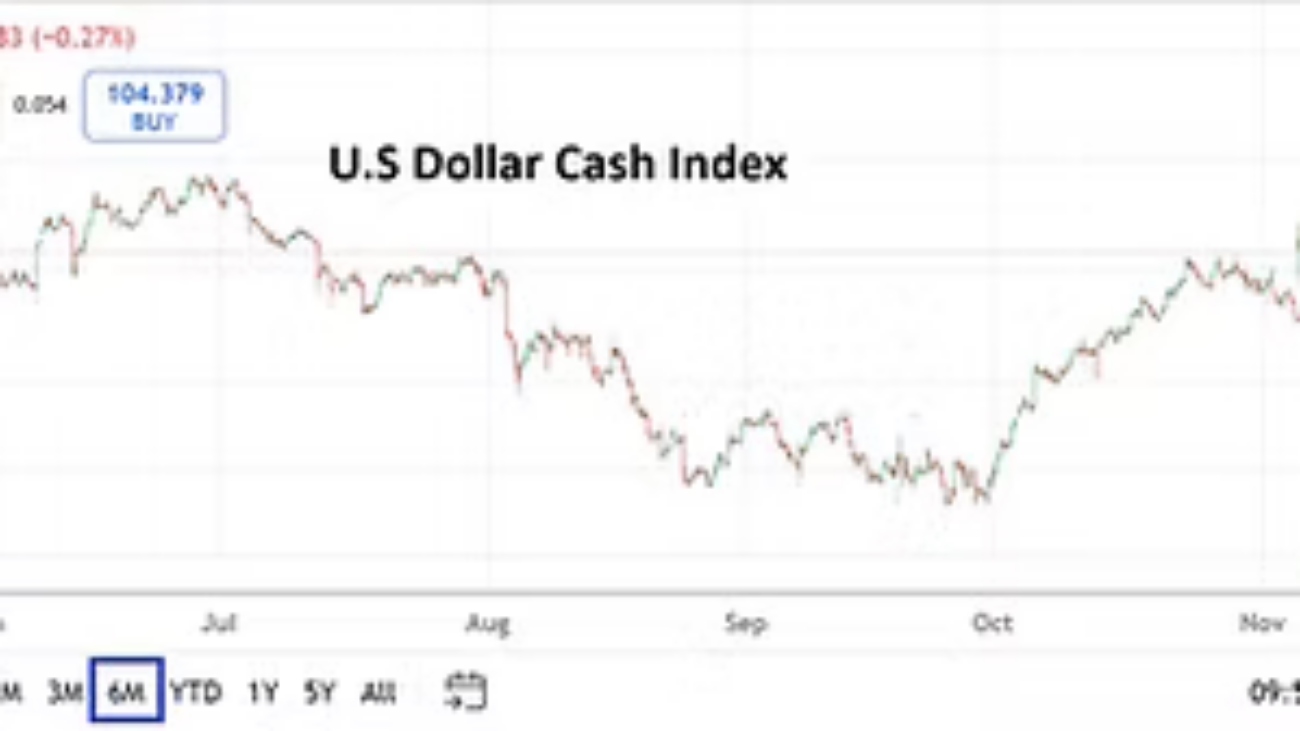
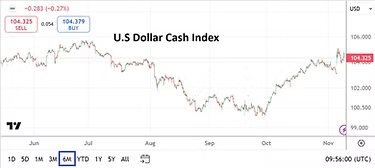
USD Cash Index Six Month Chart as of 10 November 2024

Some technical traders may believe behavioral sentiment has nothing to do with the long-term prospects of studying charts, but price action last week in FX and equities clearly showed why traders must be attuned to storms created by human emotions. Risk adverse trading has been prevalent since the end of September. A glance at the six month USD Cash Index demonstrates the extent of behavioral sentiment causing volatility the past handful of months. After believing the U.S Federal Reserve was going to become dovish which propelled the USD lower in many Forex pairs in early July, financial institutions expressed concerns about political outlook the past handful of weeks as a lack of clarity started to shroud their perspectives. USD centric positions have powered Forex.

And now that there is a Trump administration coming, and the U.S Fed has remained cautiously dovish this past Thursday, financial institutions may exhale with relief. The election on November the 5th has delivered a clear message regarding the potential for changes to U.S administration mandates regarding trade. Whether a stronger U.S economy is attained because of these hopes is not the question, it is the perception new policies will be initiated which try to deliver results which have been promised. Yes, promises can be broken.

However, the ability to believe changes are coming will affect behavioral sentiment. The Trump soundbites may prove to be rather weak in the future, but there is a chance he will also get things done regarding stronger trade agreements which protect U.S business enterprise and manufacturing. Folks can argue until they are blue in the face regarding the prospects of all things, but the U.S major equity indices rising like a rocket ride in the middle of last week is clear evidence that many believe the prospects for U.S corporations is better. No matter if it is only hopes about tax laws changing, less regulation, and better U.S trade agreements, investors are clearly betting on optimistic outlooks for the mid-term.

Dow Jones 30 One Month Chart as of 10 November 2024

Improved attitudes are great for the prospect of financial institutions, but traders still have to certainly protect their positions against volatility developing. Markets should start to return to tranquil conditions in the days ahead. U.S data will come this week which will be important via the CPI numbers on Wednesday and PPI figures this Thursday – the combination of these inflation reports will be important. Friday will see Retail Sales from the States.

The return to data as a guideline for financial institutions teamed with the Fed’s rate cut this past Thursday may be an ointment for retail traders who seek a return to normal conditions. Nervous behavioral sentiment could remain a factor in the coming days as people adjust their outlooks to a Trump White House, but the coming week should be relatively quiet regarding surprises.

It isn’t a question of liking or disliking the outcome of the U.S election, it is a question about how behavioral sentiment will now be affected. While some bring up potential tariffs as a major risk for the U.S and global economy, we have been down this road before with Trump. The risk of inflation if trade disagreements flourish should be taken seriously, but Trump has dealt with China in the past and both sides did find a way to do business in many respects. China is probably worried about Trump being in the White House again, but they likely have a gameplan for the tough business discussions ahead. The experience of having dealt with President Trump before allows China and others to know what they may face this time and empower them to be prepared.

It should be noted that Trump has shown in the past a tendency to enter negotiations with a difficult offer and permitting the other side to counter. Trump then might turn down a proposal, but often shows he is open to discussing things further and reaching a compromise. And that is the crucial word – compromise. It is about business and geopolitics. Financial institutions have dealt with a Trump White House before. This time around there is a hope Trump’s naming of a White House cabinet will not be as messy an affair as it was the first time.

The naming of Susie Wiles as the White House Chief of Staff last week looks like a good first step, also having strong Republican leadership in the Senate and House of Representatives may make things easier. While some are worried about a slew of loud rhetorical stances by Trump, perhaps pragmaticism will be practiced. And based on that rather optimistic viewpoint, retail traders may also feel businesslike conditions are ahead and that the financial markets will be a safer place to pursue speculative wagers again in the near and mid-term.

postN51

AMT Top Ten Miscellaneous Spiders for the 1st of March 2024

AMT Top Ten Miscellaneous Spiders for the 1st of March 2024

10. Palystes: Huntsman spiders known in South Africa as ‘rain spiders’ are nocturnal and visit indoors, sometimes causing horror for those stumbling through hallways in the middle of the night. But it is better than a baboon entering the house.

9. Victor Wembanyama: Last night’s stat line included 28 points, 13 rebounds, 5 blocks, 5 3pts made, 7 assists, 2 steals in less than 33 minutes played. The rookie is already one of the best NBA players. Btw, the Spurs beat the Thunder also.

8. Tech: Chinese cars are now in the crosshairs of U.S politicians who are worried the ‘smart’ vehicles can collect sensitive data from Americans.

7. Crypto: Bitcoin above 61,000.00 USD, Ethereum over 3,300.00, and Binance Coin testing 400.00 even as the company remains under U.S legal shadows. How much air can the balloons withstand?

6. Putin’s Nuclear Threats: In a world with escalating geo-political tension, the Russian leader remains determined and energetic while playing ‘war poker’ against Europe.

5. U.S Data: Core PCE Index numbers yesterday met expectations, but the previous month’s outcome was revised downwards. Today a Consumer Sentiment reading comes from the University of Michigan. This week’s U.S data has mostly been pleasantly ‘weaker’.

4. Central Banks: Fed ‘watchers’ are likely feeling more comfortable this morning regarding the possibility of a late spring ‘thaw’ in U.S interest rates. Jerome Powell will testify in front of the Senate next Thursday. The ECB will release their Monetary Policy Statement on the 7th of March also. Next FOMC pronouncements will be on the 20th of March.

3. Gold: The precious metal is near 2050.00 USD, this after yesterday’s U.S inflation report, gold could remain volatile today. Some speculators may be looking for additional value to develop.

2. Forex: FX has been a constant battle the past two months, but patient traders with mid-term perspectives may be anticipating their weaker USD targets to trend more steadily.

1. Equities: Many global stock indices are achieving record levels as bullish behavioral sentiment creates upwards momentum. S&P 500, Nasdaq 100 and the Composite, Dow 30, Nikkei 225 and the DAX Index are flirting with higher values.

postN94.1

Thin Holiday Markets Await FX Speculators

Thin Holiday Markets Await FX Speculators

Traders who want to pursue speculative positions this week need to understand that market conditions will be extremely thin. While the USD has certainly taken on a ‘softer’ dimension and financial institutions are demonstrating solid risk appetite, this week’s trading could produce lackluster choppy conditions.

Economic data will be light this week due to the ongoing Christmas celebrations, and the New Year’s holiday which will come next Monday. Forex markets can produce trading opportunities in the near-term for folks who want to wager on changes of direction, but some of the trajectories may be dubious and reversals could loom. Entry orders are urged for participants because spreads between bids and asks will likely be wide.

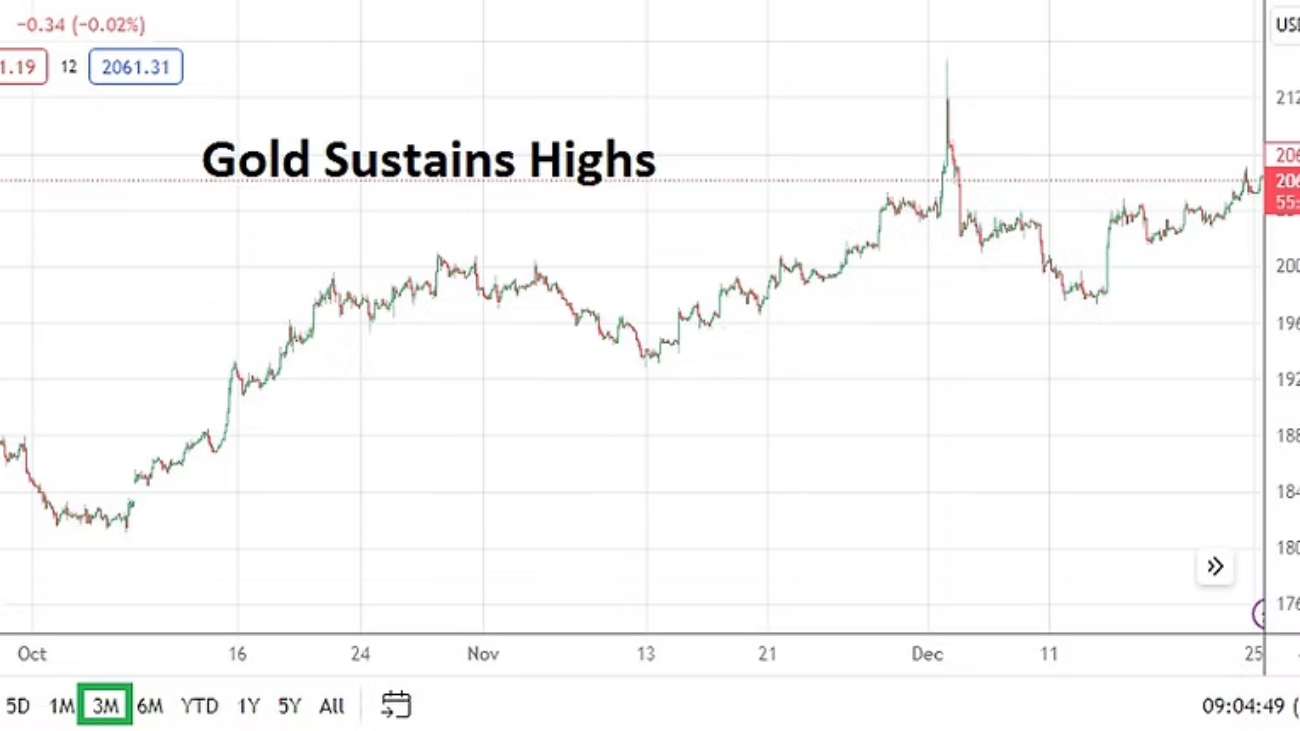
Gold Three Month Chart as of 26th December 2023

Gold remains within its higher price boundaries as the USD produces weakness, but betting on the precious metal this week could also be dangerous. Gold has certainly been trending upwards, but short-term speculative positions by large players could make the commodity agitated the next handful of days if they try to take advantage of light volumes. Day traders without significant bankrolls should be careful.

While economic data will be released, it is doubtful how much impact the reports will have on the broad markets. Active traders should monitor the coming statistics, but they should stay ‘more’ alert for possible outside influences which could shake confidence and shadow the rather optimistic behavioral sentiment which is currently being demonstrated.

News via international shipping should be given attention as the Houthis and Iran rattle their swords. While experienced traders will not be flustered by noise, the potential for escalating violence should be given attention.

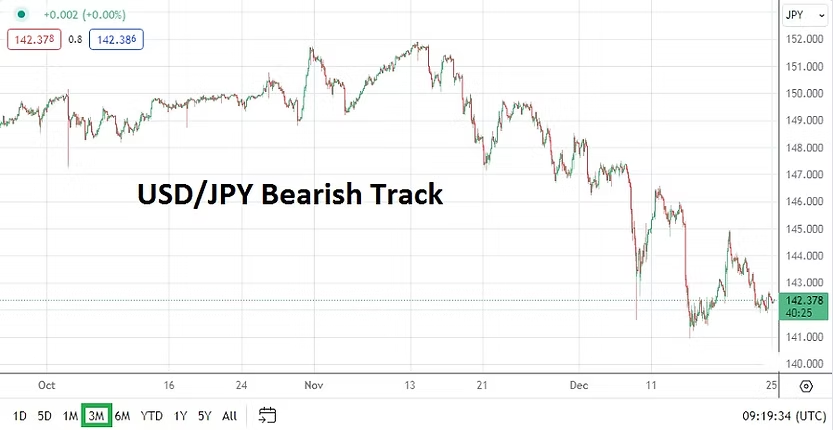
USD/JPY Three Month Chart as of 26th December 2023

Tuesday, 26th of December, Japan Core CPI via the BoJ – inflation data from Japan has been published today and the Consumer Price Index came in below expectations. The USD/JPY remains on a downwards trajectory and should be given consideration.

Wednesday, 27th of December, U.S Richmond Manufacturing Index – this report being ‘highlighted’ shows the minimal amount of data being published this week. A decline versus the previous month’s negative outcome is expected. The likelihood that significant trading will be ignited via the results of this publication is almost nil.

Thursday, 28th of December, U.S Pending Home Sales – the data is expected to show a gain of 1.1%. However, it is next month’s report which will get more attention, this as investors look to see if the Fed’s soft monetary policy stance which was heard in mid-December, helps boost the housing market in the coming weeks. This immediate report however is likely to be met with a rather quiet reaction.

Friday, 29th of December, U.K Nationwide Home Price Index – this economic report like yesterday’s U.S housing numbers is destined to have little influence on short-term trading results. The GBP/USD will not be affected by this report in any great manner.

postN83.1

FOMO Potential Could Fuel FX and Equities with Calm Winds

FOMO Potential Could Fuel FX and Equities with Calm Winds

Traders should not run towards their trading screens as the week begins, steady attitudes and risk taking tactics will be needed. Yet, there may be reasons to get excited. The return of full market volume as U.S financial institutions open and employees get back in their offices after the long holiday weekend needs to be monitored. The term ‘FOMO’ – fear of missing out – may be heard this week if U.S equity indices continue to shine, Forex demonstrates additional USD weakness and U.S Treasury yields decline further. There will be a whirlwind of economic data and opportunities for ‘official’ rhetoric in the days ahead.

Day traders should ask questions about the results which were seen technically via their charts last week, assets all struggled to find momentum last Thursday and Friday. And earlier in the week many Forex pairs produced choppy results. But here’s the thing, behavioral sentiment was rather muted as large speculators and financial institutions understood that trading volumes would be light – this caused strong bursts and sudden reversals early – but by the end of the week rather calm waters.

Many trading houses could increase their speculative positions this week based on their outlooks. Financial institutions clearly have believed the USD had been overbought and the ability of the GBP, EUR and JPY to gain in the past two weeks are possible signs large ‘players’ remain positioned for further USD weakness.

Equity markets have done well in November, but the major indices including the Dow 30, S&P 500 and the NASDAQ Composite all started to garner strength in the last week of October. Mid-term highs are being achieved in U.S indices. The parade of buyers may not be done quite yet.

Economic data results are vital for day traders to understand because they provide insights into the thinking of financial institutions regarding their outlooks. It is not the trading of small speculators that moves markets, it is the power of large cash positions which drives results. Questions regarding where the cash is going and the allotments financial institutions are pursuing is a key to understanding how the markets are going to react. This information is not readily available for day traders, instead smaller speculators need to try to comprehend outlooks regarding positioning and timeframes of larger players.

Part of the FOMO factor could develop as financial institutions begin to question how much money they will hold in money market accounts for their clients. While the practices of large investors are always comforted by the notion they are making guaranteed returns, the pursuit of better results and the desire for risk appetite does drive behavioral sentiment when bullish markets are being exhibited.

This week will be intriguing as full volumes return to the marketplace today and tomorrow. From today until the 13th of December FOMC Statement from the U.S Federal Reserve, results in the financial markets could be speculative. Financial markets are starting to signal that optimism is creeping back into the mindsets of large investors who may believe mid-term economic scenarios have improved.

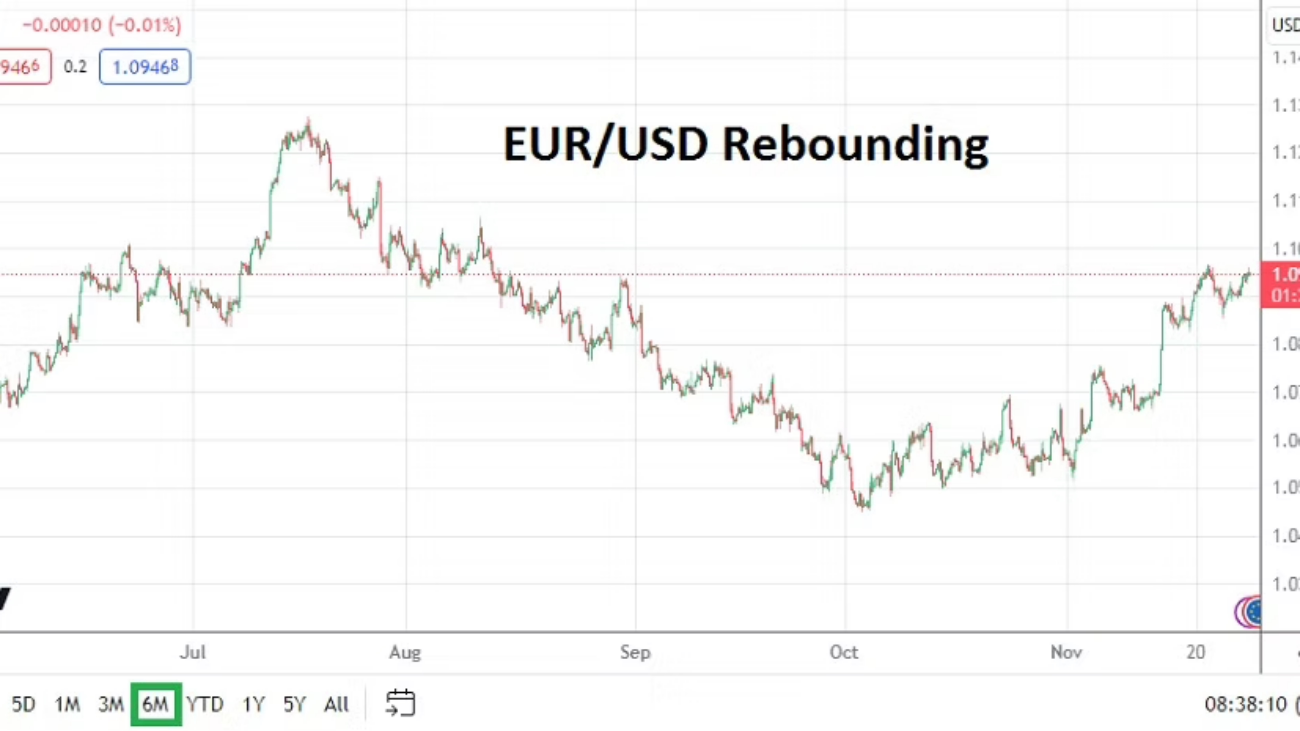
EUR/USD Six Month Chart as of 27th November 2023

Monday, 27th of November, E.U. ECB President Lagarde – the European Central Bank leader will deliver thoughts regarding monetary policy to the European Parliament. While the E.U still is sufferning from recessionary numbers, economic data last week came in slightly better than estimated. However, the EUR/USD remains in a USD centric mode and this will continue this week.

Tuesday, 28th of November, U.S Consumer Confidence via the Conference Board, the numbers are expected to be slightly weaker than last month’s outcome. U.S economic data has been showing signs of being weaker than expected, last week’s Core Durable Goods Orders report followed this trend.

While this may be read as bad news by some people, day traders should note – particularly Forex speculators – that slightly weaker U.S economic data currently is music to the ears of many financial institutions because they believe the Federal Reserve will have to shift their rhetoric from aggressive to neutral.

Tuesday, U.S Federal Reserve Officials – a slew of FOMC members will be speaking at various events during the day. The Fed likes to give clues to the financial markets regarding their outlooks and perceptions regarding interest rates. The Federal Reserve has certainly paused their interest rate hikes.

The question now is if the U.S central bank will start to say while they remain diligent regarding inflation, that they now see signs of a ‘soft landing’ emerging within the U.S economy. If the Fed speakers begin to sound not only neutral, but offer hints of becoming potentially dovish by the spring of 2024 regarding monetary policy, this could spur USD selling.

Wednesday, 29th of November, Germany Preliminary Consumer Price Index – the inflation results are expected to be slightly weaker than last month’s outcome. German economic data has been recessionary, financial institutions know this, what large traders would like to see is stable results that are not wildly surprising.

Wednesday, 29th of November, U.S Preliminary Gross Domestic Product – the growth numbers are expected to show a slight increase. Equity markets, Forex and commodity markets will react to these results. The U.S economy has been surprisingly strong regarding growth. A slight slowdown regarding the GDP numbers would not be the worse thing, if growth numbers did come in below the estimate this could fuel additional USD weakness.

But traders should not get overly ambitious and bet against the GDP numbers. If the expected outcome of 5.0% is delivered, equity markets could use this as additional fuel. The number is sure to be a talking point, but unless their is a massive divergence it may simply be a way to create noise for ‘talking heads’, when in fact behavioral sentiment regarding risk appetite remains optimistic.

Thursday, 30th of November, China Manufacturing PMI – the result is forecast to show a slight improvement. China economic numbers remain a concern, particularly from the real estate sector which is suffering and is causing cascading troubles on other sectors within the nation. Global demand for products, as an example from European countries, that are suffering recessionay pressures also is slowing China’s manufacturing. A slight improvement would be welcomed by global investors participating in China financial assets.

WTI Crude Oil Six Month Chart as of 27th November 2023

Thursday, 30th of November, OPEC and JMMC Conference – the oil producers will certainly make their policies known and energy markets will react to the news and rumors. Commodity traders should note that WTI Crude Oil, Brent, Natural Gas and Unleaded Gasoline markets have been under price pressure and important mid-term cash support levels are in sight.

Thursday, 30th of November, U.S Core Personal Consumption Expenditures Index – this inflation reading is important and should be watched. The result is expected to be weaker than the previous month. If the outcome matches the anticipated reading of 0.2% or less, this could spur additional USD weakness. The Core PCE Index is an important reading for the U.S Federal Reserve regarding its inflation insights.

Friday, 1st of December, U.S Fed Chairman Jerome Powell – the Fed leader will be speaking at a college event in Atlanta. Traders should remember that about ten days before the Fed’s pause in November regarding its FOMC Statement, Powell delivered a large hint regarding monetary policy. The Fed Chairman’s comments will come late on Friday and could cause a reaction early next week if Powell’s remarks fuel more Forex speculation.

Additional note – the U.S jobs numbers will not be released this Friday, the Non-Farm Employment Change and Average Hourly Earnings results will be published on the 8th of December.

post10

Central Bank Capitulation led by Federal Reserve

Central Bank Capitulation led by Federal Reserve

The 21st and 22nd of September were potentially important signals for traders as the Federal Reserve admitted they remain reactive to inflationary pressures, and other global central banks countered with acts of their own.

While it is difficult and often foolish to believe the markets can be timed, this past Wednesday may have been an important moment for speculators in Forex. Many traders may have veered off into cryptocurrencies or into equities as day traders the past few years, but FX still remains a place that offers volatility and where wagers on price direction can be made.

The Federal Reserve raised their interest rate 0.75% again, and importantly issued a loud admission that the U.S central bank is caught in a reactionary mode. Other global central banks have begun to protect their own currencies too. Jerome Powell, the U.S Federal Reserve Chairman, said he believes the current interest rate is likely at the low end of the spectrum regarding where it has to be to have an affect on current inflationary pressures.

The USD has been strong against many major currencies with a rather unforgiving bullish trend. Raising the Federal Funds rate from 0.25% to 3.25% the past year in the U.S has made short term purchases of U.S debt attractive to many financial institutions. On Wednesday, Jerome Powell made it clear other hikes will be delivered and it is not farfetched to believe the U.S is looking at a potential rate of 4.50% and higher in the spring of 2023. This doesn’t mean the Fed’s policy is correct, it is simply an outlook for the potential Federal Funds Rate based on rhetoric.

  • A Federal Funds Rate in the U.S of 4.00% is likely by early this winter, per the Federal Reserve’s interest rate outlook.

  • Global central banks have reacted to the U.S Fed’s recent interest rate hike, by enacting methods to try and safeguard the value of their own domestic currencies.

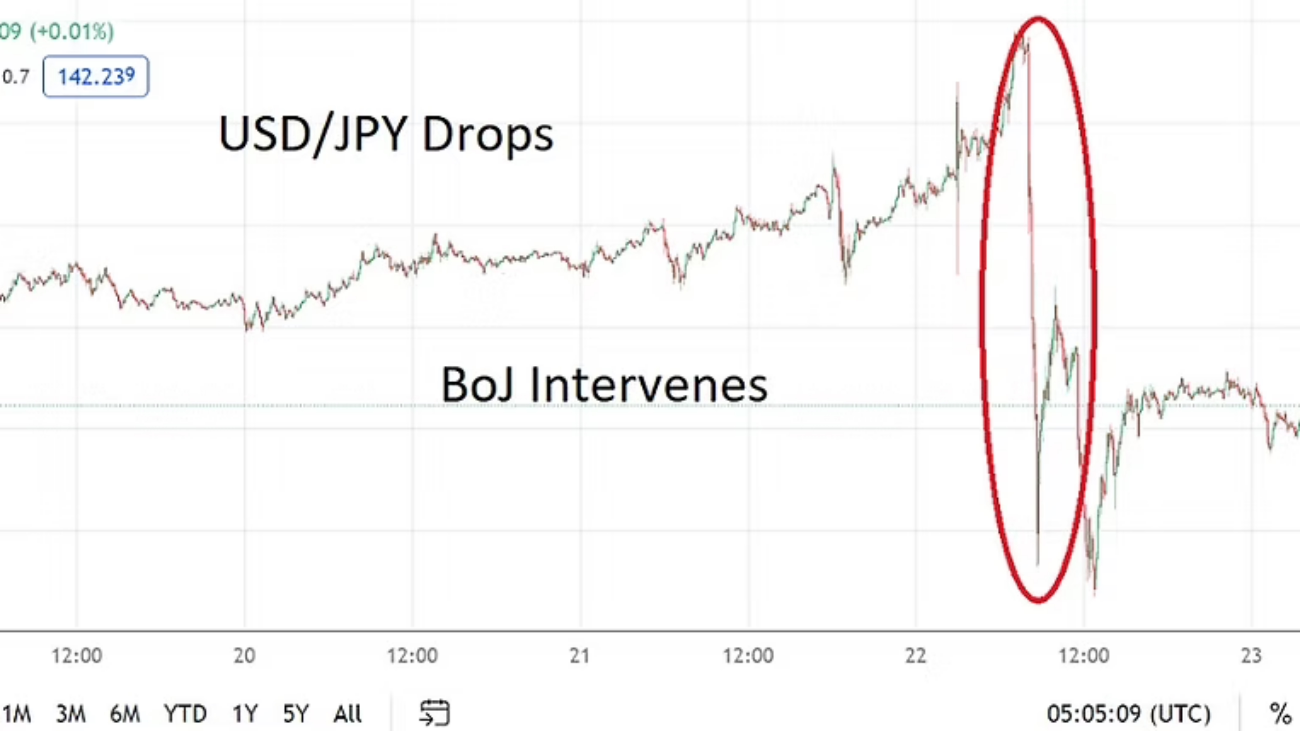
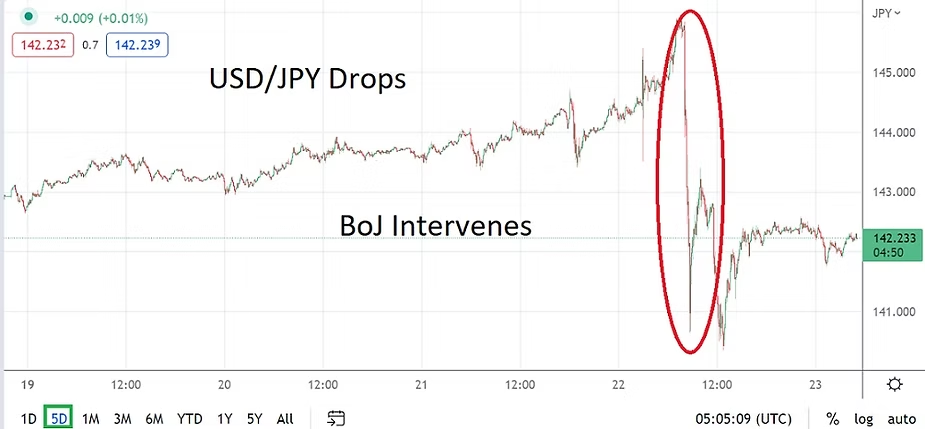
The USD surged ahead slightly before the rate announcement from the Fed, while many other currencies lost value. However, on Thursday the Bank of Japan intervened by starting to buy Japanese Yen against the USD. The Bank of Japan said it will not raise interest rates yet, but its action showed it clearly does not want the JPY to lose additional value to the USD, via the USD/JPY Forex pair. Whether the BoJ’s actions work mid-term remain to be seen.

Global Central Banks feel they must counter the U.S Federal Reserve’s Actions

Other central banks started to act too. The Bank of England and Swiss central bank both raised interest rates yesterday. Speculators who have been watching the USD dominate Forex the past year, may now have to consider that the last two day’s of action via global central banks is a signal an attitude change has taken place, which may begin to affect Forex long term. Traders need to understand opportunity also means there are risks.

Inflation remains high and governments have reached a point where they have had to admit they will have to risk slowing their economies and potentially suffer recessionary pressures to curb price increases. Many central banks likely feel they have to match the hike increases by the U.S Federal Reserve within their own systems to protect the value of their currencies.

BoJ Intervention on the 22nd of September

End of the Dominant USD Bullish Cycle in Forex?

While Japan for the moment refuses to raise borrowing rates, the BoJ’s buying of JPY effectively signals the USD has become too strong and is starting to hurt the Japanese economy. The the Bank of Japan will be interesting to study long term, to quantify if Japan’s lack of raising rates proves to actually be correct in the current environment.

Philosophical differences and central bank maneuvering is complex and has a long history of debate. Having said that the Bank of Japan has been largely scorned by many other central banks the past three decades for its methods, but while Japan has never recaptured the growth numbers it attained in the 1970’s and 1980’s, the nation remains one of the world’s richest.

The action of the BoJ and other global central banks means that speculators may want begin to look at Forex and tinker with the notion that the bullish trend of a dominant USD may start coming to an end. The cycle has been strong and again, it is difficult to say today is the day. Timing the market is often proven wrong, but the messaging from global central banks that they will start to shadow and react to the U.S Federal Reserve’s actions may mean that they will try to curtail the decreasing values of their own domestic currencies with more robust methods.

Day Traders need to understand a Complex Puzzle is Ahead

Forex markets can produce dramatic changes of value abruptly and cause costly losses to traders who bet wildly. The use of too much leverage and a lack of efficient risk management frequently destroys value quickly. However, now may be the time to contemplate testing Forex with the notion the USD may start to incrementally loss value. A lot has to happen. There are plenty of risk events ahead which could lead to wildly unforeseen results. In other words there are no guarantees.

Global equities led by the U.S indices appear very fragile and if the major stocks loss more value, this could also cause a stronger USD. Why? Because the USD would have to be purchased to buy U.S stocks by foreign investors who want a safe heaven. While it may seem contradictory to think U.S equities would be bought in downturns, this is what has historically happened when global financial institutions seek safe havens and believe other places are too dangerous to invest.

Remember financial institutions are not supposed to be day traders, they are supposed to be long term investment vehicles. Meaning if global equities suffer, even if U.S indices suffer too, the U.S is likely to remain the choice of investment houses as the place to seek shelter if they have to purchase equities as part of their mandates.

Yes, Forex will always be a complex puzzle for short term traders seeking to take advantage of the daily gyrations in the global markets. If a speculator insists on participating with wagers in the market place, they must consider that financial storms are always brewing because trading is seldom easy.