postR177.1

Central Banks and Summer Storms for Traders as Actors Change

Central Banks and Summer Storms for Traders as Actors Change

Yesterday’s rather quiet start to the week regarding economic data allowed for traders to look over the financial markets before the onslaught of central bank mayhem hits on Wednesday. The Forex market has seen rather interesting results the past few weeks as behavioral sentiment has clearly shifted (for seemingly the tenth or so time) towards a more dovish outlook regarding the U.S Federal Reserve. Expect stormy waters this week in currency markets.

The usual lazy summer of the markets has had to deal with political winds in June and July as Britain, France and the U.S have delivered rather intriguing mischief via election results and changes of leadership. However, the world has survived and this is a lesson new day traders need to understand quickly. While tomorrow may not be known, experienced market players have seen these dramas before, they might be new episodes with different actors, but the theme remains the same for veterans of the markets.

Although powers shift, a focus on outlooks is often what matters. People and institutions are in pursuit of profit. This week central banks will be heard from and the rhetoric delivered will affect assets.

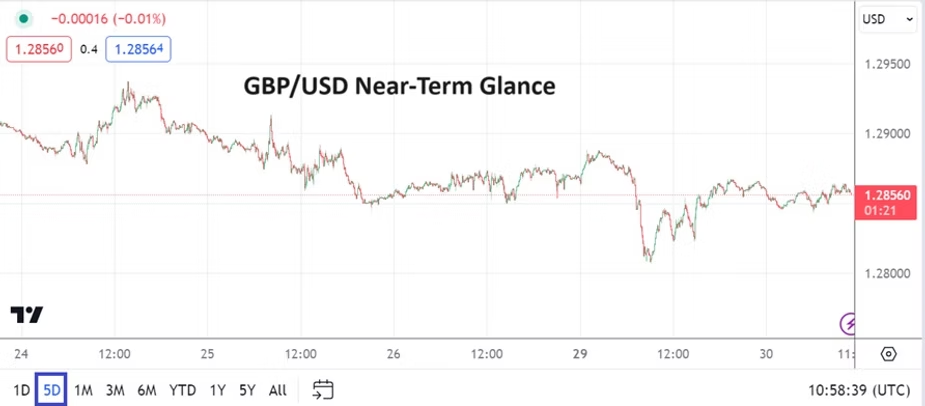
GBP/USD Five Day Chart on the 30th of July 2024

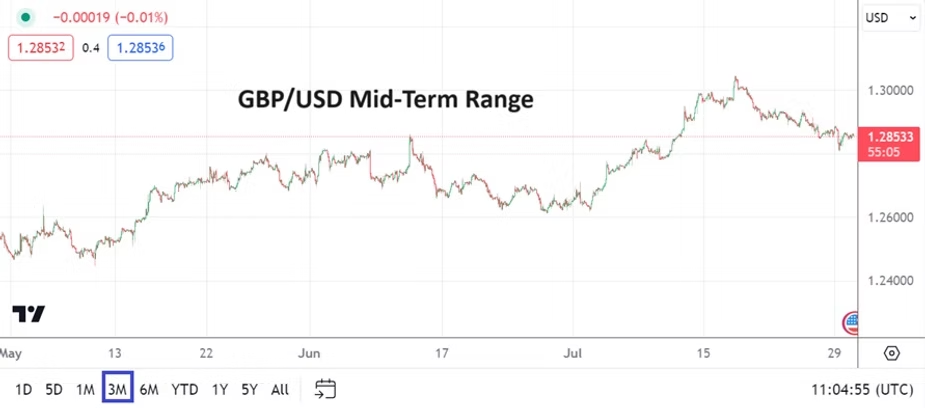
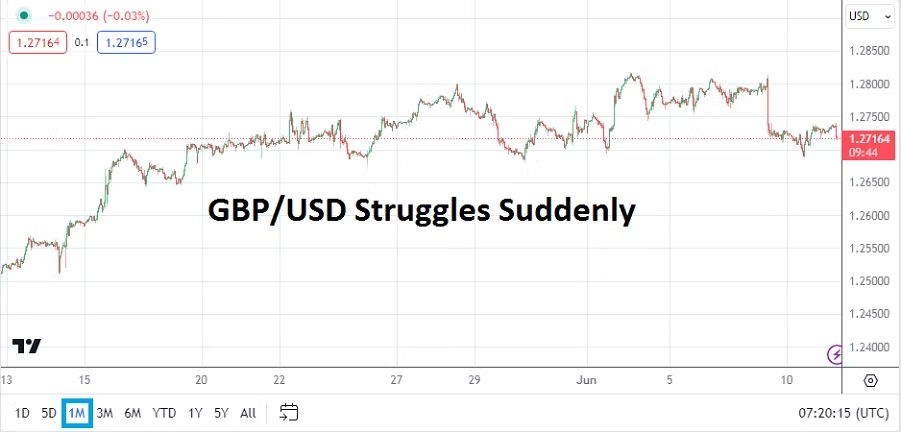
Monday, 29th July, U.K assorted data – Mortgage Approvals, Net Lending to Individuals and M4 Money Supply data was released to various fanfare yesterday and did not shake the GBP/USD dramatically. However, making more important news perhaps was the public statement by Rachel Reeves, who is the new Chancellor of the Exchequer, saying there is an existing 22 GBP billion ‘black hole’ within the U.K government finances that was not accounted for by the Conservatives. In other words the blame game between the new Labour bosses and now banished Tories has begun. While the GBP/USD dropped a bit on this development, it did not crush the currency pair as it returned to the lower depths of its higher three month technical chart.

GBP/USD Three Month Chart on the 30th of July 2024

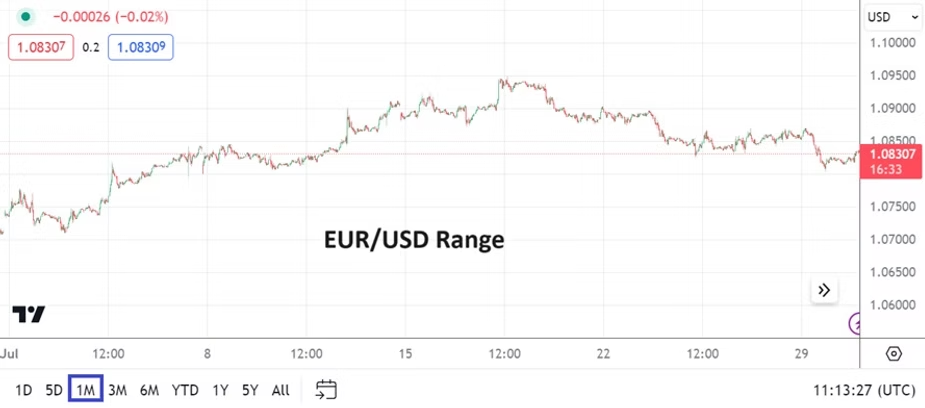
Tuesday, 30th July, E.U Gross Domestic Product – a variety of GDP reports came from across the continent this morning, including France which recorded a slight gain of 0.3% and the German numbers which recorded a minus -0.1% result. The numbers show the E.U remains in trouble for the larger economic nations. Spain did show an improvement, but it is nothing that should start parades of celebration.

EUR/USD One Month Chart on the 30th of July 2024

Tuesday, 30th July, U.S CB Consumer Confidence – this sentiment report for the U.S consumers will get some notice today, but financial institutions are largely braced for tomorrow’s U.S Fed rhetoric. The trading of Forex, gold, equities and their indices will likely remain choppy today as folks take on cautious tones.

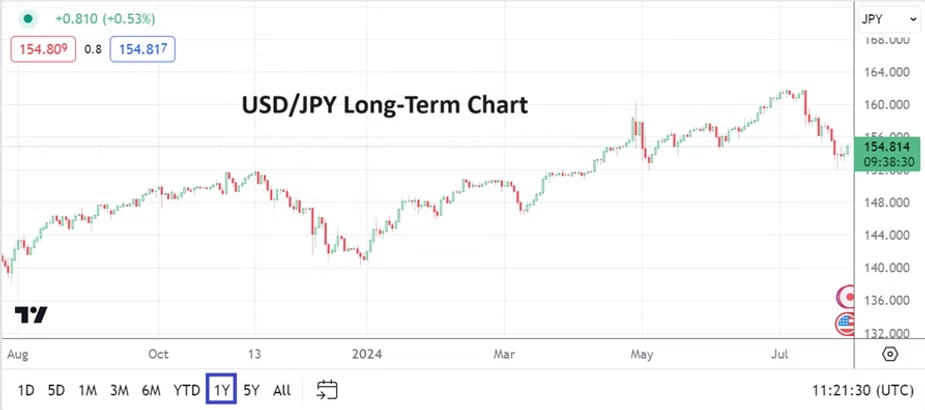
Wednesday, 31st July, Bank of Japan Policy Rate – and here we go ladies and gentlemen. The BoJ can never be counted on to do what is logical in the eyes of many analysts outside of the central bank’s inner circle. Japan has pursued a soft devaluation of the Yen this year. The Bank of Japan should consider an interest rate hike to the 0.20% level from the 0.10% ratio, but will they? Speculators need to be extra careful with the USD/JPY over the next 30 hours. If the BoJ somehow decides to raise and the U.S Fed makes it known they will consider more than one interest rate cut this calendar year, the USD/JPY could see swift price velocity lower. Perhaps the BoJ will stay muted and cautious, allowing for the currency pair to go higher again. However, there have been some signs large players suspect a slight interest rate hike could come tomorrow from the Bank of Japan. Day traders are advised to be extraordinarily careful.

Wednesday, 31st July, U.S Federal Reserve FOMC Statement – the Fed is not going to lower their Federal Funds Rate during this meeting. But what they are expected to do via their FOMC policy rhetoric is to say a cut is likely in September considering the current economic data, and that if inflation continues to show signs of erosion another cut will be considered in November. Recent economic data in the U.S has been mixed. GDP numbers jumped higher, but importantly the GDP Price Index was lower than anticipated last Thursday, and the PCE Price Index on last Friday matched expectations (and importantly didn’t rise). If the Fed sounds optimistic about an interest rate cut in September this will match the expectations of many financial institutions. If they sound cautious about a possible second rate cut later this year, this could cause a hiccup for those with weaker USD centric outlooks over the mid-term.

Thursday, 1st August, U.K Bank of England Official Bank Rate – the BoE is expected to lower the borrowing rate by 0.25% to 5.00%. The GBP/USD has been trading higher in July based on a cocktail of a weaker USD stance. There is plenty of reason to believe the less than sterling economic data from the U.K will help deliver the lower interest rate from the BoE this week. The BoE is likely to have spoken with the Fed and ECB to correlate a gameplan. The Bank of England Monetary Policy Summary should be given attention. GBP/USD traders will have responded to the Fed’s outlook from Wednesday, opening the door to plenty of volatility after the BoE speaks. Meaning that Forex speculators should be extremely cautious if they are pursuing short-term wagers which will be akin to surfing a violent storm.

Friday, 2nd August, U.S Non-Farm Employment Change and Average Hourly Earnings – this data will be anti-climatic. The results from Wednesday through Thursday from the central banks will take a lot of the bang out of these reports. The earnings report should be given some attention, but the financial markets will likely be trading on behavioral sentiment generated over the prior days.

postR192

AMT Top Ten Miscellaneous Fireworks for the 5th of July 2024

AMT Top Ten Miscellaneous Fireworks for the 5th of July 2024

10. Grudge: Ireland and the Springboks begin their rugby two match competition this Saturday in Loftus Stadium, Pretoria. Anticipation is palpable in South Africa. The weather is forecast to be good and the game is expected to be better. The battle between the Green Machines is real. The second game will be played on the 13th of July in Durban.

9. Digital Jitters: Bitcoin is trading near 54,300.00 USD as of this writing. As analysis filters in to explain this particular downturn which essentially began on the 7th of June, the fact is that BTC/USD has become a playground for institutional gamblers while many in the public remain dubious. Excuses such as the U.S election potential outcome and Fed monetary policy are all likely false narratives. Speculation is your answer.

8. Correlations: The USD/ZAR is near the 18.20500 mark, and the USD/MXN is around 18.06000 as of this morning. The South African Rand and Mexican Peso are not correlated, except as currencies that are witnessing a strong amount of political sentiment generate trading behavior in financial institutions which are trying to judge their long-term outlooks. The coalition National Unity Government of South Africa, and the Morena political party of Mexico are in the spotlights and are being watched by anxious investors.

7. National Security: The race for quantum supremacy is real as nations issue significant controls over the export of computing mechanisms to unfriendly competitors as reported by the New Scientist website recently. And the smuggling of semiconductors which are ‘forbidden’ to China who are using organized underground operations in order that Nvidia AI processors can be obtained, was reported on by the Wall Street Journal two days ago.

6. Commodities: WTI Crude Oil is trading above 84.00 USD, the energy has sustained prices above $80.00 since the 17th of June and is approaching mid-term highs, the slight rise in price earlier this week may have been because of hurricane concerns, but buyers have remained strong this morning. Cocoa is still traversing around 8,456.00 USD per metric ton, as it bounces along mid-term technical support levels. In early January of this year Cocoa was trading at half its current value.

5. Jobs Numbers: One of the favorite tools used by salespeople to get day traders geared towards speculating blindly are the monthly U.S Non-Farm Employment Change numbers which will be published today. But because of the U.S Independence Day yesterday, many financial institutions are celebrating a long holiday weekend and will be mostly inactive. Data has become increasingly lackluster from the U.S the past two months with rather pessimistic GDP, PMI manufacturing and services outcomes. Traders considering a dip of their toes into the markets today should be aware that volumes are going to be low which opens the door for volatility. Who will be paying attention to the Average Hourly Earnings report?

4. Markets: U.S Treasury yields are within sight of three month lows, this as the major stock indices via the S&P 500 and Nasdaq 100 make noise at record highs. The Dow 30 is not at a high but within a healthy territory as bullish behavioral sentiment remains rather abundant. When full trading volumes return next week, there is reason to believe the summer rally may continue.

3. Bank of Japan: The USD/JPY is trading below the 161.000 level. Some analysts suspect the BoJ engaged in a limited intervention earlier this week when the currency pair approached the 162.000 vicinity. The Bank of Japan is playing a dangerous game with speculators. The next BoJ Outlook Report is not due until the 31st of July. Until then the USD/JPY apparently is going to traverse in a higher price range with the threat of a potentially engaged Bank of Japan lurking which can punish speculators if they get too comfortable betting on the bullish trend. The price of Gold should be watched as it traverses around 2,365.00 USD, which remains in sight of record highs that touched the 2,425.00 vicinity on the 20th of May. Retail purchasing of gold in Asia is strong as citizens of some nations try to hedge against inflation.

2. Fallout: The Presidency of Joe Biden remains vulnerable as media pundits who have long supported him lurch towards public criticism, and question Biden’s inability to handle unscripted situations. Talk of replacing Biden with another candidate to face Donald Trump remains fever pitched, but there are strong obstacles which will not allow an easy path to unseat the current President. Biden owns his delegates won via Primary voting. He would have to officially relinquish his delegates at the Democratic National Convention in order to allow for a new candidate. The Democratic political party also knows that Vice President Kamala Harris is not particularly well liked, but if Biden were pushed to the side it would open the door for a potentially messy challenge by Harris who would certainly want the Presidency. Getting her to bow out of the race could be another potential disaster for the Democrats, and help create a level of disdain which could trigger a huge landslide for the Republicans in November.

1. Trouncing: Political incompetence is not only a stronghold in the U.S, this as the U.K and France are proving. The GBP/USD is near 1.27685 as of this writing, the EUR/USD is around 1.08230. Both currency pairs have gained this week. The massive defeat of the Conservatives in the U.K last night, and Macron’s political weakness which may increase after the 2nd round of voting this coming Sunday in France has been digested by financial institutions. The GBP/USD and EUR/USD were punished over the past few weeks due to knowledge that the Tories in Britain would suffer a resounding humiliation, and the belief that Macron opened the door for a loss of clout. Financial institutions have proven they are keen observers of politics and are accustomed to shifts of direction via new forces. Some may also say that financial institutions are comfortable as long as they know where power resides in the ‘deep state’ bureaucracies of every nation.

postR165.1

Forex Noise: Influences from Suspicious Data and Rhetoric

Forex Noise: Influences from Suspicious Data and Rhetoric

Yesterday’s GDP numbers from Japan served as evidence regarding things to be considered this week regarding the rather complex web central banks and governments have created for financial institutions and day traders. There are plenty of risk events ahead that should be given attention this week.

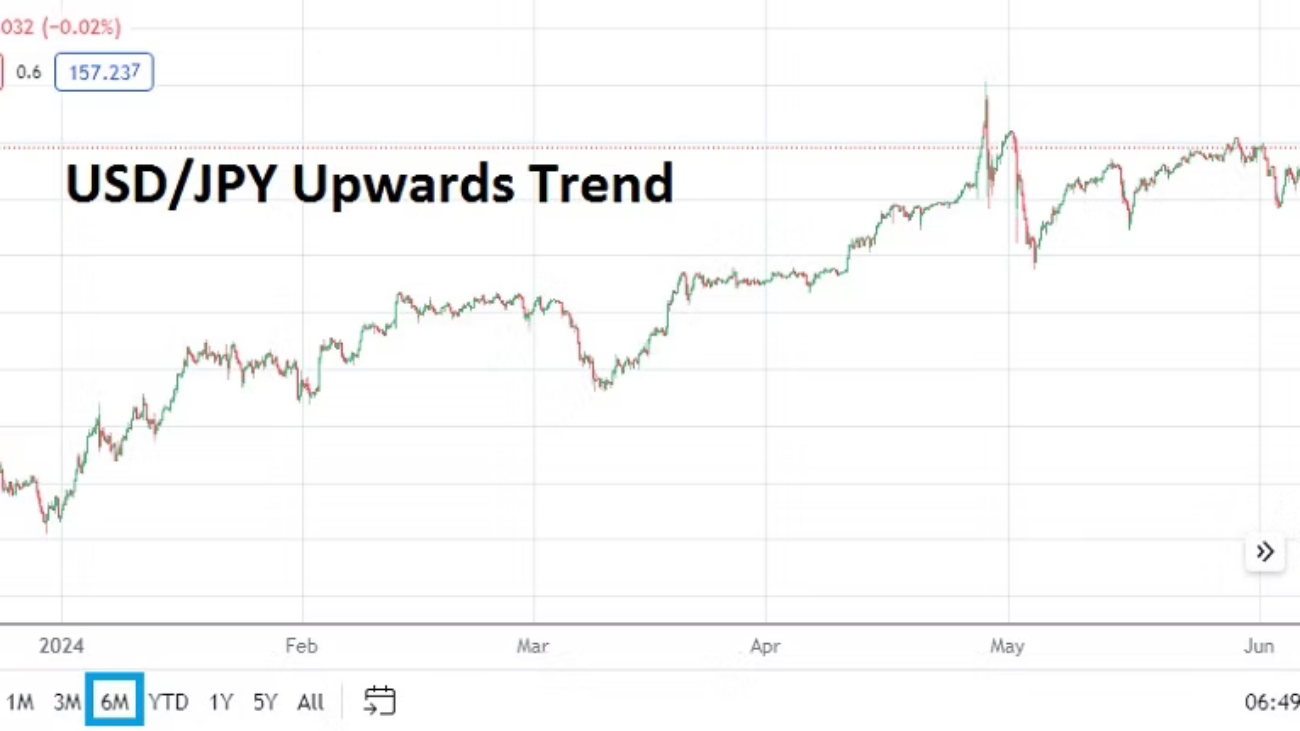
USD/JPY Six Month Chart on the 11th of June 2024

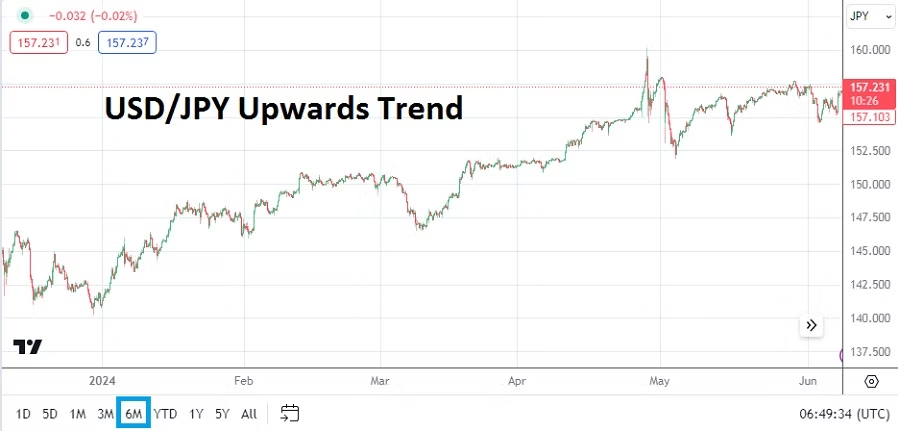
The USDJPY is now again in a dangerous value range near-term as it battles within a higher trend. The BoJ did intervene twice – in late April and early May – to try and damper speculative buying zeal of the USD/JPY and stop overly exuberant selling of the JPY. But they have been acting duplicitous as they have also wanted to no doubt allow a weaker Yen – while keeping its value within control. The BoJ has likely been hoping the Fed is going to sound more dovish this week, but if the Fed sounds more cautious than had been anticipated it could set the table for remarkably dynamic price action in the USD/JPY this week and next. If the currency pair moves too high, the BoJ could intervene again, particularly after the Fed’s FOMC pronouncements. So traders need to be careful.

Traders likely know that tomorrow CPI data and the Fed are on the schedule and these will be key events, but the noise generated around the inflation statistics and FOMC rhetoric should be viewed through the eyes of not only potential reactions from financial institution behavioral sentiment, but the possibility many of the ‘big houses’ have already positioned for the outcomes they believe will play out. In other words day traders should be ready for whipsaw trading results in the immediate aftermath of the Fed’s FOMC Statement and Press Conference.

Last week’s Non-Farm Employment Change numbers provided intriguing forensic data which will stir the suspicions of large players in Forex, equity indices and Treasuries. The jobs numbers via the headline stats looked strong. However, it must be said U.S government hiring continues to pick up, which can be looked at as an expensive way to fuel a sugar high for Americans as the States go into an election season.

Also full time workers continue to add part-time work to their tasks, this to battle rising inflation no doubt which is making their paychecks actually less effective, even if they are getting raises and receiving extra money from the added work loads they are taking on. The costs of products in the U.S are outpacing rising income. Also there is a fact that while part-term hiring is on the rise, full-time hiring is declining along with the average amount of hours employees are working per week.

The Gross Domestic Product numbers from the U.S are in decline. If folks push aside their political ideologies and look at real job numbers on the back pages of Friday’s report, and then ask why people are working less hours it is easy to conclude many businesses are actually cutting back expenses in order to try and remain profitable.

All three major stock indices from the U.S remain in sight of record highs, while there is caution surrounding the mid-term, investors still seem to be banking (wagering) on the U.S Fed to become more dovish over the long-term. Part of this analysis includes the belief that weaker GDP will eventually start to impact inflation and that this conclusion will affect the decision making of the U.S Federal Reserve at some juncture.

The Fed finds itself in a precarious position right now. They need to sound cautiously optimistic. It is an election year and they know this too. The Fed cannot publicly say they want growth to slow down because that would irritate most Americans and the White House, but they know full well that slowing GDP eventually should lower demand for products and thus erode inflation pressures.

Yet turning this full circle, the hiring being done by the U.S government, and the as of yet unmentioned fact the U.S  Treasury has increased its sales of Two Year Notes since around November; and the record amount of money the U.S is spending via a slew of suspicious costs like the ‘student loan forgiveness’, creates a muddled and over-heated fiscal policy which could be interpreted as trying to buy votes from those receiving the gifts. In other words, while the Fed is trying to stress it is battling inflation with higher interest rates and anticipates lowering them eventually, other facets of the U.S government are making this difficult because of the record amount of spending and interest rate payments they are making on short term Treasury notes. Jobs and money in the short-term are candy for voters, but the government has problems ahead regarding conflicting policies because it can lead to more economic problems.

So what do financial institutions think, well they are focused on returns for their clients. They are also looking ahead and trying to swim waters that are murky but offer the ability to profit for themselves too. They might believe they know the landscape just as well as the Fed does, and financial institutions also understand what will be said and can be done may be two different things. What to expect moving forward therefore remains confusing over the mid-term for everyone.

Gold Six Month Chart on the 11th of June 2024

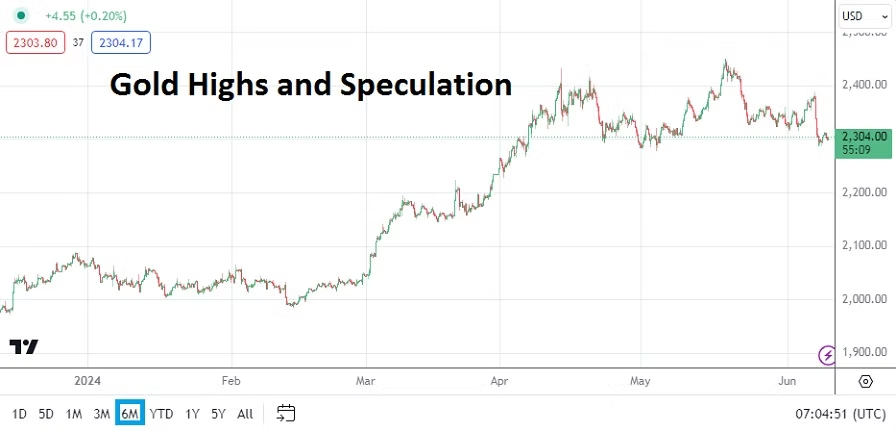
Gold remains highly valued and traders should continue to use it as a barometer. Speculative players are also betting on gold as the USD and its ultimate mid and long-term direction remains complex. The recent downside price action after making record highs in May for the precious metal could reflect the belief the USD is going to become weaker over the mid-term.

Also it should be noted that a handful of commodities are being influenced by an abundance of speculative forces in Copper, Coffee and Cocoa. There has been a lot of talk surrounding the meme stock GameStop the past month. Experienced commodity traders understand the dynamics of speculative influences, pump and dump schemes better than most. Traders tempted to wager in these commodities should ask the same questions speculators in GameStop need to, what is the real value and when will the pin pop the balloon?

Monday, 10th of June, Japan Final GDP Price Index – the result in yesterday’s inflation data came in negative with a climb of 3.4% compared to the expected outcome of 3.6%. This is noteworthy might create more cautious rhetoric from the Bank of Japan later this week.

GPB/USD One Month Chart on the 11th of June 2024
EUR/USD Six Month Chart on the 11th of June 2024

Wednesday – 12th of June, U.S Consumer Price Index – the inflation reports will be watched by all market participants in the financial world. The broad monthly CPI result is expected to come in at 0.1%, which would be below the previous months’s outcome, but the Core monthly statistic is anticipated to match the previous result of 0.3%. The CPI numbers will certainly set the tone for the price action to come in Treasuries, equity indices and Forex. Weaker numbers could spark a selloff of the USD. Stronger numbers could create more bullish ability in the USD. No matter the outcome of these CPI numbers, the U.S Federal Reserve will be standing in the shadows and ready to take center stage a handful of hours later.

Wednesday – 12th of June – U.S Federal Reserve’s FOMC Statement and Federal Funds Rate – unless there is a massive surprise tomorrow, there will be no interest rate cut from the Fed. Anyone who was holding onto the idea of a cut, had these wrong thoughts killed off this past Friday because of the ‘better’ jobs numbers report. The Fed’s monetary policy statement is likely to try and sound cautiously optimistic and will certainly include the residuals of the CPI reports filed earlier in the day. However, financial institutions will want to hear if the Fed is leaning into the notion of cutting the Fed Funds Rate late in the summer as a possibility, or if the Fed sounds so cautious that they suggest a rate cut will not happen until later this year. Let’s remember this is an election year. Yes, the Fed is supposed to be an independent body, but like the Treasury there have been signs developing that the ironclad independence of Fed rhetoric can be influenced by U.S government influences from higher up the ladder. Or perhaps it is just all a happy coincidence and the White House, Treasury and Fed all simply agree on policies which remains rather questionable in the eyes of financial institutions and analysts.

EUR/USD Consideration into Wednesday

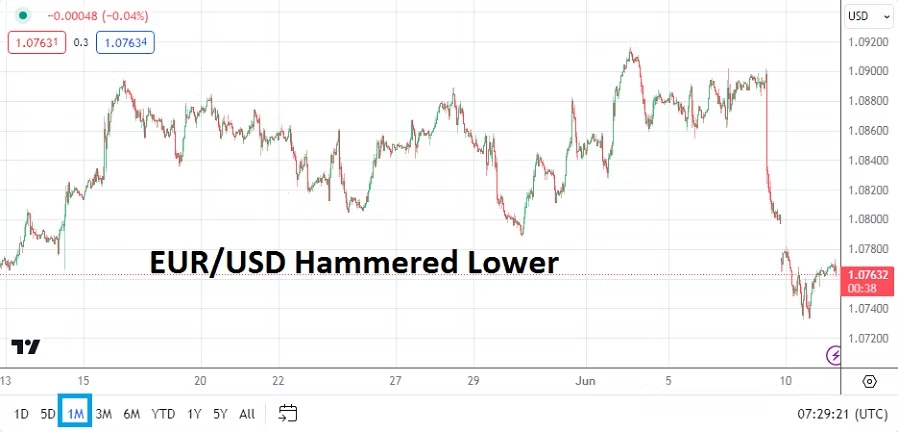
On this note, price action in the EUR/USD is a good representative of behavioral sentiment and the different ways it can be interpreted. EUR/USD will need attention during and after the U.S Federal Reserves’s policy rhetoric. The ECB cut its interest rate last week. However the ECB refused to say it will cut rates more – leaving the EUR/USD in a neutral position. The EUR/USD sold off on Monday, this after selling off strongly this past Friday after the U.S jobs numbers.

The Fed was looked on as having to become more dovish this Wednesday, but that is now in question because of the suspiciously strong U.S jobs numbers this past Friday. And then there is the outcome of the European Parliament voting this past weekend and a turn towards the right which many in the media seem to believe is the end of the democracy, but may simply represent that some citizens of Europe want a return to law and order, solid economic practices, and respect for their historical and cultural heritage.

Meaning that financial institutions aren’t likely to be too scared about the voting outcomes regarding the European Parliament and are likely more focused on the coming U.S inflation report and FOMC meeting results. However, as much as Forex traders are considered to be sophisticated and financially astute, they still reacted to the stronger selling which was sparked yesterday. Perhaps the EUR/USD results the past couple of days will prove to be like the reaction in the India markets, this when the Nifty 50 selloff occurred early last week upon election results being in question, only to experience a reversal later.

Thursday, 13th of June, U.S Producer Price Index – these inflation reports will be watched, but the reaction to the outcome is likely to be muted because of Wednesday’s dynamics from the U.S and behavioral sentiment which will have already been stirred.

Friday, 14th of June, Bank of Japan – the BoJ is expected to keep its Policy Rate at 0.10%. The BoJ will certainly have been paying attention to the USD/JPY this week, this before they make their public announcements. The Bank of Japan like the Fed is in a difficult spot. The BoJ is trying to fuel a stronger Japanese economy with a weaker Japanese Yen, while trying to sound vigilant in order to stop speculative buyers of the USD/JPY who are trying to take advantage of the trend higher. The threat of intervention should be a concern for day traders, even though the BoJ likely doesn’t want to take this avenue because it is costly and they know the only real way to make the Japanese Yen stronger is by increasing the BoJ Policy Rate which they seemingly do not want to do for the moment.

post202

Speculative Notions: Gold and the USD as the Casino Lives

Speculative Notions: Gold and the USD as the Casino Lives

Notes on speculation via the prism of Gold and the USD, with questions about value as short-term wagers versus long-term investment are considered.

Speculative forces eventually run out of power, leaving investors and businesses to conduct their affairs via the assets they are using to proceed with enterprise as they judge fair market price.

Assets like Gold (commodities) the USD (Forex) and equities (corporate shares) are a battleground for those who are trying to make short term profits from price action movement (sometimes – volatility) versus those who are holders of the assets in order to run their lives (corporations, private businesses, finance).

Perhaps the speculative forces are not a Las Vegas environment completely, but it is a strange mix of risk management and gambling. And because of the price changes in these assets as supply and demand are transacted – the realization that the potential of hedging against sudden gyrations in price is used as insurance, but also as a dangerous speculative tool needs to be considered.

Futures, options and cash markets combine and are mixed like a stew consisting of trillions of USD value as global enterprise and financial casinos flourish.

Let’s take a look at Gold as an example. There is only so much physical Gold on the planet earth – a finite amount. There is only so much that can be taken out of the ground in a year. There is only so much Gold an individual can safely store in their home, before they have to use other secure venues. Central banks may have backed away from the ‘gold standard’ but they understand the importance of the precious metal as proven and tested by thousand of years of commerce. Gold can be used as the exchange of value for a good and this will likely remain the case for long time.

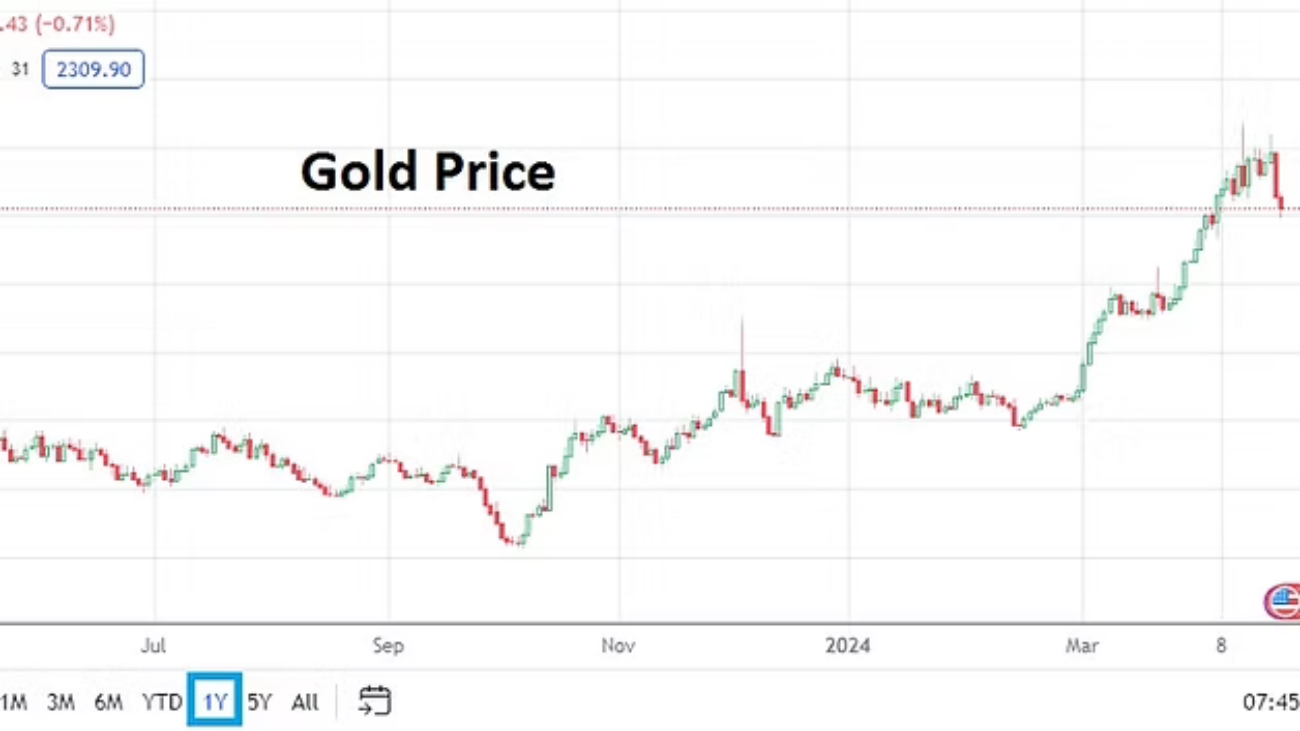
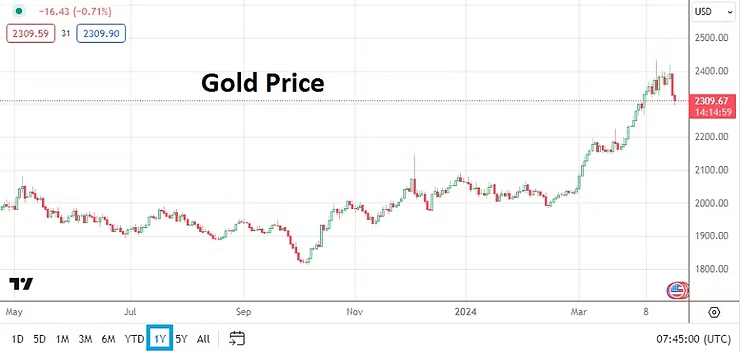
Gold One Year Chart as of 23rd April 2024

The price of Gold serves as a hedge against inflation. The value of Gold today roughly buys you the same things it bought you a thousand years ago, when compared to monetary units which fluctuate like the wind. Because cash in many cases throughout history becomes weakened, losing its value because of bad government policy which causes the people holding the ‘paper’ to lose confidence; and then creates the desire for the precious metal which has almost entered our conscious DNA as a source of value which doesn’t change.

We can speculate on what the Gold price will be today, tomorrow, next year, but we know the fluctuations will roughly equate into what our consciousness – logic – tells us what the main reserve currency that rules the land will be worth – in this case the USD.

For the time being, the USD acts as the reserve currency of the world and is weighed against the value of Gold – literally – remember Gold is valued per ounce in USD.

The ability of Gold to climb to record highs recently was put into question, because at the same time the USD was getting strong. This signaled to traders that a known speculative force in Gold was at play; yes, it could be said a speculative force was at play in the USD too, because of Forex and the Federal Reserve, but Gold rose the past month and a half dramatically while the USD also was gaining value.

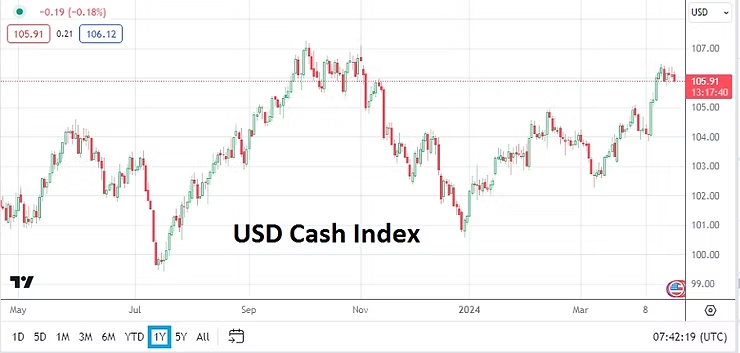
USD Cash Index One Year Chart as of 23rd April 2024

Thus, suddenly the inverse correlation of Gold and the USD which are literally weighed against one another was suddenly off balance. The USD was gaining and gold was rising, and one of them was likely ‘full of hot air’ – an imbalance.

Meaning Gold had become inflated in value perhaps, because of speculative forces. While folks could point to geopolitics, and central banks such as China and Russia and maybe Iran wanting Gold because they are ‘angry’ at the U.S and want to signal they do not believe in the USD. There is only so much money these speculative forces have, and they hold the USD as a store of value too, which means if they bet too much on Gold they can find their positions – weight – imbalanced.

The USD remains the world’s reserve currency, and the value of the greenback particularly as the Fed has come under pressure, via the weight of inflation, and had to admit they cannot cut interest rates until inflation erodes has made the reserve currency stronger again. The use of the USD is easier than using Gold. There is not enough Gold in the world to transact business to business, person to person physical exchange everyday. Thus Gold becomes a ‘store of value’ via inventories not only in secure facilities but our minds too.

The past couple of days have seen Gold perhaps lose value again as the counterweights have come back into focus. It was bound to happen as long as the USD remains the world’s reserve currency in which value can be distinguished versus the commodity.

Speculative forces do run out of power, and now after Gold flirted with the 2,400.00 plus level recently, maybe Gold should return to its values which were seen in late 2023, which is where the USD Cash Index is essentially standing technically. Lets also remember where U.S Treasury yields were during this time, long-term bonds are a measure of interest rates and outlook via the Federal Reserve – used as an insurance and investment vehicle by those looking to lock in ‘returns’. Yes, Treasuries can be speculated on too, but their values coincide with USD legitimacy and the Federal Funds Rate.

It is a thought, a speculative notion, let’s see what happens. What should the speculative price of Gold be now compared to the USD? Should it be lower, closer to the 2200.00 to 2100.00 USD levels? The casino will give us the answers.

postN2.1

Impact: Powell’s White Flag, Inflation Data, and the BoJ

Impact: Powell's White Flag, Inflation Data, and the BoJ

Federal Reserve Chairman Jerome Powell’s waving of the ‘white flag’ last Tuesday, when he admitted that inflation was producing stronger than anticipated data had been essentially wagered on since the second week of March by financial institutions. Powell’s speech acknowledging the Fed will find it difficult to cut the Federal Funds Rate in the mid-term (and probably at best not until late this summer) simply verified Forex positions which had already been taken by large players who could afford to make mid-term wagers.

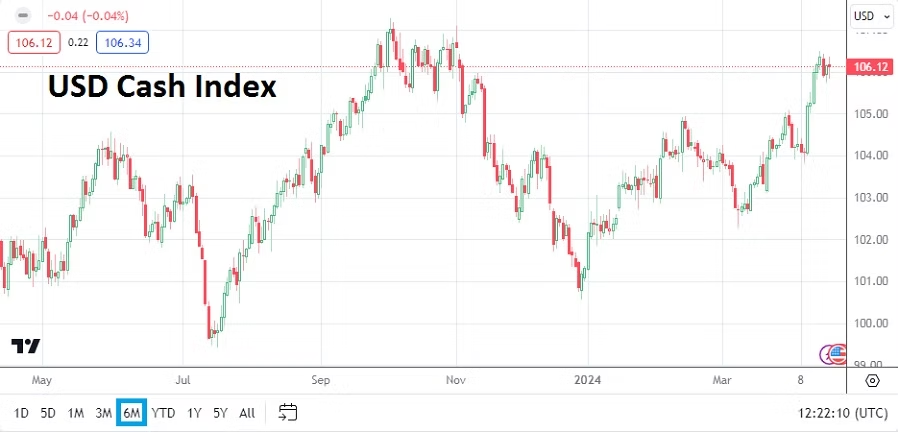
The USD Index has returned to early November 2023 values, and appears able to challenge late September and October prices if inflation data this week causes more volatility, which should put traders of major currencies like the GBP, EUR, JPY and others on full alert. After the USD spiked higher from the 10th to the 12th of April, Forex speculators have seen dynamic action incrementally flirting with stronger USD results the past week and a half.

USD Cash Index Six Month Chart as of 21st April 2024

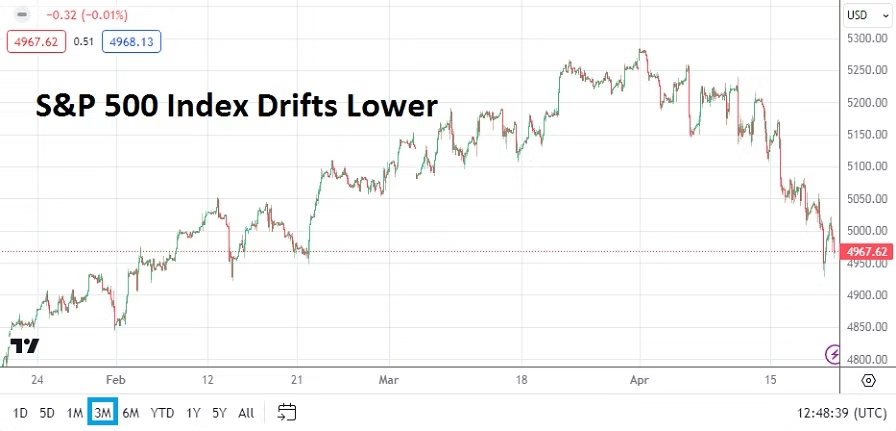
Nervous trading continues to be seen in U.S equity indices. The Dow 30 and the Nasdaq 100 are fighting near ratios they touched in the last week of January. And the S&P 500 is traversing ground from the first week of February.

S&P 500 Three Month Chart as of 21st April 2024

Content

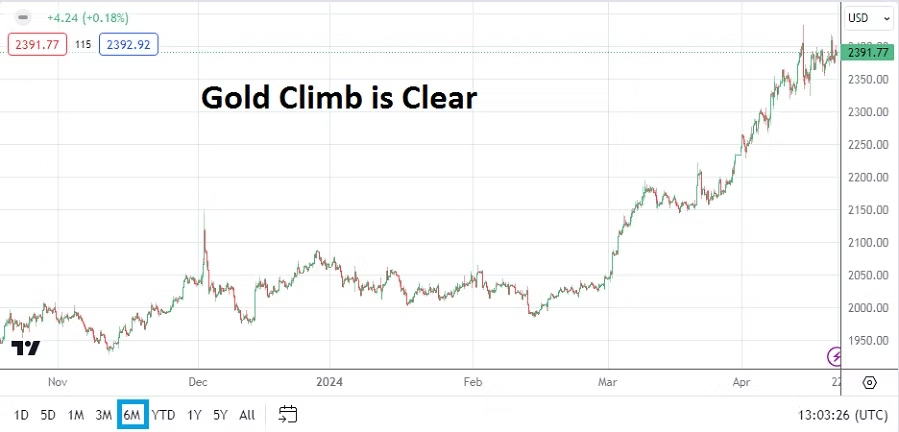
Gold Six Month Chart as of 21st April 2024

Gold remains speculatively high as its hovers near 2,400.00 USD per ounce. The price of the precious metal has not given back its gains made since the start of March and this is intriguing because of the ‘known’ USD inverse correlation, which had proven to work well with the precious metal over the past couple of years but has been stopped in its tracks for the moment. Technically Gold may look overbought, but geopolitical concerns and the prospect that some central banks may be strong buyers could be fueling the rather incremental gains. Retail traders of Gold need to be careful because price action is likely to produce more surprises.

Forex has been turbulent the past handful of months as shifting behavioral sentiment has created choppy conditions. This coming week contains large fundamental risk events via data releases traders should monitor. USD/JPY speculators will also have to contend with the Bank of Japan.

Monday, 22nd of April, China Loan Prime Rates – borrowing costs are anticipated to remain at the current benchmarks. China produced slightly better Gross Domestic Product results last week, but Industrial Production numbers were weaker. Consumers in China remain burdened by decreasing home values and concerns about the economy.

Tuesday, 23rd of April, European Union and U.K Manufacturing and Services PMI – E.U results via the PMI readings are expected to show slight improvements. However the readings from the United Kingdom are anticipated to come in flat. The EUR/USD and GBP/USD will be affected by the results, but the currency pairs will likely remain focused on U.S data later in the day.

Tuesday, 23rd of April, U.S Purchasing Managers Index – the Manufacturing and Services sectors are expected to produce slightly better readings than the previous month. These results will be interesting taking into consideration the Empire State Manufacturing Index numbers last week were bad. The PMI statistics will provide some impetus to the broad Forex market.

Wednesday, 24th of April, Australia Consumer Price Index – inflation data is anticipated to be higher than the previous month’s results. While stronger inflation is not something that will make consumers happy in Australia, stubborn price results may keep the AUD/USD slightly steadier. The currency pair is traversing values last seen in the second week of November 2023 as of this writing.

Thursday, 25th of April, U.S Advance Gross Domestic Product and Price Index – these numbers are certain to have an impact on all financial assets. A decline in growth is anticipated in the U.S compared to the previous month’s result, but the Price Index is expected to show an increase. Jerome Powell having come out last week and said inflation is causing uncertainty within the Federal Reserve, may have a bit of inside knowledge regarding this GDP inflation number and ‘tipped his hand’. If this inflation gauge is higher than anticipated it could pour fuel onto the already volatile USD. All Forex traders need to pay attention to these results and be prepared with solid risk management.

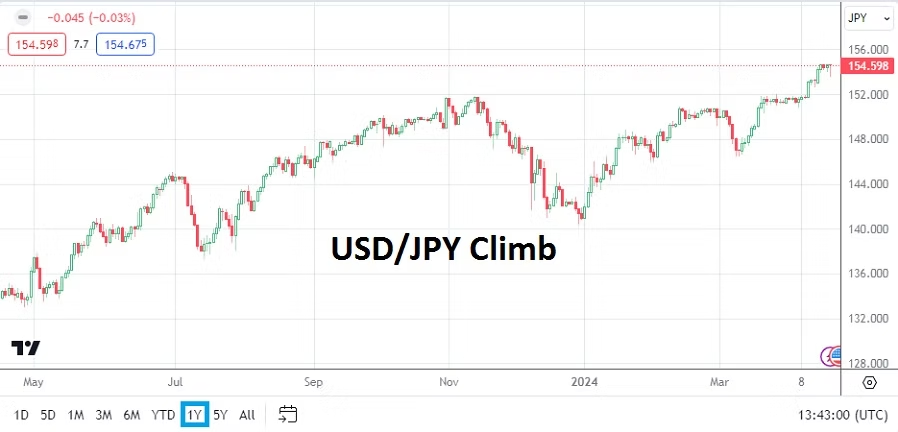
USD/JPY One Year Chart as of 21st April 2024

Friday, 26th of April, Bank of Japan – in what has already proven to be a couple of weeks filled with drama for the USD/JPY, the BoJ will step into the limelight. During their last central bank meeting the Bank of Japan increased the Policy Rate to 0.10%. It was the first time the BoJ hiked interest rates in 17 years. The USD/JPY is trading at values last seen in June of 1990. The Nikkei 225 has come off of recent record heights, but the famed Japanese stock index is also trading within territory seen in January of 1990. Business activity via the Core Machine Orders and the Tertiary Industry data last week were stronger than anticipated.

The Bank of Japan may want to maintain a weaker USD/JPY equilibrium to continue fostering domestic growth. However, many financial analysts have been calling on the BoJ to become more hawkish regarding monetary policy. The interest rate decision is certain to cause immediate volatility before and after the Policy Rate is made public. USD/JPY traders need to be prepared for fireworks. A slight raise of the interest rate seems to be needed, but after the March hike the BoJ may prove conservative again. The 34 year lows now being seen in the Japanese Yen are astonishing.

Friday, 26th of April, U.S Core PCE Price Index, and Inflation Expectations – the data from the government, and the reading from the University of Michigan will close the curtain on a big week of economic statistics for all traders. The USD will react to these outcomes. It should be noted the previous Inflation Expectations data from the University of Michigan caused a storm in Forex when it came with 3.1% gain.

post 190

AMT’s Dubious Dozen Forex March 2024 Sentiment Outlook

AMT's Dubious Dozen Forex March 2024 Sentiment Outlook

The Dubious Dozen is comprised of nations who are wealthy or should be, and face criticism because of domestic and sometimes international policies. As the reader you are free to differ from the AMT opinions, which are admittedly subjective. The ratings and outlooks are not delivered as trading advice, but as a viewpoint to inform. The work presented is a living document. The nations and currencies listed, and data and critiques shall change monthly according to points deemed important.

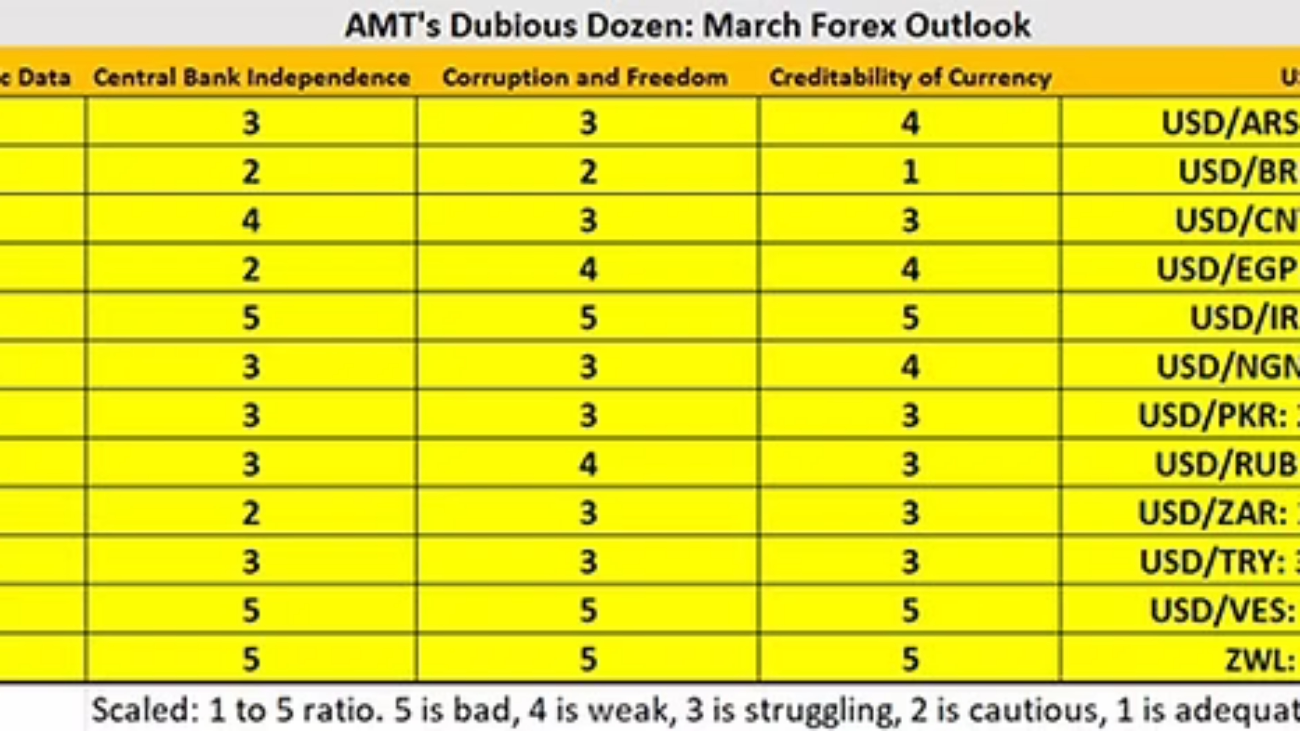
AMT Dubious Dozen March 2024 Forex Sentiment Outlook

AMT’s Dubious Dozen Monthly Forex Sentiment Outlook has a scaled ratings table, listing nations and currencies that are judged to have concerns regarding outlooks due to behavioral sentiment factors within financial institutions and among citizens, based on economics, transparency, and risk concerns about government fiscal policy, and ‘leanings’ toward autocracy. Metrics like inflation, gross domestic product, direct foreign investment information, debts and budgets, and foreign currency holdings which are gathered from various public sources will sometimes be presented.

AMT also tries to judge the trust level the citizens of the nations have in their domestic currencies via exchange rates, black market FX factors, and alternative assets held to guard against potential risks – like digital assets, cryptocurrencies, and gold.

A lack of credibility in a ‘fiat’ currency is dangerous and often leads to black markets for Forex in search of safe-haven currencies like the USD. The lack of a credible domestic currency also leads to price inflation because people selling goods fear the value of the domestic currency is losing value rapidly. Rampant inflation also leads to a desire to sidestep taxation on occasion.

Problematic inflation and inability to collect taxes may open the door for certain countries to contemplate and potentially initiate Central Bank Digital Currencies in order to control domestic economic activity. It is not a coincidence that China, Iran, among others are considering implementation of CBDC’s. The potential of CBDC’s by governments could allow for draconian laws for citizens of certain nations. The ability for a government to check on how all money is used via a centralized blockchain could lead to a more authoritarian landscape.

Quick Insights of the Dubious Dozen Nations Listed:

Argentine Peso (ARS): The election of President Javier Milei has started to ignite changes within fiscal policy and has created hope among international observers of a less corrupt Argentina. However, many obstacles still must be overcome by the newly elected leader and the government, and many economic issues will take patience from the public to improve. Patience has not been a classic virtue in Argentina, unless one considers the ability to accept massive corruption and go on with everyday life as a supreme power.

Brazilian Real (BRL):  Concerns regarding potential fiscal policy changes hover over the existing government which leans towards a socialistic bent and has shown a tendency to align itself with some of the most autocratic governments. Some businesses and investors are anxious about the potential of government mismanagement to develop under President Lula da Silva. The listing of Brazil will create catcalls from some, but the fear in some circles is what might happen if fiscal policy which is led by a socialistic government becomes too populist. For the moment the BRL appears to be under control, which is a good thing. However, the Brazilian Real should be kept in sight for any signs of nervousness.

Chinese Yuan (CNY): The domestic economy remains troubling and fragile. Deflation abounds. Manufacturing, electrical usage, real estate, export numbers should be monitored by observers. Government policy, and transparency reliability due to political control by the Communist Party is problematic. Concerns are causing a backlash among many foreign investors who are looking elsewhere for long-term business endeavors, when they have the ability to divest. Stats: IMF expected GDP for China in 2024 is 4.6% for 2024. China is suffering from current monthly deflation around minus – 0.80%.

Egyptian Pound (EGP): Corruption is problematic within national institutions, bureaucracy issues plague businesses due to interference. Central bank independence is in question as the government faces a litany of fiscal problems. Worries persist about a devaluation for the EGP in order to try and get inflation under control which is currently near 26.5%. The Egyptian Pound is viewed as highly vulnerable.

Iranian Rial (IRR): The nation remains mired under international sanctions. The government practices a heavy hand regarding domestic policies which carry the threat of prison and worse because of the ability to oppress the general population. The Iranian Revolutionary Guard which has several branches of ‘service’ helps the ruling government dominate and benefits monetarily, which makes the Iranian leadership and its ability to rule comparable to a mafia. The current inflation rate in Iran is estimated to be around 32.5%. Unemployment in Iran is estimated to be above 10% and 60% of the total economy is believed to be centralized by the government.

Nigerian Naira (NGN): Corruption remains a troubling part of Nigeria. Although it is a massive exporter of commodities including ‘energy’, and has a dynamic demographic, government policy is highly questionable. Nigeria’s GDP is estimated to be around 3.46% as of December 2023. A problem for Nigeria is its shadow/informal market economy, which is estimated to be nearly 58.2%. Corruption and an inability to legitimately collect taxes hurts the government’s finances and its citizens. The Nigerian Naira is weak and is losing credibility.

Pakistani Rupee (PKR): Economic concerns regarding export and import disparities are a major factor in the lack of foreign currency reserves. A new government has been elected in Pakistan which has been able to form a ruling coalition. Issues regarding corruption remain troubling. Pakistan has also formed a stronger relationship with China, particularly as they search for strong economic partnerships, but this may leave them vulnerable politically. The IMF is a large factor in the current valuation of the PKR. The currency has been stable for a handful of months but needs monitoring.

Russian Ruble (RUB): Although the war with the Ukraine battles on, Russia has found a way to continue to create growth within its economy even in the midst of sanctions. The nation has found other ways to trade and acquire products from abroad via ‘new’ trading channels largely coming from Central and Eastern Asian routes. Russia’s government is seen as highly one dimensional and rules with an iron fist.  Russia’s economy appears to have grown at a remarkable rate of 3.6% during 2023. Core Consumer Prices were about 7.15% higher as of January 2024 per annum. Vladimir Putin has played a rather impressive game of economic poker with the ‘West’ in light of the Ukrainian war, much to the chagrin of his critics.

South African Rand (ZAR): The African National Congress has been in power nearly 30 years. Concerns about mismanagement and corruption abound which are believed to influence questionable fiscal policy. The South African economic outlook is weak due to problems regarding reliable electrical supply, logistical problems at ports, and bureaucratic interference led by government policy which leans towards central controls.  A large amount of immigrants from other African nations are still coming to South Africa as a cheap labor source, but professionally trained people are still unfortunately leaving South Africa via emigration in large numbers. The South African Rand has been within the grips a long-term trend of losing value, and while not entirely vulnerable its credibility is becoming shakier.

Turkish Lira (TRY): A thriving business and manufacturing base exists in the nation. However, inflation due to fiscal policy in Turkey remains an impediment for corporations which are forced to deal with a currency that many within the nation are worried about because of its incrementally weaker outlook which has been noteworthy for a handful of years. There are concerns about current government leadership regarding transparency and a tendency to interfere in Turkish Central Bank decisions. Financial institutions and their corporate clients have a difficult path as they try to mitigate the constant threat of high inflation in Turkey due to questionable fiscal policy.

Venezuelan Boliver Soberano (VES): The failed socialistic nightmare continues to cause squalor in Venezuela. If you want to see the potential of where the VES is headed look to Zimbabwe and the years that a combination of despotic rule under the guise of socialism has delivered. Venezuela should be a rich and successful country due to its natural resources, but it is led by a band of thieves. The black market rate of exchange if it can be found in cities like Caracas is much higher than the ‘official’ listed rate of the government. The VES has little to no credibility.

Zimbabwean Dollar (ZWD/ZWL): The nation is still trying to fix the problems caused by government mismanagement under the authoritarian leadership of Robert Mugabe which led to hyper-inflation and the destruction of the economy. Zimbabwe has a long way to go and issues to overcome to achieve the reintroduction of a domestic currency which does not suffer from a lack of faith from its citizens, which have led to a wide abandonment of the Zimbabwean Dollar and demonetization.

A national currency that is tradable internationally does not exist, the government is aiming for another attempt at monetization in 2025 if economic stability is created. The Botswana Pula (BWP), USD, and ZAR are among other currencies that are used and accepted by the population to transact business. The government tries to monitor all FX exchanges after years of misrule, but this does not stop a vigorous black market. There is an accepted perception the current leadership is trying to fix the massive problems which have created havoc in the nation for a few decades, but the road back to normality is still perilous.  

postN103.1

Friday’s Forex Violence and Coming Attractions for Traders

Friday's Forex Violence and Coming Attractions for Traders

While the past month has continued to produce positive trends upwards for traders speculating on equities via U.S indices with record breaking values, Forex has been rather brutal for many day traders if they have remained stubborn.

Short-term trading conditions in Forex again proved violent this past Friday, as the Non-Farm Employment Change and Average Hourly Earnings reports came in stronger than anticipated and set off fireworks in the major currency pairs.

Fed Chairman Jerome Powell offered a clue to speculators paying attention last Wednesday, during the Fed’s Press Conference in which he spoke about the tight labor market. It seems likely the Federal Reserve knew the jobs data was going to be rather robust and hinted.

The Federal Reserve did continue to speak about interest rate cuts, but they certainly have not given an exact timetable when more dovish policy will begin. This has left many speculators, corporations and financial institutions nervous and the results via choppy trading conditions the past handful of weeks are proof.

USD strength the past month has caused headaches for many Forex speculators, but it needs to be said that many major currency pairs are lingering near values post-December 13th 2023, this was when the Federal Reserve made it ‘official’ that a more dovish monetary policy would develop in 2024.

Early wagers by financial institutions in December indicated they believed a March Federal Funds Rate cut would be seen, but after last Wednesday’s Fed’s FOMC Statement and Friday’s jobs numbers it seems more likely for the moment a May interest rate cut could be a legitimate target.

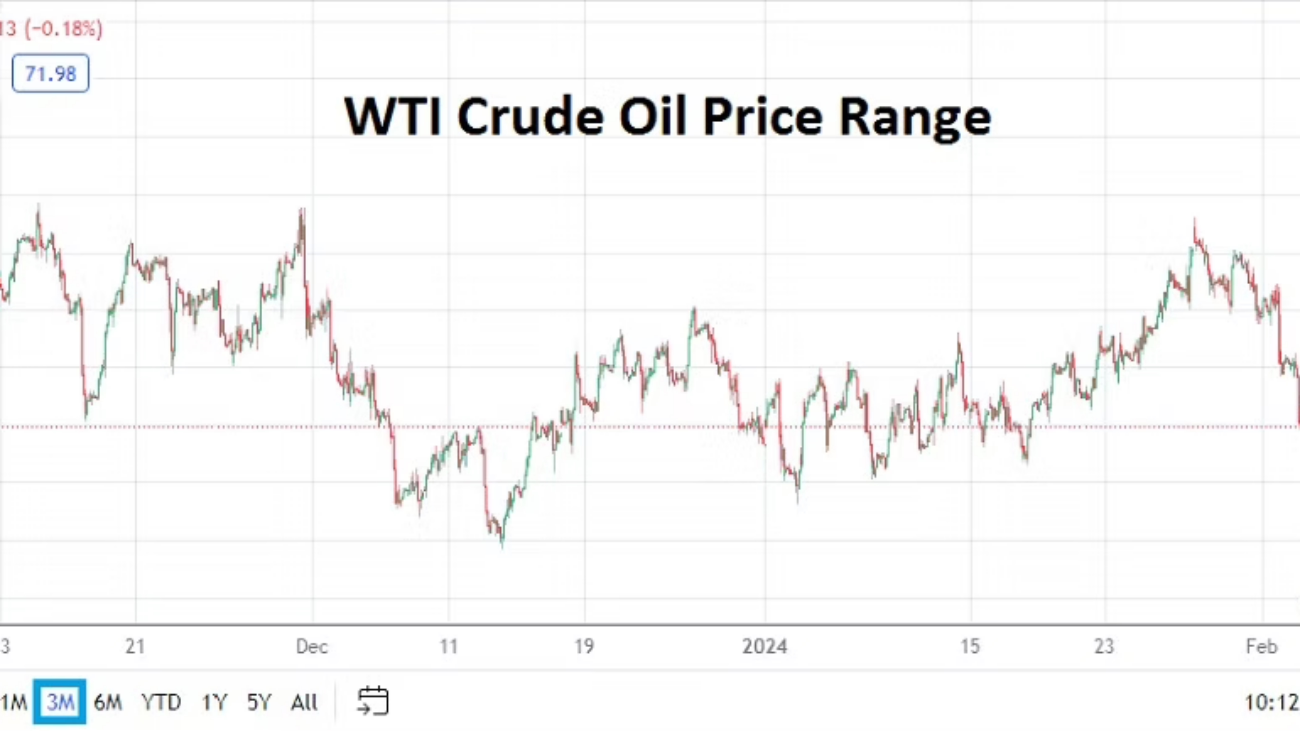
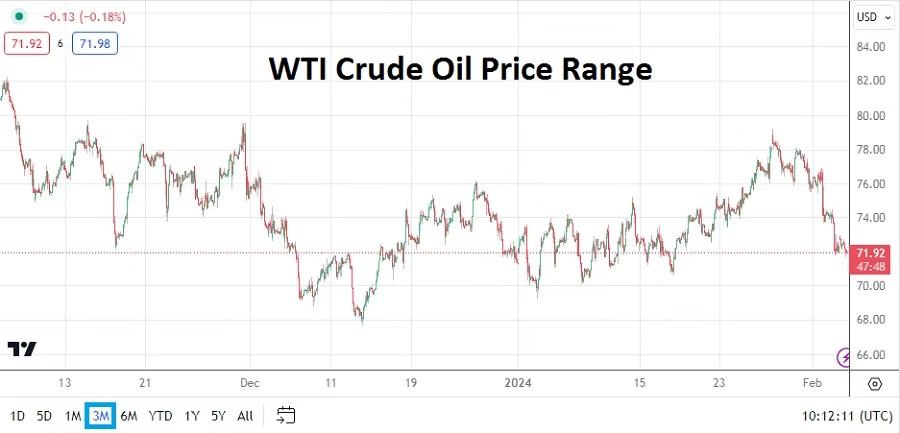
WTI Crude Oil Three Month Chart as of 5th February 2024

Risks do Abound and Speculators Should Remain Cautious Near-Term

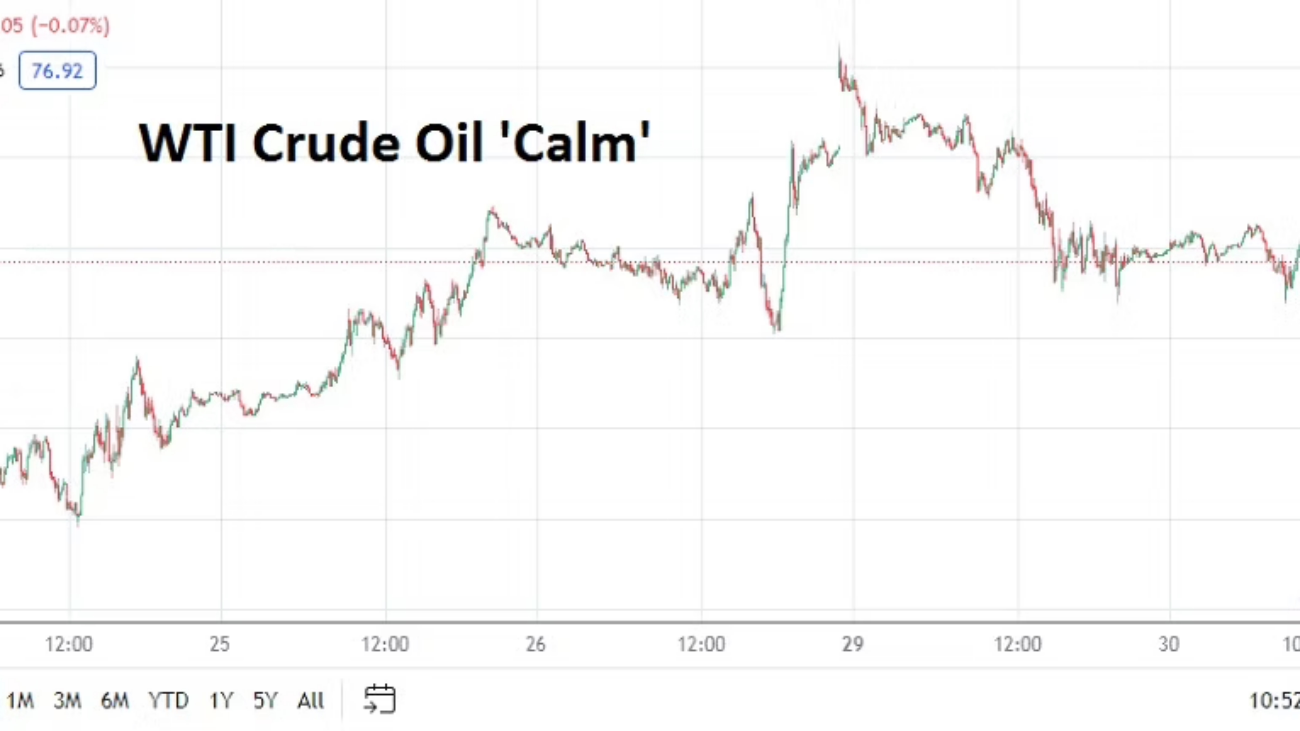
Inflation concerns via knock-on affects from logistical complications via Red Sea chaos which disrupts the Suez Canal shipping is a legitimate threat and needs to be monitored. However, the price of WTI Crude Oil traded in a remarkably stable manner last week as noise was heard from the Middle East. In early price action this morning the commodity has been polite and remains within sight of 72.00 USD per barrel. The lack of a nervous reaction in Crude Oil thus far could keep global investors calm.

This week will be limited regarding important economic data. However, there will be plenty of rhetoric offered by U.S Federal Reserve members in the coming days via conferences and interviews. Forex traders have needed to combat an array of reversals as price equilibrium has created rather tenacious price realms and this may continue near-term.

There are time periods when traders should be willing to accept that methods regarding short-term trading tactics need to be adjusted. January has shown that financial institutions were of the mindset the USD had gotten too strong. And although it appears financial institutions continue to lean towards a weaker USD outlook in the mid-term (as proven by lower moves in the USD leading up to the jobs report on Friday), the surprisingly good jobs data certainly caused the USD to bounce upwards.

Technical considerations of the USD at this moment are important, fundamental data is still coming in rather mixed, this as financial houses wait on central banks to start reacting with interest rate cuts due to lackluster economic data. It is important to note that some analysts have started to murmur the ECB and BoE may have to move first regarding interest rate cuts – if they have the courage to take this action sooner rather than later. The U.S economy has remained rather strong regarding consumer sentiment and this is causing angst among Fed observers. The U.S jobs numbers on Friday highlighted this nervousness.

Monday, 5th of February, U.S Services PMI via ISM – an outcome of 52.0 is the expected reading, which would be higher than the previous result of 50.6. If the Services number meets its estimate and doesn’t exceed the expectation, this would calm nervous financial institutions which may believe the U.S economy may be too strong for the Federal Reserve’s liking, and cause some hawkisk sentiment regarding monetary policy to linger. A weaker number from the Services PMI could help the USD selloff slightly, a stronger outcome could result in more USD buying short-term.

Tuesday, 6th of February, Australia Cash Rate and Monetary Policy Statement via RBA – no major changes are expected from the Reserve Bank of Australia. Global central banks have taken a wait and see approach as they likely remain nervous regarding the potential of inflation to remain stubborn in the mid-term. The RBA is probably going to follow the ECB, BoE and Fed’s stances from last week and remain conservative.

EUR/USD Six Month Chart as of 5th February 2024

Wednesday, 7th of February, Germany Industrial Production – though this report is not viewed as a major economic event for traders the results should be watched. The EUR/USD has been hit by rather volatile conditions as financial institutions try to anticipate central bank moves. If the German data comes in weaker than expected (a minus -0.4% result is anticipated) this could make the EUR/USD slightly more bearish.

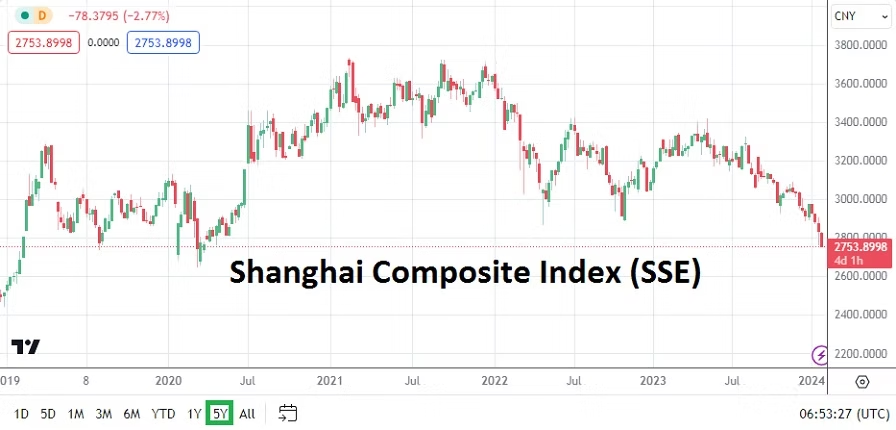
Shanghai Composite Index One Year Chart as of 5th February 2024

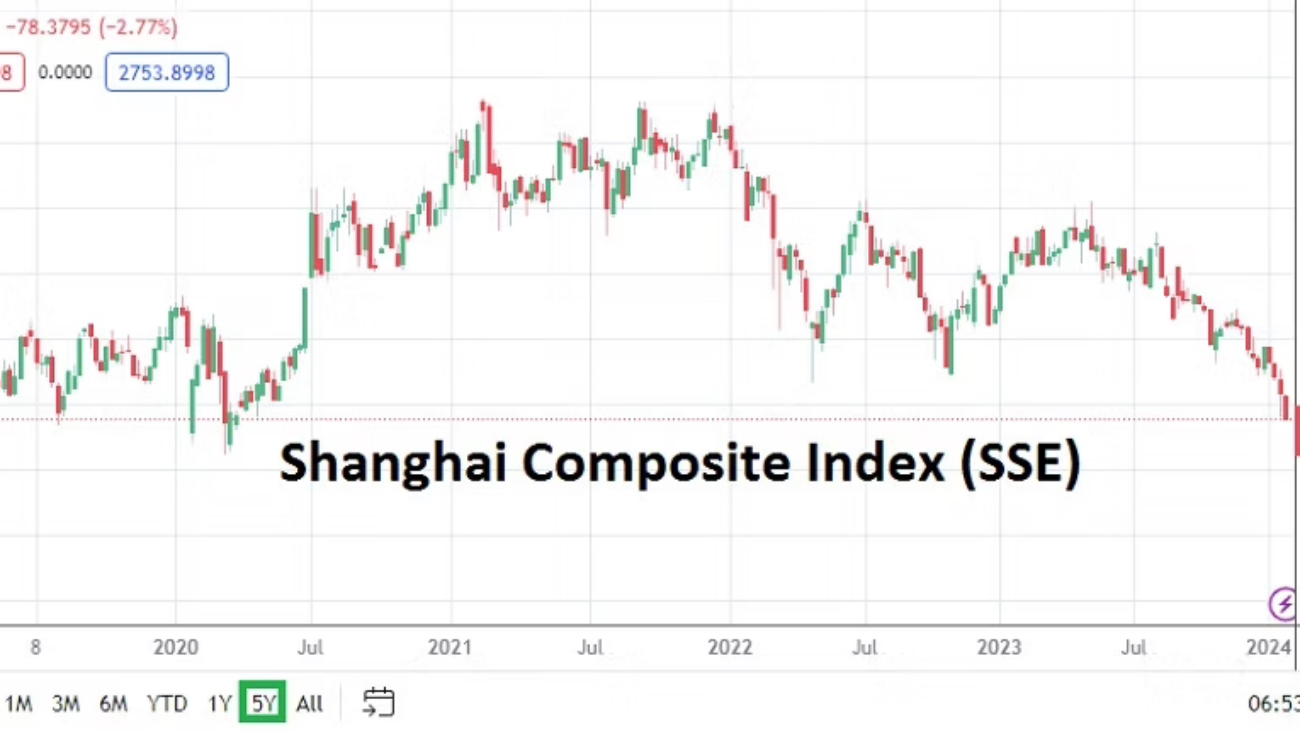
Thursday, 8th of February, China CPI and PPI – economic data from China has not improved and foreign investors are not showing an appetite for risk. Deflation remains a concern in China, and although the official government rhetoric promised sunnier days ahead, fundamentals in real estate, manufacturing and consumer driven data offers troubled prospects. The Consumer Price Index from China is anticipated to be worse than the previous month’s outcome. The downturn in the SSE (Shanghai Composite Index) is now challenging the 2,700.00 vicinity.

Friday, 9th of February, Canada Employment Change – Canadian economic data has been lackluster and analysts have been quite critical of government policy. Having said this the USD/CAD is largely going to stay in a USD centric mode going into the weekend.

postN87

AMT Top Ten Miscellaneous Raindrops for the 2nd of February

AMT Top Ten Miscellaneous Raindrops for the 2nd of February

10. Risk Appetite: WTI Crude Oil almost serene around 74.00 USD, as bombastic rhetoric remains loud involving the Middle East.

9. South Africa: President Cyril Ramaphosa expected to announce the country’s election date when delivering the State of the Nation Address on 8th of February.

8. Tesla: Negative media coverage and an always defiant Elon Musk gravitate towards each other, share price is around 188.88 USD.

7. China: Shanghai Composite Index (SSE) hovering near 2,730 as of this moment.

6. Gold: After near-term lows a challenge of highs as USD has gotten slightly weaker.

5. Central Banks: All bark and no bite yet, as financial institutions desire interest rate cuts from Federal Reserve, European Central Bank and Bank of England.

4. India: Nifty 50 Index near 21,865 as of this writing, it has gained more than 101% over the last five years – yes, plus one-hundred and one percent.

3. Forex Reactions: Recent short-term volatility and reversals seen as expected, patience still needed as USD mid-term outlook remains weaker.

2. U.S Equities: S&P 500, Nasdaq 100 and Dow Jones 30 have produced nervous results but still near record highs, as U.S Treasury yields have edged lower this week.

1. Data: U.S Non Farm Employment Change and Average Hourly Earnings today, this as some major corporations shed employees but labor market remains rather tight. Broad markets will react to the outcomes.

postN102.1

Holding the Line: Patience and Outlook via Fed and Risks

Holding the Line: Patience and Outlook via Fed and Risks

Traders who participated in last week’s markets and yesterday’s sessions likely feel as if the broad markets are ‘holding the line’, this as more impetus is awaited in the coming days. There are certainly a few factors weighing into current speculative dynamics. Concerns about a possible escalation in the Middle East conflict are heightened, tomorrow’s U.S Federal Reserve shadows, and ongoing quarterly corporate earnings publications are affecting behavioral sentiment.

U.S indices remain within record territories and U.S Treasury yields continued to decline yesterday. The short-term buying of U.S equity indices has stirred rumblings about the dangers of participating in a bullish marketplace, this as warnings about a possible selloff are heard. However, risk appetite remains sustained and the decline in U.S Treasury yields has helped push institutional money back into equity indices.

Day traders pursuing Forex have likely had a tougher time the past few weeks. The USD has shown an ability to strengthen and is traversing in sight of important technical price ratios – within the major currency pairs – which are traversing value realms seen around the 13th of December.

Inexperienced traders often dream of making a quick killing via profitable positions and being able to relax afterwards. However, experienced traders know the importance of having patience and not getting overly ambitious when market conditions are choppy. Financial institutions have shown a clear sign that the USD was oversold in December. Solid trading results are mostly attained through methodical approaches.

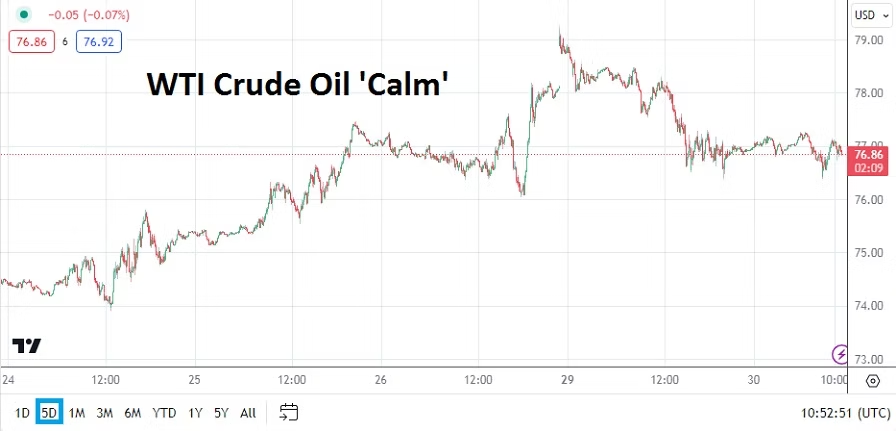
WTI Crude Oil Five Day Chart as of 30th January 2024

Aside from the U.S central bank’s dynamics which will come tomorrow. Middle East geopolitical risks have created headlines the past few days. An attack on a Singapore flagged oil tanker last Friday caused a spike in price with WTI Crude Oil. And this past weekend’s attack on a U.S military outpost in Jordan has many people anticipating a retaliatory action. WTI Crude Oil remains in what appears to be a wait and see mode as it hovers above 76.00 USD as of this writing.

As a trader it is important to push personal bias to the side, perceptions regarding the talking points of geopolitics and social policy are interesting, but sometimes not related to the daily trading results of assets being pursued. A trader can disagree with how political events are being dealt with, but they must contend with the interpretation the market is providing regarding price. Most traders suffer from some type of bias and this should be considered when speculating.

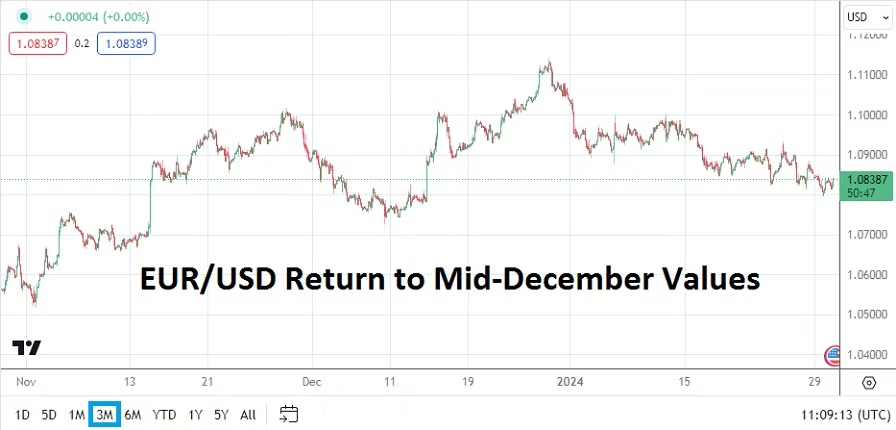
EUR/USD Three Month Chart as of 30th January 2024

Tuesday, 30th of January, Germany Preliminary GDP – growth numbers from Germany came in negative with a result of -0.3% today. This result will continue to put pressure on the ECB to lower their interest rate in a quicker manner, this compared the likelihood they want to mirror the Federal Reserve’s actions. The danger of being reactive instead of proactive is a widespread criticism of central banks, but the ECB sometimes appears to be the least aggressive regarding monetary policy. The ECB is likely to remain a step behind the reality of the lackluster economics data coming from the European Union.

Tuesday, 30th of January, U.S Consumer Confidence via Conference Board – recent retail sales data has shown American consumers continue to be aggressive buyers. Better than expected sales data has likely made the U.S Fed slightly nervous. If today’s Consumer Confidence data is stronger than anticipated this could create a bit of buying momentum in the USD short-term.
Wednesday, 31st of January, U.S Federal Reserves FOMC Statement and Funds Rate – the Fed meeting may result in a lot of noise with little actual results, except to drive day traders crazy with momentary volatility. The Fed is likely to continue to point to interest rate cuts, but the hoped for cut in March is probably not going to be given voice. Instead expect a rather cautious tone speaking about inflation concerns still present, and a U.S economy which is showing a rather stubborn ability to grow.

Thursday, 1st of February, U.K Bank of England Monetary Policy Report and Official Bank Rate – no change is expected to the key lending rate from the BoE. However, the central bank will likely mention it sees signs of positive movement in the U.K economy based on the better than expected PMI numbers last week. Yet, the Bank of England will probably also mention it remains concerned with inflation. Meaning the BoE will continue to potentially dance in step with the Federal Reserve.

Friday, 2nd of February, U.S Non-Farm Employment Change and Average Hourly Earnings – following in the wake of the Federal Reserve’s rhetoric which will have been seen on Wednesday, these job numbers will move the markets but may not produce their typical price action. Layoffs are starting to be seen in some large U.S tech companies, but plenty of this knowledge has already been factored into equities and Forex.

postN100.1

Forex Volatility as Central Banks, GDP, U.S Equities Shadow

Forex Volatility as Central Banks, GDP, U.S Equities Shadow

Perhaps it is good that today will see a lack of important economic data which will affect the markets. It might give a chance for day traders to relax and to gauge the thinking of financial institutions and investors before Central Banks, and important growth and inflation numbers shift behavioral sentiment later this week. While Forex has remained a minefield, U.S equity indices have soared to record heights. More volatility will come.

Shanghai Composite Index Five Year Chart as of 22nd January 2024

Risk assessment is always critical, it needs to be mentioned the Shanghai Composite Index is again facing severe selling pressure. This is a direct result of foreign investors losing faith in China’s economic policy and political maneuverings. The slump in Chinese equities is also hitting the Hang Seng Index in Hong Kong badly. Deflation is a legitimate fear in China. The dual consequences of a failing housing sector and crumbling equity values is harming Chinese citizens.

While the strong selloff in Chinese equities would have caused a massive amount of reaction in the global markets a few years ago, the ability to shift assets elsewhere by foreign investors who were active in China has likely reduced potential knock on effects in other global equity markets. It must also be pointed out that China continues to sit on a massive amount of USD holdings. China is a large investor in Africa and their attempt to steer influence there remains abundantly clear.

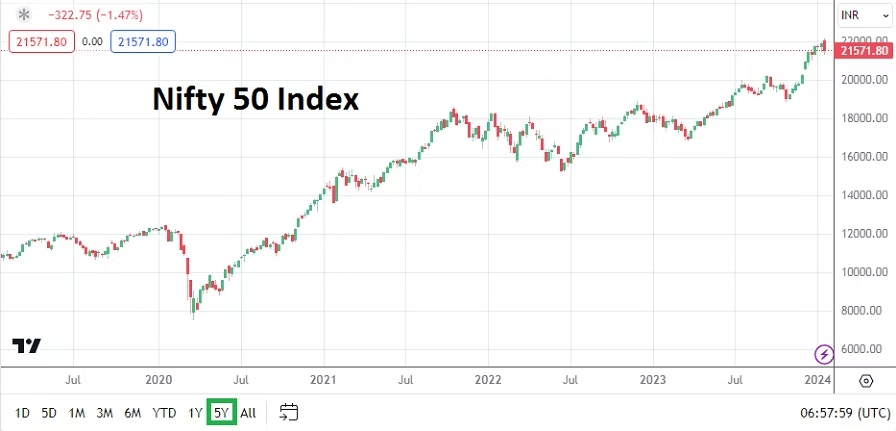
Nifty 50 Index Five Year Chart as of 22nd January 2024

India has directly benefited from the outflow of investments from China. A look at the Nifty 50 Index shows the upwards momentum India’s equity market has enjoyed as it has started to attract more direct foreign investment. The ability of the India stock market to go up while China struggles is a barometer worth studying. Outflow vs. inflow.

Monday, 22nd of January, U.S Conference Board’s Leading Index – the reading is not at the forefront of consideration for investors, they will be watching the results of U.S Treasury yields and stock indices more closely than this report.

Tuesday, 23rd of January, Bank of Japan Monetary Policy Statement and Outlook Report – no major change is expected from the BoJ quite yet. The USD/JPY has been volatile and provided a solid trend upwards since the start of January. Day traders looking for a reversal lower to develop should be extremely cautious. Data from Japan has been mixed and the BoJ is likely to remain conservative. The weaker JPY helps exports from Japan it must be remembered, but it also may factor into inflation creeping into the Japanese economy.

NZD/USD One Month Chart as of 22nd January 2024

Tuesday, 23rd of January, New Zealand Consumer Price Index – the inflation report is expecting a result of 0.5%, which would be below the previous result of 1.8%. The NZD/USD has taken a bearish dive since late December. Like all major currencies the New Zealand Dollar remains USD centric. Volatility in the NZD/USD may occur via the inflation numbers from New Zealand, but like the USD/JPY it may find its biggest impetus coming from afar – U.S data and the Federal Reserve outlook.

Wednesday, 24th of January, E.U and U.K Flash Manufacturing and Services PMI reports – Germany and France are anticipating slightly better Manufacturing Purchasing Managers’ Index numbers. Services numbers are expected to be slightly weaker from Germany. Solid results from these combined publications could help the EUR/USD create a bit of bullish momentum.
The U.K numbers via their Manufacturing PMI is expected to be slightly better than the previous outcome, but the Services number a bit worse. Economic data from Britain remains mixed to lackluster. Higher inflation numbers last week did the Bank of England no favors. The GBP/USD will be affected briefly by the results, but trading in the Forex pair is likely to remain geared towards thoughts about U.S data coming this Thursday and Friday.

Wednesday, 24th of January, Bank of Canada Rate Statement and Monetary Policy Report – the key lending rate from the BoC is expected to remain unchanged. However, Canadian economic numbers have been problematic, and while the BoC may want to wait for the U.S Federal Reserve to move first regarding interest rates, critics of the BoC are becoming louder. The USD/CAD will react to the Bank of Canada’s rhetoric, but unless there is a major surprise the currency pair will remain heavily USD centric.

Thursday, 25th of January, European Central Bank Main Refinancing Rate and Monetary Policy Statement – the ECB is expected to provide no major changes. The 4.50% interest rate is anticipated to stay in place. The ECB will likely ‘sound’ a calm tone and say while improvements are being seen in the E.U, that areas of difficulty remain but are understood and being managed.

Thursday, 25th of January, U.S Advance Gross Domestic Product – the key growth number from the U.S is anticipated to show a gain of 2.0%. This number will get a reaction in Forex, equities and bonds. The Federal Reserve’s FOMC meeting is next week and this GDP result will factor into their monetary policy rhetoric. Because it is an election year in the U.S, this number will also get an additional ‘sounding board’. Day traders should be careful before and after the noise caused by this growth report.

Friday, 26th of January, U.S Core Personal Consumption Expenditures – the vital inflation number carries an estimated gain of 0.2% before its release. As much as the Fed watches the GDP number, the inflation result via the Core PCE is a huge component of the U.S central bank’s thinking. The USD will react to this report and Forex traders should brace for a reaction from financial institutions. If the number is weaker than expected the USD could find selling momentum, if the number is stronger more USD strength could be seen. Folks looking at the GDP and Core PCE reports should also look for potential revisions to previous months results, which could cause another wave of volatility in the markets if they are significant.

postN97.1

Cautious Trading as Key Data and Outlooks Await Impetus

Cautious Trading as Key Data and Outlooks Await Impetus

The start of trading this week could prove to be slightly adventurous for speculators as financial institutions return to the markets and start to take positions for their clients. Having survived the past two and a half weeks of holiday season trading, market action will now focus on immediate, mid and long-term goals and outlooks depending on time frames and targets. Slightly nervous trading was on display last week, but some traders may believe their is plenty of room for more optimism and may be suspicious of the results delivered.

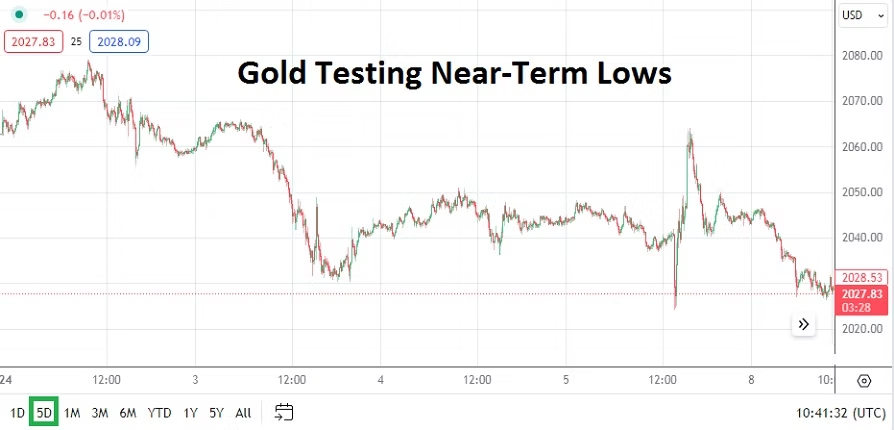
Gold Five Day Chart as of 8th of January 2024

Day traders should look at some barometers before they participate in the near-term. Gold has come off highs seen late last week, but remains within the higher elements of its six month price range. Its selloff from apex values last week perhaps correlates to U.S equities and USD turbulence which has also been experienced.

Last Friday’s reaction to the U.S jobs numbers was fascinating. The numbers delivered an initial shock to folks who wanted to react quickly. Hiring the last month increased more than expected, which might have caused the momentary bullish surge in the USD. Only to be confronted swiftly by further investigation of the jobs data which showed previous months statistics had been revised downwards. This acknowledgement set off selling of the USD and technical whipsaw results.

Day traders participating in Forex this past Friday likely experienced a range of emotions. If the market correlations are correct regarding the USD and the reactions seen, trading in gold also seemed to mirror the price action. Interestingly, gold touched a low of nearly 2024.00 USD on Friday in the wake of the jobs report, surged higher to around 2064.00 and then reversed lower again.

The notion that gold is trading within sight of Friday’s lows is interesting for both the precious metal and trying to understand where USD sentiment will lean early this week.

Behavioral sentiment remains rather optimistic, however nervous headlines during the holiday season may have caused cautious shadows to grow darker, particularly as light trading volumes affected results. Today and tomorrow will prove interesting in the broad markets, this as financial institutions return in full and as they brace for U.S inflation numbers later this week.

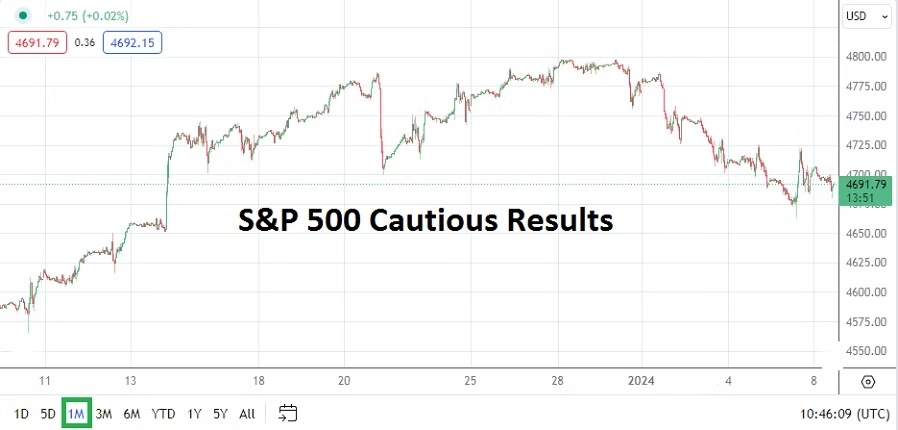
S&P 500 One Month Chart as of 8th of January 2024

Nervous short term trading is likely today and tomorrow as price equilibrium is sought. U.S equity indices have backed away slightly from their flirtations with all-time highs, but even as selling developed the past week highs are still in sight and are likely still being dreamed about by many institutions. U.S Treasury yields will also be a good indicator for Forex traders early this week regarding how comfortable financial institutions are with their current outlooks.

Monday, 8th of January, Germany Factory Orders – a slight gain of 0.3% was reported today, which was below the 1.1% expectation. The German economy is starting to show signs of economic growth, but has major hurdles to still climb. The lackluster German numbers may keep the ECB in a rather neutral stance for the mid-term. Which might help a bullish EUR/USD outlook if the U.S Fed is seen as the first major central bank which will have to cut interest rates.

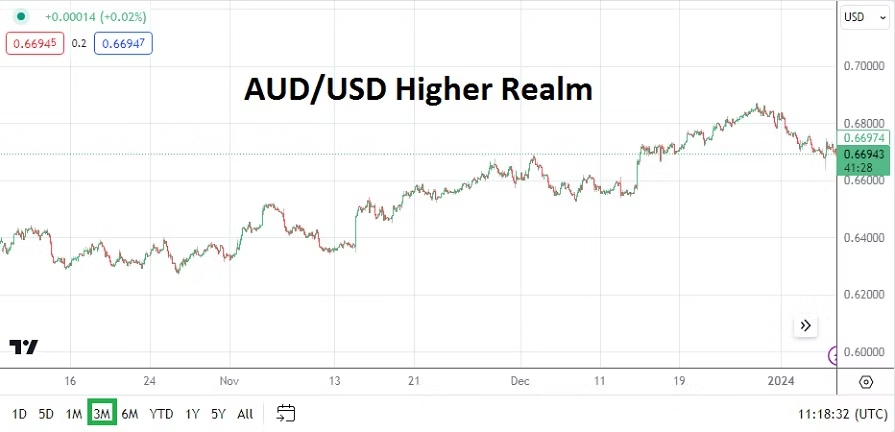
AUD/USD Three Month Chart as of 8th January 2024

Tuesday, 9th of January, Australia Retail Sales – the anticipated climb of 1.2% is significantly higher than the negative -0.3% result from last month. A good outcome via the Retail Sales could help the Australian Dollar reignite some positive momentum. CPI data will come from Australia on Wednesday, which will certainly affect the AUD/USD too.

Wednesday, 10th of January, U.S Ten-Year Bond Auction – though day traders may not be too involved regarding the sale of U.S Treasuries, the results from the auction will have an affect on Forex. U.S Treasury yields should be monitored.

Thursday, 11th of January, U.S Consumer Price Index – a slew of CPI results will get the attention of financial institutions. The inflation data is expected to show a slight decrease in the Core CPI result, but show a slight gain in the broad number. This will likely be the most heavily traded day since the third week of December. There will be a reaction from the inflation reports. If the numbers come in around the estimates this may help the bearish mid-term outlooks for the USD. If the results are shockingly stronger, the USD would turn bullish. Day traders need to be careful in the midst of the Consumer Price Index publications because volatility is expected.

Friday, 12th of January, China CPI – a decrease is expected from the Asian giant. Deflationary concerns are shadowing China’s economy. The expected number of minus -0.4% would actually be an improvement compared to the last reading which was minus -0.5%. The USD/CNY has been rumored to have been experiencing some ‘hands on’ management from China. Investors continue to be nervous about China’s economic outlook and would like to see signs of improvement.

Friday, 12th of January, U.K Gross Domestic Product – a gain of 0.2% is being anticipated. Any growth from the U.K GDP would be welcomed considering the recessionary data which has been lingering. The GBP/USD will react to the results and bullish momentum in the currency pair could be sparked by a better than anticipated number.

postN87

AMT Top Ten Miscellaneous Views for the 15th of December

AMT Top Ten Miscellaneous Views for the 15th of December

10. Book: Doctor Zhivago by Boris Pasternak.

9. Music: Moanin’ – Charles Mingus Big Band 93 Nostalgia in Times Square. Fantastic jazz.

8. Cryptocurrencies: Game of double dare continues as BTC/USD trades near 42,600.00. ETH/USD resides around 2,250.00. USDT remains at 1.00 and BNB/USD (yes, from the much criticized Binance operation) hovers near 250.00. Be careful out there, folks.

7. Argentina: Newly elected President Javier Milei has begun to enact economic reforms as the nation’s citizens and businesses hunger for better days. Will the Argentine Peso begin to stabilize?

6. South Africa: As the nation celebrates a public holiday for its Rugby World Cup victory today, it should be asked if the people are ready to vote for a political change in 2024? Or have things not gotten bad enough yet?

5. Central Banks: Federal Reserve ‘officially’ turned to a neutral/ almost soft monetary policy stance on Wednesday, the BoE and ECB followed Fed’s dance steps yesterday. GBP and EUR have gained and look intent to flirt with July 2023 values.

4. U.S Treasuries: Yields continue to erode and are near values seen half a year ago, with further decreases seemingly ready to occur mid-term.

3. Commodities: Gold is producing near-term speculative upwards muscle. Copper traders appear to be eyeing higher values.

2. JPY: Price velocity has propelled the USD/JPY to fresh lows, this as the currency pair gains speculative interest and behavioral sentiment shifts.

1. All Time Value: Dow Jones Industrials has achieved record heights. Nasdaq Composite and S&P 500 indices at one year highs as investors show risk appetite.