Nifty 50 20260708

India Insider: Foreign Investors and Their Selective Choices

Return of Global Investors into the Indian Marketplace

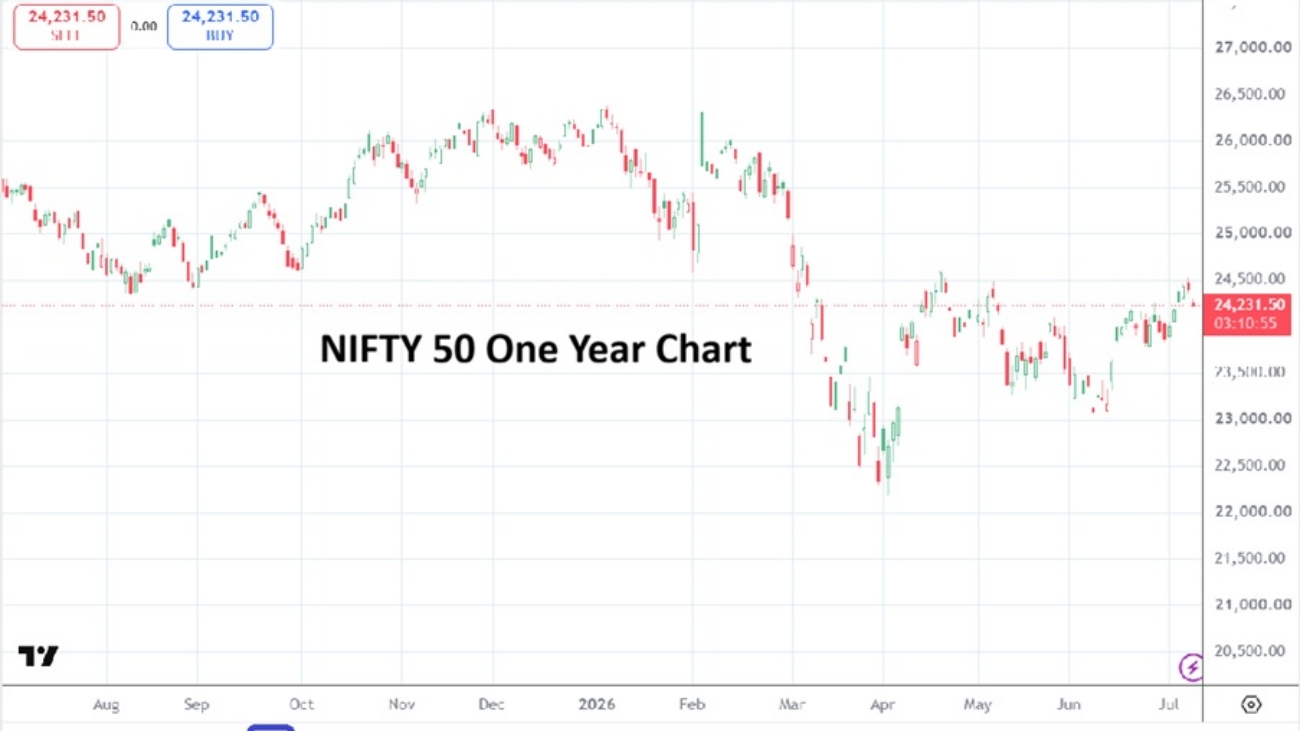
Global investors are gradually returning to Indian assets after months of persistent outflows as risk appetite sentiment has been ignited by an extended ceasefire between the U.S and Iran. Energy prices have moved in India’s favor, sparking favorable conditions. 

Despite recent flare ups in the Strait of Hormuz, Brent Crude has dropped about 30% in the past quarter, easing India’s fuel concerns as the world’s third largest Crude Oil buyer. AI trade rotation is gathering pace in Asia also, this as investors pull money from chipmakers that powered this year’s rally and hunt for cheaper ways to deploy their cash.
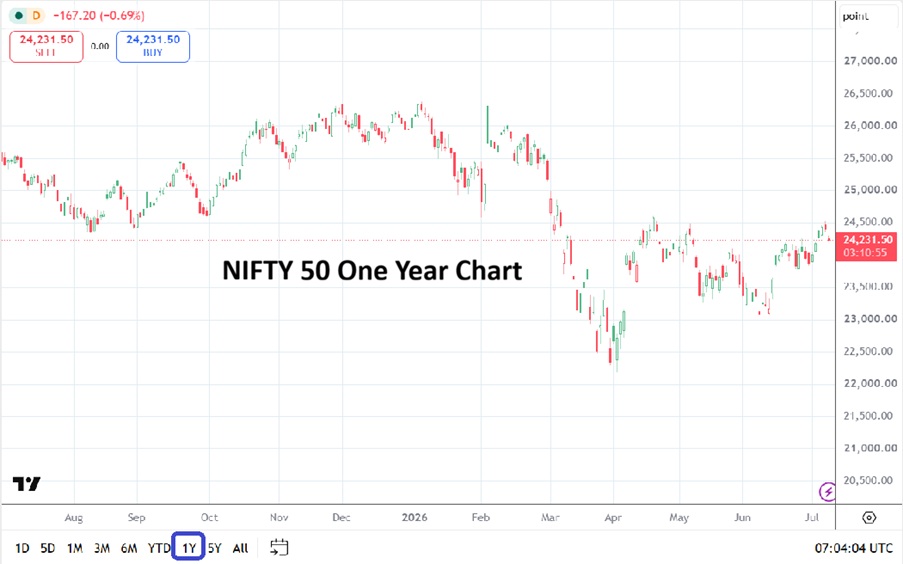
NIFTY 50 One Year Chart as of 8th of July 2026

Indian equities beat its emerging markets peers in June by its biggest margin in seven months. The Reserve Bank of India’s measures to attract foreign currency deposits and overseas capital have eased funding concerns for lenders, record foreign inflows into government bonds have helped stabilize the Rupee and improve liquidity conditions. According to Bloomberg, “Goldman Sachs favors 30-Year government bonds as lower oil prices allay inflation and fiscal risks”. 

Combined with resilient credit growth and improving asset quality, India’s banking sector is once again attracting global investors, this after trading at meaningful discounts to historical valuations for quite a while.

Second Opportunity May Be Information Technology

Indian IT companies have undergone a sharp valuation correction over the past two years. Unlike the post pandemic period, when large Indian technology firms traded at substantial premiums to global peers such as Accenture. These premiums have now narrowed considerably after earnings growth slowed, and enthusiasm surrounding Artificial Intelligence shifted investor attention towards US technology companies.

As highlighted in Business Line magazine, the sector is undergoing a healthy valuation reset, with investors increasingly questioning whether premium valuations remain justified without a corresponding acceleration in earnings growth.

However, the discussion extends beyond valuations. Artificial Intelligence is fundamentally reshaping the enterprise software industry. For decades, Software as a Service (SaaS) companies dominated enterprise technology by offering standardized cloud based solutions that were cheaper and easier than developing software in-house. That advantage is now beginning to erode.

Large AI companies such as OpenAI and Anthropic are building AI agents capable of operating across multiple enterprise applications through a single conversational interface. Rather than competing within individual software categories, these horizontal AI platforms could reduce the importance of stand alone enterprise applications by seamlessly connecting them. At the same time, AI native startups are targeting specialized business functions, while advances in generative AI are encouraging enterprises to revisit the traditional ‘build versus buy’ decision as they develop customized software internally at significantly lower costs.

For Indian IT services companies, this represents both a disruption and a new opportunity. Routine application development and maintenance may become increasingly automated, placing pressure on traditional outsourcing revenues. Yet demand for AI integration, cloud migration, cybersecurity, enterprise transformation, and customised AI deployment is likely to create an entirely new investment cycle. The winners will be firms that evolve from conventional software service providers into strategic AI implementation partners.

Risks ahead for Indian Markets

The near term outlook is not without risks for India. A weak monsoon could push food inflation higher. Elevated Crude Oil prices may widen India’s external balances. And a stronger USD with elevated U.S interest rate yields could moderate foreign capital inflows. The technology sector also faces a structural challenge as Artificial Intelligence reshapes the traditional software business model, requiring companies to adapt more quickly than in previous technology cycles.

Even so, the broader macro backdrop appears to be improving. Policy measures have eased liquidity conditions, corporate balance sheets remain healthy, and valuations across several sectors have become considerably more attractive after an extended correction. Rather than chasing expensive momentum trades elsewhere in emerging markets, global investors may increasingly look toward Indian sectors where fundamentals are strengthening while expectations remain relatively subdued.
Copy and paste the text from AMT that you want to share

Nasdaq100 20260707

Benefits of a Moderate Restoration While Threats of Growing Fissures are Heard

Sentiment: Financial Institutions and November Outlook Amidst Possible Gridlock

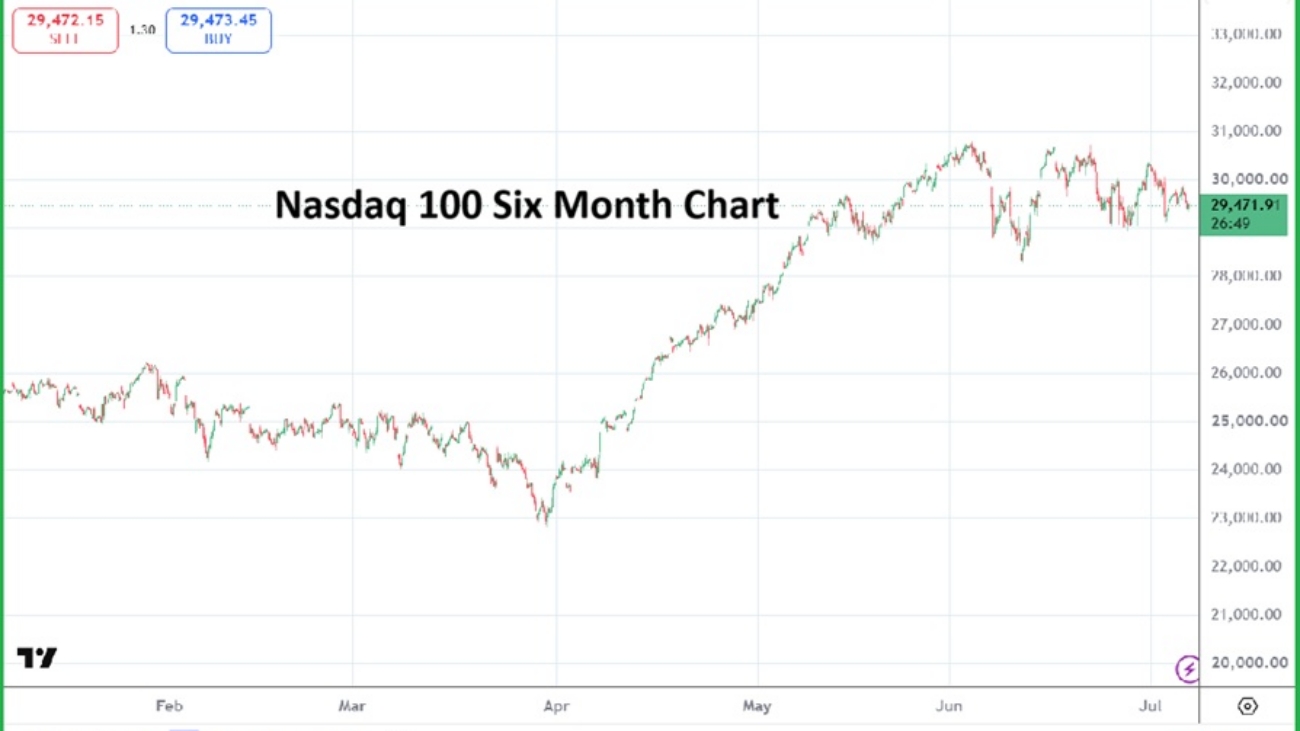
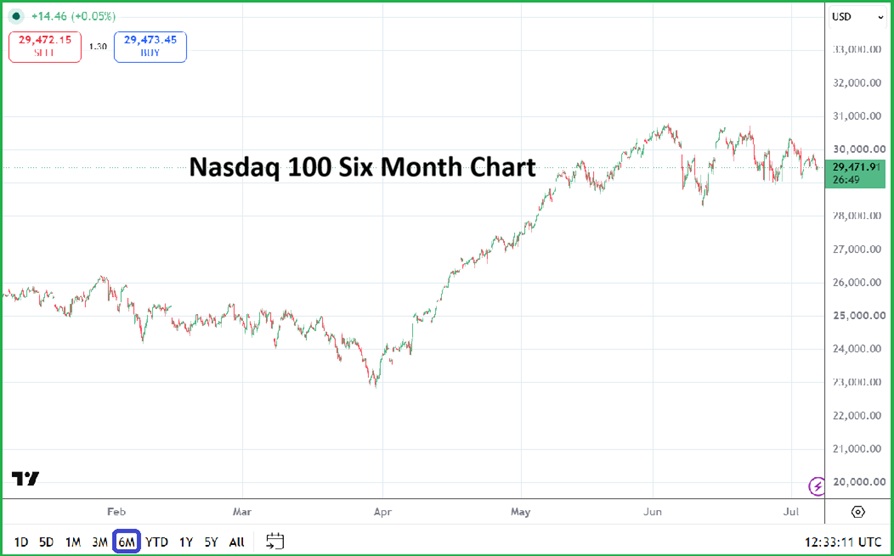
The Nasdaq 100 is clearly being driven by behavioral sentiment at this time. Few investors are paying attention to corporate data, instead many financial institutions are wagering on mid-term outlooks driven by a combination of algorithmic led coding mixed with wishful thinking and hoping they are not washed out to sea by dangerous tidal pools they know are out of their control.

On the 3rd of November 2026, the U.S mid-term elections will largely be held. President Trump’s hold on the House of Representatives looks as if it may come undone as a result of the coming vote if the Democrats take control as some polling suggests.

Perhaps that is exactly what investors are hoping for because historically when there is a divided Congress legislatively, stock market indices actually tend to gain. The reason for this is largely because a paralyzed Congress often finds it hard to pass measures which can hinder corporations and investors, because regulatory mandates are difficult to pass.

Nasdaq 100 Six Month Chart as of 7th of July 2026

If the Democrats win the House and President Trump is able to retain a Republican led Senate, this will lead to a deadlocked Congress which will make it hard to get work much done. Resulting in what may become one of the more memorable lame-duck Presidency’s of our time, one in which both sides of the U.S Congress openly disagrees with Trump’s ego driven rhetoric and instead turns to the backing of voters from their constituent state’s as a way to amplify their own policies.

While the Republicans appear potentially vulnerable in the November elections, the Democrats have problems of their own. An open fissure has been displayed as Socialists inspired candidates have won primaries in a handful of Democratic led Congressional districts and appear ready to splinter their political party regarding direction. What does any of this have to do with the economy and markets?

Perhaps this is exactly what crowds of investors in global markets, including Wall Street wants to happen at this point. Politicians forced to retreat to return their homes and become less vocal publicly may be a welcome remedy. Folks are starting to tire of political rabble, a crowded intersection of gridlock may be welcome at this point.

Unknowns: A Source of Concern for Investors

While it is certainly within the arsenal of the Trump Presidency to try and issue executive orders to try and get policies approved and acted upon. A split Congress, one in which Republicans can openly disagree with the White House without the fear of a political backlash may cause ruptures and positive outcomes for the GOP, if President Trump is weakened after the mid-term elections this November.

Democrats, particularly if they clash internally on their pronounced policies and have to spend more time trying to put out their own progressive internal fires may have to realign their thinking and walk more moderate lines. Activists on both sides of the political aisles may have to lessen their banter following election outcomes if they believe their voting public wants less noise.

A lame-duck President, could equate into a deadlocked Congress and debates simmering within each party which produce more moderate stances. However, if nothing is settled in November of this year this may lead to betrayals and revenge politically and potentially new leadership emerging which could be even more cynical, ignorant and insistent on false narratives.

Intriguingly, Wall Street will not be bothered by a deadlocked Congress and President who suddenly is limited by eroding power. In fact the conditions of withered post-revolutionary zeal and a slumber which could develop may allow corporations and investors to move freely about the ruptured political landscape with more liberty amidst the chaos. Investors will react to the sentiment that Washington D.C produces. A calm is wanted.

Within the ashes of Republican and Democratic turmoil a reconciliation may actually be able to take place. The question is if a restoration of moderate power will be finally be seen. Wall Street and most global investors would like a return of the centrists. No one is going to agree 100% of the time on policy, but a reality of transparent government without corruption would be a good start, one that many people actually would agree upon.

Copy and paste the text from AMT that you want to share

WTI Crude Oil 20260701

What Am I Missing About USD Centric Strength?

Being Wrong About USD Direction and Betting Against the Trend

Help me out here folks, I am perplexed. I seem to be missing something about the USD centric strength, it looks very overbought to me. Where is all the buying sentiment coming from? The FOMC meeting outcome on the 17th of June has certainly sparked USD centric buying stamina as financial institutions seem to have fallen into a strict line and priced in a Federal Reserve interest rate hike this year.

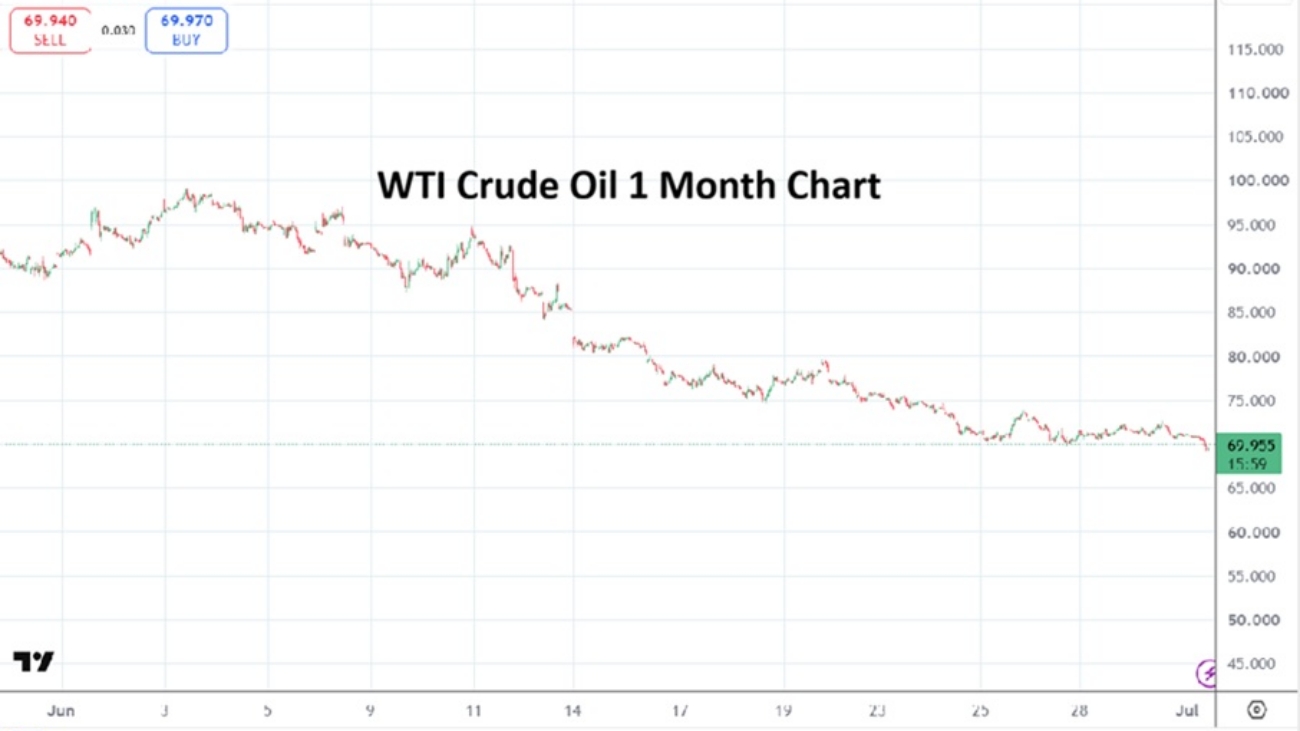
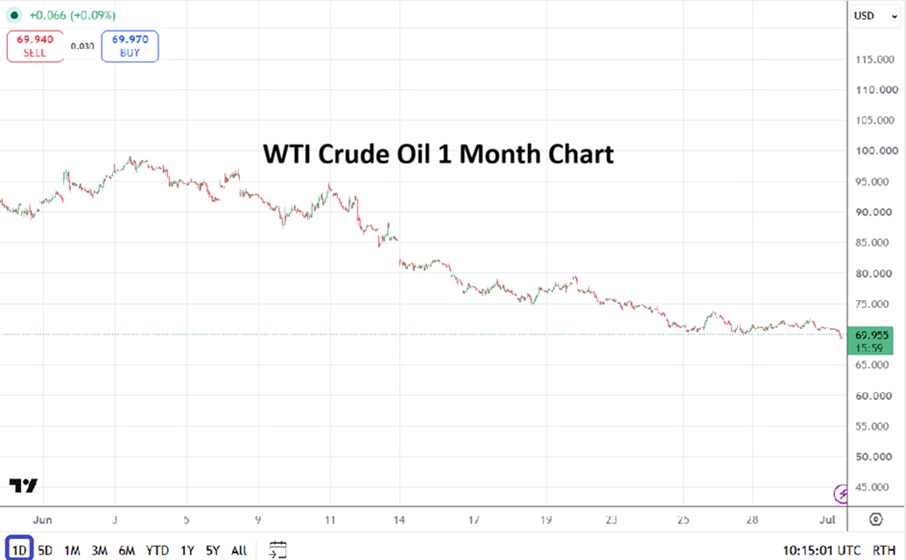
However, the price of WTI Crude Oil was near $80.00 on the 17th of June. And on the 3rd of June the price of WTI Crude Oil was within sight of $100.00. Meaning that we have seen the price of energy trend lower. The agreement between the U.S and Iran, although fragile, has held and the current price of WTI Crude Oil is close to $69.70.

WTI Crude Oil One Month Chart as of 1st July 2026

While concerns about inflation certainly remain, costs should actually start to erode for logistics, fertilizers for agriculture, and manufacturing. Job numbers are solid, growth has been rather steady and shown signs of improvement. If inflation starts to behave and financial institutions change their thinking about interest rates to come, perhaps they will ease off on their borrowing costs.

Also, let’s note that as expected the new Fed Chairman Kevin Warsh has made it clear he will take a more proactive stance regarding interest rates. Evidence for this comes via Warsh’s decision not to participate in the dot forecast that FOMC members use, his absence from the Fed’s ‘prediction market’ game was notable, but many analysts seem to have missed the importance.

In my opinion, Warsh’s decision not to participate in the Fed’s dot plot quarterly signal chart shows the new Chairman wants to create the capability of changing his mind regarding the Federal Funds Rate as needed. The decision not to ‘anonymously’ show what his beliefs are looking forward will allow him to steer the Federal Reserve per forward looking economic data points instead of being held accountable – and possibly blamed – for changing his mind if a shift of opinion is needed.

So again, why is the USD so strong across the Forex board? The USD/JPY is trading well above 162.660+, the EUR/USD is near 1.13900, the GBP/USD around 1.13247 and the USD/SGD is sustaining value at mid-term highs close to 1.29660. While financial institutions appear to have priced in an interest rate, and may also be nervous about volatility in U.S equity indices, the cautious approach has created in my opinion an overbought USD.

As the Independence Day holiday approaches, Forex traders should be careful. If ever there was a time for the Bank of Japan to intervene and cause chaos it might be when USD Forex volume is minimal. Large USD traders may start vanishing in the coming days before the long holiday weekend, and the absence of U.S banks this coming Monday will also factor into the markets.

Selling the USD looks like a speculative bet certainly, particularly because its trend has proven rather strong the past few weeks. Let’s see what happens, but I suspect some downside pressure via USD centric price action is going to be generated.

Copy and paste the text from AMT that you want to share

Nvidia 20260630

Nvidia Suffering From the AI Cold Bothering Investors and Speculators

AI: Exuberance and Threats of Fatigue

Has Nvidia now been oversold? While the Nasdaq 100 produces a casino like experience for day traders and large players, the velocity of value changes in the index should serve as a simple reminder that before stepping into traffic a speculator needs to acknowledge the road. A large collision is taking place before our eyes and it will generate more noise over the coming months. 

Nvidia is a solid indicator of behavioral sentiment being influenced by a mix of optimism and fears by speculators and investors competing, and trying to define terrain as turmoil swirls and a battle for profits rage. Day traders need to remember a lot of hyperbole is amplified to get eyeballs on opinions, hoping that your attention is grabbed. (Please buy me a cup of coffee has become a begging mantra).

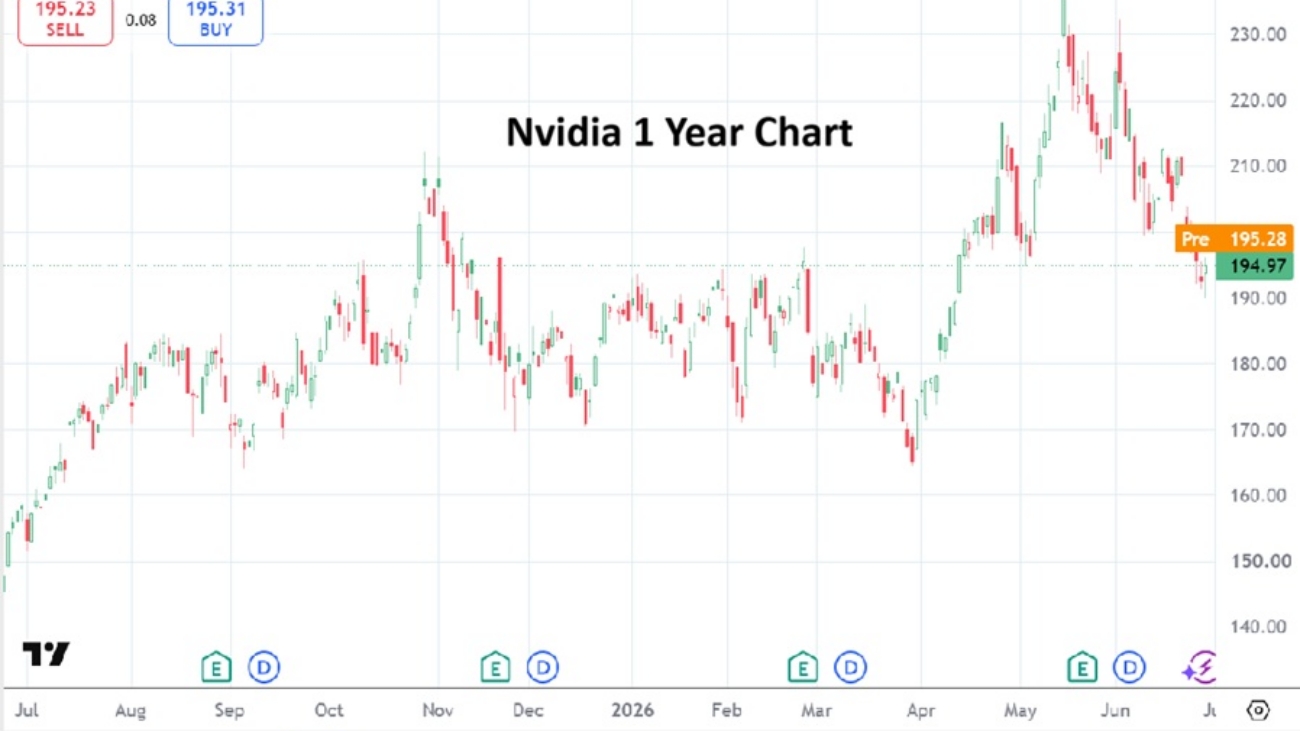
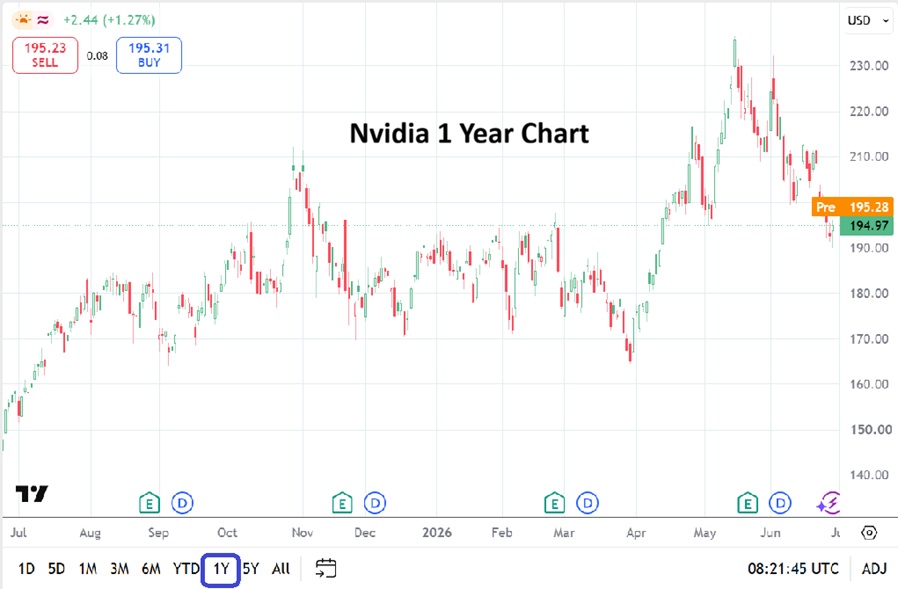
Nvidia One Year Chart as of 30th June 2026

Nvidia finished yesterday’s trading near $195.00, this after touching highs in May around the $238.00 vicinity. The fact that NVDA has lost a large chunk of its value indicates sentiment is not entirely rational. There is a vast difference between speculative hopes compared to long-term investing. 

Results in the stock markets do show symptoms of overbought conditions prevail, but over indulgent fears are taking hold as folks try to interpret every move in a haphazard manner and make correlations which often have no evidence. Nvidia is a solid company which will continue to produce product lines that will be needed long-term. Talk of Nvidia suffering from an AI cold is relevant because it has certainly lost value, but the patient is going to survive.

Others however may not. AI companies and their proclamations about being able to deliver substantial change for users has become tiresome. Supply of software is widespread. While there is demand for use, competitors are abundant and growing daily. Users can now question just how reliable and strong the products they are using are, and if promises meet the results wanted. Costs users are paying for services will also become more critical. If products don’t meet needs, other AI systems can be easily installed nowadays. 

Oversupply is Saturating the Marketplace

Because AI tools are widespread it means users will demand services get cheaper. At some point it is clear that consumers will gravitate to competitive pricing, because at the end of the day there is only a certain amount of time to verify all the products in the marketplace and understand what works best. Branding as always is important, but so is quality. Loyalty in the AI world is only a couple of years old and cannot be counted on, some early companies are already seen as legacies and allegiances will shift. 

Competitors and new ideas continue to be brought forth quickly. A lot of product is being rushed to the market that lacks proper Q&A and actually does not deliver what is promised. Proof of concept is fluid with Artificial Intelligence, along with many claims of superiority. A company can get a product into consumers hands first, but at some point value has to be delivered too.

Investors are growing wary from too many claims. Yes, a revolution has taken place, but a counter-revolution is certainly coming. A lot of AI products are simply poor. Day traders have seen chaotic results on the Nasdaq 100 over the past year. 

President Trump, tariffs, the war in Iran, Federal Reserve and interest rate uncertainty, fear of inflation (all headlines from only the past few weeks) and other complexities can be blamed for volatility as folks wager on values on the Nasdaq 100. However, the prime mover of the index has not only been investing by long-term players, it has come from speculation chasing momentum via the Artificial Intelligence boom. However, a genuine concern that a fear of missing out is turning into fatigue exists.

AI because of its abundance is going to eliminate competing systems which are seen as cumbersome and expensive. Chinese companies appear ready to confront American enterprises with cheaper products that consumers may not mind paying less for even if this means consumers are sharing intellectual property and data with unknown entities. 

Sakana AI from Japan has announced and shown the past couple of weeks that it has software, Sakana Fugu, that is comparable in a favorable manner to Anthropic and Claude services. Sakana testers claim their system is robust and offers a multi-integrated modeling system, meaning a user doesn’t have to toggle in and out of models to deliver efficient information. The data via Sakana’s system is brought together via coordinated agent forces for the user. What will this do to valuation of Anthropic moving forward?

There is also a South Korean company called Furiosa, which is not public yet, that stands in the shadows and makes outstanding AI infrastructure. Furiosa appears ready to become an important player in chips and software innovation. Nvidia is certainly keeping their eyes on Furiosa. Meta offered Furiosa 800 million USD and was rejected in March 2025. 

Investors and speculators should not discount the potential of an AI tech dump from global competitors into the U.S and elsewhere developing over the next year. Mobile phones became a rather boring commodity after their initial entry astonished first time users two decades ago, AI will undergo the same pathway.

Some AI companies will certainly struggle over the next few years, but other enterprises will succeed merrily and profit. There is a big difference between investing and speculating. Even mid-term forays into the stock markets remain only gambles if a person plans on cashing out profits when they have hit a price target, instead of long-term ambitions to own shares in a quality company. 

Nasdaq100 bubble talk which has recently reignited in a loud manner should be given attention but astutely. It is hard to argue that the value of the indices like the Nasdaq 100 and S&P 500 are not in over-inflated territory. Looking at historical p/e ratios seems to have gone out of fashion. Warren Buffet cannot be thrilled and his fundamental strategies should not be ignored. Speculative hype needs to be confronted by investment reality. Folks will continue talking themselves into stances that are comfortable, even if they make little sense. The markets will certainly survive and so will AI.

Copy and paste the text from AMT that you want to share

AI Aluminium 20260624

The Great Compression Part 2: The Intelligence Trap

AI Aluminum

On June 17th, the U.S. Air Force handed Anduril Industries a contract for its FQ-44 autonomous combat drone, making it the first new entrant to win a U.S. fighter aircraft program since the 1970s. The Silicon Valley startup beat Lockheed Martin, Northrop Grumman, and Boeing – companies that between them have defined American air power for generations – to the target. Anduril, a defense technology firm founded in 2017, did not win on relationship or on legacy: it won on AI-native architecture.

The shift this represents is psychological as much as commercial. Defense procurement is arguably the most bureaucratic, relationship-driven, clearance-protected industry on earth. If AI-native vertical integration can break this barrier, anything is now open for re-negotiation.

The Great Compression Part Two: The Intelligence Trap

The compression of the human intermediary layer across the economy – the subject of this series’ opening piece – raises a question that is both philosophical and financial: if the old middlemen are disappearing, and if the AI models replacing them are themselves becoming commodities, where does value go?

What made the Air Force announcement structurally significant was a detail that went largely unnoticed: the service deliberately separated the drone hardware from its AI software, specifying that the intelligence layer could be upgraded or replaced independently of the platform. By doing so, the Air Force drew a line that the market is still catching up to – and then immediately complicated it. The aircraft is the delivery vehicle. The intelligence tier is what matters, except that intelligence is also commoditizing fast.

The commoditization signal had already arrived earlier this month, when Google cut the price of its AI plan by nearly 40% overnight. OpenAI is reportedly considering steep token-price cuts as competition with Anthropic intensifies. The models themselves are beginning to resemble a capital-intensive utility more than a premium software business. As intelligence becomes cheaper, the investment question shifts to what models cannot easily access: proprietary data, regulated workflows, institutional trust, and the systems that turn AI output into real-world action.

The answer, in the most durable cases, is proprietary domain data combined with deep sector integration. Anduril is not a defense company that adopted technology: it’s a technology company that chose defense as its vertical. Palmer Luckey, who sold Oculus to Meta when he was just 21, founded Anduril alongside veterans of Palantir with a specific thesis: Silicon Valley had abandoned defense, leaving a widening gap between what the military needed and what the traditional primes could deliver.

Where Lockheed and Boeing run bid-led organizations optimized for cost-plus contracting cycles measured in decades, Anduril built a product-first company that moves at software speed, focused on cheap, autonomous, attritable systems designed to be deployed and lost without catastrophic cost. The competitive edge that results has nothing to do with which model runs underneath it. It is purpose-built architecture, mission-specific design, and the kind of deep operational embedding that no generalist technology company can shortcut and no traditional prime can easily imitate.

Palantir built the same competitive edge a decade earlier, at the intelligence level. Their forward-deployed engineers embedded themselves inside classified environments, building proprietary data structures around defense and intelligence that competitors cannot access, let alone replicate. The model is almost beside the point. What matters is the institutional trust above it and the data structure underneath it.

The same logic plays out in banking, and the psyche shift there is equally striking. JPMorgan Chase is not an obvious candidate for AI leadership – a 150-year-old Wall Street institution steeped in regulatory obligation and institutional conservatism. Yet it has become arguably the most digitally aggressive major bank outside the fintech world, spending north of $17 billion annually on technology and deploying AI across trading, risk, legal document review, and client services. JPMorgan’s AI advantage over any fintech competitor is not compute – it is 150 years of proprietary transaction data, credit history, and market intelligence, combined with the institutional will to deploy it at scale. Many large banks sit on comparable reserves; few have built the machine to turn them into a competitive weapon. The model commoditizes; the data does not – but only in the hands of someone with the commitment to exploit it.

The pattern across defense, banking, and every sector where this is playing out is consistent: the prize migrates to whoever owns the scarce position that generic models cannot substitute for. Right now the prize sits with domain data and deep sector integration. What’s forming above it is agentic orchestration – systems that coordinate networks of specialized AI agents across high-stakes workflows: routing battlefield targeting decisions, flagging fraud across millions of simultaneous transactions, managing the exception-handling that no single model can resolve alone. Palantir’s AIP platform is the most mature example of this emerging tier, and it is no coincidence that the same company that mastered domain-specific data is now positioning for that orchestration tier. Salesforce’s Agentforce is building toward the same position from the enterprise side. The race for this trophy is not yet decided, but the companies that already own those domain data advantages are the natural favorites to own the control plane above them.

The stack, in other words, keeps moving upward. Value migrates to the next bottleneck, then the next. And below all of it – the models, the sectors, the orchestration layer – something has to hold the weight. Every control plane needs a floor. What that floor looks like, who owns it, and why it may be the most durable investment thesis of the AI era is the subject of the next piece.

Copy and paste the text from AMT that you want to share

US Cash Index 20260617

Forex and the Fed Chair: Kevin Warsh in the Spotlight Later Today

New Federal Reserve Chairman will Cause a Reaction in Forex Today

I offer readers a ‘what if’ proposition ahead. These are my opinions and I am simply trying to give my perspective on what may happen in the Forex market in the coming hours.

The Fed Press Conference later today will be must watch television for Forex traders, including retail speculators, large players and financial institutions. Federal Reserve Chairman Kevin Warsh will make his first appearance after a FOMC rate decision. Dynamic conditions in the broad Forex market should be anticipated – that doesn’t tell day traders much I know, keep reading, please. 

U.S inflation has sparked higher this as energy prices have ignited upwards and caused logistics, manufacturing and agriculture to become more expensive. The Bank of Japan raised its interest rate by a quarter of a point yesterday to 1.00%. However, these two bits of evidence doesn’t mean the Federal Reserve will increase its interest rate today. 

The U.S Dollar Index is trading near relative highs. The broad FX market is certainly cautious, but financial institutions may be leaning into the notion of USD centric weakness. Yes, the USD/JPY remains above 160.000+ for the moment, but the USD/SGD is flirting with its lower range and came within sight of the 1.28000 mark on Monday. So why is this important? Because folks are acting cautious before a potential storm.

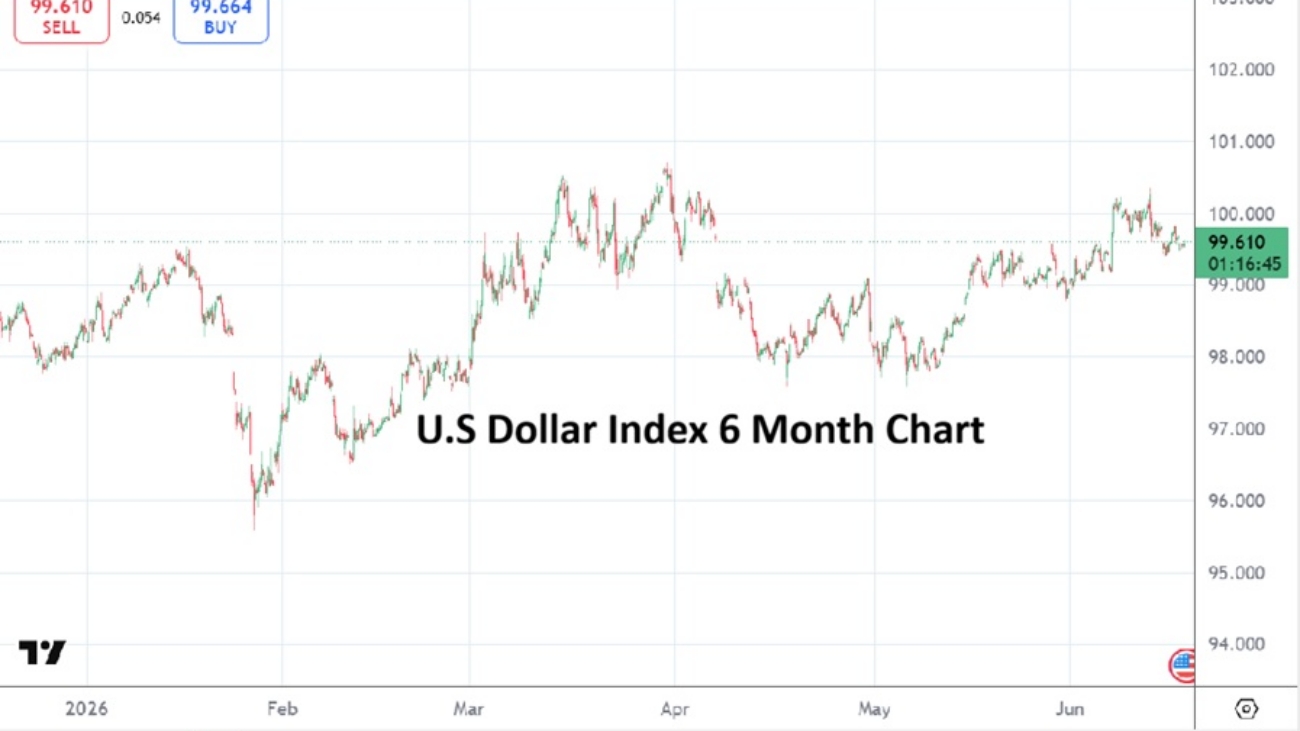
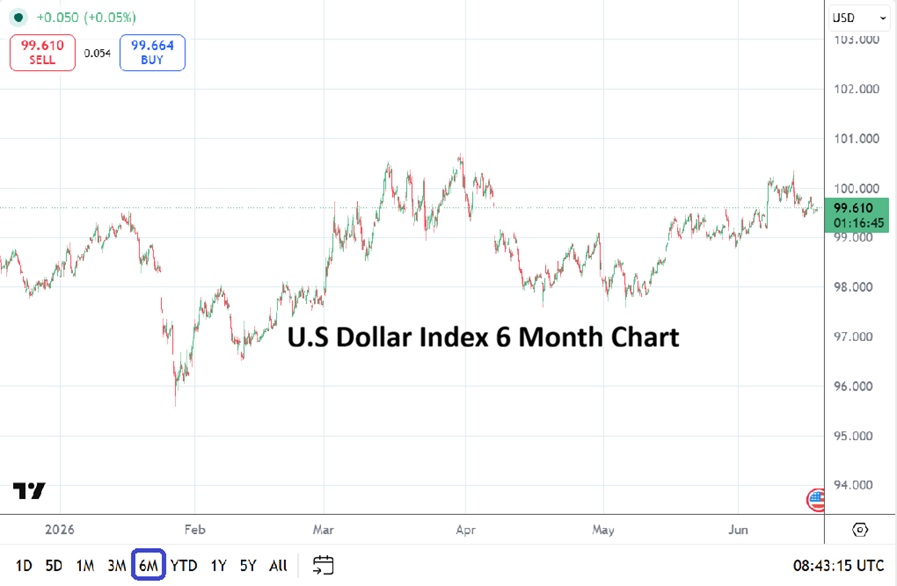
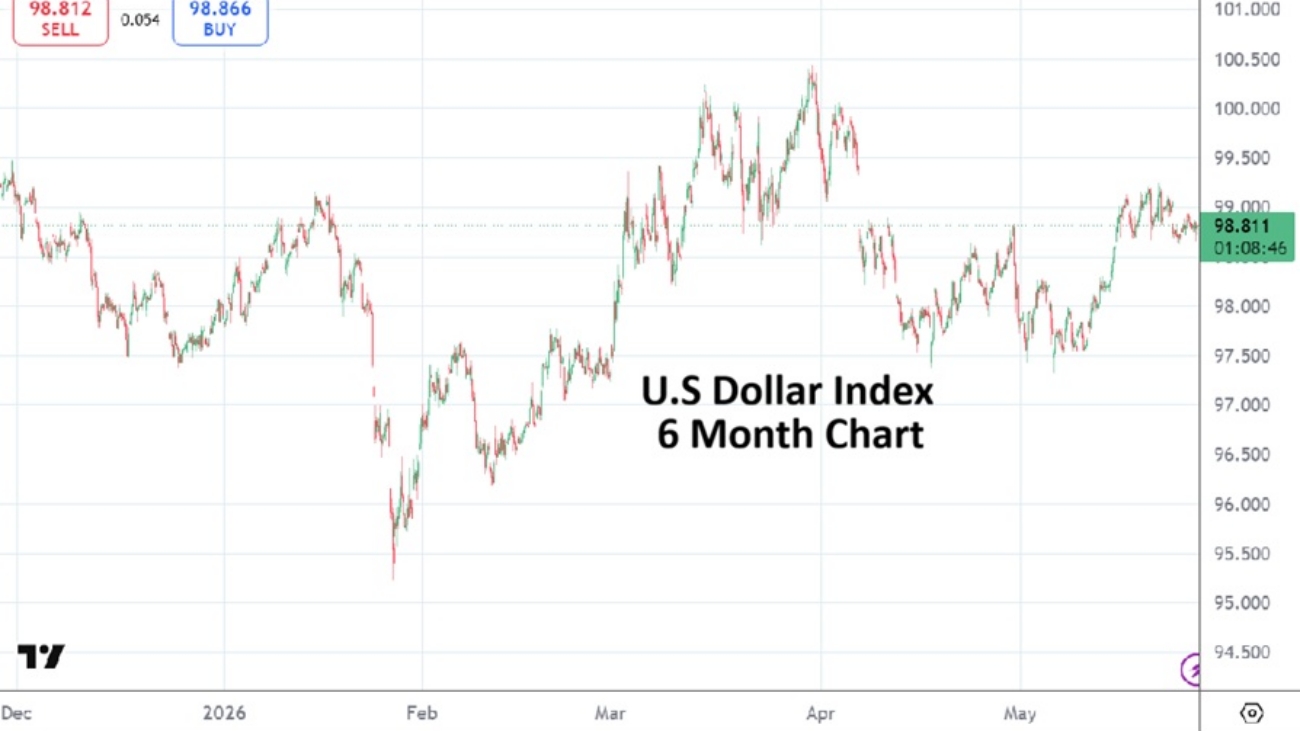
U.S Dollar Index Six Month Chart as of 17th of June, 2026

Perhaps this will go down as an infamous egg on the face situation for me personally, but does Fed Chair Kevin Warsh really want to raise interest rates during his first FOMC meeting at the helm? Yes, Jerome Powell is still around as a voting Governor, but Warsh may find he has enough votes (and influence) to get a majority of other FOMC voting members to allow today’s decision to be a test case in favor of patience. 

If the Fed holds the Fed Funds Rate in place and announces it will use the near and mid-term as a trial period regarding their belief inflation will lessen, because it believes energy prices over the mid-term will erode rapidly, that may be enough to cause USD centric selling later today. The Fed will not use the word transitory I suspect, but an argument can certainly be made that now is the time to actually elucidate on the subject of transitory inflation.

Monday’s trading in the broad Forex markets showed that financial institutions bought into the optimism of an anticipated U.S and Iranian agreement and what it could deliver – a glut of Crude Oil, including lower costs for its ancillary products. Financial institutions were also relieved that U.S equity markets survived the launch of the SpaceX IPO certainly. While yesterday’s broad market trading turned cautious and demonstrated sideways action in Forex, many major currencies are traversing near curious values. Equities also went sideways for the most part on Tuesday.

The U.S Dollar Index is swimming within its higher terrain via a six month chart (per a look above), yet financial institutions – if they hear dovish sentiment from the new Fed Chair today could spring into action and sell the USD quickly. Day traders need to understand even if this occurs that it will still be ultra-dangerous to bet ahead of the Fed rate announcement and Press Conference. This because volatility leading up to and following the FOMC Federal Funds Rate decision will create large spreads in Forex and choppiness that small retail accounts cannot handle most of the time – particularly when too much leverage creates wildfires.

While the before and after of the Fed interest rate announcement will garner the headline news, and create a reaction on Wall Street for the S&P 500 and Nasdaq 100 immediately; it will be wise to pay attention to Fed Chairman Kevin Warsh a half hour later when he steps into the spotlight for the first time. There has been chatter that Warsh is not keen on trying to give too many signals regarding the Fed’s thinking regarding every move it is contemplating. 

This coincides with thoughts that Kevin Warsh and Scott Bessent believe in a more high-tech and pro-active approach to interest rate and monetary policy based on forward looking data. The consideration of a more dynamic approach to interest rates has not been widely considered by financial institutions quite yet. If the new Fed Chair surprises reporters and onlookers at the Press Conference today with a new philosophy on the way the Fed will work, this will set the stage for potentially large behavioral sentiment shifts that were not wagered on quite yet. In other words mid-term outlooks regarding U.S interest rate policy may change in a handful of hours more than many people think. 

Maybe I am wrong, maybe I am interpreting the political and financial landscape incorrectly, but these are my thoughts as a risk analyst – one who thinks the U.S White House would not mind seeing a weaker USD, a Fed that likely wants a different approach to interest rates – as they both hope for energy prices to lower (and may get their wishes fulfilled).

Copy and paste the text from AMT that you want to share

AMT Top 10

AMT Top Ten Miscellaneous Meditations for the 16th of June

Memorandum of Misunderstanding, the SPCX Rocket, the Knicks and Brazil as Jazz Plays in the Background

10. Legacy: Sonny Rollins passed away on the 25th of May at the age of 95. Rollins was a master jazz musician and saxophonist who will be listened to forever. His sound, cadence and imaginative ability to create while playing with bands, and often lead via his unique style make him an everlasting legend. If you haven’t listened to Sonny Rollins start out with his song St. Thomas via Saxophone Colossus.

AMT Top 10 Miscellaneous Meditations for the 16th of June, 2026

9. Surreal: The New York Knicks won their first NBA Championship in 53 years. Some Brazilian football fans returning to their hotels after their team’s 1-1 draw versus Morocco in their Group Stage World Cup match in New Jersey had to walk through throngs of Knick fans celebrating on the streets of Manhattan in bizarre looking circumstances as they worried about their national team. Walt Frazier and Pele both wore Puma and met in the 70’s.

8. Strategy: Michael Saylor continues to claim the wet and cold Bitcoin wind blowing back in investors’ faces is a refreshing mist that will invigorate the HODL crowd eventually. In the meantime MSTR is near $131.00 and BTC/USD around $66,300.00. Saylor sees Bitcoin above 1 million eventually and beyond, while some others see headwinds and more losses developing.

7. Bleeding Money: Political mismanagement shadows Chicago which appears ready to lose the Bears football team via a new stadium across state lines in Hammond, Indiana, this as team officials and ill-equipped Illinois leaders argue about property taxes and other business considerations (and maybe kickbacks). NYC is hurting for funds too, this as important companies make plans to place their corporate headquarters and employees elsewhere and avoid Mayor Mamdani’s nonsense. Apollo Global Management is the latest to decide to venture forth into Texas and make its New York presence less important. 

6. Commodities: Gold is near $4,330.00 this morning, Silver around $70.00 and WTI Crude Oil close to $78.00 via futures pricing.

5. Nasdaq 100: The index finished 3.06% higher yesterday and at a value of 30,543.92 per last night’s close. The Nasdaq 100 has been delivering a wild ride for speculators and investors. The index saw all-time highs in early June when it went above the 30,700.00 level. The S&P 500 concluded Monday’s trading at 7,554.28 and up by 1.65%, the index’s high was also in early June when it went above 7,600.00. For all the talk of doom and gloom over the past week and a half with fears about a sustained run downwards in the U.S indices, they are showing upwards momentum for now. 

4. BoJ: The USD/JPY remains within sight of the 160.000+ mark consistently. While other major currencies have gained a bit the past few days against the USD, the Japanese Yen remains sticky near its highs as the Bank of Japan is likely watching speculators wager on the higher realm. FX traders need to remember that the BoJ may act when it feels it has enough clarity regarding the Iran saga and inflation concerns. In other words, a warning shot may come soon threatening an intervention. Buyers beware.

3. SpaceX: Is it a bird or a plane? No, its a 2.1 trillion market cap valuation via a rocket like IPO on the Nasdaq 100. While some may want to bet against Elon Musk early, those type of decisions have proven costly mistakes for some short sellers in the past when dealing with Musk and Tesla. Some may argue for value of $115.00 and less per each SPCX share, but it might prove unwise to step in front of the upward trend for the moment. Case in point, Tesla is near $411.00 per share and causing chagrin within certain crowds as they point to weakening sales, but only see the company do better in value. Oh, and SpaceX ended Monday’s trading at $192.50.

2. Fed: Kevin Warsh leads the FOMC Committee as the Chairman for the first time as the Federal Funds Rate decision awaits this Wednesday. Some think the Fed will increase the interest rate by 0.25%, AMT does not based on the opinion Chairman Warsh likely wants to start off his job on friendly terms with the White House and Treasury, while also counting (hoping) on cheaper energy prices.

1. MoU: The Iran conflict awaits a signed agreement. The terms of the Memorandum of Understanding are being whispered, but transparency has not been delivered and won’t be until Friday supposedly when the U.S and Iran attend a ceremony in Switzerland. While financial institutions and global markets are ready to turn the page and engage in optimistic outlooks, it remains to be seen if negotiations will lead to tangible results as multiple questions and concerns linger. In the meantime a sizeable part of Iran’s population still lives under tyranny. Who won? Did President Trump make a quiet deal with China to guarantee oil flows from the Strait of Hormuz and receive something in return during his visit to Beijing from the 13th to the 15th of May? There appears to be room for plenty of misunderstanding.

Copy and paste the text from AMT that you want to share

Nasdaq 100 20260608

Nasdaq 100: Terrible Friday Being Confronted by Manic Monday

Fear of the Middle East Not the Main Motivator for the Nasdaq 100

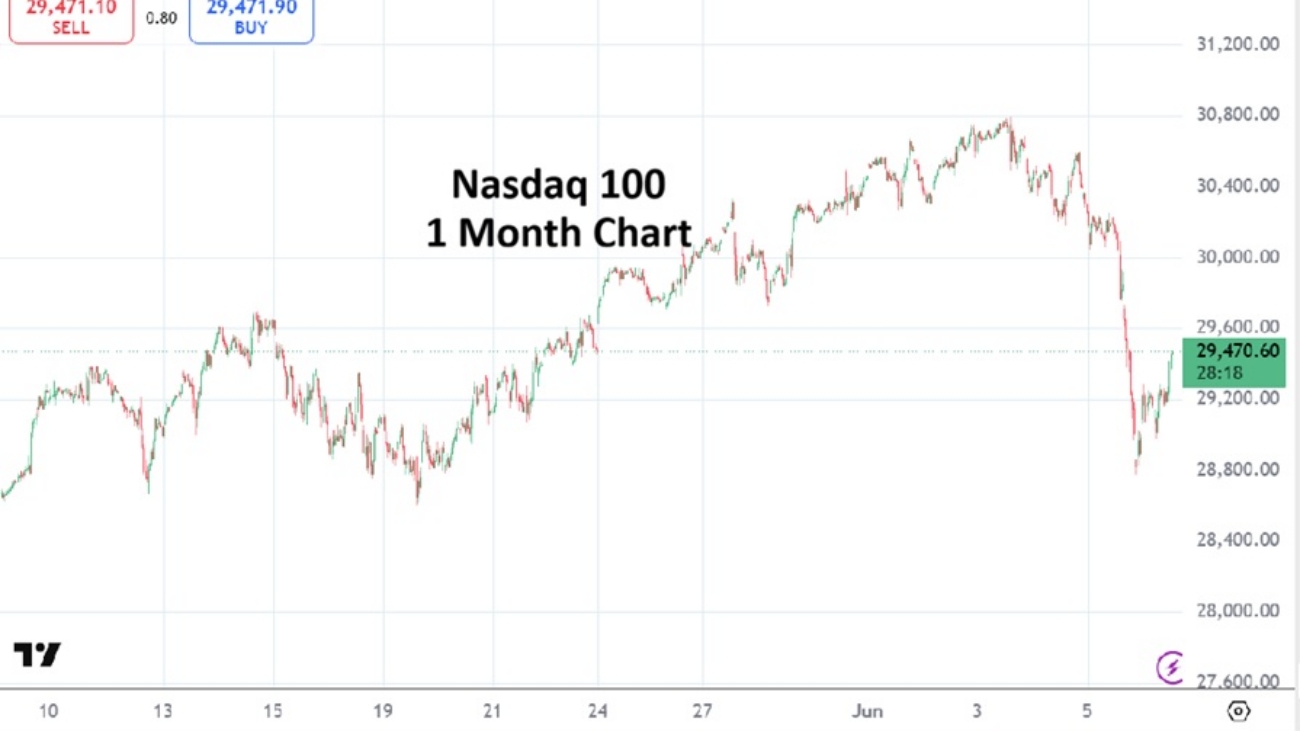
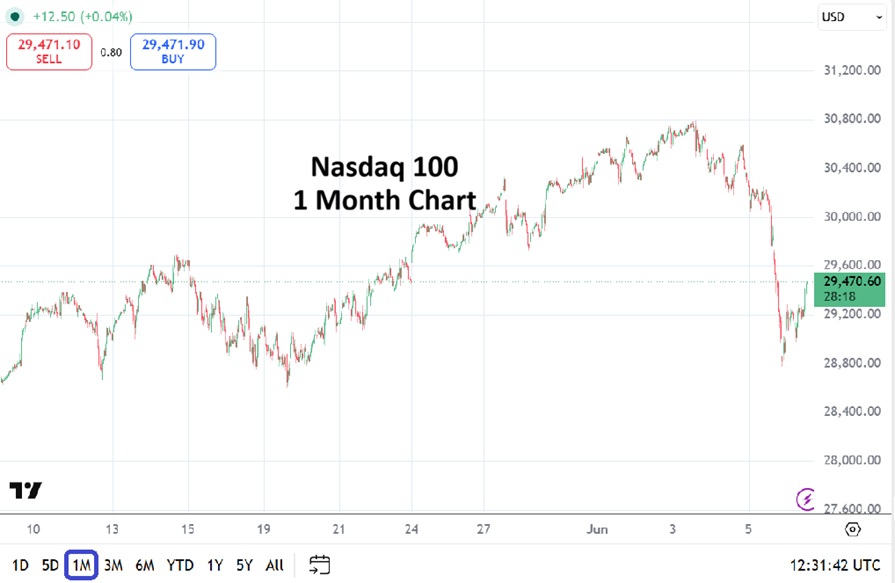
After Friday’s selling surge and a fall of -4.77% with a close of 28,957.60, the Nasdaq 100 futures trading this morning has actually seen an increase and is near the 29,479.00 mark as of this writing before the cash Nasdaq 100 market opens.

Friday’s selling nightmare for traders who found themselves stubbornly locked into what were to be short-term buying positions and saw the Nasdaq 100 plummet -4.77%, probably woke this morning believing ugly conditions may not stop. An escalation in military action via proclaimed retaliatory moves between Israel and Iran started today’s trading with a high degree of more anxiousness. USD centric strength in Forex was demonstrated early.

Nasdaq 100 Futures Value 1 Month Chart as of the 8th of June 2026

However, in the past couple of hours calmer heads have prevailed among financial institutions and USD centric buying in the broad Forex market has run out of steam – at least momentarily. For instance the USD/JPY is near 159.927 currently, opposed to earlier highs seen this morning which challenged the 160.400 vicinity. What does this have to do with the Nasdaq 100 and its current status? 

It appears via futures trading that large players may also have taken a sedative and looked at the index as having been oversold on Friday. The Nasdaq 100 has actually gained early today and signs that a de-escalation of military force between Israel and Iran is being reported. However, that still leaves day traders wondering what will happen as the cash market opens soon and volumes increase.

Let’s Say Quiet Prevails the Remainder of the Day

Not because of a utopian outlook, but a geopolitical perspective, let’s try to image Iran’s stated intentions of no more retaliatory strikes being launched towards Israel as true. The past couple of hours have been more tranquil as a signal in case you are wondering. Then investors and financial institutions will have to digest the Middle East concerns as they have done over the past couple of months in U.S equities, and decide to operate again on the Nasdaq 100 with near and mid-term outlooks.

Friday’s huge selling was blamed by some on the likelihood of a ‘potential’ U.S Federal Reserve interest rate taking place on the 17th of June. This because better than expected jobs numbers showed to some that the U.S economy was running hot once again. 

Additionally expressed fears, which are legitimate, about higher energy costs sparking sticky inflation have been discussed and worried about aloud. Yet, again let’s decide to say even if U.S inflation numbers via the Consumer Price Index come in higher than expected this Wednesday via the coming CPI data, that doesn’t shut the door on the possibility the new Fed Chair Kevin Warsh won’t fight against an interest rate hike during the FOMC meeting next week. In other words it still seems rather unlikely – to me – that the new Federal Reserve Chairman is going to want to initiate higher interest rates the first month on the job. So what if there was another reason for the steep selling on the Nasdaq 100?

Not Paradise but Purgatory

The Nasdaq 100 actually has other questions which have been raised as possible fodder for its large selling this past Friday. Was it spawned because of profit taking by those who took advantage of the index’s fabulous rise knowing that many institutions had been front running the IPO of SpaceX which is scheduled to happen on the 12th of June – this Friday? 

Did large players who rode the wave of frontrunning by financial institutions up in the Nasdaq 100 since late March, decide to cash in profits. There is plenty of nervousness surrounding what will take place with SpaceX in the coming months and long-term via outlooks because of its rather inflated valuation which looks like it will be around 1.7+ Trillion plus at share values of $135.00 per share this coming Friday. 

Questions surrounding SpaceX’s price per sales rhetoric, this instead of price per earnings (because SpaceX is not making a net profit) is just one example. While denying Elon Musk’s genius and ability to create clamor for his companies has proven to be a losing proposition for many, doubters still remain. 

Folks might have cashed out winnings on Friday and decided to now wait on the sidelines to see where behavioral sentiment takes the Nasdaq 100. After two full months of paradise for the Nasdaq 100, a few days of purgatory and seeing which direction U.S indices go may be the right decision by folks who rely on clarity; this as the Middle East gets untangled (or becomes more complicated), the Federal Reserve offers insights on the 17th of June, and large financial institutions lead the way regarding investment decisions.

Copy and paste the text from AMT that you want to share

WTI Crude Oil 20260601

Clues and Insults: Forex and Equity Indices During the Iran Saga

Profits: Optimistic Wagers and Preserving Self as the Party Rages

New Federal Reserve Chairman Kevin Warsh certainly doesn’t want to have problems with President Trump. On the 17th of June the FOMC meeting via the Fed will make their interest rate decision known. Who really believes that during the first month on the job at the helm of the U.S central bank that Warsh is not going to fight to keep interest rates in place?

Those who are expecting an interest rate hike in June of a quarter of a point (0.25%) are most likely wrong. Yes, the price of WTI Crude Oil is high and the situation in Iran via narrative varies from one moment to the next per the reported incidents on the Strait of Hormuz.

However, just like the Fed there is a certain amount of reality that must be dealt with regarding human nature and behavioral sentiment regarding Iran and how it is dealt with via market participants. From the department of no news is good news: financial institutions and investors would like the noise to be kept to a minimum so they can continue doing their jobs and not be criticized themselves for potentially wrong outlooks. The art of making sure disclaimers are up to date is important for everyone who wants to stay employed.

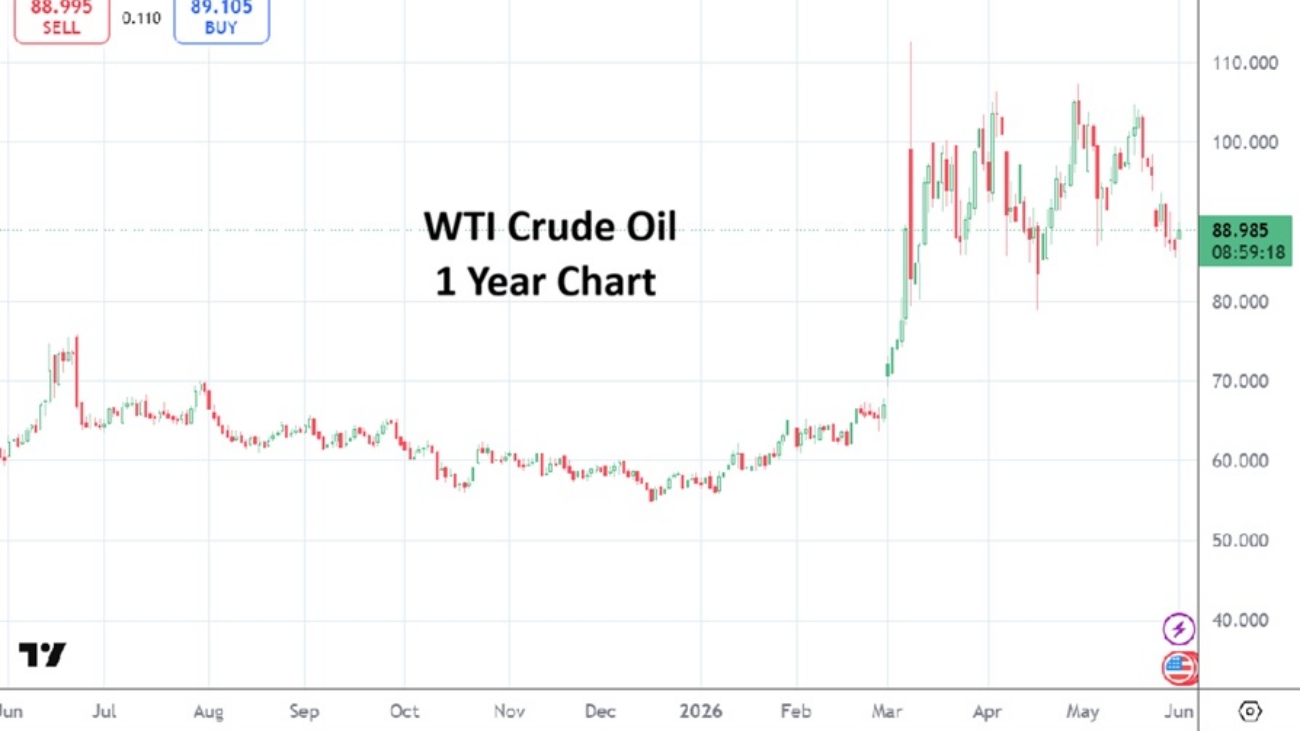
WTI Crude Oil 1 Year Chart as of 1st June 2026

USD centric weakness was seen late last week in many currency pairs, but a quick glance at the majors: EUR/USD, GBP/USD and USD/JPY actually show the pairs traversing rather cautious values. The EUR has gained slightly for instance, but at its current levels around 1.16410 some may believe it is a safe equilibrium. (One that may be able to be taken advantage of by those with the ability to bet on mid-term higher trajectories).

Central Banks globally also want to keep the noise down in their various locations. Inflation concerns persists worldwide depending on the amount of knock-on effects that higher energy costs have on national economies.

Also adding additional intrigue to the storyline of wanting to keep quiet while volatility threatens the gates, is that many people with comfortable jobs in various government institutions do not want to step out of line and sacrifice their careers for the sake of being proven right. They would rather be proven wrong, but would like to do this quietly without facing consequences.

The fact that we are now in a situation in which we are afraid to undertake critical thinking aloud is going to cause problems down the road, but for the moment most will simply go on with their various duties and pretend all is well.

U.S equity indices have been having a massive upwards party since the end of March as record heights are attained. Certainly some long-term investors are simply throwing money into indices as a way to get positioned before the SpaceX IPO which is coming soon. There will also be the Anthropic IPO which is reportedly set for late 2026.

The SPCX which seems to be aiming for the 12th of June will create a valuation well above 1 Trillion USD for SpaceX. The perceived value of Anthropic is becoming a loud talking point among analysts in the tech sectors and they are keen to have the company join the 1 Trillion USD party. The cost of admission for bragging rights is getting more expensive.

There was a time when things like PE (price and earnings) ratios mattered on Wall Street. Some brave folks still whisper about such things in meetings and bars late at night, but many do not want to be insulted or possibly worse get marketing folks selling these high priced products angry. The reason for speaking softly about actual earnings regarding SpaceX is because the company is actually working via an earnings loss, and instead price to sales estimates are being offered as some type of guideline. Having said the above, it would be foolhardy to bet against SpaceX and Elon Musk. And it might be equally unwise to bet against Anthropic in a handful of months. And thus, the rush into equity indices because there is a genuine fear of missing out does exist. Afterall, we all want to be part of the party.

And that brings us back to Fed Chairman Kevin Warsh who has the backing of President Trump and Treasury Secretary Scott Bessent, he doesn’t want to insult these men either. Warsh may be quite good at what he does, he might be an expert and have real world business experience, and that might be a real clue for Forex traders who think higher interest rates are coming. Warsh will likely want to keep his first months on the job at the Fed on good terms with the White House and the Treasury. Kevin Warsh might be a free-thinker and know legally he is an independent leader of the Federal Reserve, but he also knows he was hired with a stated mission. There is a pro-business, free enterprise administration in power at the White House. Bessent, Warsh and Trump are on the same team.

So again, while some traders may believe the Fed will raise interest rates in June because of concerns of higher inflation, it most likely will not happen. While the Iranian war continues to make headlines in the financial world and dealt with via sentiment decisions, actual economic U.S data will start being watched in the coming days and weeks and might even influence perspectives. Investors will get bored of the Iranian saga as long as its narrative stays somewhat tepid. Meaning investors will start looking at CPI and PPI numbers coming from the U.S next week and talking about higher interest rates that will likely not be delivered in the upcoming FOMC meeting. 

The price of WTI Crude Oil as boring as it is to say remains a strong sentiment gauge for traders intraday. Large players involved in Forex might believe this will involve higher interest rates, but on the 17th of June it is more likely that Kevin Warsh will say that for the moment the Fed chooses to watch energy sector costs with the belief prices will decline in the coming months. The Fed will not use the term ‘transitory’ which was used infamously during the Covid crisis and turned into a poison pill with inflation that was not effectively fought. What the Fed will likely do is say they want more info to be gathered and more clarity regarding the Iranian situation and its overall effect on oil prices for a little while longer. Some patience will be asked for and it might be granted by investors who want the party to continue via equities.

Day traders should expect cautious markets to prevail in Forex with choppy results as financial institutions weigh their behavioral sentiment and try to make believe they are not too worried about near-term inflation. The CPI and PPI readings next week will prove of interest, but the results may be brushed aside by market pundits.

In the meantime, the celebrations on Wall Street continue as folks march merrily into the frenzy. Retail speculators who want to pursue short or near-term profits on the Nasdaq 100, S&P 500 or Dow 30 indices need to be careful and might want to stay away from daily bets and instead engage in conservative positions that allow for a full week of results. The gains made since the end of March have been outlandish and likely will not be repeated anytime soon, but why try standing in front of a trend that can crush you.

Near-term considerations in these markets should be done carefully. The mid-term may be very different from where we stand today and our current outlooks. One thing that may bother some risk analysts is that it may prove wrong to bet against the current parade of optimists who insists on participating in dangerous conditions and profit, while they (the risks mavens) stand in place.

Copy and paste the text from AMT that you want to share

US Dollar Index 20260627

The USD and The Art of Not Knowing

Being Mature Enough to Know You Don't Know as You Watch the Marketplace

Ask anyone that typically knows how they gauge the state of the global marketplace for the near-term and you are likely to either get a solid, “I have no idea” now. Or a bunch of thoughts on what might happen, which might lead to being more confused. Simply put at this point, it is easier to admit that potential conclusions regarding the world’s current affairs taking place and effecting the global marketplace are out of most peoples’ hands. 

Even those who have duties within the higher paid grades likely are just as confused about the potential unintended consequences not wanted, and results they hope will be achieved. And what am I speaking about exactly, regarding the world and its state of affairs, is that even qualifying the particular topics are difficult to put a finger on. Ramblings certainly include the Iran saga, but Cuba, the Ukraine, the NATO pact, shifting world alliances and future ones are creating a whirlwind. Besides the rather noisy political landscape of the USA. Not to mention China and Russia and other nations with aspirations.

Yet, the global markets continue to trade, albeit within a confused haze it sometimes appears. But do not be despondent day traders, brokers and their platforms will offer you the opportunity to wager on results of the USD in Forex, and CFDs certainly contain opportunities in major equity indices the world over, various big singular companies, commodities and yes cryptocurrencies (apologies to Bitcoin fans – who insist it is called a digital currency).

U.S Dollar Index Six Month Chart as of 27th May 2026

Iran War and Unclear Results

The U.S Dollar Index for the moment is near the 98.880 ratio, which it should be pointed out is near the values it swam upon the April 8th announcement of a ceasefire between Iran and the States, this after dropping from its 99.800 threshold on the 7th when investors were more troubled. The ceasefire is still in effect and now there seems to be a resolution which is being hoped for by the U.S White House – although when pressed about what negotiations between Iran and the U.S will result in delivers a few different versions of ideas. 

Perhaps that is to be expected via the fog of war, but what should not be expected is an easy path to a genuine resolution. And even if there is a pact of some type, what objectives will have been genuinely fulfilled? But alas, that is a question for those in the future, because the facts on the ground do not bode well for ordinary Iranians who have yearned for freedom. 

The Fed Has a Problem

But again, let’s not dwell on things like the individual rights of people, money is at stake…..(that is humor folks, others can call it sarcasm). The price of WTI Crude Oil has dropped this week on the idea that a resolution will actually be accomplished between Iran and the U.S – one at least that allows tankers to navigate the Hormuz Strait. 

The price of WTI via futures at this moment are around the $90.00 mark again, this after moving within sight of 88.00 USD earlier today. At the end of last week the $96.00 mark was in sight for WTI. And the price of energy continues to cast a shadow that is moving over the U.S Federal Reserve and has large implications for the new Fed Chairman Kevin Warsh. 

The mid-term versus the long-term in financial institutions as they judge their interest rate perspectives are likely making for rather entertaining dialogue. And let’s not forget ladies and gentlemen, the U.S mid-term elections are approaching in November of this year and are resulting in primary elections that are punishing Republicans who voiced criticism towards President Trump. The question about who will hold power in the U.S House of Representatives is a big riddle. Even the U.S Senate leadership may be fragile. Why is that important, because if President Trump were to become what is known as a lame-duck President during his last two years in office, this would produce different outlooks among investors. Stay focused on the money people. 

Our Forex Friend: The BoJ

The USD/JPY is now traversing its 159.490 vicinity again, and perhaps that is a bell weather for soothsayers to criticize again. The Bank of Japan is watching the Japanese Yen as its trades within sight of its weakest values, and yes, the BoJ can be expected to issue another warning to speculators once again about being run over by an intervention. The BoJ’s broken record about interventions have produced solid results for folks who are able to trade the USD/JPY with positions that can be held for a few weeks at a time – namely hedge funds, large players and some financial institutions. Retail traders trying to take advantage of the USD/JPY are likely suffering trauma via anxiety if their wagers have gone in the wrong direction.

SpaceX and Scams in the Cryptoworld

And as a bonus, let’s not forget about rumblings regarding SpaceX and another topic within the I do not know category. Elon Musk has set the table for an attempt at a 2 trillion USD market cap after the IPO for the corporation is launched in the second week of June. The value of SpaceX can be and will be argued for the next few years as admirers and critics lineup to be heard and spread sheets are compared regarding revenues against one of the greatest marketing giants of our time. Intriguingly, however, are hints that there has been a lot of cryptocurrency fiddling regarding how the corporation is going to allow investors to participate. Apparently there have been tokens issued in the cryptocurrency world that have promised some type of participation in SpaceX and most are being exposed as scams and have nothing to do with the company or Musk. Buyer beware folks.

Copy and paste the text from AMT that you want to share

Gordons Bay Sunset 20260514

The Great Compression Part 1: The End of the Middlemen

Elevator Boys of GenAI

In the 1920s, every office building had an elevator boy. Although automated elevators already existed, people found the idea of riding in a driverless box dangling by steel cables terrifying, and delegated the role to a uniformed human they trusted, accepting the necessity to pay for the privilege. Over the years, people got used to elevator buttons, but the force of habit and the preference for human touch kept the profession flourishing for years.

The operators were so confident in their indispensability that they went one step too far: in 1945, a New York strike brought the city to a grinding halt, costing it hundreds of millions of dollars. That was the final straw, leading to a massive push to upgrade to automated systems. Within a short while, the job ceased to exist, entering the history books as the only major job category to be completely wiped out from the U.S. Census purely due to automation. The only one so far, that is.

Elevator boys were the cleanest definition of a middleman: someone who exists not because they create value, but because of information asymmetry or transaction friction. The history of modern commerce is largely a history of those “toll booth” trades, and of the technologies that remove them one by one.

Newspapers were once the only viable printed information channel, using their middleman position to bundle content with ads and classifieds, fattening their revenues. People accepted it because nothing else existed – but then the Internet broke their business model. Craigslist alone did more damage to newspaper economics than any editorial failure ever could; Twitter and Facebook finished the job. Today the newspaper is a diminished thing, sustained largely by institutional inertia and nostalgia.

Real estate agents had an informational moat – access to listings, knowledge of comparable sales, relationships with buyers – which was valuable in a world without Zillow. Once that information became freely available, their commission became very hard to justify. The agent survived by clinging to the execution layer, but that too is shrinking.

Here is where the story gets interesting. The companies that dismantled the old middlemen wasted no time building new ones. Uber eliminated the taxi dispatcher and the phone-in booking system, then inserted itself between driver and passenger for a fat slice of every fare. DoorDash did the same between restaurant and customer. Expedia aggregated what travel agents used to know and charged airlines and hotels for access to their own customers. These were genuine technological improvements, but the business model was identical to what they replaced: find a friction point, own it, and extract rent from both sides. The market rewarded them handsomely for this, for a while. Then the next wave arrived.

Generative AI is driving a change of extraordinary scale and speed. We cannot assess the impact of the tsunami from inside it, but we can see the fish floating belly-up, and extrapolate. The agentic economy is eliminating many roles that just a couple of years ago seemed staple of our service-based economy. AI agents will (if they haven’t yet) replace secretaries, clerks of all kinds, brokers, advisors, recruiters, customer service representatives, paralegals – and the buck won’t stop there.

What is happening now to companies like Capgemini, Accenture, and McKinsey is structurally identical to what happened to newspaper classified departments and taxi dispatchers. AI agents do not merely reduce friction – they eliminate the information asymmetry that made the intermediary necessary in the first place. A system embedded inside an enterprise does not need a consultant to explain what it is doing. It does it, iterates, and reports back.

OpenAI and Anthropic understood this early, which is why both recently announced joint ventures – in a parade lockstep – to deploy engineers directly inside corporate clients. OpenAI has built an elite, highly technical consulting wing – a multi-billion dollar venture backed by TPG, Brookfield, Bain Capital and others. Anthropic teamed up with alternative asset titans like Blackstone, Hellman & Friedman, and Goldman Sachs to form a dedicated AI services company. AI labs are moving fast into services and deployment because model commoditization is a risk, and because adoption bottlenecks hurt revenue growth.

The Big Four are seemingly fine for now, touting alliances with the AI leaders, helping them scale AI implementation across their enterprise clients. However, professional consultants are clearly the next elevator boys, hanging by the thread of the “human in the loop” habit. The only chunk of the consulting business that is accelerating involves embedding the AI revolution into enterprises – and very soon, Anthropic and OpenAI will not require the help of PwC or Deloitte for that. They are the owners of the technology: why would they pay a toll for a booth on their own road?

The irony is pointed: the companies building the technology that makes middlemen obsolete are inserting themselves as the new middlemen between the AI model and the enterprise. But even this layer is temporary. Once AI agents can deploy themselves, even that layer compresses. The OpenAI and Anthropic JV story is the last gasp of the middleman era.

The real and durable beneficiaries of the AI economy are not the model builders. Raw intelligence, reasoning, and pattern-matching are no longer rare, expensive breakthroughs – they are becoming cheap, standardized, and universally accessible. Core AI technology is turning into a commodity, just like electricity once did – and the value moves both up and down the stack.

“Up the stack” is a constantly moving target. Right now, it sits in hyper-specific vertical applications – defense, aerospace, finance, and medicine – where proprietary data, regulatory compliance, and domain expertise create durable moats. It also lives in the integration layer: the software plumbing that turns raw AI reasoning into auditable, legally compliant enterprise actions.

In the near term, value will shift further to agentic orchestration – the “Agent Overlords” that coordinate swarms of specialized AI agents, manage workflows, handle exceptions, and maintain oversight across complex business processes. These control planes will become the new scarce and valuable layer, much as operating systems and databases once did. What comes after that is harder to predict, but the pattern is clear: as each layer commoditizes, the economic prize moves to the next bottleneck.

“Down the stack” is the physical layer underpinning everything, and that’s where the true moat is. Every agentic transaction, every automated workflow, every AI-mediated business relationship runs on cloud compute, which runs on power, which runs on tangible assets unlikely to be replaceable for at least the next decade. After a century of disruption, humanity has come full circle: the “boring” material world – acres, bricks, pipes, wires, water, and power – has once again become the real source of scarcity and enduring value.

OpenAI and Anthropic are the last of the middlemen: brilliant, richly capitalized, yet ultimately dependent on infrastructure they do not own. What sits beneath them is not a new intermediary – it is bedrock.

Copy and paste the text from AMT that you want to share

AMT Top 10

AMT Top Ten Miscellaneous Insights on the 18th of May, 2026

Valuations and Drinking, Bad Storms and Politics Amidst the Resilient Nature of People

10. Resilience: The Western Cape of South Africa endured strong storm conditions last week. One of the hardest hit areas was the Cape Winelands District, but electricity and water have been widely restored. And a collective of people have proven working together can produce solid results when needed. 

9. Spencer Who: The Los Angeles mayor race is growing intriguing. A reality star turned social influencer threatens to become an influenza for his opponents. This as Spencer Pratt’s campaign gets noticed for its entertaining social media videos. This has caused many folks to ask what has happened to the state of politics and meaningful policy. But if NYC can elect a socialist, why can’t L.A elect an influencer and make some people feel sick?

AMT Top 10 Miscellaneous Insights for the 18th of May, 2026

8. Two Trillion: SpaceX early investors have agreed to allow a five for one stock split, meaning the company (and Elon Musk) are now aiming for a potential doubling of its worth when its IPO is initiated – on Nasdaq – in the second week of June. Some very serious accountants will be kept busy trying to show how SpaceX will produce enough revenue over the next twenty years in order to make a 2 trillion USD valuation palpable to future investors.

7. Drunk: Brown-Forman Corporation will begin its trading near $26.28 on the NYSE today. The company is the majority owner of Jack Daniels and other alcohol related enterprises. The value of Brown-Forman Inc. in June of 2021 was around 80.00 per share. The sobering phase of the public – particularly among young drinkers – to avoid bars and clubs, and instead stay on their mobile phones has hurt share values in many alcohol related companies. There are also concerns that too many drink companies now exists. Before Brown-Forman becomes the life of the party again, it appears some competition will have to go dry.

6. Deals: Prime Minister Modi visited Abu Dhabi a few days ago, and one of the results was an agreement to purchase and store energy reserves on a large scale in the United Arab Emirates. Modi also confirmed India’s strong connection to the UAE politically. While always trying to maintain a non-aligned stature, India appears to be moving closer to an increasingly important alliance with the UAE – which has also aligned with Israel strategically. The potential of these three nations acting together will ruffle feathers in a few noteworthy Middle Eastern and Asian countries.

5. Populists: President Trump’s tendency to say outlandish things and then suddenly turn around and show a willingness to negotiate terms has always been part of his art of the deal composite. However, saying what people want to hear and then turning on a dime and not delivering is also a symptom of populism. Trump isn’t the only politician suffering from this flaw. What do politicians really think, and how differently would they act if a they didn’t need votes for themselves or backers to remain in power?

4. Wall Street: After attaining apex highs early last week, the three major indices have taken a step backwards. Near-term concerns are effecting outlook as financial institutions balance risk averse tactics to long-term belief that sunnier days will prevail. While the Dow 30 didn’t set a record last week, the ability of the index to climb above 50,000 was noticeable. Equity markets appear tentative as this week begins and folks seemingly wait for more thunder and its potential effects.

3. Emirates: The UAE was attacked by drones yet again yesterday, this time at the Barakah nuclear facility. The hit has been downplayed, but highlights that military conflict with Iran remains very possible across the region. It is doubtful conversations are being conducted with polite undertones behind closed doors. The U.S, Israel and other nations are watching Iran – and Iran is watching them. The price of WTI Crude Oil remains a key barometer regarding the markets and concerns about the war igniting in full once more. Prices of oil remain sustained above $101.00 per barrel in the futures markets. The UAE might not want to be a focal point, but it isn’t backing down either.

2. Hawkish: The U.S Federal Reserve may have to actually consider raising interest rates before they can realistically discuss the notion of cutting borrowing costs, particularly if energy prices remain elevated and spark a sustained inflation threat over the mid-term. The USD started to show renewed strength the past few trading sessions in Forex, this as financial institutions compare their near-term anxiousness to growing concerns about mid-term ramifications regarding higher fuel costs.

1. Ego vs. Hubris: The U.S and China summit held largely in Beijing this past Thursday and Friday matched competing politicians and ideologies. In one corner U.S President Trump spoke with a rather inflated sense of himself while he detailed policy objectives and his perspectives. In the other corner Xi Jinping, the President of China, might have displayed some hubris as he warned the U.S about the Thucydides Trap. Xi expressed his belief that China is the emerging super power and that the U.S is a declining nation. However, China’s economy is known to be suffering because of a myriad of complex reasons, and could face more headwinds if energy prices and supplies remain hard-pressed.

Copy and paste the text from AMT that you want to share