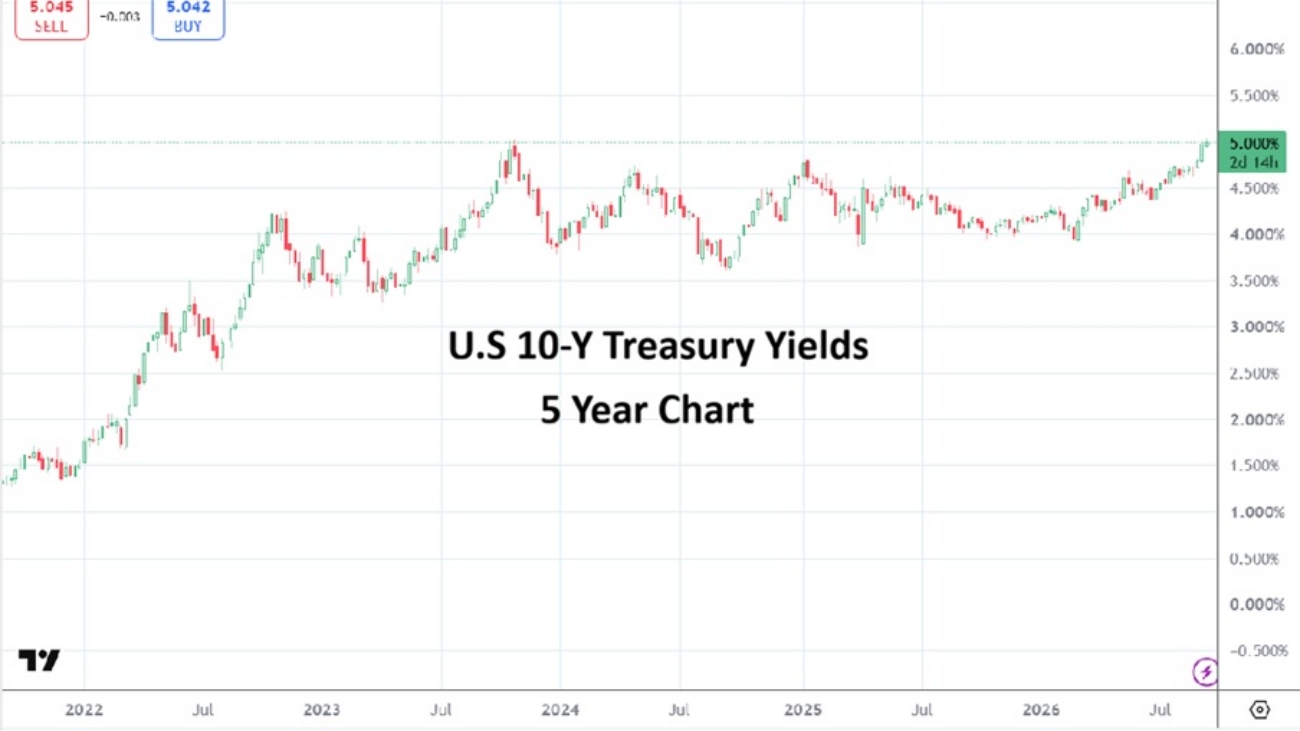
10Y Treasury Yields 20260916

Fed Decision: Two Sides of a Dangerous Coin

The Fed Should Not Raise Rates But It Will

What and who you believe will play an important part in today’s market for speculators. While investors who are looking at long-term prisms can comfortably wait on the decision from the Fed’s FOMC regarding interest rates later today, retail traders who are trying to profit on near-term wagers via momentum and are seeking to gain an advantage by knowing which way the wind is blowing have a difficult task ahead. Via results in the Forex market it appears many financial institutions have braced already for an interest rate hike of a quarter basis point.

However, what if the financial institutions and many analysts are wrong? What if Fed Chair Kevin Warsh and other FOMC voting members believe the White House and think that inflation will erode as price pressures ease when there is a remedy to the Iranian conflict. That would mean that they could debate with other Fed officials for no interest rate hike. Because if the Fed were to raise interest rates later today, thus making borrowing costlier for businesses and consumers – and potentially putting more strain on the U.S debt payments because of increasing Treasury yields, it would still not solve the higher costs of energy. (There is an argument below which negates this possible yield problem and one that is likely to be heard from some economists).
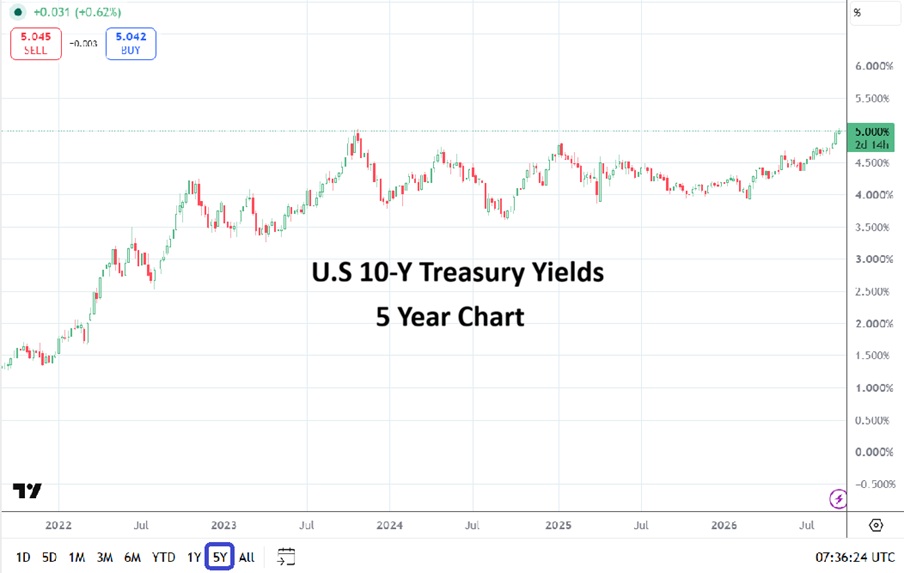
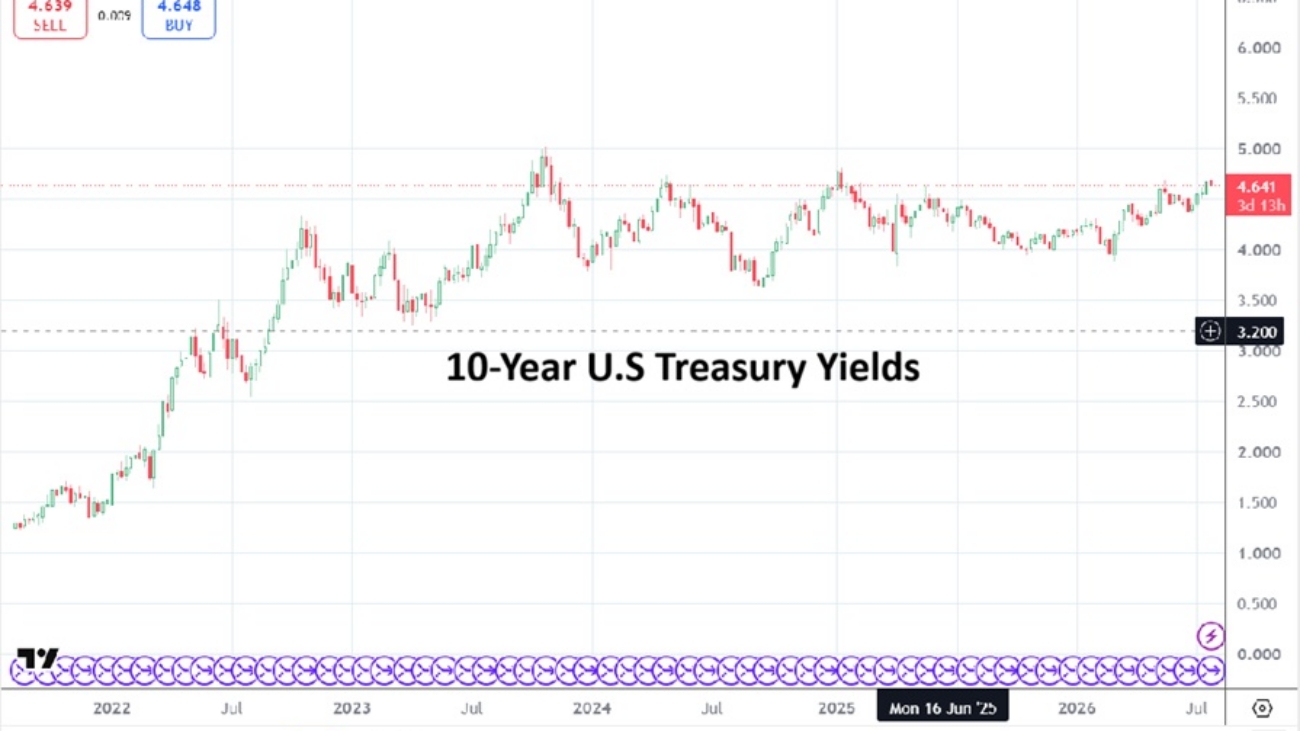
U.S 10-Y Treasury Yields Five Year Chart as of 16th September 2026

Yes, there is demand for fuel globally, but the demand for energy is not going to decrease because the U.S Federal Reserve may raise interest rates. In fact, it could make costs more expensive for businesses who are likely burning money via increased credit lines already created, this to transact their currently higher costs to guarantee effective supply of fuel to fund their logistics and manufacturing which they had not planned for while making their initial 2026 budget estimates prior to the Iranian war. In other words, a higher Federal Funds Rate will equate into higher costs for businesses.

$100.00+ WTI Crude Oil is Not A Friend

Per the other side of the coin, WTI Crude Oil has turned more expensive and volatile since March of this year. For a moment it looked like relief would be delivered via the supposed MoU between Iran and the U.S. WTI Crude Oil went below $80.00 periodically when optimism was peaked by White House rhetoric and calm waters in the Hormuz Strait were reported. Hopes for a return to WTI Crude Oil below $70.00 were viewed as legitimate.

However, the tranquility sought has vanished in the past couple of weeks and has grown more anxious as Saudi Arabia has become an important actor in the Middle East conflict as the Houthis and Iraqi militias cause havoc for the Saudi Arabian government. The price of WTI Crude Oil is now stubbornly above $100.00 and rumors about how Saudi Arabia is dealing with its own military confrontation and the way it is able to supply its own Crude Oil are confounding.

Which brings us back to the initial question regarding the Federal Reserve and Kevin Warsh, who will the Fed Chair listen to? Does he and other voting members of the FOMC believe there will be a quick fix to what has become stubbornly higher costs for WTI Crude Oil which is creating inflation? Or do they now have to objectively consider what may have been perceived as a temporary blip of elevated expenditures for the U.S economy as a potentially long-term problem? If Warsh and his cohorts believe the Iranian situation is going to find a remedy within the next four to five months, they should NOT raise interest rates today.

Again, while higher fuels costs are problematic, raising interest rates is not going to lower demand for WTI Crude Oil which is the chief instigator of higher inflation globally. It is not a question of who believes President Trump’s tantrums, it is a question concerning viability of a real end game to the Iranian situation. Plenty of Crude Oil exists, its production capabilities are strong, it is Middle East supply to Asia, Europe and Africa that is causing a problem and the higher cash and futures pricing for WTI Crude Oil. Thus, the lynchpin remains Iran. If their government capitulates and bends a knee, opening up the Hormuz Strait and stops plying its influence on the Houthis of Yemen and other militia groups in Iraq that are now causing problems for Saudi Arabia the price of WTI Crude Oil will drop dramatically.

If the situation is not rectified and the price of WTI Crude Oil remains elevated and Saudi Arabia doesn’t handle their confrontation which is turning increasingly militaristic, then it will not solve a higher interest rate initiative from the U.S Federal Reserve – unless the Fed is merely looking to decrease Treasury yields by increasing global demand for the bonds – thus hoping to increase their desirability.

Old School vs. New School 

Today’s decision from the Fed comes down to old text books and failed central bank policies versus new economic considerations. An interest rate hike from the Fed may actually make circumstance more difficult for governments around the world trying to balance their own books. 

For instance, higher yields on U.S debt are causing problems in India where some investors are shedding Indian Rupee assets and seeking the high yielding U.S Treasuries not only because of a ‘guaranteed’ bond yield, but the fact that their assets are stored in USD which is likely going to remain stronger than the INR over the next few years if a historical track record is looked upon. This is a saga that will play out in other emerging market nations too as financial institutions chase ‘secure’ profits.

5 is a Dangerous Number

So not only does the Fed face a problem regarding an interest rate hike that will not solve inflation problems caused by a war that is effecting prices because there is a fear of supply logistics, but there could be a knock-on effect regarding debt. U.S 10-Y Treasury yields near and above 5% is a clear warning side that investors are uncomfortable, this no mere speculative gain achieved by bond vigilantes. 

Another point, if the Fed were to raise interest rates today, it could in theory cause greater demand for U.S Treasuries from abroad and thus lower the Treasury yields for the moment – thus making the argument for a higher interest rate more dignified for those who want to raise rates. However, if the Fed were to say no to interest rate increases for now and point to a belief the U.S conflict with Iran is going to conclude sooner rather than later and said the U.S economy faces distress because of the higher fuels costs alone, this could also solve confidence problems.

U.S debt stands above 40 USD trillion, lower yields are a desire, but lower borrowing costs for businesses and consumers are wanted too. So what will the Fed do today………..drumroll please…………the Fed will raise interest rates – making a mistake. And will show it fears a long-term risk scenario between Iran and the U.S and problems for Saudi Arabia. The USD will see plenty of volatility. Confidence will not be shown by the Federal Reserve today and this will be problematic.

Stage presence from Fed Chair Kevin Warsh is going to be extremely important today. He has failed in his previous two FOMC Press Conferences to look confident while speaking and answering questions. His speech at Jackson Hole in late August also proved lackluster.

And this is where is gets more dangerous for Warsh and the U.S White House, because of President Trump’s ability to change his tactics quickly – there is a lack of confidence among investors who are trying to gauge their outlooks for the mid-term and beyond.

Kevin Warsh will find it difficult to pull a rabbit out of a hat. Many folks will walk away disgruntled if an interest rate is introduced and no clear guideline is mentioned regarding what is next regarding other potential rate hikes – or a plan to actually lower the Federal Funds Rate. The U.S economy while strong could easily be sent into a recession with an interest rate hike and sustained higher WTI Crude Oil costs. 

Behavioral sentiment is going to remain on a toxic tightrope unless confidence is delivered. While individual perceptions about what should be done are important, understanding the mindset of the U.S Federal Reserve is crucial. Eliminating our own personal beliefs and bias from trading decisions and acting on what realities may be demonstrated are vital to profit. 
Copy and paste the text from AMT that you want to share

Share:
Singapore Dollar 20260911

Conflicted Trading: Singapore Dollar and Federal Reserve Considerations

USD/SGD: Conflicting Desires From the Federal Reserve and Financial Institutions

The world of Forex is about to grow murkier in the coming days as shadows loom over financial institutions regarding their near-term decisions as they try to gain clarity regarding what appears to be confused and concerning mid-term outlooks for speculators and investors.

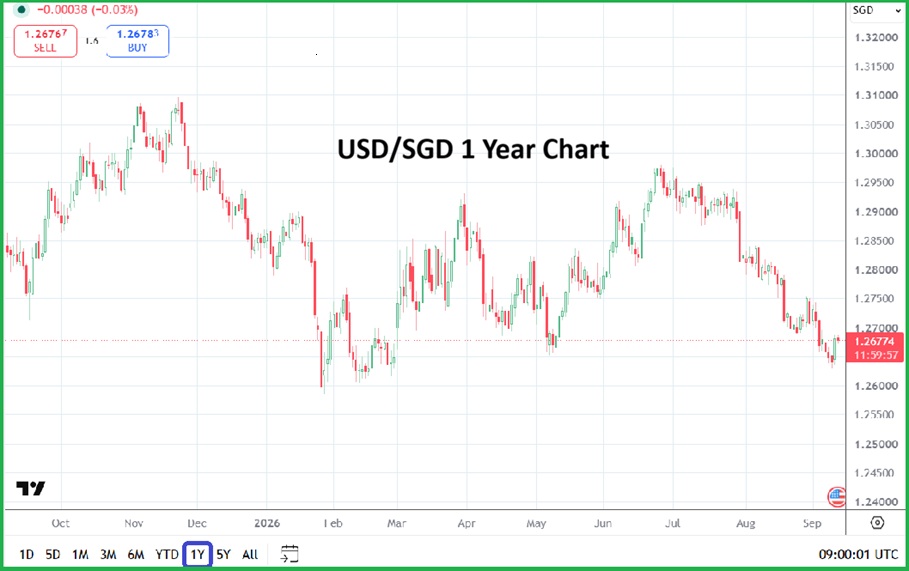
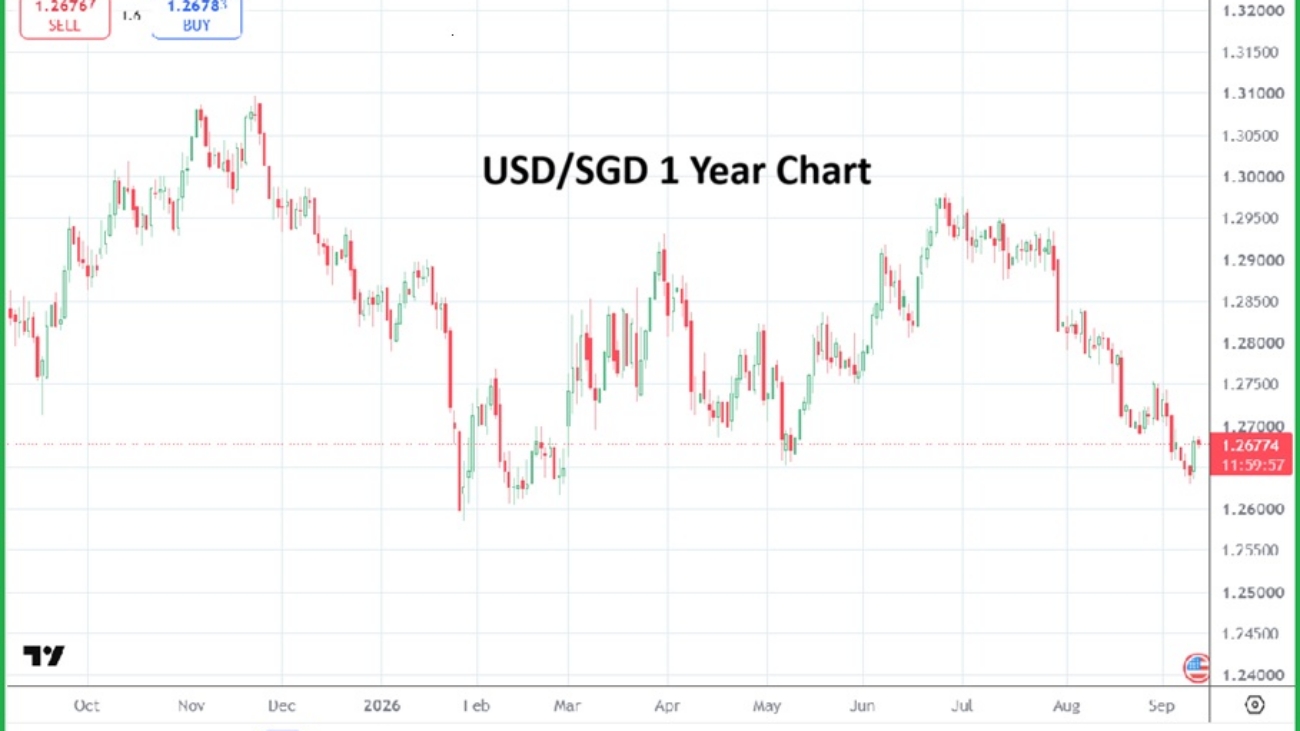
The USD/SGD is traversing near the 1.26776 vicinity as of this writing. The currency pair is trading within a long-term historical lower realm in which the 1.26000 level was challenged from mid-January until the first week of this year. This past Wednesday the USD/SGD traded near the 1.26280 mark. Previous to the current ratios and lows seen in early 2026, the Singapore Dollar traded around the 1.24475 level in June of 2014. The USD/SGD challenged 1.20000 level in early August of 2011 – yes, 25 years ago.

USD/SGD One Year Chart as of 11th September 2026

Here Come The Risk Events: Inflation, BRICS, Iranian War and the U.S Fed

Now that we have alerted technical traders about the long-term depths of the USD/SGD being flirted upon once again, it needs to be pointed out that a parade of risk events are standing in front of global Forex today and next week. First up today is the U.S Consumer Price Index inflation data. This weekend the 18th BRICS Summit will be conducted in New Delhi, India as geopolitics and trade talks will get plenty of attention. Next Wednesday the U.S Federal Reserve will issue its FOMC Statement and Federal Funds Rate decision – which may produce a climax for theatrical trading in the coming week.

While it feels almost needless to say, the Iranian War has not relented. The price of WTI Crude Oil is around $100.65 per the cash market. The sustained highs achieved in the past couple of days do not show many signs of suddenly relenting. WTI Crude Oil was around $86.50 around the 1st of September, the USD/SGD was near 1.27200. To create a bit more alarm regarding the risk horizon going into this weekend the U.S 10-Y Treasury yields lurk around 4.945%, the 30-Y Bond yields are close to 5.355% – none of this sits well with the U.S White House, nor Treasury. In the midst of this investment noise, the price of Gold is close to $4,345.00, which still looks cheap considering current circumstances.

Crude Oil supplies remain anxious globally and inflation is certainly causing angst for citizens and a variety of government policies. Singapore will report August inflation data on the 23rd of September, July’s inflation data came in around 2%, with energy costs being the culprit for higher prices in many cases. The USD/SGD was near 1.29500 around the 14th of July. Prices for energy have not gone lower and the likelihood of them turning cheaper soon remains unlikely.

USD/SGD Correlations and Current Sentiment

USD centric action since the first week of July has showed weakness against many major currencies including the Singapore Dollar. Let’s put the USD/JPY to the side because of the intervention via the Bank of Japan and input of the U.S Treasury and Federal Reserve collectively. The USD/SGD is correlating to the broad market. Risk averse decisions have been prevalent in stock markets. The U.S major indices while remaining near higher altitudes are showing cautious behavioral sentiment.

The USD/SGD certainly went lower in January and early February of this year, but this occurred as doses of optimism were filling the air and in the absence of the Iranian war. Yet, the downturn in the USD/SGD has been formidable since highs around 1.29900 were seen on the 24th of June. In late November of 2025 the currency pair flirted with the 1.31000 level. 

Federal Reserve and Treasury Battle with Reality

The U.S Treasury and Federal Reserve will not tell the U.S public that the USD loss of value is an invisible tax. Nor does President Trump want Crude Oil prices to remain high because Americans are certain to get angry about more expensive gasoline prices, particularly if they remain elevated after being promised costs will come down. Reality may prove painful for all parties in the coming months.

Which leaves us with the Federal Reserve’s interest rate decision this coming Wednesday and how it decides to decode the current anxious inflation concerns. Will the Fed try to explain that they still believe – due to the U.S intended Iranian war policy and its belief they will win in the coming months – that the Federal Funds Rate remains situated properly at around 3.50-3.75%? Delivering the important question regarding what exactly has been traded into the USD/SGD. Have financial institutions traded an interest rate increase into the currency pair already?

It certainly feels like long-term investors who believe the Federal Reserve will have to raise interest rates to fight against stubborn inflation have refused to buy Treasuries cheaply and thus forced yields upwards the past months. So what does the Federal Reserve do as an ‘independent’ institution knowing that U.S White House and Treasury desires may not match policy coordination? It is the 40+ trillion USD debt question.

Will Fed Chair Kevin Warsh actually dare to raise the current borrowing rates and say that it is quite possible the rate can be lowered again in the mid-term? Or does he admit that as feared by many financial institutions that two to three interest rate hikes will be needed per old school economic thoughts, which may actually make the current circumstances of average Americans much worse with higher borrowing costs created across the board as a side effect?

Fed Chairman Kevin Warsh has not exactly proven efficient while addressing journalists and Fed watchers quite yet. His speech this coming Wednesday on the 16th will be crucial for the broad markets. The USD/SGD is trading within its lower realm, but durable support technically does lurk. Jittery Forex trading awaits for all.

Will the Federal Reserve be bold enough to actually NOT increase the current Federal Funds Rate and talk about the risks to the U.S economy because of potential recession concerns; this as the mid-term elections lurk in November and President Trump watches and doesn’t want talk about a slowdown in the U.S economy heard from what he considers his administration. However, the Fed is independent and can do as it wants in theory.

At this point the Federal Reserve and Treasury should make sure the drama is coordinated because many eyes will be focused on the coming show. And the end result over the near-term will be volatile Forex and a USD/SGD that reacts with price velocity depending on the immediate reactions from financial institutions as they judge the path ahead which will likely remain unclear. 

Copy and paste the text from AMT that you want to share

Share:
10Y Treasury Yields 20260728

Thoughts on Kevin Warsh, the Fed and USD, Energy, Nasdaq 100, USD/JPY and Bitcoin

Fed’s Rate Announcement Tomorrow and Underlying Market Conditions as Folks Talk

Tomorrow’s FOMC rate decision from the Federal Reserve continues to cause some angst in the investment community as folks try to decipher Fed Chairman Kevin Warsh’s disdain for tea leaf reading. What is being missed by seemingly a lot of the crowd is the open signal from Warsh that he prefers to keep his outlooks rather muted, this because he appears to be focused on the mid and long-term economic picture.

Simply put, I do not think the Federal Reserve is going to raise interest rates tomorrow, nor will the Fed Chair give too much indication about his thoughts for mid-September. It might be stated in the Fed Press Conference afterwards that the costs of energy is being watched, but that is too obvious. Count on it being recorded that the Federal Reserve will watch data and react accordingly. In the meantime, financial institutions may demonstrate volatile overplayed USD centric positions which look overbought looking into the mid-term, as they still worry about the near-term.

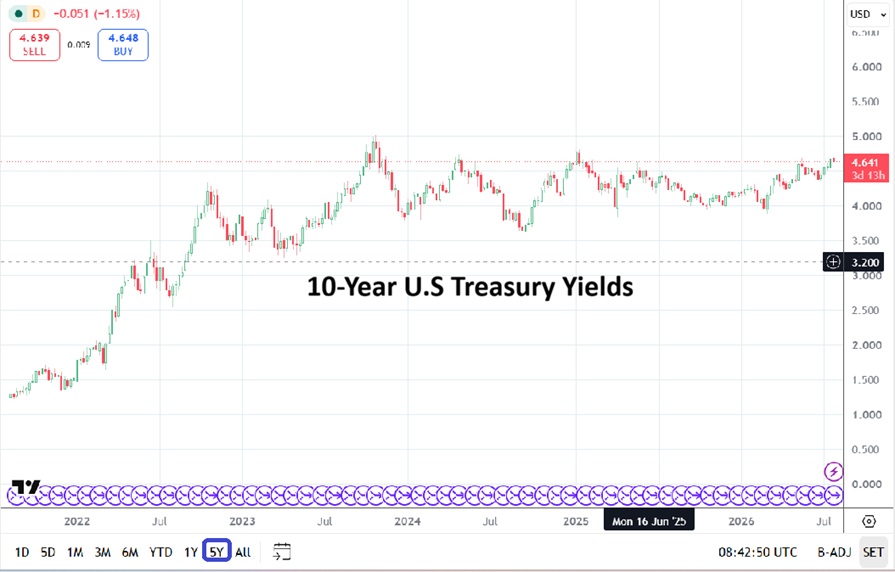
10-Year U.S Treasury Yields Five Year Chart as of 28 July 2026

Political Questions and the Cost of Energy as the Fed Reacts

Let’s for a moment dive into politics. Does anyone think that Kevin Warsh doesn’t speak to Treasury Secretary Scott Bessent who has been a long-time associate? And does anyone think Bessent doesn’t have the constant voice of President Donald Trump in his ear? 

The mid-term elections are nearing ladies and gentlemen. The de-escalation in the Iranian situation certainly has something to do with nations expressing wishes for less military action to the White House. Israel, the UAE, Kuwait, Bahrain, Iraq, Qatar, Saudi Arabia, Pakistan and Turkey are trying to influence positions as President Trump considers his next moves regarding alliances and resources. However, the situation may have something to do with the price of WTI Crude Oil too and its effect on U.S manufacturing and surprise, surprise the Federal Reserve. 

Does anyone else remember that the last de-escalation also started just before the Federal Reserve’s last FOMC meeting in June? I am not being a conspiracy fanatic, just pointing out that lower WTI Crude Oil prices do help the case for a Fed outlook which looks at the costs of energy in a pro-active manner, one which might include the U.S economy and internal White House discussions with politicians who represent voters who have the power of creating a backlash. Lower interest rates equate into lower borrowing costs for consumers.

The Fed’s Impact on Equities and Forex (and the USD/JPY)

So if the Fed does not raise tomorrow, nor gives an indication of what it will do in September and offers a stance of ‘we are vigilant and will watch the economy’ will that help sentiment on the Nasdaq 100 which is starting to have the look of a patient with a bad cold who can’t quite seem to get rid of a cough? Microsoft and Meta step into the limelight tomorrow with earnings reports, Amazon and Apple follow on Thursday.  The combination of the Fed and important quarterly earnings will impact Nasdaq sentiment and other equity indices.

It appears analysts of financial institutions are starting to discuss CAPEX – capital and expenditures – openly. And this is creating shadows as investors weigh the costs of energy and infrastructure against stated profit projections. However, let’s not throw the baby out with the bath water, the Nasdaq 100 has a gain of 20%+ over the past year (July to July), and since March the index has still gained 12%+. The war in Iran (excuse me, conflict) has not had a meaningful impact it appears on the outcome of the Nasdaq 100 via sentiment generated. But the shadow of expenditures, debt and revenue is getting louder bandwidth and speculators need to remain cautious in the indices.

Back to the Fed and Forex, the USD has been strong, you are allowed to say extremely strong if you have been betting on downside incorrectly. The USD/JPY is almost in nosebleed terrain, currently 163.830. The Bank of Japan will announce their interest rate policy very early Friday (for those of us not in Asia) and let’s see if the ‘independent’ Bank of Japan is taking a cue from their government which is clearly interested in continuing to build stronger export ratios. Has the Bank of Japan given up the so-called stated fight to keep the JPY within a solid stance? This is doubtful externally, and Japan is certainly not going to allow the USD/JPY to traverse wildly higher, but it may not consider the 165.000 mark as the end of the world. Beware of saber-rattling from the BoJ in the coming days.

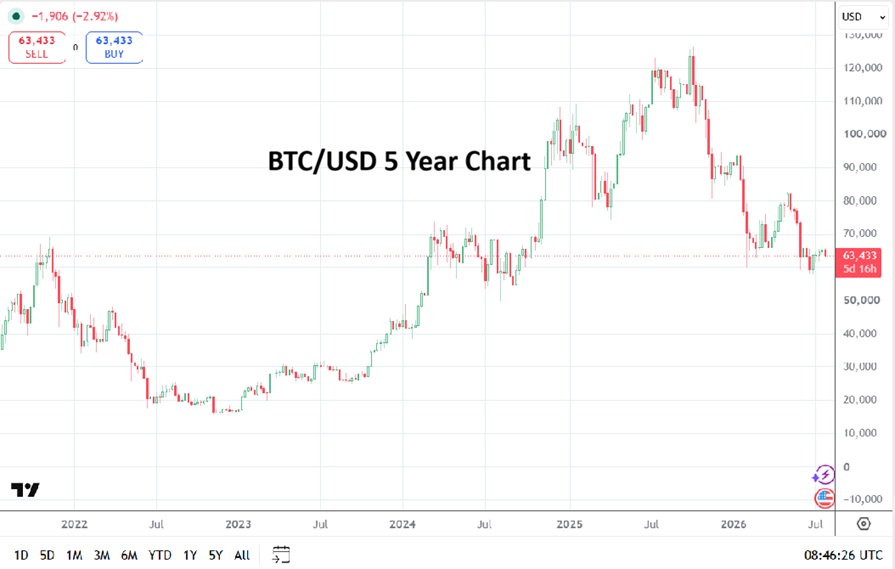
Bitcoin Five Year Chart as of 28 July 2026

Doubts and Remarks Regarding Bitcoin Below $64K

On a last note, the world of cryptocurrency remains interesting and stormy. It appears from watching the awkward statements from influencers and crypto (including Bitcoin) media outlets the past couple of months, as they attempt to explain their pain and convince others that everyone should buy at these lower values that more troubles are coming. 

What are the influencers, crypto media’s and importantly financial institutions’ actual skin in the game relative to those who have lost interest in Bitcoin and the digital market worth? Are influencers and large institutions like BlackRock hoping to pawn off their suffering ‘asset’ holdings to the public, while trying to convince us that today’s cheap prices represent buying opportunities? Is the wave of slanted influence and panic-like banner waving a hope to save themselves in order to cash out of a sinking market, this while hoping someone else takes their place in lifeboats that face a difficult voyage to safe harbors? 

BTC/USD is near $63,4000 now. Yes, we know, we have been told plenty of times before that all the Bitcoin winters eventually turn into summer again. Blossoms will create the sweet scent of profit we are assured, but what if the winter becomes an ice age? What if Michael Saylor and his ability to produce complex financial statements and instruments for MicroStrategy and Strategy equity shares continue to make little mathematical sense? What if all the investors into Bitcoin and cryptocurrencies are left holding the bag and find themselves covered by permafrost? The tundra currently looks harsh. Will the Bitcoin crowd who has been so adamant about being free of regulatory controls and mismanaged central banks cry openly for bailouts from the U.S Treasury with USD? Now that would be entertaining.

Copy and paste the text from AMT that you want to share

post261

Unpredictability of President Trump and the Markets

Unpredictability of President Trump and the Markets

Everyone wants to know what will happen in the future in the financial world. Most everyone also knows that this is impossible. However, clarity about the mid-term is a legitimate focal point that financial institutions strive. Risk managers define their considerations on assorted perspectives depending on their backgrounds.

While some may like him and others clearly are are not fans, President Trump has a reputation for wanting to get things done. His calling card for a long time has been an ability to make business deals. President Trump however has put himself in a rather difficult position and the next two weeks may prove to be an important milestone. One in which those who like the President and those who don’t will be given more credence to debate.

The Federal Reserve will announce their FOMC decision on the 30th of July. Tariff deadlines will supposedly come on the 1st of August. President Trump has made it clear he does not like the lack of aggressiveness which Fed Chairman Jerome Powell is displaying. Trump has called for the Federal Funds Rate to be cut and Powell has not acquiesced.

President Trump has openly spoken about trying to replace the Fed Chairman, but at this juncture the Trump White House knows this will be difficult unless they can prove Jerome Powell has done something maliciously. Not lowering the Federal Funds Rate because of a fear inflation will develop because of potential effects due to tariff fallout is a legitimate reason not to act. Even if the Fed Chairman is wrong, he appears to still be working on a basis which is based on an economic interpretation.

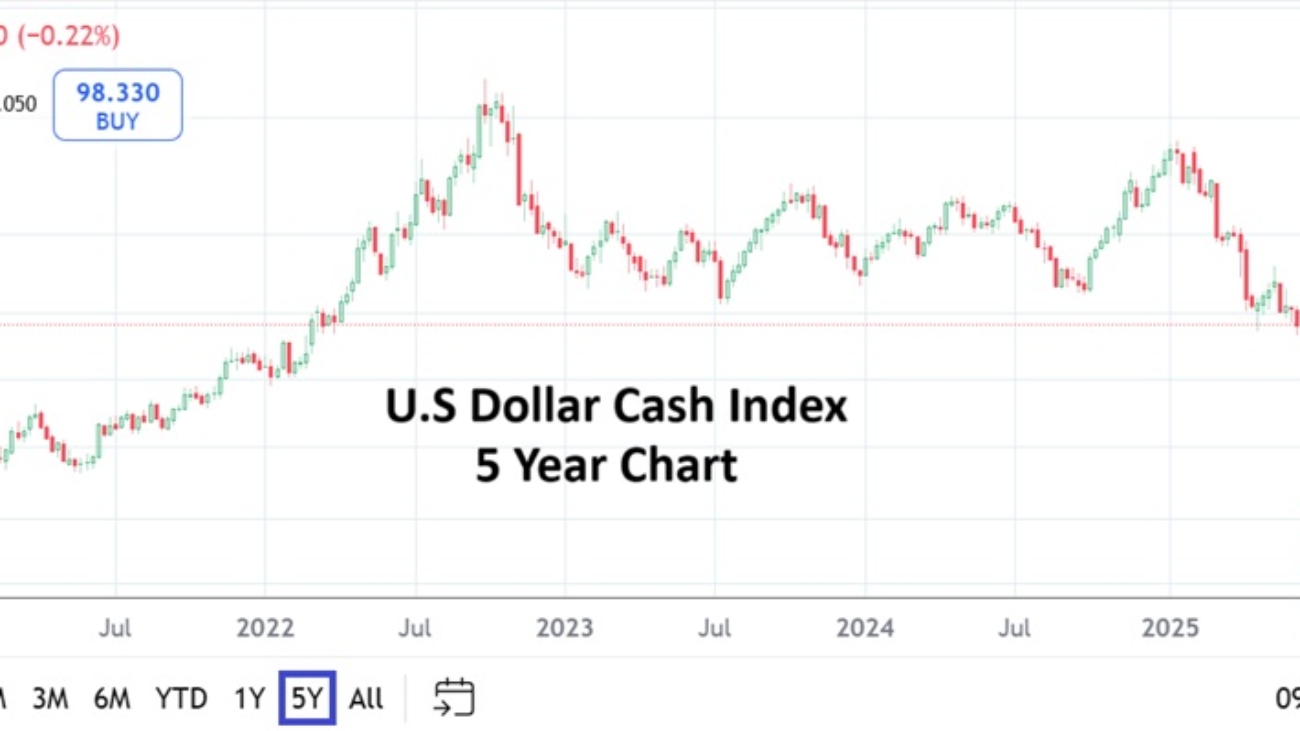
For the next two weeks the broad markets will hear about the Trump and Powell disagreement. It has been argued the Federal Reserve should have lowered the Federal Funds Rate a few months ago, clearly this was not done. However, the USD did trade with weaker sentiment in Forex from early April until the beginning of July. In the past few weeks the USD has garnered some strength, but remains within the lower part of its long-term realms via the U.S Dollar Cash Index. The weakness in the USD was likely due to financial institutions betting on rate cuts to come over the mid and long-term, and which they still believe will happen.

The upwards momentum generated recently by the USD has put the greenback in a position that seems to indicate financial institutions are transacting their cash forward orders cautiously for the moment, while waiting on the next round of impetus. And that is where Federal Reserve clarity and tariff threats now shadow mid-term outlooks.

U.S Dollar Cash Index Five Year Chart as of 21st July 2025

We have entered an unpredictable window and President Trump apparently doesn’t mind allowing a little danger into the mindsets of the financial markets. It is one thing to proclaim tremendous results and great, magnificent prospects, but how long will investors tolerate a lack of clarity regarding tariff agreements? President Trump has postponed the tariff deadlines several times and what should be considered is the potential that at some point he will have to take action to prove he means business. If the August 1st deadline is extended again this may not cause much of a shock, but it will not be met with optimism.

Instead, the main interpretation from financial institutions may be that Trump is struggling to get agreements done as he had promised. While that might lead to the idea that global commerce will continue on as is, this will certainly not help create the positive impetus which President Trump desired. At some juncture President Trump may begin to be perceived as the little boy that cried wolf. No one will pay attention and the markets will proceed without him. But President Trump will not likely let that happen, he does like attention.

The Nasdaq 100 and the S&P 500 are near record highs, so there isn’t a lot to complain about by index investors. The U.S economy has shown signs of green shoots regarding better retail sales and the recent Philly Fed Manufacturing Index. The grey area for many remains inflation, which has been coming in rather well behaved although the most recent report showed a slightly higher outcome with the yearly CPI reading. However, the Federal Reserve actually has evidence that inflation has been tame. Yes, there are questions regarding the coming influence of tariffs on the U.S economy, but for the moment inflation has not risen.

The lack of clarity and not having a mid-term comfort level which is unperturbed may be problematic for small U.S business owners that face tariff concerns on their imported goods. And the bigger picture remains unclear for large U.S corporations – but they certainly continue to try being optimistic. And this is where it gets more dangerous, plenty of perspectives are being driven (inspired) by analysts who have confirmation bias. For instance the downturn in the USD from April until early July was amplified by many who saw this as a sign the USD was being punished by foreign governments opposed to President Trump. This in fact was highly unlikely, traders need to remain alert to false narratives.

The next two weeks need to be treated carefully. There will be a running monologue among many analysts that changes daily as behavioral sentiment moves depending on what is being spoken about the Federal Reserve and tariffs. However, until there are actual answers the financial markets are likely to remain rather choppy. Self awareness will be crucial for speculators. Also, a large factor in the financial markets will be played by the U.S White House regarding how incoming results are presented. Until then day traders may want to watch technical charts and try to figure out where programmed trading lurks regarding support and resistance levels. Price velocity in Forex, bond yields and gold should be monitored.

post252

No Chance of a Nimble U.S Fed as Entitled Investors Served

No Chance of a Nimble U.S Fed as Entitled Investors Served

On Wednesday of this week Consumer Price Index numbers will be published, followed by Producer Price Index data on Thursday. Inflation statistics from the U.S for several months have been coming in rather tame and sometimes below forecasted results. Fed Chairman Powell and his team of FOMC members continue to plead uncertainty as the main reason for a lack of Federal Fund Rate cuts because of tariff concerns. The next meeting by the Fed finishes on Wednesday the 18th of June.

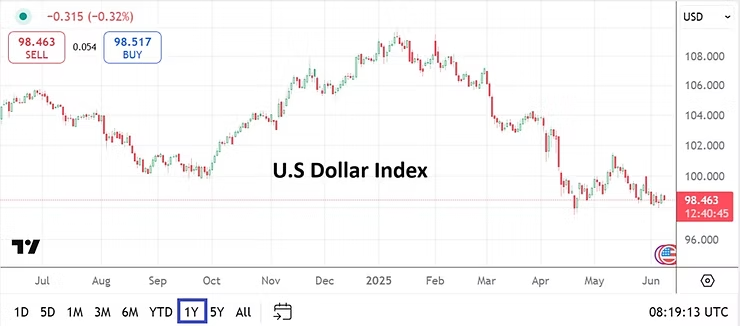
U.S Dollar Index One Year Chart as of 9th June 2025

Even if the inflation numbers come in as anticipated in the next few days, the Federal Reserve is unlikely to cut interest rates next week. President Trump and some in his cabinet have spoken about the need for rate cuts. Not only would it help consumers via mortgage rates, borrowing costs to buy autos and other high ticket items, but it would help the U.S government pay less on interest rate expenditures generated by inflamed Treasury yields.

The Fed continues to stay passive about its outlook, but if inflation data via the CPI and PPI are near forecasts this week, why would the U.S central bank continue to take such a stubborn stance? Interest rate decisions are not supposed to be political. The Fed has pointed to the potential of sudden inflation occurring due to tariff implications. This is a genuine concern. However, why can’t the Federal Reserve be more nimble? Inflation has not shown signs of immediate upwards pressure.

Perhaps it is because the Fed serves large U.S and foreign financial institutions, and has gotten into the habit of telling important folks not only what it anticipates, but handing out its interest rate plans on a silver platter so large players can position themselves beforehand like entitled elites. The Fed is very unlikely to cut interest rates the middle of next week, but it is probable they will open the door to a 25 basis point cut in July. However, July’s meeting is scheduled for the end of that month, in essence this is the middle of the summer, which is a long time to wait for action.

Day traders hoping to ride the trends that flow through the marketplace as they pursue speculative wagers remain in a difficult spot. Intraday volatility remains dangerous. Mid-term outlooks are certainly taking hold in Forex and equity indices, but sudden reversals for those using too much leverage continues to cause harm. Short-term speculators need to remain patient and vigilant, it is important to remember day traders are seen as second class citizens in the big scheme of the financial world, and this is not going to change for the moment.

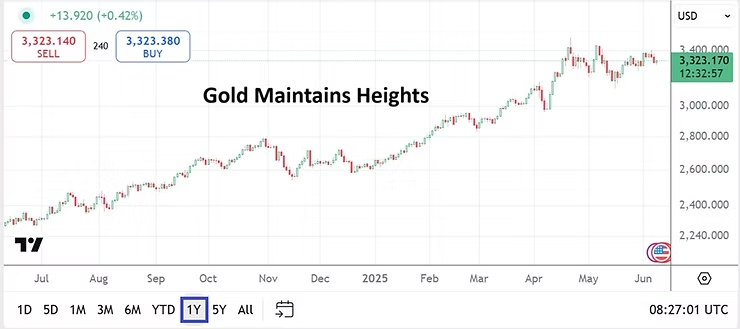
Gold One Year Chart as of 9th June 2025

A lack of clarity has spooked large players in the financial markets the past handful of months, but it does appear many institutions are becoming more comfortable. Though not at all-time highs, the major stock indices are within sight of important values. Behavioral sentiment seems to be leaning into a more positive outlook. Large investors appear to have concluded that while President Trump talks a tough game and often presents a strong stance, that ultimately he allows for tactical maneuvering to achieve deals. Trump is not big on being polite and this occasionally inflames markets. Bullish sentiment is growing on the hope President Trump’s characteristics are understood.

The Fed and the White House are likely to continue locking horns for the next few weeks. Perhaps if Jerome Powell tries to placate Donald Trump with a solid hint of an interest rate cut in July this will smooth things over. However, waiting for an interest rate cut in late July seems like a road too far, particularly when inflation levels the past couple of months avail the U.S economy to proactive actions from a Federal Reserve now.

Let’s remember, there is no law that says the Fed cannot cut or raise interest rates only during the conclusion of FOMC meetings. The U.S central bank has the ability to make changes to the Federal Funds Rate whenever it deems needed. Yet, the Fed refuses to be nimble in an age when technology allows data to be attained faster, this is a detriment.

The inability of the Fed to show it can be agile is another reason why investors are nervous about U.S policy regarding fiscal matters. The U.S government’s bureaucracy is too slow and bloated. The U.S is still a golden place to invest, but it is becoming problematic and this is leading to changes which effect long-term financial decisions.

post229

EUR/USD: Volatility is Visiting Again upon the Trump Effect

EUR/USD: Volatility is Visiting Again upon the Trump Effect

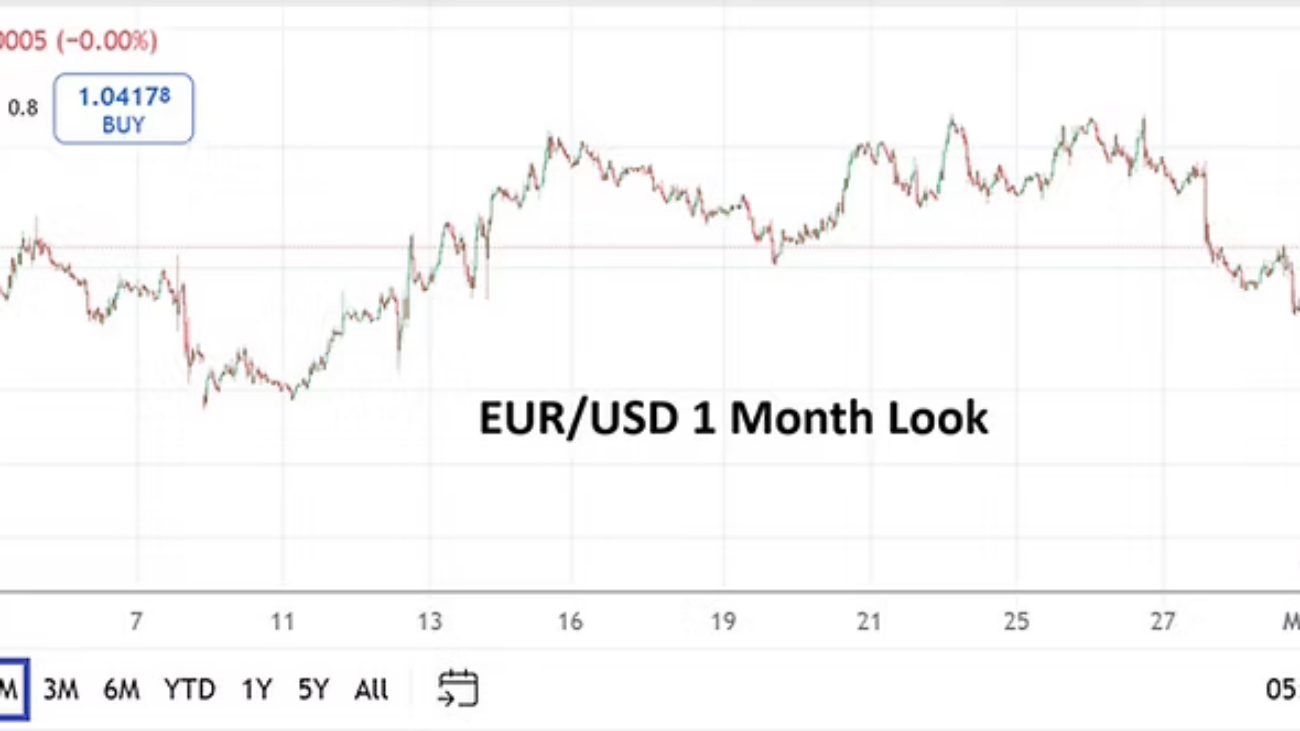
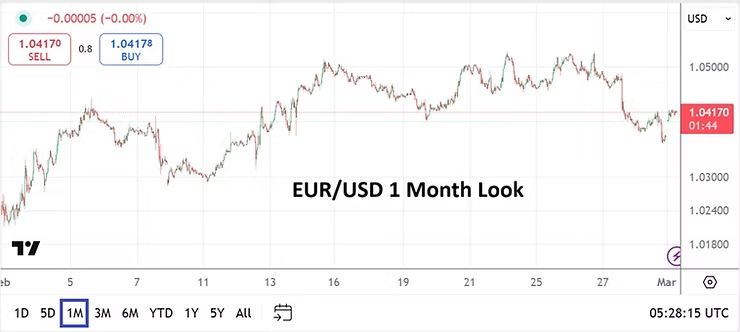
EUR/USD One Month Chart as of 3rd of March 2025

The EUR/USD bounced slightly higher in early trading this morning, this after Friday’s burst lower when nervousness was ignited by the loud outcome (and lack of a resolution) via the Zelensky and Trump meeting. However, after achieving some buying impetus to start today, the EUR/USD is running into nervous headwinds as concerns remain evident.

This Thursday the ECB is expected to cut another 0.25 from its Main Refinancing Rate. The difference between borrowing rates from the ECB and Fed will be significant if the ECB does lower costs. E.U economic data warrants the dovish policy, while concerns about stubborn U.S inflation persists. And President Trump will have something to say about the Federal Reserve’s policy too. Trump wants the Fed to lower the Federal Funds Rate.

The U.S will issue its Non-Farm Employment Change numbers this Friday. And many Fed members will be speaking at various engagements this coming Thursday and Friday which is certain to get attention. Financial institutions will certainly be listening for clues regarding the potential of shifting viewpoints regarding the Fed’s current stance which is cautious from FOMC officials.

Which brings us back to the current value of the EUR/USD and behavioral sentiment which is being generated by a deep sea which is not clear. The EUR/USD into early last week was showing signs of bullishness, this as folks piled into the notion the currency pair was in oversold territory. The ability of the EUR/USD to remain above 1.04000 today should be watched. While there has been upside early this morning, European traders and full market action will begin to kick off in about one hour.

Day traders need to know the potential rate cut cut from the ECB this coming Thursday has been anticipated and factored into the EUR/USD already. Leaving the currency pair ready to be influenced by USD centric perspectives, and Ukraine concerns which are unresolved. The U.S equity indices should be watched too via their less than inspiring results the past week. While many financial institutions believe the EUR/USD should be valued higher, this may be based on instinctive bias instead of fundamental reasons.

Economists are great for insights, but it is skittish sentiment which is driving the markets. Volatility is likely and the price range of the EUR/USD could prove tactically challenging and wide. If cautious attitudes in financial institutions create calm, the EUR/USD could produce durable support levels, which could be used for upside wagers. Speculators will have opportunities in the currency pair this week, but risk management will be essential to protect against sudden gusts caused by swirling Trump rhetoric.

postR194.1

Forex: Dangerous Triggers Abound for Inexperienced Speculators

Forex: Dangerous Triggers Abound for Inexperienced Speculators

While the U.S jobs reports via the Non-Farm Employment Change and Average Hourly Earnings will grab attention today, and the Advance GDP this Wednesday and inflation numbers yesterday were important. Institutional trading focus in many respects will be elsewhere, behavioral sentiment and the potential reactions that lurk after the results from the U.S election are known are the biggest risk threat.

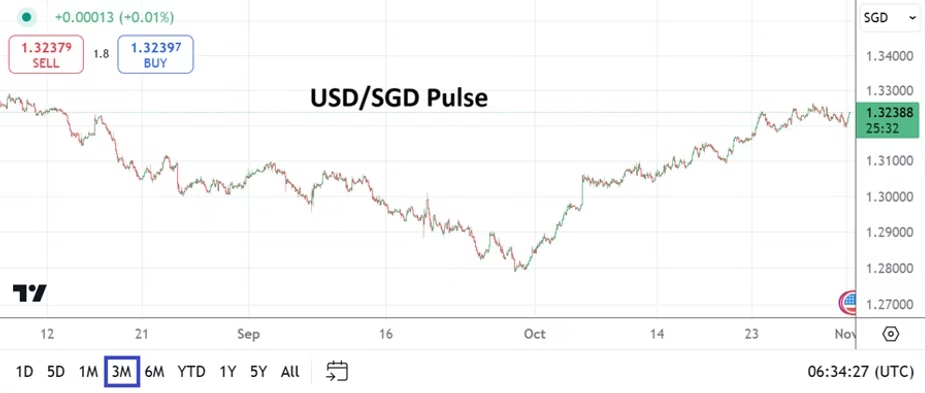
USD/SGD Three Month Chart as of 1st November 2024

Yesterday’s weaker than expected Employment Cost Index will help the U.S Federal Reserve to clip another 0.25% off of the Federal Funds Rate on the 7th of November. However, the winner of the U.S Presidency will be a talking point in the coming FOMC meeting, and also the halls of the U.S Treasury, influencing potential policies. Weaker than expected jobs numbers would fuel dovish perspectives from financial institutions today, but because of the coming U.S election on Tuesday results will fall on ears possibly tuned into other frequencies. And let’s remember last month’s job numbers were stronger than expected, and revisions downward in the back months remains a problem causing mixed sentiment.

Major currencies versus the USD continue to thread within cautious weaker values. USD centric strength has been persistent since the last week of September. If this had been a normal week of trading, the USD would have likely gotten weaker after the Advance GDP results came in slightly less than anticipated. Fuel might have been added to USD selling on yesterday’s lower than expected labor costs too, but this did not happen in many cases. This needs to be a consideration for day traders who are trying to interpret U.S economic data as the U.S election looms. Simply put, behavioral sentiment in the near-term is being more influenced by the race for the White House.

If a trader wants to bet on who they think the winner of the U.S vote will be they need to be careful too, not only because they could be wrong, but if their ‘winner’ takes the presidency, reactions may be more tumultuous than planned. Speculators need to understand that financial institutions too have likely been positioning their cash forward transactions based on who they think is going to win the U.S vote. Meaning wicked reversals and take profit orders could be triggered when the U.S election outcome is known. Forex trading volumes next week should be immense.

Gold Three Month Chart as of 1st November 2024

It is a dangerous time for inexperienced traders to participate in Forex. Brokers will certainly sell this alluring show and point out that there is a lot of opportunity to make money in the coming days, but the opposite is true too. Because if you can make a lot of money from volatility, you can also lose a lot of money. Folks without deep pockets who are using leverage will be vulnerable to price velocity.

Retail traders need to understand the risks that confront them are dangerous because their Forex positions cannot be held over a long-term because of too much carrying costs, too much volatility and frequently too much leverage. Large financial institutions who are the shakers in Forex play by a completely different set of rules. It may help a day trader immensely to understand they can really only feast on profits when they have been able to ride the technical momentum caused by the influence of financial institutions.

The cyclical nature of Forex has been on full display the past three months. Trading within the USD/SGD the past three months is a solid example of a major currency teamed against the USD and sustaining a strong bearish cycle on the expectation the U.S Fed would become dovish, and then the reversal higher since late September as financial institutions started to become risk adverse. While some analysts may argue this point, the coming results in the weeks ahead will tell us a lot as large players react to clarity via a new U.S President and the Federal Reserve’s monetary policy outlook. Traders large and small over the next five days in Forex will be treated to quite a carnival like experience.

post200

Retail Traders Caught Out by Shifting Sentiment as Data Hits

Retail Traders Caught Out by Shifting Sentiment as Data Hits

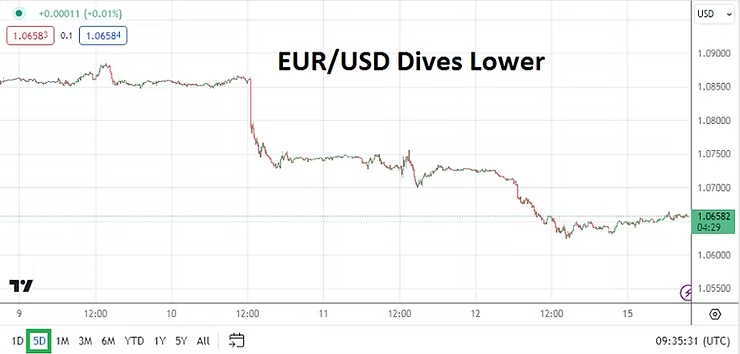
Forex speculators who relied heavily on technical data solely last week were likely punched in the gut by the rather surprising numbers from the Consumer Price Index results in the U.S last Wednesday, particularly if they were on the wrong side of trading trajectories. U.S inflation has shifted sentiment within many large investors with a rather seismic move regarding mid-term outlooks. Financial institutions which have been counting on cuts to the Federal Funds Rate have had to take a step backwards.

EUR/USD Five Day Chart as of 15th April 2024

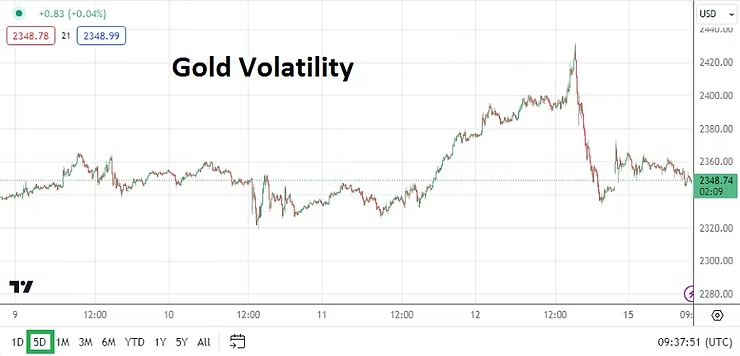
The dynamic momentum in Forex hit major currency pairs in the middle of last week and washed away support and resistance levels within a blink of the eye. Behavioral sentiment turned U.S Treasuries yields upwards and the major equity indices also experienced nervousness. Volatility also continued in Gold as new record values were produced, and then were followed by a rather strong reversal lower which likely hurt over-leveraged day traders.

Gold Five Day Chart as of 15th April 2024

Not only were U.S inflation numbers important last week, but geopolitical noise became heightened. Perhaps the climb in Gold before the weekend was helped by the anticipated conflict between Iran and Israel which did play out. The price of the precious metal and WTI Crude Oil have been more tranquil early today, which may be a signal for the moment that large market players are calm.

Monday, 15th of April, U.S Core Retail Sales – after last week’s larger than expected increase in the CPI results, the spending report today will get attention from financial institutions. Last Friday’s Preliminary Price Expectations reading from the University of Michigan did not allow investors to rest when it came in with a 3.1% elevated mark. If today’s Retail statistics are above expectations, this could make Forex roil again.

Tuesday, 16th of April, China Industrial Production and Gross Domestic Product – these economic reports will be watched closely by international investors. While there have been murmurs that China’s economy is improving, and media reports that the Biden administration is trying to engage diplomatically, the industrial and GDP results are expected to be weaker than the previous month’s outcomes. China will also release Retail Sales figures.

GBP/USD Five Day Chart as of 15th April 2024

Tuesday, 16th of April, U.K Claimant Count Change – last Friday’s GDP report from Britain did not produce any significant surprises. The U.K economy continues to struggle, but like most spheres inflation remains a problem. The GBP/USD sunk violently last week, while many speculators may believe it is currently oversold they may want to remain cautious.

Because of the U.S Federal Reserve’s own perilous fight against inflation, there are some who believe the Bank of England may need to cut interest rates before the U.S central bank. However, given the lack of proactive characteristics from the BoE and ECB which have been on full display as they dance in step with the Federal Reserve, this makes a BoE cut before the Fed a skeptical notion for the time being. The GBP/USD will stay largely USD centric even in the wake of this U.K employment report.

Tuesday, 16th of April, U.S FOMC Members – a parade of Federal Reserve voting policymakers will speak at various events, this includes Fed Chairman Jerome Powell. There will likely be little in the way of surprises from the Fed members as they likely all stick to ‘party’ lines and emphasize a cautious outlook.

Wednesday, 17th of April, U.K Consumer Price Index – the inflation report could prove to be catalyst for the GBP/USD. If the CPI number does come in weaker than expected it could spur on behavioral sentiment shifts regarding the potential for changes to BoE policy. Because the GBP/USD was so volatile the past week, day traders should be prepared for rather combustible price action from the currency pair which may look counter-intuitive. Smaller speculators should remember that ‘smart money’ from larger players may be positioned for the results of the U.K CPI data already.

Thursday, 18th of April, U.S Weekly Unemployment Claims – although not the most significant of reports usually, financial institutions are ‘waiting’ on a change of statistical direction via labor market evidence. If jobs numbers start to come in weaker than anticipated – meaning there are higher jobless claims – then the USD could react with some selling.

Friday, 19th of April, U.K Retail Sales – having endured a rather wild trading cycle, Great Britain will deliver one more important economic report to end this week. The GBP/USD will react to the consumer spending results.

postN77.1

Forex: Behind the Curtain as Speculative Deja Vu Strikes

Forex: Behind the Curtain as Speculative Deja Vu Strikes

Friday jobs reports came in stronger than anticipated on the surface, and this led to a roller coaster like ride for Forex traders as results were acted upon by financial institutions. However, a look behind the data shows ‘positive’ results were spurred on by part-time hiring and government influences leading to a notion that jobs numbers were not exactly a ray of sunshine regarding U.S economic health. The suspicious results cause a desire to look for ulterior motives, and to wonder if election year politics are playing a role in the U.S employment picture.

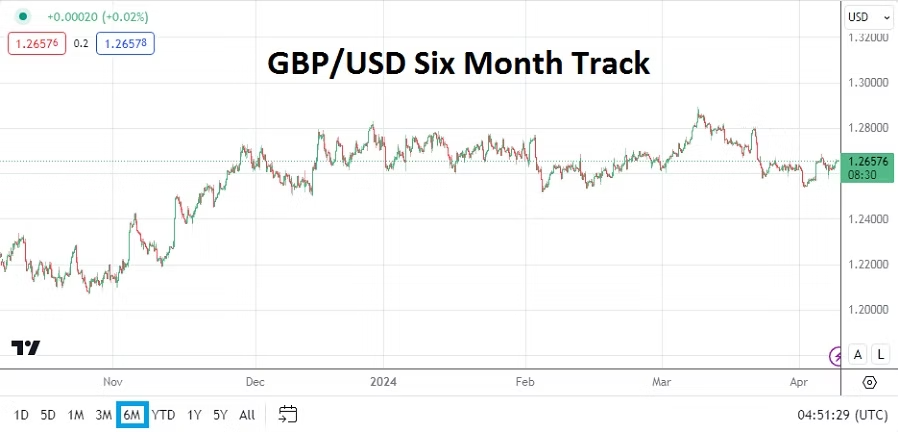
GBP/USD Six Month Chart as of 9th April 2024

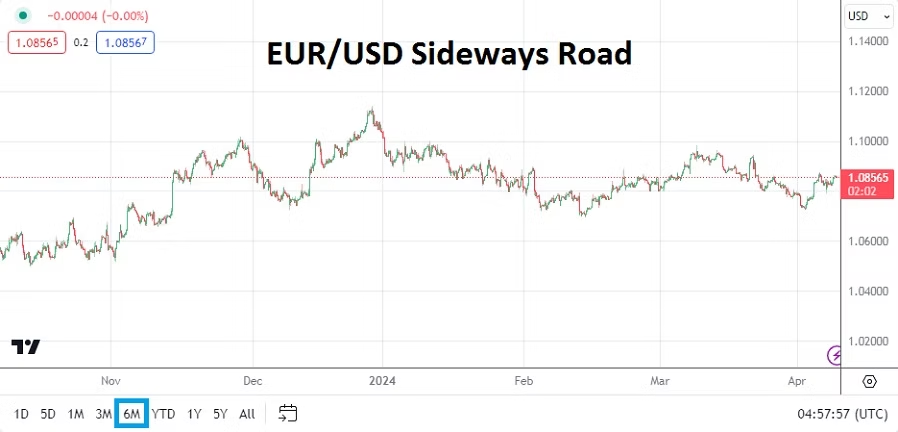
The GBP/USD and EUR/USD are rather insightful for technical and fundamental traders. The currency pairs are languishing as of today’s values near pricing that was seen in the second week of December. Since the ‘announcement’ from the U.S Federal Reserve on the 13th of December that a change in monetary policy would begin to occur in 2024, in actuality nothing has really happened, except government ‘speak’ trying to sound as if everything is understood and in control, while it is clearly not.

Economic data from the U.S and Europe has continued to be soiled by mixed results, and retail speculators looking for a trend to emerge have had to deal with choppy conditions. Financial institutions remain unclear about interest rate outlooks. The Fed while trying to ‘sound’ dovish rhetoric remains locked within a Google engine keyword mantra as they mutter the phrase ‘over time’ when trying to convince people that interest rates will ‘eventually’ be cut.

Last week leading up to the Non-Farm Employment Change numbers, many FOMC members were offering cautious tones about the Federal Funds Rate and warning it should not be changed yet. The implication of the Fed’s verbiage could lead some to suspect they have all practiced statements handed to them by their overlords who are concerned this is an election year and jobs are in jeopardy.

EUR/USD Six Month Chart as of 9th April 2024

Which leads us back to Forex and all financial assets, as investors try to swim waters which have left fundamental perspectives grasping at data which is not easy to decipher. U.S government policy is practicing fiscal spending that is causing massive debts, and perhaps influencing hiring data which may be more akin to putting lipstick on a pig. Many U.S voters seemingly lean towards electing officials who promise to hand out the biggest ‘social rewards’, while ignoring there will be a price to be paid down the road.

The Federal Reserve in the meantime tries to sound optimistic about inflation eroding, but concerns due to U.S government debt being accrued, and global geopolitical affairs combined with energy policy which is making it more expensive to maintain cheap transportation, efficient agriculture and manufacturing, shadow the Fed’s hopes. WTI Crude Oil remains over 86.00 USD per barrel. Gold is trading at record high values and above 2300.00 USD. Does anyone see the dangerous connections? Equity indices should be watched as a barometer this week.

USD/JPY Six Month Chart as of 9th April 2024

Monday, 8th of April, Japan Average Cash Earnings and Economic Watchers Sentiment – yesterday’s reports matched expectations regarding wages, but workers surveyed noted their concerns about incremental inflation which is being seen in Japan. The USD/JPY is challenging November higher values and the Bank of Japan has been widely criticized for not raising interest rates more aggressively. However, it is possible the BoJ wants the Japanese Yen to remain within its weaker price range to spark a stronger Japanese economy via exports.

AUD/USD Six Month Chart as of 9th April 2024

Tuesday, 9th of April, Australia Westpac Consumer Sentiment – the results via the consumer reading came in negative. The AUD/USD like the GBP/USD and EUR/USD is traversing values tested in the second week of December 2023, leading to the feeling of deja vu.

Wednesday, 10th of April, U.S Consumer Price Index – you have heard this before, the inflation reports from the States are going to rattle the financial markets including Forex. The USD is certain to react. Data from the U.S has produced surprises aplenty in the past few months. The Consumer Price Index is important and day traders certainly need to pay attention.

Thursday, 11th of April, European Central Bank – the ECB is not expected to change its Main Refinancing Rate, but many analysts believe they should cut borrowing costs. However, the ECB will likely remain within the camp of choosing to ‘wait and see’. The ECB Press Conference with Christine Legarde has widely become regarded as an opportunity for political speech as much as an economic dialogue. Recent data from the European Union suggests the worst of the recessionary cycle is gone, but German Trade Balance numbers released on Monday were negative, highlighting hurdles remain. Inflation is a worry, and a cut to the interest rate might be able to help spur on economic activity while counting on lagging data to prove proactive policy should be implemented. But this likely is not going to happen and the EUR/USD will remain problematic.

Thursday, 11th of April, U.S Producer Price Index – these slew of reports should be watched carefully. If the data is stronger than expected it is likely a part of the residue caused by higher energy costs that have affected logistics and created more expensive raw materials which are needed to produce goods. It was the higher PPI reports last month that caused dramatic tidal shifts in Forex, speculators should brace for the potential of additional mayhem.

Friday, 12th of April, U.K Gross Domestic Product – last month’s GDP numbers from Great Britain came in slightly higher than expected with a 0.2% gain, this report is anticipating growth of only 0.1%. Traders should take a deeper look at the statistics upon publication and check for revisions to past months. The U.K economy has been struggling, the ‘growth’ results will affect the GBP/USD before going into the weekend.

postN83.1

FOMO Potential Could Fuel FX and Equities with Calm Winds

FOMO Potential Could Fuel FX and Equities with Calm Winds

Traders should not run towards their trading screens as the week begins, steady attitudes and risk taking tactics will be needed. Yet, there may be reasons to get excited. The return of full market volume as U.S financial institutions open and employees get back in their offices after the long holiday weekend needs to be monitored. The term ‘FOMO’ – fear of missing out – may be heard this week if U.S equity indices continue to shine, Forex demonstrates additional USD weakness and U.S Treasury yields decline further. There will be a whirlwind of economic data and opportunities for ‘official’ rhetoric in the days ahead.

Day traders should ask questions about the results which were seen technically via their charts last week, assets all struggled to find momentum last Thursday and Friday. And earlier in the week many Forex pairs produced choppy results. But here’s the thing, behavioral sentiment was rather muted as large speculators and financial institutions understood that trading volumes would be light – this caused strong bursts and sudden reversals early – but by the end of the week rather calm waters.

Many trading houses could increase their speculative positions this week based on their outlooks. Financial institutions clearly have believed the USD had been overbought and the ability of the GBP, EUR and JPY to gain in the past two weeks are possible signs large ‘players’ remain positioned for further USD weakness.

Equity markets have done well in November, but the major indices including the Dow 30, S&P 500 and the NASDAQ Composite all started to garner strength in the last week of October. Mid-term highs are being achieved in U.S indices. The parade of buyers may not be done quite yet.

Economic data results are vital for day traders to understand because they provide insights into the thinking of financial institutions regarding their outlooks. It is not the trading of small speculators that moves markets, it is the power of large cash positions which drives results. Questions regarding where the cash is going and the allotments financial institutions are pursuing is a key to understanding how the markets are going to react. This information is not readily available for day traders, instead smaller speculators need to try to comprehend outlooks regarding positioning and timeframes of larger players.

Part of the FOMO factor could develop as financial institutions begin to question how much money they will hold in money market accounts for their clients. While the practices of large investors are always comforted by the notion they are making guaranteed returns, the pursuit of better results and the desire for risk appetite does drive behavioral sentiment when bullish markets are being exhibited.

This week will be intriguing as full volumes return to the marketplace today and tomorrow. From today until the 13th of December FOMC Statement from the U.S Federal Reserve, results in the financial markets could be speculative. Financial markets are starting to signal that optimism is creeping back into the mindsets of large investors who may believe mid-term economic scenarios have improved.

EUR/USD Six Month Chart as of 27th November 2023

Monday, 27th of November, E.U. ECB President Lagarde – the European Central Bank leader will deliver thoughts regarding monetary policy to the European Parliament. While the E.U still is sufferning from recessionary numbers, economic data last week came in slightly better than estimated. However, the EUR/USD remains in a USD centric mode and this will continue this week.

Tuesday, 28th of November, U.S Consumer Confidence via the Conference Board, the numbers are expected to be slightly weaker than last month’s outcome. U.S economic data has been showing signs of being weaker than expected, last week’s Core Durable Goods Orders report followed this trend.

While this may be read as bad news by some people, day traders should note – particularly Forex speculators – that slightly weaker U.S economic data currently is music to the ears of many financial institutions because they believe the Federal Reserve will have to shift their rhetoric from aggressive to neutral.

Tuesday, U.S Federal Reserve Officials – a slew of FOMC members will be speaking at various events during the day. The Fed likes to give clues to the financial markets regarding their outlooks and perceptions regarding interest rates. The Federal Reserve has certainly paused their interest rate hikes.

The question now is if the U.S central bank will start to say while they remain diligent regarding inflation, that they now see signs of a ‘soft landing’ emerging within the U.S economy. If the Fed speakers begin to sound not only neutral, but offer hints of becoming potentially dovish by the spring of 2024 regarding monetary policy, this could spur USD selling.

Wednesday, 29th of November, Germany Preliminary Consumer Price Index – the inflation results are expected to be slightly weaker than last month’s outcome. German economic data has been recessionary, financial institutions know this, what large traders would like to see is stable results that are not wildly surprising.

Wednesday, 29th of November, U.S Preliminary Gross Domestic Product – the growth numbers are expected to show a slight increase. Equity markets, Forex and commodity markets will react to these results. The U.S economy has been surprisingly strong regarding growth. A slight slowdown regarding the GDP numbers would not be the worse thing, if growth numbers did come in below the estimate this could fuel additional USD weakness.

But traders should not get overly ambitious and bet against the GDP numbers. If the expected outcome of 5.0% is delivered, equity markets could use this as additional fuel. The number is sure to be a talking point, but unless their is a massive divergence it may simply be a way to create noise for ‘talking heads’, when in fact behavioral sentiment regarding risk appetite remains optimistic.

Thursday, 30th of November, China Manufacturing PMI – the result is forecast to show a slight improvement. China economic numbers remain a concern, particularly from the real estate sector which is suffering and is causing cascading troubles on other sectors within the nation. Global demand for products, as an example from European countries, that are suffering recessionay pressures also is slowing China’s manufacturing. A slight improvement would be welcomed by global investors participating in China financial assets.

WTI Crude Oil Six Month Chart as of 27th November 2023

Thursday, 30th of November, OPEC and JMMC Conference – the oil producers will certainly make their policies known and energy markets will react to the news and rumors. Commodity traders should note that WTI Crude Oil, Brent, Natural Gas and Unleaded Gasoline markets have been under price pressure and important mid-term cash support levels are in sight.

Thursday, 30th of November, U.S Core Personal Consumption Expenditures Index – this inflation reading is important and should be watched. The result is expected to be weaker than the previous month. If the outcome matches the anticipated reading of 0.2% or less, this could spur additional USD weakness. The Core PCE Index is an important reading for the U.S Federal Reserve regarding its inflation insights.

Friday, 1st of December, U.S Fed Chairman Jerome Powell – the Fed leader will be speaking at a college event in Atlanta. Traders should remember that about ten days before the Fed’s pause in November regarding its FOMC Statement, Powell delivered a large hint regarding monetary policy. The Fed Chairman’s comments will come late on Friday and could cause a reaction early next week if Powell’s remarks fuel more Forex speculation.

Additional note – the U.S jobs numbers will not be released this Friday, the Non-Farm Employment Change and Average Hourly Earnings results will be published on the 8th of December.

postN24

Interest Rates, Fireworks, OPEC, Fed Minutes, and Jobs Data

Interest Rates, Fireworks, OPEC, Fed Minutes, and Jobs Data

Global day traders will certainly be able to work early this week, but they should note the 4th of July holiday in the U.S will deliver rather light volumes Monday and Tuesday. Markets in the U.S will be open on the 3rd, but speculators need to understand that price action may be flat and then experience sudden bursts of energy. Financial institutions in the U.S could be rather quiet until Wednesday.

Monday, the 3rd of July, European Manufacturing PMI – data will come from across Europe and is expected to show the sector remains rather lackluster. France, Germany, the U.K and others will issue reports.

Monday, the 3rd of July, U.S Manufacturing PMI via the ISM – the Purchasing Managers Index numbers are expected to produce a slight rise, but remain under the level of 50. However, any increase compared to last month’s outcome will be an additional sign the U.S economy is battling on and would give the U.S Federal Reserve another reason to lean towards an interest rate hike later this month.

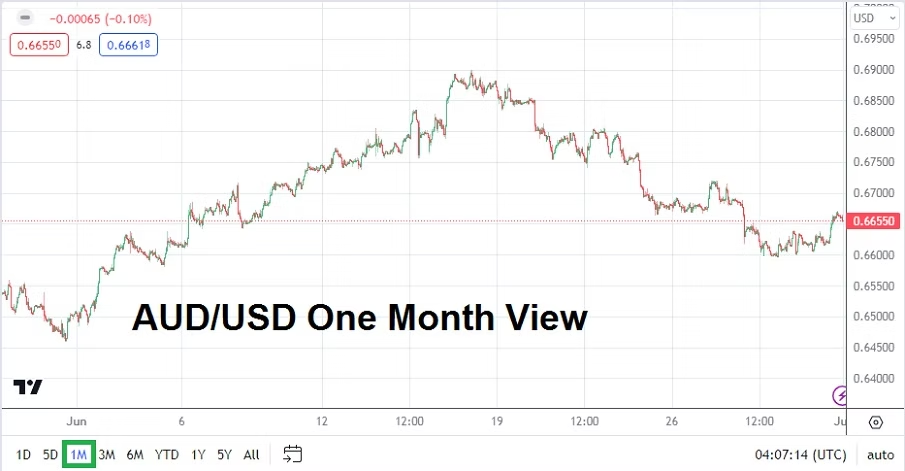
AUD/USD One Month Chart as of 2nd July 2023

Tuesday, the 4th of July, Australia RBA Cash Rate and Statement – while some analysts assume no interest rate hike will be delivered in July because the CPI has shown a slight downturn, there seems to be rather large whispers another hike of 0.25% could be added from the Reserve Bank of Australia. AUD/USD traders certainly need to pay attention, and folks with limited funds should stay on the sidelines until the decision is released.

Tuesday, the 4th of July, U.S Independence Day – banking holiday.

Wednesday, the 5th of July, China Caixin Services PMI – economic data from China has certainly shown signs of downward pressure. A slight decrease is the expected result.

Wednesday, 5th of July, OPEC Meetings – the energy cartel will be conducting its official get together in Vienna, Austria and oil traders should be on alert for any news and decisions made public that could affect the energy sector.

Wednesday, 5th of July, U.S FOMC Meeting Minutes – the publication will provide insights into the Federal Reserve’s decision to ‘pause’ interest rate hikes last month, but could also add fuel to the notion the U.S central bank remains within an aggressive stance regarding inflation. Forex markets will react to the report.

Thursday, 6th of July, U.S Services PMI via ISM – the statistics will be monitored closely due to the rather positive outcome from the GDP report last week, which showed the U.S economy remains rather resilient. A positive outcome in the Services numbers will add further evidence for the Federal Reserve to remain hawkish.

Friday, 7th of July, U.S Jobs Numbers – the employment data will culminate as the week comes to an end with the Non-Farm Employment Change and Average Hourly Earnings figures. Yes, on the day before, Thursday, traders will also see the JOLTS numbers and weekly Unemployment Claims. However, it is the Non-Farm and wages data that financial institutions will largely react upon depending on the outcomes. Because it is a ‘holiday’ week in the U.S, the reports may find a muted response, but financial institutions will use the information to gauge their mid-term outlooks and position their assets including Forex and bonds.