postN7

Risks Ahead: Tranquil Data Mixed with Loud Nervous Chatter

Risks Ahead: Tranquil Data Mixed with Loud Nervous Chatter

Last Friday finished with stronger than expected Non-Farm Employment Change numbers, which essentially collided with dovish rhetoric via two U.S Federal Reserve FOMC members from the middle of the week; this while inflation clearly remains stubborn in the U.S.

All of which sets up this coming week for nervous trading results and until the 14th of June, when the Federal Reserve’s Federal Funds Rate pronouncements will be brought forth. Plenty of talk about interest rates will be heard in the days ahead and traders should expect to hear debates as the chatter grows louder.

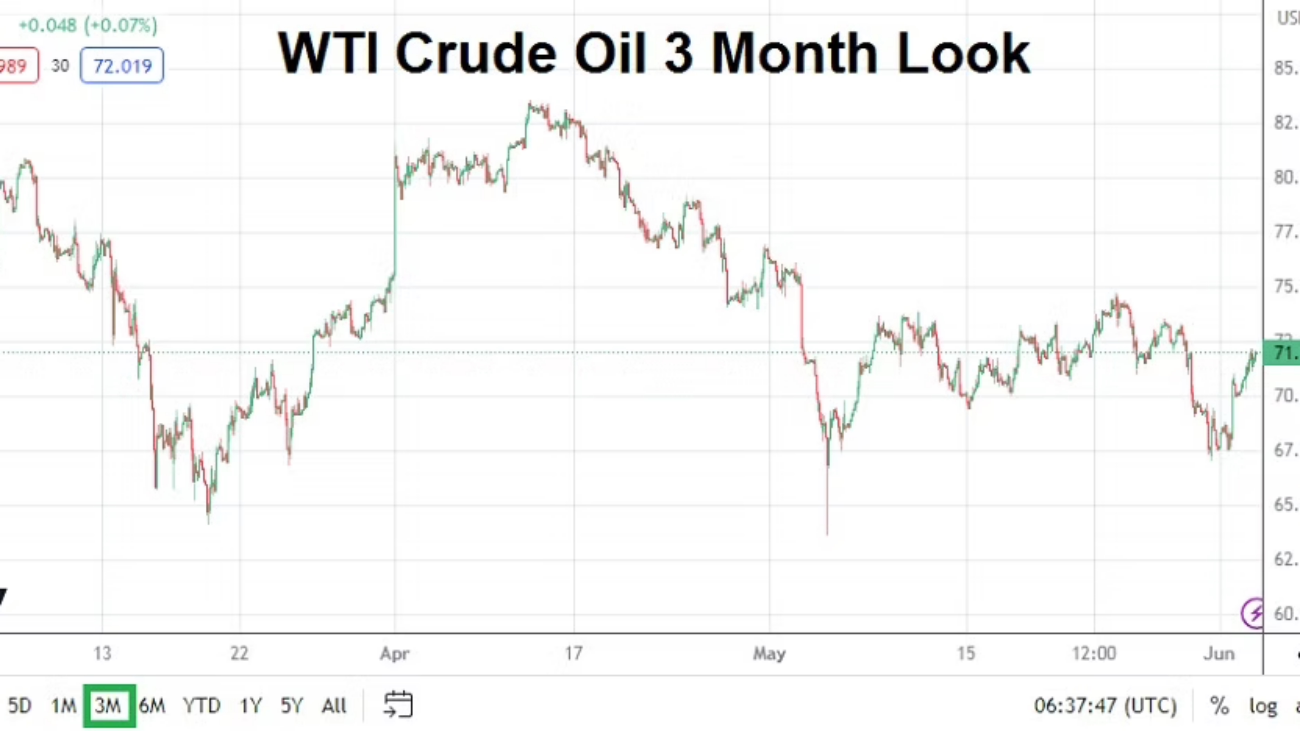
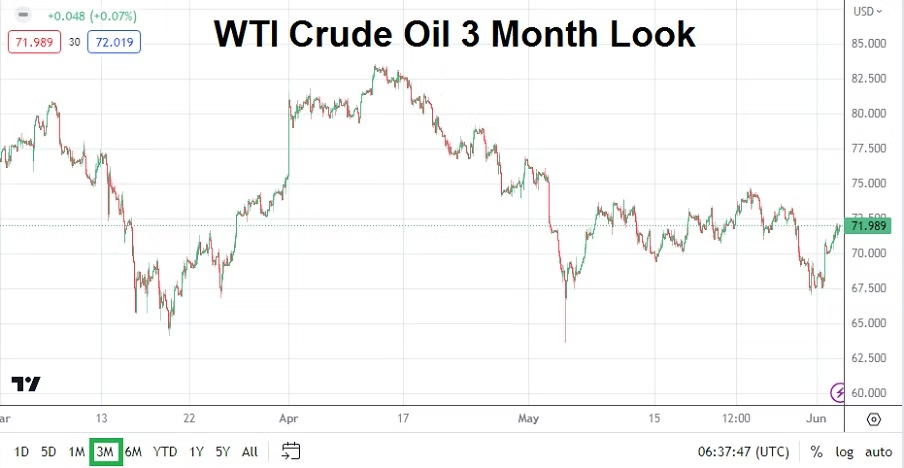
Commodity traders may be interested in the outcome of the OPEC+ meetings taking place this weekend. The cartel’s decisions regarding oil production will affect not only prices of Crude Oil futures, but is a direct reflection regarding global demand, which also tells us about the organization’s viewpoints regarding global economic conditions.

WTI Crude Oil Three Month Chart as of 4th of June 2023

Monday, the 5th of June, European Services PMI – Germany, France and Italy and will release their Purchasing Managers Index readings. The German outcome could prove interesting because the nation is suffering from recessionary pressures. The PMI results could affect the EUR/USD a bit. The U.K will also release their data too.

Monday, the 5th of June, U.S ISM Services PMI – this report will be of interest because some are expecting a better outcome compared to May’s results. A potentially strong reading could prove problematic and put more pressure on the Federal Reserve to raise interest rates next week.

Tuesday, the 6th of June, Australia RBA Rate Statement – the Reserve Bank of Australia surprised people with an increase of their Cash Rate last month. No increase is expected now, but the RBA’s rhetoric should be listened to as they comment about domestic and global economic conditions.

Wednesday, the 7th of June, Canada BoC Overnight Rate – Bank of Canada is expected to hold its borrowing costs in place, but inflation is still creeping into prices and the BoC’s Rate Statement may prove intriguing.

Thursday, the 8th of June, U.S Weekly Unemployment Claims – following in the footsteps of the stronger than expected jobs numbers last week, this report could get some media fanfare. However, it also may prove to be a lot of noise and have little real affect on market direction.

Friday, the 9th of June, China CPI and PPI – the inflation reports from China could prove interesting in wake of recent lackluster economic data from the nation. Last Thursday’s Caixin Manufacturing PMI results came in slightly better than expected, but data from China the week before was negative. The data from China gives investors and traders insights because of its importance as a global supplier of consumer products.

postN6

Federal Reserve Noise as Short and Long-Term Clarity Fades

Federal Reserve Noise as Short and Long-Term Clarity Fades

There is a storm in the Forex markets currently and it will persist tomorrow. Today is a good day to talk about the difference between short-term trading and long-term investing. Short-term outlooks typically are top heavy with technical interpretation, and behavioral sentiment mixed with fundamentals when speculators are pursuing the marketplace looking for quick profits. Loud short term thunderbolts coming from various components that affect trading are significant. Yesterday’s noise had an impact.

Long-term investment is done with a focus on patience, conservative outlooks regarding fundamentals and potential behavioral sentiment that could develop and encapsulate attitudes within a chosen asset. Day traders are often ready to bet on what is going to happen in a matter of minutes, hours and perhaps a day. If a so called day trader has to be in a position longer than a couple of days, they often find that they are not emotionally prepared to wait for outcomes.

There is also the problem regarding a lack of enough cash in many trading accounts. Short term traders often do not have enough money to carry positions for a significant duration, sometimes overnight transaction fees charged by their brokerage platforms are too expensive. The availability of limited money is a liability and creates unprofitable propositions, unless an extreme amount of leverage is being used. Most short term traders lose their money when trying to apply excessive leverage. Dangers abound for day traders.

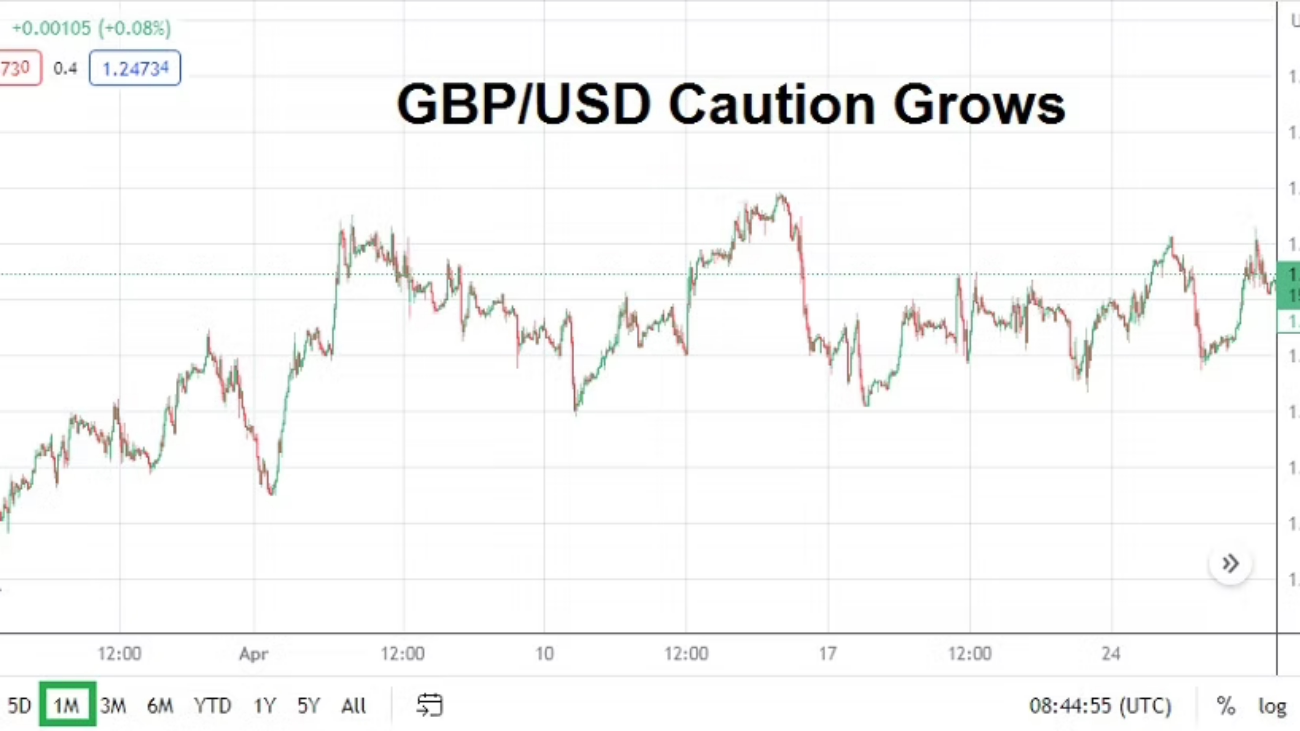
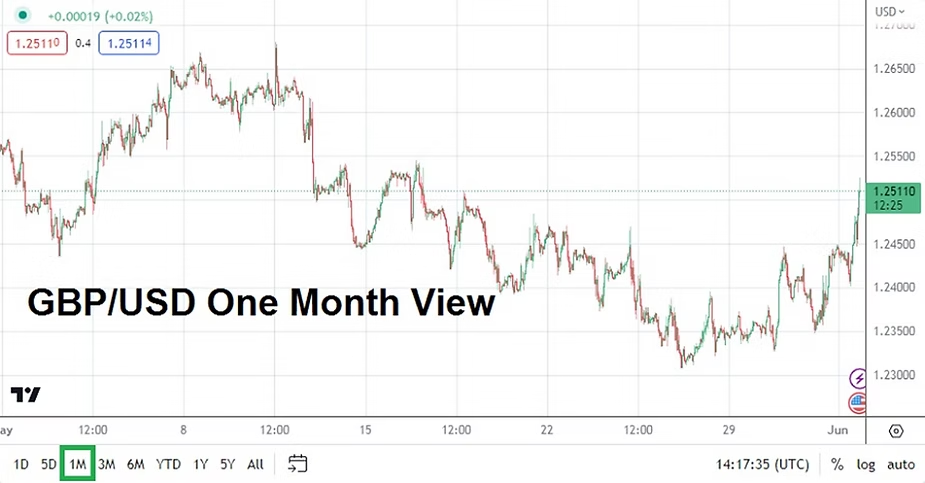
GBP/USD One Month Chart as of 1st of June 2023

Important U.S Data is on the Schedule Tomorrow which may not be mere Noise

Tomorrow the Non-Farm Employment Change number will be published, but the Average Hourly Earnings report will be a crucial part of the data brought forth too. Short-term traders like wagering on the jobs outcome and trying to ride its impetus, hoping a prosperous wave delivers them to the shore with profits. If the Average Hourly Earnings report comes in stronger than anticipated tomorrow, this could send Forex markets into a volatile and dangerous session as it mixes with yesterday’s Federal Reserve ‘dust’ which is still in the air causing problems.

Federal Reserve Dust Storm Caused by Jefferson and Harker Yesterday

Two members of the Federal Reserve’s FOMC committee, Philip Jefferson a Federal Reserve Board of Governors member and Patrick Harker the President of the Federal Reserve Bank of Philadelphia, suggested on Wednesday that keeping the Federal Funds Rate in place on the 14th of June would be a good idea.

Philip Jefferson has been nominated by President Biden to take the powerful seat of Vice-Chair of the Federal Reserve, but he has not been appointed to the position yet officially. The position of Vice-Chair is a key job within the Fed which creates a rather strong voice regarding policy historically. Jefferson’s voice could make a difference in the next two weeks. However, even with Patrick Harker joining Jefferson’s rhetoric yesterday, among them are a handful of other FOMC voting members who have expressed loud concerns about inflation and made it clear in their opinions, that staying aggressive regarding interest rate policy is important.

Clarity remains difficult to visualize regarding what the U.S Federal Reserve will do near and mid-term. However, the Federal Reserve has been exceptionally good at creating choppy Forex conditions much to the detriment of short-term traders, which is supposedly not part of the Fed’s mandates.

Forex Markets have been Stirred and Tomorrow’s Data could Shake Conditions More

Wednesday’s comments from the two Federal Reserve members briefly stirred global Forex and the broad marketplace. Short term traders likely got caught in the momentary flashes of hysteria caused by the comments of the two gentlemen.

Arriving closely behind the comments by the Fed officials yesterday was the U.S JOLTS Job Openings report, which is viewed suspiciously by many professionals in the investment world because its numbers are sometimes suspected of being inflated by ‘headhunters’. However yesterday’s JOLTS results showed a huge increase in available employment options and caused another temporary reaction in Forex – in many ways counteracting the Fed voices.

Meaning tomorrow’s Non-Farm Employment Change numbers, and the inflation report via the Average Hourly Earnings will cause a loud buzz before and after their publication. This as the rhetoric from Fed members Jefferson and Harker mixes into the statistical outcomes.

The USD has been strong in the broad markets the past few weeks against many major currencies. This as evidence has grown the Federal Reserve may feel pressured into increasing the Federal Funds Rate in June in order to fight inflation. Tomorrow’s job reports will be essentially a week and half before the interest rate decision on the 14th of this month.

Short-term traders will likely bet on what will happen tomorrow and will continue to speculate in the coming two weeks regarding what the Federal Reserve will do. This while long-term players position their portfolios based on outlooks that can deal with the ‘dust’ in the air momentarily, knowing they should remain patient. Long-term investors do not always make money, but yesterday’s brief fireworks caused by the Federal Reserve officials weren’t quite as troubling for investors with a broader horizon who don’t flinch with fear from short-term murmurs.

post28

Gut Feeling about Fed June Hike, Perhaps Wrong

Gut Feeling about Fed June Hike, Perhaps Wrong

I have a distinct feeling the U.S Federal Reserve is going to suggest via their FOMC Statement tomorrow that another increase of the Federal Funds Rate is likely going to happen in June. I could definitely be wrong, but my gut instinct is rumbling.

Inflation Remains a Sincere Problem Per the Fed’s Thinking

Wage data demonstrated last Friday via U.S Personal Income that inflation remains stronger than expected. Yesterday’s ISM Manufacturing Prices reading also spiked to 53.2 versus the expectation of only 49.4. The increases shown within these economic reports will not please the Federal Reserve.

While a hike tomorrow is nearly a certainty, the Forex market remains rather unimpressed with the potential for an increase on the 14th of June. Behavioral sentiment has shown a rather polite USD actually losing momentum the past few days. Caution has seeped into the USD today, but are financial institutions too relaxed regarding a potential hike by the Fed in June?

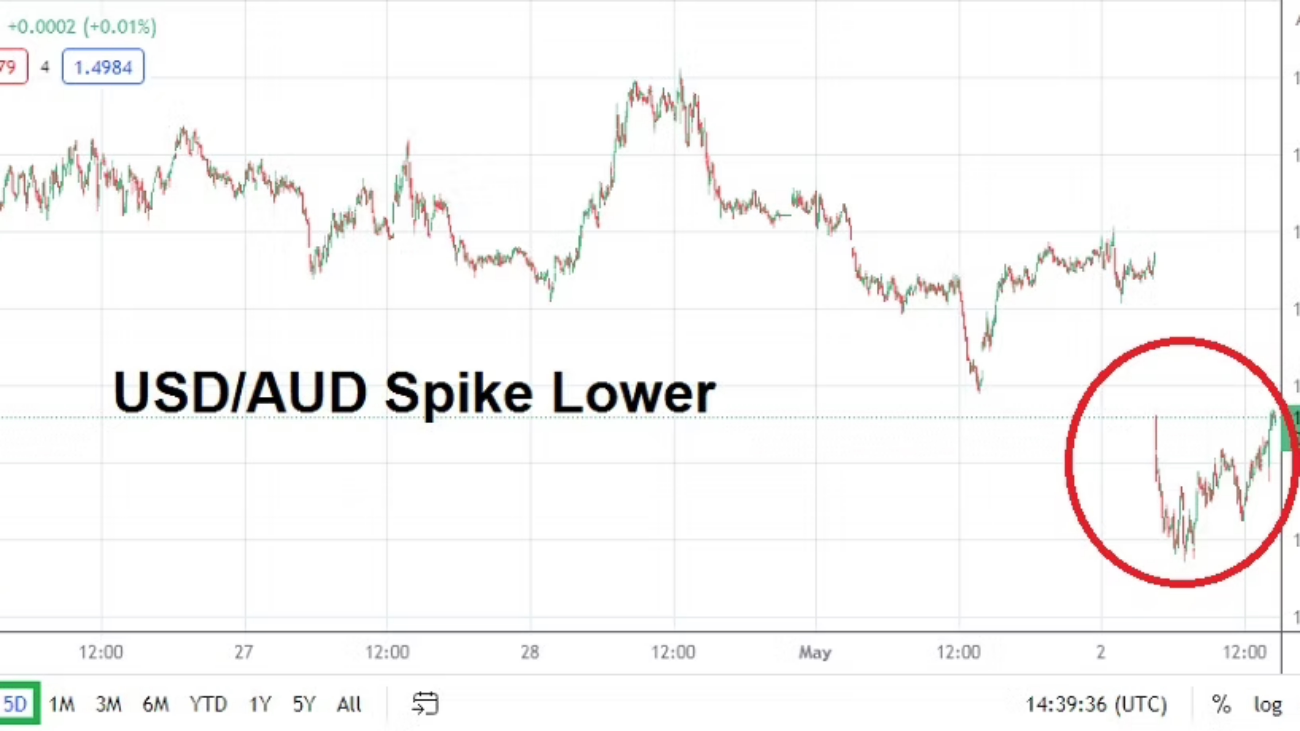
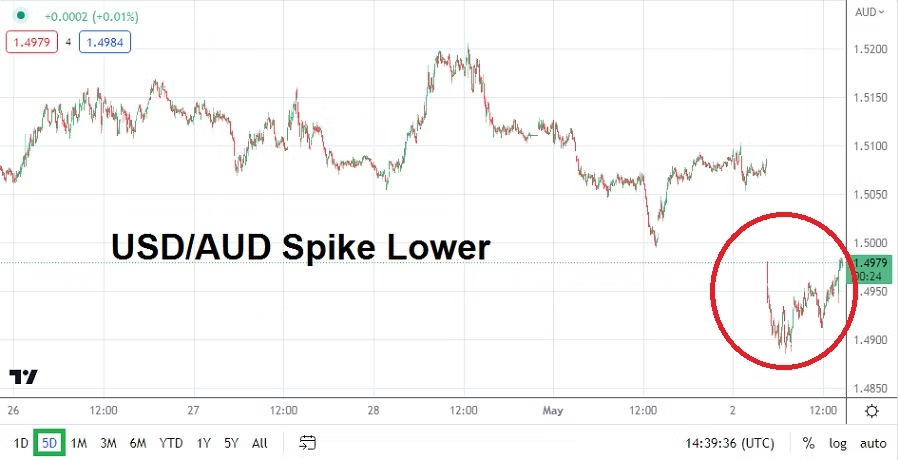
USD/AUD 5 Day Chart as of the 2nd May 2023

Reserve Bank of Australia’s Hike Earlier Today Caught Many Folks Unready

The Reserve Bank of Australia’s hike today, may be another sign the U.S Fed will not only hike tomorrow, but in June as well. What are the chances the Federal Reserve hinted strongly to the RBA, that if they wanted to protect the value of the AUD that an increase would be justified in order to guard against the Fed’s rhetoric to come? The Australian hike caught a lot of financial houses and day traders unprepared as the USD/AUD spiked lower this morning, for proof of the surprise simply look at the gap created downward today on the five day chart of the currency pair.

The RBA hiked their Cash Rate by 0.25% from 3.60% to 3.85% while sighting stubborn inflation as a main cause. Nothing is certain, but if the Federal Reserve’s FOMC Statement is rather strong tomorrow and says it will still consider a June increase perhaps we should not be shocked. Central banks do share information with one another.

Early February’s Rhetoric from the Fed wasn’t Treated Seriously at First Glance

Coincidentally, the Fed’s increase in early February was two days before the Non-Farm Employment Change and Average Hourly Earnings were reported on the 3rd of February. On the 1st of February the Federal Reserve warned that inflation remained stubborn, but the market didn’t take their words too seriously as the USD traded rather politely following the anticipated interest rate hike.

However, the USD gained violently the day after when Fed officials began to reiterate the strong tone from Fed Chairman Jerome Powell from the day before. And then stronger than expected jobs numbers followed on Friday. Note, that the Non-Farm Employment Change and Average Hourly Earnings will be published this coming Friday.

The Federal Reserve remains in a difficult position, a hike tomorrow will bring the Federal Funds Rate up to 5.25%, a June hike may not be welcomed by the broad financial markets, particularly equities in the near-term, but people may want to consider the possibility of it happening. Day traders should brace for strong price velocity developing. Tomorrow’s Forex action will be violent for speculators who are not ready, and if the Fed suggests a potential hike to 5.50% in June perhaps we should not be stunned.

post27

Risk Events Pose Danger this Week

Risk Events Pose Danger this Week

Monday 1st of May, U.S ISM Manufacturing PMI – weaker than expected Advance GDP results last week make this report of keen interest for investors regarding U.S growth (or recessionary) prospects.

Tuesday 2nd of May, Australia RBA Cash Rate – Reserve Bank of Australia is expected to hold the line regarding borrowing.

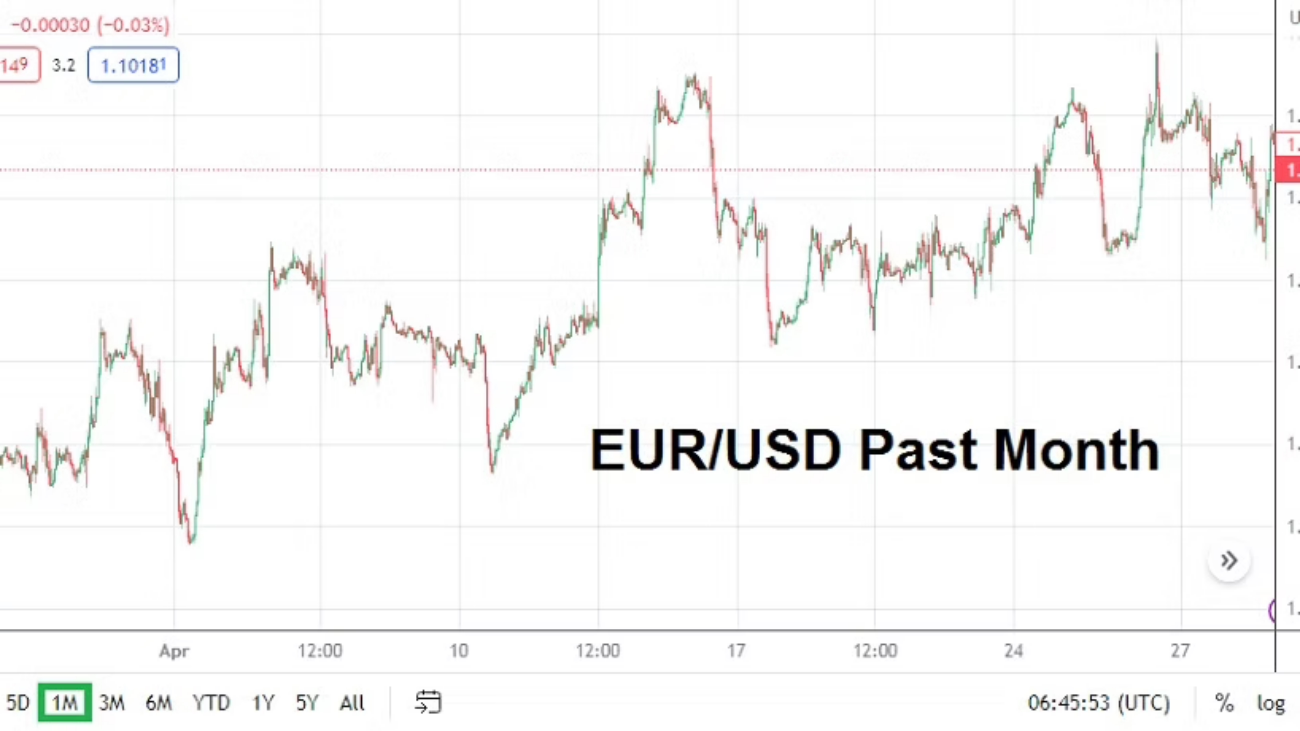
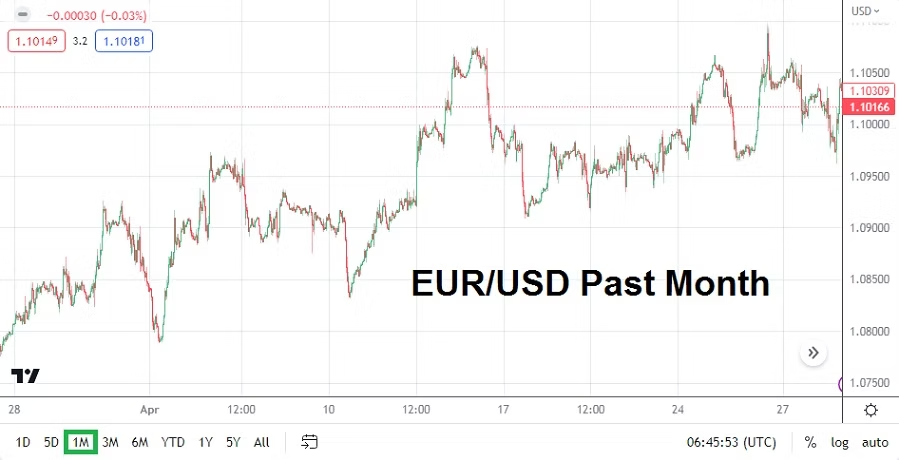
EUR/USD 1 Month Chart as of 30th April

Wednesday 3rd of May, U.S Federal Reserve FOMC Statement and Federal Funds Rate – U.S central bank expected to raise by another 0.25% making key lending mark 5.25%. This number has been digested into the broad markets, what investors want to know is the Fed’s June outlook. Federal Reserve outlook and FOMC Press Conference will move Forex and equities globally. Traders remains suspicious regarding another hike in June.

Thursday 4th of May, E.U ECB Main Refinancing Rate – European Central Bank expected to hike by another 0.25%. Anything different would be a surprise. ECB Press Conference should be rather tranquil.

Friday 5th of May, U.S Non-Farm Employment Change and Average Hourly Earnings – while jobs numbers are always of interest, it is the earnings statistics which should be watched and will give insight regarding inflation and potential actions about Fed’s June considerations.

post25.1

Forex, Interest Rates, the Fed and Conspiracy Politics

Forex, Interest Rates, the Fed and Conspiracy Politics

If you have been looking for road signs regarding what the U.S Federal Reserve is going to do next week and trying to get a feel for its rhetoric which will be delivered in the FOMC Statement on the 3rd of May, this week’s U.S data outcomes should be monitored. And as of now the data might be suggesting the Fed will remain aggressive in June.

GBP/USD One Month Chart

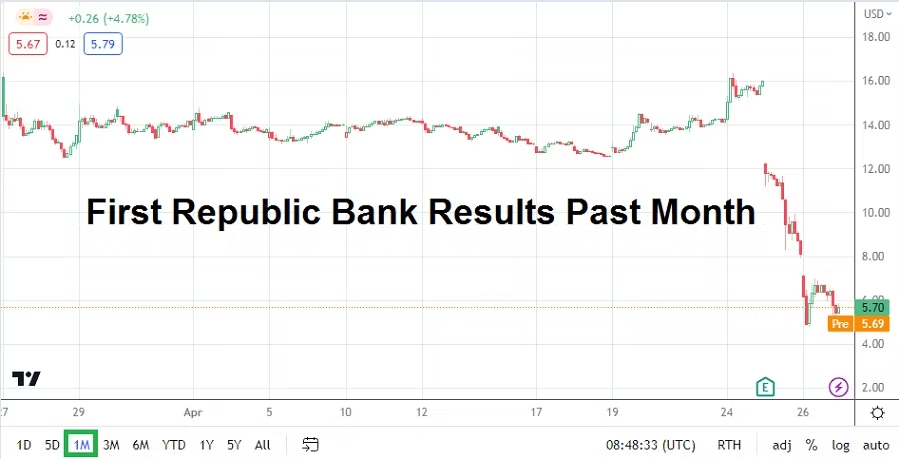
A Fed Funds Rate hike is going to happen on the 3rd of May unless there is a financial catastrophe that suddenly emerges that is nearly cataclysmic. While First Republic Bank wobbling is certainly a problem (Mark Zuckerberg is supposedly a rather large client of the bank), if this entity fails completely it may not cause massive bedlam. The stock has dropped violently, so a collapse should not be a surprise. No, it will not be welcome, but it should not be an unexpected calamity.

The question is how much the U.S government will protect depositors? The large clients who are not insured above the standard 250k USD ratio will want the same benefits that clients of Silicon Valley Bank received in March. Should they be rewarded the same way? The American public may not like the idea of another bailout for the deep pocketed, but there may not be much they can do about it, except to vote the politicians out, but who do you exactly punish?

First Republic Bank – One Month Chart as of 27th April 2023

What a collapse of First Republic Bank will do is hurt the corporate bond sector in banking again, because it is likely holders of these bonds will be put at the back of the line once again if the U.S government decides to protect big depositors of millions of dollars like Zuckerberg, before it protects bond holders.

U.S Data in Focus and the Allure of a Black Dress with Growth

But I digress, yesterday’s Core Durable Goods Orders statistics came in better than expected. Today Advance GDP will come from the U.S and if this number produces an increase instead of a downturn, the U.S Federal Reserve will have more ammunition to remain aggressive regarding interest rate hike rhetoric. An increase of 0.25% has been calculated into Forex for next week. The USD has done rather well recently, but what is of intrigue is the perception the USD is doing well after the financial markets have seemingly priced in a rate hike on the 3rd of May. Meaning, typically the USD would have started to ebb a bit lower after financial houses put their interest rate outlook into their Forex positions. Yesterday’s better than expected Core Durable Goods Orders leaves the door open for another hike on June the 14th to be precise.

While Core Durable Goods Orders isn’t a sexy statistic, GDP numbers frequently are, and if the growth numbers show up with a stunning black dress on with alluring ‘expansion’ it could send large speculators into a tizzy and make them believe the Fed could increase by another quarter of a point in June. The Fed during its FOMC Statement next week will certainly try to help financial institutions anticipate outlook. The Fed doesn’t need to hold the hand of investors, but it often treats them like children.

Financial houses had largely believed the Fed would hike in May and might raise in June. The notion that a June increase is certain would then put the focus back on the long-term again, and Forex could then break free of its rather consolidated incremental USD strength seen the past couple of weeks. Inflation remains a drum beat that is steady. And while today’s GDP numbers will be important. Tomorrow PCE inflation statistics will be the final nail in the coffin. If growth is stronger than expected today, and inflation numbers remain stubborn tomorrow, the Fed would certainly consider another June increase valid.

On the bright side for day traders is that the cautious choppy air which has circulated the past couple of weeks in Forex is almost done. While steady trends may not reappear for a while, at least near-term outlook will have more clarity by this time next week.

Big Institutions Have Long Term Outlooks and Treat Trading Conditions Differently

Long term outlook is another game as day traders should know and one they cannot easily participate. Long term investors have the money to specialize in assets which are not expecting profits today, but instead have a larger time frame for making money. Deep pockets, patience and the need for less leverage help financial institutions trade in a more stable manner, frequently putting the ‘odds’ in their favor.

The price of Crude Oil is actually behaving politely in recent trading, and its ability to find a mid 70.00’s USD price range is interesting and may help inflation move lower if it can be sustained. If supply of goods can adequately stabilize and global logistics costs come down, inflation could decrease. These factors are part of the long term perspective of financial institutions. Day traders may want to consider this because it could affect behavioral sentiment moving forward.

Higher interest rates from the Fed are causing other currencies to loss value and this has caused increased costs for international manufacturing companies located outside the U.S which frequently have to buy commodities in USD from their converted domestic currencies, this causes inflation. This is a factor not spoken about enough and traders need to consider this within their perspectives too.

The Fed and Perhaps a Conspiracy Theory

If the Fed actually starts to decrease its interest rates, it would help other currencies stabilize. And yes, if the Fed stops increasing interest rates it may actually help weaken global inflation. The Fed has caused import inflation to occur into the U.S. Are they aware of that? It is a good question. The likelihood is a yes, and it has been disregarded, but why? Perhaps there is another reason; does the U.S Fed and U.S government want to cause inflation globally to strike politically at some competitors? This is a different topic………kind of. Conspiracy theory.

While insight regarding the dialogues between the Federal Reserve and U.S government is certainly above my pay grade, one has to wonder about considerations regarding inflation and a stronger USD and its potential effect on China. The Fed increases may be a way of trying to inflict harm economically and in a subtle manner, but this cannot be proven. Perhaps the Fed is unaware of the global conflict being waged.

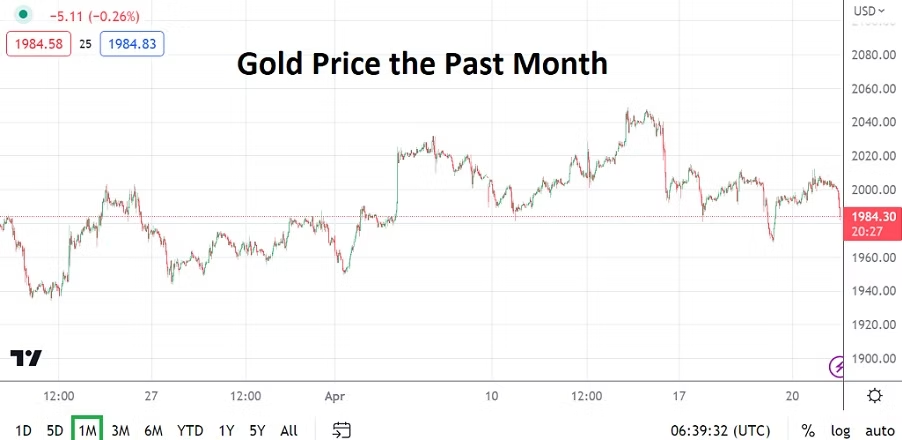
On another note, Gold remains near 2000.00 an ounce – almost steadily, displaying a certain amount of cautious behavior.

Gold One Month Chart

post22

Quick Thoughts for Friday 21st April

Quick Thoughts for Friday 21st April

It appears the broad financial markets are producing rather cautious price ranges which day traders should be wary of and this could continue until the 3rd of May. The Federal Reserve will release its FOMC Statement and Federal Funds Rate on Wednesday the 3rd of May. It is likely a quarter of a basis point will be added then, meaning an increase of another 0.25%. The worry for financial institutions is the potential for another Federal Funds hike in June and unease regarding the possible move.

Choppy markets are also happening because of a lack of major U.S economic data the past few days, which has created an air of uncertainty and undefined trends in many assets.

The difficulty of finding a defined trend for day traders can cause them to get eaten alive. Skittish conditions are not good for a majority of retail Forex and CFD traders – and plays into the fact 90% of retail speculators are eventually wiped out. An absence of deep pockets to withstand volatility because leverage is being used too excessively, and an inability to digest overnight ‘carrying charges’ which must be factored in too as ‘costs of trading’ also causes money to disappear – although your broker might try to ‘sell’ this as part of your learning curve while they try to convince you to trade again.

Next week the U.S will see the CB Consumer Confidence report on Tuesday the 25th of April, Thursday will have Advanced GDP and Friday will finish with inflation data. However, it is the week afterwards which is already a large focus. Yes, corporate earnings are being published today and in the coming week too, but many eyes are on the U.S Federal Reserve. Clarity on interest rates is what is desired.

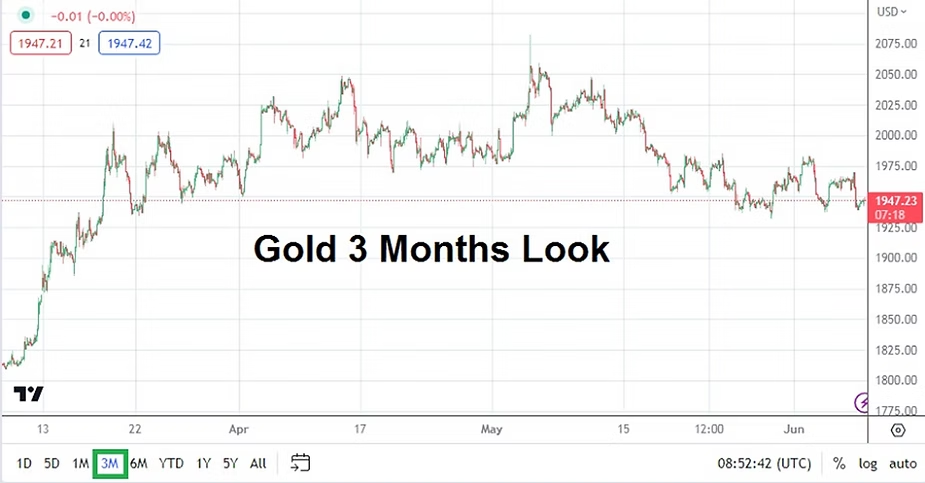
Gold price the past month of trading as of 21st of April 2023

If you are looking for evidence regarding what ‘smart money’ may be doing, it should be noted the price of Gold remains hovering around 2000.00 USD per ounce. Suddenly the price of Gold has become almost calm, please do not expect this to continue. The rather tight and ‘high’ price range of the precious metal is a potential sign that financial folks still believe that the U.S Fed may remain semi-aggressive in the mid-term, while ‘hoping’ over the long-term lower interest rates are coming.

As traders should know by now, nothing is guaranteed. Trying to understand behavioral sentiment helps.

post2

NASDAQ Composite: Bearish Trend Testing Trading Inexperience

NASDAQ Composite: Bearish Trend Testing Trading Inexperience

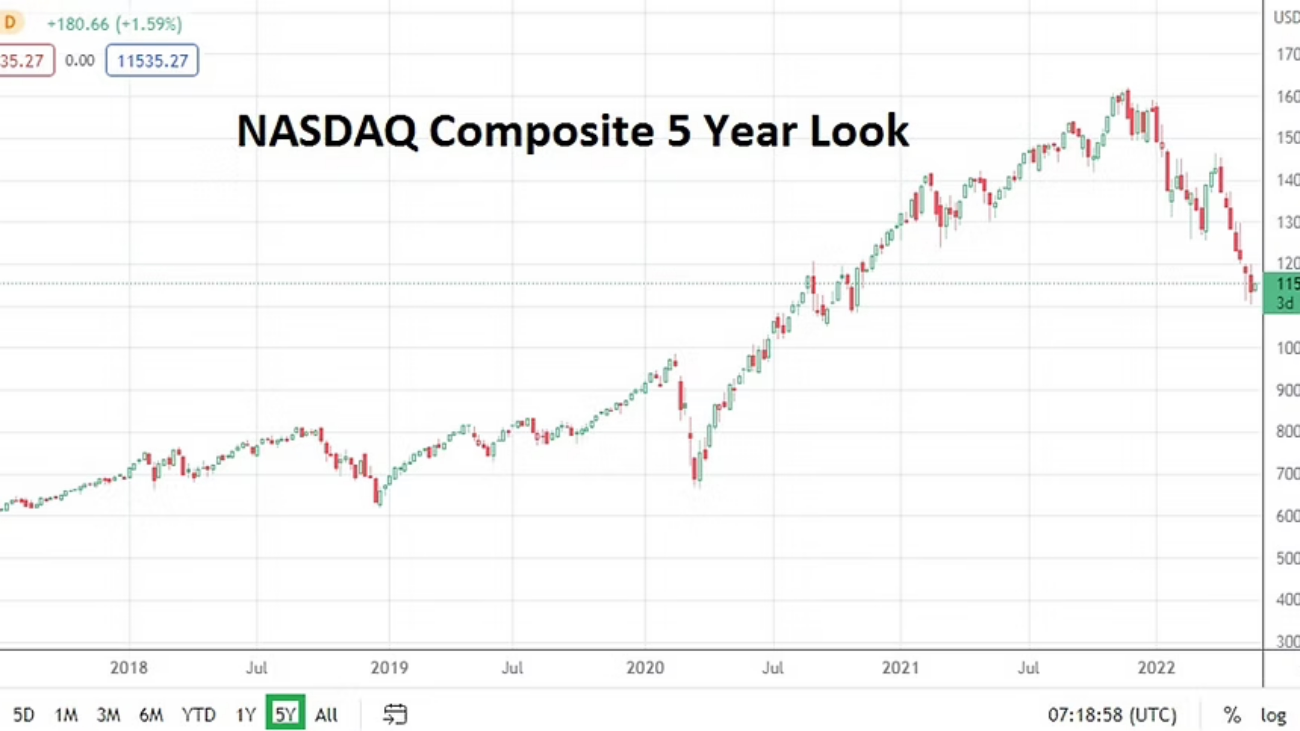
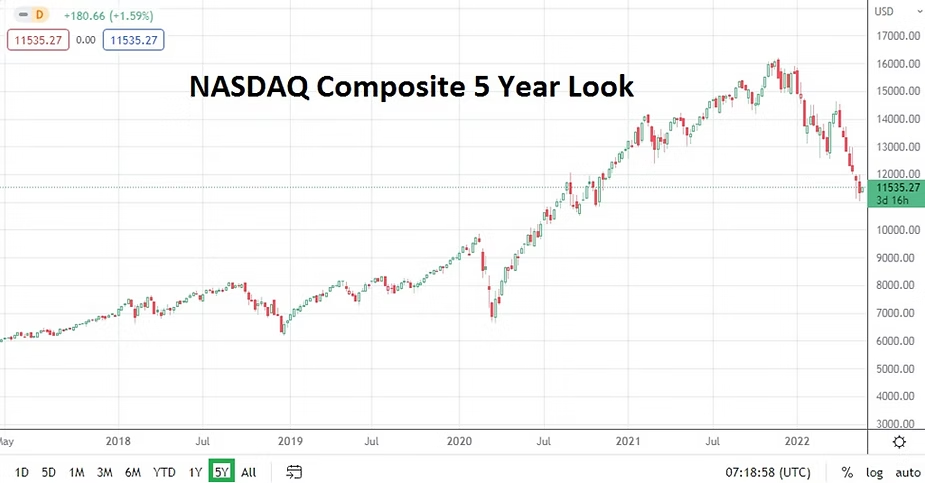
The NASDAQ Composite has been within the grasp of a selling trend since late November of 2021, and traders who feel the urge to buy should understand their goals and time frames clearly.

The NASDAQ Composite has seen a strong wave of selling take hold of its equities since the later stage of 2021. Investors have likely been spooked by inflation and high PE ratios which correlate into questionable values and fears of over exuberance and reactions. The combination of U.S Federal Reserve policy which is certainly having an effect on behavioral sentiment is problematic too. Investors are not fans of unclear outlooks and current economic conditions are definitely causing nervous sentiment.

Many traders and investors have not experienced a sincere bear market during their financial careers. Indices and their equities have produced a rather steady upwards vehicle for years. The thought that an equity index can actually go down for a long duration, without significant reversals higher following is troubling and new for many people. Timing new trends is exceptionally hard. An investor who has a ten year outlook certainly brings a different perspective to buying the NASDAQ Composite compared to a day trader who is likely maneuvering in the index with short term wagers using CFDs.

Current market conditions in the NASDAQ and other major global equity indices remain challenging and this will likely continue into early this summer. The U.S Federal Reserve will be conducting an FOMC meeting in mid-June and another interest rate hike is likely being considered. A potential rate hike of 0.50% may be seen. The potential of this additional hike to the current interest rate of 1.00% has likely been digested into the marketplace by financial institutions, but that is not the end of the troubling concerns.

Technical traders who watch the daily results of the NASDAQ Composite and other indices may attempt to speculate on the gyrations of their moves based on short term volatility. These traders should understand they are also battling large institutional traders who use complex algorithms to pursue their positions. The combination of nervous equity markets caused by uncertain economic outlooks, while it waits on the pronouncements of the U.S Federal Reserve are bound to deliver more nervous results in the NASDAQ Composite and other global equity indices.

While it may be accepted that the U.S Fed will raise interest rates again in June, the greater question that financial institutions want answered is what the U.S central bank’s outlook on additional interest rate hikes in the summer and fall will be. Inflation in the U.S remains troubling high. The rising costs of logistics, food and consumer goods are largely a manifestation of higher energy costs.

Yes, coronavirus has been a large ingredient too, regarding inflation and its current effect on employment and the resulting lack of workers is a component in the equation due to new perspectives among the workforce. The shortage of employable labor has also sparked concerns about demographics for the future. While the virus and its effects seem to have eroded in the West for the time being, unfortunately there are concerns regarding a potentially large problem in China if coronavirus infections continue to occur there. Shutdowns in China due to the virus can affect supply and commodities prices globally.

The costs of higher energy and commodity prices are something that companies and consumers will have to deal with in the months ahead. Disinflation is likely to come, but it may take a handful of months more. It is a complex puzzle and traders who want to bet on short term results will have to endure sudden storms of volatility which are likely to arise. Unanswered questions await and because of the shadows that hover over the economic landscape, clarity is not going to be delivered soon.