US Dollar Index 20260627

The USD and The Art of Not Knowing

Being Mature Enough to Know You Don't Know as You Watch the Marketplace

Ask anyone that typically knows how they gauge the state of the global marketplace for the near-term and you are likely to either get a solid, “I have no idea” now. Or a bunch of thoughts on what might happen, which might lead to being more confused. Simply put at this point, it is easier to admit that potential conclusions regarding the world’s current affairs taking place and effecting the global marketplace are out of most peoples’ hands. 

Even those who have duties within the higher paid grades likely are just as confused about the potential unintended consequences not wanted, and results they hope will be achieved. And what am I speaking about exactly, regarding the world and its state of affairs, is that even qualifying the particular topics are difficult to put a finger on. Ramblings certainly include the Iran saga, but Cuba, the Ukraine, the NATO pact, shifting world alliances and future ones are creating a whirlwind. Besides the rather noisy political landscape of the USA. Not to mention China and Russia and other nations with aspirations.

Yet, the global markets continue to trade, albeit within a confused haze it sometimes appears. But do not be despondent day traders, brokers and their platforms will offer you the opportunity to wager on results of the USD in Forex, and CFDs certainly contain opportunities in major equity indices the world over, various big singular companies, commodities and yes cryptocurrencies (apologies to Bitcoin fans – who insist it is called a digital currency).
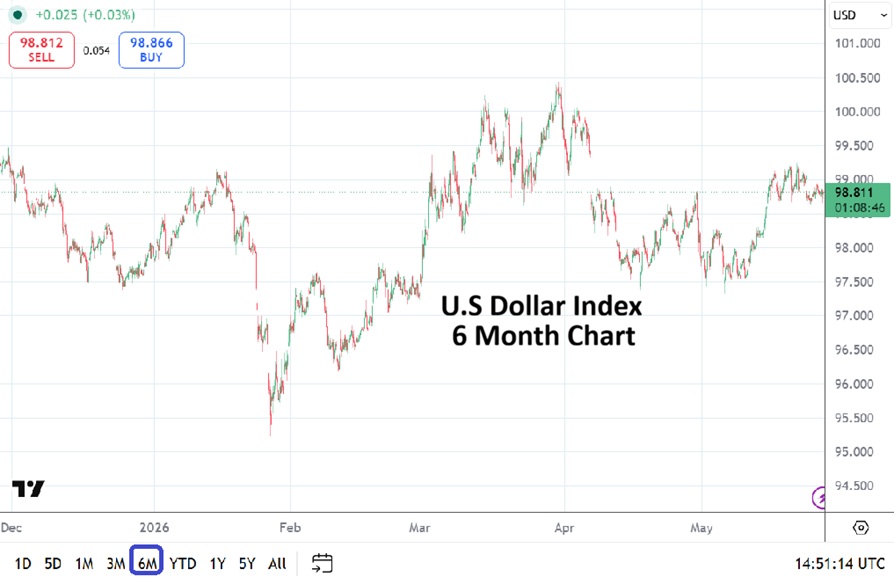
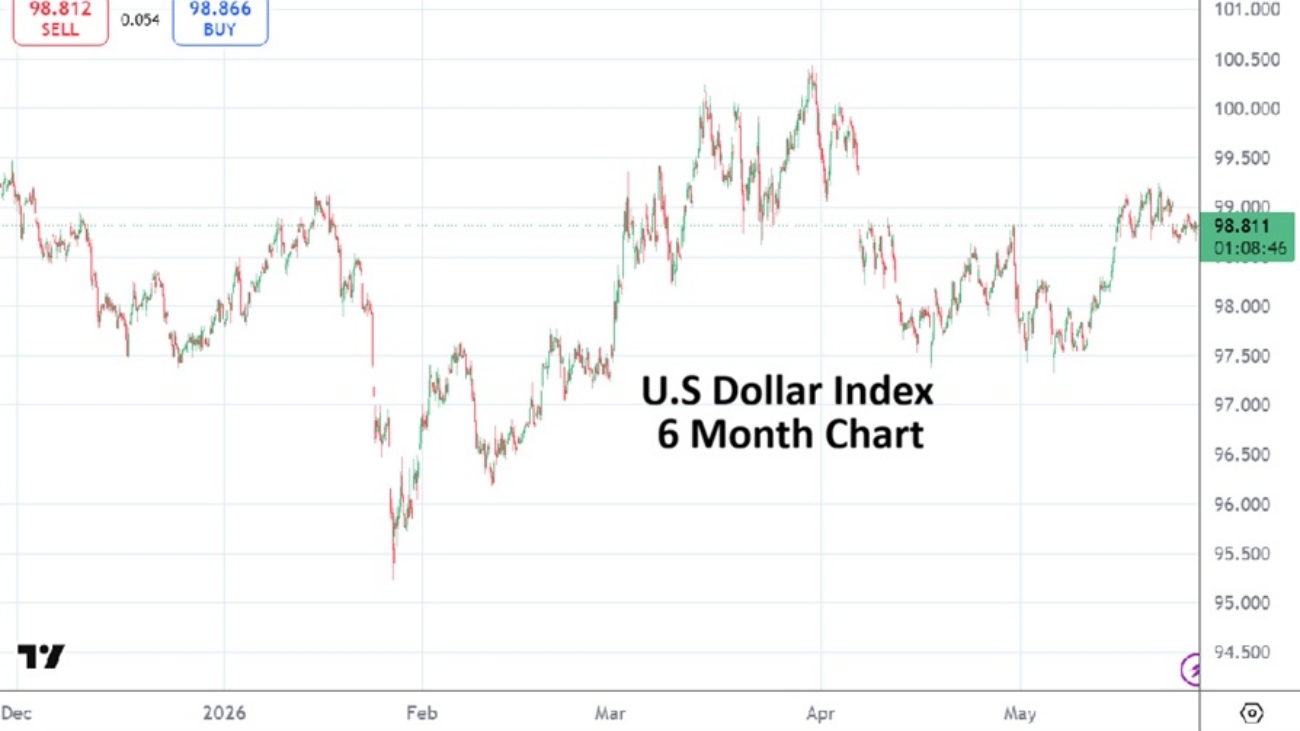
U.S Dollar Index Six Month Chart as of 27th May 2026

Iran War and Unclear Results

The U.S Dollar Index for the moment is near the 98.880 ratio, which it should be pointed out is near the values it swam upon the April 8th announcement of a ceasefire between Iran and the States, this after dropping from its 99.800 threshold on the 7th when investors were more troubled. The ceasefire is still in effect and now there seems to be a resolution which is being hoped for by the U.S White House – although when pressed about what negotiations between Iran and the U.S will result in delivers a few different versions of ideas. 

Perhaps that is to be expected via the fog of war, but what should not be expected is an easy path to a genuine resolution. And even if there is a pact of some type, what objectives will have been genuinely fulfilled? But alas, that is a question for those in the future, because the facts on the ground do not bode well for ordinary Iranians who have yearned for freedom. 

The Fed Has a Problem

But again, let’s not dwell on things like the individual rights of people, money is at stake…..(that is humor folks, others can call it sarcasm). The price of WTI Crude Oil has dropped this week on the idea that a resolution will actually be accomplished between Iran and the U.S – one at least that allows tankers to navigate the Hormuz Strait. 

The price of WTI via futures at this moment are around the $90.00 mark again, this after moving within sight of 88.00 USD earlier today. At the end of last week the $96.00 mark was in sight for WTI. And the price of energy continues to cast a shadow that is moving over the U.S Federal Reserve and has large implications for the new Fed Chairman Kevin Warsh. 

The mid-term versus the long-term in financial institutions as they judge their interest rate perspectives are likely making for rather entertaining dialogue. And let’s not forget ladies and gentlemen, the U.S mid-term elections are approaching in November of this year and are resulting in primary elections that are punishing Republicans who voiced criticism towards President Trump. The question about who will hold power in the U.S House of Representatives is a big riddle. Even the U.S Senate leadership may be fragile. Why is that important, because if President Trump were to become what is known as a lame-duck President during his last two years in office, this would produce different outlooks among investors. Stay focused on the money people. 

Our Forex Friend: The BoJ

The USD/JPY is now traversing its 159.490 vicinity again, and perhaps that is a bell weather for soothsayers to criticize again. The Bank of Japan is watching the Japanese Yen as its trades within sight of its weakest values, and yes, the BoJ can be expected to issue another warning to speculators once again about being run over by an intervention. The BoJ’s broken record about interventions have produced solid results for folks who are able to trade the USD/JPY with positions that can be held for a few weeks at a time – namely hedge funds, large players and some financial institutions. Retail traders trying to take advantage of the USD/JPY are likely suffering trauma via anxiety if their wagers have gone in the wrong direction.

SpaceX and Scams in the Cryptoworld

And as a bonus, let’s not forget about rumblings regarding SpaceX and another topic within the I do not know category. Elon Musk has set the table for an attempt at a 2 trillion USD market cap after the IPO for the corporation is launched in the second week of June. The value of SpaceX can be and will be argued for the next few years as admirers and critics lineup to be heard and spread sheets are compared regarding revenues against one of the greatest marketing giants of our time. Intriguingly, however, are hints that there has been a lot of cryptocurrency fiddling regarding how the corporation is going to allow investors to participate. Apparently there have been tokens issued in the cryptocurrency world that have promised some type of participation in SpaceX and most are being exposed as scams and have nothing to do with the company or Musk. Buyer beware folks.
Copy and paste the text from AMT that you want to share

Gold 20260622

Gold: Intriguing Technical Support and Curious Sentiment Shift

Mid-Term Technical Support and Lower Price Make Gold Interesting

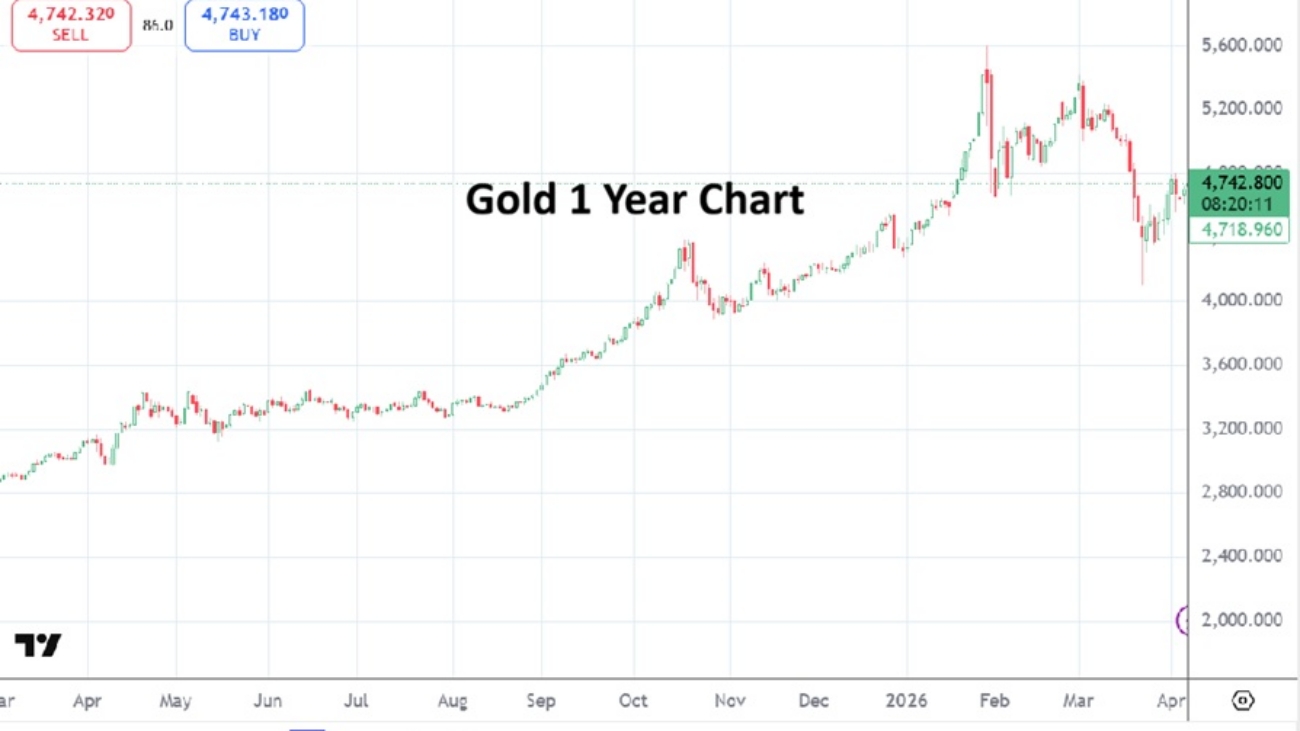
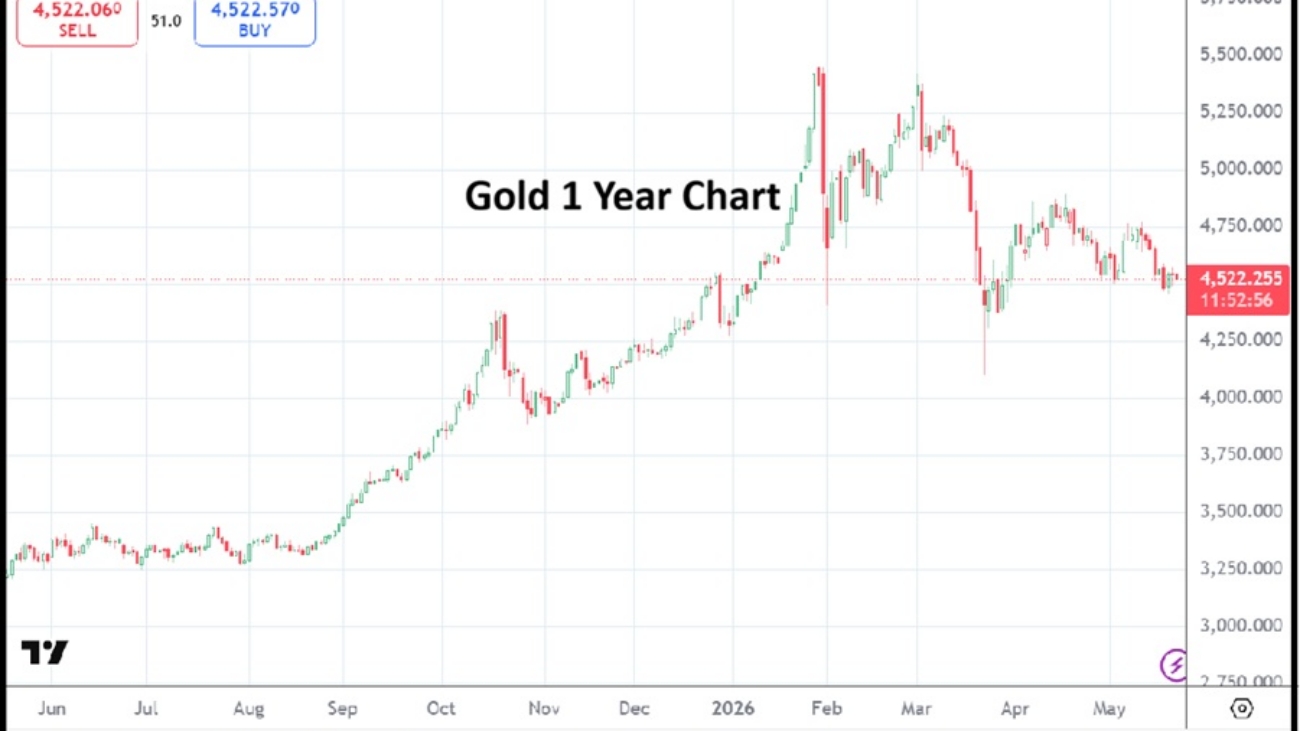
Gold has faced difficult speculative circumstances for traders with a bullish perspective since early February, this as the price of the commodity has fallen from highs. The price of the commodity is around $4,5220.00 for the moment, with its typical fast price action flourishing. Importantly, the precious metal is also traversing slightly above rather intriguing technical support when a mid-term perspective is used.

On the 29th of January Gold challenged the $5,600.00 vicinity, this as metal commodities soared including Silver and Platinum. Silver in late January touched the $120.00+ mark, Platinum in the last week of that month hit and penetrated $2800.00. Silver as of this morning is near $75.00 and Platinum is around $1937.00. The speculative momentum that drove the metals higher had a lot to do with fever pitched buying as large players feasted and smaller retail traders tried to ride the upwards wave.

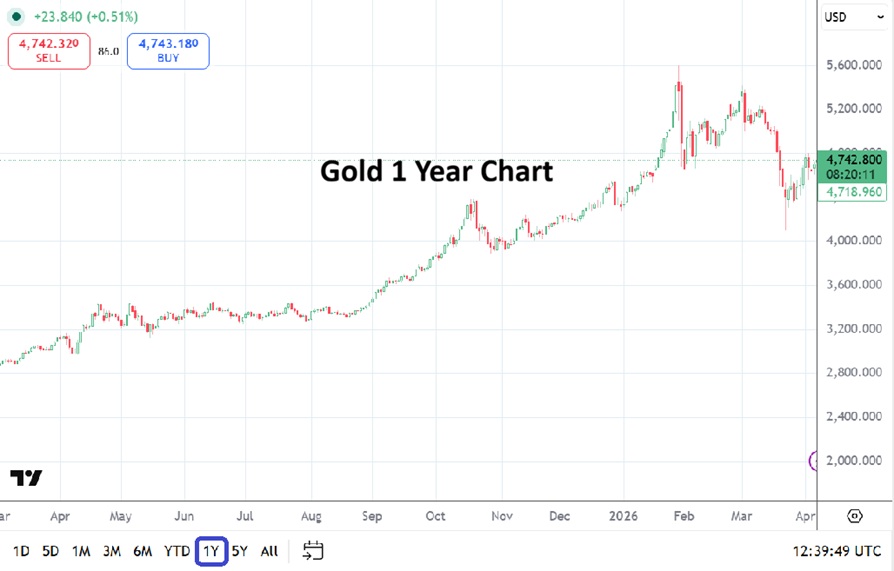
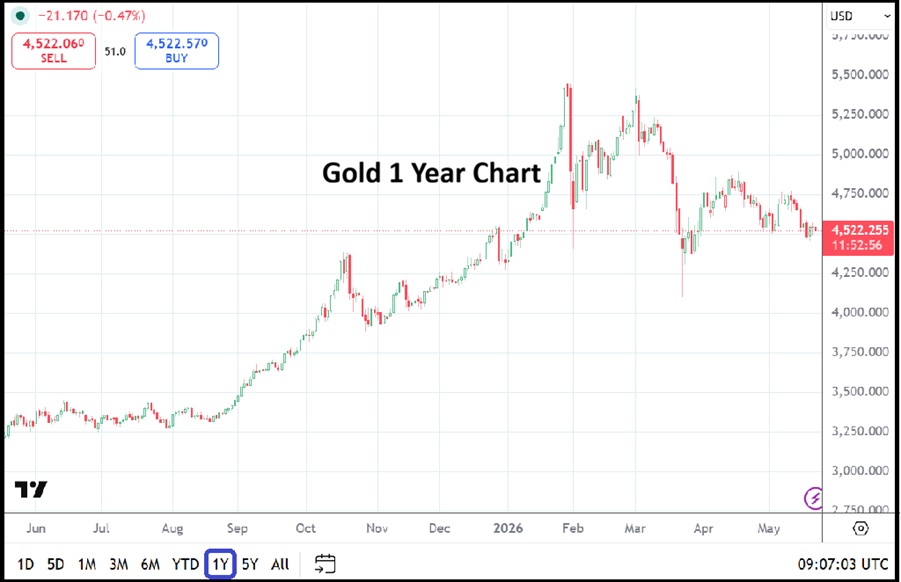
Gold One Year Chart as of 22nd May 2026

Silver, Platinum and Gold Lost Their Appeal

For the moment it appears hedge funds have turned their attention away from the metals as a speculative playground. Fast profits are likely coming from other arenas, WTI Crude Oil and other energy resources are big betting areas as the Iranian situation remains at the forefront of attention.

Since the start of the military escalation in Iran all three metals have essentially lost value. Silver was around $94.00, Platinum close to $2,370 and Gold near $5,280.00 on the 27th of February. The price of WTI Crude Oil is trading with the $100.00 level acting as a technical magnet now, on the 27th of February WTI was near $67.00. It doesn’t take a brain surgeon to figure out where all of the price action has moved to as folks trading Crude Oil are certainly getting their kicks and maybe even profiting as they take advantage of support and resistance levels as rhetoric and saber-rattling flares about Iran.

Buying Gold with a Mid-Term Outlook

However, as Gold swims near the $4,522.00 mark it raises curious questions regarding its current value and how sentiment may develop within the precious metal over the mid-term. Putting to the side Silver and Platinum, Gold is intriguing because the specter of inflation is causing nervousness. The U.S Federal Reserve is now in a position in which it may have to start increasing the Federal Funds Rate again. 

President Trump wants lower borrowing costs, but because of the escalation in fuel costs effecting manufacturing, logistics and agricultural are all suffering. It will be hard for the new Fed Chair Kevin Warsh to simply wave off rising prices in the U.S as a short-term murmur. The mid-term now appears capable of sustaining inflationary winds. Gold may start to receive attention from investors again who are not looking to speculate on the precious metal, but to hold the commodity as a hedge.

  • Day traders as always will face intraday volatility with Gold if they are trying to capture a reversal higher.
  • However, if investors start to believe Gold needs to be looked at again via portfolio accumulation, and hedge funds make it a speculative party, the precious metal may start to see not only more attention but a buying surge develop again over the mid-term.
  • Gold around the $4,500.00 mark looks relatively secure as an investment plateau for folks looking for a long-term buying opportunity.
  • Day traders may start thinking about trying to take advantage of potential incremental shifts that might start to develop in Gold to the upside in the near-term and coming weeks.

Copy and paste the text from AMT that you want to share

SouthAfrican Rand 20260520

South Africa Outsider: Thoughts on the Rand and Guest Observations

USD/ZAR Considerations as Water Flows and Political Concerns are Compared

As a guest of South Africa (because of a personal relationship) and having been coming here frequently during the past four plus years it is easy to love the nation. Early last week a severe storm which brought high winds and plenty of rain hit a lot of the Western Cape knocking out electricity and water in a variety of towns. Having experienced hurricanes in the past, the wind was not quite comparable, but the consistency of the gusts over two days caused major damage.

Electricity and water have been restored to most people now. Wifi remains a problem for some, but folks are surviving. The damage to homes, infrastructure in towns and agriculture will keep individuals busy for a while. However, the Western Cape because of good political leadership and the stoic mannerisms of the people have worked together to move forward. So what does this all have to do with the South African Rand?

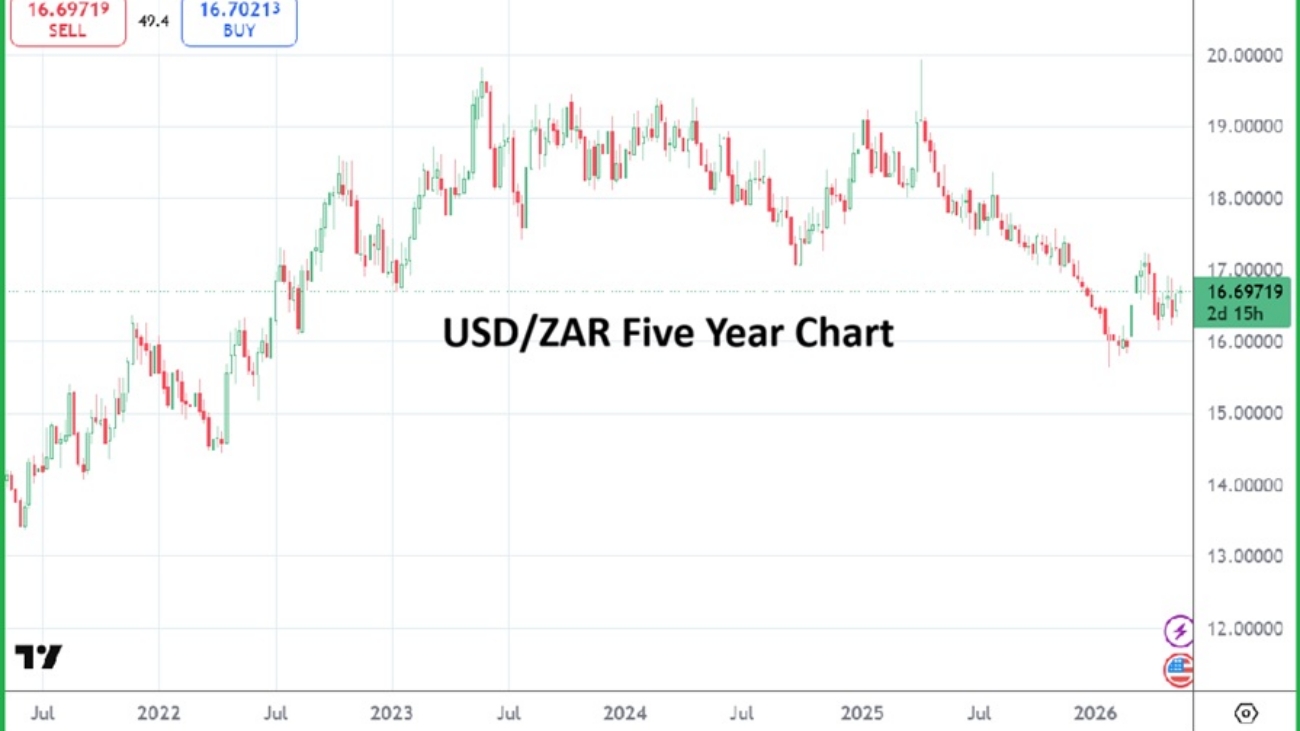
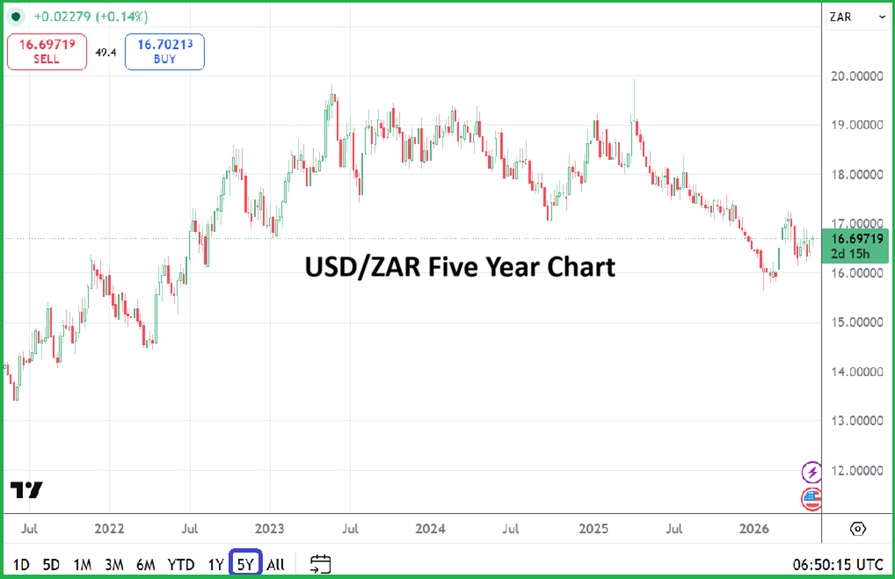
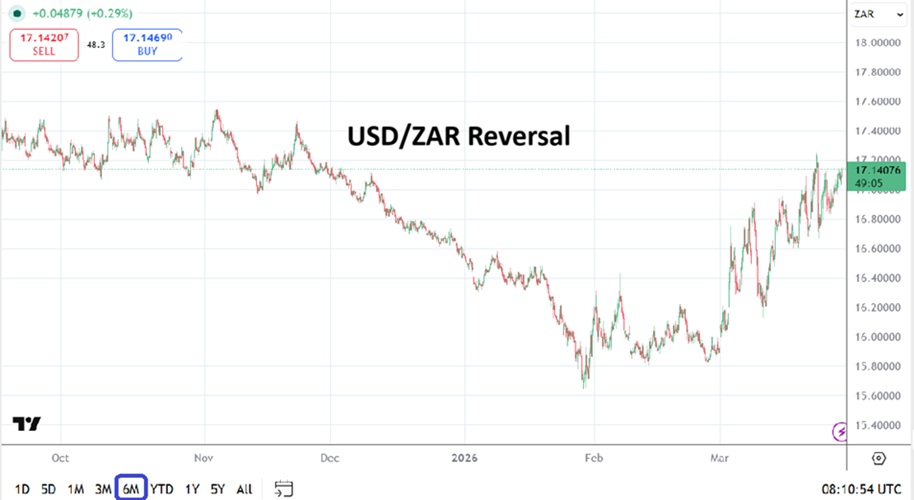
USD/ZAR Five Year Chart as of 20th May 2026

The USD/ZAR is traversing within a higher price realm since the start of March because of the Iranian conflict. The currency pair flirted with depths below 16.00000 in the middle of February. The value of the USD/ZAR at this time is close to 16.70000 depending on bids and asks. The Rand is correlating to the broad Forex market as USD centric strength has emerged recently, this as U.S 10 Year Treasury yields increase and threaten to become sustained. The U.S Federal Reserve is suddenly dealing with threats of inflation becoming sticky over the mid-term because of escalating energy costs. The U.S has plenty of WTI Crude Oil, but nations which had counted on energy from the Middle East are suddenly U.S customers and increased demand is going to cause WTI to remain elevated until the Iranian situation resolves. 

The USD/ZAR was in a bearish trend since early August 2025 when values were above 18.00000. The highs in early August of last year were caused by concerns the U.S White House sparked because of tariffs. South Africa is still facing tirades from the Trump administration about some policies being practiced in South Africa, but financial institutions have looked elsewhere regarding impetus for the Rand and its correlation to global Forex is the chief influencer.

While South Africa and its people and culture are easy to embrace, there are issues that remain problematic in the nation. Politics around the world often appear to be a complex myriad because certain people and partisanship are transfixed on power. Corruption globally is an issue in many nations that causes not only fiscal problems but inflation. South Africa suffers from these complications too. These matters can only be fixed with transparency and patience, and importantly – for citizens to demand better. 

Politically the current coalition government on the surface appears to be working. Yet, the potential for fractures to grow over the next handful of months as municipal elections approach –  the Johannesburg mayoral and city council results will prove fascinating, will be crucial for South Africa. Johannesburg has been facing a water supply crisis for a while and its consequences are a stark contrast to the Western Cape’s ability to repair and replace infrastructure in a matter of days after the recent storm.

The USD/ZAR is likely to correlate to USD centric price action near and mid-term, but there is a chance heightened political rhetoric and voting outcomes in a handful of months could shift impetus for a short while. Higher energy costs in South Africa now and into the mid-term will cause inflation. Food costs do appear to be incrementally rising in supermarkets. 

Yes, gold and platinum values will be looked at by some analysts and pointed to as reasons for the stronger South African Rand, and this influence may be real – to a degree. However for the moment, the USD/ZAR remains transfixed within the lower realms of its long-term price range mostly because the coalition government here is viewed positively, and the USD was weaker globally. 

The U.S Fed does have inflation concerns arising. As much as President Trump would like the new Fed Chairman, Kevin Warsh, to be dovish the reality for the U.S central bank and financial institutions judging outlooks lacks clarity for the moment. Sideways choppy price action in Forex and for the USD/ZAR may prevail in the coming days and weeks. And if the Iranian situation grows more boisterous, USD centric strength could grow.

Copy and paste the text from AMT that you want to share

Indian Rupee 20260515

India Insider: Rupee Under Pressure as Oil Prices Surge and Import Bills Rise

Iranian War and Implications for India as Energy Prices Cause Vulnerability

India is currently facing mounting external economic pressures as rising global crude oil prices weaken the Rupee, widen the current account deficit, and increase the risk of imported inflation. As one of the world’s largest energy importing nations, India remains highly vulnerable to fluctuations in global oil markets. The recent surge in energy prices, combined with geopolitical tensions and volatility in currency markets, has intensified concerns among policymakers, economists and investors.

The Reserve Bank of India (RBI) has stepped up its intervention in the foreign exchange market to stabilize the Rupee, while the government is evaluating measures to reduce pressure on import billing. Rising fuel prices, weakening currency conditions and growing external imbalances have combined to create a challenging macroeconomic environment that may test India’s economic resilience in the coming years.

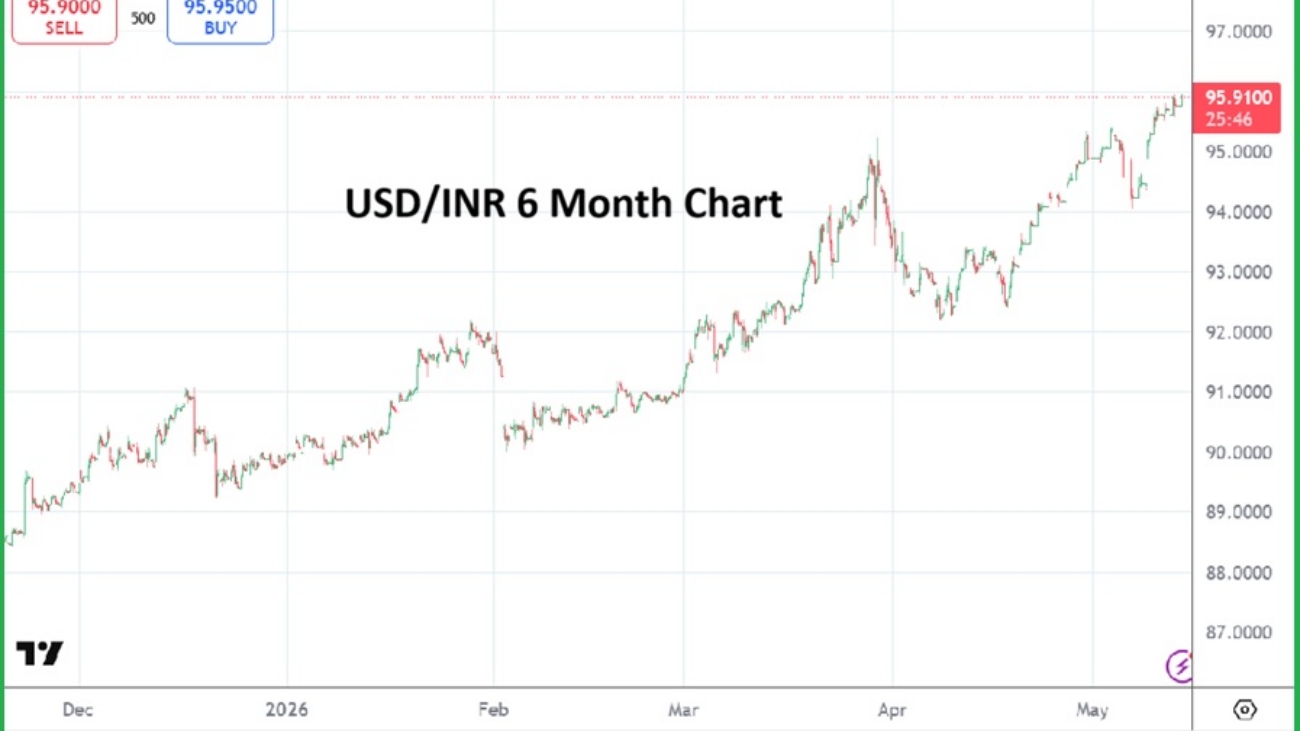
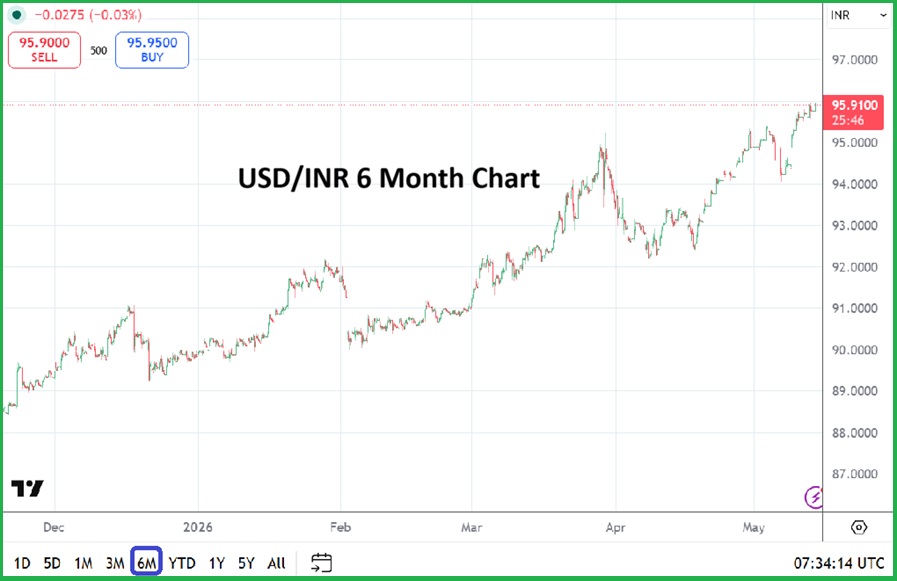
USD/INR Six Month Chart as of 15th March 2026

Gold and consumer electronics imports are increasingly being viewed as non-essential imports, and policymakers may consider restricting these categories in order to reduce stress on the current account deficit. Officials are concerned that a widening trade imbalance could place further downward pressure on the Rupee and increase dependence on foreign capital inflows.

The Rupee on Thursday fell to a record low near ₹95.95 per USD, making it one of Asia’s weakest performing currencies this year. The currency has erased most of the gains achieved following earlier RBI intervention measures aimed at curbing speculation in the Forex market. Analysts expect the Rupee to remain under pressure through 2026, especially if global crude oil prices continue to rise and significantly increase India’s import billings.

The impact of rising crude oil prices is becoming increasingly visible across the Indian economy. Private fuel retailers have either reduced diesel sales or raised prices in response to the rally in global oil markets, leaving state owned refiners to absorb a larger share of domestic demand. Long queues at fuel stations and rising transportation costs have intensified concerns over inflationary pressures.

Earlier today, State-owned fuel retailers raised fuel prices for the first time in nearly four years as New Delhi adjusted domestic pricing to reflect higher international crude prices following escalating tensions in Western Asia. Diesel and gasoline prices increased by more than 3%, even though Brent crude prices had risen by nearly 50% over the same period.

In New Delhi, diesel prices climbed to around ₹90.67 per litre, while gasoline prices rose to approximately ₹97.77 per litre. These are among the highest levels recorded since 2022 and reflect the growing burden of imported energy costs on the Indian economy.

Economists argue that the rise in fuel prices signals a gradual shift toward market based pricing rather than extensive government controls. Policymakers increasingly recognize that artificially suppressing fuel prices could worsen fiscal pressures and create larger external imbalances over time.

Currency Weakness and Monetary Policy Challenges

RBI Governor Sanjay Malhotra recently remarked at an event in Switzerland that continued currency weakness may be “only a matter of time” if global energy prices remain elevated and capital flows become increasingly volatile.

Foreign outflows during the year have already exceeded previous levels, while a sustained rise in crude oil prices above $100 per barrel could significantly widen the trade deficit and push India towards another period of pressure on balance of payments.

In this climate, attracting foreign capital via various tax cuts or raising the interest rates is paramount to reduce the pressure on the currency. It’s already been seen that New Delhi is working on reducing taxes for foreigners investing in Indian bonds.

Rise of Inflationary Pressures

Although India’s headline inflation remains relatively contained and below the RBI’s 4% medium term target, imported inflation risks are steadily increasing.

Economists also believe the RBI may eventually be forced to maintain tighter monetary conditions or raise interest rates further if energy prices continue to accelerate.

The central bank has already raised interest rates to around 5.25% this year, but several economists argue that further tightening may still become necessary.

Historical Perspective and Structural Risks

Economic historians often compare the current situation with the oil shocks of the 1970s. During that period, the United States was heavily dependent on imported oil. The oil crises of 1973 and again in 1979 contributed to inflationary pressures, balance of payments stress, and periods of USD weakness.

However, economists note that today’s global environment is significantly different. The United States has become one of the world’s largest oil and gas producers, reducing its dependence on imported energy. As a result, rising oil prices no longer weaken the U.S Dollar in the same way they did during earlier oil shocks.

For countries like India, the impact remains severe. India imports the majority of its crude oil requirements. Higher global oil prices directly increase India’s import billing and create additional demands for USD.

As Economist Philip Verleger was quoted by Bloomberg, “when you are a major oil importing nation, you are not only paying more for crude itself, you are also paying more for the dollars required to purchase it.” India is now facing this realization again.

Copy and paste the text from AMT that you want to share

postN87

AMT Top Ten Miscellaneous Bits of Clarity for the 19th of April 2026

In a World Filled with Bread and Circuses, Now a Dose of Transparency

10: The Risk Reward Show: Sommer and Petrucci will return to the airwaves this coming week, via sources like Spotify and YouTube, with their podcast starting after a long break (absence).

9. Hardball: Major League Baseball is back and the sport continues to attract more fans and growing attention with its quicker games, a new computerized strike zone, and maybe even more dislike of the Los Angeles Dodgers. Yes, Shohei Ohtani remains a dominant and positive force in the baseball world.

AMT Top 10 for the 19th of April 2026

8. Populism: Politicians on both sides of the Atlantic continue to display a wide display of nonsensical rhetoric and bold asinine actions equating into empty spectacles. An example from the Left is Zohran Mamdani the mayor of New York City with his socialist platform, which is certain to fail and equate into more people and companies leaving NYC for less expensive and friendlier tax environments. And from the Right Italian Prime Minister Giorgia Meloni who talks a tough game but consistently falls short of backing up her words when she senses she could lose control of her power base. The putrid smell of trying to please voters with rotting bread and circuses prevails.

7. Speculation: Gold finished Friday’s trading near $4,837.50, Silver around 80.78. Bitcoin is close to $75,570.00. 

6. AI: While the Artificial Intelligence hangover has been widely discussed for a handful of months, health continues to be seen via Nvidia which closed above $201.00 going into this weekend, and Anthropic PBC which appears to be aiming for an IPO in late 2026 or early 2027. At this moment Anthropic has an estimated valuation of 800+ billion USD. If Nasdaq is able to secure a listing with Anthropic it will immediately factor into the Nasdaq 100. Are some investors betting on upside now which they believe will be seen when Nasdaq reorganizes its index?

5. Optimism: India, South Africa, Brazil and other emerging markets have experienced Forex volatility like all nations the past month and half due to the Iranian war. However, in the past two weeks the Indian Rupee, South African Rand and Brazilian Real have performed better as global markets have calmed. The ZAR and BRL have actually outperformed major currencies over the past handful of months showcasing existing optimism within financial institutions dealing with these currencies.

4. Money for Something: Lefarge, a French company specializing in concrete, was found guilty this past week of paying ISIS (Daesh) and other terrorists groups money in the years from 2012 into 2014, this in order to maintain their business operations in Syria. While Lafarge claims they paid the money to keep their operating staff safe, a French court ruled Lafarge was buying not only safe passage to allow employees to work, but also paying for physical resources needed from quarries that were controlled by the terrorists. Critics of Lafarge point towards the company’s massive infrastructure investments leading up to 2012 and a decision to seek profits no matter the costs of dubious morality. Some Lafarge former senior executives involved have been sentenced to prison including Bruno Lafont and Christian Herrault. Lafarge and Holcim (a Swiss conglomerate) merged officially in July of 2015.

3. WTI Prices: The value of the world’s most famous Crude Oil went into the weekend near $83.30 via futures markets. The commodity is certain to open with volatility early on Monday, this as folks weigh in via their existing behavioral sentiment which will range from speculative perceptions to insights they hold to be true (but that could prove false). WTI Crude Oil challenged 79.00 USD momentarily on Friday, before sparking upwards as cautious attitudes likely ignited doubts about what would happen this weekend in the Middle East regarding potential developments. Wagering on WTI in the coming days for day traders may be akin to spins of the roulette wheel.

2. Apex Heights: The winning streak and surge upwards for the Nasdaq 100, S&P 500 and Dow 30 via gains have caught some investors by surprise and standing on the sidelines. Some large financial institutions may find they have to explain why they did not participate in the rally which has unfolded since late March. The S&P 500 has gone up around 9.5% during this time.

1. Straight Talk: The Hormuz and whether or not the strait is open for oil tankers will remain a catalyst for all global assets until clarity is gained. In the meantime a whirlwind of noise and threats from President Trump, the U.S White House and Iran will remain a menace for all traders – small and large. Is the Strait of Hormuz open or closed?

Copy and paste the text from AMT that you want to share

postN87

AMT Top Ten Miscellaneous Morsels for the 12th of April 2026

Optimistic Hopes Appear Ready to Fade into the Distance

10. B-ball: The NCAA Men’s Basketball Championship concluded early last week with a rather resounding outcome for the University of Michigan who won their 2nd Men’s trophy, the first one coming in 1989. Michigan dismantled the Arizona Wildcats and then handled the Connecticut Huskies. The NBA playoffs will start this coming week. The Oklahoma Thunder and the San Antonio Spurs are getting a lot of attention, and the Denver Nuggets might have something to offer.

9. Trump: A week of optimism now leads towards threats of additional noise. Peace talks held in Pakistan appear to have failed this weekend, and now another countdown has begun as the Iranian conflict appears ready to escalate. The U.S White House and President Trump will certainly make more noise in the coming days.

AMT Top 10 for the 12th of April 2026

8. Logistics Advertising: Kit Kat and Nutella have been rewarded with massive exposure. The Kit Kat truck heist of 12 tons of product (reportedly said to be in a special F1 designed candy bar theme) made headlines. Kit Kat’s owner, Nestle, was obviously content with the free publicity and proof of demand. And a jar of Nutella floated across the Artemis 2 spacecraft unexpectedly this week, gaining international attention and sparking smiles from fans of the Italian chocolate hazelnut spread.

7. Creator: Yet another candidate accused of being Satoshi Nakamoto has been produced. Blockstream’s CEO Adam Back has been named by the N.Y Times as a potential creator. In the meantime, the real question is whether anyone but Iran (as they run their illicit shadow economy), Michael Saylor of MSTR and a few big whales consisting of institutions and hedge funds are really paying any attention to BTC anymore. The BTC/USD price as of this morning is around $71,600.00. Bitcoin was traversing near $126,000.00 in the first week of October 2025.

6. Greenback: USD/JPY 159.240, EUR/USD 1.17225, USD/ZAR 16.38540, USD/INR 93.0480. USD centric strength may prove solid this coming week and other currencies may suffer a bit.

5. Sideways Shimmer: Gold finished the week near $4.745.00, roughly $100.00 above its starting point last Monday. U.S 10-Y Treasury yields went into this weekend around 4.34%. Shifting outlooks this coming week will likely ignite turbulence in both assets.

4. Blind Eyes: More than a handful of U.S politicians have been featured as big winners regarding their stock trading abilities. Their gains far exceed the winning percentages of the overall returns made by indexes (as a benchmark). Little has been done to stop what many view as insider trading. There are many forms of political corruption around the world. However, a variety of places and people, including Americans seem to accept this potential misconduct. The ‘Stop Insider Trading Act’ has been brought forth in the House of Representatives and Senate, but the legislation may simply meet a slow death and disappear.

3. Inflation: U.S interest rates via the Federal Reserve will be held in check at a minimum over the next few months. The higher costs of energy will certainly seep into prices for transportation, manufacturing and agriculture. Fed Chairman Jerome Powell may be quite content to leave his position May the 15th. The next Fed FOMC interest rate decision is due on the 29th of April.

2. Strait of Hormuz: WTI Crude Oil closed above $90.00 going into this weekend. When futures markets open early on Monday, the price of the commodity is likely to rise via increased anxiousness which will build into the mindsets of large players today because of the failure of peace talks in Pakistan. The price of Crude Oil remained high last week, only moving to a low of around $85.00 this past Tuesday, showing cautious attitudes remained. Prices above $100.00 will likely become a new target quickly for some who bet. Will an early spike upwards this week then start a counter reversal lower, or will a climb become sustained?

1.  Risk Off: The S&P 500 and Nasdaq 100 will get plenty of attention this coming week as behavioral sentiment remains fragile. Having skirted near its 200-days moving average lows in recent weeks, the indices have gained handsomely since the 31st of March. Will the upwards momentum come to an abrupt end this week, or have financial institutions been able to digest their nervousness and will they show a capability of remaining buyers?

Copy and paste the text from AMT that you want to share

Gold 20260409

Intraday Blues as Trading Conditions Remain Perilous

Red Flags Persists for Day Traders and Hedge Funds as More Wild Surf Predicted

Risk on or risk off? Day traders and hedge funds, two groups who are known to speculate, have both suffered considerably the past handful of weeks due to the market turbulence. While falls of 4 to 5% the past handful of weeks for long-term investors can be digested with proper patience and accumulation ability, those who are using leverage or making monster sized bets on intraday speculation continue to suffer from widespread anxiousness within the marketplace.

Gold One Year Chart as of 9th March 2026

WTI Crude Oil should have gone back down below $80.000 in many folks thinking – and they may have bet on this strike price via options –  due to ideas of an Iranian ceasefire, but the target has not been met. WTI did in fact challenge $88.000 early this week, but it is back around $93.000.

With the weekend quickly approaching and concerns about what will happen when the marketplace is largely shuttered, March mayhem has opened the door for April surprises. Gold is near $4,737.00, and this price remains mildly upsetting for many who believed it would act as a safe haven asset that would gain during the war, but hasn’t responded with buying fever. Gold was near $5,180.00 on the 27th of February. But in fact gold has performed rather well considering it was riding a long-term speculative buying spree and its current price still remains well above where is was last year around this time near $2920.00.

The point? The markets still exists and can still be bet on. The parameters may have changed, but let’s recall at this time last year global investors were dealing with the potential of Trump tariffs which was an entirely other set of hypersonic conditions caused by noise. If you don’t like loud markets you can cover your ears. You can try to take advantage of them too, but day trading the marketplace via Forex, commodities and stock indices has always been gambling. Perhaps this is what you are looking for – price action.

Again, the global markets are not concerned with your feelings. If you want to cry, grab a tissue and sit on the sidelines until the big show is over. However, know that the Iranian war is certain to have an encore from either a new round of potential fighting in the Middle East via stresses caused by the said openings/closings of the Hormuz Strait, or some other entirely new flashpoint elsewhere. 

The S&P 500 closed slightly below 6783.00 yesterday, last year the index was close to 5,745.00. Sometimes the best thing all traders and investors can do is take a deep breath and believe in better days.

Near-term price action will remain choppy. That is very easy to say and agree to, yet it tells you nothing. It doesn’t tell you what the markets are going to do today or tomorrow. And the reason for that is that intraday performance at this juncture is being driven by swiftly changing sentiment in which momentum is a swirling sea. Technical traders may claim they have a handle on the price skirmishes via their perceptions, but are likely suffering like everyone else as they try to surf the rather wild waves.

Copy and paste the text from AMT that you want to share

postN87

AMT Top Ten Miscellaneous Missiles and Missives for the 29th of March, 2026

The Iranian War Dominates our Lack of Humor

10. Final Four: The Men’s NCAA Basketball Championship will be set after today’s games. The Arizona Wildcats, our pick, advanced to the Final 4 by beating Purdue last night. Michigan is favored to beat Tennessee and the Duke vs. UConn game is anticipated to be close. The University of Illinois advanced by beating Iowa on Saturday and maybe the biggest underdog – if the Volunteers lose to the Wolverines today.

AMT Top Ten for the 29th of March 2026

9. Jobs Data: U.S Non-Farm Employment Change numbers will be published during a banking holiday on the 3rd of April, this as the Iranian war shadows investment sentiment. Will potential jobs numbers results create nervousness on Thursday, and side effects Monday the 6th of April? 

8. Private Equity: Outflows remain a problem for BlackRock and other firms as deal making comes under a bright light. Investors are questioning valuations, lack of exits and money that sits in ‘zombie’ funds. Imposed limits on redemptions by some firms have created nervous indicators. Is the private equity problem correlated to lackluster momentum on Wall Street, this as desire for the next big thing runs out of marketing hyperbole?

7. 10-Y Notes: U.S 10-Year Treasury yields finished the week near 4.43%, Friday’s price action saw an apex around the 4.48% vicinity, highlighting nervousness. On Friday the 27th of February 10-Y yields were close to 3.94%,

6. Forex: USD/JPY ended this past Friday around 160.250, making it cheaper for tourists to visit Japan as cherry blossom season starts this week and lasts into early May. However, the Bank of Japan and Japanese citizens are not amused by the weakening Yen. USD centric strength continues to resonate loudly. 

5. Fed: Potential drama surrounding the U.S central bank and the replacement of Fed Chairman Jerome Powell has taken a backseat to the Middle East conflict. Concerns about inflation are legitimate. The Federal Reserve will be hard pressed to defend an interest rate cut in the mid-term.

4. President Trump: Speaking from both sides of his mouth (and his opponents might say another area of the body) may be strategic genius from the White House regarding Iran or prove to be a lack of focus. However, it certainly keeps everyone guessing what is going to happen next in the Middle East.

3. $100.00: WTI Crude Oil prices have remained below the one-hundred level for the most part during the Iranian war, yes – there have been outliers above. Will we begin to see sustained prices above the century mark this week? Short-term reactions to the U.S military potentially seizing Iran’s Kharg island would certainly cause price chaos, but could it also soothe some large players in the energy sector via mid-term outlooks? 

2. Good Friday: The holiday at the end of this week will be effected by anxious behavioral sentiment. The potential of a long weekend with plenty of noisy chatter could make for nervous investors this coming Thursday as they position themselves ahead of possible escalating storms.

1. Fear: The S&P 500 and Nasdaq 100 have entered corrective depths. Who will be brave enough to start looking for bottoms as the Iranian war rages with no end in sight? Will a reversal upwards emerge this week?

Copy and paste the text from AMT that you want to share

South African Rand 20260327

G7 Snub for South Africa and other Troubles for the South African Rand

USD Centric Strength and Global Anxiety Weighing on Value of Rand

The USD/ZAR is still above 17.00000 in early trading this morning, this as USD centric strength manifests globally due to anxiety which clearly exudes because of the ongoing Iranian war. The USD/ZAR is near the 17.11000 realm, with wide spreads via bids and asks.

The price of Gold is close to $4,450.00 and Palladium is around $1,395.00 – this after touching apex marks in late January when the $2,100.00 level was breached.

USDZAR Six Month Chart as of 27th March 2026

These metals are important for South Africa, but their daily values do not effect the USD/ZAR like they did in the past because of other complexities. The USD/ZAR which had enjoyed a stellar bearish trend and touched lows of 15.68000, late in January, could be correlated to the decrease in value to the precious metals by some, but this is likely false narrative.

When the larger picture of pure behavioral sentiment within the Forex broad market is looked upon other factors are a certainty. The South African Rand, in a rather healthy manner, is largely dependent on financial institutions outlooks regarding the USD, 10-Year U.S Treasury yields, and what the U.S Federal Reserve outlook projects.

The U.S central bank, which many people including myself, was thought to be in position in which the Federal Funds Rate would be lowered in the coming months, now faces complications due to what may become chronic higher energy costs through the mid-term if the war in the Middle East persists and inflation due to logistics, manufacturing and agriculture are effected.

The USD/ZAR near the 17.0000 is a good barometer of South African financial institutional attitudes. Yesterday’s news that South Africa will be excluded from the G7 meetings in France, which will be held in June, will not make folks in South African financial spheres content. However, these same people within the machines of corporate finance in South Africa have grown used to the vagaries of mismanagement, corruption and perceptions these cause for the nation. While some South African government officials initially said France had been pressured by the U.S to disinvite South Africa from the G7 summit, they have changed their tune this morning and are trying to downplay the exclusion as insignificant.

Thus, we return back to the USD/ZAR and near-term considerations. While the currency pair has shown the tendency to reverse lower when marks above 17.10000 have been challenged the past few weeks in March, this morning’s early trading which is sustaining higher values is troubling. The consideration that nervousness among global investors remains skittish at best is unsettling. Those who are making short and near-term wagers on the USD/ZAR are likely concerning themselves with the upcoming weekend and its unknowns. From a trading perspective, folks are usually cautious about taking speculative positions over the weekend when they fear there is a possibility of bad news.

The USD/ZAR is touching important resistance above, if calm doesn’t return to the broad markets across various international assets today, the currency pair may find itself testing higher realms as next week begins.

Looking for downside in the USD/ZAR may prove difficult to attain later today. Traders should keep their eyes on other gauges and watch the U.S 10-Year Treasury yields which are near 4.45% (highs that haven’t been seen since July of 2025), WTI Crude Oil prices and the major U.S equity indices which are in correction territories.

From a betting perspective, if U.S 10-Year yields escalate and the price of energy ebbs upwards today in commodity markets, and there is more trouble on the Nasdaq 100 and S&P 500, this will be problematic. The USD has been volatile, but has certainly shown a tendency to get stronger in recent weeks. A higher USD/ZAR above the 17.20000 is not out of the question.

Copy and paste the text from AMT that you want to share

postN50

Clear Betting Environment Is a Winning Proposition for Brokers, Not Day Traders

Things Unlikely To Get Easier for Retail Speculators Remainder of Week

I would like to offer day traders encouragement under the current market circumstances. However, the reality is that the next handful of days will remain difficult for retail traders who do not have comfortable amounts of cash to absorb when intraday chaos occurs. On the other hand as an ex-risk manager for a brokerage house, I can state that CFD providers are singing joyfully because they are making profits from the wild fluctuations in equity indices, Forex and commodities.

Gasoline and Burning Cash Continues

A case in point are the results via the future markets, this via CFD offerings by brokers’ platforms yesterday for the S&P 500 and Nasdaq 100. Early nervousness saw an electric amount of selling get demonstrated and then suddenly a reversal higher, this as President Trump caused a thunderous optimistic reaction as he spoke about the potential of a deal with Iran in the coming days. The dose of optimistic risk taking lasted a couple of hours.

Not only did U.S equity indices bolt higher, but WTI Crude Oil prices slid lower, and Forex suddenly saw the USD losing strength. Here’s the thing, some day traders certainly made money as waves of momentum carried their wagers into positive terrain, but many speculators were likely knocked out of the their trades with sudden loses. CFD trading using leverage has always been a casino, this is not going to change. But the volatility seen the past three weeks has likely not created great wealth for retail traders. Some have gained certainly, but I can guarantee you brokers are making more money via the intraday swings and volatility that knock smaller traders out, this as leverage causes fluctuations that expose too much risk and cause folks to lose money.

Again, this is the nature of the beast. Day traders wanting to participate in the markets have to acknowledge the risks that will confront them. It is a warning worth noting once again as a war rages in the Middle East. 

Markets in the best of times are difficult. Risk management is constantly needed. While the thrill of trading is fantastic, without solid tactics speculating equates into gambling. Think of brokers as bookies, they gear the market via wide spreads, transaction fees including overnight charges to favor themselves. Brokers are certainly glad to pay out winners so others are enticed and bring more business, but strategic day traders who use well practiced methodology are watched closely by brokers – because these folks (good traders who are careful) are a threat for brokers bottom lines – profits are king.

Trading and fundamental notions are proving dangerous too during these loud times. Gold for instance which was trading at all-time highs in January (along with silver – but that is another speculative story) is now traversing near $4,425.00. The precious metal was testing the $5,600.00 vicinity in late January. So how did this long heralded safe haven metal actually see a selloff become stronger since the start of the Iranian war when it was around $5,200.00 on the 27th of February?

IMO, it shows that speculative fervor in gold was fever pitched in January, and even though a war has broken out and caused widespread anxiety in the broad markets (which in theory is supposed to make gold more valuable), the volatile nature of wagering – yes gambling – on the markets including gold, often is a crapshoot. Folks who bought gold as a speculative endeavor have now cashed out their profits, those who believe gold is a safe haven and are buying based on this belief will need another round of speculative fuel to induce significant gains like those made in January. The market sometimes runs out of participants when things get too cautious. In other words, if there are not enough buyers, selling momentum takes over.

And to put a finishing touch on this piece, let there be no doubt that brokers were likely relieved that the one way avenue upwards for gold (and silver) seen into January has now turned into a volatile betting battle. The point here, if I am able to make one is this, market conditions are rough and will remain extreme in the coming days. Folks need to be cautious, the markets are not your friend, they are a tool for making money (or losing it).

Copy and paste the text from AMT that you want to share

postN87

AMT Top Ten Thoughts and Trepidations for the 22nd of March, 2026

The Return of AMT's Top 10 Illustrious 'Weekly' Salvos

First we must congratulate those who were willing to climb out from under their rocks (and bomb shelters) to offer musings. But let’s not digress….. to the AMT Top Ten List we go.

AMT Top Ten for the 22nd of March 2026

10. March Madness: The NCAA Men’s Basketball Championship is underway. Some of the more hated schools remain catalysts. Our pick, the University of Arizona Wildcats. 

9. Bitcoin: Traversing above 68,000.00 USD currently almost feels like an accomplishment considering BTC/USD was near 63,000.00 in early February and again in early March. But do not blink your eyes. BTW, MSTR (the much loathed MicroStrategy by some AMT folks) went into this weekend below $136.00 per share.

8. South Africa: The USD/ZAR finished Friday near 16.96800 depending on bids and asks. On the 29th of January the currency pair was close to 15.65000. The South African Rand has done well over the long-term, but it is correlating to the broad Forex market concerns. Day traders should not take things personally, and accept that risk adverse moves – particularly as a major war rages is part of speculation. Near-term viewpoints can differ with long-term prospects. 

7. Not Glimmering: Gold at the start of the Iranian war was around $5,260.00, it has fallen to a mark of $4,491.00 this weekend. Showing gold’s speculative momentum beforehand hand, outmatched current values. Where next?

6. Silver: Above 120.00 USD briefly towards the end of January, the commodity is below 68.00. Wild betting has caused a drop of more than 42%. Too much exuberance.

5. Risks: U.S 10-Year Treasury Yields were below 3.95% on the 27th of February, via Friday’s close rates are above 4.38%. Can you spell f.e.a.r?

4. Safe Haven: The U.S Dollar Index which had been showing solid downside is near 99.500, on the 27th of February it was around 97.850 – a rather legitimate rise. 100.000 may be a target by some large players.

3. Shrieking Hyperbole: WTI Crude Oil prices are certainly getting plenty of attention. However, voices expressing concern about WTI touching higher values starts to sound like an auction in order to get attention for the circus barkers. WTI remains near 100.00 USD and this mark is a barometer. The price is high and it can go higher, but expressed fear about $140.00 and $200.00 should be treated with disdain in the near-term.

2. Iran War: The conflict in the Middle East cannot be downplayed, but it can become fearmongering by Cassandras’. The U.A.E is still open for business and other nations in the Middle East are functioning. Yes, there is noise and the situation can grow more dangerous. But the potential of freedom for the people of Iran is a solid goal, though some may find this naive until it is proven. Can it become fact?

1. Coming Attractions: U.S stock markets are rightfully nervous. Friday’s close for the S&P 500 has brought it into terrain that challenges its 200 day moving average. The combination of weak technical attitudes and behavioral sentiment is a dangerous mix. Risk management may not be enough for day traders to survive current conditions, sitting on the sideline instead of betting on equity indices intraday may be more efficient and less lethal.

Copy and paste the text from AMT that you want to share

Troll

Risk Analysis versus Trolls Demanding to Know the Impossible

Behavioral Sentiment Fatigue and Long-Term Opportunities

As I write Gold remains below $5,000.00. Silver is slightly above $75.00. The Nasdaq 100 and S&P 500 remain cautious. And my favorite exclusion choice – MicroStrategy is struggling below $129.00. The markets in general appear to be waiting for a dose of impetus, be it positive or negative. Some investors who are brave may believe assets have reached an accumulation phase as support levels get tested in equity markets. They hopefully also understand that the equity indices can go lower and they may suffer for a while as prices decline. And because of this notion, perhaps the larger investors remain ultra-cautious and are trying to time when they will re-enter the marketplace as a forceful buyer. In the meantime bonds will be bought as signals are awaited on for long-term positions in the major indices.

However, there is also a large contingent of traders who are not looking for long-term investment, instead they are hoping to take advantage of short-term price movement – positive and negative – depending on their philosophies. These folks may be part of hedge funds, or simply large players who believe they have the benefit of experience and know-how.

And then there are folks like me who watch the market and offer analysis on current conditions. I am of the opinion the broad markets are nervous and that behavioral sentiment remains troubled. While I know that experienced large players and financial institutions are accustomed to noise, there seems to be sense that an attitude of fatigue is being felt. People are tired of dealing with the constant amplitude of policy threats and risks. However, this insight regarding tired minds and markets may serve a purpose, it is possible long-term players will see current conditions as an opportunity to buy and hold.

If short-term players such as hedge funds and large speculators are too busy being nervous and assets are straddling prices in equities that are seen as potentially oversold by others, real value can be accumulated and waited upon to produce more growth. This is still a gamble, there are no guarantees. The markets go up and they go down. Cycles occur and new traders are often perplexed when their insights do not come to fruition. Patience is needed. And it is also good to have others in your ear who serve as contrarian advocates offering different opinions that you may not find agreement.

Perhaps you know someone who has an interest in the financial markets and is the same good friend. There is even a chance that you have worked with this person professionally, and have shared ideas on business management, organization and scaling trades and investing. And there is a chance that even though you like this person and find them completely engaging, that you disagree with everything they say.

Trust me when I say my friend (colleague) knows I am talking about them, and suffice it to say that I know he will completely disagree with my further comments, but also quietly embrace the words and believe he is serving his function as a voice of reason. He will not call himself a devil’s advocate, but as someone who serves to create focus. He is the person that says charge ahead, aim for an outcome and tell people what you think. He wants values to look for and timeframes to take action.

However, as a risk manager I frequently find myself being cautious, I try not to make outlandish predictions and try to remain conservative in my approach. I tend to think long-term, while he the trader frequently acts on short-term intuition with a focus on the future per his perspectives. But timing the market and exactly what is going to happen in the next five minutes, one hour, day and sometimes even a week remains a difficult and often an expensive game, I am constantly vigilant of this possible plight.

When I wrote that Silver appeared to be in a speculative mode and feared the highs, and told folks to be prepared for the metal returning to earth it was appreciated by my associate, but it also came with the question of when. When is Silver going to fall, he would ask. And I typically answered that patience was needed. And now that Silver has fallen he says, ‘you warned us that Silver would fall, but didn’t say when’, and he is correct. I cannot give an exact answer because I am not a master of the universe.

Day traders need to know that their CFD positions do not move the cash market. And even participants in the cash market are actually mostly wagering in the futures markets via exchanges and hoping for prices to move in their chosen direction only. Most people choosing to trade in the futures markets do not want to take deliverables of a commodity. Speculators in the futures markets may dream about taking Gold and Silver deliverables, but they know logically they cannot. The same goes for traders in futures with agricultural products and soft commodities.

To buy or not to buy is not the question. To participate or not to participate is the question. You do not have to trade every day, even if you are a short-term speculator. You can watch the markets. Sometimes the best trades you will ever make are the ones you do not pursue.

Copy and paste the text from AMT that you want to share