post 189

Forex and Equities Storm: Crucial Data will Impact Markets

Forex and Equities Storm: Crucial Data will Impact Markets

Today will start out with a rather important consumer report from the U.S and day traders should stay alert. It is easy to point to every day and week as being a crucial circumstance for speculators, because that is what gets their juices moving and gets them to wager in the markets.

However, given the rather choppy conditions in Forex seen since the last week of December and pointing to the results of the Consumer Price Index on the 13th of February and the storms created in FX, traders hopefully have enough muscle memory to remember how they felt in the midst of the whipsaw conditions which were experienced only two weeks ago.

Central bank outlooks are fragile among analysts and financial institutions. Simply put this week’s data could prove to be more important than the CPI numbers. Consumer sentiment, GDP, and inflation statistics are all on the U.S roll call this week.

Other geographies will make news too and impact global markets. Last week’s impressive results from Nvidia created another massive wave of positive momentum in equity indices. The Nasdaq 100, S&P 500 and the Dow Jones 30 all have hit record values. Japan’s Nikkei 225 has surpassed record heights.

Yet, other barometers do highlight caution abounds too, U.S Treasuries yields have edged upwards and are touching values which show there is nervousness regarding monetary policy from the U.S Federal Reserve. This week’s data will deliver more insights for investors, and Treasuries are certainly going to react to the economic reports.

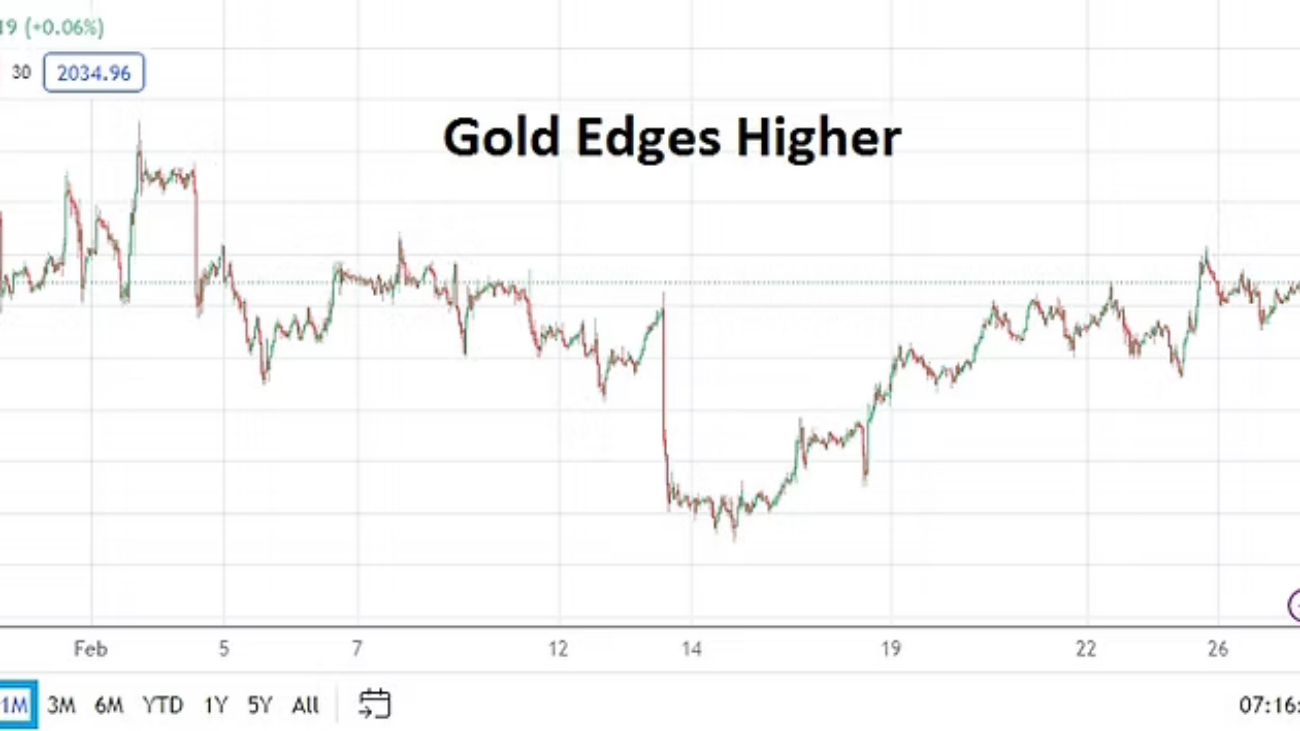
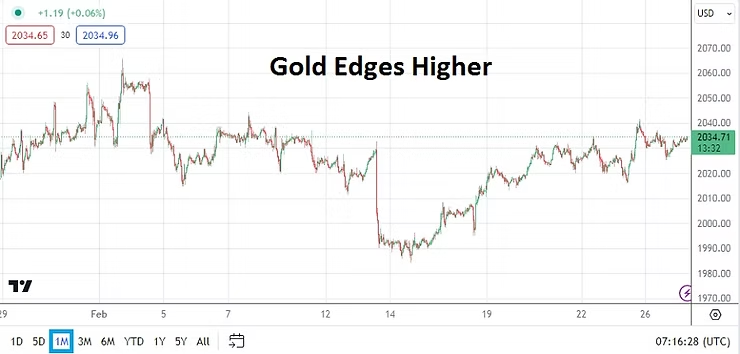
Gold One Month Chart as of 27th of February 2024

Gold has edged higher in the past week and is around the 2034.00 USD mark as of this writing. The slight climb above the 2020.00 ratio which has worked like a magnet recently, indicates some traders may be leaning optimistically towards a weaker USD mid and long-term. These folks may be proven correct, but day traders should note that the 2030.00 ratio in gold is below highs seen in December, January and early February – which indicates nervousness. If day traders do not believe gold acts as an inverse barometer for the USD, simply look at the results of trading when the stronger than expected CPI numbers were released on the 13th of February. Gold fell to a low near 1985.00 on the 14th, this was not a coincidence.

Again, while it is easy to sound alarms and jump up and down and proclaim every week important for day traders, the acknowledgement that this week’s economic data is significant should not be treated as hyperbole. You have been warned.

Monday, 26th of February, U.S New Home Sales – yesterday’s results showed another decline in the housing market, and the previous month’s number was revised downwards. The outcome may point to concerns about U.S mortgage rates which remain stubbornly high for those considering purchases.

Tuesday, 27th of February, U.S Durable Goods Orders – a rather large drop of minus -4.9% is expected. The Core data however is expected to produce a rise of 0.2%. These numbers will be a good precursor for the important consumer sentiment which will follow one and a half hours later.

Tuesday, 27th of February, U.S Consumer Confidence via the Conference Board – the results of the important readings have shown intriguing gains since late fall in 2023. While improvement in sentiment has been recorded, revisions lower have also been seen in the previous three reports. The outcome of today’s report should be treated carefully. If another higher reading is produced this may create some positive momentum in the USD momentarily.

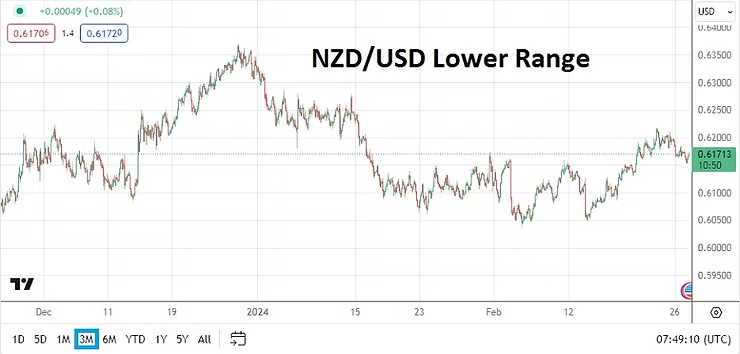
NZD/USD Three Month Chart as of 27th February 2024

Wednesday, 28th of February, Reserve Bank of New Zealand Official Cash Rate and Monetary Policy Statement – while many Forex traders will be sleeping when the RBNZ makes its important pronouncement, New Zealand inflation data has remained strong and a conservative government is in charge politically that is pro-business. The question is if the Reserve Bank of New Zealand will go against the grain of other global central banks and actually increase their interest rate while others seem to be adamant about trying to become less aggressive. While many analysts believe the RBNZ will sit on its hands and act according to the whims of others, if an interest rate hike is announced global Forex traders should take note because it would be a signal that central bankers are uneasy regarding their rhetoric and not in agreement.

Wednesday, 28th of February, U.S Preliminary Gross Domestic Product – a gain of 3.3% is the expectation from many analysts. The previous reading was stronger than anticipated. If growth numbers in the U.S come in higher than estimated the USD will react with strength. The Federal Reserve would like to see the outcome meet the expectation or come in below, this so the U.S central bank can consider reducing the Federal Funds Rate late this spring or in early summer. However, if a significantly strong growth number is demonstrated this would cause turmoil in Forex.

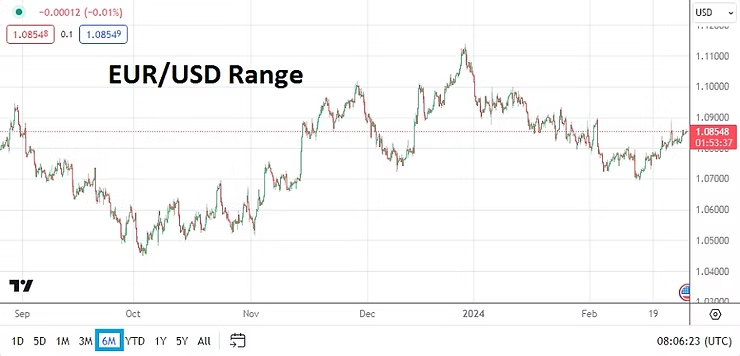
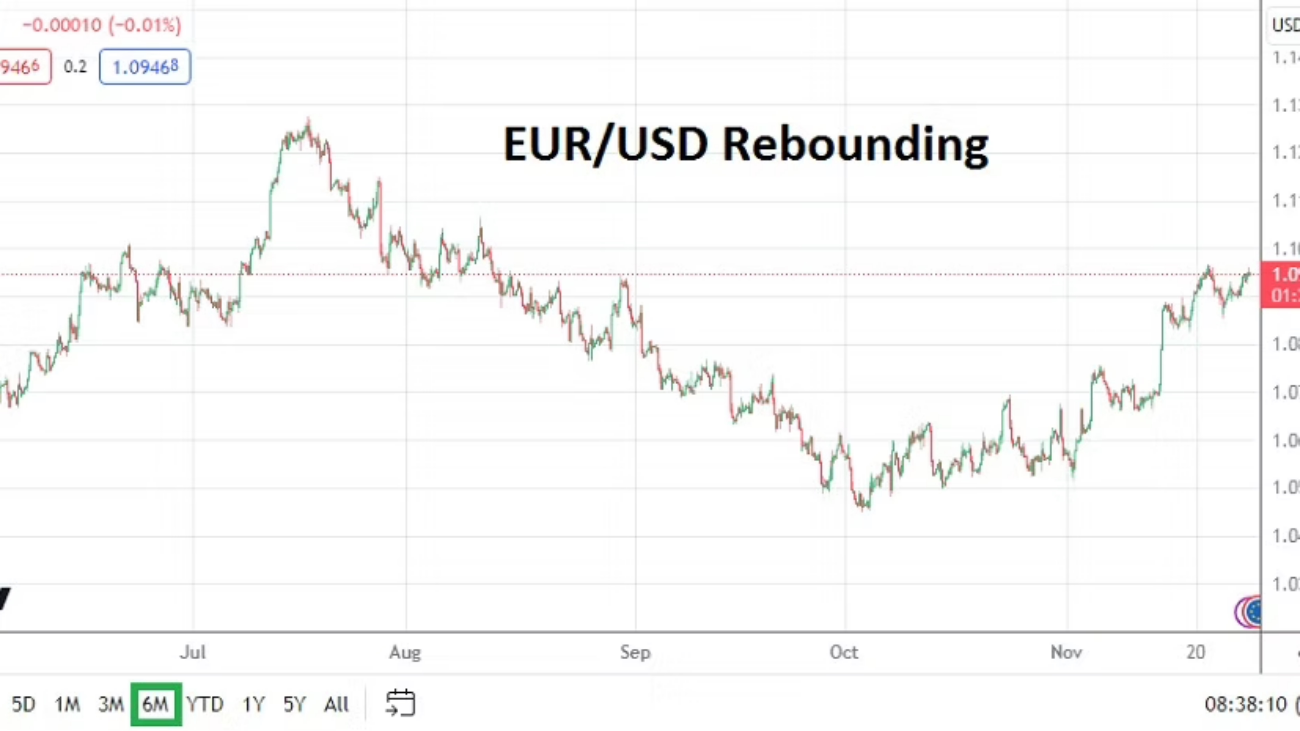
EUR/USD Six Month Chart as of 27th February 2024

Thursday, 29th of February, Germany Preliminary Consumer Price Index – a slight gain is expected in the inflation number. The EUR/USD has been struggling as stagflation concerns shadow the European Union. A higher inflation result will not be welcomed by the ECB, which would prefer to cut interest rates sooner rather than later. The German number should be watched and it will cause an impact if there is a surprise. The EUR/USD has been turbulent and is likely to produce more choppy conditions depending on the parade of data results this week.

Thursday, 29th of February, U.S Core Personal Consumption Expenditures Price Index – traders who have felt the previous economic reports already have caused intense reactions this week should brace for this inflation report. A result of 0.4% is expected. The Federal Reserve admits this is one of the most important publications that it monitors. This means financial institutions react to this report too. If inflation were to come in higher than expected, like the CPI results from two weeks ago, this would essentially kill off expectations of a May interest rate cut from the Fed. The USD will react to this report and so will U.S Treasury yields, which means equity indices will also be affected. A weaker inflation report is being wished for by many market participants, but will this be the result?

Friday, 1st of March, China Manufacturing PMI – not to beat a dead horse, but China’s economic data has been poor and this report will be viewed as important. Another negative outcome is expected. Transparency regarding economic numbers from China is a worry for investors. Conditions in China are being watched and it is important for traders to eliminate bias regarding their perspectives. China may be struggling, but its importance as an economic power is still very much in evidence. Foreign direct investment into China is diminishing, but plenty of investors still have ‘skin in the game’ and will be affected by the manufacturing reports.

Friday, 1st of March, U.S Manufacturing PMI via ISM – a slightly improved manufacturing reading is expected. However, because of the U.S data releases from the previous days, the results may be looked at only momentarily and not cause much of a reaction from market participants. Traders may be looking forward to the weekend after this week’s economic publications in order to rest.

postN87

AMT Top Ten Miscellaneous Clues for the 26th of January

AMT Top Ten Miscellaneous Clues for the 26th of January

10. Sports: Australian Open Tennis Tournament Finals this weekend. And five episodes into Netflix’s Six Nations: Full Contact there has been NO mention of rugby national teams in the Southern Hemisphere. Bias?

9. Money Club: Microsoft has joined Apple with a market cap over 3 trillion USD, the only two companies in the world able to make this boast.

8. Democracy: India elections coming in April and May seem to have a predictable outcome, but the South Africa voting date has not been made official and the ANC is under pressure. U.S citizens appear set for a rematch of Biden and Trump in November.

7. Layoffs: Around 1,900 employees of Activision Blizzard and Xbox, both owned by Microsoft, will have their jobs eliminated. Microsoft spent about 68.7 billion USD to acquire Activision Blizzard – a deal that was finalized in October of 2023.

6. Nervous: Bitcoin still battling the 40,000.00 USD ratio. Binance Coin has fallen below 300.00 USD, BNB/USD traded near 200.00 USD in the middle of October.

5. Behavioral Sentiment: Gold remains near 2020.00 USD, U.S Treasury yields are in sight of three month lows, but energy prices have ticked upwards this week with WTI Crude Oil near 77.00 USD.

4. Forex Caution Sign: Day traders should be braced for price velocity today. Is the USD going to become weaker going into the weekend?

3. U.S Federal Reserve: FOMC Statement will be on the 31st of January. Yesterday’s GDP numbers came in stronger than anticipated, fueled by robust consumer spending. However the GDP Price Index results were well below their expectations. Some folks may be dreaming about a rate cut in March, but there is still plenty of data ahead.

2. Stock Indices: The S&P 500, Dow Jones 30 and Nasdaq 100 are within record heights. Japan’s Nikkei 225 is challenging values not traversed since early 1990. The values of these indices may be dizzying, but the trend has been hard to bet against.

1. Inflation: Core Personal Consumption Expenditures (PCE) Index reading is anticipating a 0.2% gain today. Last month’s outcome was 0.1%. The U.S Federal Reserve monitors this particular report closely. Financial institutions will react and any surprises will become a catalyst in the broad markets.

postN100.1

Forex Volatility as Central Banks, GDP, U.S Equities Shadow

Forex Volatility as Central Banks, GDP, U.S Equities Shadow

Perhaps it is good that today will see a lack of important economic data which will affect the markets. It might give a chance for day traders to relax and to gauge the thinking of financial institutions and investors before Central Banks, and important growth and inflation numbers shift behavioral sentiment later this week. While Forex has remained a minefield, U.S equity indices have soared to record heights. More volatility will come.

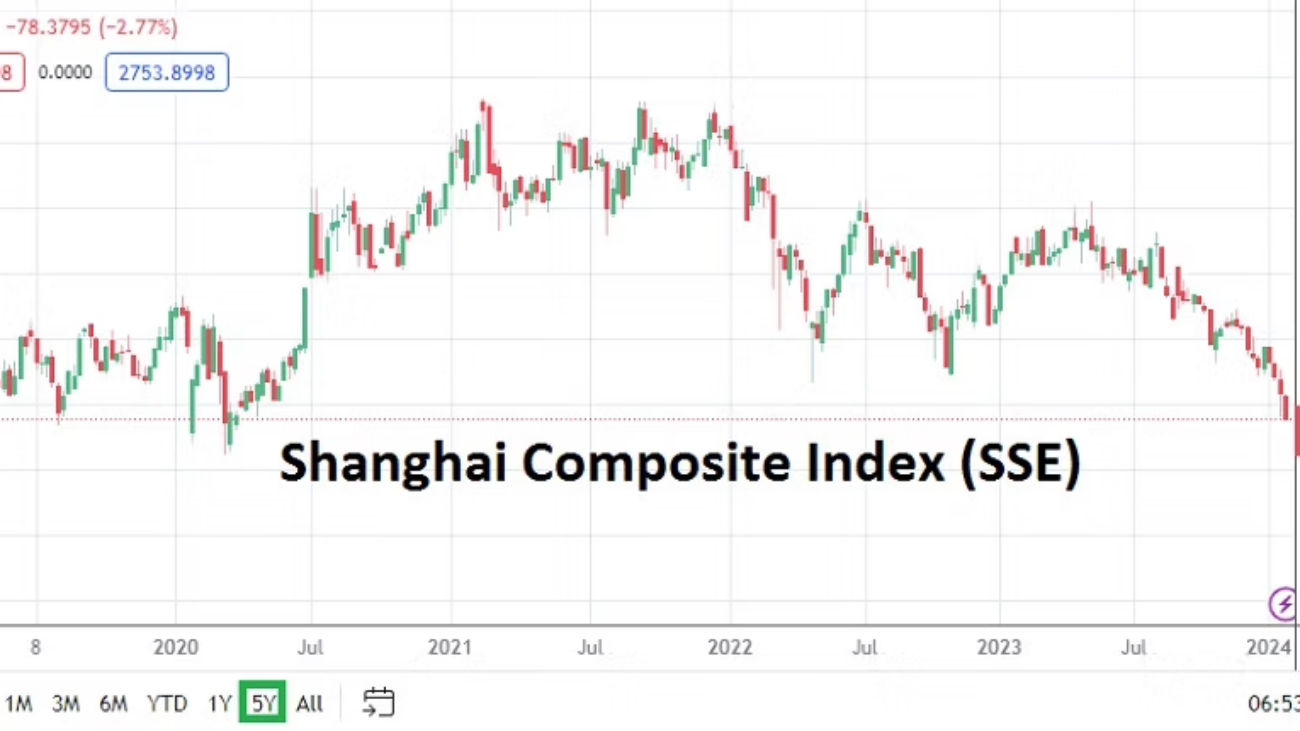
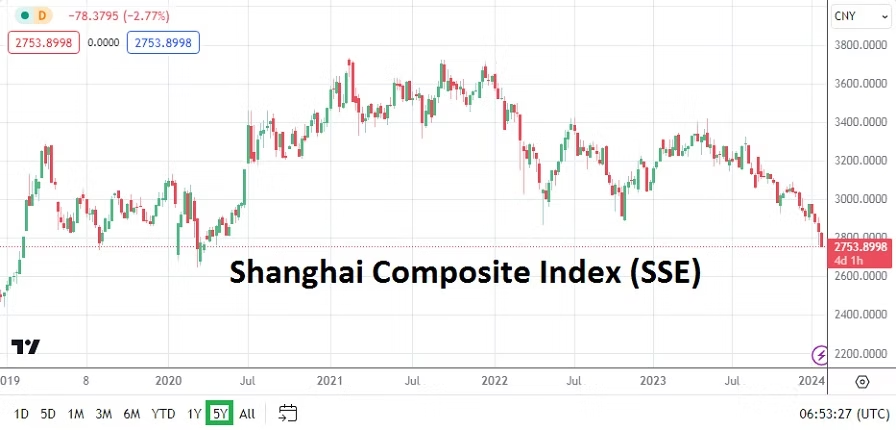
Shanghai Composite Index Five Year Chart as of 22nd January 2024

Risk assessment is always critical, it needs to be mentioned the Shanghai Composite Index is again facing severe selling pressure. This is a direct result of foreign investors losing faith in China’s economic policy and political maneuverings. The slump in Chinese equities is also hitting the Hang Seng Index in Hong Kong badly. Deflation is a legitimate fear in China. The dual consequences of a failing housing sector and crumbling equity values is harming Chinese citizens.

While the strong selloff in Chinese equities would have caused a massive amount of reaction in the global markets a few years ago, the ability to shift assets elsewhere by foreign investors who were active in China has likely reduced potential knock on effects in other global equity markets. It must also be pointed out that China continues to sit on a massive amount of USD holdings. China is a large investor in Africa and their attempt to steer influence there remains abundantly clear.

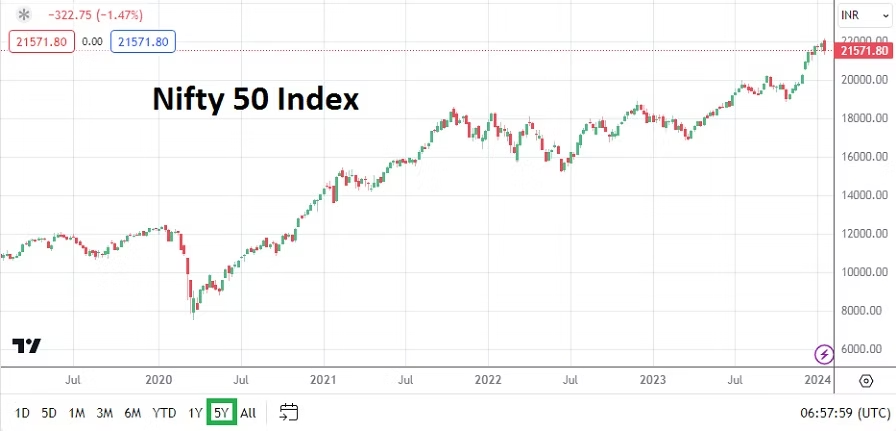
Nifty 50 Index Five Year Chart as of 22nd January 2024

India has directly benefited from the outflow of investments from China. A look at the Nifty 50 Index shows the upwards momentum India’s equity market has enjoyed as it has started to attract more direct foreign investment. The ability of the India stock market to go up while China struggles is a barometer worth studying. Outflow vs. inflow.

Monday, 22nd of January, U.S Conference Board’s Leading Index – the reading is not at the forefront of consideration for investors, they will be watching the results of U.S Treasury yields and stock indices more closely than this report.

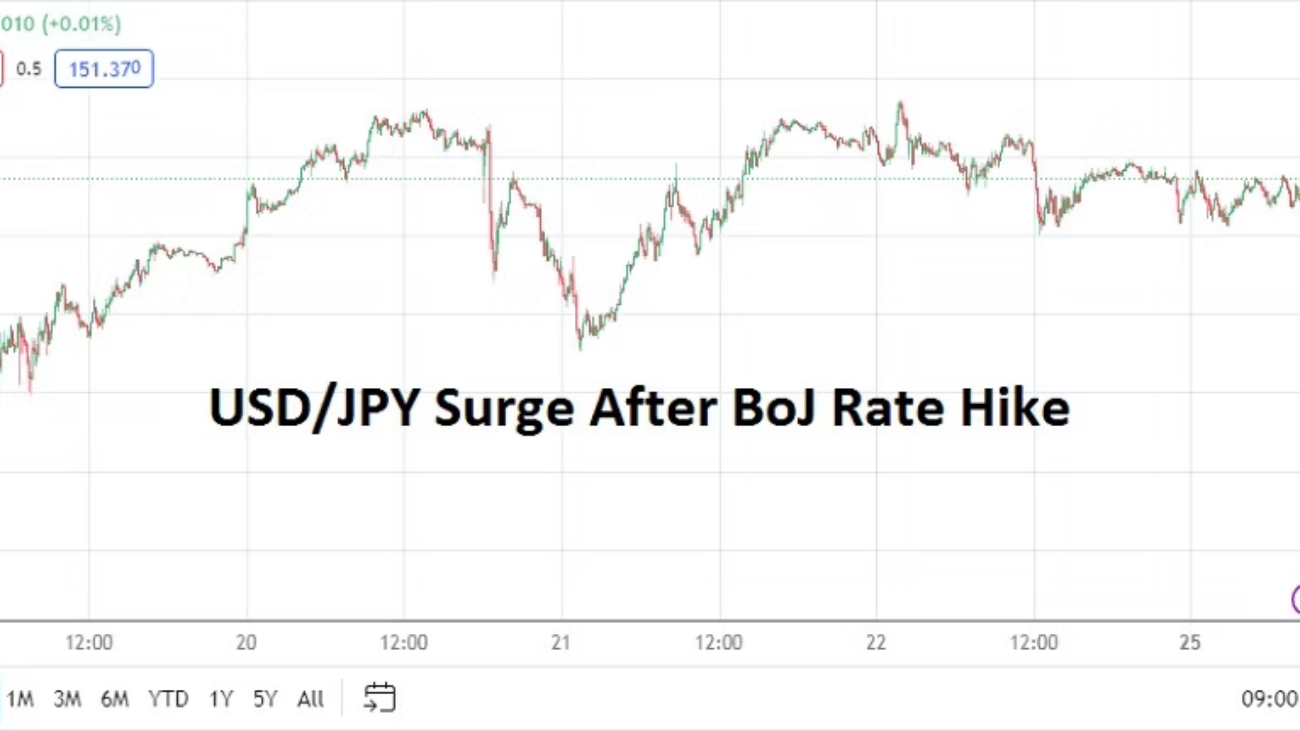
Tuesday, 23rd of January, Bank of Japan Monetary Policy Statement and Outlook Report – no major change is expected from the BoJ quite yet. The USD/JPY has been volatile and provided a solid trend upwards since the start of January. Day traders looking for a reversal lower to develop should be extremely cautious. Data from Japan has been mixed and the BoJ is likely to remain conservative. The weaker JPY helps exports from Japan it must be remembered, but it also may factor into inflation creeping into the Japanese economy.

NZD/USD One Month Chart as of 22nd January 2024

Tuesday, 23rd of January, New Zealand Consumer Price Index – the inflation report is expecting a result of 0.5%, which would be below the previous result of 1.8%. The NZD/USD has taken a bearish dive since late December. Like all major currencies the New Zealand Dollar remains USD centric. Volatility in the NZD/USD may occur via the inflation numbers from New Zealand, but like the USD/JPY it may find its biggest impetus coming from afar – U.S data and the Federal Reserve outlook.

Wednesday, 24th of January, E.U and U.K Flash Manufacturing and Services PMI reports – Germany and France are anticipating slightly better Manufacturing Purchasing Managers’ Index numbers. Services numbers are expected to be slightly weaker from Germany. Solid results from these combined publications could help the EUR/USD create a bit of bullish momentum.

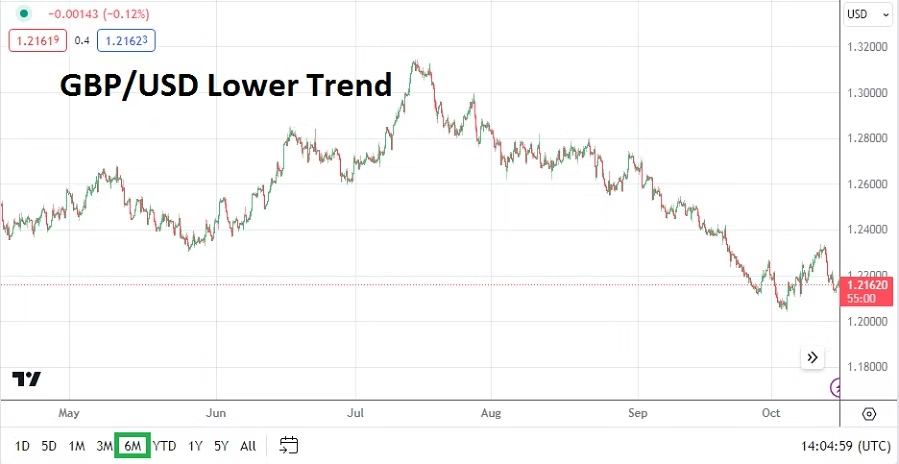
The U.K numbers via their Manufacturing PMI is expected to be slightly better than the previous outcome, but the Services number a bit worse. Economic data from Britain remains mixed to lackluster. Higher inflation numbers last week did the Bank of England no favors. The GBP/USD will be affected briefly by the results, but trading in the Forex pair is likely to remain geared towards thoughts about U.S data coming this Thursday and Friday.

Wednesday, 24th of January, Bank of Canada Rate Statement and Monetary Policy Report – the key lending rate from the BoC is expected to remain unchanged. However, Canadian economic numbers have been problematic, and while the BoC may want to wait for the U.S Federal Reserve to move first regarding interest rates, critics of the BoC are becoming louder. The USD/CAD will react to the Bank of Canada’s rhetoric, but unless there is a major surprise the currency pair will remain heavily USD centric.

Thursday, 25th of January, European Central Bank Main Refinancing Rate and Monetary Policy Statement – the ECB is expected to provide no major changes. The 4.50% interest rate is anticipated to stay in place. The ECB will likely ‘sound’ a calm tone and say while improvements are being seen in the E.U, that areas of difficulty remain but are understood and being managed.

Thursday, 25th of January, U.S Advance Gross Domestic Product – the key growth number from the U.S is anticipated to show a gain of 2.0%. This number will get a reaction in Forex, equities and bonds. The Federal Reserve’s FOMC meeting is next week and this GDP result will factor into their monetary policy rhetoric. Because it is an election year in the U.S, this number will also get an additional ‘sounding board’. Day traders should be careful before and after the noise caused by this growth report.

Friday, 26th of January, U.S Core Personal Consumption Expenditures – the vital inflation number carries an estimated gain of 0.2% before its release. As much as the Fed watches the GDP number, the inflation result via the Core PCE is a huge component of the U.S central bank’s thinking. The USD will react to this report and Forex traders should brace for a reaction from financial institutions. If the number is weaker than expected the USD could find selling momentum, if the number is stronger more USD strength could be seen. Folks looking at the GDP and Core PCE reports should also look for potential revisions to previous months results, which could cause another wave of volatility in the markets if they are significant.

postN97.1

Cautious Trading as Key Data and Outlooks Await Impetus

Cautious Trading as Key Data and Outlooks Await Impetus

The start of trading this week could prove to be slightly adventurous for speculators as financial institutions return to the markets and start to take positions for their clients. Having survived the past two and a half weeks of holiday season trading, market action will now focus on immediate, mid and long-term goals and outlooks depending on time frames and targets. Slightly nervous trading was on display last week, but some traders may believe their is plenty of room for more optimism and may be suspicious of the results delivered.

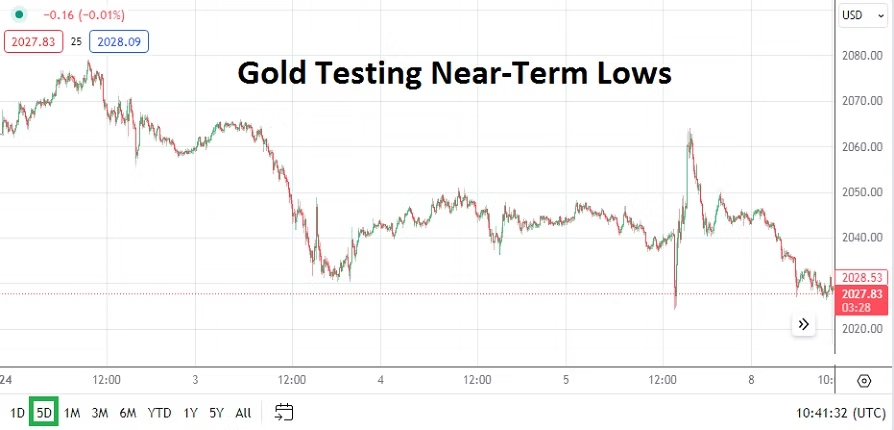
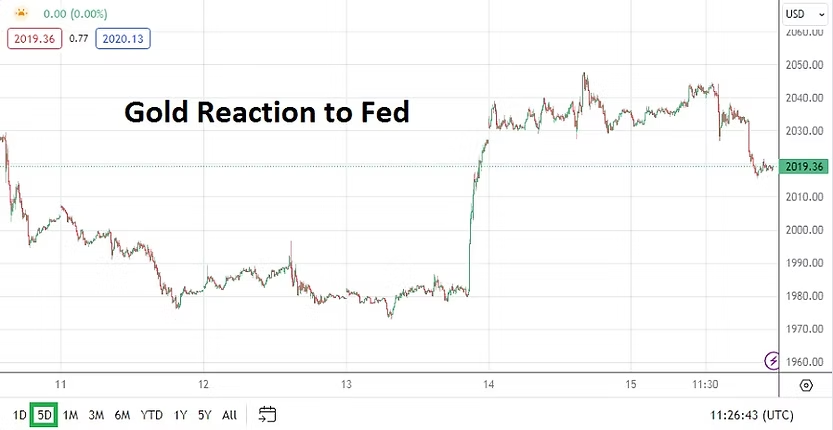
Gold Five Day Chart as of 8th of January 2024

Day traders should look at some barometers before they participate in the near-term. Gold has come off highs seen late last week, but remains within the higher elements of its six month price range. Its selloff from apex values last week perhaps correlates to U.S equities and USD turbulence which has also been experienced.
Last Friday’s reaction to the U.S jobs numbers was fascinating. The numbers delivered an initial shock to folks who wanted to react quickly. Hiring the last month increased more than expected, which might have caused the momentary bullish surge in the USD. Only to be confronted swiftly by further investigation of the jobs data which showed previous months statistics had been revised downwards. This acknowledgement set off selling of the USD and technical whipsaw results.

Day traders participating in Forex this past Friday likely experienced a range of emotions. If the market correlations are correct regarding the USD and the reactions seen, trading in gold also seemed to mirror the price action. Interestingly, gold touched a low of nearly 2024.00 USD on Friday in the wake of the jobs report, surged higher to around 2064.00 and then reversed lower again.

The notion that gold is trading within sight of Friday’s lows is interesting for both the precious metal and trying to understand where USD sentiment will lean early this week.

Behavioral sentiment remains rather optimistic, however nervous headlines during the holiday season may have caused cautious shadows to grow darker, particularly as light trading volumes affected results. Today and tomorrow will prove interesting in the broad markets, this as financial institutions return in full and as they brace for U.S inflation numbers later this week.

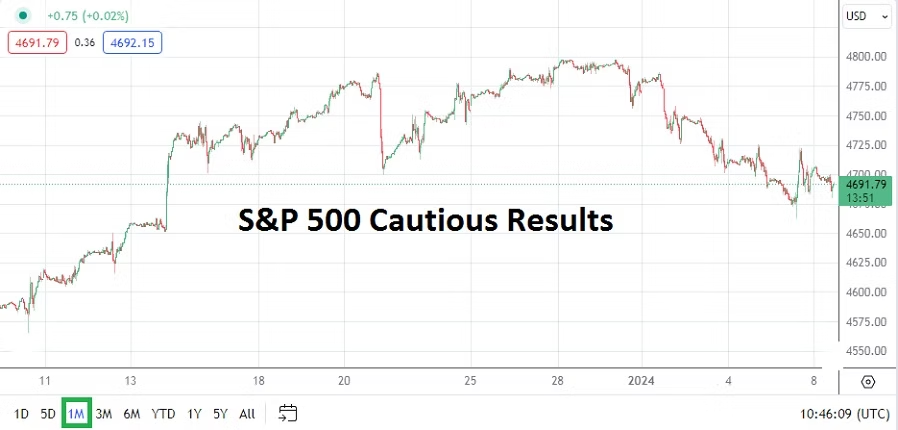
S&P 500 One Month Chart as of 8th of January 2024

Nervous short term trading is likely today and tomorrow as price equilibrium is sought. U.S equity indices have backed away slightly from their flirtations with all-time highs, but even as selling developed the past week highs are still in sight and are likely still being dreamed about by many institutions. U.S Treasury yields will also be a good indicator for Forex traders early this week regarding how comfortable financial institutions are with their current outlooks.

Monday, 8th of January, Germany Factory Orders – a slight gain of 0.3% was reported today, which was below the 1.1% expectation. The German economy is starting to show signs of economic growth, but has major hurdles to still climb. The lackluster German numbers may keep the ECB in a rather neutral stance for the mid-term. Which might help a bullish EUR/USD outlook if the U.S Fed is seen as the first major central bank which will have to cut interest rates.

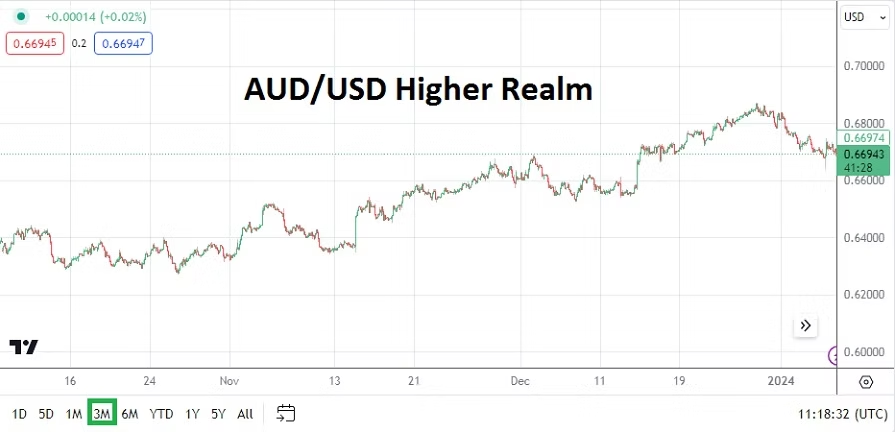
AUD/USD Three Month Chart as of 8th January 2024

Tuesday, 9th of January, Australia Retail Sales – the anticipated climb of 1.2% is significantly higher than the negative -0.3% result from last month. A good outcome via the Retail Sales could help the Australian Dollar reignite some positive momentum. CPI data will come from Australia on Wednesday, which will certainly affect the AUD/USD too.

Wednesday, 10th of January, U.S Ten-Year Bond Auction – though day traders may not be too involved regarding the sale of U.S Treasuries, the results from the auction will have an affect on Forex. U.S Treasury yields should be monitored.

Thursday, 11th of January, U.S Consumer Price Index – a slew of CPI results will get the attention of financial institutions. The inflation data is expected to show a slight decrease in the Core CPI result, but show a slight gain in the broad number. This will likely be the most heavily traded day since the third week of December. There will be a reaction from the inflation reports. If the numbers come in around the estimates this may help the bearish mid-term outlooks for the USD. If the results are shockingly stronger, the USD would turn bullish. Day traders need to be careful in the midst of the Consumer Price Index publications because volatility is expected.

Friday, 12th of January, China CPI – a decrease is expected from the Asian giant. Deflationary concerns are shadowing China’s economy. The expected number of minus -0.4% would actually be an improvement compared to the last reading which was minus -0.5%. The USD/CNY has been rumored to have been experiencing some ‘hands on’ management from China. Investors continue to be nervous about China’s economic outlook and would like to see signs of improvement.

Friday, 12th of January, U.K Gross Domestic Product – a gain of 0.2% is being anticipated. Any growth from the U.K GDP would be welcomed considering the recessionary data which has been lingering. The GBP/USD will react to the results and bullish momentum in the currency pair could be sparked by a better than anticipated number.

postN92.1

Forex Calm After the Storm? Volatility and Coming Holidays

Forex Calm After the Storm? Volatility and Coming Holidays

The weakness of the USD was anticipated last week, this as the Federal Reserve essentially admitted its aggressive interest rate hikes policy has come to an end. While Fed Chairman Jerome Powell tried to sound neutral, most financial institutions reacted to the FOMC Statement and the Fed’s Press Conference last Wednesday with a rather demonstrative amount of USD selling, largely showing they were prepared to react.

The EUR, GBP and JPY all gained, and many other currencies added value against the greenback too. Gold flourished upwards and even WTI Crude Oil came off its lows. However, after producing strong gains late Wednesday and into Thursday, gold and major Forex pairs did reverse slightly lower on Friday as the USD gained some footing.

Gold Five Day Chart as of 17th December 2023

Risk appetite likely has enough positive behavioral sentiment influence to continue its desire for dynamic buying on U.S indices. The Dow Jones Industrials will start Monday at record heights, the S&P 500 and Nasdaq Composite are approaching one year highs.

Yes, potential headwinds can develop, so day traders should not bet blindly on bullish gyrations to mount without reversals being expected too. As the GBP and EUR gave back some of their gains on Friday, financial institutions may have been reacting to the notion price velocity higher had been too robust in the near-term. Speculators received another reminder that one way trends tend to meet with reversals that can still cause harm.

Risk adverse traders who have their eyes on global affairs should monitor the situation in the Red and Arabian Seas. Houthi extremists continue to fire at international ships sailing in the areas, and this may generate a reaction at some point from allied navies which are supposed to protect vessels and commerce. If the U.S Navy reacts to the Houthis in a strong manner this could deliver a cold short-term shiver into markets.

Speculators also need to understand this is the last ‘full’ week of trading before the Christmas and New Year holidays, which can cause a massive decline in volumes. This Thursday’s trading will begin to decrease from norms, and Friday’s price action will likely be affected by offices around the world starting to shutter as employees disappear for extended vacations. Day traders who want to participate in Forex, commodities, and equities via CFDs should be prepared for the emergence of quiet markets the end of this week with occasional volatility disrupting technical charts.

However, this Monday and Tuesday will pose questions regarding possible reactions to the weaker USD which has emerged, and U.S equity indices showing signs of speculative zeal. U.S Treasury yields continued to trend lower last week, and U.S bonds should be watched early to see if market participants continue their optimistic paces, or show signs of becoming more passive as the holidays approach. Traders with strong convictions regarding directions may feel inclined to remain active throughout this week and cannot be blamed, but some caution should be practiced.

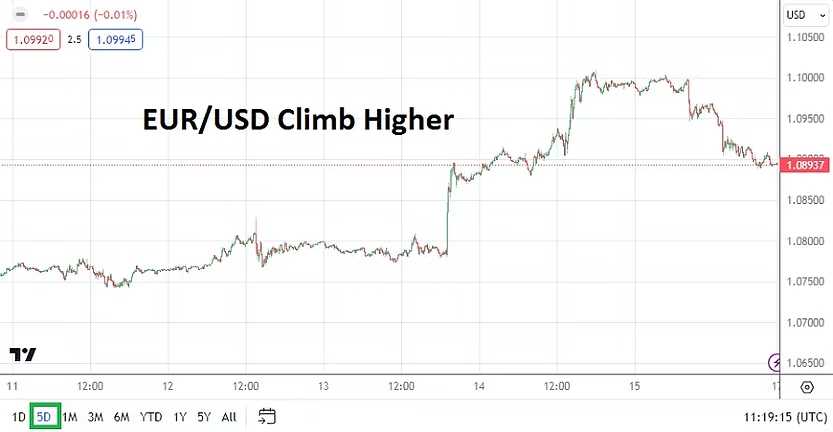
EUR/USD Five Day Chart as of 17th December 2023

Monday, 18th of December, Germany ifo Business Climate – the reading is expected to show a slight improvement over the last month. EUR/USD traders may believe they should react to the results from this report, but the EUR is likely to stay within a USD centric mode driven by existing outlooks. The ability of the EUR/USD to hit the 1.10000 level late last week confirmed positive mid-term bullish outlook. The reversal lower on Friday may ignite speculative buying positions early this week, but day-traders may want to be conservative.

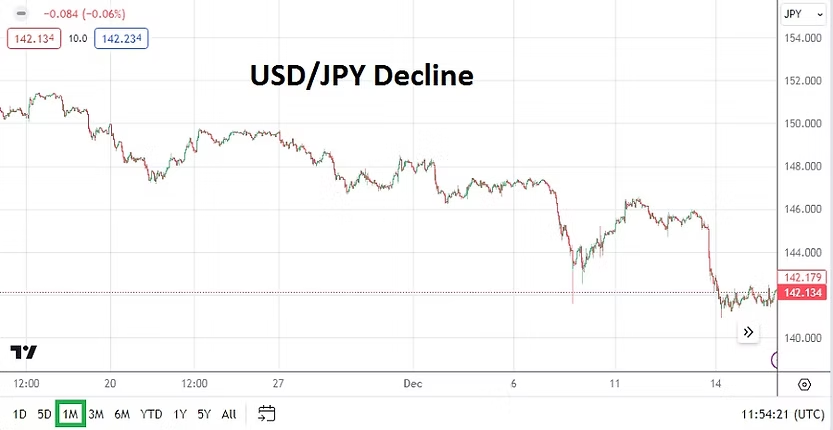
USD/JPY One Month Chart as of 17th December 2023

Tuesday, 19th of December, Bank of Japan Monetary Policy Statement and Press Conference – the BoJ is not expected to raise their interest rates quite yet. However the end of the BoJ’s negative monetary policy may be coming to an end in 2024. The BoJ bet on the notion that inflation would come down eventually, even it maintained a negative interest rate policy – this seems to have been proven correct. The USD/JPY has reacted the past month with a rather incremental decline. Perhaps Japanese financial institutions have been positioning for a stronger JPY over the mid-term. The USD/JPY trajectory lower remains intriguing for speculators.

Wednesday, 20th of December, U.K Consumer Price Index – the BoE sounded more dovish than many folks expected they would this past Thursday. Inflation numbers coming this week should be watched. The British economy remains lackluster, but sounds about ‘weaker’ inflation have been heard. The data from the CPI is expected to be slightly lower than the previous month. The GBP/USD could react to this report. The British Pound has delivered upwards momentum since late October. Traders should be careful regarding potential short-term reactions from the GBP/USD, and understand Forex volumes may start to decrease on Thursday and Friday which could affect results.

Thursday, 21st of December, U.S Final Gross Domestic Product – growth in the U.S has been better than most anticipated. While many analysts are still predicting a slowdown, the GDP number is expected to show a 5.2% gain. The inflation report via the GDP Price Index is anticipated to be 3.6%. While the broad markets typically would react to these statistics in a strong fashion, trading might be somewhat muted as financial institutions begin to focus more on the coming holidays.

Friday, 22nd of December, Canada GDP – a slight gain of 0.2% is expected regarding the growth statistics. Markets will be quiet and while the USD/CAD could see a momentary increase in trading, behavioral sentiment from earlier this week will likely have had a bigger effect.

postN84.1

December Cheer, Full Volume, Considerations for Coming Week

December Cheer, Full Volume, Considerations for Coming Week

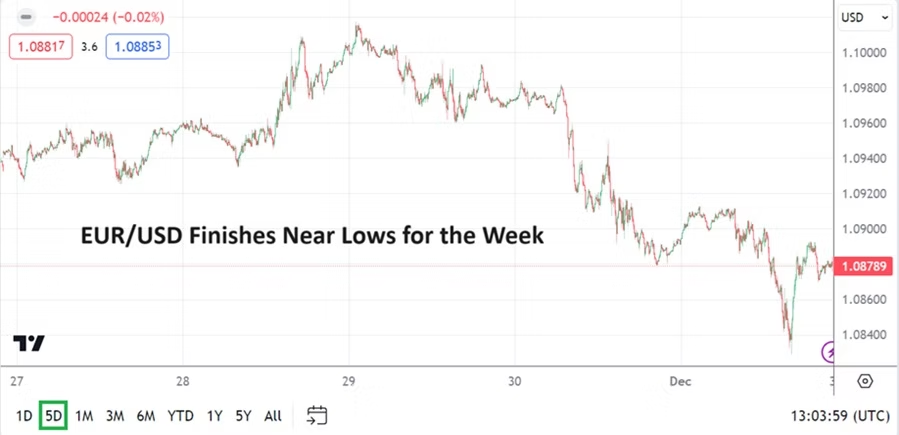
The EUR/USD finished the past week of trading below its starting point essentially closing this Friday around the 1.08790 mark. While the slight downturn may have hurt bullish day traders who kept on looking for higher ground in the short-term, the EUR/USD did trade above the 1.10000 on late Tuesday and held its ground briefly on Wednesday before starting to trend lower. A depth of nearly 1.08310 was momentarily challenged on Friday with solid price velocity, but the EUR/USD did exhibit some buying before going into the weekend.

EUR/USD Five Day Chart as of 3rd December 2023

Speculators who were looking for a higher finish for the week from the EUR/USD may have been disappointed, but the end of the trend upwards may not be finished. U.S Fed Chairman Jerome Powell sounded optimistic on Friday regarding Fed policy and mentioned a ‘soft landing’ and indicated interest rates at their current level will still need a bit of time to have their full effect. U.S growth numbers via the Gross Domestic Product came in stronger than expected on the 29th of November, but inflation data continues to show a slight erosion.

This puts the U.S Federal Reserve in position to actually sound rather neutral when the FOMC Meetings conclude in a week and a half. And if global events do not cause any sudden alarms to ring, it appears risk appetite is within a rather optimistic state. U.S equity indices continued to roll along merrily and the 3 big indexes are challenging highs. The S&P 500 and Nasdaq Composite are challenging July values, and the Dow Jones 30 is trading at ratios last seen in January of 2022.

While U.S Treasury yields have also continued to erode and are near mid-term lows, the USD/JPY continued to create a bearish trend for the week and is trading at values last seen in the second week of September. The GBP/USD finished the week within sight of highs attained on Tuesday and Wednesday, this as the currency pair also trades near values last seen in late August and early September. The EUR/USD is the outlier among the three major currency pairs and speculators may look at the EUR as potentially being in oversold territory as the week gets set to begin. Risk management as always is essential for wagering on Forex.

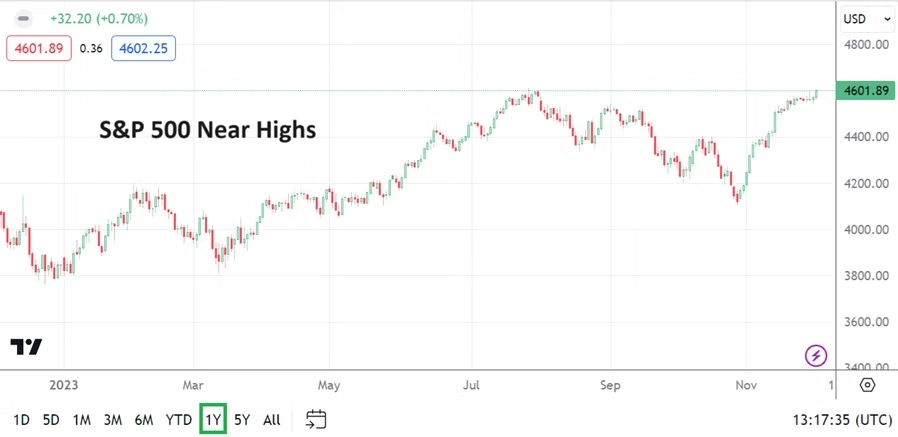
S&P 500 One Year Chart as of 3rd December 2023

The next two and a half weeks of trading will see full volumes, this before holiday trading starts to hit the broad marketplace. The upward moves in U.S equity indices may be seen as overdone by many analysts, but the trend has been strong and trying to step in front of the ‘optimism’ within the indexes may prove expensive in the coming days and weeks. Day traders should make sure conservative leverage is being used if they are attempting to climb aboard the moving train.

Some analysts are pointing out correctly, that if it weren’t for a few ‘workhorse’ corporations in the U.S equity indices, declines would have been seen. But day traders who are wagering on CFDs via their brokers and financial institutions investing in the three major stock indices are likely enjoying their profitable returns.

Monday, the 4th of December, E.U Sentix Investor Confidence – the reading is expected to come in with a negative result, but slightly better than last month’s outcome of minus -18.6. About a hour and a half before this European survey, German Trade Balance numbers will be released. The EUR/USD may be affected by this data, but the currency pair is likely moving within the shadows of behavioral sentiment which is USD centric. Europe is struggling with recessionary conditions, but it is outlook which drives the marketplace. If the EUR/USD can find durable support it may prove that its bullish trend has not come to an end.

Tuesday, the 5th of December, U.S ISM Services Purchasing Managers Index – an improvement is expected compared to last month’s outcome. Recent data from the manufacturing sector came in less than expected, thus the services sector will be watched closely, but as long as the result is around the expectation this will not hinder broad market sentiment. Meaning the report could be a non-factor.

Wednesday, the 6th of December, Canada BoC Overnight Rate – traders will be keen to see what line of rhetoric is taken within the Rate Statement from the Bank of Canada. No change to borrowing costs are expected. The rate is anticipated to remain at 5.00%. The economy of Canada has been struggling as recessionary clouds are shadowing, but recent GDP data was slightly better than expected and inflation has shown signs of weakening. The USD/CAD went into this weekend near its lows and in sight of values seen in late September.

Thursday, the 7th of December, China Trade Balance – economic numbers via the manufacturing sector last week came in below expectations. The lackluster China data may be a factor in the weaker WTI Crude Oil prices, but perhaps that is only speculative. Some investors participating in China are worried about outlook over the mid-term. Analysts will comment on the Trade Balance numbers, but traders should make sure they separate the ‘noise’ which may be delivered from biased perspectives depending on ‘world view’ compared to actual outcomes and genuine insights.

Friday, the 8th of December, U.S Non-Farm Employment Change and Average Hourly Earnings – the jobs numbers will be looked at attentively by market participants. The data will be correlated to existing behavioral sentiment and risk appetite that has sustained a weaker USD, higher U.S equity indices, lower yields on U.S Treasuries and the high price of gold. If the jobs data comes in around expectations that will likely be enough for investors to remain calm and look forward to the 13th of December, this is when the U.S Federal Reserve will release its FOMC Statement – which may keep risk appetite strong.

postN83.1

FOMO Potential Could Fuel FX and Equities with Calm Winds

FOMO Potential Could Fuel FX and Equities with Calm Winds

Traders should not run towards their trading screens as the week begins, steady attitudes and risk taking tactics will be needed. Yet, there may be reasons to get excited. The return of full market volume as U.S financial institutions open and employees get back in their offices after the long holiday weekend needs to be monitored. The term ‘FOMO’ – fear of missing out – may be heard this week if U.S equity indices continue to shine, Forex demonstrates additional USD weakness and U.S Treasury yields decline further. There will be a whirlwind of economic data and opportunities for ‘official’ rhetoric in the days ahead.

Day traders should ask questions about the results which were seen technically via their charts last week, assets all struggled to find momentum last Thursday and Friday. And earlier in the week many Forex pairs produced choppy results. But here’s the thing, behavioral sentiment was rather muted as large speculators and financial institutions understood that trading volumes would be light – this caused strong bursts and sudden reversals early – but by the end of the week rather calm waters.

Many trading houses could increase their speculative positions this week based on their outlooks. Financial institutions clearly have believed the USD had been overbought and the ability of the GBP, EUR and JPY to gain in the past two weeks are possible signs large ‘players’ remain positioned for further USD weakness.

Equity markets have done well in November, but the major indices including the Dow 30, S&P 500 and the NASDAQ Composite all started to garner strength in the last week of October. Mid-term highs are being achieved in U.S indices. The parade of buyers may not be done quite yet.

Economic data results are vital for day traders to understand because they provide insights into the thinking of financial institutions regarding their outlooks. It is not the trading of small speculators that moves markets, it is the power of large cash positions which drives results. Questions regarding where the cash is going and the allotments financial institutions are pursuing is a key to understanding how the markets are going to react. This information is not readily available for day traders, instead smaller speculators need to try to comprehend outlooks regarding positioning and timeframes of larger players.

Part of the FOMO factor could develop as financial institutions begin to question how much money they will hold in money market accounts for their clients. While the practices of large investors are always comforted by the notion they are making guaranteed returns, the pursuit of better results and the desire for risk appetite does drive behavioral sentiment when bullish markets are being exhibited.

This week will be intriguing as full volumes return to the marketplace today and tomorrow. From today until the 13th of December FOMC Statement from the U.S Federal Reserve, results in the financial markets could be speculative. Financial markets are starting to signal that optimism is creeping back into the mindsets of large investors who may believe mid-term economic scenarios have improved.

EUR/USD Six Month Chart as of 27th November 2023

Monday, 27th of November, E.U. ECB President Lagarde – the European Central Bank leader will deliver thoughts regarding monetary policy to the European Parliament. While the E.U still is sufferning from recessionary numbers, economic data last week came in slightly better than estimated. However, the EUR/USD remains in a USD centric mode and this will continue this week.

Tuesday, 28th of November, U.S Consumer Confidence via the Conference Board, the numbers are expected to be slightly weaker than last month’s outcome. U.S economic data has been showing signs of being weaker than expected, last week’s Core Durable Goods Orders report followed this trend.

While this may be read as bad news by some people, day traders should note – particularly Forex speculators – that slightly weaker U.S economic data currently is music to the ears of many financial institutions because they believe the Federal Reserve will have to shift their rhetoric from aggressive to neutral.

Tuesday, U.S Federal Reserve Officials – a slew of FOMC members will be speaking at various events during the day. The Fed likes to give clues to the financial markets regarding their outlooks and perceptions regarding interest rates. The Federal Reserve has certainly paused their interest rate hikes.

The question now is if the U.S central bank will start to say while they remain diligent regarding inflation, that they now see signs of a ‘soft landing’ emerging within the U.S economy. If the Fed speakers begin to sound not only neutral, but offer hints of becoming potentially dovish by the spring of 2024 regarding monetary policy, this could spur USD selling.

Wednesday, 29th of November, Germany Preliminary Consumer Price Index – the inflation results are expected to be slightly weaker than last month’s outcome. German economic data has been recessionary, financial institutions know this, what large traders would like to see is stable results that are not wildly surprising.

Wednesday, 29th of November, U.S Preliminary Gross Domestic Product – the growth numbers are expected to show a slight increase. Equity markets, Forex and commodity markets will react to these results. The U.S economy has been surprisingly strong regarding growth. A slight slowdown regarding the GDP numbers would not be the worse thing, if growth numbers did come in below the estimate this could fuel additional USD weakness.

But traders should not get overly ambitious and bet against the GDP numbers. If the expected outcome of 5.0% is delivered, equity markets could use this as additional fuel. The number is sure to be a talking point, but unless their is a massive divergence it may simply be a way to create noise for ‘talking heads’, when in fact behavioral sentiment regarding risk appetite remains optimistic.

Thursday, 30th of November, China Manufacturing PMI – the result is forecast to show a slight improvement. China economic numbers remain a concern, particularly from the real estate sector which is suffering and is causing cascading troubles on other sectors within the nation. Global demand for products, as an example from European countries, that are suffering recessionay pressures also is slowing China’s manufacturing. A slight improvement would be welcomed by global investors participating in China financial assets.

WTI Crude Oil Six Month Chart as of 27th November 2023

Thursday, 30th of November, OPEC and JMMC Conference – the oil producers will certainly make their policies known and energy markets will react to the news and rumors. Commodity traders should note that WTI Crude Oil, Brent, Natural Gas and Unleaded Gasoline markets have been under price pressure and important mid-term cash support levels are in sight.

Thursday, 30th of November, U.S Core Personal Consumption Expenditures Index – this inflation reading is important and should be watched. The result is expected to be weaker than the previous month. If the outcome matches the anticipated reading of 0.2% or less, this could spur additional USD weakness. The Core PCE Index is an important reading for the U.S Federal Reserve regarding its inflation insights.

Friday, 1st of December, U.S Fed Chairman Jerome Powell – the Fed leader will be speaking at a college event in Atlanta. Traders should remember that about ten days before the Fed’s pause in November regarding its FOMC Statement, Powell delivered a large hint regarding monetary policy. The Fed Chairman’s comments will come late on Friday and could cause a reaction early next week if Powell’s remarks fuel more Forex speculation.

Additional note – the U.S jobs numbers will not be released this Friday, the Non-Farm Employment Change and Average Hourly Earnings results will be published on the 8th of December.

postN63.1

Fed Rhetoric, U.S Consumers, and Fresh Concerns about China

Fed Rhetoric, U.S Consumers, and Fresh Concerns about China

U.S inflation data via the Consumer Price Index last Thursday met the anticipated result regarding the core number, and the broad statistics were only fractionally larger than expected. U.S Treasuries yields however jumped via quick reactions about stubborn inflation, then settled down. Equities via the major indices continue to show nervousness.

Day traders continue to get hit by choppiness, which means if they are not on the correct side of a trade initially, they can get knocked out of their positions quickly due to the use of too much leverage.

China produced another round of troublesome Consumer Price Index Producer Price Index reports last Friday, once again highlighting deflation is a legitimate concern for the nation.

The USD began to weaken within many major currency pairs on late Tuesday and early Wednesday, and then began to prove difficult with sideways price action. However, many currencies held onto their slight gains against the USD going into the weekend. But before a massive bearish trend against the USD actually can be sustained, perceptions about the U.S Federal Reserve stands clearly in the way regarding behavioral sentiment.

Inflation numbers last week remained strong enough to suspect the Fed will raise interest rates again on the 1st of November. As a way to keep traders on their toes, U.S Federal Reserve officials will be speaking at many functions over the entirety of this week, offering crumbles of evidence for their less than spectacular rhetoric on the global economy no doubt.

Gold has produced a rather startling climb in the past ten days and its one month charts resemble a rather turbulent roller coaster. Traders who have been pursuing the precious metal during its strong reversals the past handful of weeks have hopefully been using solid risk management while taking a speculative ride.

Gold One Month Chart as of 16th of October

Monday, the 16th of October, U.S Empire State Manufacturing Index – the number has come in slightly better than expected, but has still produced a negative reading of minus -4.6. While many U.S officials will not state it publicly, a decline in the manufacturing index may pave the way towards a more tranquil Federal Reserve. But this may be wishful thinking too, particularly if inflation remains elevated.

Tuesday, the 17th of October, U.S Retail Sales – the data about consumer spending will affect Forex if there are surprises. Both the core and broad reports are anticipated to be weaker than last month’s numbers. Weaker results could create some USD weakness.

Wednesday, the 18th of October, China Industrial Production, Gross Domestic Product and Retail Sales – the Industrial Production results are expected to be slightly weaker than last months, while the GDP outcome is being estimated to show a significant drop. If the growth number comes in at the anticipated 4.5% mark it would be another signal that China is struggling while trying to jump start the economy. USD/CNY traders should be careful around these reports.

GBP/USD Six Month Chart as of 16th October

Wednesday, the 18th of October, U.K Consumer Price Index – the CPI data from Great Britain is expected to show a slight decline from the previous month. While last week’s GDP numbers met their rather lackluster expectations; Construction, Manufacturing, Trade Balance data came in much worse than anticipated. While no one from the U.K government is going to cheer on the bad economic numbers from last week, these figures will make these CPI inflation results important to monitor. Will the U.K inflation numbers remain stubborn like the U.S? The GBP/USD certainly needs to be watched in the aftermath of this CPI report.

Thursday, the 19th of October, China New Home Prices – the housing bubble within China is a thing of the past. Last month’s outcome produced another negative number and a poor report would not be a surprise this week. Negative housing values hurt the Chinese public which have largely quantified their personal savings via their real estate holdings.

Thursday, the 19th of October, U.S Unemployment Claims – the weekly report will give another small dose of evidence regarding the strength of the U.S economy for financial institutions to consider.

Friday, the 20th of October, U.K Retail Sales – the consumer spending report is expected to produce a decline of minus -0.3%. GBP/USD traders may use this report as another sphere of influence.

postN26.1

USD/INR: Bounce Higher Ignites a Return to High Water Values

USD/INR: Bounce Higher Ignites a Return to High Water Values

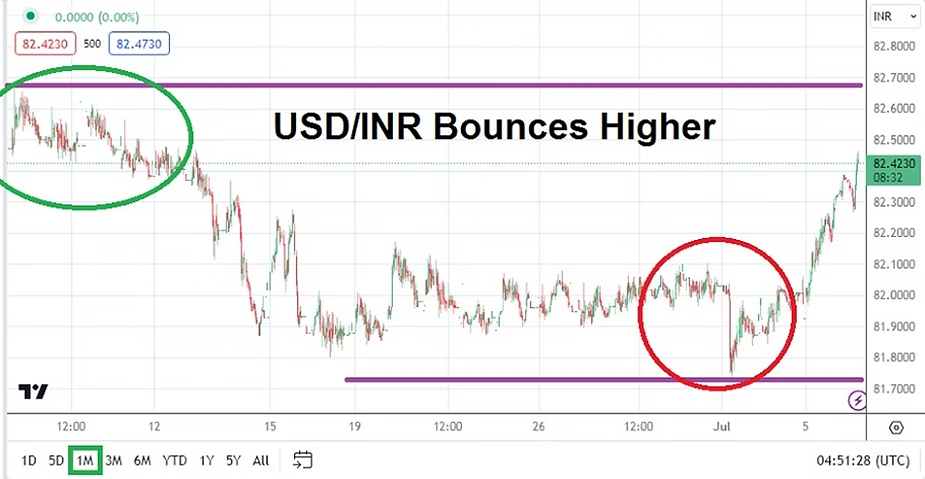
The USD/INR is trading near 82.4350 as of this writing, which is a value the currency pair has not touched since the second week of June. While some analysts may say the move to higher ground yesterday and early this morning is based on the U.S FOMC Meeting Minutes, Wednesday’s report from the Federal Reserve likely only reinforced the bullish momentum which started earlier this week. The world of Forex can feel fickle, particularly when so many of the internal dynamics are hidden from a large segment of people who are trying to speculate on the results.

If the mechanics of the move higher which started on Monday are examined a couple of points should be considered closely, the low of the USD/INR was around 81.7300 on the 3rd of July. This low took place as most U.S financial institutions were on holiday in preparation for Tuesday’s 4th of July celebrations.

Fears of U.S Economic Prospects: Behavioral Sentiment and Stagflation Potential

The reversal higher since the 3rd of July has been pronounced, but before going into last weekend the USD/INR was largely trading within a consolidated manner near the 82.0000 level with a test of this mark having been displayed forcefully since the middle of June. A range of nearly 81.8500 to about 82.1500 largely has played out the past three weeks of Forex trading.

USD/INR One Month Chart as of 6th July 2023

Monday’s dip in value to lows around 81.7300 took place when there was very little volume in the USD/INR market. The depths challenged marks not seen since the first week of May.

The reversal higher the past few days is certainly part of more transactional volume starting to be pumped into the USD/INR as U.S financial institutions have returned, but they are also likely being caused by an underlying nervousness within the Forex markets which may be factoring in the notion the U.S Federal Reserve seems to be on a path which will increase the Federal Funds Rate on the 26th of July.

The behavioral sentiment being generated regarding a Federal Reserve which stays in an aggressive stance started before yesterday’s release of the FOMC Meeting Minutes. Nervous conditions have been on the surface of the broad markets because U.S inflation remains rather resilient – but also importantly because last week’s Gross Domestic Product numbers published on the 29th of June, came in stronger than anticipated. From a troubling perspective some analysts could point to the moderately improved growth and combination of stubborn inflation as a sign stagflation is starting to shadow the U.S, which would certainly be a troubling predicament.

USD/INR Move to New Highs this Morning could Ignite more Nervous Reactions

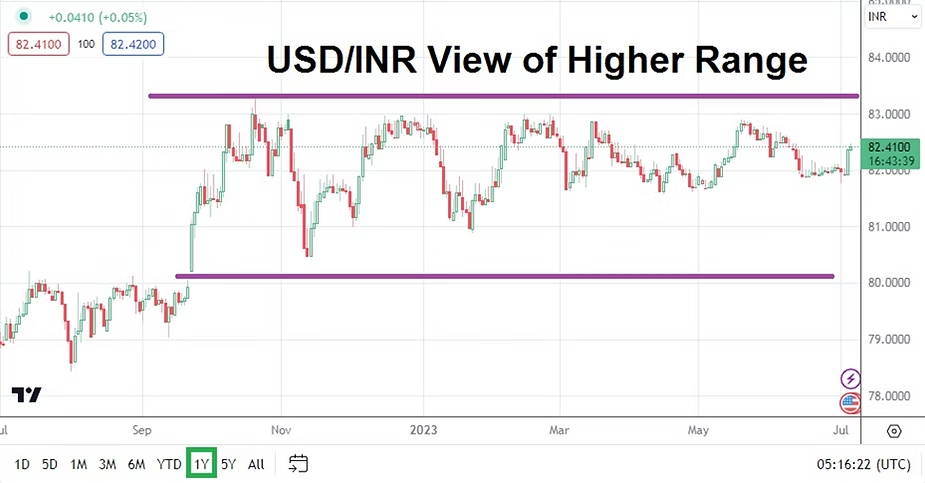
USD/INR speculators may believe the move higher in the currency pair is overdone and that values need to be lower. However, the current price of the USD/INR is one that has been experienced quite a bit since October of 2022. A look at a one year chart shows the USD/INR has returned to higher ratios of its price range which it has experienced since breaking upwards in the middle of September 2022. And to make things more interesting for technical traders, the USD/INR has actually produced a rather stable range between 81.6000 and 82.9000 since February of this year.

USD/INR One Year Chart as of 6th July 2023

While traders are certainly trying to anticipate what will happen next in the USD/INR to gain an advantage, they should remember the currency markets are almost impossible to time on a daily basis, but a look at mid-term prices does offer plenty of insights. If the USD/INR climbs too high, perhaps to the 82.5000 level the Reserve Bank of India could get a bit nervous and consider some type of intervention which it supposedly has done a few times over the past handful of months – but perhaps at higher price ratios.

USD/INR Mid-Term Considerations and the Current Price Range

However it is more cost efficient and reputably less damaging for central banks to not intervene if they do not have to, and simply let market dynamics effectively create a price for the USD/INR based on supply and demand. Meaning the current prices of the USD/INR look to be rather high, but taking into consideration the range of the Forex pair the past five months the values are not new. The prices in fact have been rather established, meaning the USD/INR may trade slightly higher, but then a lower wave of downward momentum could be anticipated.

Day traders who are gamblers may be tempted to sell the USD/INR if the currency pair finds more upwards mobility in the near-term. Trading volumes should be back to normal now that U.S financial institutions have returned from their holidays, and traders should be ready for the potential of fast price velocity developing. Risk management on wagers regarding the USD/INR are essential as always.

postN23

Fed Spits into the Wind as Day Traders React to Volatility

Fed Spits into the Wind as Day Traders React to Volatility

Broad market analysts continue to spit up an eternal fountain of opinions and data to show why yesterdays moves happened and why tomorrows are going to have bright sunshine and positive outcomes. However, day traders know this is not the reality for them and understand the gyrations and volatility of the marketplace is actually quite dangerous in the short-term.

Day traders may even know market correlations looking backwards are also tales of fiction sometimes. Random results from various fronts are often viewed and assembled by analysts and data providers to give credence as to why ‘John Doe’ lost all of his money, because he was not paying attention to the storm that was ‘obviously’ developing in front of his face. Thus, wiping away any stains of responsibility the analysts and data providers may have for their clients loss of money.

Gold Five Year Chart as of 28th June 2023

Traders seemingly want to know what the U.S Federal Reserve is going to do every minute. If they could, short-term speculators would probably buy information on the amount of coffee breaks FOMC members take, and monitor what Fed officials daily meals are to understand their moods.

However, we should also understand that a lot of the day to day mechanics in the financial markets are tasks that have been done thousands of times before, in other words we know the history and results of many financial institutions. The U.S Federal Reserve is doing nothing new and their actions in July, August and onward really do not amount to much. The monthly decisions and annual manifestations of governments that spend too much cash and their officials trying to balance the value of their national currencies are well documented historically.

Markets in reality think long-term and this is where nearly all of the large money is invested. Day traders need to understand what they are doing is almost considered a ‘hobby’ by investment professionals who do not take the ‘hobby’ of the small speculators very seriously. This because the amount of money most day traders are using doesn’t affect market price very much, unless they form a ‘team’ like the Wall Street Bets ‘crew’ or act in unison via other social media groups influenced by people they mostly do not know personally, and should be wary of regarding motives. Let’s point out for a moment though, that long-term investors can lose money too based on faulty outlooks.

Long-term money is invested with perspectives that stretch often for periods of two to three years and beyond. Outcomes are projected not on data that cause daily momentary values to change, but rather on sophisticated insights which take a perspective the value of equities and certain indices, and other assorted assets tend to rise. Long-term investors mix their outlooks on economic road signs which will be affected by the investing landscape over a period of years. Meaning knowledge of geopolitics, interest rates, social stability and economic transparency are vital. History is a guide post for established financial institutions as they work. But sometimes these factors do not work, and employees at long-term thinking financial institutions find they need new jobs.

U.S Federal Reserve officials, after yesterday’s Core Durable Goods Orders and the CB Consumer Confidence reports which showed strength were published, might have raised their eyebrows. FOMC members likely acknowledged the long-term exuberance and nature of the U.S economy and thought ‘we need to raise interest rates again in July’ because growth data is too resilient. However, they have already said this via their FOMC Statement in June which warned about inflation and why it continues to be a concern, but the ‘words’ thus far have not been taken too seriously.

Yesterday’s reaction in the broad markets was not overly volatile because of the U.S data outcomes. Yes, short-term Forex traders were likely hurt or rewarded depending on the what lucky side of the coin they were betting. However, for the most part many long-term investors have already placed their positions and continue to do so, which they may not alter for the next two to three years depending on the amount of cash reserves they have in their arsenal. This ammunition of large capital, allows long-term players to remain in the game until a result can be quantified – good or bad.

Day traders and long-term investors are playing a different game. Their mode of operations work in different manners. Again, it must be stressed long-term investors do not take into consideration the outcome of most short-term traders, nor for that matter do global central banks. In fact most global central banks and the governments behind them, would rather see day traders simply give their money to investment ‘experts’ who put the ‘little peoples’ money into long-term savings and investment programs.

Speculative cash in the markets does exists, but the amounts of money being used by day traders and large ‘players’s looking for short-term results are quite different. It should also be pointed out that many day traders are using CFD’s – which largely means their positions are being wagered virtually – and are not really being deposited into the ‘cash markets’. In other words day traders can go broke much faster than their long-term counterparts who are investing in positions that have the power of time duration on their side. The virtual positions of CFD wagers are not going into the real cash market, thus not causing a reaction in the actual assets being traded.

Many day traders participating in the daily results of Forex, and equities and indices are merely trading on casino like platforms built for wagering on the results of what is happening elsewhere in the real cash markets of assets. It in a sense, it quite a bit like sports gamblers betting on the outcome of game they are not participating.

Tomorrow the GDP numbers will come from the U.S and the growth numbers will certainly be watched. The results will be consumed differently by day traders compared to long-term speculators. The Final Gross Domestic Product numbers from the States on Thursday are expected to show a slight rise. An outcome of 1.3% was seen last month, tomorrow’s anticipated number is a 1.4% gain.

If the growth number is stronger than expected, this would put the U.S Federal Reserve in a position in which it would almost certainly have to acknowledge another hike to the Federal Funds Rate is ‘needed’ in July. The Fed has learned the hard way that incremental rises in the costs of borrowing (Federal Funds Rate) are not curtailing the spending of U.S consumers. If the U.S doesn’t start to show recessionary like economic signs in the mid-term, the Fed may feel like it has been spitting into the wind. Day traders will find tomorrow’s GDP report causes volatility, but long-term investors will likely view this as just another day with a momentary price reaction.

postN14.1

Anticipated Federal Reserve Shop Talk to be Delivered Today

Anticipated Federal Reserve Shop Talk to be Delivered Today

For what it’s worth, here is my prediction regarding what the Federal Reserve will do today. The Federal Funds Rate will remain unchanged in my opinion. The FOMC Statement may show that the vote actually was debated and not unanimous. The statement is likely to warn that inflation remains stubborn and potentially problematic, meaning the Federal Reserve continues to believe it may have to raise the Federal Funds Rate over the mid-term and again before the end of 2023.

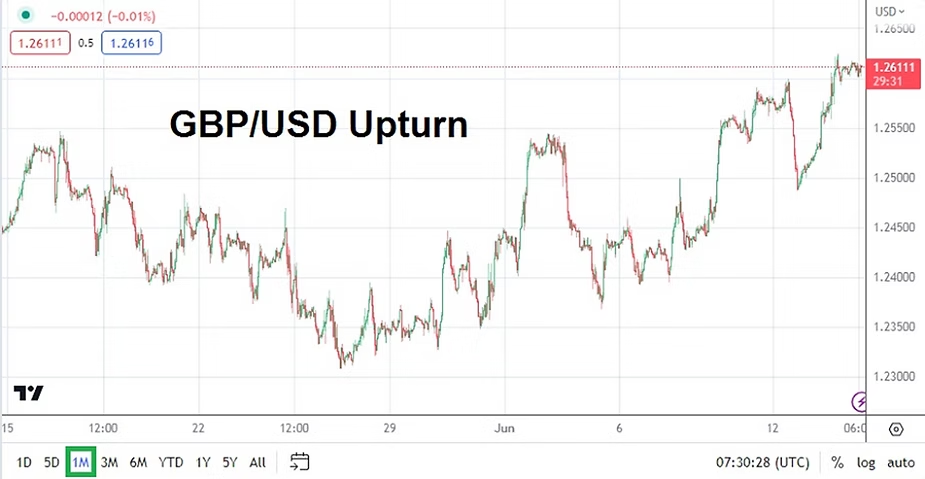
The Forex market has seen the USD get weaker against many major currencies since late May. While financial institutions have seemingly positioned for no increase from the Federal Reserve today, this move has also likely been priced into Forex. Day traders need to understand institutional traders will not be betting on what took place the last three weeks, but are trying to anticipate what will happen into early July and beyond regarding their Forex positions.

GBP/USD One Month Chart as of the 14th June 2023

Many financial institutions may still be betting the Fed will remain more dovish than the U.S central bank wants to admit, but this is a dangerous perception and could prove costly. Financial institutions are concerned about the Fed because they know the central bank has painted itself into a corner it may not be able to maneuver freely within. The battle to conquer inflation while trying to fuel economic growth is not an easy one. Mixed sentiment abounds regarding the U.S economy depending on who is asked.

Talk of a soft landing and a small recession continues to be heard, this while some analysts warn about a hard drop and darker days ahead. Folks, it is all about timelines and their interpretations, experts warning about brighter or darker days ahead have a tendency to be vague regarding exact moments in time. Everyone has an opinion, and people often have more than one.

In my opinion – my one opinion, the Fed is likely to say that it is not going to raise rates today, but may have to do so in the mid-term. If these were normal times and economic conditions were not suffering from huge spending running amok in Washington and the corporate banking sector wasn’t fragile, the Fed may actually have raised the Federal Funds Rate today to continue to battle inflation deliberately. However, a pause for the moment seems like the logical choice, this while ‘hoping’ inflation continues to diminish. And hope is a key word here. Everyone seems to be hoping. The question financial houses and traders need to decide after the FOMC Statement takes place today is how seriously do they consider the Fed’s remarks.

If they believe the Fed will have to continue to remain neutral regarding its mid and long-term interest rate policy, the USD may soften and incremental selling might be demonstrated. Human instinct tends to be optimistic, which means financial institutions and maybe even the Fed wants to believe inflation will ebb lower. If this happens the USD would weaken further. However, the Fed may have to sound more aggressive than people want, but that would damper the mood of financial institutions – so look for optimistic interpretations to abound with rose colored glasses, even if they are wrong in the long-term.

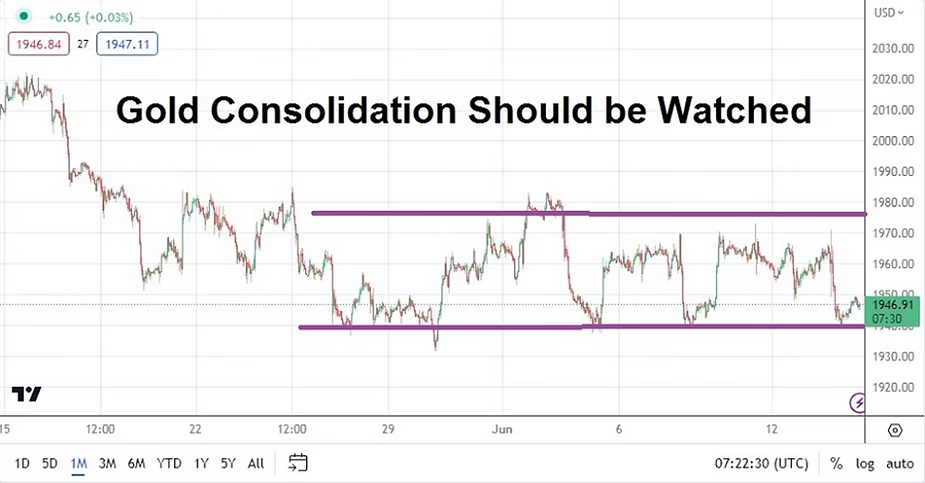
Gold One Month Chart as of the 14th June 2023

For evidence of outside barometers, traders may want to look at Gold which has essentially traded between 1940.00 and 1975.00 with a few outliers since the last week in May. The price of Gold has seemingly situated within a consolidated framework the past few weeks. The precious metal may produce a strong move if the Fed shows more dovish behavior today, particularly if financial institutions show more optimism via behavioral sentiment in Forex – meaning if a weaker USD trend continues momentarily Gold could traverse higher.

My prediction and $1.00 USD may get you on a bus. As always caution will be needed if you are trading immediately before and after the U.S Federal Reserve’s rate decision. I advise using a seat belt today consisting of entry price, stop loss and take profit orders via solid risk management, but then again these cautious attitudes should always be practiced by day traders.

postN11.1

Week Ahead: Inflation Followed by the U.S Federal Reserve

Week Ahead: Inflation Followed by the U.S Federal Reserve

Monday, 12th of June, U.S Federal Budget Balance – hold down the laughter and snickers please as you wonder why you should care, this as the report shows monthly income versus spending from the month before. Yes, the U.S ‘Debt Ceiling’ bill was passed recently. Very few people are going to pay attention to Budget Balance report, except economists and traders who have ‘skin in the game’ via hedge funds as an example – that make long-term bets, and U.S politicians who want to hoot and holler…….while nothing really gets done to limit wasteful spending in Washington D.C.

Tuesday, 13th of June, U.S Consumer Price Index reports – yes, this inflation data will be important per the monthly numbers showing what consumers are spending. A slight uptick is expected with an outcome of plus 0.2% via the broad statistics – last month’s number showed a gain of 0.4%. The outcome of the broad and core CPI statistics will give the Federal Reserve a sounding board for what will take place on Wednesday via the Federal Funds Rate announcement. Stronger than expected inflation numbers could cause a rupture and nervousness. A weaker result would calm Forex and perhaps make the USD slightly weaker.

EUR/USD One Month Chart as of 11th June 2023

Wednesday, 14th of June, U.S Producer Price Index – these numbers will be released early in the day and will be followed by the Federal Reserve five and half hours later. The inflation outcome via the PPI if stronger than anticipated would cause some caution before the Federal Reserve takes the stage.

Wednesday, 14th of June, U.S Federal Funds Rate, FOMC Statement and FOMC Press Conference – while many analysts seem convinced the Fed will not hike the interest rate this week, there are obviously no guarantees. The FOMC Statement will indicate the U.S central bank’s outlook. Traders who are intent on trading before the official interest rate announcement and statement are playing with fire. Speculators should keep in mind that other central banks have surprised folks with increases recently including Canada and Australia. A hike from the U.S Federal Reserve would surprise a lot of people and financial institutions, but stranger things have happened.

Thursday, 15th of June, New Zealand Gross Domestic Product – the growth numbers which will come out a handful of hours after the U.S Fed leaves the stage will be intriguing and provide NZD/USD traders more impetus into what will likely already be a volatile trading session taking place.

Thursday, 15th of June, China Industrial Production and Retail Sales – these two reports from the economic giant will be watched closely. China’s economy is struggling a bit, and weakness in the housing sector via values are starting to cause a reaction in domestic spending. Industrial Production numbers will give some insights regarding global demand. Economic problems in Europe and North America are certainly not helping matters in China because demand for goods are restrained and hurting the manufacturing sector.

Thursday, 15th of June, U.S Retail Sales – consumers in the U.S have been expected to start producing negative numbers via these statistics, will they begin to do it? A stronger number would be of interest to some, but after Wednesdays’ FOMC Statement and news that will be generated, it is questionable who will give full attention to this report and what affect it could have.

Thursday, 15th of June, E.U ECB Press Conference – this question and answer session could prove to be interesting depending on what the U.S Fed does the day before. Certainly the European Central Bank will give their opinions on monetary policy and economic circumstances in the European Union and abroad. The EUR/USD could be affected.

USD/JPY One Month Chart as of 11th June 2023

Friday, 16th of June, Japan BoJ Policy Rate and Monetary Policy Statement – no major changes are expected from the Bank of Japan. This is the one central bank unwilling to change its attitude regarding monetary policy because of the whims of others. Perhaps if the U.S Federal Reserve surprised everyone on Wednesday with a hike, this could change the quiet rhetoric from the BoJ – but even that is doubtful. USD/JPY traders should pay attention to the BoJ Press Conference just in case.