post261

Unpredictability of President Trump and the Markets

Unpredictability of President Trump and the Markets

Everyone wants to know what will happen in the future in the financial world. Most everyone also knows that this is impossible. However, clarity about the mid-term is a legitimate focal point that financial institutions strive. Risk managers define their considerations on assorted perspectives depending on their backgrounds.

While some may like him and others clearly are are not fans, President Trump has a reputation for wanting to get things done. His calling card for a long time has been an ability to make business deals. President Trump however has put himself in a rather difficult position and the next two weeks may prove to be an important milestone. One in which those who like the President and those who don’t will be given more credence to debate.

The Federal Reserve will announce their FOMC decision on the 30th of July. Tariff deadlines will supposedly come on the 1st of August. President Trump has made it clear he does not like the lack of aggressiveness which Fed Chairman Jerome Powell is displaying. Trump has called for the Federal Funds Rate to be cut and Powell has not acquiesced.

President Trump has openly spoken about trying to replace the Fed Chairman, but at this juncture the Trump White House knows this will be difficult unless they can prove Jerome Powell has done something maliciously. Not lowering the Federal Funds Rate because of a fear inflation will develop because of potential effects due to tariff fallout is a legitimate reason not to act. Even if the Fed Chairman is wrong, he appears to still be working on a basis which is based on an economic interpretation.

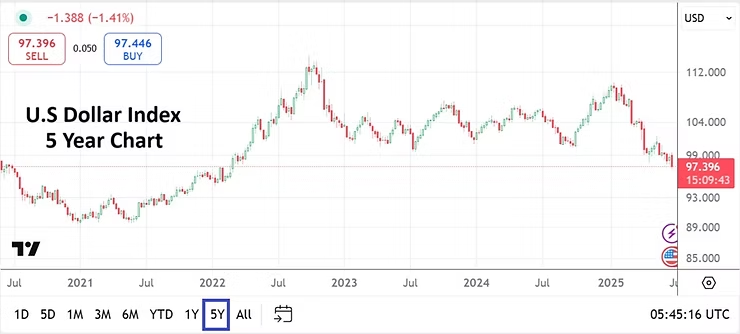
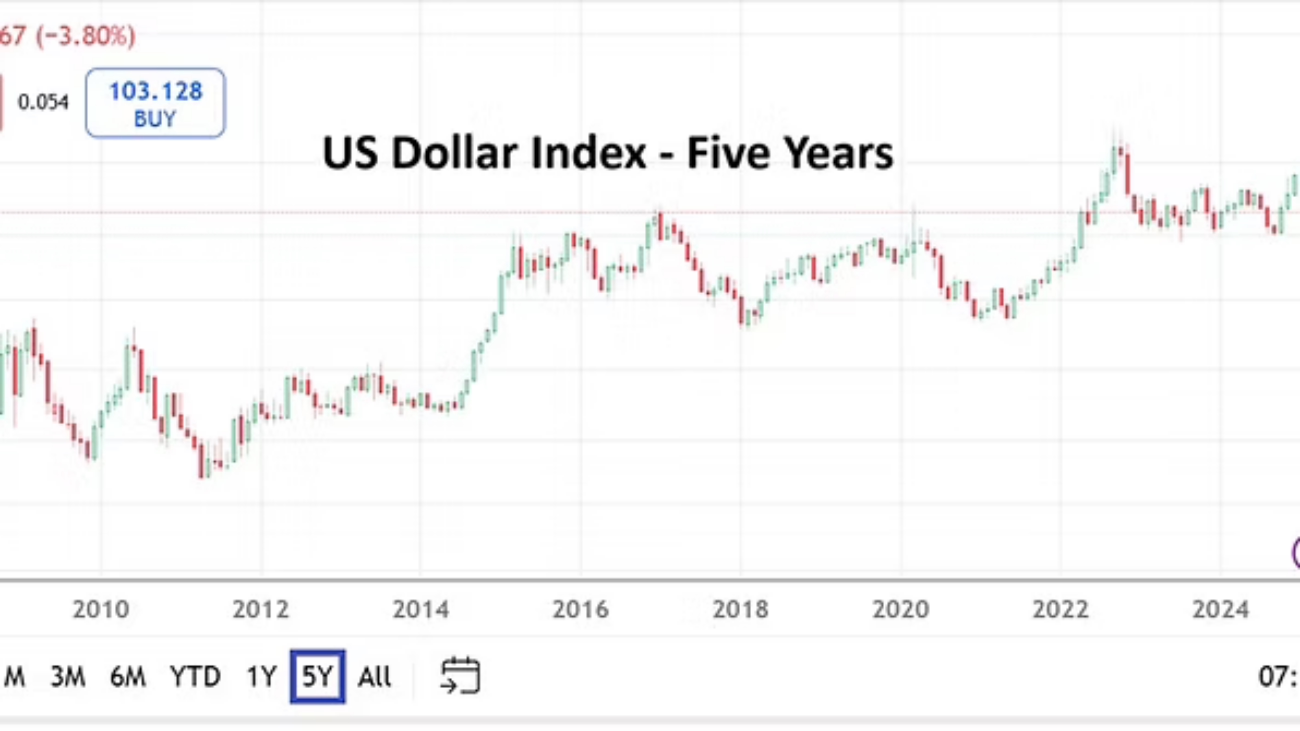
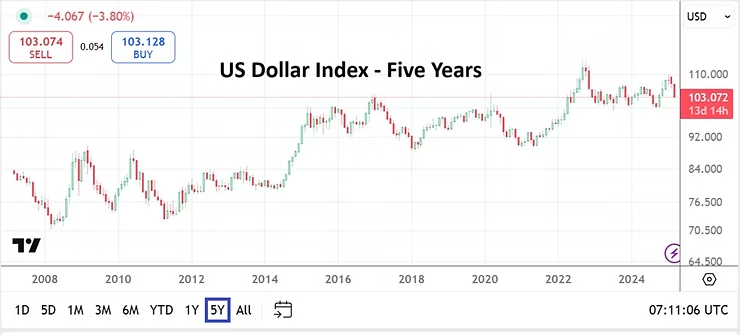
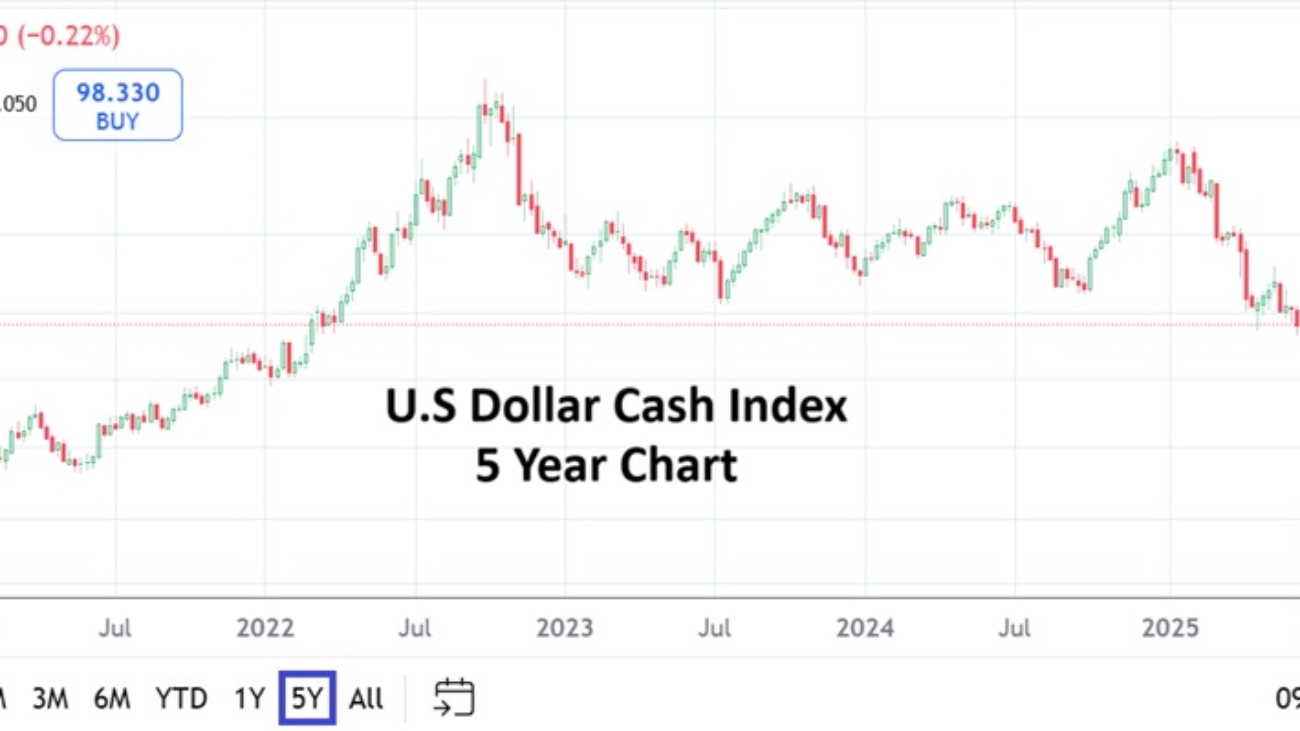
For the next two weeks the broad markets will hear about the Trump and Powell disagreement. It has been argued the Federal Reserve should have lowered the Federal Funds Rate a few months ago, clearly this was not done. However, the USD did trade with weaker sentiment in Forex from early April until the beginning of July. In the past few weeks the USD has garnered some strength, but remains within the lower part of its long-term realms via the U.S Dollar Cash Index. The weakness in the USD was likely due to financial institutions betting on rate cuts to come over the mid and long-term, and which they still believe will happen.

The upwards momentum generated recently by the USD has put the greenback in a position that seems to indicate financial institutions are transacting their cash forward orders cautiously for the moment, while waiting on the next round of impetus. And that is where Federal Reserve clarity and tariff threats now shadow mid-term outlooks.

U.S Dollar Cash Index Five Year Chart as of 21st July 2025

We have entered an unpredictable window and President Trump apparently doesn’t mind allowing a little danger into the mindsets of the financial markets. It is one thing to proclaim tremendous results and great, magnificent prospects, but how long will investors tolerate a lack of clarity regarding tariff agreements? President Trump has postponed the tariff deadlines several times and what should be considered is the potential that at some point he will have to take action to prove he means business. If the August 1st deadline is extended again this may not cause much of a shock, but it will not be met with optimism.

Instead, the main interpretation from financial institutions may be that Trump is struggling to get agreements done as he had promised. While that might lead to the idea that global commerce will continue on as is, this will certainly not help create the positive impetus which President Trump desired. At some juncture President Trump may begin to be perceived as the little boy that cried wolf. No one will pay attention and the markets will proceed without him. But President Trump will not likely let that happen, he does like attention.

The Nasdaq 100 and the S&P 500 are near record highs, so there isn’t a lot to complain about by index investors. The U.S economy has shown signs of green shoots regarding better retail sales and the recent Philly Fed Manufacturing Index. The grey area for many remains inflation, which has been coming in rather well behaved although the most recent report showed a slightly higher outcome with the yearly CPI reading. However, the Federal Reserve actually has evidence that inflation has been tame. Yes, there are questions regarding the coming influence of tariffs on the U.S economy, but for the moment inflation has not risen.

The lack of clarity and not having a mid-term comfort level which is unperturbed may be problematic for small U.S business owners that face tariff concerns on their imported goods. And the bigger picture remains unclear for large U.S corporations – but they certainly continue to try being optimistic. And this is where it gets more dangerous, plenty of perspectives are being driven (inspired) by analysts who have confirmation bias. For instance the downturn in the USD from April until early July was amplified by many who saw this as a sign the USD was being punished by foreign governments opposed to President Trump. This in fact was highly unlikely, traders need to remain alert to false narratives.

The next two weeks need to be treated carefully. There will be a running monologue among many analysts that changes daily as behavioral sentiment moves depending on what is being spoken about the Federal Reserve and tariffs. However, until there are actual answers the financial markets are likely to remain rather choppy. Self awareness will be crucial for speculators. Also, a large factor in the financial markets will be played by the U.S White House regarding how incoming results are presented. Until then day traders may want to watch technical charts and try to figure out where programmed trading lurks regarding support and resistance levels. Price velocity in Forex, bond yields and gold should be monitored.
post258

The Fed: Beating a Dead Horse as the Bulls want to Run

The Fed: Beating a Dead Horse as the Bulls want to Run

Yesterday’s lackluster and underperforming GDP results from the U.S highlights our often discussed doubts surrounding the Federal Reserve. While Jerome Powell definitely has a right to be ‘uncertain’ and express his concerns regarding sudden inflation emerging, he has also proven to be wrong. The Fed should have begun cutting the Federal Funds Rate three months ago.

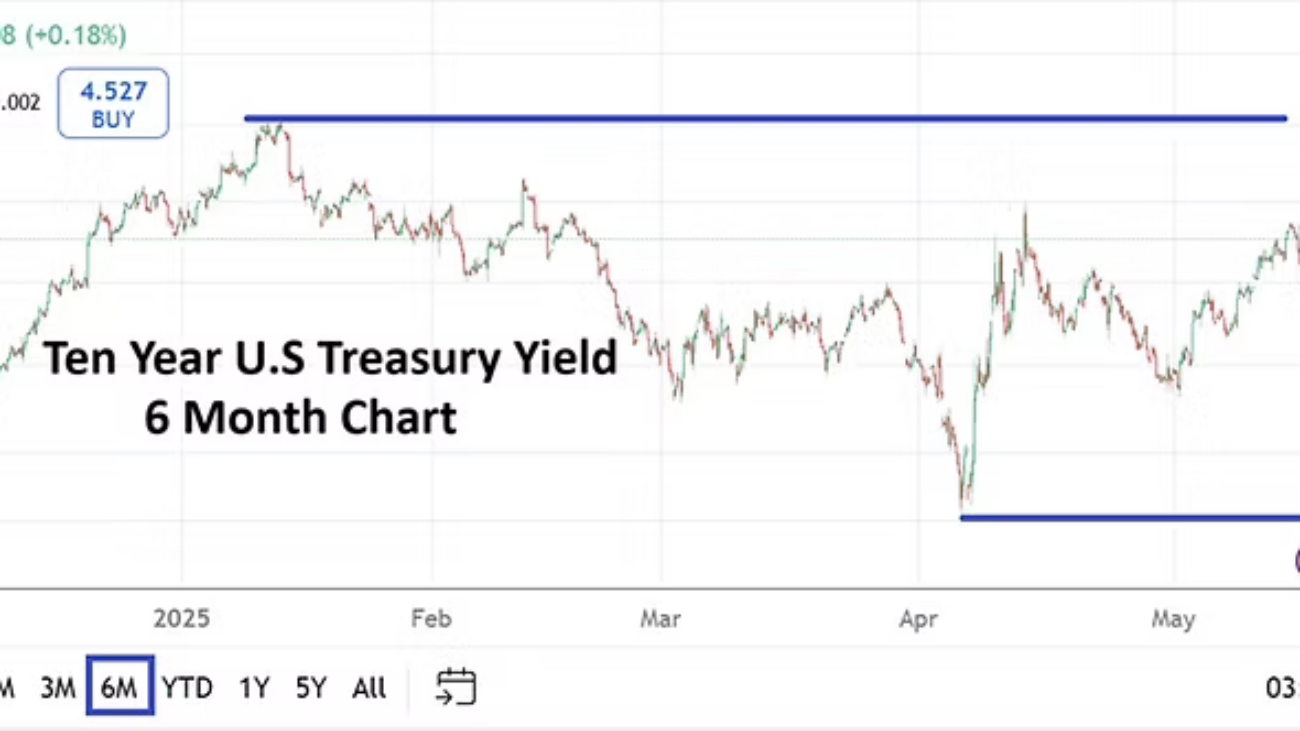
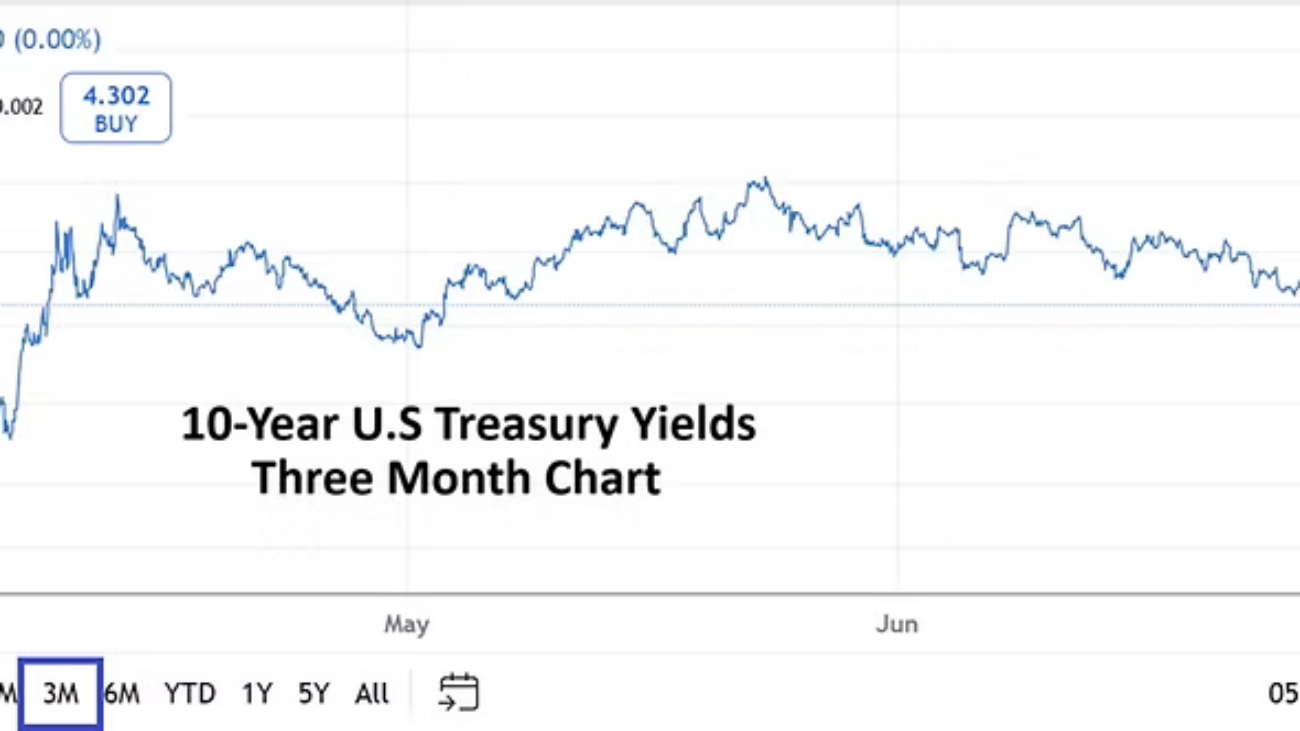
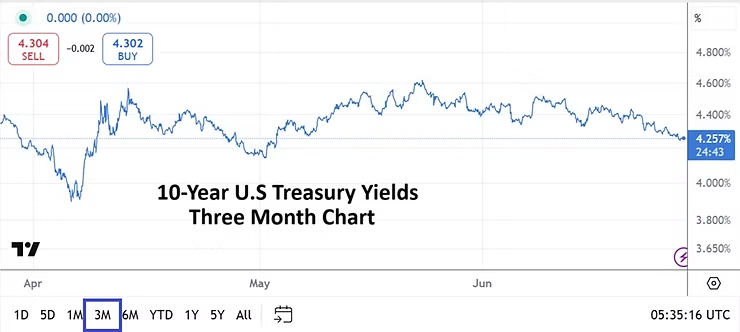
10-Year U.S Treasury Yields Three Month Chart as of 27th June 2025

Although Powell may not be a fan of President Trump, the Fed Chairman and the FOMC has the ability to be more nimble in this era. Instead of being passive about interest rates, the Fed could have lowered borrowing costs and helped spur on the U.S economy months ago instead of watching GDP numbers falter.

For all of the consternation regarding potential tariff pratfalls, the effect from President Trump’s policies have not caused massive inflation. The Fed can begin cutting rates even before the next FOMC meeting in late July, but they will not. In fact, the Fed should now cut the Federal Funds Rate by 0.50% in late July, but again they won’t. We will be lucky to get a 25 point basis cut.

The Federal Reserve remains too passive and acts as if it doesn’t have data technology which can be more proactive. Instead, Fed Chairman Powell chooses to act as if cutting the Fed Funds Rate is an academic exercise and can be done via a polite semester like manner akin to a report card. Dangerously, the U.S is paying an exorbitant amount of interest on long-term Treasuries and short-term Notes. Lower borrowing costs would also help U.S consumers. Jerome Powell doesn’t seem to care about these factors, which raises the consideration regarding his loyalties.

U.S Dollar Index Five Year Chart as of 27th June 2025

In recent weeks there have been at least two FOMC members who have suggested that interest rates need to be cut sooner rather than later. And there are some financial institutions who are clamoring for aggressive interest rate cuts throughout the calendar year and into 2026 in order to jumpstart the U.S economy, this includes Goldman Sachs and UBS. Signs of evidence that interest rate cuts will develop can be seen in the 10-Year Treasury yields which have been eroding recently. Some may claim this is a false narrative and that it is merely risk premium starting to be discounted. Nevertheless yields have lowered in the past month.

Yes, President Trump speaks loudly and delivers brawling negotiations. July 9th is another deadline for tariff agreements. However, financial institutions and many governments have learned to cope with President Trump’s backstreet tactics, which academics like Jerome Powell are not fond of particularly. U.S stock markets are hovering near highs, but still cautious because they are waiting on impetus from the Federal Reserve.

If the Fed fails to deliver an impactful FOMC Statement in late July this will not be greeted well by investors. Many believe the Fed needs to react, and it is quite apparent the S&P 500, Nasdaq 100 and even the Dow 30 are positioning for gates to be opened allowing for a bullish stampede. The USD has been weaker too the past few months as large commercial players anticipate lower U.S borrowing costs. The time for the Fed and Chairman Powell to act is now, making it clear that cuts to the Federal Funds Rate are coming.

post252

No Chance of a Nimble U.S Fed as Entitled Investors Served

No Chance of a Nimble U.S Fed as Entitled Investors Served

On Wednesday of this week Consumer Price Index numbers will be published, followed by Producer Price Index data on Thursday. Inflation statistics from the U.S for several months have been coming in rather tame and sometimes below forecasted results. Fed Chairman Powell and his team of FOMC members continue to plead uncertainty as the main reason for a lack of Federal Fund Rate cuts because of tariff concerns. The next meeting by the Fed finishes on Wednesday the 18th of June.

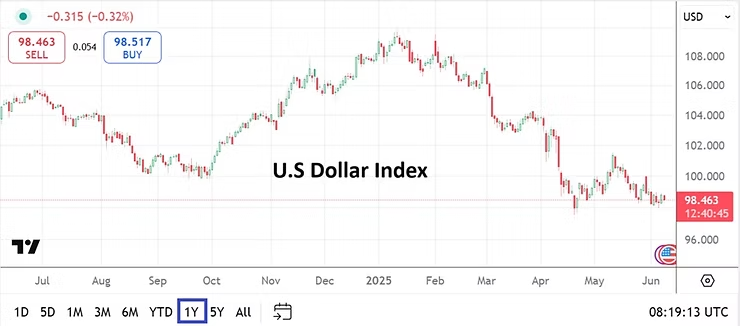
U.S Dollar Index One Year Chart as of 9th June 2025

Even if the inflation numbers come in as anticipated in the next few days, the Federal Reserve is unlikely to cut interest rates next week. President Trump and some in his cabinet have spoken about the need for rate cuts. Not only would it help consumers via mortgage rates, borrowing costs to buy autos and other high ticket items, but it would help the U.S government pay less on interest rate expenditures generated by inflamed Treasury yields.

The Fed continues to stay passive about its outlook, but if inflation data via the CPI and PPI are near forecasts this week, why would the U.S central bank continue to take such a stubborn stance? Interest rate decisions are not supposed to be political. The Fed has pointed to the potential of sudden inflation occurring due to tariff implications. This is a genuine concern. However, why can’t the Federal Reserve be more nimble? Inflation has not shown signs of immediate upwards pressure.

Perhaps it is because the Fed serves large U.S and foreign financial institutions, and has gotten into the habit of telling important folks not only what it anticipates, but handing out its interest rate plans on a silver platter so large players can position themselves beforehand like entitled elites. The Fed is very unlikely to cut interest rates the middle of next week, but it is probable they will open the door to a 25 basis point cut in July. However, July’s meeting is scheduled for the end of that month, in essence this is the middle of the summer, which is a long time to wait for action.

Day traders hoping to ride the trends that flow through the marketplace as they pursue speculative wagers remain in a difficult spot. Intraday volatility remains dangerous. Mid-term outlooks are certainly taking hold in Forex and equity indices, but sudden reversals for those using too much leverage continues to cause harm. Short-term speculators need to remain patient and vigilant, it is important to remember day traders are seen as second class citizens in the big scheme of the financial world, and this is not going to change for the moment.

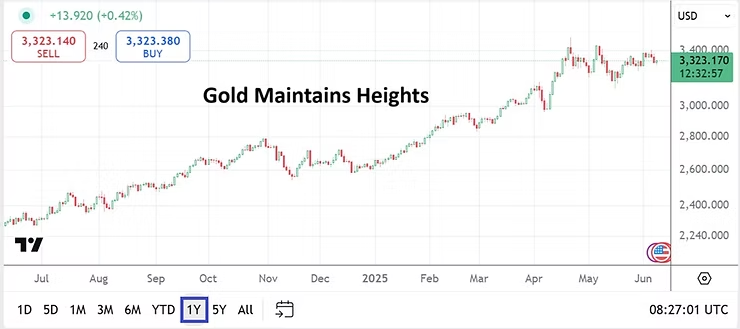
Gold One Year Chart as of 9th June 2025

A lack of clarity has spooked large players in the financial markets the past handful of months, but it does appear many institutions are becoming more comfortable. Though not at all-time highs, the major stock indices are within sight of important values. Behavioral sentiment seems to be leaning into a more positive outlook. Large investors appear to have concluded that while President Trump talks a tough game and often presents a strong stance, that ultimately he allows for tactical maneuvering to achieve deals. Trump is not big on being polite and this occasionally inflames markets. Bullish sentiment is growing on the hope President Trump’s characteristics are understood.

The Fed and the White House are likely to continue locking horns for the next few weeks. Perhaps if Jerome Powell tries to placate Donald Trump with a solid hint of an interest rate cut in July this will smooth things over. However, waiting for an interest rate cut in late July seems like a road too far, particularly when inflation levels the past couple of months avail the U.S economy to proactive actions from a Federal Reserve now.

Let’s remember, there is no law that says the Fed cannot cut or raise interest rates only during the conclusion of FOMC meetings. The U.S central bank has the ability to make changes to the Federal Funds Rate whenever it deems needed. Yet, the Fed refuses to be nimble in an age when technology allows data to be attained faster, this is a detriment.

The inability of the Fed to show it can be agile is another reason why investors are nervous about U.S policy regarding fiscal matters. The U.S government’s bureaucracy is too slow and bloated. The U.S is still a golden place to invest, but it is becoming problematic and this is leading to changes which effect long-term financial decisions.

post244

High Level Antics as Trump Battles Institutions over Economy

High Level Antics as Trump Battles Institutions over Economy

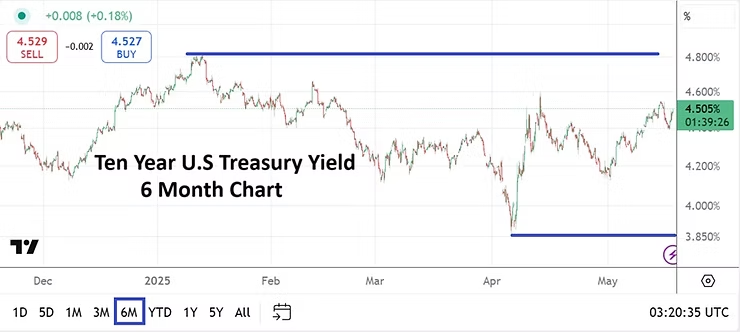
Late last week Moody’s downgraded U.S debt, and the 10 Year Treasury yields as of this morning are near 4.50%. Yet, the Chicago Volatility Index is around the 17.25 level which is actually a small victory and shows that sentiment has improved quite a bit the past month. Let’s remember the VIX was near 60.50 in early April.

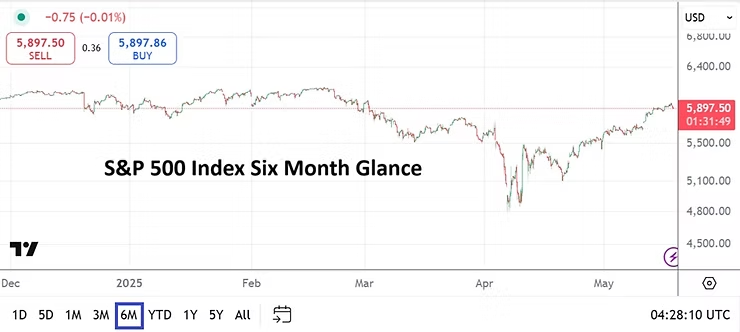
Wall Street had a handful of rather positive trading days too last week. Complexity remains a fixture for investors as they navigate their sentiment which is being generated by a rather stormy mix of perceptions. Day traders continue to face a tough betting environment via trends. The S&P 500 and other stock indices are showing signs of life, but how will they react to the Moody’s downgrade with a full weekend of consideration?

10 Year U.S Treasury Yields Six Month Chart as of 19 May 2025

Last week’s U.S inflation numbers via CPI and PPI were weaker than expected, which raises the curious and obvious question as to why the Federal Reserve remains overtly cautious and refuses to cut the Federal Funds Rate by 0.25% basis points? Short-term traders still have difficult days ahead and those anticipating a fast and powerful bullish run in equities among the bigger indices need to remain vigilant. Sustained higher price action has likely not arrived quite yet for overly optimistic endeavors.

S&P 500 Six Month Chart as of 19 May 2025

Let there be no doubt that there is a coming collision between the U.S White House and the Federal Reserve. The high level of yields the U.S Treasuries are accountable for are unsustainable and costly for the economy. President Trump will be in no mood for polite conversation with Fed Chairman Jerome Powell. Now that Trump is back from his Middle East trip he will likely turn his attention to the U.S debt downgrade and blame not only his predecessor in the White House but Powell too. Treasury Secretary Scott Bessent will likely address monetary policy too in the coming days.

The lower costs of WTI Crude Oil seen the past few months is helping fight inflation. As of this morning $61.70 is the vicinity for early trading. The price of energy appears to be within a solid lower range and likely has little ability to raise significantly. If the price of WTI remains under 70.00 USD this will help global inflation remain rather polite.

But this doesn’t take away from the threat of tariff pressures which do remain unknown. However, it can be argued the Federal Reserve is being far too cautious in the interim. Yes, the U.S central bank faces uncertain economic forecasts because of the potential of U.S tariffs hitting manufacturing and consumer prices, but there is a chance also the Trump administration will actually achieve better than anticipated trade agreements.

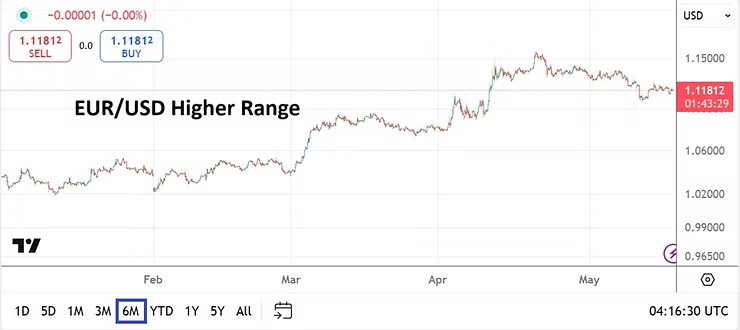
EUR/USD Six Month Chart as of 19 May 2025

Gold as of this morning is slightly above $3,200.00 per ounce, which shows that speculators and investors have backed away from the buying power the precious metal created in the third week of April when the $3,500.00 price was challenged. The USD remains in a dog fight against major currencies in Forex as financial institutions look for equilibrium and try to decide if they should gamble on the Fed cutting interest rates in July. The USD has lost value since early April and remains in weaker mid-term territory. However, the EUR/USD has given back a lot of its gains made throughout April, but financial institutions may now look at current levels as viable support and become buyers again.

Day traders remain in a difficult spot. Wagering on daily market gyrations via interpretations of behavioral sentiment is sensible, but the problem is the quickly shifting winds that still remain a danger. Folks participating in the markets should use the 10 Year U.S Treasury yields as a barometer. Having fallen to lows below 4.00% in the first week of April, investors are again demanding more incentives to buy U.S debt, highlighting murky mid-term outlooks.

U.S Manufacturing PMI numbers will be released this week on Thursday, but this will not influence the markets too much. Instead investors will keep their eyes on the White House as media focus turns from Middle East politics to U.S economic policy. While there have been ‘green shoots’ emerging in the SP500, Nasdaq100 and Dow30, traders should keep their leverage at conservative levels if they merely intend on making short-term wagers.

post235

Predicting the Federal Reserve and President Trump’s Rhetoric

Predicting the Federal Reserve and President Trump's Rhetoric

Financial institutions have grown accustomed to the rather fierce rhetoric from President Trump in the early days of his second term. Financial institutions have also become quite used to the recent overly cautious statements from the Federal Reserve. This Wednesday the Fed’s FOMC Statement will be delivered and there will be no change to the Federal Funds Rate. The current ‘main’ borrowing rate offered by the Fed is 4.50%.

US Dollar Index Five Year Chart as of 18th March 2025

This Wednesday Fed Chairman Jerome Powell will speak about the recent CPI and PPI numbers which came in below expectations. This typically would be a good signal regarding weaker inflation. And Powell might also mention that energy prices in the U.S have started to erode. WTI Crude Oil is now trading in a sustained manner below the 70.00 USD threshold, and this will influence the potential of less inflation. It is a good development for the U.S and Federal Reserve.

However, Powell is unlikely to express the unease and anxiousness the Federal Reserve has regarding President Trump, this because the Fed certainly doesn’t want to get into an open confrontation with the White House.

The U.S Treasury is now being run Scott Bessent who was selected by President Trump. Bessent ran the Key Square Group and is well respected in financial circles, which includes vast experience in top financial institutions. Powell though perceived as pragmatic by many analysts, may not be within President Trump’s trusted inner circle like Bessent and Commerce Secretary Howard Lutnick, the former Chairman and CEO of Cantor Fitzgerald. Lutnick is perceived as a workhorse who get things done and is smart.

The Fed’s likely cautious FOMC Statement will not be enough to appease President Trump this week. While some may think Trump’s attention will be elsewhere, those who have come to understand Trump know his capability to react quickly to events should be taken seriously.

What will Bessent and Lutnick think about the Fed’s FOMC Statement and stance? Powell is not a trained economist, do Bessent and Lutnick trust Powell? One thing for certain is that Janet Yellen who served as the Fed Chairwoman before Powell, and the Treasury Secretary before Bessent is not part of the inner circle in the White House.

Powell’s loyalties may be questioned, and eyes should be kept on Trump later this week to see how the President responds to the rather cautious Federal Reserve. The Fed will certainly not want to say aloud it is waiting like everyone else regarding the effects of tariff negotiations and their implications. Powell wants to keep his job. Trump certainly wants lower interest rates. Bessent and Lutnick certainly want lower interest rates too, but like Powell these two may prove pragmatic and know inflation needs to erode further. The Treasury and Commerce secretaries may want to test chicken and egg questions. Will these two gentlemen push Trump to proactively push for lower interest rates in a louder fashion?

Day traders will have to wait to see how financial institutions react to tomorrow’s FOMC Statement – which has already been accepted as being a ‘no interest rate cut event’. And it is probably being discussed in the White House that the Fed may want to wait until early this summer – June? – to consider another interest rate cut. Which means the Fed may not be cutting interest rates mid-term, while the ECB and BoE may have to be more dovish and remain active via interest rate cuts if their economies continue to show recessionary trends.

Meaning that risk premium which was factored into the stronger USD centric buying since the Trump election on the 5th of November until the peaks in mid-January and early February, and have now reversed lower – needs to be watched technically and weighed in combination with behavioral sentiment.

Intriguingly the US Dollar Index is around levels it stood at on the 5th of November (Election Day 2024). It is also near values seen on the 15th of October. (Did financial institutions start to bet on a stronger USD around this time because of a more cautious Fed outlook and the potential Trump was going to win the election?) Raising the question, if financial institutions envision the USD can technically be weaker and attain values seen in late September and early October when the US Dollar Index was testing support levels which have held since April of 2022. The US Cash Index which stands around the 103.070 level now, was trading near 90.00 in the spring of 2021.

Trump wants lower interest rates, the Fed wants to wait on cutting the Federal Funds Rate until they have clarity regarding the results of tariff negotiations. There will be a collision between Jerome Powell and Donald Trump, the only question is when it will happen. The US Dollar Index has been lower historically. Trump, Bessent and Lutnick may not want to say it out loud, but a weaker USD in the global economy would help U.S exporters. A weaker USD may not convey the strong populist rhetoric of MAGA, but it may be economic hardware the Trump administration actually seeks. To sustain a weaker USD, inflation levels will have to erode, and interest rates will have to be lower (and another myriad of complex events have to happen), until then rhetoric and risk premium will factor into USD Forex trading for financial institutions and speculators.

postR196

AMT Top Ten Miscellaneous Items on the 21st September 2024

AMT Top Ten Miscellaneous Items on the 21st September 2024

10. Shohei Ohtani: The slugger hit another home run last night bringing his total to 52 for the season. There is more than a week of regular season action remaining. Incredibly, if Ohtani pitches next season while also hitting, his current statistics could be outshined. The Dodgers pitching staff is in tatters as the MLB playoffs approach, and it has been opined that Ohtani could pitch in the postseason. However, this option is highly unlikely. Ohtani is an outstanding athlete and has surpassed many expectations.

9. Beep, Beep: The purchasing of technology, including their production and logistics sources are likely coming into question in many diverse places around the globe. The detonation of pagers and walkie talkies used by the terrorist group Hezbollah which is largely based in Lebanon has certainly created panic about vulnerabilities. Contemplation in many nations regarding the buying of equipment that could be prone to spyware and other harmful acts is a reality.

8. Michael J. Saylor: MicroStrategy led by its Executive Chairman has added to their Bitcoin holdings. MicroStrategy is reported to have around 252,220 Bitcoins. The current value of BTC/USD is around 63,000 as of this writing. Part of Saylor’s love for Bitcoin rests in his belief that value is due to scarcity, and secure durability as a store of value technologically. However, each Bitcoin holds 100 million Satoshis, the units each Bitcoin is divided by digitally as source code. Even if conservatively there are only 15 million Bitcoin in circulation in ten years time, 15 million times 100 million is 1.5e + 15, meaning more than a quadrillion Satoshis in circulation. That is not scarcity, particularly when quantum computers could create lightning quick digital trading via coding sources. The premise and concern for a major devaluation in Bitcoin is legitimate. Do you disagree?

7: Equity: Intel has apparently been made a sales offer by Qualcomm. Intel’s market cap is 93.19 billion USD, and Qualcomm’s is 188.18 billion USD. The biggest shareholders of Intel are Vanguard, Blackrock and State Street, interestingly enough Qualcomm’s three biggest shareholders are identical. So if the largest shareholders are practically alike, it comes down to a management question, can Qualcomm run Intel better?

6. Closer: The U.S election will be in a little over six weeks times. The race for the White House according to many polls is very close and the outcome will depend on important swing States. There is still enough time for Harris and Trump to pick up votes, but also enough time for each to unwittingly make an error which can cost votes. Not only is the White House up for grabs, but the House and Senate are at stake too for the Democrats and Republicans.

5. Europe’s ability to put on blinders as the Ukraine and Russia battle in a not so distant land, and bickering between E.U nations while finding no solutions for the conflict have many historical comparisons within the continent. The ability to look the other way as chaos grows and inflicts harm on neighbors has a long tradition in Europe. Since the Middle Ages into the present Europe has a significant track record of negotiating harmony and procuring tenuous treaties, which eventually lead to additional discord.

4. USD/JPY: The currency pair closed at nearly 143.850 yesterday. Analysts are trying to create narratives regarding the climb higher the past handful of days, this after the USD/JPY touched the 139.600 level approximately last Monday. Here’s the thing: financial institutions that trade the Japanese Yen had positioned for a more dovish Federal Reserve and more hawkish BoJ. The Fed delivered their end of the bargain on Wednesday, confirming actions which had already been factored into the currency pair. The USD/JPY ‘correction’ higher is within equilibrium that financial institutions have to recalibrate as they make their new mid-term outlooks and decide how to shift their cash forward positions incrementally. The move higher has not been massive and is a natural reaction as large players rearrange their commercial paper. Incremental is the key word.

3. Energy Calm: WTI Crude Oil and Brent Oil continue to trade slightly above their lower price realms, which saw long-term values in the second week of September tested. Current ratios are still flirting with technical considerations seen in the late spring of 2023. While hyperbole is communicated far and wide regarding potential Black Swan events in the Middle East which could cause Crude Oil to increase rapidly, the energy resources remain rather tranquil and seemingly transfixed on concerns about mid-term demand globally due to recessionary pressures.

2. All-Time Highs: Gold created new record values going into this weekend near 2,622.00. In September of 2022, gold was trading near 1,600.00 USD per ounce. The move higher in the precious metal has come on the heels of global inflation. Some also correctly point to a distrust of global central banks and fiscal concerns regarding the world’s largest economies. The bullish run upwards in gold has been significant and the commodity will remain an important store of value for investors. Speculatively, some short and mid-term traders are wondering about gold’s ability to maintain a trajectory skywards and if sideways price action and possible downturns will ensue for a while. Long-term investors remain serene.

1. Applause: The Federal Reserve issued an aggressive interest rate cut of 0.50%. The Fed seemingly is acting as if they are trying to please financial institutions because of past incompetence. The U.S central bank now needs economic data to behave according to their prescribed outlooks. What could go wrong? Another Federal Funds Rate cut is likely in November, after that a lot will depend on behavioral sentiment and data which may be affected by as of yet unknown leadership from the White House starting in early 2025. Fed Chairman Jerome Powell sounded almost too optimistic about the U.S economy during his Press Conference this past Wednesday. The U.S Final GDP numbers coming this Thursday will prove interesting, the growth numbers carry an expected gain of 2.9%.

postR172.1

Risks: Powell and Inflation Data will Generate Market Reactions

Risks: Powell and Inflation Data will Generate Market Reactions

Traders returning to their desks after a long holiday weekend can see the USD has become weaker the past couple of sessions as behavioral sentiment has shown signs of shifting again. Yet the trends experienced in Forex have not been clear cut, this as questions and concerns regarding what governments and central banks are thinking remains problematic. Investors who take a long-term approach to the markets will likely have an easier time in the coming days because their comfort levels are set to different metrics compared to large traders and the retail crowd. Noise doesn’t effect investors as much as traders.

Politics clearly remain on the minds of many as President Joe Biden has his ability to effectively lead the U.S questioned with growing doubts. However, it is unlikely that there will be a change in the immediate future from the Democrats as they decide on a path regarding their nominee for the November Presidential election. Financial institutions would certainly react to a decision to eliminate Biden as a candidate, but the President remains steadfast that he will move forward. It is very conceivable that Biden may be forced to vacate against his wishes, but until then the broad markets will not react too much to worries about the White House. For the moment U.S politics remain hyperbole.

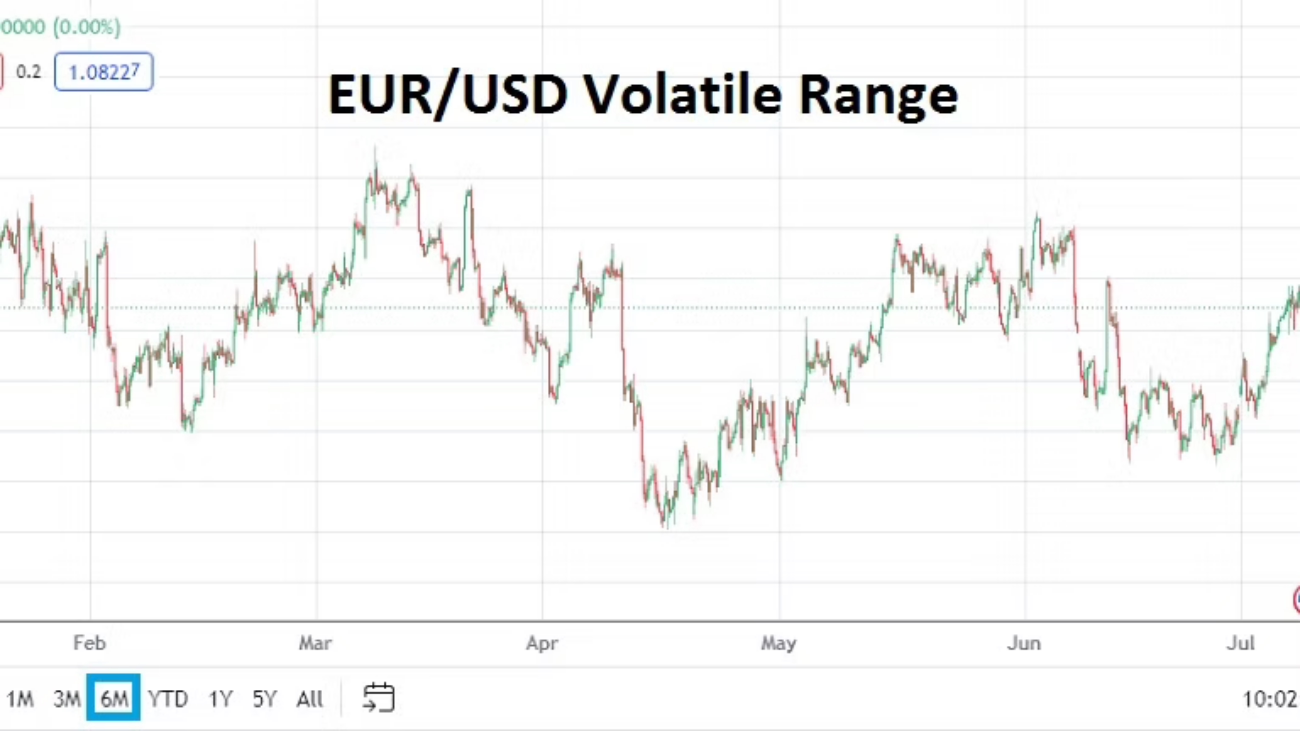
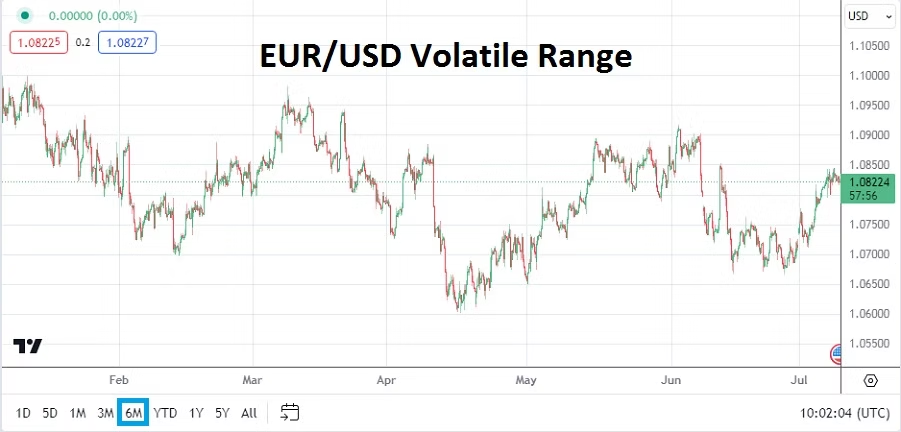
EUR/USD Six Month Chart on the 9th of July 2024

France held its Parliamentary second round elections on Sunday, and while the votes have been counted, the results in many ways are not yet clear. Coalitions are being rumored and EUR/USD traders may react to the developments and within French bonds, but the murky political conditions within Paris remain hard to predict regarding outcome as a whirlwind of deal making takes place in an assortment of offices.

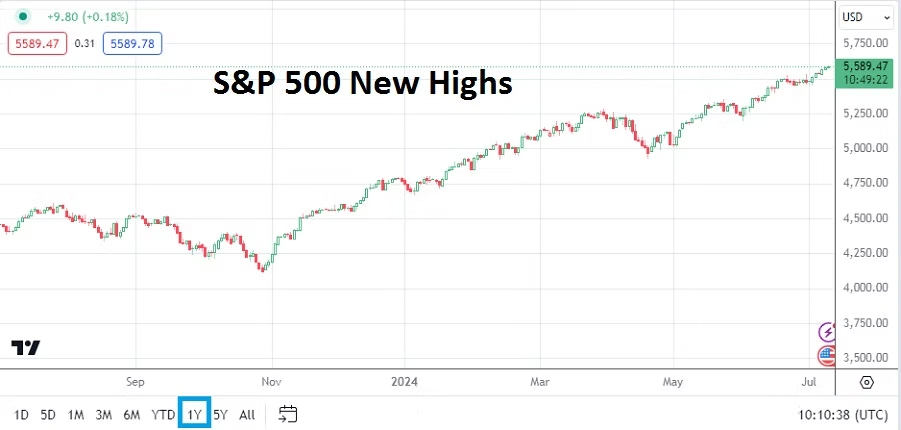
S&P 500 One Year Chart on the 9th of July 2024

The lack of total volume last week in Forex and equity indices did not stop trends from being seen and technical perceptions being formed. U.S stocks remain highly valued and U.S Treasury yields have produced a downwards slope.

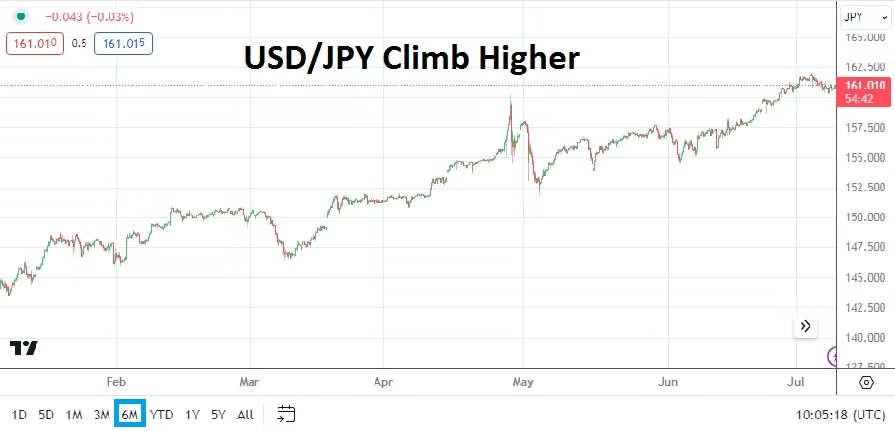
USD/JPY Six Month Chart on the 9th of July 2024

Today will prove interesting as Jerome Powell and Janet Yellen speak in Washington D.C, later this week inflation data will certainly cause a stir. While Biden remains a concern, France tries to form a working government, and the Bank of Japan is being viewed with deep suspicion, day traders have reasons to monitor news, but they should also remember financial institutions have been positioning for potential sentiment shifts and may not react with volatility if their outlooks are confirmed.

This week of trading is laden with risk events, some of which are listed below, but speculators need to understand behavioral sentiment is showing signs of optimism within many financial assets, and the prevailing mood of financial institutions appears to be leaning towards risk appetite.

Monday, 8th of July, Japan Average Cash Earnings – real wages continued to fall via data reported yesterday. The USD/JPY is traversing dangerous heights and speculators are likely still testing their bullish perspectives even as the 161.000 sees values tested above. Traders should stay cautious and not bet wildly on more upside, but lower valued speculative viewpoints are also problematic for the time being. Simply put, beware of the BoJ as it looms in the shadows.

Tuesday, 9th of July, U.S Federal Reserve Chairman Powell – the central bank chief will testify before the Senate. U.S economic data has weakened via Gross Domestic Product, and Manufacturing and Services readings. However, inflation remains troublesome and Powell will have to speak about these issues in conjunction via his Monetary Policy Report. He will certainly try to sound cautious. If Powell hints at a potential rate cut in September this would spark USD selling. At the same time the Fed Chairman is talking, Treasury Secretary Yellen will be speaking to the House Financial Services Committee. Traders can be assured that Powell and Yellen will mirror each other. And Powell will speak to the House on Wednesday.

Wednesday, 10th of July, China CPI and PPI – the Consumer Price Index is expected to have a gain of 0.4%, while the Producer Price Index is anticipating a result of minus -0.8%. Deflation in China is a concern. Economic statistics continue to produce lackluster results, while this a partially due to the collapse of the real estate bubble in China, it also has to do with less demand for products from abroad as Europe and America suffer from economic declines too. The USD/CNY has produced a bullish trend since the start of 2024 and is traversing near 7.2714 as of this writing. Traders should look at the inflation reports and examine them for revisions downward in previous months.

GBP/USD Six Month Chart on the 9th of July 2024

Thursday, 11th of July, U.K Gross Domestic Product – the newly elected Labour government will get their first taste of big economic data challenges as they now guide Britain. A lackluster gain of 0.2% is expected. While this may move the GBP/USD a bit based on the result, the currency pair will likely react more to the U.S inflation data later in the day. The July bounce higher in the GBP/USD has been healthy and value above the 1.28000 has provided bullish traders with some optimism.

Thursday, 11th of July, U.S Consumer Price Index – the core CPI report is projected to match last month’s number of 0.2%. If this result can be attained and the CPI annual data comes in with the anticipated 3.1% mark compared to last month’s figure of 3.3%, this could create dynamic bearish activity for the USD. However, traders should remain cautious and note that even though recent U.S economic data has tumbled, inflation reports have been stubborn. Betting on the outcome of these reports before they are published is akin to gambling for day traders.

Friday, 12th of July, U.S PPI and Preliminary University of Michigan Consumer Sentiment – the Producer Price Index reports are expecting slightly higher ratios. The Consumer Sentiment report should be looked at too, because the readings have been coming in weaker the past handful of months. If consumer behavioral sentiment is weaker the USD could sustain a negative stance.

postN2.1

Impact: Powell’s White Flag, Inflation Data, and the BoJ

Impact: Powell's White Flag, Inflation Data, and the BoJ

Federal Reserve Chairman Jerome Powell’s waving of the ‘white flag’ last Tuesday, when he admitted that inflation was producing stronger than anticipated data had been essentially wagered on since the second week of March by financial institutions. Powell’s speech acknowledging the Fed will find it difficult to cut the Federal Funds Rate in the mid-term (and probably at best not until late this summer) simply verified Forex positions which had already been taken by large players who could afford to make mid-term wagers.

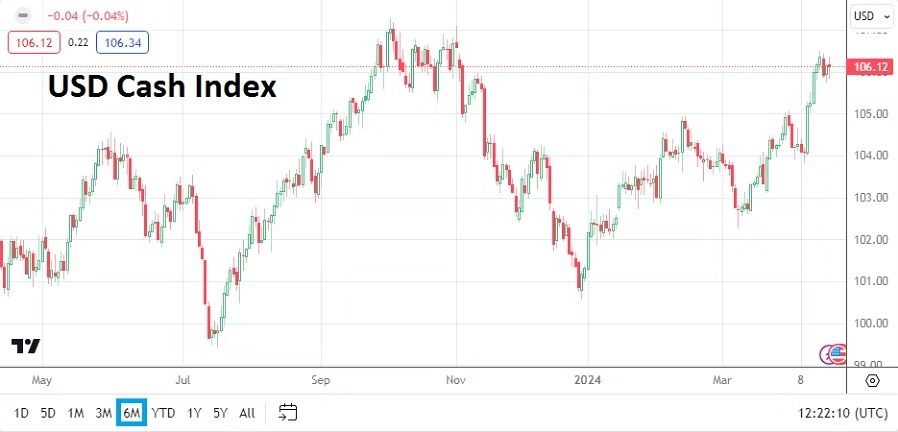
The USD Index has returned to early November 2023 values, and appears able to challenge late September and October prices if inflation data this week causes more volatility, which should put traders of major currencies like the GBP, EUR, JPY and others on full alert. After the USD spiked higher from the 10th to the 12th of April, Forex speculators have seen dynamic action incrementally flirting with stronger USD results the past week and a half.

USD Cash Index Six Month Chart as of 21st April 2024

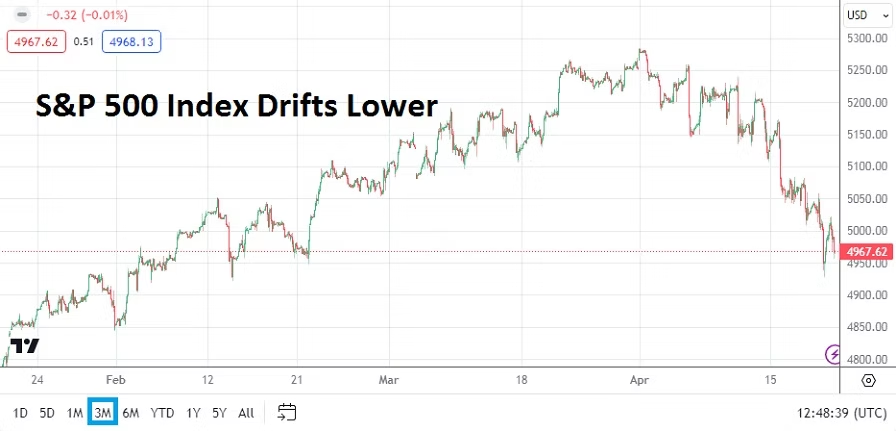
Nervous trading continues to be seen in U.S equity indices. The Dow 30 and the Nasdaq 100 are fighting near ratios they touched in the last week of January. And the S&P 500 is traversing ground from the first week of February.

S&P 500 Three Month Chart as of 21st April 2024

Content

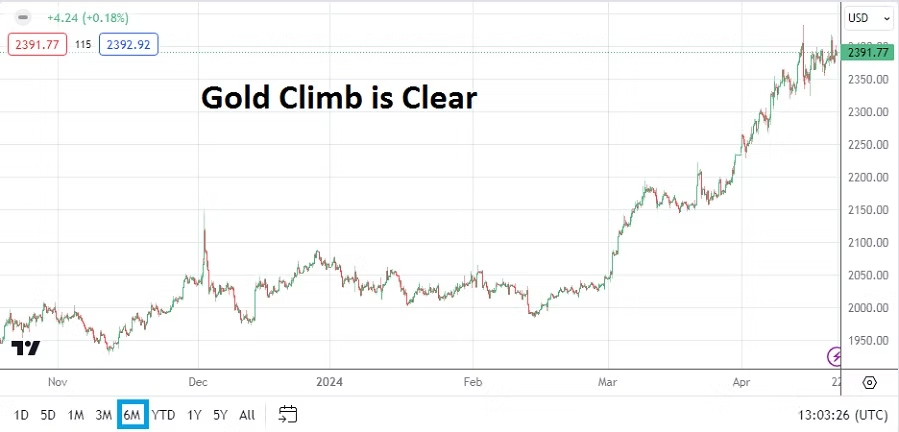
Gold Six Month Chart as of 21st April 2024

Gold remains speculatively high as its hovers near 2,400.00 USD per ounce. The price of the precious metal has not given back its gains made since the start of March and this is intriguing because of the ‘known’ USD inverse correlation, which had proven to work well with the precious metal over the past couple of years but has been stopped in its tracks for the moment. Technically Gold may look overbought, but geopolitical concerns and the prospect that some central banks may be strong buyers could be fueling the rather incremental gains. Retail traders of Gold need to be careful because price action is likely to produce more surprises.

Forex has been turbulent the past handful of months as shifting behavioral sentiment has created choppy conditions. This coming week contains large fundamental risk events via data releases traders should monitor. USD/JPY speculators will also have to contend with the Bank of Japan.

Monday, 22nd of April, China Loan Prime Rates – borrowing costs are anticipated to remain at the current benchmarks. China produced slightly better Gross Domestic Product results last week, but Industrial Production numbers were weaker. Consumers in China remain burdened by decreasing home values and concerns about the economy.

Tuesday, 23rd of April, European Union and U.K Manufacturing and Services PMI – E.U results via the PMI readings are expected to show slight improvements. However the readings from the United Kingdom are anticipated to come in flat. The EUR/USD and GBP/USD will be affected by the results, but the currency pairs will likely remain focused on U.S data later in the day.

Tuesday, 23rd of April, U.S Purchasing Managers Index – the Manufacturing and Services sectors are expected to produce slightly better readings than the previous month. These results will be interesting taking into consideration the Empire State Manufacturing Index numbers last week were bad. The PMI statistics will provide some impetus to the broad Forex market.

Wednesday, 24th of April, Australia Consumer Price Index – inflation data is anticipated to be higher than the previous month’s results. While stronger inflation is not something that will make consumers happy in Australia, stubborn price results may keep the AUD/USD slightly steadier. The currency pair is traversing values last seen in the second week of November 2023 as of this writing.

Thursday, 25th of April, U.S Advance Gross Domestic Product and Price Index – these numbers are certain to have an impact on all financial assets. A decline in growth is anticipated in the U.S compared to the previous month’s result, but the Price Index is expected to show an increase. Jerome Powell having come out last week and said inflation is causing uncertainty within the Federal Reserve, may have a bit of inside knowledge regarding this GDP inflation number and ‘tipped his hand’. If this inflation gauge is higher than anticipated it could pour fuel onto the already volatile USD. All Forex traders need to pay attention to these results and be prepared with solid risk management.

USD/JPY One Year Chart as of 21st April 2024

Friday, 26th of April, Bank of Japan – in what has already proven to be a couple of weeks filled with drama for the USD/JPY, the BoJ will step into the limelight. During their last central bank meeting the Bank of Japan increased the Policy Rate to 0.10%. It was the first time the BoJ hiked interest rates in 17 years. The USD/JPY is trading at values last seen in June of 1990. The Nikkei 225 has come off of recent record heights, but the famed Japanese stock index is also trading within territory seen in January of 1990. Business activity via the Core Machine Orders and the Tertiary Industry data last week were stronger than anticipated.

The Bank of Japan may want to maintain a weaker USD/JPY equilibrium to continue fostering domestic growth. However, many financial analysts have been calling on the BoJ to become more hawkish regarding monetary policy. The interest rate decision is certain to cause immediate volatility before and after the Policy Rate is made public. USD/JPY traders need to be prepared for fireworks. A slight raise of the interest rate seems to be needed, but after the March hike the BoJ may prove conservative again. The 34 year lows now being seen in the Japanese Yen are astonishing.

Friday, 26th of April, U.S Core PCE Price Index, and Inflation Expectations – the data from the government, and the reading from the University of Michigan will close the curtain on a big week of economic statistics for all traders. The USD will react to these outcomes. It should be noted the previous Inflation Expectations data from the University of Michigan caused a storm in Forex when it came with 3.1% gain.

postN78.1

USD and the Fed: Parade of Jobs Data Ready to Make Noise

USD and the Fed: Parade of Jobs Data Ready to Make Noise

U.S data last week created landmines for Forex speculators and the Federal Reserve. Global financial markets return to full action today following the long holiday weekend. Growth and inflation numbers from the States last week provided more unsettling results for financial institutions. While Forex has proven difficult for many traders, the major equity indexes are flirting with highs but also running into some intermittent headwinds.

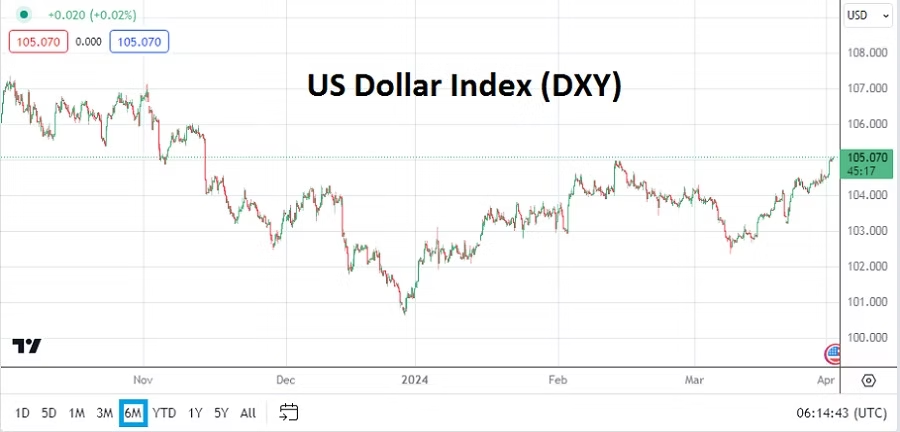
US Dollar Index Six Month Chart as of 2nd April 204

In December of 2023 the Fed was interpreted as having confirmed it would be able to cut the Federal Funds Rate during the 2024 calendar year rather consistently. Dovish policy had been anticipated by financial institutions which began to sell the USD aggressively in November. But by the end of the Christmas week the USD had essentially hit lows in many major currency pairs, and as January started reversals intensified.

The last three months of trading has produced choppy conditions in Forex, but one thing is clear – financial institutions no longer believe the Federal Reserve will be able to aggressively cut the Federal Funds Rate. The Fed has now begun to show signs that it is nervous regarding U.S economic data, this as growth via GDP numbers has remained firm, inflation sticky, and consumers resilient. Clouds shadow Forex and day traders have been hampered by a lack of solid trends.

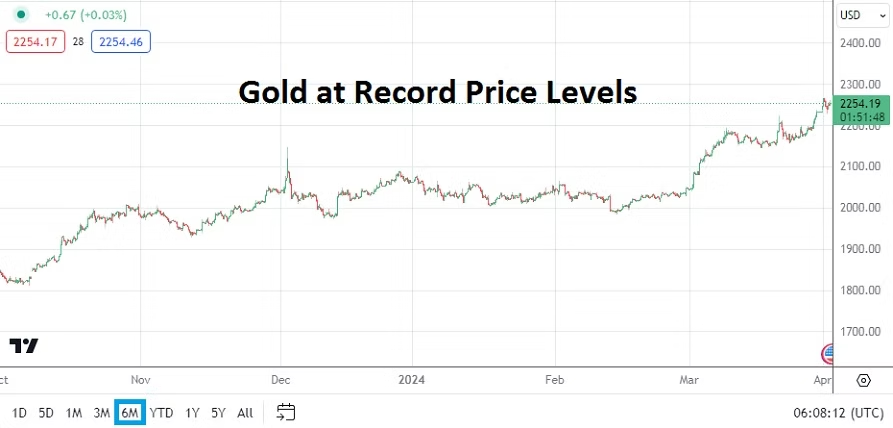
Gold Six Month Chart as of 2nd April 2024

Gold is trading near record price levels. The fact that the precious metal is touching all-time values as the USD has been strong has flustered some speculators. But traders need to remember Gold is affected by large players, including nations, that may be hedging USD bets and preparing for political instability. The price of Gold may underscore belief the U.S Fed will have to cut rates at least a couple of times this year no matter the economic facts on the ground, because this is an election year and if the central bank doesn’t deliver on its ‘promise’ jobs at the Fed may be at stake.

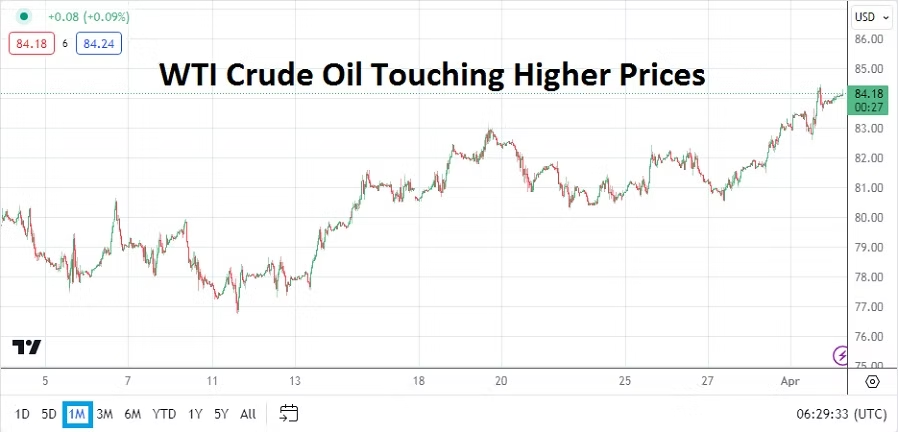
WTI Crude Oil One Month Chart as of 2nd April 2024

Not making anything easier for Federal Reserve policy is the higher price of WTI Crude Oil which has reached the 84.00 USD per barrel price. If energy costs go higher this will not help the fight against inflation. OPEC will be conducting a meeting this week. As an aside the price of Cocoa per metric ton is now over 10,000.00 USD, which is more expensive than Copper. While the price of Cocoa is not a game changer for global financial markets, the higher price will make chocolate more expensive, which some traders may find disagreeable as they try to relax and watch their speculative wagers while trying to nibble on their favorite snack.

Monday, 1st of April, U.S ISM Manufacturing – both the Purchasing Managers Index reading and the Price numbers came in higher than expected. The stronger results show the U.S economy remains better than anticipated by the Federal Reserve, which has been counting on its higher interest rate to slow down growth and inflation.

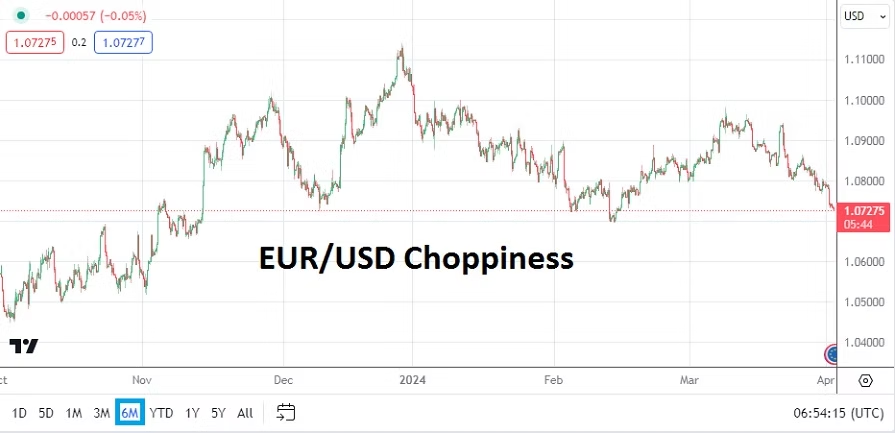
EUR/USD Six Month Chart as of 2nd April 2024

Tuesday, 2nd of April, European Manufacturing PMI – the European Union and Great Britain will release their business readings today. The results will demonstrate insights regarding sentiment. Financial institutions are worried the European Central Bank and Bank of England may have to consider lowering their interest rates before the Federal Reserve. The EUR/USD and GBP/USD will react to the results.

Tuesday, 2nd of April, U.S Federal Reserve FOMC Members – there will be appearances throughout the day in the U.S from various Federal Reserve members who will make the case for their monetary policy outlooks. It should be noted that Jerome Powell will be speaking on Wednesday. The JOLTS Job Openings will come out before the FOMC members speak. While the JOLTS report will not cause earth shattering reactions, the jobs data is the beginning of the parade regarding employment statistics for this week.

Wednesday, 3rd of April, U.S ISM Services PMI – taking into account the Manufacturing report came in stronger than expected on Monday, the Services data will be watched by financial institutions. If this report is better than anticipated, USD sellers will not rest easy. The ADP Non-Farm Employment Change data will also be released on this day.

Thursday, 4th of April, U.S Weekly Unemployment Claims – the Federal Reserve has been counting on employment strength to erode based on their notion that higher interest rates would create ‘lagging’ reactions in the jobs sector. Jerome Powell has said the Fed is anticipating weaker employment data. The results from the weekly report will not be as significant Friday’s data, but should be given attention by day traders in Forex.

Friday, 5th of April, U.S Non-Farm Employment Change and Average Hourly Earnings – the climax for speculators this week will be these jobs numbers from the States. If the numbers produce less hiring than expected this would help USD bearish momentum. Wages will also prove crucial regarding behavioral sentiment for financial institutions. Simply put, the Federal Reserve is anticipating that weaker employment numbers are going to be seen, if this doesn’t happen it might cause major volatility in Forex going into the weekend.