post35.1

Sudden Bullish Momentum of Indian Rupee Raises Questions

Sudden Bullish Momentum of Indian Rupee Raises Questions

The past week of trading within the USD/INR has seen a bullish trend emerge, this while many speculators were likely starting to believe lower price realms and targets were possible.

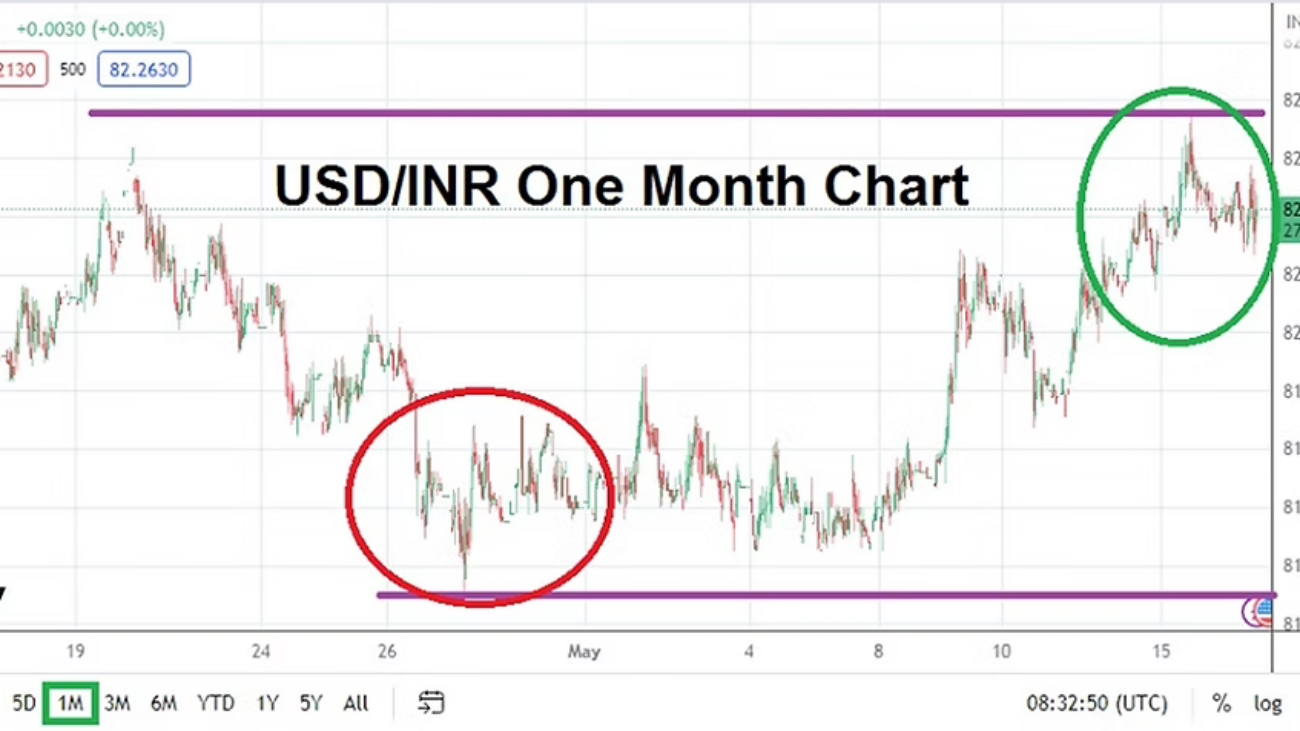
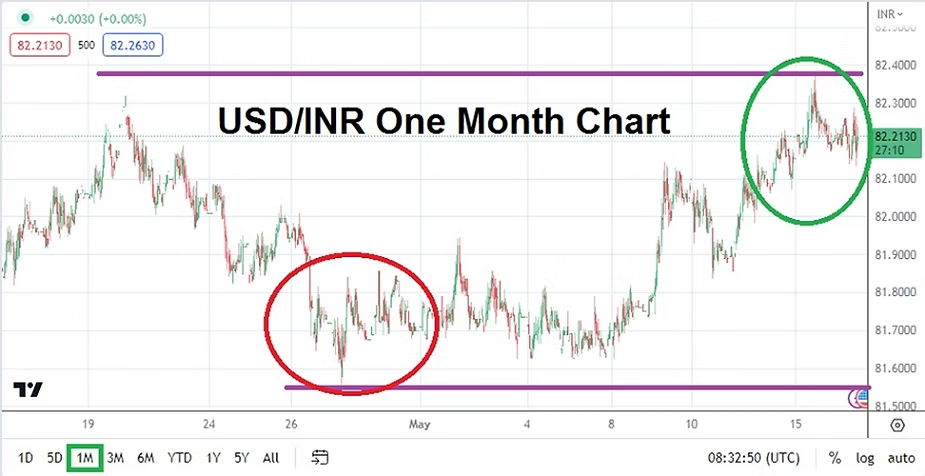
The USD/INR is trading near the 82.2200 mark as of this writing, which is within the higher elements of its one month price range. Volatility within the USD/INR has been abundant the past week and has likely proven expensive for speculators who were pursuing the currency pair with visions of more bearish price action to target. Early May values of the USD/INR certainly tested lows and likely fueled the appeal of selling positions. However, the early May lows within the Forex pair tested the 81.6260 mark, while never actually hitting April’s lowest values which tested the 81.5500 ratio on a couple of occasions.

USD/INR One Month Chart as of 16th May 2023

One of the dangers of trading is always the potential for a sudden change in behavioral sentiment. The lows in the USD/INR seen on the 8th of May, which is only a little bit more than a week ago, highlights the price velocity the currency pair has demonstrated. While many speculators are trying to understand why the sudden shift in dynamics has taken place, it is important to remember the USD/INR was actually trading above its current values in February, March and early April of this year.

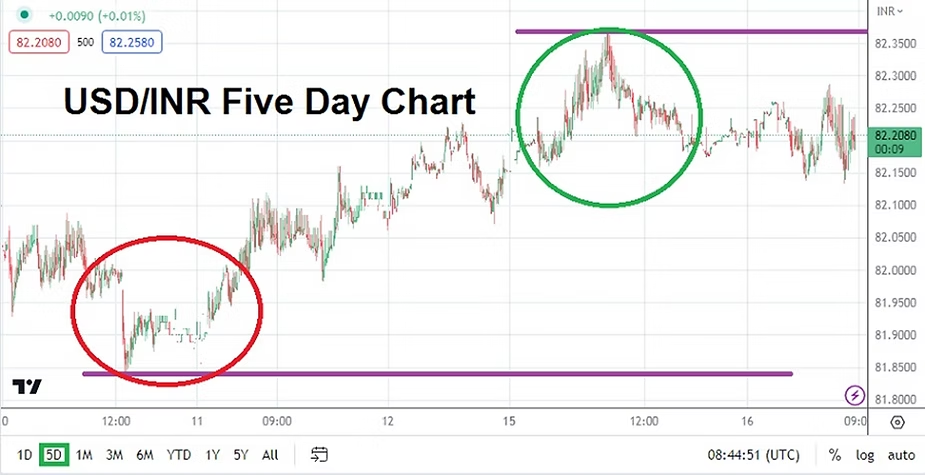
USD/INR Five Day Chart as of 16th of May 2023

The Difference between Day Traders and Financial Institutions

The outlook of speculators within the USD/INR is totally different than financial institutions. This is because most speculators are short and near-term traders. They do not have deep pockets like financial institutions – which can hold the USD/INR in a chosen direction for a long period of time and simply allow the currency pair to trade until they want to cash out of a position. Day traders are also using leverage a lot of the time, and the combination of leverage with limited available trading funds makes the daily gyrations of trading volatile and frequently dangerous.

Short-term traders look at the USD/INR with a technical viewpoint much of the time, financial institutions are likely maneuvering in the Forex pair with fundamental perspectives and inside knowledge based on known transactions they have to accomplish.

Many financial houses believe the U.S Federal Reserve will have to become less aggressive regarding its hawkish interest rate stance it has maintained the past year and a half. However there is enough nervousness within the broad Forex markets to make things very difficult for day traders, this as the potential for risk adverse trading based on economic data results move currency pairs including the USD/INR constantly, particularly if a financial institution needs to react quickly.

The ability of the USD/INR to move downward and hit support depths at the beginning of last week, may indeed be a sign that financial institutions have a belief the currency pair should be lower. However, the recent strength of the USD the past handful of days may have been brought on by the simple notion that financial houses grew momentarily nervous. There is also the possibility that large corporations made transactions in the USD/INR that moved the price higher. Day traders must understand there are forces within the USD/INR that are much stronger than their opinions. The USD/INR is not a widely traded currency pair in the open markets, it is difficult for instance to trade the currency pair in a speculative manner within India and traders in the nation face restrictions, which forces many Indian speculators who want to wager on the USD/INR to seek foreign brokers abroad.

Data and Rumors Can Sometimes be False Flags for USD/INR Traders

Some analysts have claimed the recent move higher in the USD/INR has taken place because of factors like a fear of the U.S debt ceiling not being raised in time and causing chaos in the financial markets, however this if true is likely only a short-term worry. It is very unlikely the U.S government is ‘idiotic’ enough to allow the U.S debt ceiling to not be taken care of within Congress. It would be very problematic for the U.S Federal Reserve and Treasury to have to explain why U.S bonds are suddenly difficult to repay. In other words, the U.S debt ceiling is likely to be taken care of and many financial institutions with a long-term view know this, although it is a possibility they could ‘punish’ the financial markets and act in a risk adverse manner in the short-term.

Data from the U.S yesterday highlighted another important aspect again regarding behavioral sentiment. The U.S Empire State Manufacturing Index reading came in with a negative number of minus -31.8. The expected result was -3.7, the report shows that New York business activity and outlook is worse than forecasted. This doesn’t mean the entire U.S manufacturing sector will have the same results, but it underscores the potential for a U.S recession to possibly occur. Today the U.S will release Retail Sales numbers. If these numbers come in with a negative result this could spur on bearish sentiment within the USD/INR in the near-term, particularly if financial institutions feel the results are more evidence the U.S Federal Reserve will have to pause interest rate hikes in June. USD/INR day traders should be ready for more choppiness. But there is reason to suspect resistance above in the currency pair may start to prove durable from a speculative point of view considering the trading results the past month in the USD/INR.

Traders wishing to pursue the USD/INR need to use solid risk management. Entry price orders will help traders get a ‘fill’ they are expecting and the use of stop loss and take profit tactics are highly encouraged. The past week of trading in the USD/INR has likely tested the nerves of many speculators and the assault on highs is alarming, but downside price action may be ready to reignite if U.S economic data continues to falter in the near-term.

post34

Economic Data and Underlying Factors this Week

Economic Data and Underlying Factors this Week

Monday 15th of May, U.S Empire State Manufacturing – N.Y manufacturing sector report regarding business conditions, which serves as a sentiment reading. A lackluster outcome could put a bit more pressure on the Federal Reserve to lessen their aggressive stance, and certainly point out nervousness among U.S corporations regarding profits.

Monday 15th of May, U.S TIC Long-Term Purchases – report shows results from between domestic and international purchases of U.S Treasuries. While not considered a major data release, this one could give an impetus to investors in U.S banking sector who may find intriguing potential correlations. An increase in the number of domestic purchases compared to international buyers would be of interest. Large dark shadows on the U.S mid and small size banking sector still exists, pressures boil as depositors are still considering parking their money elsewhere, and corporate share values remain fragile.

Tuesday 16th of May, China Industrial Production and Retail Sales – China economic results are a barometer of global health due to the fact the nation is a large supplier of worldwide products. Industrial Production results if they are lagging in China, would indicate decreasing demand and global economic weakness. Retail Sales figures from China is an indicator of consumer sentiment within the nation.

Tuesday 16th of May, U.S Retail Sales – results indicate buying power and confidence among U.S consumers. Underlying numbers also focus on how Americans are spending, in other words – are they paying the full price being asked or are they looking for discounted goods as inflation continues to hit wallets.

Wednesday 17th of May, Japan Preliminary Gross Domestic Product – No real surprises expected from Japan’s growth numbers, but the results are always appealing to economists who debate the nation’s ability to remain among the wealthiest without any truly outstanding GDP numbers produced in years. In other words a lot of noise for traders without much real impact.

WTI Crude Oil – One Month Chart as of 14th May 2023

Wednesday 17th of May, U.S Crude Oil Inventories – another report that seems important for commodities traders, but without any real surprises has limited impact. Many times even among WTI Crude Oil speculators, they are often looking at other data they have gathered like production numbers from OPEC, Mexico and Canada. And also oil tanker movements around the globe.

Thursday 18th of May, Australia Employment Change and Unemployment Rate – outcome from these numbers could factor into AUD/USD momentarily, but without a major surprise will likely have little impact on global speculators for more than a couple of hours.

Thursday 18th of May, U.S Existing Home Sales – housing numbers are under some scrutiny as they reflect behavior of current U.S home owners as they react to growing interest rate pressures on mortgages and stay within their current homes to avoid higher borrowing costs.

post33.1

Spiral Downward of South African Rand as Confidence Weakens

Spiral Downward of South African Rand as Confidence Weakens

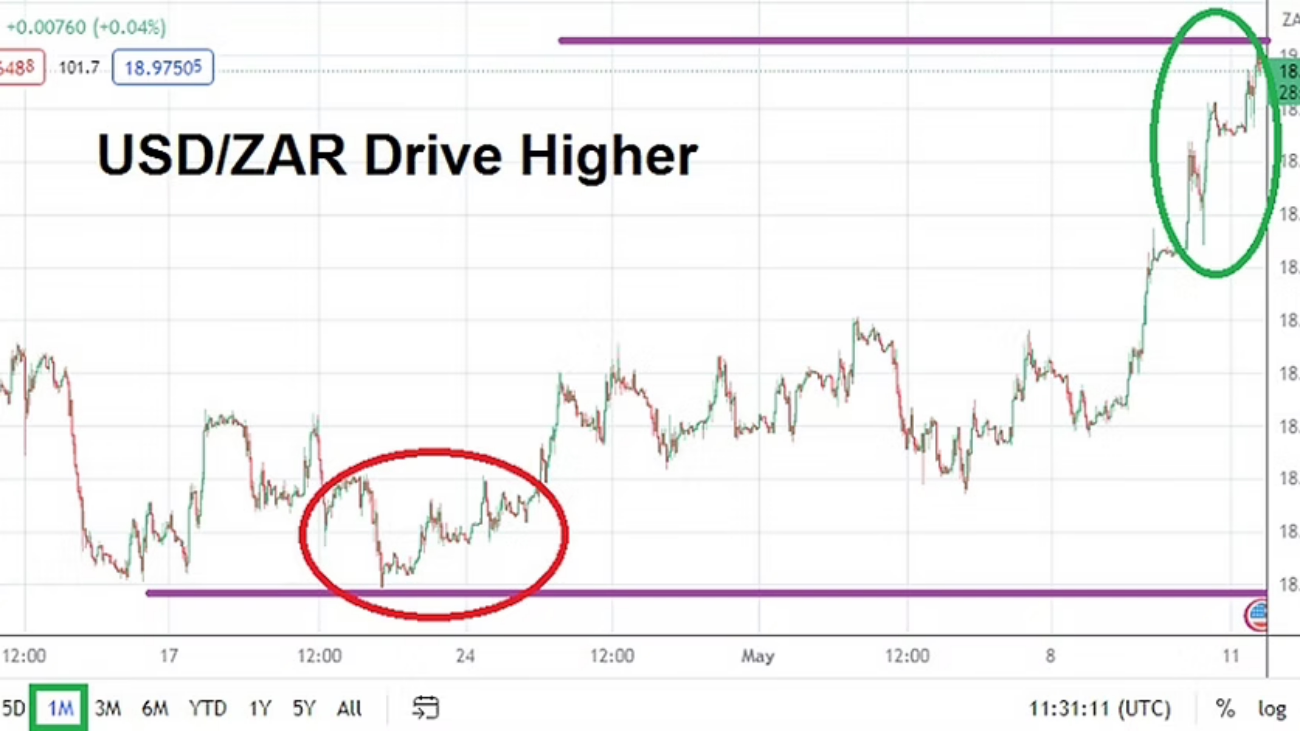
The USD/ZAR has hit a bad milestone today as the bullish trend of the currency pair has toppled the 19.00000 mark momentarily, this as the USD has shown weakness against many other major currencies in the past week because financial institutions are positioning for a more dovish tone from the U.S Federal Reserve as they wager the U.S central bank may pause its interest rate hikes. In other words, the South Africa Rand is trading in the wrong direction.

The USD/ZAR is now languishing near the 19.00000 ratio as behavioral sentiment continues to show signs of nervous exhaustion regarding the perceived political ineptness of the South African government. Nearly one month ago on the 14th of April, the USD/ZAR was slightly below 18.00000.

USD/ZAR One Month Chart as of 11th May 2023

South African Government is Perceived as Corrupt and Ineffective and this Hurts the USD/ZAR

The non-correlation of the USD/ZAR to the broader Forex market is not happening because financial institutions believe in the overall long-term strength of the USD, it is happening because dark shadows loom over the South African Rand. The darkness hovering over the Rand is occurring because of mismanagement within the South African political system, and it’s inability to deliver a reliable electricity supply to citizens and businesses domestically due to a combination of corruption and criminal activity.

The people of South Africa have plenty to be proud of because their country is one of the most beautiful in the world geographically, and it has abundant natural resources. The nation has been a pioneer regarding science and commercial enterprise in the past. However, political opportunism and neglect have led to a quagmire that has muddled the nation’s infrastructure into a nightmarish state. Loadshedding – which is the South Africa government’s term for rolling blackouts, continues to get worse and winter is approaching. Outages of electricity have steadily hit Stage 6 lately with worse loadshedding feared on the horizon. There looks to be little respite coming as electrical stoppages are happening two to three times a day, and communities are going without electrical power for up to four hours during each halt of energy. These rolling blackouts also happen daily, it is not like they are only happening once a week. Businesses of all sizes are being hurt because of a lack of production. Businesses that burn diesel via generators to power their enterprises are suffering financially due to the high costs and a dramatic loss of profits.

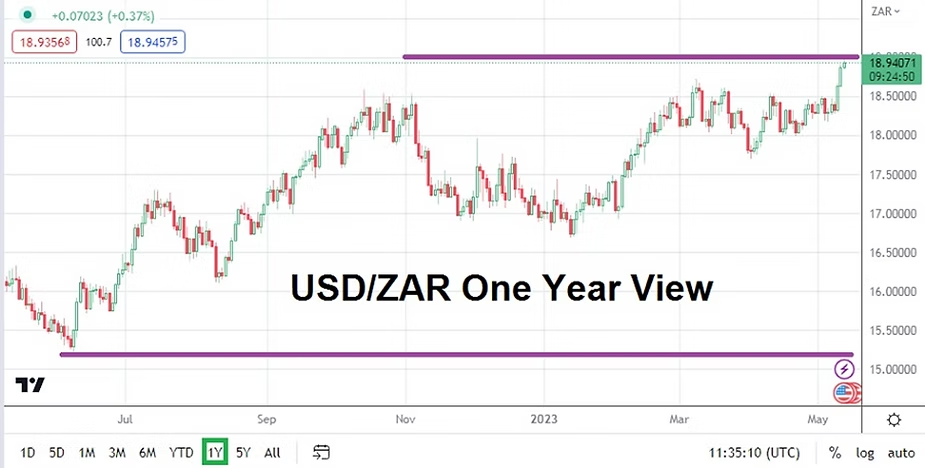
USD/ZAR One Year Chart as of 11th May 2023

Long-Term Outlook is in Question as USD/ZAR suffers from Political Peril

The loss of value in the USD/ZAR has been going on for a long time and no technical charts are inspiring confidence. The South African Rand which used to be considered among the best currencies within developing nations is now compared unfavorably. Mismanagement of the economy within South Africa has led the Rand to be associated to the likes of the Turkish Lira. Financial institutions have little reason to trust the effectiveness and long-term value of the South African Rand until concrete political changes are made, which end alleged corruption and cronyism and that seemingly look blindly on criminal activity within crucial infrastructures.

USD/ZAR Five Year Chart as of 11th May 2023

The South African Rand is not the Argentine Peso in terms of misdeeds and mismanagement, but there is a growing fear that political ineffectiveness, a lack of transparency and a poor reputation are making economic conditions worse. The last and only time the USD/ZAR traded above the 19.00000 level before was at the height of coronavirus. Yes, the value of the USD/ZAR improved from that apex of late March 2020, and the currency pair touched the 13.45000 ratio in late May of 2021. However, nearly two years later the USD/ZAR has returned to a value that shows a supreme lack of confidence exists regarding the outlook for the South Africa economy, this as Gold trades above 2000.00 USD per ounce.

 
post30

Pay Attention to Mid-Size Banking Noise

Pay Attention to Mid-Size Banking Noise

About a week and a half ago the U.S Federal Reserve ‘admitted’ they made a mistake regarding their oversight of Silicon Valley Bank. In essence, the Fed used the sports phrase that sprung to life in the early 2000’s by baseball players who said, “my bad”, as if by admitting when they made a mental error on the field it would soon be forgiven. “What a good guy”, some folks would say as a player took responsibility, but their team would lose the game.

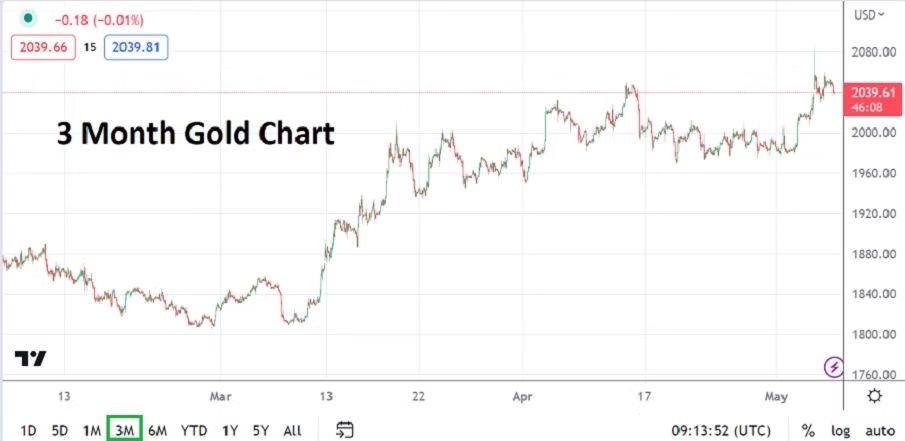
Gold 3 month chart as of 5th May 2023

The question for the Fed is what will they say when other so-called mid-size and smaller banks start to crumble from duress? The Federal Funds Rate was increased again this week by an expected 0.25% and the corporate banking sector in the U.S is under strain. Many banks are seeing share values on Wall Street disappear as they watch their trading screens with alarm.

Let’s not get caught up in hyperbole, or scare mongering, but these banks and the Federal Reserve have simply proven again they have no real grasp regarding risk analysis and what to do when the proverbial ‘fluff’ hits the fan. It is easy to point fingers now, yes, but the writing has been on the wall. It is much easier to make money for a bank when money is cheap. Little to no interest rates allowed banks to be speculative – compared to an environment when the lending rate is high and folks do not borrow, or pay back slowly. Deposits are also dwindling because bonds and other assets have become attractive for ‘clients’ who want to park their money elsewhere to earn better returns. The middle class and lower class are under pressure and small businesses are too as mid-size banks get nervous.

In the FOMC Statement this week which was somehow a unanimous decision – no dissension is a bad sign ladies and gentlemen – the Fed stated “The U.S. banking system is sound and resilient. Tighter credit conditions for households and businesses are likely to weigh on economic activity, hiring, and inflation…..” However, they also pointed out that inflation remains ‘elevated’. And let’s dissect the banking is sound statement, the Federal Reserve did not elaborate. They surely cannot mean the mid-size and smaller banking sector which is losing value almost daily because of struggling corporate share values are sturdy. Financial houses of various types are clearly betting these banks will come under immense weight because interest rates remain high.

Oh, and borrowing costs can still go higher, because let’s face it, inflation is not going away soon. The Fed has helped ramp up inflation by creating ‘import inflation’ as they have ‘killed’ foreign currencies values. If you are a fan of body language watch Fed Chairman Jerome Powell answer questions during the Fed Press Conference from this Wednesday the 3rd of May, when pushed on details regarding the mid-size banking sector and the future of interest rates. He didn’t put his hand up in the air and say, “my bad”, but it would not have been surprising, however it did look like he wanted to walk off of the field. The stadium packed with depositors within mid-sized and smaller banks should be prepared to show their disdain. Middle America should be unwilling to take this loss.

No historical events are exactly similar, but the Fed and its continued ability to put on ‘blinders’ as the corporate mid-size banking sector in the U.S potentially cracks, smells eerily similar to what happened during the financial crisis of 2007 and 2008 when rumors became strong whispers and then turned into a nightmare. Please say hello to the possibility of another massive bailout from the U.S government, because J.P Morgan, BlackRock and other ‘banking’ mammoths do not have enough capital to keep everyone liquid and safe.

Nervous behavioral sentiment is rising its head and looking out over a dangerous landscape. Middle America should be prepared to react to the potential that their neighborhood banks might be in trouble. And the U.S had also better get ready for the very ugly word ‘stagflation’.

post28

Gut Feeling about Fed June Hike, Perhaps Wrong

Gut Feeling about Fed June Hike, Perhaps Wrong

I have a distinct feeling the U.S Federal Reserve is going to suggest via their FOMC Statement tomorrow that another increase of the Federal Funds Rate is likely going to happen in June. I could definitely be wrong, but my gut instinct is rumbling.

Inflation Remains a Sincere Problem Per the Fed’s Thinking

Wage data demonstrated last Friday via U.S Personal Income that inflation remains stronger than expected. Yesterday’s ISM Manufacturing Prices reading also spiked to 53.2 versus the expectation of only 49.4. The increases shown within these economic reports will not please the Federal Reserve.

While a hike tomorrow is nearly a certainty, the Forex market remains rather unimpressed with the potential for an increase on the 14th of June. Behavioral sentiment has shown a rather polite USD actually losing momentum the past few days. Caution has seeped into the USD today, but are financial institutions too relaxed regarding a potential hike by the Fed in June?

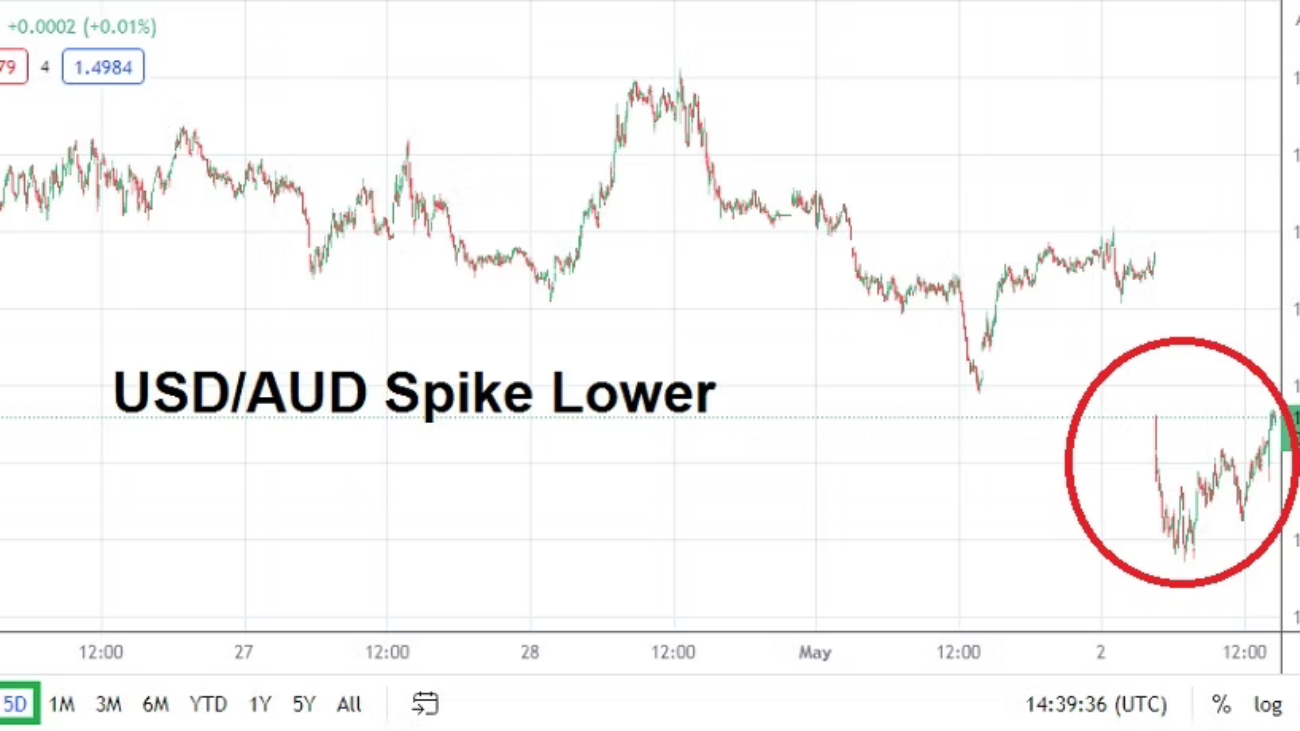
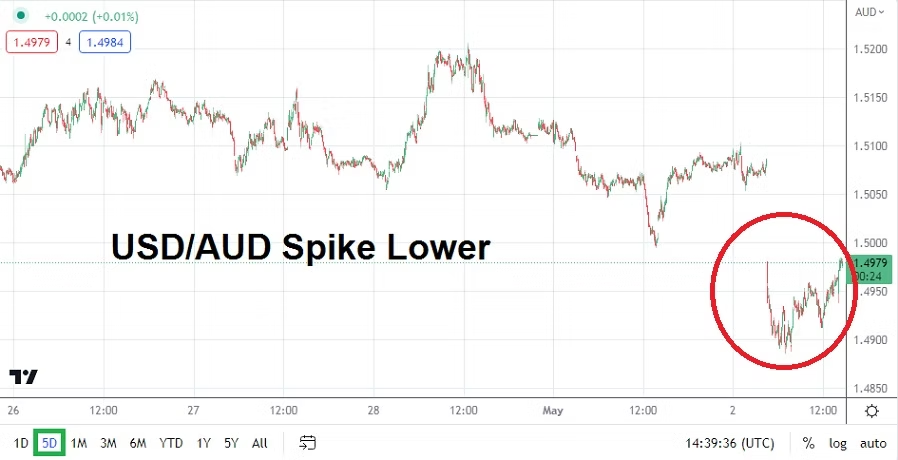
USD/AUD 5 Day Chart as of the 2nd May 2023

Reserve Bank of Australia’s Hike Earlier Today Caught Many Folks Unready

The Reserve Bank of Australia’s hike today, may be another sign the U.S Fed will not only hike tomorrow, but in June as well. What are the chances the Federal Reserve hinted strongly to the RBA, that if they wanted to protect the value of the AUD that an increase would be justified in order to guard against the Fed’s rhetoric to come? The Australian hike caught a lot of financial houses and day traders unprepared as the USD/AUD spiked lower this morning, for proof of the surprise simply look at the gap created downward today on the five day chart of the currency pair.

The RBA hiked their Cash Rate by 0.25% from 3.60% to 3.85% while sighting stubborn inflation as a main cause. Nothing is certain, but if the Federal Reserve’s FOMC Statement is rather strong tomorrow and says it will still consider a June increase perhaps we should not be shocked. Central banks do share information with one another.

Early February’s Rhetoric from the Fed wasn’t Treated Seriously at First Glance

Coincidentally, the Fed’s increase in early February was two days before the Non-Farm Employment Change and Average Hourly Earnings were reported on the 3rd of February. On the 1st of February the Federal Reserve warned that inflation remained stubborn, but the market didn’t take their words too seriously as the USD traded rather politely following the anticipated interest rate hike.

However, the USD gained violently the day after when Fed officials began to reiterate the strong tone from Fed Chairman Jerome Powell from the day before. And then stronger than expected jobs numbers followed on Friday. Note, that the Non-Farm Employment Change and Average Hourly Earnings will be published this coming Friday.

The Federal Reserve remains in a difficult position, a hike tomorrow will bring the Federal Funds Rate up to 5.25%, a June hike may not be welcomed by the broad financial markets, particularly equities in the near-term, but people may want to consider the possibility of it happening. Day traders should brace for strong price velocity developing. Tomorrow’s Forex action will be violent for speculators who are not ready, and if the Fed suggests a potential hike to 5.50% in June perhaps we should not be stunned.

post25.1

Forex, Interest Rates, the Fed and Conspiracy Politics

Forex, Interest Rates, the Fed and Conspiracy Politics

If you have been looking for road signs regarding what the U.S Federal Reserve is going to do next week and trying to get a feel for its rhetoric which will be delivered in the FOMC Statement on the 3rd of May, this week’s U.S data outcomes should be monitored. And as of now the data might be suggesting the Fed will remain aggressive in June.

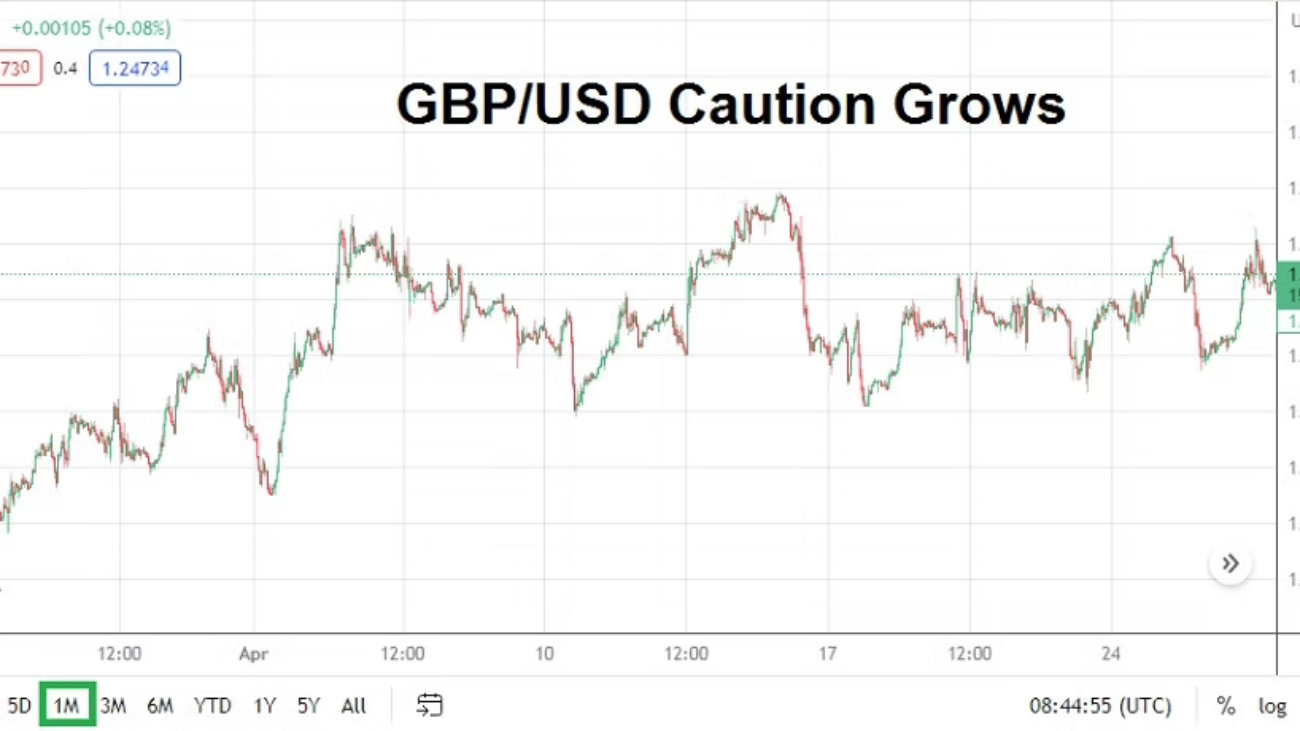
GBP/USD One Month Chart

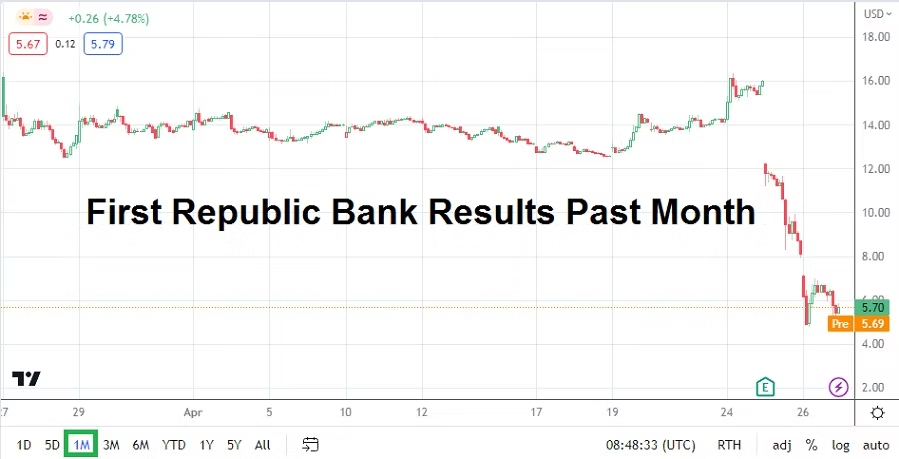
A Fed Funds Rate hike is going to happen on the 3rd of May unless there is a financial catastrophe that suddenly emerges that is nearly cataclysmic. While First Republic Bank wobbling is certainly a problem (Mark Zuckerberg is supposedly a rather large client of the bank), if this entity fails completely it may not cause massive bedlam. The stock has dropped violently, so a collapse should not be a surprise. No, it will not be welcome, but it should not be an unexpected calamity.

The question is how much the U.S government will protect depositors? The large clients who are not insured above the standard 250k USD ratio will want the same benefits that clients of Silicon Valley Bank received in March. Should they be rewarded the same way? The American public may not like the idea of another bailout for the deep pocketed, but there may not be much they can do about it, except to vote the politicians out, but who do you exactly punish?

First Republic Bank – One Month Chart as of 27th April 2023

What a collapse of First Republic Bank will do is hurt the corporate bond sector in banking again, because it is likely holders of these bonds will be put at the back of the line once again if the U.S government decides to protect big depositors of millions of dollars like Zuckerberg, before it protects bond holders.

U.S Data in Focus and the Allure of a Black Dress with Growth

But I digress, yesterday’s Core Durable Goods Orders statistics came in better than expected. Today Advance GDP will come from the U.S and if this number produces an increase instead of a downturn, the U.S Federal Reserve will have more ammunition to remain aggressive regarding interest rate hike rhetoric. An increase of 0.25% has been calculated into Forex for next week. The USD has done rather well recently, but what is of intrigue is the perception the USD is doing well after the financial markets have seemingly priced in a rate hike on the 3rd of May. Meaning, typically the USD would have started to ebb a bit lower after financial houses put their interest rate outlook into their Forex positions. Yesterday’s better than expected Core Durable Goods Orders leaves the door open for another hike on June the 14th to be precise.

While Core Durable Goods Orders isn’t a sexy statistic, GDP numbers frequently are, and if the growth numbers show up with a stunning black dress on with alluring ‘expansion’ it could send large speculators into a tizzy and make them believe the Fed could increase by another quarter of a point in June. The Fed during its FOMC Statement next week will certainly try to help financial institutions anticipate outlook. The Fed doesn’t need to hold the hand of investors, but it often treats them like children.

Financial houses had largely believed the Fed would hike in May and might raise in June. The notion that a June increase is certain would then put the focus back on the long-term again, and Forex could then break free of its rather consolidated incremental USD strength seen the past couple of weeks. Inflation remains a drum beat that is steady. And while today’s GDP numbers will be important. Tomorrow PCE inflation statistics will be the final nail in the coffin. If growth is stronger than expected today, and inflation numbers remain stubborn tomorrow, the Fed would certainly consider another June increase valid.

On the bright side for day traders is that the cautious choppy air which has circulated the past couple of weeks in Forex is almost done. While steady trends may not reappear for a while, at least near-term outlook will have more clarity by this time next week.

Big Institutions Have Long Term Outlooks and Treat Trading Conditions Differently

Long term outlook is another game as day traders should know and one they cannot easily participate. Long term investors have the money to specialize in assets which are not expecting profits today, but instead have a larger time frame for making money. Deep pockets, patience and the need for less leverage help financial institutions trade in a more stable manner, frequently putting the ‘odds’ in their favor.

The price of Crude Oil is actually behaving politely in recent trading, and its ability to find a mid 70.00’s USD price range is interesting and may help inflation move lower if it can be sustained. If supply of goods can adequately stabilize and global logistics costs come down, inflation could decrease. These factors are part of the long term perspective of financial institutions. Day traders may want to consider this because it could affect behavioral sentiment moving forward.

Higher interest rates from the Fed are causing other currencies to loss value and this has caused increased costs for international manufacturing companies located outside the U.S which frequently have to buy commodities in USD from their converted domestic currencies, this causes inflation. This is a factor not spoken about enough and traders need to consider this within their perspectives too.

The Fed and Perhaps a Conspiracy Theory

If the Fed actually starts to decrease its interest rates, it would help other currencies stabilize. And yes, if the Fed stops increasing interest rates it may actually help weaken global inflation. The Fed has caused import inflation to occur into the U.S. Are they aware of that? It is a good question. The likelihood is a yes, and it has been disregarded, but why? Perhaps there is another reason; does the U.S Fed and U.S government want to cause inflation globally to strike politically at some competitors? This is a different topic………kind of. Conspiracy theory.

While insight regarding the dialogues between the Federal Reserve and U.S government is certainly above my pay grade, one has to wonder about considerations regarding inflation and a stronger USD and its potential effect on China. The Fed increases may be a way of trying to inflict harm economically and in a subtle manner, but this cannot be proven. Perhaps the Fed is unaware of the global conflict being waged.

On another note, Gold remains near 2000.00 an ounce – almost steadily, displaying a certain amount of cautious behavior.

Gold One Month Chart

post22

Quick Thoughts for Friday 21st April

Quick Thoughts for Friday 21st April

It appears the broad financial markets are producing rather cautious price ranges which day traders should be wary of and this could continue until the 3rd of May. The Federal Reserve will release its FOMC Statement and Federal Funds Rate on Wednesday the 3rd of May. It is likely a quarter of a basis point will be added then, meaning an increase of another 0.25%. The worry for financial institutions is the potential for another Federal Funds hike in June and unease regarding the possible move.

Choppy markets are also happening because of a lack of major U.S economic data the past few days, which has created an air of uncertainty and undefined trends in many assets.

The difficulty of finding a defined trend for day traders can cause them to get eaten alive. Skittish conditions are not good for a majority of retail Forex and CFD traders – and plays into the fact 90% of retail speculators are eventually wiped out. An absence of deep pockets to withstand volatility because leverage is being used too excessively, and an inability to digest overnight ‘carrying charges’ which must be factored in too as ‘costs of trading’ also causes money to disappear – although your broker might try to ‘sell’ this as part of your learning curve while they try to convince you to trade again.

Next week the U.S will see the CB Consumer Confidence report on Tuesday the 25th of April, Thursday will have Advanced GDP and Friday will finish with inflation data. However, it is the week afterwards which is already a large focus. Yes, corporate earnings are being published today and in the coming week too, but many eyes are on the U.S Federal Reserve. Clarity on interest rates is what is desired.

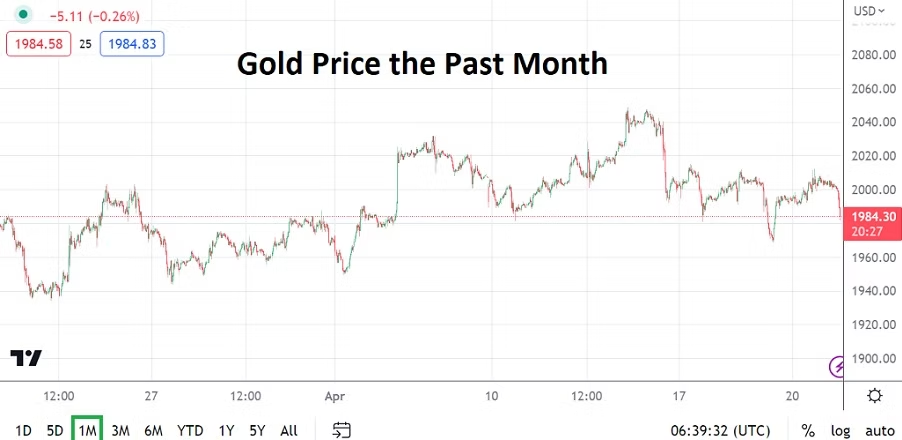
Gold price the past month of trading as of 21st of April 2023

If you are looking for evidence regarding what ‘smart money’ may be doing, it should be noted the price of Gold remains hovering around 2000.00 USD per ounce. Suddenly the price of Gold has become almost calm, please do not expect this to continue. The rather tight and ‘high’ price range of the precious metal is a potential sign that financial folks still believe that the U.S Fed may remain semi-aggressive in the mid-term, while ‘hoping’ over the long-term lower interest rates are coming.

As traders should know by now, nothing is guaranteed. Trying to understand behavioral sentiment helps.