Nifty 50 20260626

India Insider: Systematic Investment Plan Boom

Liquidity, Valuations and the Limits of Domestic Capital

India’s equity market has surprised many investors over the past two years. Despite persistent foreign institutional investor selling, weak net foreign direct investment (FDI), subdued private capital expenditures and a depreciating Rupee, the broader markets have not fallen and proven remarkably resilient. But risks abound.

Many observers point to the rapid growth of Systematic Investment Plans (SIPs), which millions of retail investors invest regularly via mutual funds in India. Monthly SIP inflows into the Indian equity market has reached record highs at the tune of 32,087 Crore Rupees ($3.38 billion USD) in March, 2026 per AMFI (Association of Mutual Funds India) data. 
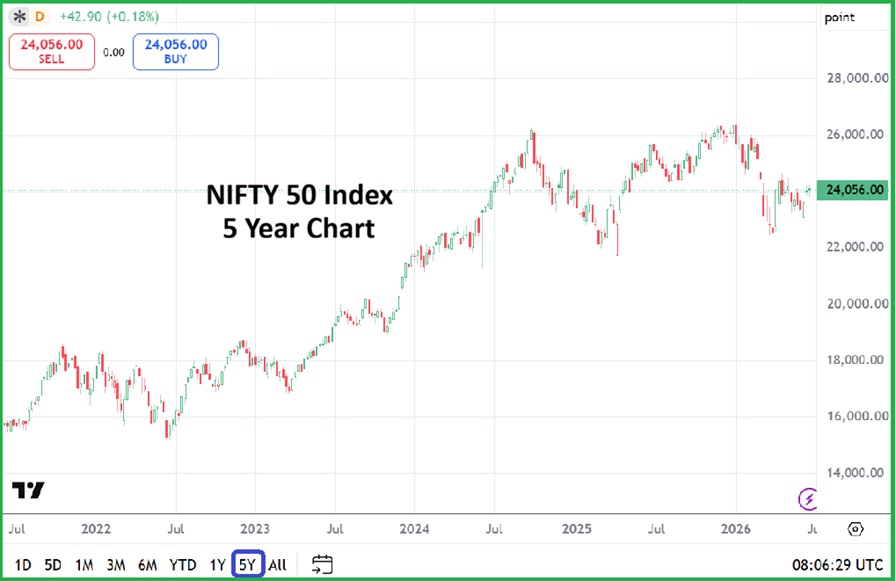
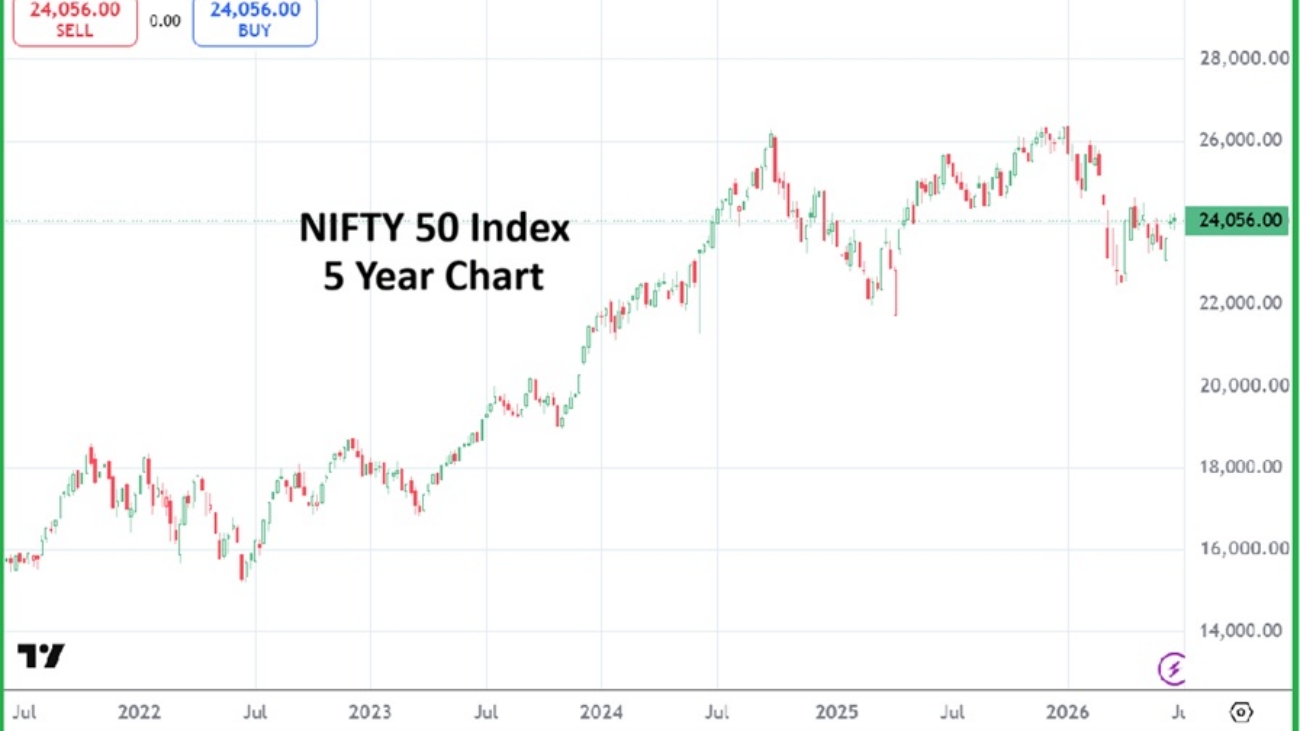
Nifty 50 Five Year Chart as of 26th June 2026

Before COVID-19, the stock market industry in India was a boring business. Accounts were opened via paperwork, and demat (the account in which the digital shares were held) in a bureaucratic manner with multiple paperwork requirements. Clients who liked to participate in the Initial Public Offerings (IPOs) had to go to their broker or issue a cheque to participate in the bidding process. As of 2019, the total demat accounts in India stood at 40 million. Sophisticated retail investors would go to their local branches of associated brokers and trade stocks, derivatives or commodities. They sometimes would use telephone or online orders.

All this changed during the Covid-19 pandemic, when equity market valuations became depressed and people were forced to stay at home. This ushered a wave of new retail traders who had time to master the game and wanted to capitalize on the falling valuations of many companies and take advantage of opportunities they believed in. Astonishingly, demat accounts opened between 2020-2026 totaled around 180 million, almost quadrupling pre-Covid levels. Due to digital penetration and the rise of discount brokers, young retail traders were able to quickly allocate substantial portions of their monthly income into SIPs.

SIPS have strengthened the financial market resilience of India, compared to the previous decade when it was the domestic institutional investors who helped market stability. Yet concerns are now arising whether domestic household savings are supporting fundamentally stronger companies, or are creating systematic inflows which help tenuous companies to have higher valuations?

For instance, a famous financial markets journalist recently argued that India’s SIP boom has fueled expensive stocks. Thus, enabling insiders and institutions to exit at favorable prices, reduced future return potential, has weakened the Rupee, and exposed the limitations of crowd-driven investing.

As the AMT India Insider columnist, I decided to investigate these considerations and talked with some people in the financial markets who offered different perspectives regarding the issue.

Mr. Mahalingam, an IIM alumnus noted, “it is difficult to generalize like that. Total SIP inflows should be viewed relative to the total market capitalization of listed companies, not in absolute terms. If the Nifty delivers around 12% returns, it roughly doubles every six years. SIP inflows must also increase over time, simply to purchase the same proportion of shares.”

Arguably, the SIP flows into the Nifty Index some 15 years back are not comparable to today. Considering the higher capitalization of Nifty listed companies (which means greater share values), and given the Nifty index has delivered 12% returns in the last few years, and that it took 6 years for it to double at this rate, it’s important that investors look at higher share prices values arising out of company earnings while considering their investment decisions.

Mr. Prasath, who taught economics and finance to students during his tenure at a private educational institution, argues, “I think there are many dimensions. In stock markets, everything comes down to valuations, the continuous SIP flows may diminish future returns if the earnings don’t grow. But comparing SIP flow with 2005 numbers exaggerates the issue. The Indian economy has grown bigger since 2005 and naturally inflows will also grow accordingly. India has one of the lowest public participation in the capital markets, even with current SIP numbers.”

Mr. Prasath continued, “currently the world is going through turbulent times with the Russia-Ukraine war, the Trump Presidency including tariff actions, the Iran situation and energy crisis, and supply chain disruptions, etc., which are effecting economic growth. The Indian government is also not taking some required steps. Indian companies also have low R&D and failed to participate in emerging themes like AI and semiconductor development. These turbulent times will continue for awhile and Indian markets will underperform its peers. So we have to wait for better times or for world leaders to come to their senses. I think we have to remain both optimistic/realistic and plan our investments accordingly”

If India grows at 7.7% during the 2025-2026 annual year, and foreign capital (especially foreign portfolio investment) is leaving, while private capital expenditures are weak and government capital expenditures are increasing, then what’s the point of higher stock prices for many of these companies? Is it due to steady retail SIP inflows? Does it really help institutions and insiders to cash out, and make retail investors vulnerable?  Foreign investors have sold $29 billion USD worth of equities so far this year, and the Rupee has taken a hit, yet we have not see drastic changes in companies’ share or indices values.

In 2022, when the U.S Federal Reserve was raising interest rates, the Nifty 50 Index lost around 3000 points, but this did not happen in 2026. The SIP retail crowd and domestic institutional investors have absorbed the foreign investors’ outflows and provided a cushion for share prices.

Even if some people in the financial markets argue that the foreign investors’ selloff off did not result in poor corporate performance or themes becoming weak, given that the growing market capitalization and the past earnings has justified the higher share prices, it’s significant to note that the Net FDI remains weak. Indian and foreign corporations are repatriating cash at a faster pace, and capital is flowing out of India. That’s ironically what hit the Rupee this year, along with higher oil prices due to the Iran war. In my opinion, private capital expenditures of listed corporations has to grow to justify higher earnings multiples.

Kotak Mahindra Bank director Paritosh Kashyap, while talking to Business Line said that private capital expenditures in India has been subdued for the last 10 years. Higher interest rates, expensive oil and lower equity valuations has dampened sentiment. India’s government Capex (capital expenditure strategy) remains the primary driver.

To summarize and conclude, weak foreign direct investment, subdued private investment, and inflated valuations of Indian assets along with a lack of AI related development is a large underlying issue and concern. For foreign investors to return with greater force again into Indian equities, either the Rupee has to depreciate or equity prices have to decline to generate investor confidence and create an appealing landscape. Retail investors may soon have to face drawdowns in their portfolios as returns dwindle and headwinds move against them.0
Copy and paste the text from AMT that you want to share

Nasdaq 100 20260608

Nasdaq 100: Terrible Friday Being Confronted by Manic Monday

Fear of the Middle East Not the Main Motivator for the Nasdaq 100

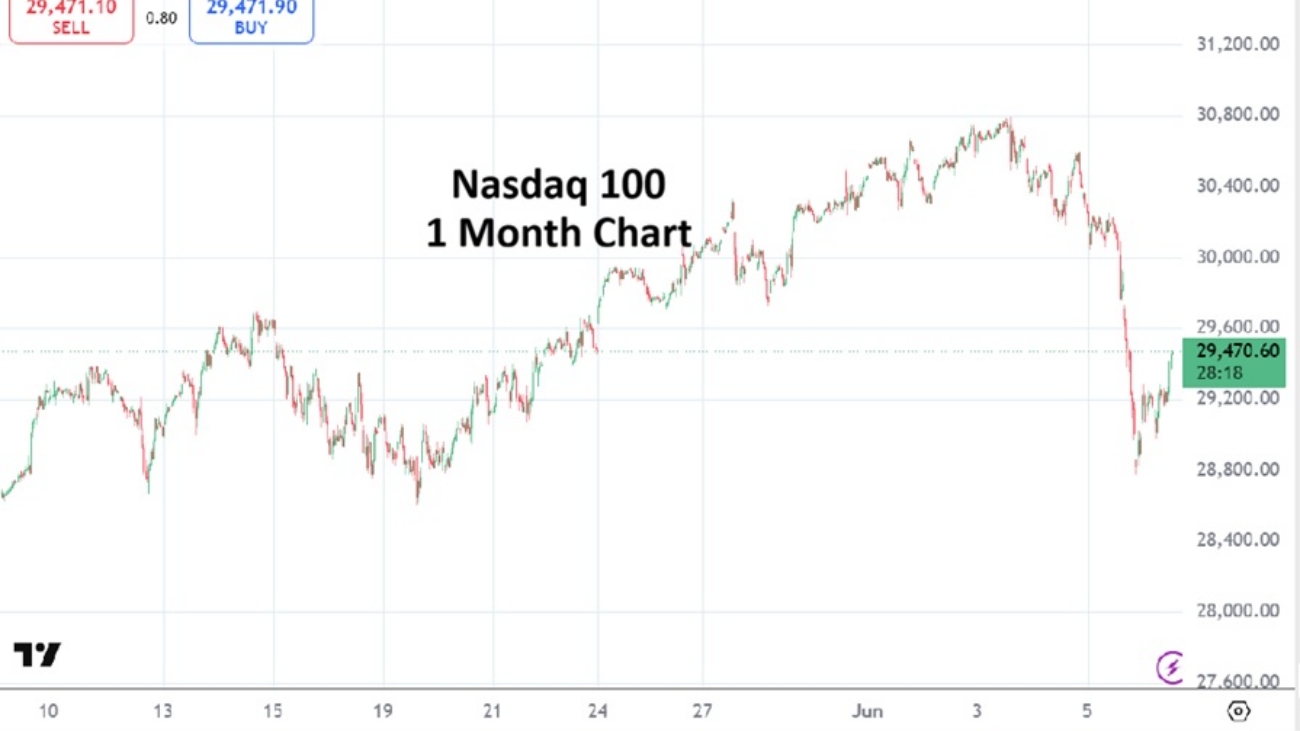
After Friday’s selling surge and a fall of -4.77% with a close of 28,957.60, the Nasdaq 100 futures trading this morning has actually seen an increase and is near the 29,479.00 mark as of this writing before the cash Nasdaq 100 market opens.

Friday’s selling nightmare for traders who found themselves stubbornly locked into what were to be short-term buying positions and saw the Nasdaq 100 plummet -4.77%, probably woke this morning believing ugly conditions may not stop. An escalation in military action via proclaimed retaliatory moves between Israel and Iran started today’s trading with a high degree of more anxiousness. USD centric strength in Forex was demonstrated early.

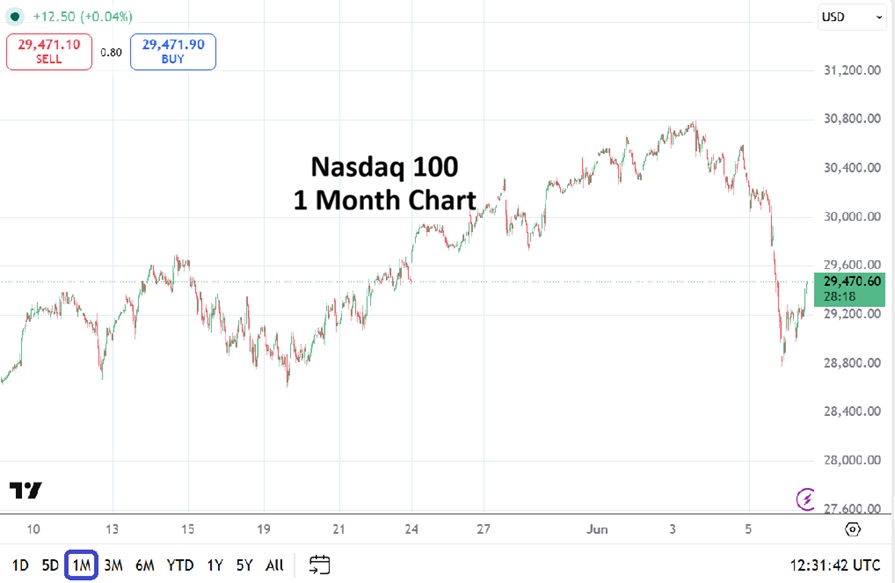
Nasdaq 100 Futures Value 1 Month Chart as of the 8th of June 2026

However, in the past couple of hours calmer heads have prevailed among financial institutions and USD centric buying in the broad Forex market has run out of steam – at least momentarily. For instance the USD/JPY is near 159.927 currently, opposed to earlier highs seen this morning which challenged the 160.400 vicinity. What does this have to do with the Nasdaq 100 and its current status? 

It appears via futures trading that large players may also have taken a sedative and looked at the index as having been oversold on Friday. The Nasdaq 100 has actually gained early today and signs that a de-escalation of military force between Israel and Iran is being reported. However, that still leaves day traders wondering what will happen as the cash market opens soon and volumes increase.

Let’s Say Quiet Prevails the Remainder of the Day

Not because of a utopian outlook, but a geopolitical perspective, let’s try to image Iran’s stated intentions of no more retaliatory strikes being launched towards Israel as true. The past couple of hours have been more tranquil as a signal in case you are wondering. Then investors and financial institutions will have to digest the Middle East concerns as they have done over the past couple of months in U.S equities, and decide to operate again on the Nasdaq 100 with near and mid-term outlooks.

Friday’s huge selling was blamed by some on the likelihood of a ‘potential’ U.S Federal Reserve interest rate taking place on the 17th of June. This because better than expected jobs numbers showed to some that the U.S economy was running hot once again. 

Additionally expressed fears, which are legitimate, about higher energy costs sparking sticky inflation have been discussed and worried about aloud. Yet, again let’s decide to say even if U.S inflation numbers via the Consumer Price Index come in higher than expected this Wednesday via the coming CPI data, that doesn’t shut the door on the possibility the new Fed Chair Kevin Warsh won’t fight against an interest rate hike during the FOMC meeting next week. In other words it still seems rather unlikely – to me – that the new Federal Reserve Chairman is going to want to initiate higher interest rates the first month on the job. So what if there was another reason for the steep selling on the Nasdaq 100?

Not Paradise but Purgatory

The Nasdaq 100 actually has other questions which have been raised as possible fodder for its large selling this past Friday. Was it spawned because of profit taking by those who took advantage of the index’s fabulous rise knowing that many institutions had been front running the IPO of SpaceX which is scheduled to happen on the 12th of June – this Friday? 

Did large players who rode the wave of frontrunning by financial institutions up in the Nasdaq 100 since late March, decide to cash in profits. There is plenty of nervousness surrounding what will take place with SpaceX in the coming months and long-term via outlooks because of its rather inflated valuation which looks like it will be around 1.7+ Trillion plus at share values of $135.00 per share this coming Friday. 

Questions surrounding SpaceX’s price per sales rhetoric, this instead of price per earnings (because SpaceX is not making a net profit) is just one example. While denying Elon Musk’s genius and ability to create clamor for his companies has proven to be a losing proposition for many, doubters still remain. 

Folks might have cashed out winnings on Friday and decided to now wait on the sidelines to see where behavioral sentiment takes the Nasdaq 100. After two full months of paradise for the Nasdaq 100, a few days of purgatory and seeing which direction U.S indices go may be the right decision by folks who rely on clarity; this as the Middle East gets untangled (or becomes more complicated), the Federal Reserve offers insights on the 17th of June, and large financial institutions lead the way regarding investment decisions.

Copy and paste the text from AMT that you want to share

WTI Crude Oil 20260601

Clues and Insults: Forex and Equity Indices During the Iran Saga

Profits: Optimistic Wagers and Preserving Self as the Party Rages

New Federal Reserve Chairman Kevin Warsh certainly doesn’t want to have problems with President Trump. On the 17th of June the FOMC meeting via the Fed will make their interest rate decision known. Who really believes that during the first month on the job at the helm of the U.S central bank that Warsh is not going to fight to keep interest rates in place?

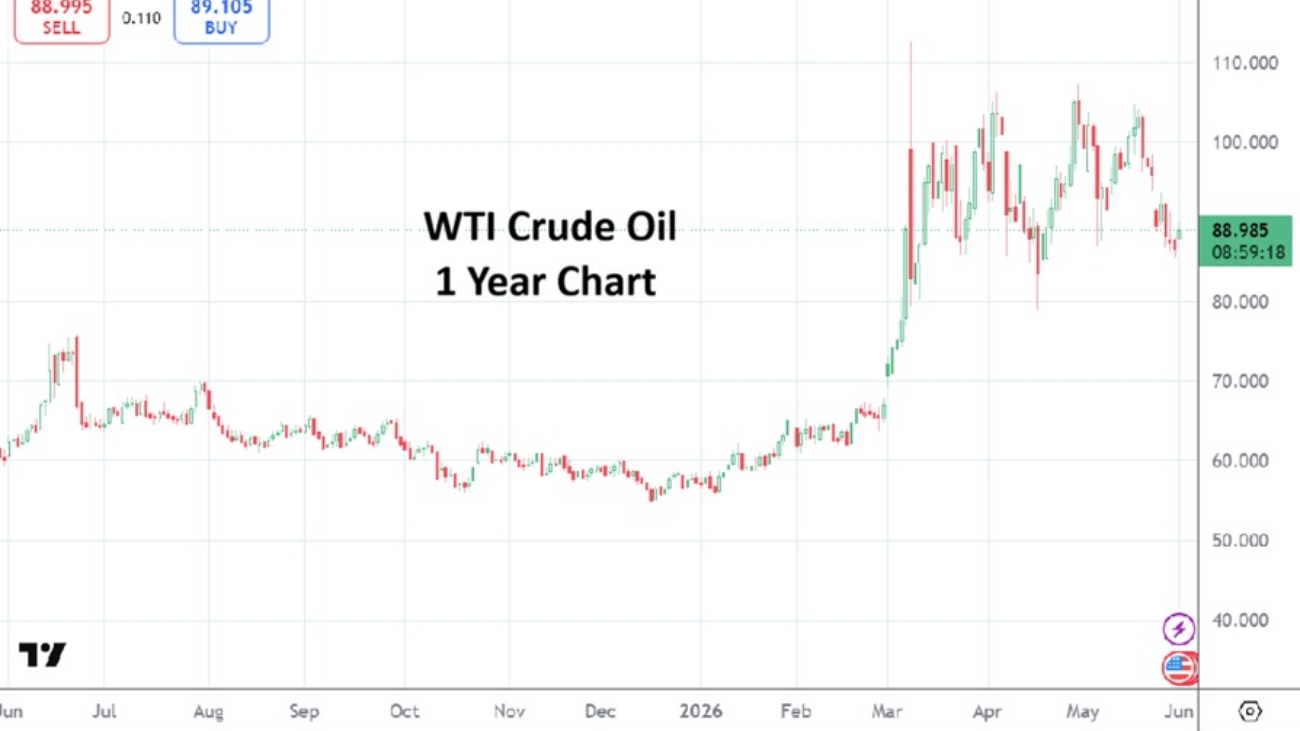
Those who are expecting an interest rate hike in June of a quarter of a point (0.25%) are most likely wrong. Yes, the price of WTI Crude Oil is high and the situation in Iran via narrative varies from one moment to the next per the reported incidents on the Strait of Hormuz.

However, just like the Fed there is a certain amount of reality that must be dealt with regarding human nature and behavioral sentiment regarding Iran and how it is dealt with via market participants. From the department of no news is good news: financial institutions and investors would like the noise to be kept to a minimum so they can continue doing their jobs and not be criticized themselves for potentially wrong outlooks. The art of making sure disclaimers are up to date is important for everyone who wants to stay employed.

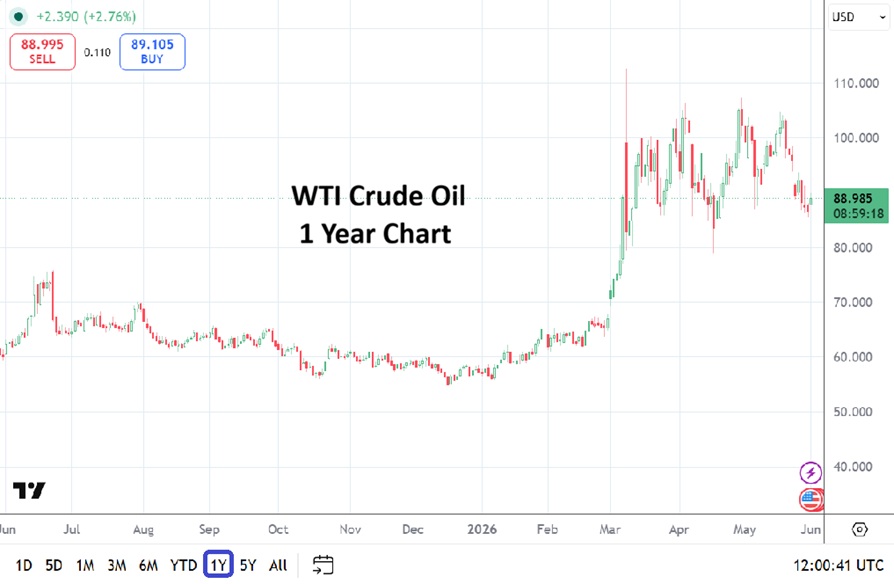
WTI Crude Oil 1 Year Chart as of 1st June 2026

USD centric weakness was seen late last week in many currency pairs, but a quick glance at the majors: EUR/USD, GBP/USD and USD/JPY actually show the pairs traversing rather cautious values. The EUR has gained slightly for instance, but at its current levels around 1.16410 some may believe it is a safe equilibrium. (One that may be able to be taken advantage of by those with the ability to bet on mid-term higher trajectories).

Central Banks globally also want to keep the noise down in their various locations. Inflation concerns persists worldwide depending on the amount of knock-on effects that higher energy costs have on national economies.

Also adding additional intrigue to the storyline of wanting to keep quiet while volatility threatens the gates, is that many people with comfortable jobs in various government institutions do not want to step out of line and sacrifice their careers for the sake of being proven right. They would rather be proven wrong, but would like to do this quietly without facing consequences.

The fact that we are now in a situation in which we are afraid to undertake critical thinking aloud is going to cause problems down the road, but for the moment most will simply go on with their various duties and pretend all is well.

U.S equity indices have been having a massive upwards party since the end of March as record heights are attained. Certainly some long-term investors are simply throwing money into indices as a way to get positioned before the SpaceX IPO which is coming soon. There will also be the Anthropic IPO which is reportedly set for late 2026.

The SPCX which seems to be aiming for the 12th of June will create a valuation well above 1 Trillion USD for SpaceX. The perceived value of Anthropic is becoming a loud talking point among analysts in the tech sectors and they are keen to have the company join the 1 Trillion USD party. The cost of admission for bragging rights is getting more expensive.

There was a time when things like PE (price and earnings) ratios mattered on Wall Street. Some brave folks still whisper about such things in meetings and bars late at night, but many do not want to be insulted or possibly worse get marketing folks selling these high priced products angry. The reason for speaking softly about actual earnings regarding SpaceX is because the company is actually working via an earnings loss, and instead price to sales estimates are being offered as some type of guideline. Having said the above, it would be foolhardy to bet against SpaceX and Elon Musk. And it might be equally unwise to bet against Anthropic in a handful of months. And thus, the rush into equity indices because there is a genuine fear of missing out does exist. Afterall, we all want to be part of the party.

And that brings us back to Fed Chairman Kevin Warsh who has the backing of President Trump and Treasury Secretary Scott Bessent, he doesn’t want to insult these men either. Warsh may be quite good at what he does, he might be an expert and have real world business experience, and that might be a real clue for Forex traders who think higher interest rates are coming. Warsh will likely want to keep his first months on the job at the Fed on good terms with the White House and the Treasury. Kevin Warsh might be a free-thinker and know legally he is an independent leader of the Federal Reserve, but he also knows he was hired with a stated mission. There is a pro-business, free enterprise administration in power at the White House. Bessent, Warsh and Trump are on the same team.

So again, while some traders may believe the Fed will raise interest rates in June because of concerns of higher inflation, it most likely will not happen. While the Iranian war continues to make headlines in the financial world and dealt with via sentiment decisions, actual economic U.S data will start being watched in the coming days and weeks and might even influence perspectives. Investors will get bored of the Iranian saga as long as its narrative stays somewhat tepid. Meaning investors will start looking at CPI and PPI numbers coming from the U.S next week and talking about higher interest rates that will likely not be delivered in the upcoming FOMC meeting. 

The price of WTI Crude Oil as boring as it is to say remains a strong sentiment gauge for traders intraday. Large players involved in Forex might believe this will involve higher interest rates, but on the 17th of June it is more likely that Kevin Warsh will say that for the moment the Fed chooses to watch energy sector costs with the belief prices will decline in the coming months. The Fed will not use the term ‘transitory’ which was used infamously during the Covid crisis and turned into a poison pill with inflation that was not effectively fought. What the Fed will likely do is say they want more info to be gathered and more clarity regarding the Iranian situation and its overall effect on oil prices for a little while longer. Some patience will be asked for and it might be granted by investors who want the party to continue via equities.

Day traders should expect cautious markets to prevail in Forex with choppy results as financial institutions weigh their behavioral sentiment and try to make believe they are not too worried about near-term inflation. The CPI and PPI readings next week will prove of interest, but the results may be brushed aside by market pundits.

In the meantime, the celebrations on Wall Street continue as folks march merrily into the frenzy. Retail speculators who want to pursue short or near-term profits on the Nasdaq 100, S&P 500 or Dow 30 indices need to be careful and might want to stay away from daily bets and instead engage in conservative positions that allow for a full week of results. The gains made since the end of March have been outlandish and likely will not be repeated anytime soon, but why try standing in front of a trend that can crush you.

Near-term considerations in these markets should be done carefully. The mid-term may be very different from where we stand today and our current outlooks. One thing that may bother some risk analysts is that it may prove wrong to bet against the current parade of optimists who insists on participating in dangerous conditions and profit, while they (the risks mavens) stand in place.

Copy and paste the text from AMT that you want to share

US Dollar Index 20260627

The USD and The Art of Not Knowing

Being Mature Enough to Know You Don't Know as You Watch the Marketplace

Ask anyone that typically knows how they gauge the state of the global marketplace for the near-term and you are likely to either get a solid, “I have no idea” now. Or a bunch of thoughts on what might happen, which might lead to being more confused. Simply put at this point, it is easier to admit that potential conclusions regarding the world’s current affairs taking place and effecting the global marketplace are out of most peoples’ hands. 

Even those who have duties within the higher paid grades likely are just as confused about the potential unintended consequences not wanted, and results they hope will be achieved. And what am I speaking about exactly, regarding the world and its state of affairs, is that even qualifying the particular topics are difficult to put a finger on. Ramblings certainly include the Iran saga, but Cuba, the Ukraine, the NATO pact, shifting world alliances and future ones are creating a whirlwind. Besides the rather noisy political landscape of the USA. Not to mention China and Russia and other nations with aspirations.

Yet, the global markets continue to trade, albeit within a confused haze it sometimes appears. But do not be despondent day traders, brokers and their platforms will offer you the opportunity to wager on results of the USD in Forex, and CFDs certainly contain opportunities in major equity indices the world over, various big singular companies, commodities and yes cryptocurrencies (apologies to Bitcoin fans – who insist it is called a digital currency).

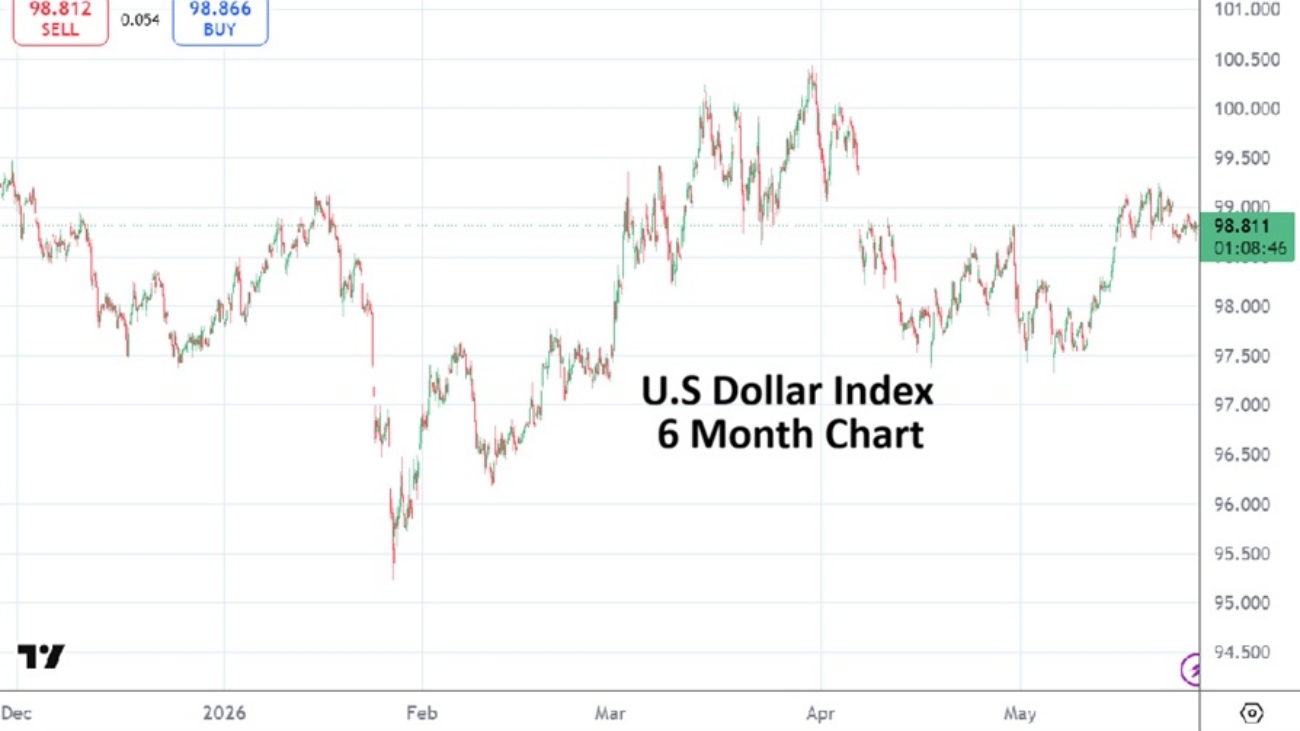
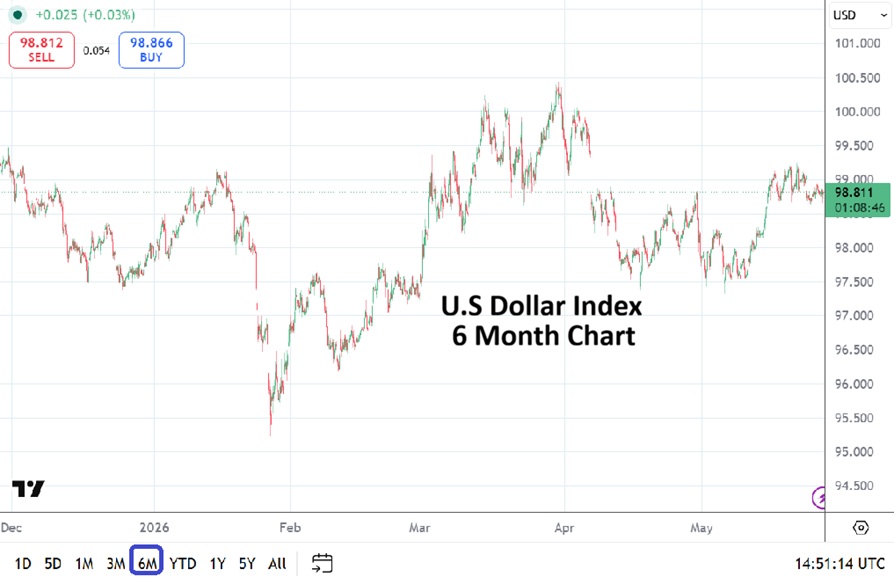
U.S Dollar Index Six Month Chart as of 27th May 2026

Iran War and Unclear Results

The U.S Dollar Index for the moment is near the 98.880 ratio, which it should be pointed out is near the values it swam upon the April 8th announcement of a ceasefire between Iran and the States, this after dropping from its 99.800 threshold on the 7th when investors were more troubled. The ceasefire is still in effect and now there seems to be a resolution which is being hoped for by the U.S White House – although when pressed about what negotiations between Iran and the U.S will result in delivers a few different versions of ideas. 

Perhaps that is to be expected via the fog of war, but what should not be expected is an easy path to a genuine resolution. And even if there is a pact of some type, what objectives will have been genuinely fulfilled? But alas, that is a question for those in the future, because the facts on the ground do not bode well for ordinary Iranians who have yearned for freedom. 

The Fed Has a Problem

But again, let’s not dwell on things like the individual rights of people, money is at stake…..(that is humor folks, others can call it sarcasm). The price of WTI Crude Oil has dropped this week on the idea that a resolution will actually be accomplished between Iran and the U.S – one at least that allows tankers to navigate the Hormuz Strait. 

The price of WTI via futures at this moment are around the $90.00 mark again, this after moving within sight of 88.00 USD earlier today. At the end of last week the $96.00 mark was in sight for WTI. And the price of energy continues to cast a shadow that is moving over the U.S Federal Reserve and has large implications for the new Fed Chairman Kevin Warsh. 

The mid-term versus the long-term in financial institutions as they judge their interest rate perspectives are likely making for rather entertaining dialogue. And let’s not forget ladies and gentlemen, the U.S mid-term elections are approaching in November of this year and are resulting in primary elections that are punishing Republicans who voiced criticism towards President Trump. The question about who will hold power in the U.S House of Representatives is a big riddle. Even the U.S Senate leadership may be fragile. Why is that important, because if President Trump were to become what is known as a lame-duck President during his last two years in office, this would produce different outlooks among investors. Stay focused on the money people. 

Our Forex Friend: The BoJ

The USD/JPY is now traversing its 159.490 vicinity again, and perhaps that is a bell weather for soothsayers to criticize again. The Bank of Japan is watching the Japanese Yen as its trades within sight of its weakest values, and yes, the BoJ can be expected to issue another warning to speculators once again about being run over by an intervention. The BoJ’s broken record about interventions have produced solid results for folks who are able to trade the USD/JPY with positions that can be held for a few weeks at a time – namely hedge funds, large players and some financial institutions. Retail traders trying to take advantage of the USD/JPY are likely suffering trauma via anxiety if their wagers have gone in the wrong direction.

SpaceX and Scams in the Cryptoworld

And as a bonus, let’s not forget about rumblings regarding SpaceX and another topic within the I do not know category. Elon Musk has set the table for an attempt at a 2 trillion USD market cap after the IPO for the corporation is launched in the second week of June. The value of SpaceX can be and will be argued for the next few years as admirers and critics lineup to be heard and spread sheets are compared regarding revenues against one of the greatest marketing giants of our time. Intriguingly, however, are hints that there has been a lot of cryptocurrency fiddling regarding how the corporation is going to allow investors to participate. Apparently there have been tokens issued in the cryptocurrency world that have promised some type of participation in SpaceX and most are being exposed as scams and have nothing to do with the company or Musk. Buyer beware folks.

Copy and paste the text from AMT that you want to share

Indian Rupee 20260515

India Insider: Rupee Under Pressure as Oil Prices Surge and Import Bills Rise

Iranian War and Implications for India as Energy Prices Cause Vulnerability

India is currently facing mounting external economic pressures as rising global crude oil prices weaken the Rupee, widen the current account deficit, and increase the risk of imported inflation. As one of the world’s largest energy importing nations, India remains highly vulnerable to fluctuations in global oil markets. The recent surge in energy prices, combined with geopolitical tensions and volatility in currency markets, has intensified concerns among policymakers, economists and investors.

The Reserve Bank of India (RBI) has stepped up its intervention in the foreign exchange market to stabilize the Rupee, while the government is evaluating measures to reduce pressure on import billing. Rising fuel prices, weakening currency conditions and growing external imbalances have combined to create a challenging macroeconomic environment that may test India’s economic resilience in the coming years.

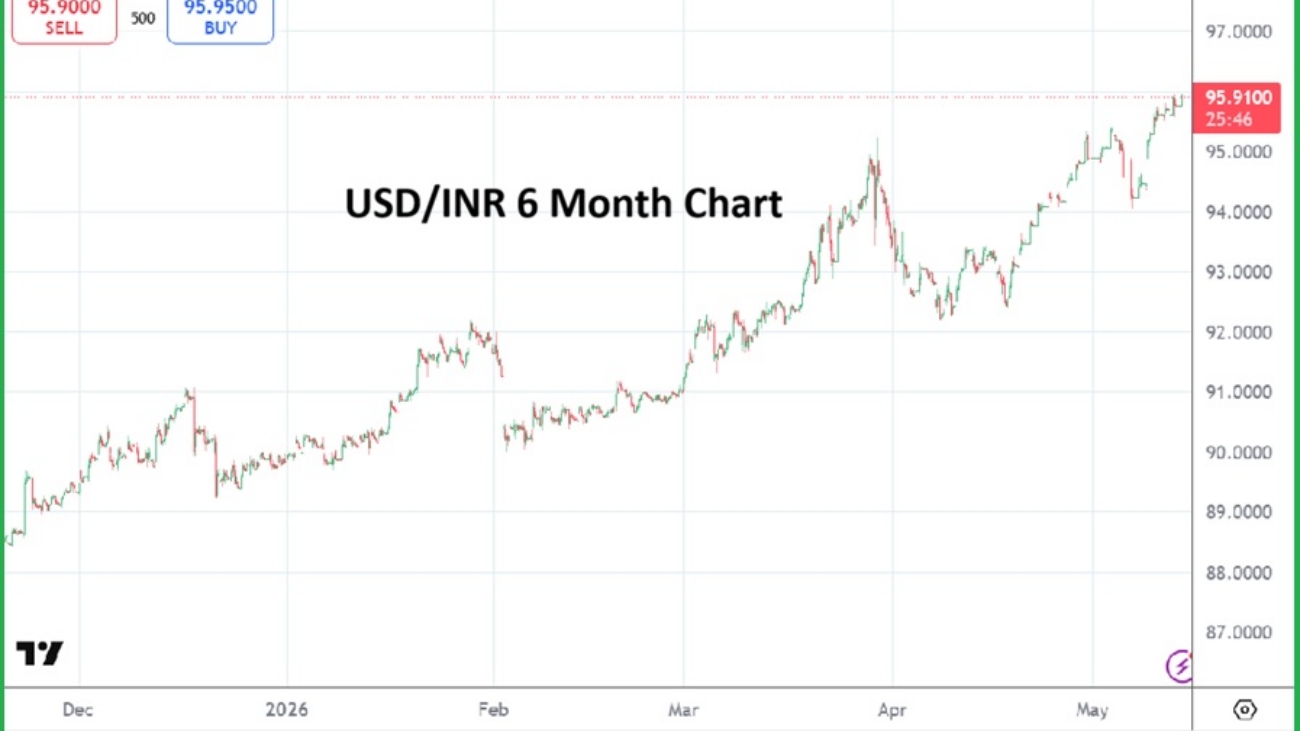
USD/INR Six Month Chart as of 15th March 2026

Gold and consumer electronics imports are increasingly being viewed as non-essential imports, and policymakers may consider restricting these categories in order to reduce stress on the current account deficit. Officials are concerned that a widening trade imbalance could place further downward pressure on the Rupee and increase dependence on foreign capital inflows.

The Rupee on Thursday fell to a record low near ₹95.95 per USD, making it one of Asia’s weakest performing currencies this year. The currency has erased most of the gains achieved following earlier RBI intervention measures aimed at curbing speculation in the Forex market. Analysts expect the Rupee to remain under pressure through 2026, especially if global crude oil prices continue to rise and significantly increase India’s import billings.

The impact of rising crude oil prices is becoming increasingly visible across the Indian economy. Private fuel retailers have either reduced diesel sales or raised prices in response to the rally in global oil markets, leaving state owned refiners to absorb a larger share of domestic demand. Long queues at fuel stations and rising transportation costs have intensified concerns over inflationary pressures.

Earlier today, State-owned fuel retailers raised fuel prices for the first time in nearly four years as New Delhi adjusted domestic pricing to reflect higher international crude prices following escalating tensions in Western Asia. Diesel and gasoline prices increased by more than 3%, even though Brent crude prices had risen by nearly 50% over the same period.

In New Delhi, diesel prices climbed to around ₹90.67 per litre, while gasoline prices rose to approximately ₹97.77 per litre. These are among the highest levels recorded since 2022 and reflect the growing burden of imported energy costs on the Indian economy.

Economists argue that the rise in fuel prices signals a gradual shift toward market based pricing rather than extensive government controls. Policymakers increasingly recognize that artificially suppressing fuel prices could worsen fiscal pressures and create larger external imbalances over time.

Currency Weakness and Monetary Policy Challenges

RBI Governor Sanjay Malhotra recently remarked at an event in Switzerland that continued currency weakness may be “only a matter of time” if global energy prices remain elevated and capital flows become increasingly volatile.

Foreign outflows during the year have already exceeded previous levels, while a sustained rise in crude oil prices above $100 per barrel could significantly widen the trade deficit and push India towards another period of pressure on balance of payments.

In this climate, attracting foreign capital via various tax cuts or raising the interest rates is paramount to reduce the pressure on the currency. It’s already been seen that New Delhi is working on reducing taxes for foreigners investing in Indian bonds.

Rise of Inflationary Pressures

Although India’s headline inflation remains relatively contained and below the RBI’s 4% medium term target, imported inflation risks are steadily increasing.

Economists also believe the RBI may eventually be forced to maintain tighter monetary conditions or raise interest rates further if energy prices continue to accelerate.

The central bank has already raised interest rates to around 5.25% this year, but several economists argue that further tightening may still become necessary.

Historical Perspective and Structural Risks

Economic historians often compare the current situation with the oil shocks of the 1970s. During that period, the United States was heavily dependent on imported oil. The oil crises of 1973 and again in 1979 contributed to inflationary pressures, balance of payments stress, and periods of USD weakness.

However, economists note that today’s global environment is significantly different. The United States has become one of the world’s largest oil and gas producers, reducing its dependence on imported energy. As a result, rising oil prices no longer weaken the U.S Dollar in the same way they did during earlier oil shocks.

For countries like India, the impact remains severe. India imports the majority of its crude oil requirements. Higher global oil prices directly increase India’s import billing and create additional demands for USD.

As Economist Philip Verleger was quoted by Bloomberg, “when you are a major oil importing nation, you are not only paying more for crude itself, you are also paying more for the dollars required to purchase it.” India is now facing this realization again.

Copy and paste the text from AMT that you want to share

Gordons Bay Sunset 20260514

Investing and Sunshine: Positive Momentum While Guarding Against Worst Scenarios

The Reliability of Optimism in the Marketplace

Once again the world has not ended. The sun continues to rise and set on a daily basis and the world’s investment outlook remains towards an optimistic approach. Day traders should take this notion to heart and actually repeat it as a mantra when they consider pursuing the marketplace based on notions of fear.

Solid risk management equally needs solid risk taking tactics. And speculators need to always remember long-term investors are not basing their decisions on what will happen near-term, they are looking towards the future. While this may seem like a reminder a father would say to his children as a life lesson, day traders should not be offended, but use this as a keepsake and understand the world of investing is made up of elements that have proven durable.

Sunset over Gordon’s Bay, South Africa

While the price of energy, namely WTI Crude Oil, remains in elevated realms, corporations are still producing, and financial institutions have not shuttered their offices. There are some nervous types that speak about $200.00 a barrel Crude Oil, yet the higher price of the commodity remains perched near $100.00. This value is high compared to where the price of oil has traded the past few years, but the reality is that the current values of Crude Oil have been within these realms before and the economic world has survived. The price of Crude Oil is not going to hit $200.00 anytime soon.

Inflation is certainly an unwelcome specter, but there is the added fact that part of the long-term outlook is – if and when the Iran saga ends the price of WTI Crude Oil is likely to drop significantly. Yes, that is not going to happen near-term, but it is part of an optimistic view looking forward. In the meantime, commodity pricing has become a focus for large players who are taking advantage of fears and an ever flowing river of optimism which creates dynamic prices in agricultural resources. Logistics via fuel costs are certainly effected as is manufacturing and farming, but again let’s soothe ourselves with the knowledge most of those involved in these industries have dealt with high costs before and will constructively deal with the vagaries of mid-term uncertainty.

Almost needless to say, the U.S stock markets are doing extremely well per the results of the big indices. The S&P and Nasdaq have all gained in exquisite fashion since the end of March. Who had that on their bingo card? While financial institutions pouring money into equities likely didn’t count on double digits gains in one month’s time, that is what has happened and they will not complain. Perceptions about the sun continuing to show up even in the midst of rainstorms gets investors through whirlwinds. The U.S and China summit taking place now will also add a dose of optimism for equity investors who gear their visions towards results over a three to five years span.

Nasdaq 100 One Year Chart as of 13th May 2026

Different Show and Outcomes for Day Traders

Day traders who are pursuing intraday results are not participating in the same environment as long-term investors. A casino like experience is the best comparison for many retail traders, but the option of trying to catch momentum and using techniques that can accomplish better results are available for those who try to ride the waves caused by big players. 

Some may view money as a game, but it is actually more aligned with the concept of a tool. If a retail trader – or institutional investor – participates in a particular asset, they must have an understanding of how it works. 

Trying to gauge behavioral sentiment is a key ingredient for speculators when trying to deduce what will happen in the marketplace. Predicting what will happen within an intraday framework is difficult at best. However, there is something to be said for understanding how the emotions of investors and large players work while they make their decisions – particularly when day traders are using these notions as a barometer. The trading in the USD/JPY is a prime example of how trading/investing and outlooks work:

Our Friend the Japanese Yen and Forex Opportunities


It is recommended that day traders do not try to tackle too many speculative sectors at the same time. It is urged that they get familiar with one part of the financial market and make it a specialty. 

No one can know everything. Experts in one area – like an academic field – often believe this entitles them to speak on a variety of subjects they have no expertise within and this often leads to catastrophe. Day traders need to make sure they are getting information from sources that are reliable. Because sure as heck the sun will rise and set, no matter what dire predictions are made by those who prefer to focus on the worst.

Copy and paste the text from AMT that you want to share

India Vote 20260507

India Insider: How a Film Star is Reshaping Politics in Tamil Nadu

Vijay: A Stunning Victory by an Actor Turned Politician in India

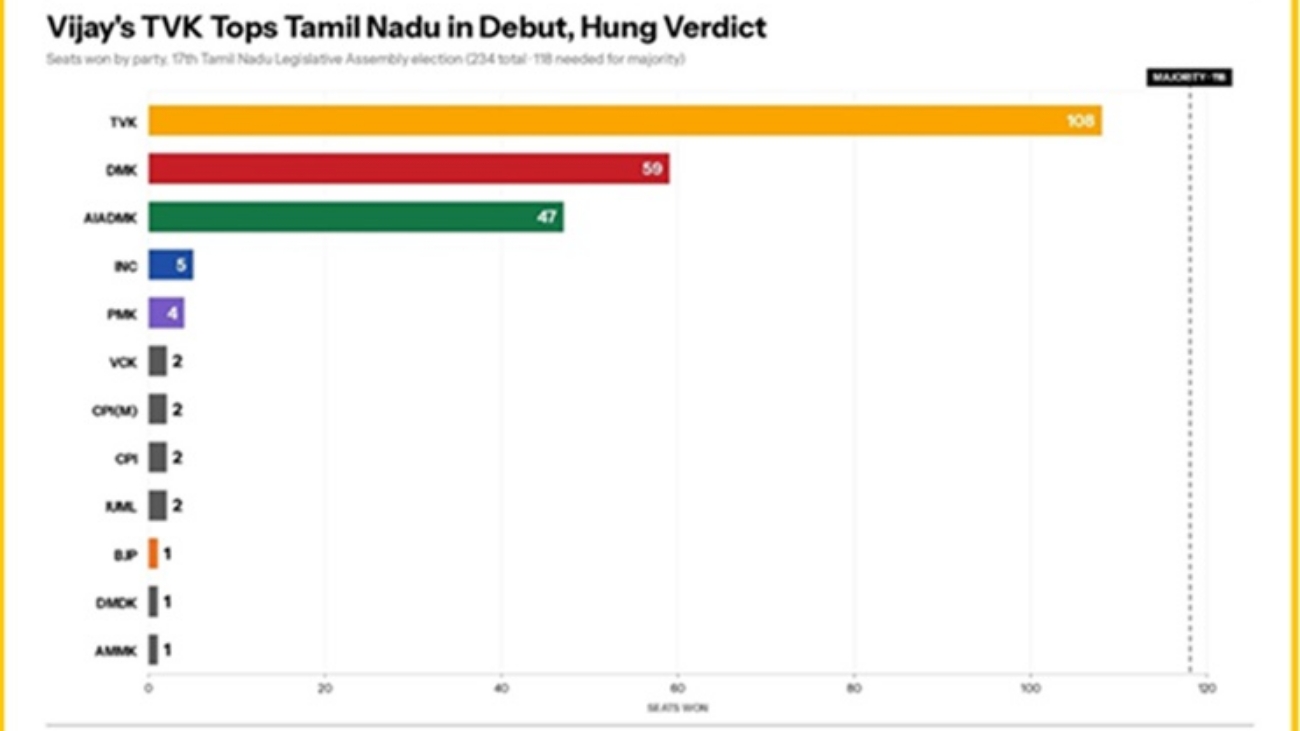
When the Tamil Nadu state election results were announced this Monday, many people were stunned that a party with barely two years of political existence had managed to unseat parties that had dominated the state for more than 75 and 50 years respectively.

TVK (Tamizhaga Vetri Kazhagam), founded by actor turned politician Vijay, used his charismatic presence in Tamil cinema along with the power of social media to attract Gen Z voters and women.

This came despite the incumbent DMK (Dravida Munnetra Kazhagam) government under Chief Minister M.K. Stalin being widely credited for stable governance and helping Tamil Nadu remain one of India’s fastest growing state economies, with a GSDP( Gross State Domestic Product) growth rate of 11.9%.

Voting Results in Tamil Nadu and TVK Topping the Results

The two major Dravidian parties – DMK and AIADMK (All India Anna Dravida Munnetra Kalagam) were originally built on the foundations of social justice, welfare, and development. For decades, they shaped Tamil Nadu’s political identity and succeeded in winning the trust of the people.

However, despite the DMK government’s governance record, allegations of corruption, nepotism, and cash for votes politics continued to surround both DMK and ADMK. These criticisms have become deeply embedded in public perception over the years.

Today’s Gen Z voters appear to want change. Many were looking for a fresh political face capable of reshaping Tamil Nadu’s political landscape.

Vijay’s party reportedly secured around 1.67 crore votes, or approximately 34.3% of the total vote share, one of the strongest performances ever recorded by a newly formed political party contesting its first major election.

India’s political landscape has also been evolving rapidly in recent years. Prime Minister Narendra Modi and the BJP have successfully consolidated much of North India politically and are now working aggressively to expand their influence in southern states such as Telangana, Karnataka, and Tamil Nadu.

For Modi, strong regional opposition leaders such as M.K. Stalin in Tamil Nadu and Mamata Banerjee in West Bengal have remained major political challenges. Any significant political shifts in states like Tamil Nadu and West Bengal could reshape India’s national political dynamics in the years ahead.

While corruption, nepotism, and vote buying are important issues to consider, it is also necessary to distinguish between political allegations and governance outcomes.

In many ways, the DMK government performed better during the last five years than several previous ADMK and DMK administrations. Social indicators are impressive while Tamil Nadu State has attracted billions of USD investment for iPhone and automobile manufacturing.

During the election results, I was driving through Tiruvannamalai in northern Tamil Nadu and noticed that the streets were unusually silent. There were hardly any people celebrating openly.

If another traditional Dravidian party had won, the roads would likely have been filled with supporters distributing sweets and celebrating publicly.

For the first time, it felt as though a major electoral victory had been shaped more by social media influence and public perception than by traditional ground level welfare based political desires.

On my way back home on Monday, I saw an elderly man sitting at a bus stop equipped with fans that helped ease the intense summer heat.

That moment made me wonder: in the next five years, will political change alone truly improve the lives of ordinary people?

Or will charisma and digital influence matter more than governance, infrastructure, and social-welfare in the long run?

Copy and paste the text from AMT that you want to share

Water India Graph 20260430

India Insider: Water Crisis Has Turned From Severe to Critical

India Needs Sustainable Water Security With Improved Infrastructure

India’s population has been expanding at a rapid pace and stands at 1.4 billion. Due to the urbanization process, industrialization in cities like Chennai, Mumbai and Delhi must continue to emphasize improving public infrastructures in order to maintain vital growth.

The growing population and urbanization adds noteworthy stress to the nation’s water bodies. With more people living in increasingly congested areas and pumping large amounts of water via borewells, groundwater levels are rapidly diminishing.

For instance, India consumes roughly 761 billion cubic meters of water per year, making it the largest water consumer in the world, ahead of China and the United States. 85% of rural India is dependent on ground water for agriculture and consumption, this because lake and pond water are not accessible. Rural India suffers from a lack of maintenance and sewage water that often contaminates these important sources.

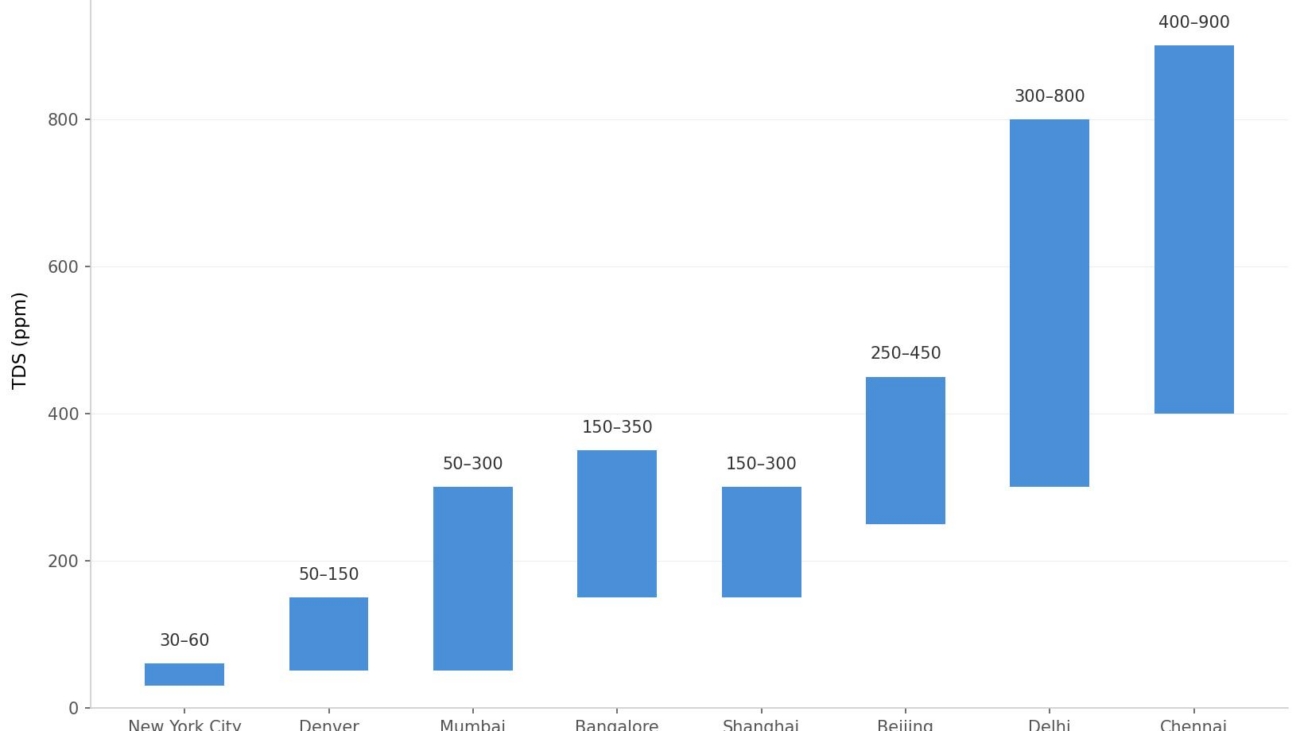
Tap Water via Total Dissolved Solids Comparison in Various Cities Worldwide 

Only a few years ago, water facilities provided by municipalities and urban systems were relatively accessible in India. Low and middle income households relied on pipelines, wells and tap water for their daily usage. However, with sharp rises in population, government capital expenditures on water pipelines and sanitation has not kept pace and often fails to meet needs.

For example, rainfall in Chennai City always ends up staying on roads and platforms in the last few years, this despite the city’s infrastructure which has expanded multifold. In many parts of Chennai, water contamination has become severe with high levels of iron, hardness, turbidity and nitrate levels visible. The government has been inefficient when addressing the contamination. As I witnessed in 2019, many parts of Chennai cannot use ground water due to inadequate rainfall, storage and lack of proper municipal supplies.

And due to excessive extraction of ground water and an inability to channel rain water into the ground, many parts of Tamil Nadu now report total dissolved solids (TDS) ranging from 500 to 1000 parts per million, reaching extreme levels of 3000–5000 ppm in some areas. The World Health Organization recommends much lower levels for safe and palatable drinking water.

Water treatment for households using reverse osmosis plants, which were not normal a few years back have become essential for people seeking safe drinking water. Despite being a coastal region , cities like Chennai cannot rely solely on seawater desalination to meet their drinking water needs. While desalination plants contribute to supply, they account for only a fraction of total demand.

Desalination is an energy intensive and expensive process, making it difficult to scale for universal, affordable access. More importantly, producing water is only one part of the solution and delivering it efficiently remains a major challenge.

India endures 3 to 4 crore (30–40 million) waterborne disease cases every year, mostly from contaminated drinking water. As borewells go deeper, they draw water containing high concentrations of fluoride, arsenic, nitrates, and heavy metals. This creates significant health risks, especially for low income households that cannot afford advanced purification systems. The depletion crisis and contamination crisis are increasingly converging.

Due to rapid urbanization and high population with inefficient audits, many water bodies such as lakes and ponds have been encroached upon by the real estate sector or contaminated by waste disposal by surrounding settlements. This is quite visible in Chennai.

Experts claim that many water officials do not have a clear understanding of how pipeline networks are laid out across cities. As Frontline magazine columnist Vedaant Lakhera wrote in April 2026, India’s water crisis stems less from hydrological scarcity and more from a failure of governance.

The absence of water sensitive designs have allowed cities to expand unchecked, almost freely, contaminating local water sources such as lakes and ponds. This has led to a significant depletion of groundwater availability, which were supposed to act as reserve water reserves.

Addressing this crisis requires a multi-dimensional approach. Rainwater harvesting must be scaled to improve groundwater recharge and long-term availability, while modern purification systems remain essential to ensure safe consumption in the short term. At the same time, systemic reforms such as regular pipeline audits, mandatory replacement of ageing infrastructure, and better urban water management are critical to prevent contamination at its source.

Without such integrated efforts, cities will continue to face a paradox of water scarcity amid abundance. Sustainable water security in India does not depend only on how much water is available, but on how effectively it is managed, protected and delivered.

Copy and paste the text from AMT that you want to share

WTI Crude Oil 20260428

Shift To Economic War Against Iran to Deprive Funds to Regime and IRGC

What If Everyone Is Looking At The Wrong Things About Iran?

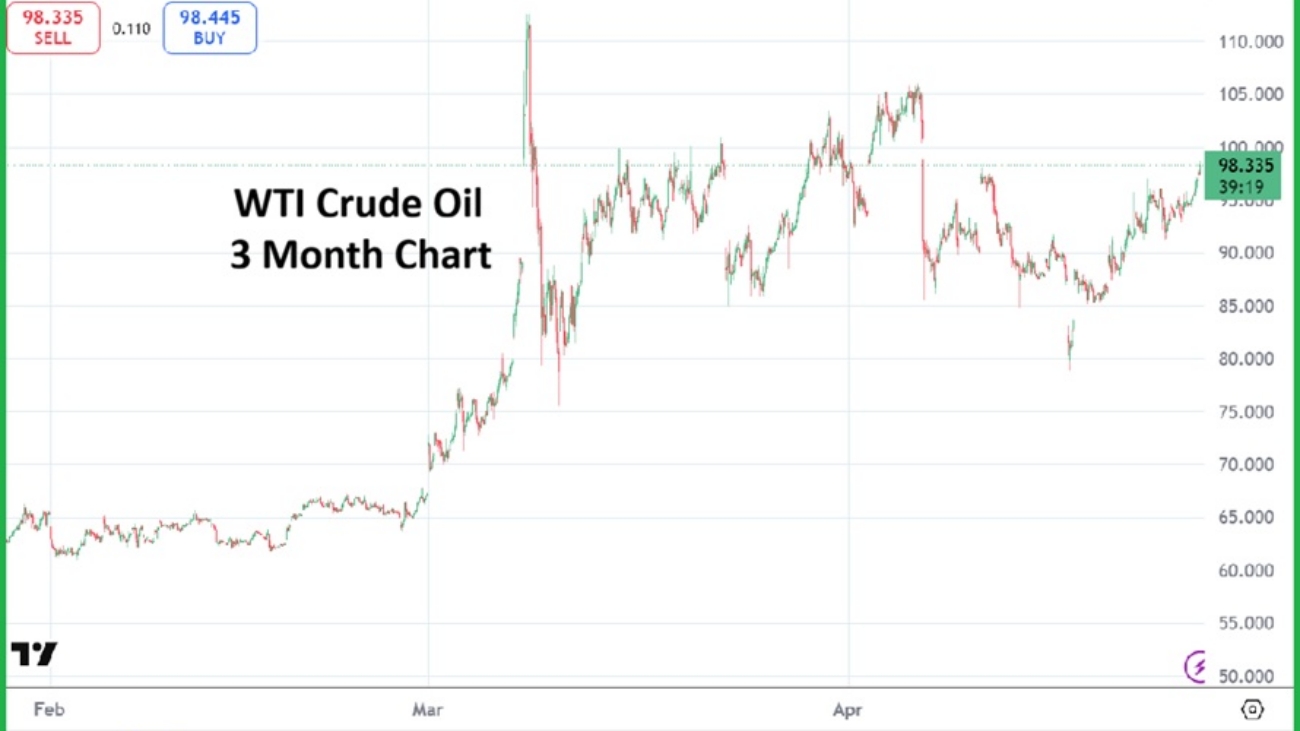
The current futures price for WTI Crude Oil is above $98.00. The cash price for the commodity is above $103.00. While many people continue to fret about what endgame strategy the U.S White House is conducting, what if we are seeing it play out in real time via the price of Crude Oil? Is it possible that President Trump has a coordinated plan to starve the Iranian regime and the IRGC of its much loved and needed money? It appears this is the case.

WTI Crude Oil Futures Three Months Chart on the 28th of April

Simply put, the Iranian Revolutionary Guard Corps is a mafia. They stay in power using the tool of fear brought upon by their ability to be ruthless to the Iranian citizens. They are a terrorist organization in the truest sense. If you disagree with that assessment, you are free to do so. However, facts when they are studied point to the conclusion Iran is a terrorist state led by its regime and the IRGC. 

Iran has made massive amounts of money via its energy products for decades. The shutdown of the Hormuz Strait, or at least the inability to export Crude Oil freely, is putting a strain on global energy prices, and it is causing a major fracture in the main financial export of Iran. 

The U.S has not only shut down easy navigation in the Hormuz Strait, but it is also going after Iran’s cryptocurrency operations. The ability to receive and transfer digital money by Iran is being strangled. What if President Trump is not only listening to the opinions of his military officers, and Secretary of State Rubio and Vice-President Vance, but also Treasury Secretary Scott Bessent who has an abundance of financial knowledge about how money flows internationally and how to create obstacles.

If the IRGC is not able to pay its own members, and other adherents to the Iranian regime are only slowly reimbursed, the apparatus of the IRGC will certainly lose its influence. The inability to pay allies that exists merely because they are employed or corrupted by the IRGC likely is starting to cause fractures regarding loyalties. 

China needs Iranian oil too. And evidence is starting to be speculated upon that China is facing tough decisions about acquiring Crude Oil from other sources. China will not be happy about having to pay higher costs, this because discounted Iranian oil that has abundantly been used is no longer available. 

Equities via the major U.S indices have done incredibly well since the end of March. The Nasdaq 100 has seemingly forgotten about AI overbought concerns, the S&P 500 is within apex territory and the VIX is acting as if sunny days are in the forecast. Forex has been volatile, but the value of the USD is within known realms.  However, the price of WTI Crude Oil is high and it has gotten higher since the 17th of April when futures prices briefly flirted with the $80.00 realm – this before going into a weekend. And this is a clue that something is afoot, beside larger players speculating on what their outlooks are for WTI Crude Oil in the mid-term.

The weekend of the 18th and 19th of April witnessed talk of an end to the Iranian war fall short; and heard President Trump essentially declare the ceasefire is still on but with the caveat that the U.S would create a blockade in the Hormuz Strait. While the semantics of a blockade can be debated, the U.S has caused shipping problems for tankers that were supposed to ship Iranian Crude Oil. The U.S clearly decided to create economic distress for Iran.

The Iranian regime still stands, but its leadership is rather shaken. The IRGC is controlling a lot of the decision making for the time being, and it appears the U.S White House is trying to make the IRGC weaker by ending their financial lifelines. It appears that it has been figured out that an economic war which includes starving Iran of cash is the most certain way to create revolts inside of the nation. When the influence of money is eroded, and temptations via other spheres of power suddenly sound tempting and can be joined, this is when shifts in authority and leadership can occur. 

While many analysts wonder about the lack of an obvious endgame being announced by the Trump administration, maybe it is already being played out. President Trump has a large ego and he is happy to extoll the virtues of his ‘tremendous’ policies frequently, but he also has shown the ability to remain quiet when it comes to plans of action and carrying them out. Yes, this can be argued into the late hours by pro-Trump and anti-Trump people. But maybe Trump is simply telling the truth when it comes to the U.S having time on its side regarding the Iranian ceasefire and the Strait of Hormuz. Maybe the clock is ticking on the eroding cash pile the Iranian regime and IRGC has within its grasp.

Copy and paste the text from AMT that you want to share

US Cash Index 20260424

Upcoming Weekend Nervousness: Does Anyone Know What is Going On?

Preaching Caution and Looking Like a Fool to Those Who Want to Profit

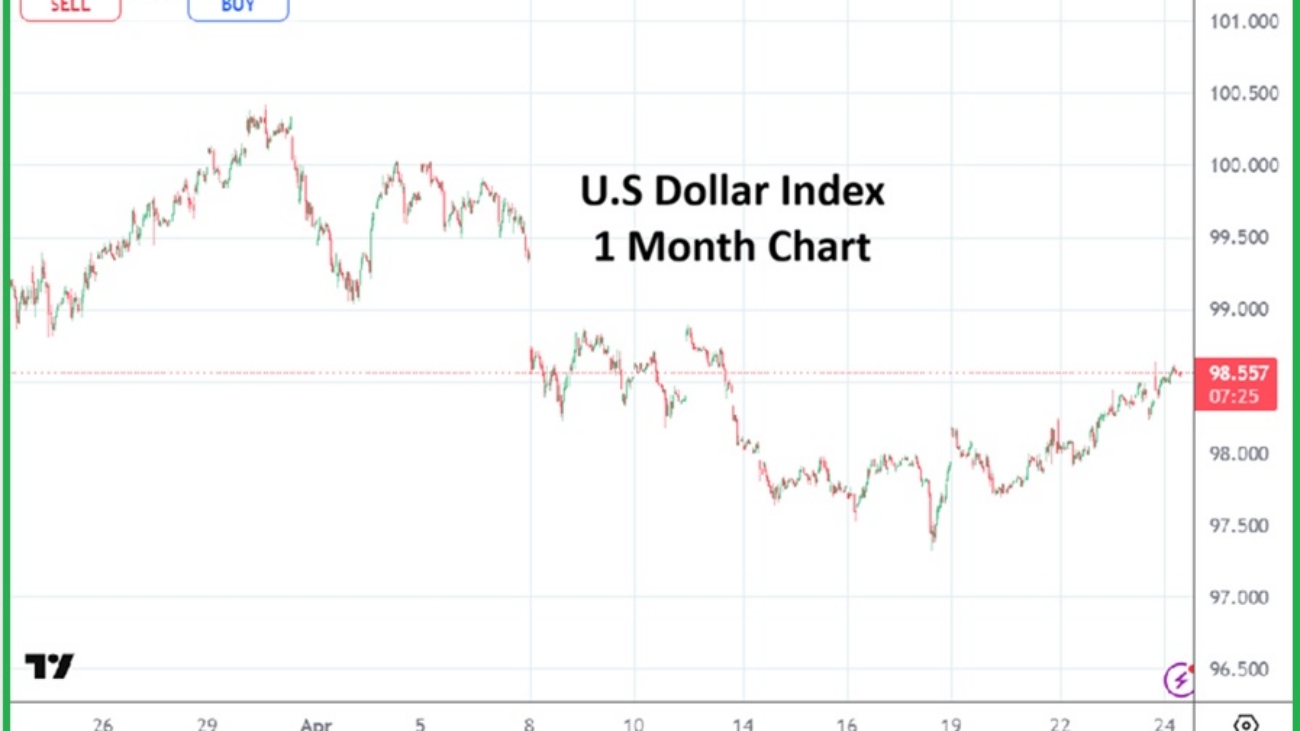
Can someone please tell the rest of us what is going on? Global markets via Forex this morning are demonstrating additional USD centric strength which developed yesterday. The price of WTI Crude Oil is above $94.00. Gold is languishing and around 4,675.00 USD. And although the 3 major U.S stock indices are all within their higher realms – one thing stands out – folks are uneasy.  But then again, the markets never move in one direction only, and perhaps current results can be interpreted as profit taking by those on winning sides.

U.S Dollar Index One Month Chart on the 24th April 2026

I would love to be the person to tell you what is going to happen, but as this weekend looms making short and near-term bets still appears a fool’s game. Yes, it is easy to make predictions, but being correct is more difficult. Retail traders are suffering more than most market participants, this as leverage and a lack of funds to remain in a position through violent reversals destroy plenty of trading accounts.

There is talk of manipulation via chat rooms regarding the price of WTI Crude Oil. The usual dialogues can be seen – largely based on conspiracies via large players trying to blow out smaller traders. However, these types of forum chatter are mostly wrong. Large players are getting hurt too in the energy markets. Anyone who is taking a position in order to speculate on a quick hitting foray in WTI is betting on their perceptions. 

The problem is that unless there is inside knowledge of what the next words out of President Trump’s mouth are going to be, or that from Iranian officials – any pursuit of WTI Crude Oil at this juncture is a ‘vibe’ trade. What is going to happen from Saturday and into Sunday is an unknown quantity. Folks holding positions into this weekend need to understand they are wagering. And some may find they are quite profitable afterwards, while others grimace and find themselves on the wrong side of the next surges higher or spikes downward. Intraday trading volatility in nothing new however.

The USD/JPY is near 159.600 as of this writing. The EUR/USD is close to 1.16820. While a tourist traversing foreign lands may not find the Forex incremental shifts in value mesmerizing or of interest, FX traders who do not have deep pockets are likely wondering why risk adverse conditions are prevailing suddenly. But as a risk analyst, I must say that conditions simply may have been perceived to have been oversold in the USD by financial institutions, this as the Fed looms on the horizon.

However, my task as a risk analyst the past two months has been like a carnival barker, because while it has been easy to say that a show is happening within the big tent of speculation, I have been hard pressed to predict short and near-term directions correctly. Perhaps I fret too much. The optimistic thunder claps upwards in the stock markets since the 31st of March have been astounding to many. Hopefully it has been prosperous for day traders, but the likelihood is that financial institutions are the ones who are profiting more via their pension funds purchases for institutional clients.

This coming week the U.S Federal Reserve will make their FOMC decision public. This will be Jerome Powell’s swan song at the Fed. The Chairman is being faded out by the U.S White House mid-May. And somewhere when he is all alone, Jerome Powell may be having a quiet laugh to himself. The Fed will not act this week. Rates will remain the same – unless there is some bizarre move in the global markets over the next handful of days. Yet, Powell’s remarks will be listened to for warnings. While it is not in Powell’s nature to issue a ‘I told you so’ quote, and he is likely content to walk away from the Federal Reserve quietly, it would be captivating if Powell looked into the cameras and pointed fingers. 

But because Jerome Powell like most others, likely has no clue what is going to happen next internationally he will remain mostly mute (cautious as always).

And here we meet again, wondering what the next 72 hours hold. Will the Iranian ceasefire remain observed? Is it even a ceasefire in reality? The Strait of Hormuz remains a linchpin for military action by the U.S Navy and Iranian Revolutionary Guards via a cascade of ship seizures. Maybe that continues to be the key, WTI Crude Oil prices remain a crucial barometer. USD centric prices via Forex action seems to be a reflection of fear or positive thinking in the energy sector depending on the prevailing tides.

Last week there was so much optimism folks were talking about WTI prices potentially hitting $75.00 and lower, now this hope seems to be wishful thinking. Global markets will remain fast and dangerous, that is easy to say and is right, but telling you which direction assets will move, that is a bit different.

And there is the old standard test I use when an opinion is definitely asked for: if someone were to put a gun theoretically to my head and ask me what I think, I would venture to say things will remain quiet and optimism will seep into the markets before the close this weekend. However, I don’t like to play fool’s games, so I will leave now and wish you luck via your own perspectives because the near-term remains more speculative than normal for day traders – even if strict risk management is used. 

Copy and paste the text from AMT that you want to share

postN87

AMT Top Ten Miscellaneous Bits of Clarity for the 19th of April 2026

In a World Filled with Bread and Circuses, Now a Dose of Transparency

10: The Risk Reward Show: Sommer and Petrucci will return to the airwaves this coming week, via sources like Spotify and YouTube, with their podcast starting after a long break (absence).

9. Hardball: Major League Baseball is back and the sport continues to attract more fans and growing attention with its quicker games, a new computerized strike zone, and maybe even more dislike of the Los Angeles Dodgers. Yes, Shohei Ohtani remains a dominant and positive force in the baseball world.

AMT Top 10 for the 19th of April 2026

8. Populism: Politicians on both sides of the Atlantic continue to display a wide display of nonsensical rhetoric and bold asinine actions equating into empty spectacles. An example from the Left is Zohran Mamdani the mayor of New York City with his socialist platform, which is certain to fail and equate into more people and companies leaving NYC for less expensive and friendlier tax environments. And from the Right Italian Prime Minister Giorgia Meloni who talks a tough game but consistently falls short of backing up her words when she senses she could lose control of her power base. The putrid smell of trying to please voters with rotting bread and circuses prevails.

7. Speculation: Gold finished Friday’s trading near $4,837.50, Silver around 80.78. Bitcoin is close to $75,570.00. 

6. AI: While the Artificial Intelligence hangover has been widely discussed for a handful of months, health continues to be seen via Nvidia which closed above $201.00 going into this weekend, and Anthropic PBC which appears to be aiming for an IPO in late 2026 or early 2027. At this moment Anthropic has an estimated valuation of 800+ billion USD. If Nasdaq is able to secure a listing with Anthropic it will immediately factor into the Nasdaq 100. Are some investors betting on upside now which they believe will be seen when Nasdaq reorganizes its index?

5. Optimism: India, South Africa, Brazil and other emerging markets have experienced Forex volatility like all nations the past month and half due to the Iranian war. However, in the past two weeks the Indian Rupee, South African Rand and Brazilian Real have performed better as global markets have calmed. The ZAR and BRL have actually outperformed major currencies over the past handful of months showcasing existing optimism within financial institutions dealing with these currencies.

4. Money for Something: Lefarge, a French company specializing in concrete, was found guilty this past week of paying ISIS (Daesh) and other terrorists groups money in the years from 2012 into 2014, this in order to maintain their business operations in Syria. While Lafarge claims they paid the money to keep their operating staff safe, a French court ruled Lafarge was buying not only safe passage to allow employees to work, but also paying for physical resources needed from quarries that were controlled by the terrorists. Critics of Lafarge point towards the company’s massive infrastructure investments leading up to 2012 and a decision to seek profits no matter the costs of dubious morality. Some Lafarge former senior executives involved have been sentenced to prison including Bruno Lafont and Christian Herrault. Lafarge and Holcim (a Swiss conglomerate) merged officially in July of 2015.

3. WTI Prices: The value of the world’s most famous Crude Oil went into the weekend near $83.30 via futures markets. The commodity is certain to open with volatility early on Monday, this as folks weigh in via their existing behavioral sentiment which will range from speculative perceptions to insights they hold to be true (but that could prove false). WTI Crude Oil challenged 79.00 USD momentarily on Friday, before sparking upwards as cautious attitudes likely ignited doubts about what would happen this weekend in the Middle East regarding potential developments. Wagering on WTI in the coming days for day traders may be akin to spins of the roulette wheel.

2. Apex Heights: The winning streak and surge upwards for the Nasdaq 100, S&P 500 and Dow 30 via gains have caught some investors by surprise and standing on the sidelines. Some large financial institutions may find they have to explain why they did not participate in the rally which has unfolded since late March. The S&P 500 has gone up around 9.5% during this time.

1. Straight Talk: The Hormuz and whether or not the strait is open for oil tankers will remain a catalyst for all global assets until clarity is gained. In the meantime a whirlwind of noise and threats from President Trump, the U.S White House and Iran will remain a menace for all traders – small and large. Is the Strait of Hormuz open or closed?

Copy and paste the text from AMT that you want to share

Sunset 20260413

Speculative Prospects and Temptations Via Perilous Opportunities

Desire to Gamble on Perceptions and Risk Management

The markets have acted in a polite fashion as of early trading via Asian and European perspectives today. After this weekend’s proclamation that talks between the U.S and Iran didn’t attain an agreement, there probably weren’t many folks in financial institutions who were surprised by the outcome. Thus the theme, no action is the best action may be holding true as folks simply watch.

While the USD has picked up some momentum in Forex this morning, the gains by the USD against other major currencies have not been significant. However, the near-term will remain tenuous and day traders with a taste for adventure may believe opportunities lurk.

Western Cape Sky

The temptation to take advantage of market situations which hold the prospect of volatility will be strong among many. If a trader were to bet on the right direction and catch momentum from a Forex, equity index or commodity move in WTI Crude Oil, large profits could be found. The realization consisting of ‘what can be gained can also be lost’ must be considered too. Greater velocity in prices means there are risks that must be considered.

USD centric strength this morning has been rather polite, and suggests that if financial institutions are forced to shift their behavioral sentiment greater movements will occur. This sets the table for speculators who want to bet on a chosen direction per their perspective regarding what will unfold in the coming hours and days. 

The U.S White House is talking tough and threatening to blockade the Strait of Hormuz, but nobody really has a clear picture of what that means entirely, nor if it can be done. The Iranians continue to talk tough and say they are in control of the Hormuz. It does appear this body of water will be a chief ignition switch per an escalation for the Middle East conflict. 

The ceasefire which was declared last Tuesday is one week old as of today. The ceasefire agreed upon last week was for 14 days, meaning there is one week left if both sides hold their fire. There are no guarantees tranquility will prevail. If the U.S does go ahead and try to seize the Strait of Hormuz’s sea navigation, this could spell a sudden and loud end to the ceasefire which in theory still exists.

Forex, gold, equity futures have shown no real shockwaves as of today following this weekend’s failure to find a peaceful path forward. Traders who have the ability to be patient and hold onto positions may be able to take advantage of moves that could develop. Serious risk management will be a key part of any wagers taken. The use of very conservative leverage is advised too. Traders also have a hurdle they must consider regarding overnight charges via their brokers if they wish to pursue trades that carry over into the next day.

So what will happen? If the Iranian war becomes loud again there is a real chance the USD will become stronger. The EUR gained quite well against the USD since the announced ceasefire and it looks like it remains in what may be considered overbought territory, particularly if fiery rhetoric turns into missiles being launched again.

However, as some analysts have pointed out, there is a chance the worst of the news and its negative impact has already been traded into the marketplace. There is a temptation to believe USD centric strength in Forex, and price action in the S&P 500, Nasdaq 100, Dow 30 and its international counterparts have already suffered massive negative selloffs and that any declines that take place now will be met with reversals higher. Yet, betting on this type of shifting sentiment by day traders is akin to throwing darts at a moving target, because the volatility and timeframes will prove difficult for those betting on momentum spikes. And things in the Middle East could actually get worse.

Thus, day traders should remain cautious. If they want to wager on noise developing into a violent rupture again in the Middle East they might be proven correct. The near-term remains dangerous. Day traders have an opportunity to catch a news cycle that delivers the turbulence they believe may happen. Stop losses need to be used though, in case the Middle East saga takes an unexpected turn. It is unlikely that peace is going to suddenly break out, but rumors about Saudi Arabia is talking with the U.S about a more coordinated regional enclave that involves the U.A.E and Israel is creating attention. Yet, the fog of war via verbal interludes which seem improbable, and realities that are pushed to the limit hold no promises either.

Wagering on what is going to happen over the next few days and into next week in the Middle East is a gamble. And this may explain a lot of the sideways price action seen early today, and the rather pragmatic conservative approach by financial institutions as they play a game of wait and see.

Copy and paste the text from AMT that you want to share