postN36.1

Anxiety and Surprising U.S Data for Day Traders to Consider

Anxiety and Surprising U.S Data for Day Traders to Consider

Global central banks stayed in their anticipated lanes last week as the Fed and ECB raised their key lending rates. The BoJ has admitted it is allowing its yield curve to increase, meaning the Japan government is cutting back on purchases of Japanese bonds. Forex produced anxiety and choppy results for day traders.
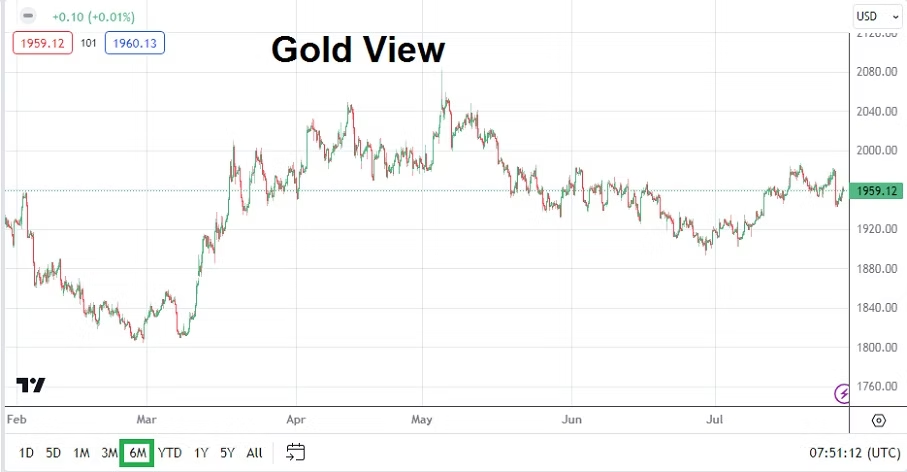
Gold 6 Months Chart as of 30 July 2023

Economic data from the U.S last week provided a strong Gross Domestic Product result on Thursday, and followed with weaker than expected Personal Consumption Expenditures and Personal Income statistics before going into the weekend. Meaning the U.S economy appears to be surprisingly solid, while inflation pressures do indicate they are in decline. The Forex market turned volatile on Thursday and Friday, gold which traded at nearly 1980.00 USD on Thursday went into the weekend near 1959.00.
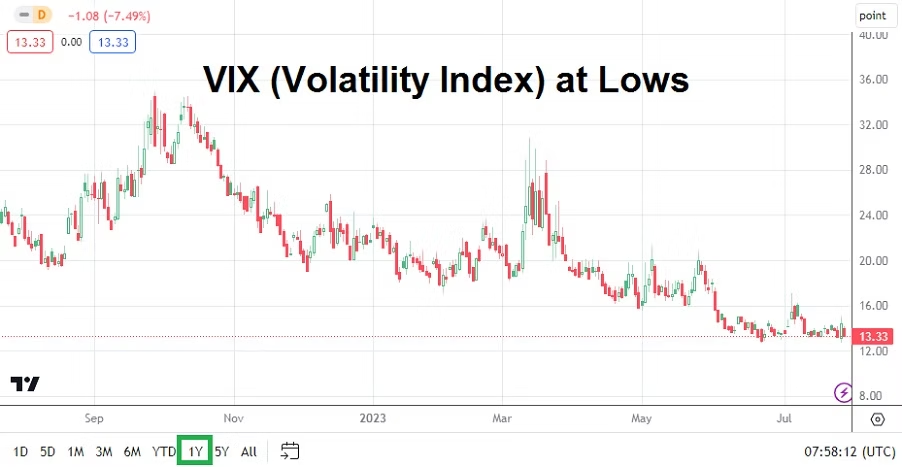
VIX Index 1 Year Chart as of 30 July 2023

Stock markets in the U.S via the major indices continue to incrementally rise and folks waiting for a big sustained selloff are having their patience tested. Perceived volatility in U.S markets is very low and the VIX (Volatility Index) indicates many investors are not taking the time to hedge with options because their confidence is remarkably high. A cautious reminder for traders, one bad day could change all of the optimistic sentiment.

In the cryptocurrency world, folks should continue to keep their eyes on the Binance exchange and its Binance coin. Many digital assets seem to be suspiciously close to important support levels as this week begins and appear vulnerable.

Monday, 31st of July, China Manufacturing PMI – while U.S data surprisingly improves, China has not begun to show signs of a positive turnaround quite yet, and this reading is expected to be below last month’s outcome. China data is a solid barometer of global economic health and traders should give these results proper attention.

Monday, 31st of July, E.U Consumer Price Index Flash Estimates – the European CPI numbers are expected to come in slightly below the previous month’s reading. If for some reason these inflation numbers are higher than expected, this could cause some chaos briefly for the EUR/USD. A weaker number however offers no sound wagering basis for short-term day traders either. Behavioral sentiment appears to be ruling the EUR/USD landscape for the time being, and technical levels should be watched.

Tuesday, 1st of August, Australia Reserve Bank Cash Rate – the RBA is expected to follow in the footsteps of the Fed and ECB and raise its lending rate by 0.25%.

Tuesday, 1st of August, E.U Manufacturing PMI – Germany and France are anticipated to produce similar results to last month’s outcomes. Recessionary pressures are a concern in the E.U and better than expected numbers would be welcomed, but this may prove difficult to demonstrate as economic conditions remain challenging.

Tuesday, 1st of August, U.S ISM Manufacturing PMI – the results from the manufacturing sector in the States should be watched. A slight improvement is expected, but the reading is not expected to produce a wildly optimistic result. An outcome which slightly beats expectations, but is not too strong might make the USD slightly weaker. Global investment institutions are likely hoping for any signs that the Federal Reserve will have to become less aggressive. A lackluster to ‘fair’ ISM Manufacturing PMI result could be evidence larger Forex traders want to see if they are aiming for bearish momentum in the USD.

NZD/USD 3 Months Chart as of 30 July 2023

Wednesday, 2nd of August, New Zealand Employment Change – the jobs statistics are expected to show slightly weaker results from the nation. The NZD/USD remains within the lower elements of its long-term price range. There are many NZD/USD bullish traders waiting for a sustained reversal higher, but it is unlikely to be produced from these New Zealand jobs numbers.

Thursday, 3rd of August, U.K BoE Monetary Policy Summary and Official Bank Rate – the Bank of England remains in a difficult spot and it will likely raise interest rates by another 0.25%. Criticism of the Bank of England has been loud in Britain, but the BoE likely feels it has to remain in line with the Fed and ECB. Recessionary pressures continue in the U.K and inflation remains problematic. Concerns will be heard regarding property mortgages for home owners if the BoE hikes. The GBP/USD will certainly move depending on the rhetoric from the Monetary Policy Summary and talking points delivered by BoE Governor Andrew Bailey.

Friday, 4th of August, U.S Non-Farm Employment Change and Average Hourly Earnings – the jobs data parade will climax at the end of the week, this after starting on Wednesday via the ADP jobs numbers. Investors will watch the Non-Farm Employment Change data carefully and correlate them to the better than expected GDP results from the 27th of July. The wages data from the Average Hourly Earnings is expected to come in with a slight decrease. A weaker inflation result from the wages statistics could cause additional softness in the USD. However, recent data from the U.S has been hard to predict correctly, and day traders may want to sit on the sidelines until all the jobs numbers are digested.
postN33.1

Federal Reserve Bank Decision and FOMC Statement Wednesday

Federal Reserve Bank Decision and FOMC Statement Wednesday

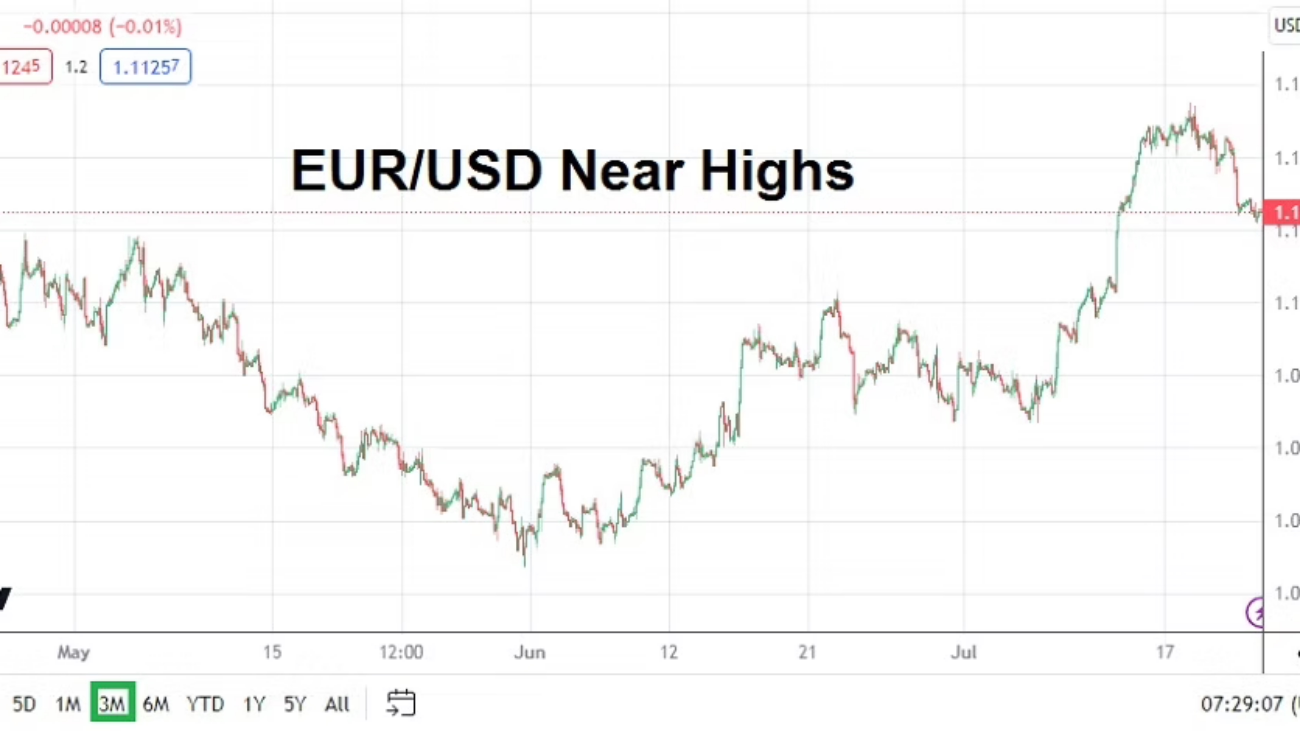
Monday, 24th July 2023, E.U Flash Manufacturing and Services PMI – a slew of Purchasing Managers Index readings will come from European Union nations including Germany and France. Projected outcomes are expected to show slight improvement in the Services readings and mixed results from the Manufacturing sector. The EUR/USD may get a momentary nudge from the published numbers.

EUR/USD 3 Month Chart as of 23rd July 2023

Monday, 24th July 2023, U.K Flash Manufacturing and Services PMI – the British economic reports are anticipated to come in below last month’s readings. The U.K did report slightly better Retail Sales numbers last week, but a Consumer Confidence outcome was weaker than expected. The GBP/USD might react briefly to the U.K PMI data.

Monday, 24th July 2023, U.S Flash Manufacturing and Services PMI – the reports from the States are forecast to be below last month’s numbers. U.S data produced nervous and weaker economic insights last week from the Housing sector. The Federal Reserve will certainly give some attention to the PMI data as they try to gauge the strength of the U.S economy while likely preparing to hike the Federal Funds Rate on Wednesday. The PMI statistics could factor into the Fed’s outlook, which is the crucial ingredient that financial institutions want to understand and still have skepticism about while considering the Federal Reserve’s potential actions later this week.

Tuesday, 25th of July 2023, Germany ifo Business Climate – the results are expected to be slightly weaker than last month, showing businesses in Germany are not optimistic about current conditions and outlooks.

Tuesday, 25th of July 2023, U.S CB Consumer Confidence – the report is anticipated to show U.S consumers are feeling more confident about their spending habits. If this report is stronger than expected, it could be one final clue before the U.S Federal Reserve springs into action the next day.

Wednesday, 26th of July 2023, U.S Federal Funds Rate and FOMC Statement – most financial institutions are prepared for a hike of 0.25%, which would bring the key borrowing cost to 5.50%. This number has been anticipated for a handful of weeks and any deviation would cause volatility. Forex has largely priced in the rate hike. Speculators need to pay attention to the FOMC Statement regarding outlook regarding comments on inflation, growth and what the Fed is prepared to do moving forward.

Because U.S inflationary price pressures showed a decrease recently, many financial institutions are likely betting on a slightly more optimistic sounding FOMC Statement. The question is if the Federal Reserve will risk sounding dovish, or continue to voice disciplined rhetoric about its ability fight inflation as needed and keep a middle ground. For all the criticism of the U.S Federal Reserve if it can raise interest rates without causing a credit crunch on mid and small sized banks the remainder of the summer, that would be a victory – particularly if it is perceived the U.S central bank will not raise hike the Federal Funds Rate the remainder of the year. However, that remains to be seen.

Thursday, 27th of July, E.U European Central Bank’s Main Refinancing Rate and Monetary Policy Statement – the ECB is expected raise their key lending rate by 0.25% and back up their recent ‘tough’ and heightened rhetoric regarding inflation. Again, day traders should understand the interest rate hike to 4.25% has been anticipated and largely digested into Forex. The question is the ‘voiced’ concern from the ECB within its Monetary Policy Statement. Financial institutions will react to the ECB Press Conference led by Christine Legarde, which comes about half an hour after the release of the Monetary Policy Statement.

USD/JPY 3 Month Chart as of 23rd July 2023

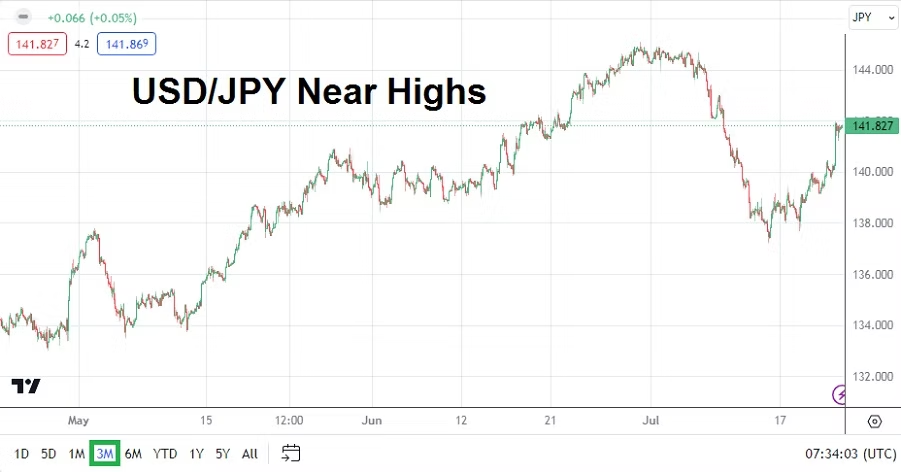
Friday, 28th of July, Japan BoJ Policy Rate and Outlook Report – the Bank of Japan is the one global central bank that marches to its owner drummer and this will not change in the near-term. The BoJ is expected to keep its policies of low interest rates in place, voice concern about inflation and likely say their ‘boat’ remains steady on the water. The USD/JPY will have reacted before to the rhetoric from the Federal Reserve in the middle of the week. Yes, the USD/JPY could see a flourish of volatility on Friday, but most of it will have likely been seen already on Wednesday and early Thursday.

postN21

Risk Events and Questioning the Hyperbole of ‘Bad Actors’

Risk Events and Questioning the Hyperbole of 'Bad Actors'

The week in a way has already started for financial institutions and traders because of the developing news from Russia. Due to yesterday’s events surrounding the ‘noise’ caused by the Wagner Group’s leader Yevgeny Prigozhin, let there be no doubt that energy sector traders became nervous and fragile behavioral sentiment was being anticipated for Monday’s openings. However, like a well staged drama (perhaps this is giving too much credit to the actors) the Russian saga seems to have come to an odd conclusion. Leaving the possibility for a Part Two to develop. Stay tuned ladies and gentlemen.

EUR/USD One Month Chart as of 25th June 2023

Monday, the 26th of June, Germany ifo Business Climate – the reading is forecast to come in worse than the previous month. Germany has turned in rather troubling economic data and the E.U as a whole is struggling under the weight of inflation and lackluster growth. The EUR/USD could be affected from the business climate survey.

Monday, the 26th of June, E.U ECB Forum on Central Banking – the annual event which is a bit like the Fed’s Jackson Hole Symposium will be attended by the leading central bank officials from around the globe. This year’s event in Sintra, Portugal will focus on inflation. ECB President Christine Legarde will kick off the event, which will end on Wednesday the 28th of June with speeches from Fed Chairman Jerome Powell, BoE Governor Andrew Bailey and others.

Tuesday, the 27th of June, Canada Consumer Price Index – a slew of inflation reports will be delivered. The forecast anticipates a slight drop in price pressure, but will that actually be the result? The USD/CAD could move based on the outcomes.

Tuesday, the 27th of June, U.S Consumer Confidence via the Conference Board – this survey is expected to show a slight improvement in the outlook of American consumers.

Wednesday, the 28th of June, E.U ECB Forum on Central Banking – the event will conclude with speeches from the heads of the ECB, Bank of Japan, Bank of England and Federal Reserve. The event is not supposed to stir up the dust, but Forex traders should monitor the rhetoric generated.

Thursday, the 28th of June, Germany Preliminary Consumer Price Index – the data is expected to show an increase in prices and underscore the ECB’s aggressive rhetoric regarding inflation.

Thursday, the 28th of June, U.S Final Gross Domestic Product – the growth numbers are projected to show a gain of 1.4% compared to last month’s 1.3%. The results will move the financial markets if they are surprising. Traders should be on the lookout for revisions to the previous month’s numbers.

Friday, the 29th of June, U.K Final Gross Domestic Product – an expected ‘growth’ number of 0.1% is anticipated, which would match last month’s lackluster outcome. The U.K is hovering under recessionary pressures and this GDP result will be watched by GBP/USD day traders.

postN11.1

Week Ahead: Inflation Followed by the U.S Federal Reserve

Week Ahead: Inflation Followed by the U.S Federal Reserve

Monday, 12th of June, U.S Federal Budget Balance – hold down the laughter and snickers please as you wonder why you should care, this as the report shows monthly income versus spending from the month before. Yes, the U.S ‘Debt Ceiling’ bill was passed recently. Very few people are going to pay attention to Budget Balance report, except economists and traders who have ‘skin in the game’ via hedge funds as an example – that make long-term bets, and U.S politicians who want to hoot and holler…….while nothing really gets done to limit wasteful spending in Washington D.C.

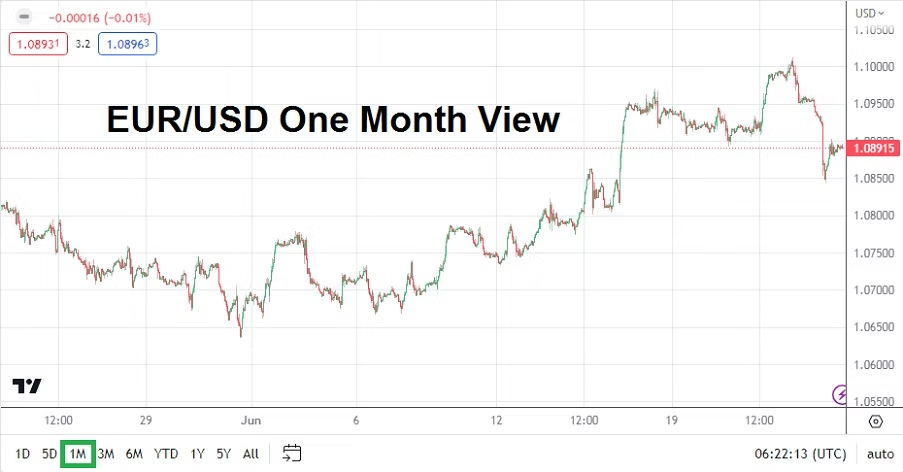
Tuesday, 13th of June, U.S Consumer Price Index reports – yes, this inflation data will be important per the monthly numbers showing what consumers are spending. A slight uptick is expected with an outcome of plus 0.2% via the broad statistics – last month’s number showed a gain of 0.4%. The outcome of the broad and core CPI statistics will give the Federal Reserve a sounding board for what will take place on Wednesday via the Federal Funds Rate announcement. Stronger than expected inflation numbers could cause a rupture and nervousness. A weaker result would calm Forex and perhaps make the USD slightly weaker.

EUR/USD One Month Chart as of 11th June 2023

Wednesday, 14th of June, U.S Producer Price Index – these numbers will be released early in the day and will be followed by the Federal Reserve five and half hours later. The inflation outcome via the PPI if stronger than anticipated would cause some caution before the Federal Reserve takes the stage.

Wednesday, 14th of June, U.S Federal Funds Rate, FOMC Statement and FOMC Press Conference – while many analysts seem convinced the Fed will not hike the interest rate this week, there are obviously no guarantees. The FOMC Statement will indicate the U.S central bank’s outlook. Traders who are intent on trading before the official interest rate announcement and statement are playing with fire. Speculators should keep in mind that other central banks have surprised folks with increases recently including Canada and Australia. A hike from the U.S Federal Reserve would surprise a lot of people and financial institutions, but stranger things have happened.

Thursday, 15th of June, New Zealand Gross Domestic Product – the growth numbers which will come out a handful of hours after the U.S Fed leaves the stage will be intriguing and provide NZD/USD traders more impetus into what will likely already be a volatile trading session taking place.

Thursday, 15th of June, China Industrial Production and Retail Sales – these two reports from the economic giant will be watched closely. China’s economy is struggling a bit, and weakness in the housing sector via values are starting to cause a reaction in domestic spending. Industrial Production numbers will give some insights regarding global demand. Economic problems in Europe and North America are certainly not helping matters in China because demand for goods are restrained and hurting the manufacturing sector.

Thursday, 15th of June, U.S Retail Sales – consumers in the U.S have been expected to start producing negative numbers via these statistics, will they begin to do it? A stronger number would be of interest to some, but after Wednesdays’ FOMC Statement and news that will be generated, it is questionable who will give full attention to this report and what affect it could have.

Thursday, 15th of June, E.U ECB Press Conference – this question and answer session could prove to be interesting depending on what the U.S Fed does the day before. Certainly the European Central Bank will give their opinions on monetary policy and economic circumstances in the European Union and abroad. The EUR/USD could be affected.

USD/JPY One Month Chart as of 11th June 2023

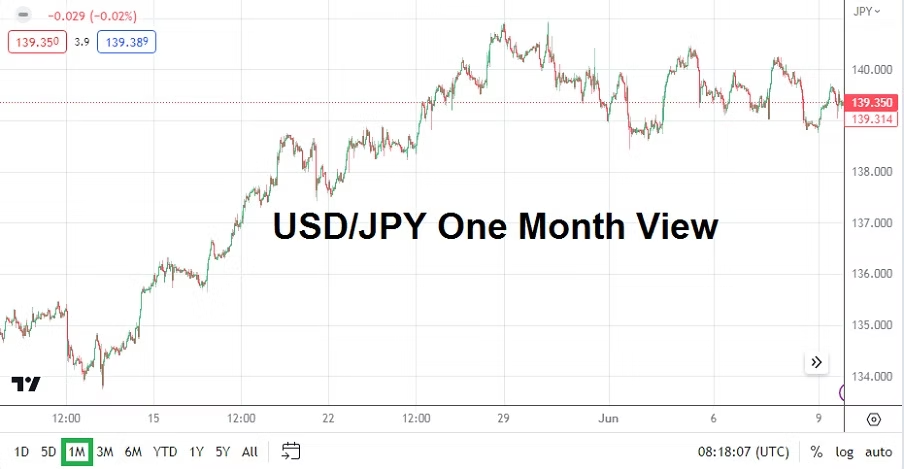
Friday, 16th of June, Japan BoJ Policy Rate and Monetary Policy Statement – no major changes are expected from the Bank of Japan. This is the one central bank unwilling to change its attitude regarding monetary policy because of the whims of others. Perhaps if the U.S Federal Reserve surprised everyone on Wednesday with a hike, this could change the quiet rhetoric from the BoJ – but even that is doubtful. USD/JPY traders should pay attention to the BoJ Press Conference just in case.

post42

Calendar this Week includes Debt Ceiling, Earnings and Jobs

Calendar this Week includes Debt Ceiling, Earnings and Jobs

Monday the 29th of May, Many banking holidays including in the U.S and U.K – traders choosing to participate in the markets should be aware that low transaction volumes can cause volatility due to imbalances. Be careful if you choose to trade on Monday.

Tuesday the 30th of May, U.S Debt Ceiling – talks and vote will be in focus. It appears an agreement may be in place, but financial institutions will certainly monitor the shenanigans from Washington, D.C. this week to see if a compromise can avert a crisis. Equity and Forex markets will respond to all developing news.

Tuesday the 30th of May, U.S CB Consumer Confidence – this survey of households in the States should be monitored. Spending remains strong in the U.S while manufacturing outlook appears nervous. The results may imply forward looking sentiment for U.S economy regarding consumption and could stir the markets slightly.

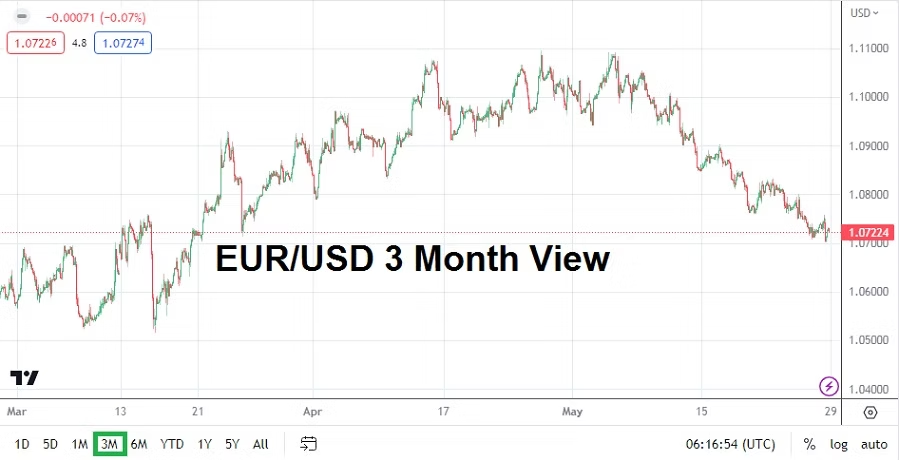
EUR/USD Three Month Chart as of 28 May 2023

Wednesday the 31st of May, Germany Preliminary CPI – inflation remains troubling in Europe and the German economy is seen as the linchpin. The result from the Consumer Price Index could rattle the EUR/USD a bit.

Thursday the 1st of June, China Caixin Manufacturing PMI – this Purchasing Managers Index from China will give some insight regarding the nation’s economic sentiment and its results will offer some clues regarding global demand for goods. Last month’s number was viewed as slightly negative.

Thursday the 1st of June, U.S ISM Manufacturing PMI – last week’s manufacturing and Core Durable Goods Orders numbers from the U.S were negative. While growth via the Prelim GDP came in slightly better this past Thursday, economic outlook remains skittish. Last month’s ISM data result was negative and this month’s forecast is not optimistic either.

Friday the 2nd of June, U.S Average Hourly Earnings and Non-Farm Employment Change – the results will shake the broad marketplace. Inflation via wages in the U.S remains a concern for the U.S Federal Reserve and the job market has appeared on the surface to remain rather strong statistically. A strong number from the Average Hourly Earnings could keep the Fed nervous and another hike on the 14th of June within their mindset.

post37.1

Nervous Contradictory Trading Winds for Behavioral Sentiment

Nervous Contradictory Trading Winds for Behavioral Sentiment

Behavioral sentiment in the broad financial markets is nervous, and mixed results in the major asset classes are likely causing retail traders to feel uneasy. Most day traders try to perceive which direction they should lean based on price momentum while looking for fast profits. The current state of the broad markets are making decisions difficult for retail traders.

A healthy dose of nervousness at this moment might be a good thing for speculators and keep them conservative. Swirling results in Forex and commodities are causing plenty of problems for traders who instinctively like to pursue buying positions because of the human tendency to be optimistic.

Federal Reserve Causing Headaches for Smaller Banks and Forex

Forex markets have been choppy since the beginning of February 2023, when the U.S Federal Reserve surprised many people with continued aggressive rhetoric. The U.S central bank has backed up its ‘tough’ talk as it ‘fights’ inflation with more interest rate hikes. Clarity regarding a potential June hike from the Fed remains problematic with no certain answer yet. For the moment there seems to be a belief there will be a genuine pause, which may be fueling better returns for U.S equity indices, but there are no guarantees. Behavioral sentiment remains fragile.

The detrimental effect from higher interest rates on mid and small size banks in the U.S remains harmful. Mid and smaller corporate banks continue to struggle with the increased Federal Funds Rate. Bad business decisions within these banks have made it difficult to make profits in an environment when money is no longer ‘free’, this as many of their depositors look for better returns.

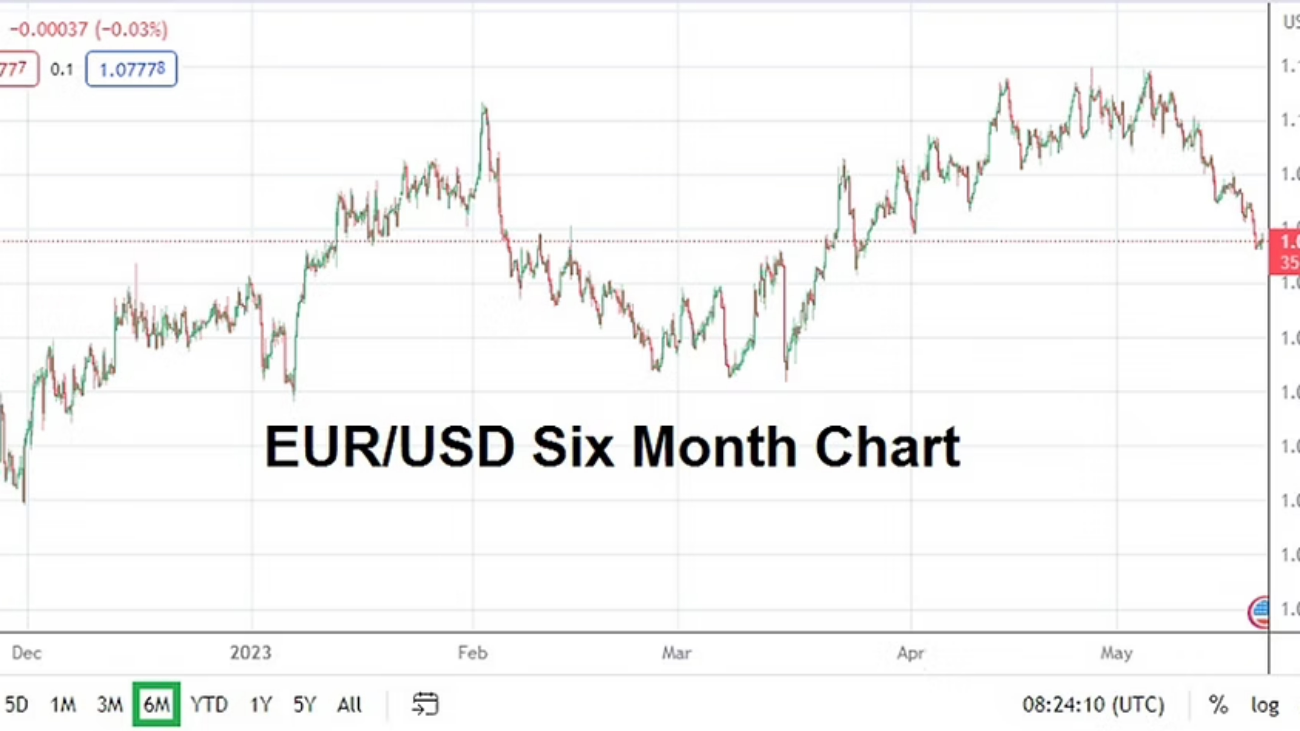
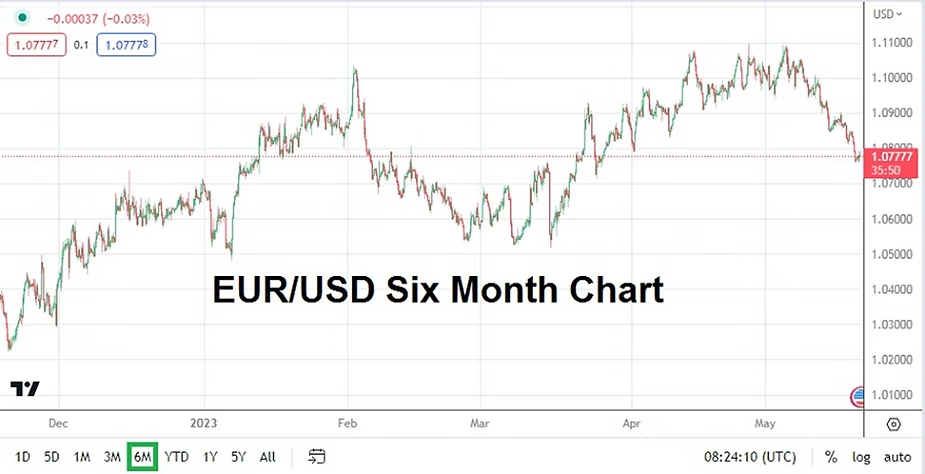
A six month chart of the EUR/USD below shows how the EUR started to climb in the fall of 2022, but then began to run into headwinds when financial institutions started to reconsider the seriousness of U.S Federal Reserve policy earlier this year. Analysis regarding the timing of the Federal Funds Rate forecast to actually start becoming dovish has proven problematic.

While the EUR/USD still maintains plenty of its gains, the current price of the the currency pair is below early February highs. The EUR/USD was trading near 0.95700 in late September of 2022, and the price as of today near 1.07800 is a vast improvement for the EUR. However, the choppiness of the Forex market the past few months has not been easy for day traders who have suffered from sudden reversals frequently in many of the major currency pairs.

EUR/USD Six Month Chart as of 19th May 2023

The KRE regional bank index below shows the dramatic drop in value of the mid and small size banks in the U.S the past year, and the sector certainly still has financial concerns and shadows which are causing pressure on their corporate share values. Stubborn inflation remains and the desire of the U.S Federal Reserve to attack rising costs with higher interest rates remains a serious concern.

KRE Regional Banking Index One Year Chart as of 19th May 2023

Stock Markets Suddenly at One Year Highs as Investors Seem to Return

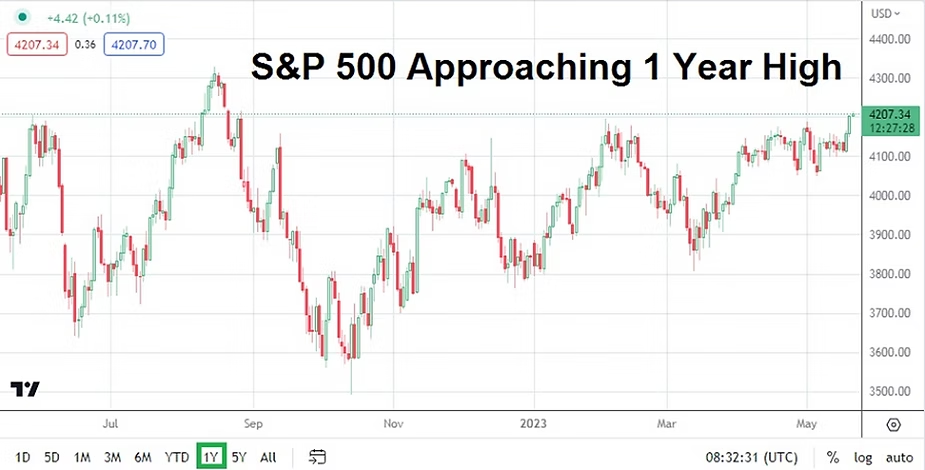
Is the S&P 500 a harbinger of things to come or are investors in the index being too optimistic? Day traders likely stay away from the S&P 500 many times because they are mostly trading the index via CFD’s and this can prove expensive regarding transactions, they are not long-term investors – meaning they do not like to make bets that take awhile to materialize. The results from the past year and a half in the stock markets have made speculators nervous regarding bets on equities.

However, institutions and long-term investors buy and hold the S&P with a vision towards the future; they also reap the rewards of its dividends. The ability of the S&P to be trading at nearly one year highs is curious. The improvement in equity values in the indices may be a sign that ‘smart money’ continues to invest in the stock market for the long-term, even during what is perceived as a fragile period of behavioral sentiment. Financial institutions may also be betting on the U.S Federal Reserve having to become more dovish regarding interest rate policy in June and looking forward.

S&P 500 Index One Year Chart as of 19th May 2023

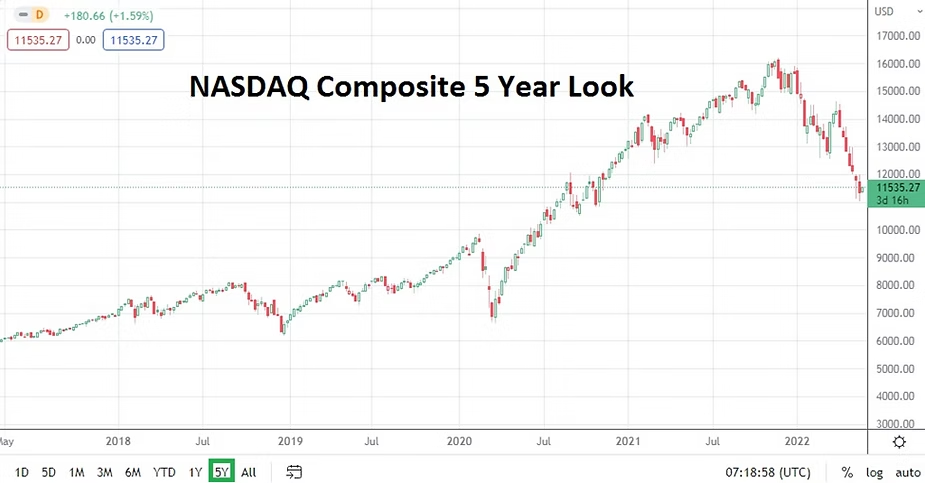
Results on the NASDAQ 100 may be surprising to many and the index is trading at one year highs, and though like the S&P it is still under all-time highs from late 2021 and early 2022, investors have shown a taste for investing in the ‘hi-tech’ index again. While this may contradict the behavioral sentiment of Forex and the results in the mid and small size banking sector, the NASDAQ 100 does point out money is still being invested and might be an indication that day traders need to be more patient, more optimistic about the coming months and year.

While a recession might be looming, large companies have started to lay off workers and scale back on bonuses in an effort to fight against reduced profits. The narrative from the media may be negative in many cases, but many long-term investors tend to look at more conservative fiscal policy in companies as a good practice and a sign they should invest.

Perhaps the market is going through a needed case of the jitters and the U.S indices are showing that brighter days are ahead, even if there are storm clouds that still must be dealt with regarding inflation and possible recession.The long-term horizon tends to always be more optimistic. Day traders may not be able to take advantage of quick hitting trades, but what about changing perspective and looking for more patient results by being more conservative as a speculator? Or maybe investors in the stock market are wrong and another violent selling surge will return into equities, but what if it doesn’t.

NASDAQ 100 Index Five Year Chart as of 19th May 2023

There is a fear among mid-size brokers that trading volumes in many sectors are dropping. Showing cautious investor sentiment on the retail front – which may be a healthy reaction in many respects because it is hard to read momentum right now. Day traders tend to get killed by the daily gyrations of Forex and equities in choppy markets because they are using too much leverage. However, historically when retail traders have turned cautious, this is when institutional trading houses have tended to do remarkably well. Investment houses can take on more risks in markets that are perceived as nervous and fragile, because they have a longer time horizon and more cash to absorb momentary losses.

Commodity prices are also intriguing because after hitting highs nearly one year ago in May and June of 2022, the ratios of many broad commodity indices have come down and values are traversing near late 2021 levels. Which brings us to the consideration that global demand for physical resources are limited because corporations are not making large purchases of commodities, this as they wait on better manufacturing demand for their products. This may appear contradictory and create nervous behavioral sentiment for traders, but cautious business practices are a way to make sure there is enough money for the future when conditions turn optimistic again.