postN61.1

Nervous Results Next: Forex and Equities Wait for Jobs Data

Nervous Results Next: Forex and Equities Wait for Jobs Data

Tomorrow’s jobs numbers from the U.S will get plenty of media coverage. Typically the Non-Farm Employment Change data is used as a selling tool by brokers to get their traders motivated and speculating on Forex and stocks via CFDs with the promise of swift price action. Many times the jobs numbers prove to have limited value, serving mostly as entertainment for back office risk managers at Forex houses as the whipsaw value changes wipe out speculators across the board. However, tomorrow may prove different.

Friday’s Non-Farm Employment Change and the Average Hourly Earnings statistics may produce dynamics worthy of their news coverage. Financial institutions are actually quite interested in tomorrow’s coming reports as the U.S Federal Reserve lingers in the shadows having spoken boldly about raising the Federal Funds Rate in November. It would take a weaker hiring result from the Non-Farm Employment Change data, and lower inflation numbers from the Average Hourly Earnings outcome to change financial institution outlooks regarding the U.S central bank.

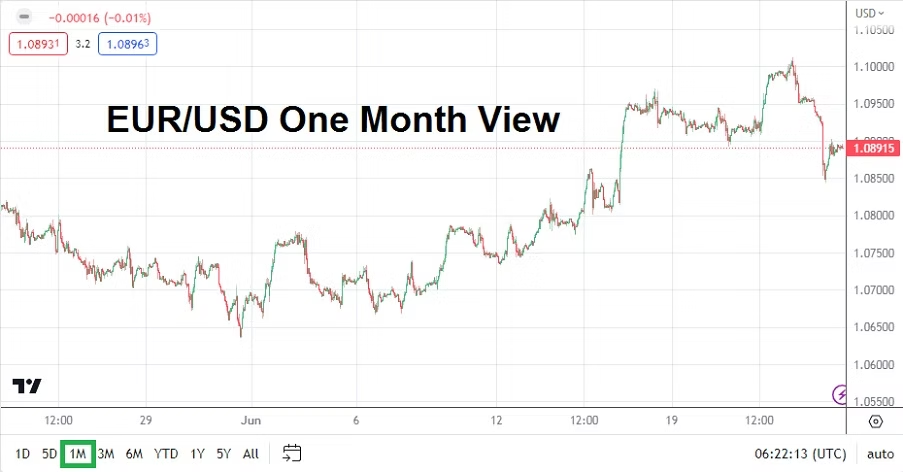
EUR/USD One Month Chart as of 5th Oct. 2023

The trend of the EUR, GBP and JPY clearly demonstrate the value that has been lost against the USD over the past three months. While many financial institutions and speculators believe the USD will begin to lose strength eventually, timing the moment this is going to start happening in earnest is difficult. U.S Treasuries have come off of highs in recent trading, but nervousness remains abundant and recent heights remain in sight. Tomorrow’s U.S jobs number could reignite fear and spark behavioral sentiment which is reactionary.

As a side note, while U.S indices turned in some gains on Wednesday, the moves higher were not exactly momentous which sets up the U.S stock markets to produce a sudden reversal lower if widespread nervousness is produced today and tomorrow.

Importantly, hiring is believed to be weakening in the U.S by some analysts, but there is plenty of talk about a lack of qualified workers to fill important jobs still. So while the Non-Farm Employment Change number may come in below estimates and could spark hope among financial institutions the U.S Fed will be given a reason to sit on their hands, it is the Average Hourly Earnings inflation numbers which should be watched even more closely. If the costs of paying wages is more expensive than the previous month, this would spark concerns about price pressures remaining problematic.

Analysts have also continued to speak about concerns regarding revisions being made by the U.S government to past jobs reports, which means financial institutions are wary of positioning themselves fully based on the current month’s reporting. Accurate reporting from the U.S government has become problematic, and is causing nervous and conspiracy minded chatter in some trading corners.

WTI Crude Oil One Month Chart as of 5th Oct. 2023

Another factor which day traders may want to consider is the price of Crude Oil which has sunk below 84.00 USD per barrel in the footsteps of a one week decline. If the price of the commodity can remain muted and show a solid trend downwards this would help reduce hawkish rhetoric from the Federal Reserve.

As we go into tomorrow’s jobs numbers from the U.S, the broad markets do continue to exhibit nervousness which appears justified. The results of the Non-Farm Employment Change and Average Hourly Earnings may produce results which cause a reaction which shakes the outlooks of financial institutions and carries strong implications for day traders that matter.

postN21

Risk Events and Questioning the Hyperbole of ‘Bad Actors’

Risk Events and Questioning the Hyperbole of 'Bad Actors'

The week in a way has already started for financial institutions and traders because of the developing news from Russia. Due to yesterday’s events surrounding the ‘noise’ caused by the Wagner Group’s leader Yevgeny Prigozhin, let there be no doubt that energy sector traders became nervous and fragile behavioral sentiment was being anticipated for Monday’s openings. However, like a well staged drama (perhaps this is giving too much credit to the actors) the Russian saga seems to have come to an odd conclusion. Leaving the possibility for a Part Two to develop. Stay tuned ladies and gentlemen.

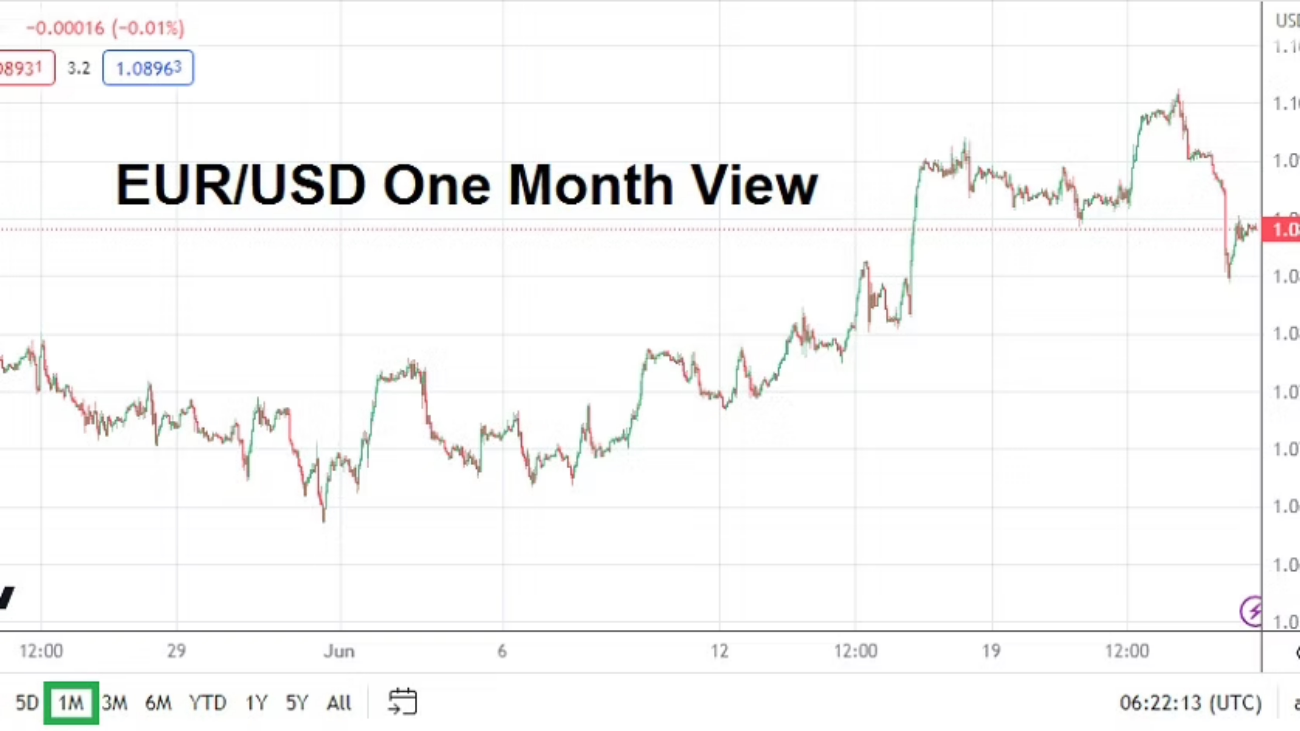
EUR/USD One Month Chart as of 25th June 2023

Monday, the 26th of June, Germany ifo Business Climate – the reading is forecast to come in worse than the previous month. Germany has turned in rather troubling economic data and the E.U as a whole is struggling under the weight of inflation and lackluster growth. The EUR/USD could be affected from the business climate survey.

Monday, the 26th of June, E.U ECB Forum on Central Banking – the annual event which is a bit like the Fed’s Jackson Hole Symposium will be attended by the leading central bank officials from around the globe. This year’s event in Sintra, Portugal will focus on inflation. ECB President Christine Legarde will kick off the event, which will end on Wednesday the 28th of June with speeches from Fed Chairman Jerome Powell, BoE Governor Andrew Bailey and others.

Tuesday, the 27th of June, Canada Consumer Price Index – a slew of inflation reports will be delivered. The forecast anticipates a slight drop in price pressure, but will that actually be the result? The USD/CAD could move based on the outcomes.

Tuesday, the 27th of June, U.S Consumer Confidence via the Conference Board – this survey is expected to show a slight improvement in the outlook of American consumers.

Wednesday, the 28th of June, E.U ECB Forum on Central Banking – the event will conclude with speeches from the heads of the ECB, Bank of Japan, Bank of England and Federal Reserve. The event is not supposed to stir up the dust, but Forex traders should monitor the rhetoric generated.

Thursday, the 28th of June, Germany Preliminary Consumer Price Index – the data is expected to show an increase in prices and underscore the ECB’s aggressive rhetoric regarding inflation.

Thursday, the 28th of June, U.S Final Gross Domestic Product – the growth numbers are projected to show a gain of 1.4% compared to last month’s 1.3%. The results will move the financial markets if they are surprising. Traders should be on the lookout for revisions to the previous month’s numbers.

Friday, the 29th of June, U.K Final Gross Domestic Product – an expected ‘growth’ number of 0.1% is anticipated, which would match last month’s lackluster outcome. The U.K is hovering under recessionary pressures and this GDP result will be watched by GBP/USD day traders.

post41.1

Risk Friday: To Freeze or Reduce is not the Correct Question

Risk Friday: To Freeze or Reduce is not the Correct Question

The U.S debt ceiling debate in actuality, is a vote to legally increase the amount of debt the U.S government can spend. Approval of the debt ceiling vote will give a green light to the government to be a larger debtor without consequence. Other than eventually not being able to pay its bills in the future, what’s the problem some might ask. And let’s not consider potential downgrades from S&P, Fitch Ratings and others for the moment.

Here are the Problems Ahead for the U.S

U.S debt dominoes have grown heavy and are getting harder to stand back up, but those with the ability to spend simply do not care because they will never be held responsible. The U.S government seems to have forsaken capitalism and have entered the plundering stage, where the government believes it can ‘find’ enough revenues from higher taxes and the selling of long-term Treasury bonds while remaining the big man on campus.

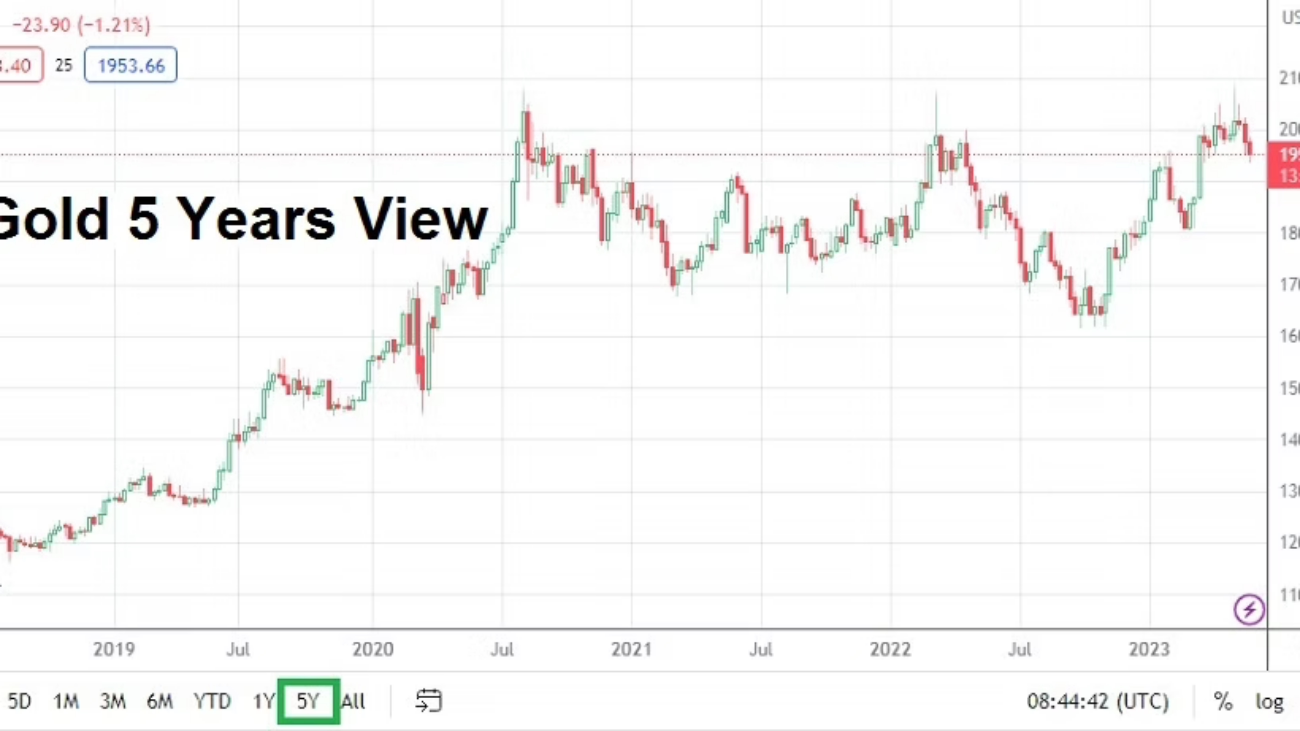
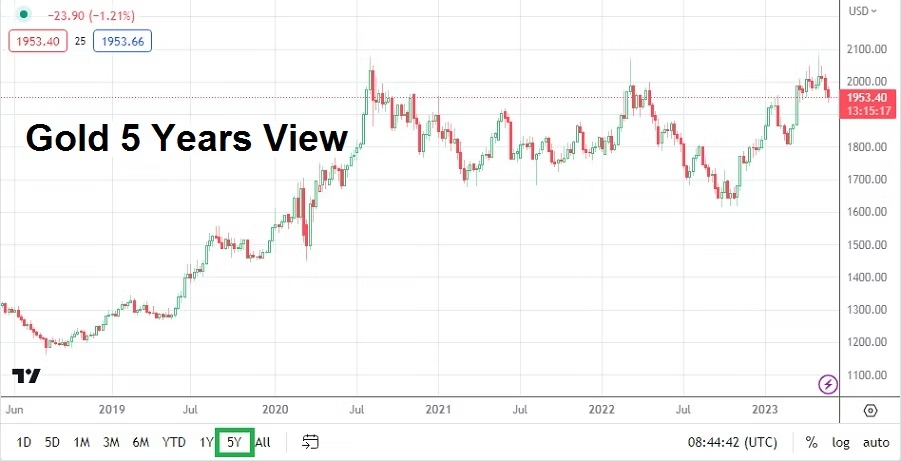
Gold Five Years Chart as of 26 May 2023

Higher taxes frequently stymie businesses and make it harder to hire employees because the expenses become too big. As an example for what the future could look like in the States turn your eyes to Chicago, where elected city leadership is considering implementing a ‘head tax’ in which businesses would need to pay a fee on each person it employs. The tax situation is getting so ridiculous in Chicago, that long time economic juggernauts like the Chicago Mercantile Exchange are grumbling and threatening to leave because of “ill-conceived” policies.

Likewise, the U.S government seemingly doesn’t understand that spending cannot be replenished by tax collection alone. Actual cuts to spending need to take place. It is called reducing the deficit. The naive will eventually be made to see the light painfully.

The Ramifications for the U.S could be Economically Untenable

U.S interest rates which have been raised the past year and a half, have affected mid and small sized banks and the amount of money the U.S government has to pay on maturing bonds because of higher borrowing costs. Fitch Ratings has recently whispered publicly they may be forced to downgrade U.S debt offerings, this if the U.S government doesn’t increase the amount of money it is legally allowed to owe. Pause for a second here, do you see the absurdity in this clown show? In other words a rating service company is OK with the debtor being allowed to ‘borrow’ more money from itself that it does not have – in order for that same debtor to be allowed to ‘promise’ it can repay its debt at a later time.

The U.S government keeps allowing debts to grow and creating entitlements as if this has no effect on inflation. Quantitative easing and stimulus packages initiated by the U.S government artificially kept the Gross Domestic Product figures looking positive and the equity markets happy for more than a handful of years. However, the proverbial ‘can’ has been kicked down the road so many times it is ready to disintegrate. The debt problem is simply being passed down to the children and grandchildren of the U.S, or so the current leadership seems to hope. But what if the debt problem explodes now? This generational problem is systematic globally, other governments practice equally bad or worse fiscal policy. Politicians do not like to walk around with empty hands.

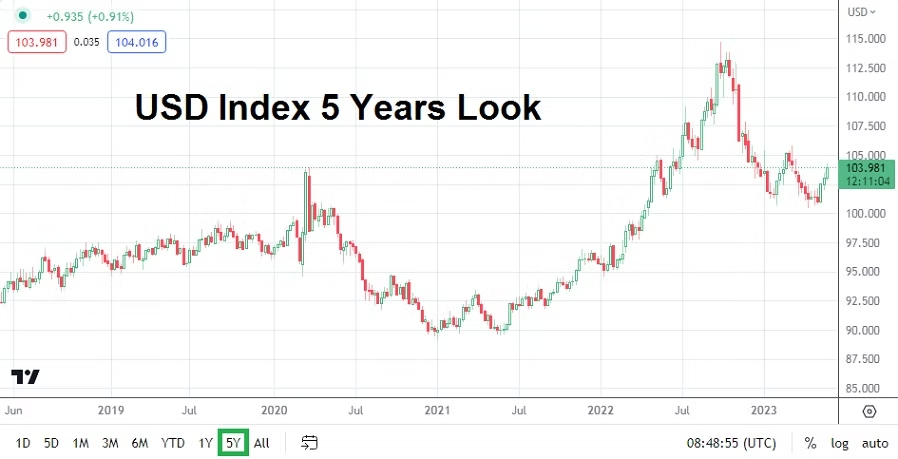
USD Index Five Years Chart as of 26 May 2023

The Clock is Ticking Loudly and Some Investors are Paying Attention

The clock is ticking in the U.S and unless they can prove expenses can be managed better, they are on a perilous road to becoming a regular nation among others, that is looked upon with scorn and derision because they cannot pay their debts. The dominance of the USD will be punished and shattered if they do not stop the nonsense. The dollar’s status as the reserve currency of the world has been slipping incrementally for a couple of decades and this will continue if the U.S government does not seize the problem and find solutions. A failure to show budgetary sanity and decrease expenditures will eventually cause something many U.S citizens do not want, relegation to the status of a ‘regular’ nation. The attitude of, “I remember when” could become a refrain heard in the U.S sooner rather than later.

The U.S is in a precarious place and sunshine in many respects is not on the horizon. Financial institutions supposedly believe the U.S debt ceiling will be taken care of in the coming days or weeks. However, a debt ceiling agreement is not the correct bandage for a broken leg, the problem is much larger. Debt should not be allowed to continuously grow. If the situation gets worse, some nations sitting on the geopolitical fence may shift their alliances depending on the ability of mutual relationships to help deliver economic stability.