Western Leaders 20260814

Standing on the Precipice: Western Leaders Continue to Fiddle

Will The West Stay Awake and Become Alert?

Opinion: The following article is commentary and its views are solely those of the author. This article was first published the 14th of August via The Angry Demagogue.

In February 2022 the Russian member of the Axis invaded Ukraine. In October 2023, less than two years later, the Iranian proxy Hamas invaded Israel and their proxy Hezbollah joined the fight the next day. North Korea and China the other members of the axis did not, probably, coordinate either attack, but nor did they discourage it or help to end it. In the period of less than two years, the free countries of the world were given a wake-up call to what historians may end up writing was the start of a new world war.

Sweden and Finland were spooked enough to take a bold move and join NATO and the existing European members of NATO seem to realize that they need to start worrying about their own defense – at least against Russia, if not the rest of the Axis. In Ukraine, they put together a bold defense and created a drone force that is, if not winning, at least is not losing the war of attrition that the conflict has “settled” into. Ukraine may have convinced itself that it can win this war on the battlefield and Russia is counting on its Axis allies to help it overcome their own military incompetence. North Korean troops are dying in Ukraine and there are rumors that 50,000 more North Korean troops are on the way. Iran and China are supplying weapons. The Axis is not only keeping the war going for Russia, it is arguably, along with its nuclear weapons, a path to victory.
Standing on the Precipice: Western Leaders Continue to Fiddle

Europe and parts of the United States did not take the hint that in October 2023 that the Putin’s Russia is not the only country threatening their security. The Iranian piece of the Axis also aims to dismantle Western freedoms and religion via direct military threats, terrorism and unchecked immigration.

Has the Middle East changed after the Ukraine invasion and more specifically, October 7? Asking different people will get you different answers. For Israeli PM Netanyahu it has been a strategic victory for Israel as both Hezbollah and Hamas are on their heals and Iran’s nuclear and missile forces have been severely damaged. For Israel’s opposition, the last three years have brought no positive change for Israel in the Middle East since Hamas, Hezbollah and the Islamic Republic of Iran still exist.

For Iranian Islamists it has changed by showing that they can stand up to their own people and to the United States so that any attempt to topple them will end in failure. For the Islamic Republic, a non-total-defeat shows the world that they can continue their quest for regional and global control despite the hiccups caused by Israel and the United States. The same holds for Hamas and Hezbollah who believe that Israel has been isolated in the world and that the UN, the Hague and the EU – along with America’s DSA – will make being Jewish and Israeli so illegitimate that they will soon be able to chose their apartments in Tel Aviv and Jerusalem.

According to Erdogan’s Turkey, the Middle East is their playground as they have managed to maintain positive relations with both Hamas and the United States. They have troops in Qatar, a new alignment with Saudi Arabia and Pakistan and have so many forces in northern and sub-Saharan Africa that an expanded Ottoman Empire lies in the not too distant future. Greece will be overcome and where Iran failed to destroy Israel, they will succeed.

President Trump believes, or states, that the United States has scored a decisive victory over Iran, is bringing peace to Lebanon and Gaza via Israeli concessions and the disarmament of Hamas and Hezbollah and the future in the middle east goes through Washington. The President also states that the Abraham Accords will be expanded and that Israel, Turkey, Qatar, Saudi Arabia are all strong and reliable allies of the United States and that all these countries are moving towards a more peaceful and economically vibrant Middle East.

Back in the 1960’s and 1970’s when there were two regional Moslem states that were friendly to Israel, Turkey and Iran. During that cold war period, the only Gulf state that counted was Saudi Arabia. Syria and Egypt were Israel’s existential enemies and the Hashemites of Jordan were more concerned with survival than fighting (at least after 1967). Lebanon was a non-threat to Israel (as a matter of fact Israel supplied arms to the Shiite villagers in the south during the civil war of the late 1970’s at the request of the Shah of Iran).

Currently Iran is Israel’s main enemy, although Turkey is pushing to move ahead of them as the main existential threat to Israel. Israel faces a “Sunni Vise” that includes Turkey and Syria in the north and Egypt in the South. We can add to that Saudi Arabia and Pakistan although that alliance (which now includes Turkey) seems to be more a showpiece than a defense treaty. Or, in the words of Hussein Aboubakr Mansour, “In the Middle East, the vocabulary of collective defense is often detached from the activity of defending. The announcement is the whole of the content”.

Regarding the United States presence in the Middle East, only the details have changed. The Cold War is over but the U.S still has the challenge of controlling oil flow out of the region as its new main enemy, China, depends on it. As for the United States and Israel, that relationship has moved from dependent to almost partner on defense and technology but Israel is still the same steady, reliable, democratic presence it has been for the past few decades. The U.S is certainly closer to the other Gulf states, notably Qatar, but their money has simply replaced (or actually supplemented) Saudi money, although they are much more cynical and effective with it.

The Arab world has barely changed even though the UAE and others have jointed the Abaraham Accords and have a relatively strong relationship with Israel. However, the real issue in the middle east has never been Israel-Palestine but has been and still is the intra-Arab and intra-Moslem rivalry and mistrust. Even when ostensibly on the same side, like the Saudis and UAE are in Yemen, there are separate armies fighting and last month the Saudis bombed the UAE forces – even though both were fighting the Houthis.

Egypt and Turkey, the two largest Sunni states in the region by population and military force are at opposite ends of the Moslem Brotherhood fight. Egypt is more suspicious of Turkey’s support for the Brotherhood, arch enemies of the Al-Sisi government, than they are of Israel’s moves in Gaza. Syria too, while pretending to act as a unified country is at war with the Kurd citizens in the north, Druze in the south and Alawites in the northwest. Their inclusion of ISIS and al-Qaeda fighters in their army – even foreign fighters – means that even within the Sunni majority, there is distrust and fighting.

And Libya is a proxy war if there ever was one with Turkey, Egypt, Iran and Russia involved.

So where do we stand in Europe and the Middle East today?

On the one hand, everyone is correct – Israel is in a better spot strategically, yet has not finished the job. The United States has, with Israel, set back Iran’s plans for regional domination but that gain is one “agreement” away from being overturned. Turkey is extending its influence but does not have the wherewithal to create a new Ottoman Empire as not only Israel stands in the way but so too does Egypt and the rest of the Sunni-Arab world as they do not have fond memories of Ottoman control of Arab lands. The Arab countries, large and small, are fighting the same tribal wars they have fought for the past decades and even centuries. Israel has strong internal unity and morale while its leaders re-arrange their parliamentary chairs.

In Europe, Ukraine has stopped an army three times its size while Russia, against most predictions is able to absorb massive casualties and economic sanctions due to the help of its allies .

Before the invasions of Ukraine and Israel by members of the Axis in 2022 and 2023 the geopolitical situation consisted of four revisionist powers united only in their opposition to the international status quo and the free countries united in their wish to maintain the status quo and to concentrate on comfort to the neglect of all else -including freedom. The Western European powers had no real military power to speak of (with the possible exception of France) as even the UK’s glorious navy was reduced to the minimum number of ships necessary to still call it an ocean going Navy. Ukraine ignored Russian threats and Israel was convinced it could outsmart, deter and bribe its sworn enemies to give up all for a life of comfort.

In the United States, the military was organized as a Walmart or Target warehouse with “just in time inventory”, no long term armaments contracts and with nothing much done to create what won WWII and the Cold War – a strong economic and industrial base. Looking for cheap labor and products and piling debt upon debt, the America;s industrial and fiscal situations mirrored its military un-readiness into a game of catch up – which it is doing neither fiscally nor militarily. Although the current administration is pushing to increase its manufacturing might, the fact that the American shipbuilding industry is able to produce only 3 military ships a year means, one, two or three administrations won’t be enough to complete the task. It requires a seriousness of purpose lacking in a Democratic party fearful of the DSA and a Republican party not serious enough to create a national consensus that will require some sacrifice from citizens.

Although there is a lot of talk, the current leadership in all free countries are the same leaders that led us down this path where they are not ready to meet and defeat middling powers let alone powerful ones.

Just four years ago the late Henry Kissinger published a book called “Leadership” which focused on six leaders he thought were consequential to their countries and the world. You might disagree with his choice but one thing running through each of these leaders (Germany’s Adenauer, France’s de Gaulle, Sadat of Egypt, UK’s Thatcher, Singapore’s Lee Kuan Yew and Richard Nixon) is that they were patriots and they were willing to take risks to push their countries forward. We don’t seem to see Western leaders who are dedicated first and foremost to their country and its citizens and who recognize the ongoing (the never ending!) threat from tyrants.

Putin, Xi, Khamenei (or whomever is in charge) and Kim are tyrants who don’t need to concern themselves with their citizens and that is the one thing our uncreative and cowardly leaders do not seem to understand. The obsession of today’s western leaders with negotiations and deals and false human rights claims just feeds the tyrannical rule of its enemies and pushes their defeat further and further away. Eisenhauer famously refused to shake hands with the Nazi general who surrendered to him in spite of military custom because he realized that this was not a war of one country against another but a war by his country and their allies against evil.

This is not a call for war against all evil or perpetual conflict of power against power but rather a recognition that if one is not ready to face what tyrants want – your destruction – eventually they will defeat you. America was not prepared to fight WWII but it had an industrial and managerial base that could be transformed into a wartime asset no one has ever had. It also had the luxury of two oceans protecting their manufacturing plants from enemy attack. Finally, it had, admittedly only after Pearl Harbor, the understanding that the moral imperative was defeating the evil that was Nazism as well as Japanese militaristic barbarism and not in coming to some rapprochement with it.

The geopolitical situation has not changed even if there are small tactical advantages that one side has over the other in localized theatres. We are still in the same position where the Axis of revisionist states is using all its force and all the weaknesses of the western world to its advantage and a western world that is continuing to ignore that reality. The internal and external threats in free countries are now at crisis levels.

When it comes down to it, as much as we like to blame our leaders (and we certainly do), it is up to the citizens to demand and to choose brave, creative leaders who are not locked into what has brought us to the precipice of defeat. The leadership since the end of the Cold War has been lacking any sense of urgency no matter what happens. The disaster that was Afghanistan should have been a wake up call – instead it was ignored. The invasion of Ukraine should have put free countries on a war footing for the manufacture and supply of military hardware but instead of was treated as if no other wars would be fought until this one was over. October 7 and the subsequent fighting in Gaza, Lebanon, Yemen, Iran, Iraq, Syria, the entire Persian Gulf should have told the west that terrorism and the immigration of real and potential terrorists into its borders will destroy what it loves best.

So far, the Axis leaders have not waited for the west to wake up, re-arm, control its borders and stop shooting itself in the foot and there is no reason to think it will wait before its next adventure.

Disclaimer: the views expressed in this opinion article are solely those of the author, and not necessarily the opinions reflected by angrymetatraders.com or its associated parties.

Follow Ira Slomowitz via The Angry Demagogue on Substack https://iraslomowitz.substack.com/
Copy and paste the text from AMT that you want to share

Share:
Fear of Russia 20260529

Fear of Russia in Europe

Time for the Baltic+ Alliance

Opinion: The following article is commentary and its views are solely those of the author. This article was first published the 28th of May via The Angry Demagogue.

The Wall Street Journal had a thoughtful piece the other day (Europe is Starting to Think Putin will Expand the War Beyond Ukraine) on Europe fearing that Russia will look to expand their war beyond Ukraine. This has been a fear since Russia’s ill-fated invasion four years ago and is the reason why Europe is supporting Ukraine (not due to any love or respect for the people of Ukraine).

The gist of the article though is America’s possible unwillingness to come to the rescue of Europe and honor their NATO commitments. These fears are not unfounded, but sitting and worrying about American will or overextension will not deter Putin from yet another attempt to divert attention to the deteriorating nature of his country’s military, economy and general health.

Rather than whine and wonder, those front line countries that will be most affected by Russian adventures need to form a new or sub-alignment and make moves that Russia can judge only as threatening to any new venture. Rather than not provoke, this new alliance needs to show Russia that they have the power and more importantly the will to defend the Baltic States and others that border Russia and are most at risk.

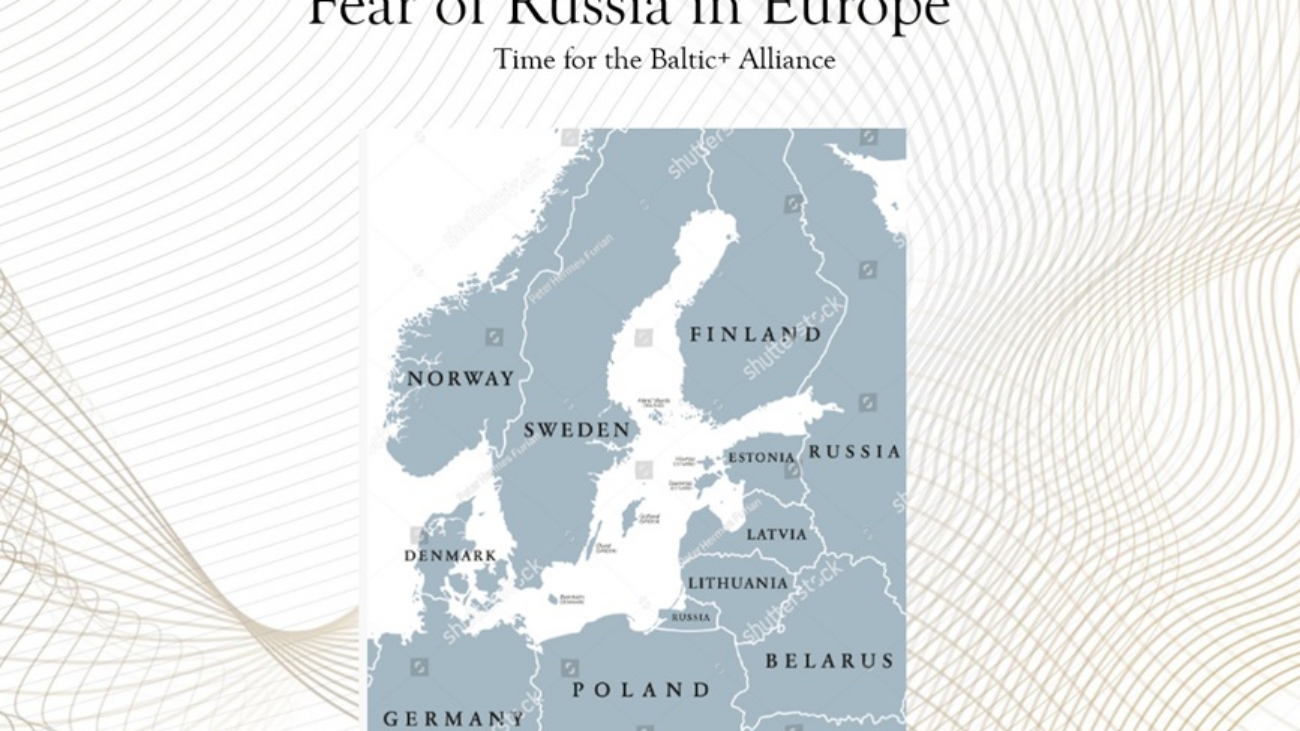
As we have written in the past (National Security Strategy, part 2: Regional Alliances-Europe), only countries with “skin in the game” have the will and the opportunity to successfully fight any Russian invasion. This Baltic+ alliance of Poland, Germany, Sweden, Finland, Norway, Denmark, Latvia, Lithuania and Estonia have a joint population of nearly 160 million people to Russia’s 145 million. Further, these countries have nearly 500 advanced jet fighters and a navy that can control the Baltic Sea. They have around 1,500 battle tanks combined and over 300,000 infantry soldiers.

Neither the United States, nor for that matter the UK, France, Italy or Spain (not to speak of the weak Benelux countries) have the will to defend the Baltic countries but, as they usually do, will offer diplomatic and other “help” in case of crisis. These 9 Baltic+ countries alone have the wherewithal and power to defeat Russia in case of attack. Joint air and naval maneuvers in and near the Baltic countries, naval buildups in the Baltic and the movement of tanks and infantry closer to the border including a “tripwire” in the Baltic countries themselves should be enough to deter and if necessary, defeat Russia in a new Putin venture.

However, this needs to be made operational and not just discussed. They cannot show the cowardice they usually show when facing military challenges like they have done in the Persian Gulf. Diplomatic solutions can work when backed up by superior military force and a clear will to use that force.

While the U.S sending 9,000 troops to Poland is a good thing, Sweden’s increasing its naval and air presence close to the Baltic States, combined with Polish and German tanks and infantry in those states and Finland moving troops close to its border with Russia will be taken by Russia with a sense of seriousness. There should be no fear of “provoking” Russia since Russia responds to perceived weakness and not strength. Russia would love to depend on America’s “overextension” and lack of will but this strong new alliance will compensate for any American hesitation. More than that, it will be taken more seriously than a few American brigades on Polish soil.

The creation of alliances does not need years of study and position papers, but bold moves by leaders that are sworn to protect their countries. If Europe seriously fears a Russian expansion of their war beyond Ukraine, then leadership of a kind Europe has been missing since Adenauer, De Gaulle and Thatcher left the scene, needs to come to the fore. Only then will it make sense for America to use its formidable power.

America does have a deep national interest in containing Russia and protecting Central Europe but, like when it faced its Iranian enemy it needs allies that are willing and able to take a central role in combat and not only half hearted support at the UN.

Disclaimer: the views expressed in this opinion article are solely those of the author, and not necessarily the opinions reflected by angrymetatraders.com or its associated parties.

You can follow Ira Slomowitz via The Angry Demagogue on Substack https://iraslomowitz.substack.com/ 

Copy and paste the text from AMT that you want to share

postN96

Is Israel a Fragile Country? Can it Move Towards Anti-Fragility?

Is Israel a Fragile Country? Can it Move Towards Anti-Fragility?

Opinion: The following article is commentary and its views are solely those of the author.

One of the great books of the last decade is Nassim Taleb’s “Anti-Fragile”. 

I read it years ago and bought one for each of my (grown) children and suggested they read it and think about it when making decisions. I said at the time that this should be required reading for all IDF officers. In a nutshell, Taleb differentiates between fragile, non-fragile and anti-fragile. Glass is the classic fragile substance and concrete the classic non-fragile. Both can be destroyed with correct instruments and non-fragile items will slowly decay when things like water infect them.  

Anti-fragile items on the other hand, gain strength from chaos. The more an anti-fragile substance gets hit, the stronger it gets. Nature for Taleb is the classic anti-fragile system. Nature “knows” how to respond to any disturbance, and it “learns” how to adapt and survive. This adaption and survival might hurt parts of the natural world – but nature as a system will survive and be stronger – think of natural immunity from a virus. 

Another of the ideas in Taleb’s book is “optionality” – decisions in life are often like buying options. When buying an option, you want a high upside and a low downside.   A simple non-financial example is crossing a street. If you see a car 50 yards away and are pretty sure you can make it across the street without getting hit – you can take that “pretty sure” chance and save yourself the 10 seconds it takes for the car to pass, or you can wait the 10 seconds. The upside here is saving 10 seconds. The downside is getting hit by the car. The decision is pretty obvious for those who think of optionality.

In short – Taleb is a serious man and a serious thinker. Born in Lebanon in 1960 he is a polymath, making his name in trading and finance, and his previous book “The Black Swan”.

In any event, in a recent interview with the French newspaper L’Orient Le-Jour he called Israel a fragile country due to its dependence on the United States and said that top-down peace agreements, like that between Israel and Egypt, or the Abraham accords are doomed to fail (I don’t read French and read a summary of the interview in the Hebrew language Globes financial newspaper – the original is here – if you read French and I got it wrong, please let me know).

Is Israel a fragile country? And if so, is it more fragile than other small free countries? And finally, how can it move on the road to anti-fragility? And are fragile peace agreements worthless?

Taleb’s claim that Israel is fragile due to its dependence on the US is true in an of itself. Changes in U.S foreign policy either via elections or changes in US interests have in the past put Israel in difficult situations. When Prime Minister Yitzchak Shamir requested U.S loan guarantees from then President Bush (1) in order to fund the absorption of masses of emigrants from the falling Soviet Union he was turned down until Israel halted settlement activity in the West Bank and attended the (failed) Madrid peace conference. Today, it is very clear that if the US would decide to halt arms shipments to Israel or to stop supporting it in the Security Council, the country would be put in a situation many believe would be existential.

A big issue in Israel at the moment has to do not only with Israel’s dependence on the US for military hardware but in the relationship of its top generals with the Pentagon. There is a claim that much of the “globalized” attitudes of Israeli generals comes from the influence of the politically correct elite in the US Defense Department. It reached a point where, just a few weeks before the current war broke out, the general in charge of military intelligence stated that he fears that global warming is a greater threat to Israel than Hamas. Whatever one’s views on global warming or climate change it does seem odd that the one Israeli in charge of making life and death intelligence assessments has the time to worry about those issues to such an extent that he feels it is his job – as intelligence chief – to warn Israel about it. Further, the October 7 attack itself showed the fragility of the defense strategy of Israel’s top generals and politicians. It had a conception of Hamas and other enemies and had no allowance for its being wrong. 

However, the initial response of Israel’s soldiers and officers, without the centralized support of the General Staff, show how many of Israel’s combat soldiers are “anti-fragile”. Israel’s people can also be said to be anti-fragile in Taleb’s definition of it where chaos or tragedy make one stronger. Over the 48 hours after October 7 Israel already had 350,000 reservists mobilized who were all motivated to fight for their country. That is no mean feat – for the most part these reservists went to their units before being called up or called their commanders demanding to be called up. Many thousands returned from abroad at their own expense in order to join their units and fight. In contrast – Ukraine had to forbid all men under 50 from leaving the country.   In Israel, a divided, shocked and demoralized people became a strong fighting force with the home-front in total support, within hours.

Military tactics are another area where Israel is anti-fragile. Due to the utter failure of military intelligence and the lack of central control over the first hours of the war that Saturday morning, the junior and mid-level officers and soldiers took command and figured out on their own how to face down the thousands of terrorists who took over towns and villages as well as military bases. Instead of waiting for orders and making sure everything was organized for attack, a delay which would have cost many more civilian lives, Israel’s soldiers improvised with what they had and took back the territory under very difficult circumstances. Many soldiers lost their lives through many acts of bravery but the decisions they made on the spot made them, the army and the country stronger.

The same can be said in the fighting now in Gaza. Israeli intelligence understood that there were tunnels, but it seems that they didn’t know the extent of the network and therefore had no good tactics to defeat it. It was the need to penetrate them without causing casualties to soldiers as well as the potential of hostages in the tunnels, that caused them to developed tactics to deal with it. We won’t know for sure how well it has or will work, since this is now classified information, but this could be an area of anti-fragility.

But this does not disprove Taleb’s point since Israel is clearly has a “single point of failure” and that is the U.S Government. However, nearly all free countries in the world have that single point of failure and have had it since the start of the atomic age.   One of Konrad Adenauer’s great fears in developing West Germany’s defense policy was that, when push came to shove, there would be no US nuclear umbrella. He was not convinced that the US would risk its own cities in defense of Europe in general and West Germany in particular. That is why he supported France’s independent nuclear deterrent and why he and De Gaulle were so close. The U.K too, when deciding on its Trident nuclear submarines had the same doubts. 

Today, we can say the same about the Baltic countries. They are part of NATO now, but, like the rest of NATO are totally dependent upon the United States military to keep the Russians at bay. The rest of Europe is dependent upon the U.S but they are no longer front line states so it is less important. Newly NATO-ized Finland is probably closer to Israel in its combination of fragility and anti-fragility.

Taiwan too, is fragile in this sense and so are the weaker Indo-Pacific nations like Philippines and Singapore. It would be difficult to find a non-Axis free or semi-free country that is not dependent upon the U.S to defend its freedom – either with sailors and soldiers or with arms, money and diplomacy.  

But the question Taleb poses, or the claim he makes, deals with Israel. Israel is clearly partly fragile – but is it too fragile currently that it can’t survive without the US? Or can Israel do anything to make it, if not more anti-fragile, at least more non-fragile? We have to separate out Israel’s fragility due to its dependence on the U.S and the free world’s fragility due to the same dependence. The Pax Americana that free (and non-free) countries have enjoyed since the end of WWII has probably contributed more to freedom, economic growth and a reduction of poverty in the world than any other force in human history. The question for all free countries then is how to make them less dependent upon the U.S if they want to remain strong and free -and less fragile.  

That is as true for Israel as it is for Latvia, Finland, Australia and Japan. 

But we will only look at solutions for Israel and leave the general question for a later time.

Israel receives from the US $3.8 billion in military aide, all of which must be spent in the United States. The annual aide started in 1999 and was $2.67 billion. Israel’s GDP in 1999 was $120.92 billion – meaning the aide constituted 4.5% of Israel’s GDP.  In 2022 Israel’s GDP stood at $525 billion so its $3.8 billion in aide was just 0.7% of GDP. Israel’s 2022 defense budget was $23.4 billion – 4.45% of GDP.

Giving up the entire U.S aide is certainly do-able from an economic perspective and there have been economists in Israel who claim that the aide actually hurts the Israeli economy since all the money must be spent in the U.S. One result of this has been the demise of Israel’s textile industry since the IDF no longer purchases uniforms from Israeli companies (one has to wonder that, since clothes bought in the U.S are rarely made in the U.S, if Israel is buying uniforms made in Bangladesh but sold via U.S middlemen). Giving up the aide would be one step towards a less fragile existence for a number of reasons.

The first would be, in my opinion, to cement the U.S public’s support for Israel. Giving up U.S taxpayer aide during a time of fiscal uncertainty would certainly be looked upon positively, in spite of the fact that all the aide gets recycled into the U.S economy (there has been some money that Israel has been allowed to spend on R&D in Israel). Israel is not the same country it was in 1999 and its economy is robust and probably more anti-fragile than most other western economies.

A second positive would be in allowing Israel to spread out its arms purchases. It could buy small arms from India, artillery from South Korea, etc. It could also rejuvenate local Israeli arms manufacturing. There is no doubt that all the large ticket items like fighter jets and smart bombs will still be purchased in the U.S and there is no doubt the U.S arms industry will continue its good relations with Israel – and in fact might be made more competitive since the IDF will be free to chose from amongst many providers for various weapons systems. 

Another move that Israel can make that would decrease its fragility would be to make sure it always has a 12 month supply of weapons and spare parts in order to fight a three front land war and a 5 front air war. It would have to beef up its navy and ground forces without hurting its crown jewel – the Air Force. This would make it less dependent upon the importation of arms in case of war.

An area where it will be difficult to be less fragile is the diplomatic arena as woke-ness takes over the western narrative about the world and many of the less and non free countries can’t manage to fight off Arab money and propaganda. India could be a country that could help diplomatically as they are large and powerful enough to ignore much of the pressure from the Arab and western-woke world. The problem is that the Security Council still holds sway in the world and India is not a permanent member with a veto. Of course they should replace the U.K and probably France but that won’t happen as long as India doesn’t have a reliable, permanent left-wing majority – which it won’t have for some time.

The only other major country that could help diplomatically would be Japan – but they have historically not been friendly to Israel and only in the current war have they backed it fully. They are certainly sympathetic to Israel’s plight as they figure out how to face a hegemonic China.

But under the current global situation, Israel relies on the U.S for diplomatic cover making it fragile, diplomatically. That won’t change for some time.

Economically, Israel is probably more anti-fragile than most other countries in the world. This is true for two reasons. First, Israel has a strong domestic market including a very productive real estate market. It has an agricultural center that produces enough for export and of course world class hi-tech and bio-tech industries. Most important – it has children. It is the only western country that has a high birthrate and that is something that has been underestimated in the west. Israel’s fertility rate – births per woman – stands at 2.9. The next highest western country is France at 1.8.  Replacement rate is 2.1.  Search out Nicholas Eberstadt for all the details.

Regarding the top-down peace agreements, Taleb himself understands for sure that the non-democratic top-down nature of most Arab countries makes this less important than in western-free countries. However, he does have a point here. Regarding Egypt, from the beginning the people – or more accurately, the professional and intellectual classes, have been opposed to Sadat’s peace. However, in spite of that, the peace has held for 45 years, which is quite a long time. I remember as a child reading the Biblical Book of Judges where the Israelites would sin, to be saved by a Judge who would rule and keep the country “quiet” for 40 years. At the time I thought – what is the big deal of 40 years of peace? As I grew (much) older I realized that 40 years of peace would be an incredible feat. So, 45 years of non-war between Israel and Egypt is quite a success. Will this continue for another 45 years? I think that if Israel remains strong, it will. 

Regarding the Abraham accords, the jury is still out. We will have to see where it all progresses. This war has certainly shown that even mass violence has not caused violent reactions from the Abraham accord countries. The one peace agreement most fragile and more worrisome though is the one with Jordan. The Hashemites are first and foremost survivors and if survival means breaking the agreement, they will do it in a second.

http://angrymetatraders.com

In summary, Israel’s dependence on the US is crucial for its survival and that in itself makes it fragile. However, there are things Israel can do to make it less fragile and the will and determination of its people make it, in many senses anti-fragile in Taleb’s description (invention?) of that term. Compared to other small, free countries though, all of whom depend on the US for at least part of its defense, it is difficult to say that Israel is worse off – except that, besides the Baltic countries, its neighbors are worse and more dangerous.

In the coming days we will examine a more radical solution to the “fragility” problem of Israel and other free countries.

Disclaimer: the views expressed in this opinion article are solely those of the author, and not necessarily the opinions reflected by angrymetatraders.com or its associated parties.

You can follow Ira Slomowitz via The Angry Demagogue on Substack https://iraslomowitz.substack.com/