Reserve Bank of New Zealand Expected to Cut 0.50 from Rate
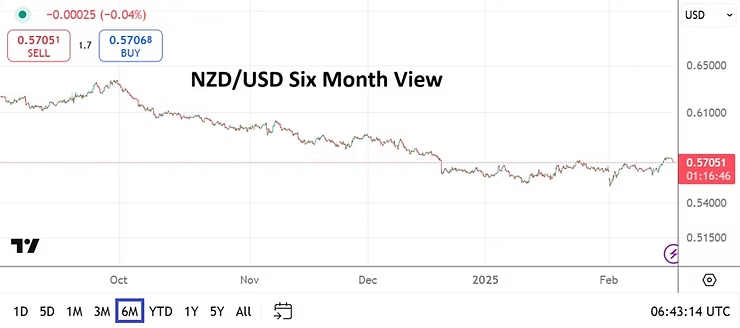
NZD/USD Six Month Chart as of 18th February 2025
NZD/USD Revival Mid-Term Coming? Reserve Bank of New Zealand is expected to cut its Official Cash Rate by 0.50 on Wednesday. N.Z govt is being proactive as they try to ignite the economy. The RBNZ also cut by 0.50 basis points in November. The central bank is expected to continue to remain aggressive tomorrow and suggest further cuts will be seen, perhaps via 0.25% afterwards.
The NZD/USD was trading around 0.63600 in late September of 2024 after gaining in correlation against the USD with the broad Forex market, via a bullish run which began in July. The NZD/USD is still traversing within its lower realms and it is logical to assume many financial institutions feel that support levels around the 0.56000 vicinity will prove rather durable going forward.
Day traders who believe the mid-term holds an optimistic bullish run for the NZD/USD may be correct, but speculators cannot be overly confident about a sustained surge higher quite yet. Conservative leverage is urged while looking for upside while betting. Speculators also need to remember tomorrow’s expected interest rate cut from the RBNZ has already been factored into the currency pair.
The rate cut is important for Wednesday, but it is the stance the Reserve Bank of New Zealand takes via its Monetary Policy Statement that affect behavioral sentiment among financial institutions. If the RBNZ sounds cautiously aggressive, meaning they suggest further cuts are being strongly considered this could help firm the NZD/USD and create more optimism regarding the potential for a move higher.
Yes, the shadow of the U.S White House administration looms over the Forex landscape. Decision making will remain tentative via financial institutions, but it is reasonable to suspect large players would treat clarity from the Reserve Bank of New Zealand with a positive Forex stance.
Monday’s trading provided a solid oversight for day traders to observe market conditions in commodities, Forex and equities. Financial institutions appear to be leaning towards a belief the U.S Federal Reserve will have to become more dovish, but financial institutions and other large players are worried about shadows being caused by inflation concerns and timeframes which are likely sparking nervous wagers.
Via the commodities, results saw Gold come down from highs on Friday which approached the 2,380.00 USD perch, and drop to lows around 2333.00 yesterday. The precious metal remains within sight of record values, this as questions persist about USD direction, and speculative forces bet. WTI Crude Oil meanwhile climbed from a selloff late Friday and into yesterday’s opening while challenging the 77.75 USD vicinity, and as of early Tuesday is now over the 79.00 mark again.
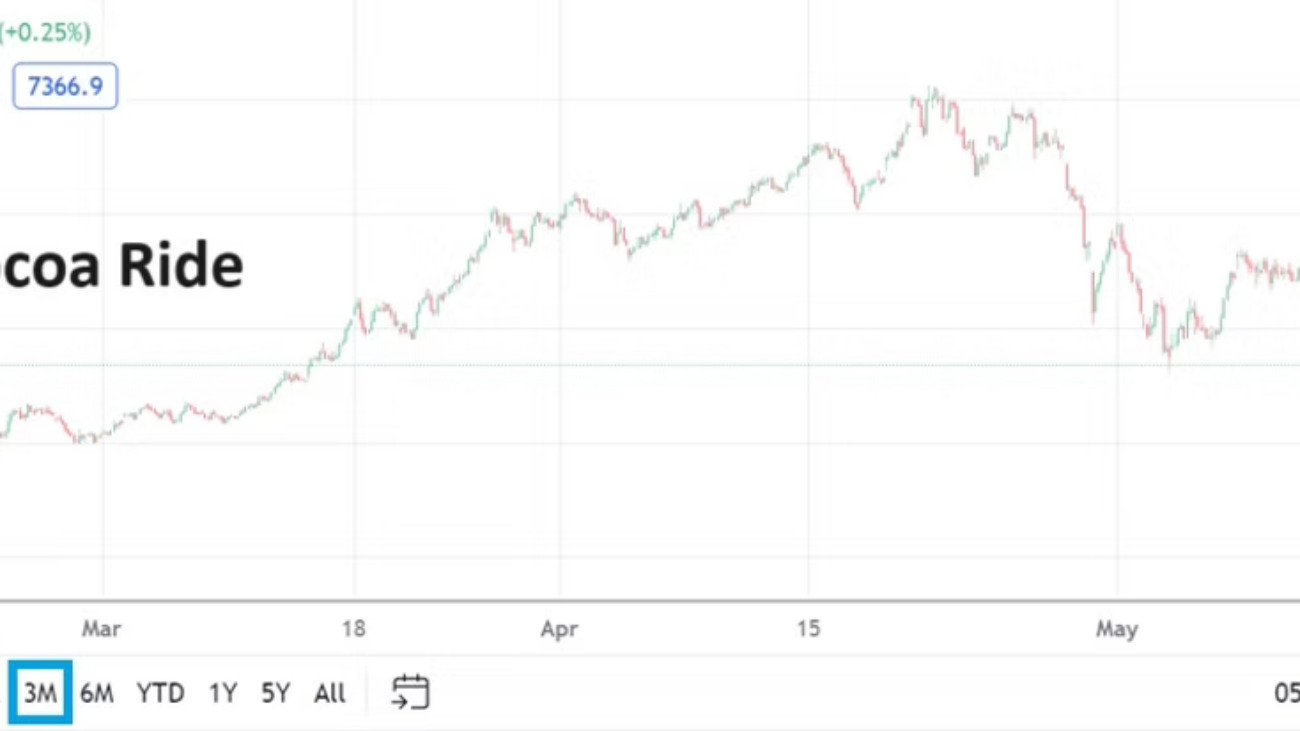
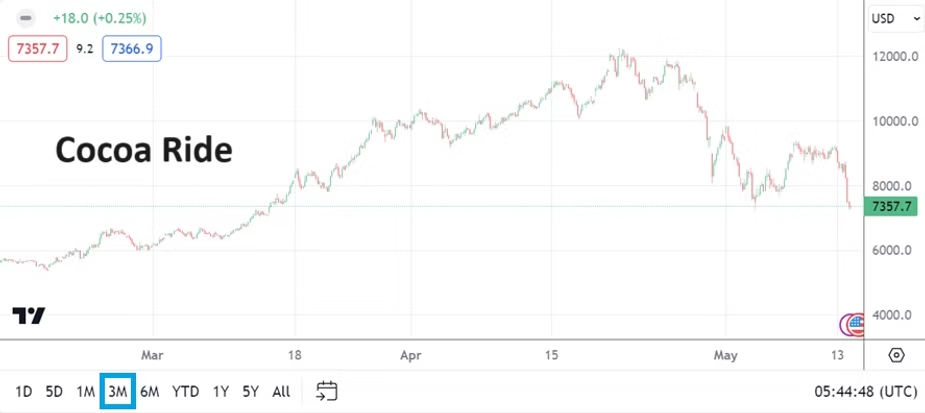
Also within the volatile world of commodities it needs to be mentioned that Cocoa which regained a portion of its higher price values last week and finished Friday above 9,000.0 USD per metric ton, fell swiftly in yesterday’s trading session and is now traversing 7,357.0 USD. Cocoa has enjoyed a spectacularly wide ride of maneuvering via market forces. The commodity is still valued within loftier heights when compared to its historical averages, and demonstrates the speed and danger (and opportunity) of price velocity.
Cocoa Three Month Chart on the 14th of May 2024
Further signs of risk appetite and fragile notions are being exhibited via U.S equity indices, which produced sideways price action yesterday as important economic data awaits and will certainly churn short-term and mid-term perspectives. The S&P 500 is again within sight of record levels, while investors of it and the Dow Jones 30 and Nasdaq 100 all brace for this week’s data which will affect their risk outlooks.
S&P 500 Index Three Month Chart on the 14th of May 2024
Monday, 13th of May, New Zealand Inflation Expectations – yesterday’s quarterly result came in slightly below the previous report. The decrease of inflation concerns likely helped the NZD/USD spark Monday’s climb above 0.60300 briefly. This morning’s early trading is seeing sideways action as U.S inflation reports are anticipated and the currency pair ebbs around 0.60180.
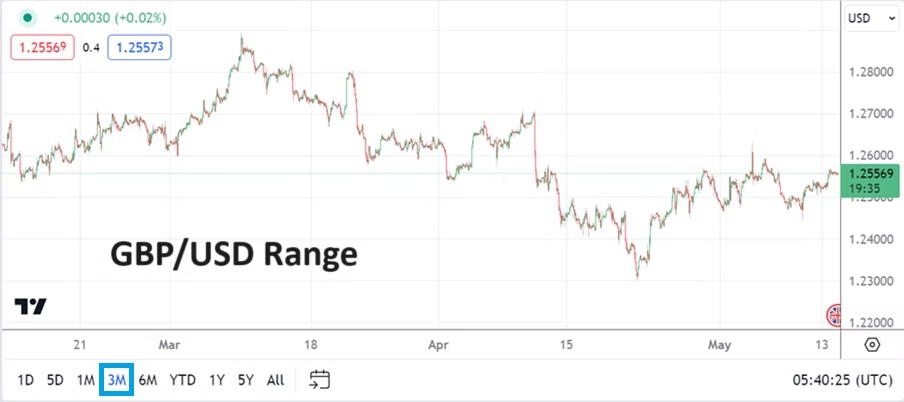
GBP/USD Three Month Chart on the 14th of May 2024
Tuesday, 14th of May, U.K Average Earnings Index, a gain of 5.7% has just been posted. This result will make GBP/USD traders nervous because it highlights that inflation remains sticky in Britain. While last week’s GDP numbers from the U.K showed an improvement, the growth certainly was not spectacular. The range of the GBP/USD remains choppy and bullish day traders targeting higher ratios on the belief the currency pair remains in oversold territory need to consider their timeframes and bias. While the 1.26000 may look like a logical target, it will take weaker U.S inflation and USD centric price action to get there.
Tuesday, 14th of May, U.S Core Producer Price Index – last month’s core report matched expectations. However, the PPI numbers occasionally spell trouble in Forex. Higher inflation results from the U.S would certainly kickstart volatility for all major currency pairs today.
Wednesday, 15th of May, U.S Consumer Price Index – this reading could prove to be the prime mover for financial assets this week because of its potential affect on behavioral sentiment. The Federal Reserve watches this number because of the influence it has on the American public. Forex will react to this report and if it is weaker than anticipated this would create weaker USD centric price action. The U.S will also report Retail Sales and the Empire State Manufacturing Index statistics on Wednesday.
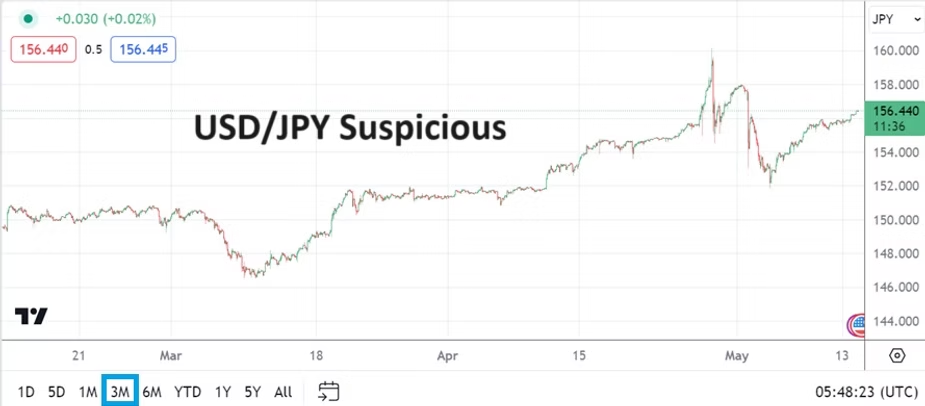
USD/JPY Three Month Chart on the 14th of May 2024
Thursday, 16th of May, Japan Preliminary Gross Domestic Product – last month’s report came in with a gain of 0.1%. This GDP data carries an expectation of minus -0.4%. Traders who like fundamentals should pay attention to revisions within the statistical pages. The Bank of Japan remains in a curious and suspicious predicament. After two interventions, the USD/JPY has climbed incrementally once again. The BoJ is certainly keeping their eyes on the USD/JPY and know financial institutions are still wagering against the Japanese Yen.
Day traders should be extremely cautious with the USD/JPY because the BoJ has the ability to strike with a massive blow when not expected. Risk management is essential for speculators wagering on this currency pair. Evidence of speculative interest in the USD/JPY correlates to the notion that while the USD has been weaker against many major currencies recently, the Japanese Yen remains within a weaker and elevated price range.
Friday, 17th of May, China Industrial Production and Retail Sales – economic dark clouds continue to cascade on Asia’s largest economy. The industrial numbers will be watched by investors certainly, but the overall health of Chinese consumers will likely be the focal point. The USD/CNY remains within bullish terrain, but the Shanghai Stock Exchange’s SSE Index has done well since its lows in the first week of February.
Forex and Equities Storm: Crucial Data will Impact Markets
Today will start out with a rather important consumer report from the U.S and day traders should stay alert. It is easy to point to every day and week as being a crucial circumstance for speculators, because that is what gets their juices moving and gets them to wager in the markets.
However, given the rather choppy conditions in Forex seen since the last week of December and pointing to the results of the Consumer Price Index on the 13th of February and the storms created in FX, traders hopefully have enough muscle memory to remember how they felt in the midst of the whipsaw conditions which were experienced only two weeks ago.
Central bank outlooks are fragile among analysts and financial institutions. Simply put this week’s data could prove to be more important than the CPI numbers. Consumer sentiment, GDP, and inflation statistics are all on the U.S roll call this week.
Other geographies will make news too and impact global markets. Last week’s impressive results from Nvidia created another massive wave of positive momentum in equity indices. The Nasdaq 100, S&P 500 and the Dow Jones 30 all have hit record values. Japan’s Nikkei 225 has surpassed record heights.
Yet, other barometers do highlight caution abounds too, U.S Treasuries yields have edged upwards and are touching values which show there is nervousness regarding monetary policy from the U.S Federal Reserve. This week’s data will deliver more insights for investors, and Treasuries are certainly going to react to the economic reports.
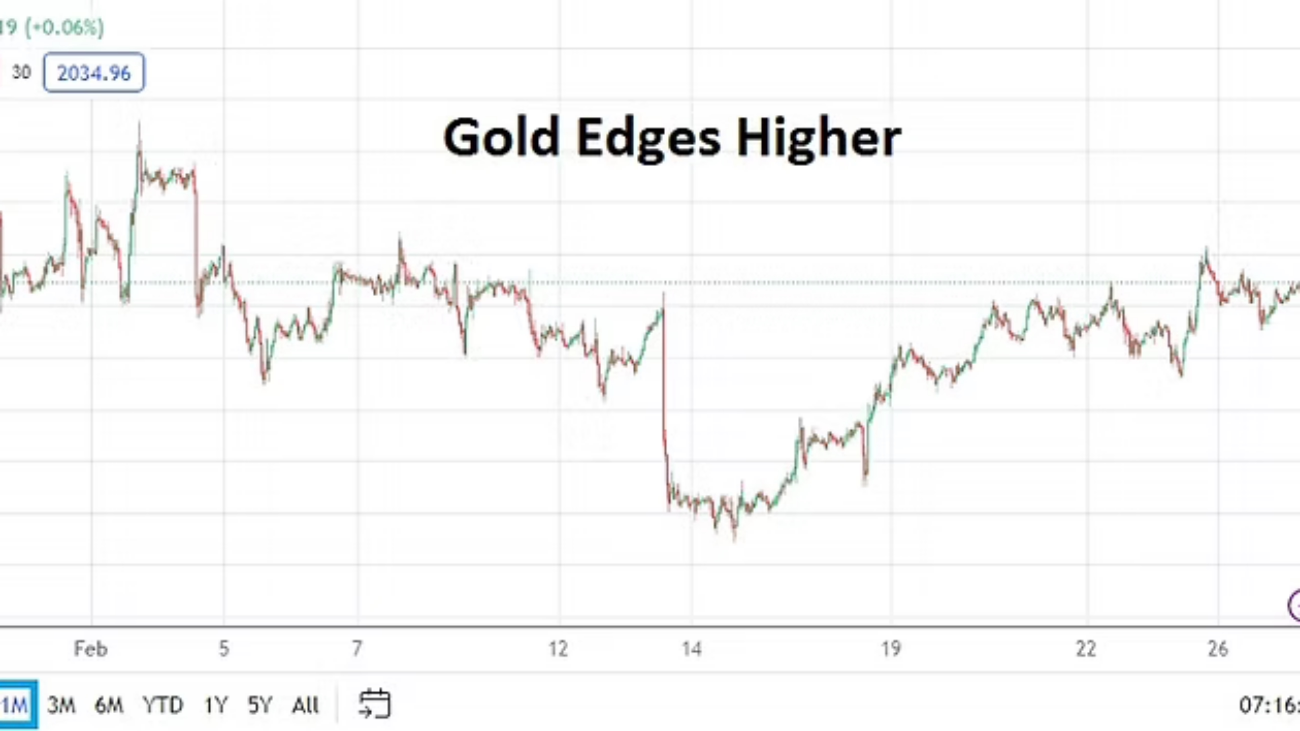
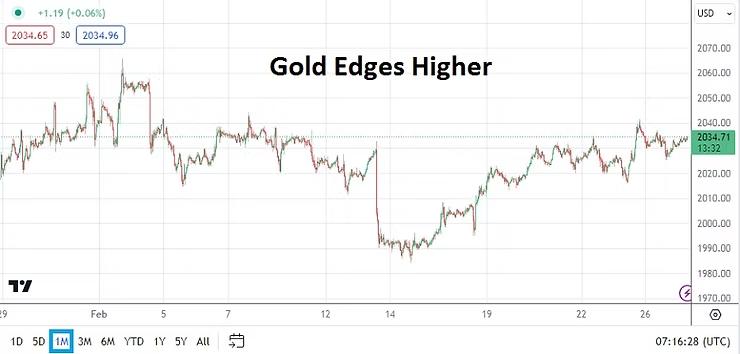
Gold One Month Chart as of 27th of February 2024
Gold has edged higher in the past week and is around the 2034.00 USD mark as of this writing. The slight climb above the 2020.00 ratio which has worked like a magnet recently, indicates some traders may be leaning optimistically towards a weaker USD mid and long-term. These folks may be proven correct, but day traders should note that the 2030.00 ratio in gold is below highs seen in December, January and early February – which indicates nervousness. If day traders do not believe gold acts as an inverse barometer for the USD, simply look at the results of trading when the stronger than expected CPI numbers were released on the 13th of February. Gold fell to a low near 1985.00 on the 14th, this was not a coincidence.
Again, while it is easy to sound alarms and jump up and down and proclaim every week important for day traders, the acknowledgement that this week’s economic data is significant should not be treated as hyperbole. You have been warned.
Monday, 26th of February, U.S New Home Sales – yesterday’s results showed another decline in the housing market, and the previous month’s number was revised downwards. The outcome may point to concerns about U.S mortgage rates which remain stubbornly high for those considering purchases.
Tuesday, 27th of February, U.S Durable Goods Orders – a rather large drop of minus -4.9% is expected. The Core data however is expected to produce a rise of 0.2%. These numbers will be a good precursor for the important consumer sentiment which will follow one and a half hours later.
Tuesday, 27th of February, U.S Consumer Confidence via the Conference Board – the results of the important readings have shown intriguing gains since late fall in 2023. While improvement in sentiment has been recorded, revisions lower have also been seen in the previous three reports. The outcome of today’s report should be treated carefully. If another higher reading is produced this may create some positive momentum in the USD momentarily.
NZD/USD Three Month Chart as of 27th February 2024
Wednesday, 28th of February, Reserve Bank of New Zealand Official Cash Rate and Monetary Policy Statement – while many Forex traders will be sleeping when the RBNZ makes its important pronouncement, New Zealand inflation data has remained strong and a conservative government is in charge politically that is pro-business. The question is if the Reserve Bank of New Zealand will go against the grain of other global central banks and actually increase their interest rate while others seem to be adamant about trying to become less aggressive. While many analysts believe the RBNZ will sit on its hands and act according to the whims of others, if an interest rate hike is announced global Forex traders should take note because it would be a signal that central bankers are uneasy regarding their rhetoric and not in agreement.
Wednesday, 28th of February, U.S Preliminary Gross Domestic Product – a gain of 3.3% is the expectation from many analysts. The previous reading was stronger than anticipated. If growth numbers in the U.S come in higher than estimated the USD will react with strength. The Federal Reserve would like to see the outcome meet the expectation or come in below, this so the U.S central bank can consider reducing the Federal Funds Rate late this spring or in early summer. However, if a significantly strong growth number is demonstrated this would cause turmoil in Forex.
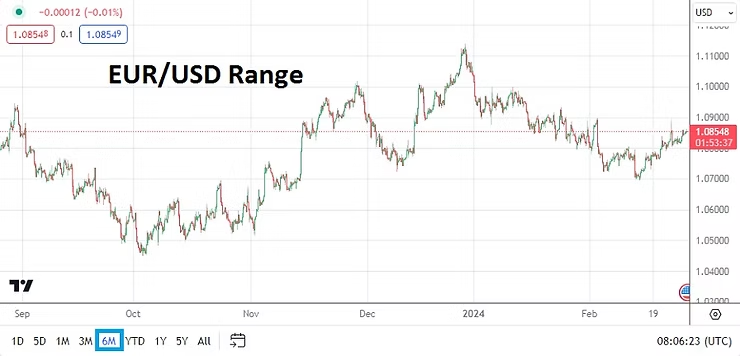
EUR/USD Six Month Chart as of 27th February 2024
Thursday, 29th of February, Germany Preliminary Consumer Price Index – a slight gain is expected in the inflation number. The EUR/USD has been struggling as stagflation concerns shadow the European Union. A higher inflation result will not be welcomed by the ECB, which would prefer to cut interest rates sooner rather than later. The German number should be watched and it will cause an impact if there is a surprise. The EUR/USD has been turbulent and is likely to produce more choppy conditions depending on the parade of data results this week.
Thursday, 29th of February, U.S Core Personal Consumption Expenditures Price Index – traders who have felt the previous economic reports already have caused intense reactions this week should brace for this inflation report. A result of 0.4% is expected. The Federal Reserve admits this is one of the most important publications that it monitors. This means financial institutions react to this report too. If inflation were to come in higher than expected, like the CPI results from two weeks ago, this would essentially kill off expectations of a May interest rate cut from the Fed. The USD will react to this report and so will U.S Treasury yields, which means equity indices will also be affected. A weaker inflation report is being wished for by many market participants, but will this be the result?
Friday, 1st of March, China Manufacturing PMI – not to beat a dead horse, but China’s economic data has been poor and this report will be viewed as important. Another negative outcome is expected. Transparency regarding economic numbers from China is a worry for investors. Conditions in China are being watched and it is important for traders to eliminate bias regarding their perspectives. China may be struggling, but its importance as an economic power is still very much in evidence. Foreign direct investment into China is diminishing, but plenty of investors still have ‘skin in the game’ and will be affected by the manufacturing reports.
Friday, 1st of March, U.S Manufacturing PMI via ISM – a slightly improved manufacturing reading is expected. However, because of the U.S data releases from the previous days, the results may be looked at only momentarily and not cause much of a reaction from market participants. Traders may be looking forward to the weekend after this week’s economic publications in order to rest.
Forex Volatility as Central Banks, GDP, U.S Equities Shadow
Perhaps it is good that today will see a lack of important economic data which will affect the markets. It might give a chance for day traders to relax and to gauge the thinking of financial institutions and investors before Central Banks, and important growth and inflation numbers shift behavioral sentiment later this week. While Forex has remained a minefield, U.S equity indices have soared to record heights. More volatility will come.
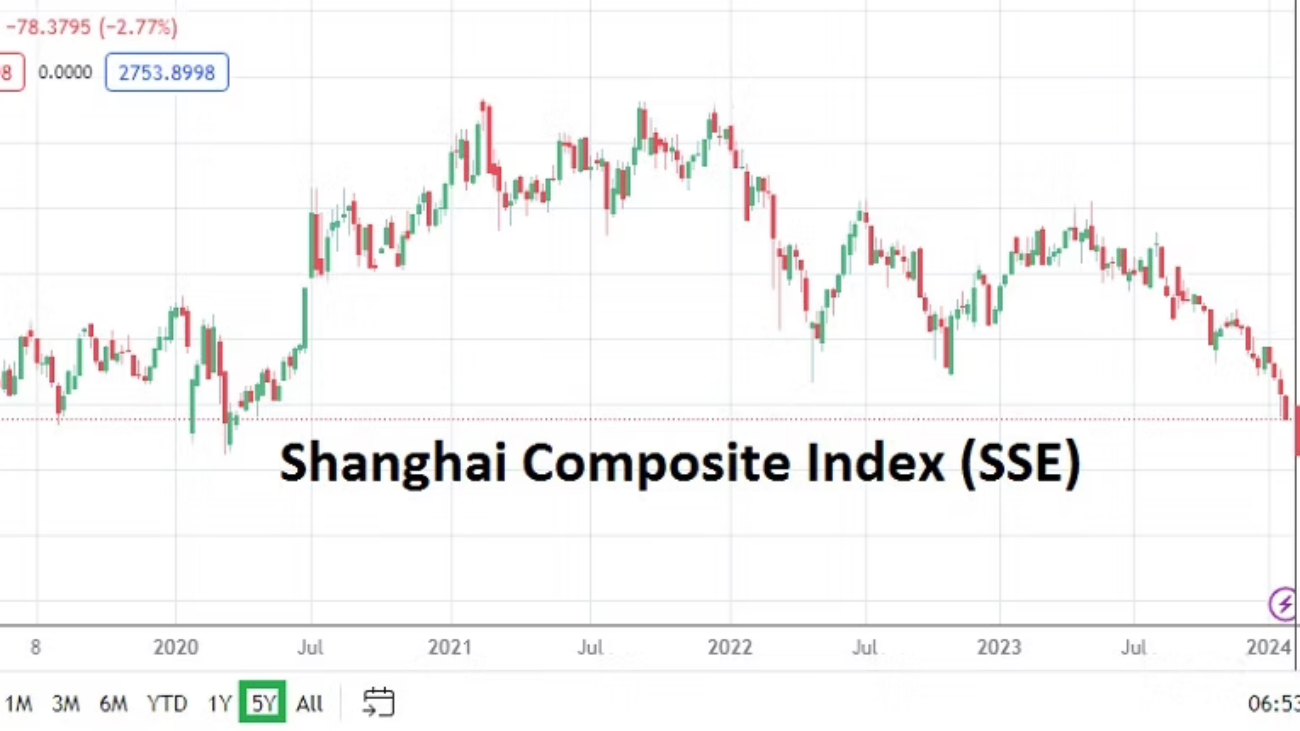
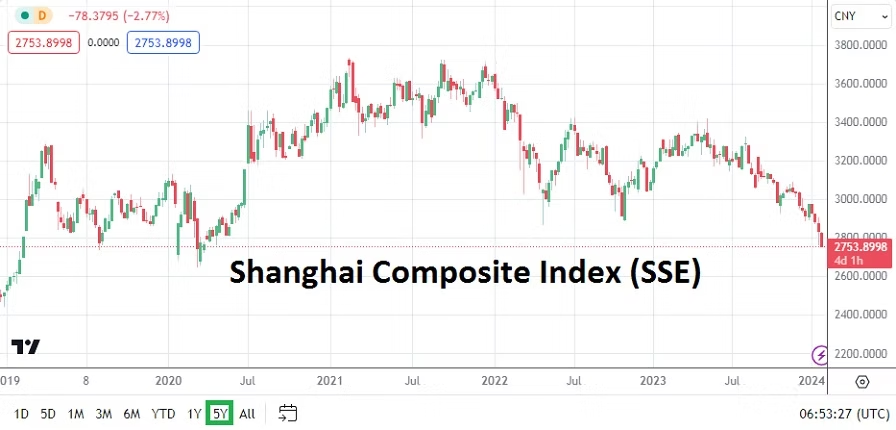
Shanghai Composite Index Five Year Chart as of 22nd January 2024
Risk assessment is always critical, it needs to be mentioned the Shanghai Composite Index is again facing severe selling pressure. This is a direct result of foreign investors losing faith in China’s economic policy and political maneuverings. The slump in Chinese equities is also hitting the Hang Seng Index in Hong Kong badly. Deflation is a legitimate fear in China. The dual consequences of a failing housing sector and crumbling equity values is harming Chinese citizens.
While the strong selloff in Chinese equities would have caused a massive amount of reaction in the global markets a few years ago, the ability to shift assets elsewhere by foreign investors who were active in China has likely reduced potential knock on effects in other global equity markets. It must also be pointed out that China continues to sit on a massive amount of USD holdings. China is a large investor in Africa and their attempt to steer influence there remains abundantly clear.
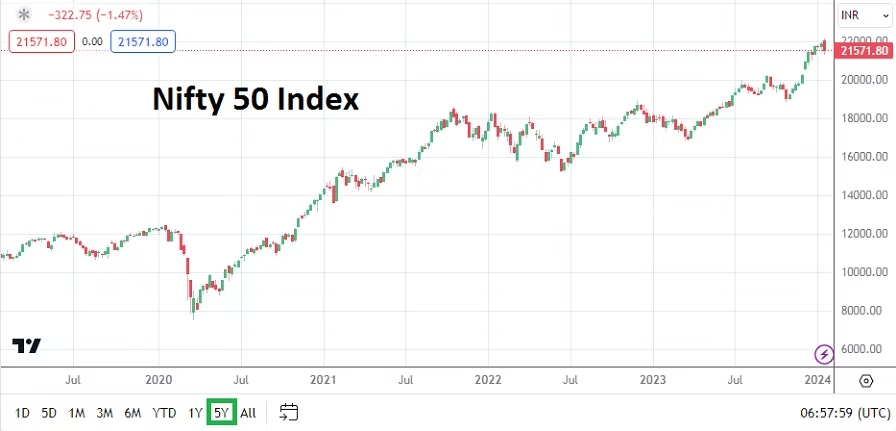
Nifty 50 Index Five Year Chart as of 22nd January 2024
India has directly benefited from the outflow of investments from China. A look at the Nifty 50 Index shows the upwards momentum India’s equity market has enjoyed as it has started to attract more direct foreign investment. The ability of the India stock market to go up while China struggles is a barometer worth studying. Outflow vs. inflow.
Monday, 22nd of January, U.S Conference Board’s Leading Index – the reading is not at the forefront of consideration for investors, they will be watching the results of U.S Treasury yields and stock indices more closely than this report.
Tuesday, 23rd of January, Bank of Japan Monetary Policy Statement and Outlook Report – no major change is expected from the BoJ quite yet. The USD/JPY has been volatile and provided a solid trend upwards since the start of January. Day traders looking for a reversal lower to develop should be extremely cautious. Data from Japan has been mixed and the BoJ is likely to remain conservative. The weaker JPY helps exports from Japan it must be remembered, but it also may factor into inflation creeping into the Japanese economy.
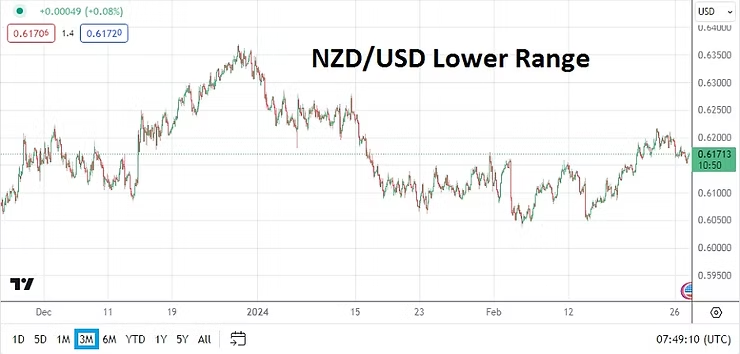
NZD/USD One Month Chart as of 22nd January 2024
Tuesday, 23rd of January, New Zealand Consumer Price Index – the inflation report is expecting a result of 0.5%, which would be below the previous result of 1.8%. The NZD/USD has taken a bearish dive since late December. Like all major currencies the New Zealand Dollar remains USD centric. Volatility in the NZD/USD may occur via the inflation numbers from New Zealand, but like the USD/JPY it may find its biggest impetus coming from afar – U.S data and the Federal Reserve outlook.
Wednesday, 24th of January, E.U and U.K Flash Manufacturing and Services PMI reports – Germany and France are anticipating slightly better Manufacturing Purchasing Managers’ Index numbers. Services numbers are expected to be slightly weaker from Germany. Solid results from these combined publications could help the EUR/USD create a bit of bullish momentum.
The U.K numbers via their Manufacturing PMI is expected to be slightly better than the previous outcome, but the Services number a bit worse. Economic data from Britain remains mixed to lackluster. Higher inflation numbers last week did the Bank of England no favors. The GBP/USD will be affected briefly by the results, but trading in the Forex pair is likely to remain geared towards thoughts about U.S data coming this Thursday and Friday.
Wednesday, 24th of January, Bank of Canada Rate Statement and Monetary Policy Report – the key lending rate from the BoC is expected to remain unchanged. However, Canadian economic numbers have been problematic, and while the BoC may want to wait for the U.S Federal Reserve to move first regarding interest rates, critics of the BoC are becoming louder. The USD/CAD will react to the Bank of Canada’s rhetoric, but unless there is a major surprise the currency pair will remain heavily USD centric.
Thursday, 25th of January, European Central Bank Main Refinancing Rate and Monetary Policy Statement – the ECB is expected to provide no major changes. The 4.50% interest rate is anticipated to stay in place. The ECB will likely ‘sound’ a calm tone and say while improvements are being seen in the E.U, that areas of difficulty remain but are understood and being managed.
Thursday, 25th of January, U.S Advance Gross Domestic Product – the key growth number from the U.S is anticipated to show a gain of 2.0%. This number will get a reaction in Forex, equities and bonds. The Federal Reserve’s FOMC meeting is next week and this GDP result will factor into their monetary policy rhetoric. Because it is an election year in the U.S, this number will also get an additional ‘sounding board’. Day traders should be careful before and after the noise caused by this growth report.
Friday, 26th of January, U.S Core Personal Consumption Expenditures – the vital inflation number carries an estimated gain of 0.2% before its release. As much as the Fed watches the GDP number, the inflation result via the Core PCE is a huge component of the U.S central bank’s thinking. The USD will react to this report and Forex traders should brace for a reaction from financial institutions. If the number is weaker than expected the USD could find selling momentum, if the number is stronger more USD strength could be seen. Folks looking at the GDP and Core PCE reports should also look for potential revisions to previous months results, which could cause another wave of volatility in the markets if they are significant.