Only Along with Military Might in Order to Avoid Stalemate
Opinion: The following article is commentary and its views are solely those of the author. This article was first published the 9th of September via The Angry Demagogue.
The main tool that the West has used against tyrants has been that of economic sanctions since they have not been willing to commit military assets to the fight. This has been going on with Iran for decades and with Russia in various forms for over ten years and yet both countries have managed to launch wars (on their own or via proxies) during times of minimum and maximum sanctions.
The signing of the MoU by the Trump administration was seen as a naïve undertaking at best and a surrender at worst. But like the Palestinians who never missed an opportunity to miss an opportunity, so too have their friends the Iranian Islamists. Rather than “taking the win” as President Biden would have advised, the Islamist Republic decided to double down on their treachery, hitting shipping in the Straits of Hormuz as well as American allies in the Gulf and Jordan, with impunity. The tit for tat response that the U.S has been using, copying Israel’s pre-October 7 failures in Gaza and Lebanon, has brought no real gains.
Can An Economic D-Day Win the War?
President Trump’s turn to Treasury Secretary Scott Bessent and his economic D-Day against Iran is supposed to change the nature of economic warfare in general and the war against Iran in particular. If the goal is getting them back to the negotiating table then there is a good chance it will work. However, if one thinks that once at the table the negotiations will go differently than it did before, one would be foolish. If the goal is, as it ought to be, to bring down the regime, that is a more difficult end.
However, we are seeing a few things taking place that are accompanying this economic D-Day. It is not clear if these actions are part of the U.S plan to bring down the Islamic Republic or if they are just coincidences but if the latter, they are the luckiest coincidences in U.S foreign policy in quite some time.
Hezbollah and the Houthis are two of the three main Iranian proxies left, the third being in Iraq. And while Hamas still lives, their military capabilities have been degraded enough as to make them a minor protector of Iran and an even less minor projector of Iranian power. People tend to downplay the importance of the “proxies” to the Islamic regime and what their collapse could mean to it. For nearly half a century the Islamic Republic has been concentrating on extending its power and prestige in the Middle East (and globally) at the expense of its own people. These proxies are a core part of the Islamic Republic. Hezbollah and the Houthis for example mean more to the Islamic Republic than do most of their own citizens. If their citizens revolt, they just kill them, if their proxies fall or leave their orbit, the regime itself is in danger
In Iraq the U.S government has been working diligently with the Iraqi government ot neutralize the Shiite militias. But the Iraqi militias are more a thorn in the side than a real power. The Saudis, however, have begun a major offensive against the Houthis and are closing in on the Houthi capital of Sanaa. True enough the Houthis are fighting back and hitting Saudi oil infrastructure (one wonders why Turkey and Pakistan are not living up to their obligations in the “Mecca Accords” – but that is for another day) but it seems that Saudi Arabia is finally taking the Iranian threat seriously and hundreds of Houthi fighters have surrendered to Saudi and other Sunni forces. There were reports that the U.S turned down a Saudi request to fight the Houthis, but that doesn’t mean they have not coordinated the fighting together. The civil war has been going on in Yemen since the early 1960’s or before and while this probably won’t end the war it might force whomever is the Shiite replacement for the Houthis to concentrate on internal fighting and to leave the Bab-el-Mandeb Straits untouched. This is a key Saudi goal as it needs multiple routes for its oil exports.
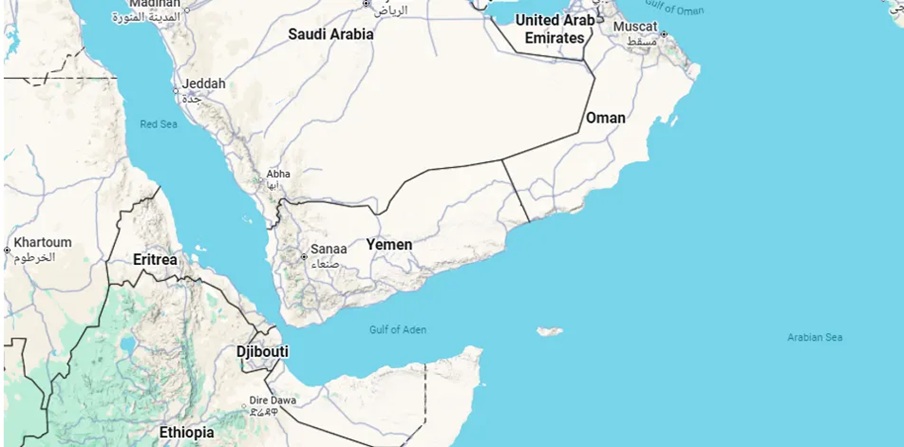
Saudi Arabia, Yemen, Red Sea and Gulf of Aden
In Lebanon, Israel has captured the main forward base of Hezbollah in the tunnels under the Al-Tahar ridge. This is a major tunnel system, cut into the mountains that contains full command and control centers as well as rocket and drone launching capabilities hidden from the Israeli air force. The Al-Tahar complex was unknown to Israel until rather recently with Reuters claiming that Iranian officers were or still are held up inside the tunnel network. Israel has followed this up with attacks on the town of Nabatiyeh which the al-Tahir ridge overlooks as well as other Shiite towns that are centers of Hezbollah activity. Nabatiyeh is not just another Shiite village but the largest city in the eastern part of southern Lebanon and serves as the administrative center of the area. It is, of course, a Hezbollah stronghold. While the MoU gave Iran a veto over what would happen in Lebanon, its disintegration has given Israel free reign to finally take care of the Hezbollah presence in the country.
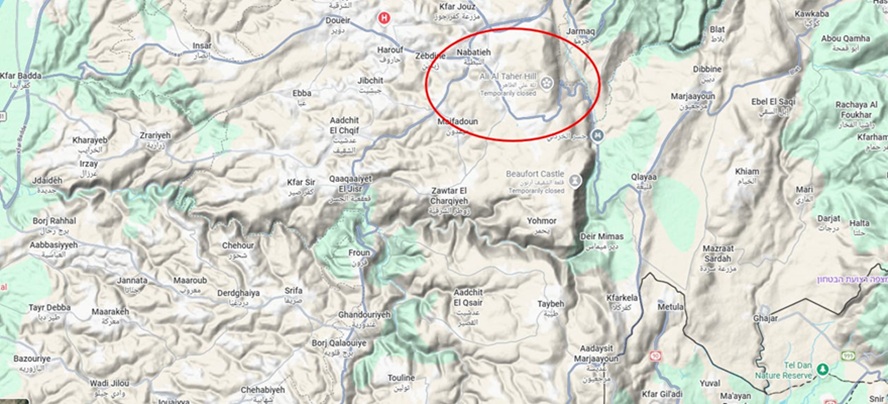
Towns Along Lebanon and Israel Border
In a more surprising move, taking a page from Trump’s own playbook, Pakistan has issued exorbitant tariffs on commercial traffic going to and from Iran threatening a land route to China and what was a safe way to bring in needed goods from abroad.
According to reports, Iran has just two months of fuel left in the country. The currency has tumbled even more and, much like Weimar Germany, stores are changing their prices multiple times a day in order to keep up with the inflation.
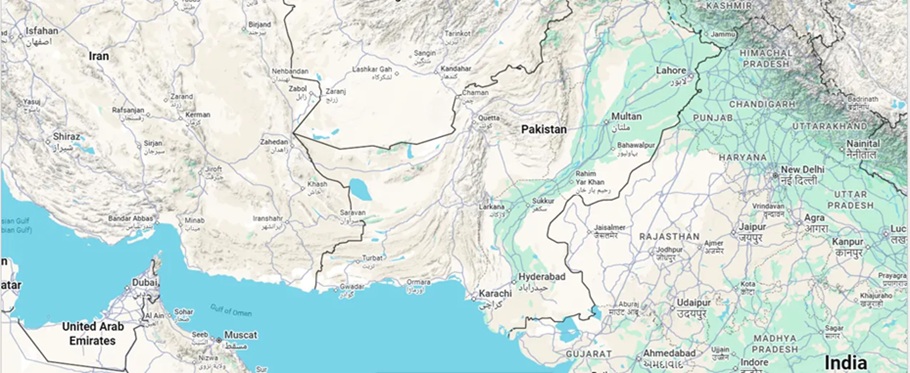
Pakistan and Iranian Border Areas
Does this all mean that Iran can fall in the coming months? The people who could lead such a regime change are those who witnessed the January massacre of over 40,000 of their fellow citizens and who continue to witness daily executions of the protesters the regime has jailed. It is difficult to predict these things but hard to believe that they will put themselves in a position for another massacre so soon after the last one and to succeed. On the other hand, the economy is in such a shambles that at some point the army might get involved if they are getting paid after the Revolutionary Guards.
One thing we need to take into consideration is if the Gulf States will now be stricter in their dealings with Iran. The UAE, as much as it is one of the more Western oriented of the Gulf States still has been allowing Iranian funds to flow through that country (as it seems, it allows Russian funds to flow) and Qatar is always playing a double game. Will at least the UAE shut down all Iranian pipelines. As for Europe, they seem to be falling in behind the American effort and China is getting impatient with having to pay market prices for their oil. None of this means that in practice they will follow Scott Bessent’s D-Day, but at least in public they are supportive.
Much as the Israeli hostages were only released after massive military pressure led to Hamas seeing them as liabilities rather than assets, the military destruction of the main Iranian proxies, a total blockade of Iran itself combined with real sanctions that denies the IRGC the money and material it needs to continue its internal and external terror could lead to the regime’s downfall. Or, it could require more American military power – either an occupation of Kharg and other Iranian islands or, more likely, some massive B2 strikes on key IRGC and nuclear installations.
There are two other forces that might interdict an American victory in the Gulf and that is the Turkey-Qatar alliance and Saudi cowardice. Erdogan’s Turkey has no interest in a collapse of an already weakened Iran as they look to be hegemon over the Middle East and Eastern Mediterranean and need some residual threat from Iran to Israel. If they press the United States to stop the Israeli destruction of Hezbollah or if they further their military presence in Syria, forcing Israel’s hand, America will lose. Qatar too, needs friction so that its money (it has nothing else) is still of value.
A non-Islamist Iran could surprise the world and grow into a regional economic, industrial and military power that, in alliance with the UAE and Israel would challenge the Turkish-Qatari-Moslem Brotherhood alliance. Tukey-Qatar need a weakened Iran.
These are the four steps that could lead to an American victory:
– The destruction of Iran’s economy via the economic D-Day
– The destruction of the Hezbollah in Lebanon.
– The end of the Houthis regime in Yemen.
– A renewed American air campaign against key IRGC targets.
Taking any of these four off the table or taking advice from Turkey or Qatar will lead either to an American defeat or, in a best case scenario, a stalemate.
Disclaimer: the views expressed in this opinion article are solely those of the author, and not necessarily the opinions reflected by angrymetatraders.com or its associated parties.
Follow Ira Slomowitz via The Angry Demagogue on Substack https://iraslomowitz.substack.com/