USDINR 20260615

India Insider: Can We Become a Developed Economy on Low Wages?

The Brutal Nature of a Large and Cheap Workforce

Ms. Nithya (name changed) works in a private school in Tamil Nadu. She gets to school by 9 AM and leaves around 5 PM. The school she works for hasn’t paid a salary for two months and she has no contract. She gets $83.00 USD per month in a small city of Tamil Nadu State. While this may sound extraordinary to some readers, it is not an isolated case in countries like India. 

Salary surveys and labour market studies indicate that many private school teachers in smaller towns and rural areas earn between ₹5,000 and ₹15,000 per month, this despite possessing educational qualifications and working full-time schedules. Though private schools in India often collect exorbitant fees, they pay teachers less and it hasn’t changed for years. 
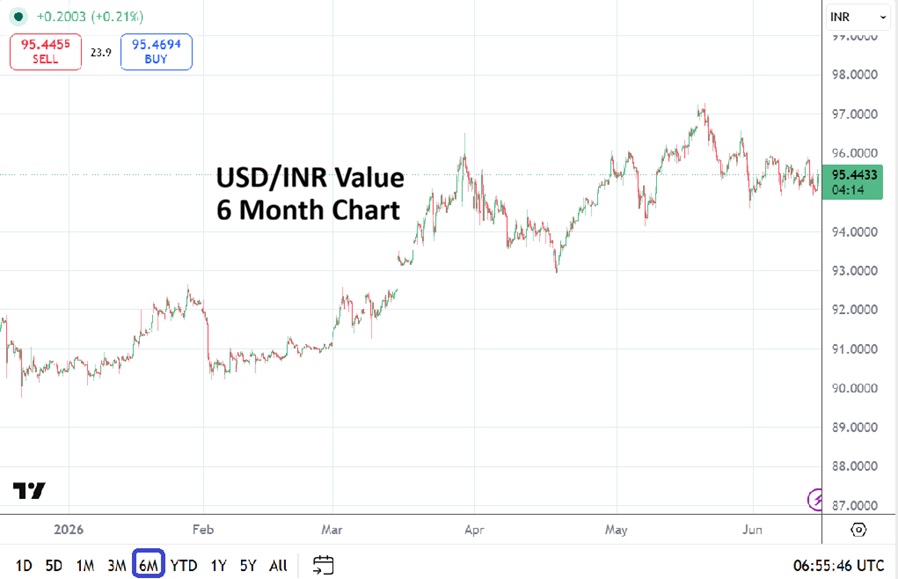
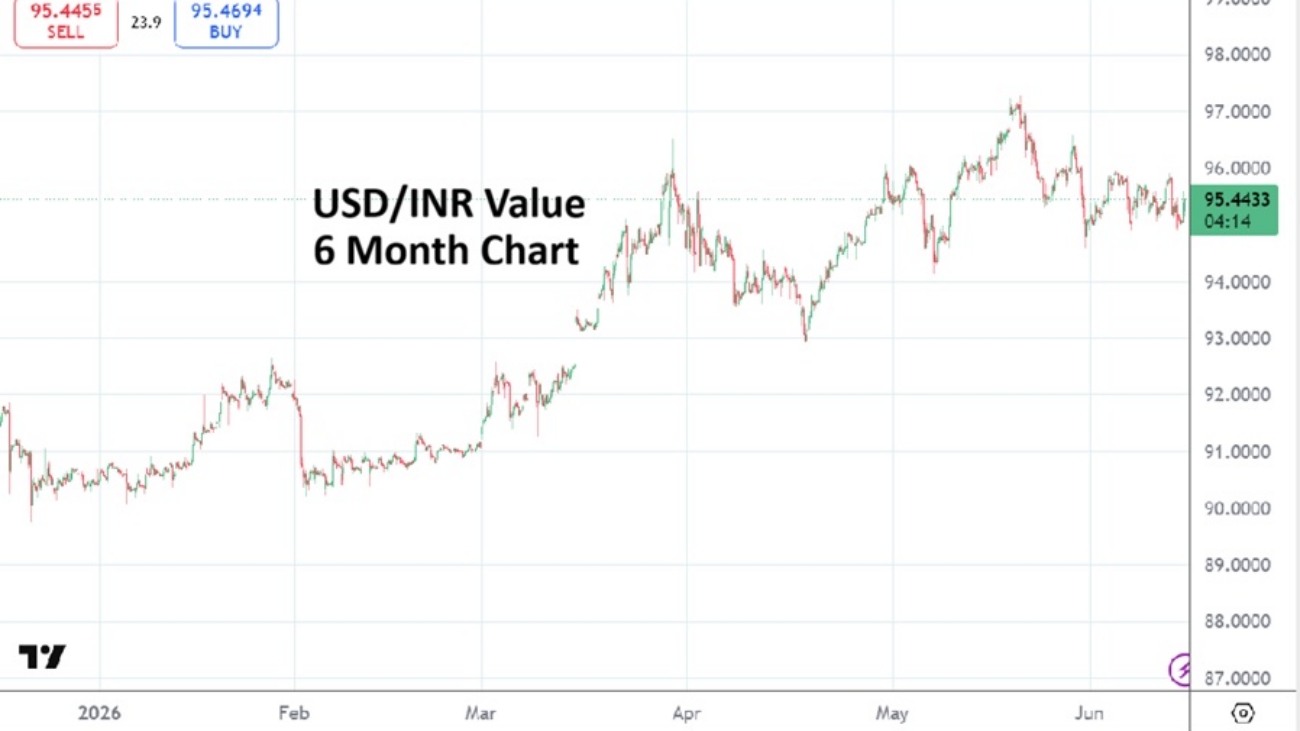
USD/INR Six Month Chart as of 15th June 2026

Indian nurses often are treated in the same manner. Those who prefer to work in government institutions or emigrate to foreign countries earn better wages. Attrition in the nursing industry is quite high in India. Why?

Because of the lower wages in most of the private hospitals in India, and the higher wages offered in Singapore or in the Middle East a career and lifestyle choice arises. That’s why many nurses work for a time in institutions closer to their towns. And then switch to more lucrative opportunities when salaries are more handsome in distant Indian cities or in a foreign country.

Male nurses from rural areas also leave and work in GCC countries. As long as wages remain lower and uncompetitive, attrition will prevail in India’s nursing sector.

Perspectives From The Employees Standpoint

India wants to become a 10 trillion USD economy by 2047. How will India increase its total output to achieve the above target? India has to create jobs and better compensation via salaries for its people.

Without sufficient income, how are people expected to pay for goods and services produced in the economy? And if people are not buying, who will buy the goods? Maybe the generous foreigners, but can India accomplish this goal? India’s service exports such as Information Technology are already facing questions of viability, this as AI confronts and makes strong and sufficient intrusions into existing business models of legacy companies.

Gig workers deliver parcels dictated by soulless algorithms. The algorithm doesn’t understand the burdens of hot summers and cold winters. It dictates rules and regulations according to its capital owners’ protocols. Employees who work in this profession have to work no matter whether they have fevers, cold ,body aches or anything else they might be an affliction.

Like feudal landlords who extracted labour without many concerns for the well being of those who worked under their authority, today’s digital platform economy often places efficiency and profits above human considerations. This is called “techno-feudalism” by some economists.

Though individual states in India have labour laws and regulations, India’s readiness and capability to enforce these laws in order to regulate the welfare of the labour market is still not up to standards elsewhere and difficult to enforce.

If your income remains low relative to the cost of living, how do you increase your consumption? A question that India’s ultra-wealthy should ask as their companies produce everything from cars to household goods and understand the importance of making money for themselves, is if they understand the other side of the balance sheet? Perhaps they would make investments that create jobs which in turn would help families spend their extra money on their companies goods and services.

India suffers from the availability of a high proportion of cheap and qualified labour that is easy to manipulate and allows a few to profit from the many. Given the tepid investments by private business in consideration for the other side of the balance sheet, the wages that most employees receive via basic economic models are insufficient.

Ironically and sadly, in some parts of India, especially in smaller towns or rural areas it is true that many private sector nurses, schoolteachers, and other service workers earn less than the international poverty line of $3 per day (around ₹285 at current exchange rates).

Education is certainly a tool for women empowerment, but it is often confronted by employers who take advantage of the educated and still pay poor salaries. This ‘accepted truth’ regarding education becomes questionable given the reluctance of institutions to pay a better salary for those who have spent money on improving their knowledge and skills. Those who work for meager pay, while not earning enough income to save money, nor participate in liquid investments or stock investments are caught in India’s labour market trap.

While writing this article, I witnessed a young married woman in her 30s, delivering parcels on behalf of Flipkart (owned by Walmart) in a vehicle which suffered from the brutality of the afternoon sun. Such is the nature of the labour market right now in India .

India shouldn’t allow people to work in a system that enriches techno-feudalists and business people by putting the welfare of their employees at risk. If India wants to be a developed economy, it should put people first. Economic development should not be measured solely by GDP growth, stock market indices, or the wealth of billionaires. It should also be judged by whether the ordinary workers can earn enough to live with dignity, support their families, and participate meaningfully in the prosperity they are helping create.

Note: 1 USD = 94.90 INR as of 12th June 2026
Copy and paste the text from AMT that you want to share

India Tamil Nadu State 20260521

India Insider: Capital Formation in Rural Areas and Distress Hill Terrain

Income Comparison via Two Distinct Districts: Tiruvannamlai and Madurai

India is a vastly developing economy, but its national accounting frequently relies on formal sector performance to extrapolate the conditions of the informal economy. Despite official statistics continuing to rise, the economic reality of rural India remains largely unchanged.

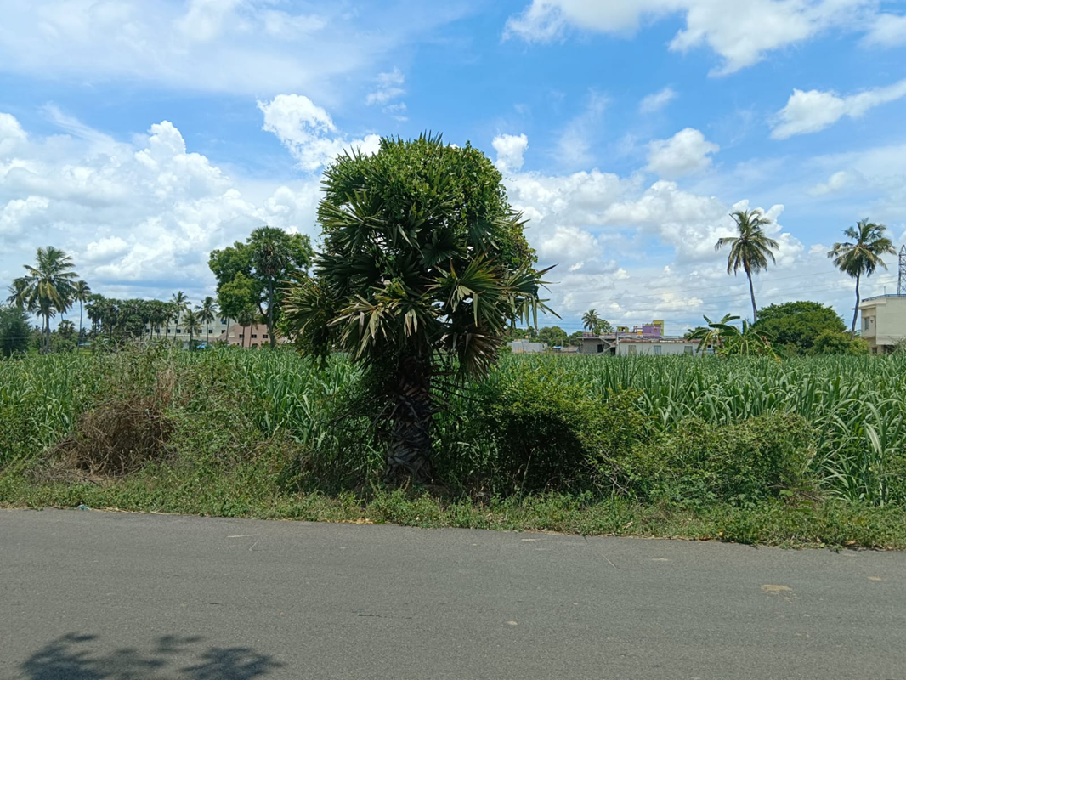
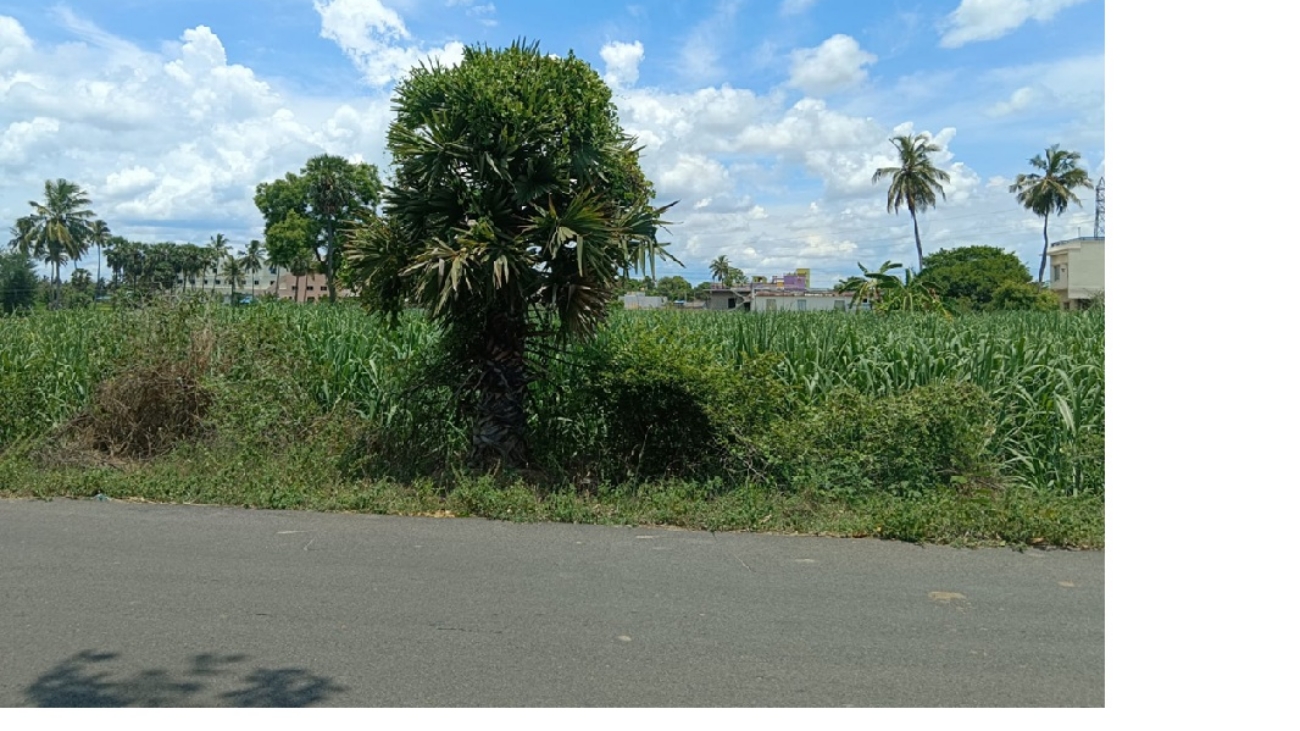
Recently, I was travelling extensively across villages in the Tiruvannamalai district of Tamil Nadu State in South India, trying to understand how capital formation works in rural and semi-rural areas.

For more than 50 kilometers, there were barely any shops related to consumption activity. There is no absolute poverty in these areas, but income levels are clearly not standard enough to support strong consumption patterns.

Many people in Tiruvannamalai district villages work in neighboring cities liken Tiruppur, Bengaluru or Chennai and send cash back to their families. Apart from these remittances, agriculture and related seasonal income add to household earnings.

The second observation based on my extensive survey with about 55 women, was that I hardly saw anyone wearing gold chains or ornaments in villages. In other words, household income is often not sufficient enough for families to consistently accumulate gold or jewelry, which traditionally act as a form of savings in Tamil Nadu households.

Evidence suggests the reason for weak savings and low capital formation in Tiruvannamalai is due to low household income generation. And the reason for low household income can be attributed to a lack of local opportunities which offer weak wage growth, plus dependence on migration and the seasonal nature of agriculture sector. Education also plays a decisive role, but the broader issue demonstrates inadequacy of stable income generation.

We do not have sufficient recent district level data to fully validate many of these observations. Tamil Nadu State GDDP data (Gross District Domestic Product) exists, but it often lags. RBI remittance data does helps, but that is largely available at the State level rather than district level.

However, these observations do find relevance in prior surveys conducted by the Tamil Nadu Government before COVID-19.  Districts such as Tiruvannamalai were often catagorized as relatively backward compared to more industralized districts where consumption pattern improved dramatically through manufacturing and urbanization.

Instability via MNREGA’s Distress Hills Data

One interesting way to study this phenomenon is from Mahatma Gandhi National Rural Employment Guarantee Act (MGNREGA) employment data. MGNREGA data is measured in lakh person-days. (A lakh equals 100,000). In simple terms, it measures the amount of labor generated through a combination of workers and days worked under the scheme. 

Say for example, if 100,000 people work for 10 days, or 50,000 people work for 20 days, then: lakh person-days per 100,000*10 equals 10 lakhs person-days. And conversely 50,000*20 equals 10 lakhs person-days.

Sometimes, fewer workers, often work for many days or many workers work for fewer days. Thus, economists use person-days instead of counting only people.

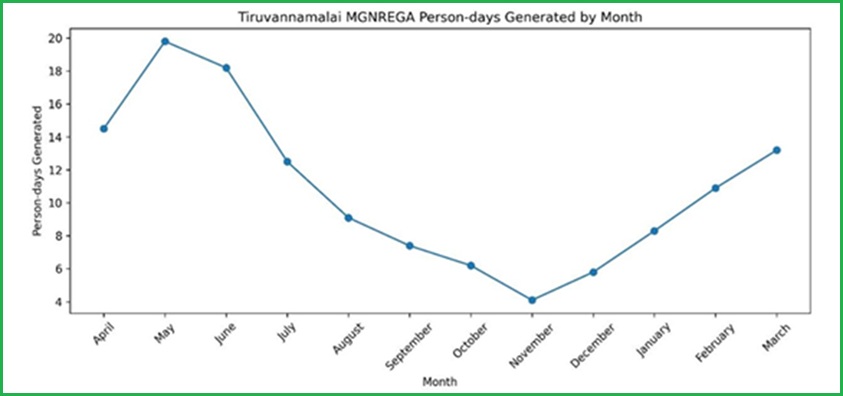
In Tiruvannamalai the pattern of MGNREGA demand reveals a strikingly seasonal and distress driven rural labor cycle. Person-days generated surged to nearly 19.8 lakhs during May, before falling sharply toward November as agricultural activity resumed. The peak compared to it low variation is close to 5:1, creating what can be described as a steep “distress hill” in rural employment demand. 

Such a dramatic fluctuation suggests that a large share of rural households rely on MGNREGA not as supplementary employment, but as an emergency income stabilizer during periods of agricultural inactivity and cash flow stress. The intensity of the spike indicates the absence of diversified rural income sources, exposing the structural vulnerability of the local informal economy.

Tiruvannamalai District: FY monthly 2024-2025, from MGNREGA person-days shows sharp seasonal distress, peaking near 19.8 lakh person-days during May before collapsing toward November.

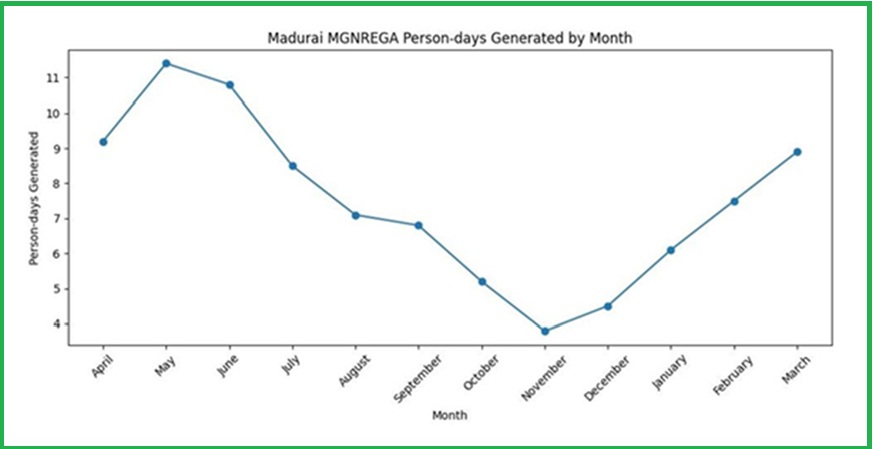
In contrast, the Madurai district in Tamil Nadu State presents a far more stable rural employment profile under MGNREGA. Peak demand was comparatively lower, reaching around 11.4 lakh person-days, while the decline across the year was considerably less severe than in Tiruvannamalai. The peak to low ratio was closer to 3:1, indicating significantly lower seasonal volatility in rural wage dependence.

Madurai District: FY monthly 2024-2025 displays a smoother MGNREGA employment curve with lower seasonal volatility, indicating stronger economic continuity and more diversified income generation.

Rather than exhibiting a sharp distress hill, Madurai’s smoother employment curve suggests a more diversified local economy. This because households may have greater access to non-farm income sources including urban linkages or more stable agricultural activity. The reduced fluctuation implies that MGNREGA functions more as a supplementary employment buffer than as a critical survival mechanism in Madurai compared to Tiruvannamalai.

Seemingly it is evident that consumption oriented businesses may struggle to scale in districts such as Tiruvannamalai, where disposable income growth and household surplus remain weak.

Industrialisation changes this dynamic because stable wage growth improves consumption depth and household savings. Without stable income growth, retail expansion and capital formation remain structurally weak.

The distress hill therefore represents far more than a simple employment fluctuation. The steep seasonal dependence on MGNREGA highlights how large sections of the rural economy remain vulnerable to agricultural cycles, with insufficient diversification, weak consumption resilience, and limited avenues for sustained wealth creation.

Notes:

Chart Sources: Ministry of Rural Development, Government of India, MGNREGA Dashboard (District level monthly person-days generated data).

Distress hills refers to my analysis of seasonal MGNREGA employment patterns to measure rural income instability and economic vulnerability. When plotted month-by-month, districts experiencing severe seasonal stress tend to exhibit a steep hill shape, characterized by sharp spikes in person-days generated during agricultural lean periods, followed by rapid declines once farm employment resumes. The steeper the hill, the greater the dependence of rural households on emergency wage employment for income stabilization.

Copy and paste the text from AMT that you want to share