postN81

Behavioral Sentiment: Sports and Trading a Key Correlation

Behavioral Sentiment: Sports and Trading a Key Correlation

In order to be an effective day trader a speculator needs to be able to control their emotions. A person can have years of market knowledge, the best schooling, read the world’s greatest books, be able to quote the leading financial experts and still be a bad trader. While it is important to understand the complexities being generated via technical and fundamentals and the power of behavioral sentiment, again it doesn’t guarentee you profits.
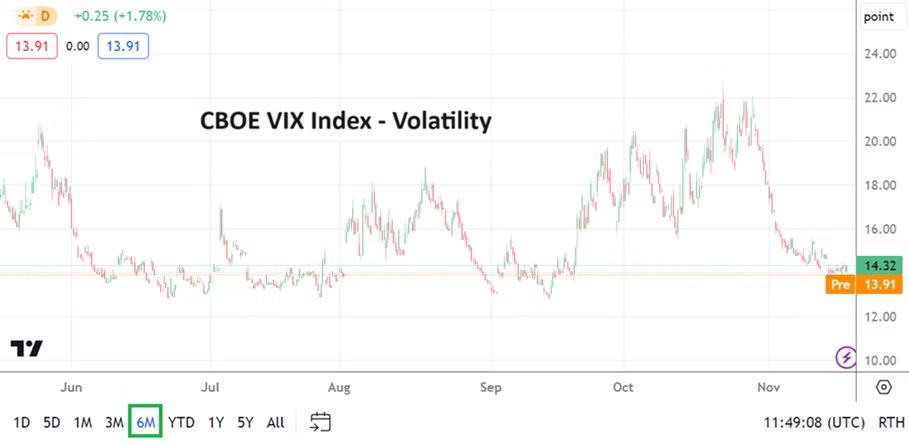
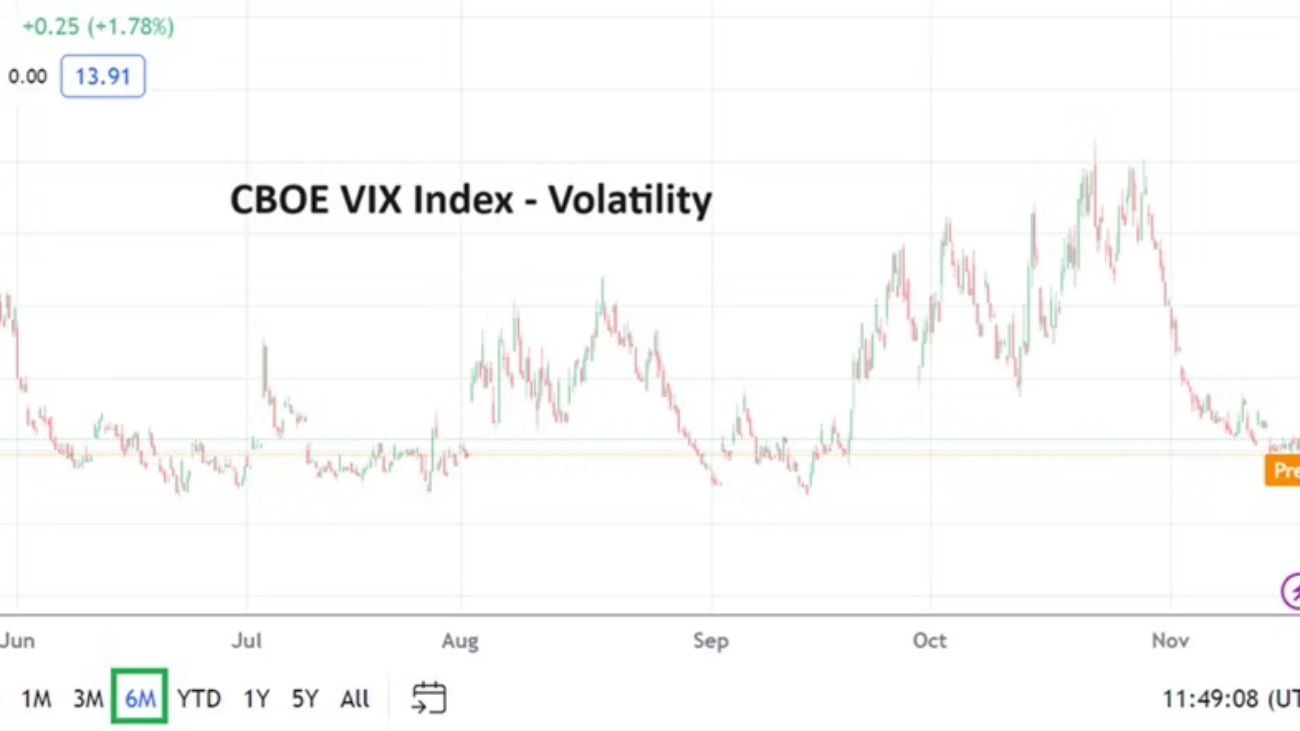
CBOE VIX Index six month chart as of 17th November 2023

When a day trader initiates pursuit of position, long or short, they can even be right about the eventual direction and still lose their money when the trade is complete. The missing link for many speculators while trading is their inability to control their emotions.

Many sports fans know that there are teams that have some of the highest paid athletes, but frequently have lackluster results because the team is not able to handle the bright lights of the stadium, they let crowds affect them. Some teams simply prove over time they are not prepared to really compete in the most important games; trading results frequently are similar when a speculator is not ready for the financial market they want to compete within.

Unless a market participant can handle their anxiousness, nervousness, frustration, assaults from value gyrations (reversals of price), doubts and the noise of the crowd (news being generated from the media that is mere hyberbole) and other challenges that can affect their emotional state – a trader is unlikely to have success.

Sports and trading are very similar sometimes. Professional athletic competitions between the world’s best are often a contest of ‘wills’. In many sports the top athletes are almost equally matched regarding their physical ability. In trading many speculators have the same perspectives regarding potential market directions, yet they produce different outcomes.

The difference maker in sports and trading when it comes to positive results – winning, is the ability to control their emotional state. Remaining calm and focused, knowing the goal and tasks that must be accomplished to achieve victory in sports and trading is often the result of keeping tranquil psychologically in the middle of battle.

You can have all the necessary trading skills needed to pursue a position within Forex, equity indices, commodities via the cash market, CFDs and futures, but if you do not have control of your emotions you are likely to lose.

Day traders also need to understand that one day of results, winning or losing, does not mean anything regarding future prospects. Like the best athletes, traders need to enter every trade as if it is a new game. Discipline, tactical objectives are important in trading. Being able to walk away from a losing position and leaving enough in your account to pursue the markets, for the next time you feel there is a potentially profitable objective that is attractive is also important.

You must know yourself to be a good trader, you must understand your own emotions and work on weaknesses. The ability to be profitable over a long time is not as simple as merely entering your online trading platform and opening a position which has been recommended or that you think is a winner.

It is one thing to understand the positive movement of a potential trade, but you must be ready for the negative possibilities when a trade is not going your way and the ability to navigate through the storm. Is your stop loss in place? Does the amount of leverage you are using allow you to walk away from a losing trade and still have enough ammunition (money) for other trades? Can you handle the volatility that is likely to ensue in potentially choppy conditions?

You need a solid gameplan. One of the greatest risks a trader is confronted by is their lack of emotional fortitude. Successful speculators embrace their trading positions because they are attractive, but they also manage their expectations and have a plan of attack in place before they enter every trade. Good traders can block out the noise of the crowd and enjoy the competitive nature of battling the financial markets.
postN51

AMT Top Ten Miscellaneous Musings for the 17th of November

AMT Top Ten Miscellaneous Musings for the 17th of November

10. Book: The Art of War by Sun Tzu.

9. Music: Pablo Casals playing Bach’s – The Six Cello Suites.

8. Cricket: India and Australia will meet in the World Cup Final this Sunday in a match between two of the world’s best squads.

7. Gold: The precious metal is trading within sight of its October highs and may find speculative buyers looking for potential upside via wagers.

6. Commerical Real Estate: WeWork bankruptcy knock on effects will cause additional strains in U.S market, this as the sector struggles with vacancies in this era of ‘remote’ employees.

5. Risk Appetite: U.S equity indices are at three month highs, U.S Treasury bond yields at one week lows as optimism grows in the outlooks of long-term investors.

4. Data Watch: Retail Sales numbers from the U.K, and U.S Housing Starts and Building Permits statistics will be released today.

3. USD: Dollar Index futures are trending lower and near values last seen in the third week of September as financial institutions brace for a weaker USD mid-term.

2. U.S Treasuries: Yields are incrementally declining, helping push the USD lower, and creating positive equities momentum, this as U.S bonds appear ready to sustain a cycle lower if investors can remain tranquil.

1. Federal Reserve: Inflation data via the CPI and PPI were weaker than anticipated, and the U.S Fed’s December FOMC Statement should begin to sound less agressive.

postN19

Preventing WWIII: Part 2 – Reviving Western Deterrence

Preventing WWIII: Part 2 - Reviving Western Deterrence

Opinion: The following article is commentary and its views are solely those of the author.

Aggressive Western Action Can over-extend China and Revive Needed Deterrence.

Some cliches are just correct, in spite of their being cliches – “if you want peace, prepare for war” is one. But really it should be “if you want to avoid war, deter war”.

Therefore, it is not clear to me why there is opposition by some in the Republican party to fighting Russian aggression in Ukraine. For some, I guess it is a knee jerk reaction against Biden administration policy while for others it seems to be a general loathing of American involvement in the world. 

Each is understandable on its own but does not take into effect the appeasement of Russia will have on Western deterrence around the world – including in the Western hemisphere and the Indo-Pacific. While most Americans understand that Russian control of Ukraine threatens the main Western European countries, the key to Russian imperialism really is in the south. Historically, Russia has always tried to find a warm water port to call its own. For nearly four centuries Czarist Russia fought Ottoman Turkey so that Russia could expand its territory southward and have a warm water presence in the Mediterranean. Currently, a Ukrainian presence in the Black Sea denies Russia even the opportunity to pressure modern Turkey to abide its wishes.

A Russian victory in Ukraine would mean dominance of the Black Sea by the Russian Navy and directly challenge Turkey to appease Russian power by giving them free passage through the Dardanelles to the Mediterranean. That in itself would not be worth much to the Russians without a port in the Mediterranean, which they currently have. That they have one goes back to the disastrous decision by the Obama administration to invite Russia back into the Mideast in order to take care of Syrian chemical weapons. This came, we all remember, when the Syrians laughed at Obama and crossed his “red line” about using chemical weapons against its own people. We might also remember when then Secretary of State John Kerry (the one who was never right on a single foreign policy issue ever) who, first demanded that Syria turn over all chemical weapons in a week, then reassured them that even if we attack it will be “unbelievably small”.

In 1973-4, Henry Kissinger brilliantly took advantage of the Israeli-Arab War’s outcome with Israel’s surrounding the Egyptian 3rd Army in the south and controlling the road to Damascus in the north, by brokering a cease fire on both fronts. This led directly to the expulsion of Russia/Soviet Union from the Middle East. While Russia continued friendly ties with the murderous Assad family – first Hafez and then his son, Bashar, they did not have a military, air or naval presence there. Due to this longstanding relationship with Assad’s Syria, Obama and Kerry thought it a brilliant idea to have them come in and do the dirty work that they didn’t want to do – prevent Assad from gassing his own people. 

As Russia came in and established air and sea bases in Syria and introduced the infamous Wagner group to carry out its brutal ground operations, Russia slowly started to strengthen its position in the region. While slyly allowing Israel to attack Iranian arms shipments meant for Hezbollah while pretending to be its ally, Russia formed a close  relationship with Iran. Wagner, which fought hand in hand with Hezbollah in order to prop up the Assad regime (and attack American forces fighting ISIS) is now rumored to be training Hezbollah in the use of Russian anti-aircraft systems. 

In addition, reports last week that an Iranian Ilyushin 76 cargo jet has now landed in one of the Russian air-bases they established after Obama’s kind invitation to return to the Mideast. This plane, filled with Iranian arms destined for Hezbollah has been unable to land in regular Syrian airports or bases because Israel continuously puts them out of service. Knowing that Israel would never attack a Russian base – this is a safe haven that Russia gladly supplies. 

When free countries unite in warfare there is usually one joint goal  – that they are all united to defend freedom – that is why they fight together.  While autocratic and totalitarian regimes fight together it is usually a combination of a negative goal – disturbing or destroying the current world or regional order – as well as the goal for each power in itself. Currently, the joint goal in the Mideast (of Russia, China, Iran and North Korea) is to hurt the main ally of the US in the region – Israel, in order to weaken and embarrass the US. For Iranians, they also want Israel destroyed. For Russia, they want Israel weakened so they can replace the US as the power broker in the Mideast. For China, it is to dismantle America’s control of the flow of oil and, eventually, the replacement of the USD in the global economy with the Yuan.

Ukraine is important in this calculus because, as we said above it gives Russia complete control of the Black Sea and will pressure Turkey – whose NATO membership is uses only to its own advantage – to break permanently with the West. While the Chinese theory is that the two fronts the US is supplying arms to, Ukraine and the Mideast, are tying it down and expending its resources it would otherwise use in the Pacific, in truth, an aggressive strategy on both fronts would be to over-extend Russian and Chinese resources in order to keep China from moving on Tiawan. A credible threat of destruction or even marginalization of the Axis allies in the Mideast – including (besides the soon to be gone Hamas) Hezbollah, Shiite-Iranian proxies in Iraq and Syria, as well as Iran itself combined with a major offensive in Ukraine will tie down Axis resources and possibly prevent a Chinese blockade or attack on Taiwan.   If its two main allies need full supply and full readiness to be able to respond to credible and massive attacks by Ukraine, Israel and the US, China itself might have to expend resources to prop up its own allies. 

Add to that a major show of naval force in the Indo-Pacific by Japan, India, Australia and South Korea combined with US forces will give China the choice of destroying their own wavering economy by attacking or blockading Taiwan or in maintaining peaceful Pacific trade routes while trying to prevent the collapse of its Axis allies. 

An immediate and radical change in policy can restore Western deterrence quickly.   Re-arming Ukraine and leaving Israel to do its job without pressure to stop in Gaza and to respond forcefully in Lebanon will send a strong message. Biden brought two carrier groups to the Mideast and told Hezbollah, “don’t”. But they did.  

In spite  of that  US Secretary of Defense Austin told Israel that its response to Hezbollah aggression in the north is “provoking” them.  

And the US hesitates even against Iranian proxies. Just now, the NY Times has reported that Biden-Blinken have turned down a Pentagon plan to be more aggressive in response to Iranian attacks against US forces in Syria and Iraq for fear of “provoking Iran” (this seems to tell us that the Austin complaint from Austin to Israel is really from Blinken).  

Iran never seems to fear provoking the US.   

Israel fooled itself by thinking Hamas was deterred by its destruction of an arms factory or two (as the US is doing now in Iraq/Syria) when proper deterrence would have meant them knowing we can and will go into Gaza and destroy their underground city as Israel is doing now. Instead, media fear mongers, backed by Israeli ex-Generals on the payroll of the US progressive left (via cushy think-thank jobs) combined with policy directives by successive governments have told us and Hamas time and time again that Israel cannot destroy Hamas as the cost is too high. I don’t want to speak too early, but that seems to have been as wrong as their assurance that Hamas is deterred since they want to drink white wine in the evening overlooking the Mediterranean while watching their children play innocent video games.

It is time to stop calling for cease fires and repeating UN hypocrisy and to start being aggressive and provocative in the defense of freedom. 

Disclaimer: the views expressed in this opinion article are solely those of the author, and not necessarily the opinions reflected by angrymetatraders.com or its associated parties.

You can follow Ira Slomowitz via The Angry Demagogue on Substack https://iraslomowitz.substack.com/ 

postN70.1

Yields, Credit Worthiness, Trading and Geo-Political Risks

Yields, Credit Worthiness, Trading and Geo-Political Risks

Traders participating in Forex and equity indices this week may want to consider finding a very quiet room and avoiding the loud conjecture which is certain to be heard. U.S bond yields will remain a focal point the entire week, and Moody’s new negative label regarding U.S credit worthiness issued late on Friday will not help the Federal Reserve and Treasury as the size of U.S debt is called into question once again. Forex markets provided speculators velocity and volatility last Thursday and Friday, and this week’s risk events are certain to cause behavioral sentiment turbulence.

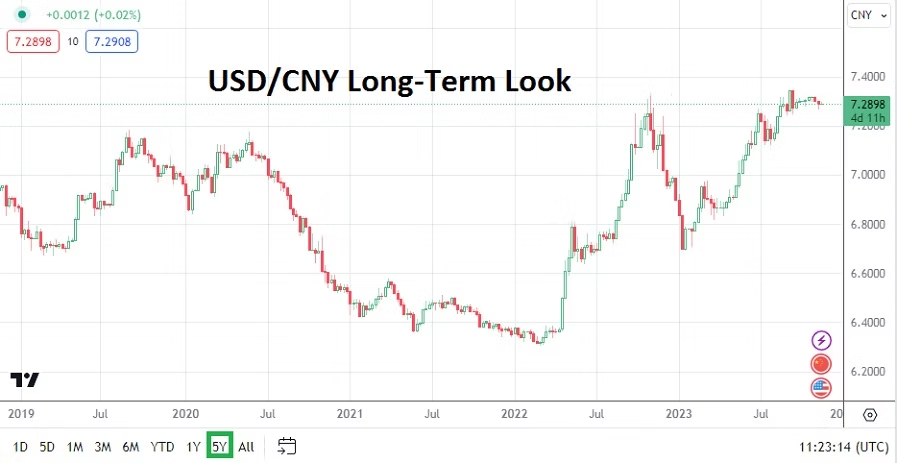
USD/CNY Five Year Chart as of 13th November 2023

Added to the ‘fun’ for speculators this week will be the APEC Summit gyrations which will be held in San Francisco, and includes a scheduled meeting with President Joe Biden and President Xi Jinping this Wednesday. The meeting comes at a critical time as geo-political and economic concerns come from Asia, the Middle East and Eastern Europe.

However, traders should not allow their emotions to grow too nervous, financial institutions actually showed a taste for U.S equity indices last week and the price of gold has declined, while the value of Crude Oil per barrel has also eroded. This shows that even in the midst of carnival like barking from pessimistic naysayers, that investors are still participating in the broad markets and makeing bets on the notion that optimism will continue to show sparks of light.

Monday, 13th of November, U.S Federal Budget Balance – this report is certain to be rather negative if studied closely. However, investors already know this story, and last week’s Moody’s downgrade of U.S credit accountability has already rang alarms. Thus, this report will likely fall on deaf ears today.

Tuesday, 14th of November, E.U Flash GDP – the numbers from the European Union are exected to be negative. However, last week’s slightly better than expected Germany Factory Orders may help the European Gross Domestic Product results limit the capability of a surprisingly bad decline. An expectation of only minus -0.1% is awaited.

Tuesday, 14th of November, U.S Consumer Price Index – the inflation numbers from the States will get the attention of most global investors. The results are sure to affect the USD, Treasury yields and equity markets. A weaker than expected outcome could propel the USD lower. Stronger than estimated statistics could ignite buying of the USD based on the notion the Fed will feel compelled to remain aggressive via its monetary policy rhetoric.

Wednesday, 15th of November, China Industrial Production – while the APEC Summit is highlighted by the media, it is economic data from China which remains important. Data from the nation continues to be lackluster and demand for commodities, the USD/CNY, domestic real estate and conusmer spending are all being watched and questioned by financial analysts. A gain of 4.5% is expected.

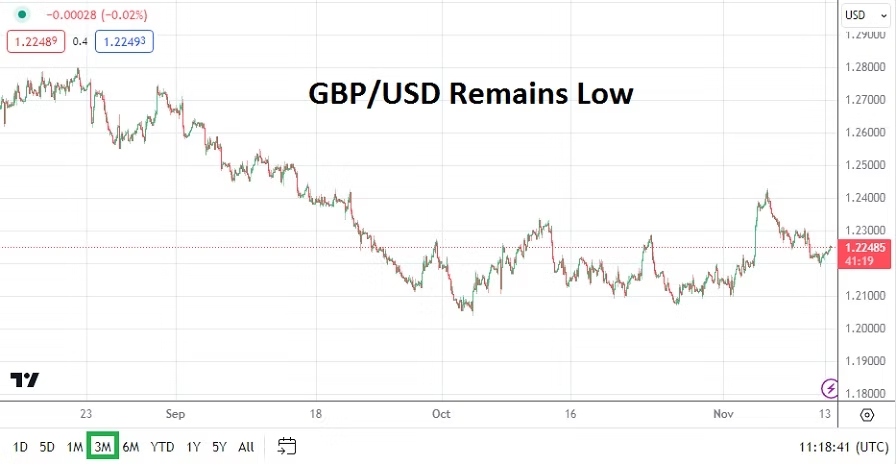
GBP/USD Three Month Chart as of 13th of November 2023

Wednesday, 15th of November, U.K CPI, the inflation numbers from Britain will be important and will follow Tuesday’s Average Earnings Index publication. The GBP/USD has found choppy terrain and the results of the combined numbers from the U.K will affect Forex, even if USD centric considerations remain key.

Wednesday, 15th of November, U.S Producers Price Index, Retail Sales, and the Empire State Manufacturing Index – these reports will be issued at roughly the same time and will factor into sentiment created from the U.S CPI data seen the day before. The combination of all these outcomes will play into the broad markets, and the USD within all major currency pairs. Weaker than anticipated numbers would be welcome by USD sellers. However, until the reports are published wagering on the USD will prove volatile and risk management is encouraged.

Thursday, 16th of November, U.S Federal Reserve Officials – at least 4 U.S Federal Reserve members will be speaking at various conferences. They are sure to give their opinions on the Federal Funds Rate outlook and will be asked to comment on the week’s data already published in the U.S regarding inflation and consumer spending.

Friday, 17th of November, U.K Retail Sales – a gain of 0.3% is expected compared to last month’s negative results. Speculators will react to the consumer driven data and the GBP/USD will again come under the influence of risk sentiment regarding outlook. However, traders need to understand these numbers are largely a result of looking backwards and not forwards regarding outcomes.

Friday, 17th of November, U.S Housing Starts and Building Permits – the American housing industry is being closely monitored and the high costs of mortgages is affecting the U.S marketplace. The Building Permits number is expected to be slightly lower than last month’s outcome. Traders should also keep their eyes on the potential of revisions to suddenly emerge from previous reports.

postN51

AMT Top Ten Miscellaneous Thoughts for the 10th of November

AMT Top Ten Miscellaneous Thoughts for the 10th of November

AMT Top Ten Thoughts for 10th of November 2023

10. Book: Art Lover: A Biography of Peggy Guggenheim by Anton Gill.

9. Music: Igor Stravinsky’s The Firebird.

8. Word of Day: Parabolic which highlights Bitcoin’s movement the past month, and may be followed by the word reversal.

7. Centrism: A political wish for our times.

6. Equivocate: Central Banks led by the U.S Federal Reserve continue to protect one another by talking out of both sides of their mouths.

5. Gold: 1950.00 USD per ounce looks to be important support for the precious metal via a three month chart. Will 1950.00 USD remain durable?

4. USD: Stubborn choppy Forex conditions continue to flourish and may remain prevalent in the near-term.

3. Consumer Sentiment: U.S consumers are staying away from home purchases because of high interest rates, today’s data from the University of Michigan will shed light on what they are buying instead.

2. U.S Treasuries: Higher yields are trouble for the Federal Reserve, and should scare U.S citizens who may be penalized with higher taxes to pay off U.S mounting debts.

1: USD/JPY: Japanese Yen trading near values last sustained in 1990 for a significant amount of time.

postN69.1

USD/INR and the 83.3000 Resistance Level is Not an Illusion

USD/INR and the 83.3000 Resistance Level is Not an Illusion

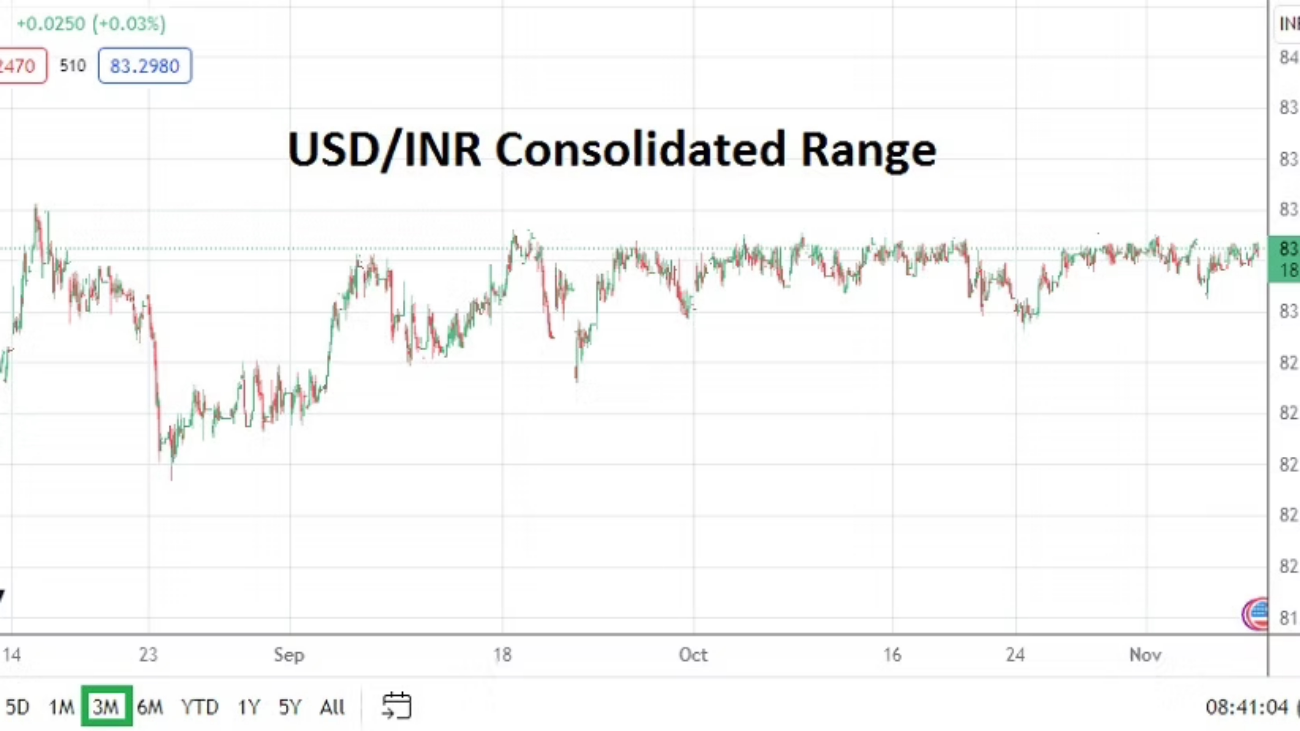
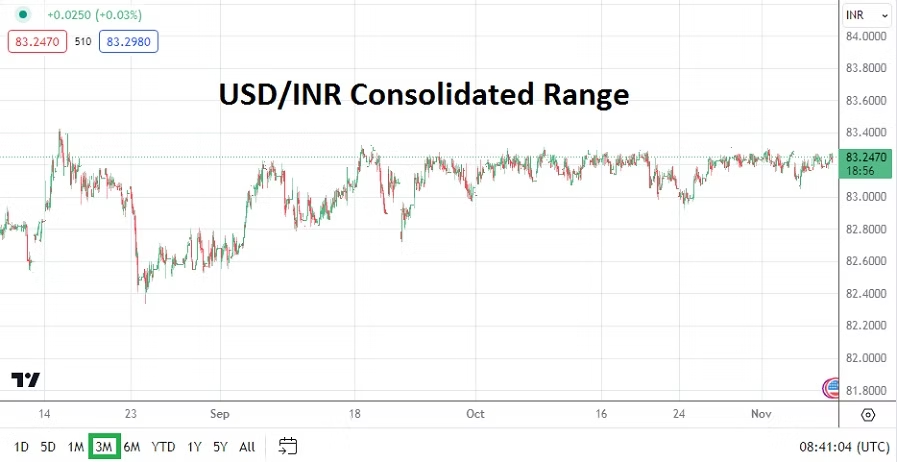
Traders of the USD/INR for those who remain short-term speculators of the currency pair, as opposed to financial institutions which position holdings for corporations and large investors, may be perplexed about values and momentum over the past three months. It is abundantly clear the USD/INR faces a rather strong force when it approaches the 83.3000 mark. Yes, sometimes the Forex pair has traversed above this level, but the moves have been momentary and have been pushed back.

USD/INR Three Month Chart as of 8th of November 2023

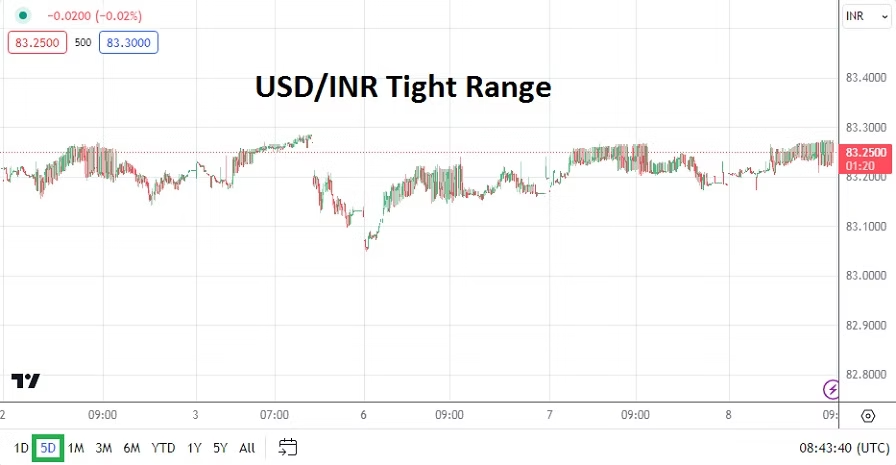
It is not a conspiratorial thought to simply look at the three month chart of the USD/INR and see that when the 83.3000 level has come into play that selling pressure mounts. And it is not news the Reserve Bank of India is involved in the durability of this resistance level. Simply put the USD/INR doesn’t trade in a ‘free’ market manner, the constraints and persistence of the Reserve Bank of India to maintain a structured resistance value for the USD/INR is evident. The past month, and last five days of trading via technical charts shows the same dynamic. And it is important to point out the resistance level of 83.3000 has been sustained over the mid-term when global risk adverse trading has seen the USD gain strength against many other major currency pairs, meaning the USD/INR should have traded at higher levels.

USD/INR Five Day Chart as of 8th of November 2023

The Indian government is managing the USD/INR with a philosophy which allows the currency pair to remain within its weaker elements regarding the Indian Rupee, but not allow it to lose too much value. And it must be pointed out that the USD/INR does show an ability to trade lower and the Reserve Bank of India doesn’t appear to mind if this happens. The 83.0000 was challenged from about the 20th to the 24th of October rather consistently and even traded at a low of 82.9300 very briefly.

As global risk conditions remain fragile the USD has shown an ability to remain strong against most major currency pairs, but risk appetite has picked up over the past handful of days. The 83.2000 to 83.2500 range of the USD/INR has been tested with momentary bursts lower. Last week’s U.S Federal Funds Rate was held in place as expected at 5.50%, and financial institutions are starting to believe the Fed has reached the end of its interest rate cycle which has seen consistent hikes. Yes, the U.S is likely to keep its higher interest rates in place over the mid-term, but U.S Treasuries yields are starting to show signs of an incremental decline. If U.S bonds start to decrease via their yields this will help soften the USD.

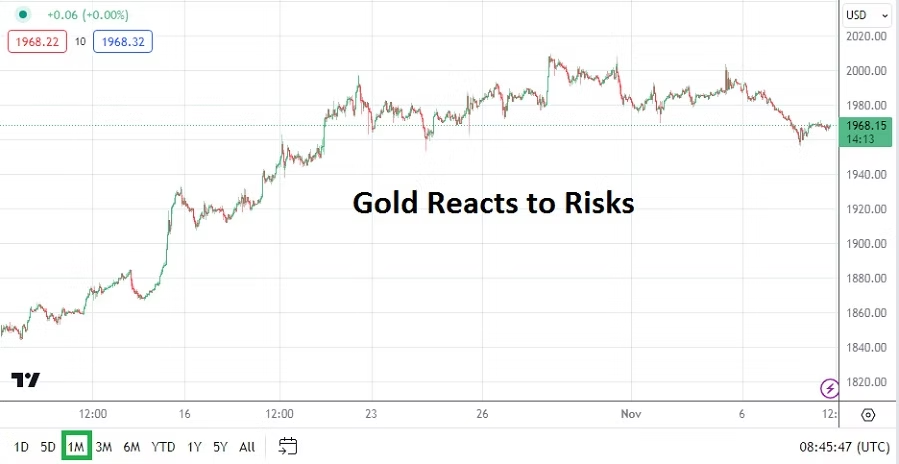
Gold One Month Chart as of 8th November 2023

Gold has started to come of its highs, but still remains within an elevated range per its one month chart. If the precious metal continues to trade around its current values, this can be taken as a sign risk sentiment wants to shift. The key word is ‘wants’ and there are no guarantees. While financial institutions have shown the ability to digest the escalated concerns because of the Middle East crisis there is always the possibility developing news can escalate quickly. But will it?

Unfortunately, the media and pundits largely control the narrative that is given to the public. Most traders are not privy to the inner workings of the ‘temples’ in which governments work. The Reserve Bank of India doesn’t issue a statement every time it makes a move within the USD/INR. Nor do the governments of the world which may say one thing publicly and say something else behind closed doors.

Day traders want to be told what to do and how they should react. First off risk management is essential, entry orders are crucial so fills meet expectations. However, achieving the direction desired and wagered upon is a gamble. Take profit and stop losses orders are urged as protection.

If the Reserve Bank of India had not intervened in the USD/INR it is likely the currency pair would have reached the 84.0000 level and higher over the past three months. The question is if risks will decrease now that the U.S Federal Reserve seems prepared to potentially take a less aggressive stance. While it seems logical the USD/INR should have been trading at higher values, the control the government of India has practiced has kept the currency pair within a ‘safe place’ while risks were heightened.

If behavioral sentiment conditions start to turn more tranquil and risk appetite increases it is possible the USD/INR could actually continue to show some selling momentum. However, traders looking for declines in the USD/INR need to be conservative and they might want to wait for the currency pair to come within sight of resistance levels to wager on short and near-term movements lower. Overly ambitious selling is likely to remain an expensive mistake until the U.S equity markets show sustained buying and U.S Treasury yields are no longer threatening long-term highs. Until there is a legitimate shift in behavioral sentiment, looking for quick hitting changes of value in the USD/INR needs to remain the focus for day traders.

postN19

Preventing WWIII: This is a 1936 Moment for the Middle East

Preventing WWIII: This is a 1936 Moment for the Middle East

Opinion: The following article is commentary and its views are solely those of the author.

The wonderful historian and public intellectual Niall Ferguson has aptly called the current US-China relationship a “Cold War II” and the current debate in the punditry is if the Israel-Hamas war lead to a WWIII. But what if we are already in WWIII? While Russia and the rest of the world did not expect the war in Ukraine to still be fought nearly three years later, the Russia-Ukraine war is now clearly a part of the fight of the West vs the new Axis – Russia/Iran/China/North Korea. But it was the Hamas attack of Israel on October 7 and the response of the Axis and its allies that have more clearly established the battle lines.

We have Russian and Iranian weaponry vs. American and Israeli weaponry. The Russians and the Iranians are using what we so quaintly call “proxies” for a plausible (un)deniability, sheltering them from retaliation. Iran has its various Shiite militias, with Hezbollah being the strongest and most lethal. Hamas and Palestinian Islamic Jihad (PIF) are the Sunni useful idiots helping the Shiite empire to destroy their Sunni cousins by dying for the cause. The Shiite militias formed and fighting in Iraq and Syria along with the Houthis in Yemen round out Iran’s ability to pretend it is not fighting while creating a genocide of Sunnis in Syria and Iraq and Jews in Israel. On the Russian side we have of course the infamous Wagner Group which in its racist undertaking is taking over and subjugating sub-Saharan Africa in its run to control minerals, gold and diamonds. They are now helping Hezbollah with weaponry and training by providing anti-aircraft weapons. The two groups fought hand in hand saving Bashir Assad, the leader and butcher of Syria, to stay in power so they already have close ties. Wagner is Russia and Russia is Wagner. Hezbollah is Iran and Iran is Hezbollah. The quicker we understand this the better off we will be.

We don’t have any details on Chinese or North Korean weaponry being used by Hamas or Hezbollah, but that might just be a timing issue. China has already decided not to report Hamas atrocities to its people in its official Chinese language news service and are eliminating Israel from its maps. It only reports Israeli’s response and has taken a clear stance supporting its ally, Iran. Will they learn from their Axis allies and also form proxies in Asia to destabilize countries like the Philippines or Vietnam while being immune to retaliation? They don’t need to conquer or even blockade Taiwan if they can destabilize their neighbors while still selling the West all that it wants to buy and inundate our youth via Tik-Tok propaganda.

Japan has realized what this war is about, and is supporting Israel like it never has. Being totally dependent upon the Mideast for its oil, Japan has never been a close friend of Israel. But they have now condemned the Hamas attack while refusing the criticize Israel’s massive response. The Japanese understand well that an Israeli defeat can lead to Chinese dominance in the Indo-Pacific.

Back to the Mideast – it seems we always go back to the Mideast.

Iranian backed Hamas and PIJ launched a brutal attack on Israel.

The Iranian backed Houthis in Yemen declared war on Israel and launched cruise missiles and drones in their opening attack.

Iranian backed and financed Shiite militias are moving to Syria and Lebanon hoping to open two new fronts against Israel.

Iranian backed and financed Hezbollah is attacking from the north in what, for some reason, we are not yet considering a war.

And Iran itself is feeling safe from attack from Israel or the US/West since “only” its proxies are fighting.

This is the remilitarization of the Rhineland of 1936 and a Western betrayal of Israel by hamstringing the IDF by allowing gasoline into Gaza or by a forced cease fire, will be the Munich, 1938.

Are we in WWIII yet? Not being an expert, I don’t know. But the main link tying the Axis together is Iran. They are the most experienced in exporting terror and supporting anti-Western regimes from the Mideast to Africa to America’s doorstep – Latin America. They support and are supported by the Castroite regimes in Cuba and Venezuela and have made deep inroads in Argentina, Brazil and now even Mexico. They are currently nearly as great a threat to the west as is China and probably a greater threat than Russia. A nuclear Iran would create three nuclear powers that could threaten the West as an Axis or independently. The Obama-Biden Iranian policy has been proven a total disaster and its seems that the Biden team is finally understanding this. But they can, in Margaret Thatcher’s famous warning to the first President Bush, “go wobbly” at any moment.

The only way to prevent a full fledged WWIII is Iranian regime change. This would bring the entire Persian Gulf (and its oil) into the Western sphere of influence as China does not yet have the naval power to challenge the US. Hezbollah would be instantly neutralized reducing the threat of war and denying the anti-Western powers another presence in the Eastern Mediterranean. Although the Syrian butcher, Bashir Assad would still have Russia to back him, it is not clear that Russian power alone could keep him in power. In Latin America, Iranian export of terror would stop instantly.

This does not mean that the US needs to invade Iran in order to defeat it. A majority of the Iranian people are sick of the Islamist regime and sick of paying the price for their being ruled by terrorists. The destruction of Iranian nuclear and missile facilities along with the destruction, by air and cruise missiles, of the main Revolutionary Guard bases will be enough. It is not an easy task -but one within the capabilities of the US Navy and Air Force. It is only the Revolutionary Guards that keep the terrorists in power in Iran – the regular Iranian armed forces can be left alone to decide if they want to help overthrow the regime or stay in their barracks. Once they see that the Guards are weakened it is a good bet they will take the side of the Iranian people and help topple the Islamist-terrorist regime.

Regime change in Iran in 2023 will change the global dynamic just as regime change in Nazi Germany in 1936 would have saved 70 million lives in WWII. A failure to act against the source of evil and to cut off the main link in the current Axis will just kick the can down the road – once again. We have appeased Iran enough and if the West and the US don’t act quickly it will have to act while simultaneously fighting off a Chinese attack in the Indo-Pacific – on its own or with its very own proxies – as well as terrorist attempts coming from Latin America and Russian nuclear blackmail in Europe.

And we haven’t even spoken of the West’s moral obligation to prevent a second holocaust, which will be the very first task of a nuclear Iranian regime.

Disclaimer: the views expressed in this opinion article are solely those of the author, and not necessarily the opinions reflected by angrymetatraders.com or its associated parties.

You can follow Ira Slomowitz via The Angry Demagogue on Substack https://iraslomowitz.substack.com/

postN68

Mets, New York City, and the Most Astounding Baseball Season

Mets, New York City, and the Most Astounding Baseball Season

Book corner: They Said it Couldn’t be Done by Wayne Coffey

In 1969, the Apollo 11 moon landing and the 400,000-strong Woodstock concert weren’t the only miracles in the United States. Wayne Coffey’s They Said it Couldn’t be Done focuses on major league baseball, where the New York Mets – a team with a losing record since its founding and who came in ninth place in the National League the year before – won the World Series to become baseball’s champions. Who says that miracles don’t happen?

Coffey is an experienced sportswriter, having written about hockey (The Boys of Winter: The Untold Story of a Coach, a Dream, and the 1980 U.S. Olympic Hockey Team), plus soccer, football, and basketball. In They Said it Couldn’t be Done, he tells the story of the championship ’69 year.

Coffey describes the history of the team. The Mets grew from the wake that was left in New York baseball when two of its three major league teams – the Brooklyn Dodgers in 1957 and the New York Giants in 1958 – relocated to California (referenced by the line “California baseball” in Billy Joel’s hit We Didn’t Start the Fire), leaving the southern boroughs without a team of their own. Created as one of two National League expansion teams in 1962 (the other being the Houston Colt 45s, later renamed as the Astros), the Mets played in the Giant’s old homestead, the Polo Grounds in upper Manhattan, until moving to Shea Stadium in Flushing, Queens in 1964.

A word about expansion teams. These teams usually comprise older players whose baseball chops have begun to erode, together with lesser-skilled players who – to put it mildly – weren’t the top prospects upon entering the league. The Mets went 40-120 their first year, a losing record for the twentieth century (and so far for the twenty-first). For the boys in Flushing, the early-to-mid-60s were a ballplaying comedy of errors, a farce with endless losing streaks, blowout games, and (as one can guess) a horrendously poor level of play. Fans would turn up to the game and watch dropped balls, outfield collisions, and balls careening off gloves. But the fiercely loyal New York fans stuck with them, taking the team to their hearts. In fact, an endearing and fun aura surrounded the young team, viewed by the fans as goofy but lovable losers.

As Coffey explains, the change began in mid-decade. Older players retired or were traded, and younger and more skilled players joined the team, such as the nimble shortstop Bud Harrelson. In 1967, two pitchers were introduced who would have a major role in the Mets future win, the left-handed Jerry Koosman and the right-handed Tom Seaver. These players – and others – were hungry for winning and were offended by the stigma of mediocrity that surrounded the team. In 1968, former Dodger star Gil Hodges began his tenure as manager, replacing the old-timer Casey Stengal. Coffey describes Hodges’ character and managerial style, and how it affected the team for the better. A decorated US marine in World War 2, and a man of the highest integrity, Hodges was calm, methodical, unflappable, with an uncanny knack for eliciting the maximum performance of his players, who respected him greatly. The ’68 team might not have even reached .500 (meaning the number of wins equals the number of losses), but for those watching closely, there were seeds of future victory being sown, as shown by good performances from catcher Jerry Grote, outfielders Cleon Jones and Ron Swoboda, and others.

Even with all the young and eager talent, the Mets began the ’69 season still outgunned in the National League, posting a losing record for the first month. But in May, they went .500 for the first time since their founding, and at the end of the month lurched ahead after a winning streak. Coffey describes the additional winning streaks in August and September where, trailing the Chicago Cubs for most of the year, the Mets edged out the Windy City boys to win, in champagne-drenched excitement, the National League East division. On this backdrop, the bulk of the book – the ’69 post-season – begins.

Going up against the Atlanta Braves in the National League Championship was frightening. Even though the Mets won more regular season games, the Braves – with powerful hitters such as Orlando Cepeda and top slugger Hank Aaron, and a pitching staff led by the right-handed All-Star Phil Niekro – were still favored to win. But in an unpredicted upset, the Mets swept the Braves, three games to zero, scoring a cumulative 27 runs compared to the Braves’ 15.

Defeating the Braves was one thing. Defeating the American League championship Baltimore Orioles in the World Series was another. With bat-wielding gladiators such as Brooks Robinson, Boog Powell, Paul Blair, and Frank Robinson, the Mets were going up against a baseball-playing war machine with almost no weak spots. Their pitching staff included four starters who won 20 games apiece, such as left-handed Mike Cuellar and Dave McNally, and right-handed Jim Palmer. Palmer, considered today one of the best pitchers ever, was still young when he took the mound against the Mets, turning 24 on the day of Game 4. But he already had five seasons under his belt, and was an experienced postseason warrior, including a World Series pitching duel in 1966 against the mighty Sandy Koufax.

The Mets went on to defeat the Orioles, four games to one, playing like lions in a World Series that has become legendary. Coffey describes these games – as he does with the Braves – in play-by-play detail, but does a good job of leaving out anything of lesser importance while highlighting the important plays, the latter including Ron Swoboda’s gravity-defying catch in Game 4 that saved the game for the Mets. A writer of lesser skill might over-indulge the reader, or conversely, skimp too much on details. Coffey is able to walk that fine line between the two, and the book’s climax bounces along at an exciting pace, with a breezy, page-turning feel. Coffey did his homework well, by conducting scores of interviews with the key players and obviously watching all the championship and World Series games (all are currently available on YouTube, for anyone interested). He includes interesting commentaries at various points, telling us what the players were thinking, analyzing their moves, and putting various key at-bats in context.

Coffey fills up the book with light vignettes of Met fans of the era, such as Howie Rose, the popular Mets sportscaster, and describes the season’s impact on New York society in general. He also delves into the background and personal stories of many players, including the hardships they endured – such as that of veteran third basemen Ed Charles, an African-American who came up from the Jim Crow South – to make it to the major leagues.

The classic baseball expression, “it ain’t over ‘til it’s over”, truly symbolized the ’69 Mets. They Said it Couldn’t be Done is a great read. Baseball fans will love the book but so will fans of any sport.

If you want to read another Book Corner article, please visit this review by Evan Rothfeld: https://www.angrymetatraders.com/post/dangerous-and-unpredictable-duties-during-the-vietnam-war

postN67.1

To Risk or Not to Risk that is the Speculative Question

To Risk or Not to Risk that is the Speculative Question

Last week U.S equity indices demonstrated a rise in value. The highs achieved in the Dow Jones Industrial Average, the NASDAQ Composite and the S&P 500 by the end of last week only touched values seen in the middle of October. And while their ratios remain below the highs of early August and falling values seen in September, the move upwards was certainly welcome by financial institutions and day traders who hold optimistic viewpoints.

U.S Treasury yields declined last week. While incremental decreases were made through Thursday, the U.S Non-Farm Employment Change and Average Hourly Earnings reports both coming in below expectations on Friday, created a stronger dose of lower yields. The 5, 7, 10 and 30 year U.S Treasuries are now trading near mid-September values. The 2 and 3 year notes are moving around early September numbers.

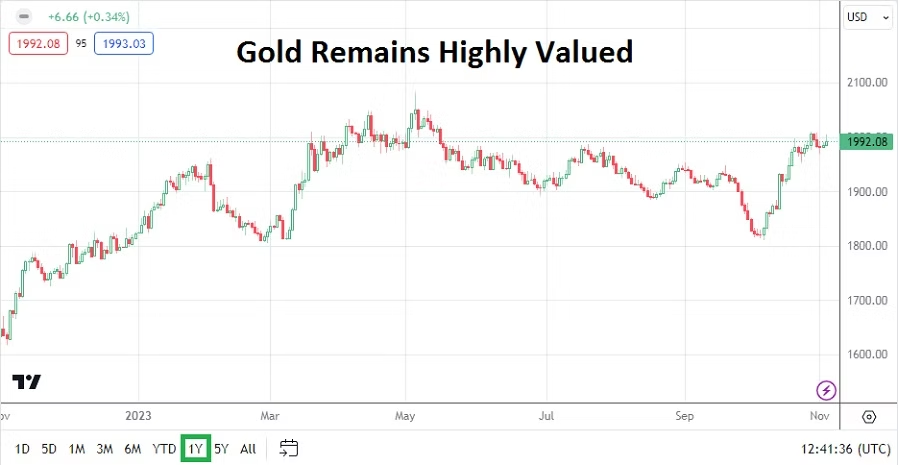
Gold One Year Chart as of the 5th November 2023

The USD grew weaker in slight movements against many major currencies last week, but upon the weaker jobs numbers found increased selling price velocity. Gold however remains suspiciously strong, which brings up the notion that risk adverse ‘insurance’ is still being held closely by investors who remain nervous.

The Middle East crisis is ongoing in Israel against Hamas and to a limited extent Hezbullah, but financial institutions have seemingly been able to digest the news and remain tranquil and vigilant. Another sign of calm coming into the global financial markets is the price of WTI Crude Oil which finished the week under 81.00 USD per barrel.

Economic data will be relatively light this coming week, and behavioral sentiment appears to be the potential larger factor until Friday regarding impetus for day traders and financial houses. Certainly loud global developing news could suddenly erupt and cause nervous investors to falter, but last week’s trading results showed signs of improving risk appetite.

The U.S Federal Reserve met expectations last Wednesday and didn’t raise the cost of borrowing. The mid-term seems to indicate interest rates will remain high, but that the U.S central bank will not raise the Federal Funds Rate anytime soon. The lower than expected inflation report via the Average Hourly Earnings before going into the weekend helped highlight this thinking, although it remains a consideration that is still speculative.

Officials from the major central banks including the BoJ, BoE and Fed will be speaking this week and could cause turbulence with their rhetoric. However, no major surprises will likely come from their mouths. Although the Bank of Japan may rattle the prospects of intervention to keep USD/JPY traders on their toes.

Monday, the 6th of November, Germany Factory Orders – the result is expected to be negative and highlight the nation remains within recessionary conditions. The Sentix Investor Confidence reading will also be released slightly afterwards for the European Union and a worse number than last month’s outcome is anticipated. But the EUR/USD is likely to remain mostly USD centric, even though these reports could cause momentary fluctuations.

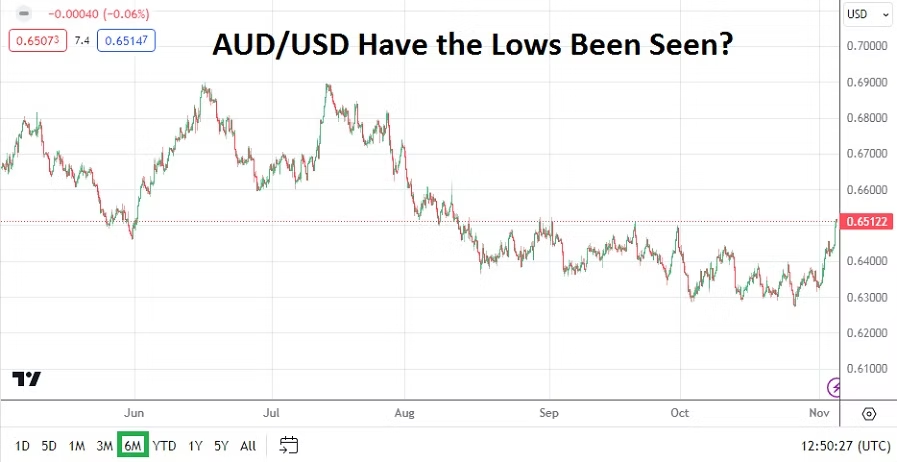
AUD/USD Six Month Chart as of the 5th November 2023

Tuesday, the 7th of November, Australia Cash Rate – the Reserve Bank of Australia is expected to raise its interest rate by 0.25% to 4.35%. Will the RBA take a gamble and not raise the interest rate due to other major central banks holding their rates in place, or will the increase go ahead to fight stubborn inflation while trying inspire some confidence in the AUD? A hike seems to be the direction the RBA will decide upon, having said that, the Australian central bank have surprised financial institutions before.

Wednesday, the 8th of November, U.S 10-year Bond Auction – the results from this sale and the yields that develop within U.S Treasuries will have an affect on Forex. Lower yields than anticipated could signal a weaker USD. However, risk adverse elements will need to be calm for the bond auction to produce tranquil results.

Thursday, the 9th of November, China CPI and PPI – the data from these inflation reports will be watched closely. Chinese economic numbers has shown some signs of stabilization the past few weeks, both of these publications are expected to have negative outcomes. Concerns about the financial pressures domestic consumers are facing regarding housing market values in China and the way in which they spend due to lackluster prospects are concerning. The USD/CNY will be affected in the wake of these statistics, and the USD/SGD could see momentary volatility too if the results prove to be a surprise.

GBP/USD One Month Chart as of the 5th of November 2023

Friday, the 10th of November, U.K Gross Domestic Product – last month’s number came in with an unexpected positive gain of 0.2%, this GDP report is anticipated to show no change. The GBP/USD jumped in value on Friday and financial institutions will be geared towards behavioral sentiment most of this week, but the British GDP data could cause a reaction before going into the weekend.

Friday, the 10th of November, U.S Preliminary Consumer Sentiment via the University of Michigan – the reading is expected to be slightly below last month’s outcome. U.S consumers remain a strong point of light for the U.S Federal Reserve. American consumers have remained spenders, although they have seemingly curtailed purchases of large ticket items such as cars and big appliances. If this data comes in weaker than expected it could propel more selling of the USD. A stronger number than anticipated could spook financial institutions and cause a slight surge in buying of the USD.

postN51

AMT Top Ten Miscellaneous Shots for Friday the 3rd of Nov.

AMT Top Ten Miscellaneous Shots for Friday the 3rd of Nov.

10. NBA: Welcome to Victor Wembanyama’s world. VW’s 5th game as a Spur was historic last night.

9. South Africa: The Springboks Rugby World Cup victory is helping unifying the nation and giving all its citizens a hope for better days.

8. Book: The Gulag Archipelago by Aleksandr I. Solzhenitsyn.

7. Crypto: Sam Bankman-Fried found guilty on all counts. Yet, Bitcoin is near 34,600.00 USD per coin.

6. Risks: Signs of appetite as U.S equity indices have moved higher, and U.S Treasury yields have declined.

5. Gold: The precious metal still lingering near 2000.00 USD and may attract bearish speculative positions.

4. Middle East: Global financial institutions appear to have dealt with the noise.

3. U.S Jobs Reports: Non-Farm Employment Change numbers and Average Hourly Earnings inflation data will be published today and shake markets.

2. Federal Reserve: The U.S central bank may have reached the end of it interest rates hikes cycle.

1. USD: The world’s reserve currency remains suspiciously strong and if it is a relatively calm today and this weekend, day traders may begin to embrace selling wagers.

postN66.1

Ready for Risks as Nervous Markets Await Plenty of Outcomes

Ready for Risks as Nervous Markets Await Plenty of Outcomes

So you want to be a trader. You imagine that it will be fun and possibly easy to make money from the comfort of a cafe, office, maybe a bus or subway train with a simple touch to an app on your phone that allows seamless possibilities to take advantage of trends that are easy to spot. Yet, this may not be the week to decide on beginning your endeavor, perhaps you will want to watch the global markets and learn from the possible mistakes of others in the coming days.

Simple trends for the moment have largely disappeared and financial markets face a rather important week of data and global risk events that not even the most experienced trader can comfortably embrace. Risk events will shadow this week of trading. There will be a lot of drums beating and earplugs are recommended for speculators.

To get started the war in the Middle East, actually the war between Israel and Hamas is ongoing and it will not end soon. Israel doesn’t want U.S ground troops and while some media sources may make these claims, it is extremely unlikely to happen. Yes, the U.S has sent war ships to the Mediterranean, but this is largely to suggest to Iran that the nation not become overtly active in the conflict.

Global investors who have been around the block and have traded when other conflicts have escalated – Ukraine, Iraq, Afghanistan, African wars, and simmering feuds between China and India are somewhat used to these news flows and developing crisis forays. It does not make things easier, but at the same time being able to separate the noise from the actual reality of these events is essential. Learning to be mindful of the media and its frequent empty hyperbole regarding what could happen next is vital. Traders need to be critical thinkers.

If a day trader can step away from concerns regarding conflicts and focus on how behavioral sentiment is going to develop via the gyrations of financial institutions and larger investors, they will go a long way in starting to pursue a more tranquil path and find the ability to organize their thoughts quietly.

Gold is flirting with the 2000.00 USD mark per ounce. U.S indices continue to trade near lows and risk adverse tendencies will likely continue to flourish in the near term. There is a parade of important data releases and rhetoric that will come this week. Traders who are technically driven should consider paying attention to the economic reports and pronouncements that will come as they mix with business outlooks and varying time frames that must be considered when making bets on the financial markets.

Most of Monday’s economic reports are in already. Australia posted better than expected Retail Sales. German Preliminary Gross Domestic Product statistics came in with a slightly better than anticipated number, although growth is still negative.

Tuesday, 31st of October, China Manufacturing PMI – economic data from China came in slightly better than expected the past week, but shadows lurk and the manufacturing numbers will help provide insights regarding headwinds the nation is facing. The USD/CNY remains at elevated levels. Transparency remains a desire for international investors who want to participate in China.

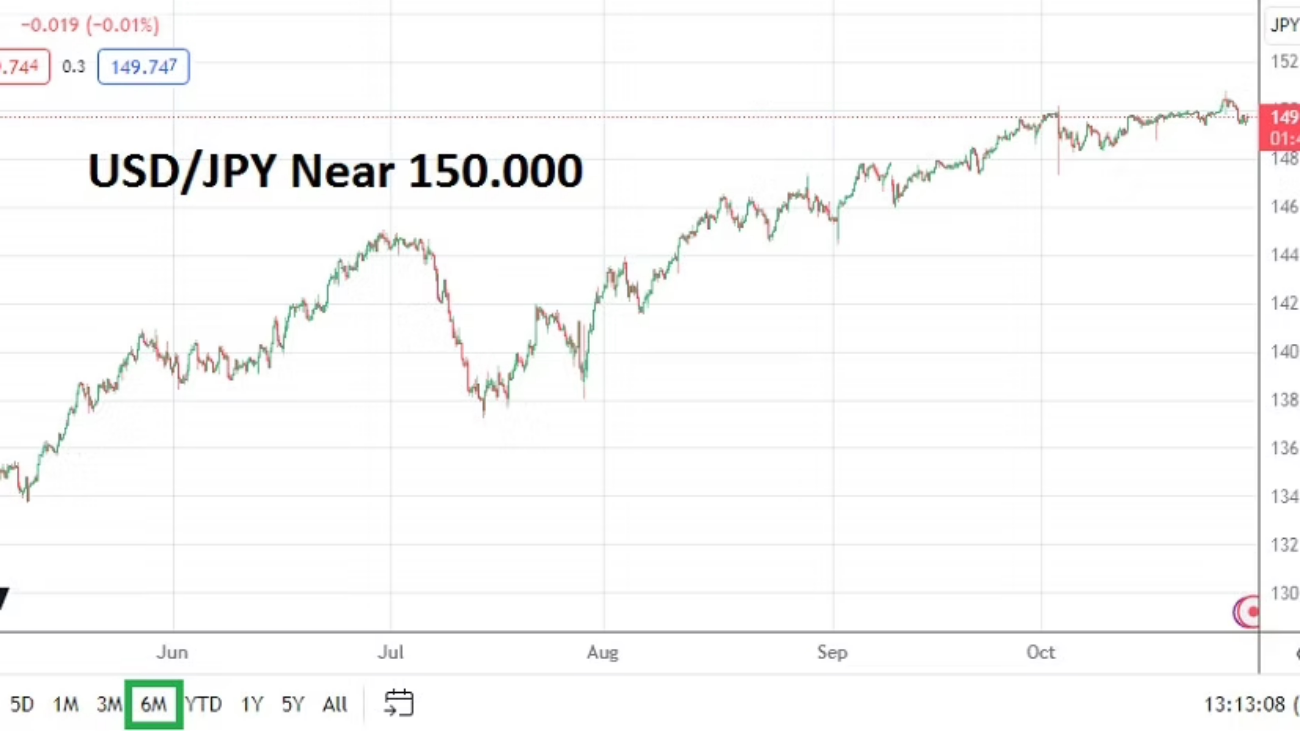
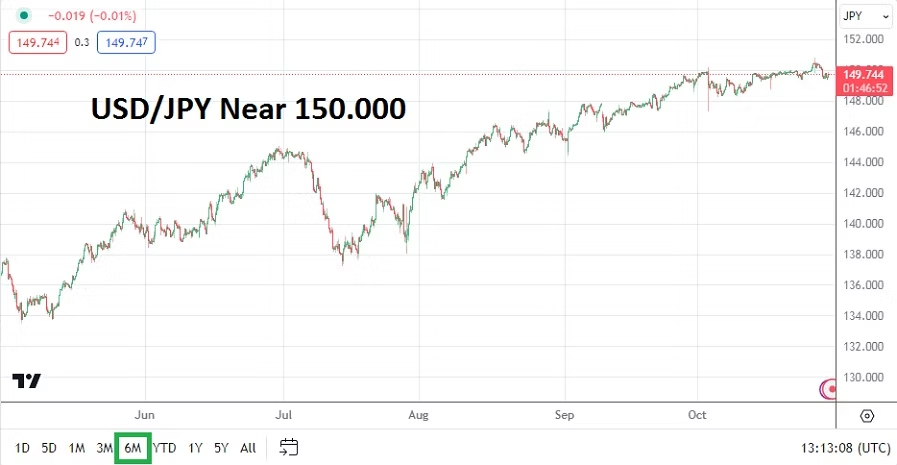
USD/JPY Six Month Chart as of 30th October 2023

Tuesday, 31st of October, Bank of Japan – the BoJ is expected to make no changes to interest rate policy (you have heard this song before), but the USD/JPY remains near the 150.000 level and the Bank of Japan is not comfortable with this higher ratio. The question remains how they can combat this value properly. By suggesting the notion the BoJ can intervene when they want to, can keep financial institutions from over aggressively buying the USD/JPY. Expect to hear some of these intervention warnings again tomorrow.

Wednesday, 1st of November, U.S Federal Reserve Funds Rate and FOMC Statement – Jerome Powell made it pretty clear in mid-October the U.S Fed will likely not raise its interest rate at this meeting. However, he warned the potential exist to raise rates down the road if inflation shows unwanted sparks. American consumers are a reason for concern too, although the Fed will not admit this – the U.S Fed would like to see less consumer demand which they believe would help decrease inflation. Problematically, U.S Treasuries are not only sticking near higher yields because of the potential of higher interest rates, but they are also being bought as a safe haven because of Middle East worries. This will continue to put pressure on the U.S government because paying off bonds with higher yielding rates of returns to investors can become increasingly difficult, particularly when U.S government spending appears to be nearly out of control.

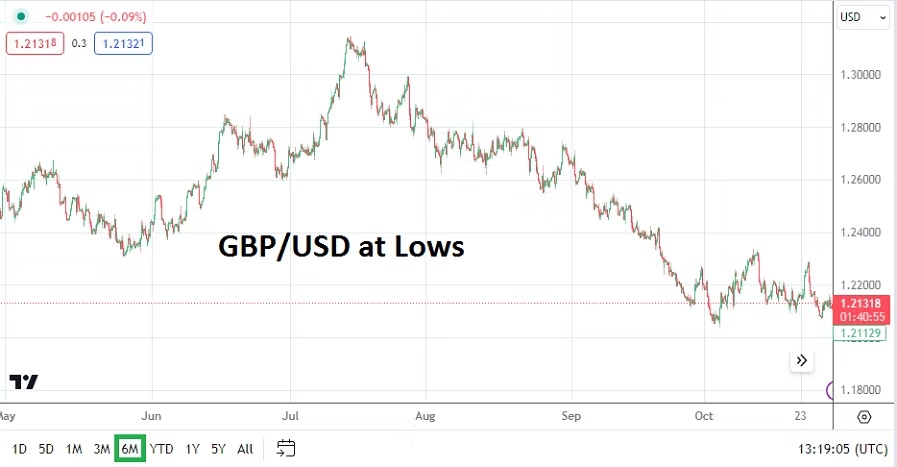
GBP/USD Six Month Chart as of 30th October 2023

Thursday, 2nd of November, U.K BoE Official Bank Rate and Monetary Policy Summary – no changes are expected by the Bank of England. Perhaps like the ECB last week the Bank of England will try to ‘sound’ a sedate level of rhetoric and say they are monitoring economic conditions which remain rather lackluster, but are showing slight signs of improvement via inflation and potential growth. The GBP/USD continues to fight near lows and the 1.20000 level is likely an important juncture.

Friday, 3rd of November, U.S Non-Farm Employment Change and Average Hourly Earnings – the jobs numbers are expected to come in less than the previous month’s results. The wages report could be important if there is a significant change not corresponding with the estimate. Inflation needs to show signs of decreasing before the U.S Fed backs down from its aggressive interest rate stance, if the Average Hourly Earnings number remains stubborn, so will the U.S Fed.

postN51

AMT Top Ten Miscellaneous Points for Friday the 27th of Oct.

AMT Top Ten Miscellaneous Points for Friday the 27th of Oct.

10. Rugby World Cup: South Africa Springboks versus New Zealand All Blacks in a titan championship tomorrow.

9. Word of the Day: ‘Resilience’ as Israel’s business and start-up sectors remain focused and strong.

8. El Nino: Change to ocean currents still problematic, Acapulco hit by significant damage via Hurricane Otis.

7. Data: U.S Core Personal Consumption Expenditures Price Index could cause a reaction if the inflation numbers are higher than anticipated.

6. ECB: Pronouncements were consistent yesterday as Europe battles lackluster economy and elevated consumer costs.

5. U.S: Advance GDP results yesterday stronger than estimated, American consumers remain buyers.

4. Electric Vehicles: EV market showing fatigue as poor earnings from Tesla and other manufacturers confront investors due to ‘resource’ hurdles and as legitimacy of mass adaption is questioned.

3. USD: Trend and resistance levels under scrutiny from day traders and financial institutions as potential reversals are contemplated.

2. U.S Equity Indices: Dow Industrials, NASDAQ and S&P 500 now facing critical tests of late May 2023 support levels after yesterday’s selloff.

1. Behavioral Sentiment: Razor’s edge conditions in many assets are dangerous. Risk adverse elements are strong, timing a sustained shift of momentum is speculative.