postN87

AMT Top Ten Miscellaneous Morsels for the 12th of April 2026

Optimistic Hopes Appear Ready to Fade into the Distance

10. B-ball: The NCAA Men’s Basketball Championship concluded early last week with a rather resounding outcome for the University of Michigan who won their 2nd Men’s trophy, the first one coming in 1989. Michigan dismantled the Arizona Wildcats and then handled the Connecticut Huskies. The NBA playoffs will start this coming week. The Oklahoma Thunder and the San Antonio Spurs are getting a lot of attention, and the Denver Nuggets might have something to offer.

9. Trump: A week of optimism now leads towards threats of additional noise. Peace talks held in Pakistan appear to have failed this weekend, and now another countdown has begun as the Iranian conflict appears ready to escalate. The U.S White House and President Trump will certainly make more noise in the coming days.

AMT Top 10 for the 12th of April 2026

8. Logistics Advertising: Kit Kat and Nutella have been rewarded with massive exposure. The Kit Kat truck heist of 12 tons of product (reportedly said to be in a special F1 designed candy bar theme) made headlines. Kit Kat’s owner, Nestle, was obviously content with the free publicity and proof of demand. And a jar of Nutella floated across the Artemis 2 spacecraft unexpectedly this week, gaining international attention and sparking smiles from fans of the Italian chocolate hazelnut spread.

7. Creator: Yet another candidate accused of being Satoshi Nakamoto has been produced. Blockstream’s CEO Adam Back has been named by the N.Y Times as a potential creator. In the meantime, the real question is whether anyone but Iran (as they run their illicit shadow economy), Michael Saylor of MSTR and a few big whales consisting of institutions and hedge funds are really paying any attention to BTC anymore. The BTC/USD price as of this morning is around $71,600.00. Bitcoin was traversing near $126,000.00 in the first week of October 2025.

6. Greenback: USD/JPY 159.240, EUR/USD 1.17225, USD/ZAR 16.38540, USD/INR 93.0480. USD centric strength may prove solid this coming week and other currencies may suffer a bit.

5. Sideways Shimmer: Gold finished the week near $4.745.00, roughly $100.00 above its starting point last Monday. U.S 10-Y Treasury yields went into this weekend around 4.34%. Shifting outlooks this coming week will likely ignite turbulence in both assets.

4. Blind Eyes: More than a handful of U.S politicians have been featured as big winners regarding their stock trading abilities. Their gains far exceed the winning percentages of the overall returns made by indexes (as a benchmark). Little has been done to stop what many view as insider trading. There are many forms of political corruption around the world. However, a variety of places and people, including Americans seem to accept this potential misconduct. The ‘Stop Insider Trading Act’ has been brought forth in the House of Representatives and Senate, but the legislation may simply meet a slow death and disappear.

3. Inflation: U.S interest rates via the Federal Reserve will be held in check at a minimum over the next few months. The higher costs of energy will certainly seep into prices for transportation, manufacturing and agriculture. Fed Chairman Jerome Powell may be quite content to leave his position May the 15th. The next Fed FOMC interest rate decision is due on the 29th of April.

2. Strait of Hormuz: WTI Crude Oil closed above $90.00 going into this weekend. When futures markets open early on Monday, the price of the commodity is likely to rise via increased anxiousness which will build into the mindsets of large players today because of the failure of peace talks in Pakistan. The price of Crude Oil remained high last week, only moving to a low of around $85.00 this past Tuesday, showing cautious attitudes remained. Prices above $100.00 will likely become a new target quickly for some who bet. Will an early spike upwards this week then start a counter reversal lower, or will a climb become sustained?

1.  Risk Off: The S&P 500 and Nasdaq 100 will get plenty of attention this coming week as behavioral sentiment remains fragile. Having skirted near its 200-days moving average lows in recent weeks, the indices have gained handsomely since the 31st of March. Will the upwards momentum come to an abrupt end this week, or have financial institutions been able to digest their nervousness and will they show a capability of remaining buyers?

Copy and paste the text from AMT that you want to share

Gold 20260409

Intraday Blues as Trading Conditions Remain Perilous

Red Flags Persists for Day Traders and Hedge Funds as More Wild Surf Predicted

Risk on or risk off? Day traders and hedge funds, two groups who are known to speculate, have both suffered considerably the past handful of weeks due to the market turbulence. While falls of 4 to 5% the past handful of weeks for long-term investors can be digested with proper patience and accumulation ability, those who are using leverage or making monster sized bets on intraday speculation continue to suffer from widespread anxiousness within the marketplace.

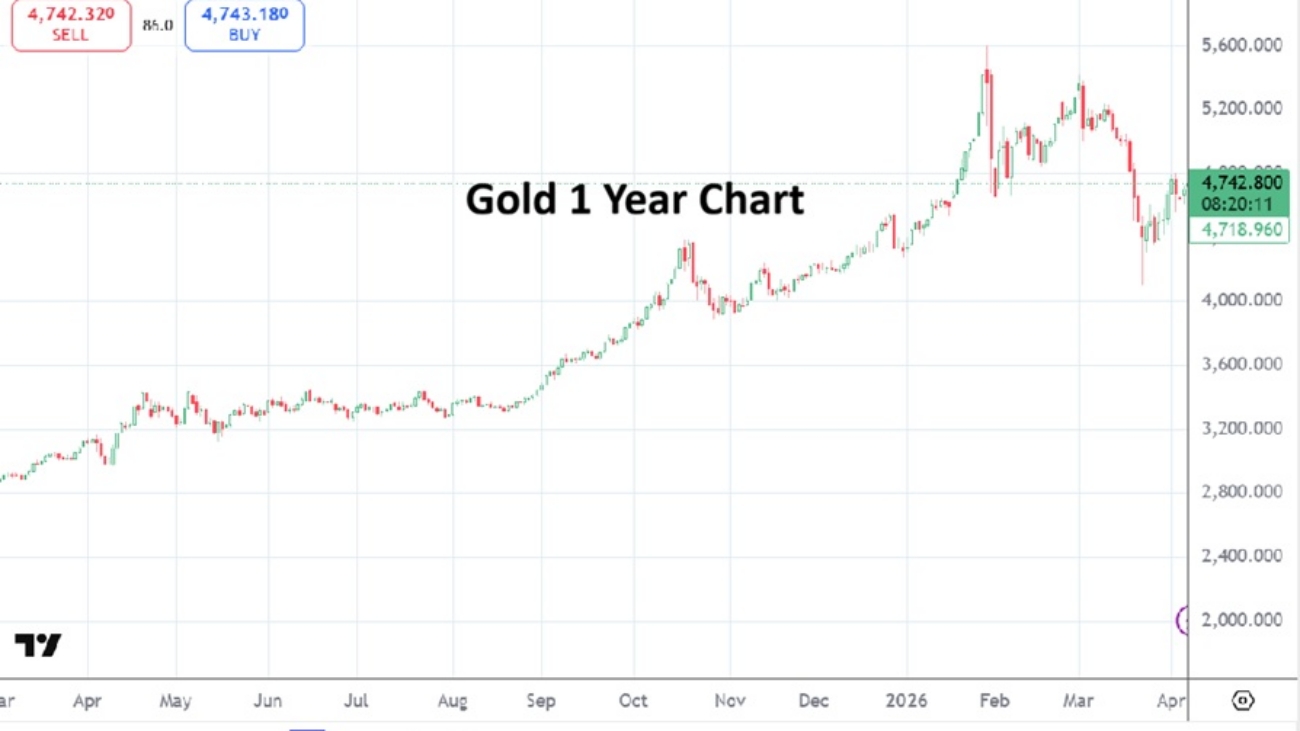
Gold One Year Chart as of 9th March 2026

WTI Crude Oil should have gone back down below $80.000 in many folks thinking – and they may have bet on this strike price via options –  due to ideas of an Iranian ceasefire, but the target has not been met. WTI did in fact challenge $88.000 early this week, but it is back around $93.000.

With the weekend quickly approaching and concerns about what will happen when the marketplace is largely shuttered, March mayhem has opened the door for April surprises. Gold is near $4,737.00, and this price remains mildly upsetting for many who believed it would act as a safe haven asset that would gain during the war, but hasn’t responded with buying fever. Gold was near $5,180.00 on the 27th of February. But in fact gold has performed rather well considering it was riding a long-term speculative buying spree and its current price still remains well above where is was last year around this time near $2920.00.

The point? The markets still exists and can still be bet on. The parameters may have changed, but let’s recall at this time last year global investors were dealing with the potential of Trump tariffs which was an entirely other set of hypersonic conditions caused by noise. If you don’t like loud markets you can cover your ears. You can try to take advantage of them too, but day trading the marketplace via Forex, commodities and stock indices has always been gambling. Perhaps this is what you are looking for – price action.

Again, the global markets are not concerned with your feelings. If you want to cry, grab a tissue and sit on the sidelines until the big show is over. However, know that the Iranian war is certain to have an encore from either a new round of potential fighting in the Middle East via stresses caused by the said openings/closings of the Hormuz Strait, or some other entirely new flashpoint elsewhere. 

The S&P 500 closed slightly below 6783.00 yesterday, last year the index was close to 5,745.00. Sometimes the best thing all traders and investors can do is take a deep breath and believe in better days.

Near-term price action will remain choppy. That is very easy to say and agree to, yet it tells you nothing. It doesn’t tell you what the markets are going to do today or tomorrow. And the reason for that is that intraday performance at this juncture is being driven by swiftly changing sentiment in which momentum is a swirling sea. Technical traders may claim they have a handle on the price skirmishes via their perceptions, but are likely suffering like everyone else as they try to surf the rather wild waves.

Copy and paste the text from AMT that you want to share

South African Rand 20260327

G7 Snub for South Africa and other Troubles for the South African Rand

USD Centric Strength and Global Anxiety Weighing on Value of Rand

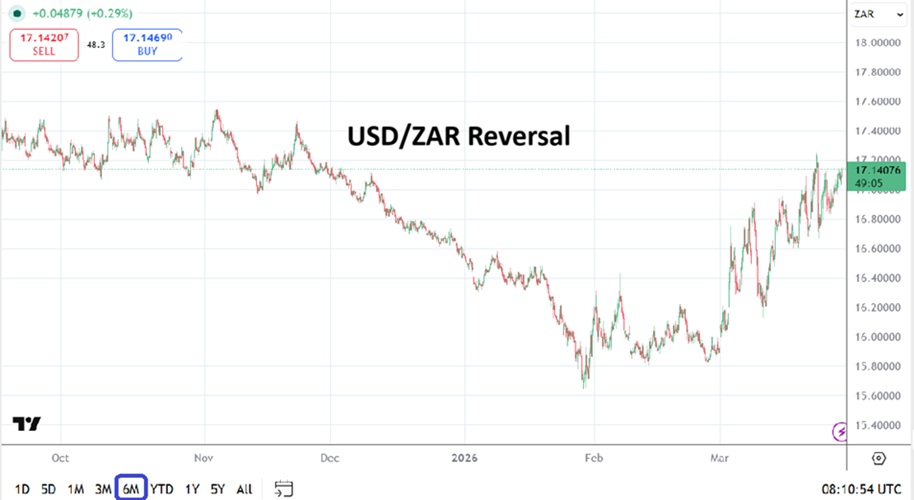
The USD/ZAR is still above 17.00000 in early trading this morning, this as USD centric strength manifests globally due to anxiety which clearly exudes because of the ongoing Iranian war. The USD/ZAR is near the 17.11000 realm, with wide spreads via bids and asks.

The price of Gold is close to $4,450.00 and Palladium is around $1,395.00 – this after touching apex marks in late January when the $2,100.00 level was breached.

USDZAR Six Month Chart as of 27th March 2026

These metals are important for South Africa, but their daily values do not effect the USD/ZAR like they did in the past because of other complexities. The USD/ZAR which had enjoyed a stellar bearish trend and touched lows of 15.68000, late in January, could be correlated to the decrease in value to the precious metals by some, but this is likely false narrative.

When the larger picture of pure behavioral sentiment within the Forex broad market is looked upon other factors are a certainty. The South African Rand, in a rather healthy manner, is largely dependent on financial institutions outlooks regarding the USD, 10-Year U.S Treasury yields, and what the U.S Federal Reserve outlook projects.

The U.S central bank, which many people including myself, was thought to be in position in which the Federal Funds Rate would be lowered in the coming months, now faces complications due to what may become chronic higher energy costs through the mid-term if the war in the Middle East persists and inflation due to logistics, manufacturing and agriculture are effected.

The USD/ZAR near the 17.0000 is a good barometer of South African financial institutional attitudes. Yesterday’s news that South Africa will be excluded from the G7 meetings in France, which will be held in June, will not make folks in South African financial spheres content. However, these same people within the machines of corporate finance in South Africa have grown used to the vagaries of mismanagement, corruption and perceptions these cause for the nation. While some South African government officials initially said France had been pressured by the U.S to disinvite South Africa from the G7 summit, they have changed their tune this morning and are trying to downplay the exclusion as insignificant.

Thus, we return back to the USD/ZAR and near-term considerations. While the currency pair has shown the tendency to reverse lower when marks above 17.10000 have been challenged the past few weeks in March, this morning’s early trading which is sustaining higher values is troubling. The consideration that nervousness among global investors remains skittish at best is unsettling. Those who are making short and near-term wagers on the USD/ZAR are likely concerning themselves with the upcoming weekend and its unknowns. From a trading perspective, folks are usually cautious about taking speculative positions over the weekend when they fear there is a possibility of bad news.

The USD/ZAR is touching important resistance above, if calm doesn’t return to the broad markets across various international assets today, the currency pair may find itself testing higher realms as next week begins.

Looking for downside in the USD/ZAR may prove difficult to attain later today. Traders should keep their eyes on other gauges and watch the U.S 10-Year Treasury yields which are near 4.45% (highs that haven’t been seen since July of 2025), WTI Crude Oil prices and the major U.S equity indices which are in correction territories.

From a betting perspective, if U.S 10-Year yields escalate and the price of energy ebbs upwards today in commodity markets, and there is more trouble on the Nasdaq 100 and S&P 500, this will be problematic. The USD has been volatile, but has certainly shown a tendency to get stronger in recent weeks. A higher USD/ZAR above the 17.20000 is not out of the question.

Copy and paste the text from AMT that you want to share

postN50

Clear Betting Environment Is a Winning Proposition for Brokers, Not Day Traders

Things Unlikely To Get Easier for Retail Speculators Remainder of Week

I would like to offer day traders encouragement under the current market circumstances. However, the reality is that the next handful of days will remain difficult for retail traders who do not have comfortable amounts of cash to absorb when intraday chaos occurs. On the other hand as an ex-risk manager for a brokerage house, I can state that CFD providers are singing joyfully because they are making profits from the wild fluctuations in equity indices, Forex and commodities.

Gasoline and Burning Cash Continues

A case in point are the results via the future markets, this via CFD offerings by brokers’ platforms yesterday for the S&P 500 and Nasdaq 100. Early nervousness saw an electric amount of selling get demonstrated and then suddenly a reversal higher, this as President Trump caused a thunderous optimistic reaction as he spoke about the potential of a deal with Iran in the coming days. The dose of optimistic risk taking lasted a couple of hours.

Not only did U.S equity indices bolt higher, but WTI Crude Oil prices slid lower, and Forex suddenly saw the USD losing strength. Here’s the thing, some day traders certainly made money as waves of momentum carried their wagers into positive terrain, but many speculators were likely knocked out of the their trades with sudden loses. CFD trading using leverage has always been a casino, this is not going to change. But the volatility seen the past three weeks has likely not created great wealth for retail traders. Some have gained certainly, but I can guarantee you brokers are making more money via the intraday swings and volatility that knock smaller traders out, this as leverage causes fluctuations that expose too much risk and cause folks to lose money.

Again, this is the nature of the beast. Day traders wanting to participate in the markets have to acknowledge the risks that will confront them. It is a warning worth noting once again as a war rages in the Middle East. 

Markets in the best of times are difficult. Risk management is constantly needed. While the thrill of trading is fantastic, without solid tactics speculating equates into gambling. Think of brokers as bookies, they gear the market via wide spreads, transaction fees including overnight charges to favor themselves. Brokers are certainly glad to pay out winners so others are enticed and bring more business, but strategic day traders who use well practiced methodology are watched closely by brokers – because these folks (good traders who are careful) are a threat for brokers bottom lines – profits are king.

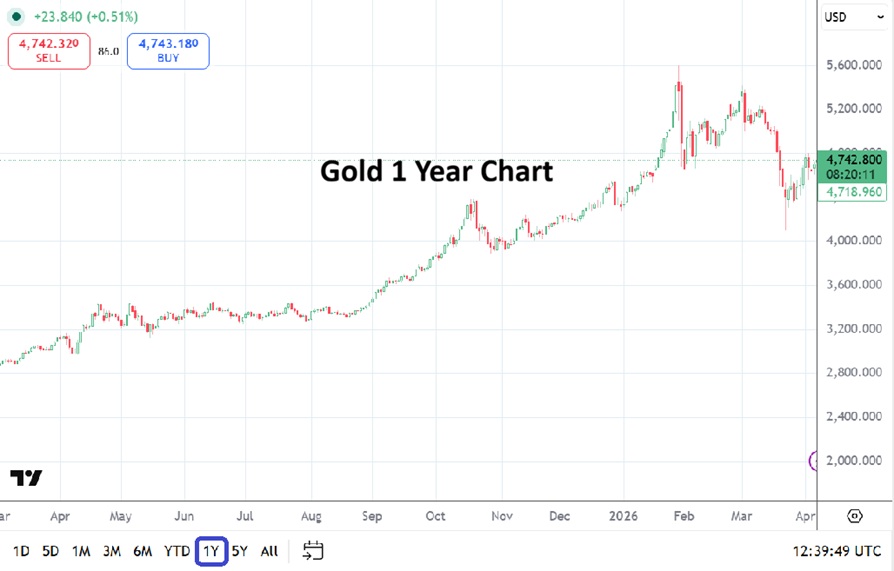
Trading and fundamental notions are proving dangerous too during these loud times. Gold for instance which was trading at all-time highs in January (along with silver – but that is another speculative story) is now traversing near $4,425.00. The precious metal was testing the $5,600.00 vicinity in late January. So how did this long heralded safe haven metal actually see a selloff become stronger since the start of the Iranian war when it was around $5,200.00 on the 27th of February?

IMO, it shows that speculative fervor in gold was fever pitched in January, and even though a war has broken out and caused widespread anxiety in the broad markets (which in theory is supposed to make gold more valuable), the volatile nature of wagering – yes gambling – on the markets including gold, often is a crapshoot. Folks who bought gold as a speculative endeavor have now cashed out their profits, those who believe gold is a safe haven and are buying based on this belief will need another round of speculative fuel to induce significant gains like those made in January. The market sometimes runs out of participants when things get too cautious. In other words, if there are not enough buyers, selling momentum takes over.

And to put a finishing touch on this piece, let there be no doubt that brokers were likely relieved that the one way avenue upwards for gold (and silver) seen into January has now turned into a volatile betting battle. The point here, if I am able to make one is this, market conditions are rough and will remain extreme in the coming days. Folks need to be cautious, the markets are not your friend, they are a tool for making money (or losing it).

Copy and paste the text from AMT that you want to share

postN87

AMT Top Ten Thoughts and Trepidations for the 22nd of March, 2026

The Return of AMT's Top 10 Illustrious 'Weekly' Salvos

First we must congratulate those who were willing to climb out from under their rocks (and bomb shelters) to offer musings. But let’s not digress….. to the AMT Top Ten List we go.

AMT Top Ten for the 22nd of March 2026

10. March Madness: The NCAA Men’s Basketball Championship is underway. Some of the more hated schools remain catalysts. Our pick, the University of Arizona Wildcats. 

9. Bitcoin: Traversing above 68,000.00 USD currently almost feels like an accomplishment considering BTC/USD was near 63,000.00 in early February and again in early March. But do not blink your eyes. BTW, MSTR (the much loathed MicroStrategy by some AMT folks) went into this weekend below $136.00 per share.

8. South Africa: The USD/ZAR finished Friday near 16.96800 depending on bids and asks. On the 29th of January the currency pair was close to 15.65000. The South African Rand has done well over the long-term, but it is correlating to the broad Forex market concerns. Day traders should not take things personally, and accept that risk adverse moves – particularly as a major war rages is part of speculation. Near-term viewpoints can differ with long-term prospects. 

7. Not Glimmering: Gold at the start of the Iranian war was around $5,260.00, it has fallen to a mark of $4,491.00 this weekend. Showing gold’s speculative momentum beforehand hand, outmatched current values. Where next?

6. Silver: Above 120.00 USD briefly towards the end of January, the commodity is below 68.00. Wild betting has caused a drop of more than 42%. Too much exuberance.

5. Risks: U.S 10-Year Treasury Yields were below 3.95% on the 27th of February, via Friday’s close rates are above 4.38%. Can you spell f.e.a.r?

4. Safe Haven: The U.S Dollar Index which had been showing solid downside is near 99.500, on the 27th of February it was around 97.850 – a rather legitimate rise. 100.000 may be a target by some large players.

3. Shrieking Hyperbole: WTI Crude Oil prices are certainly getting plenty of attention. However, voices expressing concern about WTI touching higher values starts to sound like an auction in order to get attention for the circus barkers. WTI remains near 100.00 USD and this mark is a barometer. The price is high and it can go higher, but expressed fear about $140.00 and $200.00 should be treated with disdain in the near-term.

2. Iran War: The conflict in the Middle East cannot be downplayed, but it can become fearmongering by Cassandras’. The U.A.E is still open for business and other nations in the Middle East are functioning. Yes, there is noise and the situation can grow more dangerous. But the potential of freedom for the people of Iran is a solid goal, though some may find this naive until it is proven. Can it become fact?

1. Coming Attractions: U.S stock markets are rightfully nervous. Friday’s close for the S&P 500 has brought it into terrain that challenges its 200 day moving average. The combination of weak technical attitudes and behavioral sentiment is a dangerous mix. Risk management may not be enough for day traders to survive current conditions, sitting on the sideline instead of betting on equity indices intraday may be more efficient and less lethal.

Copy and paste the text from AMT that you want to share

Confused Markets 20260217

Market Volatility: Structure, Geo-Politics and Culture

Why the (Free) World is so Confused and Depressed

Opinion: The following article is commentary and its views are solely those of the author. This article was first published the 16th of February via The Angry Demagogue.

Having been involved in the capital markets for the better part of the last four decades, I wouldn’t go so far as to say that I have not seen this amount of volatility and uncertainty in the markets, but I will say that this uncertainty and this volatility is different. The differences are important and have to do with the current structure of the markets as well as the geopolitical goals of the various powers and would-be powers. The trading world has changed radically over the last two decades with the advent of algorithmic trading and how they respond to global events as well as the type of money that is coming to dominate the markets.

The “type” of money has changed from those who invest in “things” – be they long term value investors like Warren Buffet and Peter Lynch, to those who chase income and dividends and to those who like to follow trends and industries. These investors, different in their own methods and goals had one thing in common – they invested in companies they felt had a future, or in the case of short-sellers (as legitimate as buyers) who thought it didn’t. The few hedge funds that were around four or five decades ago did what the name of the type of fund said – it “hedged” positions and gave up some potential upside in order to cushion losses when markets went south. That changed sometime at the end of the last century when George Soros nearly ended the United Kingdom by mercilessly shorting the Pound.

We are being very general of course and have not spoken about those who invested in bonds of “fixed income” products, corporate, federal or municipal as well as the basic speculator in all sorts of investment products. Nor have we spoken of the crooks who populate any era. We don’t want to give the impression that all was wonderful “then” – this is not a nostalgic look at the recent past but an attempt to understand what people were doing and how they did it, and how things have changed.

We are seeing now a sea change in the way the markets are responding to news and the way money is being invested. We still have the value and income investors; we have the large and small investors doing their best to pick the right stocks and bonds, and some of these investors also use options and futures to enhance and hedge their investments. Investing has become more sophisticated- read more mathematical – and the “basic” investor, large or small has been able to use this sophistication. However, the current hedge fund environment is based on much more than picking the right stocks or bonds and all that goes with it. The current hedge fund system is a group of funds, many of multiple hundreds of millions or even billions of dollars that don’t make investments per se as they try to beat their competitors by the microsecond in order to profit a very small amount on a a large but extremely short term investment (we will speak of the money of unfree countries, below).

As an example, there are dozens of hedge funds who work their “algos” to respond to market news and announcements only to get out of the position within minutes or even seconds. Each algo basically says the same thing – if X happens then buy and if Y happens, sell. The only difference is who will buy or sell quicker and then reverse what they have done. There have always been those with fingers on the button ready to buy or sell but the amounts were smaller and the effect less. Today, the reaction time is so quick that the large firms have their servers in the stock exchange buildings, close to the exchange computers so that they will get their orders in first. Remember, these are electronic so they are going at the speed of light. The difference between 100 feet way and 100 miles should not matter – but it does. We are talking the difference between 0.0000001 seconds for 100 feet and 0.000537 seconds for 100 miles – a time difference that people cannot discern.

This of course is not necessarily a bad thing if the algos themselves were correct for the long or even medium term (or what used to be called the short term – a quarter of a year). But they are programmed for the shortest of short term – what will happen over the next 30 or 40 seconds or maybe a day or two or a week. We see incredible volatility and panic where we should find none. A good or bad jobs report, inflation release or even a Federal Reserve rate cut or hike might have long term consequences but these trades that cause this radical volatility are not concerned with that. The market dropping two or three percent in a matter of minutes does not provide the comfort that investors usually seek. People jump on the bandwagon fearing the worst –when it was just the algos responses to the news rather than intelligent judgement on the news that drove the prices.

We will stop with the details and summarize – a large part of the uncertainty of the markets is structural as technology and the sheer amount of money being traded has surpassed what the markets, as currently structured can stand. As an example, as an employee of the Nasdaq Stock Market in the early 1990’s we were told to prepare for a 1 billion share day. During those days, there were very few shares that traded above $100 as the companies wanted more investors and there were many stock splits (more rare these days). The 1 billion share day in 1995 would have totaled around $40 billion. Today, daily trading activity has passed 15 billion shares and the total money is above $1 trillion.

It is not clear what structural changes need to be made in order to take all of this into consideration, but we do have some ideas (which we won’t bore you with now).

The second major issue that is the cause of the volatility and uncertainty in the markets has to do with what news is “good” and what news is “bad”. Not in the moral sense but in the economic and geo-political sense. What we mean by this is that there does not seem to be a unified view in the Western world where it should be going and because of this, it is not clear what news is in fact good and what is not. Economically it might be easier to figure out but even that has been hard since so many major American cities and so many young people are voting socialist and so much foreign money from non-free countries is flooding the market. News may say one thing for a free market economy and something entirely else for a planned socialist economy. It might mean one thing for investors in New York or Cleveland and something entirely different in China or Qatar.

Therefore, geo-politically the uncertainty is confusing. During the cold war of course we basically understood what moves were positive and which were negative. That is not to say there were no policy arguments but for the most part, the ends were agreed upon. Selling grain to the Soviets may or may not have bettered the Western world but both those like Henry Kissinger who supported it and Senator Scoop Jackson who opposed it argued based on the same goal – what was better for the free world.

This goes beyond who is considered the “enemies of the West” to what is considered the West – or even if it exists! We have always tried to write here from the perspective of what is good for free countries even if many free countries seem to think that Israel, for example, is not a member of that community. The same goes for those who doubt the cause that Ukraine is fighting for, as they support the Putin tyranny in the name of balance or alleged Christian values or whatnot. Interestingly, both sides – the right in the Russia-Ukraine war (and the Tuckeronian Right regarding Israel, too) and the left in the Israel-Islamist war – are willing to forgo freedom for some amorphous, form of justice or truth.

Iran is the perfect example. In every measure of Western values since WWII the Islamic Republic of Iran is an evil country. It denies freedom to its citizens, massacres them, executes women for immodesty and homosexuals for being homosexual. We don’t have to go on regarding the evils of the Islamic Republic of Iran but even with that, there are those in the West who support it. We are not talking about the legitimate policy debate regarding a war with Iran – morally as well as politically – but rather the fact that many just don’t consider that Iran is on the wrong side. Israel as we said is another example, but we can go on and on. Venezuela, Cuba and even China come to mind.

True enough, there were always people in the West that thought the Soviet Union or Maoist China was morally “better” than the United States or Europe, but never did they influence the politics, culture and businesses as the current naysayers do. The markets “understood’ that the Soviet Union was bad and reacted accordingly. The geo-political goals were mostly in sync.

The global markets reflect the geo-politics of the day and “vote” on it in a daily basis. The fact that there is a vast sum of money that influences the markets that are actively opposed to the freedom project – China, Qatar and Russia come to mind – does not help the situation. It is not the “foreign” money that disturbs the markets but rather which foreign money. There is a difference between an investor who is looking for the good company or the safe bond, and one who is looking to use their investment to further a radical Islamist or Chinese Communist agenda. President Trump’s trillion dollars of investments from Qatar and Saudi Arabia and others comes with a price tag he does not usually deal with – the price tag of undermining the market economy that has made him so successful. The proof of “goodwill” in the investments in the United States ought to be shown before that money flows into the economy. They have already contributed to ruining the universities (not that they needed the help) – there is no reason to permit them to ruin America’s great corporations, too.

The markets are crazy due to its structural issues and due to the “uncertainty” that is today’s world. Sadly, that uncertainty is not just uncertainty about what will happen, but uncertainty about what is good or bad (news). This goes beyond unity and “can’t we just get along?” and gets to the heart of why we are living today in the same culture. We say culture instead of country or city since that culture is the one that “got us here” as basketball or football coaches like to say.

The lack of agreement as to what matters most has affected the markets more than we think, and it all has contributed to the depression that so many in the free world are feeling at the moment.

Disclaimer: the views expressed in this opinion article are solely those of the author, and not necessarily the opinions reflected by angrymetatraders.com or its associated parties.

You can follow Ira Slomowitz via The Angry Demagogue on Substack https://iraslomowitz.substack.com/ 


Copy and paste the text from AMT that you want to share

Cactus flower 20260121

Emotional and Speculative Market Could Spark Trouble

Day Trading Problems: Not Everyday Produces a Profitable Outcome

Early indications show that U.S markets will produce volatility today. The EUR/USD is straddling the 1.19000 level, Gold is around $5005.00. Bitcoin for those that care is near 68,700.00 USD.

Flowering Cactus

Not everyday produces profits. That is rather easily dealt with by large speculators, big players and financial institutions who have the time and money to withstand short and near-term storms. The current markets represent danger if you listen to the noise from outside sources – media, analysts and influencers engaged in trying to create opinions a lot of the time. However, bias must be distinguished and another very fundamental thing needs to be accessed.

Day trading is not the same as being a large speculator, big player or financial institution. Day trading usually means a person is a retail trader, a client therefore of a brokerage house. Day traders do not typically have deep pockets.

Getting caught up in the fear factor is a quick way to lose money fast. Gold, Silver, Bitcoin, U.S major indices, Forex have all delivered volatile trading the past few weeks. What looks like a gentle day on tap for day traders must always be treated carefully.

This week the U.S will release Retail Sales, Non-Farm Employment Change data and Consumer Price Index readings.

The jobs numbers which traditionally get released on Fridays and should have been published last week, were delayed because of the quasi-govt shutdown which happened. 

Last night’s Super Bowl was a rather lackluster game, while this has nothing to do with the markets, perhaps it will cause some type of reaction via a need for more noise (emotions) to be heard by those who have a desire for attention they do not deserve. No do not worry, the game’s outcome is not going to affect today’s trading. However, via behavioral sentiment this week’s coming results across a wide range of assets are set to be more entertaining than the Seahawks victory over the Patriots last night.

Day traders have likely made money for their brokers the past couple of weeks as they have taken hits because of volatility. This week could provide more choppiness. Retail traders need to remain careful and not bet on things simply because someone else suggests they are an expert on world affairs when they in actuality are merely getting paid to make noise and sell more bets. And by the way, betting on the Patriots last night to win just because they had won so many times before is a reminder past performance doesn’t guarantee future results.

Copy and paste the text from AMT that you want to share